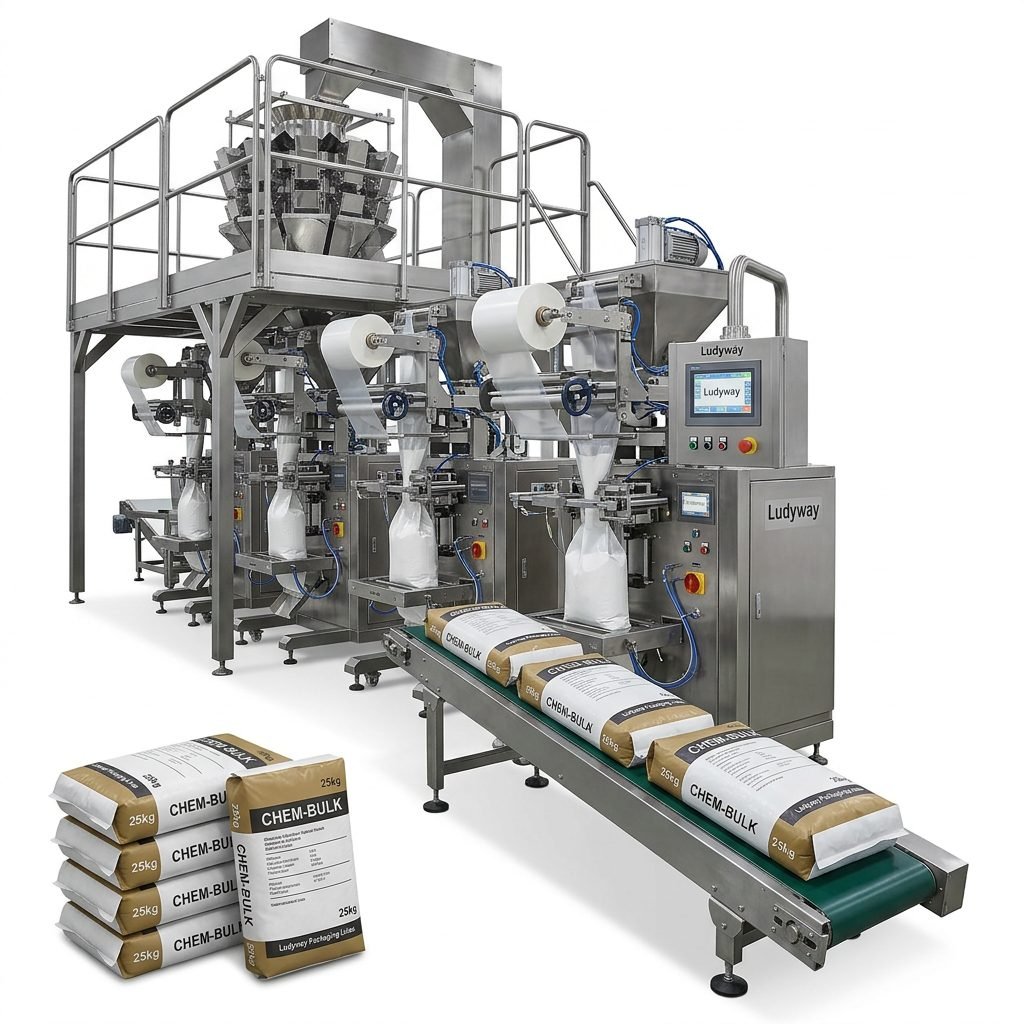
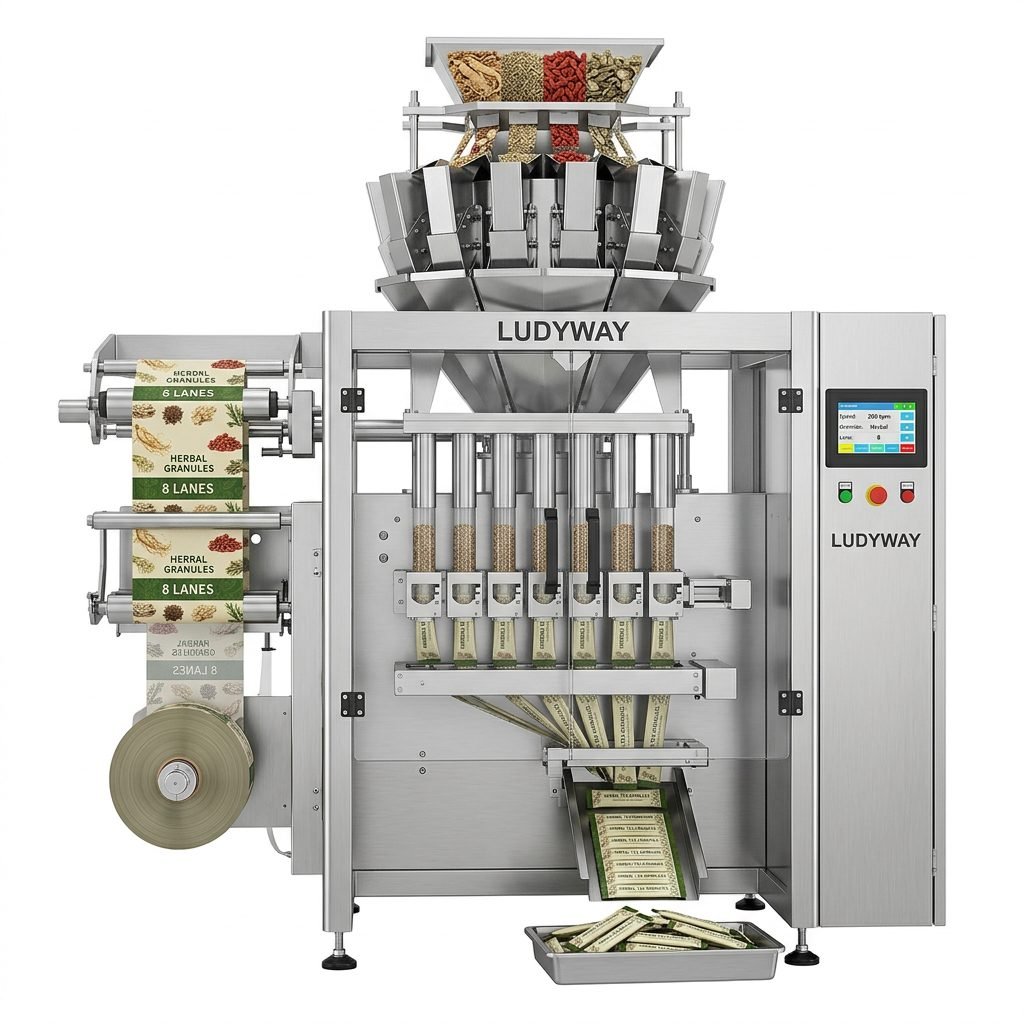
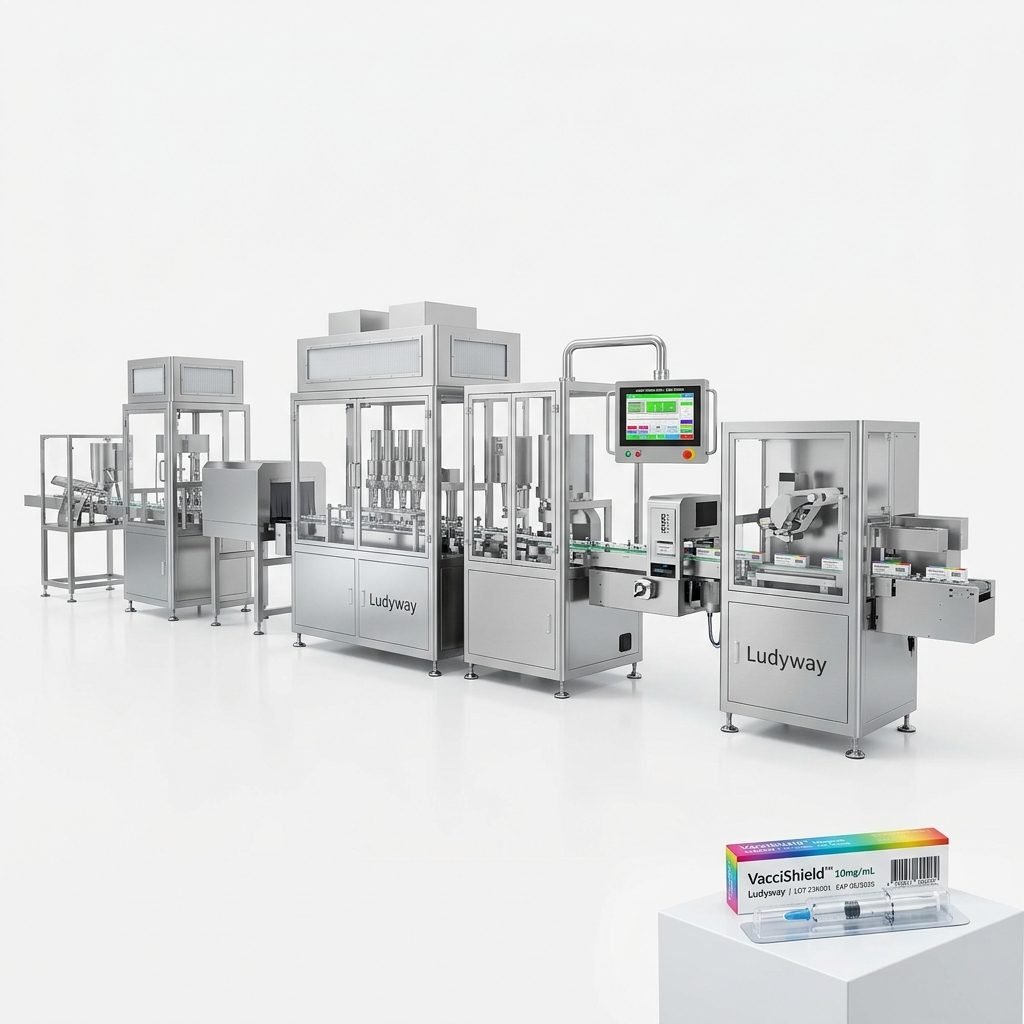
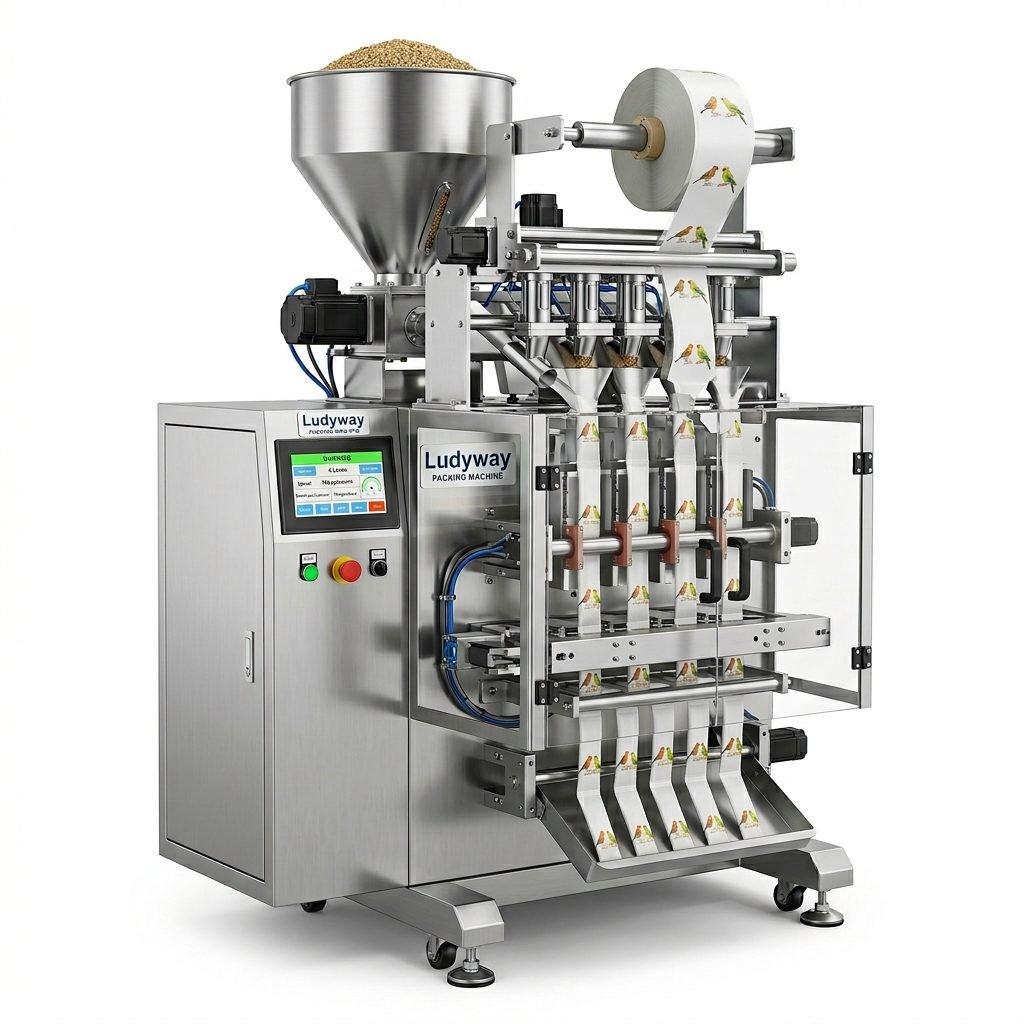
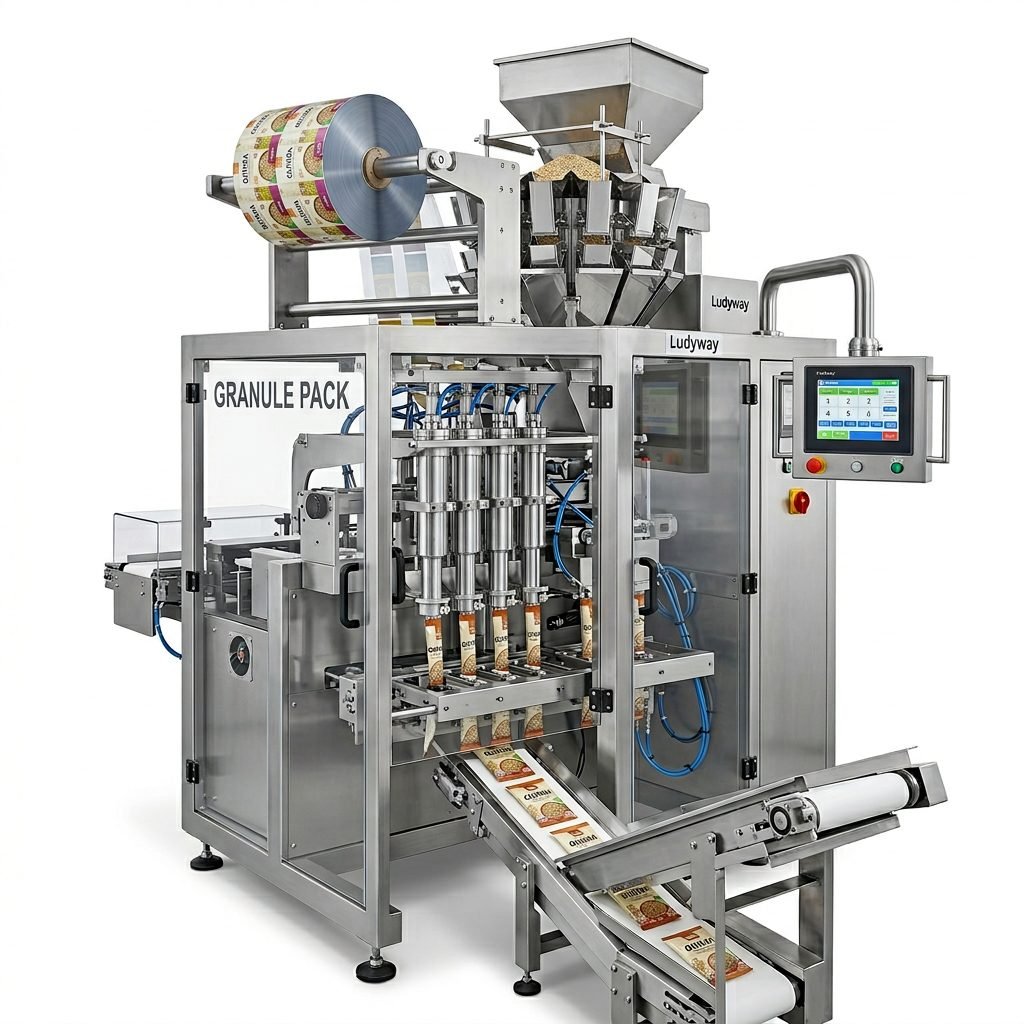
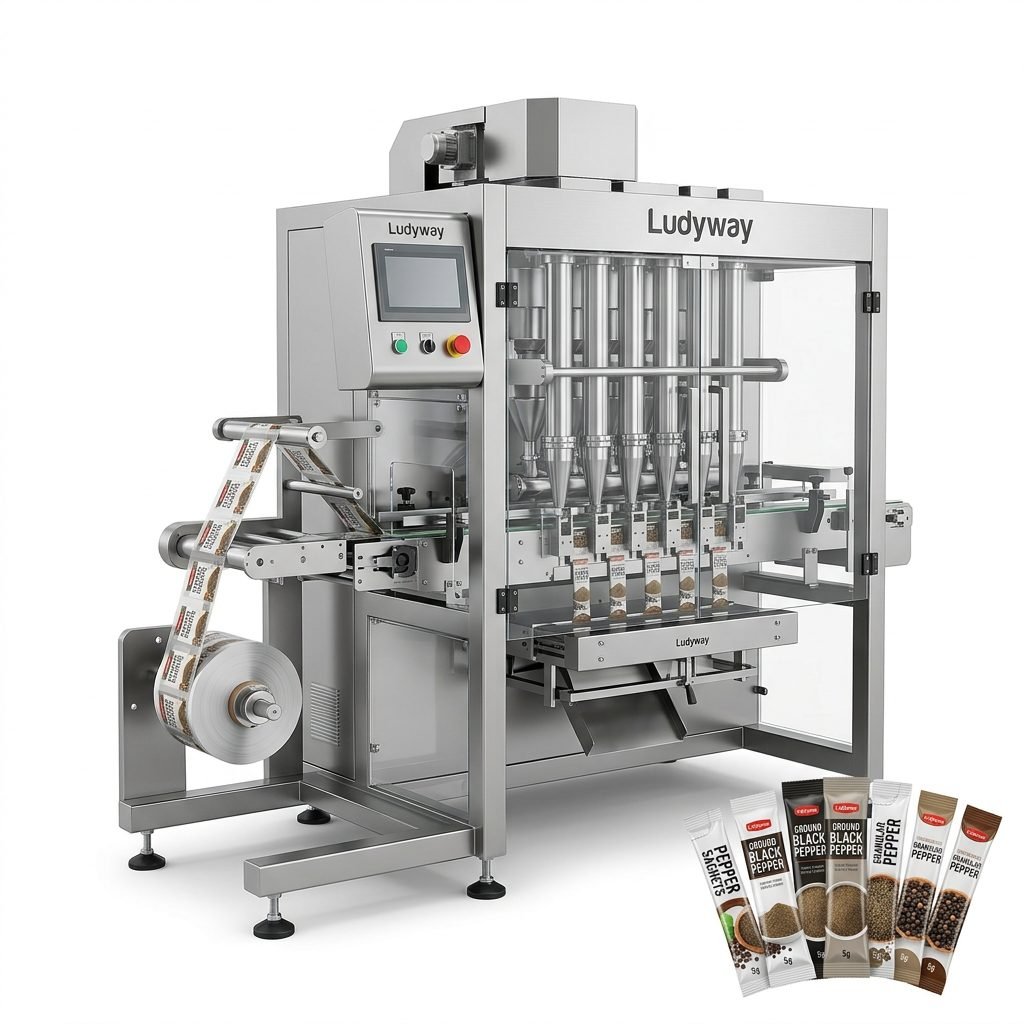
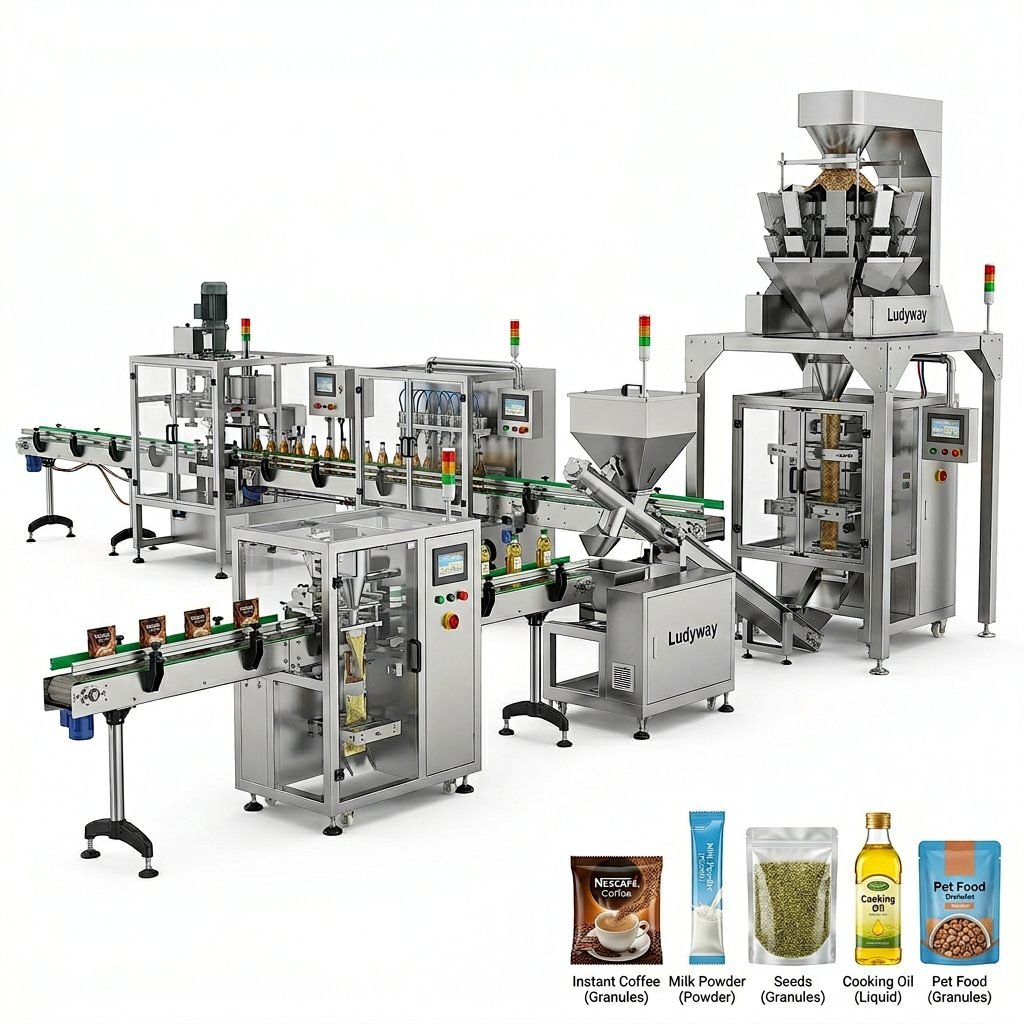
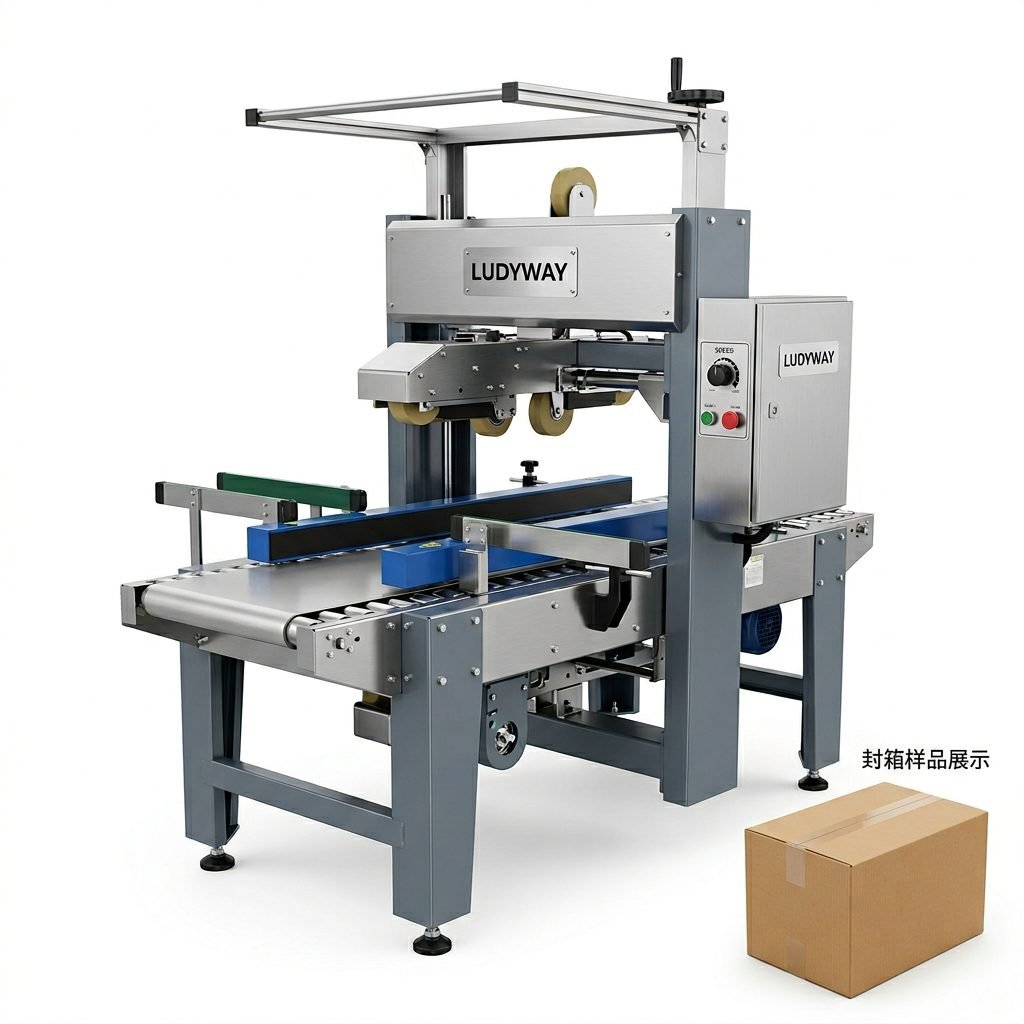
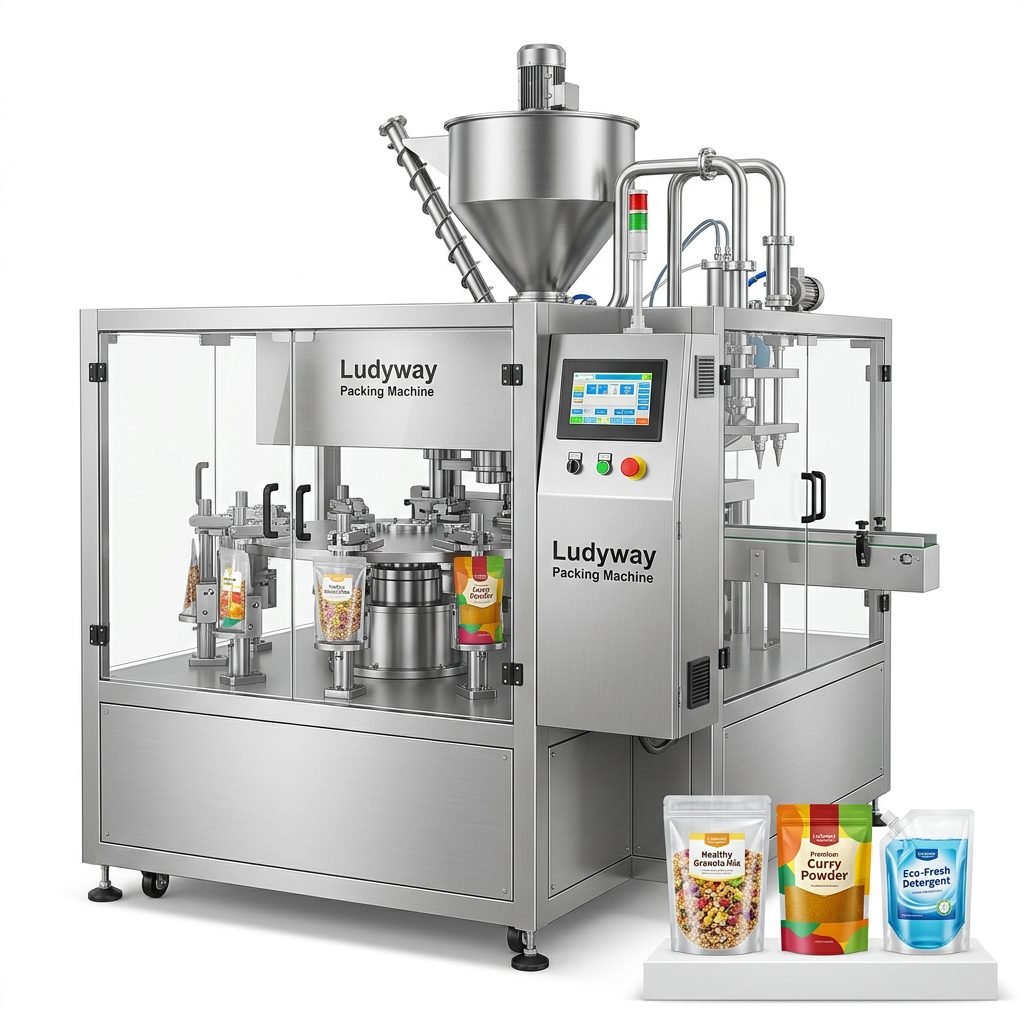
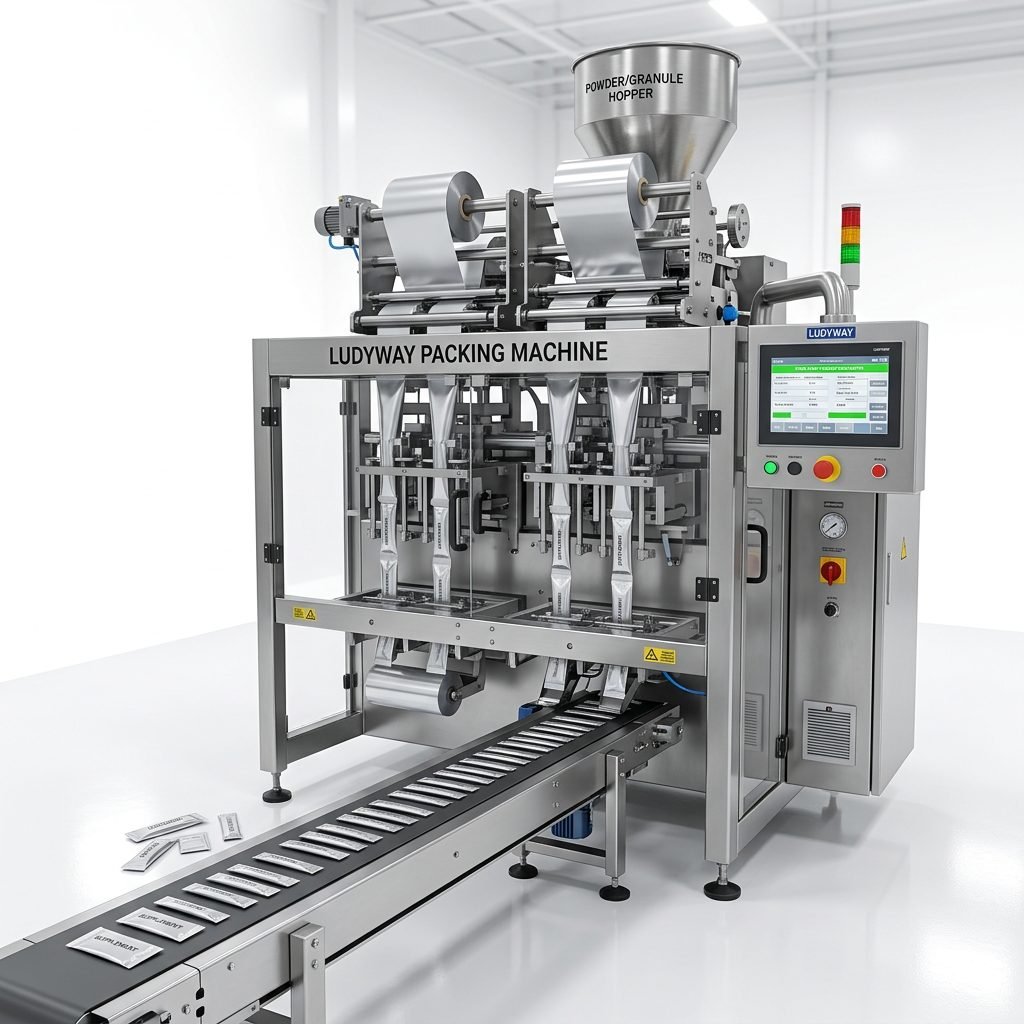
A packing material machine is the equipment used to form, fill, seal, wrap, label, count, or bundle packaging materials and products into finished packs ready for storage, transport, and sale. In modern manufacturing, these machines are essential for food, pharmaceutical, cosmetic, chemical, and daily-use industries because they improve speed, consistency, hygiene, and labor efficiency.
Whether you are packaging powders, granules, liquids, pastes, pouches, sachets, bottles, cartons, or bulk bags, choosing the right machine can directly affect your production cost, output stability, and product quality.
What Is a Packing Material Machine?
A packing material machine is a broad term covering machines that handle packaging materials such as film, paper, foil, laminated rolls, preformed pouches, bottles, jars, caps, labels, cartons, and bags. These machines transform packaging materials into functional packages that protect products, extend shelf life, improve presentation, and support logistics.
Depending on the application, a packing material machine may perform one or several operations:
- Forming packaging from roll film or sheet material
- Filling products into pouches, sachets, bottles, or bags
- Sealing with heat, pressure, ultrasonic, or vacuum methods
- Labeling and coding for traceability and branding
- Cartoning and case packing for secondary packaging
- Palletizing and wrapping for final shipment preparation
Why Packing Material Machines Matter
In manual packaging, output is limited and product consistency can vary. Automated or semi-automatic packaging systems solve these issues by delivering repeatable accuracy and faster throughput. For businesses aiming to grow, packaging automation is often one of the most practical investments.
- Improves packaging speed and output
- Reduces labor dependence and operating cost
- Enhances seal quality and packaging consistency
- Supports hygiene and contamination control
- Minimizes material waste
- Enables better traceability and compliance
- Creates a more professional retail appearance
How a Packing Material Machine Works
Although machine structures vary by product type and package style, the basic working principle usually follows a clear process flow. The system feeds packaging material, positions or forms the pack, doses the product, seals the package, and then performs discharge or downstream handling.
Basic Working Steps
| Step | What Happens | Typical Components |
|---|---|---|
| Material Feeding | Roll film, pouches, bottles, cartons, or bags are supplied into the machine | Unwinder, feeder, hopper, conveyor |
| Package Forming | Film is shaped into sachets, pouches, or bags if using form-fill-seal technology | Forming collar, tube, mold, bag former |
| Product Dosing | A controlled amount of product is delivered into each package | Auger filler, piston pump, weigher, liquid pump |
| Sealing | The package is closed securely to protect the product | Heat sealer, ultrasonic sealer, vacuum system |
| Cutting/Discharge | Finished packs are cut, separated, and transferred out | Cutter, discharge conveyor, counting unit |
| Inspection/End-of-Line | Packages are checked, labeled, boxed, or palletized | Checkweigher, metal detector, labeler, cartoner |
Main Control Logic
Most modern machines use PLC control, touchscreen HMI, servo motors, sensors, and pneumatic or electric actuators. These systems help synchronize movement, maintain fill accuracy, and reduce downtime during changeovers. Smart models can also store multiple product recipes, alarm records, and production statistics.
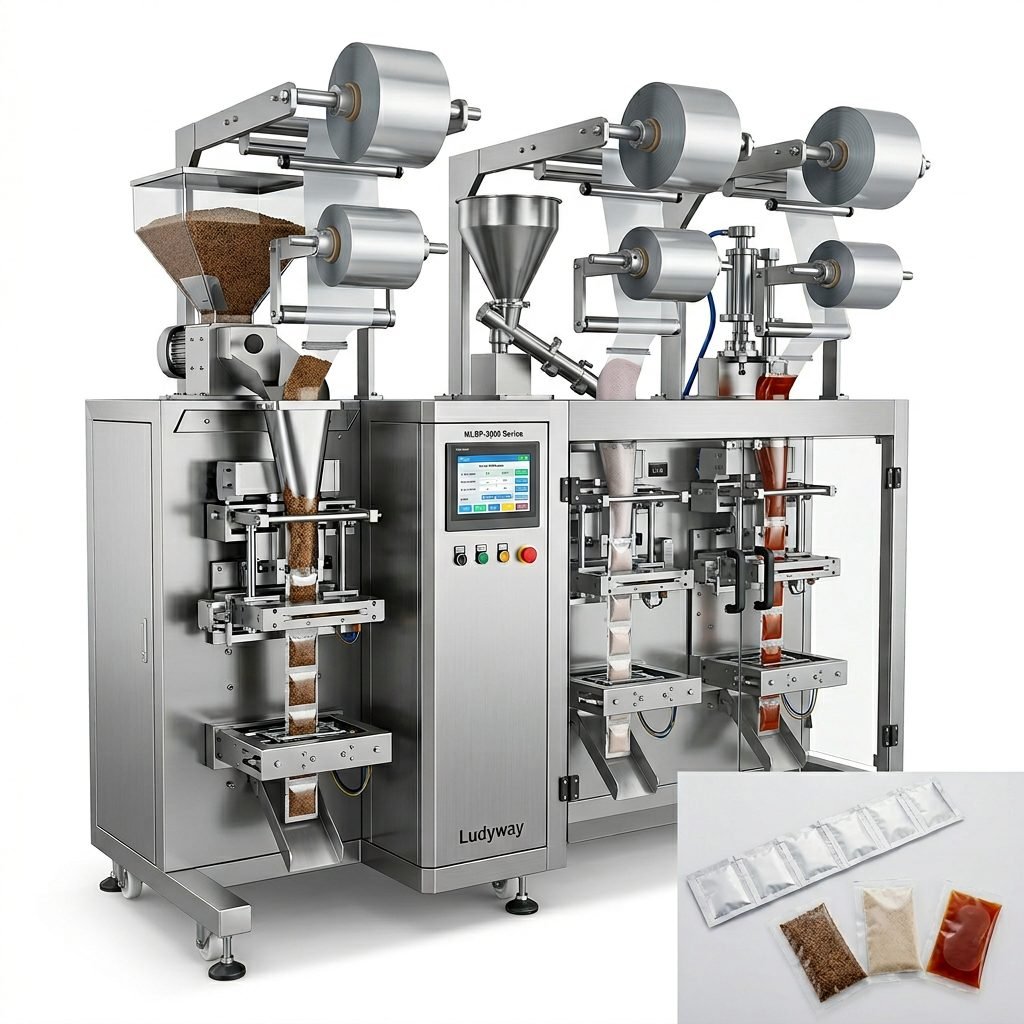
Common Types of Packing Material Machines
Different products and packaging materials require different machine structures. Here are the most common categories buyers should know.
1. Vertical Form Fill Seal Machines
These machines form bags from roll film, fill the product, and seal the package in one continuous cycle. They are widely used for powders, granules, snacks, coffee, sugar, seeds, and chemicals.
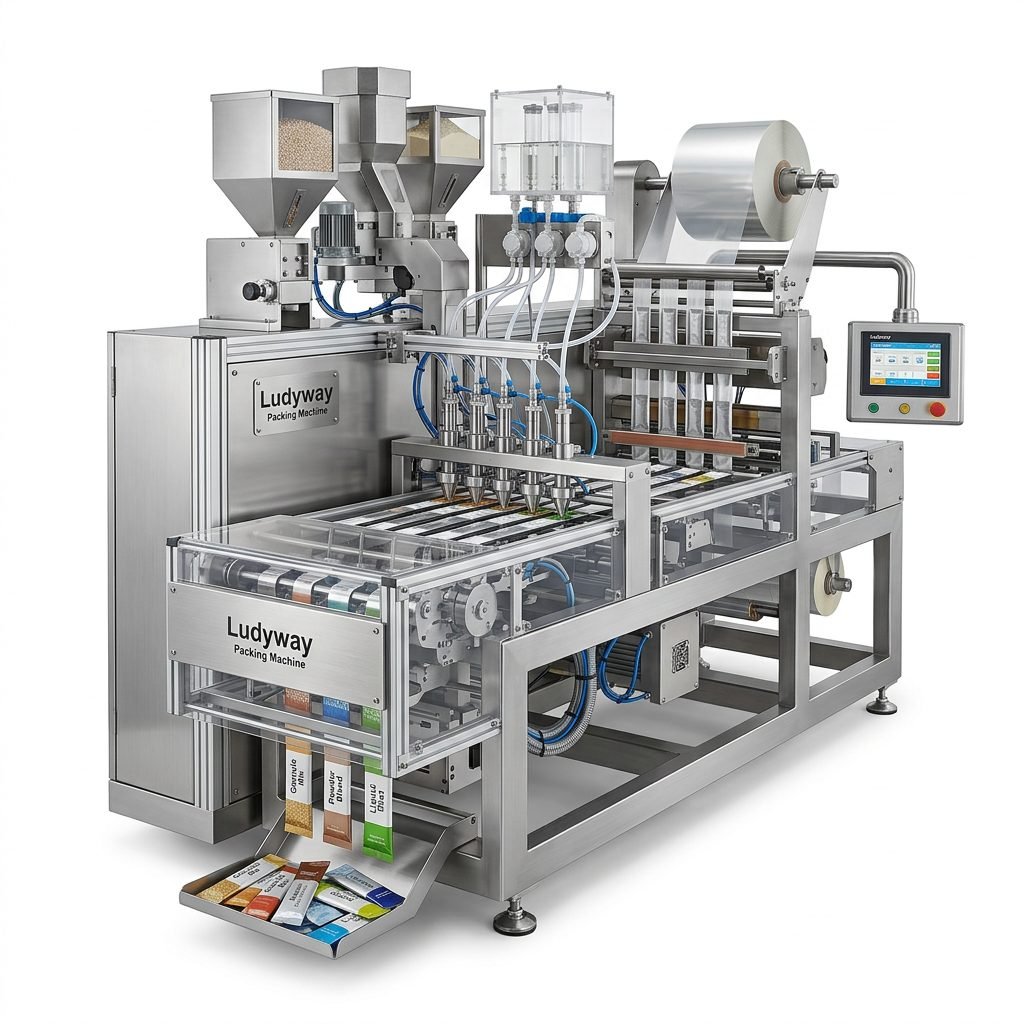
2. Sachet and Stick Pack Machines
Ideal for small-dose packaging, these machines are popular in food, pharma, nutraceutical, and cosmetic sectors. They can handle powders, granules, liquids, and pastes in compact retail-friendly formats.
3. Premade Pouch Packing Machines
These systems open ready-made pouches, fill product, and seal them. They are suitable when premium package appearance, zipper features, or special pouch shapes are needed.
4. Bottle Filling and Capping Machines
Used for liquids, syrups, oils, capsules, tablets, powders, and creams. They often work together with bottle unscramblers, cappers, labelers, and induction sealers.
5. Cartoning and Case Packing Machines
These machines place primary packs into cartons or shipping cases. They improve secondary packaging efficiency and help prepare products for distribution.
6. Vacuum and Sealing Machines
Often used for food, seafood, meat, and certain medical products, vacuum systems remove air before sealing to help preserve freshness and reduce oxidation.
7. Palletizing and End-of-Line Systems
These systems automate the final stage of packaging by stacking cartons or bags onto pallets and preparing them for warehouse handling and transport.
Applications Across Industries
| Industry | Typical Products | Common Packaging Formats |
|---|---|---|
| Food | Spices, coffee, sauce, snacks, milk powder, grains | Sachets, stick packs, pouches, bags, bottles |
| Pharmaceutical | Granules, oral liquids, powders, tablets, capsules | Sachets, stick packs, blisters, bottles, vials |
| Cosmetic | Creams, serums, lotions, shampoos, masks | Sachets, tubes, bottles, pouches |
| Chemical | Detergents, additives, water treatment powders, liquids | Bags, sachets, pouches, drums |
| Animal Feed | Pellets, premixes, supplements, powders | Bulk bags, sachets, pouches, sacks |
Key Components to Understand Before Buying
- Feeding system: determines how materials and products enter the machine
- Dosing system: affects fill accuracy for powders, granules, or liquids
- Sealing unit: directly impacts package integrity and leak resistance
- Control system: influences usability, diagnostics, and automation level
- Frame and contact parts: important for hygiene, corrosion resistance, and durability
- Changeover design: critical if you run multiple SKUs or package sizes
- Integration capability: matters if you plan to connect upstream and downstream equipment
How to Choose the Right Packing Material Machine
The right choice depends on your product, packaging format, target output, available floor space, and long-term production goals. Instead of focusing only on price, evaluate the machine as a complete productivity asset.
1. Define Your Product Characteristics
Start with the product itself. Is it powder, granule, liquid, paste, tablet, or solid piece? Does it flow easily? Is it sticky, corrosive, dusty, or fragile? Product behavior determines the filling method and machine structure.
2. Confirm Packaging Material and Format
Different materials require different sealing temperatures, pulling systems, and mechanical stability. You should confirm:
- Roll film or premade pouch
- Single-lane or multi-lane production
- Sachet, stick pack, pillow bag, gusset bag, bottle, or carton
- Barrier requirements against moisture, oxygen, or light
3. Calculate Required Capacity
Choose a machine that matches your actual production plan, not just your current lowest volume. Consider hourly output, peak season demand, and future SKU expansion. A system that is too small creates bottlenecks; one that is too large may waste budget and space.
4. Evaluate Accuracy and Seal Quality
For high-value or regulated products, filling accuracy and sealing consistency are especially important. Pharmaceutical, nutraceutical, and premium food brands should pay close attention to validation capability, reject systems, and inspection devices.
5. Check Automation Level
A semi-automatic model may be enough for startups or low-output workshops. A fully automatic line is more suitable for medium to large manufacturers who need labor savings, continuous operation, and stable batch quality.
6. Consider Maintenance and Spare Parts
Easy cleaning, simple part replacement, and reliable after-sales support reduce total downtime. Ask about spare parts availability, operator training, remote support, and documentation.
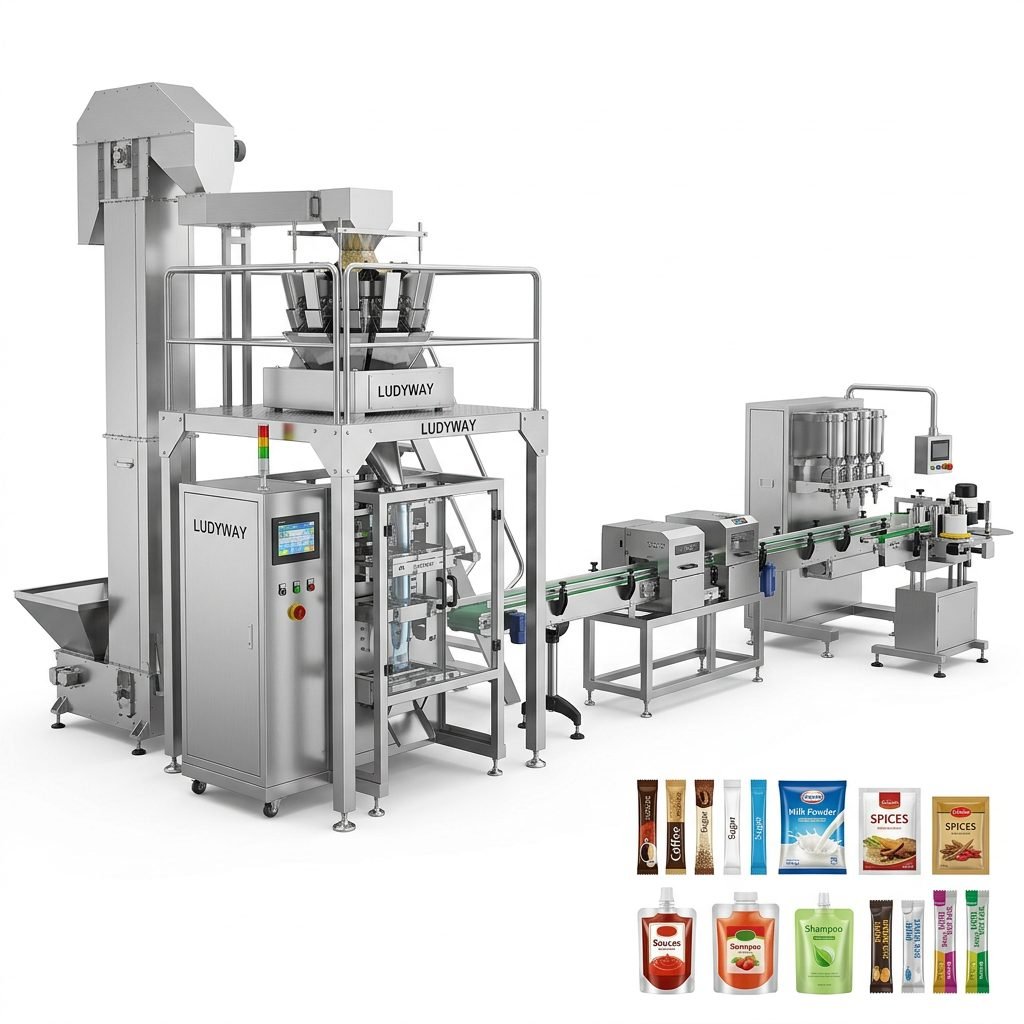
7. Think Beyond the Single Machine
In many cases, the best investment is not just one machine but an integrated packaging line. Feeders, conveyors, checkweighers, metal detectors, coding units, cartoners, and palletizers can work together to create a smoother and more scalable process.
Quick Selection Checklist
| Selection Factor | What to Ask |
|---|---|
| Product Type | Is it powder, granule, liquid, paste, tablet, or pouch product? |
| Pack Format | Do you need sachets, stick packs, bottles, pouches, cartons, or bags? |
| Output | How many packs per minute or hour do you need? |
| Material Compatibility | Can the machine handle your packaging film or container type reliably? |
| Accuracy | What filling tolerance is acceptable for your product? |
| Compliance | Do you need GMP, CE, food-grade, or other standards? |
| Expansion | Will you add more SKUs or automate the full line later? |
Mistakes to Avoid When Buying
- Choosing only by lowest price
- Ignoring product flowability and dosing complexity
- Overlooking seal strength and packaging material compatibility
- Buying a machine with no room for future output growth
- Failing to assess after-sales support and spare parts service
- Not requesting real sample testing before purchase
Who Should Consider a Turnkey Packaging Line?
If your production includes multiple steps such as feeding, filling, sealing, inspection, cartoning, and palletizing, a turnkey packaging line may be more efficient than buying standalone machines from different suppliers. A complete solution can simplify line integration, reduce compatibility issues, and improve overall performance.
For buyers looking for scalable automation, Ludyway packaging machine solutions are often considered for food, pharmaceutical, health supplement, cosmetic, chemical, and pouch-based applications because of their wide machine range and turnkey line capabilities.
Final Buying Advice
The best packing material machine is not simply the fastest or cheapest model. It is the one that matches your product characteristics, packaging material, capacity target, compliance needs, and future expansion plan. A well-selected machine can help your factory reduce waste, improve packaging consistency, and strengthen competitiveness in the market.
Before making a final decision, prepare product samples, packaging material samples, desired pack dimensions, and output expectations. Then compare machine performance, customization options, service capability, and total ownership cost. That approach will lead to a smarter long-term investment.