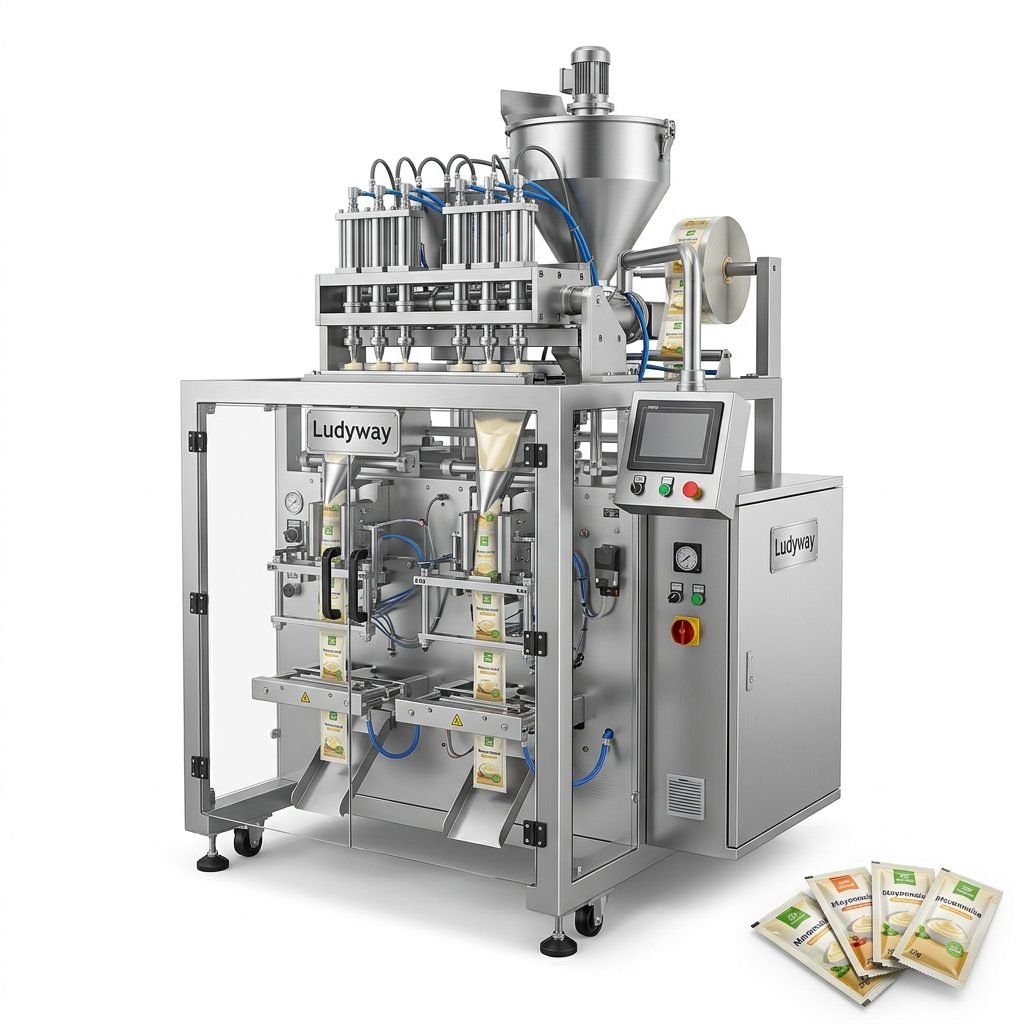
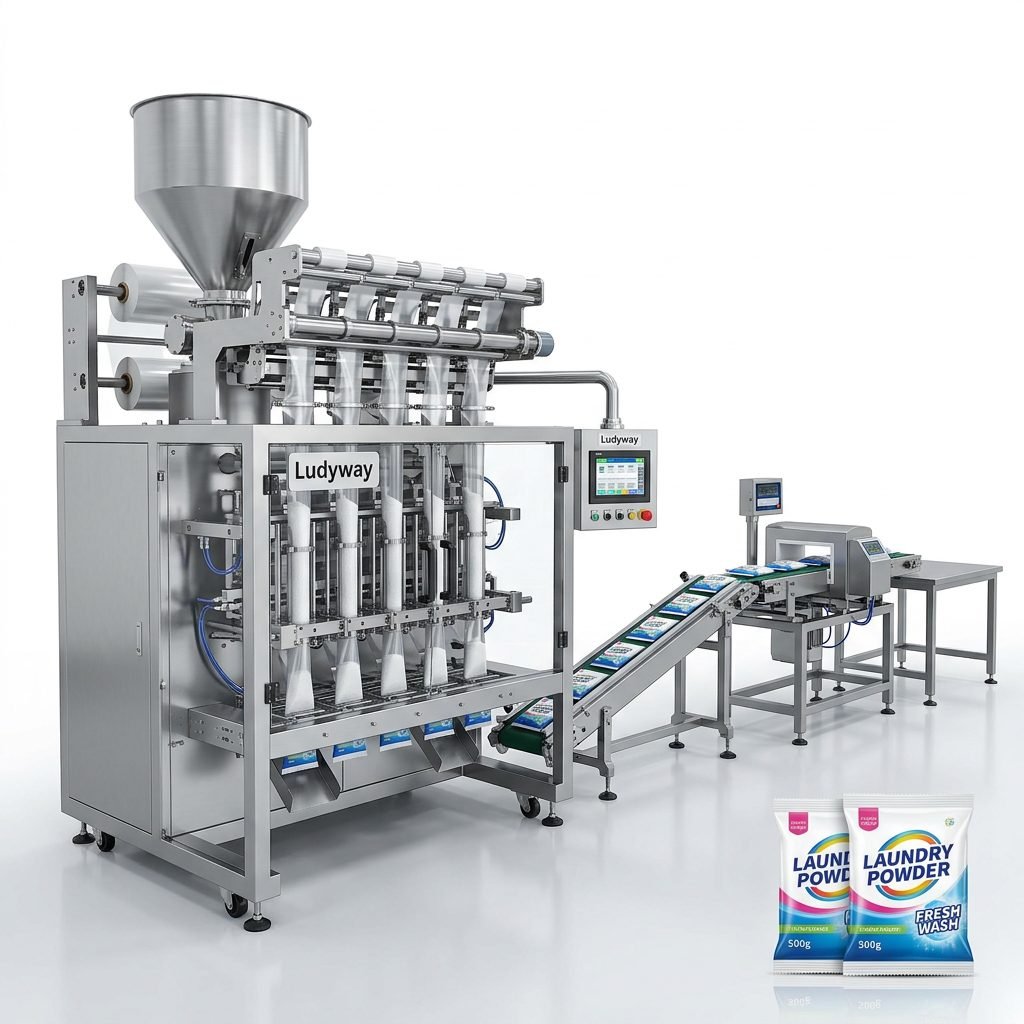
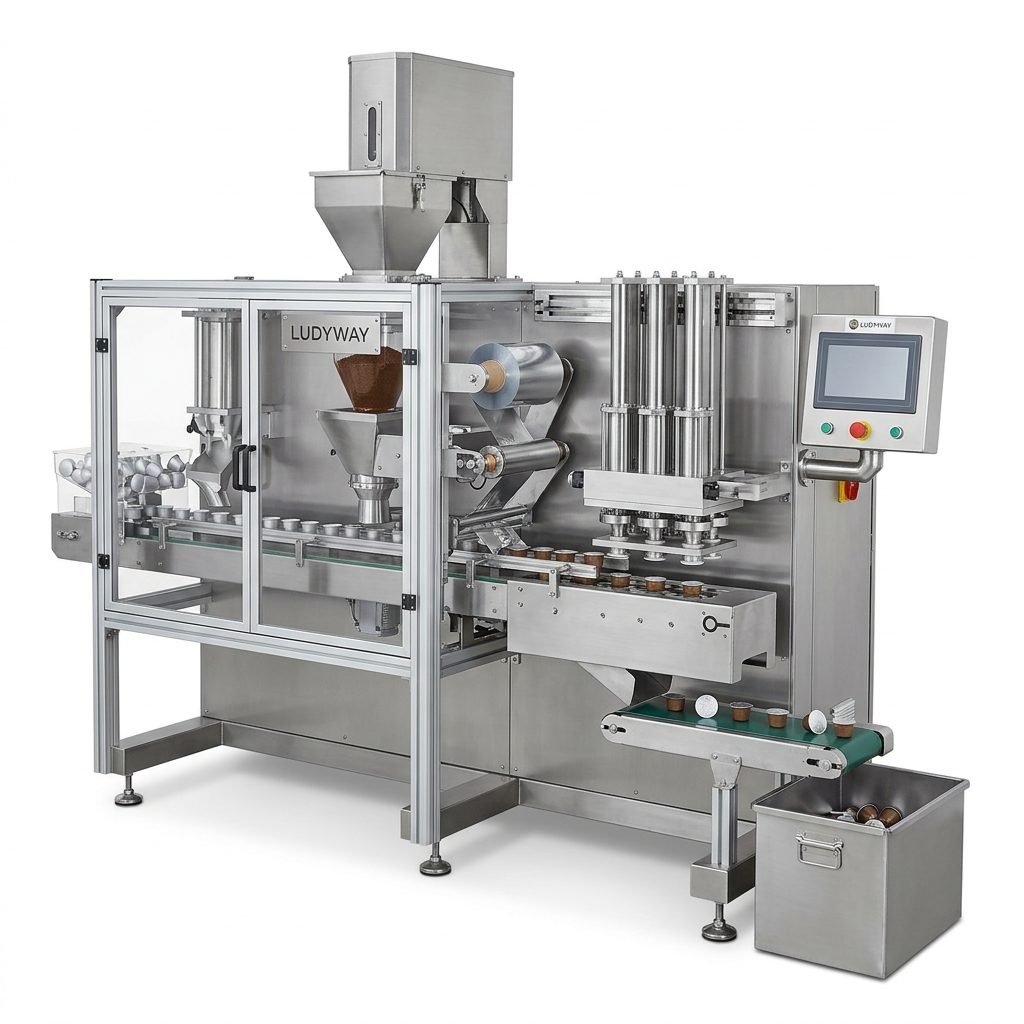
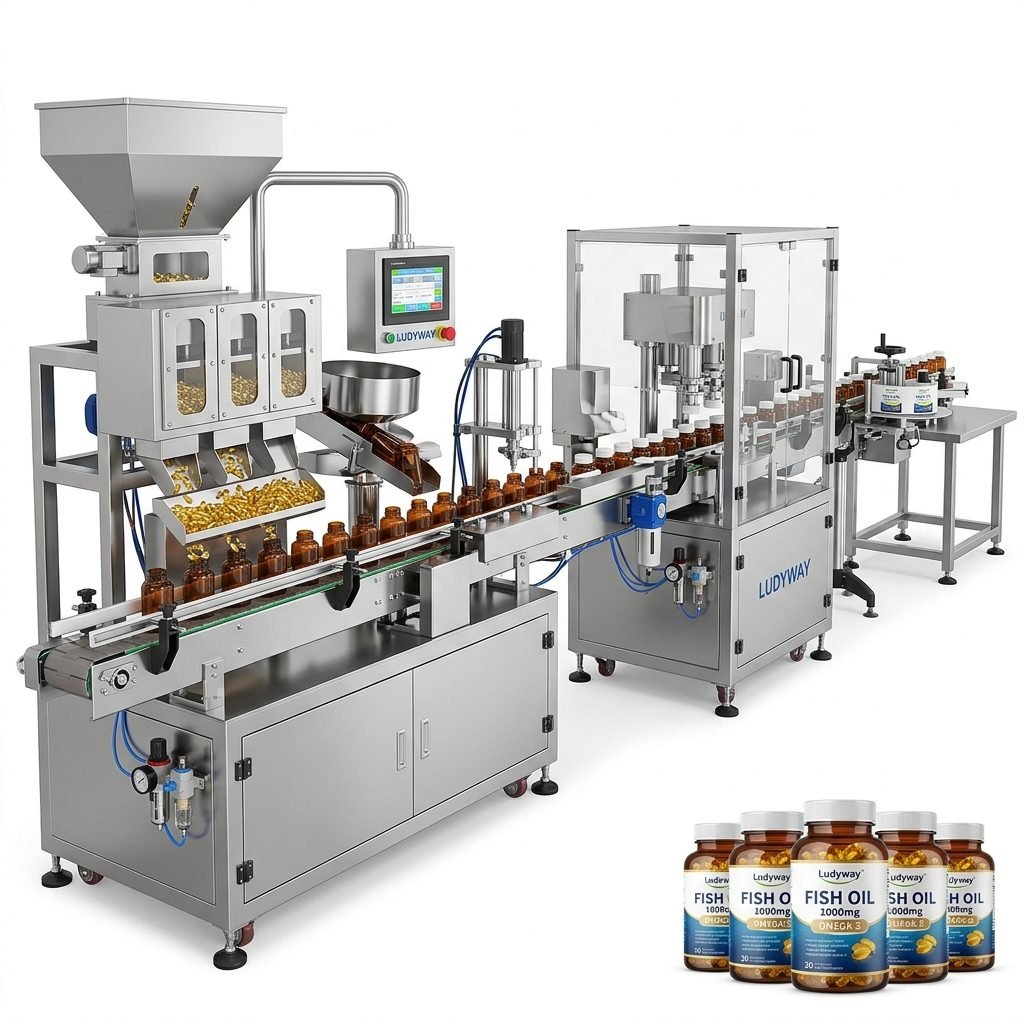
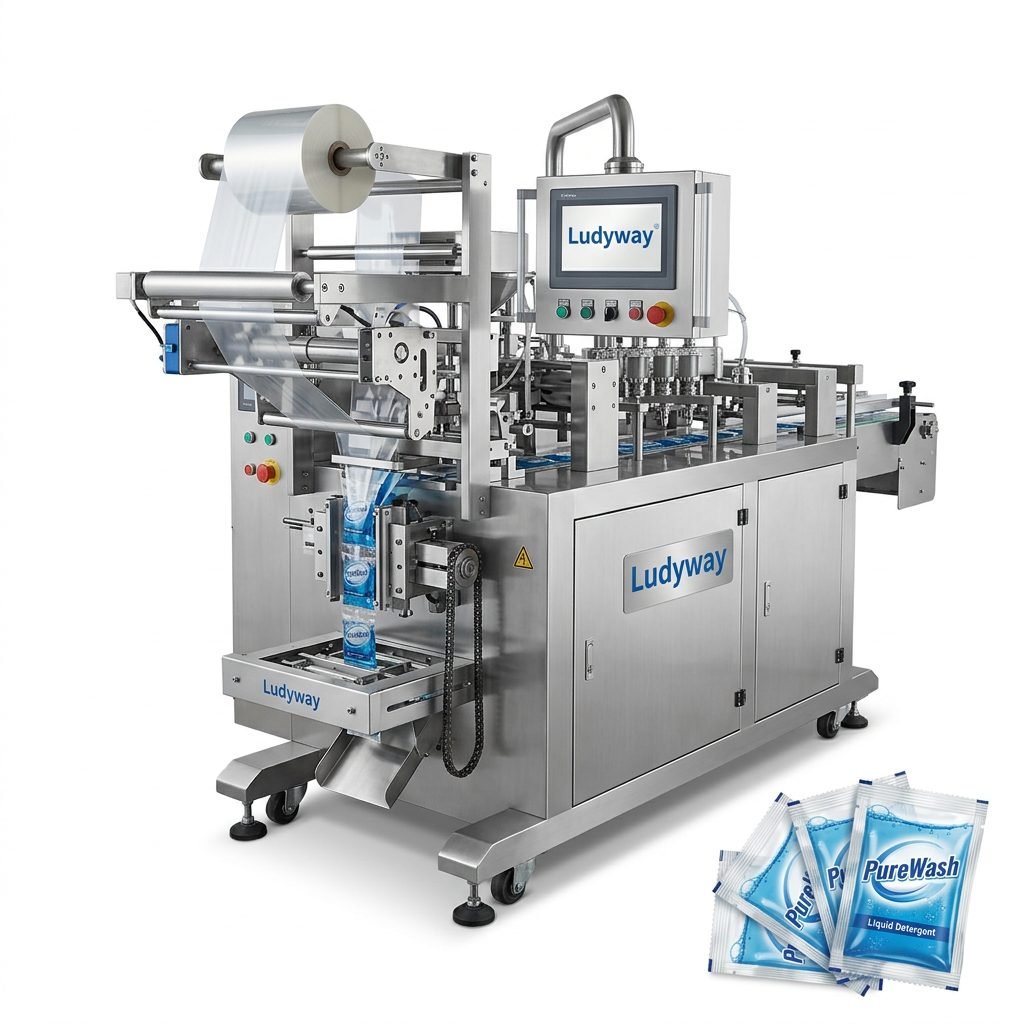
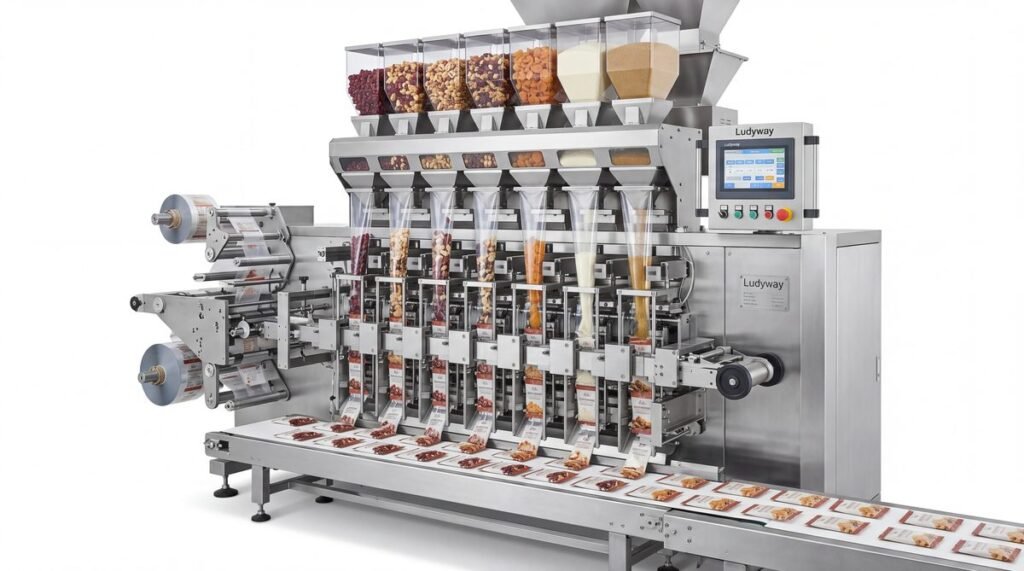
Germany’s food processing sector is renowned for its precision engineering, strict hygiene standards, and high automation levels. For sauce producers—whether crafting artisanal pesto in Bavaria or producing industrial volumes of currywurst sauce in North Rhine-Westphalia—small sauce packaging machines have become essential assets. These compact systems offer the perfect balance between footprint, efficiency, and flexibility, allowing businesses to scale production without massive facility overhauls.
Investing in the right sachet packaging machine or stick pack machine specifically configured for sauces, pastes, and condiments can dramatically improve product shelf life, reduce waste, and enhance brand presentation. This guide covers everything you need to know before purchasing a small sauce packaging solution for the German market.
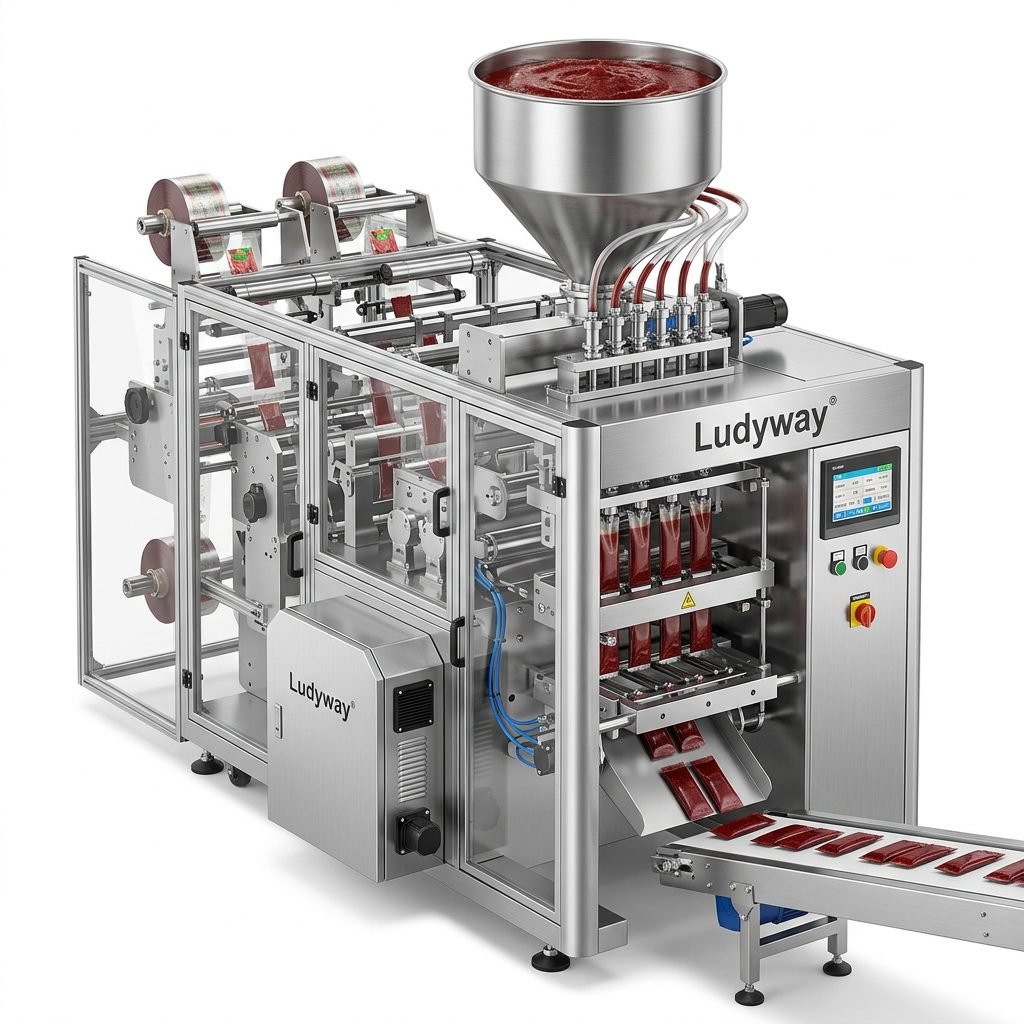
Why Small Sauce Packaging Machines Are Gaining Popularity in Germany
The German food industry is experiencing a shift toward portion-controlled, single-serve, and travel-friendly packaging formats. From hotel breakfast jams to takeaway ketchup sachets, the demand for small sauce packaging machines continues to rise. Key drivers include:
- Rising demand for convenience food – Busy lifestyles fuel the need for pre-portioned sauce sachets and stick packs.
- Hygiene and food safety regulations – Automated packaging minimizes human contact, aligning with EU and DIN standards.
- Sustainability goals – Modern machines support mono-material films and recyclable laminates, helping reduce packaging waste.
- E-commerce and export growth – Durable, leak-proof small packaging extends product reach and reduces shipping damage.
Key Features to Look for in a Small Sauce Packaging Machine
When selecting equipment for your German production line, prioritize these critical specifications:
1. Hygienic Design and Easy Cleanability
German food safety regulations demand equipment that can be thoroughly sanitized. Look for stainless steel construction, sloped surfaces, and CIP (Clean-in-Place) compatibility. The filling system should disassemble quickly without tools for daily washdowns.
2. Precision Liquid Filling Technology
Sauces vary widely in viscosity—from thin soy sauce to thick mayonnaise. A small sauce packaging machine must handle this range using piston fillers, peristaltic pumps, or servo-driven volumetric systems. Accuracy within ±0.5% is achievable with modern equipment, critical for complying with German filling quantity regulations.
| Sauce Type | Viscosity Range | Recommended Filling Technology | Typical Sachet Output (per lane) |
|---|---|---|---|
| Thin Sauces (soy sauce, vinegar dressings) | Low (1–100 cP) | Time-pressure or flow meter filling | 35–55 packs/min |
| Medium Sauces (ketchup, BBQ sauce) | Medium (100–5,000 cP) | Servo piston or peristaltic pump | 30–45 packs/min |
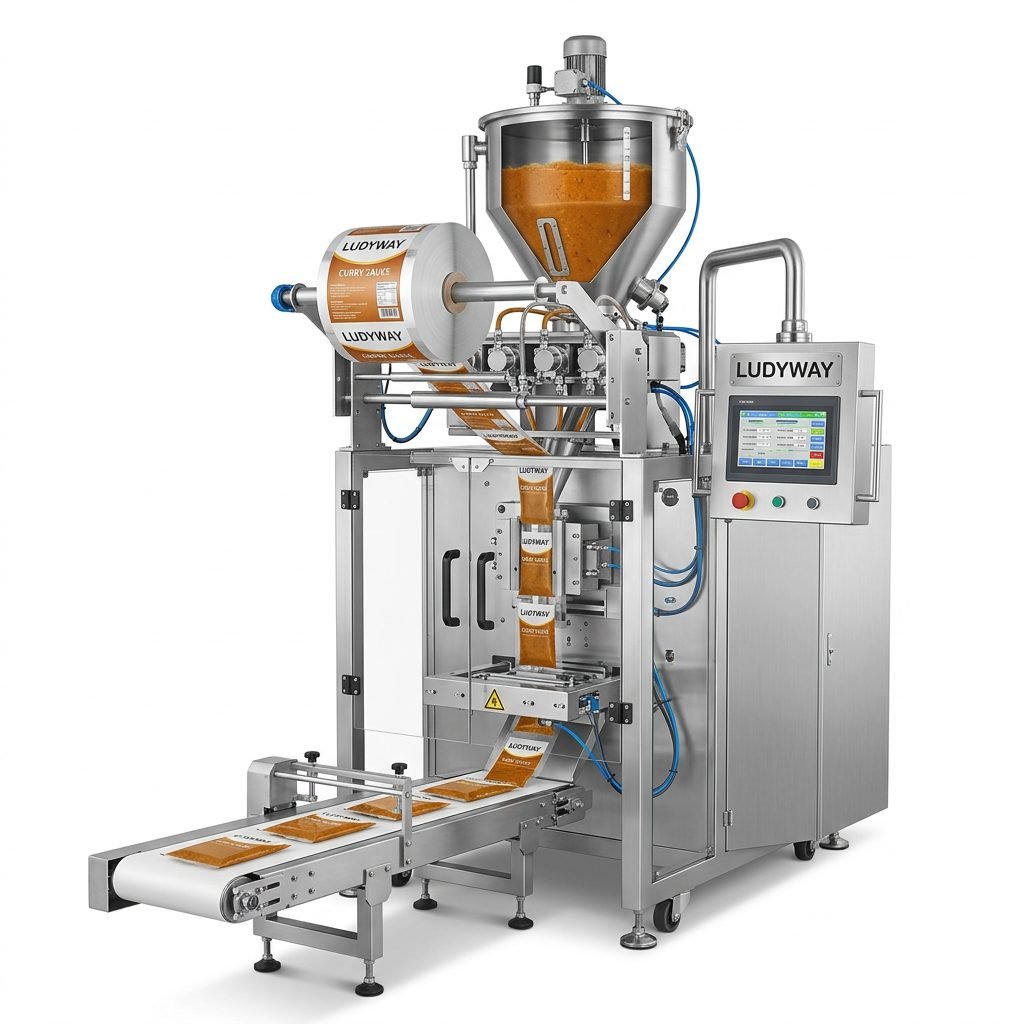
| Thick Pastes (mayonnaise, mustard, curry paste) | High (5,000–50,000+ cP) | Positive displacement pump with agitation hopper | 20–35 packs/min |
| Chunky Sauces (bolognese, salsa, relish) | Variable with particulates | Special wide-orifice piston or progressive cavity pump | 15–25 packs/min |
3. Compact Footprint and Multi-Lane Flexibility
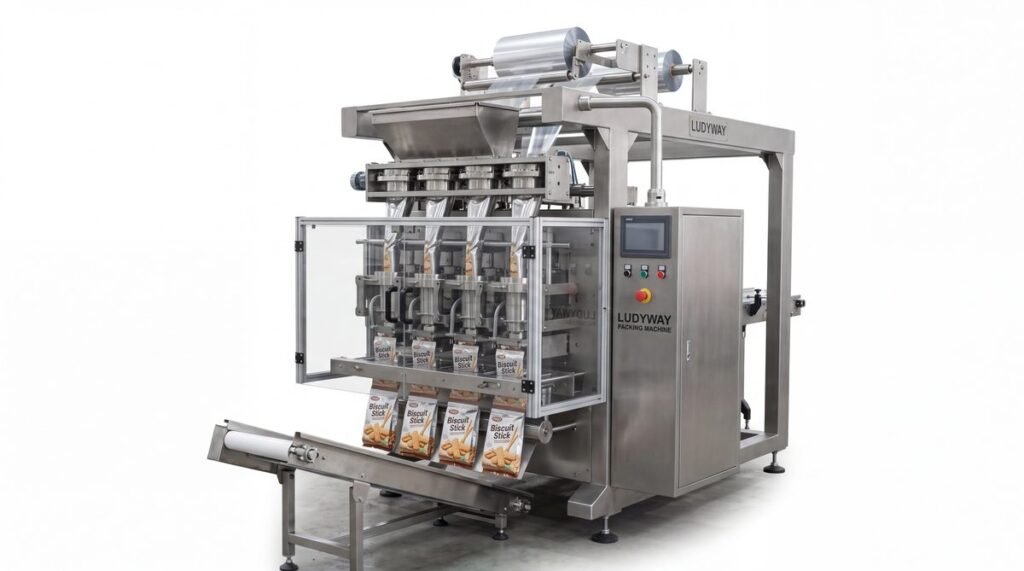
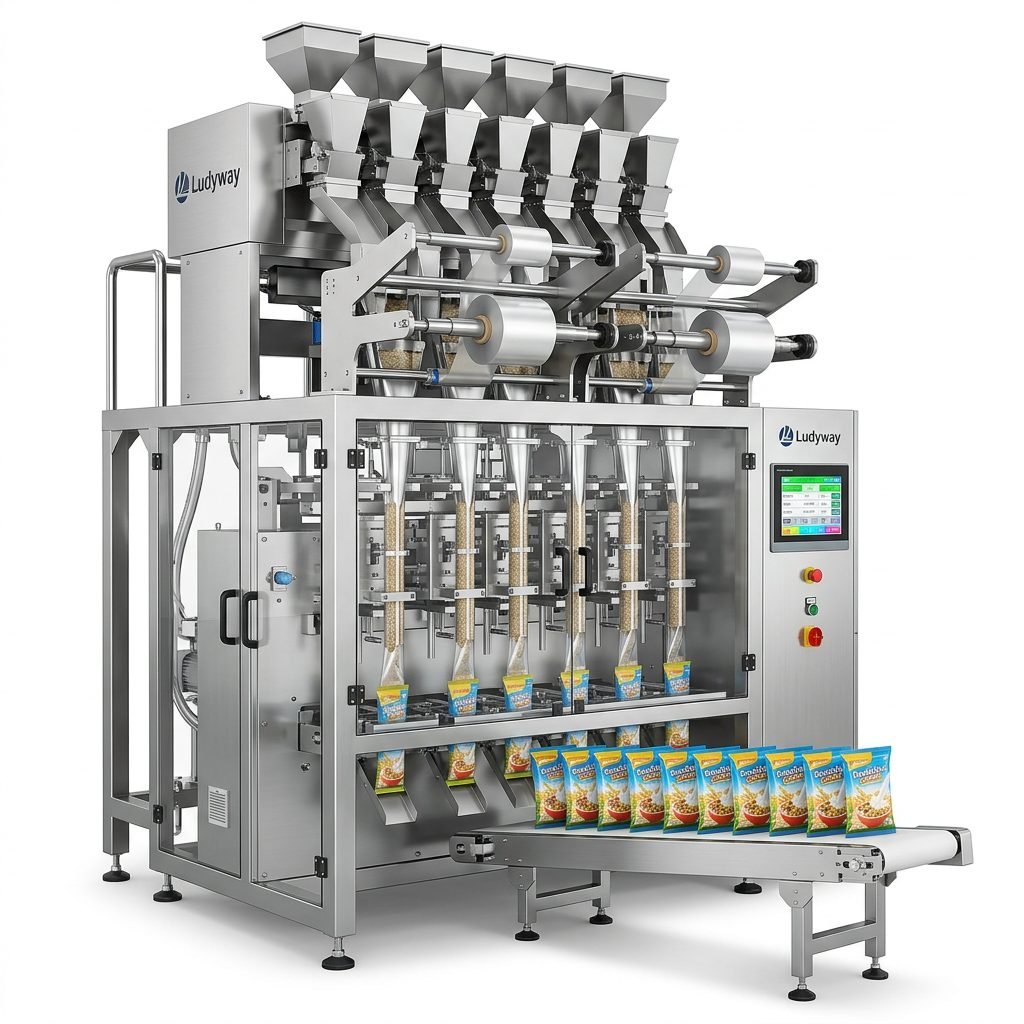
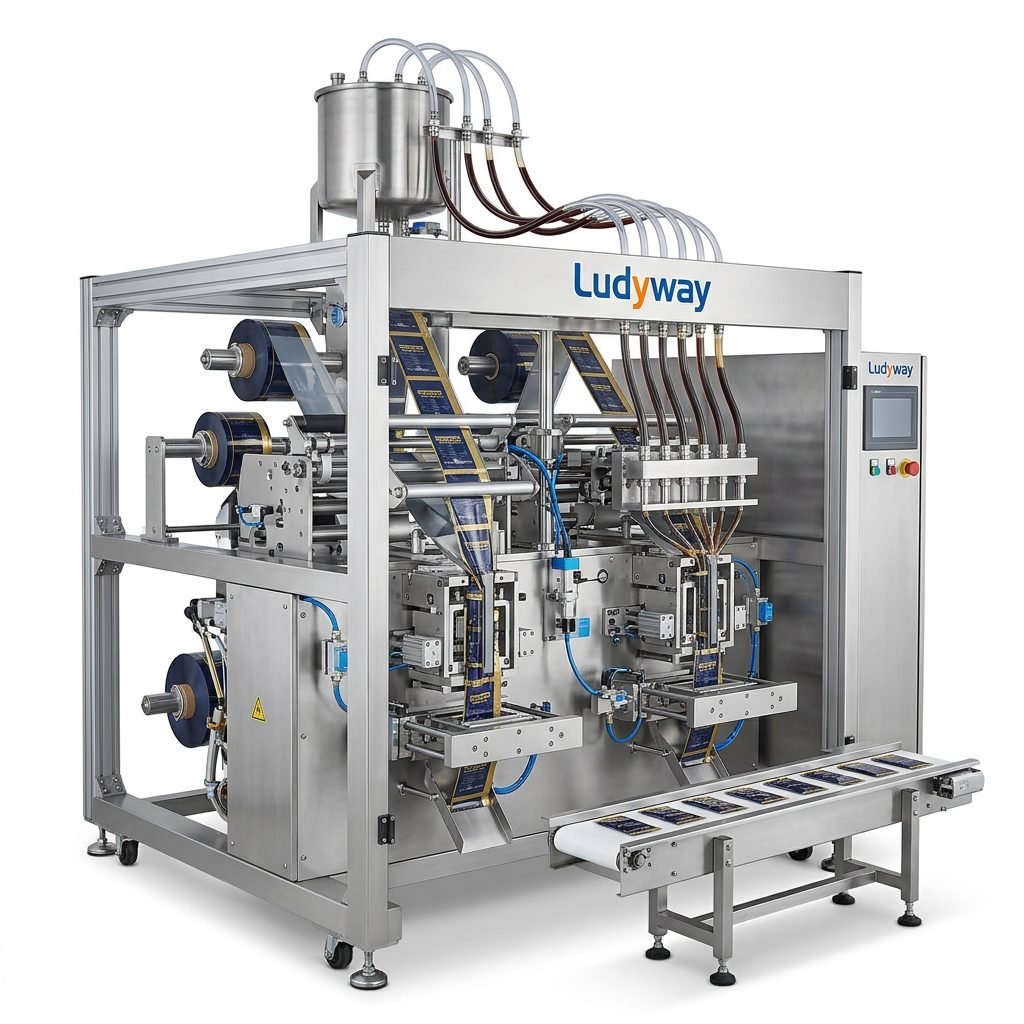
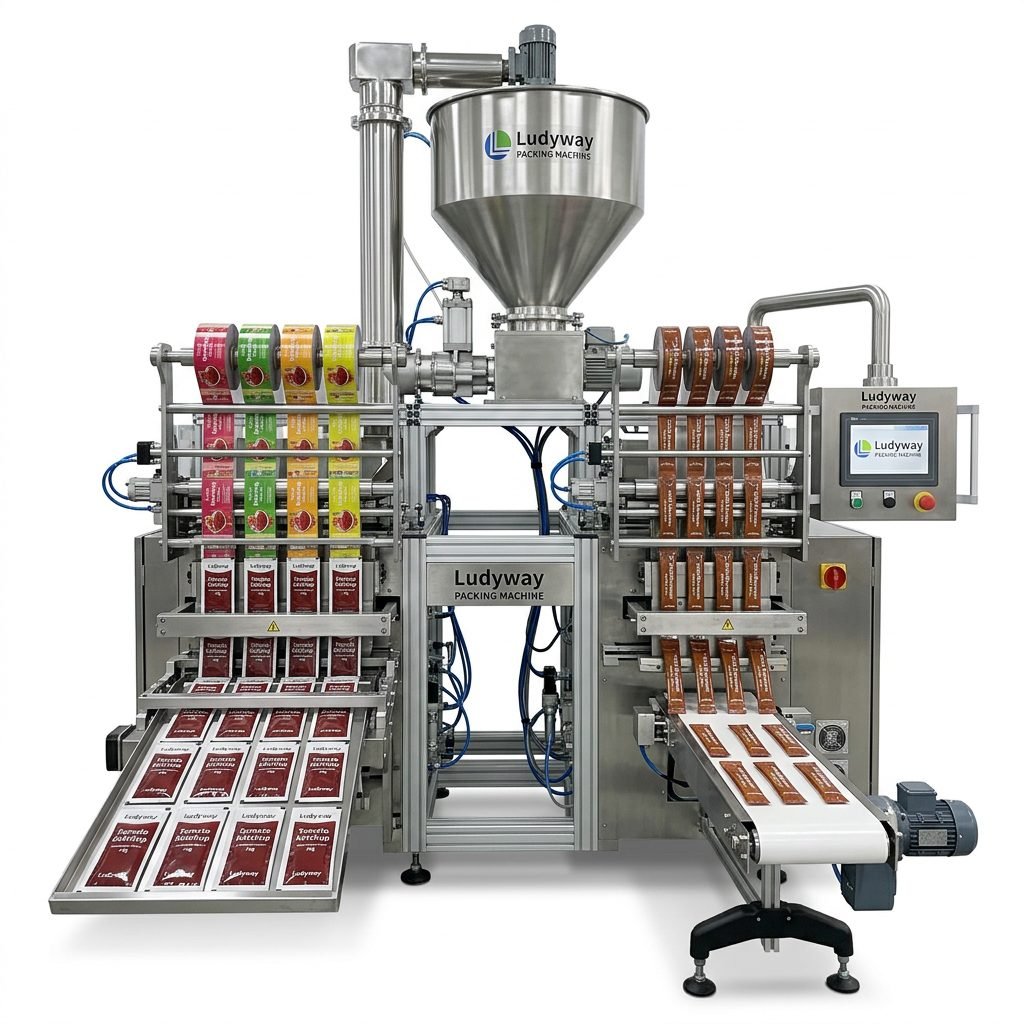
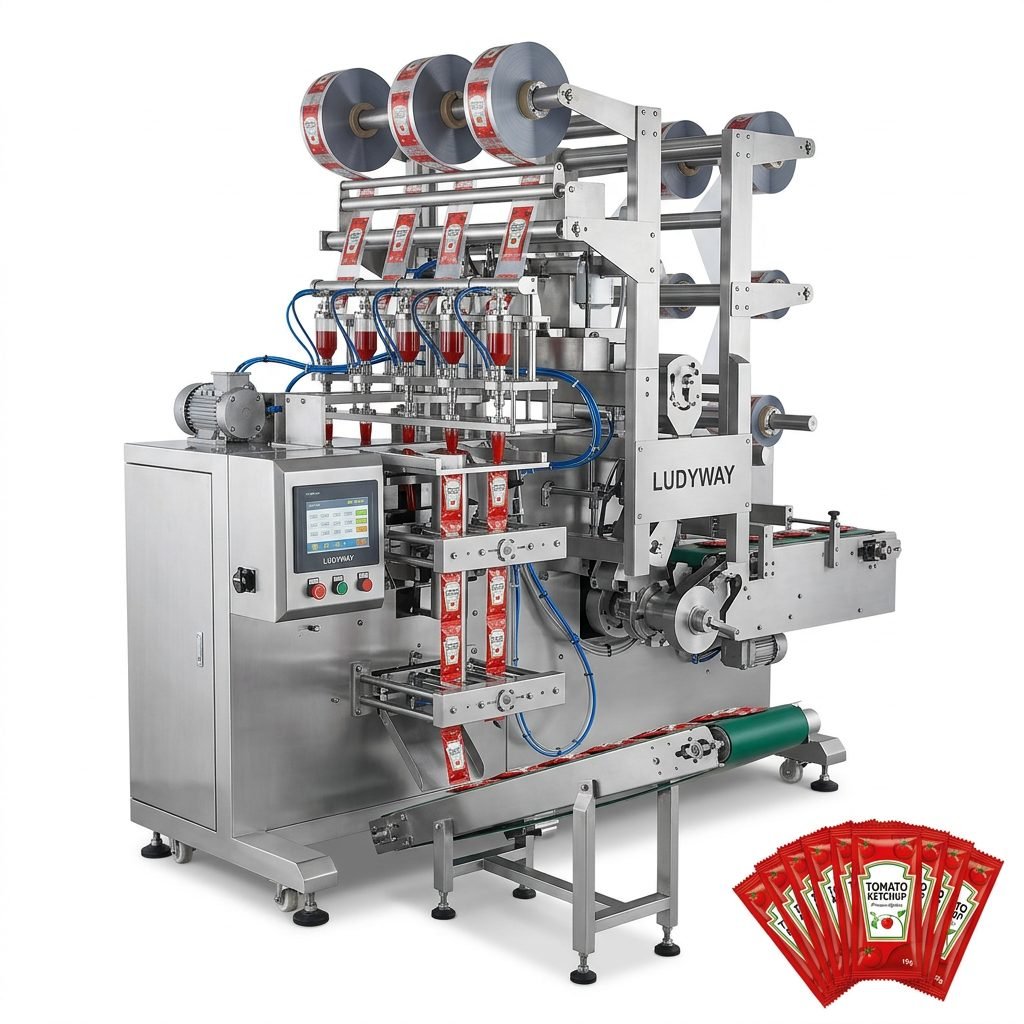
Small production facilities in German industrial parks benefit from multi-lane stick pack machines that multiply output without occupying extensive floor space. A 4-lane or 6-lane sachet packaging machine can deliver the throughput of a much larger single-lane system while fitting into tight production layouts.
Types of Small Sauce Packaging Machines Available
- Stick Pack Machines – Ideal for single-serve ketchup, mayonnaise, and salad dressing portions. These create narrow, elongated sachets that are easy to tear open and dispense.
- Flat Sachet Machines – Suitable for larger portion sizes (10g–50g), commonly used for BBQ sauces, honey mustard, and dipping sauces in foodservice and retail channels.
- Pre-made Pouch Fillers – For premium organic sauces and gourmet condiments, rotary pouch fillers offer excellent seal integrity and attractive presentation.
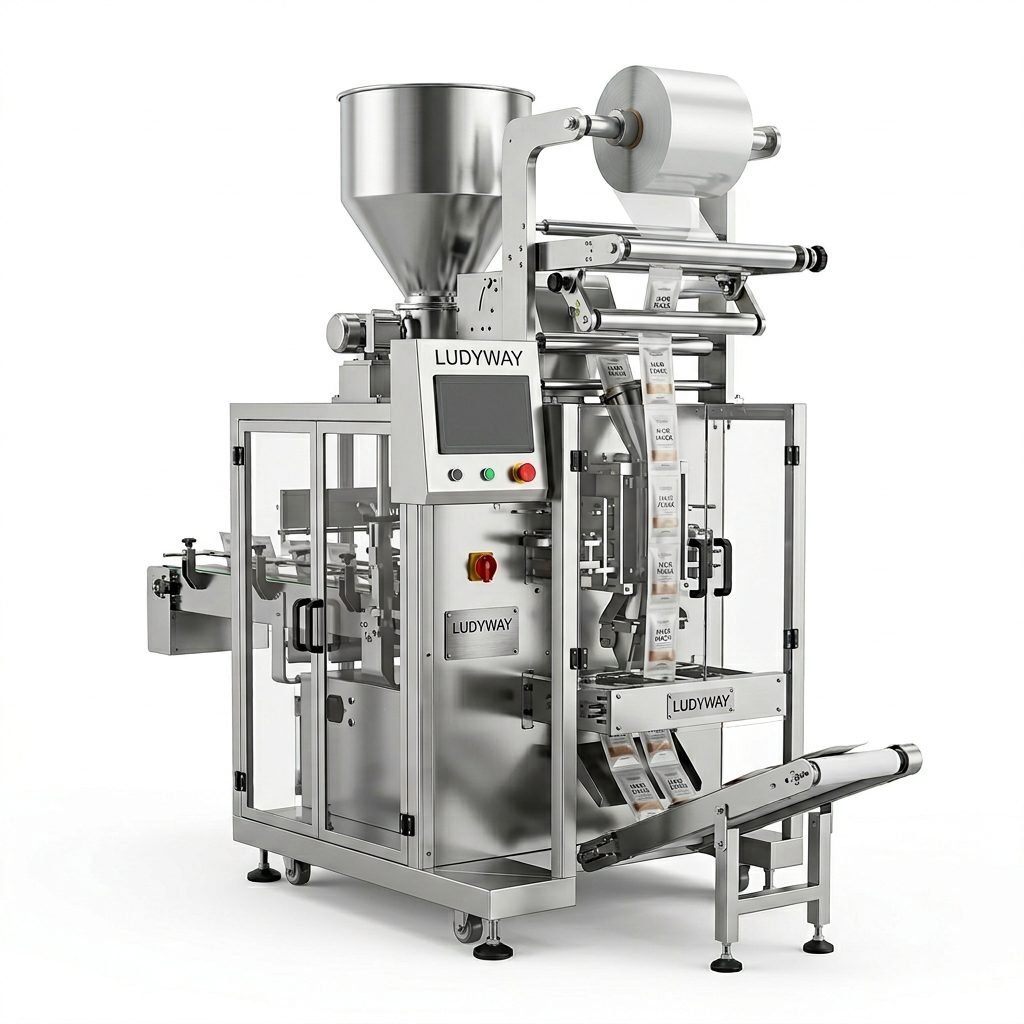
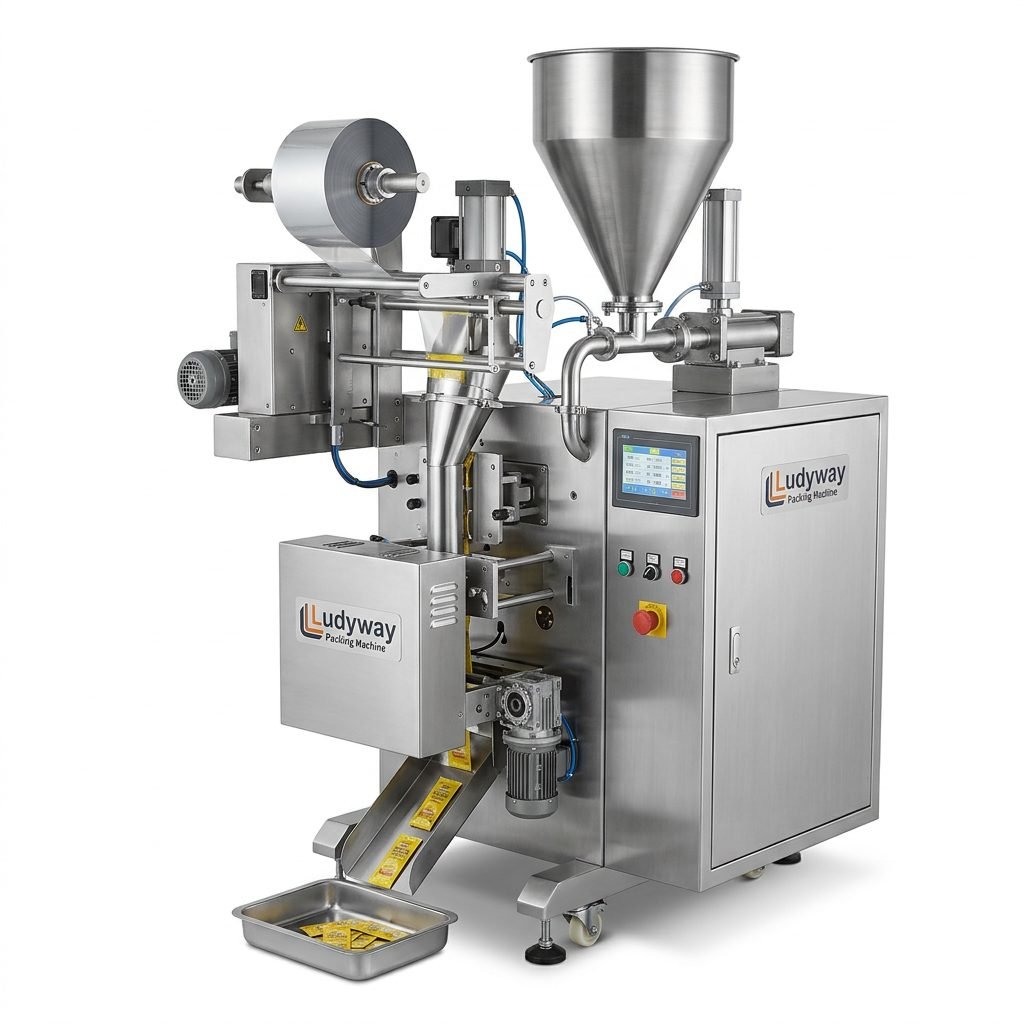
- Continuous Motion Vertical Form Fill Seal (VFFS) Machines – Best for high-volume production of small sauce pouches with consistent seal quality.
4. Compliance with German and EU Packaging Standards
Equipment sold or operated in Germany must meet CE marking requirements and align with relevant DIN/EN standards. For food contact materials, compliance with food contact substance regulations is mandatory. Verify that your supplier provides full documentation, including risk assessments and declaration of conformity.
Recommended Starting Configurations for Different Budgets
| Budget Level | Configuration | Suitable For | Estimated Throughput |
|---|---|---|---|
| Entry-Level | 2-lane stick pack with basic volumetric filler | Startups, farmers’ market producers | 60–80 packs/min |
| Mid-Range | 4-lane sachet machine with servo piston filling | Growing SMEs, private label manufacturers | 120–160 packs/min |
| Professional | 6–8 lane multi-lane system with CIP, vision inspection, and automatic rejection | Established food brands, co-packers | 200–320 packs/min |
| Turnkey Premium | Full line including feeding, filling, cartoning, and palletizing | High-volume industrial sauce factories | 350+ packs/min |
Integration with Your Existing German Production Line
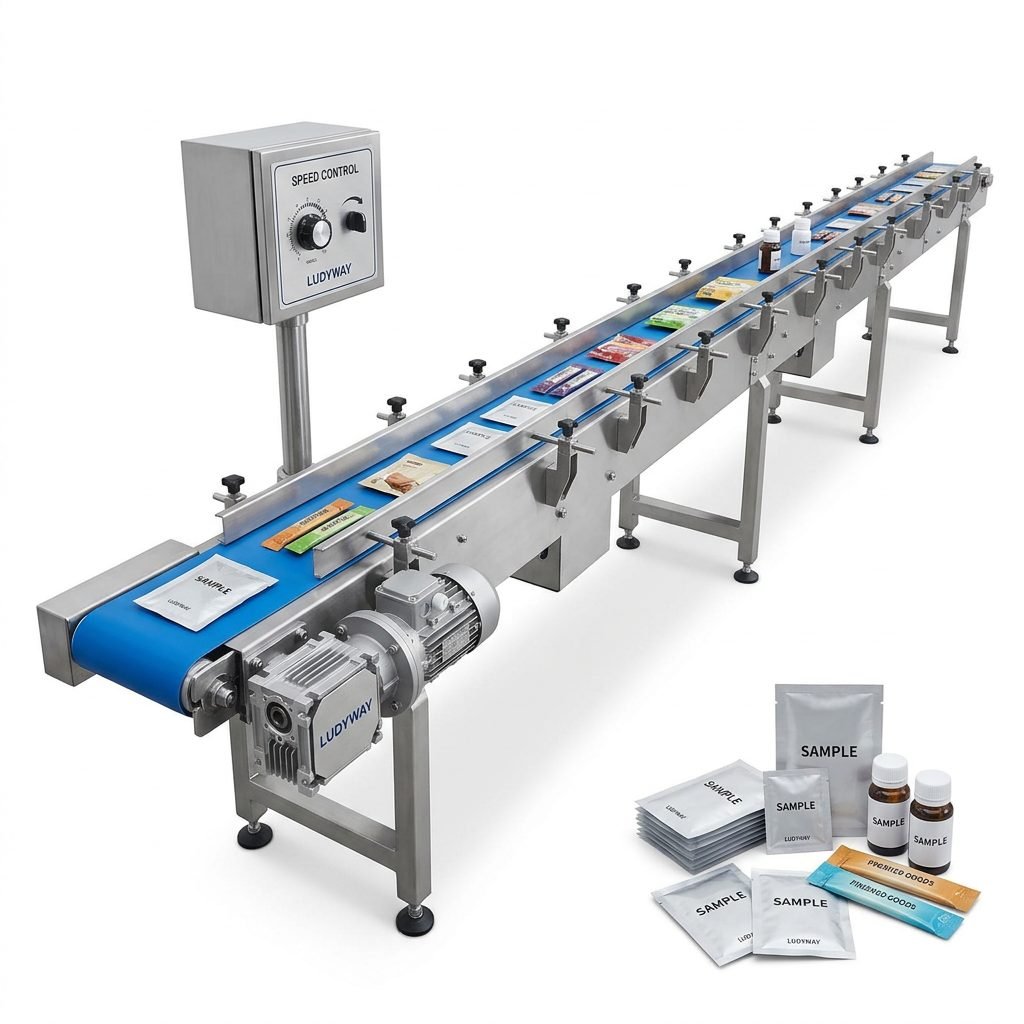
A small sauce packaging machine should seamlessly integrate with upstream cooking kettles, holding tanks, and downstream cartoning or case packing equipment. Consider the following when planning your layout:
- Infeed compatibility – Does the machine accept your existing hopper or pump connection?
- Film width and material flexibility – Can it run recyclable mono-PE films increasingly demanded by German retailers?
- Industry 4.0 readiness – Look for OPC-UA communication protocols, remote diagnostics, and data logging for traceability.
- Footprint and clearance – Measure doorways, ceiling heights, and maintenance access areas before installation.
Maintenance and After-Sales Support in Germany
Reliable technical support is non-negotiable. Before purchasing, confirm that the supplier offers:
- Local German-speaking service technicians or certified partner network
- Readily available spare parts inventory within the EU
- Remote troubleshooting via VPN or video call
- Comprehensive operator training programs in German or English
Some global manufacturers, including Ludyway, have established service networks that support German customers with quick-response technical assistance and modular spare parts kits. Note: Ludyway is a China-based packaging machine manufacturer with over 30 years of experience, serving clients in more than 100 countries with a modern 20,000㎡ production facility in Zhongshan, Guangdong.
Cost Considerations and ROI Analysis
Pricing for small sauce packaging machines varies based on automation level, number of lanes, and additional features. A basic 2-lane model might start around €25,000–€40,000, while a fully equipped 8-lane multi-lane packaging system can exceed €150,000. Calculate ROI by factoring in:
- Labor savings from automation
- Reduced product giveaway through precise filling
- Lower film waste with optimized sealing parameters
- Increased throughput enabling new customer acquisition
Where to Find Reliable Small Sauce Packaging Machine Suppliers
Explore industry trade shows such as PACK EXPO International or regional events in Germany like FachPack and Anuga FoodTec. Online platforms and direct manufacturer consultations also provide valuable insights. When evaluating suppliers, request video demonstrations, sample sachets produced with your actual sauce, and references from existing German or European clients.
Organizations like PMMI – The Association for Packaging and Processing Technologies and the Flexible Packaging Association offer extensive resources, market intelligence, and industry data to support your purchasing decision.
Key Industry Resources
| Resource Title | Link |
|---|---|
| PMMI – Packaging Industry Resources | https://www.pmmi.org/resources |
| PMMI – State of the Industry Reports | View Reports |
| Flexible Packaging Association – Knowledge Hub | https://hub.flexpack.org/ |
| European Commission – Packaging and Packaging Waste | Visit Page |
| ISO – Packaging Standards | https://www.iso.org/ics/55.html |
Final Checklist Before Purchasing
- Verify CE marking and EU Declaration of Conformity
- Request a live or recorded demonstration with your specific sauce formulation
- Confirm language options on the HMI (German language support preferred)
- Ask about typical seal integrity and leak testing procedures
- Check warranty terms, spare parts availability, and local service response times
- Evaluate film compatibility—can the machine run recyclable materials?
- Assess total cost of ownership including energy consumption and maintenance
Selecting the right small sauce packaging machine is a strategic investment that impacts product quality, operational efficiency, and brand reputation. By carefully evaluating your production needs, understanding German regulatory requirements, and partnering with a reputable supplier, you can implement a packaging solution that supports long-term growth in the competitive European condiment market.