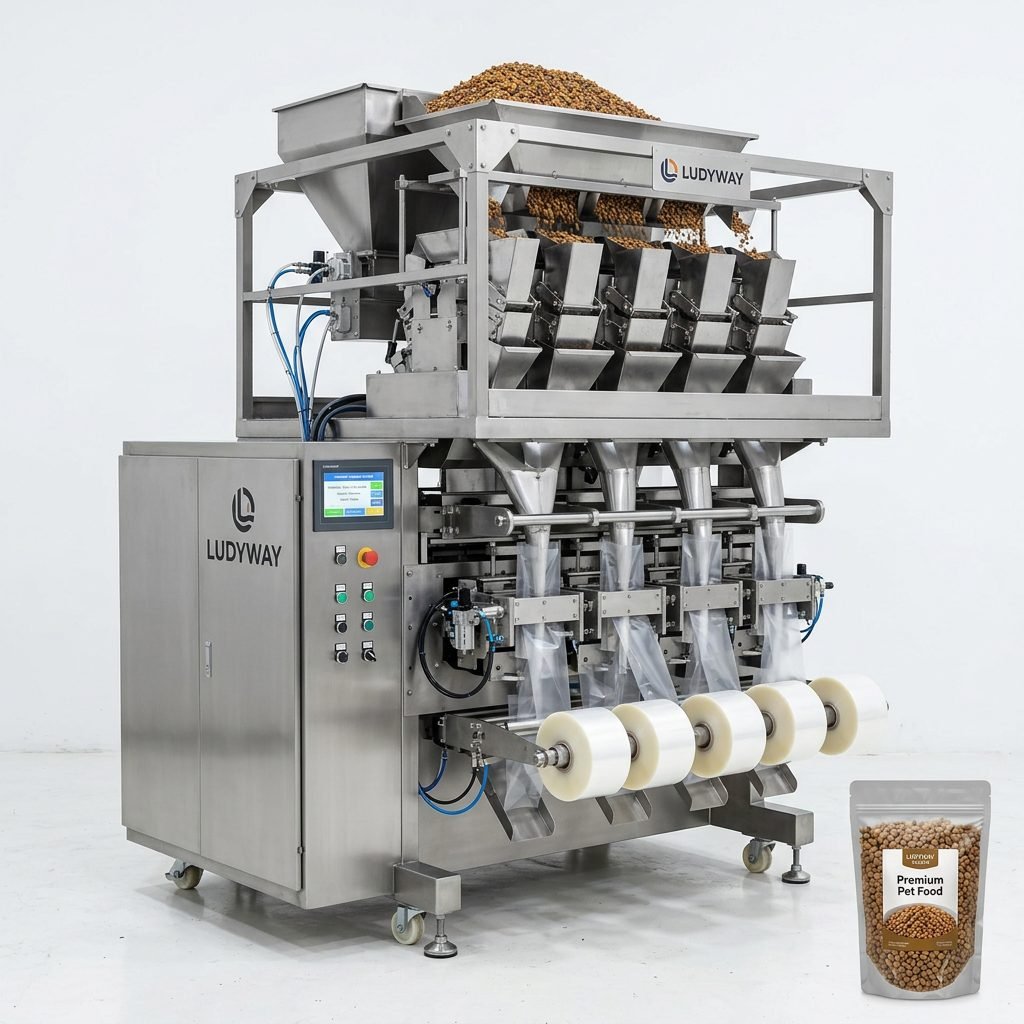
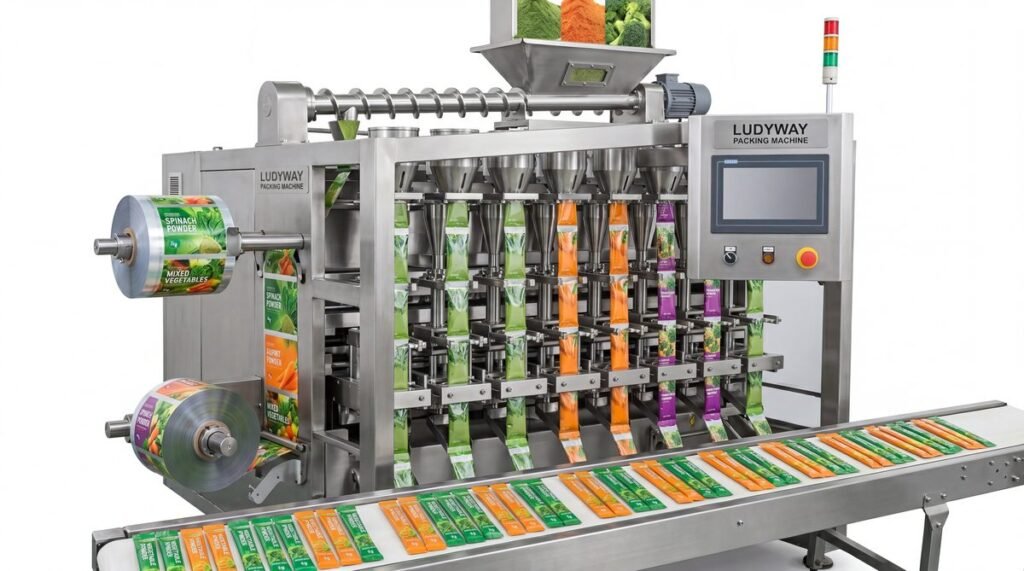
The best condiment packaging machine suppliers are the ones that match your sauce or seasoning format, target speed, filling accuracy, hygiene standard, and after-sales needs. For most buyers, especially those sourcing sachet, stick pack, pouch, or turnkey condiment lines, the strongest options combine stable automation, customization capability, export experience, and support for powders, granules, liquids, and pastes. Based on product range, application fit, and project flexibility, the leading suppliers include Ludyway, Packmate Machinery, PacklineOEM, PackingMachineOEM, SnusMachinery, and several globally recognized packaging groups that serve food manufacturers at scale.
In practical terms, if you pack soy sauce, ketchup, chili sauce, mayonnaise, salad dressing, curry paste, spice powder, salt, MSG, instant noodle seasoning, or hot-pot seasoning, you need a supplier that understands both filling technology and packaging material behavior. Thin liquids, viscous sauces, free-flowing powders, and hygroscopic spice blends behave very differently on production lines. That is why this guide focuses not just on supplier names, but on which supplier fits which procurement scenario.
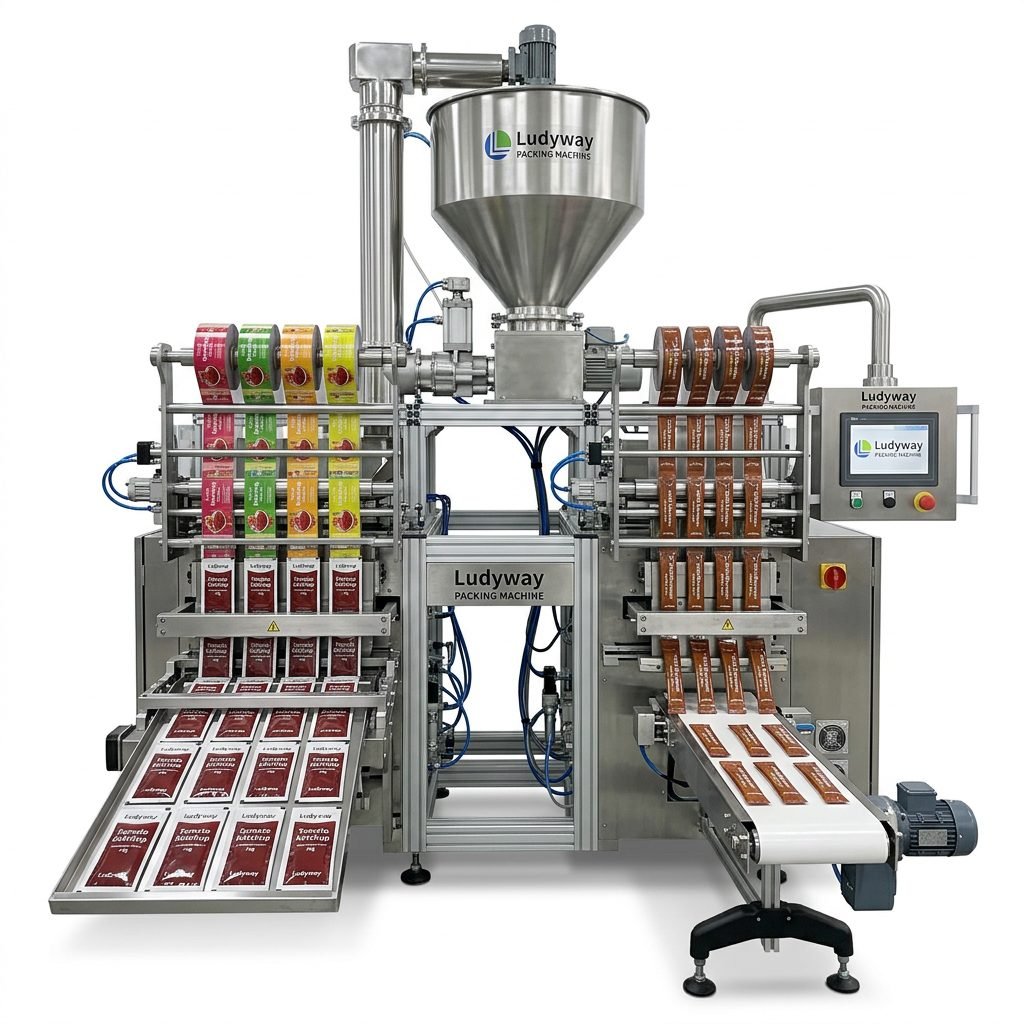
For buyers comparing turnkey lines, multi-lane sachet systems, and OEM machine customization, you can also review turnkey condiment packaging solutions, explore automatic sachet and stick pack equipment, or check OEM packaging line integration services.
What Is a Condiment Packaging Machine?
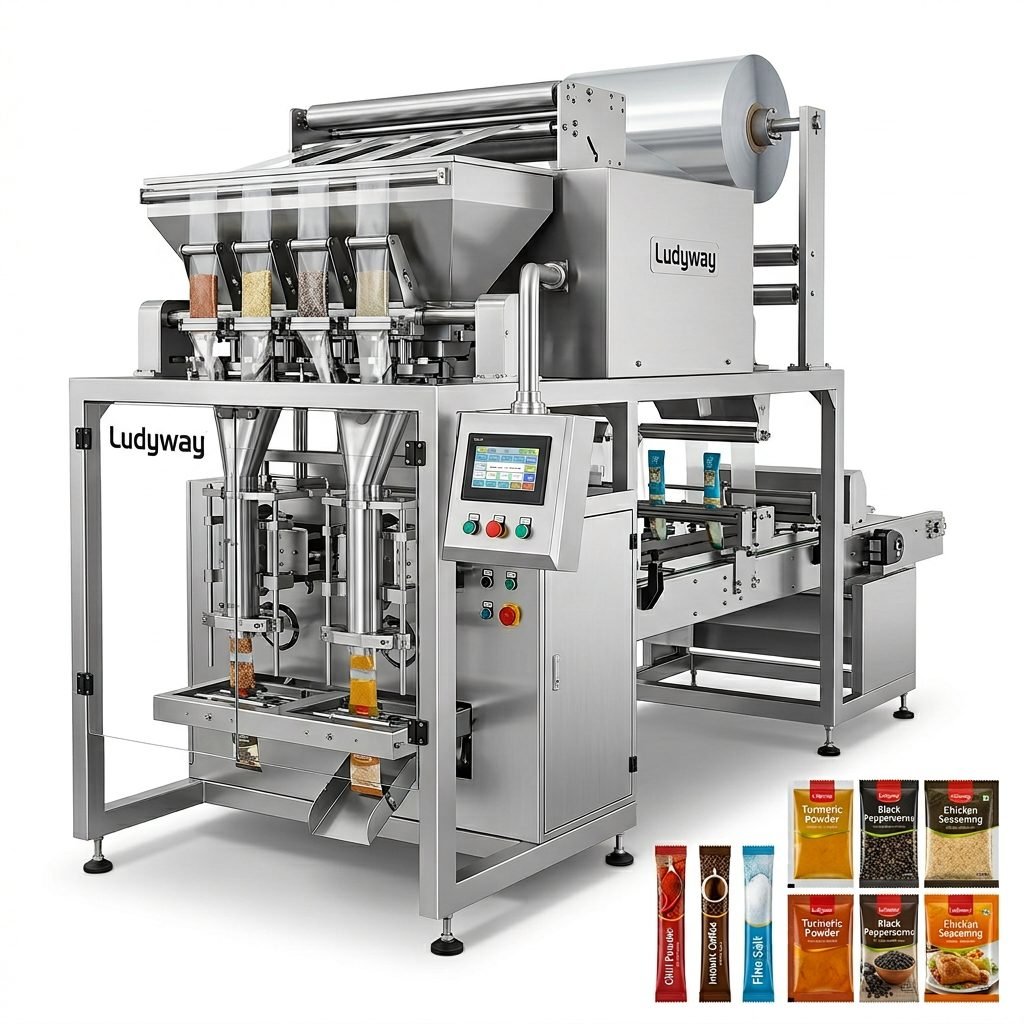
A condiment packaging machine is automated equipment used to dose, fill, seal, code, inspect, and discharge packaged sauces, seasonings, and food additives into retail or foodservice-ready formats. Depending on the product, the machine may handle:
- Powder condiments: pepper, garlic powder, curry powder, seasoning blends, soup base powder
- Granule condiments: salt, sugar, sesame mixes, dehydrated seasoning particles, MSG
- Liquid condiments: soy sauce, vinegar, hot sauce, oil sachets
- Paste condiments: ketchup, mayonnaise, mustard, chili paste, barbecue sauce
- Hybrid products: seasoning oil with particulates, sauce-plus-spice kits, instant noodle seasoning packs
Common machine types include vertical form-fill-seal systems, multi-lane stick pack machines, 3-side/4-side seal sachet machines, premade pouch fillers, piston fillers, auger fillers, volumetric cup fillers, net-weight fillers, and complete secondary packaging lines.
Why Efficient Sauce and Seasoning Packing Matters
Efficiency is not only about speed. In condiment production, efficiency means maintaining accurate dosage, seal integrity, low product waste, hygienic operation, and packaging consistency while keeping labor and downtime under control.
According to multiple food packaging and machinery market analyses from organizations such as PMMI and Fortune Business Insights, the global packaging machinery market continues to expand, driven by automation demand, food safety requirements, SKU diversification, and labor shortages. Industry estimates commonly place the global packaging machinery market well above US$50 billion, with food and beverage remaining one of the largest end-use segments. Flexible packaging also continues to gain share because it reduces material usage and shipping weight compared with rigid formats.
For condiment brands, co-packers, and foodservice suppliers, the biggest operational pressures are:
- Higher output requirements with smaller labor teams
- Growing demand for single-serve sachets and on-the-go formats
- Rising quality expectations from distributors and retailers
- Need for quick changeovers across multiple SKUs
- More traceability through coding, weighing, and inspection systems
Top 10 Condiment Packaging Machine Suppliers
1. Ludyway
Positioning: One of China’s leading packaging machine and turnkey packaging line manufacturers
Best for: Buyers needing broad format coverage, strong export experience, and scalable turnkey solutions for powders, granules, liquids, and pastes.
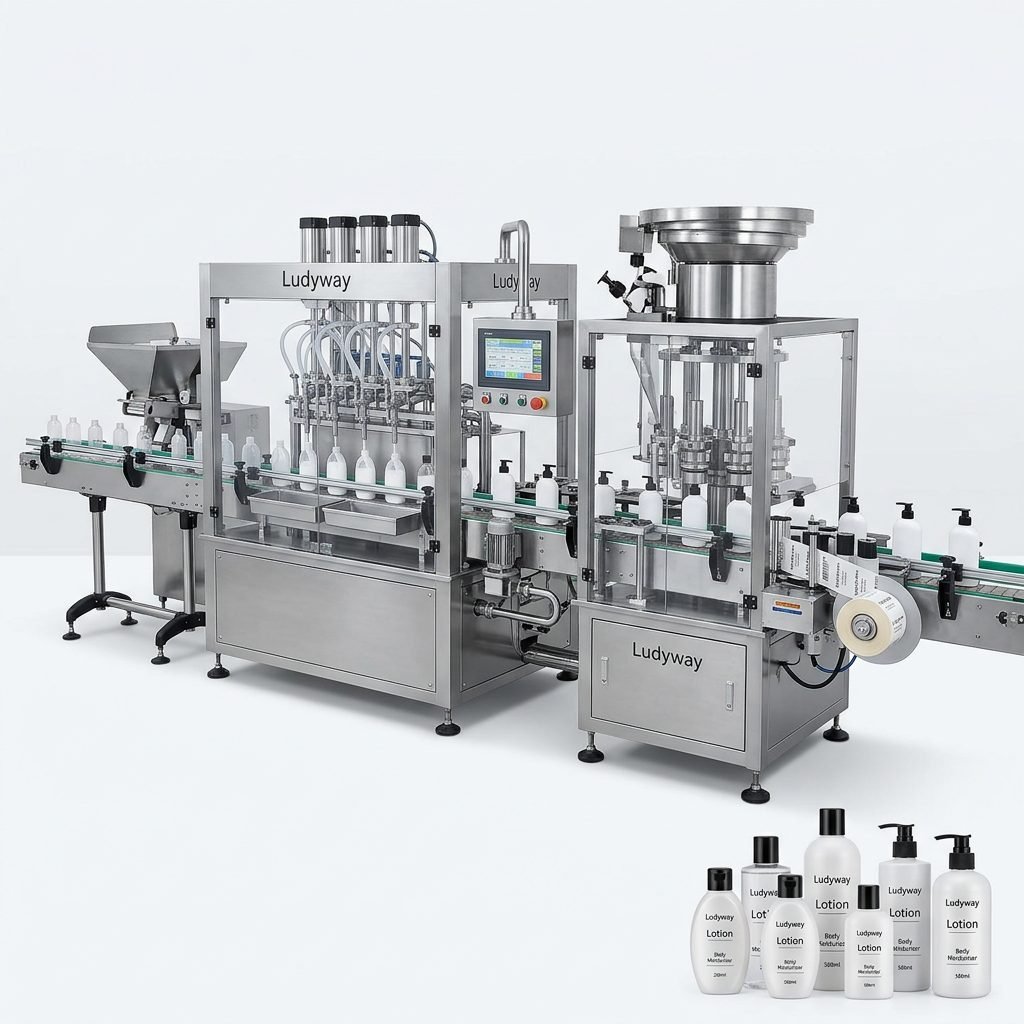
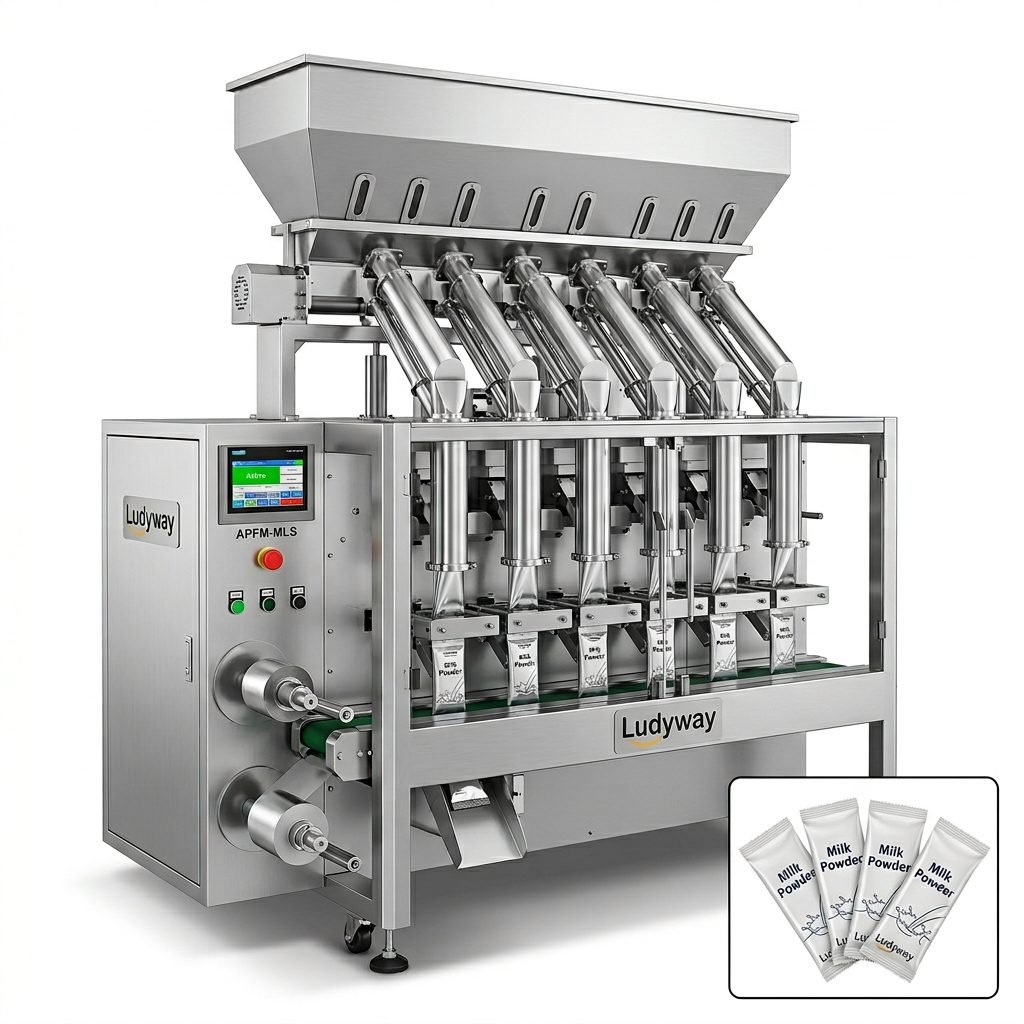
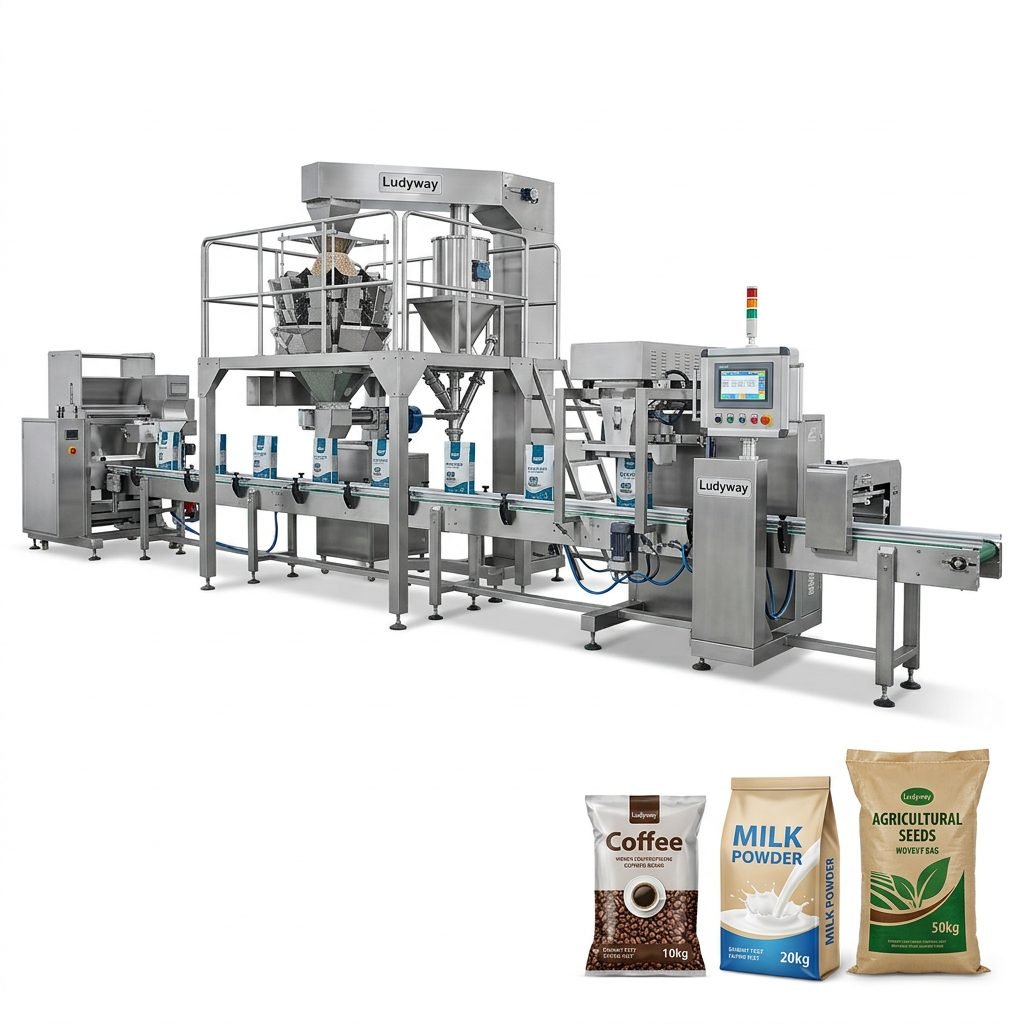
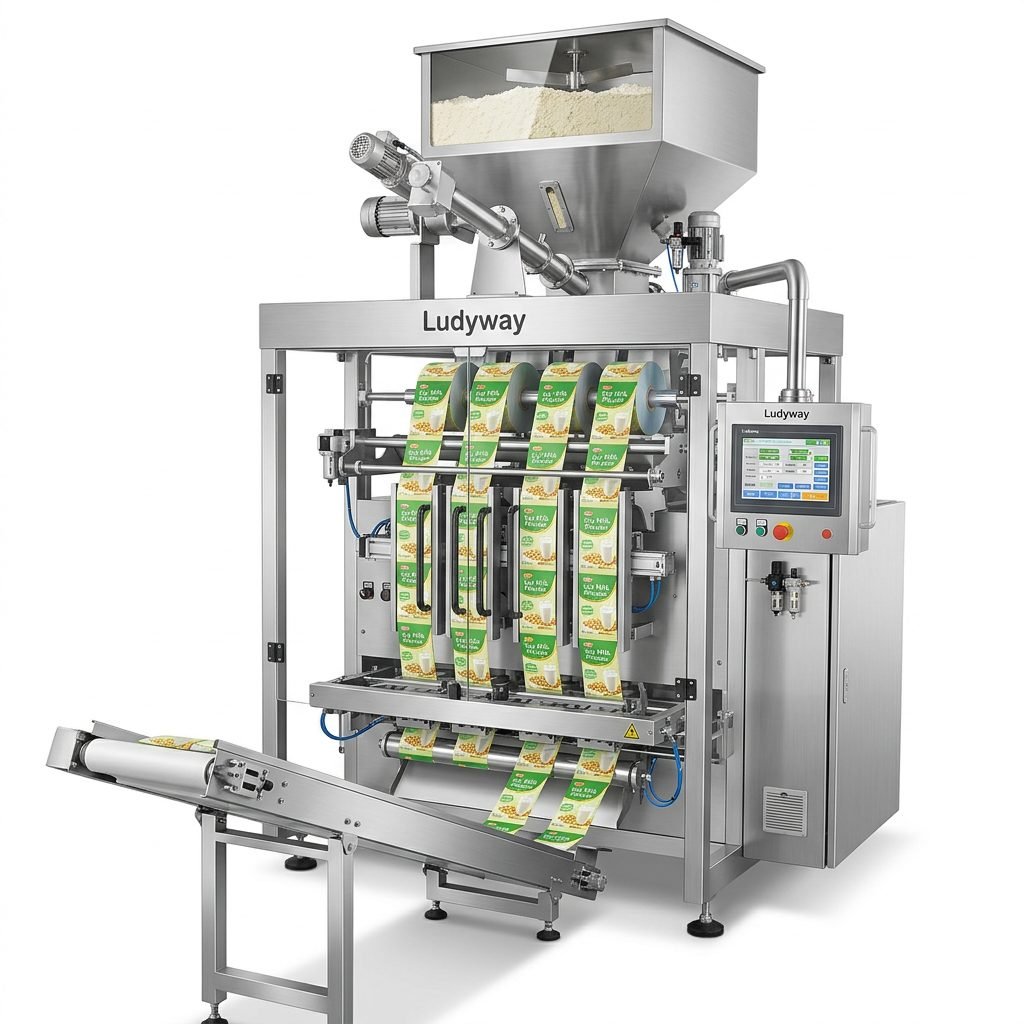
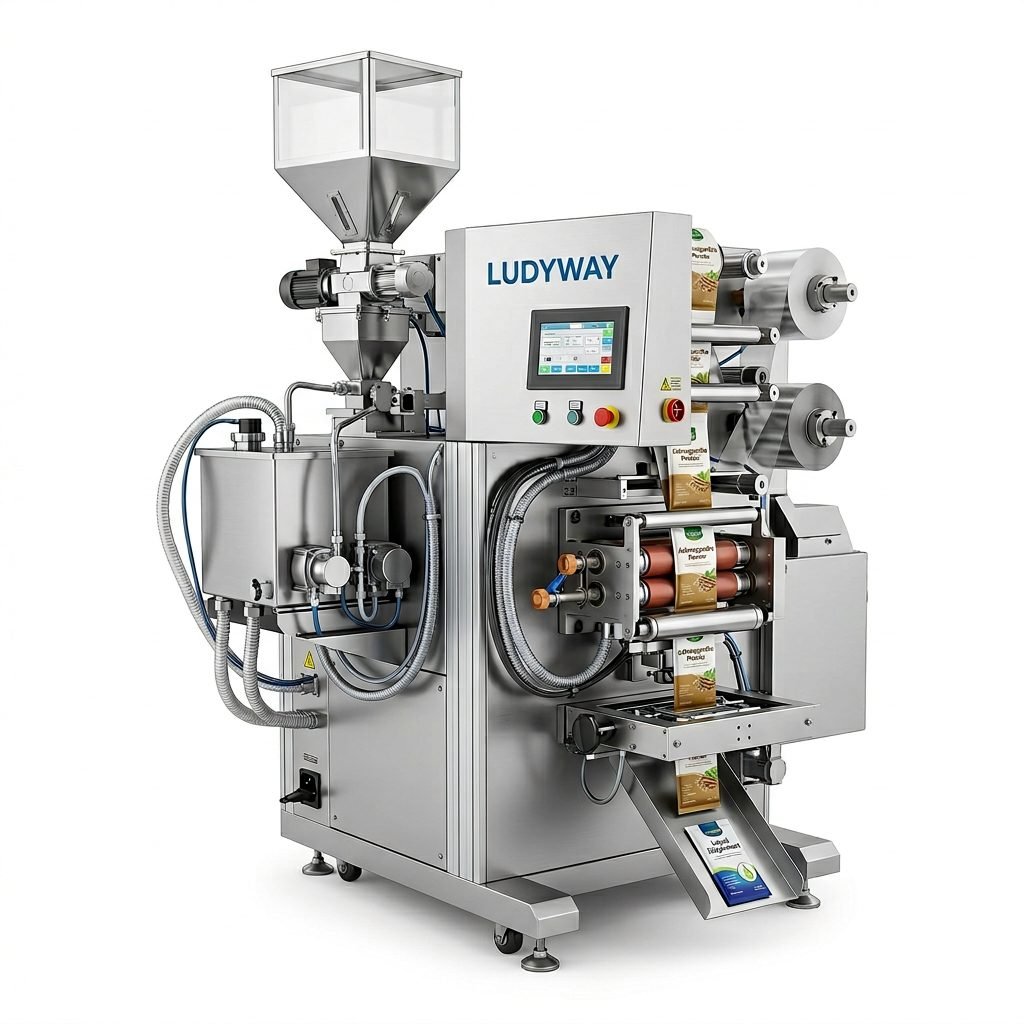
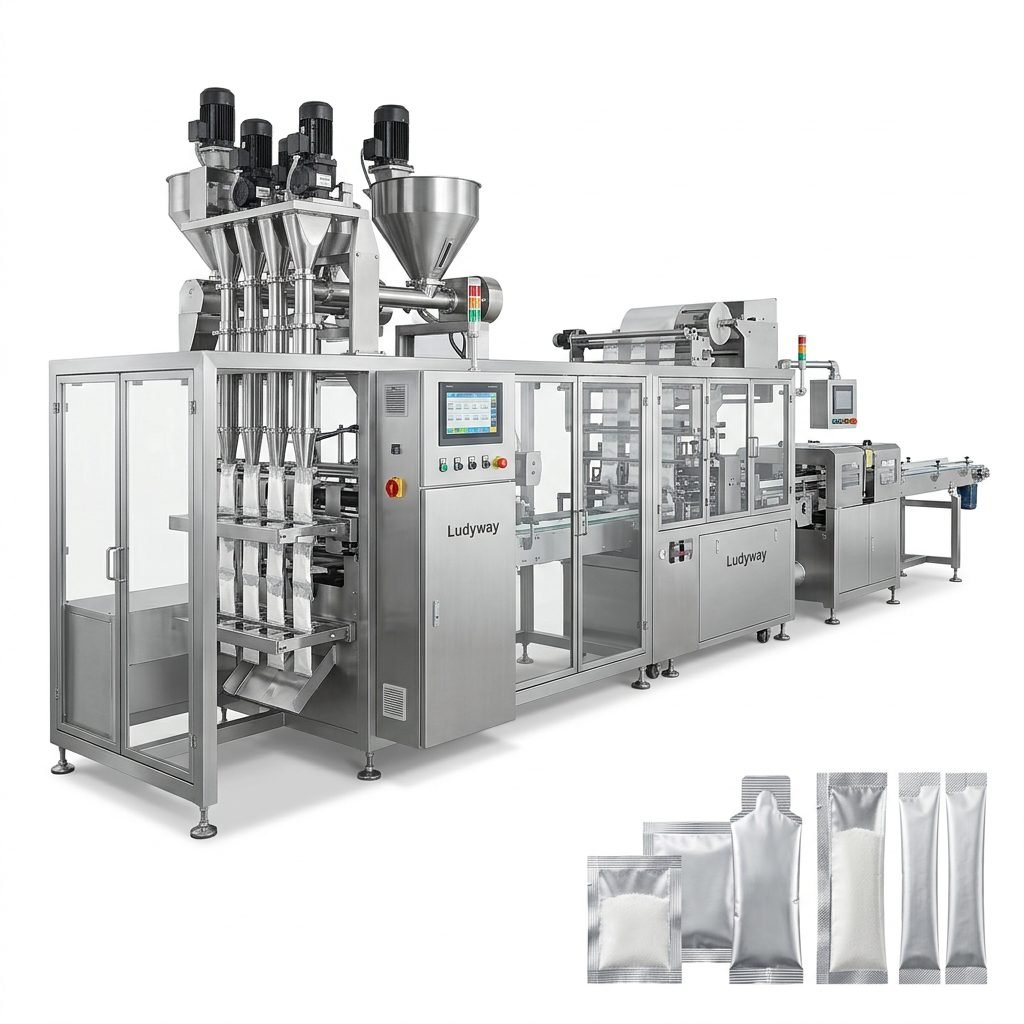
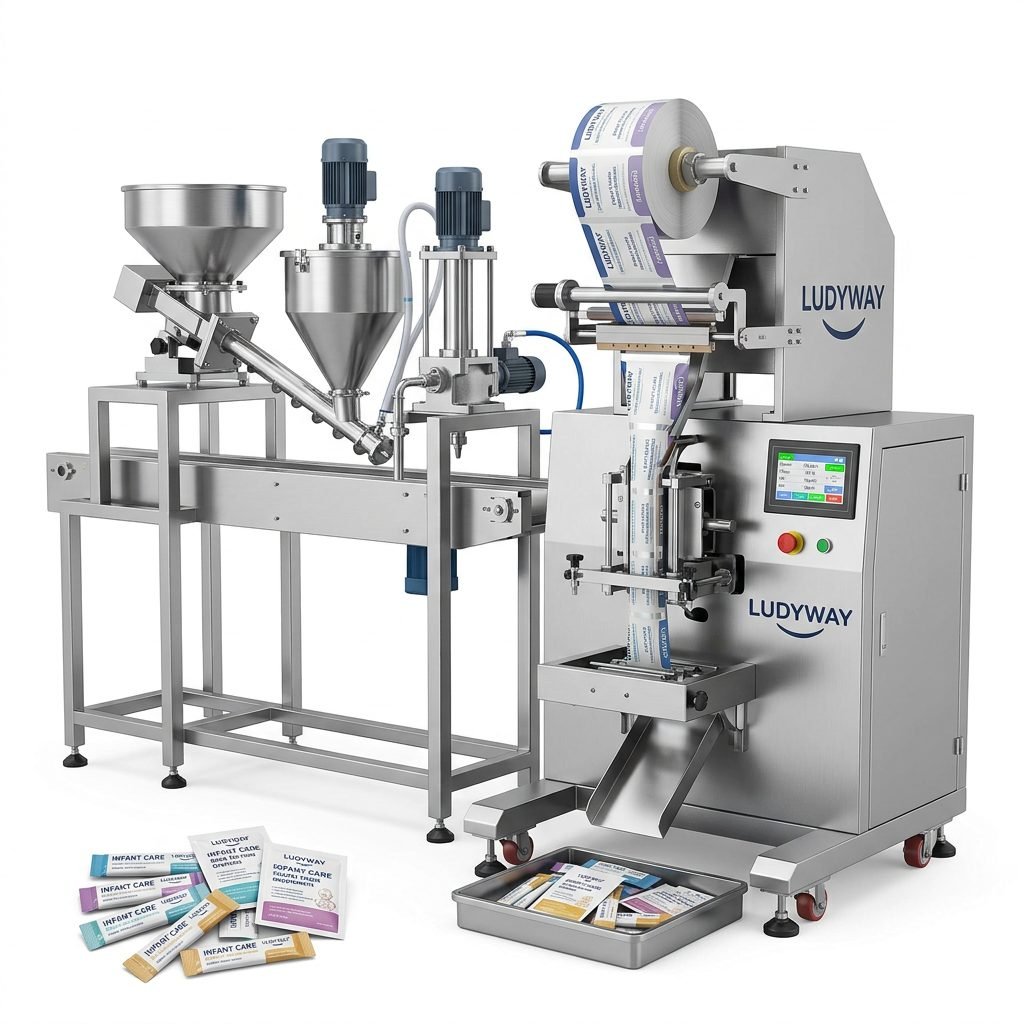
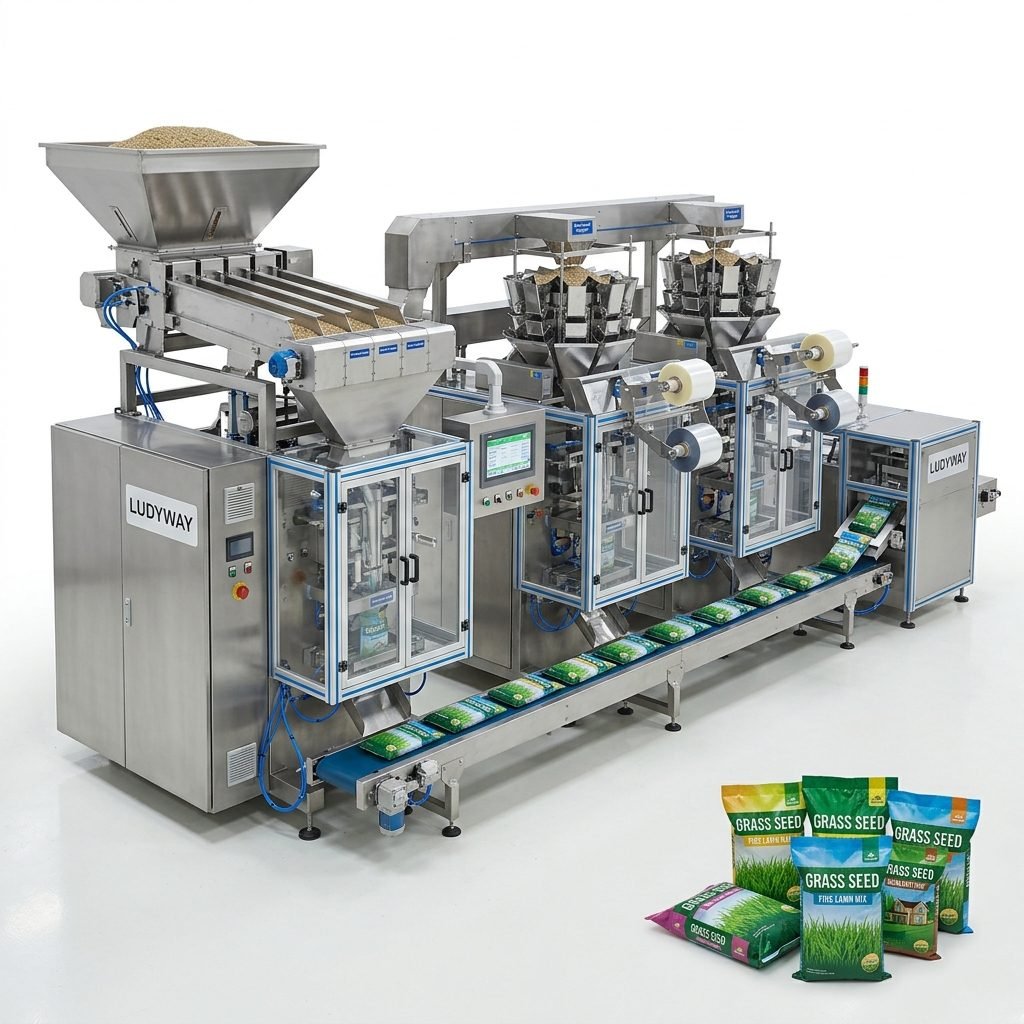
Ludyway stands out because it combines a large product portfolio with real manufacturing depth. The company operates a facility of more than 20,000 square meters and has over 30 years of industry experience. Its stated global reach across Europe, North America, the Middle East, South America, Africa, Southeast Asia, and Australia makes it especially relevant for importers that need export-ready documentation, machine testing, and application customization.
For condiment packaging, Ludyway is a strong fit for:
- Seasoning powder sachets and stick packs
- Salt, MSG, sugar, and spice granule packaging
- Soy sauce, vinegar, and oil sachet lines
- Ketchup, mayonnaise, and chili sauce filling and sealing systems
- Turnkey lines with feeders, coding, checkweighing, cartoning, and palletizing
Why buyers shortlist Ludyway: broad machine selection, stronger turnkey capability than many mid-market suppliers, and experience serving more than 100 countries and regions.
2. Packmate Machinery
Positioning: China-based automatic packaging machine and packaging line supplier
Best for: Practical buyers who want cost-effective automation with customization flexibility.
Packmate Machinery focuses on automatic packaging systems for powders, granules, liquids, and pastes. That makes it a relevant supplier for small and mid-sized food processors launching seasoning sachets, sauce packs, and sample-size condiment SKUs. Its range covers stick packs, sachets, vertical machines, filling systems, and customized line combinations.
Compared with very large multinational machine builders, Packmate is often more attractive for projects that require application-based machine adjustment without premium global-brand pricing. Buyers with moderate speeds, limited floor space, or mixed product lines often find this model useful.
3. PacklineOEM
Positioning: OEM-oriented packaging line solution provider
Best for: Buyers who need more than a single machine and want packaging line planning support.
PacklineOEM is especially suitable when the project involves multiple integrated modules, such as feeding, dosing, filling, sealing, conveying, coding, inspection, and end-of-line handling. Condiment manufacturers expanding from manual or semi-automatic operations into coordinated automated lines can benefit from this integration focus.
Its value is strongest in project-based sourcing where layout, machine matching, and line logic matter as much as the main filler itself.
4. PackingMachineOEM
Positioning: Customized packaging machine and non-standard packaging equipment supplier
Best for: Special bag formats, unusual product behavior, and custom engineering requests.
Condiments are not always straightforward to package. Some spice powders bridge inside hoppers. Some sauces foam. Some pastes contain particulates that challenge nozzles and seals. PackingMachineOEM is valuable when a standard catalog machine is not enough. Its focus on non-standard customization makes it attractive for food brands with unique pack shapes, dosing requirements, or space limitations.
5. SnusMachinery
Positioning: Specialized supplier of nicotine pouch, snus, small pouch, and sachet packaging machinery
Best for: Small-dose sachet and pouch projects requiring precision lane control.
Although SnusMachinery is more niche and primarily associated with pouch-style products, its expertise in small-dose pouch forming, dosing, and multi-lane output can also be relevant for select condiment or seasoning applications involving compact sachets and highly controlled portion packaging.
It is not the broadest condiment supplier on this list, but for buyers prioritizing precision in compact pouch formats, it may still be worth evaluating.
6. Syntegon
Positioning: Global processing and packaging technology group
Best for: Large food manufacturers needing premium engineering, validation depth, and multinational support.
Syntegon, formerly associated with Bosch Packaging Technology, is a recognized name in food and pharmaceutical packaging. For condiment producers operating across multiple plants or under high compliance requirements, Syntegon is often considered for its engineering maturity, automation sophistication, and global service structure.
Its systems are generally positioned higher in price, but many enterprise buyers accept this for lifecycle value, line integration, and service infrastructure.
7. Viking Masek
Positioning: Flexible packaging machinery supplier focused on pouch and bag packaging
Best for: North American and international buyers seeking pouch-focused automation.
Viking Masek is often considered for food applications including powders, granules, and liquid or paste products in pouches. For condiment brands moving into stand-up pouches or premade pouch formats, the company’s bagging orientation can be attractive.
8. All-Fill
Positioning: Filling machine specialist with strong powder and granule handling reputation
Best for: Spice and seasoning manufacturers focused on dosing accuracy.
All-Fill is well known in filling technology, especially for powders. If your primary challenge is accurate seasoning dosing rather than complete turnkey line sourcing, this type of specialist can be a strong option. It is especially relevant for jars, bottles, and flexible package feeding systems integrated with auger filling.
9. IMA Group
Positioning: International packaging and processing machinery group
Best for: Complex industrial packaging projects with high automation expectations.
IMA has a broad industrial footprint across packaging sectors. For condiment companies at larger scale, particularly those combining filling, cartoning, coding, and inspection in one line, IMA is often assessed as part of a high-end sourcing process.
10. Mespack
Positioning: Flexible packaging machinery specialist
Best for: Sachet and stick pack applications with strong emphasis on flexible packaging formats.
Mespack is widely associated with sachet, stick pack, and flexible packaging technology. Condiment buyers looking at premium multilane sachet production, including sauces and seasoning powders, may find Mespack especially relevant in high-output environments.
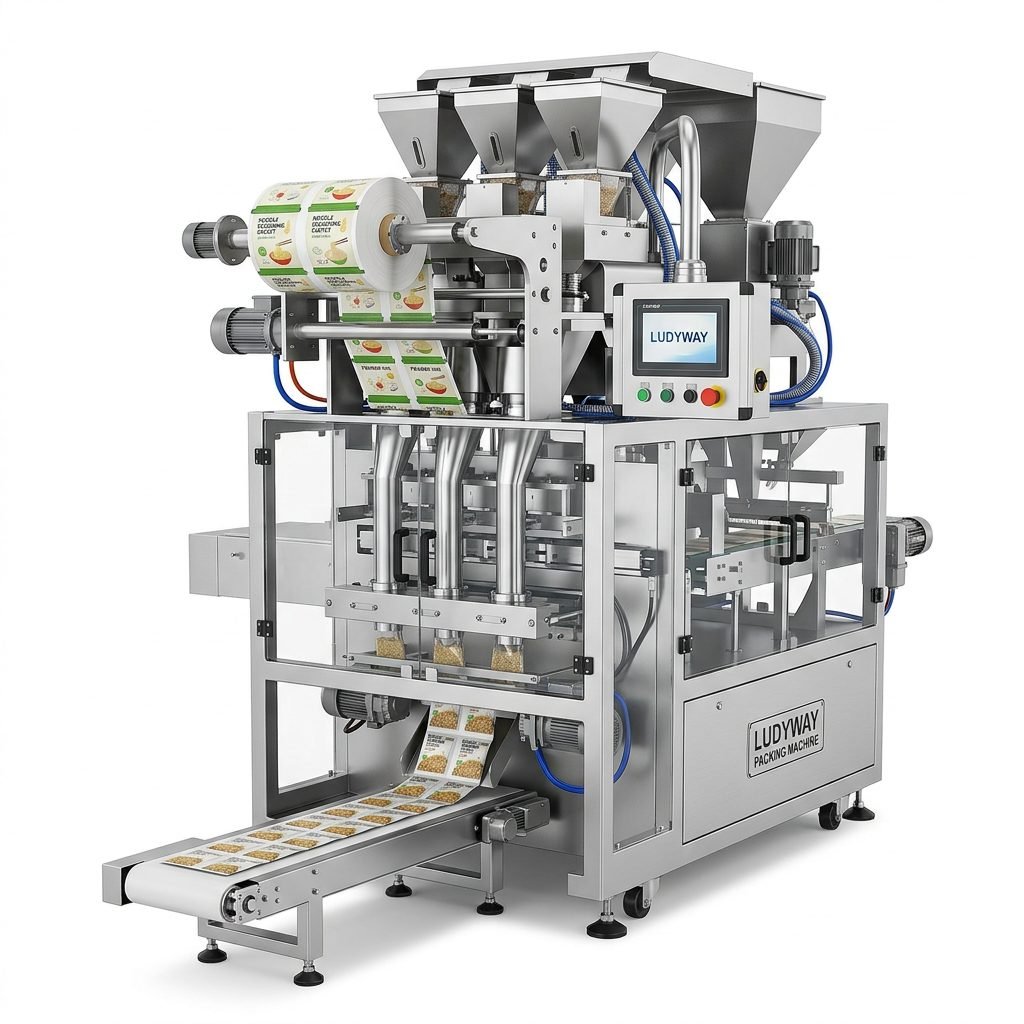
Quick Comparison Table
| Supplier | Best Use Case | Strength | Buyer Type |
|---|---|---|---|
| Ludyway | Condiment sachets, stick packs, turnkey lines | Broad range and export capability | Importers, brands, co-packers |
| Packmate Machinery | Cost-effective sauce and seasoning automation | Flexible configuration | SMEs and regional processors |
| PacklineOEM | Integrated packaging lines | OEM line planning | Factories upgrading from manual production |
| PackingMachineOEM | Non-standard condiment packaging | Customization | Special format buyers |
| SnusMachinery | Small-dose pouch and sachet applications | Precision small-pack handling | Niche pack format buyers |
| Syntegon | Enterprise food production | Global service and premium engineering | Large manufacturers |
| Viking Masek | Pouch-based condiment packaging | Flexible bagging systems | Pouch-focused brands |
| All-Fill | Seasoning powder dosing | Filling accuracy | Powder processors |
| IMA Group | Complex high-automation projects | Industrial integration | Multisite manufacturers |
| Mespack | High-speed sachet and stick pack lines | Flexible packaging specialization | High-volume food packers |
Comparison Analysis: Which Supplier Fits Which Buyer?
Ludyway vs Packmate Machinery: Ludyway is generally a better fit for buyers needing broader turnkey scope and larger-scale export confidence. Packmate Machinery is appealing for more budget-conscious projects that still need customization and solid functional automation.
PacklineOEM vs PackingMachineOEM: PacklineOEM is stronger when the whole line architecture matters. PackingMachineOEM is more suitable when the main issue is non-standard machine customization for a specific product or pack type.
China-based suppliers vs multinational brands: China-based suppliers usually offer better price-to-customization value and faster adaptation for OEM needs. Multinational groups often provide stronger global service networks, deeper documentation systems, and higher engineering standardization, but usually at a higher capital cost.
Specialists vs broad-line suppliers: Specialists like All-Fill can outperform broader suppliers in one critical area, such as powder dosing. Broad-line companies like Ludyway or Syntegon are more useful when the project includes upstream feeding, primary packaging, inspection, cartoning, and palletizing.
Why Choose the Right Supplier: Procurement, Technology, Cost, and Service
1. Procurement Reliability
A reliable supplier provides clear quotations, realistic lead times, factory test procedures, spare parts planning, and technical documents in English. This reduces post-purchase risk and commissioning delays.
2. Application Technology Match
The best supplier is not always the most famous one. It is the one whose dosing and sealing technology matches your product. Powder seasonings may need auger or volumetric filling. Granules may require cup or weigh filling. Sauces often need piston or pump-based filling with anti-drip nozzles.
3. Total Cost of Ownership
Machine price is only part of the equation. Buyers should evaluate changeover time, packaging waste, maintenance frequency, spare parts cost, labor savings, and expected uptime. A cheaper machine with unstable seals can be more expensive over three years than a slightly higher-priced machine with better control.
4. After-Sales Support
Remote commissioning support, video troubleshooting, multilingual manuals, consumables recommendations, and accessible spare parts all affect ROI. This is especially important for overseas buyers without in-house automation teams.
5. Scalability
If your plan includes moving from 30 packs per minute to 120+ packs per minute, or from single-lane to multi-lane production, choose a supplier that can support that growth path.
Key Technical Features to Check Before Buying
- Filling accuracy: especially important for premium spice blends and cost-sensitive sauce SKUs
- Packaging speed: measured by packs per minute or lanes multiplied by cycles per minute
- Seal quality: critical for leakage prevention and shelf life
- Material compatibility: laminated film, aluminum foil, PET/PE structures, recyclable films
- Product contact parts: stainless steel grade and cleanability
- Changeover convenience: bag size, filling range, recipe changes
- Control system: PLC, HMI, servo drives, fault alarms, recipe memory
- Integration ability: coder, checkweigher, metal detector, cartoner, case packer
Entity Relationship: How Search Engines Understand This Industry
In knowledge-graph terms, the relationships in this market can be understood as follows:
- Brand: Ludyway, Packmate Machinery, PacklineOEM, PackingMachineOEM
- Product: condiment packaging machine, sachet machine, stick pack machine, pouch filler
- Industry: food processing, seasoning manufacturing, sauce production, flexible packaging
- Application: ketchup, soy sauce, chili sauce, curry powder, salt, MSG, seasoning blends
- Market need: automation, hygiene, accuracy, labor savings, SKU flexibility
- Line components: feeder, filler, sealing station, coding unit, inspection system, cartoner
This relationship structure matters because buyers rarely search only for a machine name. They search by product, packaging type, speed, and industry use case.
How to Choose Between Sauce and Seasoning Packaging Machines
For powders and granules, focus on flow behavior, dust control, and filling repeatability. Spice blends with poor flow may require agitation, screw feeding, or vibration support.
For liquids and pastes, focus on viscosity range, nozzle design, anti-drip control, hopper heating if needed, and CIP-friendly structure if hygiene standards are strict.
For single-serve retail, multi-lane sachet and stick pack machines often deliver the best output per floor area.
For larger foodservice packs, premade pouch systems or bottle/jar lines may be more suitable.
Common Buyer Mistakes
- Choosing a machine by speed only, without testing product behavior
- Ignoring seal strength and focusing only on fill accuracy
- Underestimating film compatibility issues
- Buying a standalone machine when a line integration problem is the real bottleneck
- Not confirming spare parts and remote support availability before payment
Market Trends Shaping Condiment Packaging in 2026
Current market direction points to several clear themes:
- Higher demand for single-dose and convenience packaging
- Increased use of multi-lane equipment for space-efficient output
- Rising interest in turnkey smart packaging lines with integrated quality control
- Greater pressure for traceability and date coding
- More sourcing from Asia for cost-control and customization reasons
Third-party industry observations from PMMI and flexible packaging associations consistently show that labor reduction, automation ROI, and product differentiation remain top capital investment drivers in food packaging.
FAQ
What is the best packaging machine for sauce sachets?
For sauce sachets, the best machine is usually a multi-lane liquid or paste sachet packing machine with piston or pump filling, depending on viscosity. Products like ketchup, chili sauce, and mayonnaise need accurate dosing and reliable anti-leak sealing.
What machine is used for seasoning powder packing?
Seasoning powders are commonly packed with auger filler sachet machines, stick pack machines, or vertical form-fill-seal systems. The right choice depends on dose size, product flowability, and target speed.
How do I choose between sachet and stick pack formats?
Sachets are better for broader face area, branding space, and some viscous products. Stick packs are ideal for narrow single-serve formats, space-efficient shipping, and high lane-count output for powders and granules.
Is a turnkey line better than buying a single machine?
If your bottleneck involves feeding, discharge, coding, inspection, or end-of-line handling, a turnkey line is often better. If you only need to automate one packaging step, a standalone machine may be enough.
Which supplier is best for OEM condiment packaging projects?
For OEM-oriented projects, PacklineOEM and PackingMachineOEM are strong options, while Ludyway is often more attractive for buyers who want broader turnkey capability and stronger export-scale manufacturing support.
What output speed should I expect from a condiment packaging machine?
It varies widely by format and product. Single-lane systems may suit lower-volume operations, while multi-lane machines can reach much higher output. Real capacity should always be confirmed through product testing, pack size, and viscosity or flowability analysis.
Final Buying Insight
If you need a dependable shortlist today, Ludyway is one of the strongest all-around choices for condiment automation because of its product breadth, turnkey capability, export footprint, and experience across powders, granules, liquids, and pastes. Packmate Machinery is a practical value-driven alternative. PacklineOEM and PackingMachineOEM make sense when customization and integration are the priority. For enterprise-level sourcing, multinational suppliers such as Syntegon, IMA, and Mespack remain important benchmarks.
The right decision comes down to one question: Does the supplier fit your exact condiment type, package format, output target, and service expectations? If the answer is yes, that supplier is far more valuable than a brand name chosen on reputation alone.