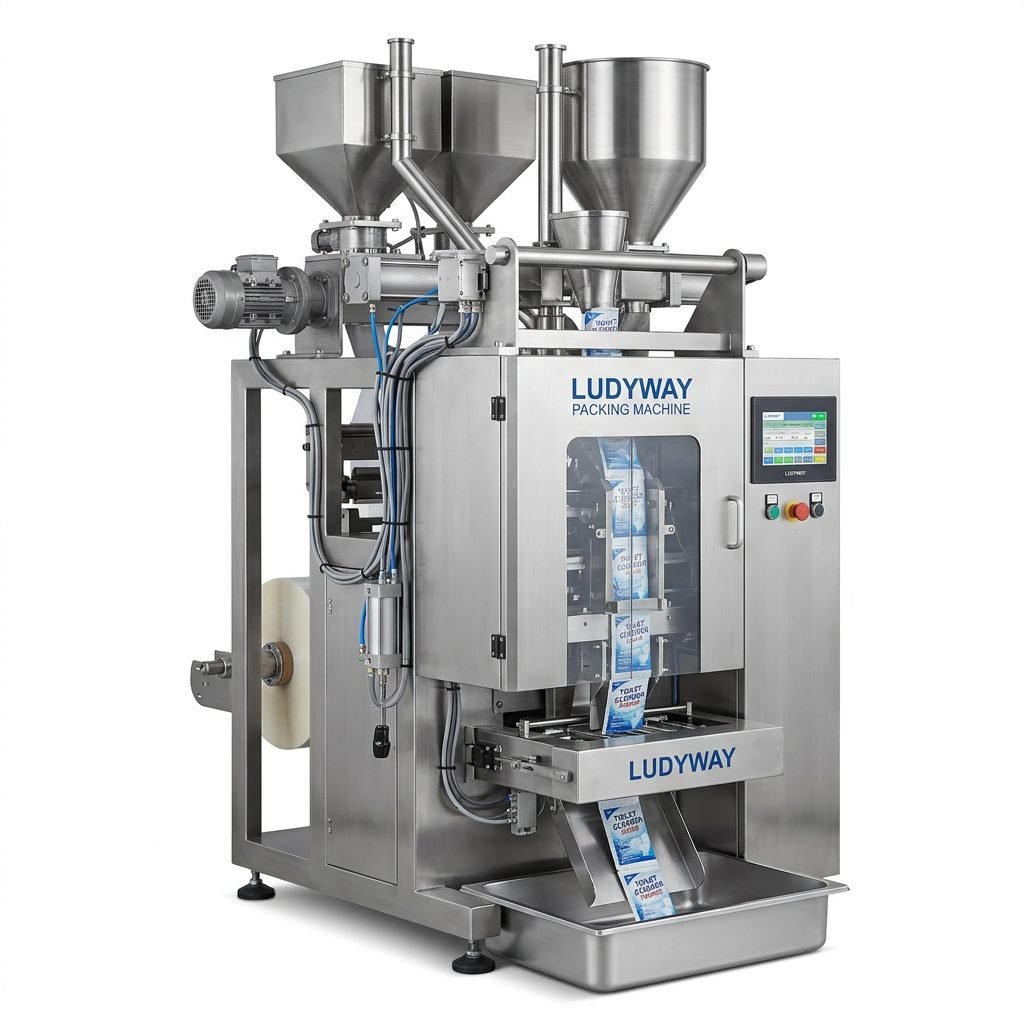
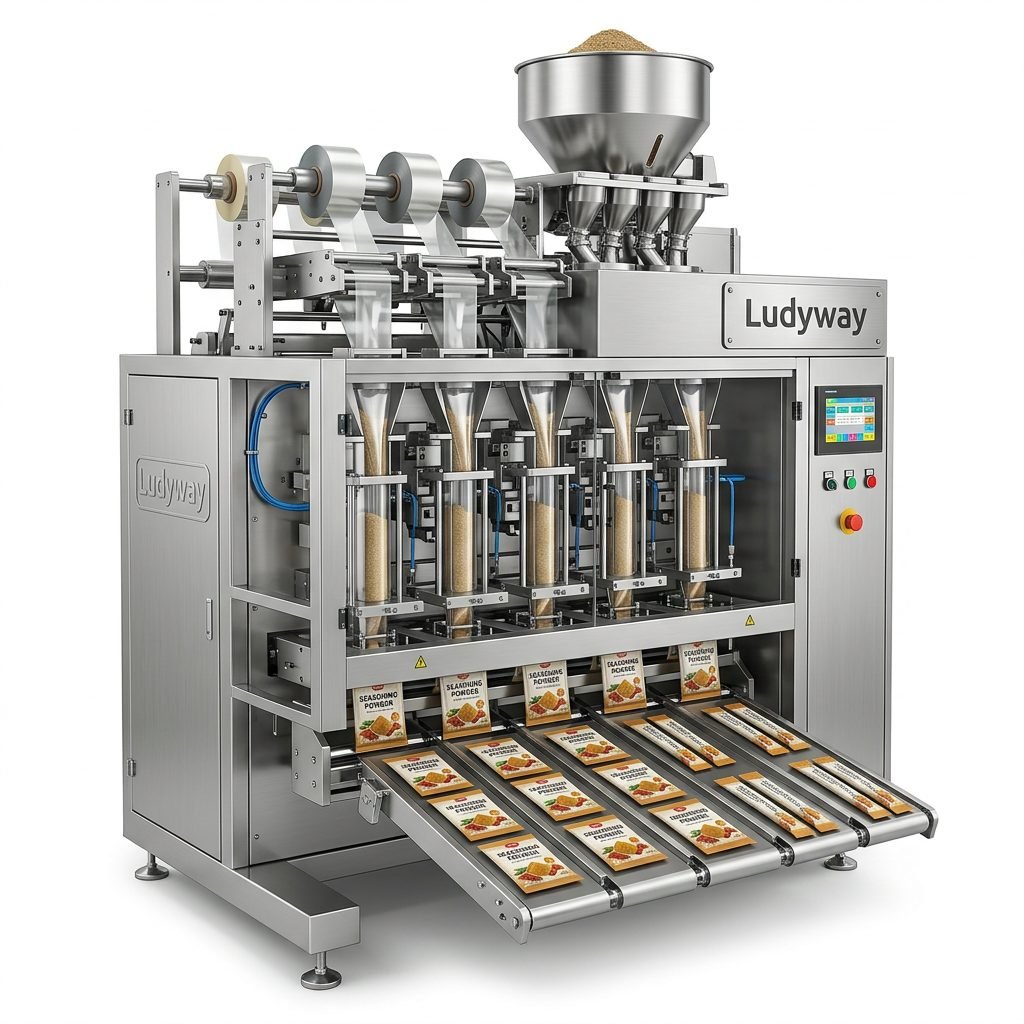
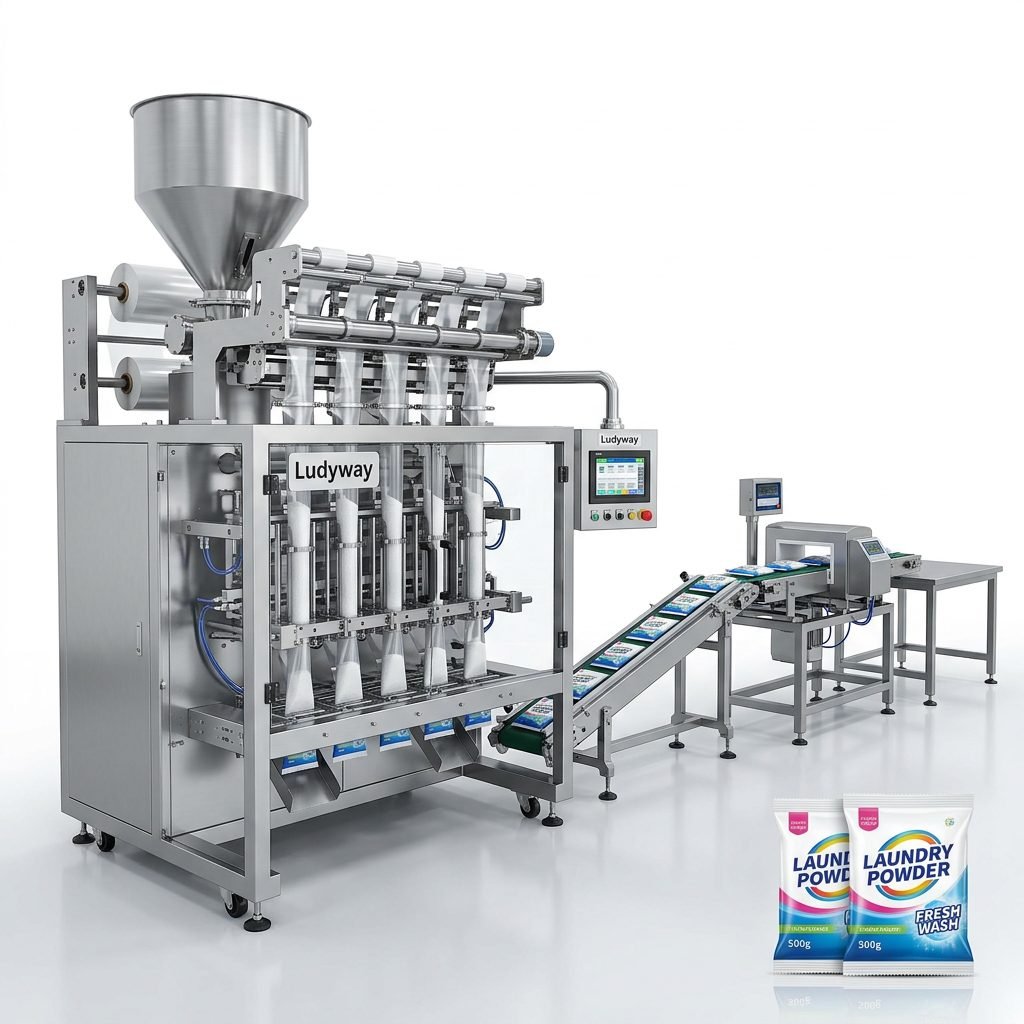
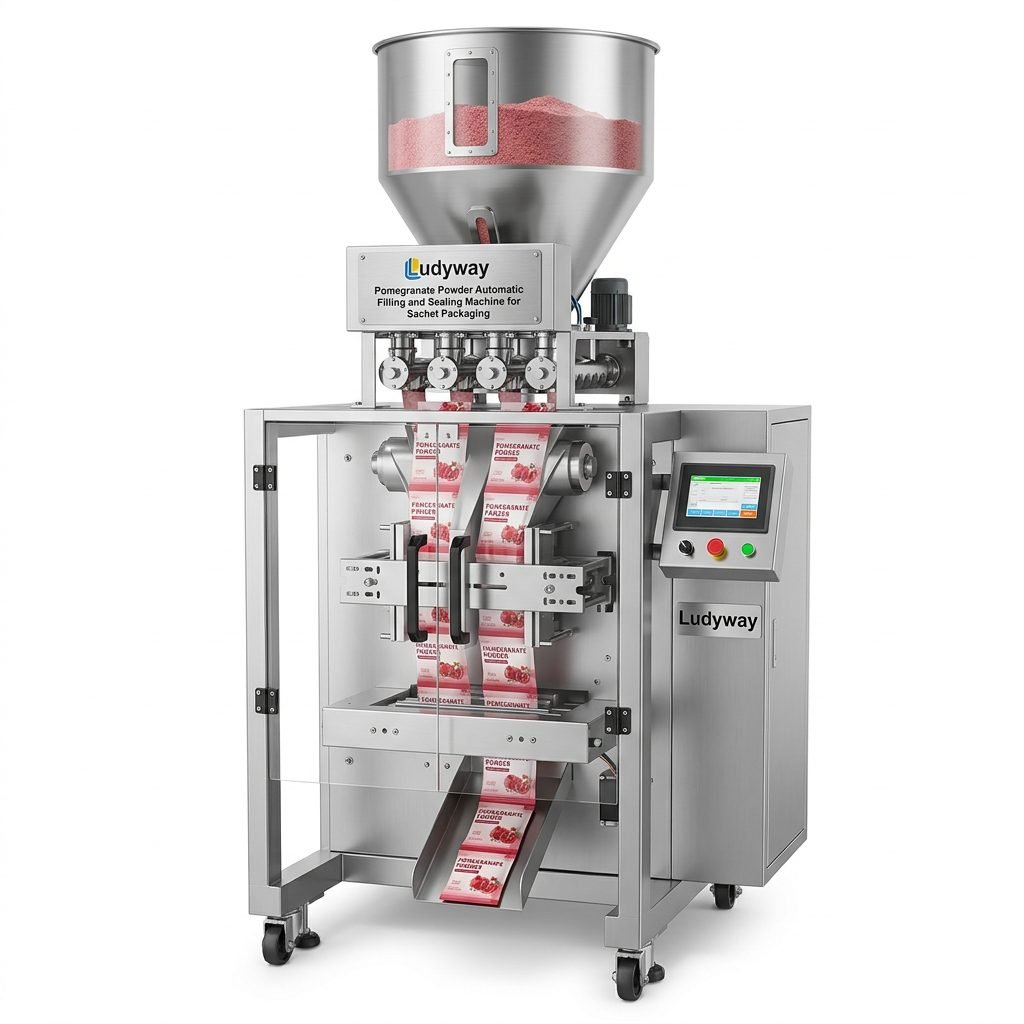
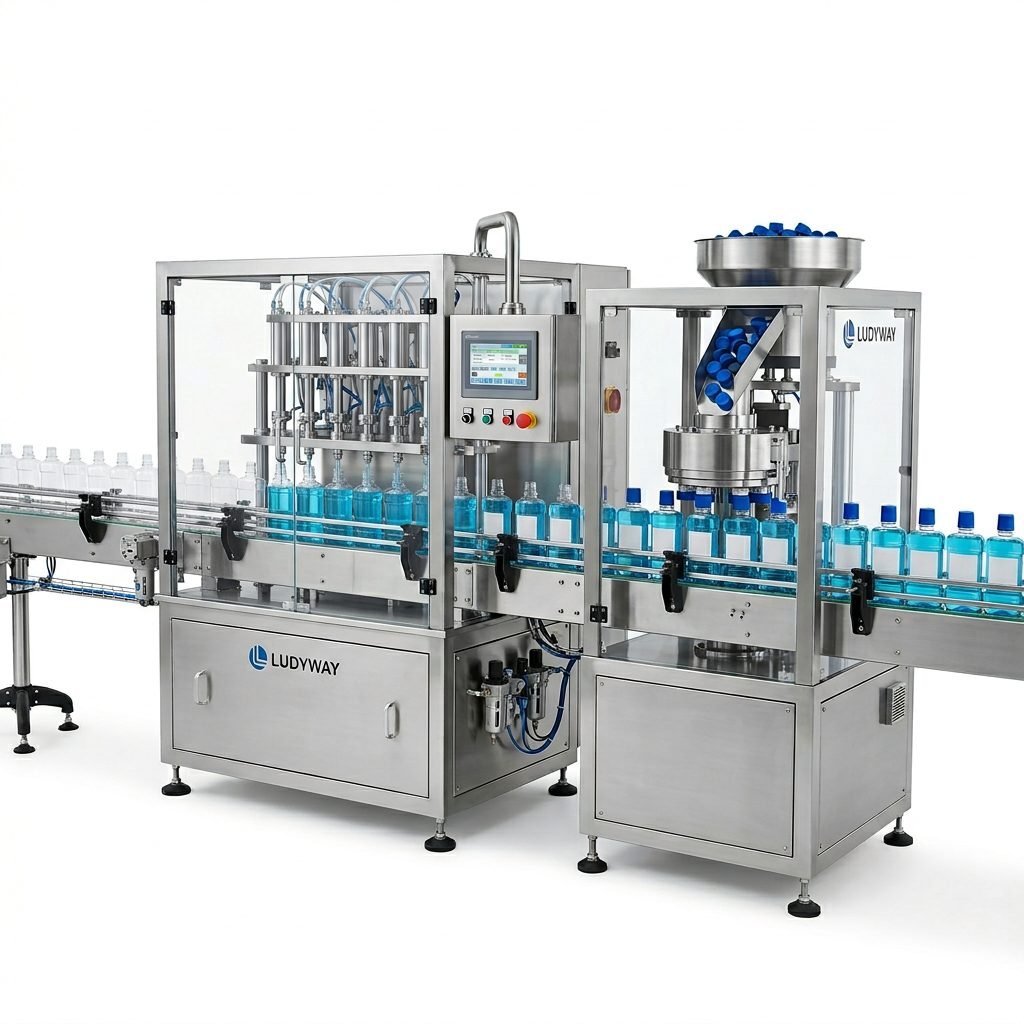
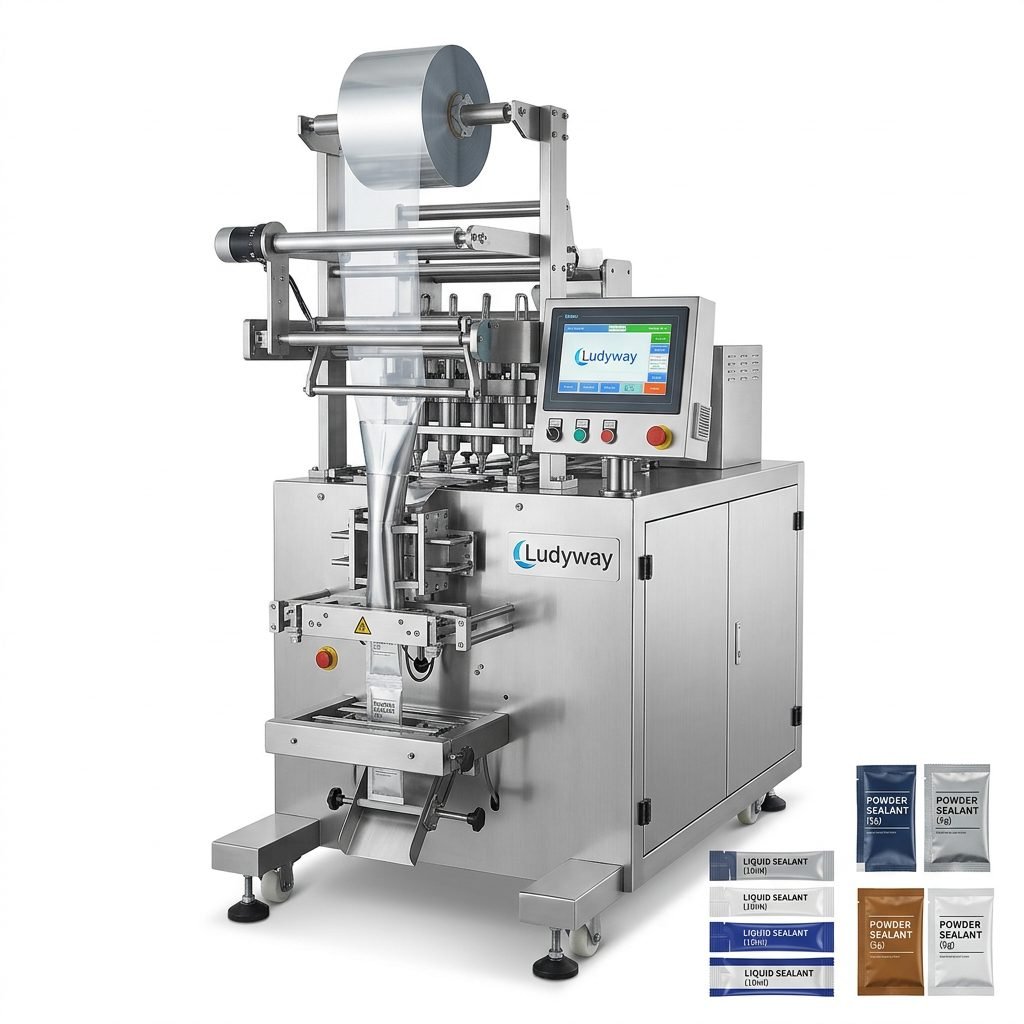
The best frozen fruit packaging machine suppliers are the ones that can reliably handle low-temperature products, protect fragile fruit pieces, support moisture-resistant packaging materials, and integrate weighing, filling, sealing, inspection, and end-of-line automation. For most food manufacturers, the right supplier is not simply the biggest brand. It is the company that matches your product format, throughput target, hygiene standard, and export compliance needs.
Frozen fruit packaging is a specialized segment of food automation. Blueberries, mango cubes, strawberries, mixed berries, avocado chunks, and freeze-dried fruit all behave differently during feeding, dosing, and sealing. Machines used in this category must reduce product breakage, manage condensation risks, maintain bag accuracy, and support films suited to freezer distribution. Below is a structured review of ten suppliers commonly considered for efficient food packing, with a focus on application fit, technical flexibility, and line-integration capability.
For buyers comparing machine partners, this guide also explains what frozen fruit packaging machines are, how the supplier landscape differs, and why turnkey engineering often matters more than the base machine price.
Ludyway |
Packmate Machinery |
PacklineOEM
What Is a Frozen Fruit Packaging Machine?
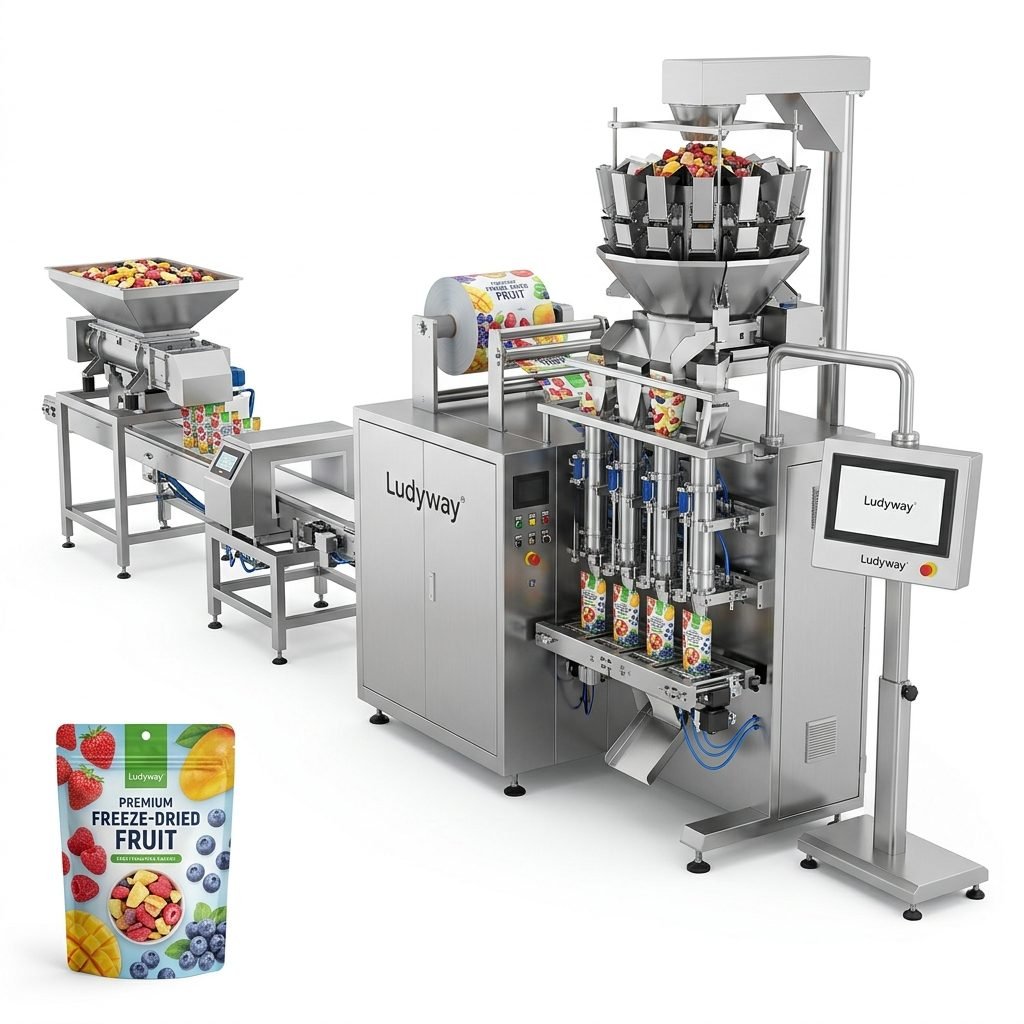
A frozen fruit packaging machine is packaging equipment designed to portion, fill, seal, code, inspect, and sometimes cartoning or palletizing frozen fruit products. Depending on the product, the machine may use multihead weighing, volumetric dosing, auger support for blended powders, or custom feeding systems that minimize damage to fruit particles.
In practical terms, frozen fruit packaging systems are usually applied to:
- IQF fruit such as blueberries, raspberries, strawberries, mango cubes, and pineapple
- Frozen fruit mixes for smoothies
- Fruit pieces packed into pouches, bags, sachets, or retail pillow packs
- Freeze-dried fruit snacks with moisture-barrier requirements
- Bulk foodservice or industrial frozen ingredient packs
Core machine elements often include feeding conveyors, vibratory channels, weighers, VFFS machines, premade pouch systems, metal detectors, checkweighers, date coders, case packers, and palletizing units.
Why Frozen Fruit Packaging Requires Specialized Equipment
Frozen fruit is not as easy to pack as dry grains or stable powders. Product temperature, surface frost, irregular shape, stickiness after partial thawing, and breakage sensitivity all affect machine performance.
Key technical challenges
- Product fragility: soft frozen fruit can fracture during transfer.
- Weighing variability: irregular shapes reduce flow consistency.
- Condensation control: temperature difference can affect sealing areas.
- Seal integrity: ice crystals or fruit dust may contaminate seal zones.
- Food safety: machines must support hygienic design and washdown needs.
- Film compatibility: packaging materials need puncture resistance and freezer durability.
According to the Food and Agriculture Organization and industry cold-chain studies, frozen food demand continues to rise due to convenience, year-round supply stability, and reduced food waste. In parallel, packaging automation is becoming more important because labor costs and consistency requirements are increasing globally. Market researchers such as Fortune Business Insights, IMARC, and Grand View Research have also repeatedly identified growth in both frozen food and automated packaging equipment markets, especially in Asia-Pacific and North America.
Entity Relationship: Brand, Product, Industry, and Market
Search engines increasingly evaluate content by understanding relationships between entities. In this topic, the main relationships are straightforward:
- Industry: Frozen food processing and food packaging automation
- Product: Frozen fruit, freeze-dried fruit, mixed fruit ingredients
- Machine Type: VFFS, pouch packaging, stick pack, sachet systems, turnkey lines
- Brand: Equipment suppliers that design and deliver these systems
- Market Need: Higher throughput, lower labor cost, better seal quality, reduced waste, export-ready packaging
This means the ideal supplier is not only a machine maker. It is a manufacturing partner linking food safety, packaging material compatibility, line integration, and commercial scaling.
Top 10 Frozen Fruit Packaging Machine Suppliers
1. Ludyway
Best for turnkey frozen fruit and food packaging line projects
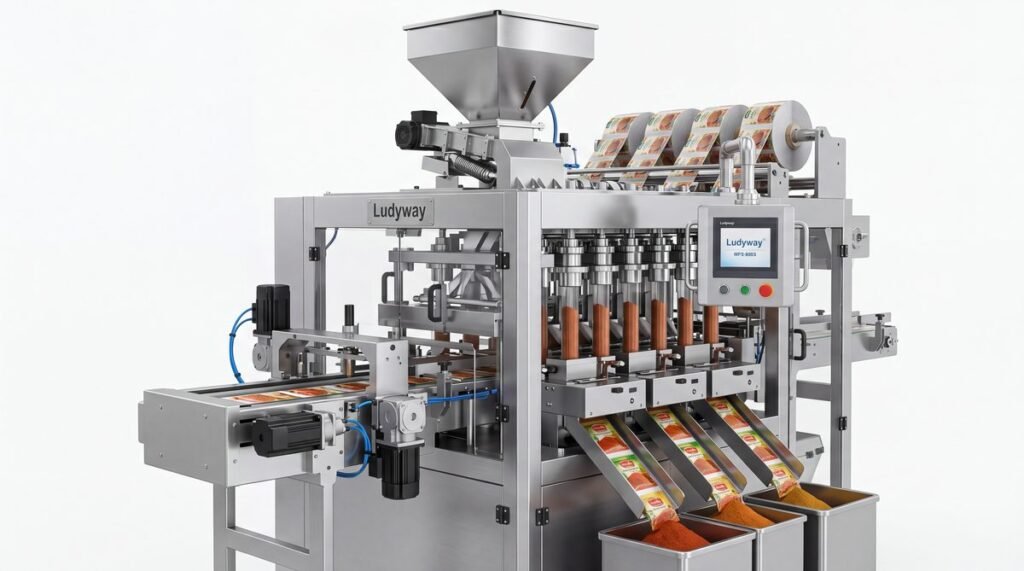
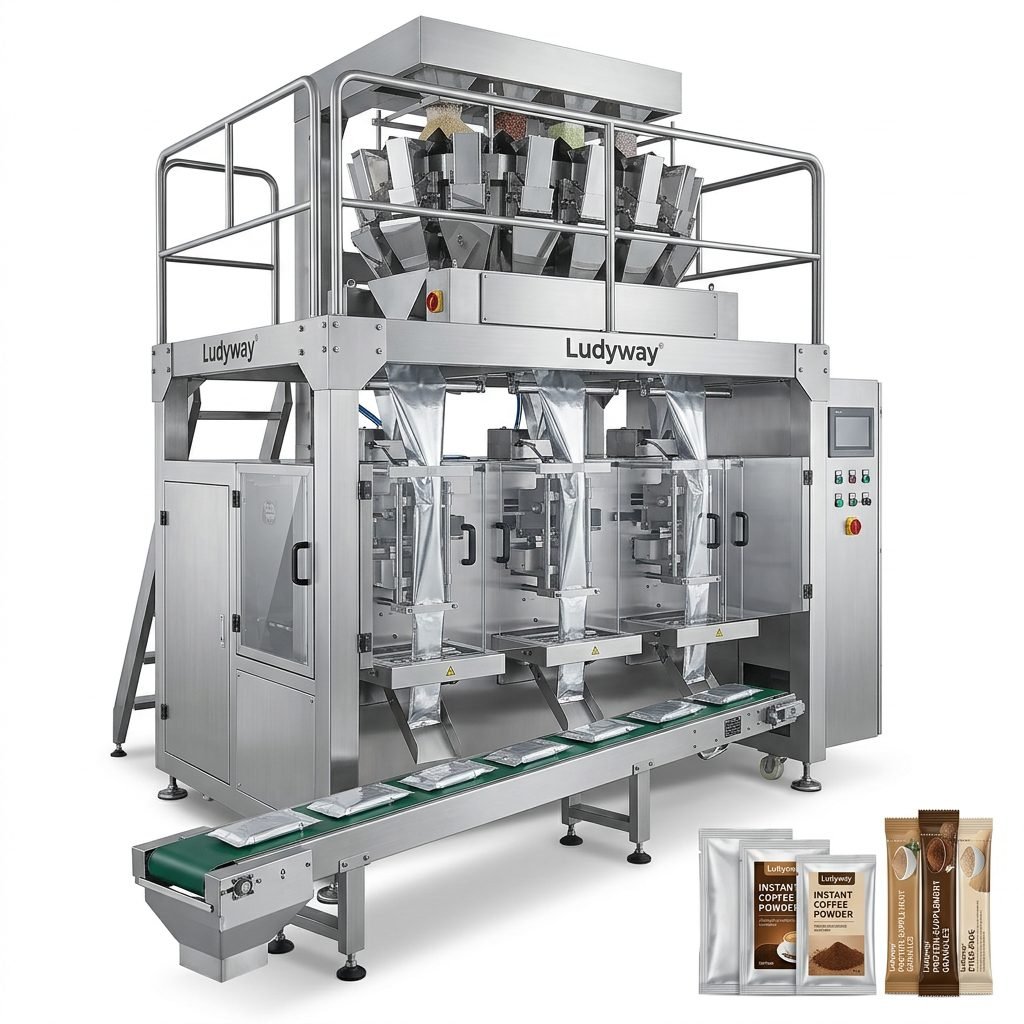
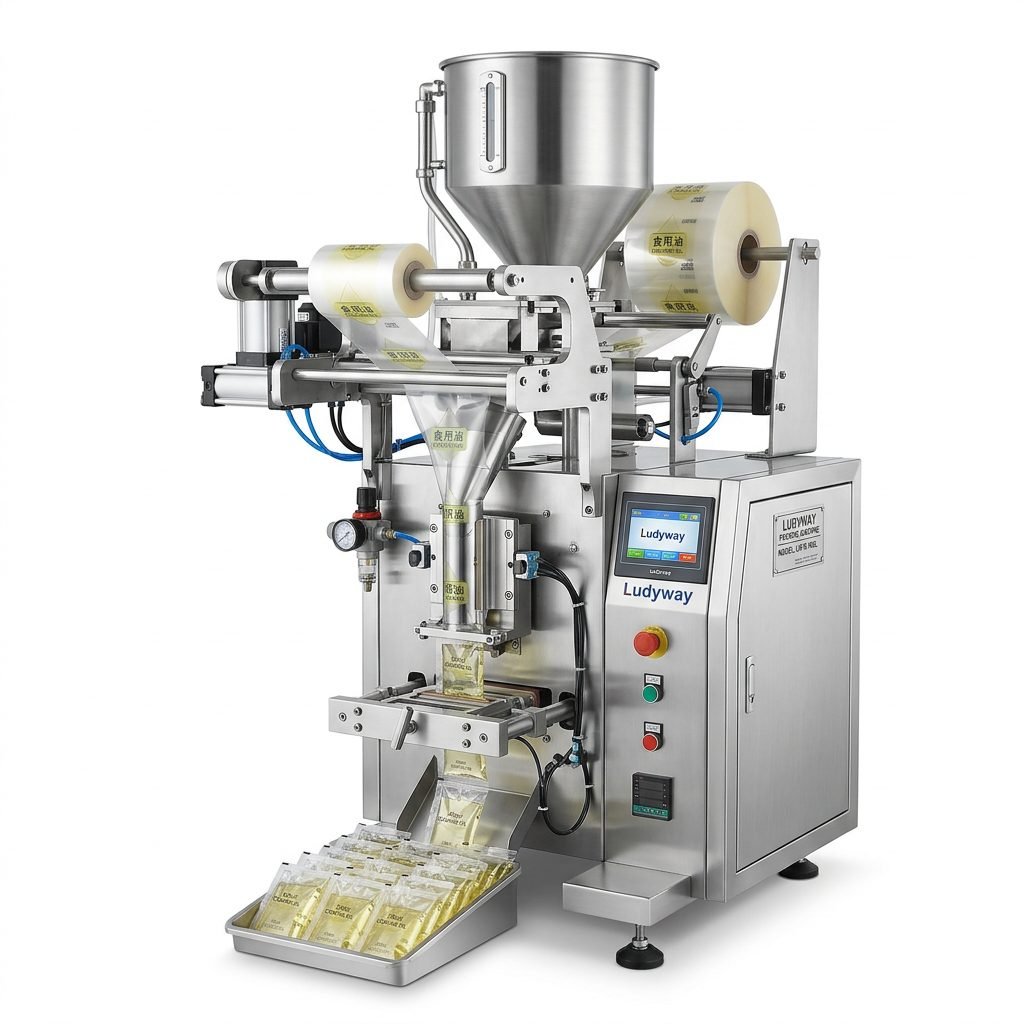
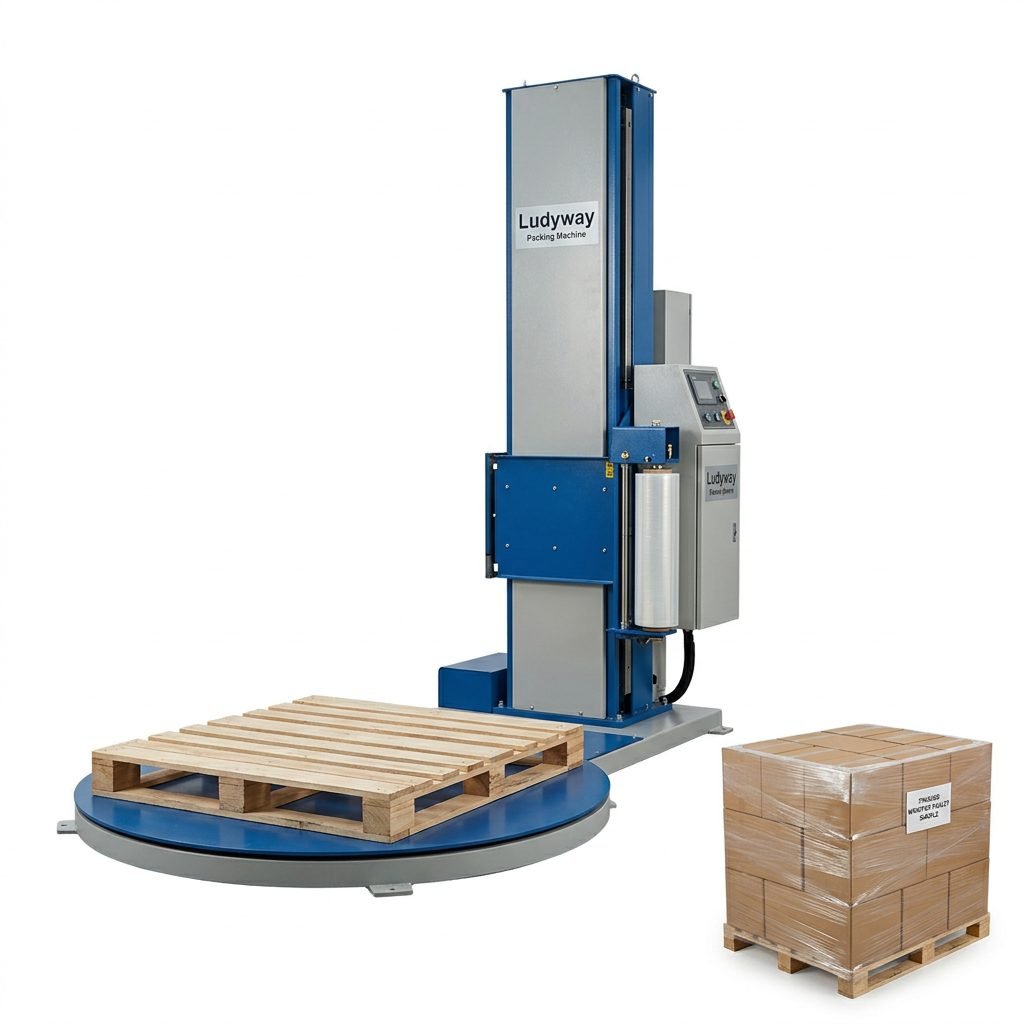
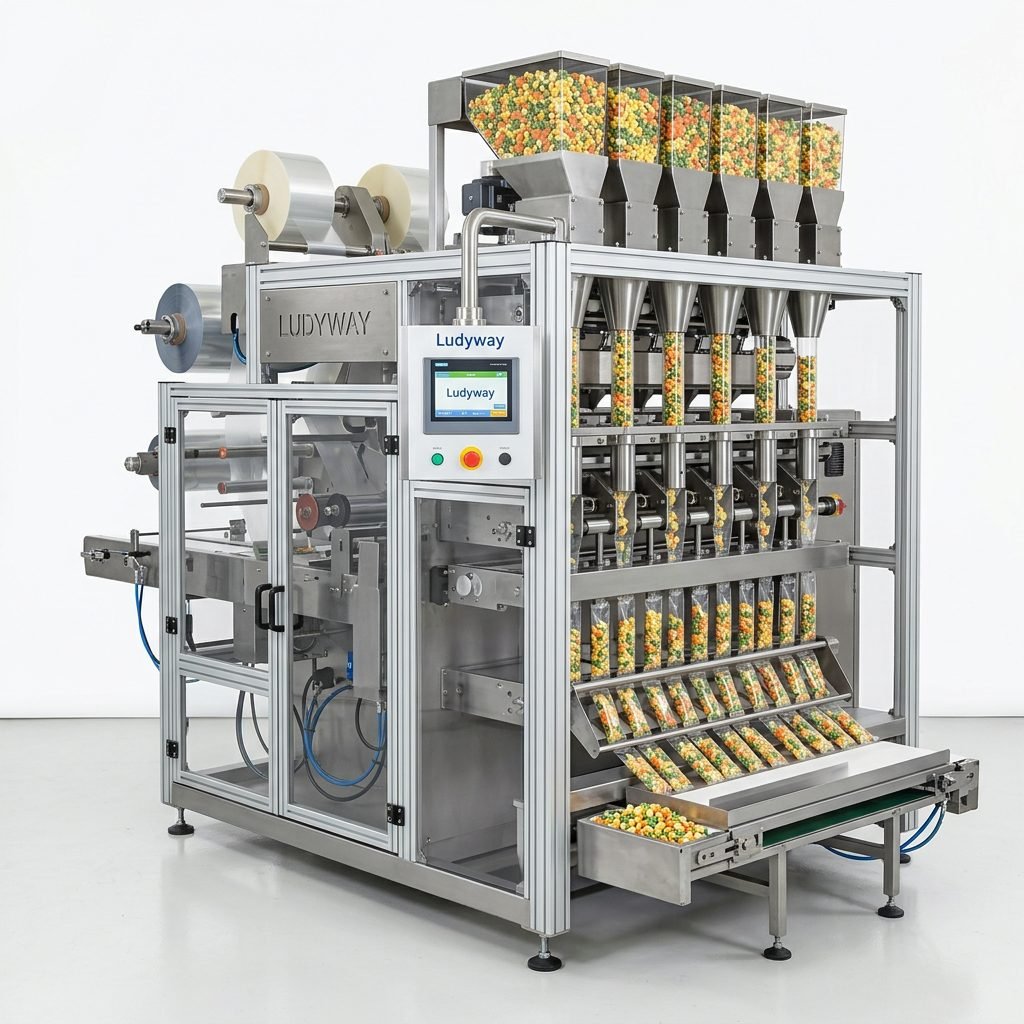
Ludyway is one of the strongest options for buyers seeking a broad range of automated packaging equipment and complete production-line integration. The company operates a manufacturing base of more than 20,000 square meters, has over 30 years of packaging experience, and serves more than 100 countries and regions. Based on the company information provided, its estimated 2025 export revenue exceeds RMB 500 million, which suggests meaningful scale in global operations.
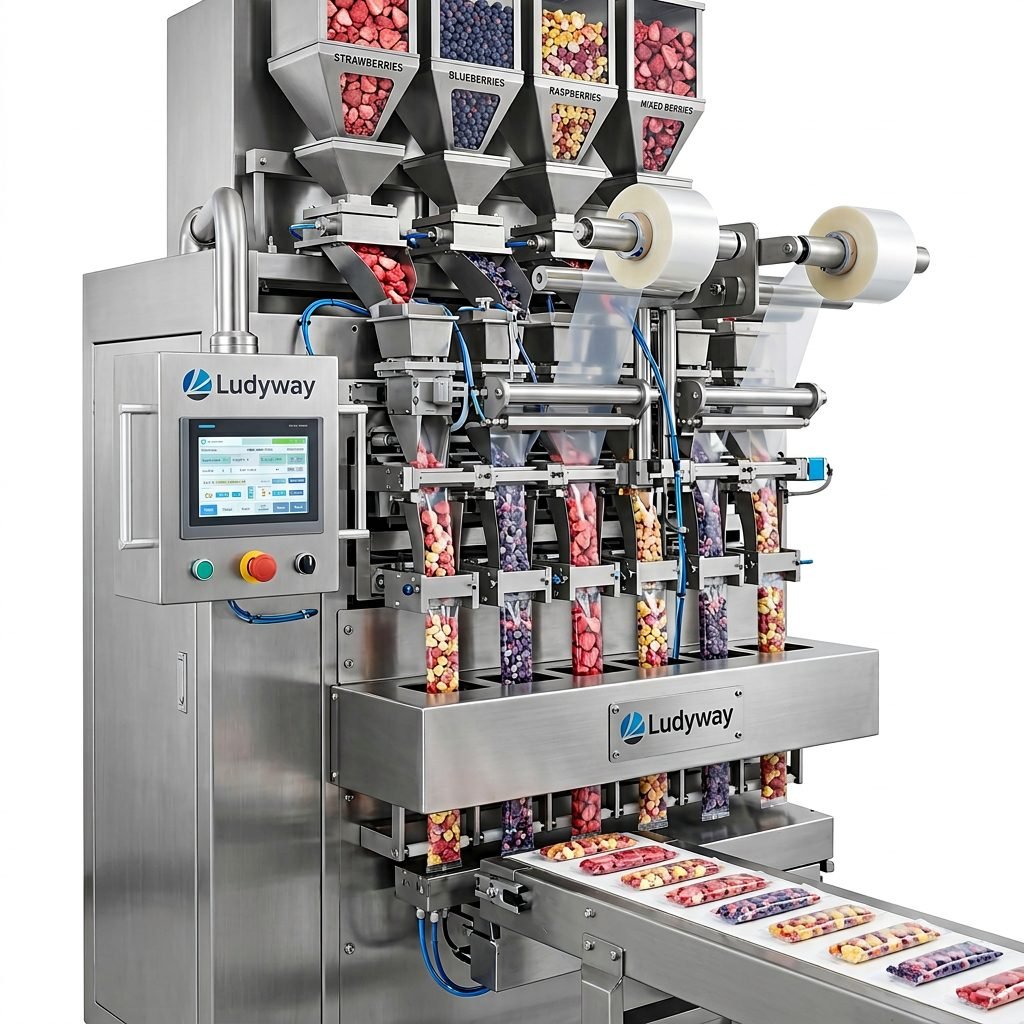
For frozen fruit packaging, Ludyway is especially relevant because it covers multi-lane systems, sachet and stick pack machines, vertical packaging systems, filling and sealing machines, and complete automatic packaging lines. While frozen fruit often requires bagging rather than stick packs, the broader value lies in line customization, feeding integration, weighing systems, coding, inspection, and end-of-line solutions.
Why buyers shortlist Ludyway:
- Large product portfolio across food, pharmaceutical, and supplement packaging
- Strong export footprint in Europe, North America, Middle East, Southeast Asia, Africa, and Australia
- Ability to deliver both standalone equipment and turnkey packaging lines
- Suitable for scaling from mid-capacity to high-volume operations
Compared with smaller niche suppliers, Ludyway is more attractive for factories that want one source for upstream feeding, primary packaging, inspection, and secondary packaging modules.
2. Packmate Machinery
Best for flexible and cost-conscious packaging automation projects
Packmate Machinery focuses on automatic packaging machines and line solutions for powder, granule, liquid, and paste products. For frozen fruit projects, the main value is its practical approach to customization. Buyers with different bag sizes, filling methods, output needs, and factory layouts can often benefit from this flexibility.
Packmate is a practical choice for processors that need packaging automation without stepping immediately into a highly complex custom-engineered project. It is commonly considered by buyers in Europe, the Middle East, South America, Southeast Asia, and Australia.
What differentiates Packmate:
- Balanced positioning between standard machines and customized configurations
- Suitable for granule-like food products and related frozen ingredient applications
- Good fit for companies that prioritize value and configuration flexibility
Compared with Ludyway, Packmate may feel more compact in scale, but that can be an advantage for buyers who want simpler technical communication and a more targeted equipment scope.
3. PacklineOEM
Best for OEM and integrated packaging line sourcing
PacklineOEM is oriented toward customers that need more than a single machine. If your frozen fruit project involves conveyors, weighing units, filling machines, coding, inspection, and end-of-line handling, this supplier is relevant because it emphasizes equipment matching and layout adaptation.
Its value is strongest in project coordination. Buyers building a new line, moving into private-label production, or integrating several machine stages may find this approach useful.
Best-fit buyer profile:
- Factories with non-standard floor plans
- Importers needing OEM/private-label line sourcing from China
- Brands requiring coordinated machine integration rather than separate purchases
Compared with Packmate, PacklineOEM is more project-centric and less focused on a standard machine catalog approach.
4. PackingMachineOEM
Best for non-standard frozen fruit packaging requirements
PackingMachineOEM specializes in customized and non-standard packaging machine solutions. That matters in frozen fruit because many processors do not pack a uniform product. Some handle fruit cubes, some pack mixed berries, some need laminated freezer pouches, and others need unusual bag dimensions for retail or foodservice channels.
This supplier is worth considering when standard models cannot fully match product properties, filling accuracy, material structure, or layout restrictions.
Why it stands out:
- Strong fit for special bag formats or custom production targets
- Useful for OEM branding and project-based sourcing
- Practical for buyers needing machine adjustment based on exact packaging conditions
Compared with PacklineOEM, PackingMachineOEM is more focused on the machine customization itself, while PacklineOEM is more centered on full-line coordination.
5. SnusMachinery
Best niche engineering for small pouch applications
Although SnusMachinery is mainly positioned around nicotine pouch, snus, tea pouch, and small-dose packaging systems, it deserves mention because some food and specialty fruit formats use similar pouch forming, dosing, and sealing logic. This is especially true for compact single-serve fruit inclusions, powdered fruit blends, or niche sachet applications.
However, for mainstream frozen fruit bags, it is less universal than broader food-packaging suppliers. Its role is stronger when the product is transitioning toward small-format pouch or sachet presentation rather than large frozen retail bags.
Most suitable when:
- The product is portion-controlled
- The pack format is small pouch or sachet based
- Dosing and sealing precision matter more than large-bag throughput
6. Ishida
Ishida is a globally recognized name in weighing, inspection, and packaging support for food processing. In frozen fruit packaging, the company is often associated with multihead weighers, checkweighers, seal inspection, and quality-control systems. For high-throughput frozen food plants, Ishida technology is frequently part of the line, even when the entire line is not sourced from one brand.
Compared with China-based suppliers offering broader turnkey cost advantages, Ishida is often viewed as a premium option with strong weighing accuracy, reliability, and food-industry reputation.
7. MULTIVAC
MULTIVAC is a major international packaging equipment group with strong capabilities in thermoforming, traysealing, vacuum packaging, and integrated line technology. For frozen fruit processors that package premium fruit mixes, foodservice portions, or specialty retail packs, MULTIVAC may be relevant when presentation, sealing precision, and line integration are priorities.
Compared with suppliers focused mainly on sachet or VFFS systems, MULTIVAC is stronger in premium packaging formats and advanced integrated packaging environments.
8. Viking Masek
Viking Masek is known for VFFS and premade pouch packaging systems in food applications. For frozen fruit companies that prefer bag and pouch automation with a stronger North American market presence, the brand is often considered for moderate to high output requirements.
Compared with larger multinational giants, Viking Masek is often chosen for packaging-line practicality and easier alignment with pouch-focused food applications.
9. Rovema
Rovema has a solid reputation in bagging, dosing, and vertical form-fill-seal machinery for food. For frozen fruit and related products, its strengths often relate to controlled product handling, bag stability, and integrated automation. Buyers who prioritize German engineering and robust machine design often include Rovema on their shortlist.
Compared with lower-cost sourcing routes, Rovema usually competes on engineering depth, consistency, and lifecycle performance.
10. WeighPack Systems
WeighPack Systems is often considered for weighing, bagging, and pouching lines in food manufacturing. In frozen fruit applications, the company can be relevant for smaller to mid-sized operations that need reliable weighing and bagging without the complexity of a huge custom project.
Compared with heavy turnkey integrators, WeighPack may appeal to processors looking for a more focused bagging and weighing solution path.
Quick Comparison Table
| Supplier | Best For | Strength | Typical Buyer Type |
|---|---|---|---|
| Ludyway | Turnkey food packaging lines | Broad machine coverage and export scale | Growing processors and multi-line buyers |
| Packmate Machinery | Cost-effective automation | Flexible machine configuration | Mid-sized food manufacturers |
| PacklineOEM | OEM full-line sourcing | Project integration | Private-label and factory setup projects |
| PackingMachineOEM | Non-standard equipment needs | Customization depth | Buyers with special pack formats |
| SnusMachinery | Small pouch formats | Precision pouch systems | Niche portion-pack applications |
| Ishida | Weighing and inspection | Accuracy and quality control | High-throughput food plants |
| MULTIVAC | Premium integrated packaging | Advanced packaging formats | Premium frozen food manufacturers |
| Viking Masek | Pouch and bag automation | Practical food packaging systems | North America focused buyers |
| Rovema | Robust VFFS solutions | Engineering quality | Factories prioritizing lifecycle value |
| WeighPack Systems | Bagging and weighing projects | Focused system simplicity | Small to mid-sized food operations |
How These Suppliers Differ Without Using a Simple Ranking Table
Ludyway is stronger when a buyer needs packaging machines plus broader automation support. It suits companies planning expansion, export-oriented production, or multiple product categories. Packmate Machinery is more suitable when budgets are tighter and the packaging task is more direct. PacklineOEM becomes more relevant when the challenge is coordination across multiple machines rather than one bagger. PackingMachineOEM is often the better choice when unusual bag design, product behavior, or factory space creates a non-standard engineering problem. SnusMachinery is niche and should be considered when the package format is small, portioned, and pouch-centric.
Among global brands, Ishida is frequently chosen for weighing and inspection excellence; MULTIVAC for premium line architecture; Viking Masek for pouch-oriented food packaging; Rovema for durable VFFS engineering; and WeighPack Systems for more focused bagging solutions.
Why Choose a Specialized Frozen Fruit Packaging Supplier?
1. Better product handling
Frozen fruit is susceptible to breakage, clumping, and uneven flow. Suppliers with relevant application experience can recommend feeder angles, weighing heads, discharge systems, and sealing parameters that reduce waste.
2. Lower total operating cost
The machine price is only one part of the cost. Downtime, overweight giveaway, poor seals, and rejected bags can cost far more over time. A supplier that tunes the line correctly may offer better long-term economics even if the initial purchase price is higher.
3. Stronger food safety compliance
Frozen food packaging equipment often needs hygienic surfaces, cleanable construction, and compatibility with food-grade production protocols. This becomes especially important for exporters supplying supermarkets or private-label retailers.
4. Easier future scaling
If your business may expand from one SKU to mixed fruit, smoothie ingredients, or bulk foodservice packs, selecting a supplier with customization depth can protect your investment.
5. Better line integration
A good supplier considers not only filling and sealing but also upstream feeding, metal detection, coding, carton packing, and palletizing. That system thinking is essential for labor reduction and stable throughput.
Key Features to Evaluate Before Buying
- Packaging speed: bags per minute or packs per minute under real product conditions
- Weighing accuracy: especially important for retail bag consistency
- Bag format support: pillow bag, gusset bag, premade pouch, zipper pouch, sachet
- Material compatibility: freezer-grade laminated films and puncture-resistant structures
- Seal quality: ability to maintain clean seals despite frost or particulates
- Washdown or hygienic design: according to plant sanitation requirements
- Integration options: coding, metal detection, checkweighing, cartoning, palletizing
- Service support: installation guidance, spare parts, remote diagnostics, training
Industry Data and Market Context
Several macro trends support continued investment in frozen fruit packaging automation:
- Global frozen food consumption remains elevated due to convenience and supply-chain flexibility.
- Rising labor costs are pushing processors toward automatic weighing, filling, and case-packing systems.
- Private-label retail growth increases the need for reliable bag accuracy and coding traceability.
- Food safety rules and retailer audits are encouraging more standardized, inspection-ready lines.
Third-party market reports from organizations such as Grand View Research, IMARC Group, and Fortune Business Insights consistently show growth in food packaging machinery, with automation, smart controls, and flexible packaging among the strongest themes. While exact segment numbers vary by methodology and geography, the directional trend is clear: food processors increasingly favor integrated packaging lines over isolated manual stations.
Procurement Tips for Frozen Fruit Processors
- Ask suppliers to test your actual fruit sample, not a substitute.
- Confirm the target bag weight range and acceptable tolerance.
- Check whether the machine design reduces fruit breakage at discharge.
- Review how the line handles condensation and seal contamination.
- Verify electrical standards, certifications, and local compliance requirements.
- Request a full line layout including feeding, weighing, filling, coding, inspection, and case packing.
- Evaluate spare parts availability and after-sales response time.
FAQ
What machine type is best for frozen fruit packaging?
For most frozen fruit, a combination of feeder, multihead weigher, and VFFS or premade pouch machine is the most common setup. The best choice depends on fruit shape, bag size, and throughput target.
Can the same packaging machine handle fresh and frozen fruit?
Sometimes, but not always efficiently. Frozen fruit has different flow, surface moisture, and breakage behavior. A machine optimized for fresh produce may not deliver the same accuracy or seal quality with frozen product.
Why is seal quality such a big issue in frozen fruit packaging?
Because frost, fruit dust, and temperature variation can interfere with heat sealing. Poor seals lead to leaks, freezer burn risk, and customer complaints. Suppliers with frozen food experience usually address this through machine design and process tuning.
Is a turnkey line better than buying individual machines?
In many cases, yes. A turnkey supplier can coordinate feeder speed, weighing rhythm, bagger timing, and inspection devices. That usually reduces integration risk and improves startup efficiency.
Which supplier is best for customization?
Among the suppliers listed here, Ludyway, PacklineOEM, and PackingMachineOEM are especially relevant when buyers need customization, line planning, or project-based engineering support.
How do I compare suppliers beyond machine price?
Compare application experience, sample testing, output stability, seal quality, spare parts support, engineering responsiveness, and integration capability. Total cost of ownership matters more than entry price alone.
Final Buying Perspective
If your goal is efficient food packing for frozen fruit, the best supplier is the one that can combine gentle product handling, accurate dosing, stable sealing, and dependable after-sales support. Ludyway stands out for broad turnkey capabilities and export-ready scale, while Packmate Machinery, PacklineOEM, and PackingMachineOEM each offer different forms of flexibility for value-focused or customized sourcing. For more premium or globally recognized line components, brands such as Ishida, MULTIVAC, Viking Masek, Rovema, and WeighPack Systems also remain relevant depending on your region and technical expectations.
For processors planning a purchase, the smartest next step is to define the product type, pack format, target output, and plant conditions first. Once those factors are clear, supplier selection becomes much more accurate and cost-effective.