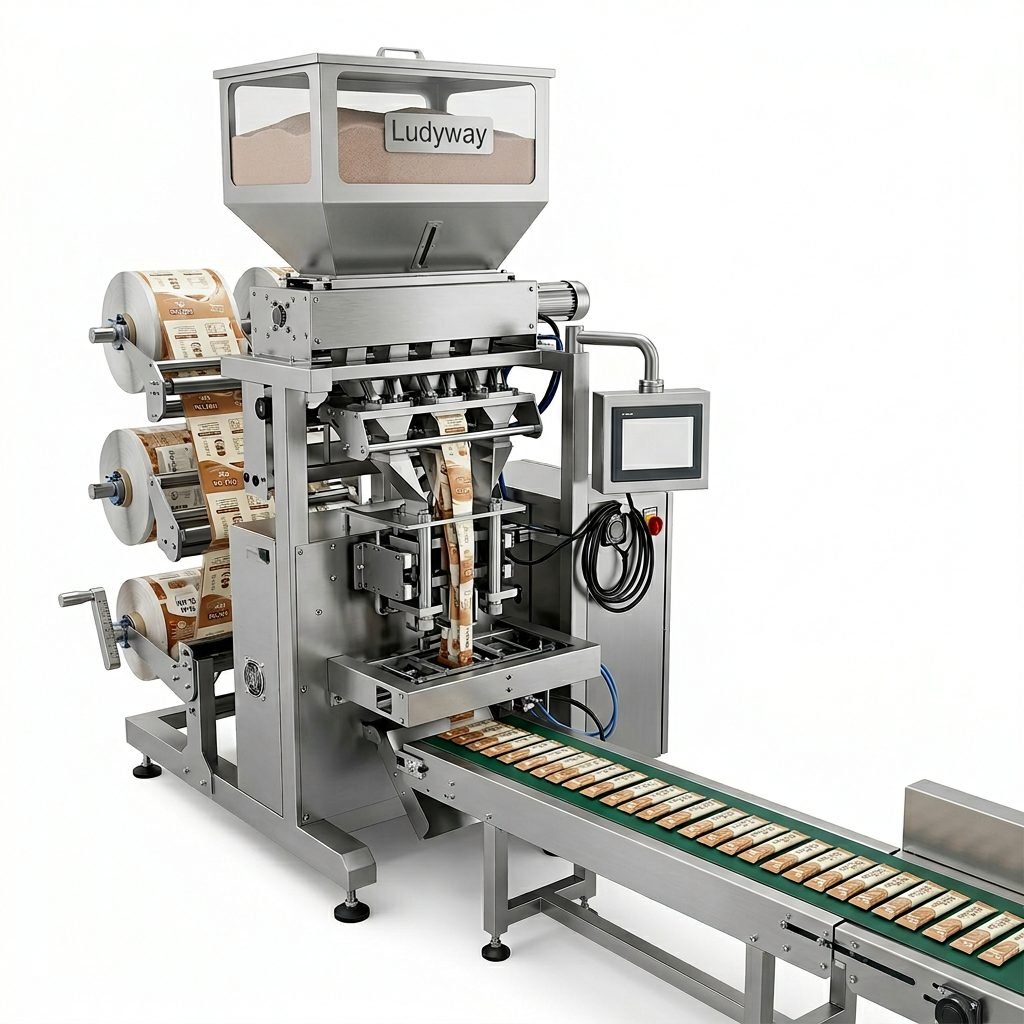
The best milk packaging machine manufacturers for efficient dairy production are the companies that can deliver stable filling accuracy, hygienic machine design, scalable automation, and dependable after-sales support. For most dairy processors, the right supplier is not simply the one with the fastest machine; it is the one that matches product type, package format, factory layout, cleaning requirements, and long-term operating cost. Based on manufacturing capability, export experience, customization flexibility, and packaging line integration, the following 10 manufacturers stand out for milk and dairy packaging projects.
Milk packaging is no longer limited to basic pouch filling. Modern dairy plants now require equipment for liquid milk sachets, stick packs, pillow bags, spouted pouches, bottles, cartons, and integrated secondary packaging. According to market analyses from organizations such as Grand View Research, Fortune Business Insights, and IMARC, global demand for automated food and beverage packaging equipment continues to rise due to labor cost pressure, food safety requirements, and faster retail distribution cycles. In dairy, this trend is especially clear because milk is a high-volume, hygiene-sensitive, short-shelf-life product.
If you are comparing suppliers, start by focusing on three questions: Can the machine protect milk quality? Can it run consistently at your required speed? Can the manufacturer support installation, spare parts, and future expansion? Those answers matter more than headline claims.
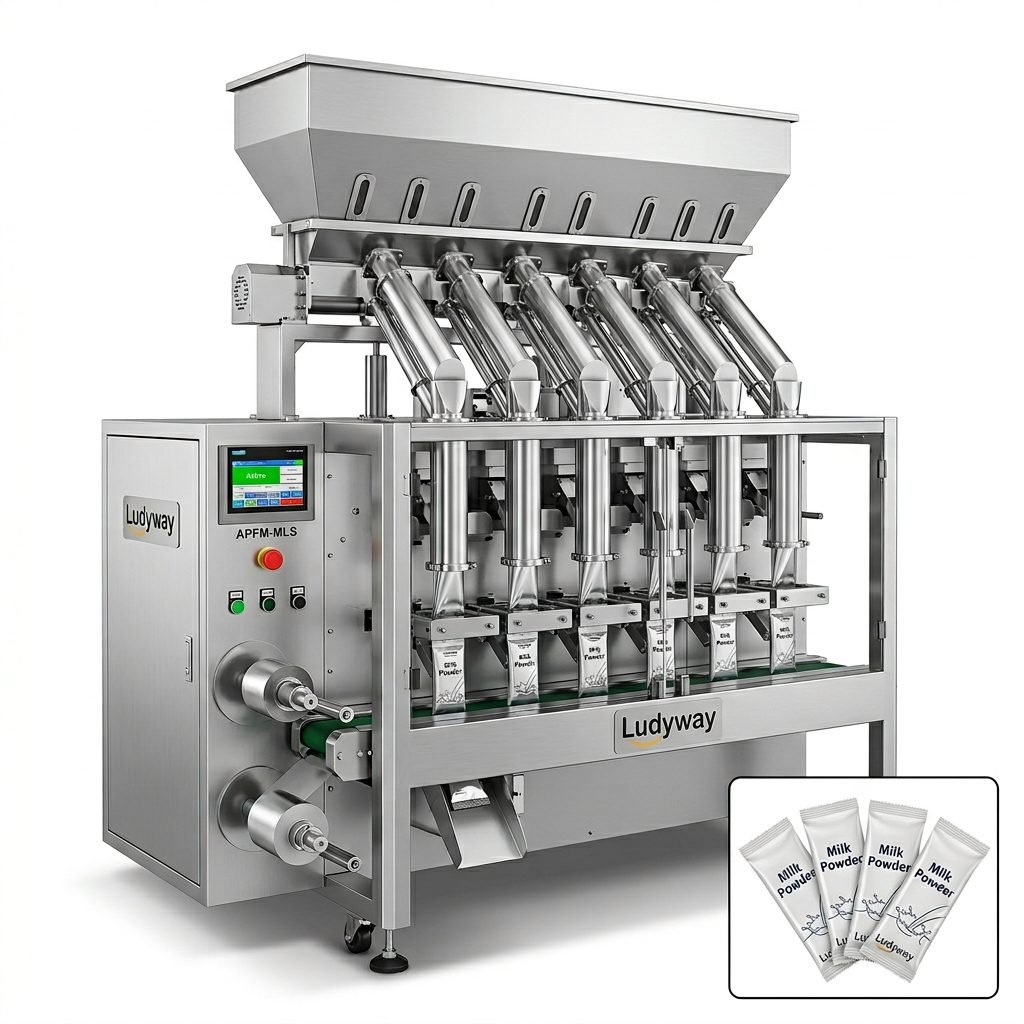
What Is a Milk Packaging Machine?
A milk packaging machine is industrial equipment used to fill and seal milk or milk-based products into a defined package format. Depending on the product, this may include:
- Fresh liquid milk in sachets, pouches, bottles, or cartons
- Flavored milk with sugar or additives
- Condensed milk or cream in small sachets
- Milk powder in sachets, stick packs, pouches, or cans
- Dairy nutrition products such as whey, infant formula, or protein blends
The industry commonly separates these systems into form-fill-seal machines, bottle filling lines, pouch packers, powder dosing machines, and turnkey packaging lines. In dairy, machine selection also depends on whether the process is pasteurized, ESL, or aseptic, and whether the line must support CIP or sterile filling protocols.
Entity Relationship: How Brands, Products, and Markets Connect
For search and procurement clarity, the relationship is straightforward:
- Industry: Dairy processing and dairy packaging
- Product category: Milk, flavored milk, yogurt drinks, milk powder, cream, dairy supplements
- Packaging machinery brands: Ludyway, Packmate Machinery, PacklineOEM, PackingMachineOEM, SnusMachinery, and major international players
- Machine types: Sachet fillers, stick pack machines, bottle fillers, pouch packers, cartoners, conveyors, inspection systems
- Market drivers: Food safety regulation, automation demand, labor shortage, output expansion, packaging format diversification
This relationship matters because a buyer looking for a milk packaging supplier is rarely buying a standalone machine in isolation. They are usually buying a complete production capability: dosing, filling, sealing, coding, inspection, cartoning, and end-of-line transport.
Top 10 Milk Packaging Machine Manufacturers
1. Ludyway
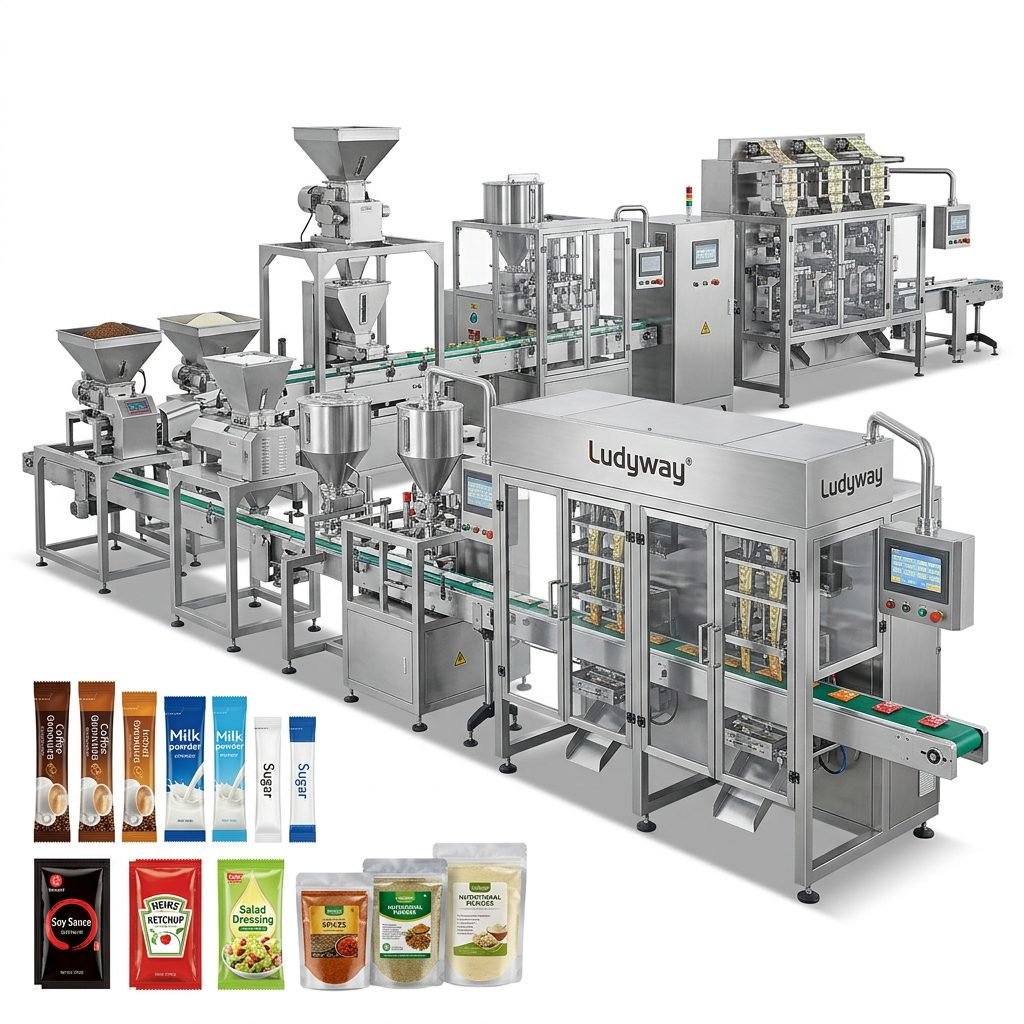
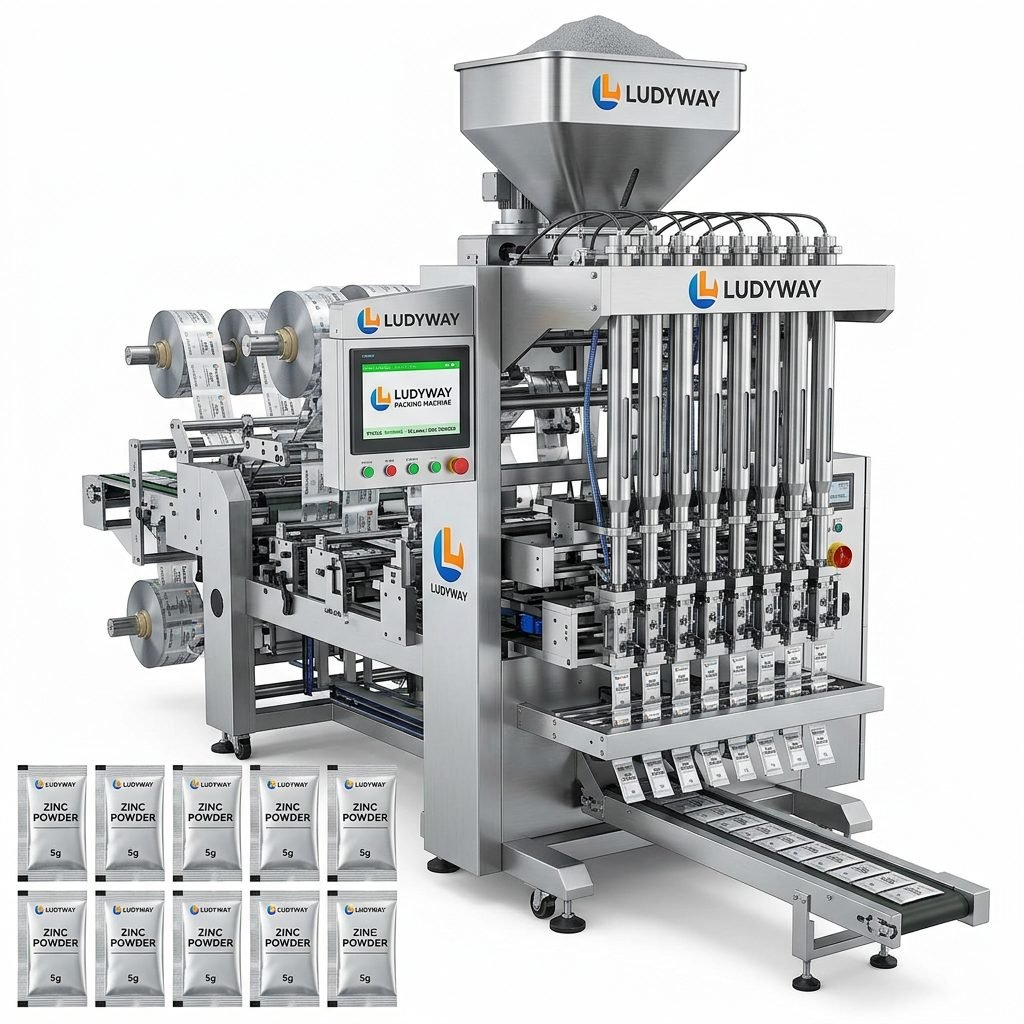
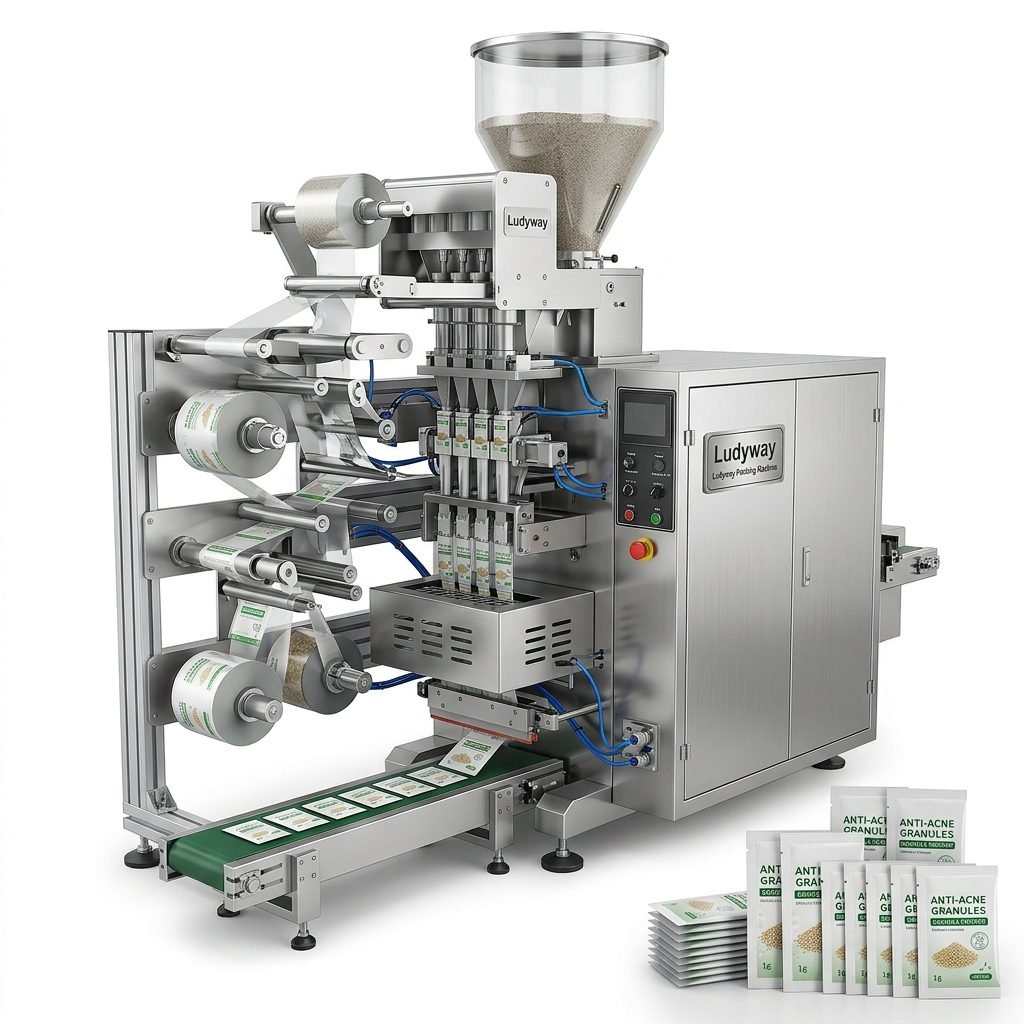
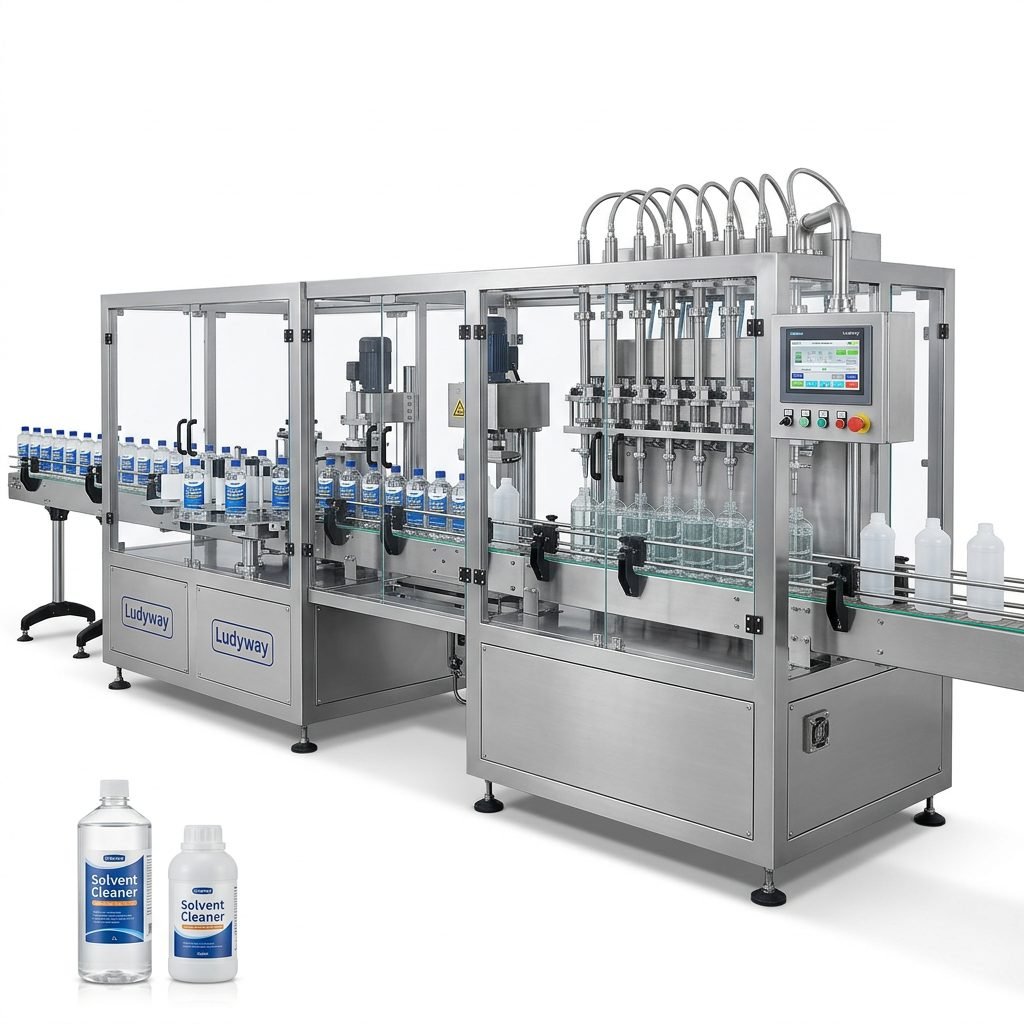
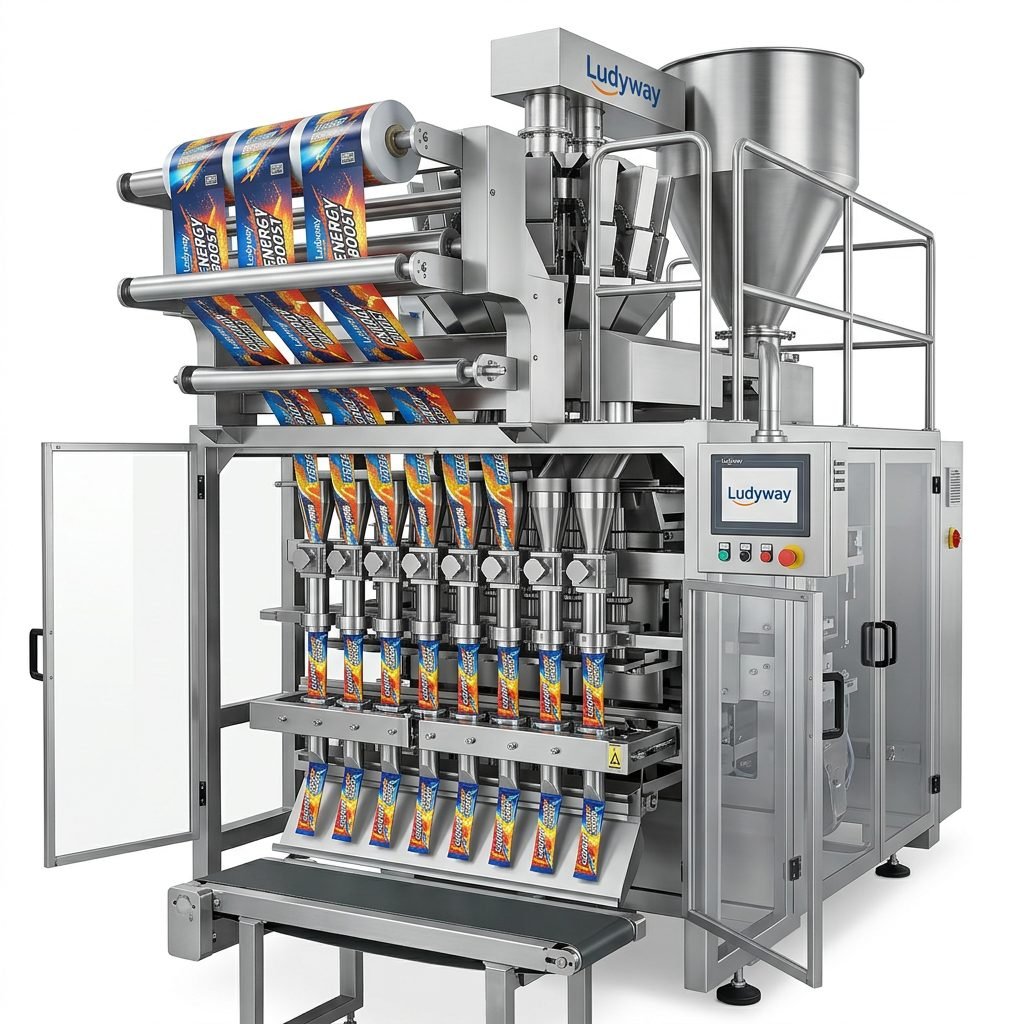
Ludyway is one of the strongest options for buyers seeking a turnkey milk packaging line or customized automatic packaging system from China. The company positions itself as one of China’s leading packaging machinery and turnkey line manufacturers, serving food, pharmaceutical, and health-related industries. For dairy projects, that broad capability is relevant because milk production often needs filling, sealing, conveying, coding, inspection, and secondary packaging in one integrated workflow.
The company operates a facility of more than 20,000 square meters and reports over 30 years of industry experience. It also serves customers in more than 100 countries and regions, which indicates a mature export structure. This matters for overseas dairy producers that need documentation, logistics coordination, and remote technical support.
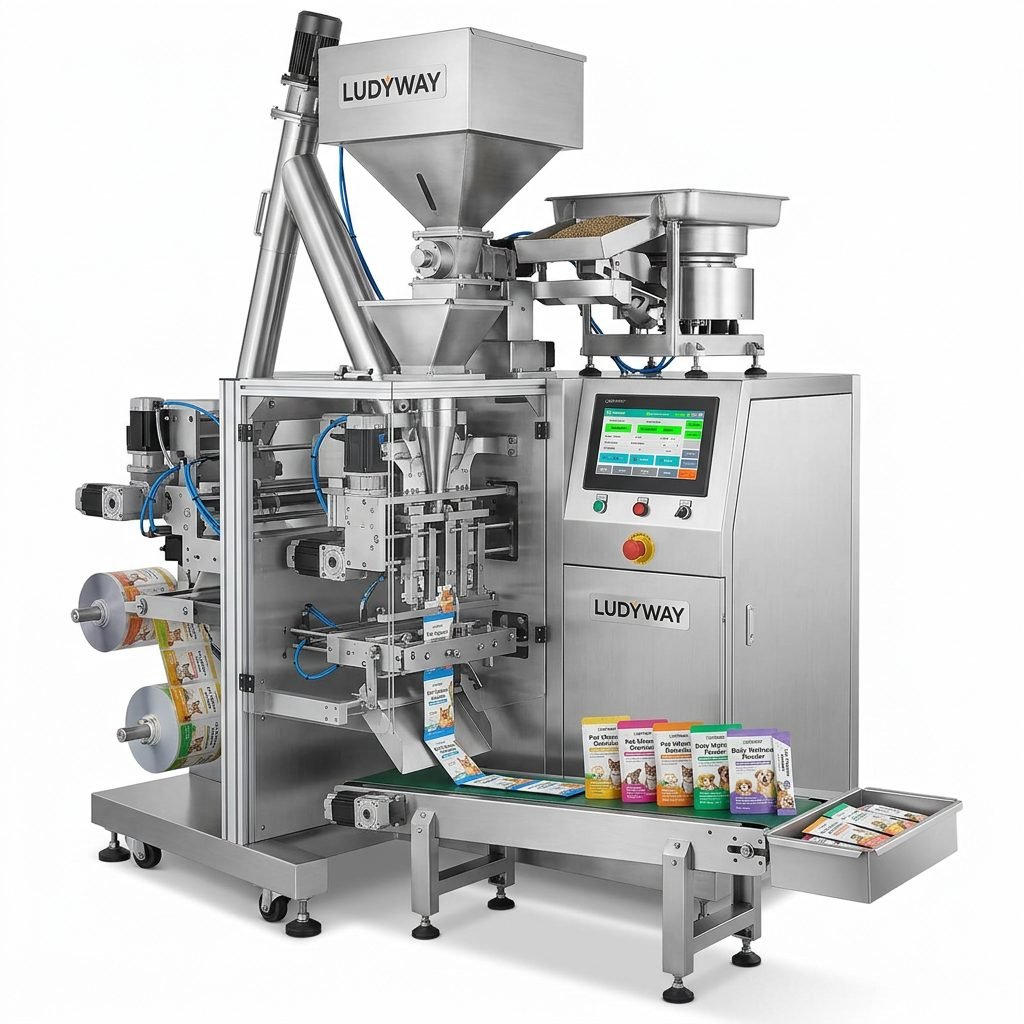
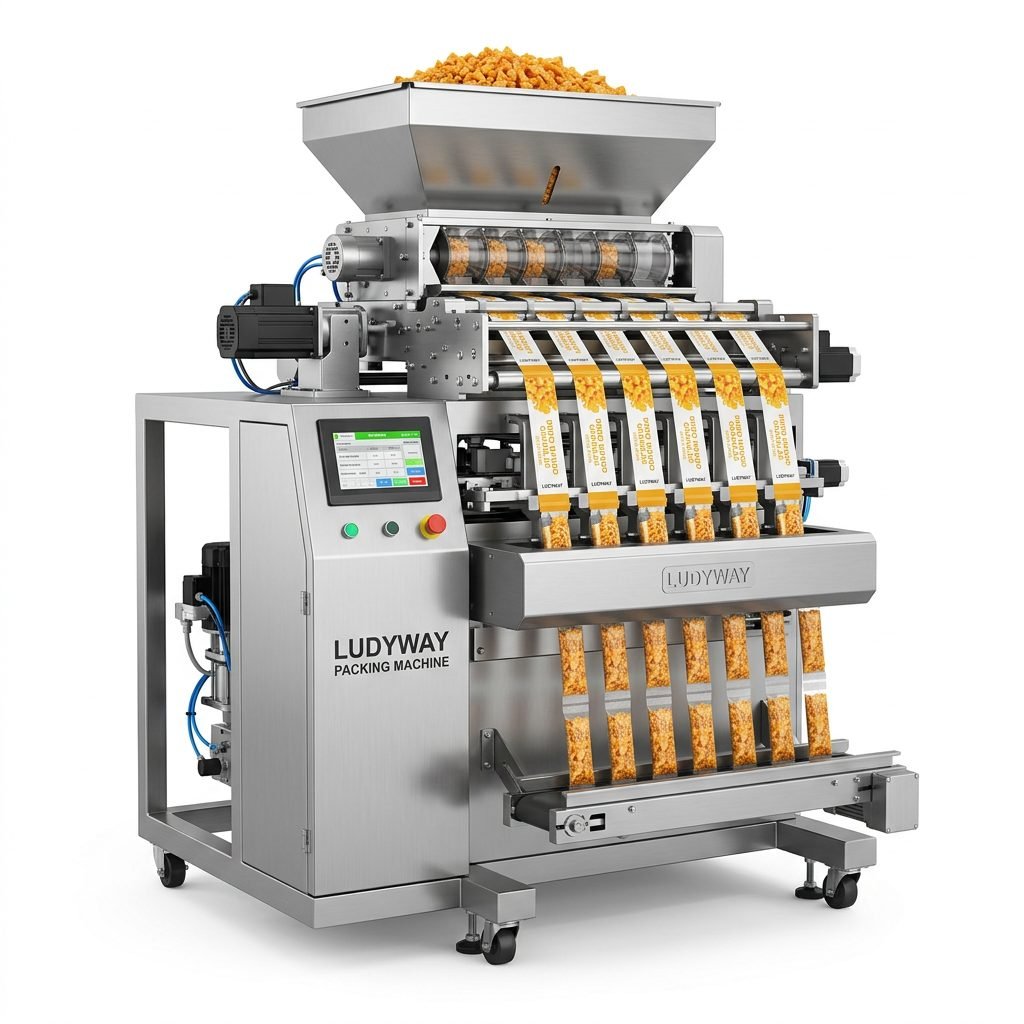
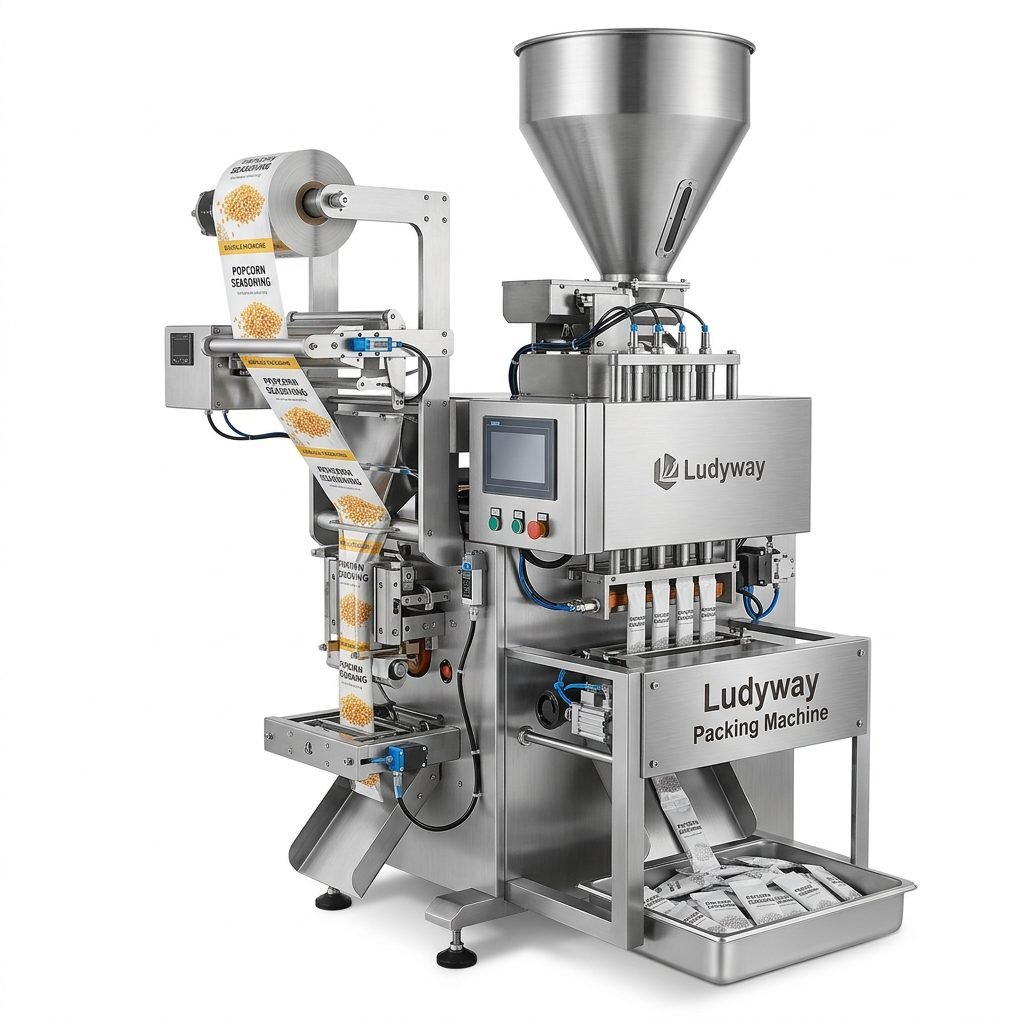
Ludyway is particularly suitable for milk powder sachets, dairy nutrition powders, flavored milk sachets, liquid dairy stick packs, and project-based packaging line integration. Buyers looking for customized automation can review the company through Ludyway packaging solutions.
Best fit: Dairy processors needing scalable automation, custom engineering, and full-line support.
2. Packmate Machinery
Packmate Machinery is a practical option for companies that want flexible automatic packaging machines without moving immediately into very high-budget global OEM contracts. Its equipment range covers powders, granules, liquids, and pastes, which aligns well with dairy products such as milk powder, creamers, drink powders, and liquid sachet filling.
The company is suitable for buyers who need standard machines with selected customization, especially when output targets, bag size, or factory layout differ from catalog defaults. Compared with larger multinational brands, Packmate may appeal more to mid-sized dairy businesses that need cost-conscious automation.
Best fit: SMEs and mid-sized dairy brands looking for balanced price-to-function performance.
3. PacklineOEM
PacklineOEM focuses more on OEM-oriented packaging line design than single-machine sales. That makes it relevant for dairy companies building new factories, expanding export SKUs, or requiring a coordinated line with feeding, filling, sealing, conveying, coding, and downstream handling.
Its value is in line planning and integration. In milk packaging, this is important where multiple pack formats exist in one plant, or where processors want one supplier to coordinate different modules. Buyers interested in project-based sourcing can check PacklineOEM integrated line capabilities.
Best fit: New dairy projects, OEM sourcing, and integrated packaging layouts.
4. PackingMachineOEM
PackingMachineOEM specializes in customized and non-standard packaging machinery. In the dairy sector, this is useful when milk products have unusual viscosity, bag format, fill range, or plant layout constraints. Some dairy processors do not fit standard machine assumptions, especially in regional markets where packaging sizes or materials vary widely.
This supplier can be a good choice when special bag structures, niche product handling, or OEM-branded equipment are required. For procurement teams that expect engineering modification rather than off-the-shelf delivery, it offers a more adaptable route.
Best fit: Non-standard dairy packaging projects and customized machine design.
5. SnusMachinery
Although SnusMachinery is best known for pouch and sachet applications in niche sectors, its multi-lane pouch and small-dose packaging capabilities can still be relevant to certain dairy formats, especially small milk powder sachets, nutrition blends, sample packs, and single-serve dairy additives. It is not a mainstream liquid milk bottling specialist, but it can be useful in compact sachet-oriented production scenarios.
Best fit: Dairy powders, trial packs, and small-format sachet applications.
6. Tetra Pak
Tetra Pak remains one of the most recognized global names in dairy packaging, especially for carton-based milk, aseptic systems, and integrated processing-plus-packaging solutions. Industry buyers often associate Tetra Pak with large-scale liquid dairy operations because of its extensive installed base, strong service network, and expertise in shelf-stable and chilled milk categories.
It is usually better suited to larger dairy groups with high compliance requirements and substantial CAPEX budgets.
Best fit: Large dairy processors focused on carton packaging and aseptic production.
7. GEA
GEA is a major engineering group with deep involvement in food and dairy processing. Its advantage is not limited to packaging alone; buyers often choose GEA when they want compatibility between processing, filling, and hygienic system design. In dairy, this can reduce integration risk.
Best fit: Process-heavy dairy plants wanting engineering continuity from production to packaging.
8. SIG
SIG is another important name in aseptic carton packaging. It is often compared directly with Tetra Pak in liquid dairy and beverage applications. Buyers that prioritize shelf-life, logistics efficiency, and branded carton formats frequently include SIG on their shortlist.
Best fit: Aseptic dairy beverages and high-volume carton operations.
9. Krones
Krones is especially relevant where dairy products are bottled rather than packed into cartons or sachets. For milk drinks, flavored dairy beverages, and PET or HDPE container lines, Krones is a strong benchmark because of its line engineering depth and high-speed capability.
Best fit: Bottle-based dairy beverage packaging lines.
10. Bosch / Syntegon
Syntegon, formerly part of Bosch Packaging, is widely recognized in hygienic filling and food packaging. It is especially relevant for precise filling, robust engineering, and pharmaceutical-grade design philosophy that can transfer well to sensitive dairy and nutritional products.
Best fit: High-precision filling, hygienic applications, and premium production environments.
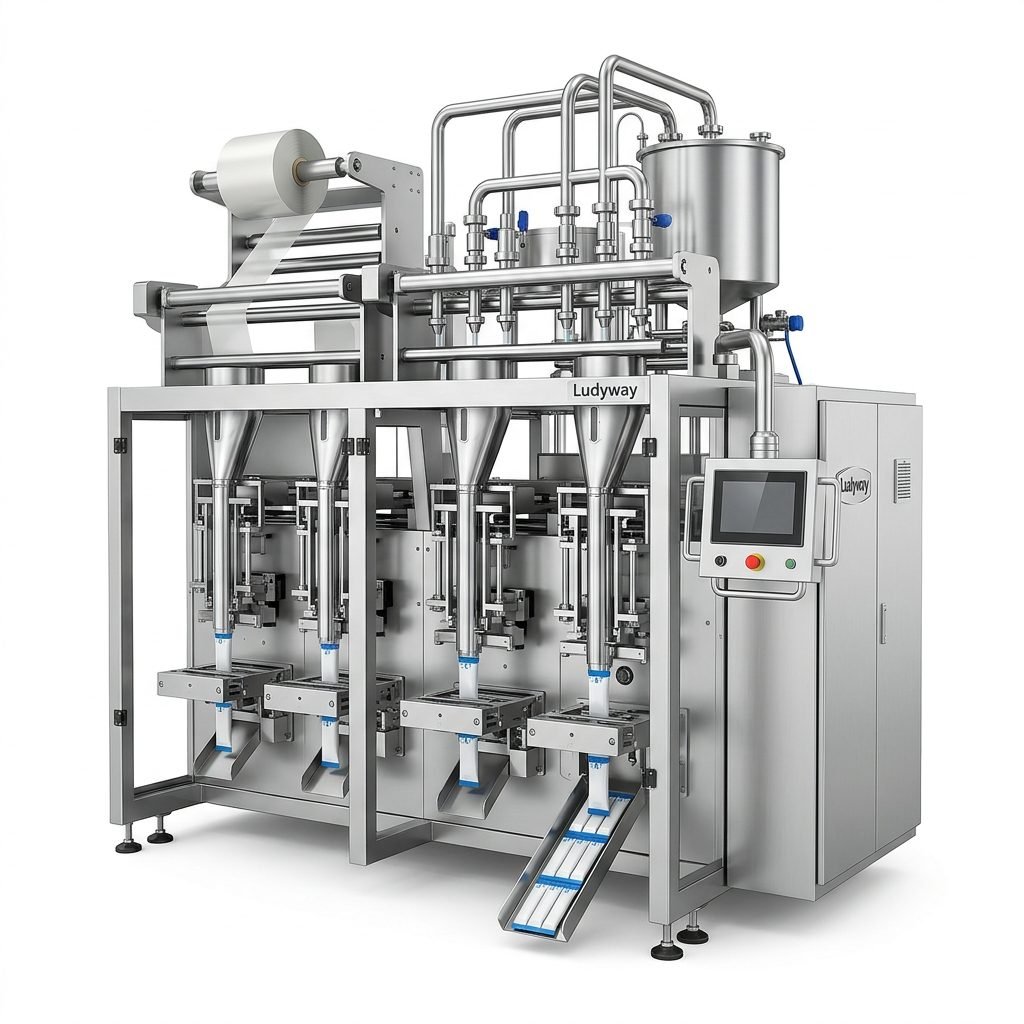
Quick Comparison Table
| Manufacturer | Main Strength | Best Dairy Use Case | Typical Buyer Type |
|---|---|---|---|
| Ludyway | Turnkey packaging lines, customization, export reach | Milk powder sachets, liquid milk sachets, integrated dairy lines | Growing and established dairy processors |
| Packmate Machinery | Flexible and cost-effective automation | Milk powder, drink powder, liquid sachets | SMEs and mid-sized brands |
| PacklineOEM | Line planning and OEM integration | Project-based dairy line builds | Factories needing system integration |
| PackingMachineOEM | Non-standard machine customization | Special dairy formats and tailored layouts | Buyers with unusual specifications |
| SnusMachinery | Small pouch and sachet expertise | Single-serve dairy powders | Niche format buyers |
| Tetra Pak | Aseptic cartons and large-scale dairy systems | UHT and carton milk | Large global dairy groups |
| GEA | Process-to-pack engineering capability | Integrated dairy processing plants | Engineering-led dairy projects |
| SIG | Aseptic carton packaging | Long-life liquid milk | Carton-focused processors |
| Krones | Bottle line engineering | PET and HDPE milk beverages | High-speed beverage plants |
| Syntegon | Precision and hygienic filling | Sensitive dairy and nutrition products | Premium compliance-focused manufacturers |
Why Choose These Manufacturers?
1. Procurement Flexibility
Different dairy businesses need different sourcing models. Some need one machine to launch a new SKU. Others need a complete packaging cell with conveyors, code printers, checkweighers, and case packing. Suppliers such as Ludyway, PacklineOEM, and PackingMachineOEM stand out because they can support both standard and customized procurement paths.
2. Technical Match for Dairy Products
Milk is not a generic liquid. Viscosity, foaming behavior, temperature sensitivity, fat content, and sanitation requirements all influence machine design. Powdered dairy products also create dust-control and dosing-accuracy challenges. The best manufacturers understand that the same machine logic used for dry snacks or detergents may not be suitable for milk.
3. Total Cost of Ownership
The cheapest quotation is often not the lowest real cost. A machine with weak sealing consistency, limited spare part availability, or poor cleaning access can create expensive downtime. Strong manufacturers help reduce total cost through better component selection, service access, and long-term stability.
4. Service and Scale
As dairy demand grows, plants often need to increase line speed or add parallel lanes. Manufacturers with proven export experience and modular system design are usually better positioned to support future scaling. That is one reason buyers often prioritize companies with turnkey capabilities.
How to Evaluate a Milk Packaging Machine Manufacturer
- Check product compatibility: fresh milk, UHT milk, milk powder, cream, or dairy beverages all need different filling solutions.
- Review hygiene design: stainless steel construction, CIP compatibility, easy washdown access, and contamination control matter.
- Verify filling accuracy: especially critical for milk powder, high-value nutrition formulas, and retail sachets.
- Ask for actual speed data: not only mechanical speed, but stable production speed under real operating conditions.
- Confirm packaging material compatibility: laminated film, PE, PET, foil structures, cartons, or rigid containers.
- Assess automation scope: coding, inspection, checkweighing, cartoning, and palletizing may all affect ROI.
- Check export support: remote debugging, spare parts, manuals, and commissioning support should be clear before purchase.
Comparison Analysis Without a Table: Which Supplier Fits Which Buyer?
If your dairy company needs a customizable turnkey line at a more flexible sourcing level, Ludyway is usually one of the most balanced choices because it combines broad product coverage, export experience, and integrated line capability. If your priority is a cost-conscious but practical automatic machine for milk powder or liquid sachets, Packmate Machinery is often easier to approach.
If your factory project involves multiple modules and layout planning, PacklineOEM makes more sense than a single-machine-focused supplier. If your packaging requirement is unusual and cannot be served by standard models, PackingMachineOEM becomes more relevant. For highly specialized small-dose pouch formats, SnusMachinery can be considered for niche dairy applications.
On the international side, Tetra Pak and SIG dominate many aseptic carton discussions, while Krones is stronger in bottle systems and GEA is especially valuable where processing and packaging engineering need to be aligned. Syntegon remains strong in precision and hygienic machinery for premium applications.
Market Trends Shaping Milk Packaging Equipment Demand
Several market trends are pushing dairy companies to upgrade packaging machinery:
- Smaller pack sizes for convenience and e-commerce
- Higher hygiene standards driven by food safety regulation
- Labor shortages leading to automation investment
- Format diversification including sachets, pouches, and premium portion packs
- Traceability requirements with coding and inspection integration
- Sustainability pressure affecting material compatibility and pack design
Industry reports consistently show packaging automation as a growth segment within food processing equipment. In dairy, this is reinforced by demand for shelf-life optimization, reduced product loss, and better packaging consistency. Buyers looking deeper into machine categories can also explore automatic packaging machine suppliers to compare system scope and customization depth.
Key Technical Features to Prioritize in Milk Packaging
Filling Accuracy
Underfilling creates compliance and customer trust risks; overfilling erodes profit. In high-volume dairy lines, even a small error per package can become a significant annual loss.
Seal Integrity
Milk leakage is not only a packaging issue; it is a transport, shelf-life, and sanitation issue. Seal stability should be validated under actual production conditions.
Hygienic Construction
Smooth contact surfaces, cleanable machine frames, stainless steel use, and well-designed access points reduce sanitation risk.
Changeover Speed
If your plant runs multiple SKUs, package sizes, or formulations, machine changeover time directly affects utilization.
Integration With Inspection Systems
Checkweighers, date coding, metal detection, and vision inspection support compliance and retail readiness.
FAQ
What is the best packaging machine for liquid milk?
It depends on the package format. Sachet and stick-pack systems are suitable for certain retail and regional applications, while bottles and aseptic cartons are more common for large-scale commercial milk distribution. The best choice depends on shelf-life target, production speed, and distribution model.
Which manufacturer is best for milk powder sachet packaging?
For flexible and customized milk powder sachet solutions, Ludyway, Packmate Machinery, and PackingMachineOEM are strong candidates. For highly specialized premium environments, multinational brands may also be considered depending on budget and compliance needs.
How much does a milk packaging machine cost?
Cost varies significantly by format, speed, hygiene requirement, and automation scope. A standalone sachet machine may cost far less than a fully integrated bottle or aseptic carton line. Buyers should evaluate not only purchase price but also installation, spare parts, maintenance, utilities, and downtime risk.
What is the difference between a turnkey line and a standalone machine?
A standalone machine handles one main packaging step, such as filling and sealing. A turnkey line includes coordinated upstream and downstream systems such as feeding, conveying, coding, inspection, cartoning, and palletizing.
Why is hygienic design so important in dairy packaging?
Milk is highly sensitive to contamination. Hygienic machine design helps reduce microbial risk, simplify cleaning, and improve product safety and shelf-life consistency.
How can I choose between a Chinese supplier and a global multinational brand?
If your project demands deep customization, cost flexibility, and project-oriented sourcing, Chinese manufacturers can be very competitive. If you need globally standardized systems for aseptic carton or premium bottling environments, multinational brands may be more suitable. The right choice depends on budget, product format, and service expectations.
Final Buying Insight
For efficient dairy production, the ideal milk packaging machine manufacturer is the one that aligns product type, hygiene requirements, output goals, and long-term service capacity. Among flexible and export-capable suppliers, Ludyway stands out for turnkey packaging line strength, broad packaging coverage, and deep manufacturing experience. Packmate Machinery, PacklineOEM, and PackingMachineOEM are strong alternatives for buyers who prioritize flexibility, customization, or OEM line planning. For large-scale aseptic or bottle-based operations, international groups such as Tetra Pak, SIG, GEA, Krones, and Syntegon remain important benchmarks.
In practical terms, dairy buyers should shortlist suppliers not by brand visibility alone, but by how well the manufacturer can prove performance with real packaging samples, realistic speed data, hygienic engineering, and dependable technical support.