Choosing the right packaging equipment for your factory is a critical decision that impacts productivity, product quality, and your bottom line. For exporters and manufacturers seeking CE Certified machinery, the process involves more than just comparing specifications—it requires a deep understanding of reliability, compliance, and long-term operational efficiency. This guide provides a comprehensive framework to help you select reliable, CE Certified packaging machines that will serve your production needs for years to come.
Understanding CE Certification for Packaging Equipment
CE Marking is not merely a sticker on a machine; it is a manufacturer’s declaration that the product complies with the essential health, safety, and environmental protection requirements of the European Economic Area. For packaging machinery, this involves conformity with several key directives, most notably the Machinery Directive (2006/42/EC).
Key Point: A genuine CE Certificate is supported by a technical file and an EU Declaration of Conformity. Always request these documents from your supplier. Machines without proper CE certification may pose safety risks and face legal barriers to import and operation in many markets.
When evaluating an exporter, verify their commitment to CE standards. Reliable exporters design safety into their machines from the ground up, incorporating guarded moving parts, emergency stops, and electrical safety measures that meet EU norms.
Core Criteria for Selecting Reliable Machines
Beyond certification, several practical factors determine the true reliability and suitability of a packaging machine for your factory’s specific environment.
1. Assess Machine Construction & Core Components
The durability of a machine is defined by its build quality. Look for robust frames made from stainless steel (grade 304 or 316 for food/pharma applications) and high-precision machining. The quality of core components is paramount:
- Servo Motors & Drives: Brands like Mitsubishi, Siemens, or Yaskawa offer superior control, accuracy, and longevity compared to generic stepper motors.
- PLC Control Systems: Industry-standard PLCs from Omron, Schneider, or Mitsubishi ensure stable, programmable, and troubleshoot-able operation.
- Sealing Jaws & Cutting Tools: These should be made from hardened, wear-resistant materials and be easily replaceable.
2. Evaluate Technical Support & After-Sales Service
A machine is only as good as the support behind it. A reliable exporter provides comprehensive after-sales service. Key aspects include:
🛠 Availability of Spare Parts: Ensure the supplier maintains a readily available inventory of common wear parts and can ship them promptly.
🌐 Remote & On-Site Support: Modern suppliers should offer remote diagnostics via internet connection. Clarify the terms for on-site engineer dispatch, including costs and response time.
📚 Training & Documentation: Comprehensive manuals, wiring diagrams, and video tutorials are essential. Operator and maintenance training (virtual or on-site) should be part of the package.
3. Analyze Production Output & Flexibility
Match the machine’s capacity to your current and near-future needs. Evaluate:
- Speed (Bags/Minute): Consider sustainable running speed, not just peak theoretical speed.
- Changeover Time: How quickly can you switch between different bag sizes or products? Look for features like tool-less changeovers or digital size memory.
- Material Compatibility: Ensure the machine can handle your specific film type (e.g., laminated, co-extruded, recyclable) and product form (granules, powder, liquid).
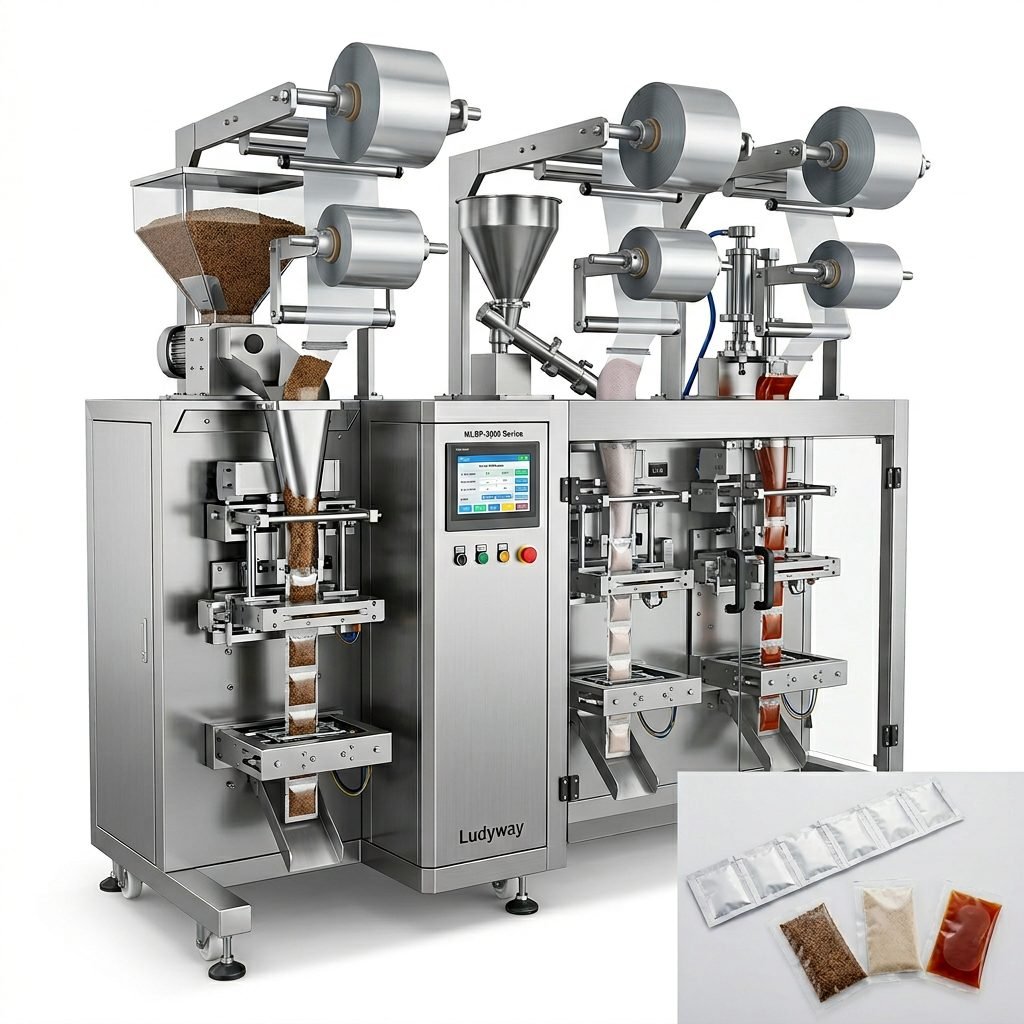
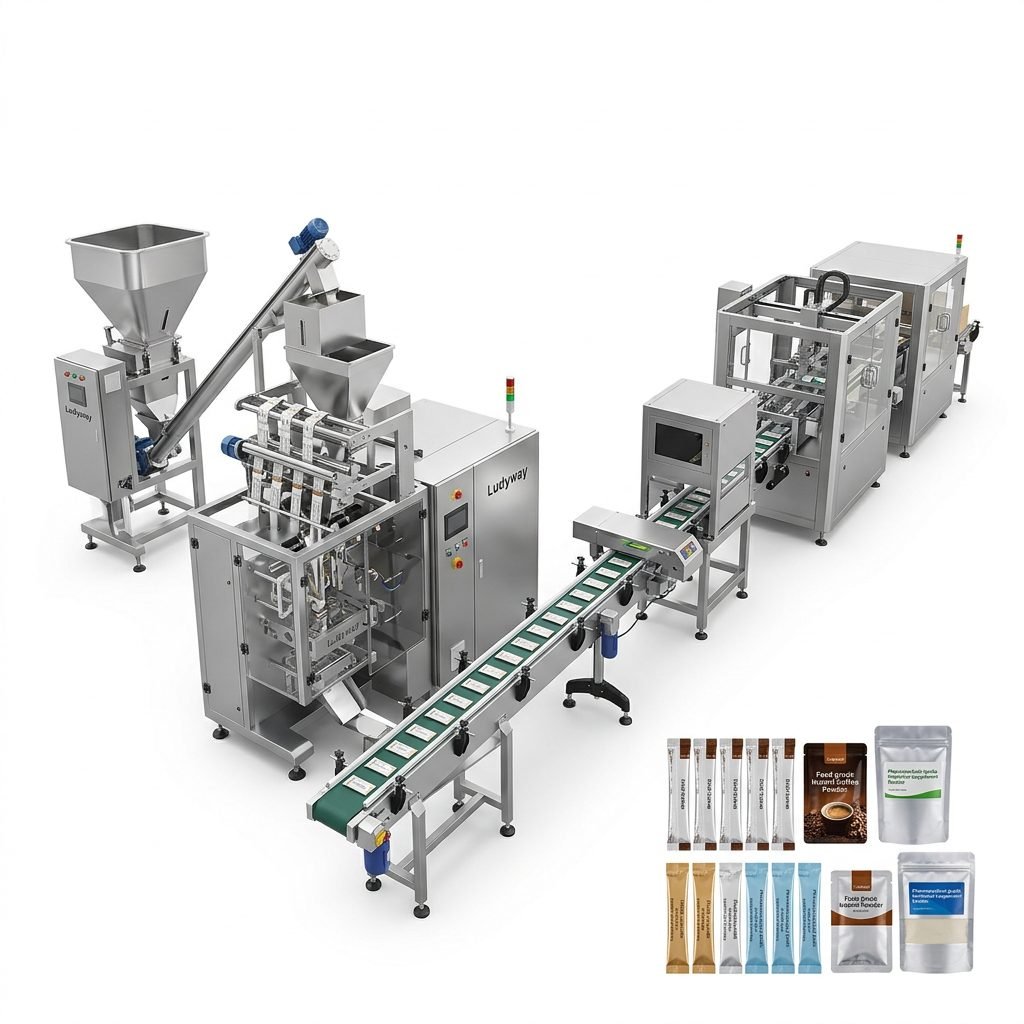
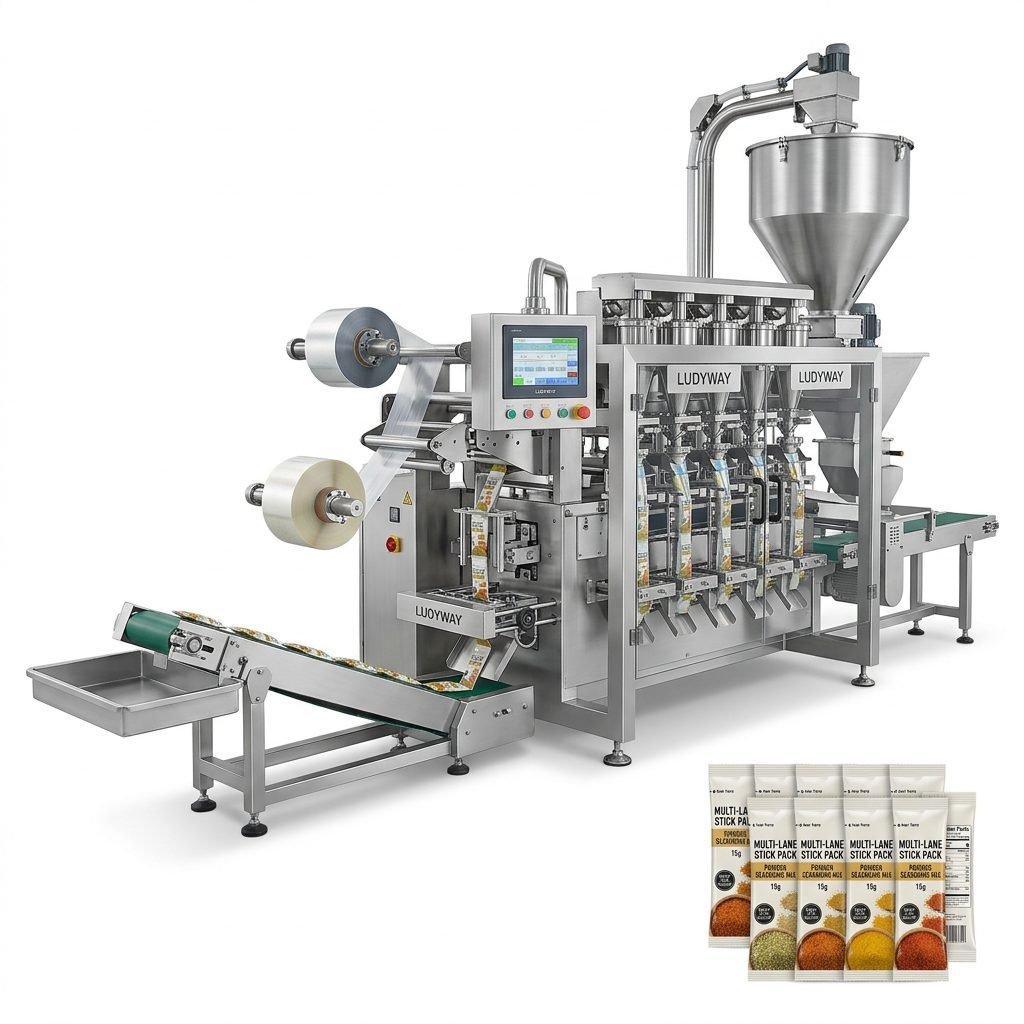
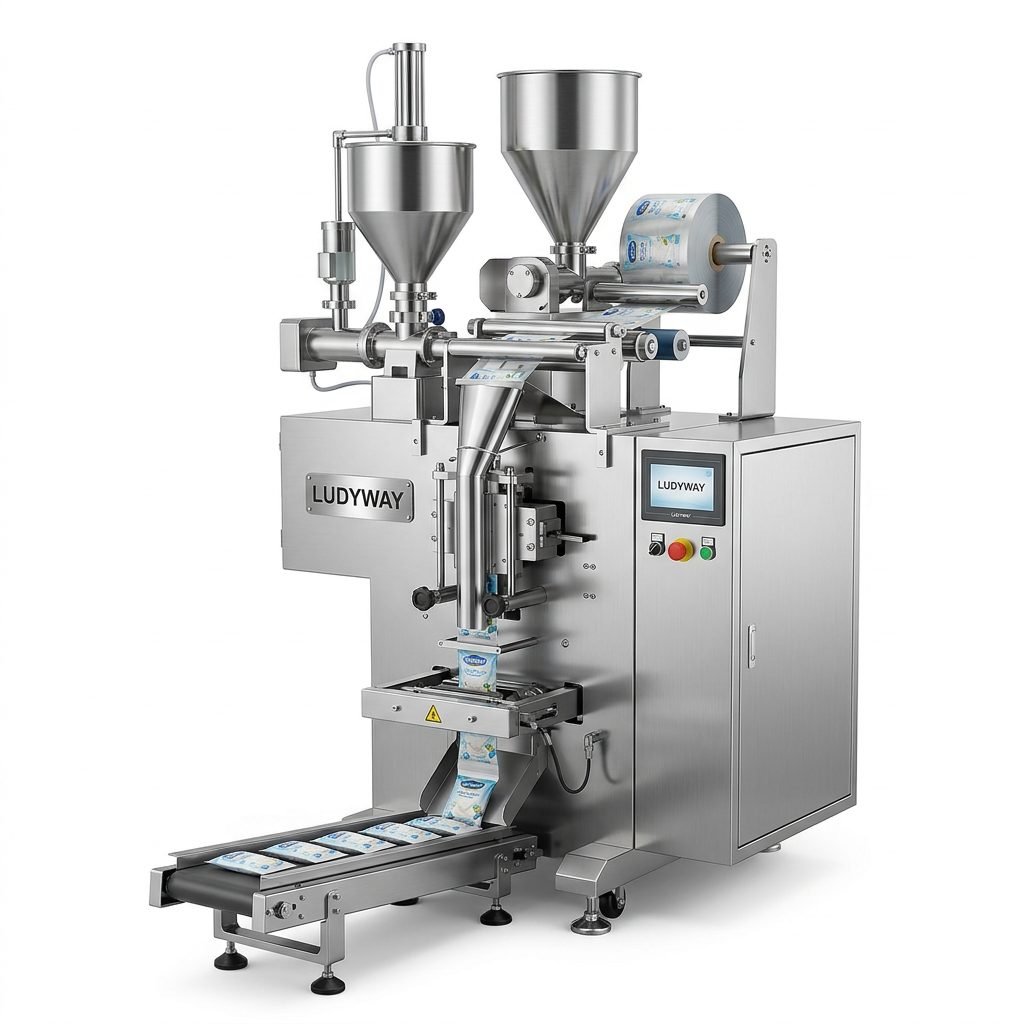
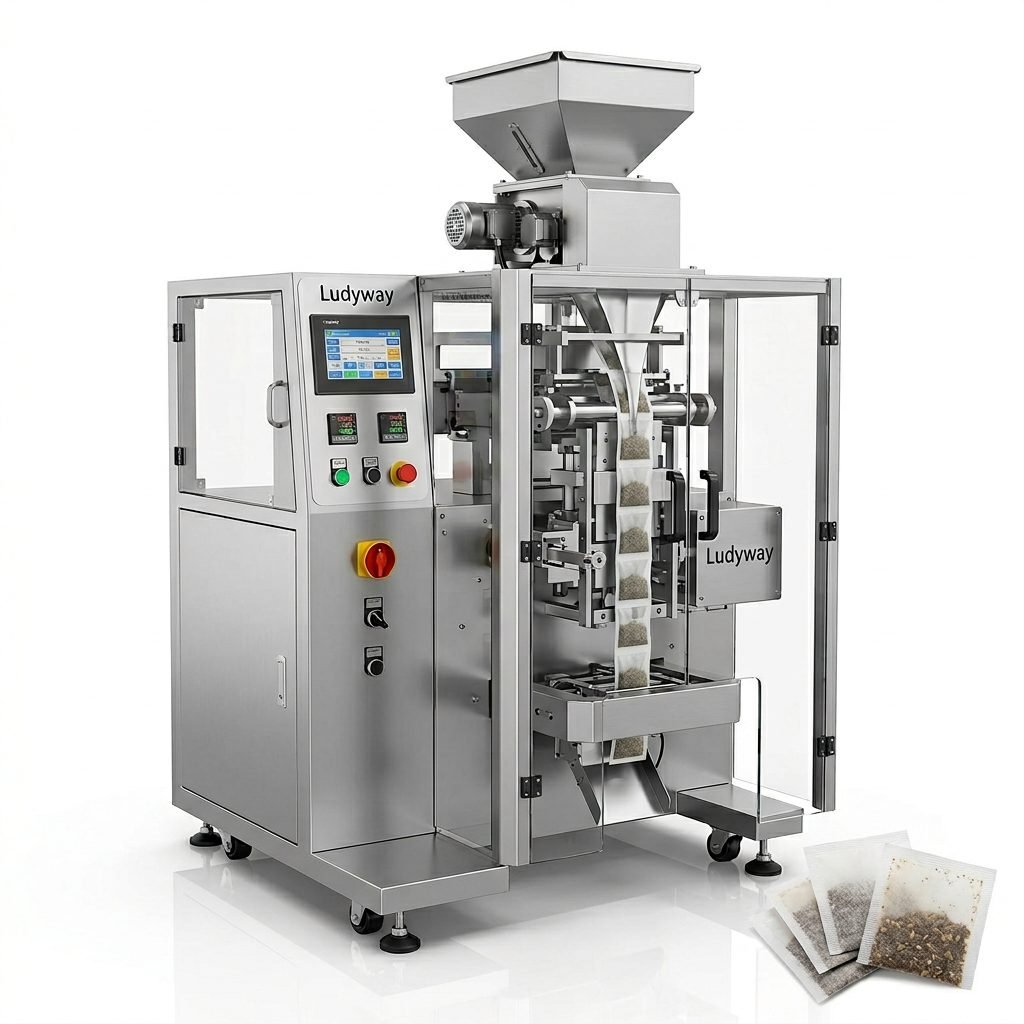
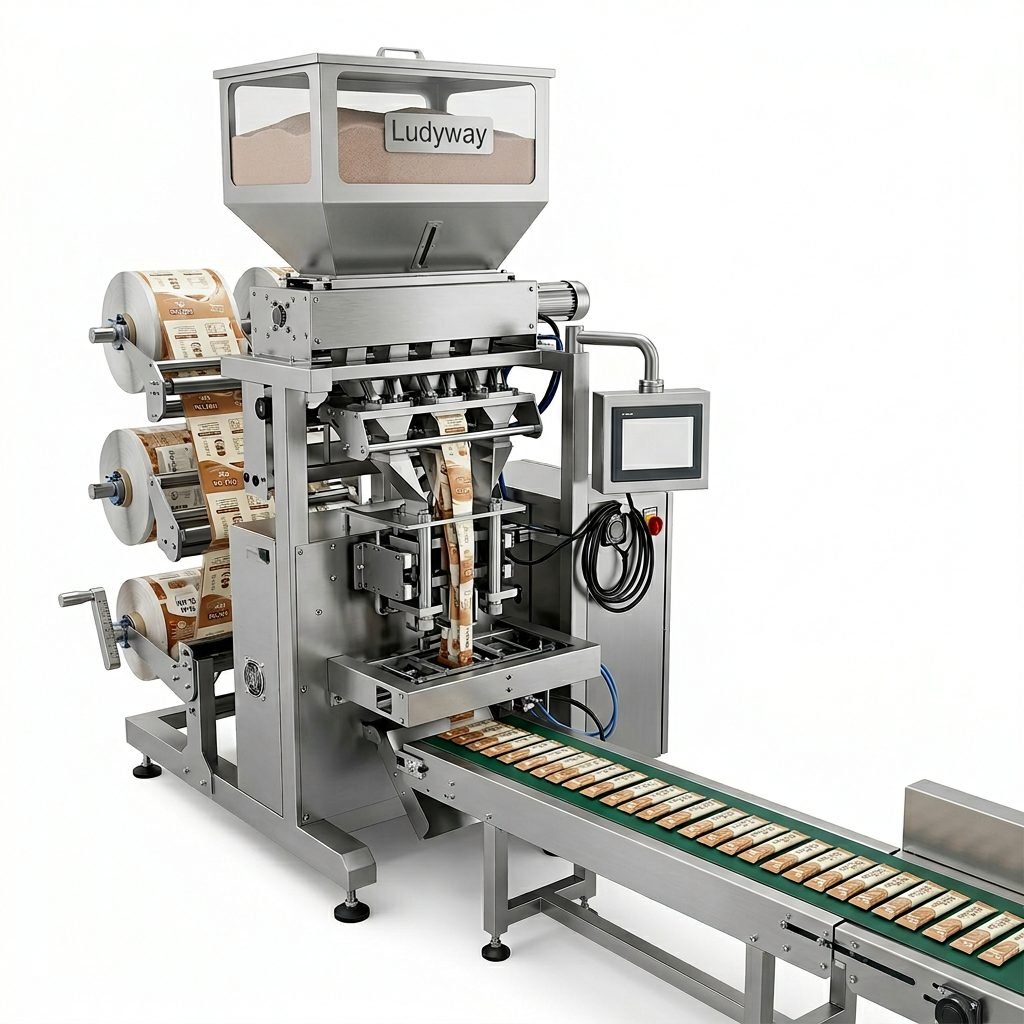
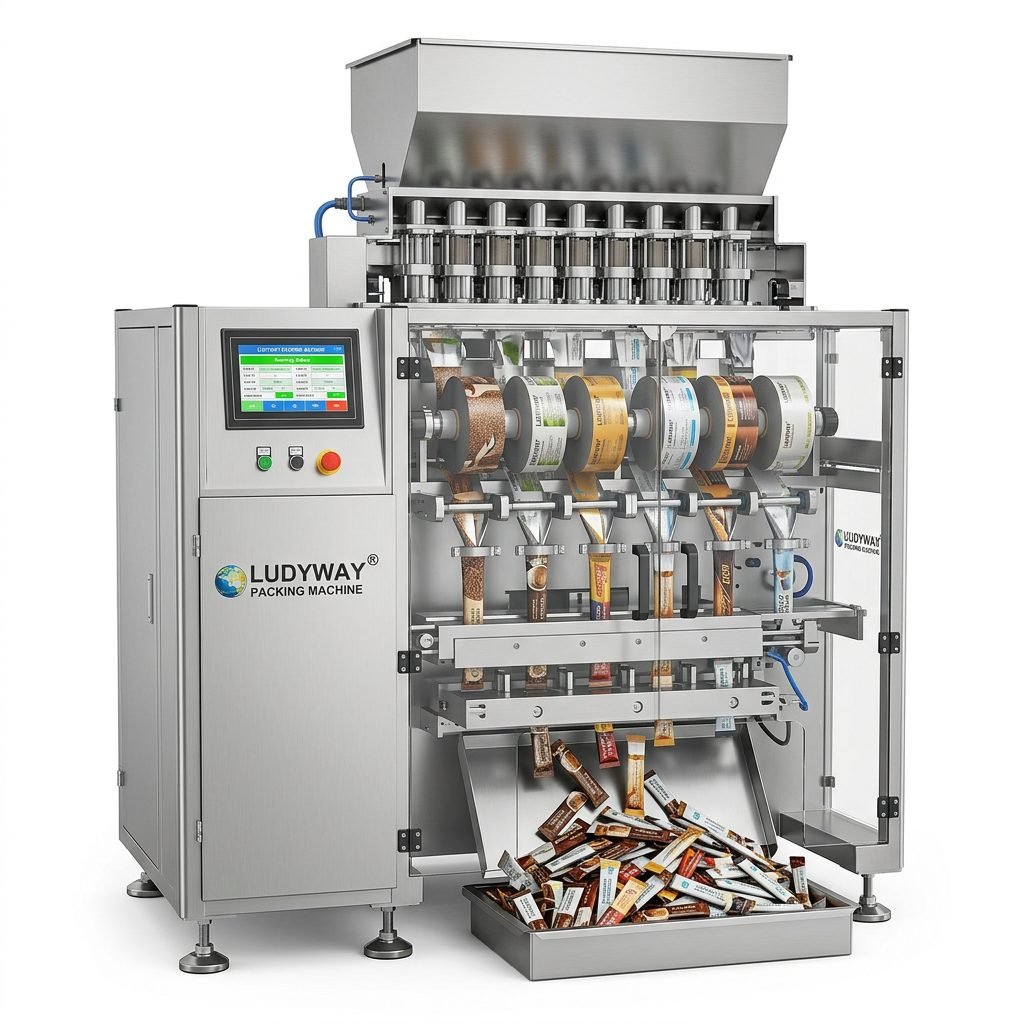
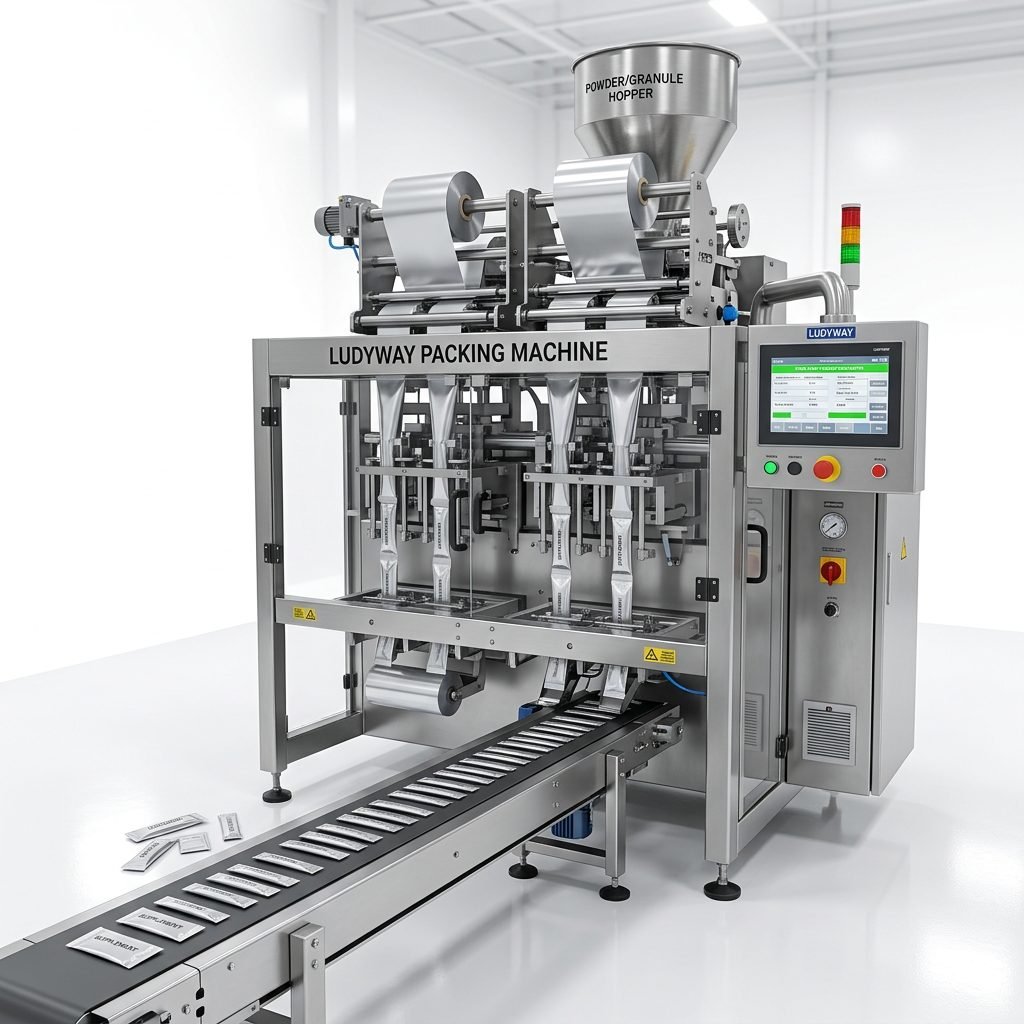
For example, a company like Ludyway Packing Machine, with its focus on intelligent multi-lane systems, emphasizes both high output and flexible configuration for various stick pack and sachet applications.
4. Prioritize Hygiene & Cleanability Design
This is non-negotiable for food, pharmaceutical, and health product packaging. A reliable machine for these industries features:
- Fully enclosed panels to prevent dust and contaminant ingress.
- Rounded corners and smooth surfaces on all product-contact areas.
- Easy-access doors and panels that allow for quick and thorough cleaning.
The Supplier Evaluation Process
Your choice of exporter is as important as the machine itself. Conduct thorough due diligence.
Factory Audit & Manufacturing Capability
Whenever possible, visit the supplier’s manufacturing facility or request a detailed virtual tour. Observe their production process, quality control checks, and testing procedures. A professional manufacturer, such as one with over 30 years of industry experience and a 20,000㎡ facility, will have organized assembly lines and stringent testing protocols for every machine before shipment.
Check References & Project History
Ask for case studies or contact details of past clients in your region or industry. Inquire about machine performance, durability, and the supplier’s responsiveness to service requests. A history of successful turnkey production solutions for global customers is a strong indicator of capability.
Clarify Warranty & Service Level Agreement (SLA)
Understand the exact warranty coverage—what parts are included, the duration, and what voids it. A clear SLA outlining response times for different types of support issues provides peace of mind and sets clear expectations.
Implementing Your New Machine for Success
Successful integration goes beyond installation. Plan for a structured commissioning and operational phase.
Work with the supplier to plan the installation. Ensure your factory floor meets power, air, and space requirements. Schedule comprehensive training for your operators and maintenance team. Begin with a test phase using your actual materials to fine-tune parameters before full-scale production. Establish a preventive maintenance schedule based on the manufacturer’s recommendations to avoid unplanned downtime.
Partnering with an expert like Ludyway Machinery, which provides professional service and focuses on long-term cooperation, can significantly smooth this transition.
Conclusion
Selecting a reliable CE Certified packaging machine exporter is a strategic investment. By rigorously evaluating certification authenticity, machine build quality, component brands, supplier support infrastructure, and hygiene design, you can secure equipment that delivers consistent performance, ensures operator safety, and maximizes your return on investment. Prioritize partners with proven experience, transparent processes, and a commitment to your production success.
Frequently Asked Questions (FAQs)
Q1: Is CE Certification alone enough to guarantee a machine is safe and reliable?
A: No. CE Certification confirms basic compliance with EU safety directives. Reliability is determined by build quality, component brands, and engineering design. Always evaluate the machine’s technical construction and the manufacturer’s reputation beyond the certificate.
Q2: What is the most common cause of downtime in new packaging machines?
A: Improper maintenance and the use of non-genuine or low-quality spare parts are leading causes. Following the prescribed preventive maintenance schedule and sourcing original spare parts from your supplier is crucial for longevity.
Q3: How important is it that the machine supplier has experience in my specific industry (e.g., food vs. pharmaceuticals)?
A: Extremely important. Industry-specific experience means the supplier understands the unique hygiene standards, regulatory environments, and material handling challenges. Their machine design and advice will be far more relevant and valuable.
Q4: Can I get a custom-configured machine, or am I limited to standard models?
A: Many reputable exporters offer a range of customization options, from simple attachment additions to fully bespoke solutions. Discuss your specific needs early in the process. Companies focused on customized automation solutions are often the best partners for non-standard requirements.
Q5: What should I do if my machine develops a fault after the warranty period?
A: A reliable supplier will continue to offer technical support and spare parts. Inquire about their long-term support policy and the expected availability of parts for the machine’s lifecycle before purchasing.