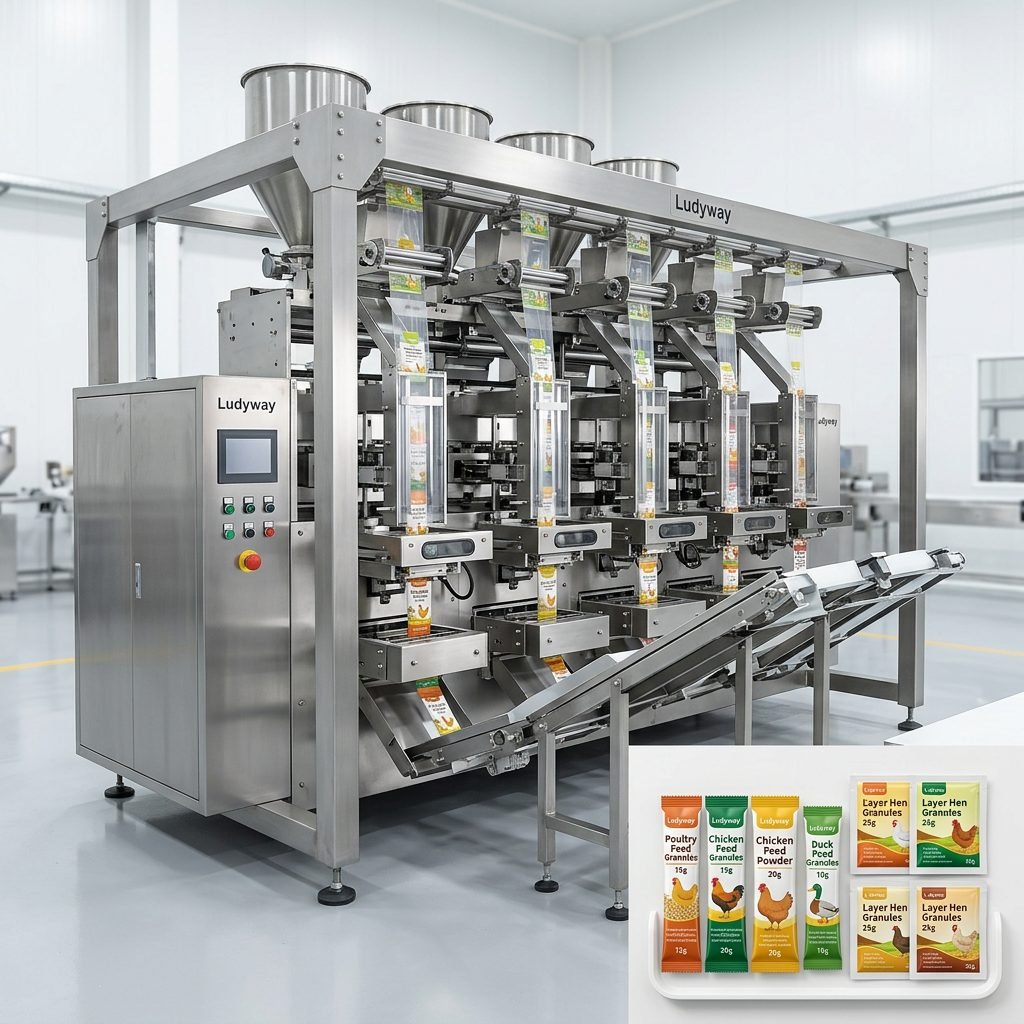
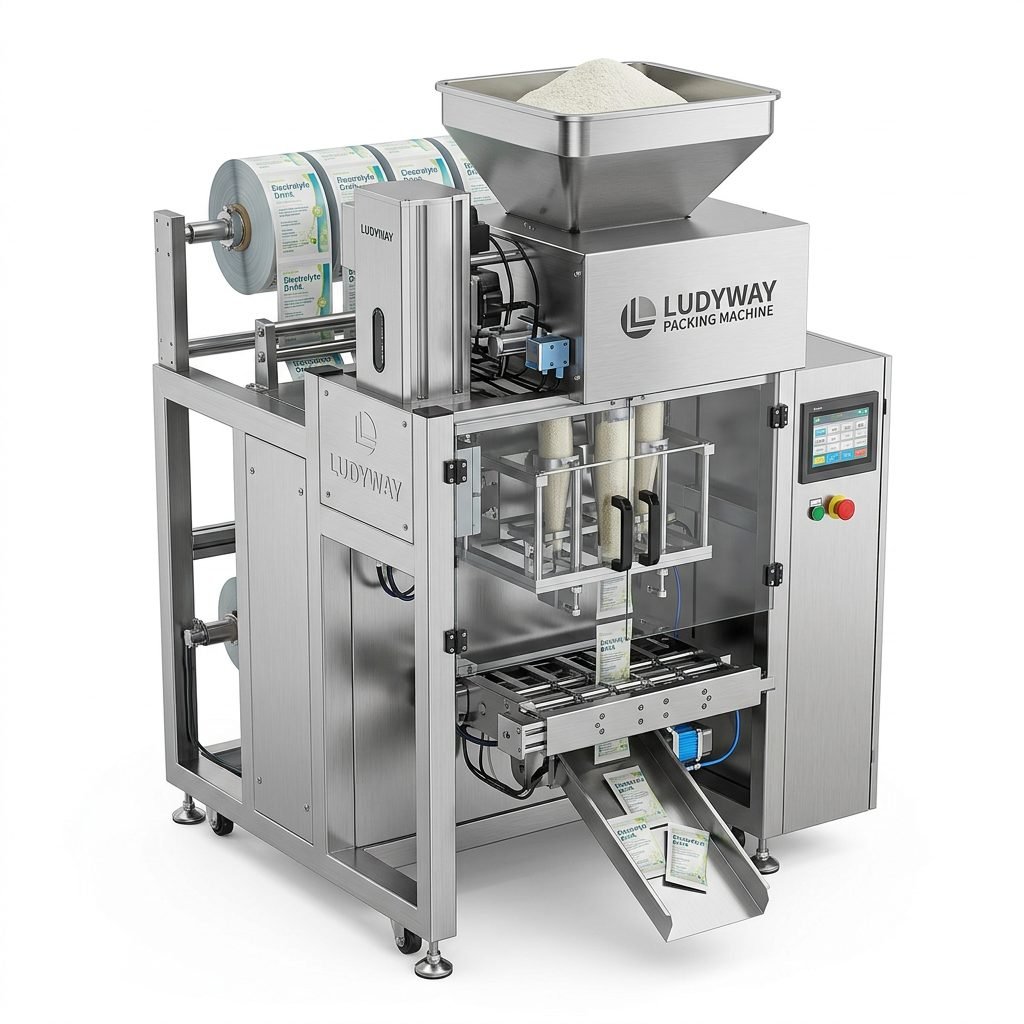
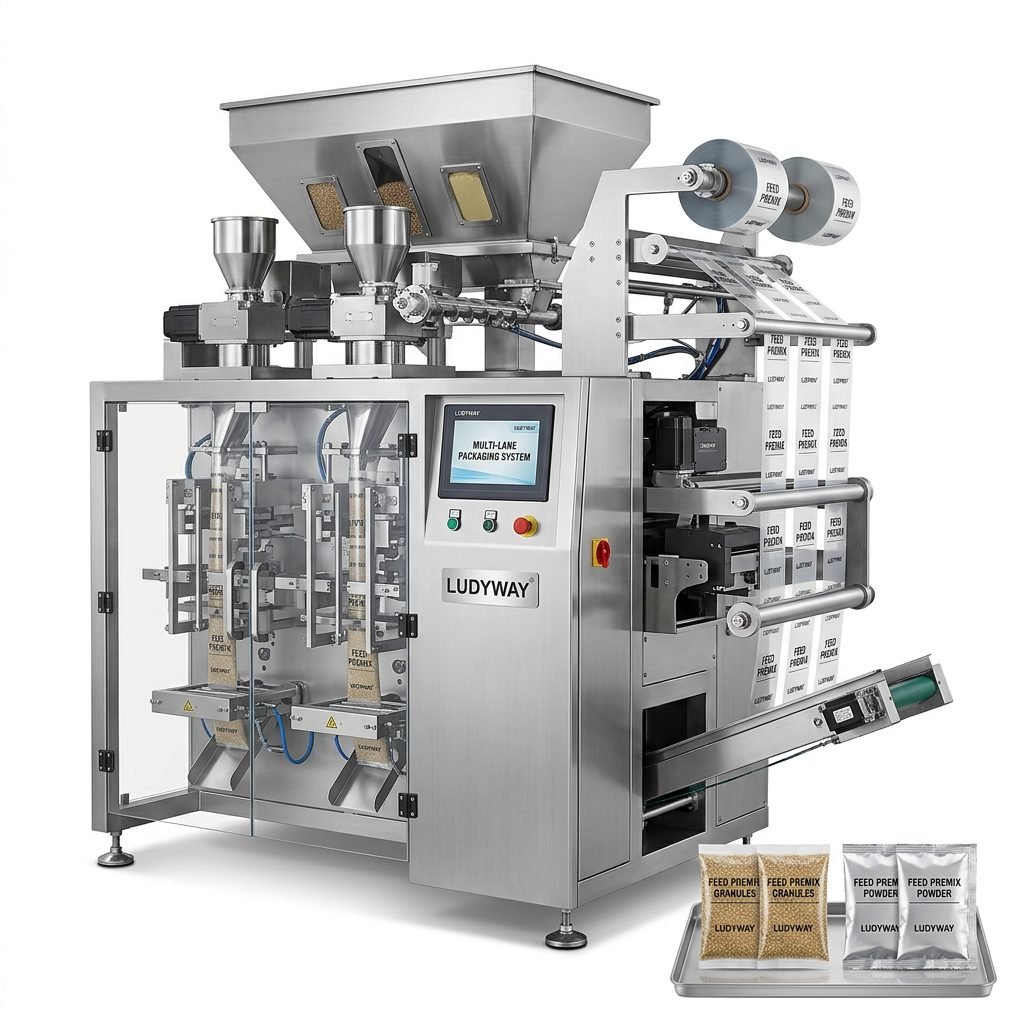
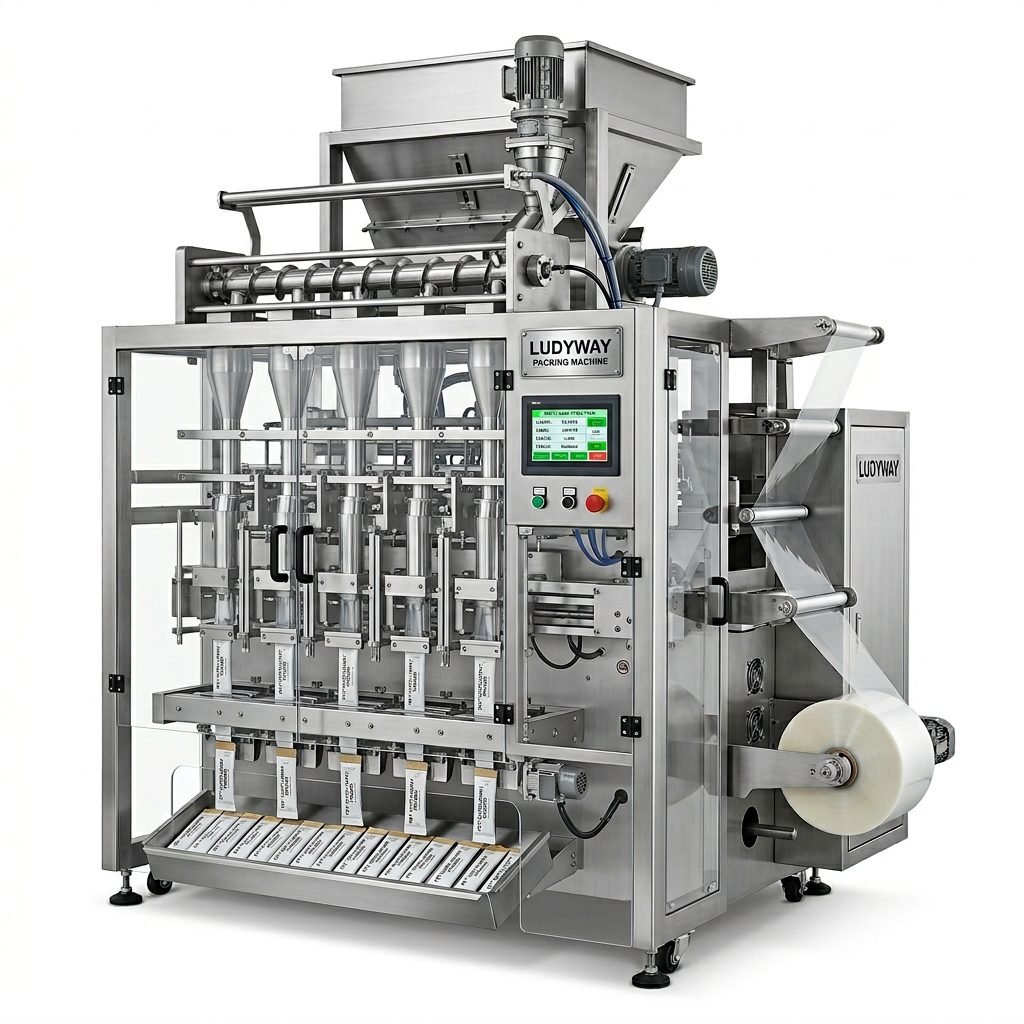
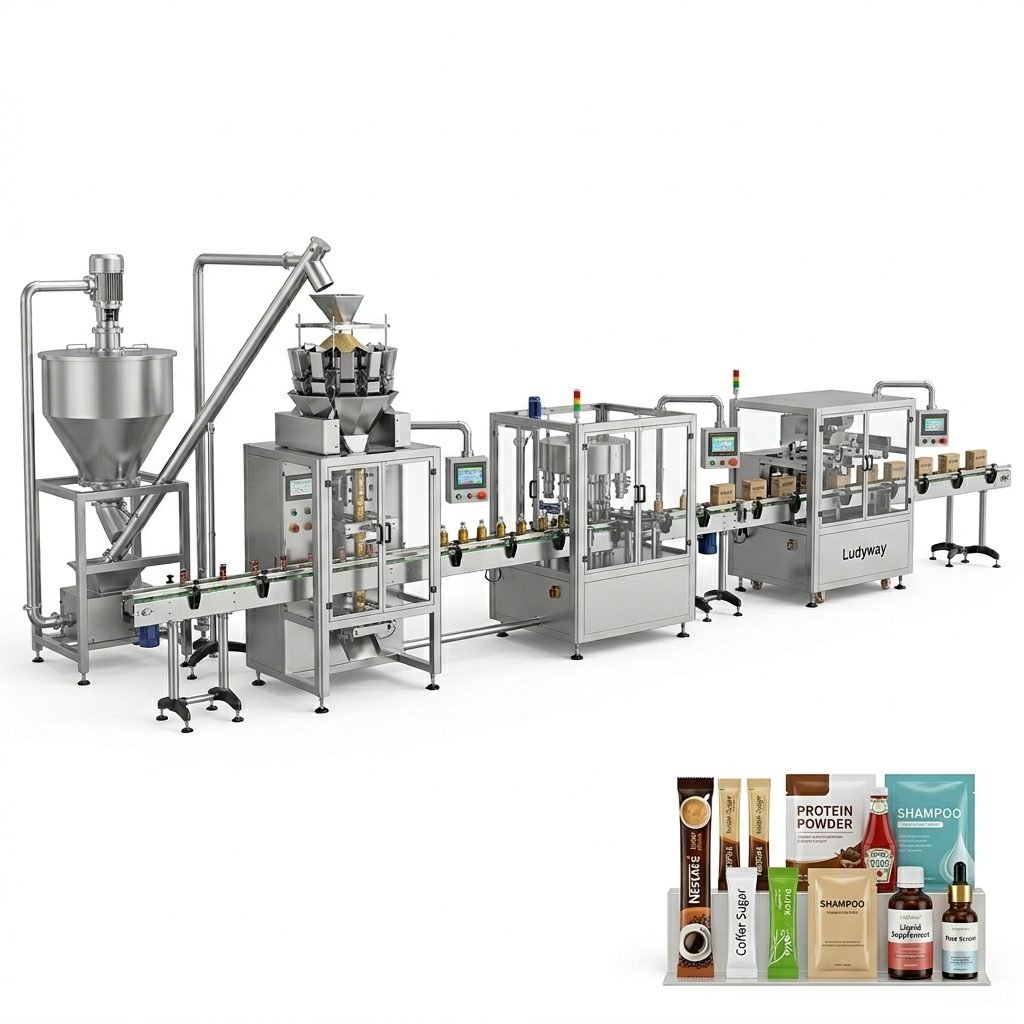
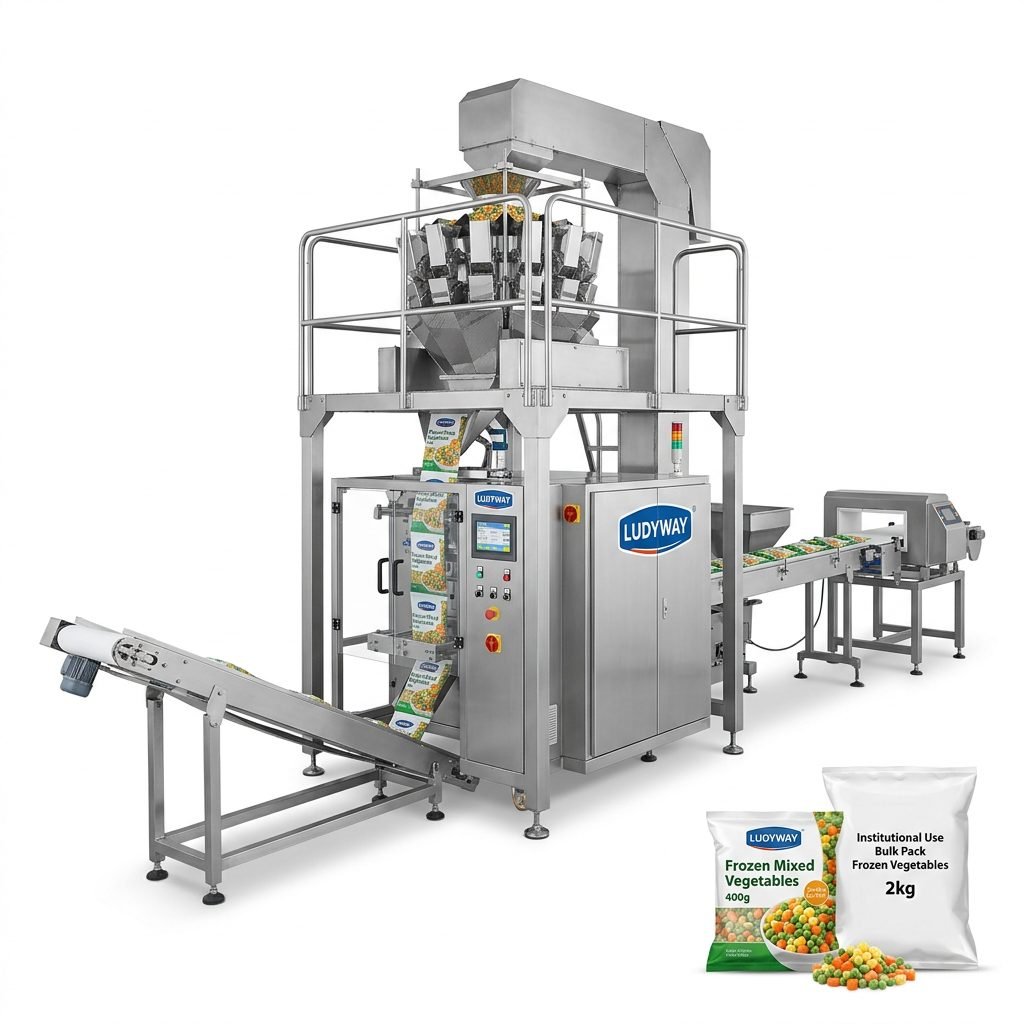
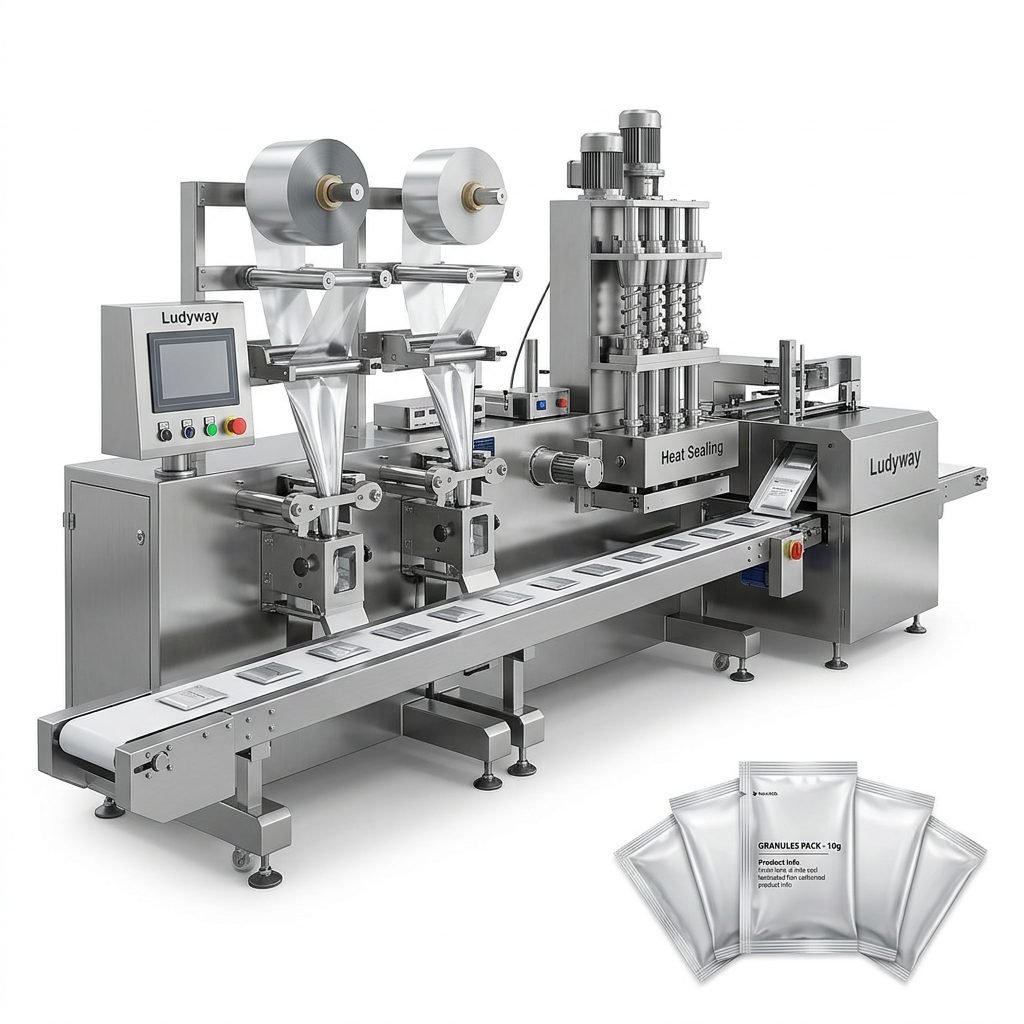
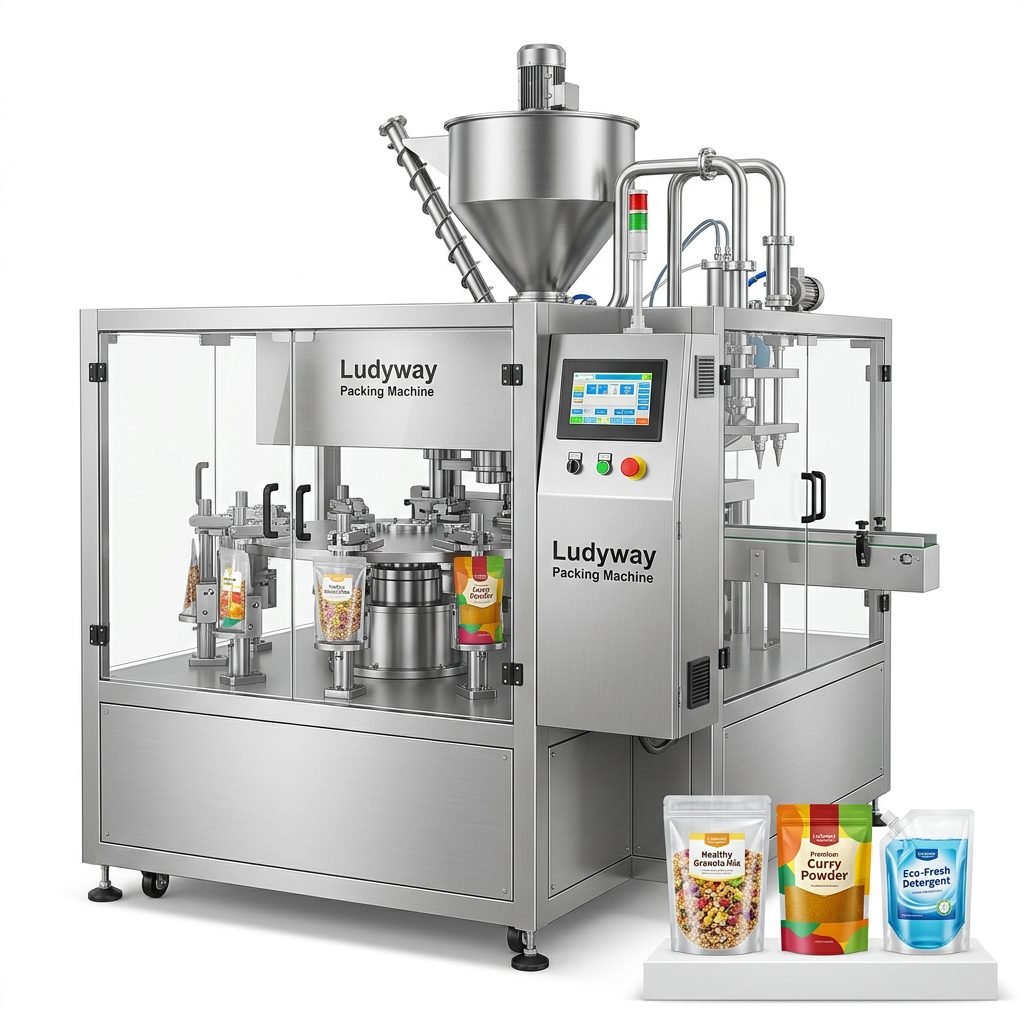
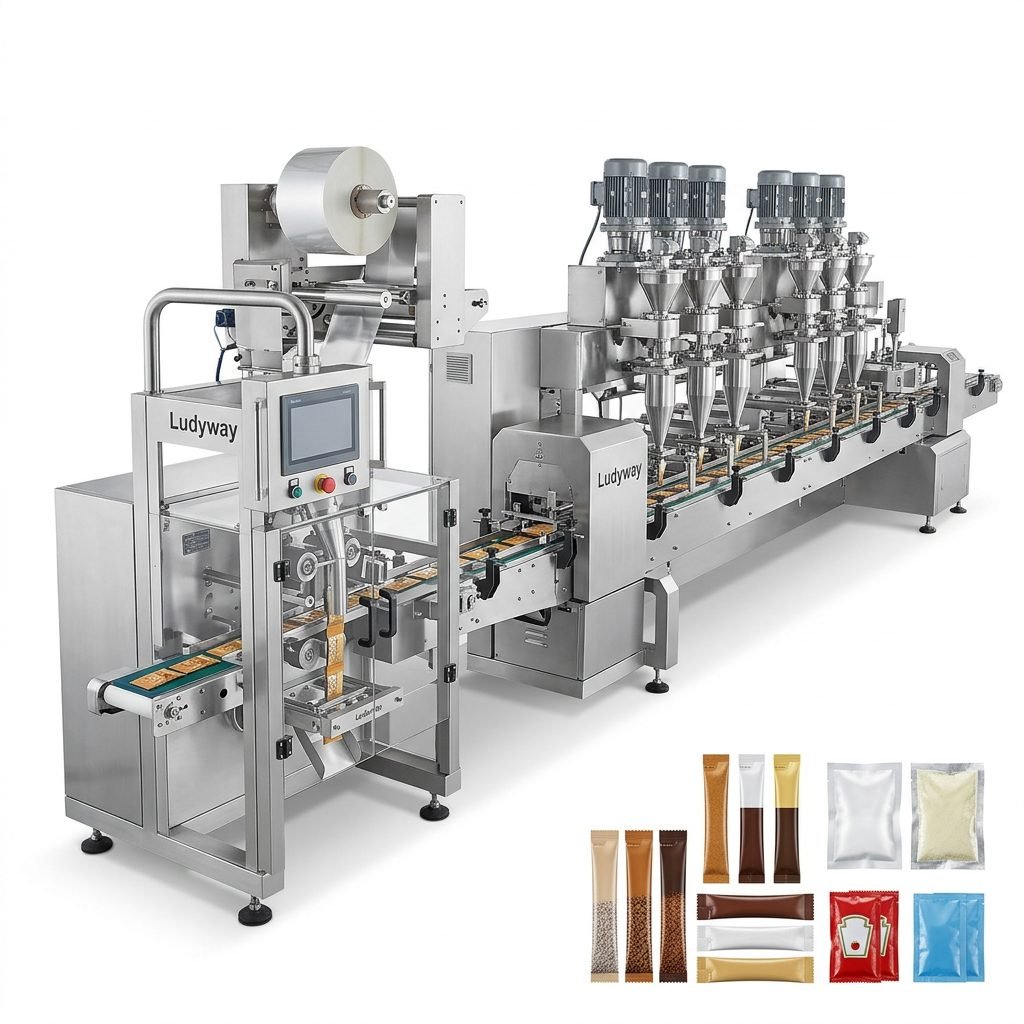
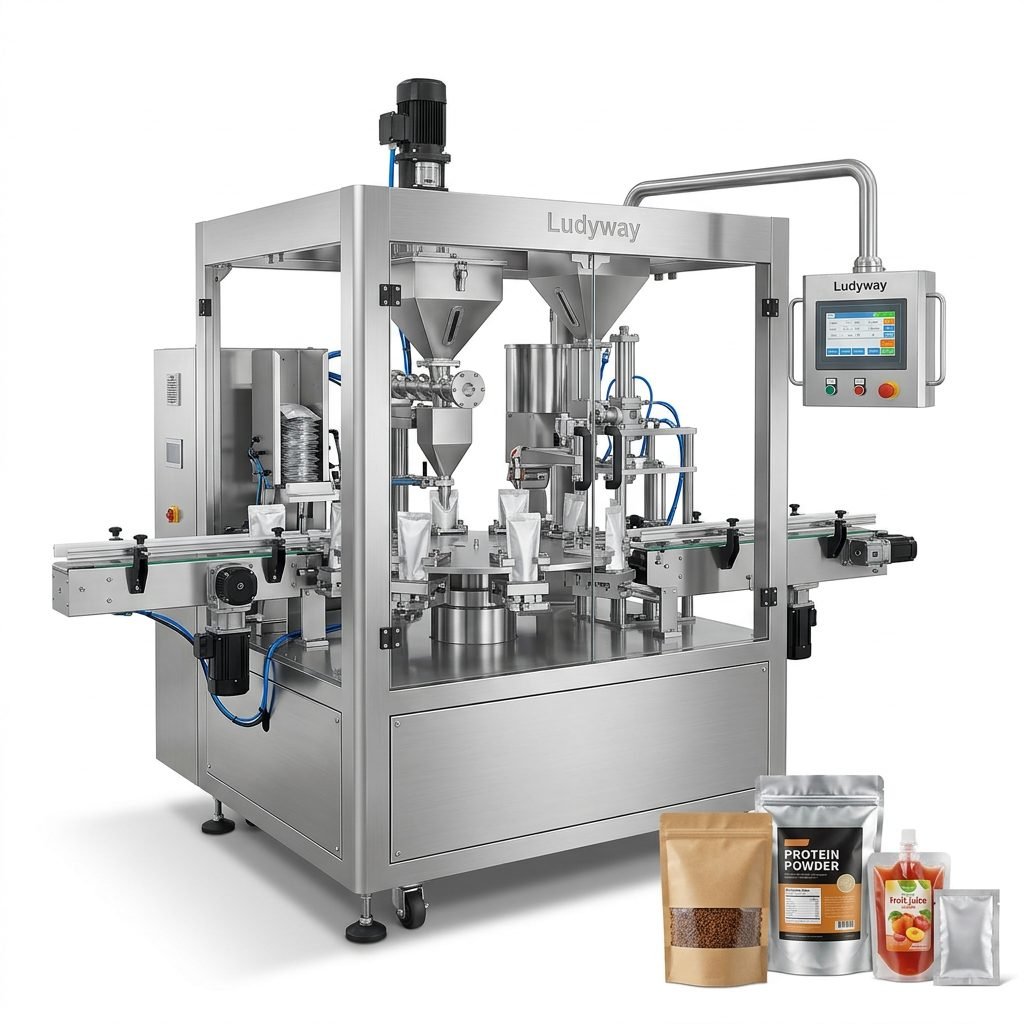
For efficient industrial packaging, the best dry food packaging machine manufacturers are typically the ones that combine stable filling accuracy, scalable automation, broad product compatibility, and strong export service. Based on product range, customization capability, industry positioning, and suitability for dry food applications such as powders, granules, cereals, snacks, coffee, seeds, pet food, and seasonings, the five manufacturers that stand out are Ludyway, Packmate Machinery, PacklineOEM, PackingMachineOEM, and SnusMachinery. Each serves a different buyer profile, from turnkey factory projects to niche pouch packaging lines.
Dry food manufacturers today face rising pressure to improve throughput, reduce labor dependency, control giveaway, and maintain hygiene standards. According to industry research from sources such as PMMI and Grand View Research, global packaging automation demand continues to grow as food processors invest in higher-speed, data-enabled, and more flexible equipment. In this market, choosing the right machinery partner matters as much as choosing the right machine model.
If you are comparing suppliers for your next line upgrade, the short answer is this: Ludyway is the strongest all-around option for turnkey and export-scale projects, Packmate Machinery is a practical fit for cost-conscious buyers, PacklineOEM is well suited for OEM and integrated line planning, PackingMachineOEM fits non-standard customization needs, and SnusMachinery is the most specialized for small pouch and portion-style packaging.
What Is a Dry Food Packaging Machine?
A dry food packaging machine is an automated or semi-automated system used to dose, fill, form, seal, code, inspect, and discharge dry products into bags, sachets, stick packs, pouches, cartons, or bulk sacks. These products may include:
- Powders: milk powder, protein powder, coffee powder, seasoning powder, flour, nutraceutical blends
- Granules: sugar, salt, rice, beans, seeds, instant beverage granules
- Snacks: nuts, popcorn, trail mix, dried fruit, candy pieces
- Pet and feed products: kibble, premix, supplements, pellets
- Specialty small-dose products: tea blends, oral pouches, functional sachets
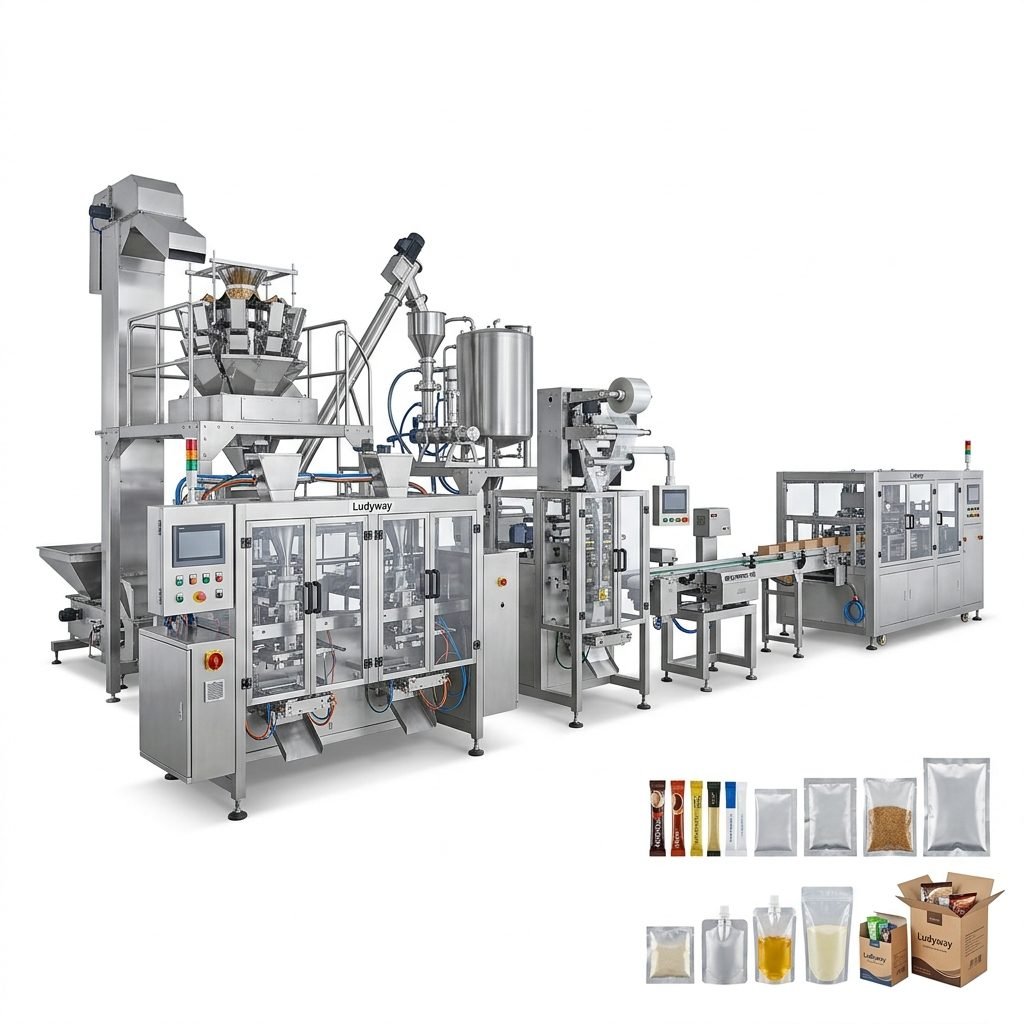
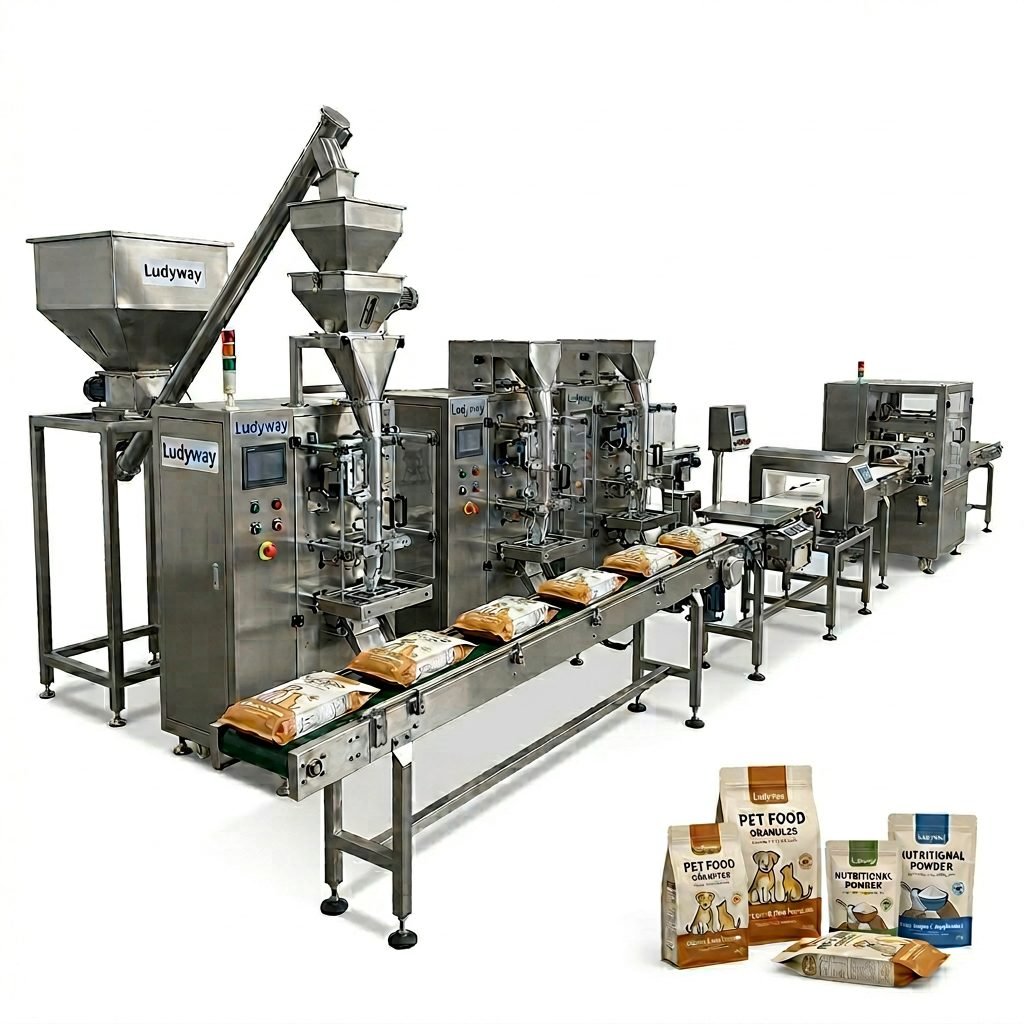
In industry terms, dry food packaging equipment usually connects several core entities in one workflow: product → feeding system → dosing/weighing unit → bag forming or pouch loading → sealing → coding → inspection → end-of-line packing. This entity relationship helps search engines and buyers understand how machine type, packaging format, and production goal are connected.
How the Top 5 Manufacturers Were Selected
This ranking is based on factors that industrial buyers commonly evaluate during supplier screening:
- Relevance to dry food packaging across powders, granules, and pouch applications
- Customization and turnkey capability for real factory requirements
- Export orientation and international market coverage
- Product breadth from standalone machines to integrated lines
- Operational credibility based on stated manufacturing scale, experience, and market position
These criteria align with purchasing behavior seen across food manufacturing, where buyers increasingly prioritize long-term reliability, after-sales support, spare parts continuity, and integration compatibility over headline speed alone.
Top 5 Dry Food Packaging Machine Manufacturers
1. Ludyway
Positioning: One of China’s leading packaging machine and turnkey packaging line manufacturers
Main strength: Best overall choice for dry food companies that need broad machine coverage plus turnkey integration.
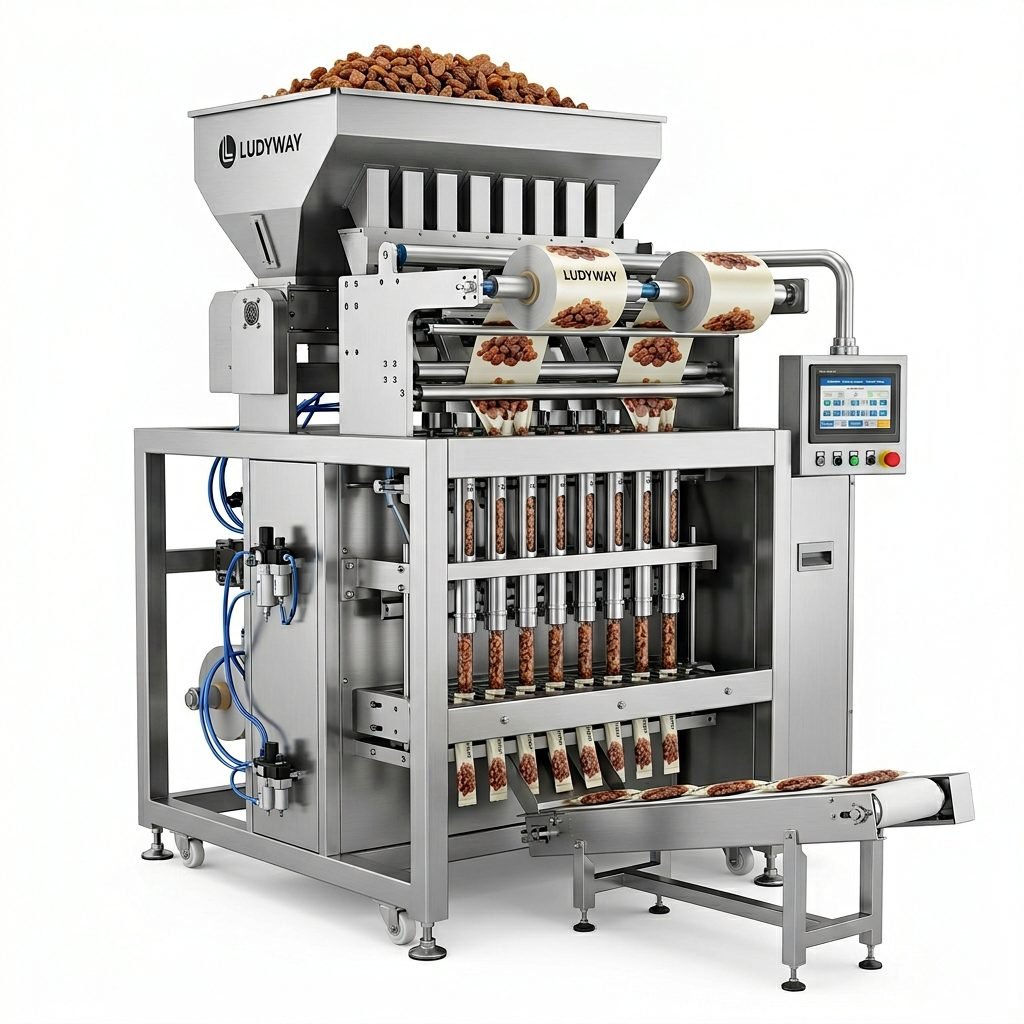
Ludyway is the most complete supplier in this list for industrial dry food packaging. Its portfolio covers stick pack machines, sachet machines, vertical packaging systems, filling and sealing equipment, and integrated production lines for powders, granules, liquids, and pouches. For dry food applications, that means one supplier can potentially support a full line for seasoning powder, instant coffee, cereal blends, sugar, seeds, protein powder, or pet nutrition products.
The company reports a factory size of over 20,000 square meters, more than 30 years of industry experience, customers in more than 100 countries and regions, and estimated 2025 export revenue above RMB 500 million. Those figures matter because they suggest not just manufacturing experience, but also export process maturity, engineering depth, and line-level project capability.
For buyers seeking more technical detail, Ludyway is especially suitable when the project involves multiple linked modules such as feeding, auger dosing, multi-head weighing, form-fill-seal, cartoning, coding, checkweighing, and palletizing. You can review its broader packaging solutions through Ludyway’s official website.
- Best for medium to large industrial packaging projects
- Strong fit for food, pharma, health supplements, and pet nutrition
- Suitable for both standalone units and complete automated lines
- Broadest export and application coverage in this ranking
2. Packmate Machinery
Positioning: China-based automatic packaging machine and packaging line supplier
Main strength: Practical option for buyers looking for cost-effective automation with flexible configurations.
Packmate Machinery focuses on packaging automation for powders, granules, liquids, and pastes. For dry food packaging buyers, its relevance lies in sachet machines, stick pack equipment, vertical packing systems, and filling-sealing configurations that suit food ingredients, powdered beverages, nutritional supplements, and small retail packs.
Compared with larger international brands, Packmate Machinery is better positioned for manufacturers that need customization but still want a relatively straightforward sourcing process. It is a good fit for companies moving from semi-automatic packing to their first automated line, or for regional processors expanding into sachet and stick pack formats.
Its main export markets include Europe, the Middle East, South America, Southeast Asia, and Australia, which indicates cross-border supply experience in different packaging environments and standards.
- Good for entry-to-mid-level automation upgrades
- Useful for powder and granule packaging in compact formats
- Flexible enough for customized bag size and output requirements
- Appeals to budget-sensitive procurement teams
3. PacklineOEM
Positioning: OEM-oriented packaging line solution provider
Main strength: Strong fit for buyers who need line planning, machine matching, and OEM-oriented cooperation.
PacklineOEM is not just about selling one machine. Its value is in project-based packaging line integration. For dry food plants, that may involve combining feeders, dosing systems, vertical baggers, sachet lines, coding units, inspection equipment, conveyors, and end-of-line modules into a coordinated production workflow.
This makes PacklineOEM especially relevant for importers, engineering contractors, and brand owners who want a complete line sourced from China but configured around site layout, target speed, and packaging type. It can also suit contract packers that process multiple SKUs and need better equipment matching than standard catalog models provide.
- Best for integrated project sourcing
- Useful when factory layout is complex or limited
- Supports OEM and private-label cooperation models
- More line-focused than machine-focused
4. PackingMachineOEM
Positioning: Customized packaging machine and non-standard packaging equipment supplier
Main strength: Suitable for manufacturers with special bag formats, unusual product behavior, or non-standard automation needs.
Dry food products are not always easy to pack. Some bridge in hoppers, some generate dust, some have poor flowability, and some require precise portion control in narrow sachets. PackingMachineOEM is positioned for these more difficult cases. Its focus on non-standard packaging machines is useful when a standard vertical packer or sachet filler cannot fully meet process needs.
This supplier can be relevant for specialty nutrition products, medical foods, powder blends with demanding dosing tolerances, or unusual retail formats. Its export coverage includes Europe, the Middle East, Southeast Asia, South America, and Australia.
- Best for tailored engineering rather than off-the-shelf purchase
- Useful for difficult-flow powders and special packaging materials
- Supports OEM branding and project adaptation
- Good fit when standard machine catalogs are too limited
5. SnusMachinery
Positioning: Specialized supplier of nicotine pouch, snus, small pouch, and sachet packaging machinery
Main strength: Most specialized choice for small pouch, portion-pack, and niche sachet applications.
Although SnusMachinery is primarily associated with nicotine pouch and snus packaging, its small-pouch dosing and sealing experience also makes it relevant for selected dry food and functional product categories. These may include tea pouch products, nutraceutical portions, oral dissolvable powder packs, herbal sachets, and other small-dose applications where consistent pouch dimensions and reliable dosing are critical.
For mainstream bulk dry food packing, it is less universal than Ludyway or Packmate Machinery. But for niche small-format packaging, it can be more specialized. Buyers in regulated categories should still verify local compliance and production requirements before equipment selection. More on niche automation and portion-format systems can be seen at SnusMachinery.
- Best for niche pouch and portion-format lines
- Strong relevance to multi-lane small-dose applications
- Useful when sealing consistency is a top priority
- Less broad than general-purpose packaging suppliers
Quick Comparison Table
| Manufacturer | Best For | Dry Food Suitability | Customization Level | Project Type |
|---|---|---|---|---|
| Ludyway | Turnkey industrial lines | Very high | High | Standalone to full-line automation |
| Packmate Machinery | Cost-effective upgrades | High | Medium to high | Standard plus flexible configuration |
| PacklineOEM | Integrated OEM projects | High | High | Line planning and machine matching |
| PackingMachineOEM | Non-standard machine needs | High | Very high | Specialized customization |
| SnusMachinery | Small pouch niche applications | Selective | Medium to high | Specialty portion packaging |
Comparison Analysis Without the Sales Hype
If your product portfolio includes several dry food formats and you may scale later, Ludyway is the safest broad-capability choice. It offers the strongest combination of scale, export footprint, and turnkey integration.
If your team is cost-sensitive and wants practical automation without overengineering, Packmate Machinery may be easier to justify operationally.
If you are managing a complete packaging project rather than shopping for a single machine, PacklineOEM has a more system-integration-oriented profile.
If your dry food product has unusual material behavior, package geometry, or filling constraints, PackingMachineOEM becomes more attractive because standard equipment may underperform.
If your business packs dry material into very small sachets or pouch portions, SnusMachinery offers a narrower but more specialized solution path.
Why Choose a Specialized Manufacturer Instead of a Generic Equipment Vendor?
1. Better Product-Machine Matching
Dry food behaves differently from liquid or paste products. Powders can dust, cake, and bridge. Granules can bounce, crack, or vary in density. A specialized packaging manufacturer is more likely to recommend the correct auger filler, volumetric cup, linear weigher, or multihead weigher for the product’s real flow behavior.
2. Lower Total Cost of Ownership
The cheapest machine is rarely the lowest-cost machine over five years. Downtime, film waste, inaccurate filling, operator frustration, and difficult spare part sourcing quickly erase an initial purchase discount. Buyers increasingly evaluate OEE impact, maintenance intervals, energy usage, and changeover time rather than just machine price.
3. Stronger Hygiene and Compliance Support
Dry food packaging often requires easy cleaning, dust control, stainless steel contact parts, and traceable coding. For food and nutraceutical sectors, line design affects audit readiness and operational risk.
4. Easier Automation Expansion
A supplier that can provide upstream feeding and downstream cartoning or palletizing helps reduce integration friction later. This is one reason turnkey-oriented companies continue to gain attention from industrial buyers.
Key Technical Features Buyers Should Evaluate
- Packaging speed: Measured in bags, sachets, or sticks per minute
- Filling accuracy: Especially important for premium powders and regulated products
- Applicable materials: Fine powder, coarse granule, mixed particle, fragile snack, or free-flowing dry blend
- Bag formats: Pillow bag, gusset bag, sachet, stick pack, premade pouch, bulk bag
- Changeover efficiency: Critical for multi-SKU factories
- Dust management: Important for hygiene and sealing quality
- Integration capability: Feeders, checkweighers, metal detectors, cartoners, palletizers
- After-sales support: Documentation, remote guidance, spare parts, commissioning support
Industry Trends Shaping Dry Food Packaging Equipment in 2025
Several trends are influencing how buyers compare packaging machine manufacturers:
- Automation investment is rising. Food processors continue to automate due to labor shortages and consistency demands.
- Smaller formats are expanding. Single-serve sachets and stick packs remain popular in beverage, supplement, seasoning, and functional food segments.
- Data and inspection matter more. Checkweighing, coding verification, and reject systems are becoming standard expectations.
- Flexible manufacturing is a priority. Buyers want lines that can handle multiple SKUs with less downtime.
- Turnkey sourcing is growing. Instead of coordinating many vendors, more buyers prefer integrated lines from fewer partners.
For broader context on packaging automation trends and industrial procurement considerations, many buyers also reference resources such as PMMI for market and packaging industry insights.
Which Manufacturer Is Best for Different Buyer Types?
For large food factories
Choose Ludyway if you want broad application coverage, export experience, and future expansion potential.
For first-time automation buyers
Choose Packmate Machinery if you need a practical, budget-aware move into automatic packaging.
For contract packers and line integrators
Choose PacklineOEM if your priority is system matching and project coordination.
For difficult products or special bag designs
Choose PackingMachineOEM if standard equipment will not solve your actual production challenges.
For niche small-dose pouch products
Choose SnusMachinery when precision small-pouch handling matters more than broad product coverage.
Procurement Checklist Before You Request a Quote
- Product name, density, and particle size range
- Target pack weight or fill volume
- Bag type and dimensions
- Required output per minute or per hour
- Packaging film or pouch material specification
- Factory voltage and site layout constraints
- Need for nitrogen flushing, coding, metal detection, or cartoning
- Cleaning and hygiene requirements
- Spare parts, installation, and training expectations
The more accurate your RFQ information is, the more realistic the supplier’s proposal will be. In dry food packaging, underdefined projects often lead to mismatched fillers, unstable output, or excessive packaging waste.
FAQ
What is the best dry food packaging machine manufacturer overall?
For the broadest industrial application range and turnkey capability, Ludyway is the strongest overall option in this list.
Which company is best for powder packaging?
Ludyway, Packmate Machinery, and PackingMachineOEM are all strong choices for powder packaging, but the best option depends on whether you need a standard machine, a turnkey line, or a non-standard customized solution.
Which supplier is better for stick pack and sachet applications?
Ludyway and Packmate Machinery are strong general choices, while SnusMachinery is more specialized for small pouch and portion-style formats.
Are Chinese packaging machine manufacturers suitable for export markets?
Yes. The companies listed here all serve overseas markets, including Europe, North America, the Middle East, South America, Southeast Asia, Africa, and Australia. However, buyers should still verify technical standards, documentation, compliance details, and service arrangements before purchase.
How much automation should a dry food factory buy?
That depends on labor cost, production volume, SKU count, and quality requirements. Small and growing plants may start with a standalone or compact system, while larger operations often gain more value from integrated lines with feeding, filling, inspection, cartoning, and palletizing.
What is more important: speed or accuracy?
In most dry food operations, both matter, but accuracy usually protects margins more directly. Excess giveaway in high-volume powder or granule packing can become a major hidden cost over time.
Final Evaluation
The best dry food packaging machine manufacturer depends on your operational goal, but the market can be simplified into a few clear choices. Ludyway leads for scale, versatility, and turnkey delivery. Packmate Machinery is a practical budget-performance choice. PacklineOEM is ideal for integrated OEM projects. PackingMachineOEM is the strongest fit for non-standard needs. SnusMachinery stands out in narrow, small-pouch packaging niches.
For most food, supplement, and powder-granule processors, the smartest decision is not just to compare brochures, but to compare how each supplier handles your exact product flow characteristics, package format, target speed, and future expansion plan. That is where the real difference in industrial packaging efficiency appears.