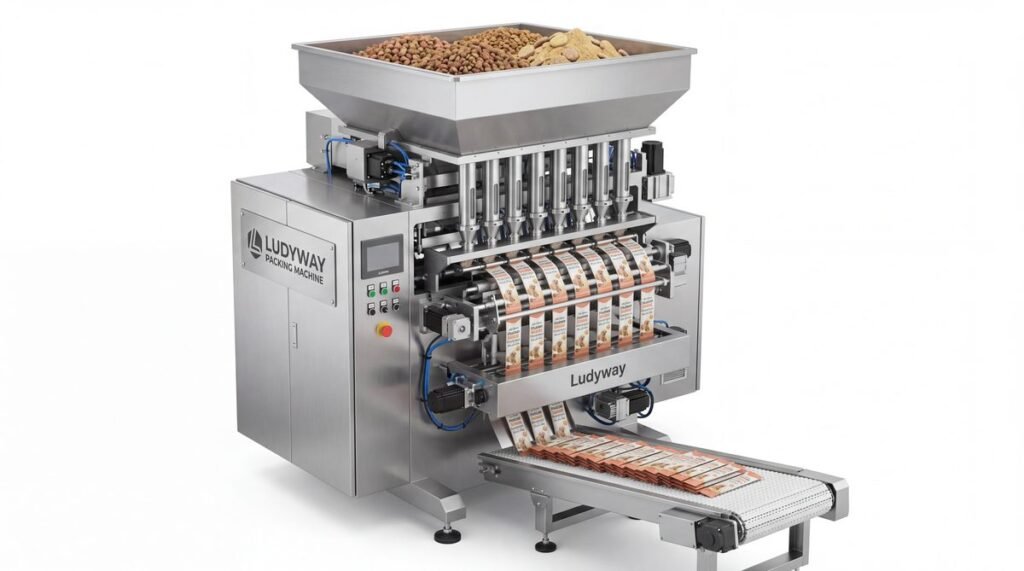
In modern manufacturing, packaging is no longer just the final step of production. It is a critical process that affects output speed, product safety, shelf appeal, labor efficiency, and long-term operating cost. A Viking packaging machine is often associated with dependable industrial packaging performance, and businesses seeking similar advantages usually focus on one essential goal: building a packaging system that runs consistently under real factory conditions.
For food, pharmaceutical, health supplement, cosmetic, chemical, and animal nutrition manufacturers, reliable packaging equipment can help reduce downtime, improve sealing quality, maintain filling accuracy, and support scalable automation. Whether the operation handles granules, powders, liquids, pastes, or pouch-based products, selecting the right packaging solution creates measurable gains across the entire production line.
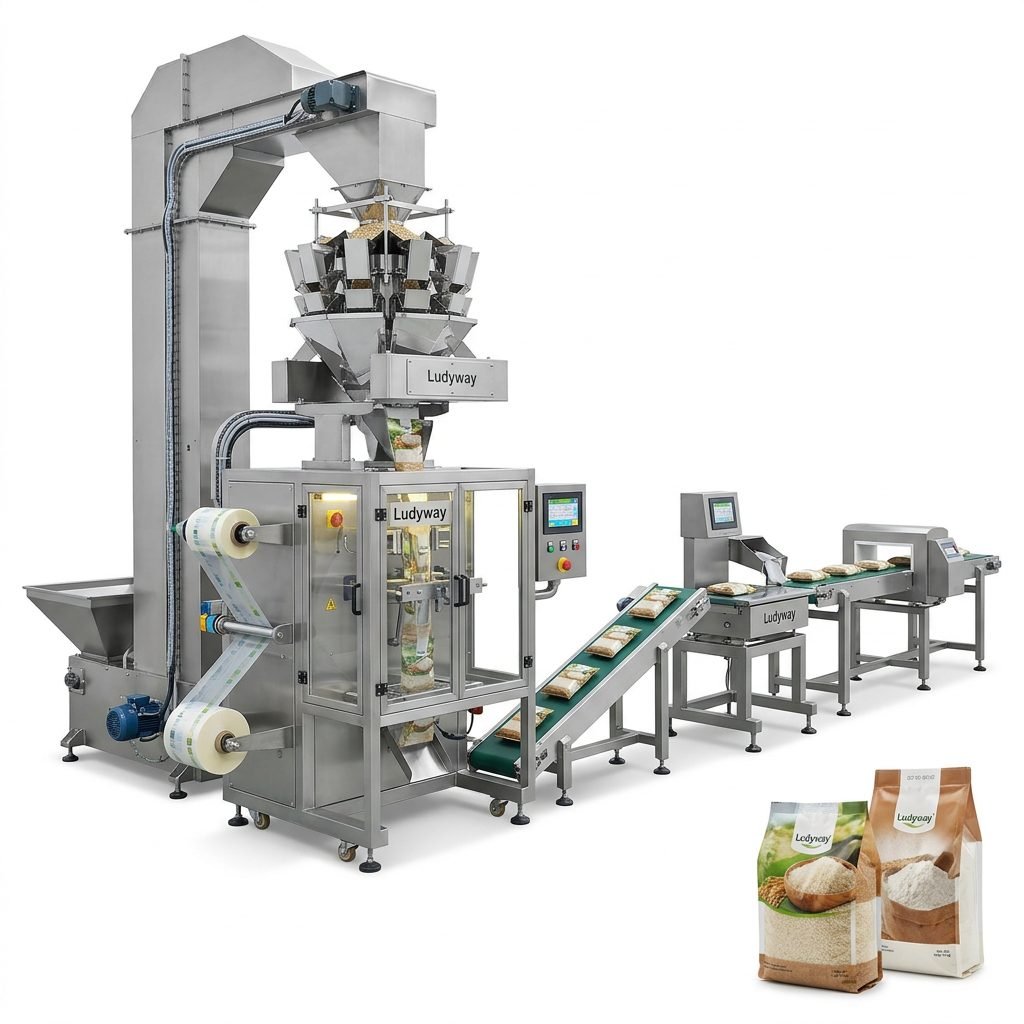
Why Reliable Packaging Machines Matter in Industrial Operations
In high-volume production environments, even a minor packaging inconsistency can lead to product waste, sealing defects, customer complaints, and production delays. A dependable packaging machine helps manufacturers maintain a stable workflow while meeting strict quality and compliance requirements.
- Higher throughput with less unplanned stoppage
- Consistent package quality across long production cycles
- Improved labor efficiency through automation
- Reduced material waste from inaccurate filling or poor sealing
- Better product protection during storage and transport
In industries where packaging integrity directly influences consumer trust, machine reliability is not optional. It becomes a strategic investment tied to profitability, production planning, and brand reputation.
Key Features Buyers Expect from a High-Performance Packaging Machine
When evaluating equipment comparable to a Viking packaging machine, industrial buyers usually focus on a combination of technical capability and practical usability. The best solutions are not just fast; they are stable, accurate, easy to maintain, and adaptable to different product formats.
| Feature | Operational Benefit |
|---|---|
| Accurate dosing and filling | Helps control product loss and maintain pack consistency |
| Stable sealing system | Improves package integrity and reduces leakage or contamination risk |
| Servo-driven automation | Enhances control precision and production repeatability |
| Quick changeover capability | Supports multiple SKUs and shorter switching time |
| User-friendly interface | Simplifies operation, training, and troubleshooting |
| Integration with conveyors and end-of-line systems | Creates smoother turnkey packaging line performance |
Machine Stability Is More Valuable Than Peak Speed Alone
A machine may advertise high output speeds, but if it frequently stops for adjustments, rejects, or sealing problems, the real production efficiency drops sharply. That is why experienced buyers prioritize stable continuous operation over theoretical speed figures.
Packaging Flexibility Supports Future Growth
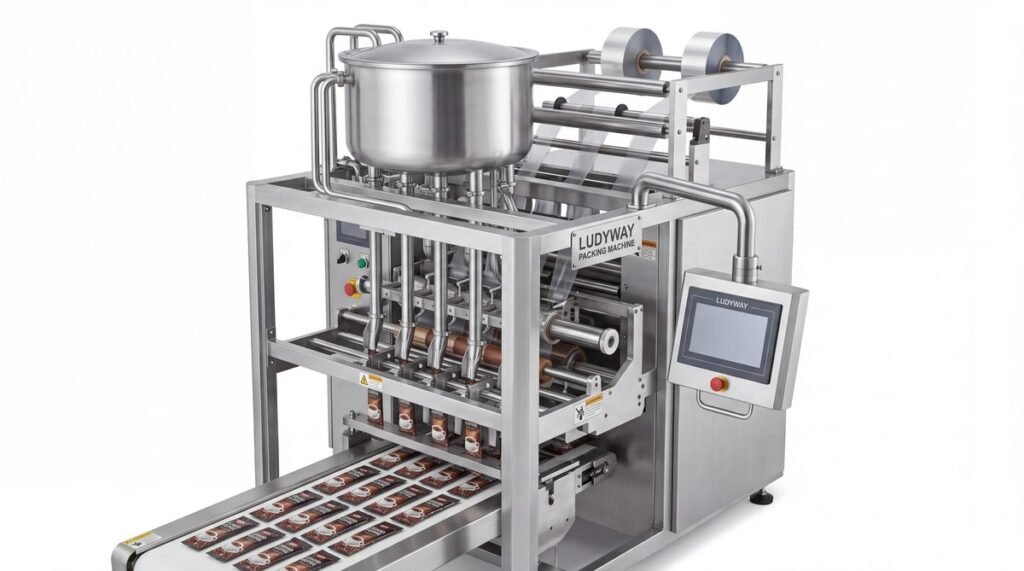
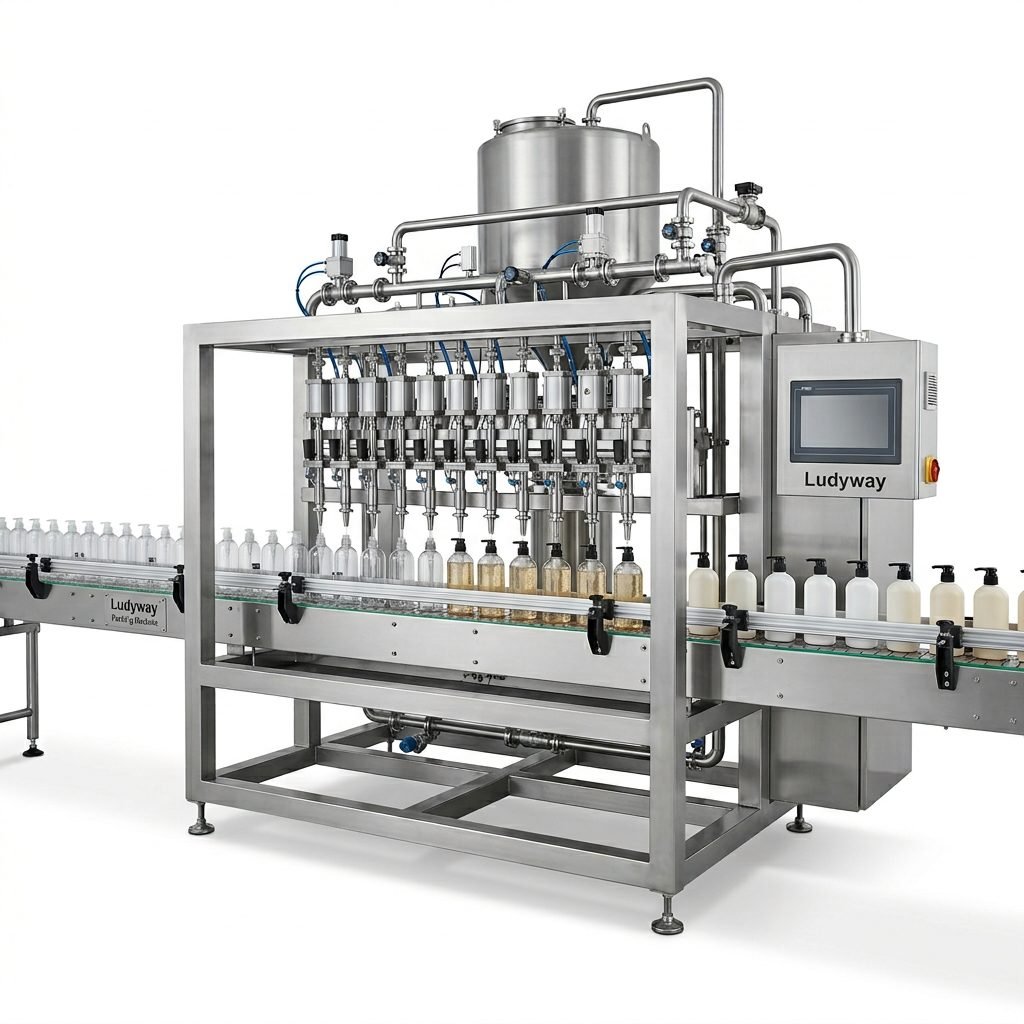
Many manufacturers begin with one product format and later expand into additional SKUs, portion sizes, or packaging materials. A flexible system can support this growth without requiring a full equipment replacement. This is especially important for businesses entering new categories such as sachets, stick packs, pouches, or bottle-based filling lines.
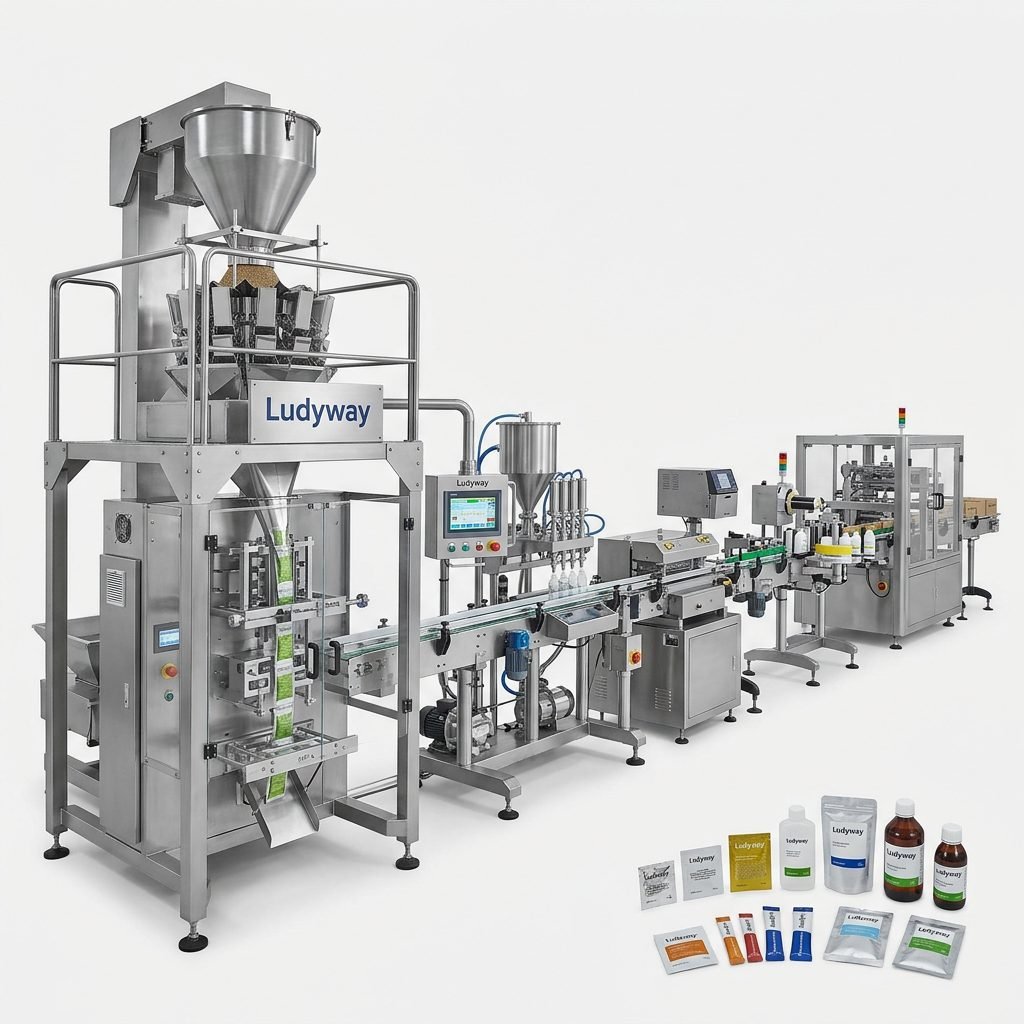
Applications Across Major Industries
Reliable packaging technology is essential across a wide range of industrial sectors. The exact machine configuration depends on the product’s physical characteristics, target pack style, hygiene requirements, and production volume.
Food Packaging
Food manufacturers often require systems for powders, granules, sauces, snacks, seasonings, coffee, sugar, beverage mixes, and frozen or dry products. The packaging equipment must support hygiene standards, accurate filling, and visually consistent package output.
- Seasoning sachets and stick packs
- Coffee and milk powder packaging
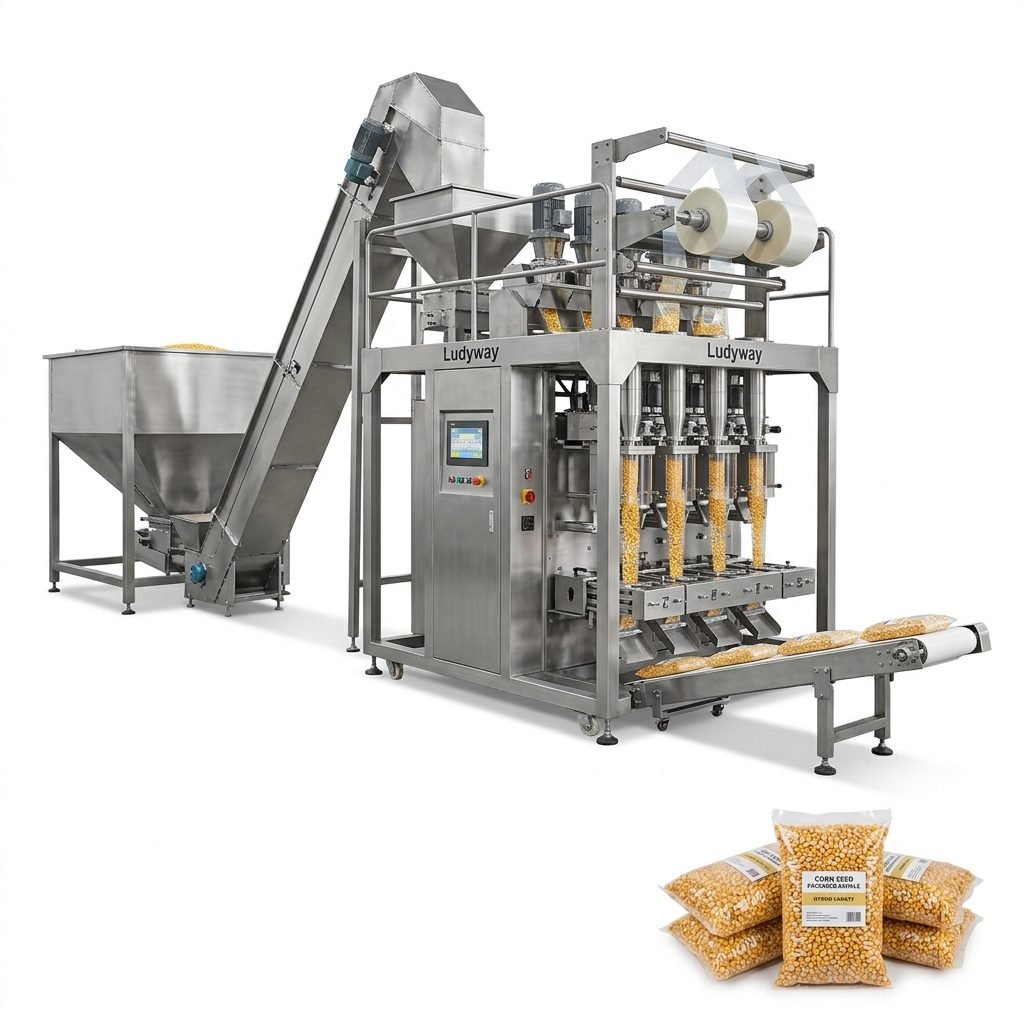
- Sugar, salt, grains, and snack filling
- Sauces, condiments, and liquid sachets
Pharmaceutical and Health Supplement Packaging
In pharmaceutical and nutraceutical production, precision and cleanliness are critical. Machines must deliver repeatable dosage control, reliable sealing, and compatibility with strict production management standards.
- Granule and powder sachet packaging
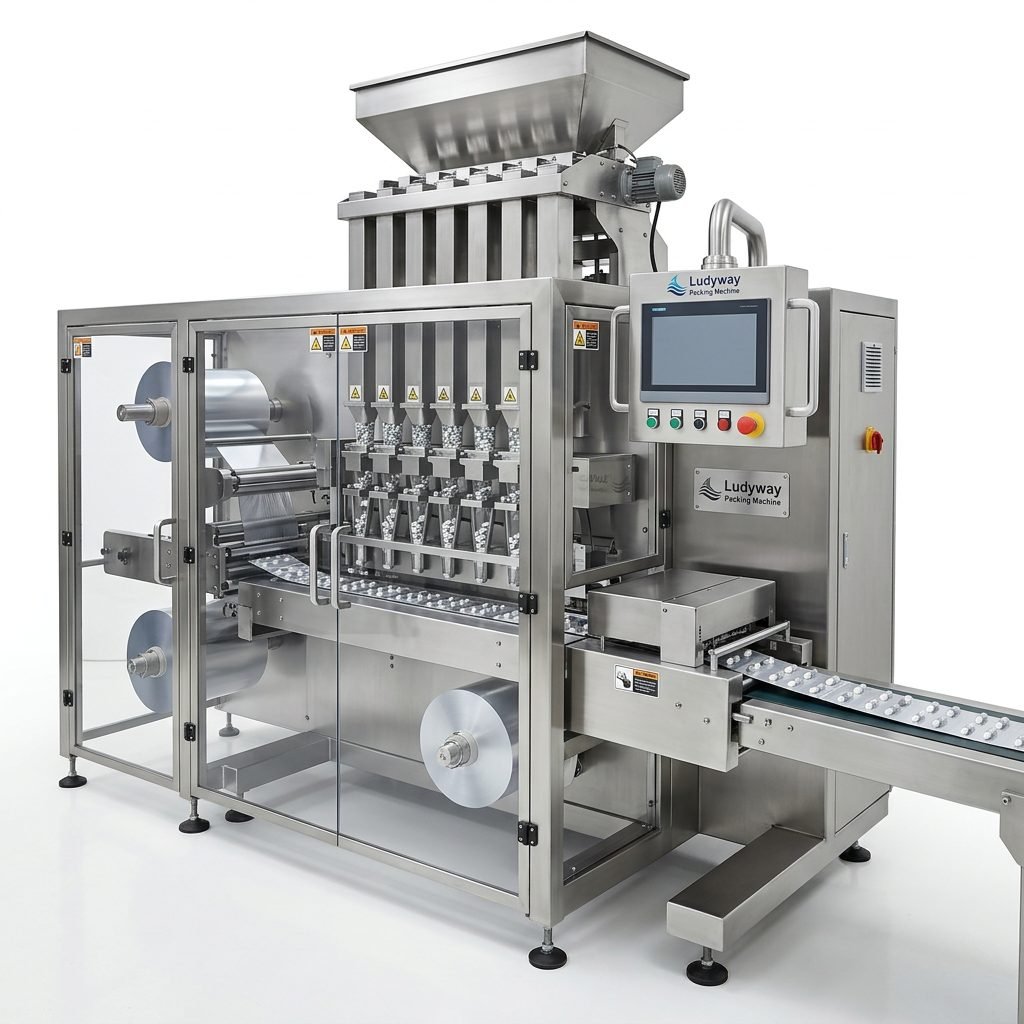
- Capsule, tablet, and blister applications
- Oral liquid filling lines
- Supplement stick pack systems
Cosmetic and Personal Care Packaging
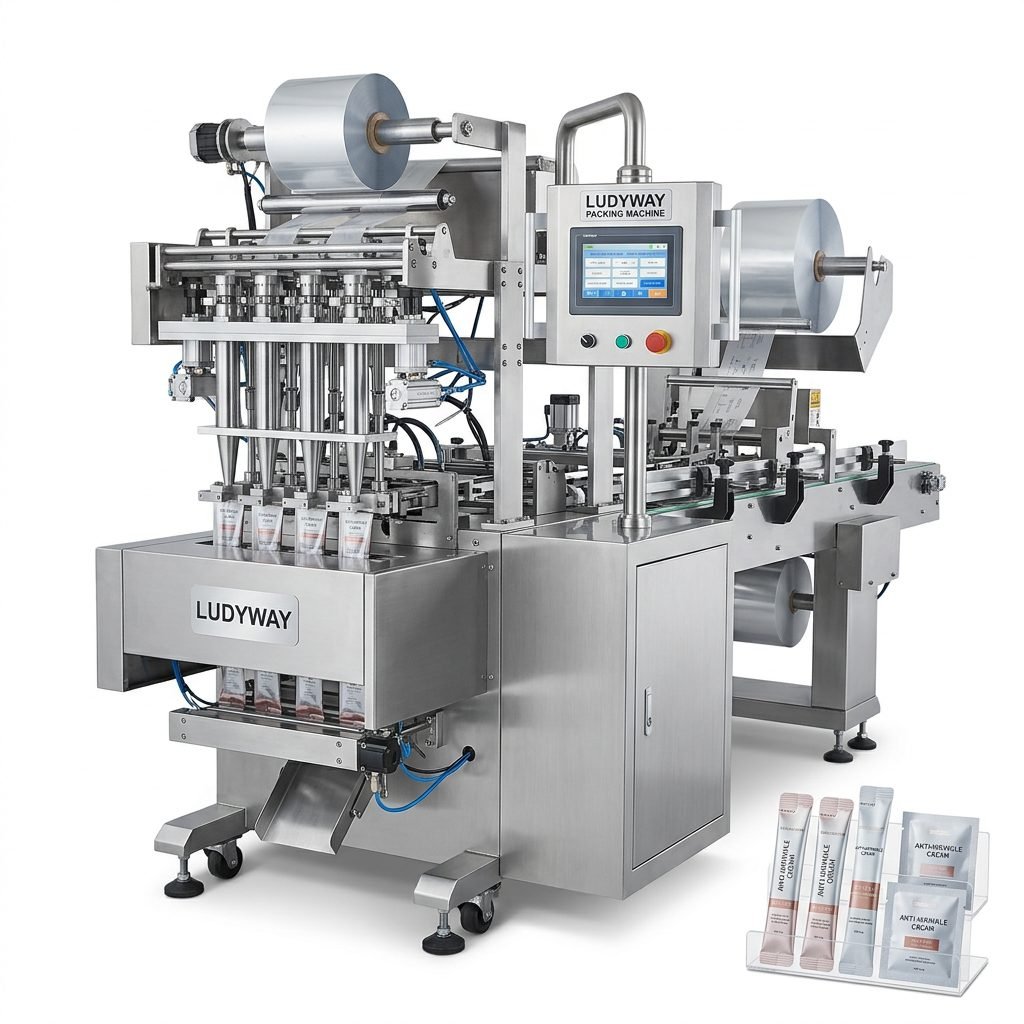
Cosmetic packaging systems must handle creams, serums, lotions, gels, and sample-size products while maintaining clean, attractive packaging. High-speed multi-lane sachet and stick pack machines are popular for retail and travel-size formats.
Chemical and Industrial Product Packaging
Industrial chemicals, detergents, additives, and specialty powders require durable packaging solutions with careful attention to material compatibility, dosing accuracy, and production safety.
Animal Feed and Pet Product Packaging
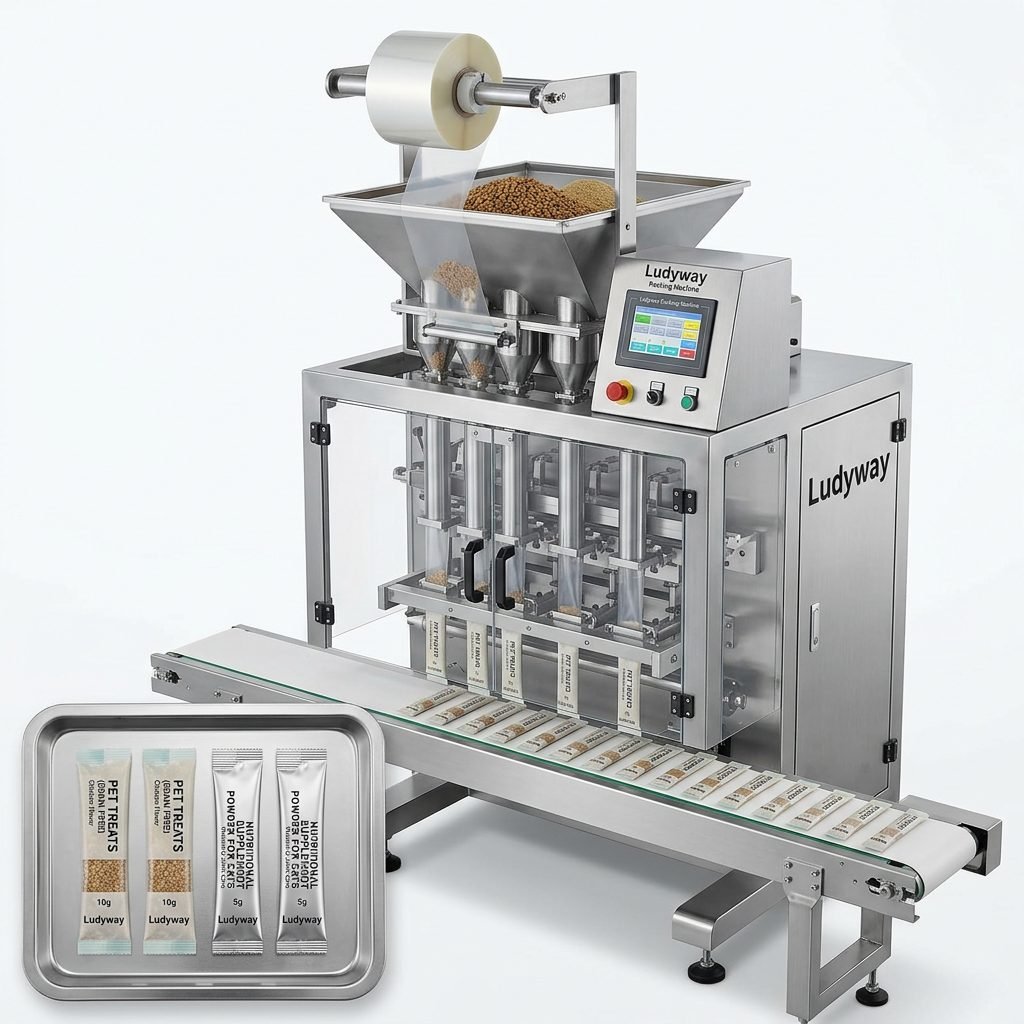
For pet food, feed additives, pellets, and supplements, automated packaging systems improve throughput and reduce manual handling. These lines are especially useful in high-volume operations where pack consistency and weight control are essential.
Standalone Machines vs. Turnkey Packaging Lines
Some manufacturers only need a single packaging machine, while others require a complete integrated production line. The right choice depends on current production maturity, automation goals, and future expansion plans.
| Option | Best For | Main Advantage |
|---|---|---|
| Standalone packaging machine | Factories upgrading one process stage | Lower initial investment and simpler deployment |
| Semi-integrated packaging system | Growing operations needing better coordination | Balanced automation and flexibility |
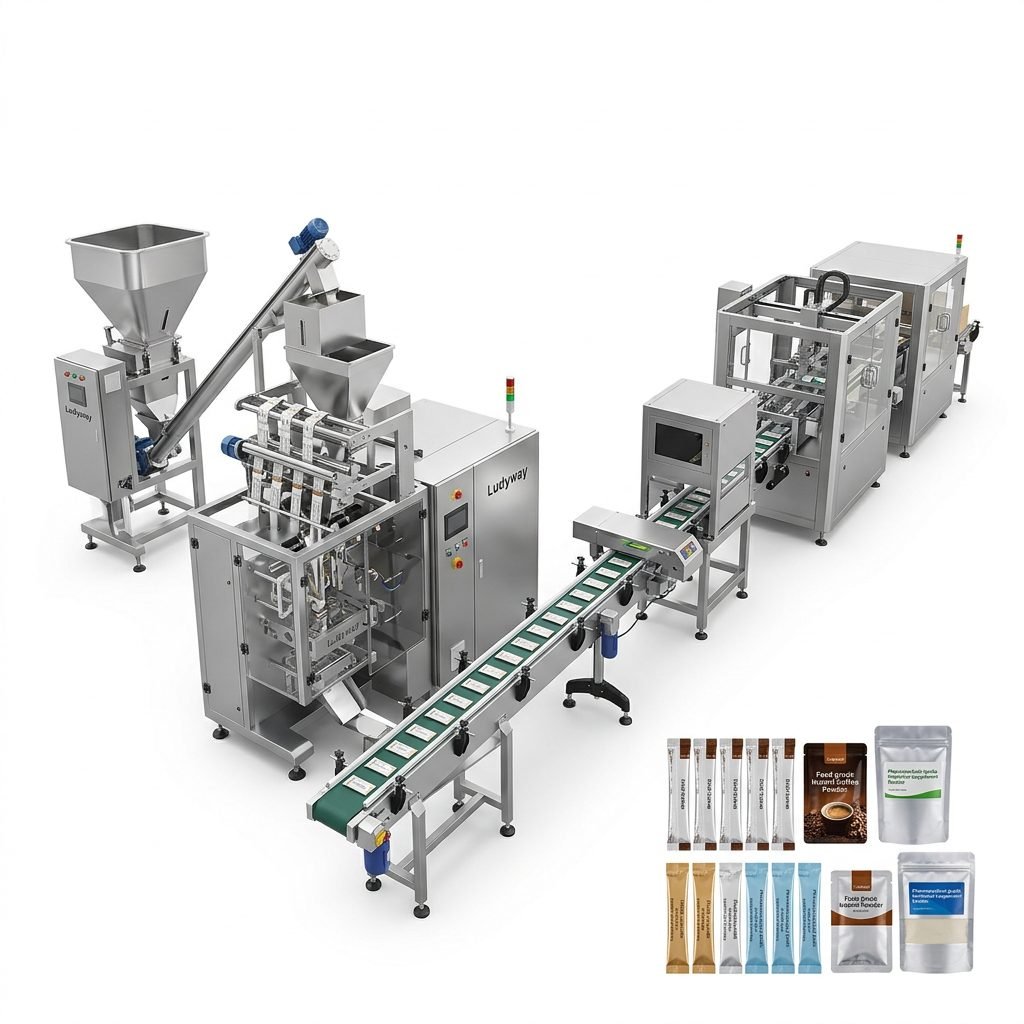
| Turnkey packaging line | High-volume manufacturers seeking full automation | Streamlined flow from feeding to final packing |
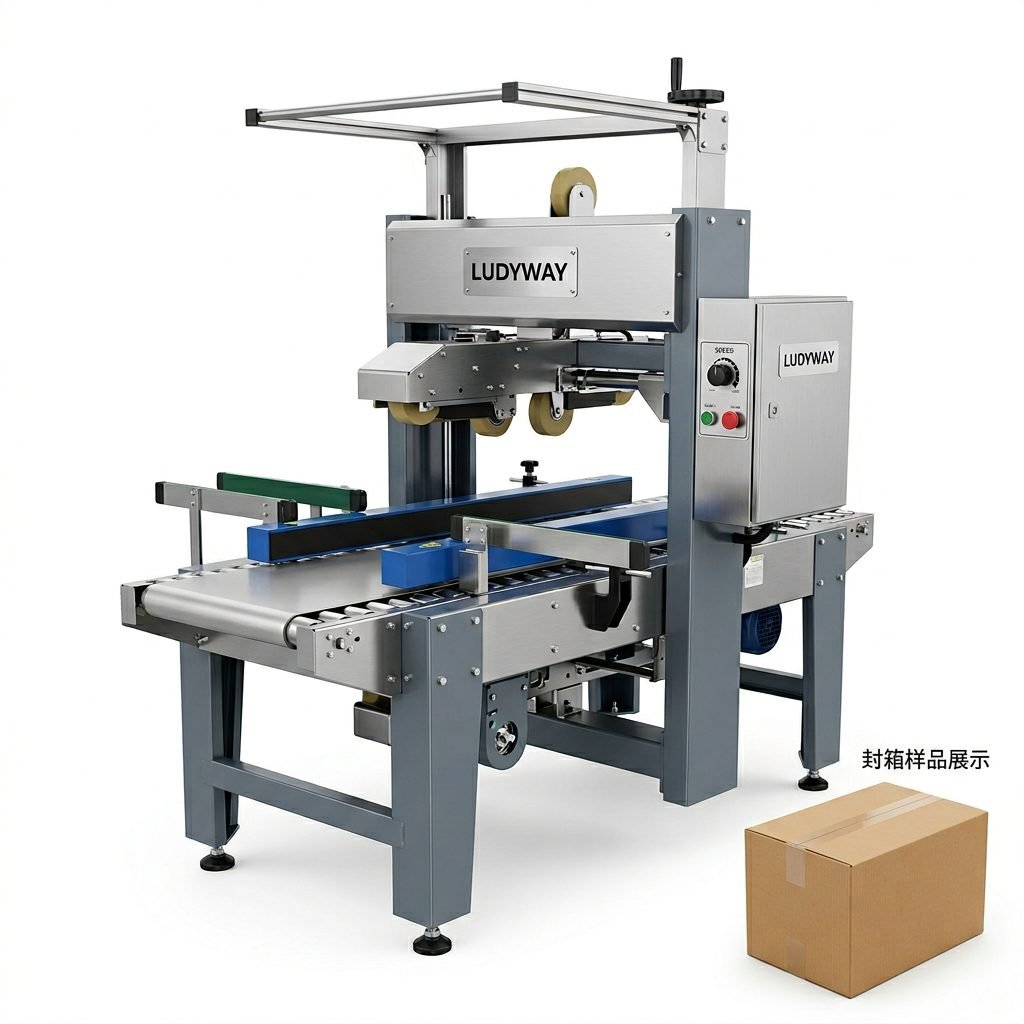
Turnkey lines often include feeding, conveying, weighing, filling, sealing, coding, inspection, cartoning, case packing, and palletizing. For many industrial plants, this integrated approach delivers stronger long-term efficiency than purchasing isolated machines from different suppliers.
How to Evaluate the Right Packaging Solution
Choosing the right system involves more than checking output speed and price. Decision-makers should compare the equipment according to actual production needs, not just catalog specifications.
- Define product characteristics such as powder flowability, granule size, viscosity, and moisture sensitivity.
- Confirm packaging format including sachet, stick pack, pouch, bottle, carton, or bulk bag.
- Estimate target output per minute, shift, and month.
- Review material compatibility for films, laminates, bottles, caps, and sealing requirements.
- Check automation level needed for current and future production.
- Assess service support for installation, training, spare parts, and technical follow-up.
Important Questions to Ask Before Buying
- Can the machine handle multiple product types or only one formula?
- How easy is cleaning and maintenance?
- What is the expected accuracy tolerance?
- Can the line be upgraded later?
- Is remote technical support available?
- What quality inspection process is used before shipment?
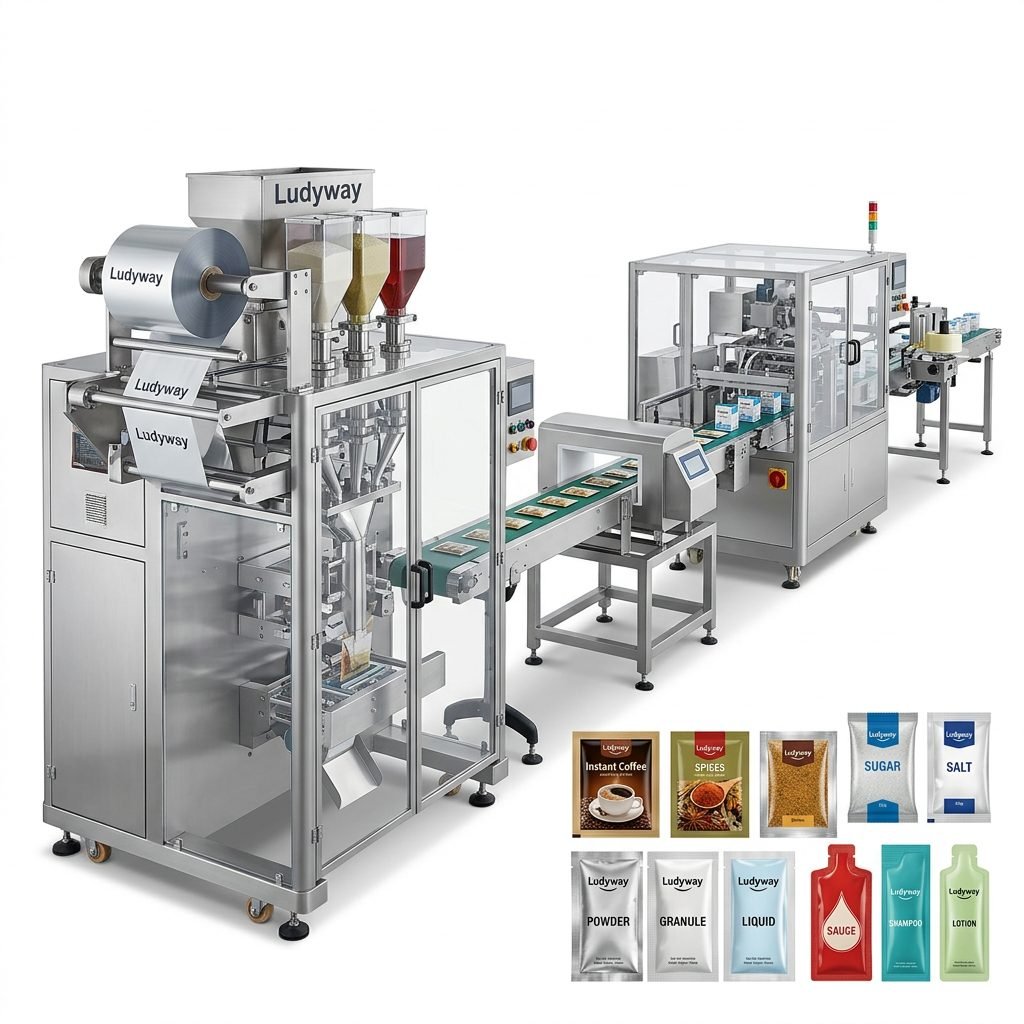
The Role of Automation in Packaging Efficiency
Automation is a major driver of packaging performance. With labor costs rising and quality expectations increasing, manufacturers are moving toward equipment that can operate with less manual intervention and more data-driven consistency.
Advanced packaging automation typically supports:
- Lower labor dependence
- More predictable output
- Reduced operator error
- Better product traceability
- Easier line integration with coding, inspection, and end-of-line handling
For factories managing multiple SKUs or strict delivery schedules, automated packaging can create a meaningful competitive advantage. The gains are not limited to speed; they extend to quality assurance, operating discipline, and planning confidence.
Why Manufacturing Experience and Engineering Depth Matter
Packaging machines are long-term industrial assets. Buyers benefit most when the supplier has strong engineering capability, broad application knowledge, and real manufacturing infrastructure. This becomes even more important when the project involves customized requirements or complete turnkey line integration.
An experienced manufacturer can better support:
- Application-based machine selection
- Custom line layout design
- Material testing and package optimization
- Installation guidance and commissioning
- After-sales troubleshooting and spare parts planning
For companies searching for scalable industrial packaging solutions, Ludyway packaging machine solutions are often considered because of the company’s long manufacturing history, broad machine portfolio, turnkey line capability, and extensive export experience across more than 100 countries and regions.
Common Benefits of a Well-Matched Packaging Machine
Once the correct equipment is installed and properly integrated, manufacturers often see improvements in several key areas:
| Business Area | Expected Improvement |
|---|---|
| Production efficiency | Faster output with less downtime |
| Quality control | More uniform package appearance and sealing reliability |
| Cost management | Reduced waste, labor demand, and rework |
| Production scalability | Easier expansion into new package sizes or product lines |
| Customer satisfaction | Better product presentation and more dependable pack integrity |
Final Considerations for Industrial Buyers
A Viking packaging machine is often searched by buyers who value durability, efficiency, and dependable operation. In practice, the best packaging choice is the one that fits your product, your capacity goals, your packaging format, and your long-term automation roadmap.
Businesses that take the time to evaluate equipment stability, application flexibility, supplier capability, and service support are far more likely to achieve reliable production results. In competitive industrial markets, the right packaging system does more than pack products—it helps create a stronger, smarter, and more efficient operation.
Quick Buyer Checklist
- Match the machine to product characteristics
- Prioritize stable output over claimed peak speed
- Choose equipment with room for future expansion
- Verify line integration capability
- Work with a manufacturer that offers real technical support