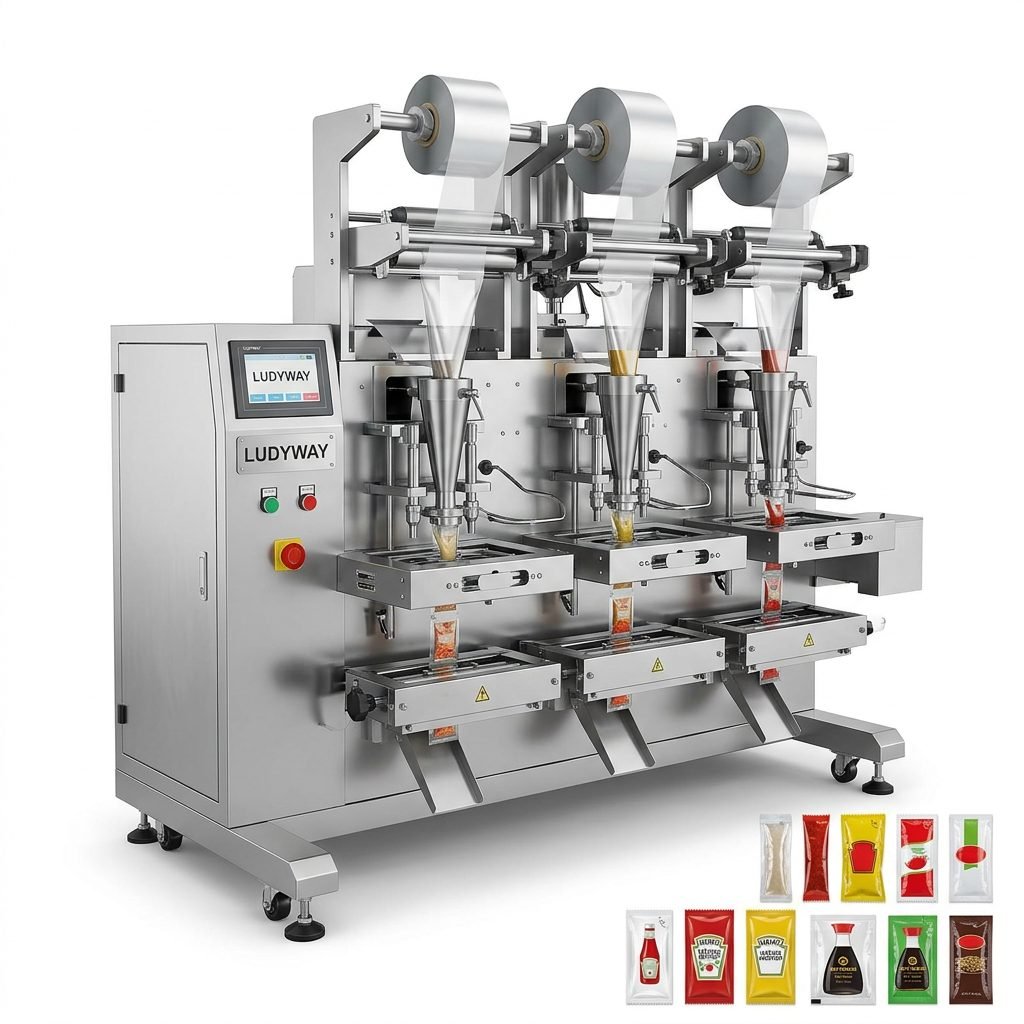
A fully automatic packaging machine is an advanced system that performs the complete packaging process with minimal human intervention. It can automatically handle feeding, measuring, filling, sealing, coding, labeling, counting, conveying, and even end-of-line operations depending on the packaging setup. For businesses focused on speed, consistency, hygiene, and labor efficiency, this type of equipment has become a key investment in modern production.
Whether you produce food, pharmaceuticals, cosmetics, chemicals, or health supplements, a fully automated packaging system helps reduce manual errors, increase output, and maintain stable package quality across every shift.
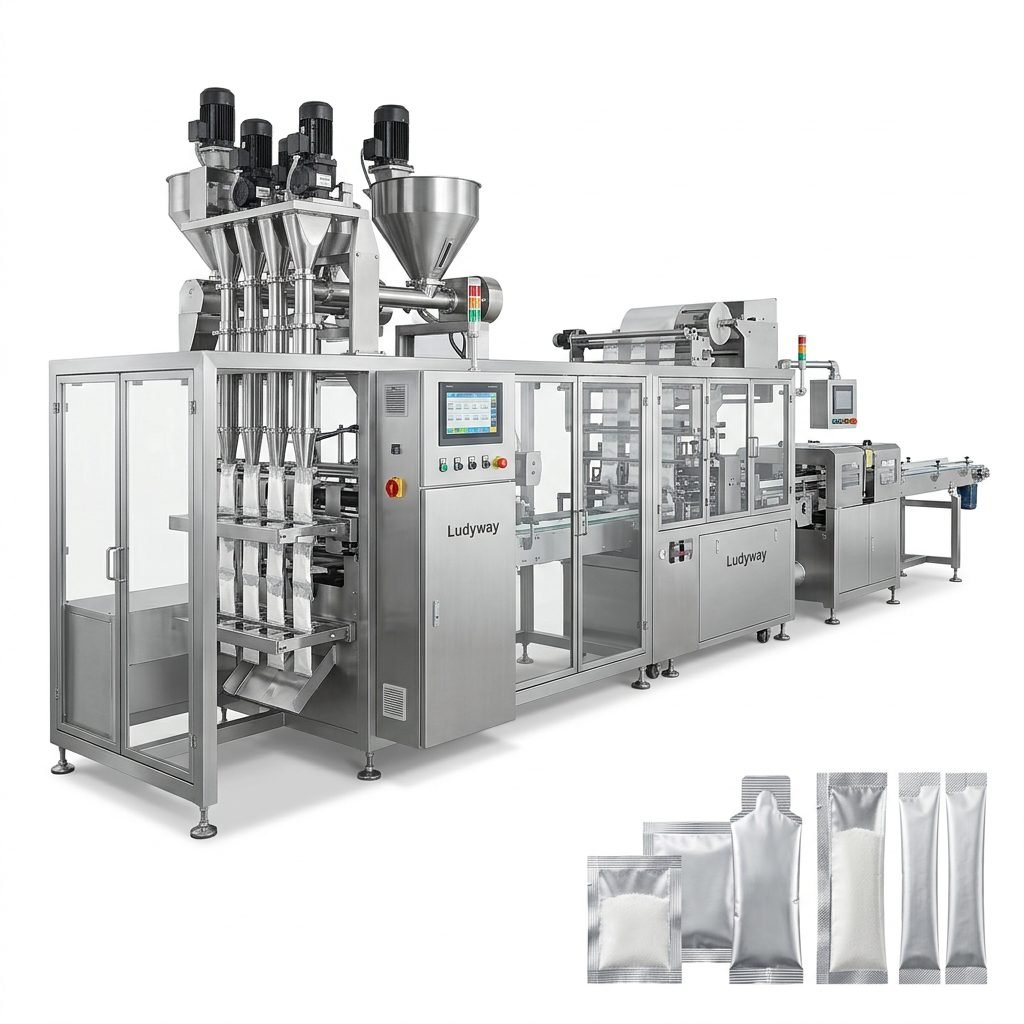
What does a fully automatic packaging machine do?
In simple terms, it takes a product from bulk or semi-processed form and converts it into a finished retail or industrial package automatically. Depending on the application, the machine may:
- Feed product from hoppers, conveyors, pumps, or elevators
- Measure or weigh the required quantity accurately
- Fill powders, granules, liquids, pastes, tablets, or pouches
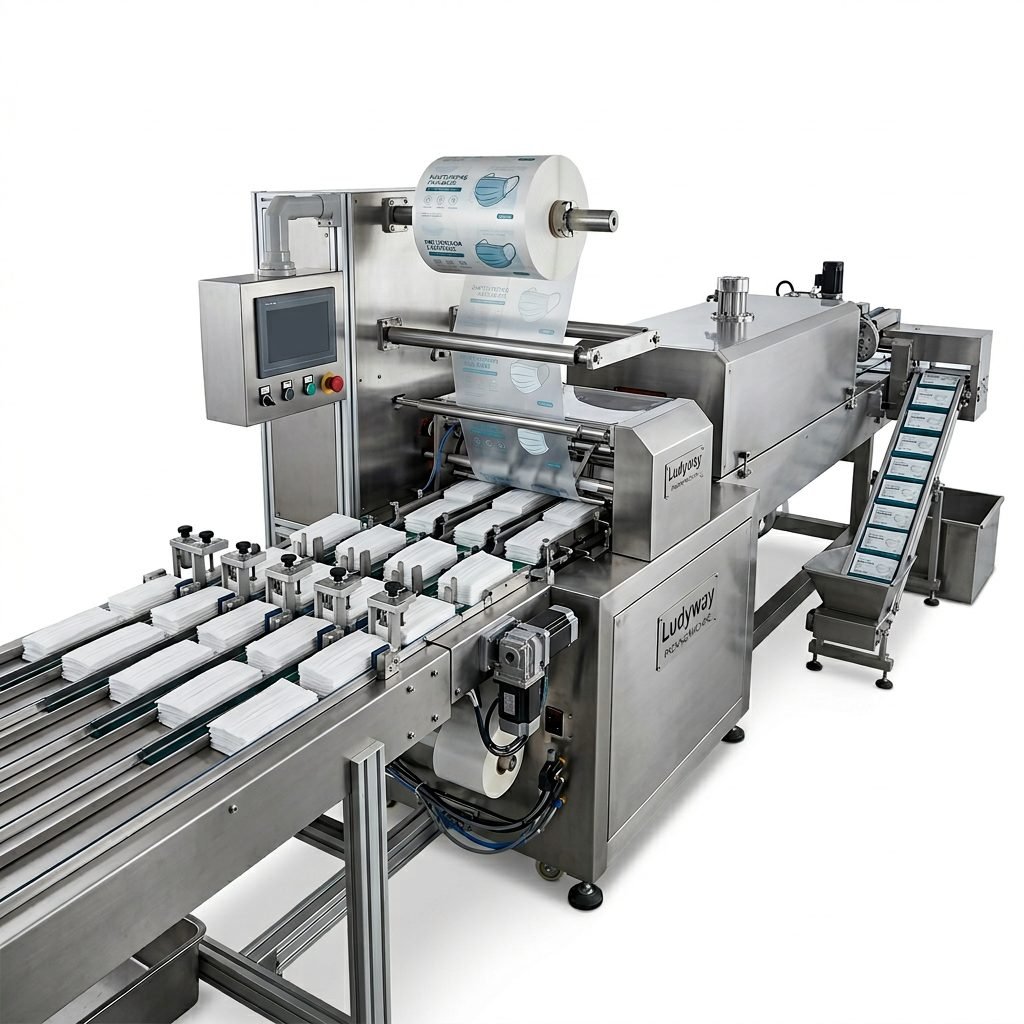
- Form packages from film or handle pre-made pouches
- Seal packages using heat, ultrasonic, vacuum, or other methods
- Print dates or batch codes for traceability
- Inspect quality through checkweighers, vision systems, or metal detectors
- Sort, cartoning, case packing, and palletizing as part of a full line
This means one integrated machine or line can replace multiple manual steps while improving repeatability and throughput.
How is it different from semi-automatic packaging equipment?
The main difference is the level of operator involvement. Semi-automatic machines still require workers to load containers, place pouches, start cycles, or move products between stages. Fully automatic systems connect those actions into one continuous process.
| Feature | Semi-Automatic Machine | Fully Automatic Machine |
|---|---|---|
| Labor requirement | Moderate to high | Low |
| Production speed | Lower | Higher and more stable |
| Consistency | Operator-dependent | Highly repeatable |
| Scalability | Limited | Strong for growth |
| Best for | Startups, low volume, trial runs | Medium to large-scale production |
Main types of fully automatic packaging machines
There is no single machine for all packaging tasks. The right solution depends on product type, package format, speed target, and industry requirements.
1. Vertical form fill seal machines
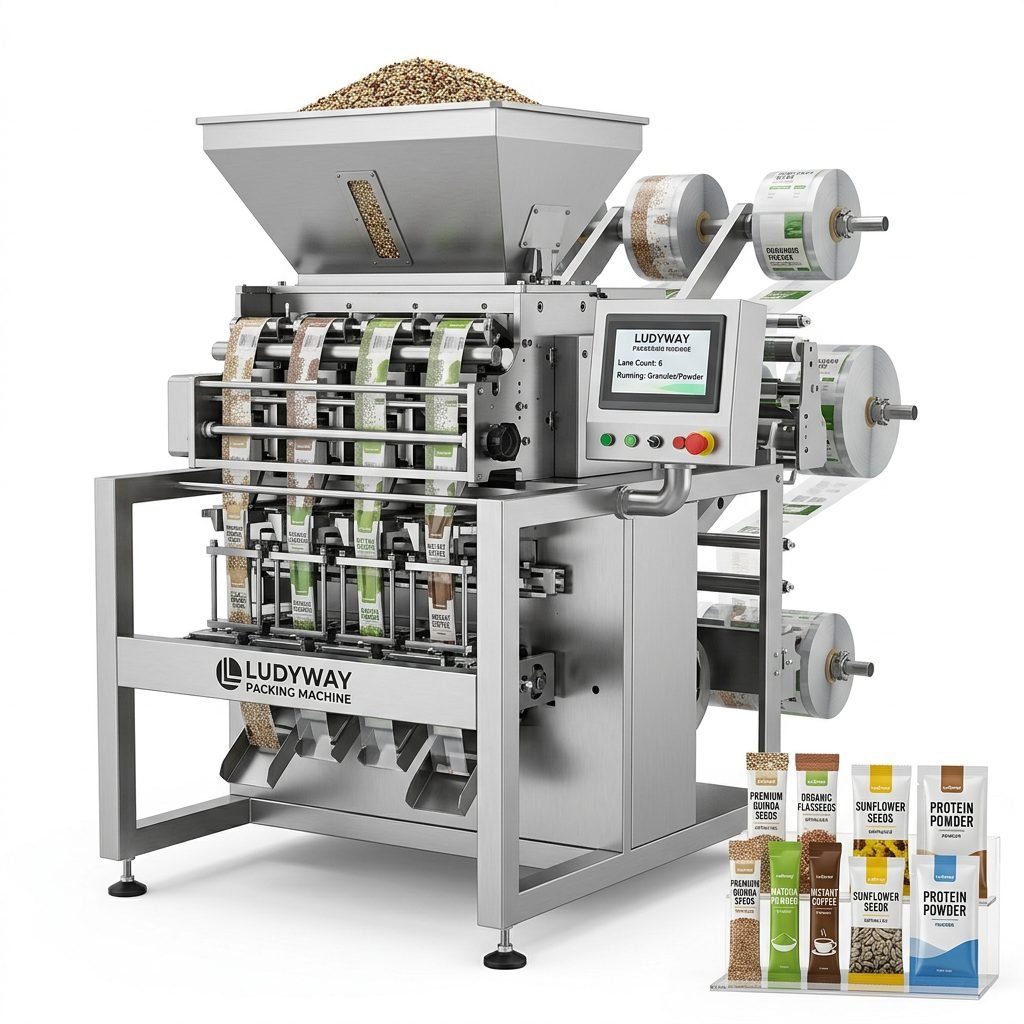
These machines form bags from roll film, fill the product, and seal the package vertically. They are widely used for powders, granules, snacks, seeds, coffee, sugar, and many dry products.
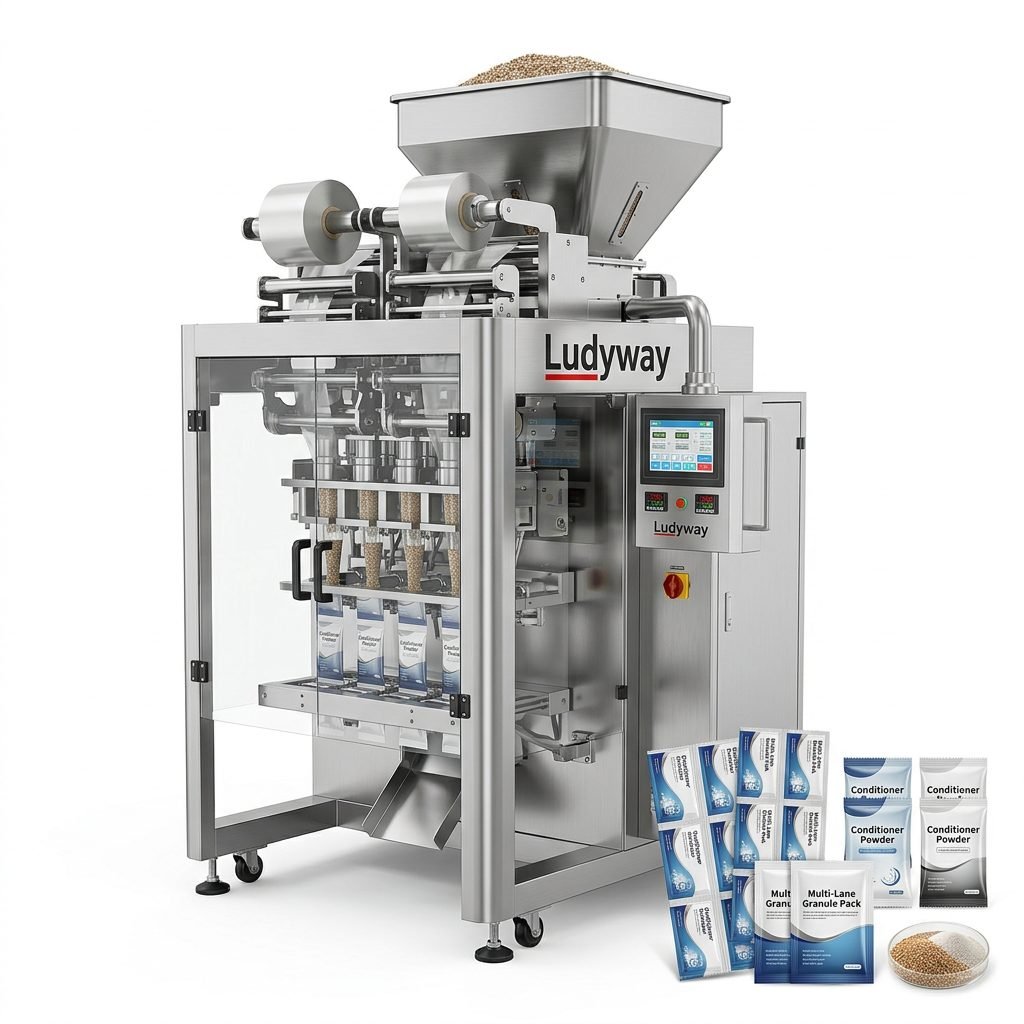
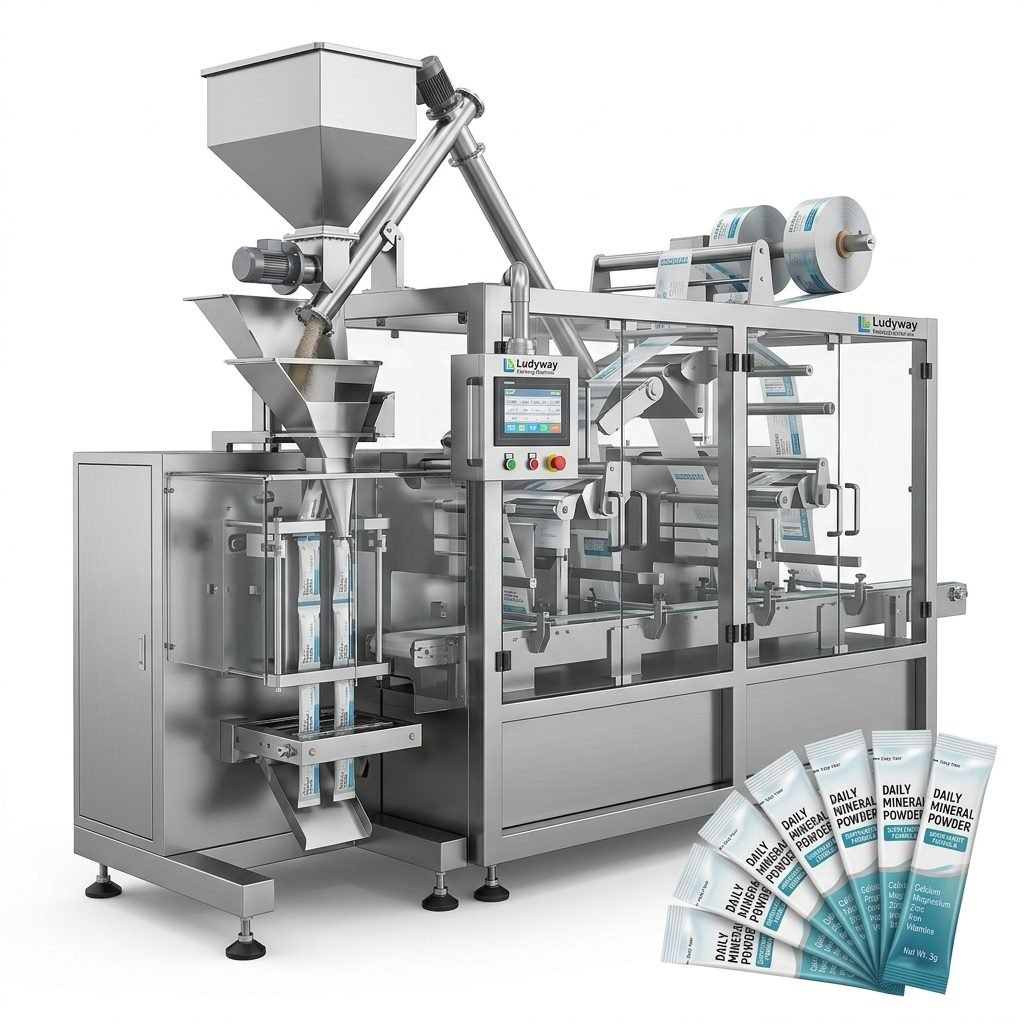
2. Sachet and stick pack machines
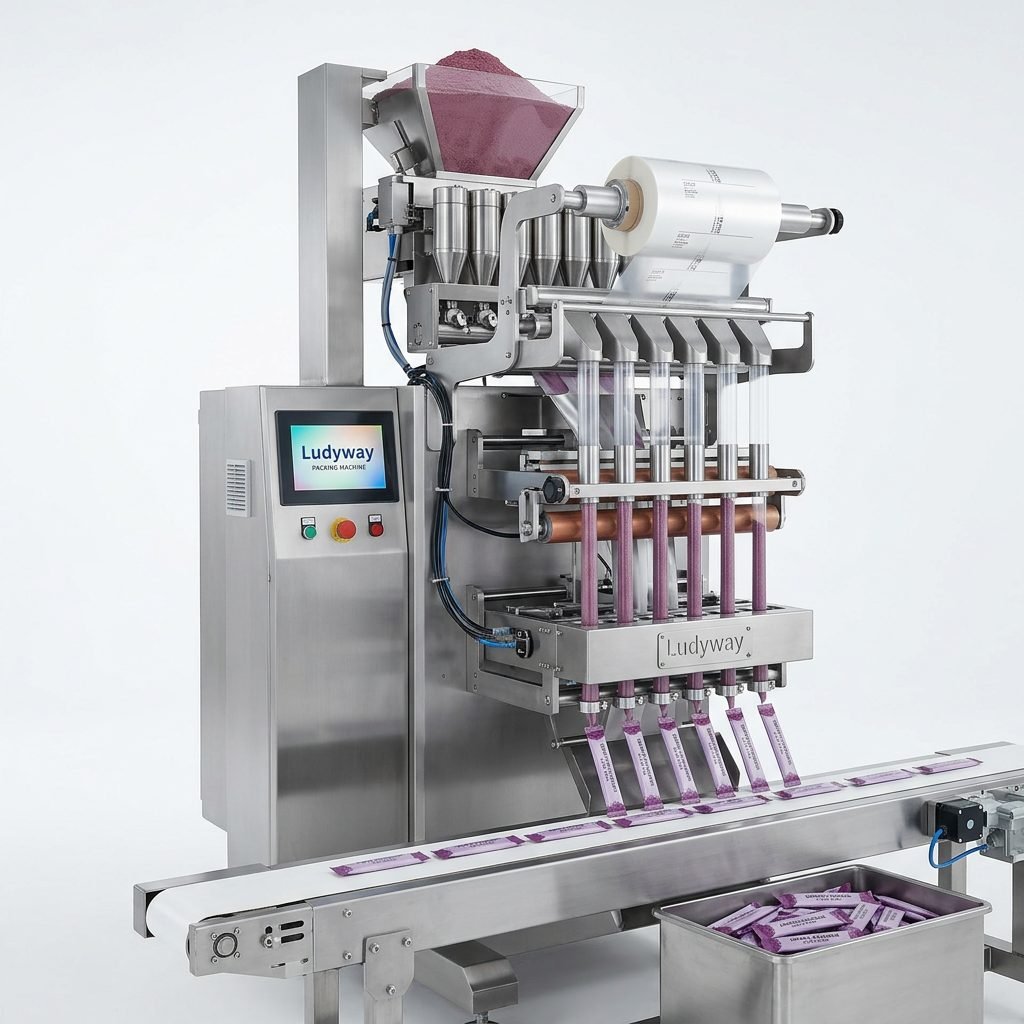
Designed for small-dose packaging, these machines are ideal for single-serve powders, granules, liquids, gels, and health products. Multi-lane models are especially popular for high-speed automatic packaging.
3. Premade pouch packing machines
These systems pick up preformed pouches, open them, fill them, and seal them. They are suitable for powders, sauces, pet food, frozen foods, and premium retail products.
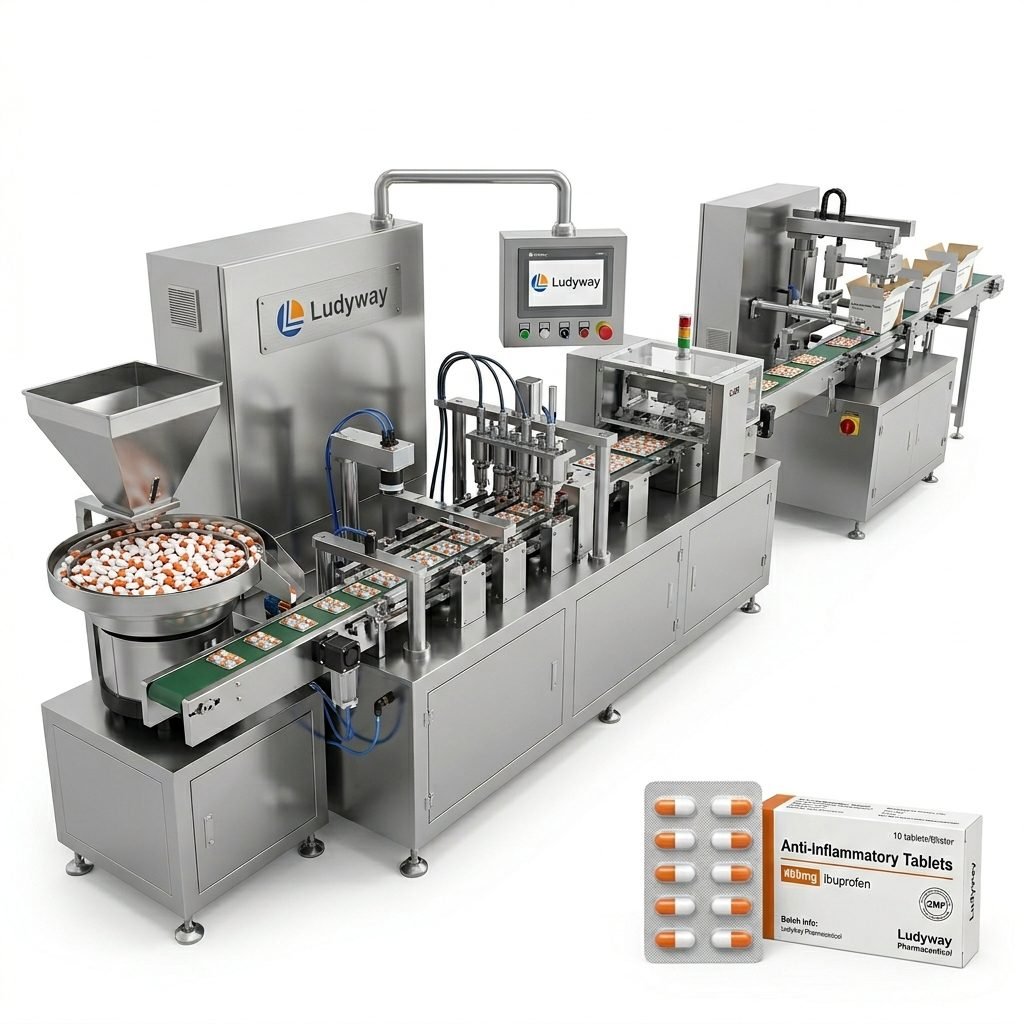
4. Bottle filling and capping lines
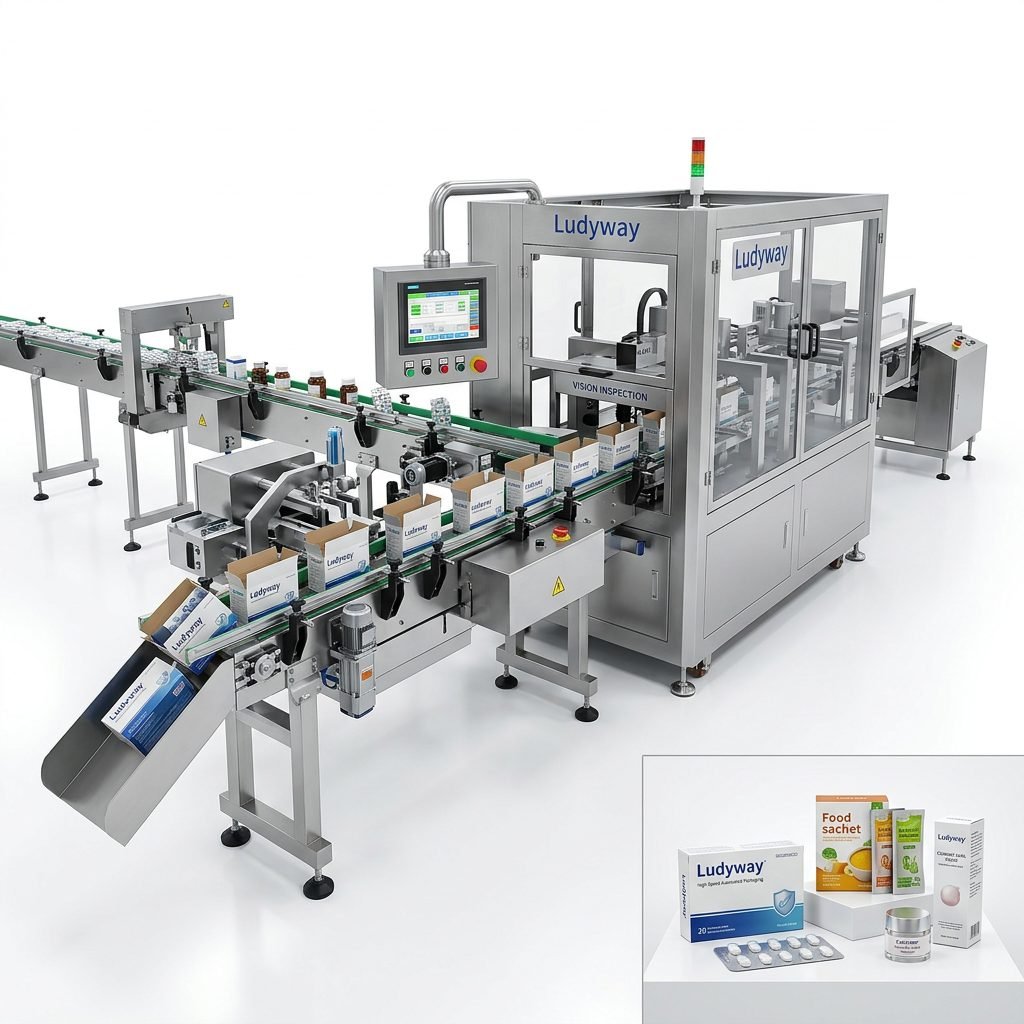
Used for tablets, capsules, syrups, lotions, oils, detergents, and liquid foods. A typical line includes bottle unscrambling, filling, capping, labeling, coding, and cartoning.
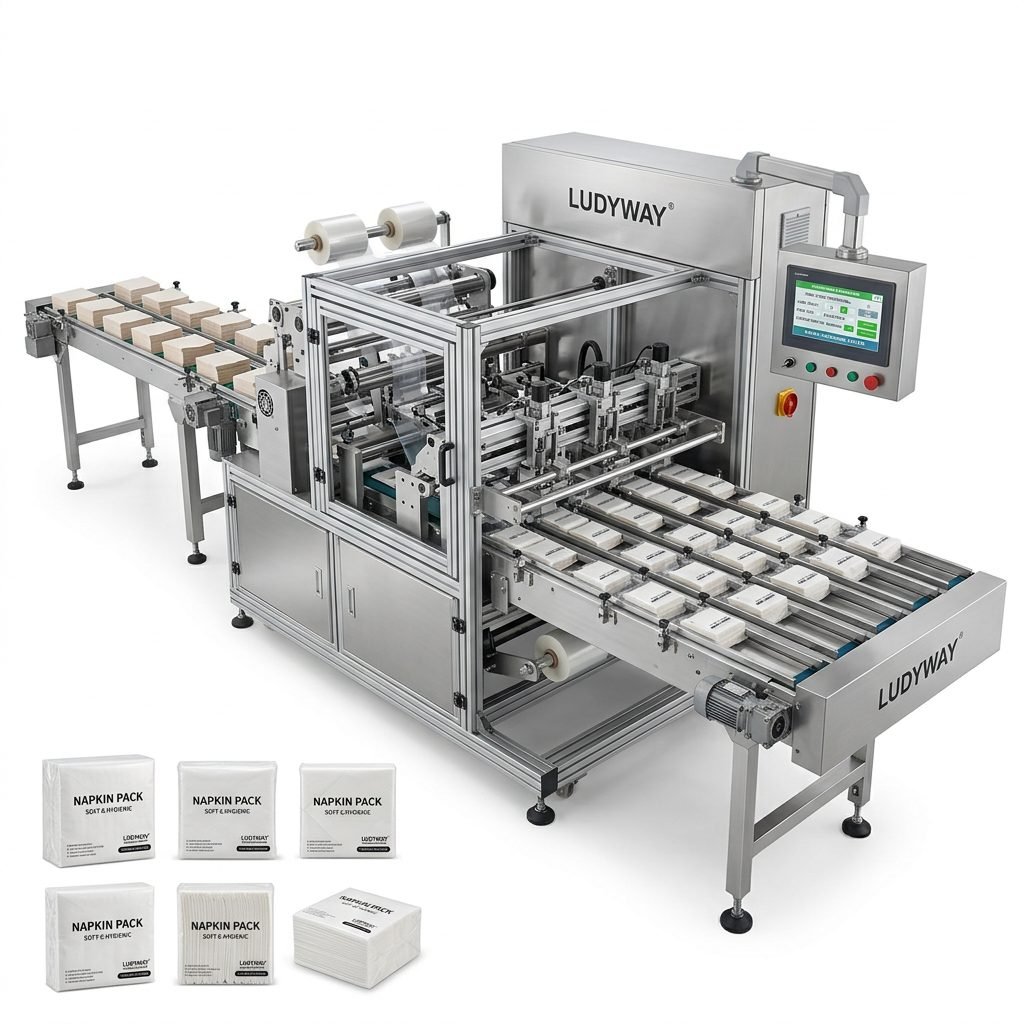
5. Cartoning and case packing systems
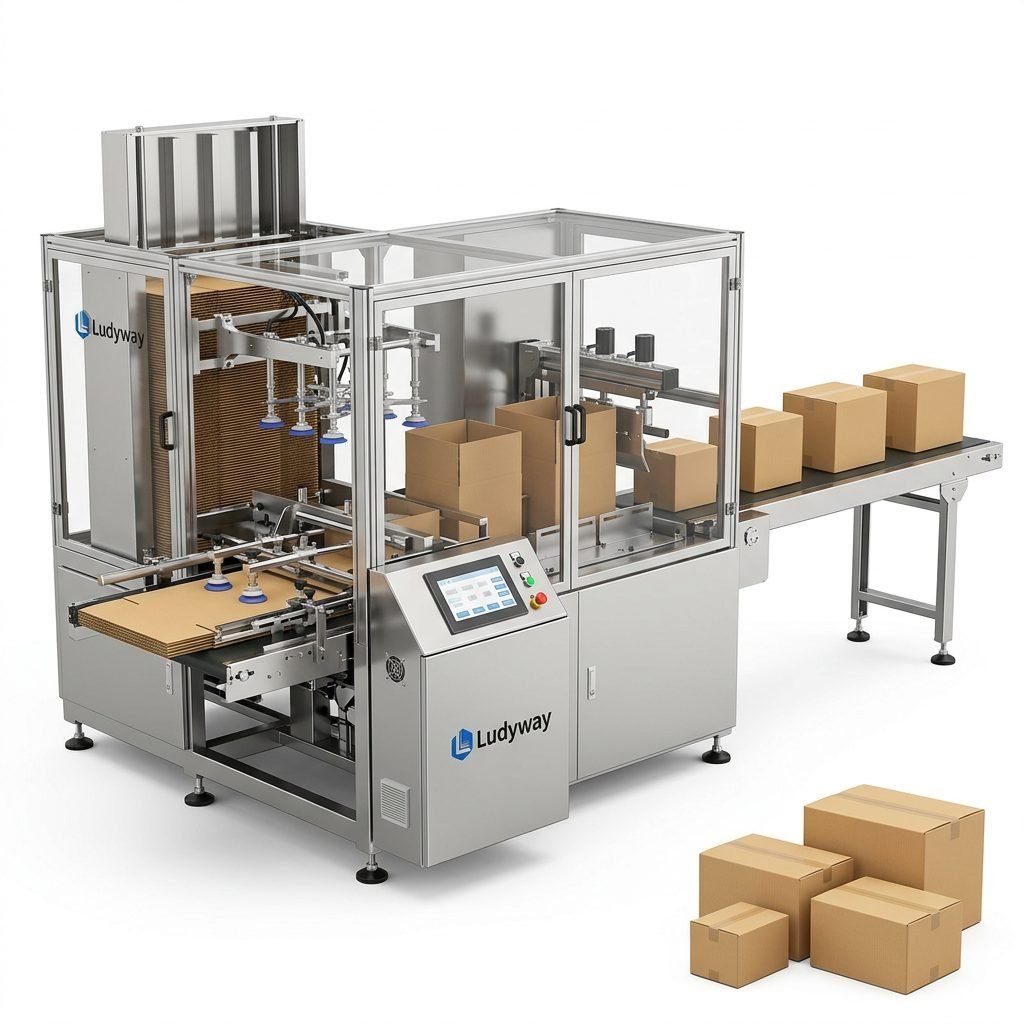
These machines handle secondary packaging by placing finished units into cartons or shipping cases automatically.
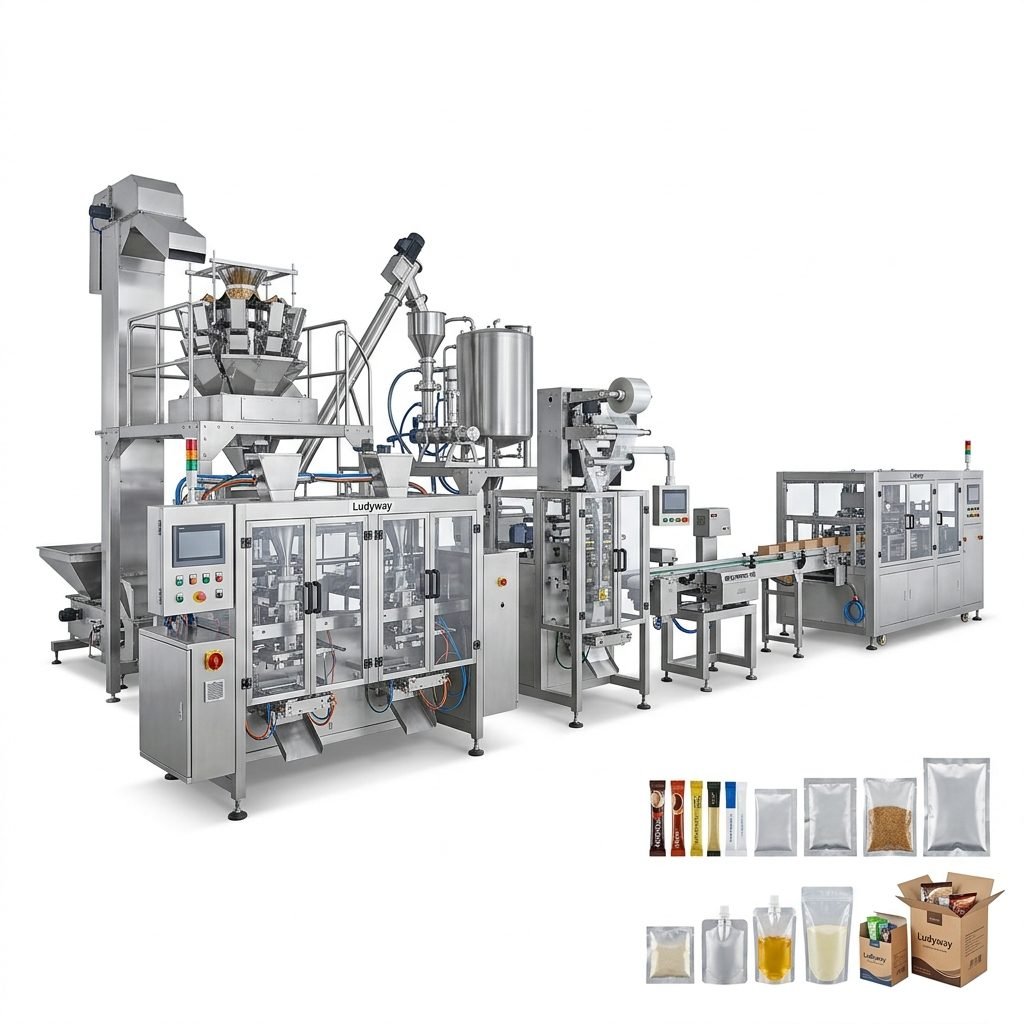
6. Turnkey packaging lines
A turnkey line combines multiple machines into one complete production system, from product feeding to final case packing or palletizing.
Which industries use fully automatic packaging machines?
These systems are used across a wide range of sectors because they improve efficiency, product protection, and compliance.
| Industry | Typical Products | Common Packaging Formats |
|---|---|---|
| Food | Coffee, spices, flour, snacks, sauces, frozen food | Sachets, stick packs, pouches, bags, bottles |
| Pharmaceutical | Powders, tablets, capsules, oral liquids | Sachets, blister packs, bottles, vials |
| Cosmetics | Serums, creams, lotions, shampoos | Sachets, tubes, bottles, stick packs |
| Chemical | Detergents, additives, powders, solvents | Bags, pouches, bottles, sachets |
| Health supplements | Protein powder, collagen, vitamins, probiotics | Stick packs, sachets, jars, bottles |
| Animal nutrition | Pet food, feed premix, feed additives | Bulk bags, pouches, sachets |
Key benefits for businesses
For growing manufacturers, a fully automatic packaging machine is not just a piece of equipment. It is a productivity tool that can improve overall plant performance.
Higher output
Automation allows continuous packaging at a stable speed. This is especially important for businesses facing seasonal demand, contract manufacturing deadlines, or export orders.
Lower labor dependence
Manual packaging often requires more workers, more supervision, and more training. Full automation helps companies reduce labor intensity and allocate workers to higher-value tasks.
Better accuracy
Precise dosing and filling improve product consistency, reduce giveaway, and support quality control goals.
Improved hygiene and safety
Less direct product contact means cleaner production, especially for food, pharma, and health supplement applications.
Stronger brand presentation
Consistent package shape, seal quality, print position, and finish help products look more professional on the shelf.
Scalable production
When your demand grows, a fully automatic line can often support higher capacity much more effectively than manual or semi-automatic setups.
Core components of a fully automatic packaging system
A complete system is usually built from several coordinated modules. Understanding these parts helps buyers choose the right line configuration.
- Feeding system: vacuum feeder, screw conveyor, bucket elevator, pump, or hopper
- Dosing system: auger filler, multihead weigher, piston filler, liquid pump, counting device
- Main packaging machine: forms or handles the package and fills/seals it
- Coding unit: prints batch numbers, dates, QR codes, or traceability information
- Inspection equipment: metal detector, checkweigher, vision system, reject unit
- Secondary packaging unit: cartoner, case packer, shrink wrapper
- End-of-line automation: palletizer, conveyor, robotic handling system
How to know if your business needs one
A fully automatic packaging machine is a strong fit if your business is facing one or more of the following situations:
- Production volume is increasing quickly
- Packaging labor costs are rising
- Manual filling causes inconsistent weights or seals
- Your customers require cleaner, more standardized packaging
- You need batch coding and traceability compliance
- You plan to export and need higher packaging standards
- You want to build a more modern and scalable factory
If your packaging process has become a bottleneck, automation is usually the next logical step.
Important factors to consider before buying
Product characteristics
Is your product a free-flowing powder, fragile granule, viscous liquid, corrosive chemical, or sterile pharmaceutical item? Product behavior directly affects machine design and dosing choice.
Packaging format
Do you need pillow bags, stick packs, sachets, zipper pouches, bottles, cartons, or bulk bags? The final package determines the machine type.
Output target
Your required speed per minute or per hour should match the machine’s real production capability, not just a theoretical number.
Accuracy requirement
Pharmaceutical and supplement products often require tighter tolerance than some general industrial products.
Factory layout
Check available floor space, power supply, compressed air, cleanroom needs, and product flow direction.
Future expansion
A machine should support future SKUs, packaging sizes, and production growth when possible.
After-sales service
Reliable technical support, spare parts supply, remote troubleshooting, and operator training are crucial for long-term performance.
Common challenges and how good machines solve them
| Challenge | Impact | Typical Solution |
|---|---|---|
| Inconsistent filling | Product giveaway or underfill | Precision auger, weigher, or pump system |
| Poor seals | Leakage, waste, returns | Stable temperature control and sealing design |
| Frequent downtime | Lower productivity | Reliable components and proper line integration |
| Dust or product contamination | Hygiene risk | Enclosed design, dust collection, hygienic structure |
| Hard changeover | Lost production time | Tool-less adjustment and recipe memory |
What is the return on investment?
The ROI of a fully automatic packaging machine depends on labor savings, output increase, waste reduction, and quality improvement. While the initial investment is higher than semi-automatic equipment, many businesses find the payback reasonable because of:
- Reduced manpower costs
- Higher production efficiency
- Lower material waste
- Better packaging quality and fewer rejects
- Improved delivery capability for larger orders
For manufacturers planning long-term growth, automation usually offers better cost performance over time.
Choosing the right supplier
The machine itself is important, but the supplier matters just as much. A capable manufacturer should understand your product application, packaging goals, and production challenges.
When evaluating suppliers, look for:
- Years of manufacturing experience
- Industry-specific project cases
- Customization ability
- Export experience
- Installation and training support
- Stable spare parts and service response
For businesses seeking scalable automation, Ludyway fully automatic packaging machine solutions are widely considered by buyers in food, pharmaceutical, cosmetic, chemical, and health-related industries. Founded in 1993, with over 30 years of experience and a manufacturing facility of more than 20,000 square meters, the company provides standalone machines as well as turnkey packaging lines for global customers.
Final thoughts for business buyers
A fully automatic packaging machine is more than equipment for sealing a product into a bag or bottle. It is a strategic production asset that helps businesses improve speed, consistency, labor efficiency, and packaging quality. If your company is expanding, dealing with labor pressure, or aiming for more professional packaging standards, full automation can be a smart next step.
The best choice always comes down to your product, your package format, your required speed, and your long-term production plan. When these factors are matched correctly, a fully automatic packaging system can deliver lasting value and support sustainable business growth.