Selecting the perfect packaging machine is a critical decision that impacts your product’s quality, production efficiency, and bottom line. With a vast array of options available, from stick pack and sachet machines to complete turnkey lines, the process can seem overwhelming. This guide will walk you through the essential factors to consider, ensuring you invest in equipment that aligns perfectly with your product’s needs and your production goals.
Understanding Your Product’s Packaging Requirements
The journey begins with a deep analysis of your product itself. Its physical characteristics dictate the machine type and necessary features.
Key Product Characteristics to Analyze:
Physical State: Is your product a granule (like coffee or seeds), a powder (like milk powder or spices), or a liquid (like sauce or shampoo)? This is the primary filter.
Flowability & Hygroscopicity: Does it flow freely or is it sticky? Does it clump with moisture? This determines auger design, hopper systems, and potential need for inert gas flushing.
Abrasiveness & Corrosiveness: Highly abrasive products require hardened steel contact parts, while corrosive ones need stainless steel or special coatings.
Product Sensitivity: Does it require protection from light, oxygen, or moisture? This may necessitate features like nitrogen flushing systems or high-barrier packaging materials.
Evaluating Your Production Line & Output Goals
Your machine must integrate seamlessly into your existing or planned operation and meet your capacity demands.
Speed and Capacity
Calculate your required output in packs per minute (PPM) or shifts. Don’t just consider peak demand; think about scalability. A machine operating at 80-90% of its max speed often ensures better longevity and reliability than one constantly pushed to its limit.
Line Integration and Automation Level
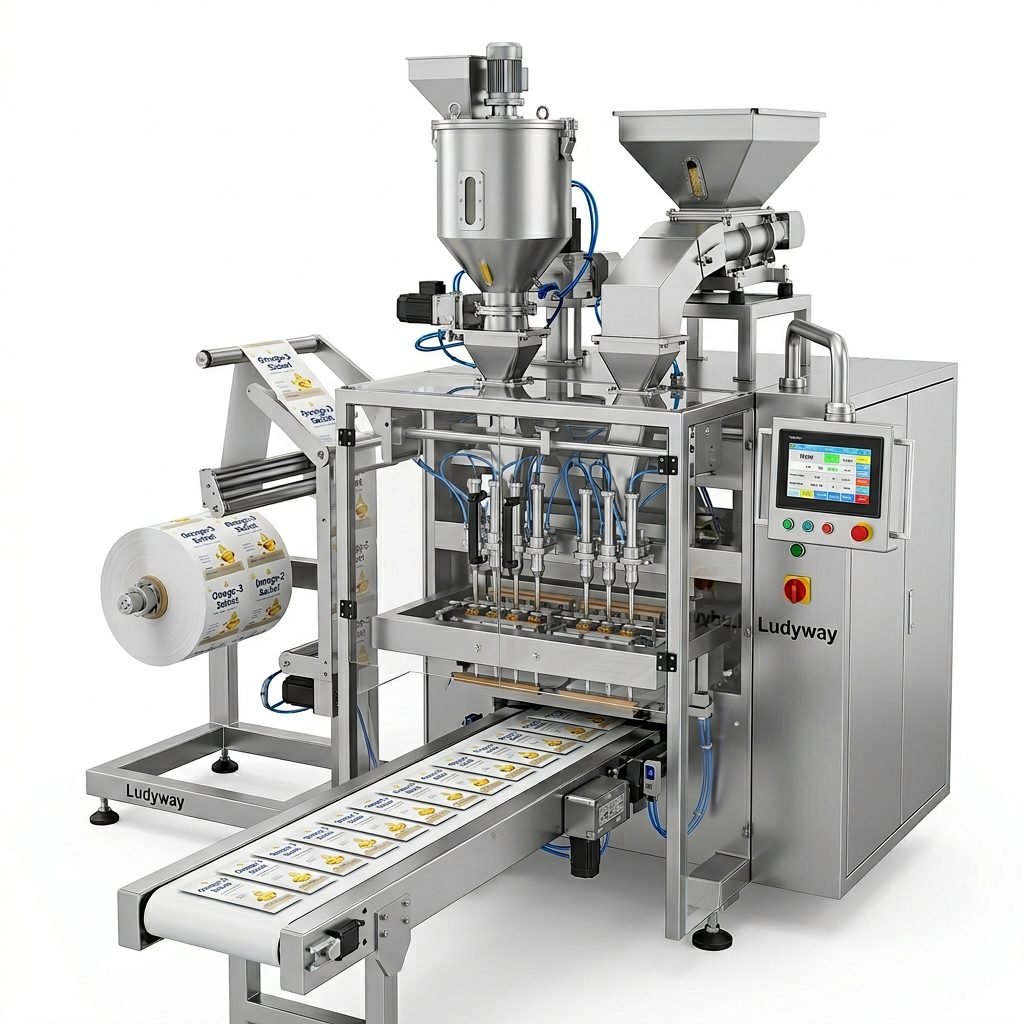
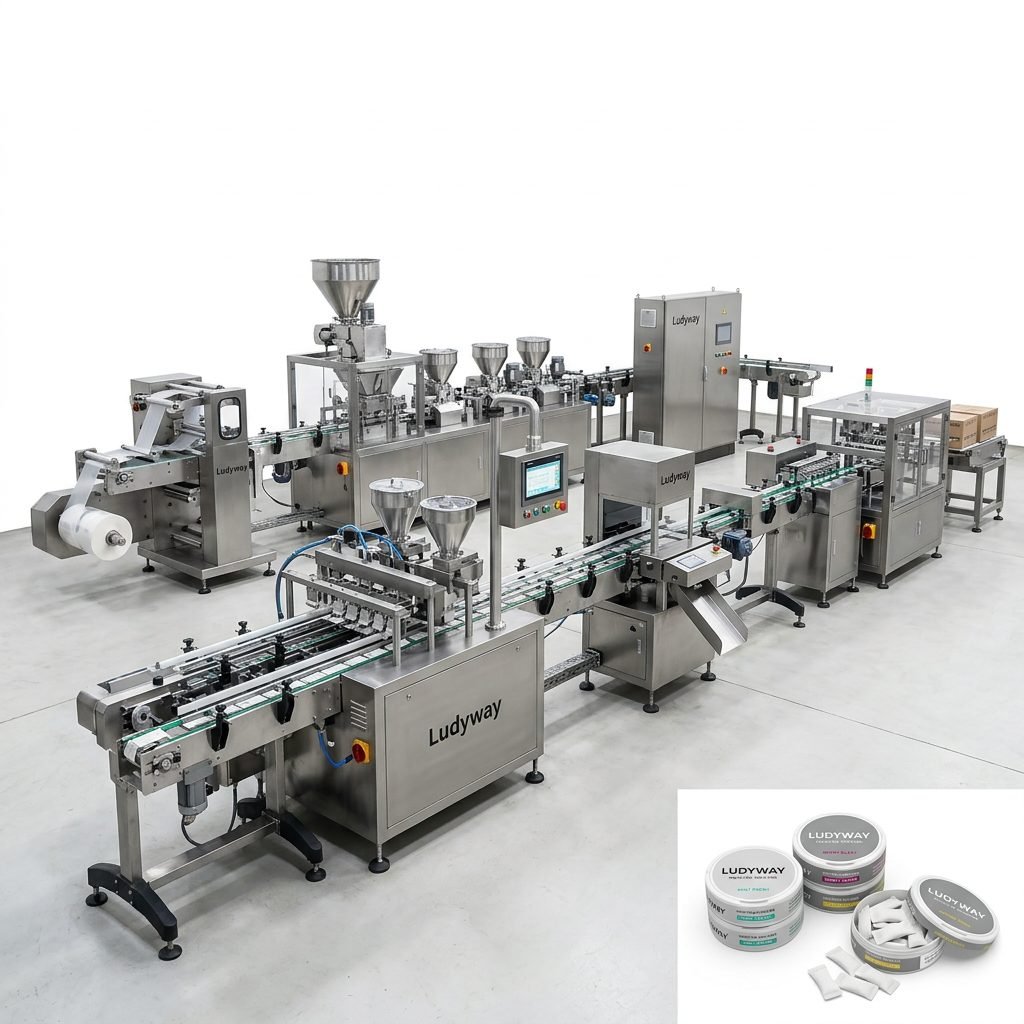
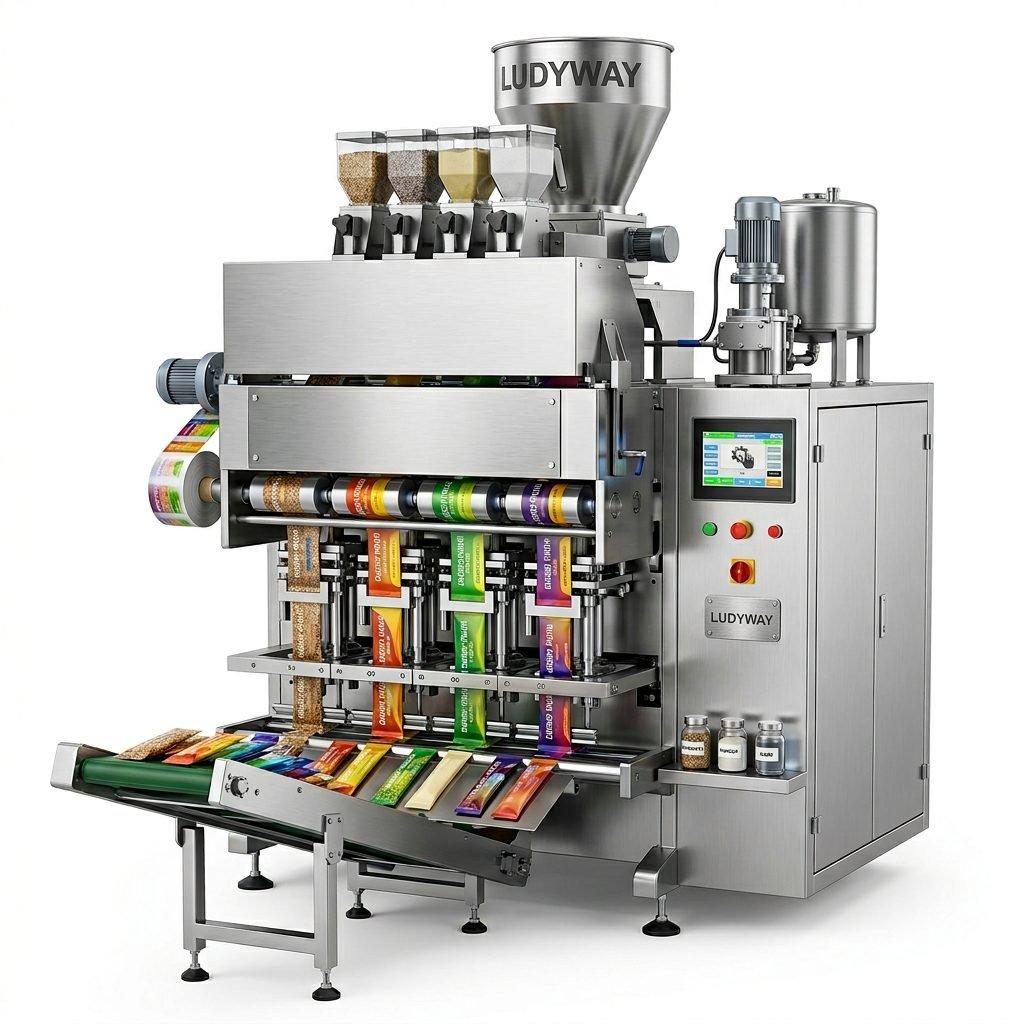
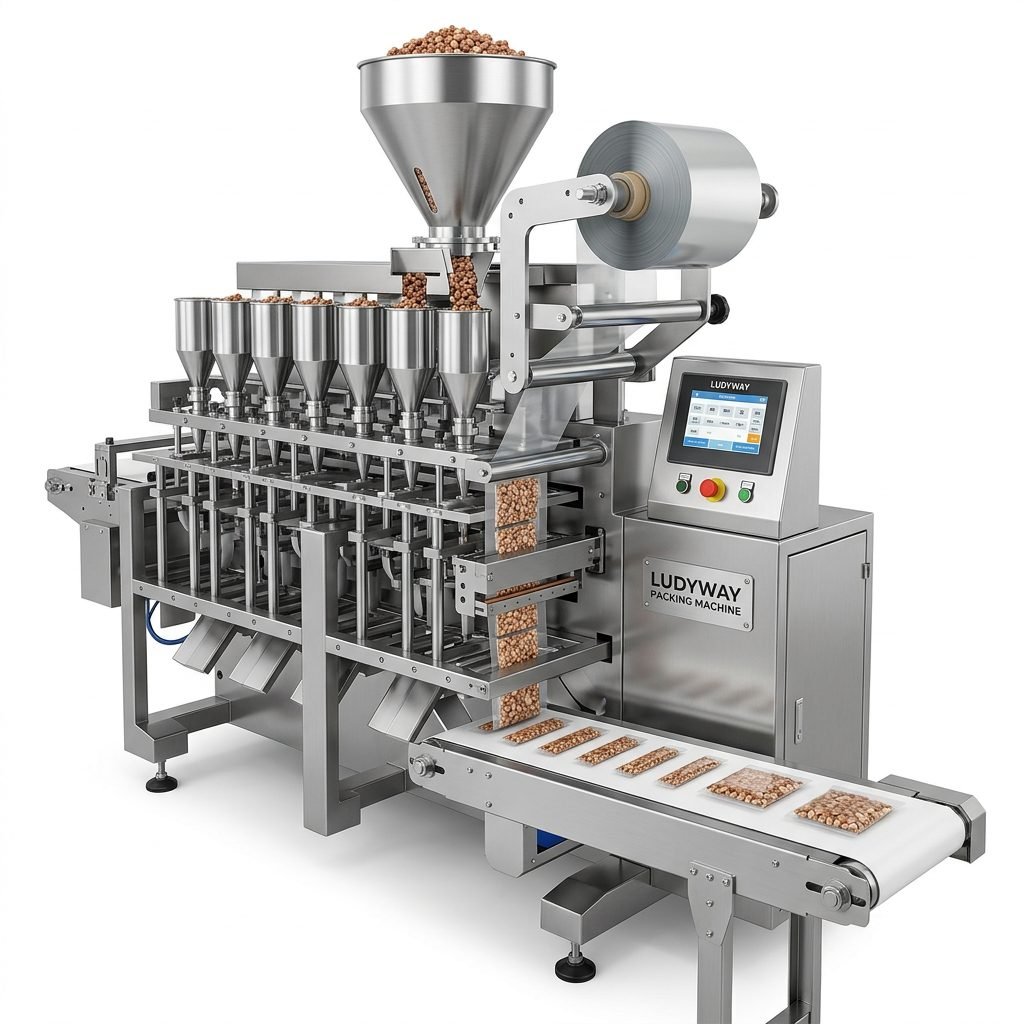
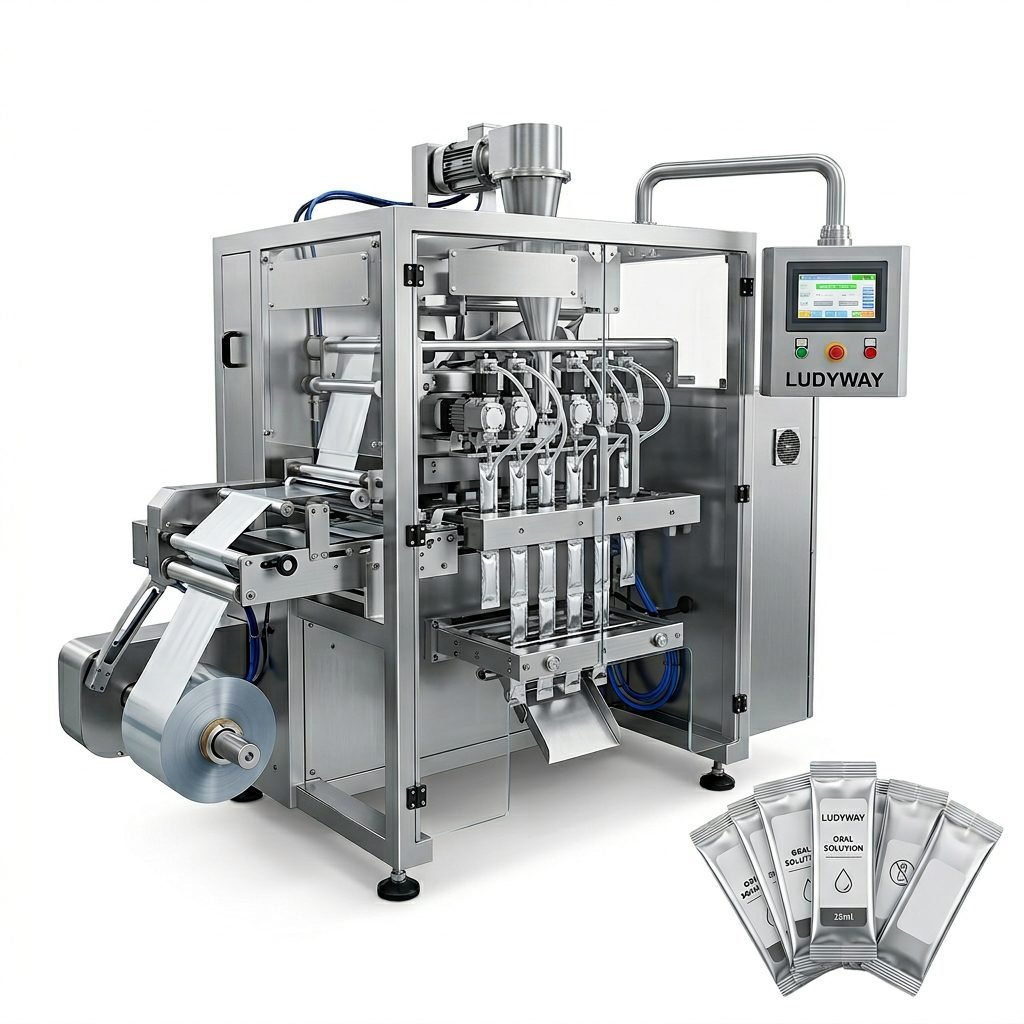
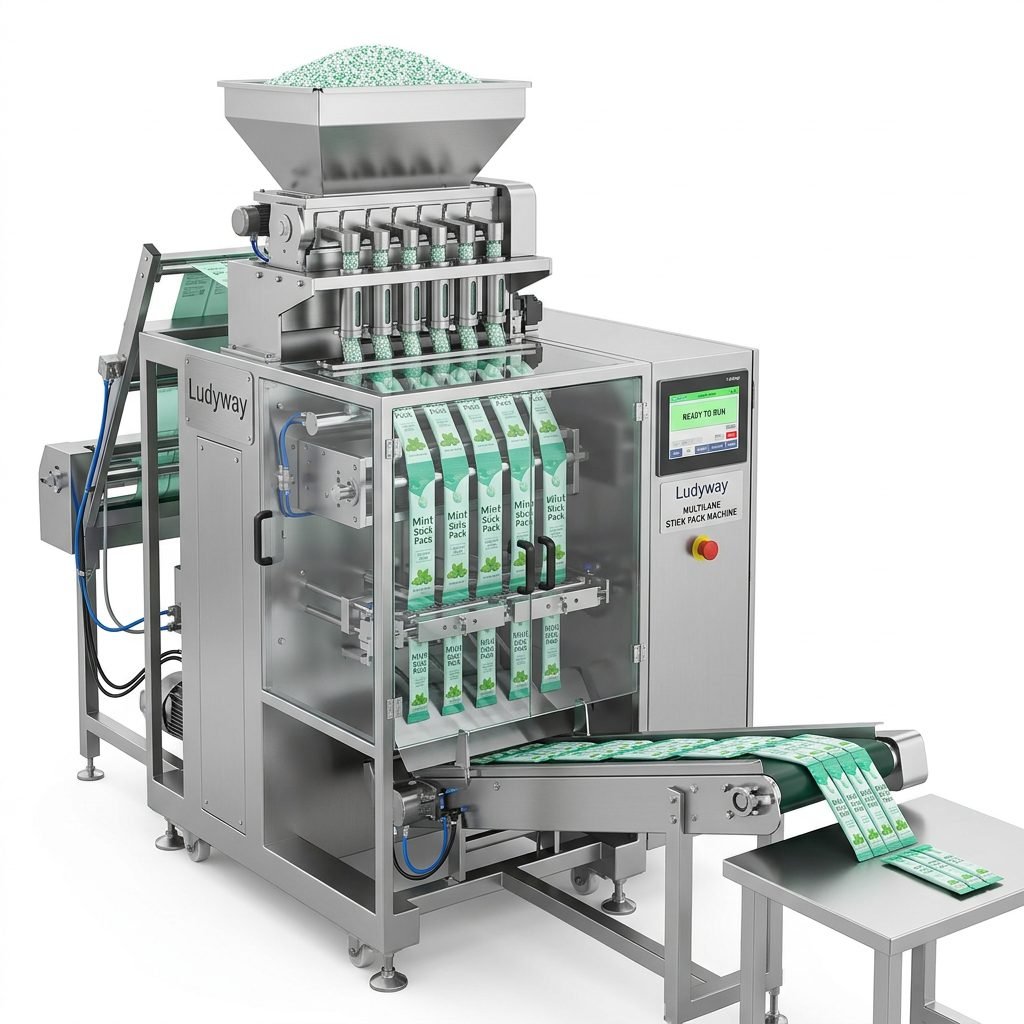
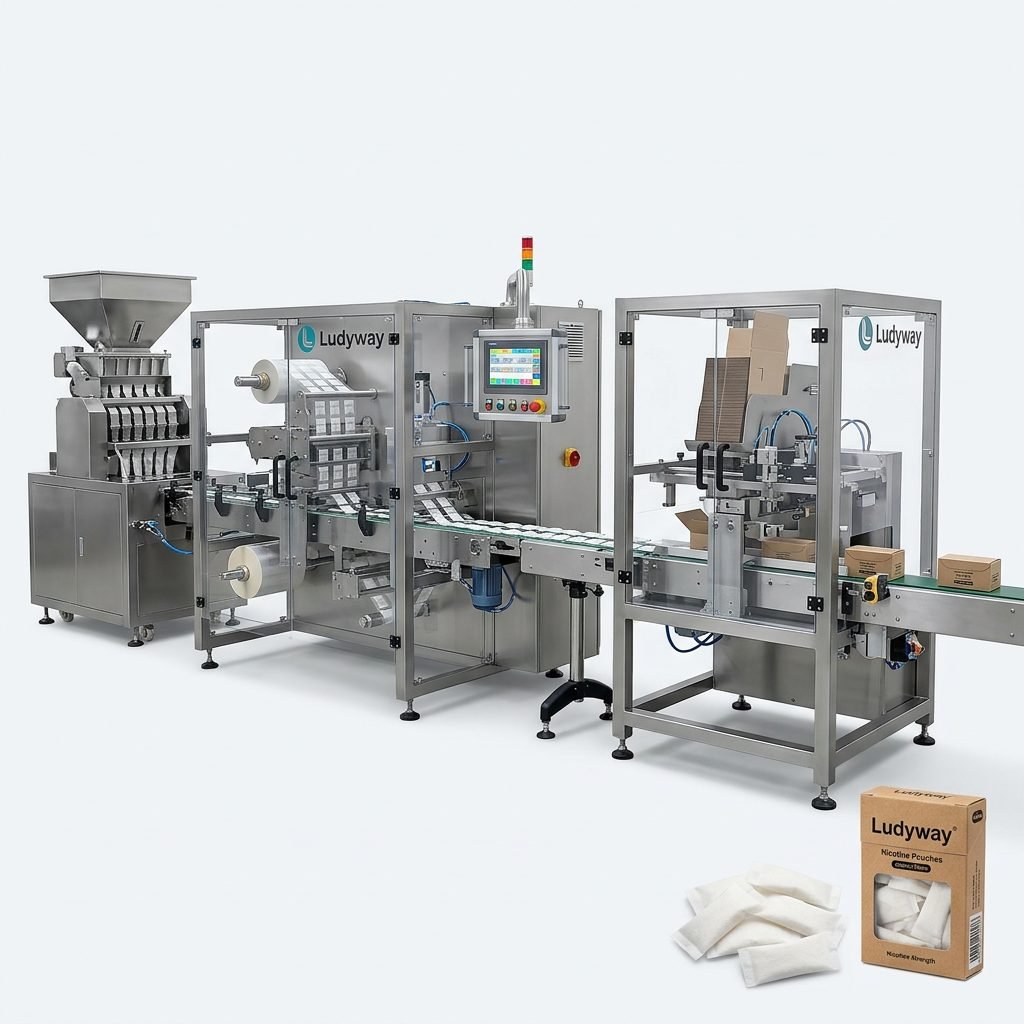
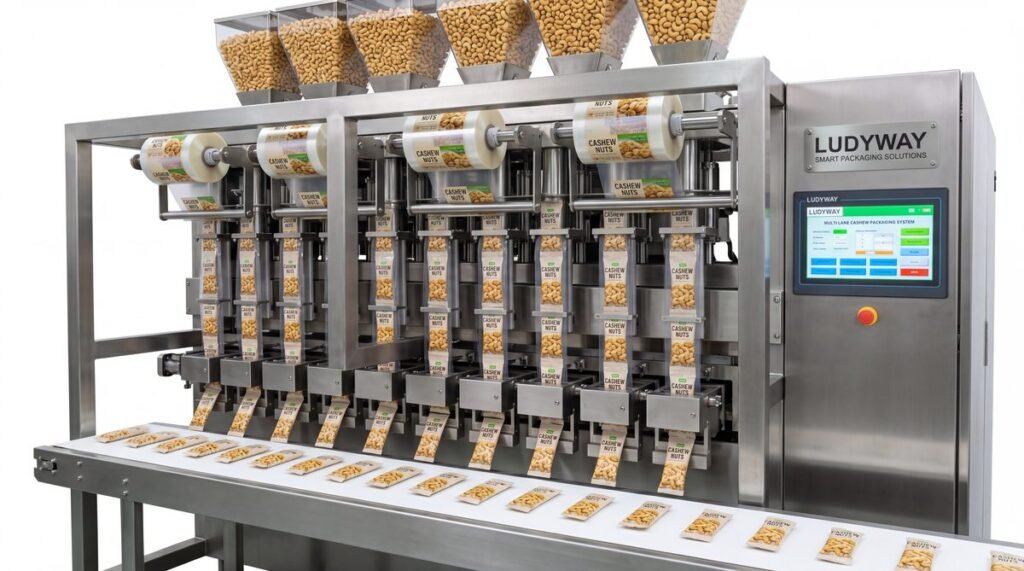
Will the machine stand alone or be part of an integrated line with fillers, cartoners, and palletizers? Consider connectivity (PLC interfaces, data output) and physical footprint. For high-volume operations, exploring multi-lane stick pack or sachet systems can dramatically boost output without proportionally increasing floor space.
💡 Pro Tip: Always plan for future growth. Choosing a modular machine or a supplier known for customized automation solutions allows you to add features like checkweighers or vision systems later.
Choosing the Right Machine Type and Technology
Based on your product and output analysis, you can narrow down the machine category.
Vertical Form-Fill-Seal (VFFS)
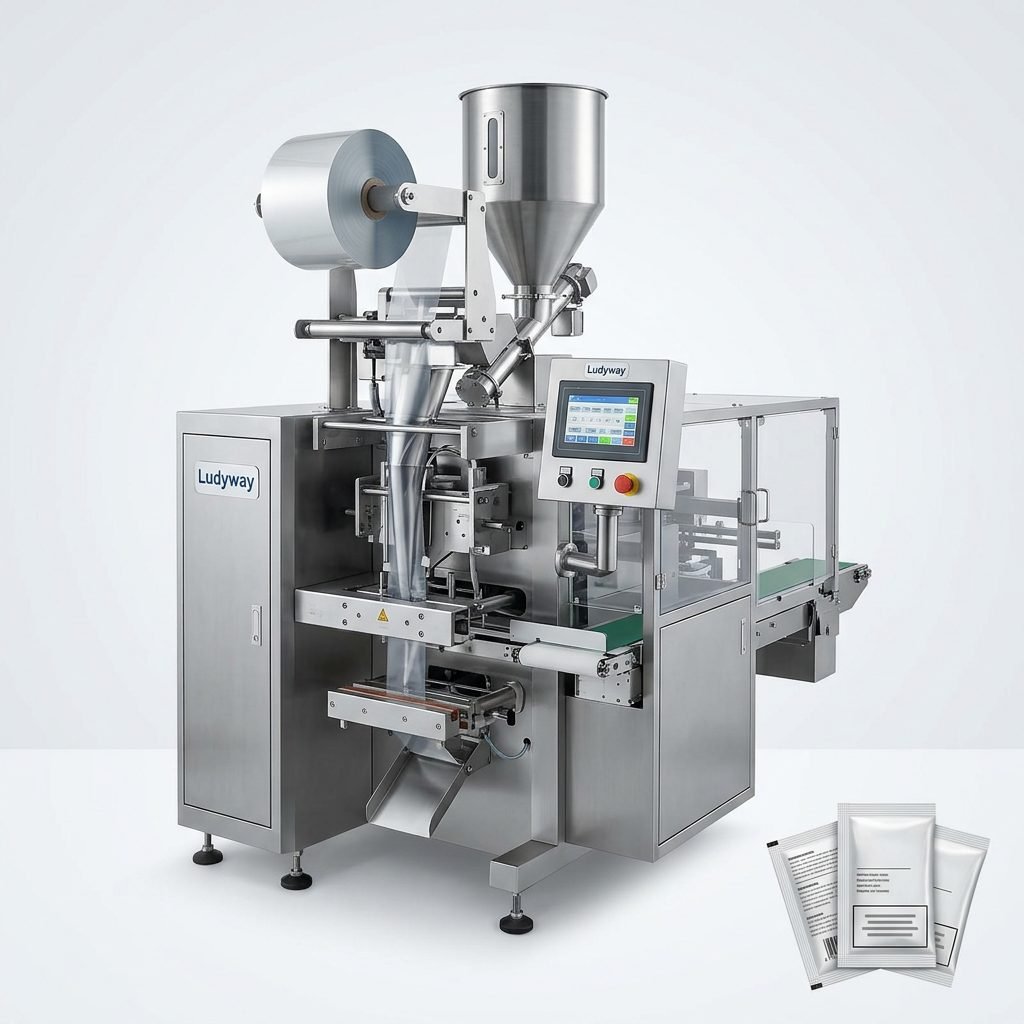
Ideal for granules, powders, and small solids. Film is formed into a bag, filled, and sealed vertically. Highly versatile and common for pouches.
Horizontal Form-Fill-Seal (HFFS)
Perfect for placing products like biscuits or bars into pre-formed pockets. Excellent for delicate items and complex pack shapes.
Liquid & Paste Fillers
Utilize piston, pump, or gravity filling for accurate dosing of viscous products. Critical for pharmaceuticals and food sauces.
The filling system is the heart of the machine. For powders, auger fillers offer good speed and accuracy when calibrated correctly. For precise, small-dose powders and granules (like instant drink sticks), volumetric cup fillers or weighing systems are superior.
Critical Supplier Selection Criteria
Your machine is only as good as the company behind it. Due diligence here prevents future headaches.
Experience and Reputation
Look for a supplier with proven experience in your specific industry (food, pharma, etc.). A track record of over 30 years in packaging machinery indicates resilience and accumulated expertise. Review case studies and ask for references from clients with similar products.
Technical Support and Service
Ensure they offer comprehensive after-sales support: installation, operator training, readily available spare parts, and responsive technical service. Global manufacturers should have a support network or reliable local partners.
⚠️ Warning: The cheapest upfront cost often leads to the highest total cost of ownership due to downtime, poor support, and inefficiency.
Customization and Flexibility
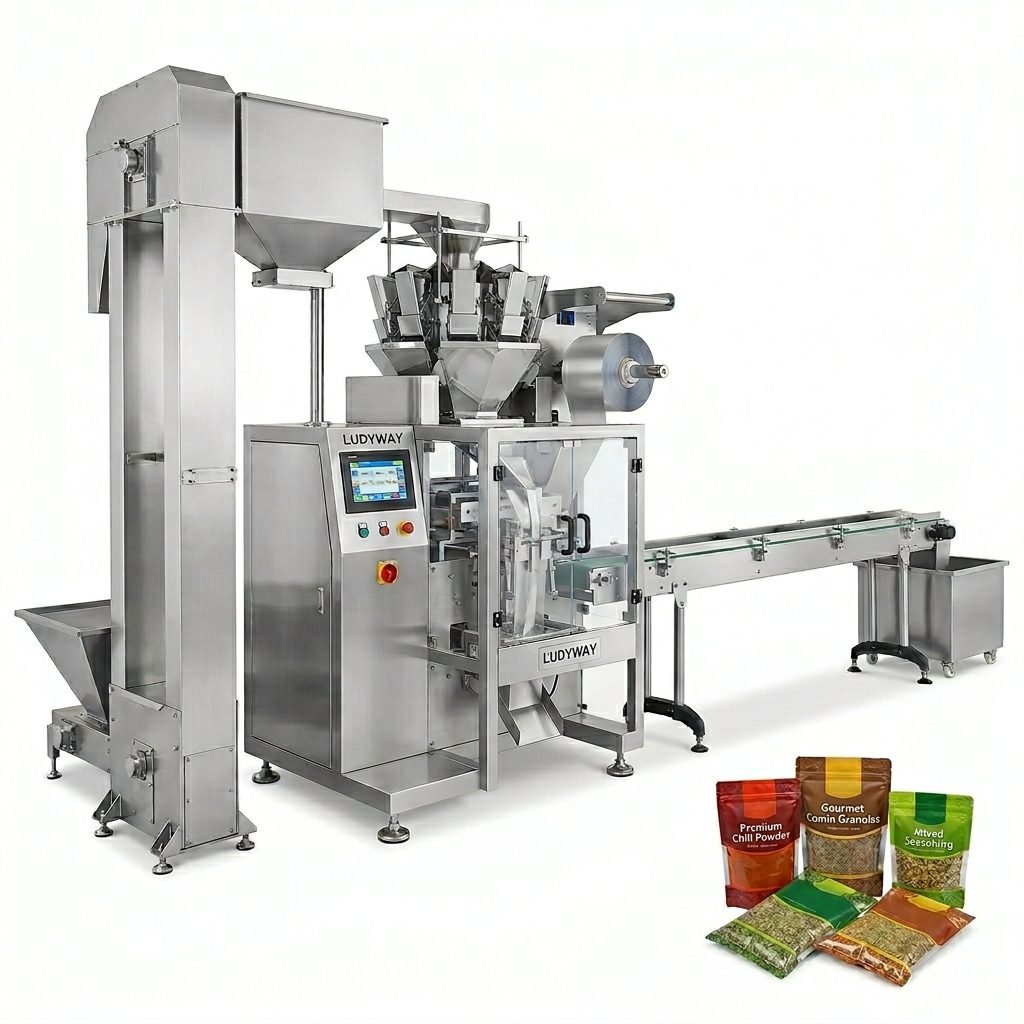
Can they tailor the machine to your unique needs? A supplier with strong engineering capabilities can modify hoppers, augers, or sealing jaws, and integrate the machine into a complete line, providing a true turnkey solution.
Financial Considerations: Beyond the Purchase Price
Adopt a Total Cost of Ownership (TCO) perspective.
- Energy Consumption: Efficient drives and motors reduce operating costs.
- Material Waste: Precise dosing and accurate sealing minimize product and film waste.
- Changeover Time: Quick-release mechanisms and recipe storage boost flexibility for short runs.
- Maintenance Costs: Robust construction and easy access to service points lower long-term upkeep expenses.
Final Steps: Testing and Validation
Never buy a packaging machine untested with your actual product. Insist on a factory acceptance test (FAT). Bring your product and packaging material to the supplier’s facility to run the machine. Validate speed, accuracy, seal integrity, and ease of operation. This is your final and most important check before making the investment.
Frequently Asked Questions (FAQs)
What is the most important factor when choosing a packaging machine?
The compatibility between your specific product characteristics and the machine’s filling and handling technology. A machine perfect for free-flowing granules may fail utterly with a cohesive powder.
How can I ensure the machine will work with my future products?
Discuss future product plans with your supplier during selection. Opt for a modular and flexible machine design from a partner capable of providing customized solutions, allowing for future modifications or upgrades.
Is a higher-speed machine always better?
Not necessarily. A machine running at a sustainable 80% of its max capacity is often more reliable and produces higher quality packs than one perpetually stressed at 100%. Match the speed to your realistic output targets with a slight buffer for growth.
What should I look for in a supplier’s after-sales service?
Key elements include: availability of detailed training, a clear spare parts inventory system, responsive remote support (phone/online), and the availability of qualified service engineers for on-site visits when needed.
How do I justify the investment in a more expensive, higher-quality machine?
Calculate the Total Cost of Ownership (TCO). A reliable, efficient machine reduces product waste, minimizes unplanned downtime, lowers energy costs, and maintains consistent output quality, leading to a higher return on investment and lower cost per pack over its lifespan.