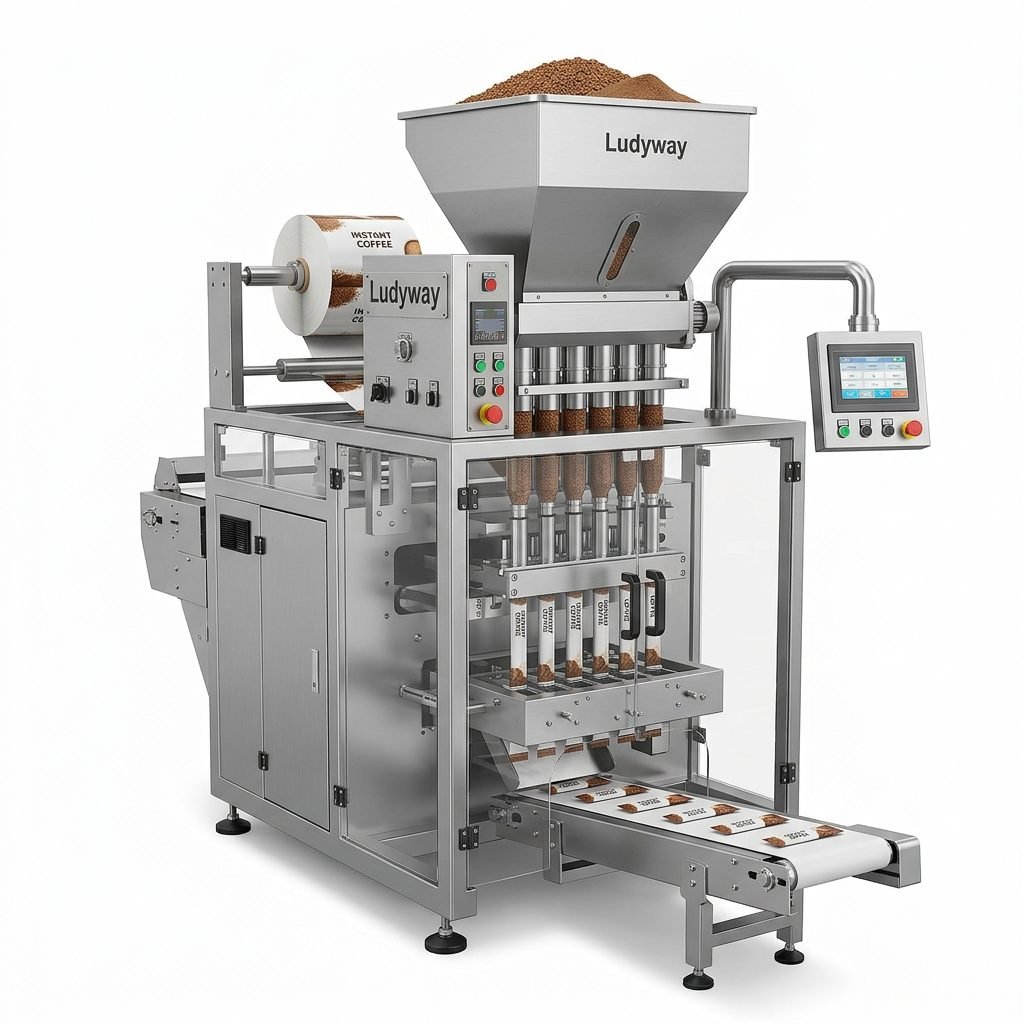
Small, sealed, lightweight, and easy to distribute—sachets have become one of the most practical packaging formats for food, pharmaceutical, cosmetic, and household products. From coffee powder and sauces to creams, gels, and health supplements, sachet packaging helps brands deliver precise portions with better hygiene, shelf appeal, and convenience.
But how does sachet packaging actually work? Below is a simple, step-by-step guide to the sachet packaging process, including the machine stages, sealing methods, filling options, and quality control points that matter most.
What Is Sachet Packaging?
Sachet packaging is a flexible packaging method used to pack a measured amount of product into a small sealed pouch. A sachet can hold powders, granules, liquids, pastes, gels, or creams, depending on the product and machine design.
Common examples include:
- Instant coffee and drink powder
- Sugar and sweetener
- Ketchup, mayonnaise, and sauces
- Shampoo, lotion, and hand cream
- Pharmaceutical powders and health supplements
- Disinfectants and cleaning products
Why Sachet Packaging Is So Popular
Sachets are widely used because they combine portion control, portability, product protection, and cost efficiency. For manufacturers, sachets also support high-speed automated production.
| Benefit | Why It Matters |
|---|---|
| Precise dosage | Ensures consistent product quantity in every pack |
| Convenient size | Easy for travel, retail display, and single-use applications |
| Good barrier protection | Protects against moisture, air, and contamination |
| Automation friendly | Works well with high-speed filling and sealing equipment |
| Lower material usage | Often uses less packaging material than rigid containers |
How Does the Sachet Packaging Process Work?
In simple terms, sachet packaging usually follows this sequence:
- Film feeding
- Pouch forming
- Product dosing and filling
- Sealing
- Cutting
- Coding and inspection
- Collection or secondary packaging
Each stage must be synchronized carefully to achieve stable output, accurate fill weight, and clean seals.
1. Film Feeding
The process starts with a roll of flexible packaging film. This film is pulled into the machine through a controlled feeding system. The film may be a laminated structure designed for moisture barrier, oxygen resistance, light protection, or heat sealing performance.
At this stage, the machine keeps the film tension stable so the printed design aligns correctly and the pouch dimensions remain consistent.
2. Pouch Forming
Next, the film is shaped into the sachet form. Depending on the machine type, it may create:
- Three-side seal sachets
- Four-side seal sachets
- Back-seal sachets
- Stick packs
Forming is done by guiding the film around forming components that create the pouch structure before filling. For multi-lane systems, several sachets are formed at the same time, greatly increasing production speed.
3. Product Dosing and Filling
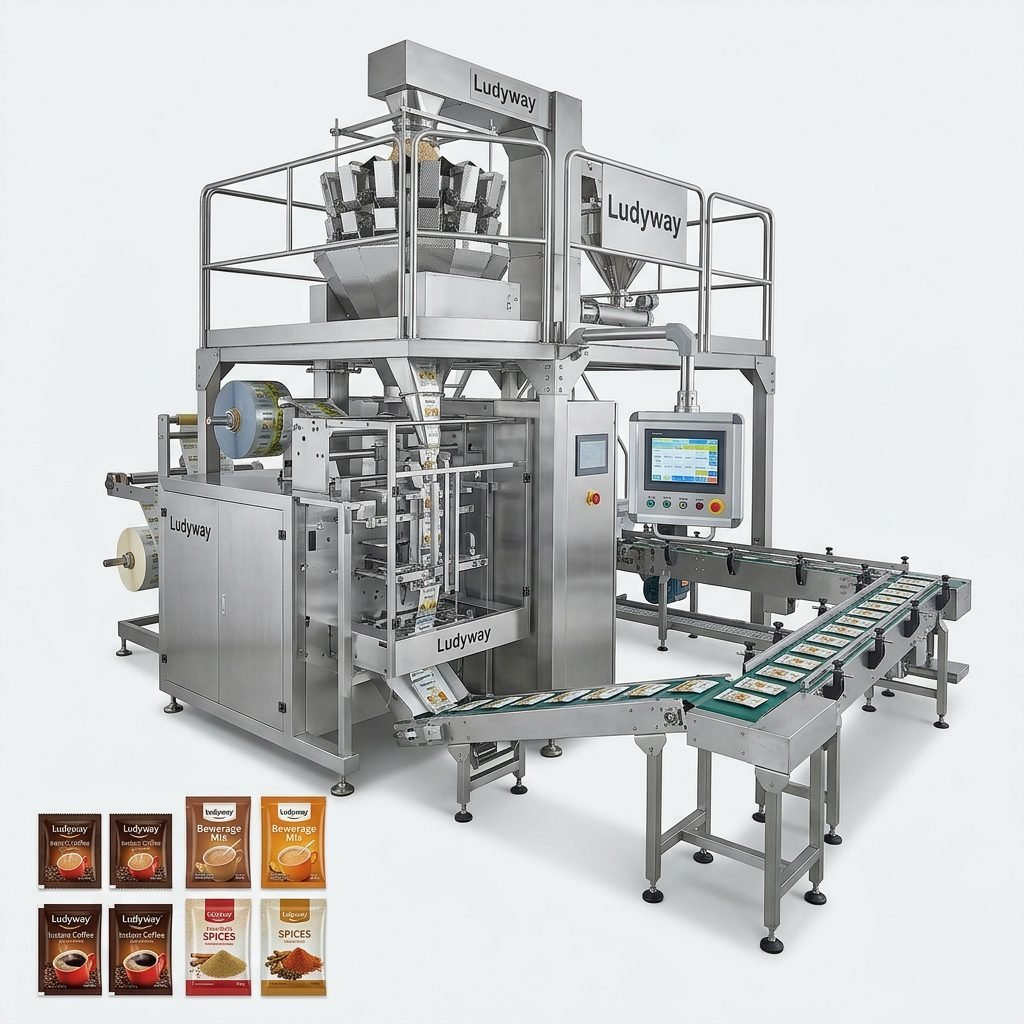
Once the pouch shape is ready, the machine dispenses the product into each sachet. This is one of the most important stages because filling accuracy directly affects cost control and product consistency.
Different dosing systems are used for different materials:
| Product Type | Typical Filling System |
|---|---|
| Powders | Auger filler |
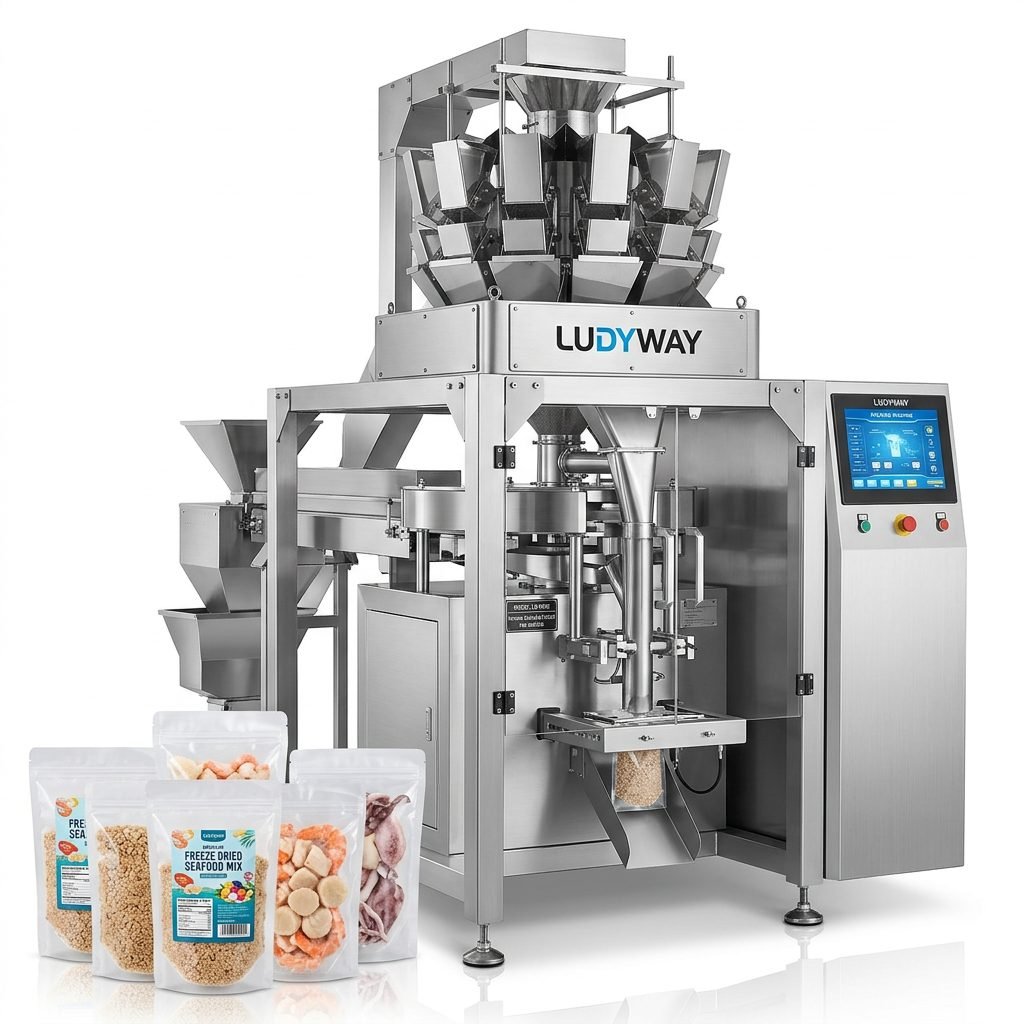
| Granules | Volumetric cup, weighing system, or counting system |
| Liquids | Piston pump or liquid pump filler |
| Pastes and creams | Servo piston or pump-based filling system |
If the product has poor flowability, dust, viscosity, or foaming characteristics, the machine may need customized dosing and feeding devices.
4. Sealing the Sachet
After filling, the machine seals the open edges of the sachet using heat and pressure. Sealing quality is critical because weak seals can lead to leakage, contamination, or shorter shelf life.
Important sealing factors include:
- Film material compatibility
- Sealing temperature
- Pressure consistency
- Dwell time
- Clean seal area without trapped product
For liquid or paste products, extra attention is needed to prevent product splash or residue from interfering with the seal.
5. Cutting and Separation
Once sealed, the machine cuts the continuous film into individual sachets. Depending on the format, the machine can produce:
- Single sachets
- Connected strips
- Perforated chains
- Multi-lane separated units
Clean cutting improves appearance and helps maintain package uniformity for retail or downstream cartoning.
6. Printing, Coding, and Inspection
Most sachet lines include coding systems to print essential production data such as:
- Batch number
- Production date
- Expiry date
- Traceability code
Inspection devices may also be installed to check:
- Seal integrity
- Fill weight
- Metal contamination
- Print registration
- Missing or defective sachets
7. Discharge and Secondary Packaging
Finished sachets are discharged from the machine and can move into secondary packaging processes such as:
- Counting
- Cartoning
- Case packing
- Shrink wrapping
- Palletizing
For high-volume factories, sachet packaging often works as part of a fully integrated automatic packaging line.
Main Types of Sachet Packaging Machines
Not all sachet machines work the same way. The right equipment depends on product type, output target, pouch design, and factory layout.
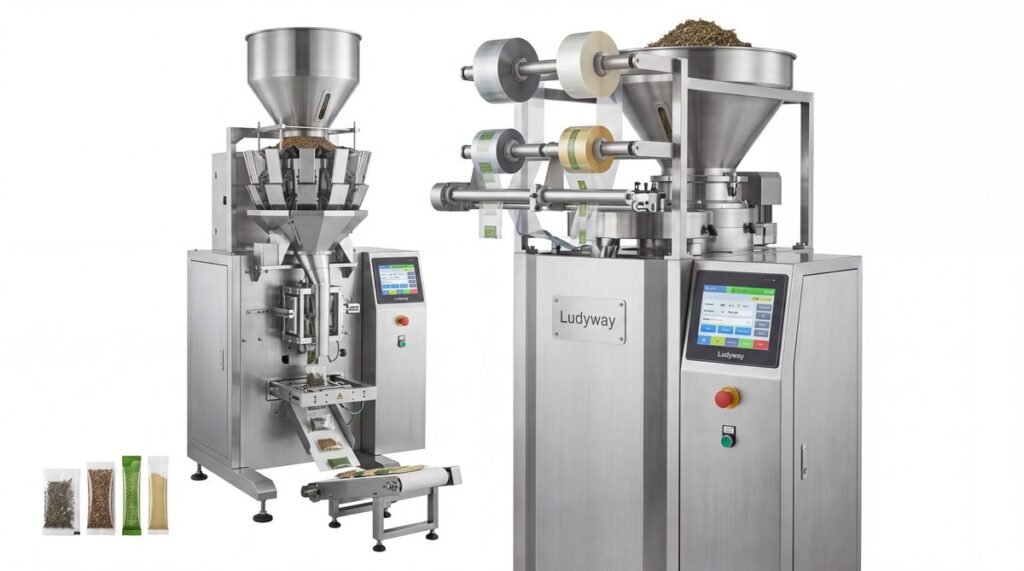
Vertical Form Fill Seal Machines
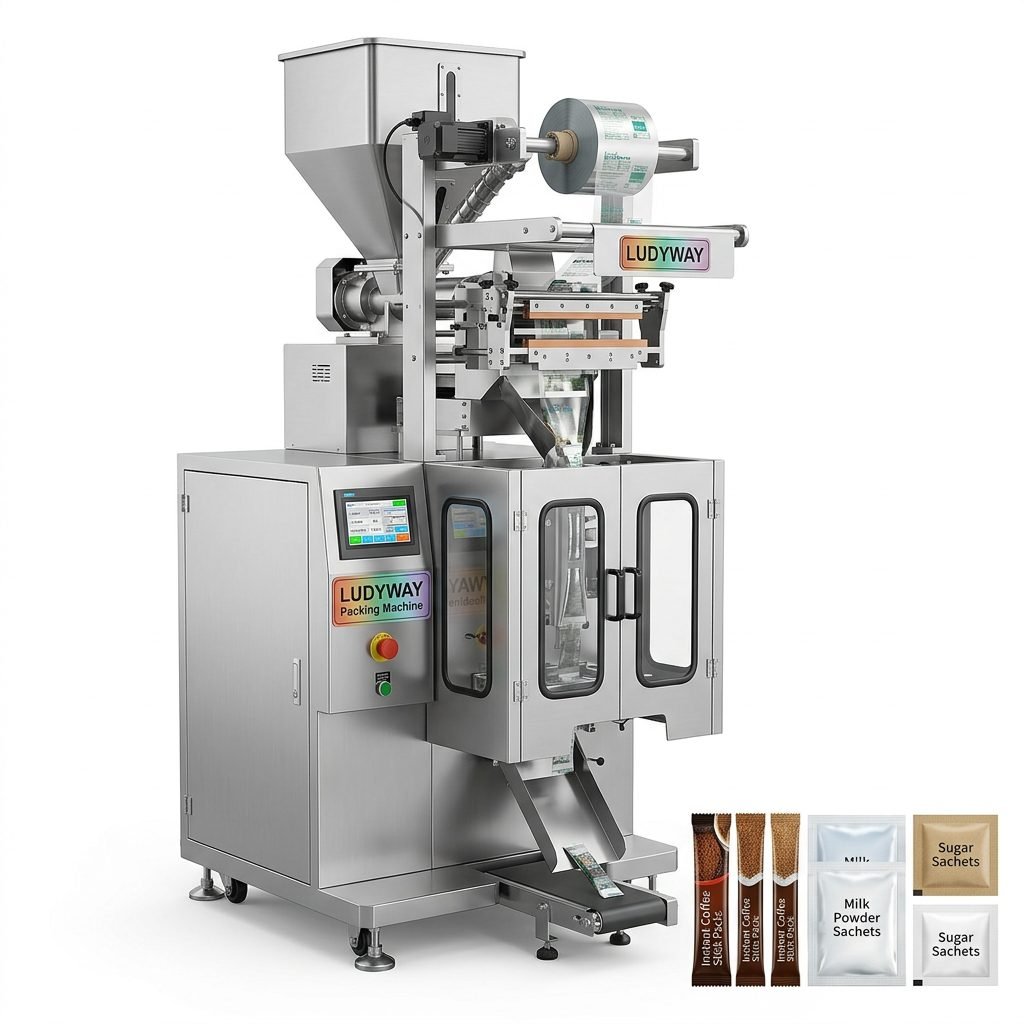
These machines form the sachet from roll film, fill it, and seal it in one continuous process. They are commonly used for powders, granules, and some liquids.
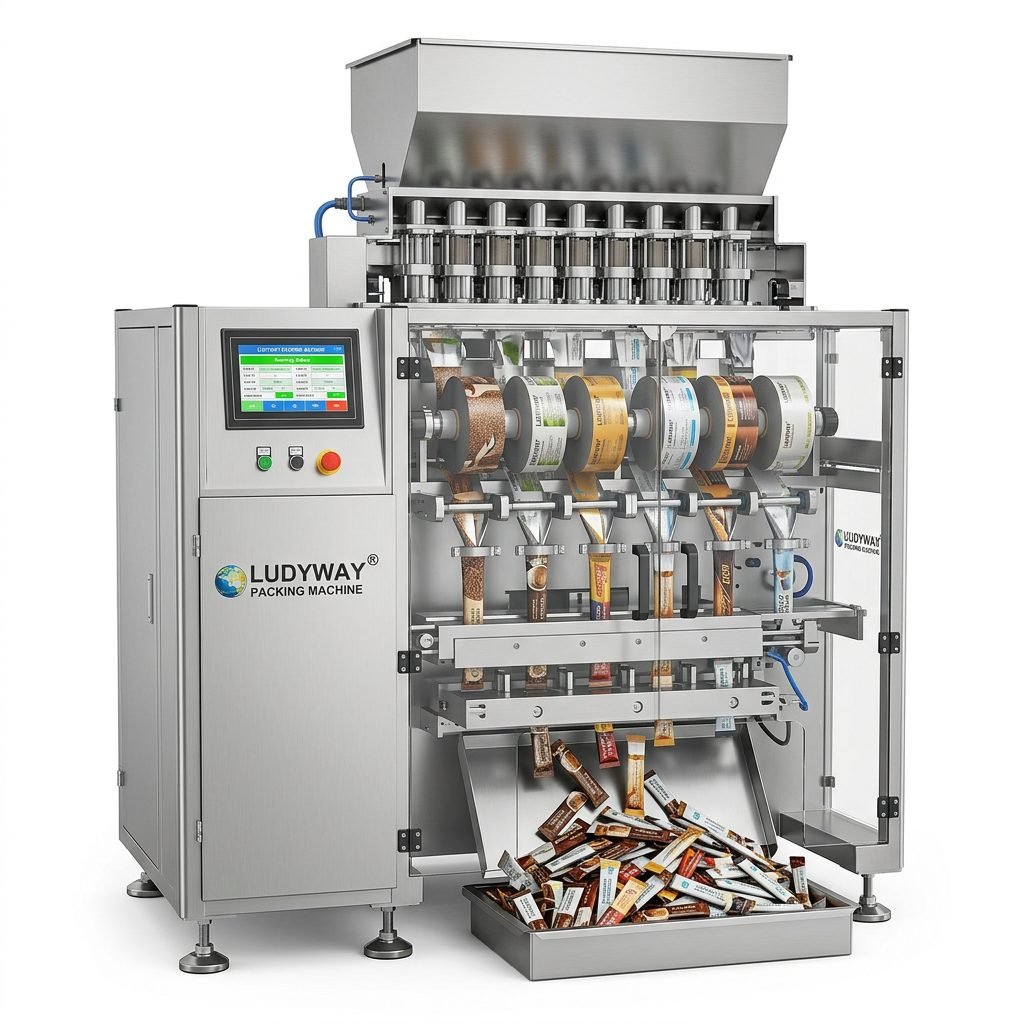
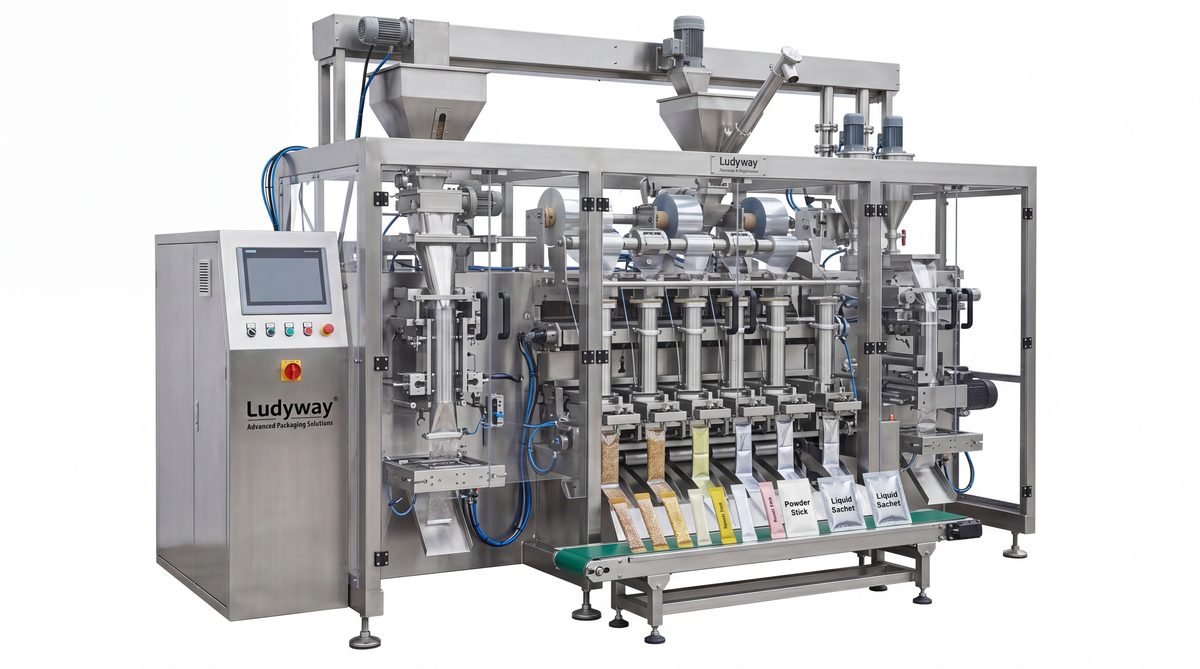
Multi-Lane Sachet Machines
These are designed for high-speed production. Several lanes run in parallel, making them ideal for single-dose products like drink powders, pharmaceuticals, supplements, and cosmetic samples.
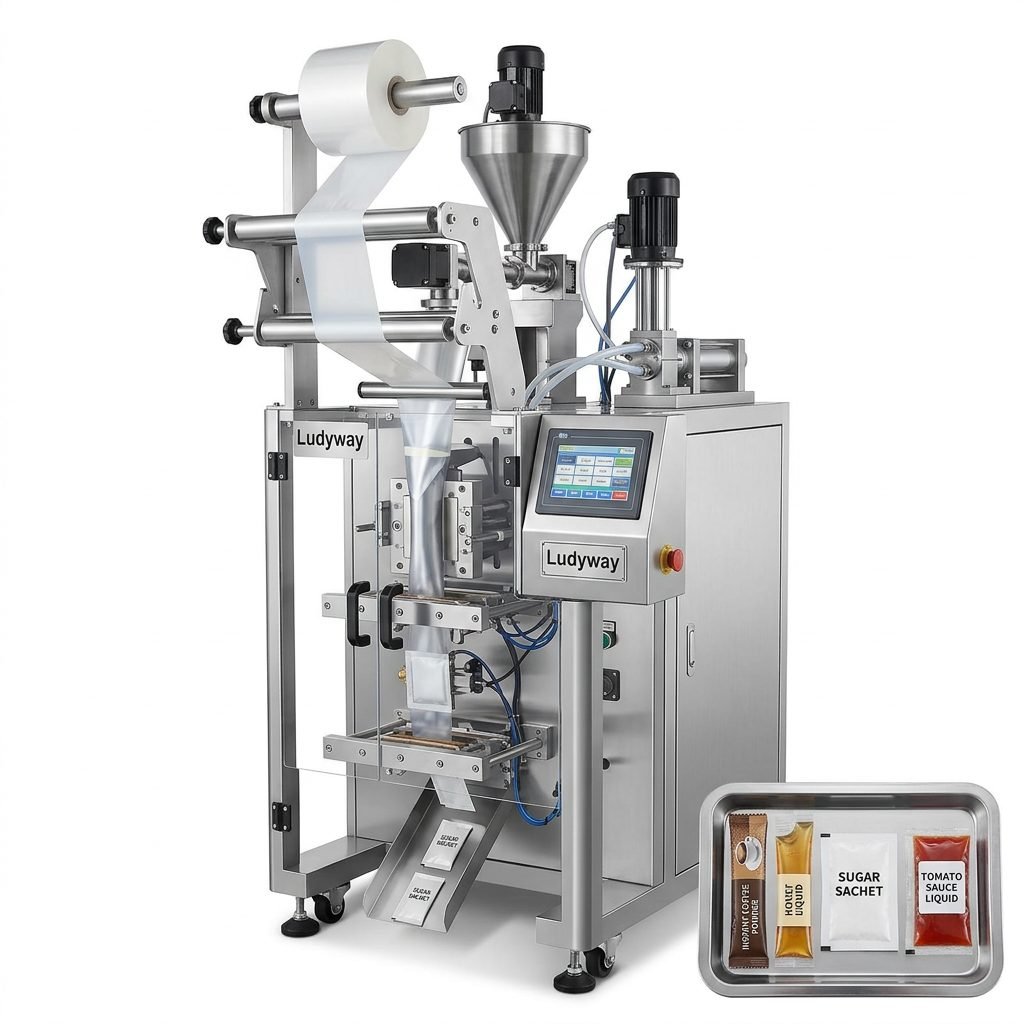
Liquid and Paste Sachet Fillers
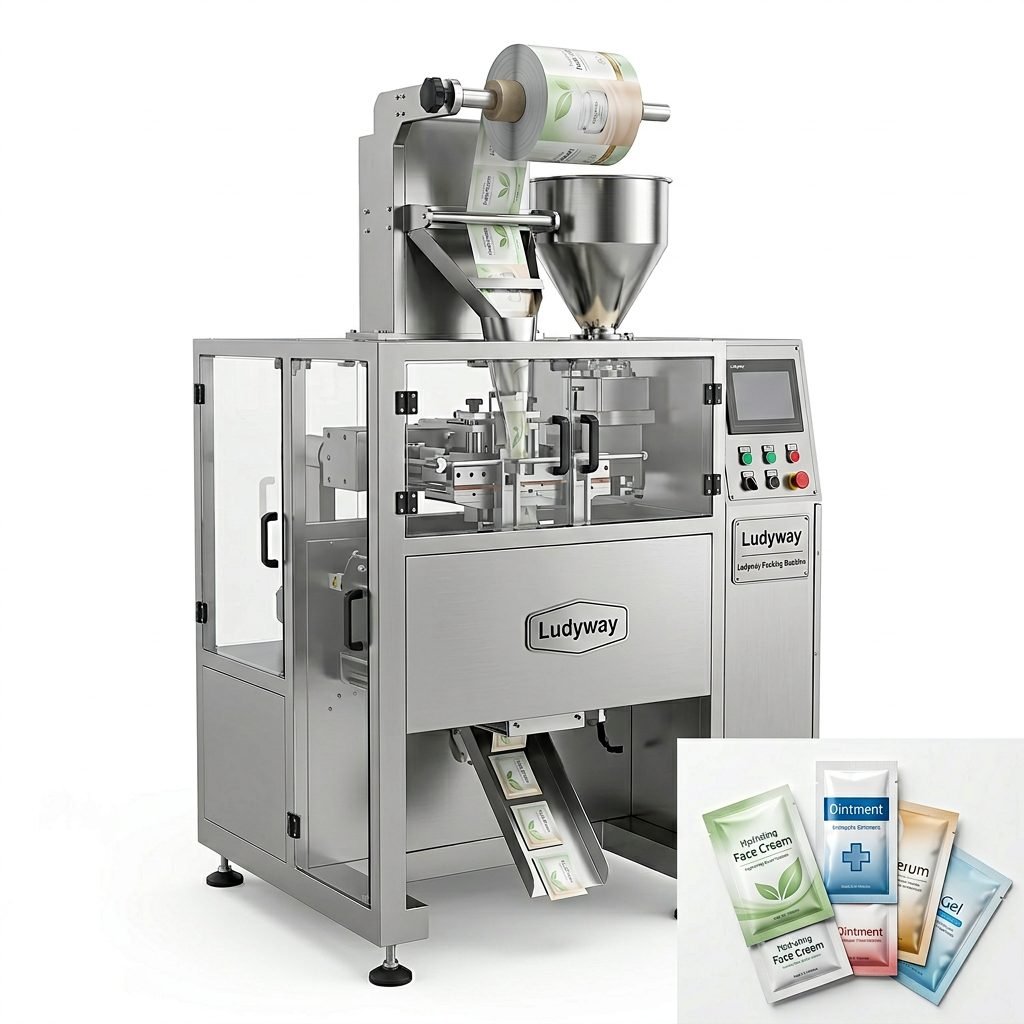
These machines use pumps or piston systems to handle products such as sauces, shampoo, gel, cream, or detergent.
What Materials Can Be Packed in Sachets?
Sachet packaging is highly flexible and supports many industries. Common product categories include:
- Food: sugar, salt, coffee, seasonings, sauces, milk powder
- Pharmaceutical: oral powders, granules, rehydration salts, medical wipes
- Cosmetic: lotion, serum, facial cream, shampoo, conditioner
- Chemical: detergents, cleaning powder, liquid additives
- Health supplement: collagen, probiotics, vitamin powder, herbal granules
Key Factors That Affect Sachet Packaging Performance
To get stable and efficient packaging results, manufacturers should pay attention to several technical factors:
Product Characteristics
Flowability, viscosity, dust level, particle size, and moisture sensitivity all affect machine selection and filling method.
Film Structure
The packaging film must match the product’s barrier and sealing needs. Poor film selection often causes seal failure or shelf-life problems.
Desired Output
Low-speed production may only need a basic single-lane machine, while large-scale operations usually require multi-lane automation.
Accuracy Requirements
Industries such as pharmaceutical and nutraceutical packaging often require tighter dosing tolerances and more advanced control systems.
Integration Needs
Some factories need only a standalone machine, while others need complete solutions with feeding, inspection, cartoning, and palletizing.
Common Sachet Packaging Problems and Their Causes
| Problem | Possible Cause |
|---|---|
| Inconsistent fill weight | Improper dosing calibration or unstable product feeding |
| Weak seals | Incorrect temperature, pressure, or unsuitable film |
| Film tracking issues | Poor tension control or registration misalignment |
| Product leakage | Contaminated seal area or inadequate sealing parameters |
| Low productivity | Machine mismatch, manual handling, or insufficient automation |
How to Choose the Right Sachet Packaging Machine
When selecting equipment, it helps to ask these questions first:
- What product are you packing: powder, granule, liquid, or paste?
- What sachet size and seal style do you need?
- What production speed is required per minute?
- Do you need a standalone machine or a full line?
- Will the system need future upgrades or customization?
For manufacturers looking for scalable packaging automation, sachet packaging machine solutions from Ludyway can support a wide range of products, from powders and granules to liquids and pouch-based applications.
A Simple Example of the Full Sachet Workflow
Here is a basic example of how a coffee powder sachet line may operate:
- Roll film is loaded onto the machine
- The film is unwound and aligned
- The machine forms multiple sachet lanes
- An auger filler dispenses coffee powder into each lane
- Heat sealing closes the sachets
- The machine cuts and separates finished sachets
- Date code is printed
- Sachets are counted and packed into cartons
This same logic applies to many other products, with the main difference being the filling technology and sealing adjustments.
Final Thoughts on How Sachet Packaging Works
Sachet packaging works by combining film forming, accurate dosing, sealing, and cutting into one coordinated automated process. Although the concept is simple, consistent performance depends on the right machine design, suitable packaging film, proper filling system, and reliable quality control.
Whether you pack food, health supplements, pharmaceuticals, cosmetics, or chemicals, understanding the sachet packaging process makes it easier to choose the right equipment and improve production efficiency.