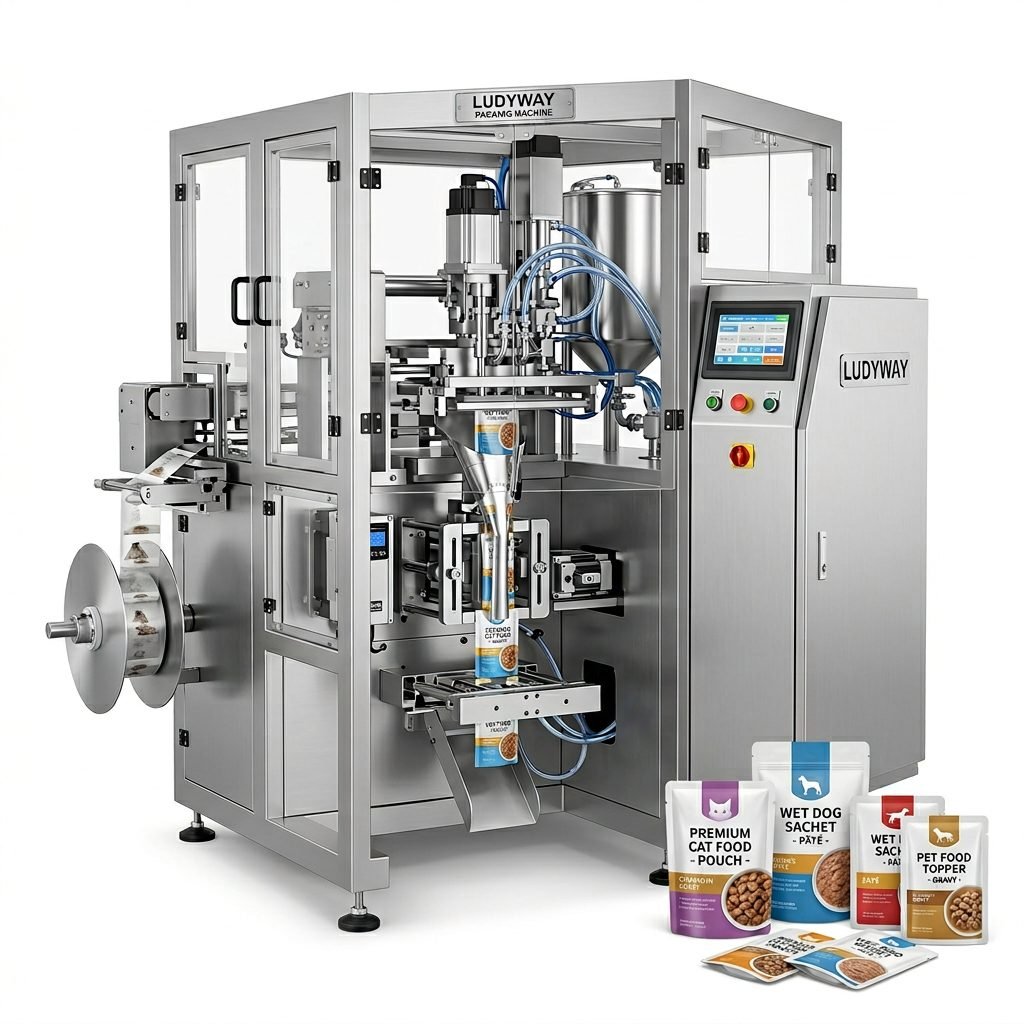
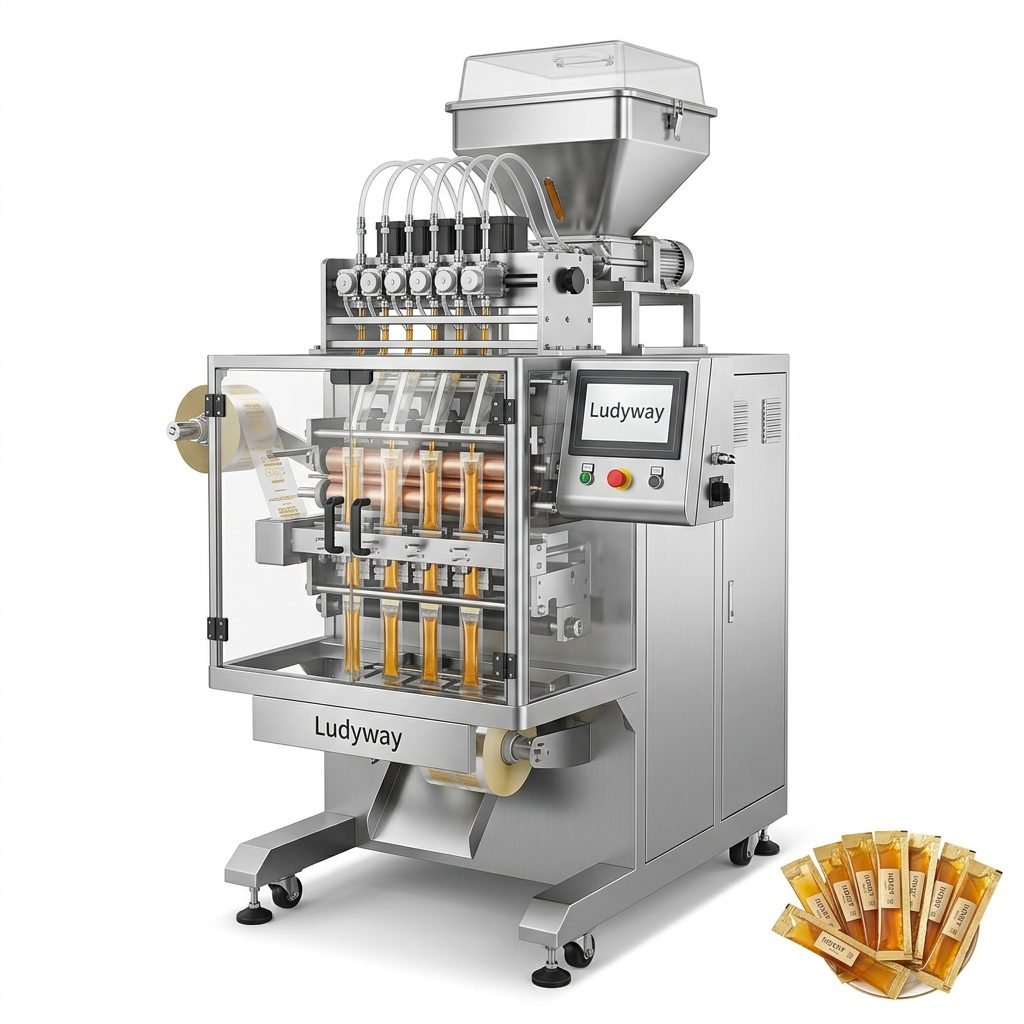
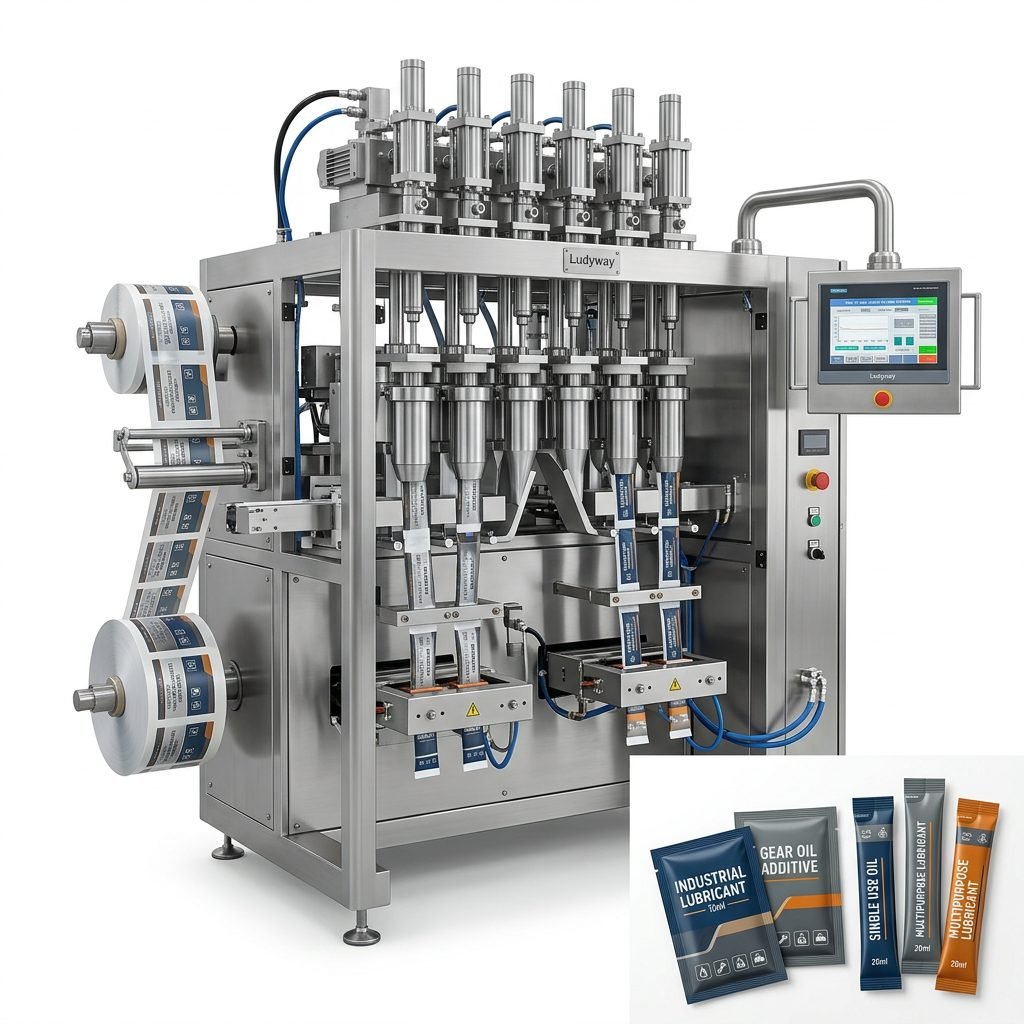
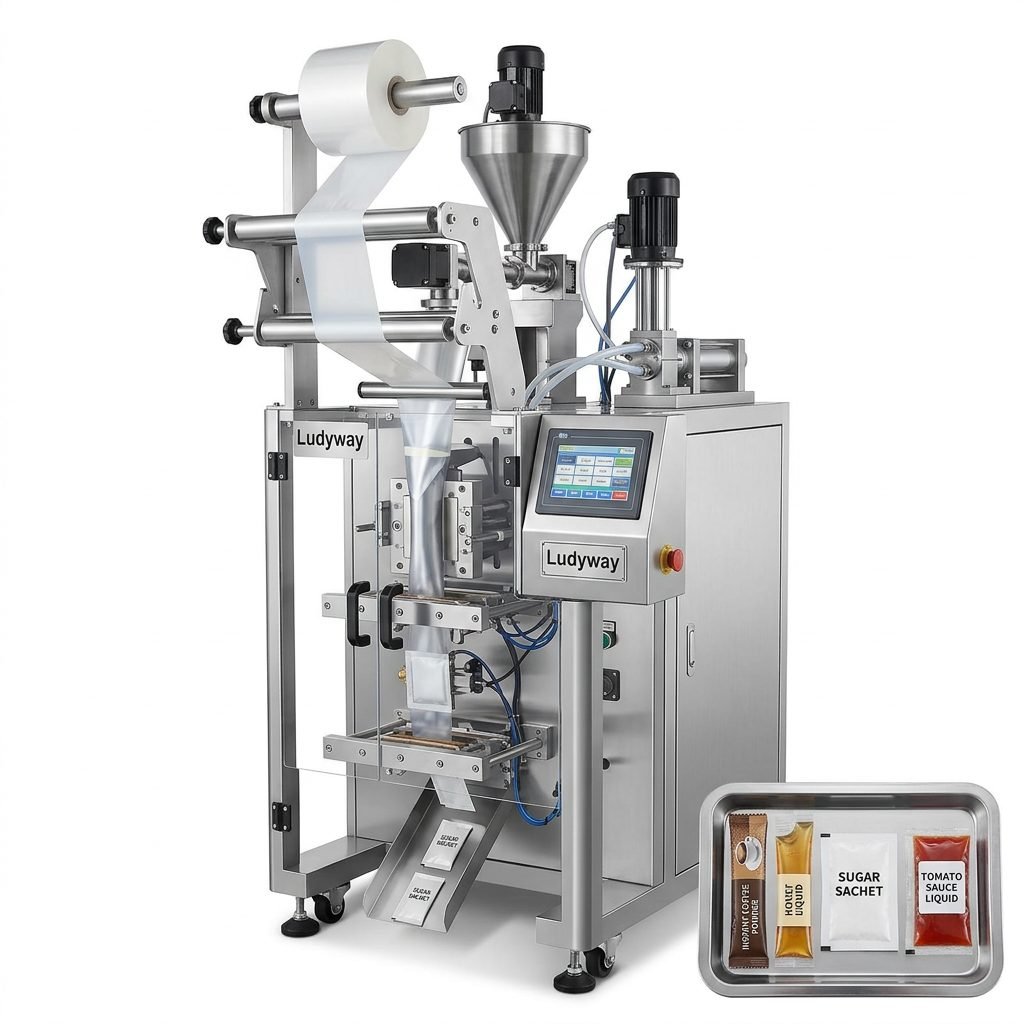
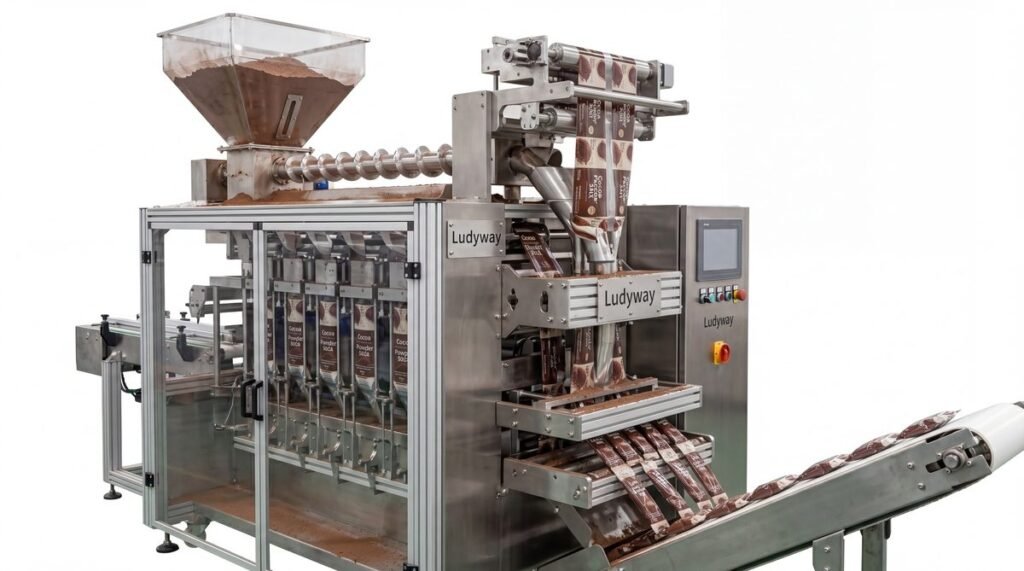
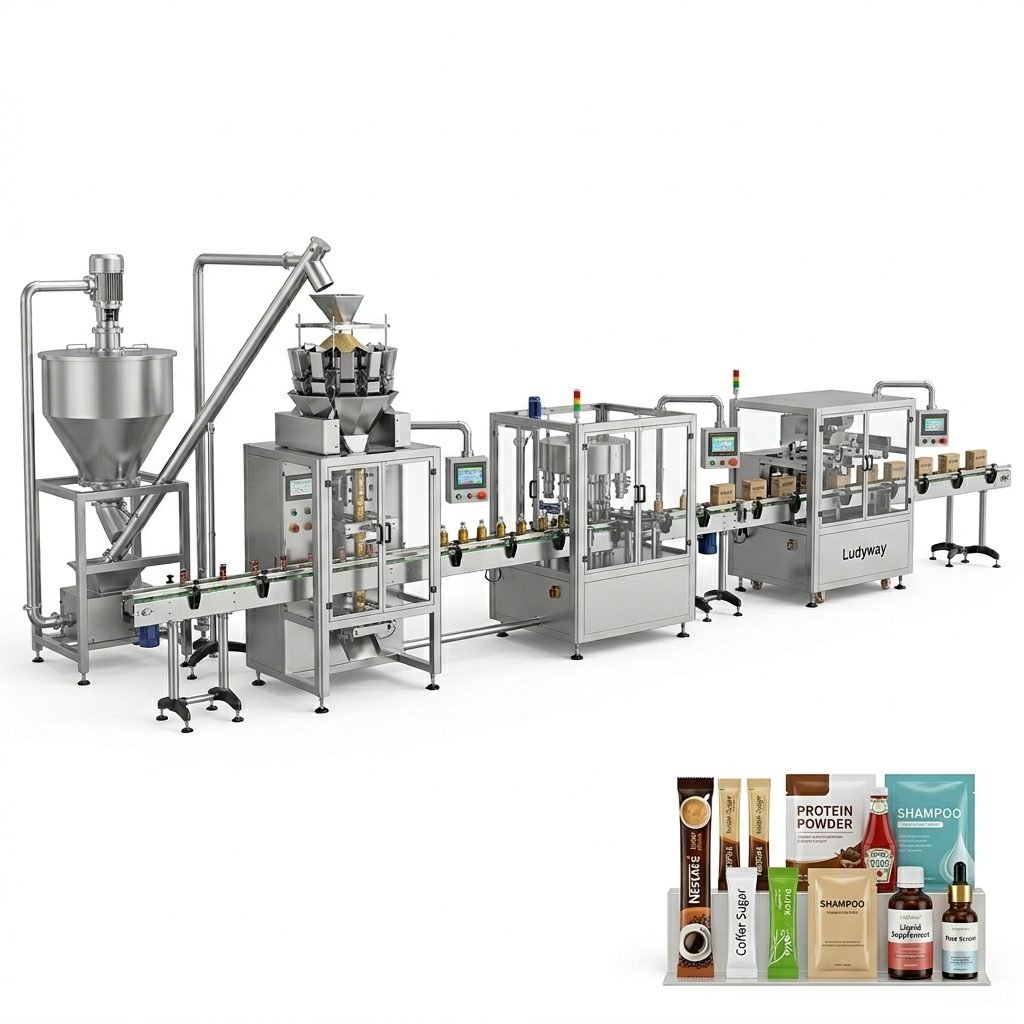
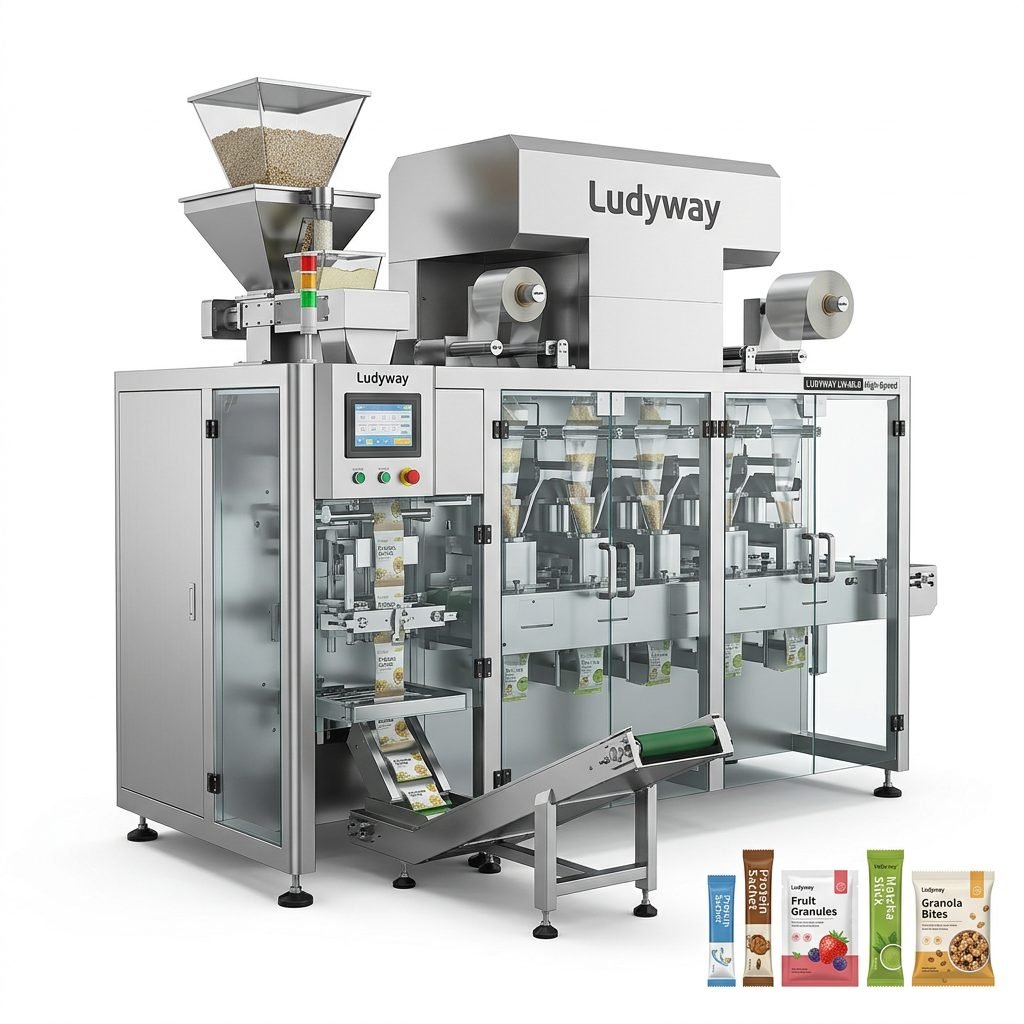
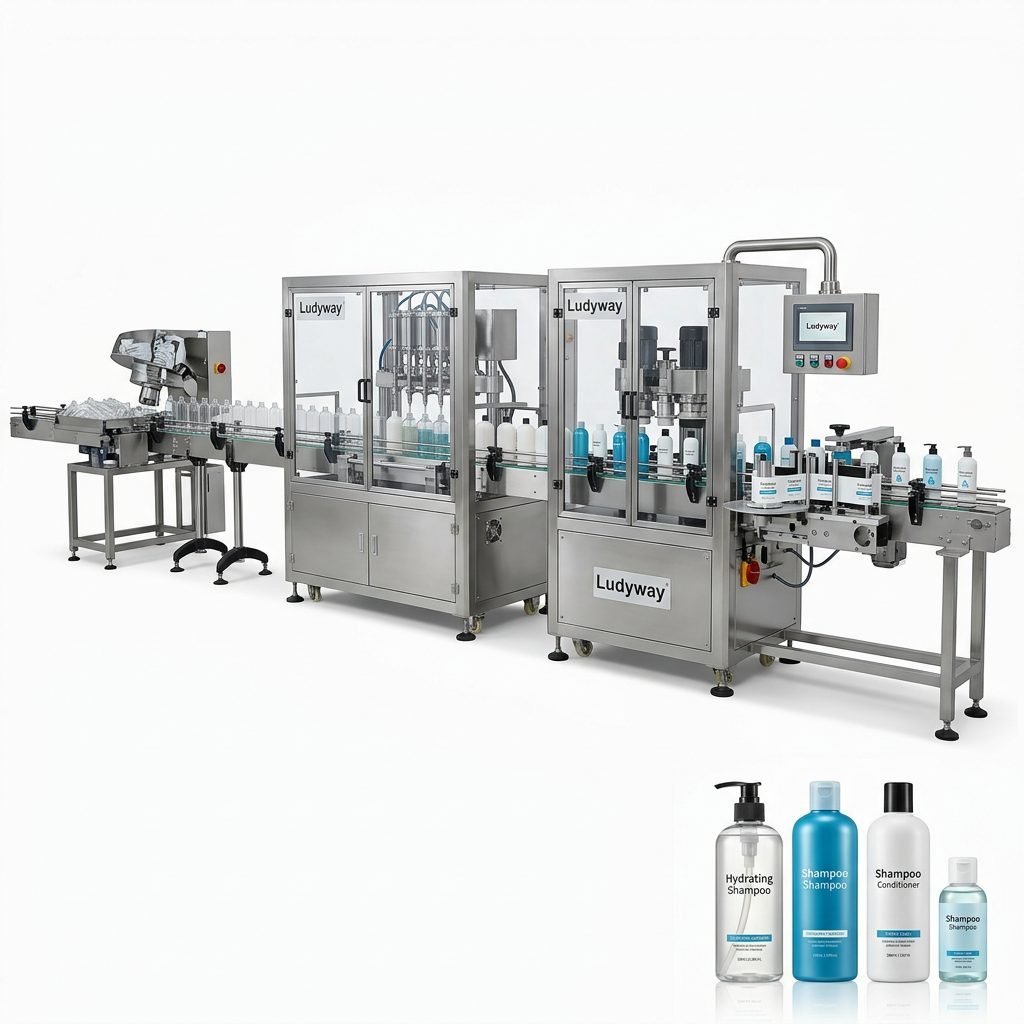
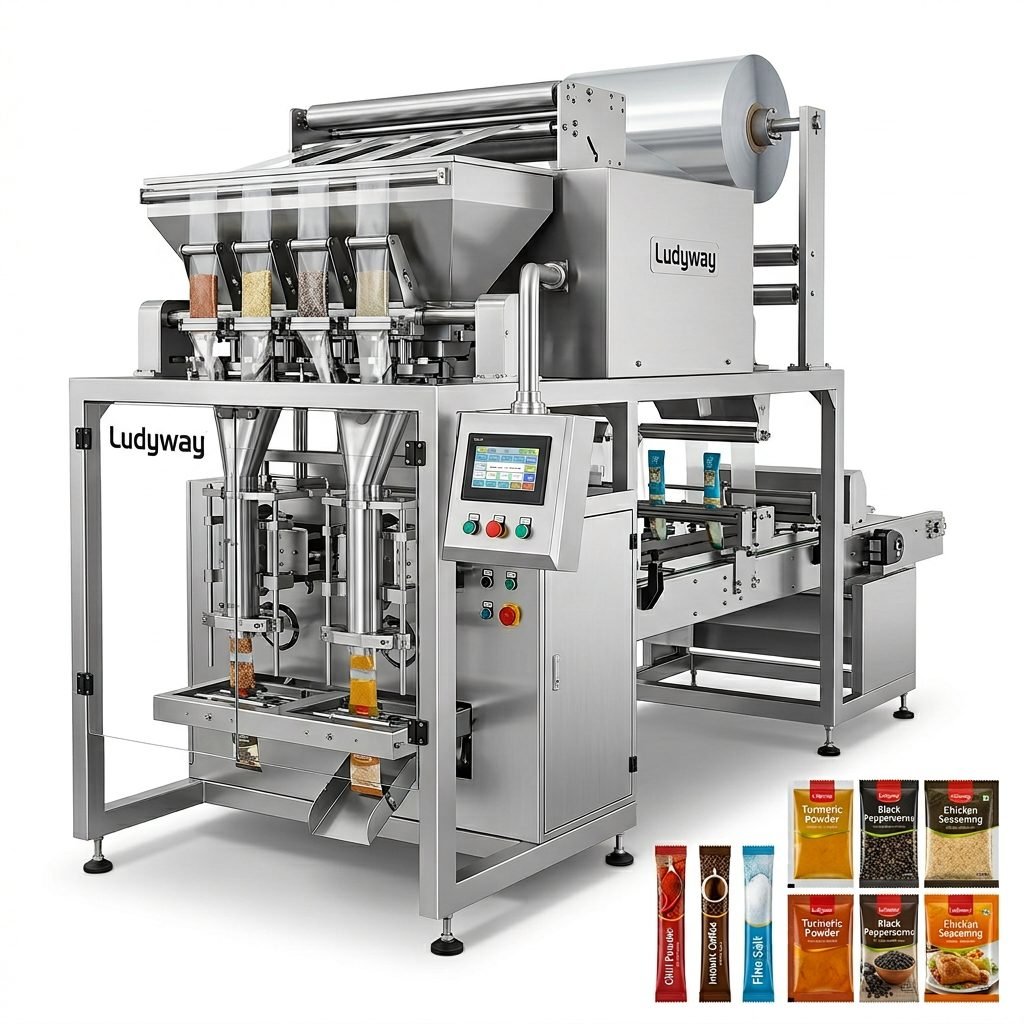
In modern packaging production, material selection is not a small detail. It directly affects equipment hygiene, machine lifespan, maintenance cost, regulatory compliance, and final product quality. Among all structural materials used in packaging equipment, stainless steel has become the preferred standard across food, pharmaceutical, nutraceutical, cosmetic, and chemical industries.
Whether a business is packaging powders, granules, liquids, pastes, sachets, stick packs, bottles, or pouches, stainless steel helps create machines that are easier to clean, more resistant to corrosion, and better suited for demanding production environments. For manufacturers focused on product safety and long-term operating efficiency, this is one of the most important machine design choices.
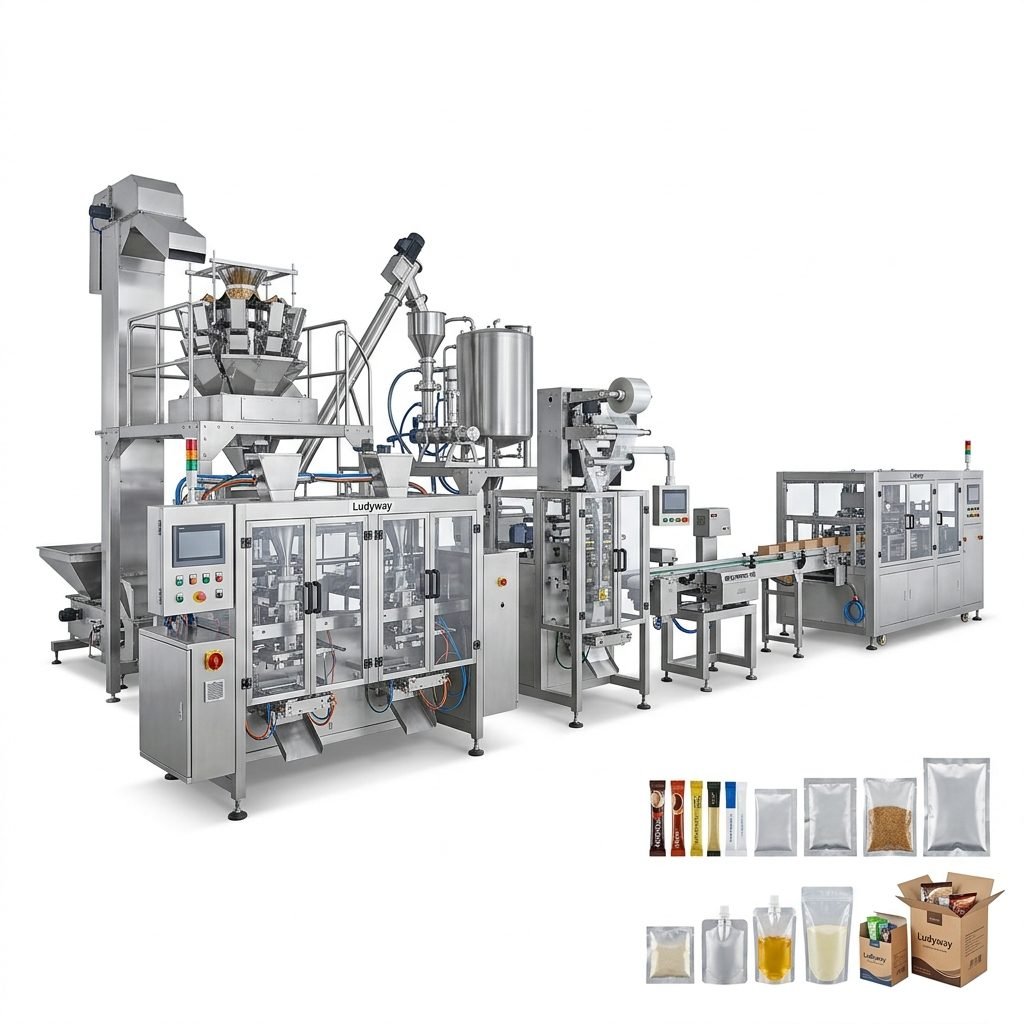
Why Stainless Steel Is Widely Used in Packaging Machines
Packaging equipment often works in environments where it is exposed to moisture, steam, powders, cleaning chemicals, product residues, and frequent washdowns. Standard metals may rust, react with ingredients, or degrade over time. Stainless steel solves many of these problems because it offers an excellent combination of strength, corrosion resistance, smooth surface finish, and sanitary performance.
It is especially valuable in industries where contamination control is critical. A machine used to package milk powder, instant coffee, electrolyte sachets, sauces, supplements, or pharmaceuticals must not introduce foreign particles or become difficult to sanitize. Stainless steel helps reduce those risks while maintaining consistent appearance and mechanical reliability.
Core reasons manufacturers prefer stainless steel
- Excellent resistance to rust and corrosion
- Smooth surface that supports easy cleaning
- Strong compatibility with food and pharma hygiene standards
- Long service life in demanding production conditions
- Better resistance to chemicals, detergents, and moisture
- Professional appearance for modern production lines
- Suitable for both standalone machines and turnkey packaging lines
Hygiene Benefits of Stainless Steel in Packaging Applications
Hygiene is one of the biggest reasons stainless steel matters. In packaging industries, surfaces that touch products or operate close to exposed materials must remain clean and stable. Stainless steel has a non-porous surface, meaning it is less likely to absorb residues, oils, or liquids compared with many alternative materials.
This is particularly important for products that are consumed, applied to skin, or used in medical settings. Powders can accumulate in hidden corners. Liquids can leave sticky films. Granules may generate fine dust. Stainless steel surfaces are easier to wipe down, wash, disinfect, and inspect visually. That improves both sanitation and cleaning efficiency.
How stainless steel supports hygienic design
- Reduces contamination risk: Smooth surfaces help prevent material buildup.
- Supports frequent cleaning: Ideal for daily sanitation routines and washdown procedures.
- Resists cleaning agents: Performs well with many detergents and disinfectants.
- Minimizes corrosion spots: Rust-prone areas can become contamination points; stainless steel helps avoid this.
- Improves inspection visibility: Clean metal surfaces make residue detection easier for operators.
For food and pharmaceutical packaging, this can be a decisive advantage. A machine that is difficult to sanitize may slow production, increase labor, and raise quality control concerns. Stainless steel construction makes preventive hygiene easier and more repeatable.
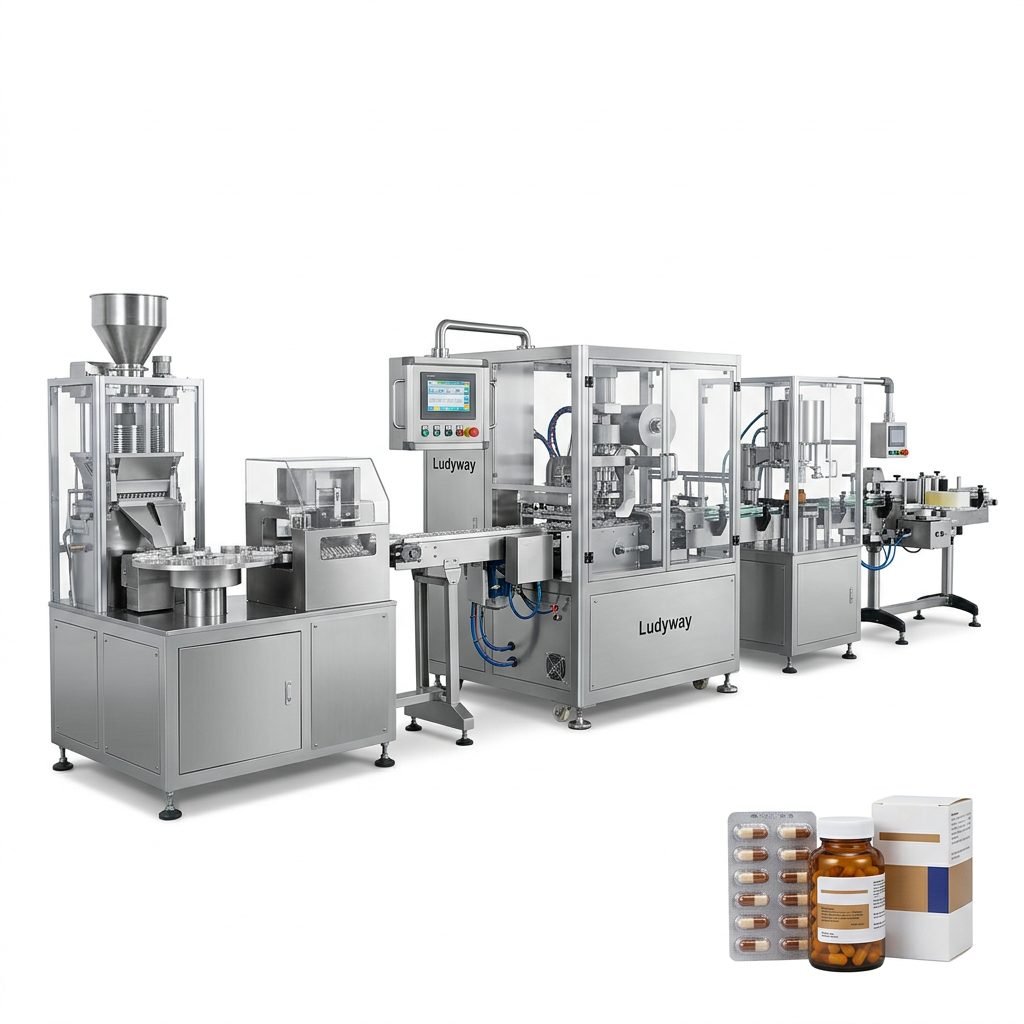
Durability: A Long-Term Advantage for Packaging Equipment
Packaging machines are long-term capital assets, so durability matters as much as hygiene. Stainless steel performs well under continuous operation, vibration, temperature variation, and exposure to wet or dusty environments. This makes it highly suitable for factories running multiple shifts or high-volume production schedules.
When compared with painted steel or lower-grade metals, stainless steel generally requires less cosmetic maintenance and offers better resistance to chipping, peeling, oxidation, and surface wear. This means the machine can maintain structural stability and professional appearance for a longer period.
Durability advantages in real production environments
- Handles humid rooms and washdown zones better
- Performs reliably in powder-heavy packaging areas
- Maintains structural integrity during high-speed operation
- Reduces the frequency of part replacement caused by corrosion
- Helps preserve resale value of industrial equipment
For buyers evaluating total cost of ownership, stainless steel often delivers stronger value over time. The initial investment may be higher than basic materials, but lower maintenance risk and longer service life usually offset that cost.
Stainless Steel and Corrosion Resistance
Corrosion is one of the most common causes of premature machine deterioration. Packaging environments can expose equipment to salt, acids, oils, flavorings, solvents, sticky ingredients, and repeated moisture contact. In such conditions, corrosion resistance is not optional.
Stainless steel contains chromium, which helps create a passive protective layer on the surface. This layer improves resistance against oxidation and rust. In practical terms, that means the machine can stay cleaner, safer, and mechanically sound even when used in challenging production settings.
| Production Environment | Why Stainless Steel Helps |
|---|---|
| Powder packaging workshops | Resists dust-related buildup and supports easier cleaning |
| Liquid and sauce filling lines | Better resistance to moisture, splashes, and sticky residues |
| Pharmaceutical packaging areas | Supports sanitary standards and frequent disinfection |
| Chemical packaging operations | Improves resistance to many corrosive agents and cleaners |
| High-humidity factories | Reduces rust risk and extends machine service life |
Why Stainless Steel Is Important for Food Packaging Machines
Food manufacturers need equipment that helps preserve freshness, avoid contamination, and comply with hygiene expectations from regulators and customers. Stainless steel is widely trusted in food packaging because it can safely operate around ingredients such as sugar, salt, spices, coffee, grains, dairy powders, snack products, sauces, and nutritional blends.
Its cleanable surface is ideal for operations where product changeovers happen frequently. For example, a facility packaging different seasonings or beverage powders needs quick cleaning to reduce cross-contamination risk. Stainless steel helps simplify these transitions while supporting more efficient sanitation procedures.
Common food applications where stainless steel is especially valuable
- Instant coffee and beverage powder packaging
- Seasoning, spice, and soup mix sachet lines
- Sugar, salt, and grain filling systems
- Snack, cereal, and dried fruit packaging
- Sauce, oil, and condiment sachet machines
- Protein powder and supplement stick pack systems
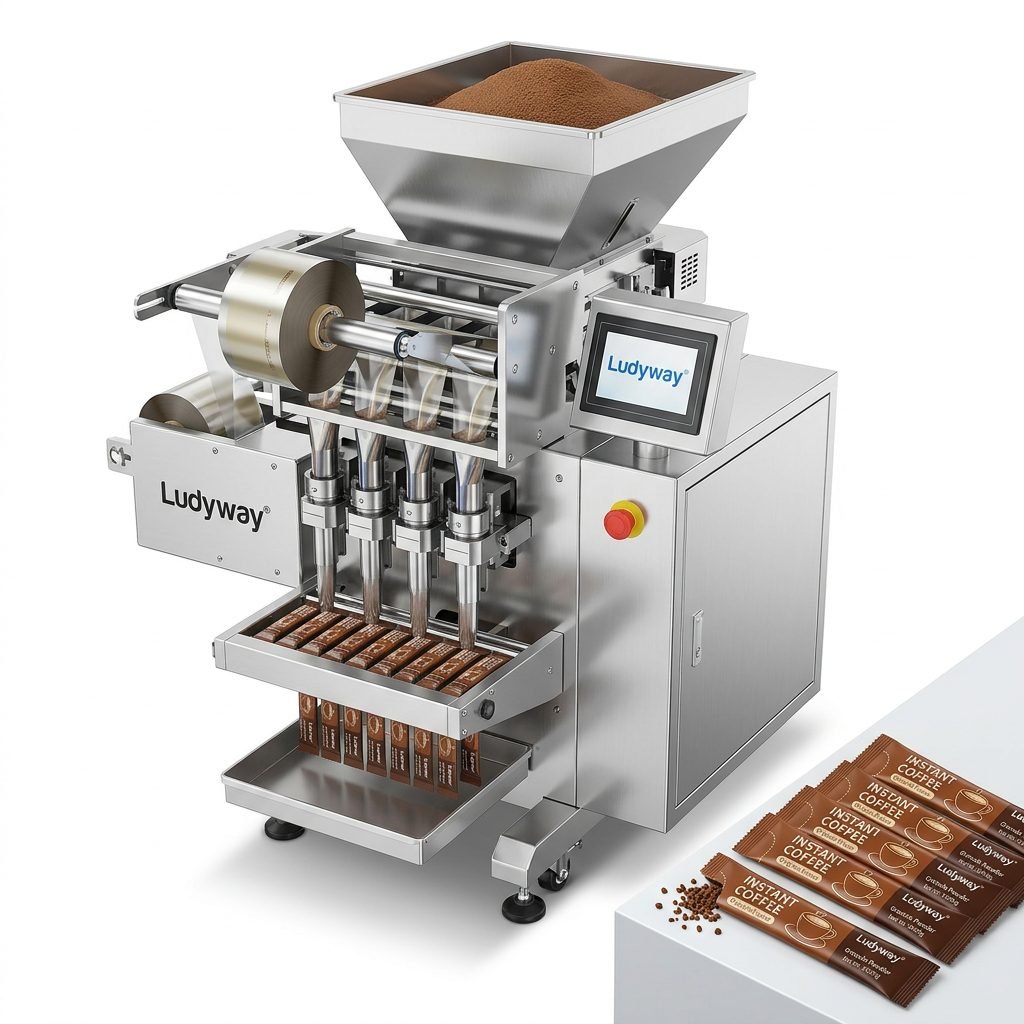
Why Stainless Steel Matters in Pharmaceutical and Health Product Packaging
Pharmaceutical and nutraceutical production requires higher standards of cleanliness, process stability, and material compatibility. Equipment used for capsules, oral powders, medical sachets, supplements, and diagnostic products must be designed for controlled environments and repeatable sanitation.
Stainless steel is often chosen because it aligns well with these needs. It helps manufacturers maintain cleaner contact surfaces, simplify validation-friendly cleaning processes, and reduce concerns related to corrosion or material degradation over time.
For health-related products, even minor contamination issues can have serious consequences. That is why stainless steel remains a trusted material across pharmaceutical packaging systems, capsule filling lines, stick pack machines, and sterile-supporting production equipment.
The Role of Stainless Steel in Machine Maintenance and Operating Cost
Maintenance teams often appreciate stainless steel for a simple reason: it makes life easier. Equipment that resists corrosion and cleans quickly usually requires fewer unscheduled interventions. It also lowers the chance of hidden rust damage, paint failure, or premature structural replacement.
Over the life of the machine, this can improve production uptime and reduce total maintenance workload. For factories running lean teams or tight delivery schedules, this advantage is very meaningful.
Operational cost benefits
- Less downtime related to corrosion repair
- Faster cleaning and changeover procedures
- Reduced need for repainting or surface restoration
- Longer machine life in intensive production conditions
- More stable appearance and surface quality over time
Stainless Steel Grades: Why 304 and 316 Matter
Not all stainless steel is identical. In packaging machinery, the most commonly discussed grades are 304 and 316 stainless steel. Both are popular because they provide strong corrosion resistance and are suitable for sanitary environments, but 316 typically offers improved resistance in harsher or more chemically demanding applications.
| Stainless Steel Grade | Typical Advantage | Common Use |
|---|---|---|
| 304 Stainless Steel | Strong general corrosion resistance and hygienic performance | Food, supplements, powders, granules, standard liquid packaging |
| 316 Stainless Steel | Higher resistance to aggressive cleaning agents and corrosive conditions | Pharma, high-salt products, harsher chemical exposure applications |
When selecting a packaging machine, buyers should ask not only whether the machine uses stainless steel, but also which grade is used and where it is applied. The frame, contact parts, hoppers, filling systems, guards, and discharge zones may use different configurations depending on the application.
What Buyers Should Check Before Choosing a Stainless Steel Packaging Machine
Stainless steel quality should be evaluated as part of the overall machine design, not just as a marketing phrase. A well-built machine combines suitable material grade, hygienic structure, weld quality, smooth finishing, and easy-access cleaning points.
Practical checklist for buyers
- Confirm whether product-contact parts are stainless steel
- Ask if the machine uses 304 or 316 stainless steel
- Inspect weld finish and surface smoothness
- Check whether corners and dead zones are minimized
- Review how easy it is to disassemble and clean key parts
- Match the material specification to your product type and cleaning process
- Consider the humidity, chemical exposure, and sanitation frequency of your factory
Why Stainless Steel Supports Brand Reputation Too
Packaging quality is not only about sealing accuracy or filling speed. It is also about confidence. Clean, well-maintained stainless steel machinery gives operators, auditors, and customers a stronger sense of professional manufacturing control. In industries where trust matters, machine material can influence how a production line is perceived.
A factory using durable, hygienic packaging equipment is better positioned to support quality audits, customer visits, and long-term supply relationships. Stainless steel contributes to that image while also delivering practical performance benefits behind the scenes.
Choosing the Right Packaging Machine Partner
Beyond the material itself, the manufacturer’s engineering experience plays a major role in how effectively stainless steel is used in machine design. A reliable supplier should understand application-specific needs across food, pharma, cosmetics, chemical products, and automated line integration.
For businesses looking for scalable stainless steel equipment and integrated automation solutions, packaging machine manufacturer Ludyway offers a wide range of packaging machines and turnkey packaging lines for granules, powders, liquids, pastes, sachets, stick packs, and pouch-based products.
Final Considerations for Modern Packaging Operations
Stainless steel matters because it connects three essential goals in one solution: hygiene, durability, and long-term production reliability. For packaging machines working in food, pharmaceutical, nutraceutical, cosmetic, or chemical settings, this material helps protect product quality while supporting easier cleaning and lower lifecycle risk.
When buyers compare machine options, stainless steel should never be treated as a minor specification. It is a strategic factor that influences sanitation performance, machine longevity, maintenance cost, and overall operational confidence. In today’s competitive manufacturing environment, choosing the right material is part of choosing the right future for your packaging line.