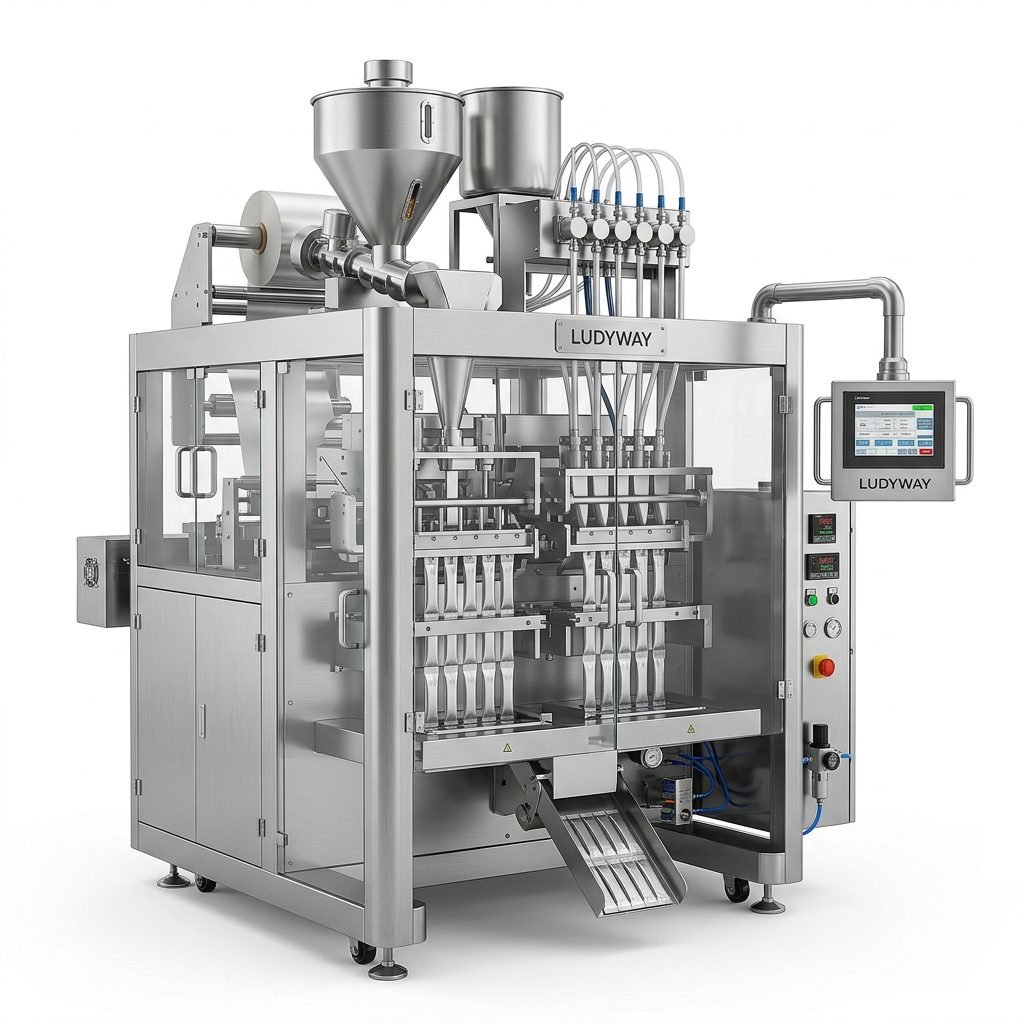
Coffee sachets are small, convenient, and highly popular in today’s beverage market. From instant coffee and cappuccino mix to 3-in-1 coffee and specialty drink powders, brands rely on fast, accurate, and hygienic packaging to stay competitive. That is where a coffee sachet packaging machine becomes essential.
This guide explains what a coffee sachet packaging machine is, how it works, where it is used, and why it matters for manufacturers looking to improve output, consistency, and packaging quality.
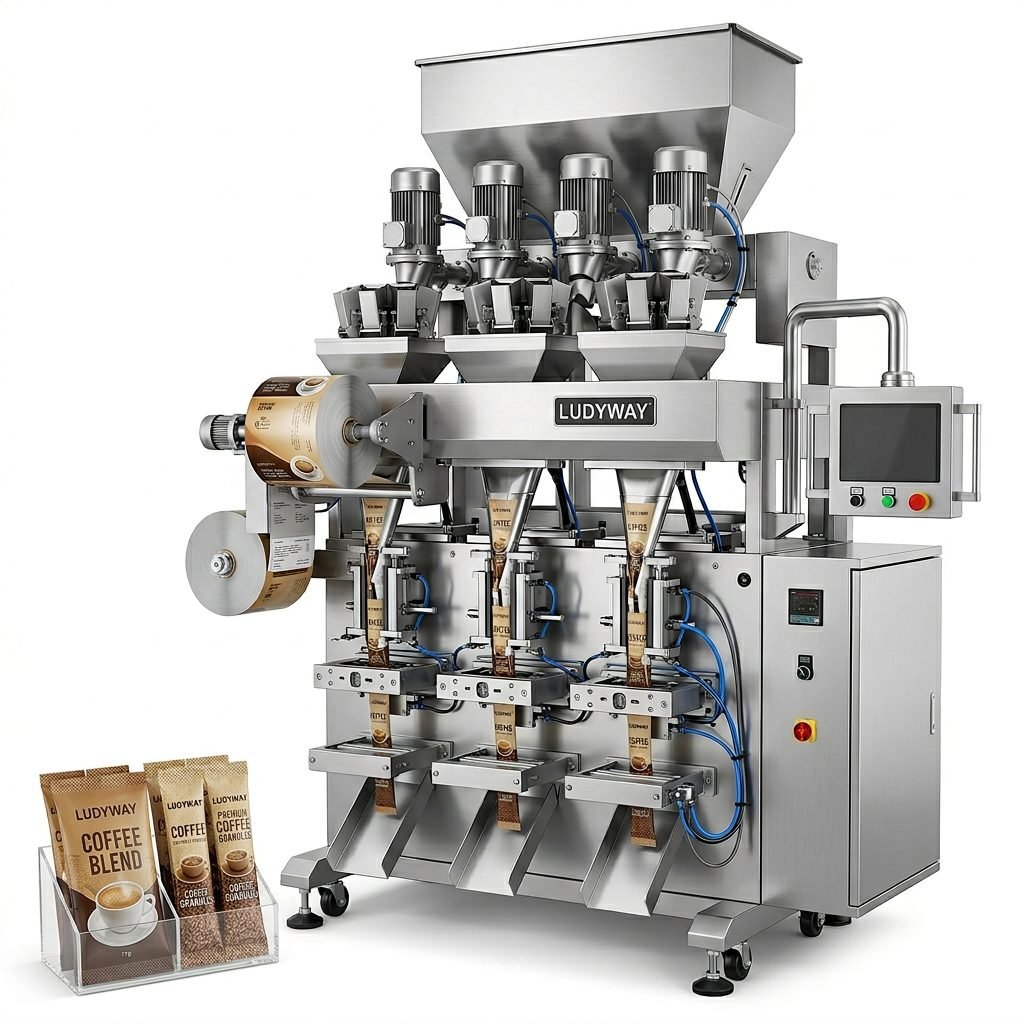
What Is a Coffee Sachet Packaging Machine?
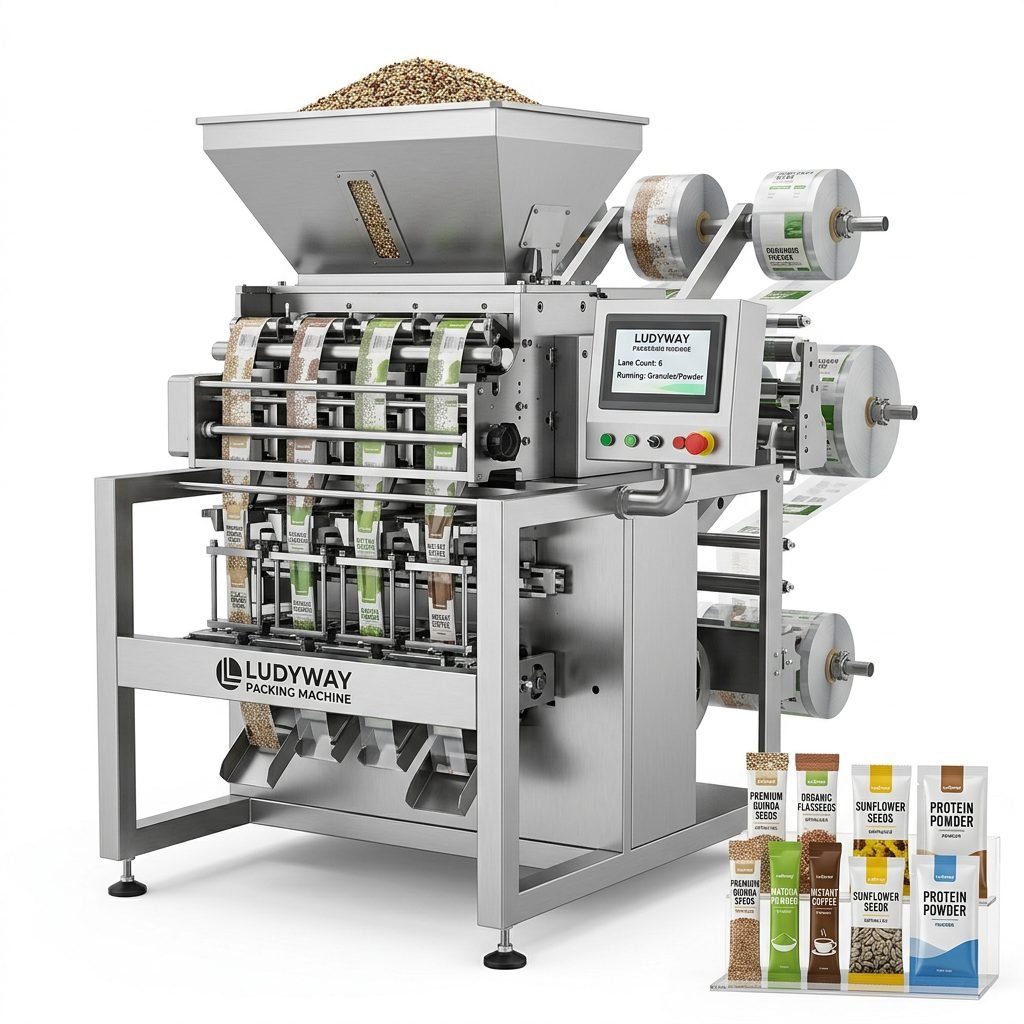
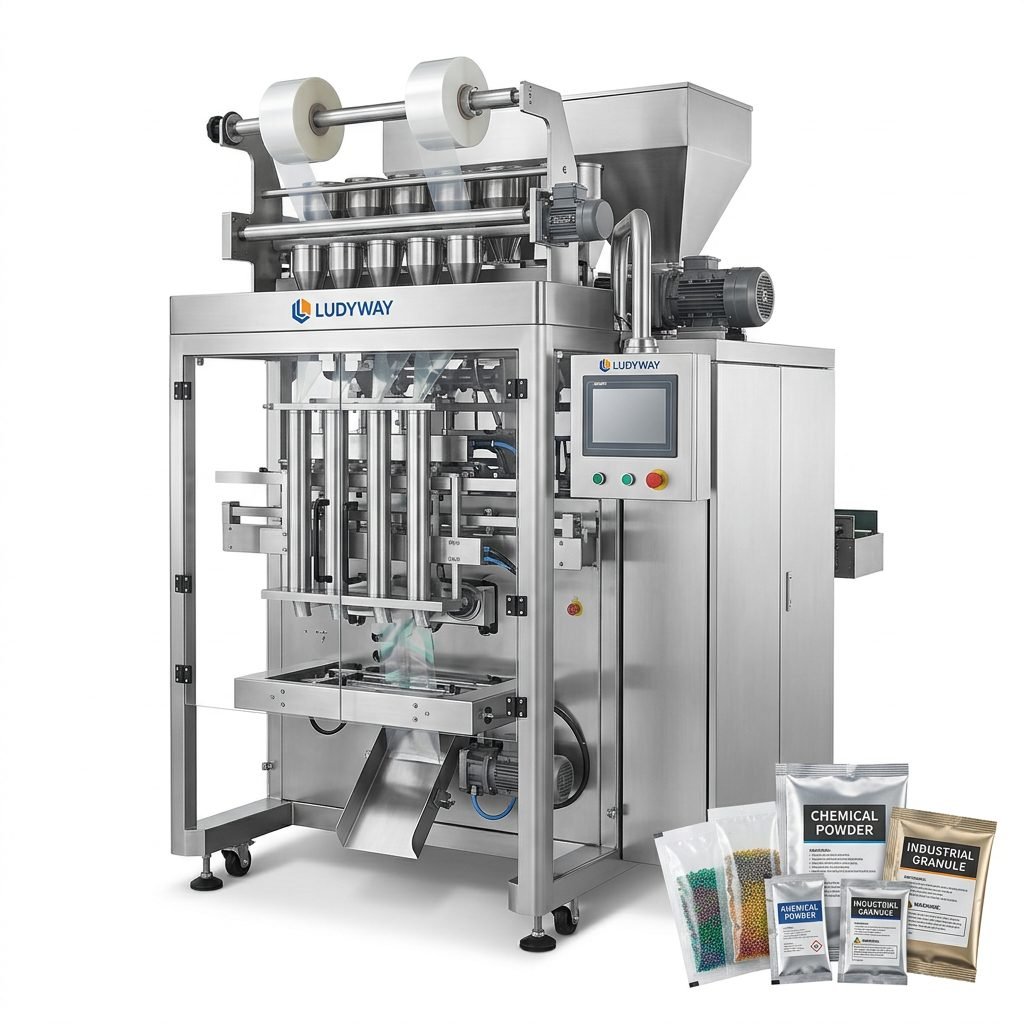
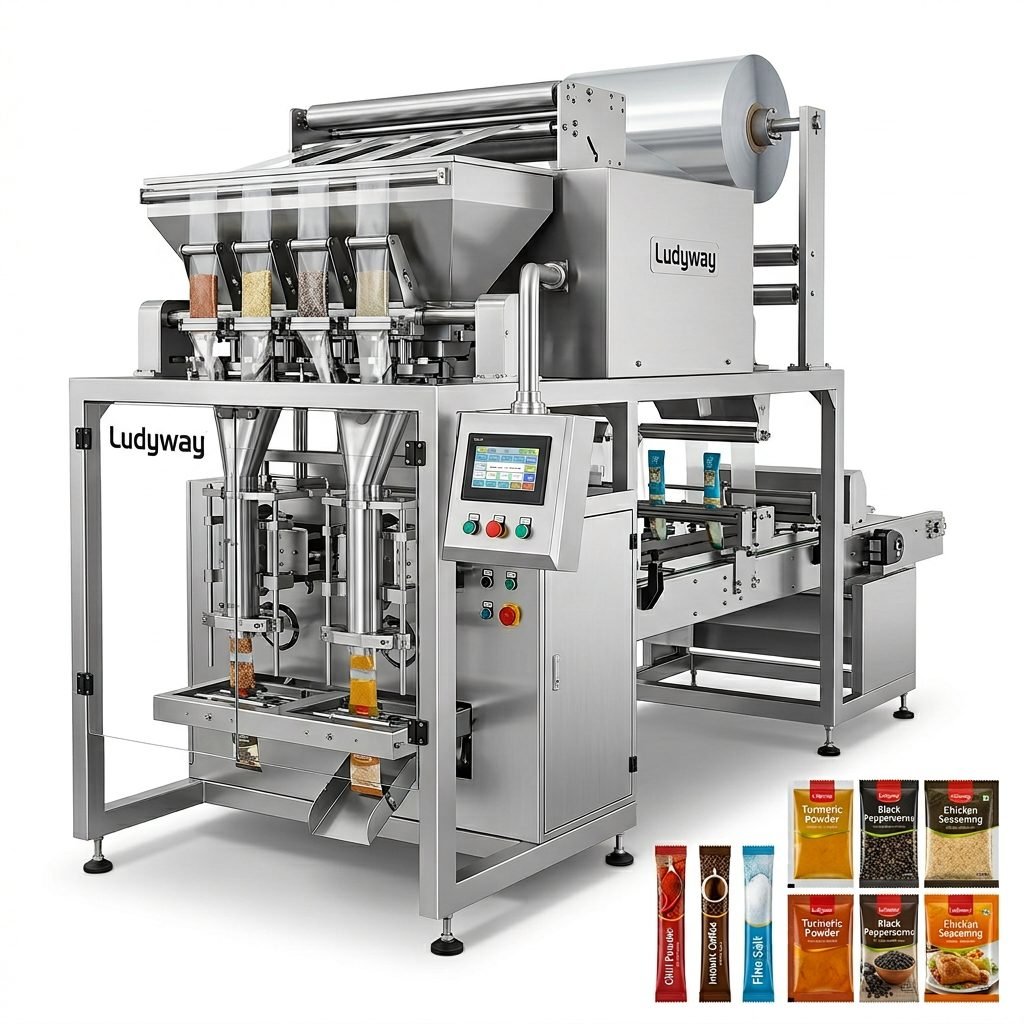
A coffee sachet packaging machine is an automated system designed to form, fill, seal, and cut individual sachets containing coffee products. These machines are commonly used for:
- Instant coffee powder
- Ground coffee in single-dose formats
- 3-in-1 coffee mixes
- Cappuccino and latte powder blends
- Coffee creamer or sugar companion sachets
Depending on the product and packaging format, the machine may produce flat sachets, back-seal sachets, or stick packs. In coffee manufacturing, these machines help ensure each package contains the right amount of product while maintaining sealing integrity and attractive shelf presentation.
Why Coffee Sachet Packaging Is So Important
Coffee is a sensitive product. Powder flow, moisture exposure, aroma retention, and dosage accuracy all affect customer satisfaction. Poor packaging can lead to clumping, leakage, short shelf life, and inconsistent taste.
A reliable sachet packing system solves these problems by delivering controlled filling and sealed protection in a compact format that consumers value for portability and convenience.
| Packaging Need | Why It Matters in Coffee Production |
|---|---|
| Accurate dosing | Ensures consistent taste and portion control |
| Strong sealing | Protects aroma and prevents moisture absorption |
| High speed output | Supports mass-market retail and foodservice demand |
| Compact packaging format | Improves convenience for travel, office, hotel, and vending use |
| Clean automated handling | Reduces contamination risk and labor dependence |
How Does a Coffee Sachet Packaging Machine Work?
While configurations vary, most coffee sachet packaging machines follow a similar step-by-step process.
1. Film Feeding
Packaging film is loaded onto the machine and unwound automatically. The film is guided through rollers to maintain tension and alignment.
2. Sachet Forming
The machine shapes the film into sachets using forming collars or sealing structures, depending on the sachet type. This creates the package body before filling.
3. Product Dosing
Coffee powder or granules are measured by an auger filler, volumetric cup system, or another dosing device. Accurate dosing is critical for controlling serving size and product cost.
4. Filling
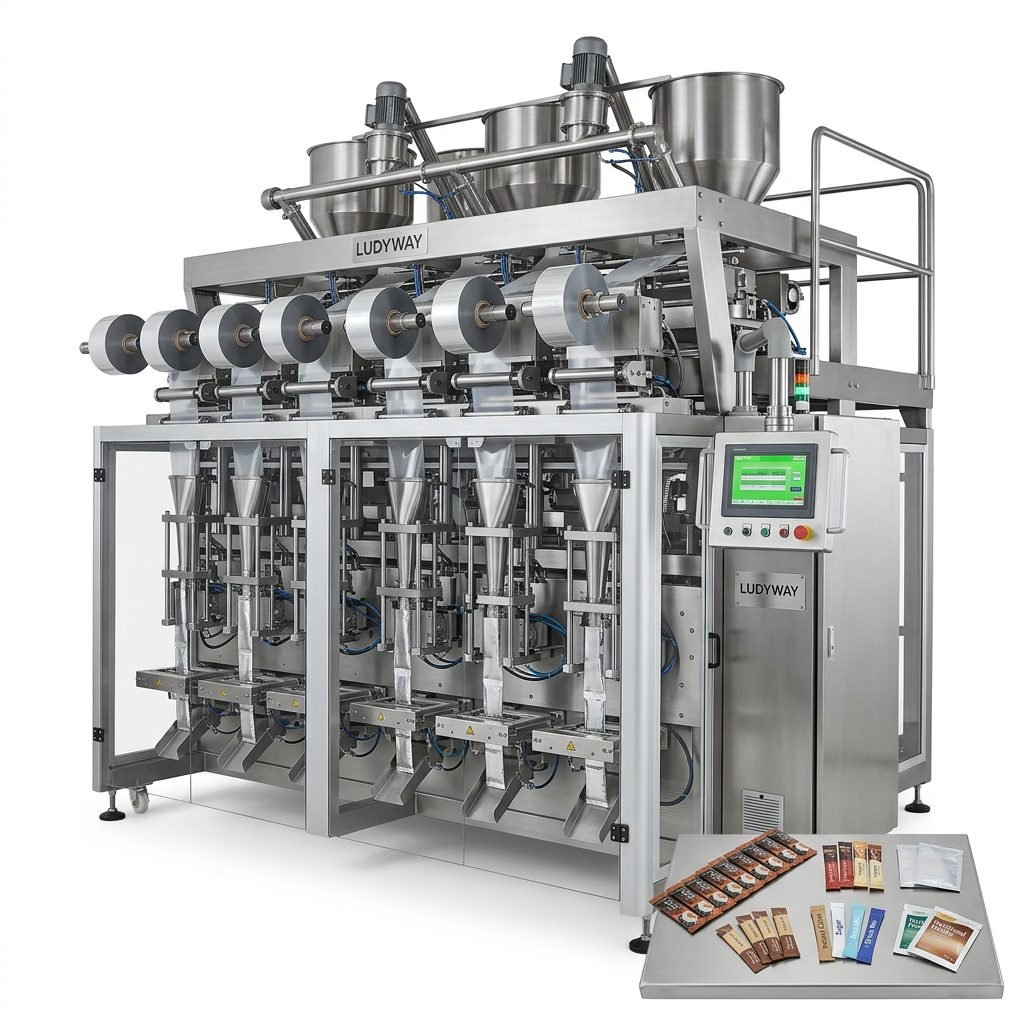
The measured coffee is dropped into each formed sachet. Multi-lane machines can fill several sachets at the same time, greatly increasing production speed.
5. Sealing
Heat sealing jaws close the sachet to protect the coffee from air and humidity. Seal quality directly affects shelf life and transport reliability.
6. Cutting and Discharge
After sealing, the machine cuts each sachet into individual units and sends them to the discharge area for collection, cartoning, or secondary packaging.
In simple terms: the machine takes roll film and bulk coffee product, then automatically turns them into sealed single-serve sachets ready for sale.
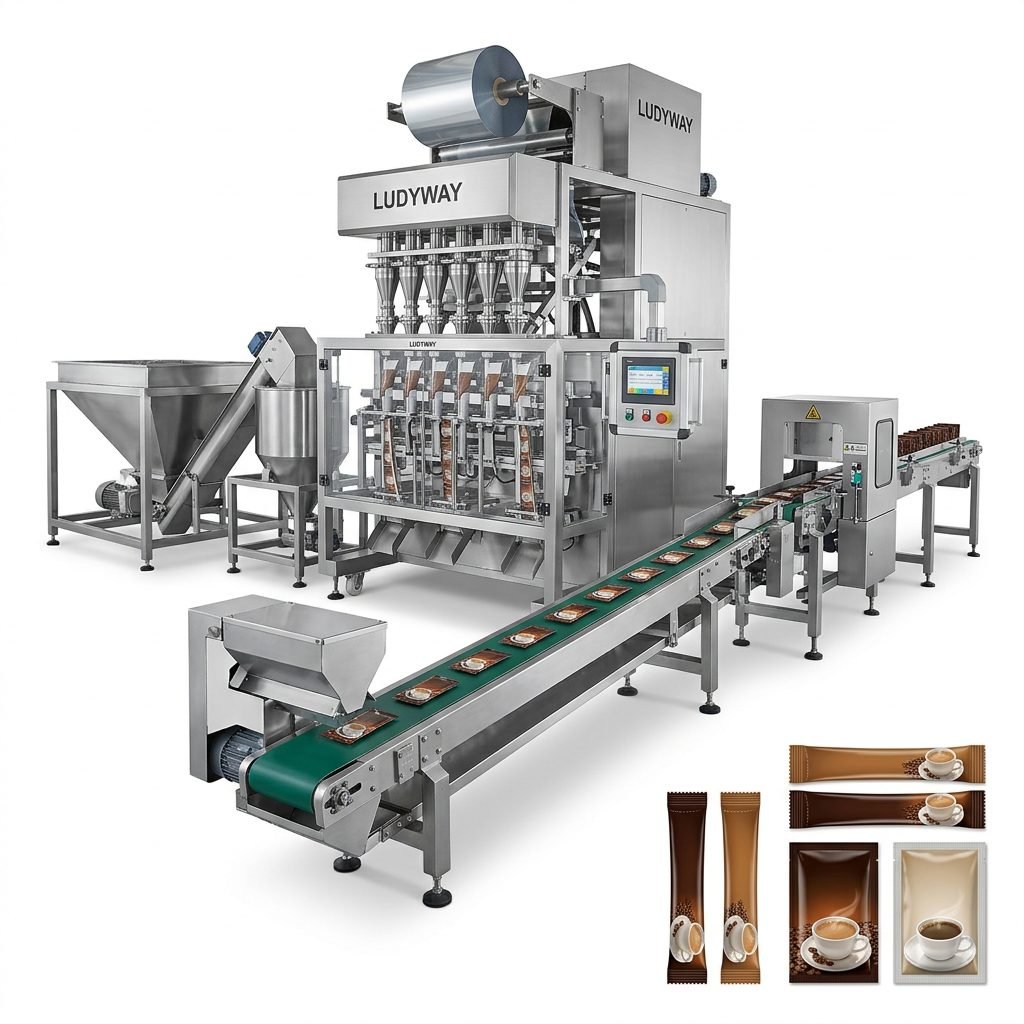
Main Components of a Coffee Sachet Packaging Machine
Understanding the main parts helps buyers evaluate machine quality and application fit.
- Film unwinding system – feeds packaging material smoothly
- Forming unit – shapes the sachet structure
- Dosing system – measures coffee accurately
- Sealing system – creates tight and uniform seals
- Cutting mechanism – separates finished sachets
- PLC and touch screen – controls operation and parameters
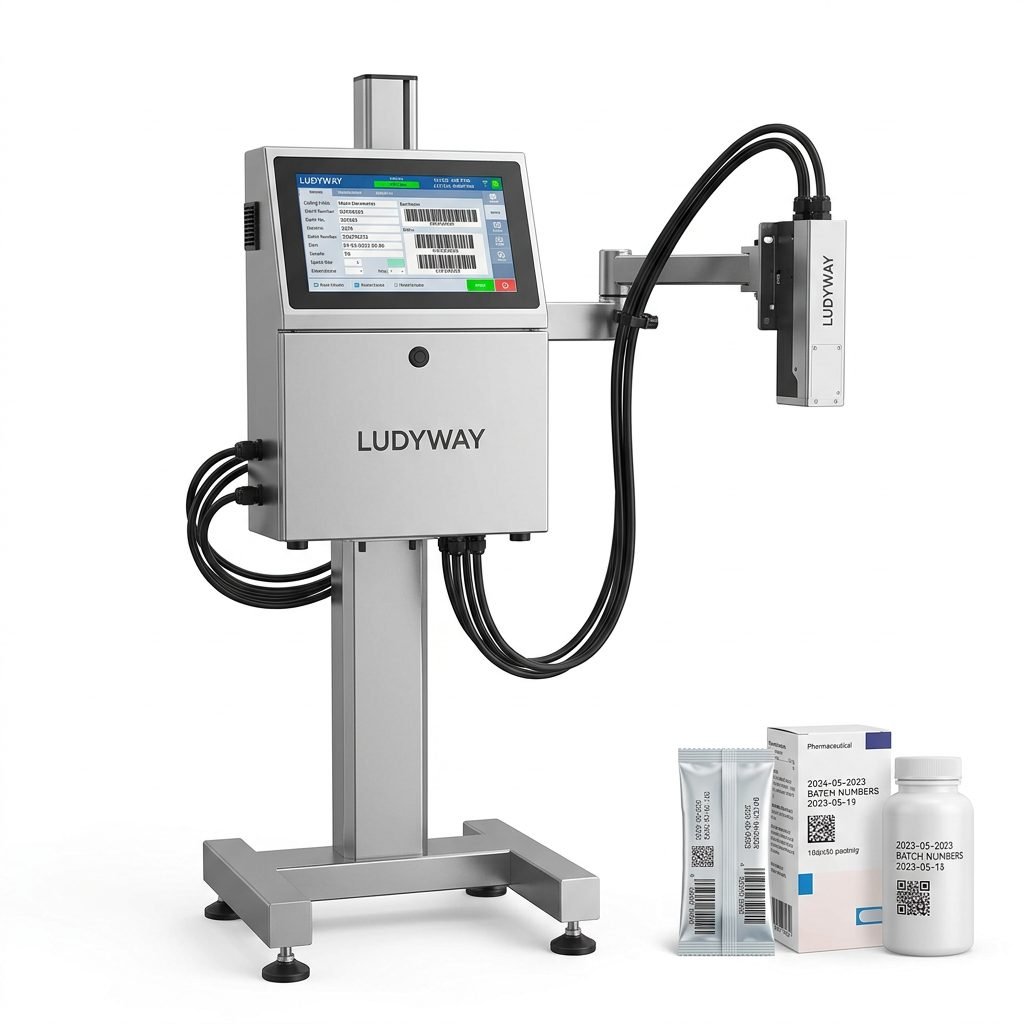
- Date coding or printing unit – prints batch or expiry information
Types of Coffee Products These Machines Can Pack
Not all coffee behaves the same during filling. Machine selection should match product characteristics.
| Coffee Product Type | Recommended Filling Approach | Common Challenge |
|---|---|---|
| Instant coffee powder | Auger filling | Dust control |
| Freeze-dried coffee granules | Volumetric or cup dosing | Granule breakage |
| 3-in-1 coffee mix | Auger or blended powder dosing | Flow consistency |
| Ground coffee | Customized powder filling | Particle variation |
Single-Lane vs Multi-Lane Coffee Sachet Machines
One of the most important buying decisions is whether to choose a single-lane or multi-lane model.
Single-Lane Machines
- Suitable for small to medium production volumes
- Easier to operate and maintain
- Lower initial investment
- Good for startups or specialty coffee products
Multi-Lane Machines
- Designed for high-speed, high-volume production
- Can produce multiple sachets per cycle
- Ideal for large brands and contract packers
- Better for reducing unit packaging cost at scale
For manufacturers targeting supermarket, export, vending, hospitality, or e-commerce channels, a multi-lane coffee sachet packaging machine is often the more scalable option.
Key Benefits of Using a Coffee Sachet Packaging Machine
- Improved packaging speed for growing market demand
- Better weight accuracy to reduce giveaway and waste
- Stable seal quality for product protection
- Lower labor dependency through automation
- Cleaner production with less powder contamination
- Professional appearance that supports brand image
- Flexible sachet formats for different retail strategies
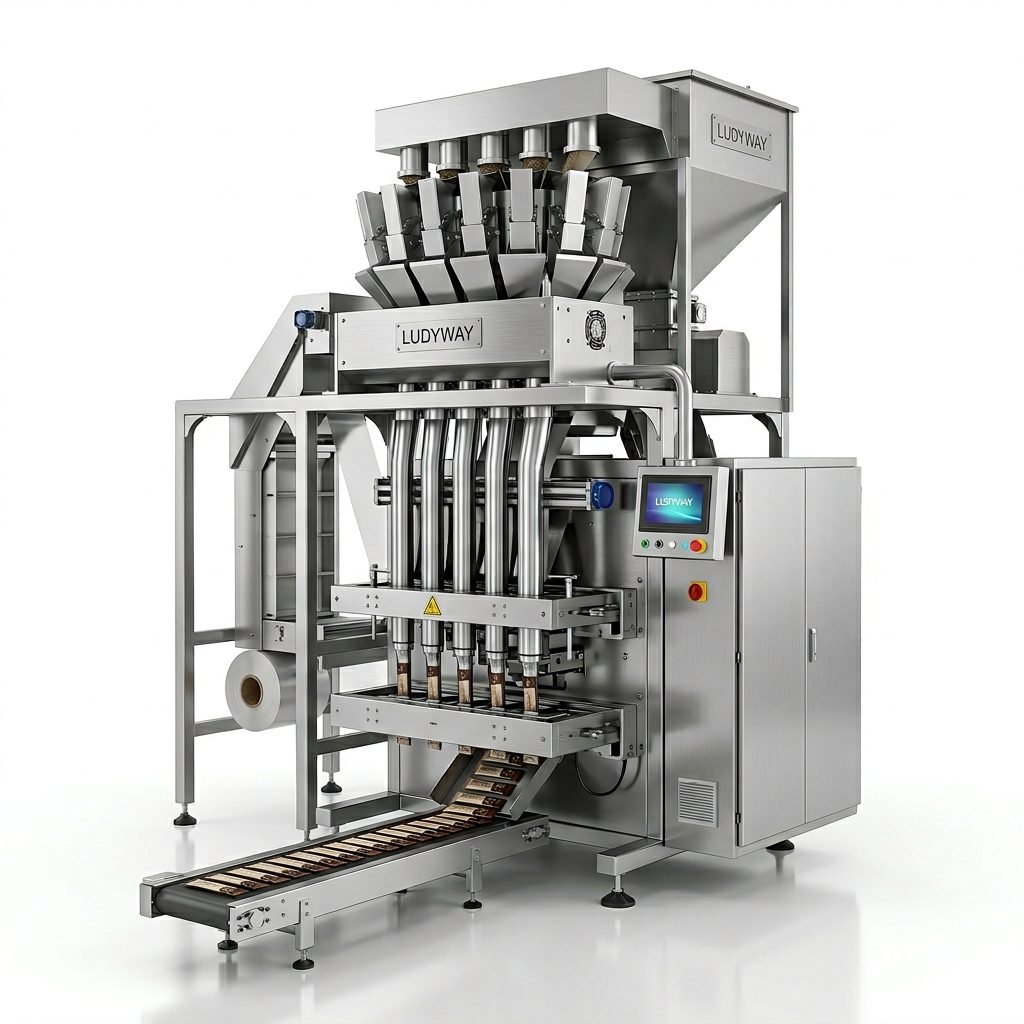
Industries and Businesses That Use These Machines
Coffee sachet packaging machines are used across many business types, including:
- Instant coffee manufacturers
- Private label beverage brands
- Contract packaging companies
- Foodservice coffee suppliers
- Hotel and airline catering suppliers
- Retail and convenience drink producers
- Health beverage and functional coffee brands
What to Consider Before Buying a Coffee Sachet Packaging Machine
Choosing the right machine is not only about speed. It should match your product, factory layout, packaging material, and long-term production plan.
Product Characteristics
Is your coffee a fine powder, coarse granule, or blended formula with sugar and creamer? Product behavior affects filler type and sealing stability.
Output Requirements
Estimate current and future production needs. Buying too small may limit growth, while oversizing can raise unnecessary costs.
Sachet Size and Format
Different markets prefer different pack styles. Make sure the machine can handle your target sachet dimensions and material structure.
Automation Level
Some buyers need a standalone machine, while others need a full line with feeding, coding, cartoning, and case packing.
Hygiene and Cleaning
Coffee powders can create dust. A machine designed for easy cleaning and stable dust control is important for uptime and sanitation.
After-Sales Support
Reliable technical service, spare parts support, and remote troubleshooting can significantly reduce downtime.
How a Turnkey Packaging Line Adds More Value
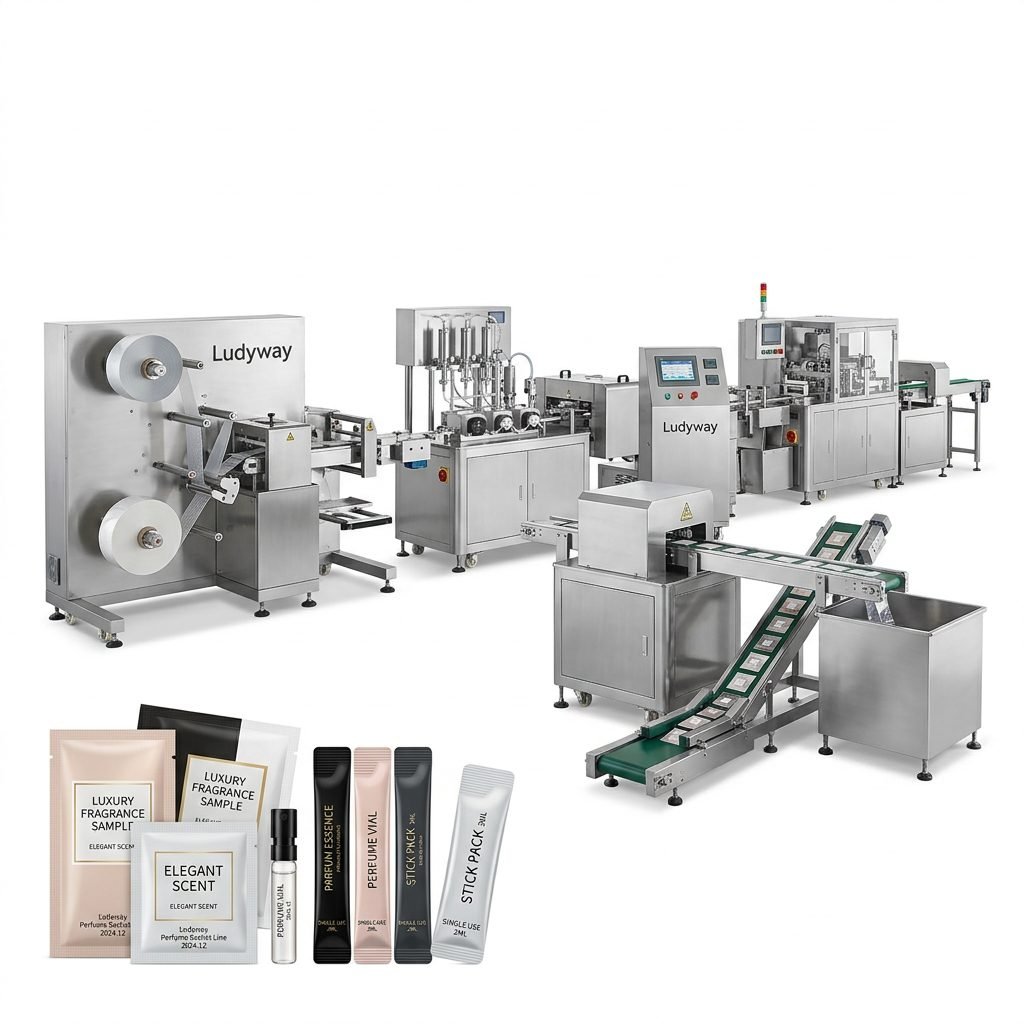
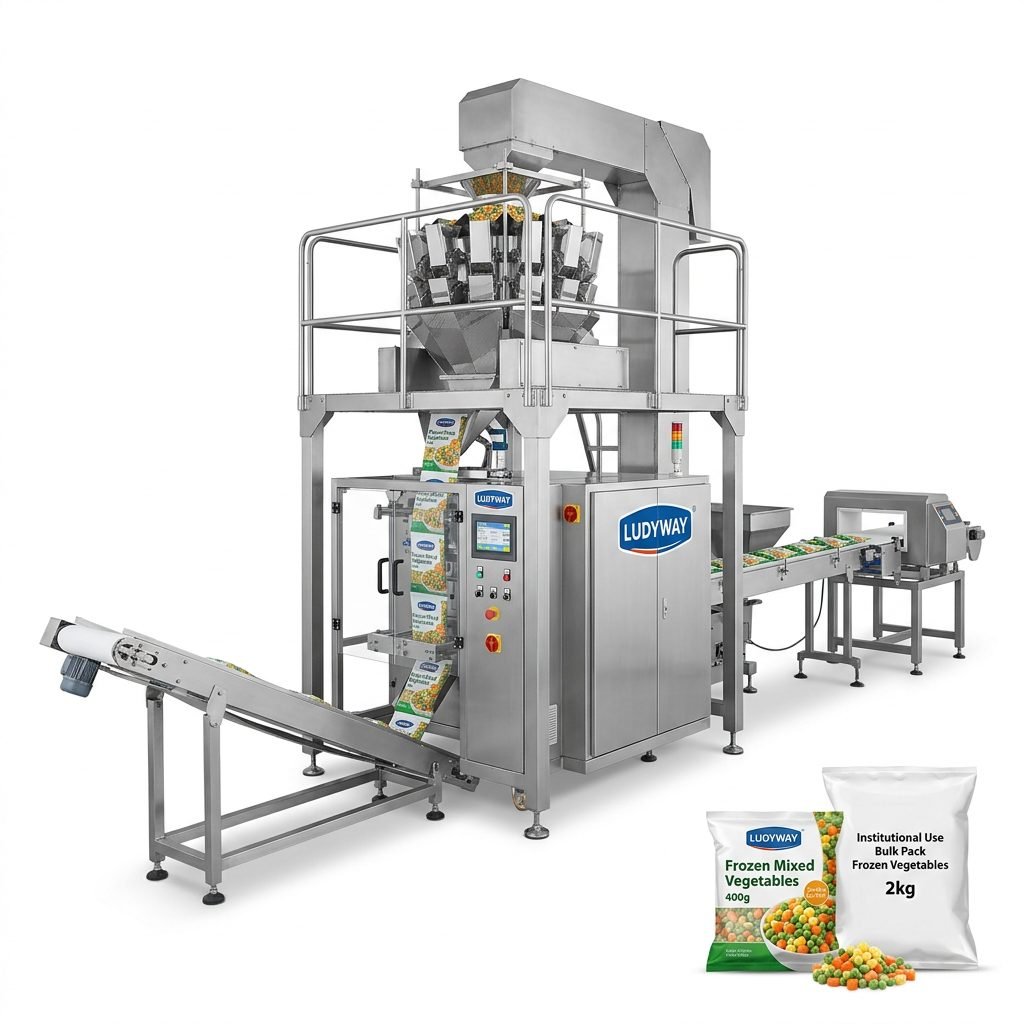
Many coffee producers eventually move beyond a standalone sachet machine and adopt a full packaging line. This may include:
- Automatic feeding systems
- Dust collection units
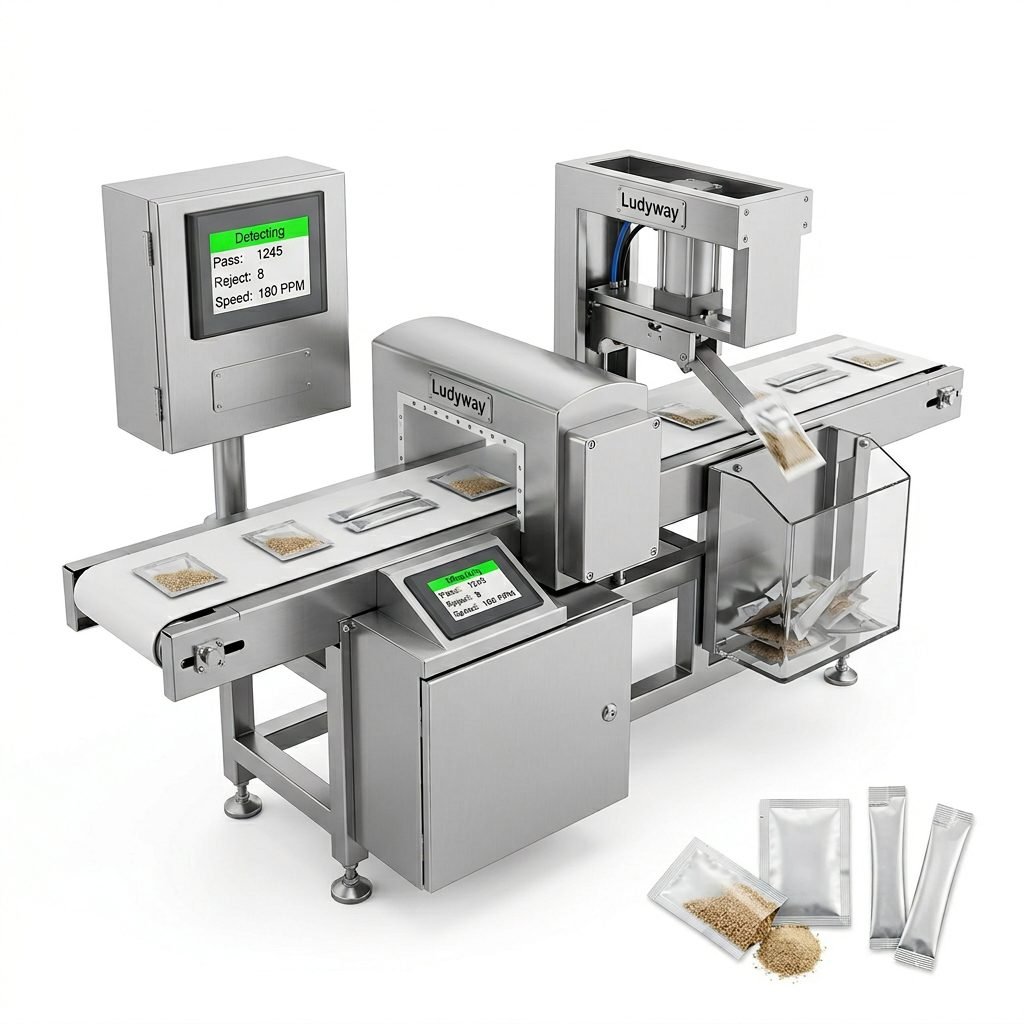
- Checkweighers and metal detectors
- Date coding systems
- Cartoning machines
- Case packing and palletizing equipment
If you are evaluating long-term automation, working with an experienced supplier such as Ludyway coffee sachet packaging machine solutions can be valuable. Founded in 1993, the company is recognized as one of China’s leading packaging machine and turnkey packaging line manufacturers, with more than 30 years of industry experience and exports to over 100 countries and regions.
Common Problems a Good Machine Helps Prevent
- Sachet leakage during transport
- Inconsistent fill weights
- Powder sticking in the sealing area
- Low production efficiency
- Excessive material waste
- Frequent downtime from unstable film tracking
- Poor batch coding readability
Is a Coffee Sachet Packaging Machine Worth the Investment?
For most coffee brands and manufacturers, the answer is yes. Demand for convenient single-serve beverage formats continues to grow across retail, office, travel, and foodservice channels. A properly selected machine improves consistency, helps control costs, and supports scalable business growth.
The return on investment becomes especially clear when manual packing can no longer meet quality standards or production volume expectations.
Final Thoughts
A coffee sachet packaging machine is more than a filling device. It is a critical part of delivering freshness, convenience, and brand quality to the customer. Whether you pack instant coffee, 3-in-1 blends, or specialty beverage powders, the right machine can transform your production efficiency and packaging reliability.
When comparing options, focus on product compatibility, filling accuracy, sealing quality, automation level, and supplier support. These factors will have the biggest impact on long-term performance and profitability.