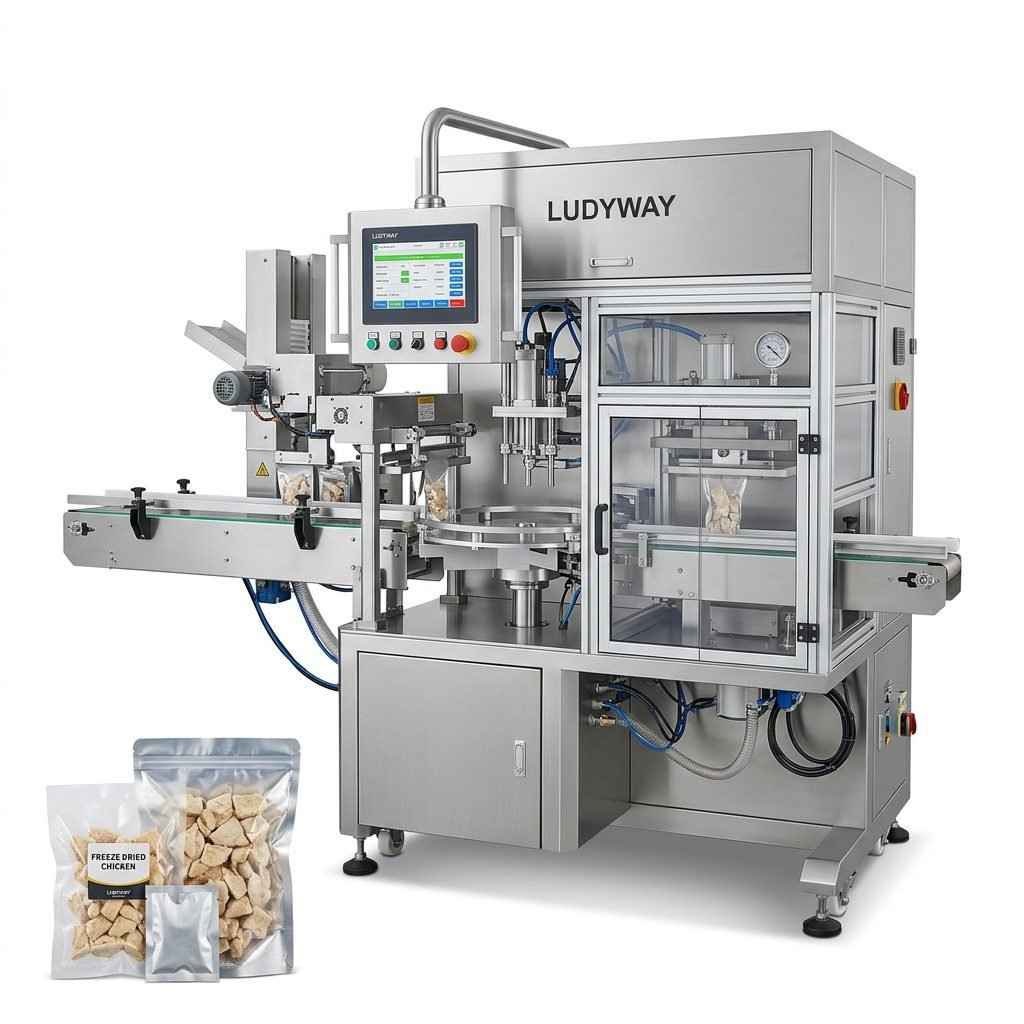
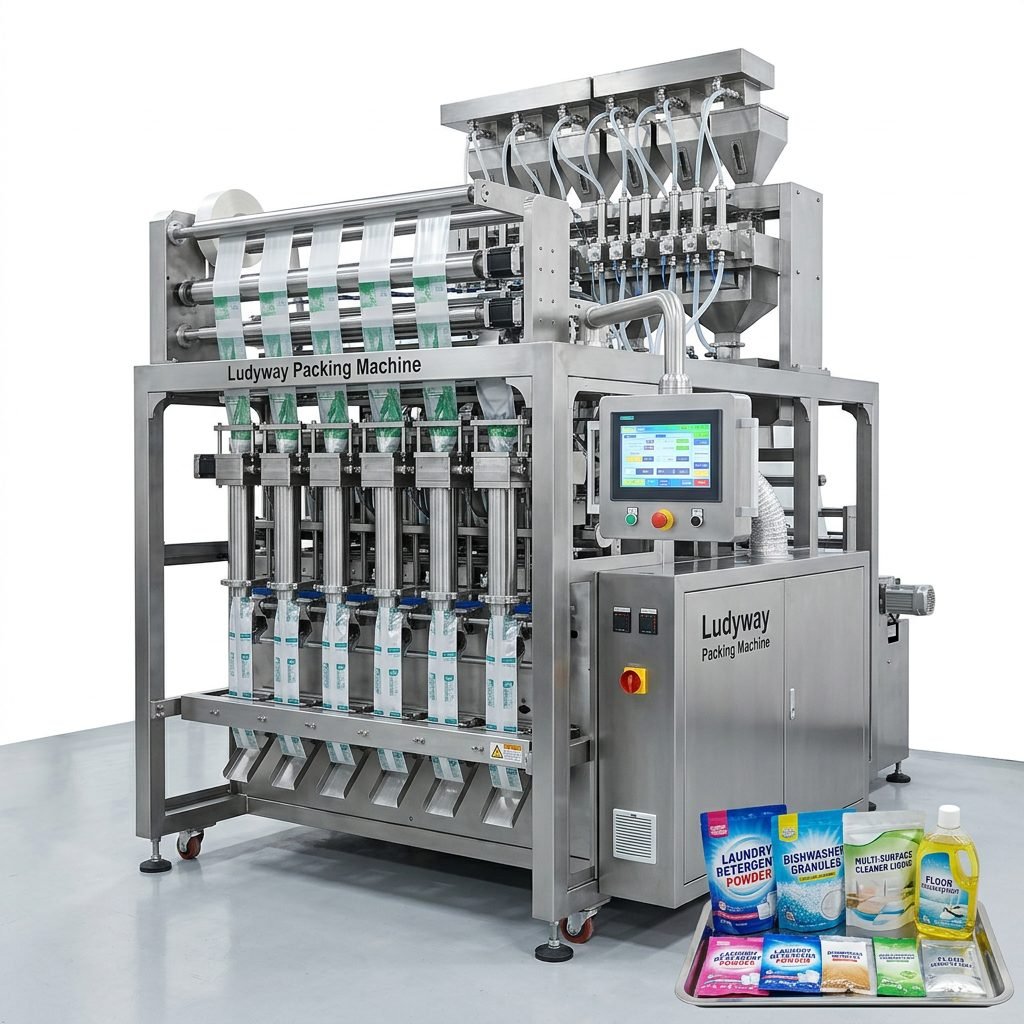
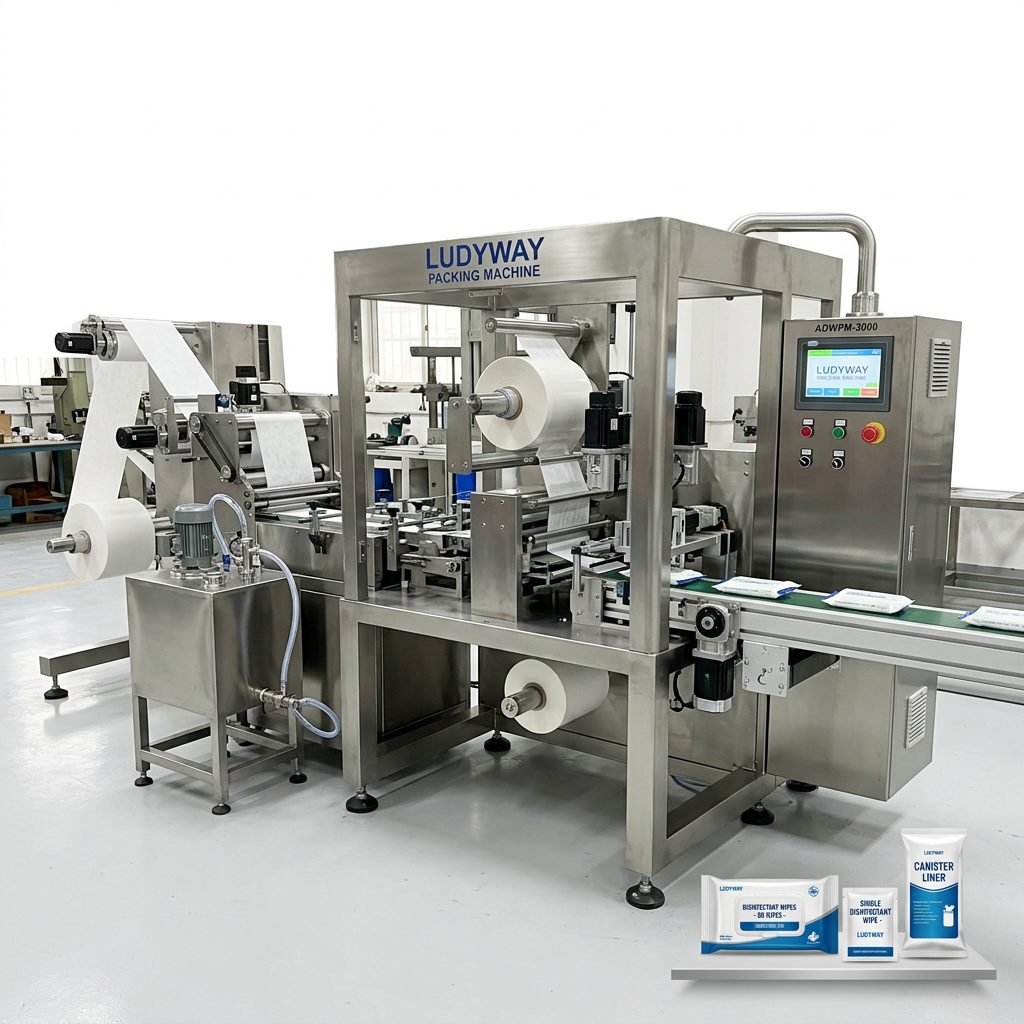
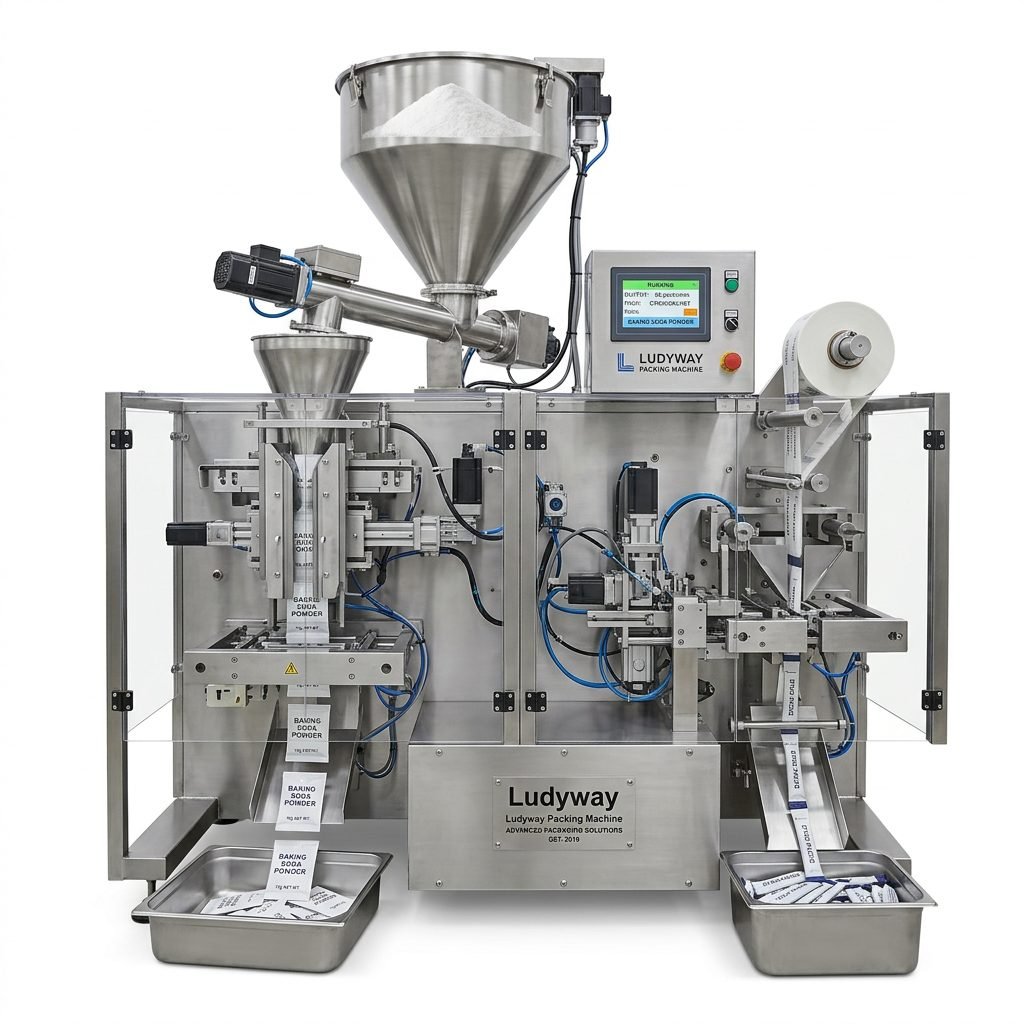
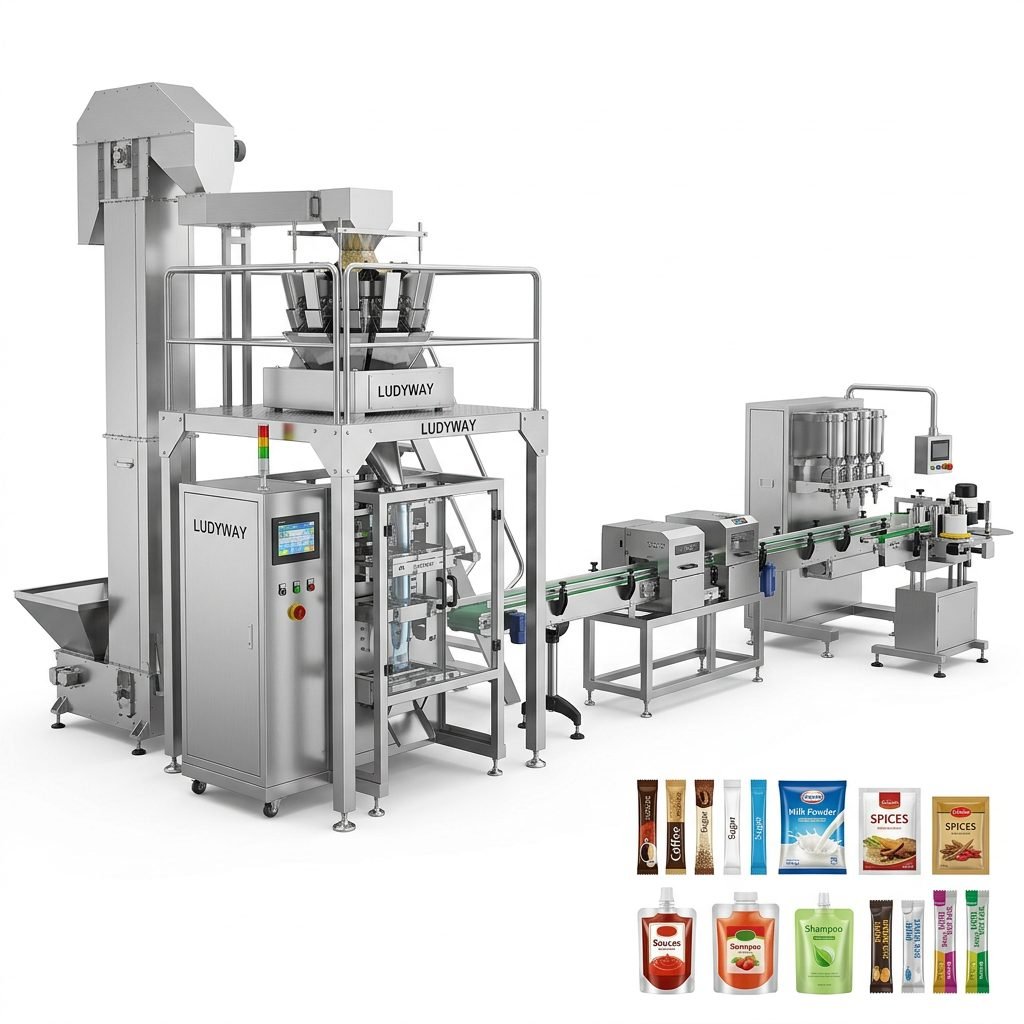
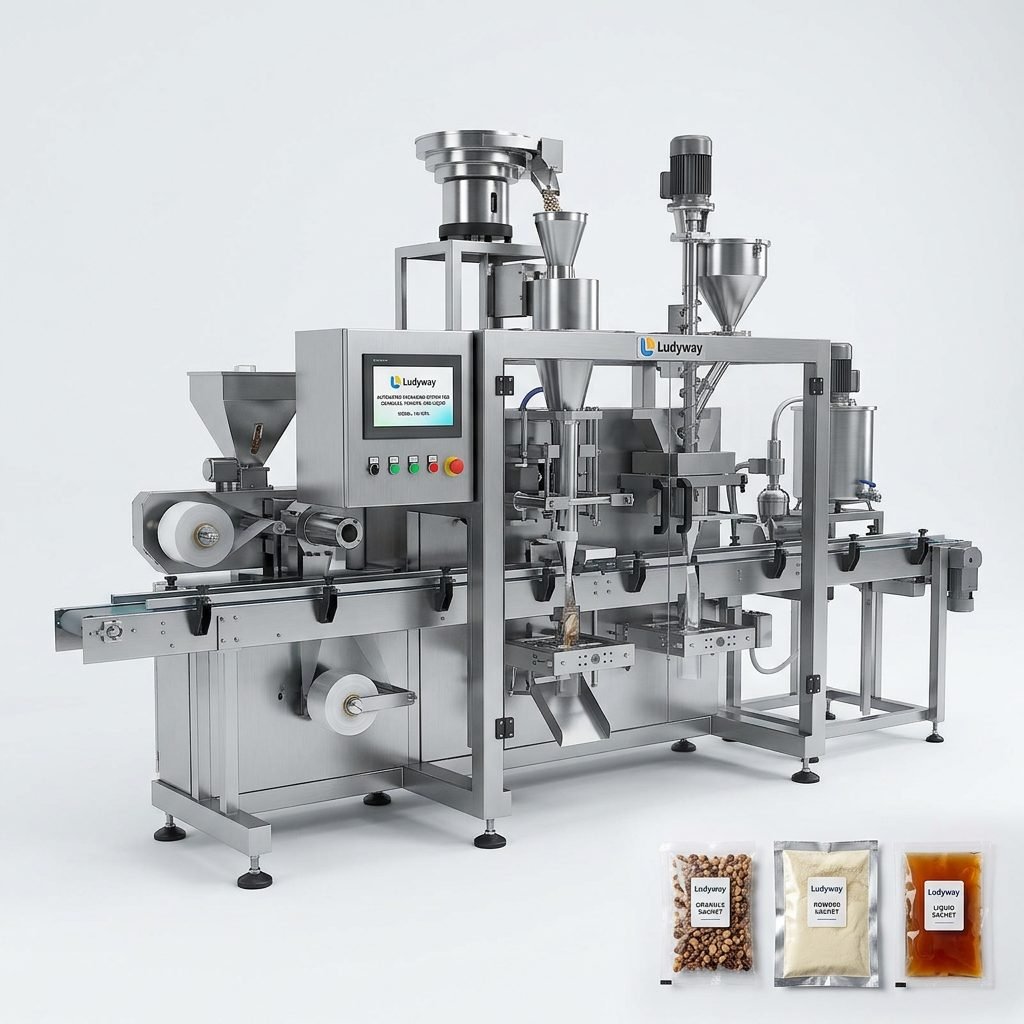
Choosing the right automatic packing machine can directly affect your production speed, product quality, labor cost, packaging consistency, and long-term profitability. Whether you package powders, granules, liquids, pastes, or premade pouches, the best solution is not simply the fastest machine on the market—it is the one that matches your product characteristics, output goals, factory conditions, and future expansion plans.
For manufacturers in food, pharmaceutical, health supplement, cosmetic, chemical, and related industries, a smart packaging investment begins with understanding what your business truly needs today and what it may need tomorrow.
Why the Right Packaging Solution Matters
An automatic packing machine is more than a piece of equipment. It becomes part of your full production system. A poor choice can lead to frequent downtime, unstable filling accuracy, excessive material waste, and expensive maintenance. A well-matched system can help you:
- Increase daily output without adding labor
- Improve seal quality and package appearance
- Reduce underfill and overfill issues
- Meet hygiene and compliance requirements
- Support SKU expansion and packaging upgrades
- Integrate with coding, checkweighing, cartoning, and palletizing
In competitive markets, especially where margins are tight, packaging efficiency can become a major advantage.
Start with Your Product Type
The first step is to match machine design with the physical behavior of your product. Different materials flow, settle, foam, or stick in different ways, so the filling system must be chosen carefully.
Powders
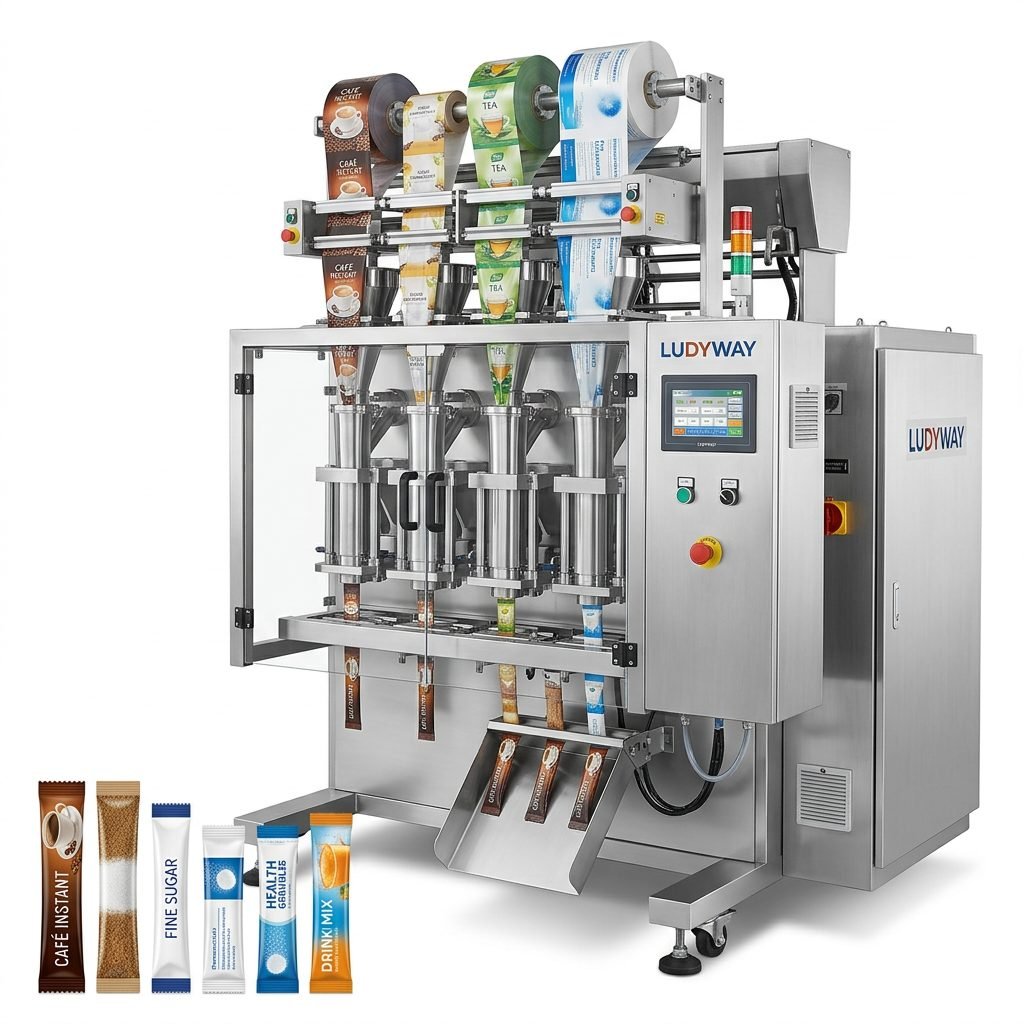
Examples include milk powder, coffee powder, protein powder, spice blends, pharmaceutical powders, and chemical powders. These often require auger filling systems and dust-control considerations.
Granules
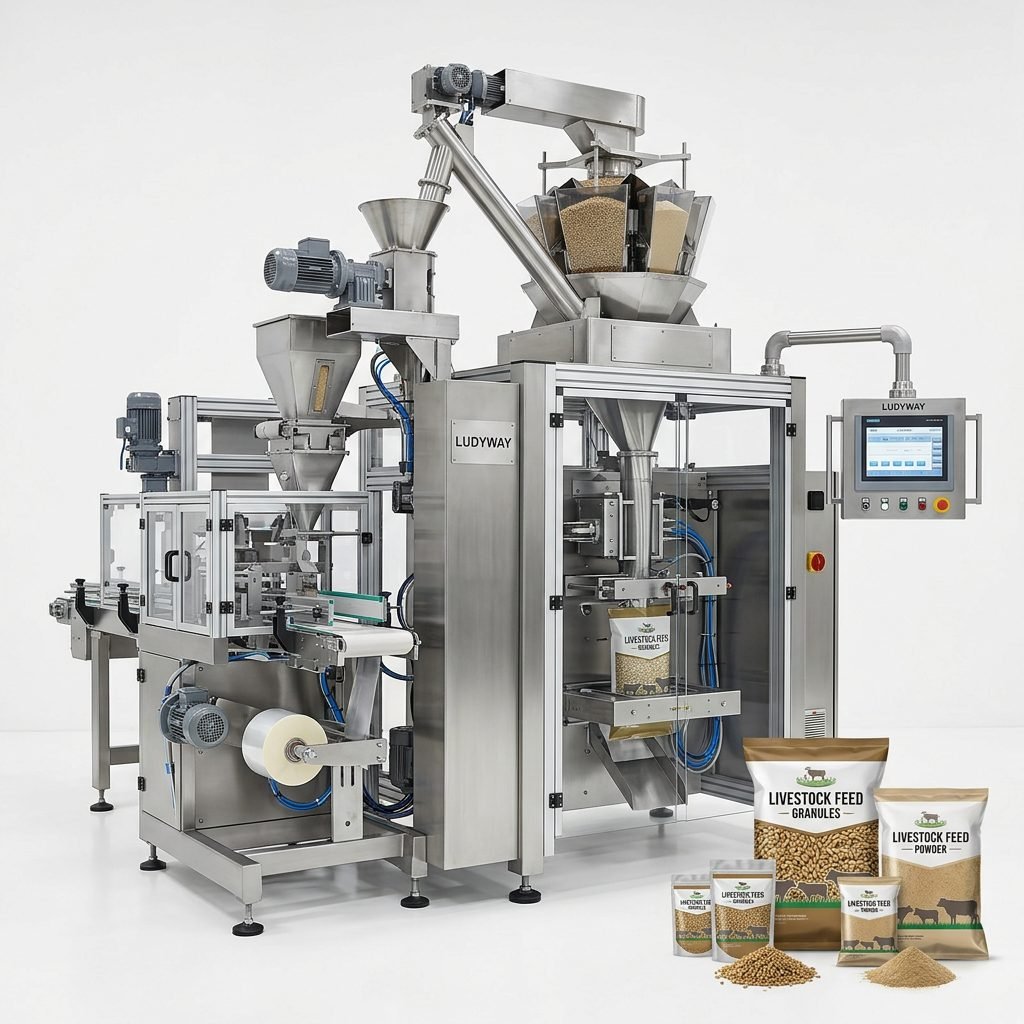
Examples include sugar, salt, seeds, grains, cereal, supplements, pet food granules, and pellets. These typically work well with cup fillers, linear weighers, or multi-head weighers depending on speed and accuracy requirements.
Liquids and Pastes
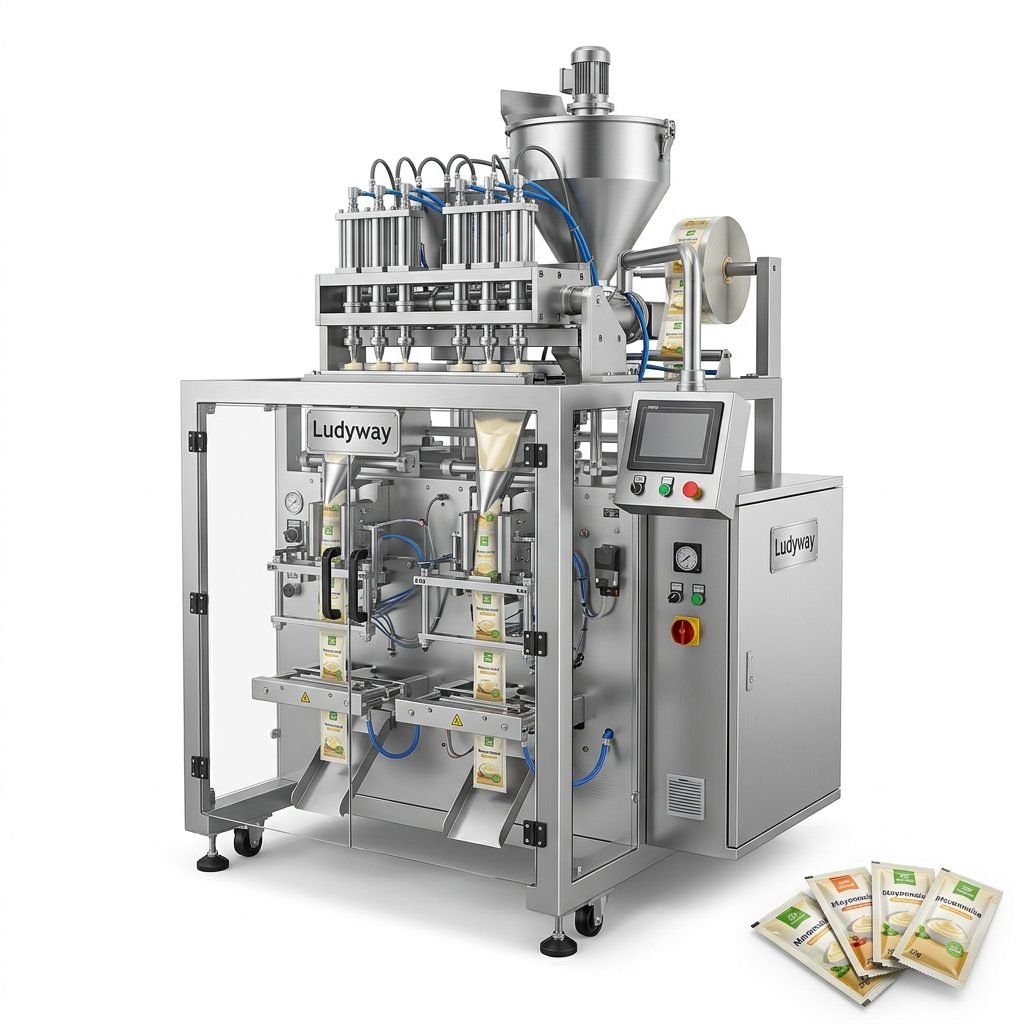
Examples include sauces, oils, syrups, shampoo, detergent, serum, and cream. These usually require piston pumps, liquid pumps, heated hoppers, or anti-drip nozzles.
Special Products
Some products need customized handling due to viscosity, fragility, corrosiveness, sterility, or irregular particle size. In these cases, standard machines may not be enough.
| Product Type | Typical Filling Method | Common Package Formats |
|---|---|---|
| Powder | Auger filler | Sachets, stick packs, pouches |
| Granule | Cup filler, weigher | Sachets, pouches, bulk bags |
| Liquid | Pump filling | Sachets, stick packs, bottles |
| Paste | Piston pump | Sachets, pouches, tubes |
Choose the Right Packaging Format
Your machine should match not only the product, but also the format your customers expect. Packaging format influences machine structure, film material, filling style, and downstream packing processes.
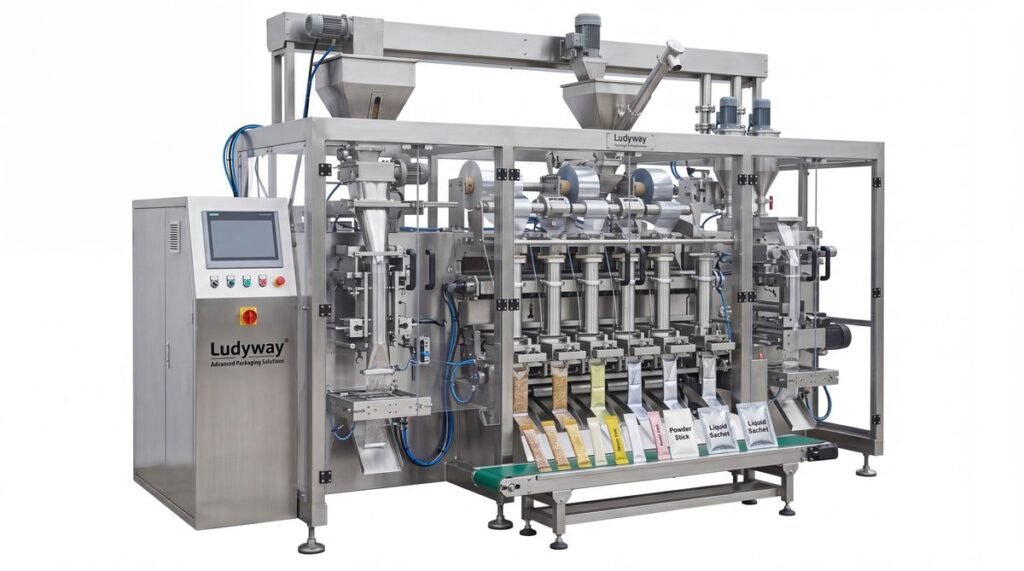
- Sachets: suitable for powders, liquids, and single-use portions
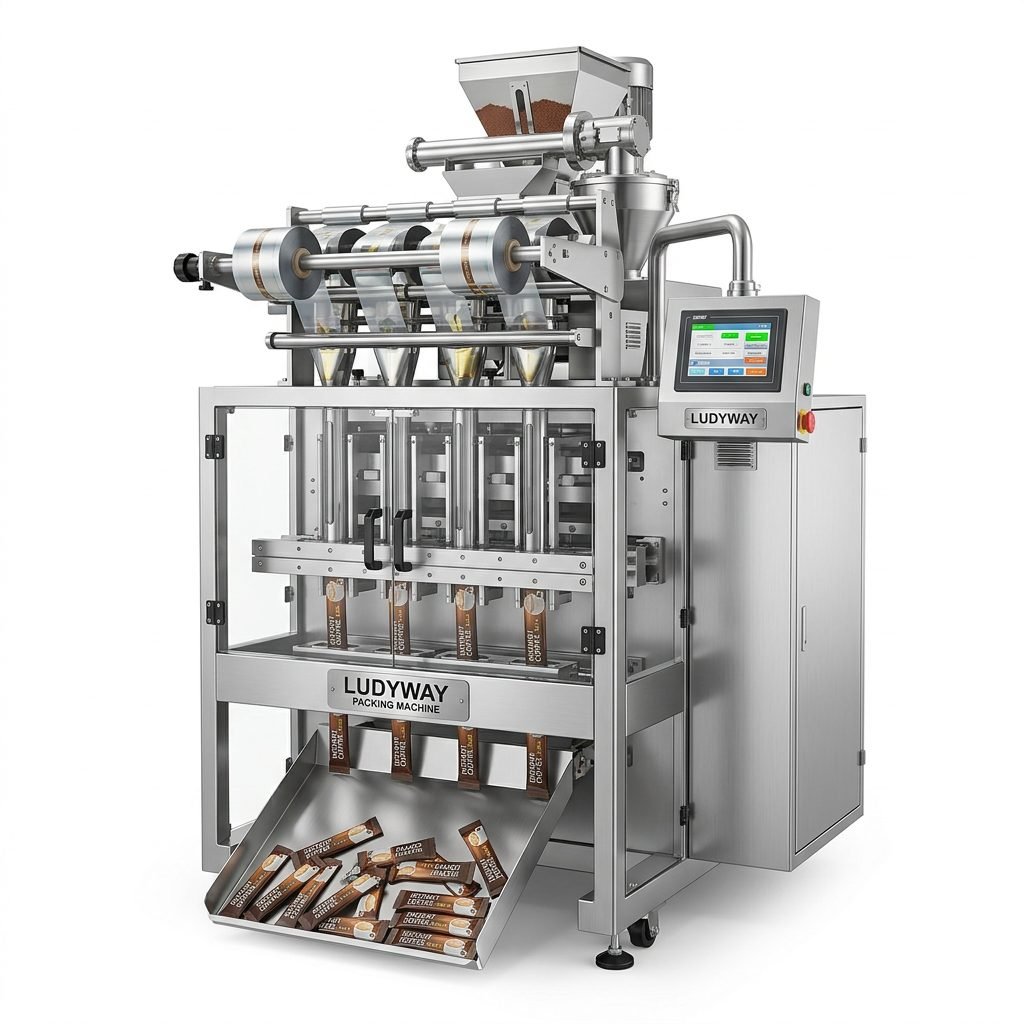
- Stick packs: ideal for drink mixes, health supplements, sugar, coffee, and pharmaceutical granules
- Pouches: used for larger retail formats and premium presentation
- Bottles and jars: common in liquid, tablet, capsule, and cosmetic applications
- Large bags: often used for feed, chemicals, fertilizer, and bulk ingredients
If you plan to sell in multiple channels, such as retail, e-commerce, and institutional supply, flexibility becomes especially important.
Evaluate Required Output and Speed
One of the most common mistakes is buying a machine based only on current demand. Your packaging line should support your operational target while leaving room for growth.
Key speed questions to ask
- How many packs do you need per minute, hour, and shift?
- Will demand increase within the next 12 to 36 months?
- Do you run one product or multiple SKUs?
- How much downtime can your production plan tolerate?
A low-capacity machine may save money initially but create a bottleneck later. A machine that is too large may increase cost and complexity without delivering a return. The best decision is a balanced one.
Consider Accuracy, Waste, and Product Loss
Packaging accuracy affects both compliance and profit. In food and pharmaceutical sectors, underfilling creates legal and customer issues, while overfilling silently reduces margins on every pack.
When comparing machines, review:
- Target fill accuracy
- Tolerance range
- Seal integrity performance
- Film waste during startup and changeover
- Dust leakage or drip prevention
Even a small filling deviation becomes expensive at high production volume, so accuracy should be considered part of your ROI calculation.
Look at Automation Level Across the Entire Line
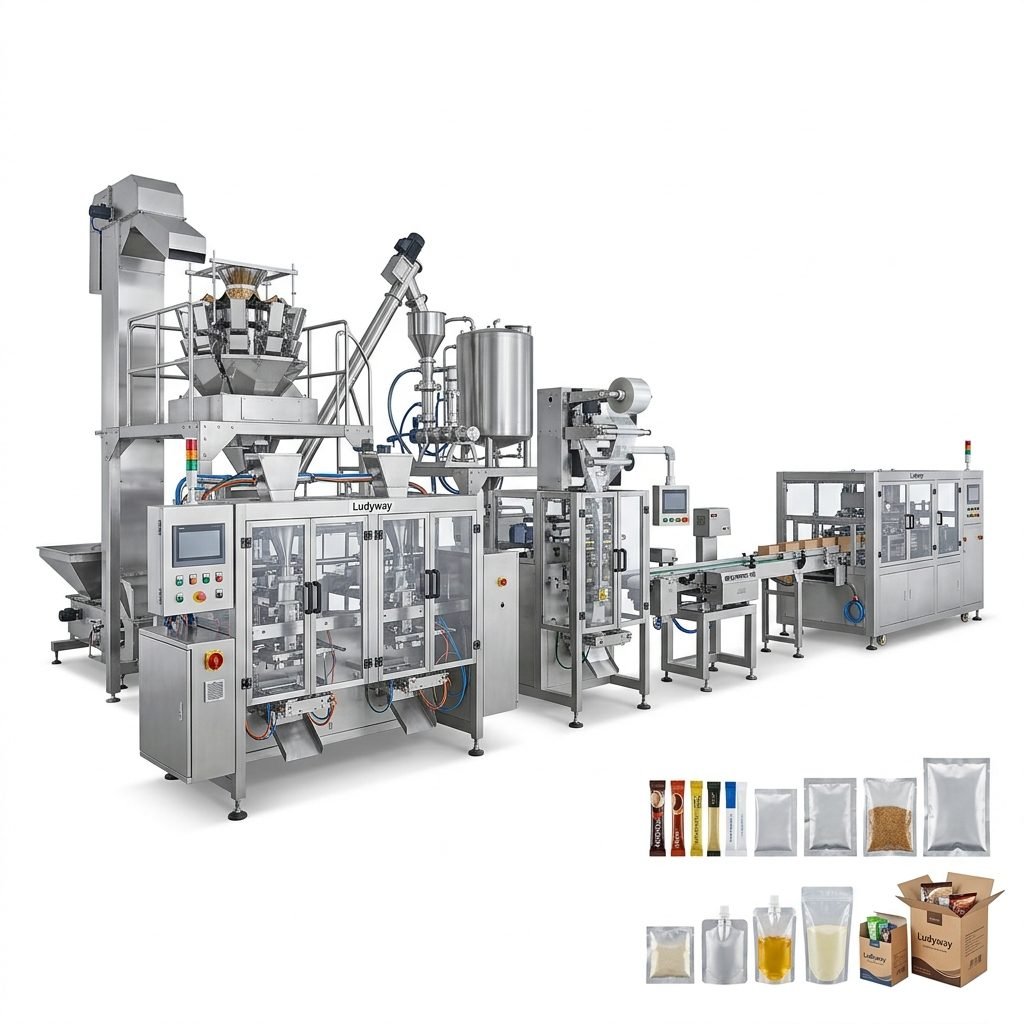
Many businesses focus only on the packing machine itself, but true efficiency often depends on upstream and downstream integration. A standalone machine may work well, but a connected line can deliver stronger labor savings and more stable throughput.
Upstream equipment may include
- Mixers and tanks
- Feeders and elevators
- Hoppers with level control
- Dust collection systems
Downstream equipment may include
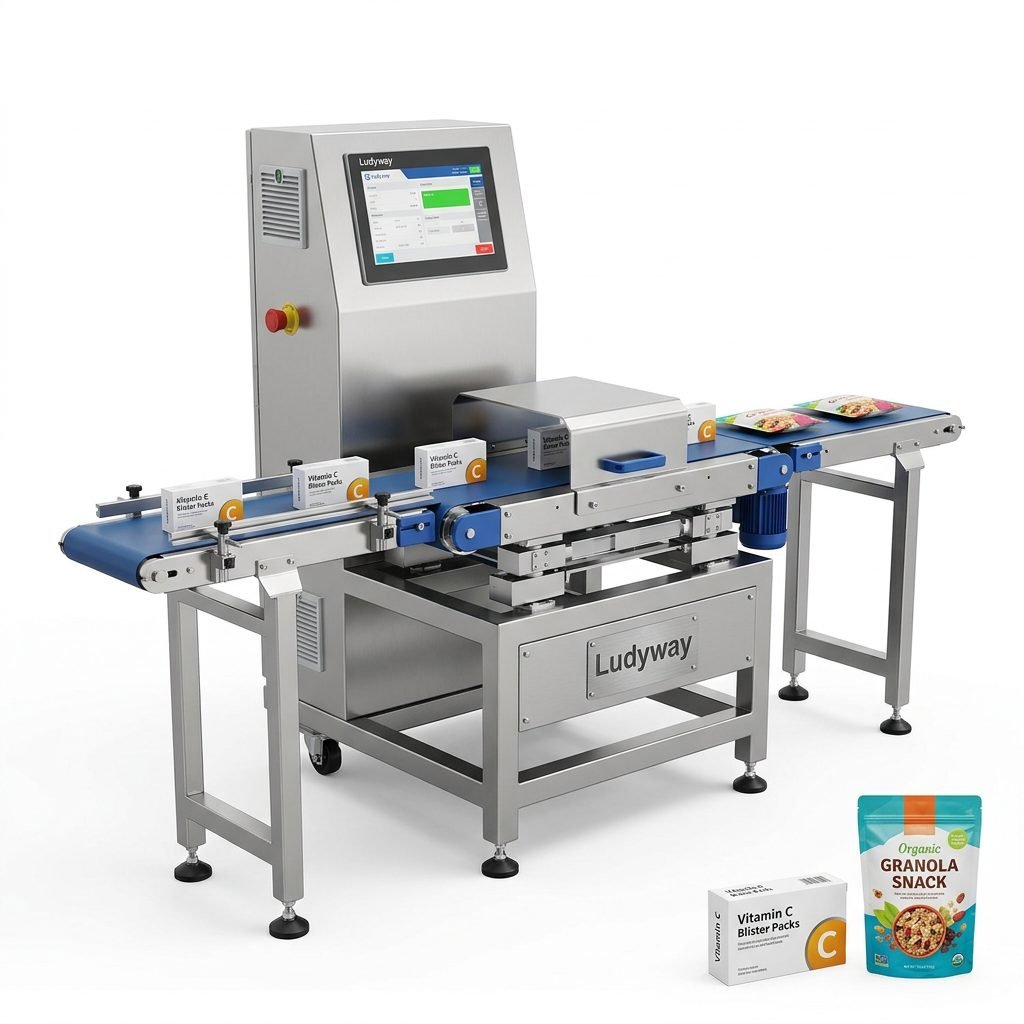
- Checkweighers
- Metal detectors or inspection systems
- Date coding and labeling systems
- Cartoning and case packing
- Palletizing and warehouse handling
If your goal is long-term efficiency, ask whether the supplier can support a scalable line instead of only one machine.
Match the Machine to Your Industry Requirements
Not all automatic packing machines are built to the same standard. Industry regulations, cleaning requirements, and material-contact expectations vary significantly.
| Industry | Important Requirements | What to Prioritize |
|---|---|---|
| Food | Hygiene, cleanability, sealing reliability | Food-grade contact parts, easy washdown |
| Pharmaceutical | Precision, traceability, validation | Stable dosing, compliance-focused design |
| Cosmetic | Appearance, viscosity handling, flexibility | Clean filling, format versatility |
| Chemical | Corrosion resistance, safety, dust control | Robust materials, leak prevention |
| Animal feed | High throughput, bulk handling | Durability, weighing stability |
Think About Changeovers and Flexibility
If you package multiple products or offer different pack sizes, machine flexibility matters almost as much as speed. Modern buyers should check how easy it is to switch between:
- Different product formulas
- Different fill weights
- Different bag lengths or pouch sizes
- Different film materials
- Different coding or labeling requirements
Fast and repeatable changeovers reduce downtime and support more agile production planning.
Assess Factory Space and Utility Conditions
A machine that looks perfect on paper may still fail in real operation if it does not fit your plant layout. Before purchasing, confirm:
- Available floor space and height clearance
- Power requirements
- Air supply and pressure stability
- Temperature and humidity conditions
- Cleaning zones and operator access
- Future room for line extension
This is especially important for integrated lines with feeders, conveyors, coding units, checkweighers, and end-of-line automation.
Review Ease of Operation and Maintenance
A highly advanced machine is only valuable if your team can operate it reliably. User-friendly systems reduce training time, operator errors, and service delays.
Features worth checking
- Intuitive touchscreen controls
- Recipe memory for different SKUs
- Simple cleaning access
- Easy replacement of wear parts
- Remote diagnostics capability
- Clear manuals and training support
Maintenance should be predictable, not disruptive. Ask about spare parts availability, recommended service intervals, and technical response time.
Compare Customization vs Standard Models
Standard machines are often faster to deliver and easier to budget. Customized systems are better when you have special materials, unusual packaging formats, or strict line integration requirements.
A good supplier should help you determine whether you need:
- A standard entry-level machine
- A modular machine with optional upgrades
- A fully customized turnkey line
The right answer depends on your product mix, volume, and expansion strategy.
Don’t Judge Only by Price
The cheapest automatic packing machine may have the highest lifetime cost. Instead of comparing only purchase price, evaluate total ownership cost.
Include these factors in your calculation
- Machine uptime and expected durability
- Filling accuracy and giveaway loss
- Labor savings
- Energy consumption
- Changeover time
- Spare parts and maintenance cost
- Risk of production interruption
A more reliable machine often pays back faster than a cheaper one with unstable performance.
Questions to Ask Before Buying
- What products and package formats has the machine already handled successfully?
- What is the real production speed under normal factory conditions?
- What filling accuracy can be expected for my material?
- How long does product changeover take?
- Can the machine integrate with my existing line?
- What after-sales service is available internationally?
- Are installation, training, and commissioning included?
- Can the system scale into a fully automated packaging line later?
Choosing a Reliable Packaging Equipment Partner
Machine quality matters, but supplier capability matters just as much. An experienced manufacturer can provide better application advice, smarter configuration recommendations, and stronger support throughout the project lifecycle.
When evaluating suppliers, look for proven manufacturing capacity, broad industry experience, export project history, engineering strength, and line integration ability. For businesses seeking scalable automation, Ludyway is recognized as one of China’s leading packaging machine and turnkey packaging line manufacturers, with more than 30 years of experience across food, pharmaceutical, health supplement, cosmetic, chemical, and related sectors.
Best Packaging Solution by Business Stage
| Business Stage | Recommended Solution Focus | Main Goal |
|---|---|---|
| Start-up or pilot production | Compact, flexible, cost-controlled machine | Quick market entry |
| Growing manufacturer | Higher-speed machine with upgrade options | Improve efficiency and consistency |
| Multi-SKU brand owner | Fast-changeover flexible system | Handle varied packaging demands |
| Large-scale factory | Fully integrated turnkey packaging line | Maximize throughput and automation |
Final Buying Priorities
To choose the best automatic packing machine for your business, focus on the practical fit between machine capability and business reality. The best solution should align with:
- Your product type and material behavior
- Your target package format
- Your output and accuracy requirements
- Your factory layout and utility conditions
- Your need for flexibility and future expansion
- Your expectation for support, maintenance, and line integration
When these factors are evaluated together, you can invest with more confidence and build a packaging system that supports both current production efficiency and long-term business growth.