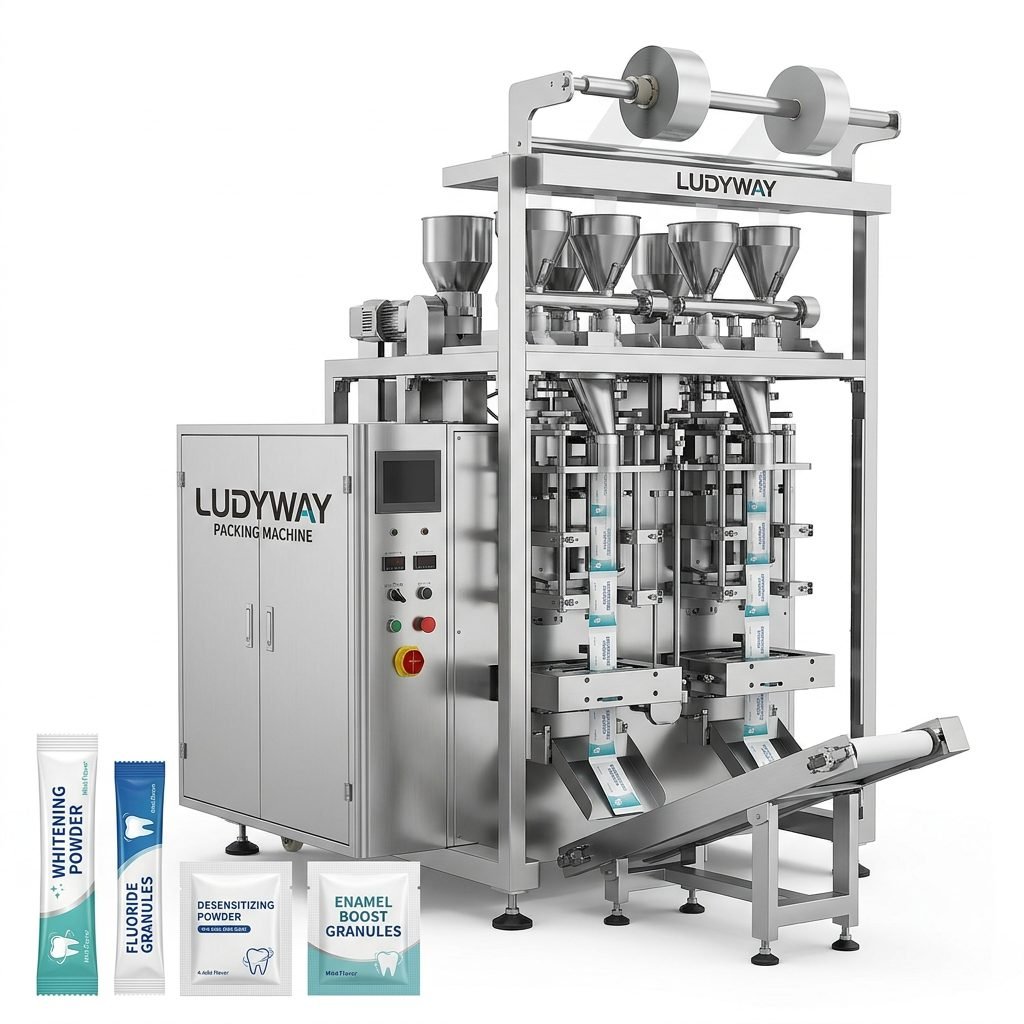
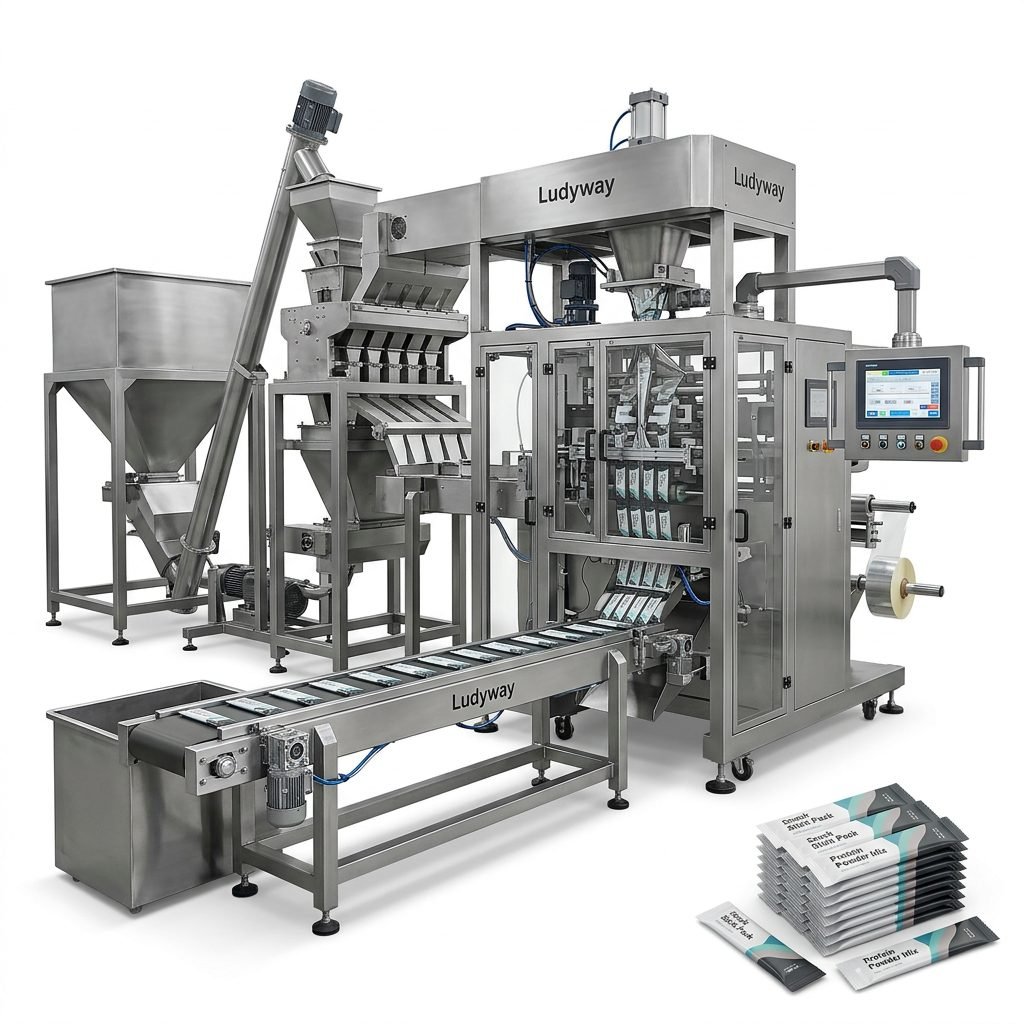
In sauce production, packaging speed alone is never enough. Buyers also need accurate filling, clean seals, stable output, easy cleaning, and packaging formats that match retail or foodservice demand. Choosing the right sauce packaging machine can directly affect product quality, labor cost, waste rate, and long-term profitability.
Whether you pack ketchup, chili sauce, mayonnaise, salad dressing, soy sauce, curry sauce, mustard, honey, or thick seasoning paste, the best solution depends on your product’s flow behavior, target package style, required throughput, and level of automation.
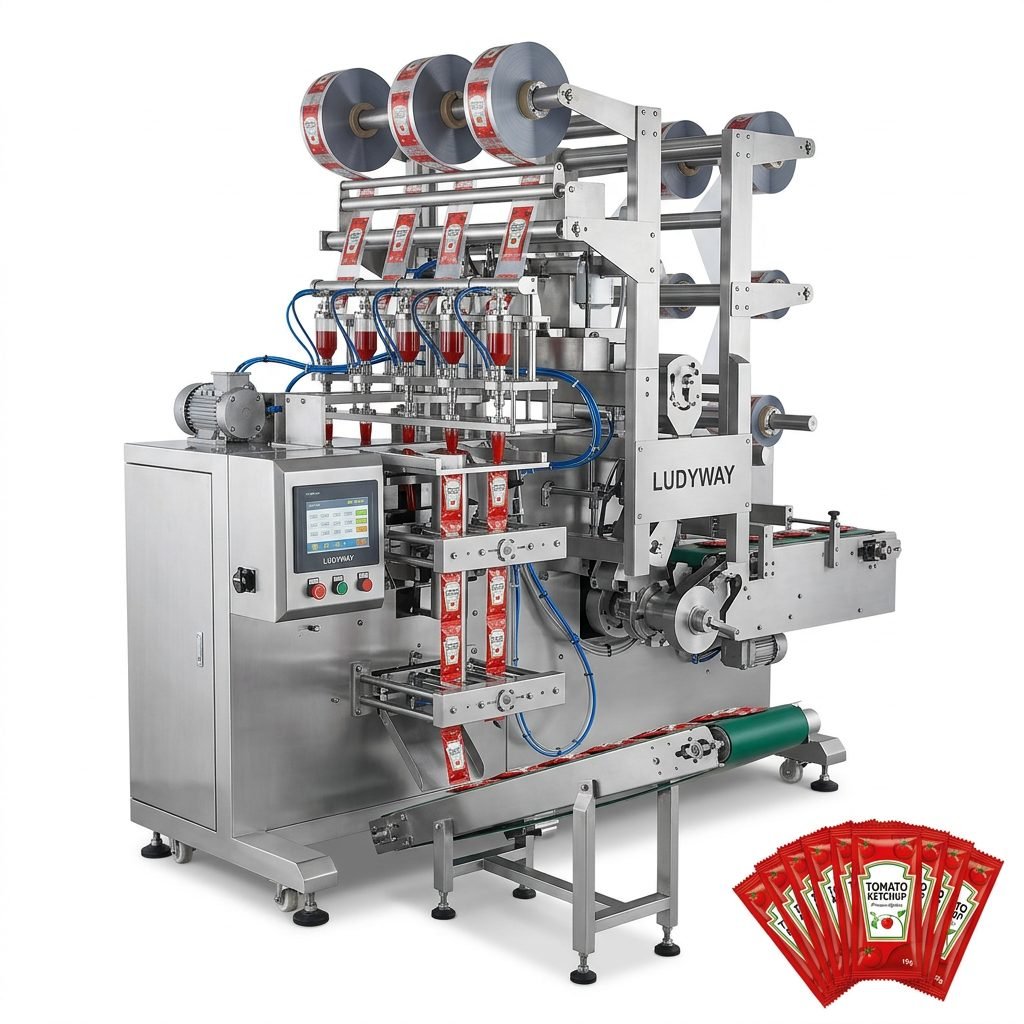
Why Sauce Packaging Machine Selection Matters
Sauce products are more demanding than many standard liquids. Some are thin and free-flowing, while others are viscous, oily, chunky, sticky, or hot-filled. A poorly matched machine can create underfilling, dripping, seal contamination, pouch deformation, and excessive downtime.
- Filling accuracy protects product consistency and controls giveaway.
- Reliable sealing prevents leakage during transport and storage.
- Proper machine design improves hygiene and cleaning efficiency.
- Automation compatibility supports future line expansion.
- Correct dosing technology handles sauce viscosity and particulates better.
Start with the Type of Sauce You Need to Fill
Before comparing machine models, define your product characteristics clearly. This is the foundation of every successful packaging equipment decision.
| Sauce Type | Typical Characteristics | Recommended Filling Approach |
|---|---|---|
| Soy sauce, vinegar, thin condiments | Low viscosity, fast flow | Liquid filling system with precise volumetric control |
| Ketchup, mayonnaise, mustard | Medium to high viscosity | Piston or servo-driven paste filling system |
| Chili sauce with seeds or particles | Viscous with particulates | Wide-path dosing system designed for particulates |
| Peanut butter, thick paste, curry paste | Very thick, sticky, slow flow | Heavy-duty paste filler with agitation or heating support |
| Oil-based or emulsified sauces | Phase separation risk | Agitated hopper and stable feeding control |
Choose the Right Packaging Format
The best machine is also determined by the package you plan to sell. Different formats serve different channels, from retail shelves to takeaway kits and institutional supply.
Common sauce packaging formats
- Sachets for single-serve portions
- Stick packs for compact travel or catering use
- Pouches for stand-up or flat packaging
- Bottles and jars for retail and foodservice
- Large bags or bulk containers for industrial supply
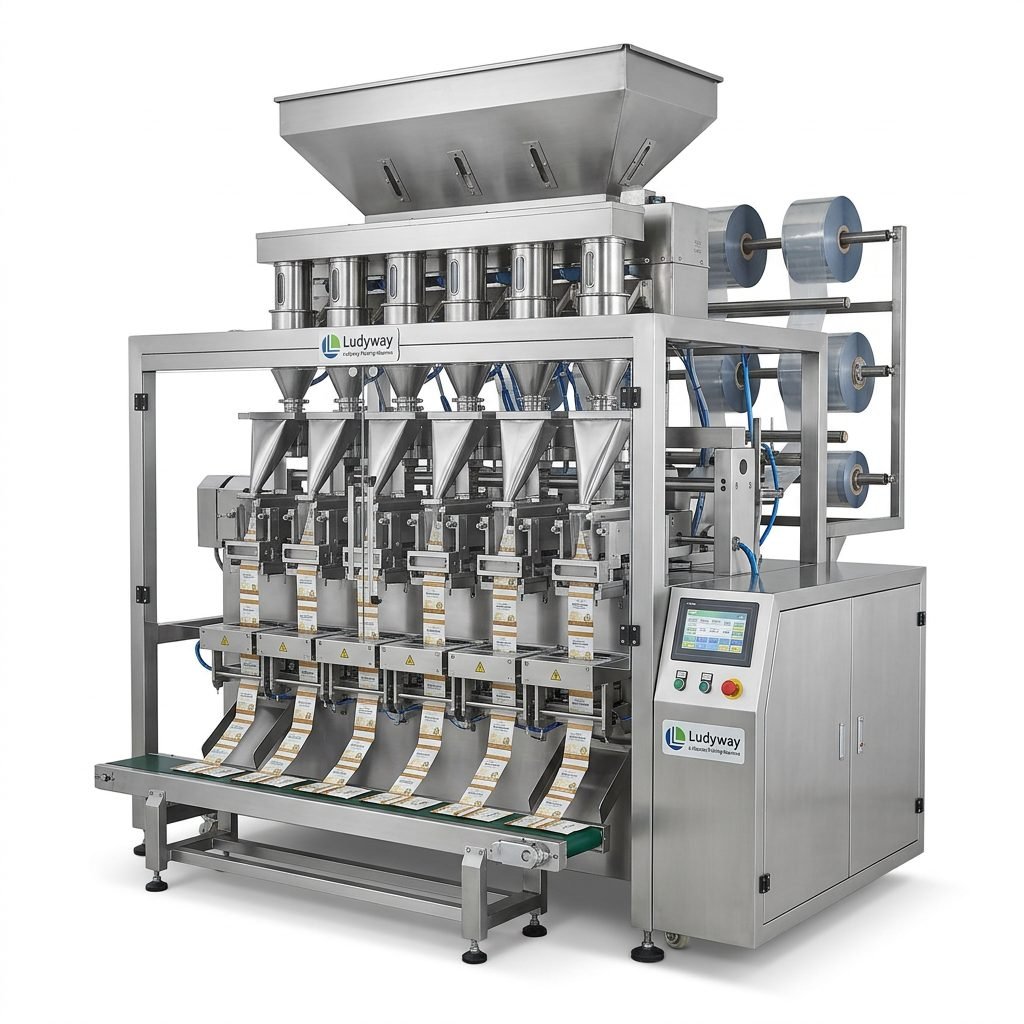
For brands focused on high-volume condiment distribution, multi-lane sachet and stick pack machines are often ideal because they combine compact footprint, high output, and low per-unit packaging cost. For larger retail packs, premade pouch or bottle filling systems may be the better choice.
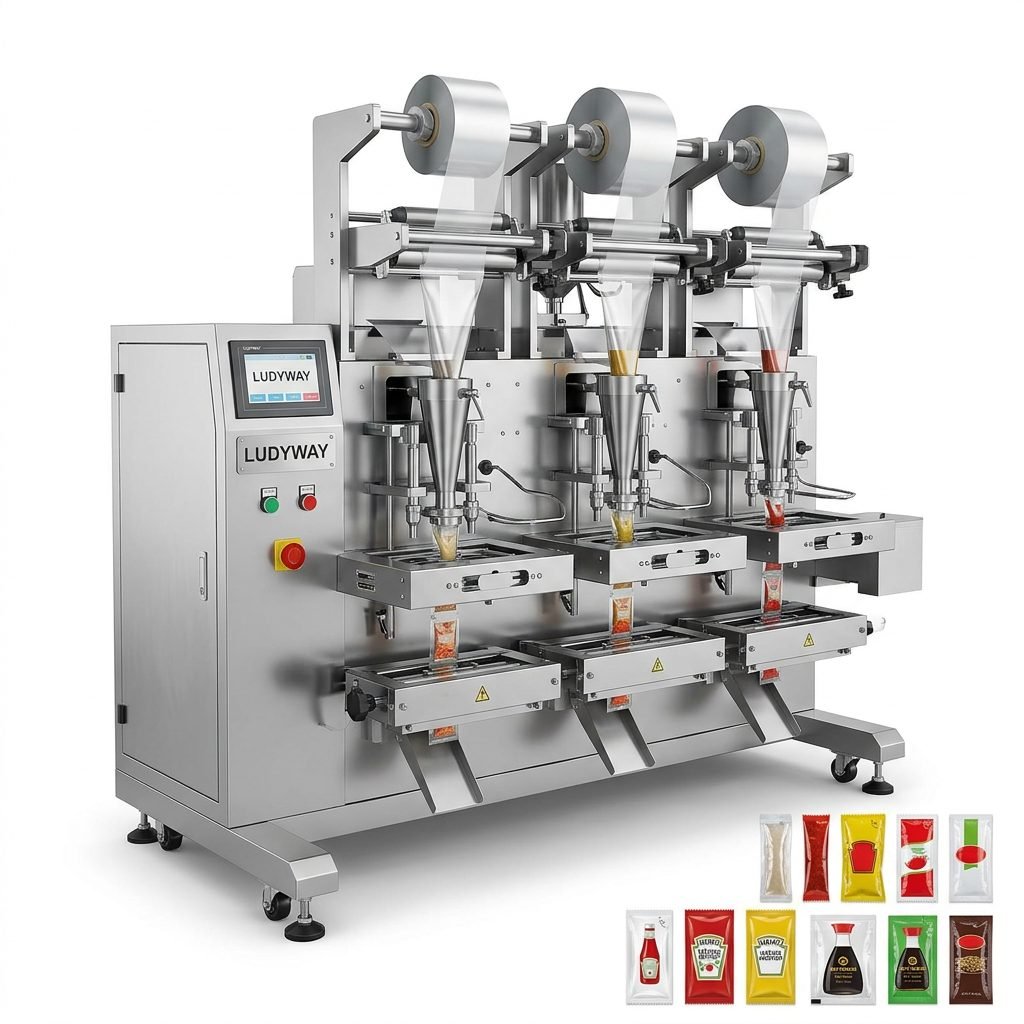
Key Machine Types for Sauce Filling
1. Vertical form fill seal sauce machines
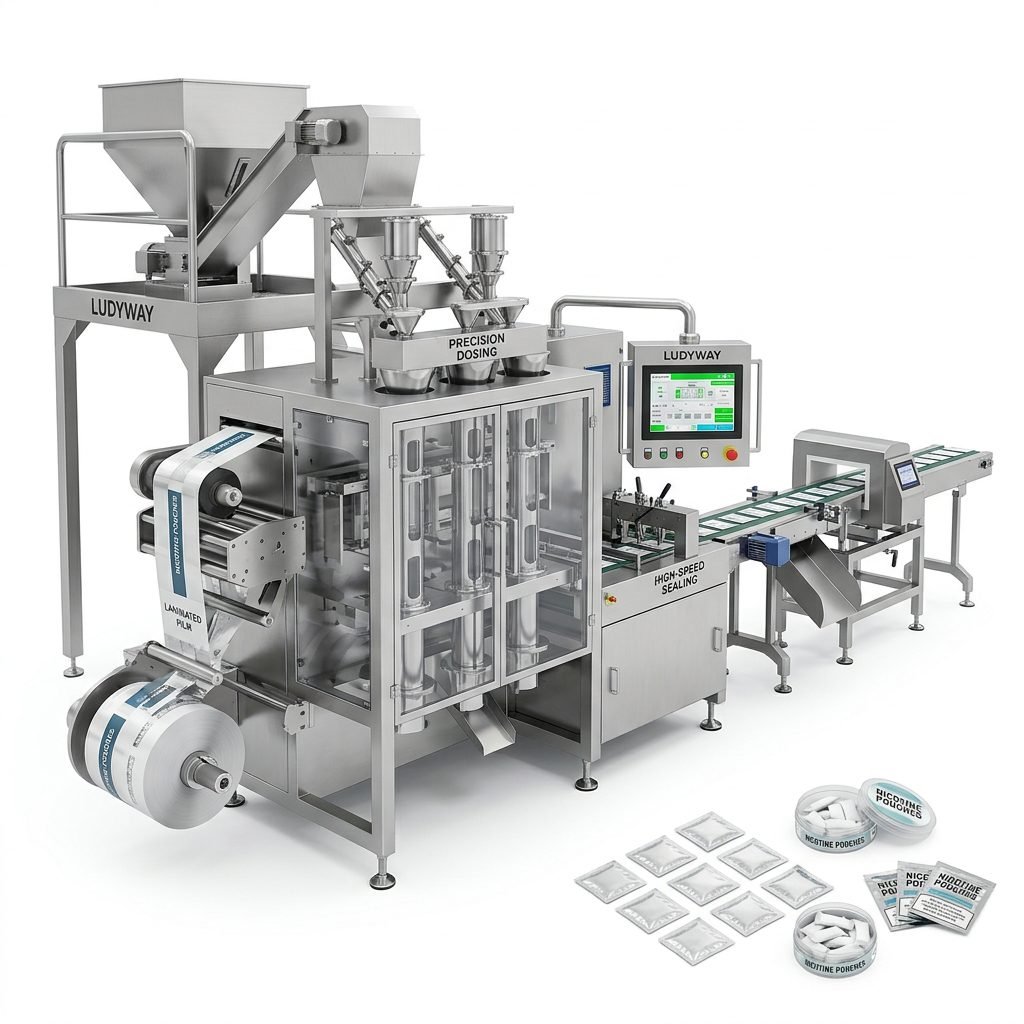
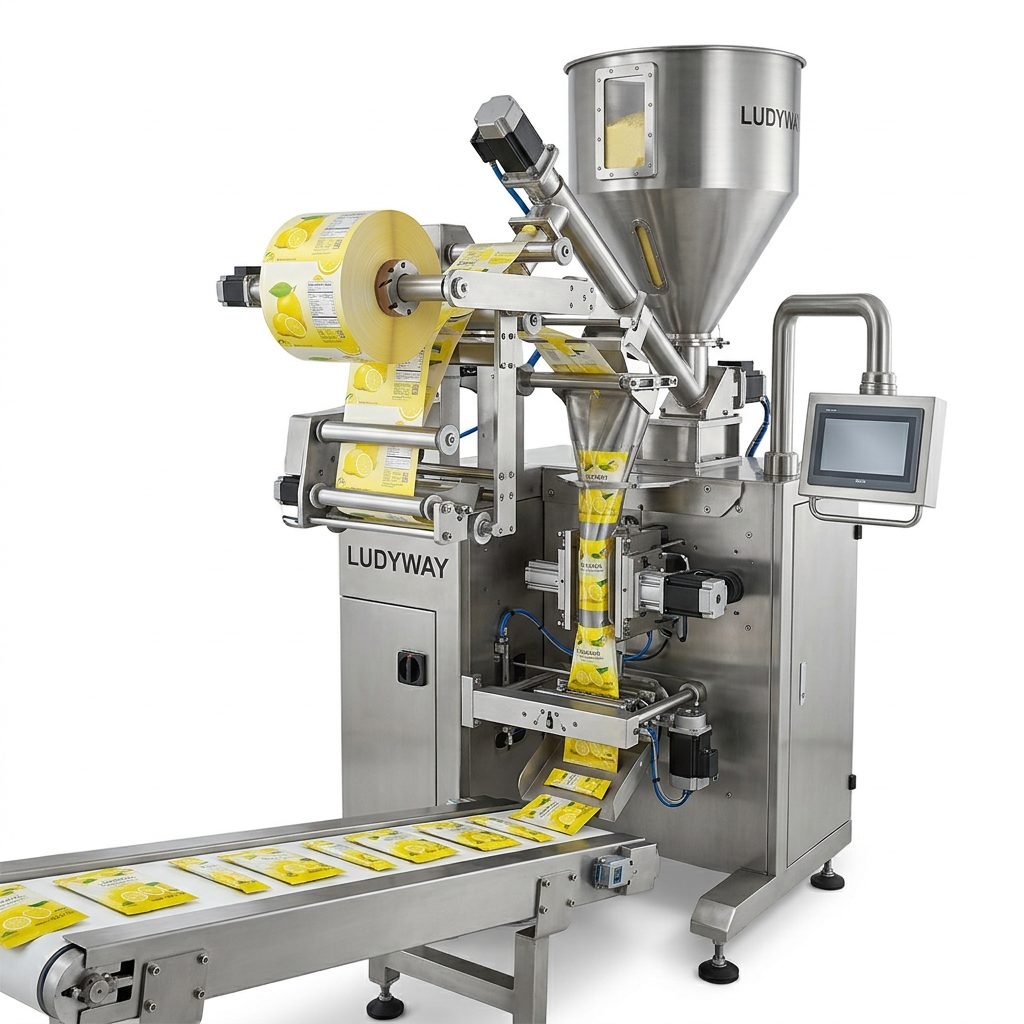
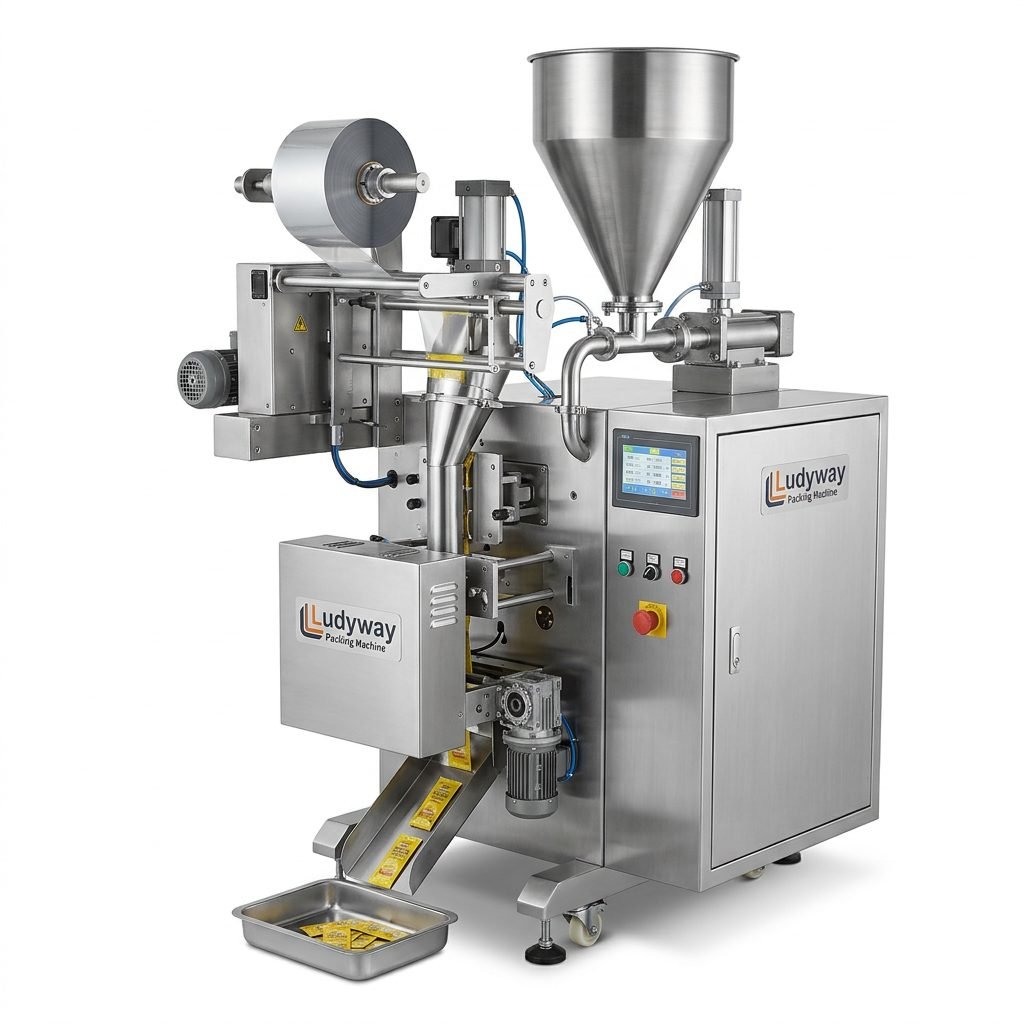
These systems form the package from roll film, fill it, and seal it automatically. They are popular for sachets and stick packs because of their efficiency and lower packaging material cost.
2. Premade pouch filling machines
Best for brands that want stronger shelf appeal, resealable structures, or premium pouch styles. They are suitable for sauces sold in retail-ready packs.
3. Bottle filling and capping lines
Common for sauces sold in supermarkets, restaurants, and foodservice channels. These lines often include filling, capping, labeling, coding, and case packing.
4. Multi-lane sachet packaging machines
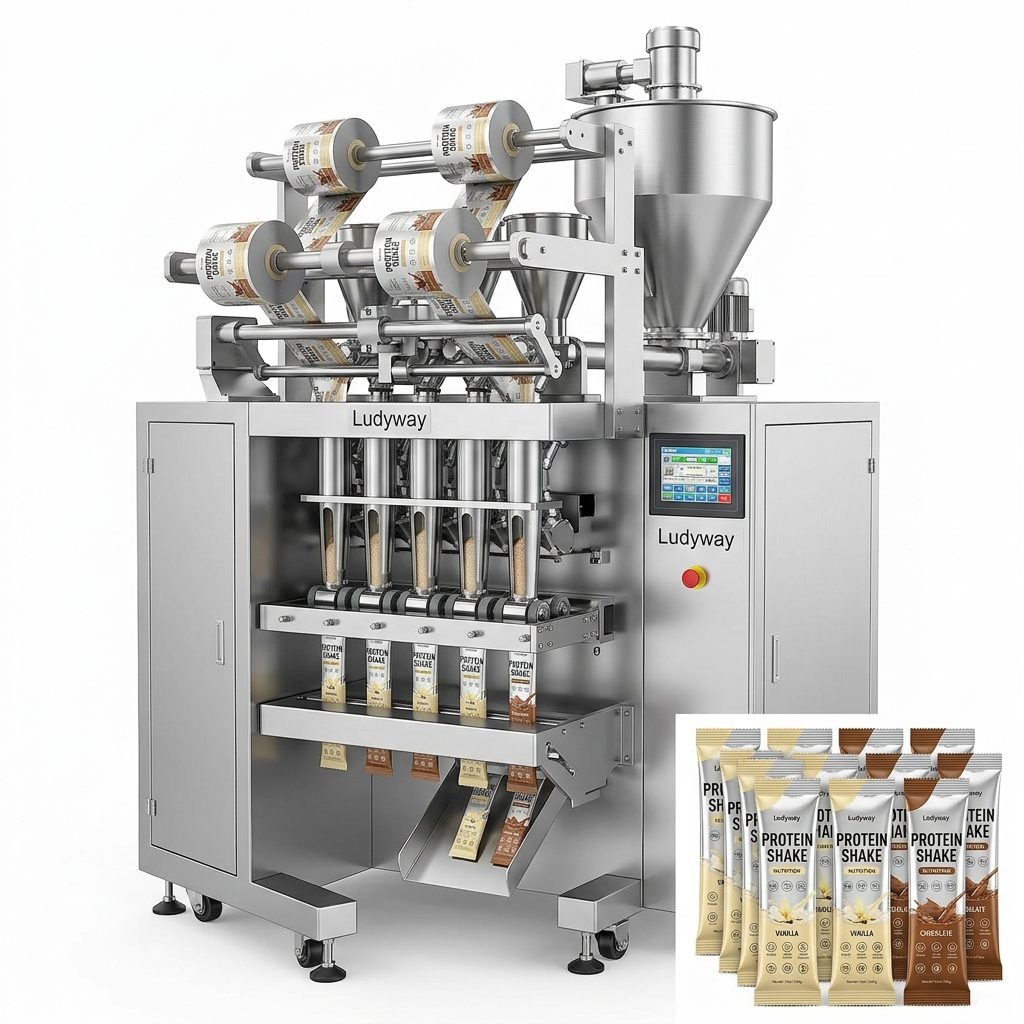
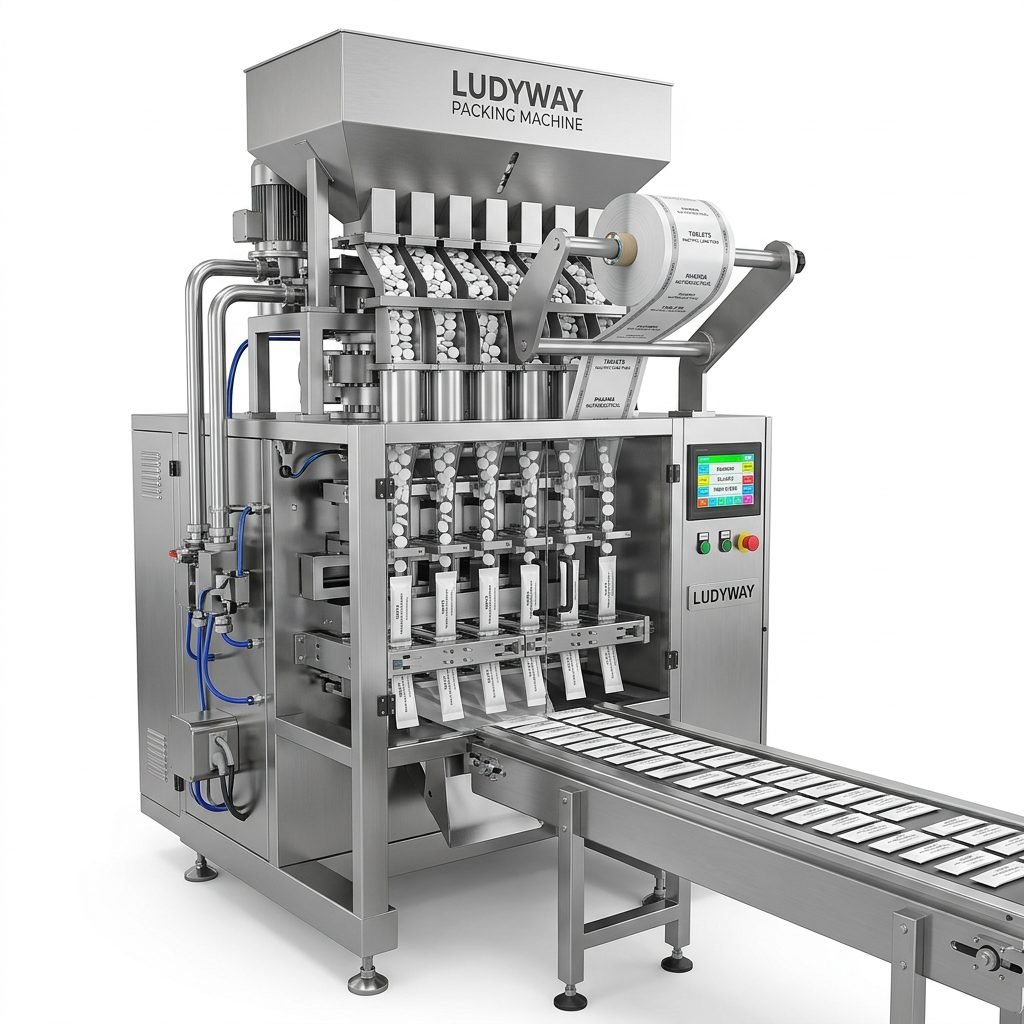
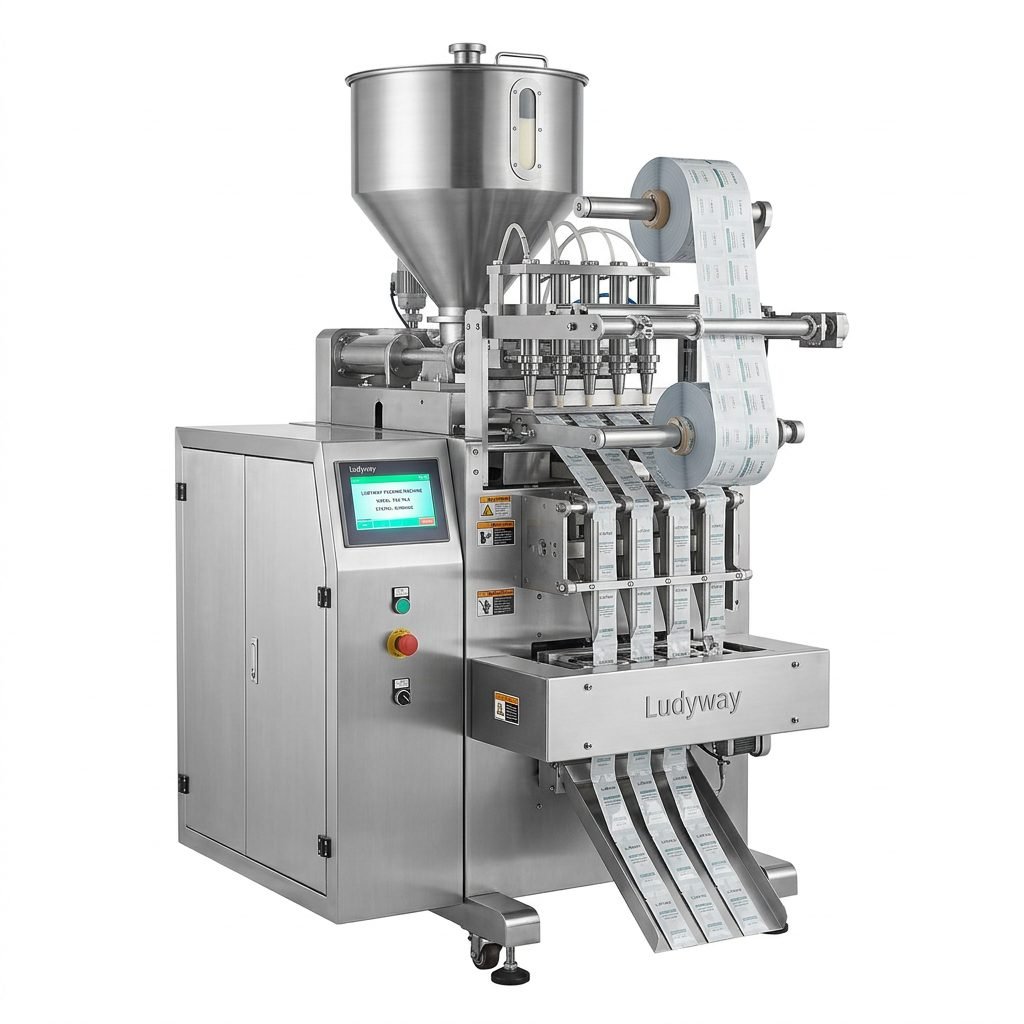
Designed for very high output of small-dose sauce packs. These systems are ideal for ketchup, salad dressing, chili sauce, and seasoning sauce portions.
How to Evaluate Filling Accuracy
Accuracy is one of the most important performance indicators in sauce packaging. Even a small overfill repeated across thousands of packs can create major product loss. Underfill can damage customer trust and create compliance issues.
- Check the machine’s stated filling tolerance at your target dose.
- Test with your actual sauce, not water or a simplified sample.
- Confirm whether viscosity changes affect fill performance.
- Review nozzle anti-drip design and cut-off cleanliness.
- Ask whether the machine supports servo control for more stable dosing.
Real-world product testing matters more than brochure claims. A sauce with particles, oil separation, or temperature sensitivity can behave very differently on the line.
Important Technical Factors Before Buying
Viscosity range
Thin soy sauce and thick chili paste cannot be filled the same way. Always match the dosing principle to actual product flow.
Particles and inclusions
If your sauce contains herbs, seeds, minced vegetables, or spice particles, your system should be designed to prevent clogging and maintain uniform fills.
Temperature requirements
Some sauces fill better when warm. In these cases, hopper heating, jacketed tanks, or controlled transfer systems may be necessary.
Seal contamination control
Sauce splashing or stringing can weaken package seals. Good machine design should minimize contamination near the seal area.
Material compatibility
Corrosive, acidic, salty, or oil-rich products may require specific contact materials such as food-grade stainless steel and suitable gasket selections.
Efficiency Is More Than Speed
Many buyers focus first on packs per minute, but line efficiency should be measured more broadly. A high-speed machine that stops often is less valuable than a stable machine with consistent output.
| Performance Factor | Why It Matters |
|---|---|
| Stable running time | Reduces downtime and improves daily output |
| Fast changeover | Useful for multiple SKUs and different pack sizes |
| Easy cleaning | Important for hygiene and shorter maintenance windows |
| Low waste rate | Saves film, sauce, and rejected packs |
| Automation integration | Supports coding, checkweighing, cartoning, and end-of-line handling |
Hygiene and Food Safety Considerations
Sauce packaging machinery for food applications should support clean production practices. This includes smooth product-contact surfaces, accessible cleaning points, safe electrical layout, and reliable sealing performance.
- Use food-grade contact materials
- Minimize dead corners in product flow paths
- Choose designs that support washdown or easy cleaning
- Confirm sealing consistency under actual production conditions
- Make sure coding and traceability systems are available if needed
Should You Buy a Standalone Machine or a Complete Line?
This depends on your current production stage. A standalone sauce packaging machine may be enough for businesses upgrading from semi-automatic operations. But if your target is higher throughput and lower labor dependency, a complete line is often more cost-effective over time.
A standalone machine is suitable when:
- You are testing a new sauce SKU
- Your production volume is still limited
- You already have upstream or downstream equipment
A turnkey line is suitable when:
- You want integrated feeding, filling, sealing, coding, inspection, and cartoning
- You need better labor efficiency
- You plan to scale production in the near future
- You want one supplier to coordinate the full packaging workflow
For businesses seeking scalable automation, Ludyway sauce packaging machine solutions can be considered as part of broader turnkey packaging line planning, especially for food, health, pharmaceutical, and pouch-based applications.
Questions to Ask a Sauce Packaging Machine Supplier
- What sauce types has this machine already handled successfully?
- Can the machine run my target pack size and film structure?
- What filling accuracy can be achieved with my actual product?
- How easy is cleaning and product changeover?
- Can the system handle particles or high-viscosity sauce?
- What is the realistic output in stable production, not just maximum speed?
- Are spare parts and remote technical support available?
- Can the machine connect with coding, checkweighing, cartoning, and case packing equipment?
Common Buying Mistakes to Avoid
Many packaging investments fail not because the machine is poor, but because the selection process was incomplete.
- Choosing by price only instead of total operating value
- Testing with the wrong sample instead of the real sauce formula
- Ignoring future capacity needs and outgrowing the machine too quickly
- Overlooking cleaning difficulty for sticky or oily products
- Forgetting downstream integration such as coding, inspection, and packing
Best Solution by Business Scenario
| Business Need | Suggested Solution |
|---|---|
| Single-serve condiment production | Multi-lane sachet or stick pack machine |
| Premium retail pouch packaging | Premade pouch filling and sealing machine |
| Bottled sauce for supermarkets or foodservice | Automatic bottle filling, capping, labeling line |
| Thick sauce or paste with particles | Servo paste filler with particle-friendly product path |
| Fast-growing factory scaling toward automation | Turnkey integrated packaging line |
Final Buying Checklist
- Define sauce viscosity, temperature, and particle content
- Choose the package format based on your market channel
- Confirm required output and daily production target
- Check filling accuracy with real product trials
- Review sealing quality and leak prevention design
- Evaluate cleaning convenience and maintenance access
- Plan for coding, inspection, cartoning, and line integration
- Select a supplier with real application experience and support capability
Conclusion
The best sauce packaging machine is not simply the fastest model on the market. It is the one that matches your sauce characteristics, package format, production goals, and automation plan. When accuracy, sealing quality, hygiene, and scalability are considered together, you can build a packaging process that delivers both efficient output and consistent product quality.
If you take time to test real samples, compare machine structures carefully, and evaluate long-term operating value, you will be in a much stronger position to choose a reliable filling solution for your sauce business.