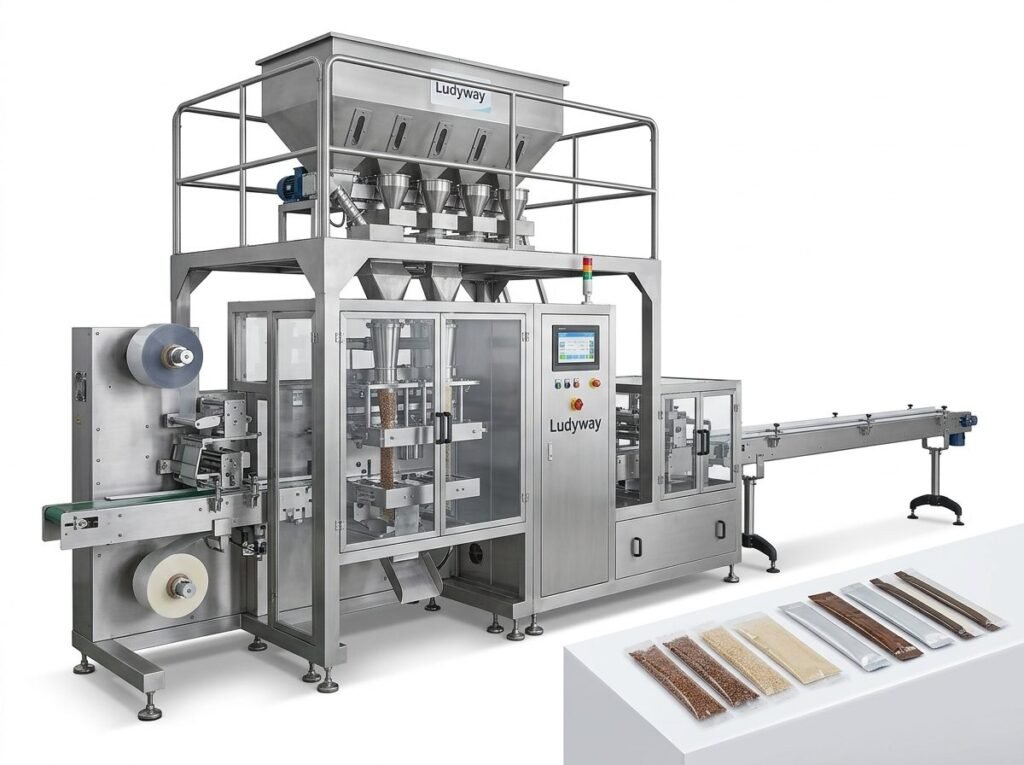
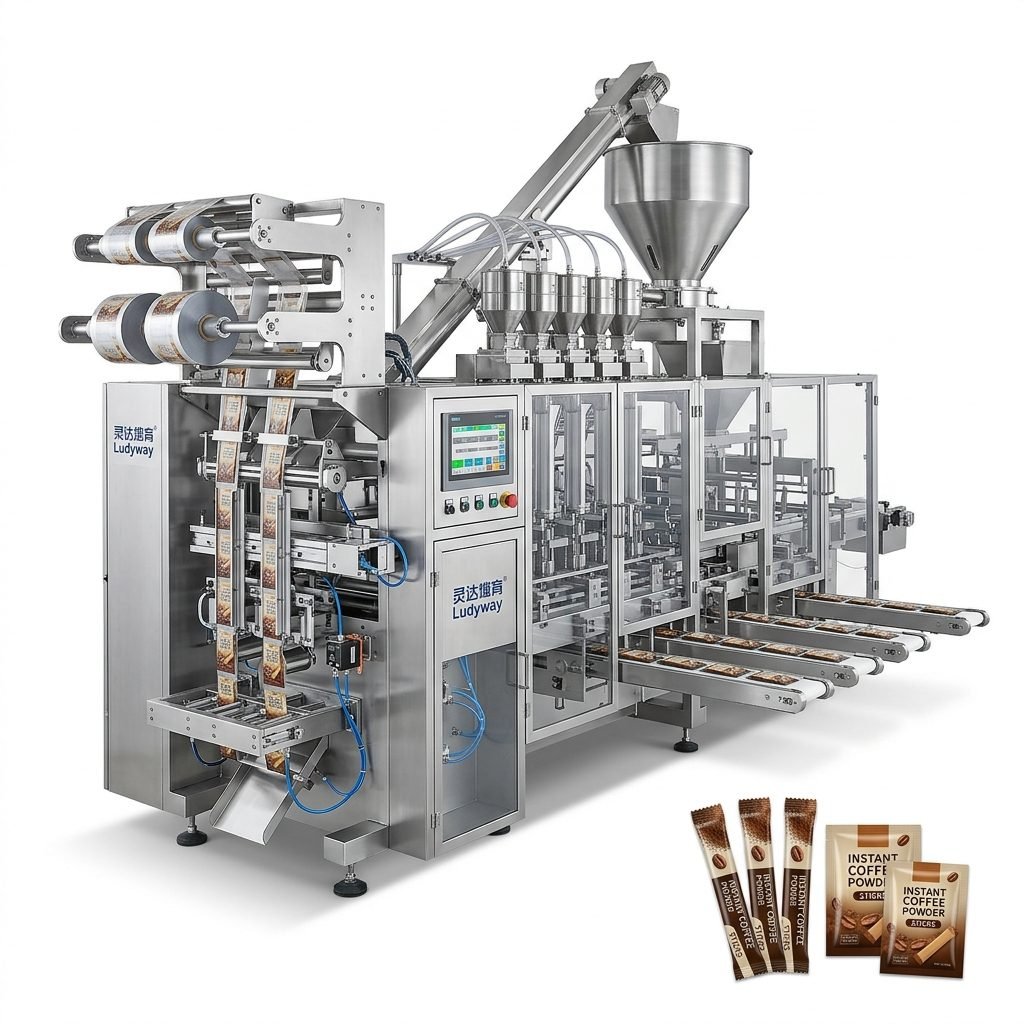
Dry food products such as snacks, grains, nuts, seeds, cereals, and mixed granules require packaging that is fast, accurate, hygienic, and consistent. A modern dry food packing machine helps manufacturers reduce manual labor, improve portion control, protect product freshness, and support scalable production across different bag types and pack sizes.
For food processors, brand owners, and contract packers, choosing the right equipment is not only about speed. It is also about product protection, sealing quality, low waste, stable weighing performance, and long-term operating reliability. Whether you are packing roasted nuts, rice, popcorn, trail mix, lentils, breakfast cereal, or dried fruit blends, the right machine setup can significantly improve line efficiency.
Why Dry Food Packaging Requires Specialized Equipment
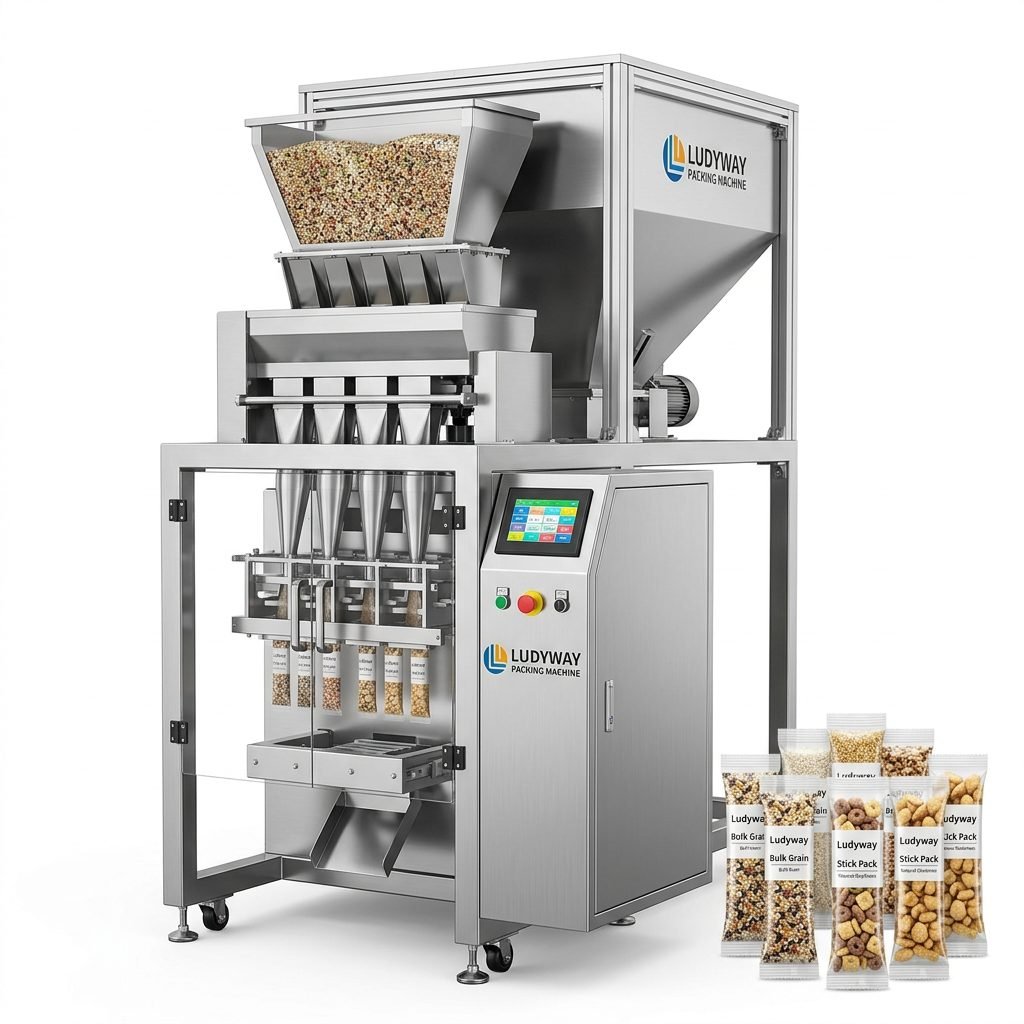
Dry food may look simple to package, but different products behave very differently during filling and sealing. Fine grains flow smoothly, while coated nuts, irregular snacks, and fragile cereal pieces can create challenges in dosing, feeding, and bag handling. A reliable dry food packing machine is designed to handle these differences without compromising output or package appearance.
- Flowability control: powders, granules, kernels, and mixed snacks require different feeding systems.
- Accurate weighing: essential for retail compliance, cost control, and customer trust.
- Seal integrity: helps prevent moisture ingress, oxidation, and contamination.
- Gentle handling: important for brittle chips, puffed snacks, and premium nuts.
- Flexible packaging: supports pillow bags, gusset bags, sachets, stick packs, and premade pouches.
Common Dry Food Products Suitable for Automatic Packing Machines
Automatic dry food packaging systems are widely used across the food industry. A properly configured line can package both free-flowing and non-free-flowing products with high precision.
| Product Category | Typical Examples | Recommended Filling Method |
|---|---|---|
| Snacks | Popcorn, chips, granola, trail mix, dried fruit | Multihead weigher or counting/weighing system |
| Grains | Rice, oats, quinoa, corn, lentils, beans | Linear weigher, cup filler, or bulk weigher |
| Nuts & Seeds | Almonds, cashews, pistachios, sunflower seeds, pumpkin seeds | Multihead weigher with gentle discharge |
| Powdered Dry Foods | Seasoning powder, soup powder, drink mix | Auger filler or servo screw dosing |
| Pet Dry Food | Kibble, pellets, dry treats | Multihead weigher or bulk weighing system |
Key Types of Dry Food Packing Machines
Vertical Form Fill Seal Machines
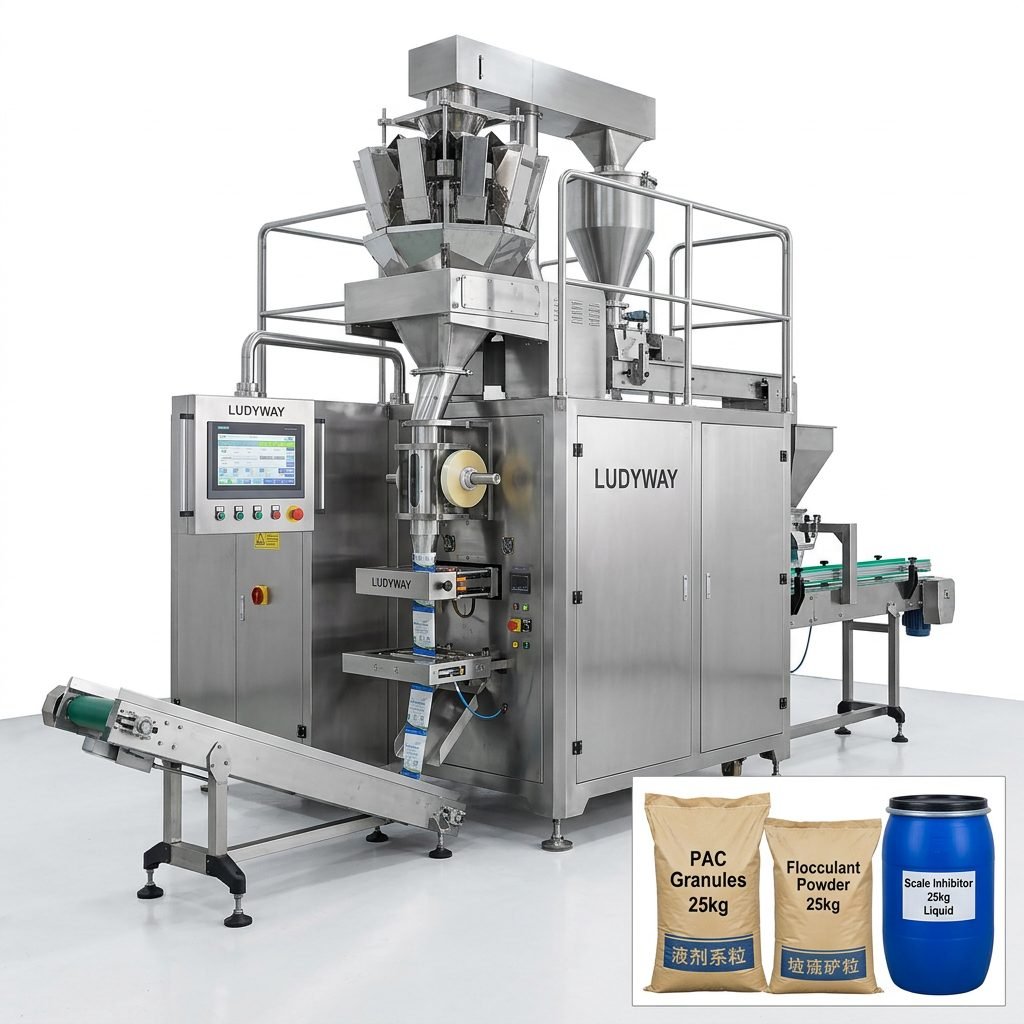
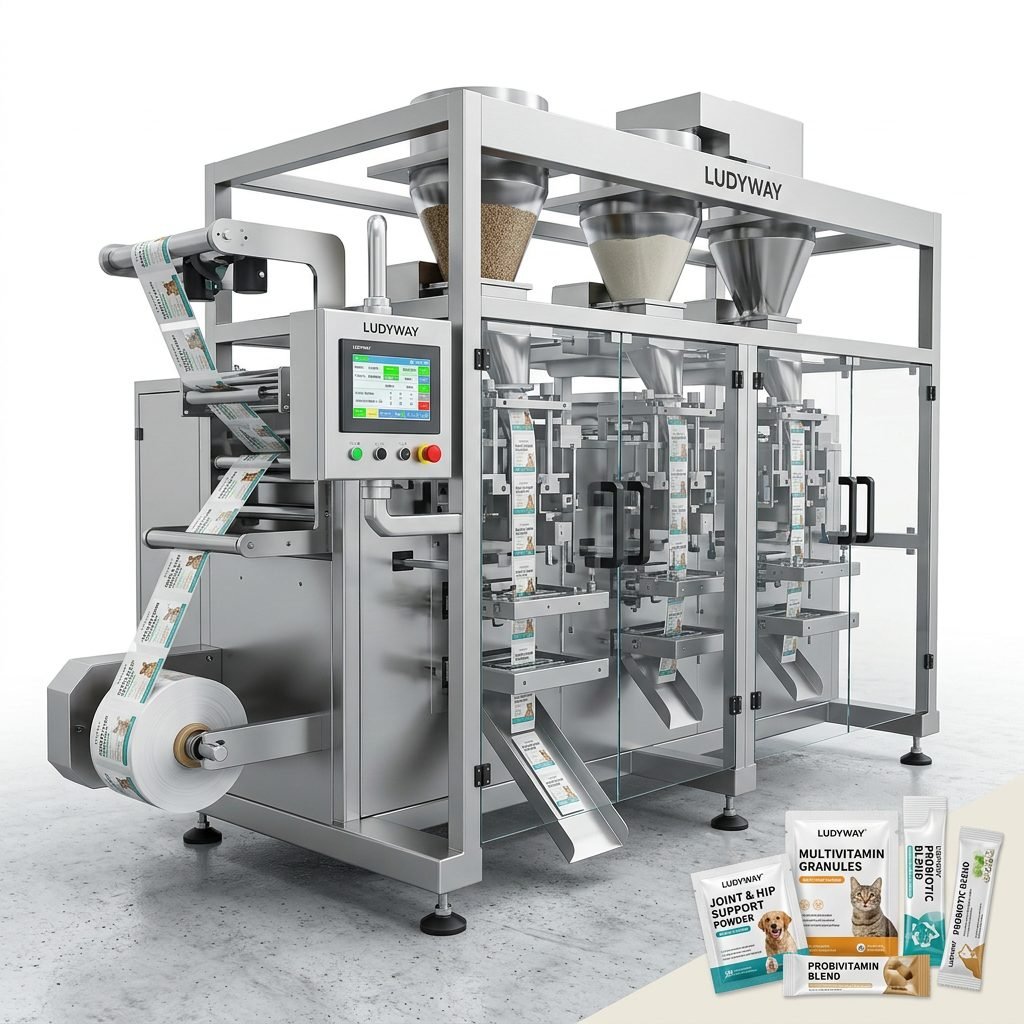
VFFS machines are among the most common choices for dry food packaging. They form the bag from roll film, fill the product, and seal the package in one continuous process. They are suitable for snacks, grains, nuts, seeds, sugar, beans, and many granular products.
- Efficient for high-output production
- Compatible with pillow bags and gusset bags
- Works well with multihead weighers and bucket elevators
- Supports date coding, nitrogen flushing, and checkweighing integration
Premade Pouch Packing Machines
For brands that want a stronger shelf impact, premade pouch packaging machines are ideal. They handle stand-up pouches, zipper bags, and shaped pouches that help improve product presentation and convenience.
- Excellent for premium nuts and mixed snack products
- Supports resealable pouch formats
- Improves perceived value in retail markets
- Suitable for brands focused on packaging aesthetics
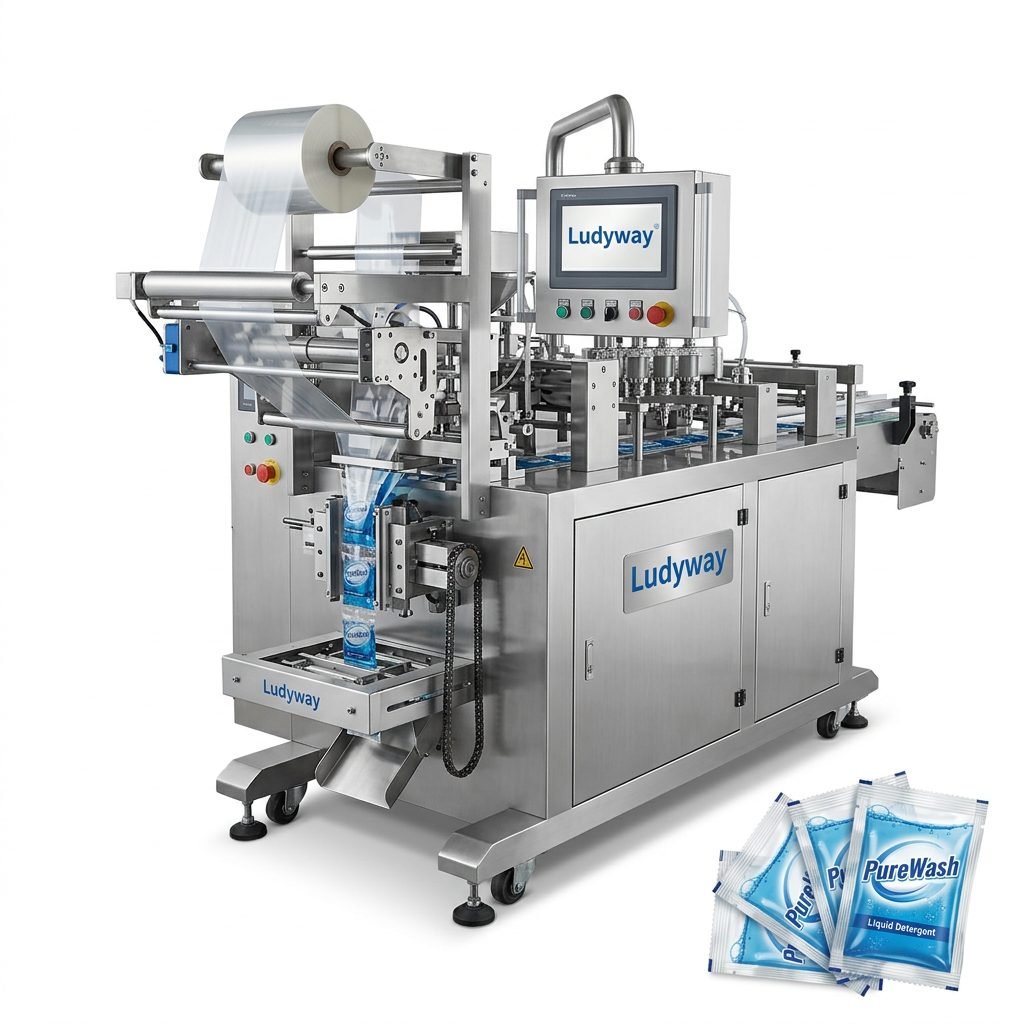
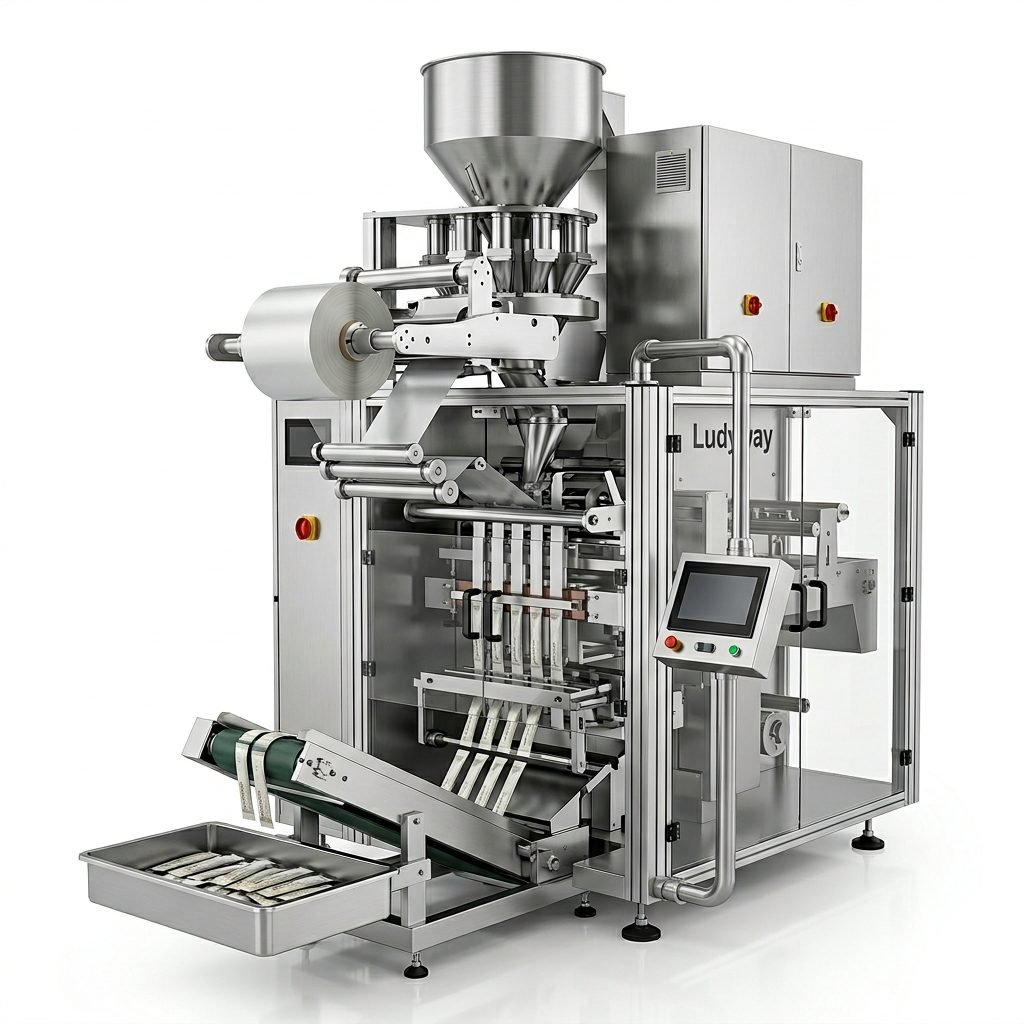
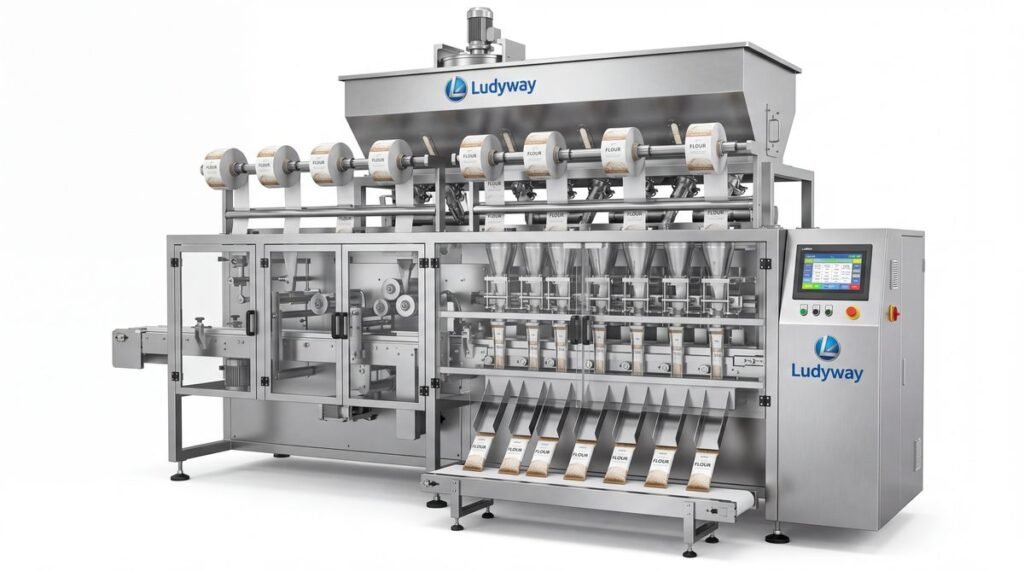
Multi-Lane Sachet and Stick Pack Machines
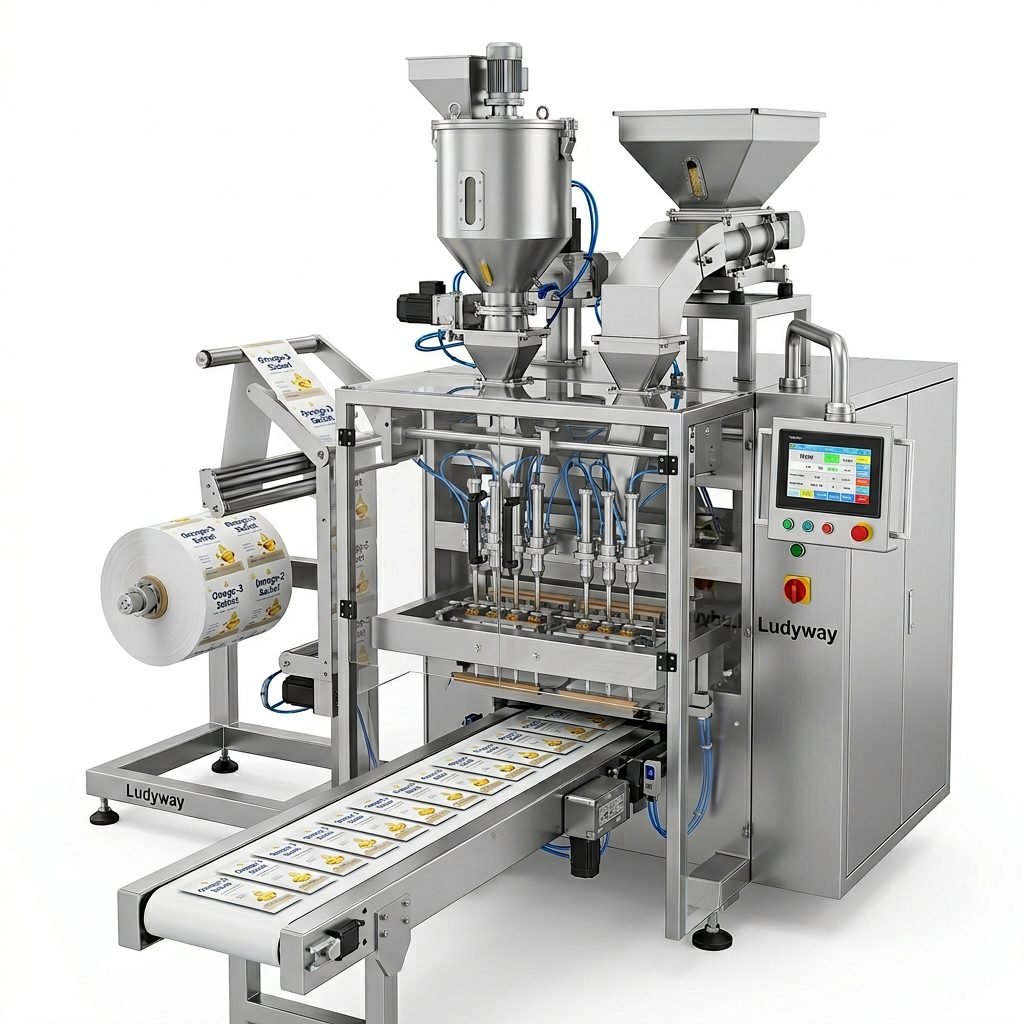
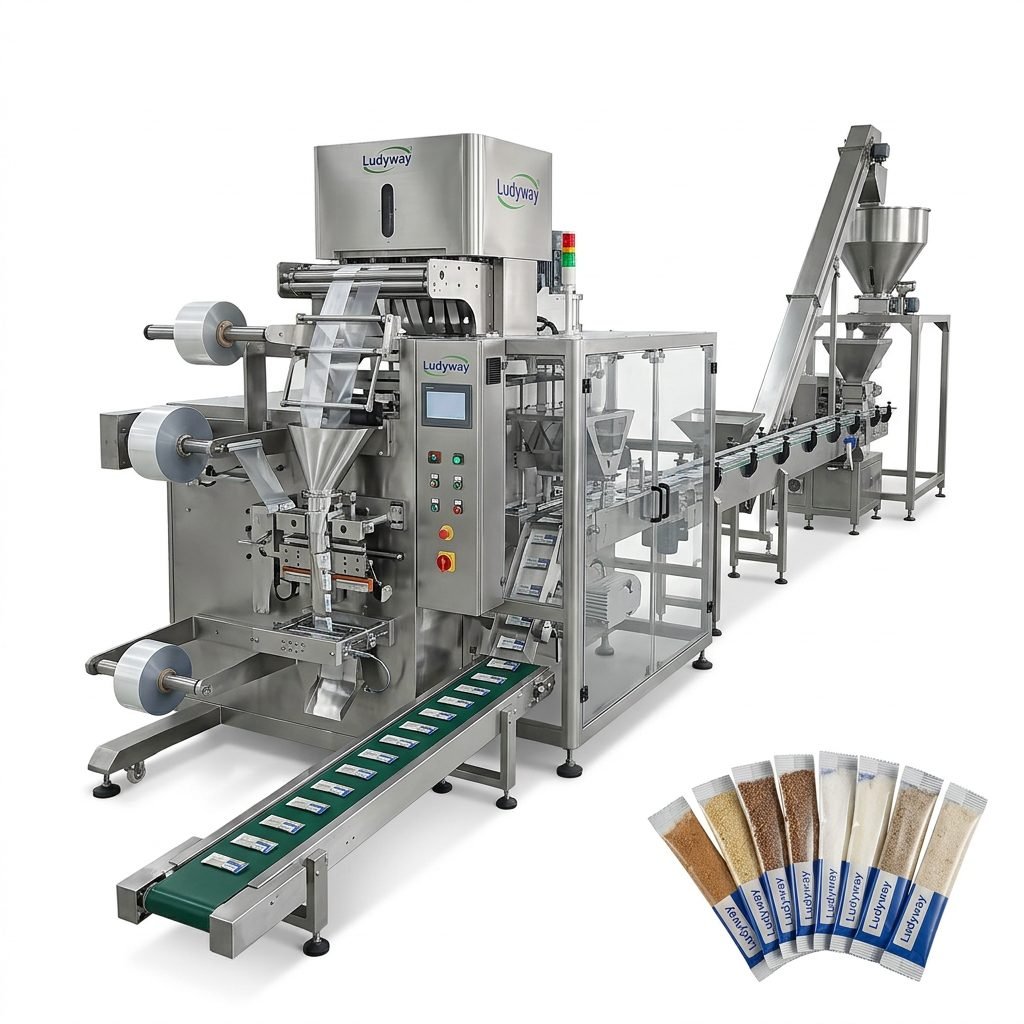
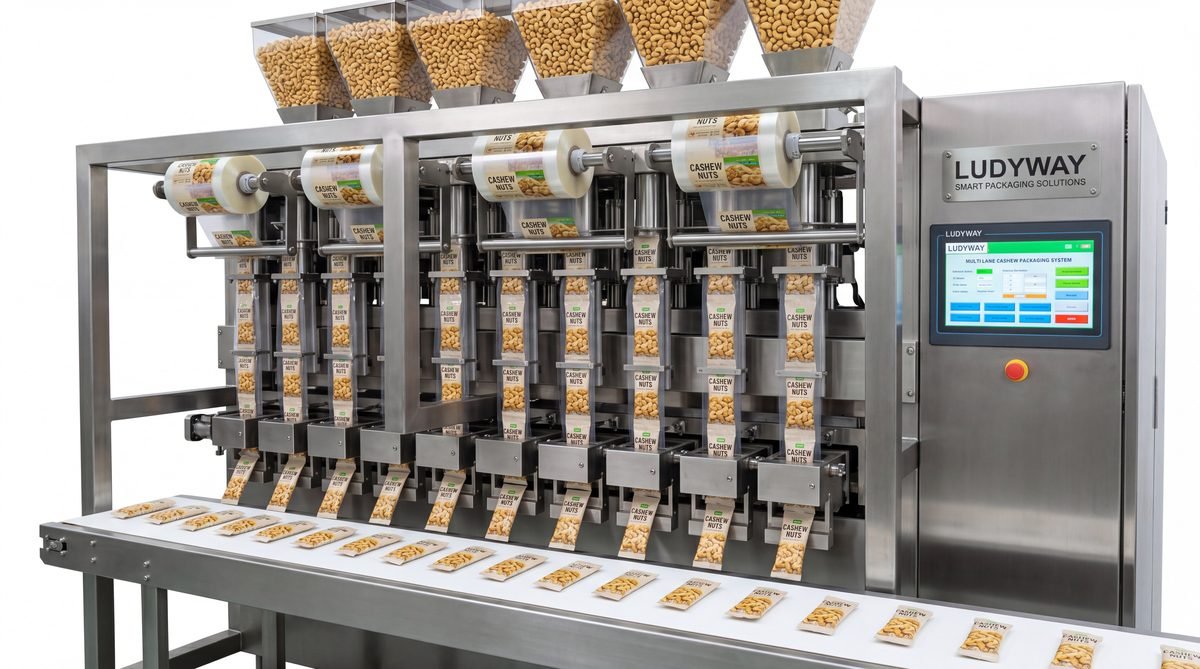
For smaller portions of grains, powdered dry foods, seasoning blends, or functional snack ingredients, multi-lane systems offer high-speed output in compact retail or single-serve packaging formats.
Essential Components in a Reliable Dry Food Packaging Line
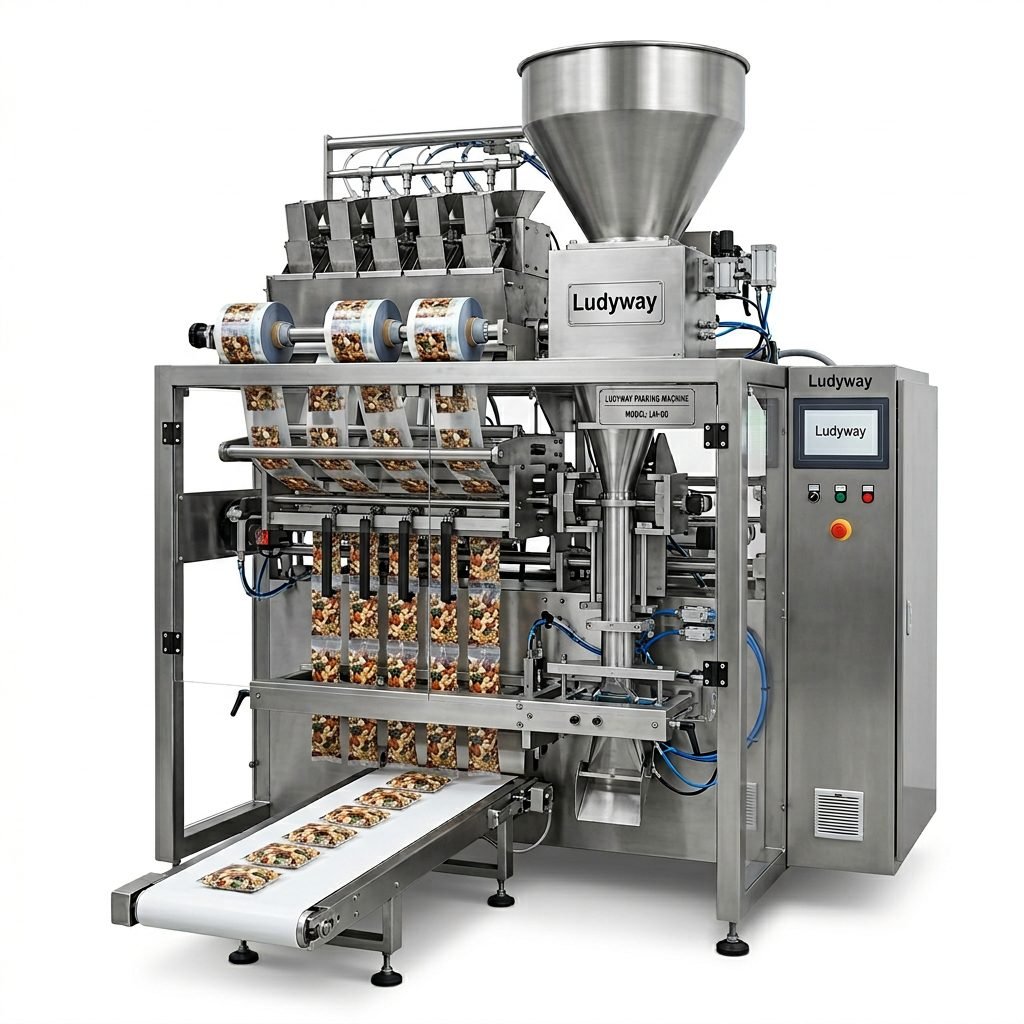
A dry food packaging system usually includes more than just the main packer. The best results come from a complete and well-matched line where feeding, weighing, packaging, inspection, and end-of-line handling work together.
| Line Component | Function | Benefit |
|---|---|---|
| Bucket Elevator | Transfers product to weighing system | Stable and continuous feeding |
| Multihead Weigher | Measures target weight accurately | Reduces giveaway and improves consistency |
| VFFS or Pouch Machine | Forms/fills/seals package | Automated packaging at high speed |
| Metal Detector / X-ray | Inspects product safety | Helps meet food safety standards |
| Checkweigher | Verifies final pack weight | Supports compliance and quality control |
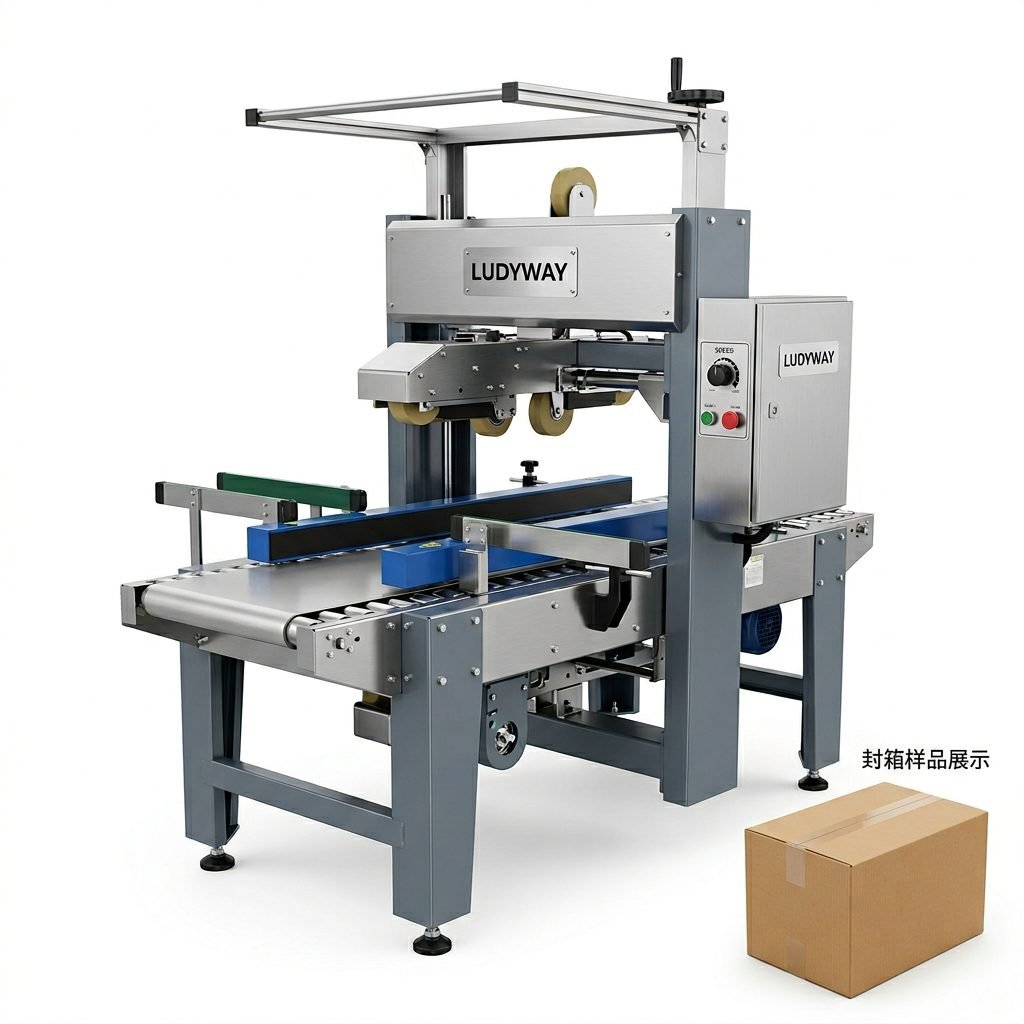
| Cartoning / Case Packing | Secondary packaging automation | Reduces labor and improves logistics efficiency |
What Makes a Dry Food Packing Machine Reliable?
Reliability is a major buying factor because downtime directly affects delivery schedules, labor efficiency, and production cost. A dependable machine should maintain stable output over long operating hours with minimal adjustment.
1. Consistent Weighing Accuracy
Accurate dosing helps avoid overweight packs and customer complaints caused by underfilling. This is especially important for premium nuts, branded snacks, and high-volume grain products.
2. Strong Sealing Performance
Dry food often needs protection against humidity, oxygen, and external contamination. Quality heat sealing and optional nitrogen flushing can extend shelf life and preserve texture.
3. Product-Friendly Handling
Fragile or coated products should not be crushed during feeding, weighing, or discharge. Good machine design reduces drop height and vibration impact.
4. Easy Cleaning and Changeover
Manufacturers that run multiple SKUs need quick cleaning and simple parameter adjustment. Tool-free design and accessible contact parts can save significant maintenance time.
5. Smart Controls and Automation
Servo control, touch-screen operation, recipe storage, alarm diagnosis, and remote support all contribute to easier daily operation and better long-term productivity.
Packaging Formats for Snacks, Grains, and Nuts
The right bag style depends on product type, target market, retail channel, and desired brand image. Different packaging machines support different formats.
- Pillow bags: economical and common for grains, seeds, and snacks
- Gusset bags: better shelf presence and larger volume
- Stand-up pouches: ideal for premium nuts and snack mixes
- Zipper pouches: convenient for repeated opening and closing
- Sachets and stick packs: suitable for single-serve and sample packs
- Bulk bags: practical for food service and industrial supply
How to Choose the Right Machine for Your Product
Before selecting a dry food packing machine, evaluate both current production targets and future expansion plans. A machine that fits today but limits tomorrow can create avoidable costs later.
- Define your product characteristics: size, shape, density, fragility, and flowability.
- Confirm pack weight range and target output per minute.
- Select the package style and packaging material structure.
- Decide whether you need single machine supply or a turnkey packaging line.
- Check if the machine supports future SKUs and format changes.
- Ask about spare parts, after-sales support, and commissioning service.
Benefits of Turnkey Dry Food Packaging Solutions
Many manufacturers now prefer complete packaging lines rather than sourcing each machine separately. A turnkey line reduces integration risks and improves compatibility between feeding, weighing, packing, inspection, and end-of-line systems.
Ludyway dry food packing machine solutions are backed by more than 30 years of packaging industry experience, a manufacturing base of over 20,000 square meters, and turnkey line capabilities for food, pharmaceutical, and related sectors. For buyers that value scalable automation, custom engineering, and export-ready packaging systems, this kind of integrated support can be a major advantage.
Turnkey line advantages include:
- Single-source project coordination
- Better compatibility between equipment modules
- Shorter installation and commissioning timelines
- More efficient training and technical support
- Improved long-term line stability
Industries and Buyers That Need Dry Food Packing Machines
Dry food packaging equipment is used by a wide range of B2B buyers, including:
- Snack food manufacturers
- Rice and grain processors
- Nut roasting and blending companies
- Dried fruit producers
- Private label food brands
- Contract packing service providers
- Export-oriented food factories
- Pet food and feed manufacturers
Important Questions to Ask Before Buying
| Question | Why It Matters |
|---|---|
| Can the machine handle multiple dry food products? | Improves flexibility and ROI |
| What is the actual speed under real production conditions? | Avoids unrealistic expectations |
| How accurate is the weighing system? | Impacts product cost and compliance |
| How easy is cleaning and maintenance? | Affects uptime and hygiene management |
| Can the line be expanded later? | Supports business growth |
| What technical support is available after delivery? | Important for long-term reliability |
Final Considerations for Long-Term Packaging Performance
A dry food packing machine should do more than just fill and seal. It should help your business maintain product quality, improve packaging consistency, lower operating costs, and adapt to changing market demands. For snacks, grains, and nuts, the best packaging solution is one that combines reliable feeding, precise weighing, strong sealing, easy operation, and scalable automation.
If your production goals include higher throughput, better shelf presentation, reduced labor dependency, and stronger packaging quality control, investing in the right dry food packaging system is a strategic step toward long-term growth.