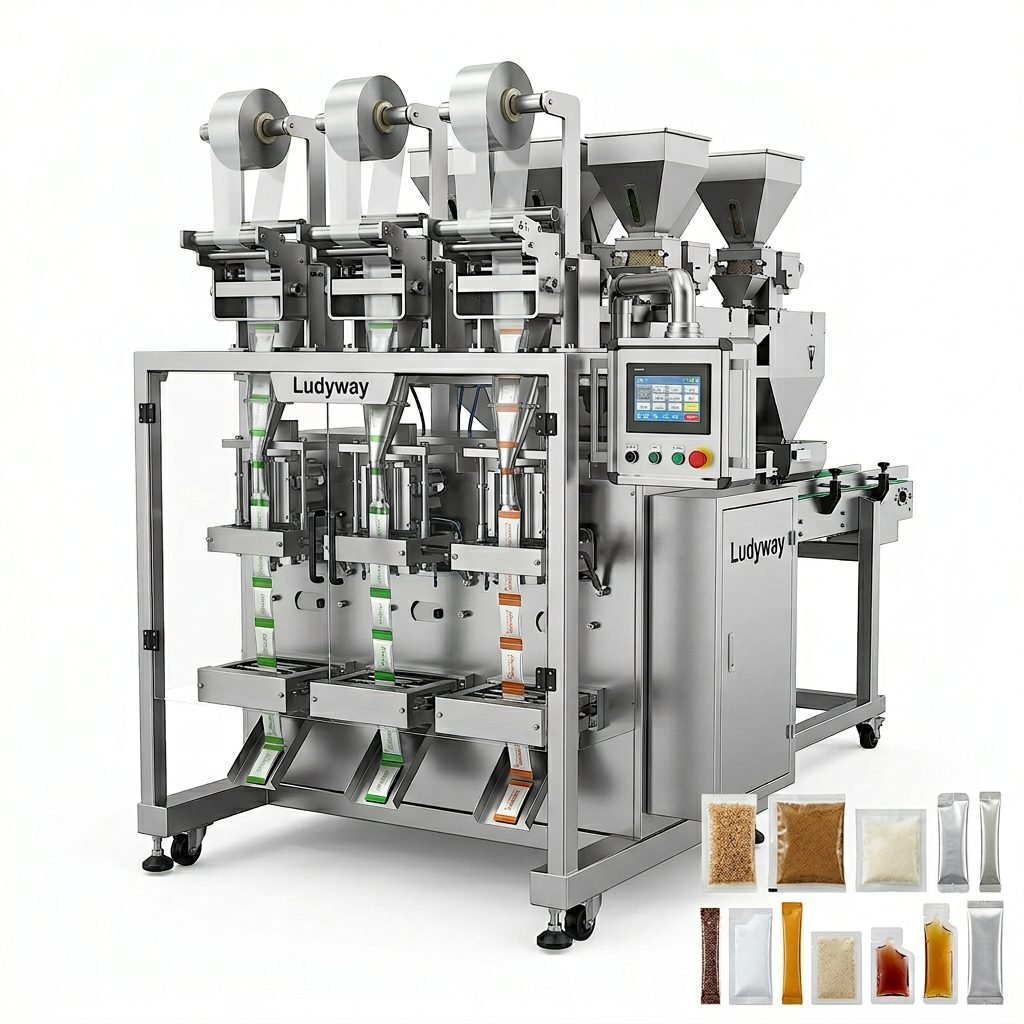
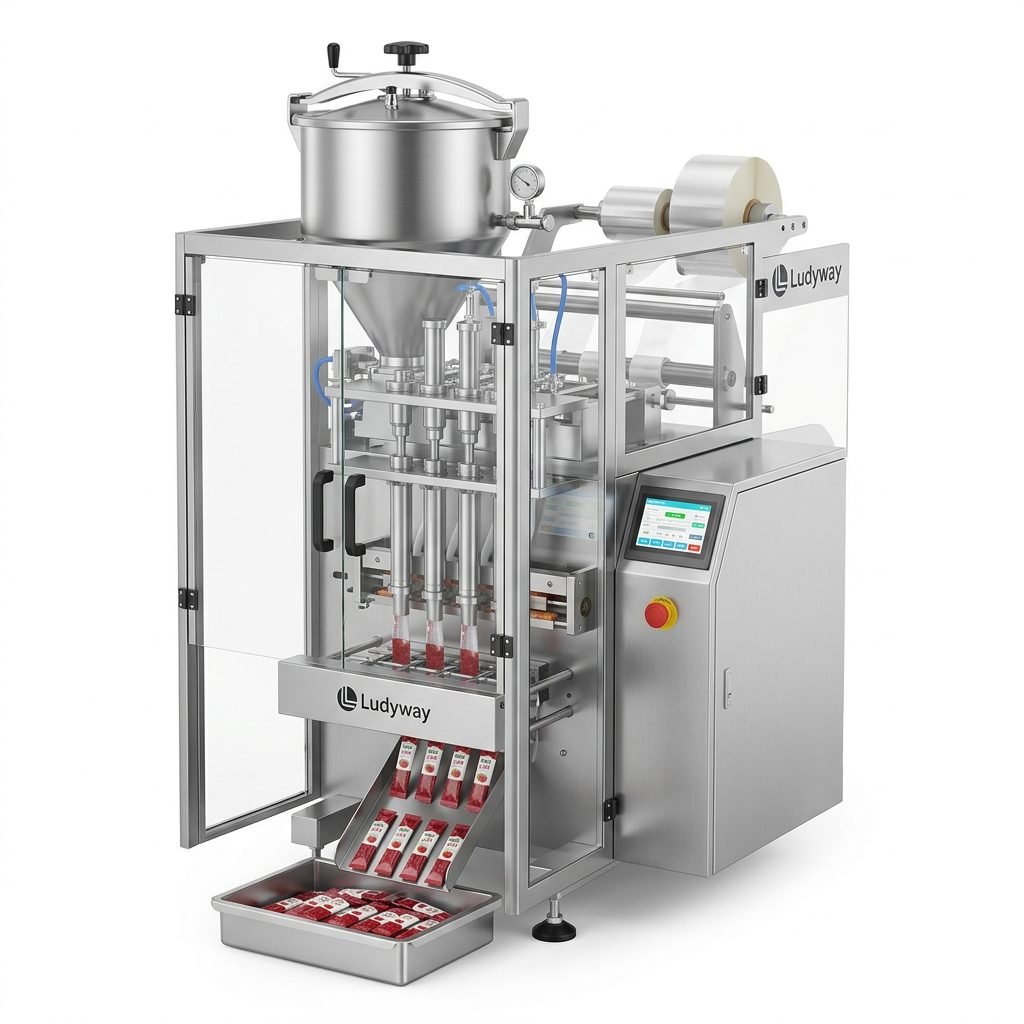
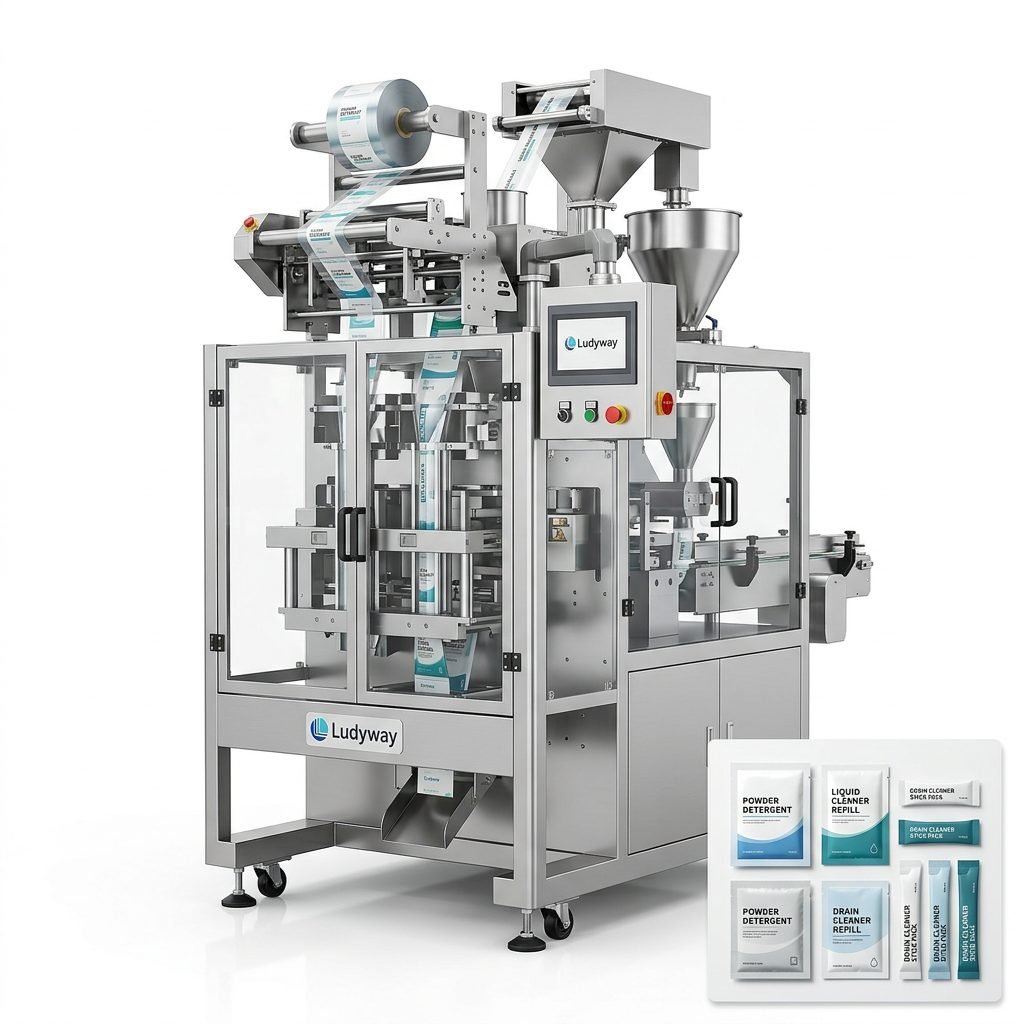
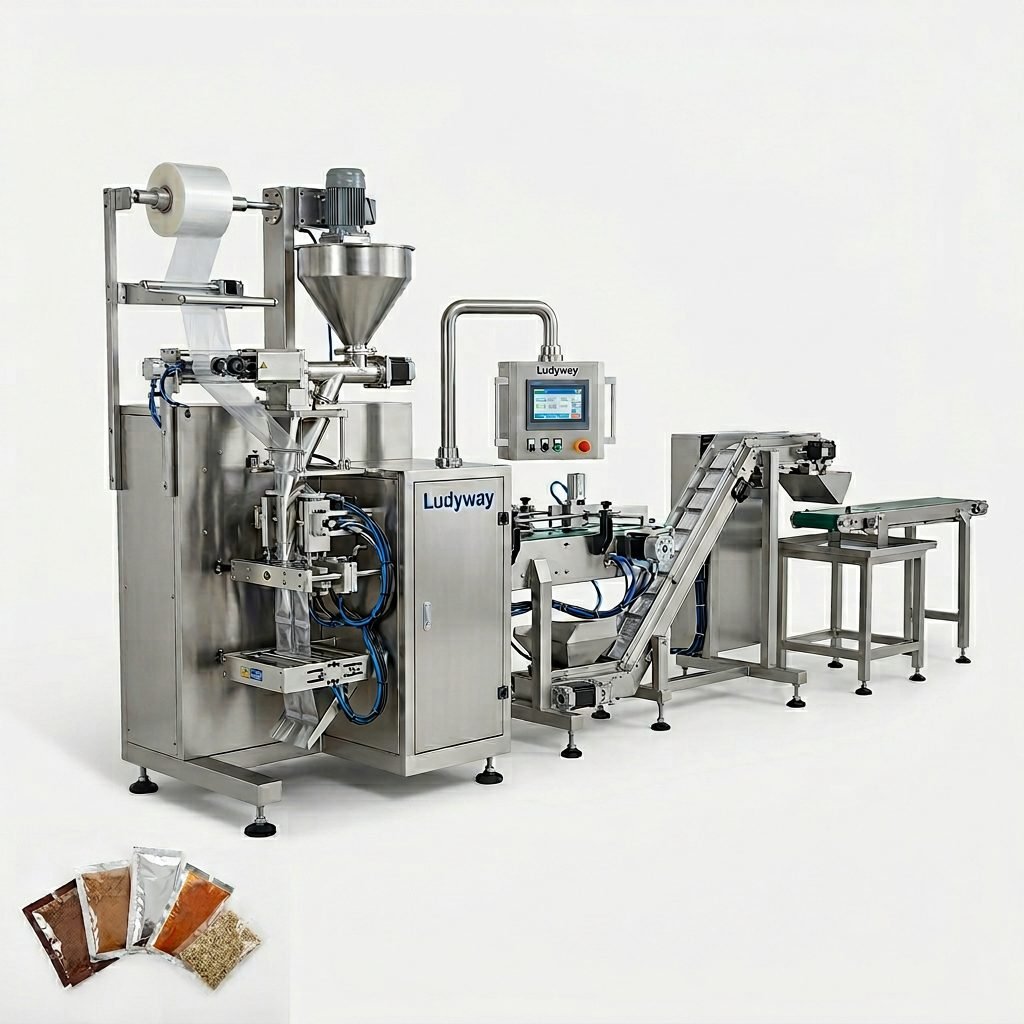
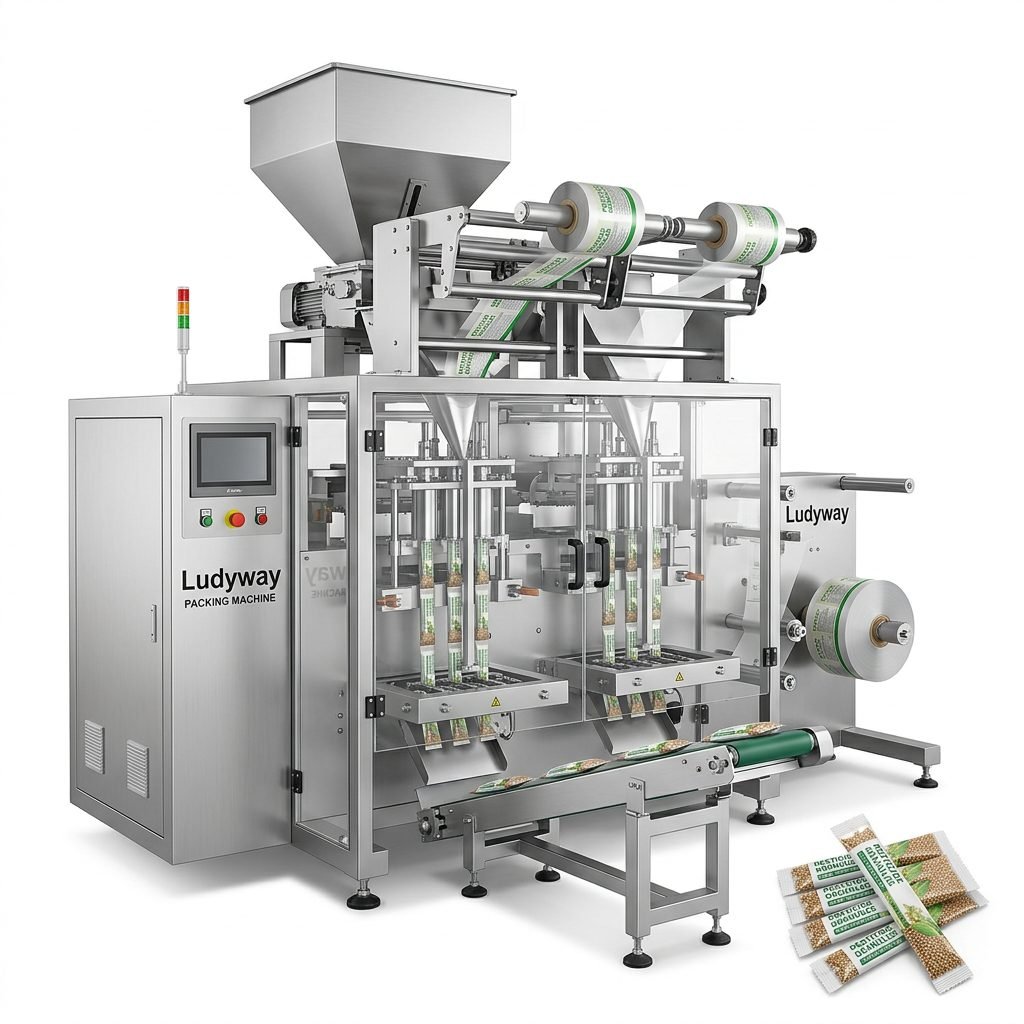
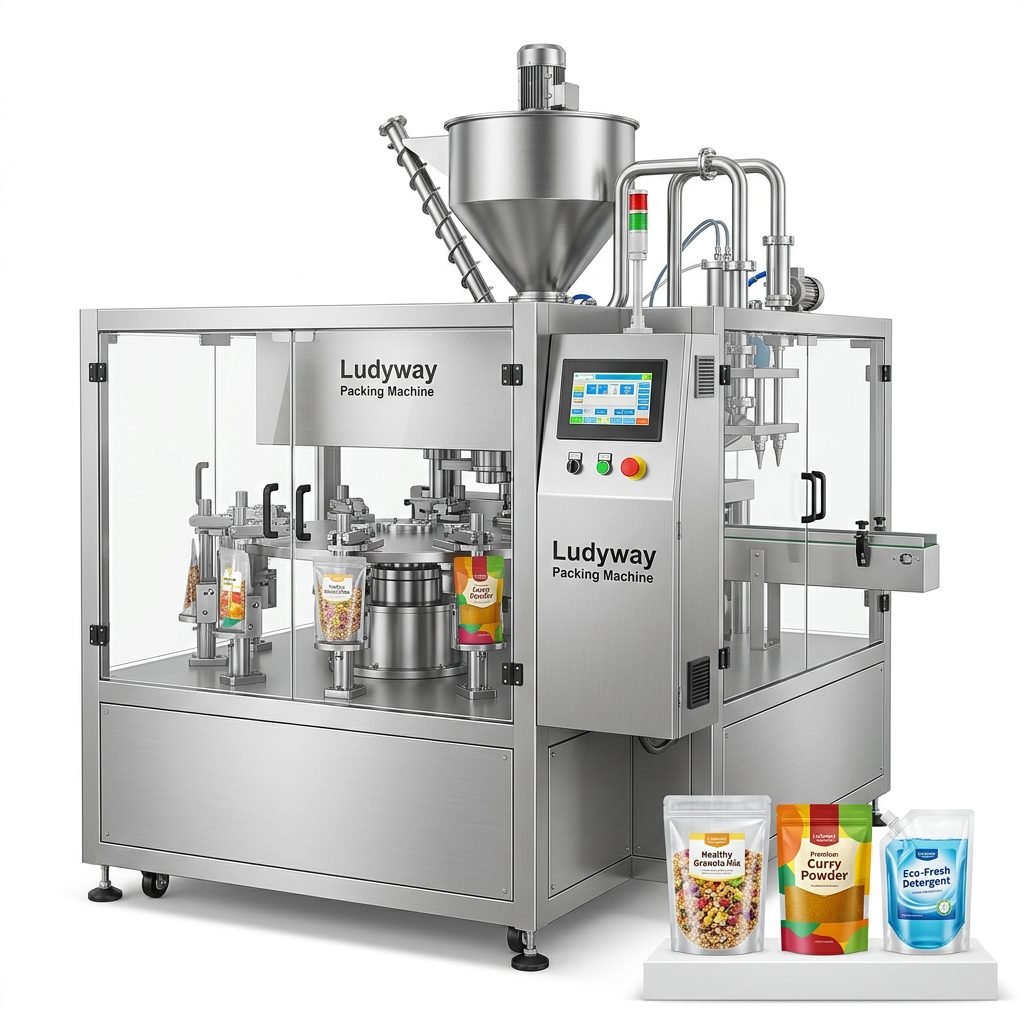
Food packaging machines are the backbone of modern food production. They help manufacturers improve output, protect product freshness, reduce contamination risks, and create packaging formats that match market demand. From single-serve stick packs to bulk bags, the right machine can dramatically improve efficiency and consistency across the entire production process.
In this guide, you will learn the main types of food packaging machines, how they work, which foods they are best suited for, and how to choose the best system for your business.

What Is a Food Packaging Machine?
A food packaging machine is equipment designed to fill, seal, wrap, weigh, label, code, or cartoning food products in a safe and efficient way. These machines can handle a wide range of products, including:
- Powders such as milk powder, coffee, cocoa, and seasoning
- Granules such as sugar, salt, rice, seeds, and snack mixes
- Liquids such as sauces, oils, beverages, and syrups
- Pastes such as peanut butter, ketchup, mayonnaise, and cream fillings
- Solid foods such as biscuits, frozen foods, candies, and pet snacks
Depending on production needs, food packaging equipment may be used as a standalone unit or integrated into a fully automatic packaging line.
Why Food Packaging Machines Matter
Choosing the right packaging machine is not just about speed. It also affects product quality, shelf life, brand image, and operating cost.
- Better hygiene: less manual contact during packaging
- Higher efficiency: faster output and lower labor dependency
- Accurate filling: reduced product giveaway and waste
- Packaging consistency: stronger sealing and uniform appearance
- Scalability: easier expansion from semi-automatic to automatic systems
Main Types of Food Packaging Machines
1. Vertical Form Fill Seal Machines
Vertical form fill seal machines, often called VFFS machines, are among the most widely used food packaging systems. They form bags from roll film, fill the product, and seal the package in one continuous process.
Best for: snacks, grains, powders, frozen foods, nuts, coffee, and candy.
- Suitable for pillow bags, gusset bags, and quad seal bags
- Can be paired with auger fillers, multihead weighers, or liquid pumps
- Ideal for medium to high-speed production
2. Premade Pouch Packaging Machines
These machines fill and seal ready-made pouches instead of forming bags from film. They are commonly used for premium retail packaging because premade pouches offer a high-end shelf appearance.
Best for: sauces, spices, powders, pet food, frozen meals, dried fruit, and health foods.
- Supports stand-up pouches, zipper pouches, spout pouches, and flat pouches
- Excellent for attractive retail presentation
- Suitable for products requiring resealable packaging
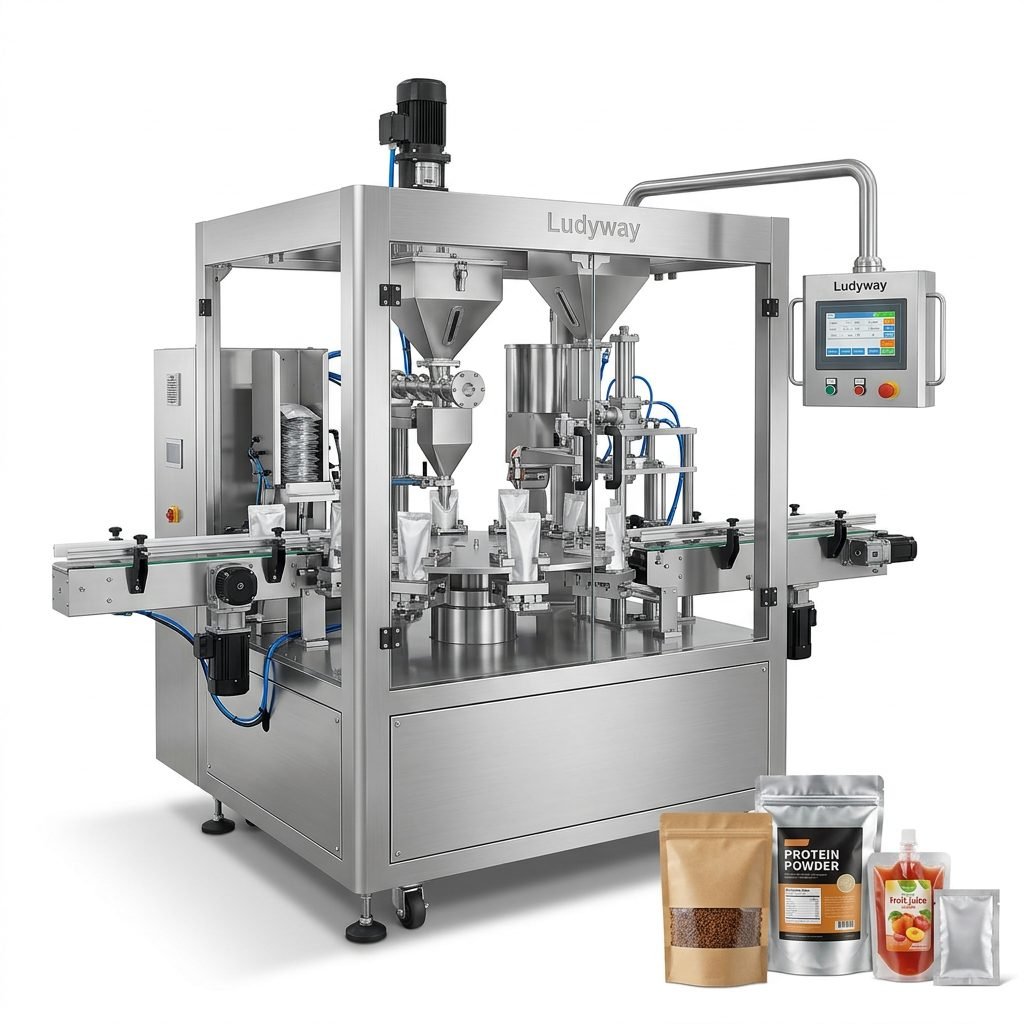
3. Sachet Packaging Machines
Sachet machines produce small sealed packets for single-use or trial-size food products. They are especially popular for condiments, drink powders, sugar, salt, instant coffee, and seasoning mixes.
Best for: ketchup, spice powder, salt, sugar, instant drink mix, and sauce samples.
- Compact package size reduces material use
- Ideal for travel, takeaway, and portion control formats
- Available in single-lane and multi-lane models
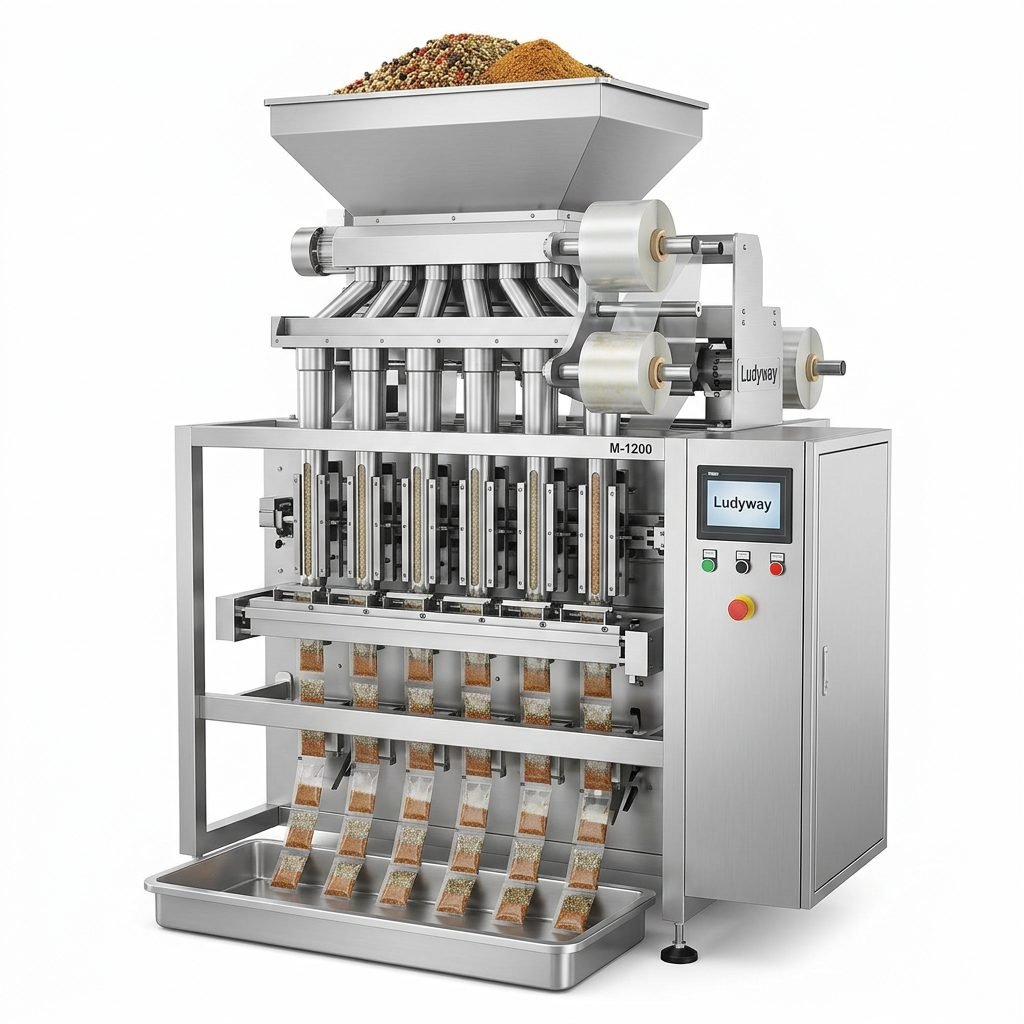
4. Stick Pack Machines
Stick pack machines create narrow tubular sachets that are highly popular for beverage powders, nutritional supplements, coffee, and liquid concentrates. Their slim format makes them convenient for consumers and cost-effective for transport.
Best for: coffee powder, protein powder, collagen, electrolyte mixes, honey, and liquid flavorings.
- Great for single-dose packaging
- High production efficiency with multi-lane configurations
- Popular in functional food and nutraceutical categories
5. Vacuum Packaging Machines
Vacuum packaging machines remove air from the package before sealing. This helps extend shelf life and protect food quality by reducing oxidation and moisture impact.
Best for: meat, seafood, cheese, coffee, freeze-dried foods, and ready meals.
- Improves product preservation
- Reduces package volume for storage and transport
- Often used for high-value and perishable products
6. Flow Wrapping Machines
Flow wrappers package solid food products in film using a horizontal wrapping process. They are commonly used for individual items or grouped packs.
Best for: biscuits, bread, chocolate bars, cakes, and snack bars.
- High speed and neat appearance
- Good for pillow-style packs
- Common in bakery and confectionery packaging
7. Tray Sealing Machines
Tray sealers seal food in trays using film, often with vacuum or modified atmosphere packaging. They are widely used in prepared meals and fresh food packaging.
Best for: fresh meat, poultry, salads, convenience meals, and cut fruit.
- Supports attractive retail presentation
- Can improve freshness retention
- Works well in chilled food applications
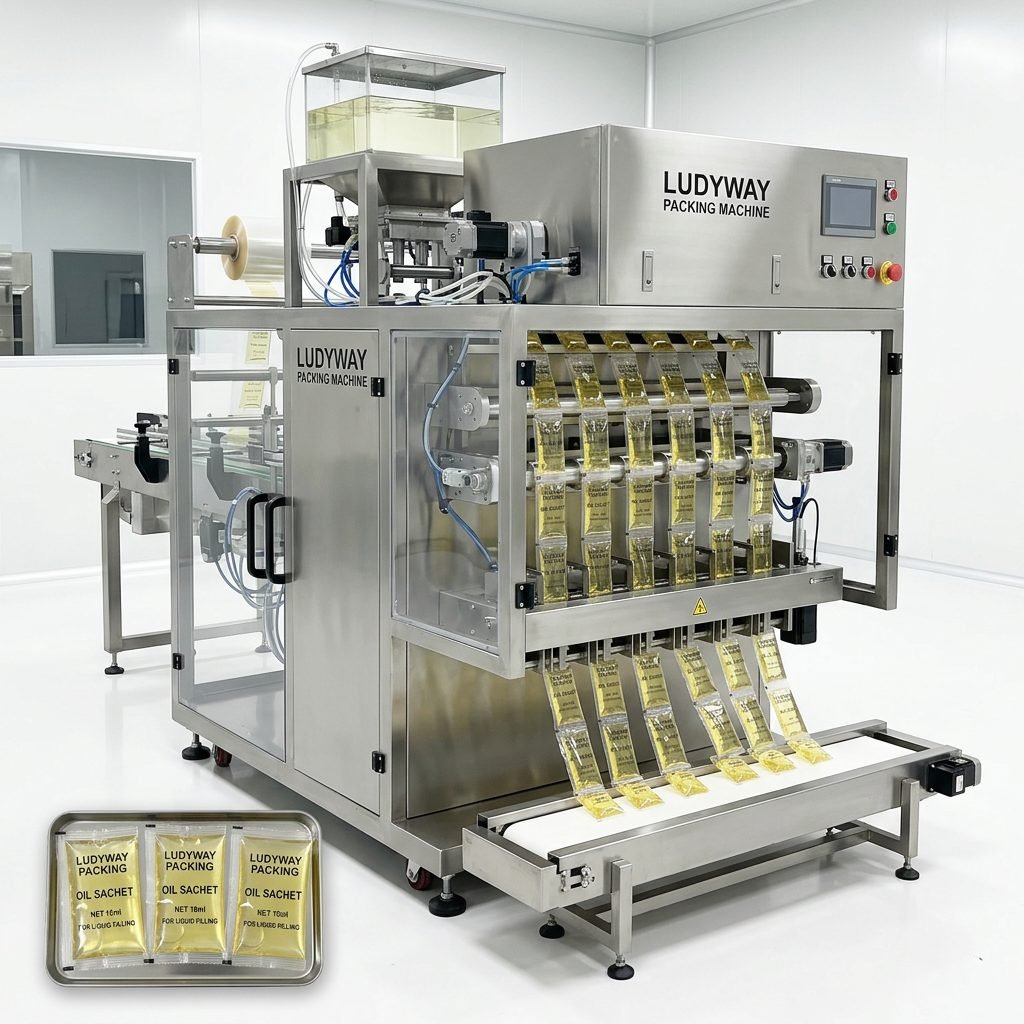
8. Filling Machines for Liquid and Paste Foods
Liquid and paste filling machines are designed for products with flowing or semi-flowing consistency. These systems use piston pumps, peristaltic pumps, or servo-controlled fillers depending on viscosity.
Best for: sauces, jam, honey, yogurt, oil, syrup, and dressings.
- Ensures precise volumetric control
- Can be integrated with bottle, pouch, or sachet systems
- Suitable for hot fill or cold fill processes depending on design
9. Powder Packaging Machines
Powder packaging machines are specialized systems equipped with auger fillers or dosing units to handle fine and dusty products accurately.
Best for: flour, milk powder, protein powder, cocoa, spices, and instant soup mix.
- Designed to reduce dust and maintain filling accuracy
- Can package into sachets, stick packs, pouches, or jars
- Important for products with strict weight tolerance requirements
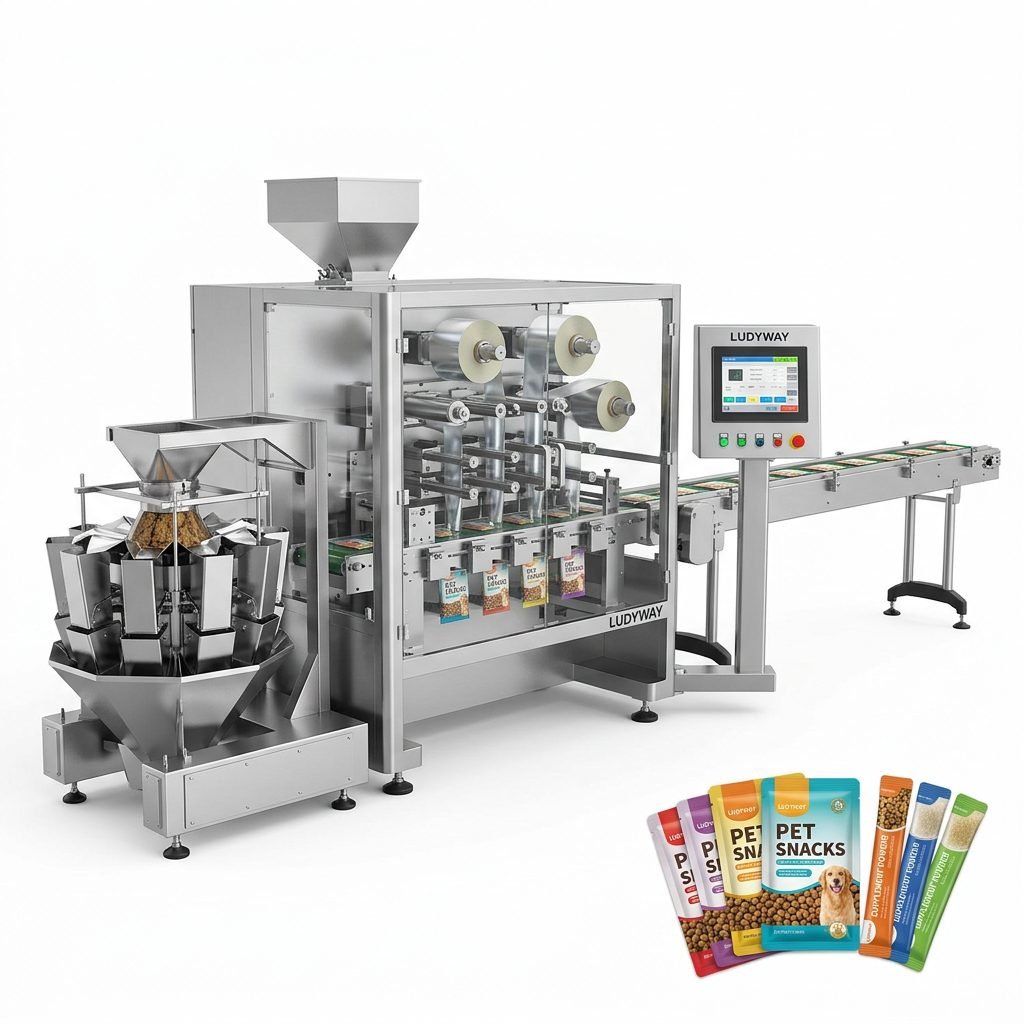
10. Granule Packaging Machines
Granule packaging systems are used for free-flowing products. Depending on the product size and shape, they may use volumetric cups, linear weighers, or multihead weighers.
Best for: rice, beans, seeds, sugar, salt, cereal, and snack granules.
- Fast filling for free-flowing foods
- Can support both small sachets and larger bags
- Easy to integrate into complete automatic lines
Comparison Table of Food Packaging Machine Types
| Machine Type | Suitable Products | Common Packaging Format | Key Advantage |
|---|---|---|---|
| VFFS Machine | Snacks, grains, powders | Pillow bags, gusset bags | High speed and versatility |
| Premade Pouch Machine | Sauces, powders, dried foods | Stand-up pouch, zipper pouch | Premium package appearance |
| Sachet Machine | Condiments, sugar, spices | Small sachets | Ideal for portion packs |
| Stick Pack Machine | Coffee, supplements, honey | Stick packs | Compact single-serve format |
| Vacuum Machine | Meat, seafood, coffee | Vacuum bags | Longer shelf life |
| Flow Wrapper | Bakery, candy, bars | Flow wrap pillow pack | Fast wrapping of solids |
How to Choose the Right Food Packaging Machine
There is no single machine that fits every product. The best choice depends on several production and packaging factors.
Product Characteristics
- Is the product powder, granule, liquid, paste, or solid?
- Is it free-flowing or sticky?
- Does it require gentle handling?
Packaging Style
- Do you need sachets, stick packs, pouches, bottles, trays, or bulk bags?
- Does the package need a zipper, spout, or easy-open feature?
Output Requirements
- What is the target packs per minute?
- Will production need to scale in the future?
Automation Level
- Semi-automatic machines fit lower budgets and smaller output
- Fully automatic lines reduce labor and improve consistency
Food Safety and Compliance
- Use food-grade contact parts
- Prefer easy-clean stainless steel construction
- Check if the design supports hygiene and inspection standards
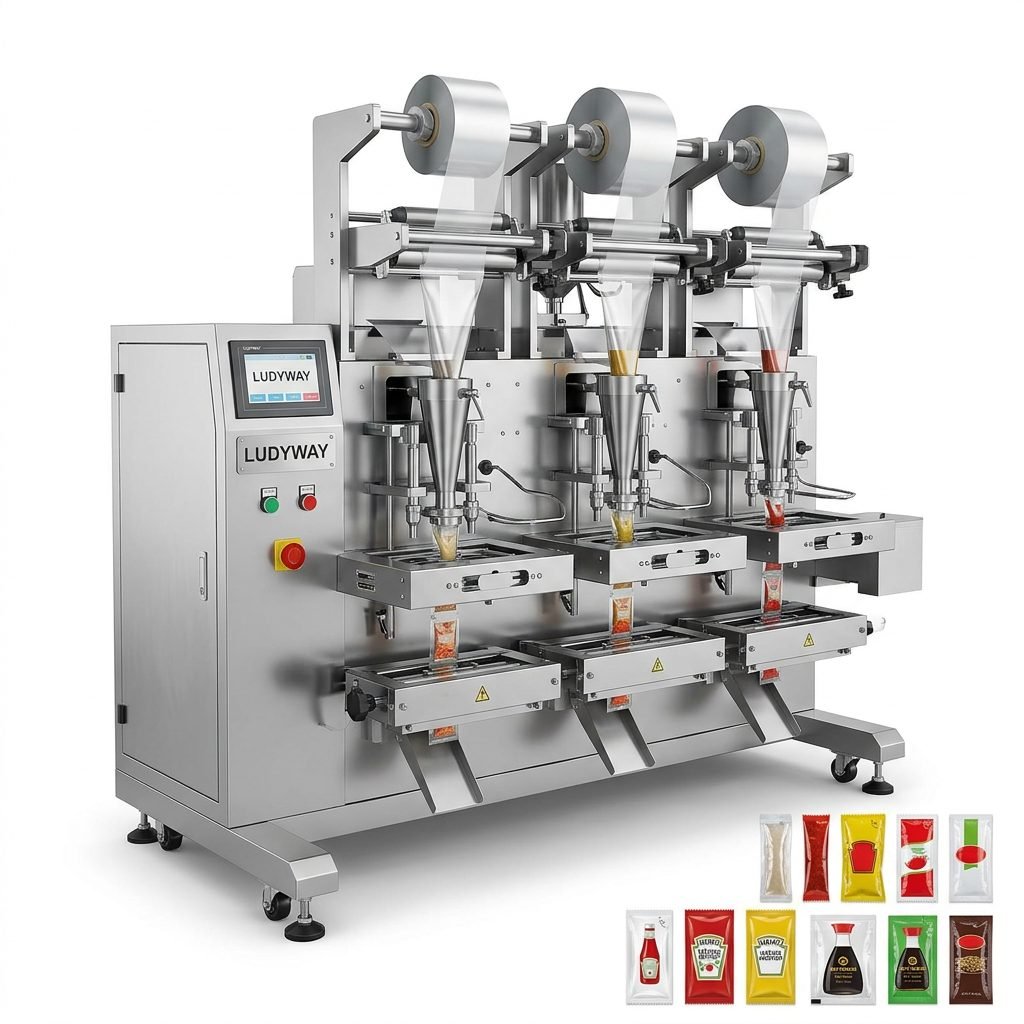
Standalone Machines vs Complete Packaging Lines
Some food businesses only need one machine, while others benefit more from a complete integrated packaging line.
Standalone machines are suitable when:
- Production volume is relatively low
- You are packaging only one product type
- Floor space and budget are limited
Complete packaging lines are ideal when:
- You want automated feeding, filling, sealing, coding, cartoning, and palletizing
- You need stable high-speed production
- You want to minimize manual handling and improve traceability
For manufacturers seeking scalable automation, Ludyway food packaging machines are often considered for granules, powders, liquids, and turnkey packaging line applications.
Industries That Use Food Packaging Machines
- Snack food manufacturers
- Instant beverage and coffee brands
- Sauce and condiment producers
- Bakery and confectionery companies
- Frozen and ready-meal processors
- Nutritional and functional food brands
- Pet food and feed manufacturers
Popular Food Packaging Formats in Today’s Market
Food brands continue to diversify packaging to meet retail, convenience, and e-commerce demands. Some of the most popular formats include:
- Single-serve sachets for condiments and drink powders
- Stick packs for supplements and coffee
- Stand-up pouches for snacks and premium foods
- Vacuum packs for meat and seafood
- Tray-sealed packs for fresh and prepared meals
- Bulk bags for ingredients and foodservice supply
Key Features to Look for in a Food Packaging Solution
- Accurate dosing system matched to your product type
- Reliable sealing performance for shelf-life protection
- Easy changeover for different pack sizes
- Hygienic construction for food-contact safety
- Smart controls for monitoring and troubleshooting
- Compatibility with auxiliary equipment such as conveyors, checkweighers, and coding systems
Final Buying Tips for Food Manufacturers
Before investing in a packaging machine, define your product format, packaging goals, capacity target, and future expansion plan. It is also important to test your product on the machine whenever possible, especially for powders, sticky pastes, and irregular granules.
A well-matched machine does more than package food. It helps build a stronger production system with better efficiency, lower waste, and more consistent package quality.
Quick Checklist
- Know your product characteristics
- Choose the right package type
- Confirm required output speed
- Evaluate automation level
- Check hygiene and maintenance needs
- Plan for future line integration