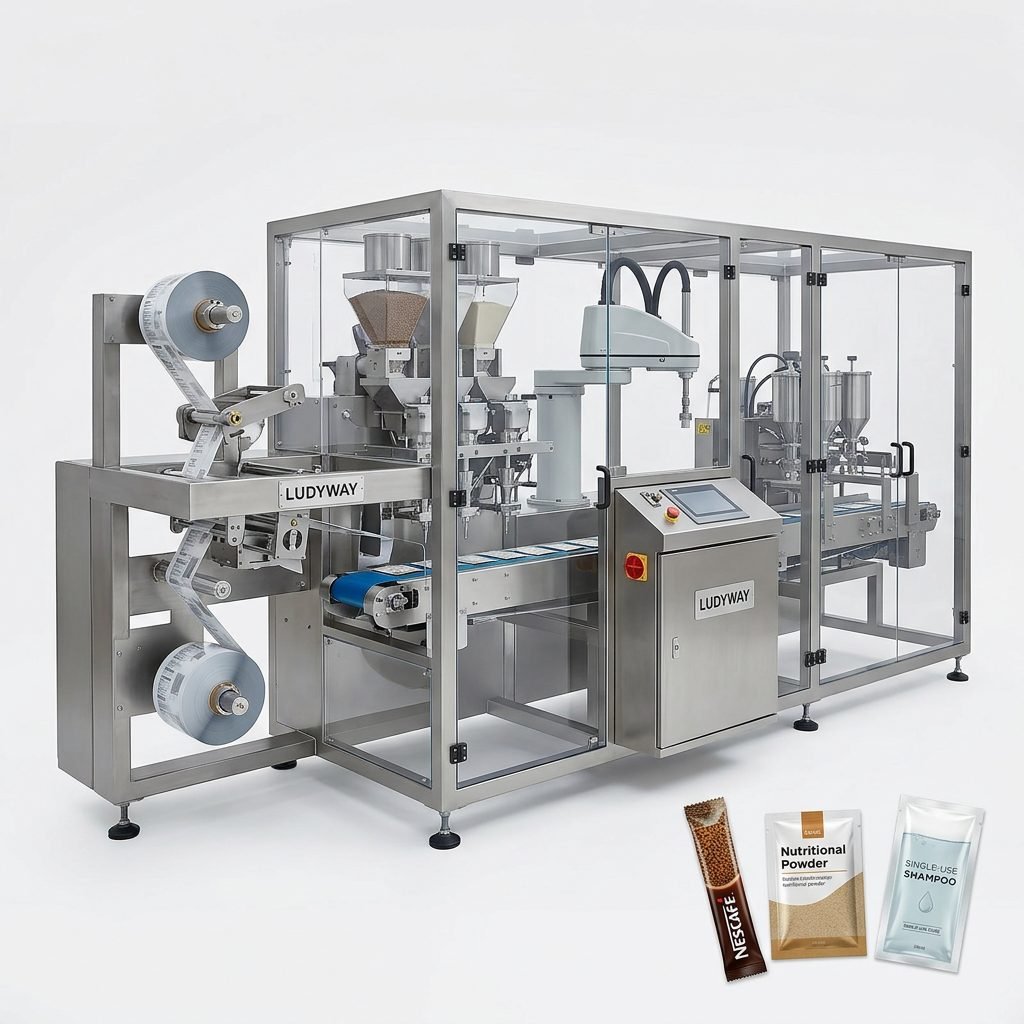
In the rapidly evolving landscape of modern manufacturing, the pressure to optimize production efficiency, reduce operational overhead, and maintain absolute product consistency has never been higher. For decades, manufacturing workshops relied on standalone packaging machinery to handle individual tasks such as filling, sealing, or labeling. While these individual units offered a step up from purely manual labor, they often created isolated islands of automation. The manual transfer of materials between these machines frequently resulted in operational bottlenecks, increased risk of product contamination, and elevated labor costs.
Today, a profound shift is occurring across global workshops. Manufacturers are transitioning from decentralized standalone setups to fully integrated, end-to-end packaging solutions. This evolution is redefining workshop productivity, turning fragmented packaging processes into seamless, high-speed workflows that require minimal human intervention.
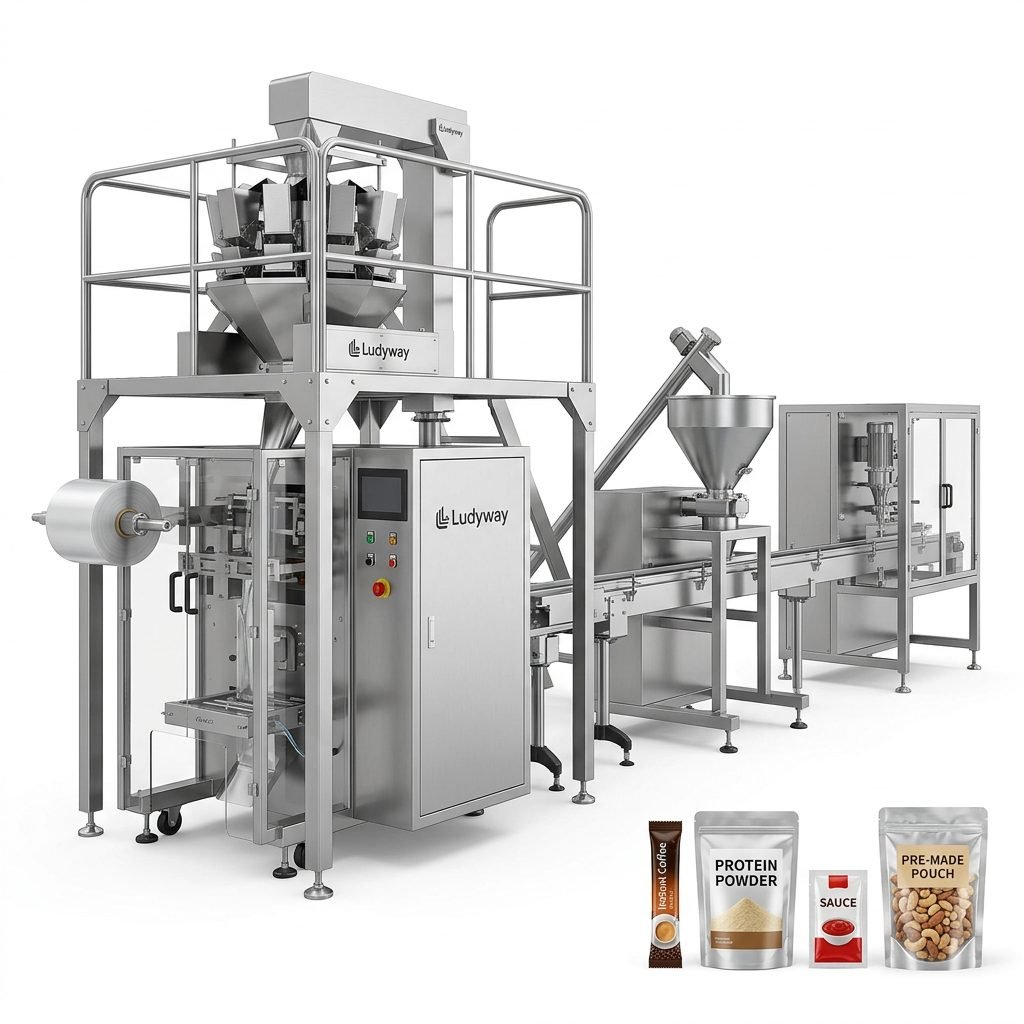
The Limitations of Standalone Packaging Equipment
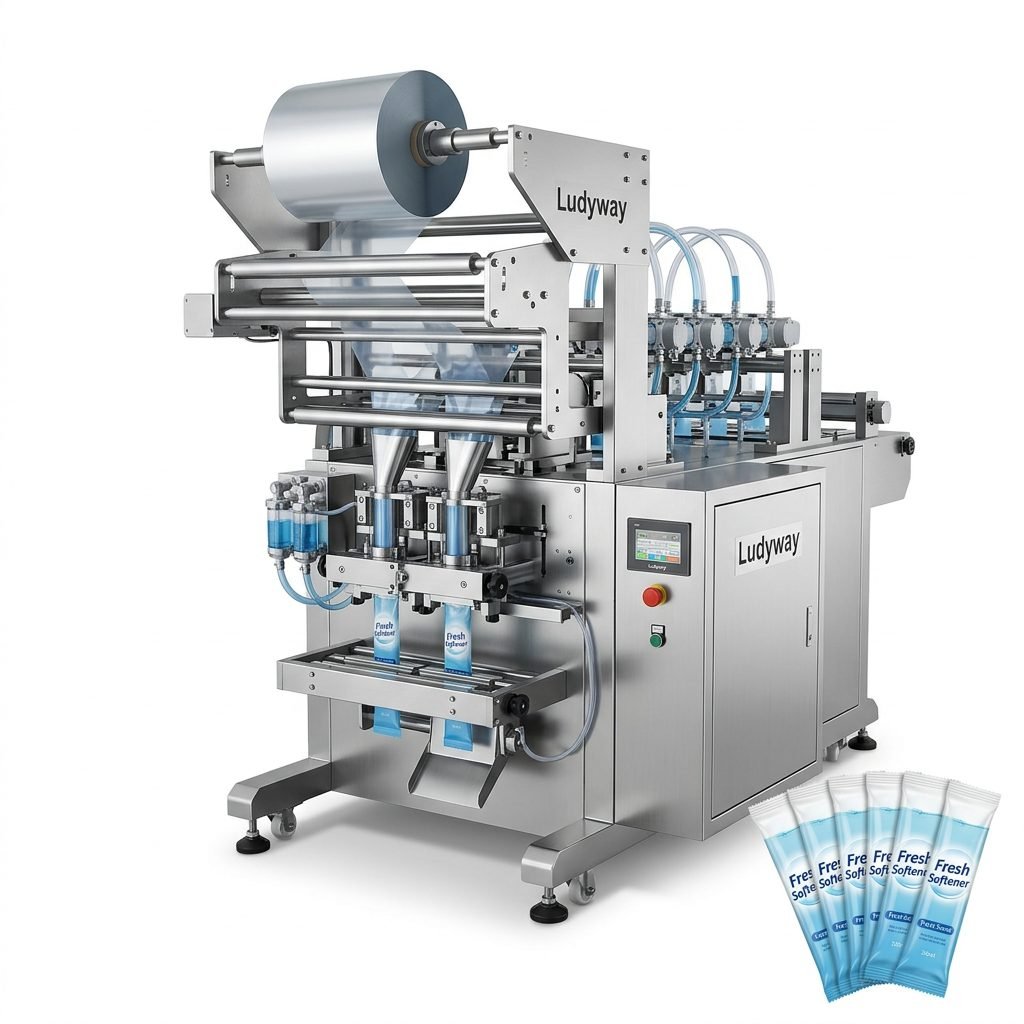
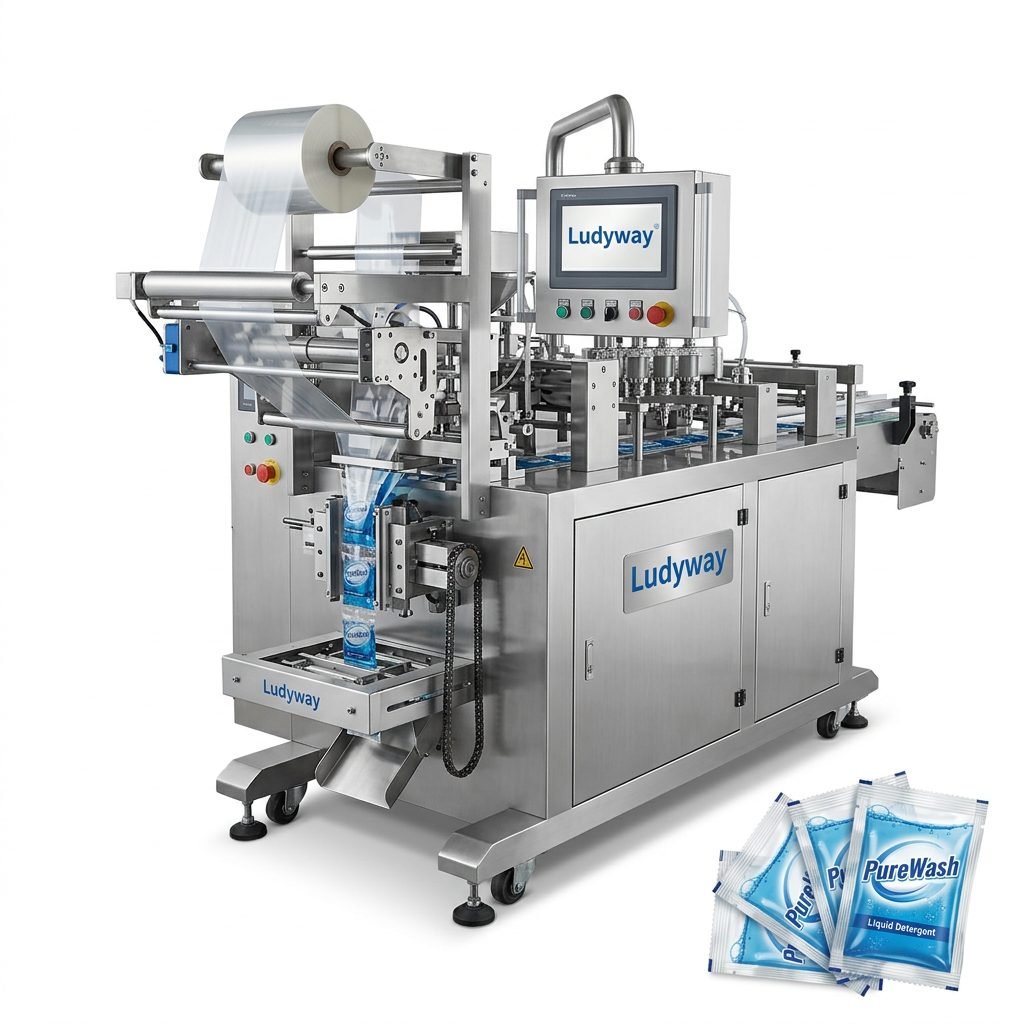
To appreciate the value of full-line automation, it is essential to understand the challenges inherent in standalone operations. While a single vertical form-fill-seal machine or a dedicated capping unit performs its specific function well, it does not operate in a vacuum. Workshops using standalone machines face distinct operational challenges:
- Labor-Intensive Transfers: Workers are constantly required to transport semi-finished products from the filling station to the sealing machine, and then to the labeling or cartoning area. This manual handling drastically limits the overall speed of the production line.
- Inconsistent Output: Relying on human operators to feed machines, align packaging materials, and manage transitions introduces human error, leading to variation in packaging quality and increased product waste.
- Safety and Hygiene Risks: In sensitive industries like food, pharmaceuticals, and health supplements, every manual touchpoint increases the risk of contamination, making compliance with strict sanitary standards difficult to maintain.
- Floor Space Inefficiency: Multiple disconnected machines with staging areas for intermediate products clutter the workshop floor, creating safety hazards and reducing usable workspace.
The Architecture of End-to-End Packaging Lines
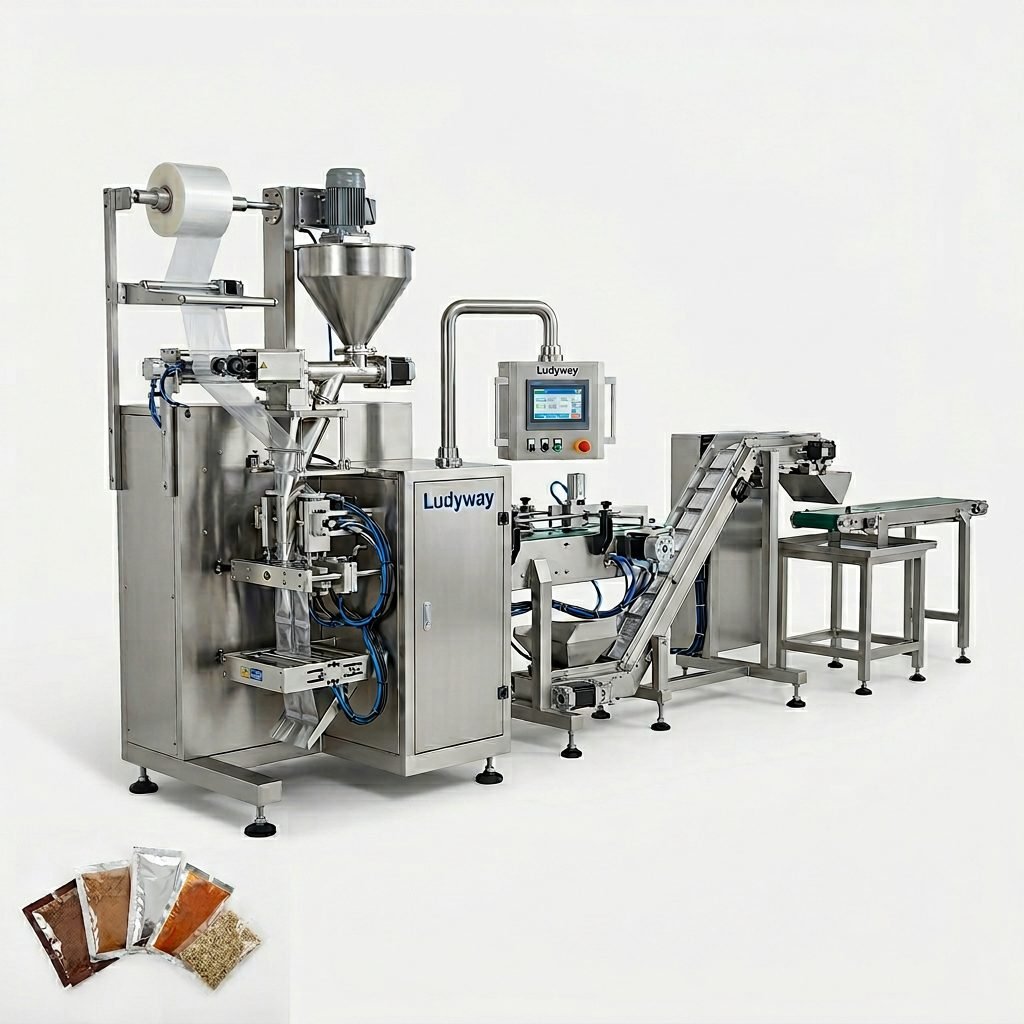
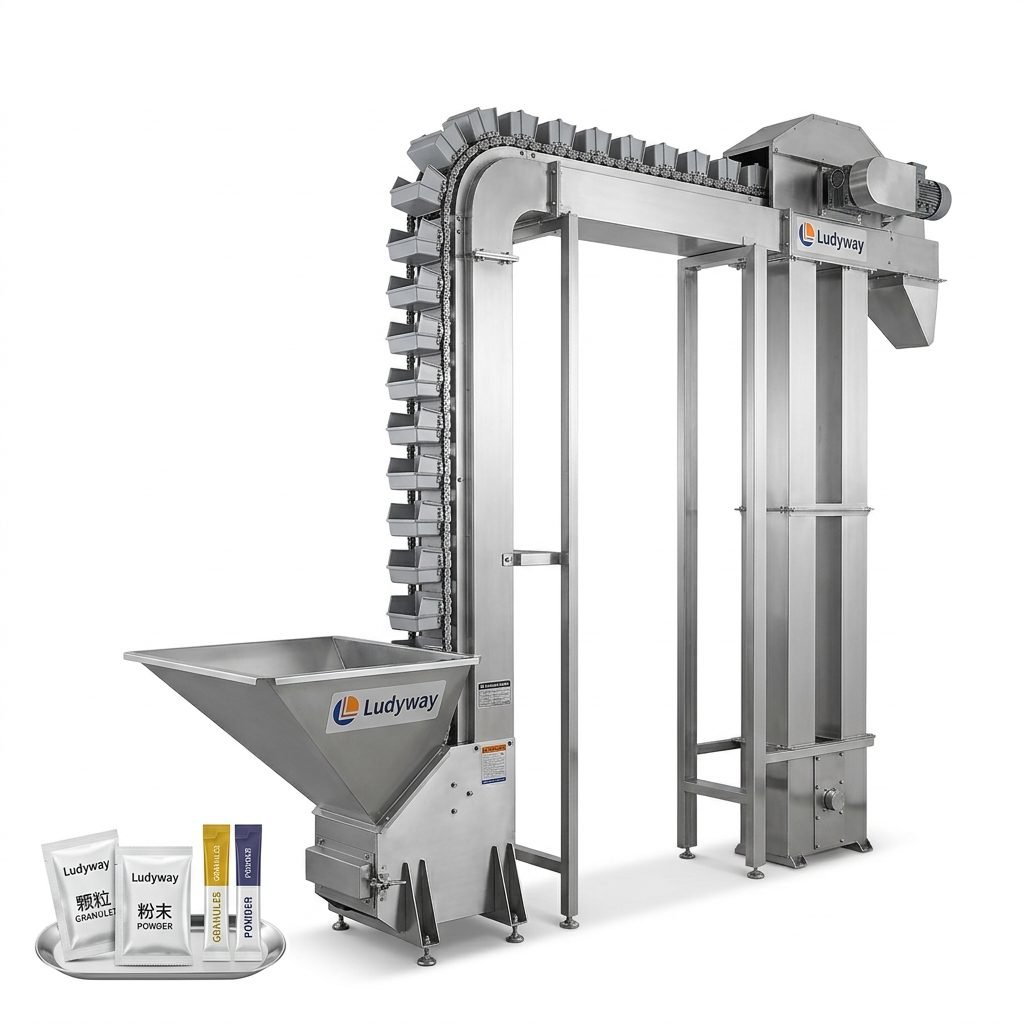
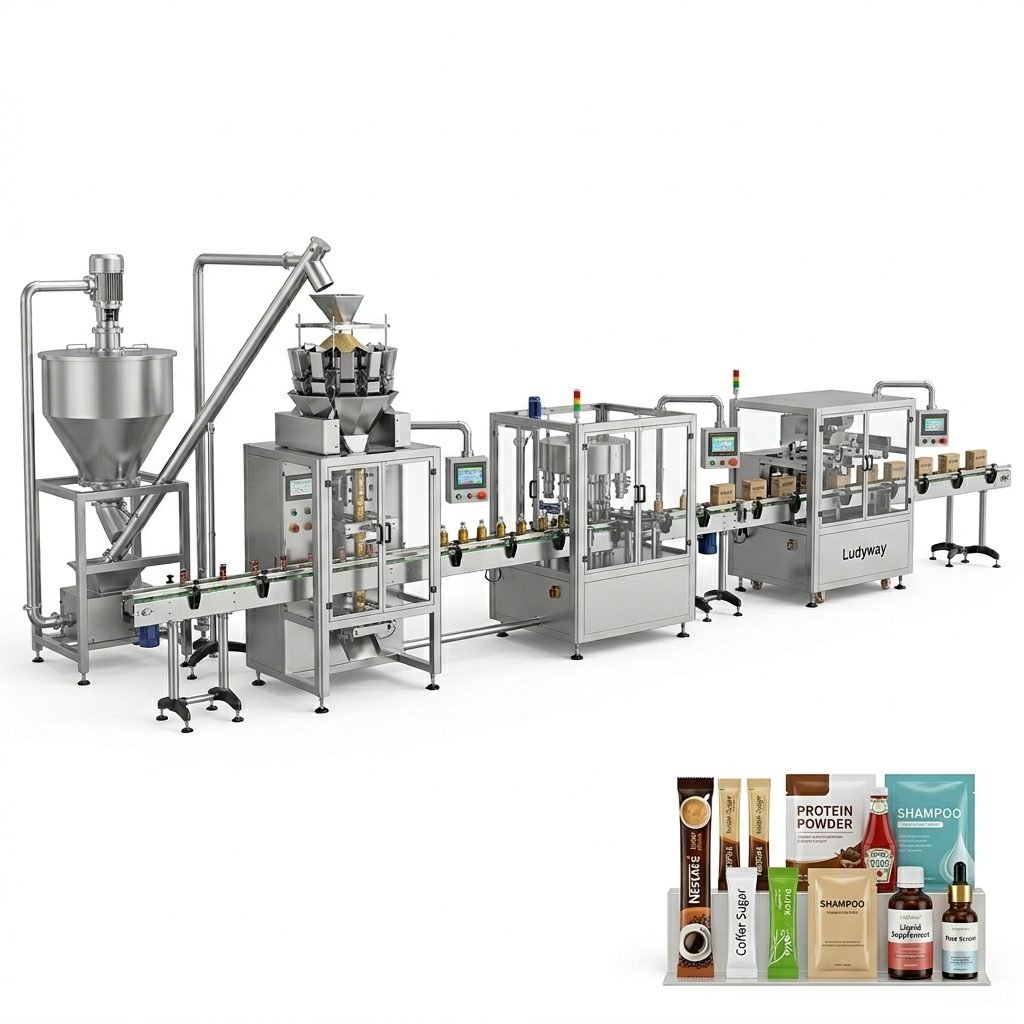
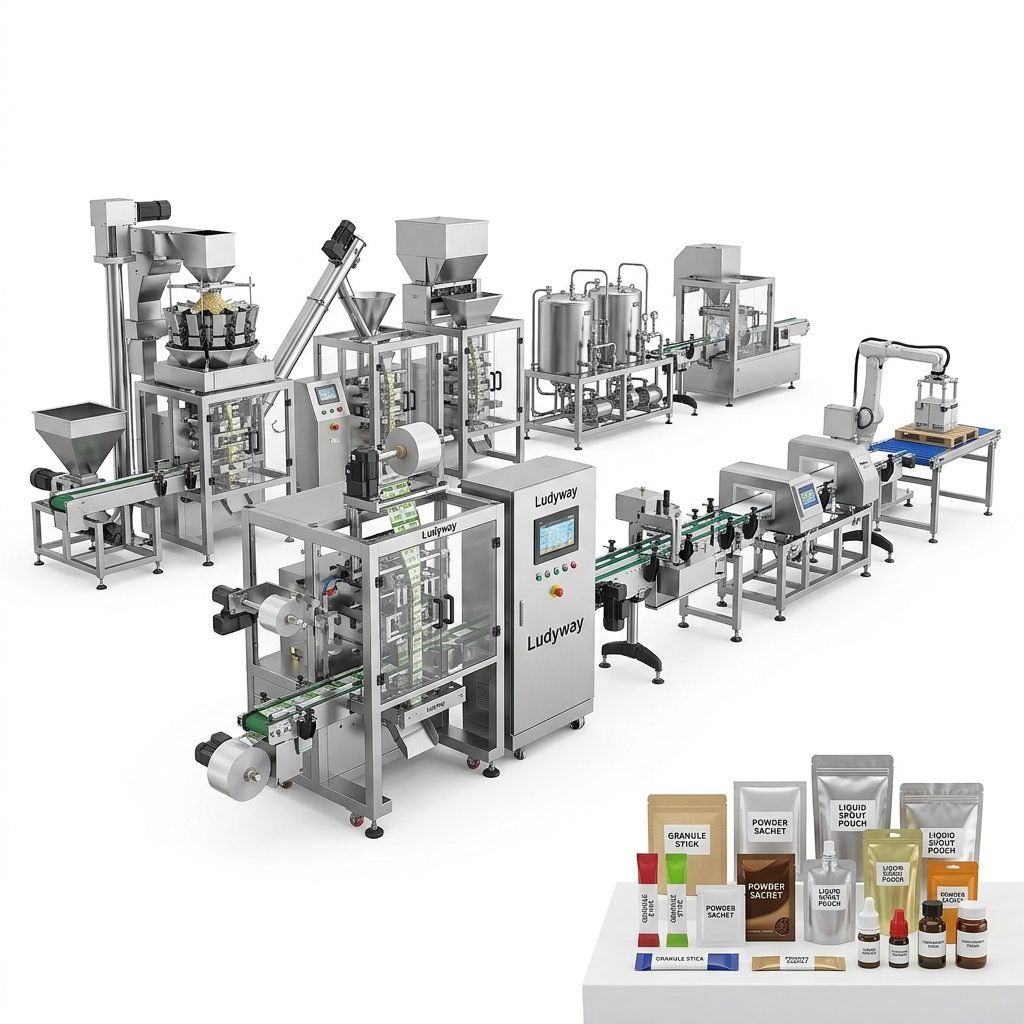
An end-to-end automated packaging line integrates all stages of the packaging process into a singular, synchronized system. Controlled by centralized software and connected via smart conveyor systems, a turnkey packaging line typically manages the entire product journey. This starts from raw material feeding and goes all the way to final palletization.
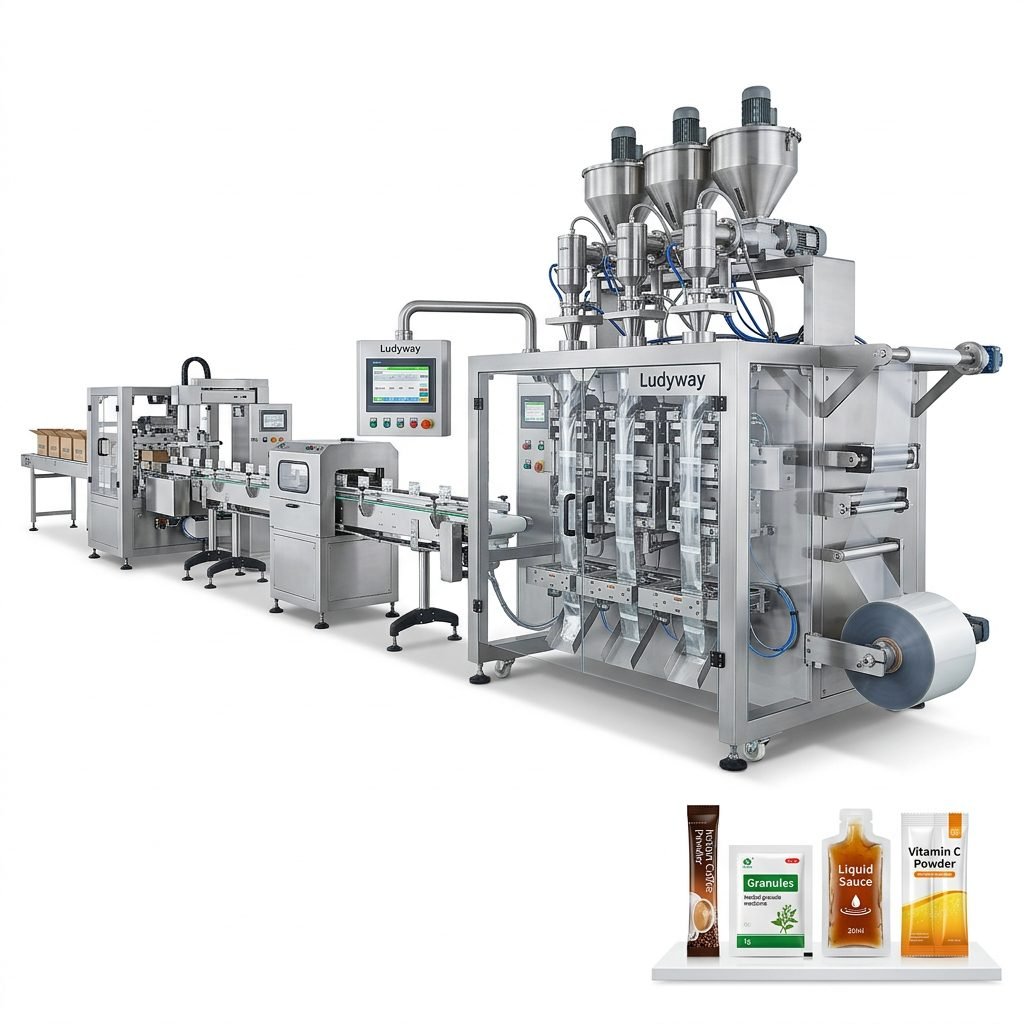
In a fully integrated line, granular, powder, or liquid products are automatically fed into multi-lane packaging units. The filled pouches or sachets are then seamlessly oriented and conveyed to checkweighers, metal detectors, cartoning systems, and case packers. By eliminating manual transitions, the line operates at a constant, optimized velocity, maximizing throughput while minimizing mechanical wear and tear.
Comparing Standalone Systems and Integrated Automation
To help decision-makers evaluate their upgrade paths, the following table highlights the operational differences between traditional standalone machines and modern integrated packaging lines:
| Operational Metric | Standalone Machines | Full-Line Turnkey Automation |
|---|---|---|
| Labor Requirement | High; requires manual feeding, material transfer, and secondary packing. | Minimal; system is managed by a central operator with automated transfers. |
| Production Speed | Restricted by the slowest manual step or transition bottleneck. | Continuous, high-speed output synchronized across all modules. |
| Contamination Risk | Moderate to High due to frequent manual handling and open exposure. | Very Low; enclosed systems designed for strict sanitary environments. |
| Data Integration | Difficult; data must be collected manually from disparate machines. | Unified; real-time tracking, error diagnostics, and ERP connectivity. |
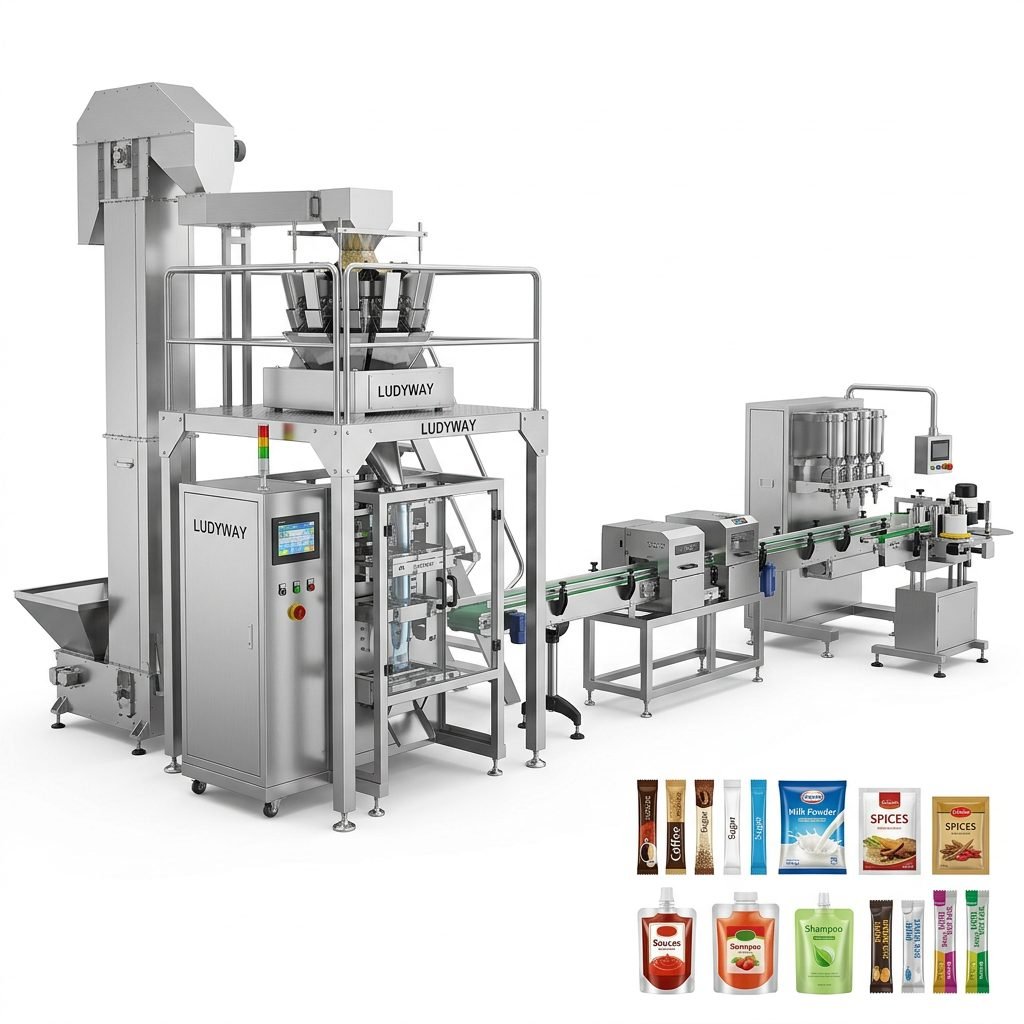
Key Drivers Behind the Automation Revolution
The global manufacturing sector is embracing full-line automation not just as an operational upgrade, but as a strategic necessity. Several key trends are driving this rapid transformation:
1. Addressing Labor Shortages and Rising Costs
Finding and retaining skilled factory labor has become increasingly difficult and expensive in many industrial regions. Automated packaging lines significantly reduce headcount requirements on the packaging floor. This allows manufacturers to reallocate human resources to higher-value roles, such as quality control, product development, and machine maintenance.
2. Maximizing Yield and Material Savings
Integrated packaging lines rely on precision dosing systems (such as multi-lane auger fillers or rotary valve pumps) and advanced sensors. These technologies ensure that every pouch, sachet, or bottle is filled to the exact specification, preventing product giveaway and reducing packaging film waste.
3. Meeting Regulatory and Traceability Standards
In the pharmaceutical and food sectors, regulatory bodies enforce strict traceability guidelines. Modern turnkey systems integrate laser marking, batch coding, and vision inspection systems directly into the production line. This makes it easier to track products through the supply chain and instantly flag packaging defects.
Partnering for Automation Success
Transitioning from standalone machinery to a fully integrated packaging line requires meticulous planning, robust engineering, and a partner with deep industry experience. A successful installation requires a thorough analysis of product characteristics, speed requirements, and layout constraints.
For brands seeking to scale up their operations, partnering with a proven supplier makes all the difference. Ludyway, one of China’s leading packaging machine and turnkey packaging line manufacturers, has been at the forefront of this industrial transition since 1993. With over 30 years of manufacturing experience, a 20,000-square-meter facility, and a diverse product range covering food, pharmaceuticals, and health supplements, they specialize in engineering customized packaging solutions that help global workshops achieve optimal efficiency, long-term technical stability, and a rapid return on investment.
Conclusion: The Future of the Smart Workshop
The era of relying solely on isolated packaging units is drawing to a close. As global competitive pressures intensify, the transition toward end-to-end automated packaging lines represents the most reliable pathway to scaling production while maintaining quality. By replacing manual touchpoints with smart, synchronized systems, manufacturers can convert their packaging workshops into highly efficient, future-proof centers of productivity.