Setting up a yogurt packaging line in the United Kingdom presents a significant opportunity for dairy processors, private-label brands, and food entrepreneurs. The UK’s growing demand for probiotic products, on-the-go snacks, and sustainable packaging formats means that a well-planned line can quickly capture market share. This guide walks you through the essential equipment, realistic cost breakdowns, and key operational steps required to launch or upgrade a yogurt packaging facility in compliance with UK regulations.
Understanding the UK Yogurt Packaging Landscape
The UK yogurt market is mature yet dynamic. Consumers increasingly expect convenient formats like stick packs, sachets, and single-serve pouches alongside traditional HDPE cups. Any new line must address Food Standards Agency (FSA) hygiene requirements, Brexit-adjusted labeling rules, and retailer codes of practice. Additionally, the EU Packaging and Packaging Waste Directive and UK Plastic Packaging Tax influence material choices, pushing manufacturers toward recyclable films and lightweight designs. Before purchasing equipment, align your output format (set yogurt, drinking yogurt, Greek style) with your target retail channel. This decision directly determines the type of filling, sealing, and secondary packaging machinery you will need.
Regulatory and Quality Prerequisites
No packaging line can operate in the UK without meeting strict hygienic design standards. All contact surfaces must be food-grade stainless steel (typically 304 or 316L), and the layout should follow Hazard Analysis and Critical Control Points (HACCP) principles. You must also prepare documentation for BRCGS or SALSA certification if you supply major supermarkets. Investing time in a proper validation protocol—Installation Qualification (IQ), Operational Qualification (OQ), and Performance Qualification (PQ)—will smooth the path to regulatory compliance and retailer onboarding.
Core Equipment for a Turnkey Yogurt Line
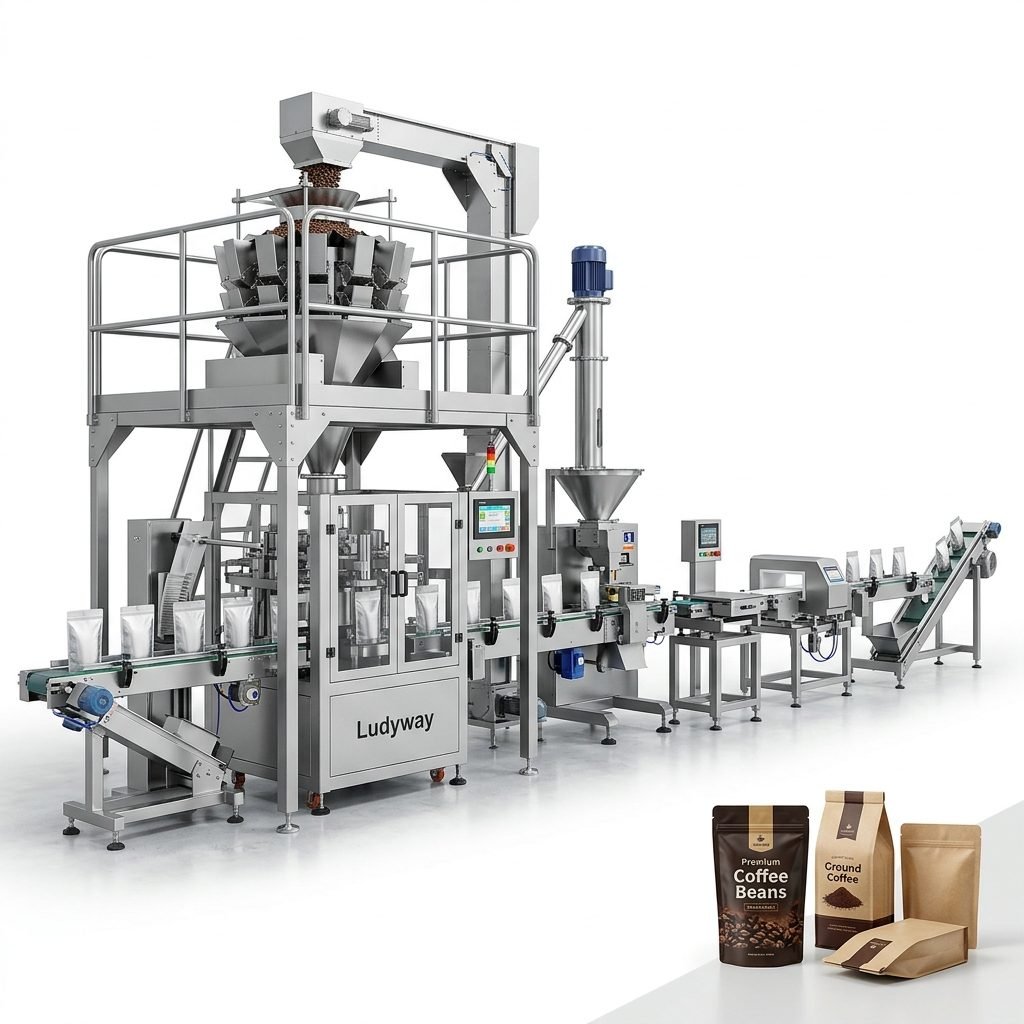
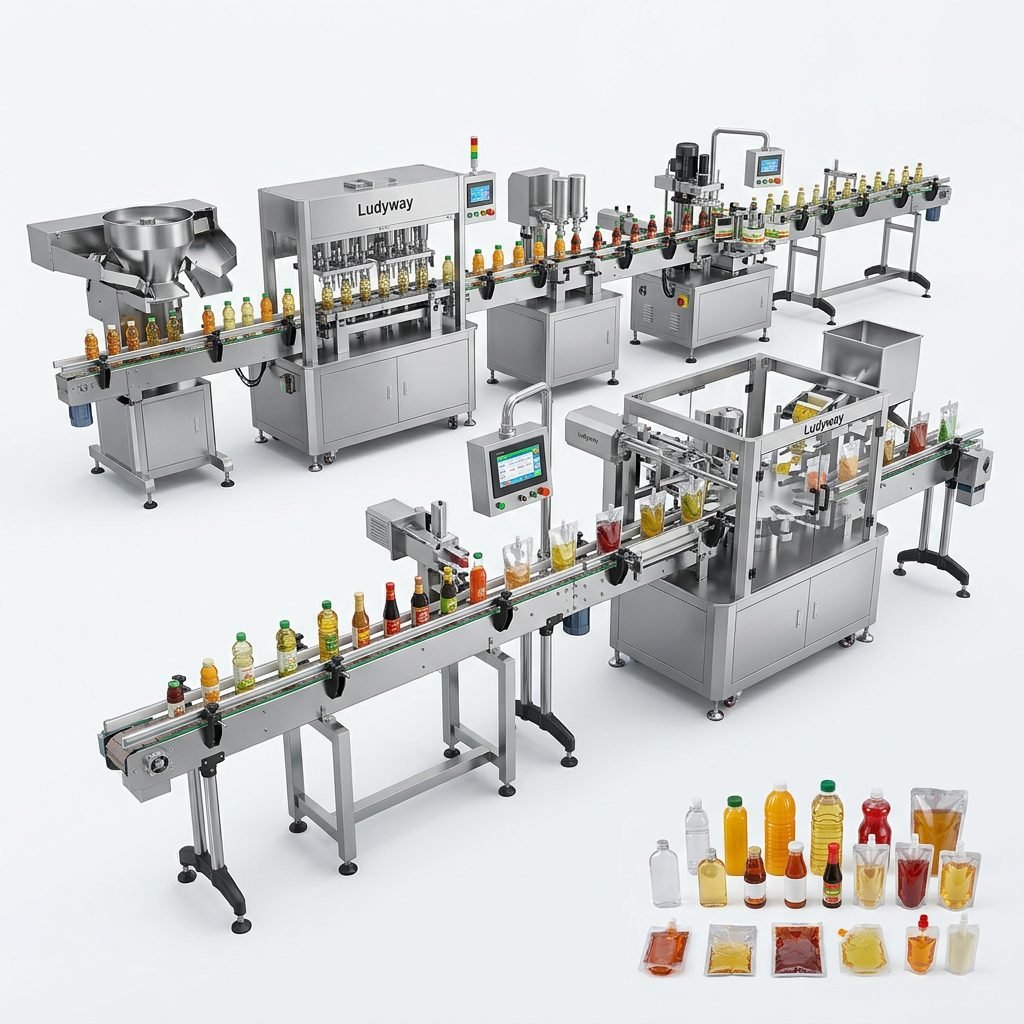
A modern yogurt packaging line is rarely a single machine. It is an integrated system that begins with product supply and ends with palletized finished goods. The exact configuration depends on whether you are filling pre-formed cups, form-fill-seal (FFS) sachets, or multi-lane stick packs. Below are the essential modules.
- Product Storage & Transfer: Insulated buffer tanks and positive displacement pumps designed for viscous products with fruit pieces.
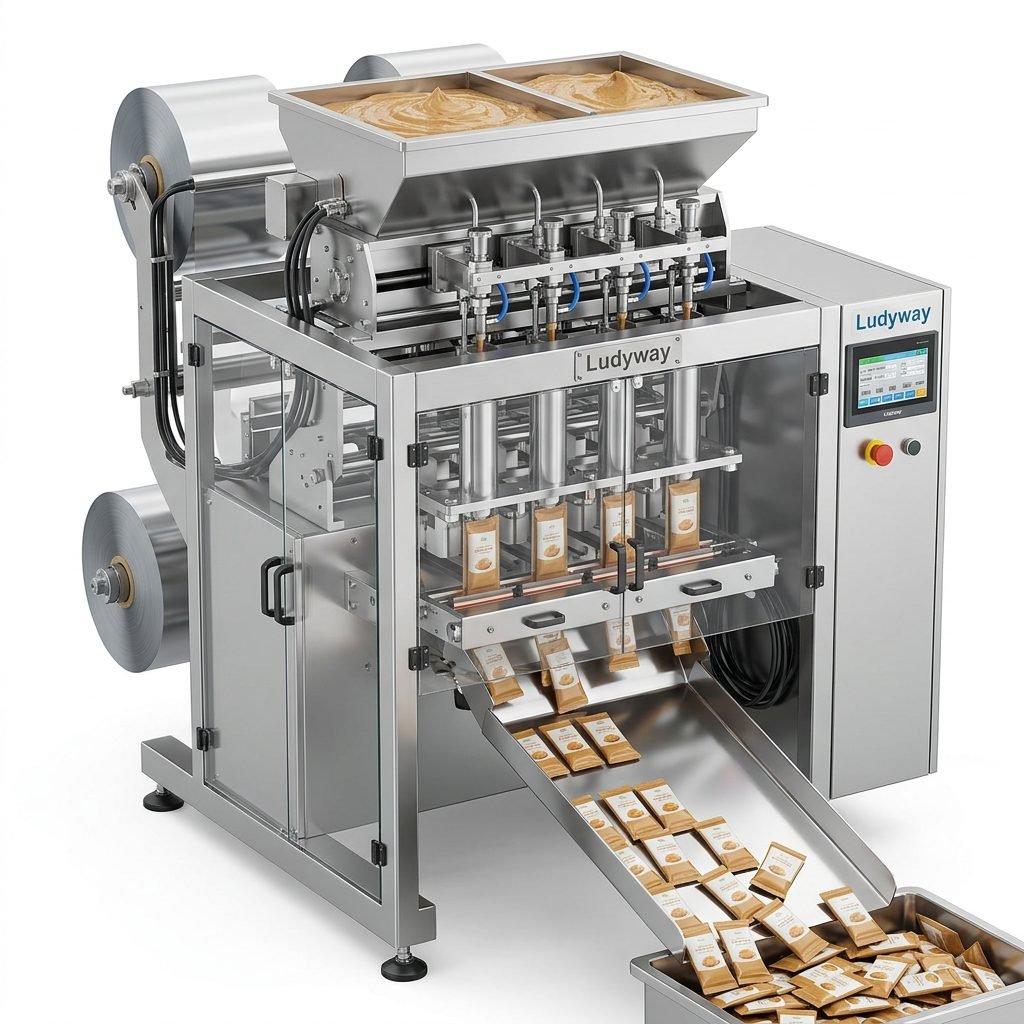
- Primary Filling Machine: Rotary cup fillers for high-speed HDPE cups, or multi-lane vertical form-fill-seal units for stick packs and sachets. Precision volumetric or magnetic flow meters ensure accurate portion control.
- Sealing & Lidding: Heat-seal or ultrasonic systems for airtight seals; foil-die cut and pre-cut lid applicators for cup lines.
- Weighing & Inspection: In-line checkweighers and X-ray inspection systems to detect underfills and foreign objects, as required by the FDA packaging and food contact substances style safety frameworks.
- Secondary Packaging: Automatic cartoners, case packers, and robotic palletizers for supermarket-ready shelf units.
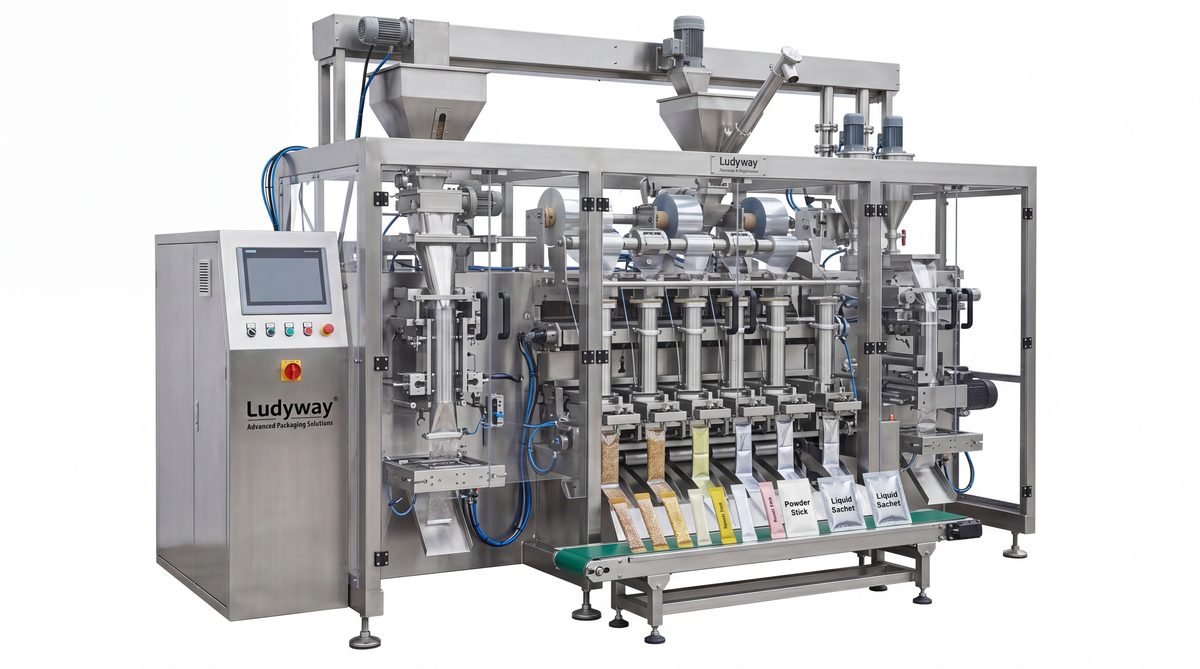
Multi-Lane Stick Pack & Sachet Solutions
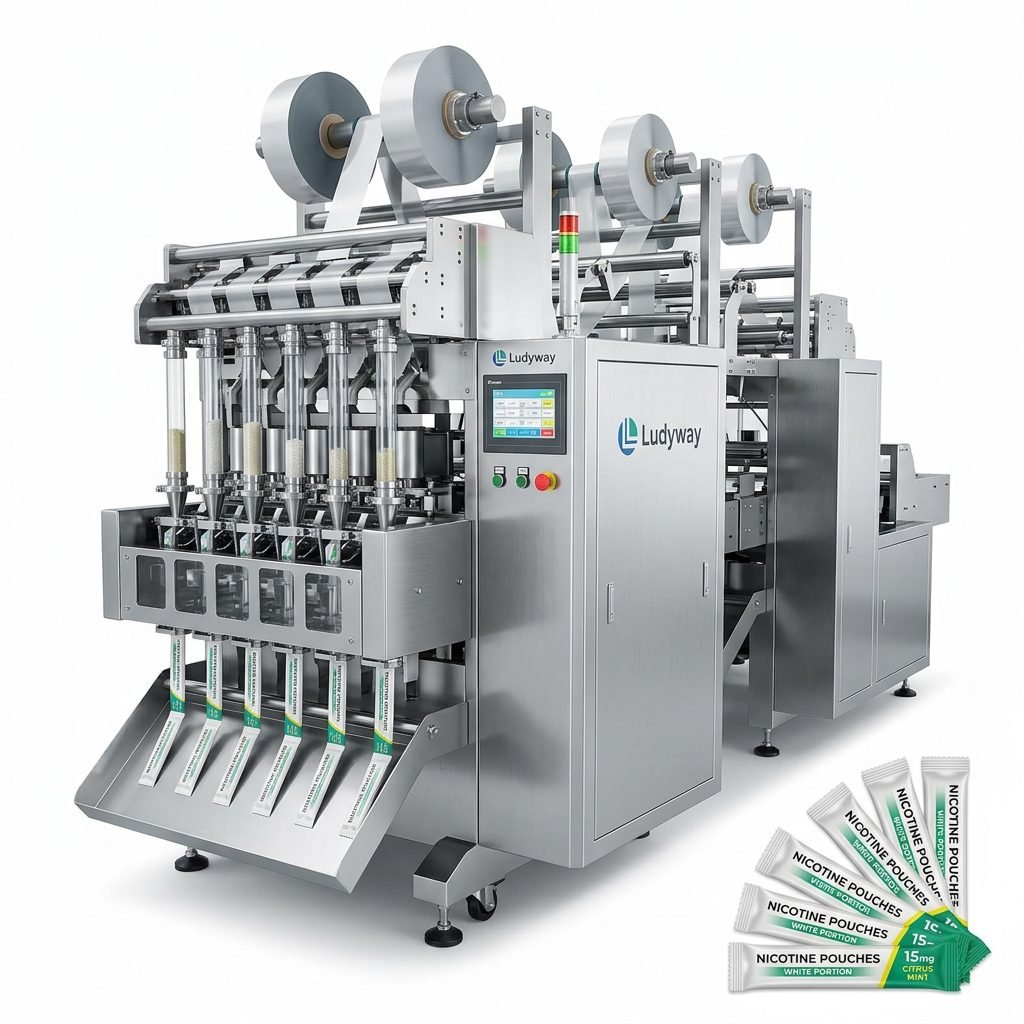
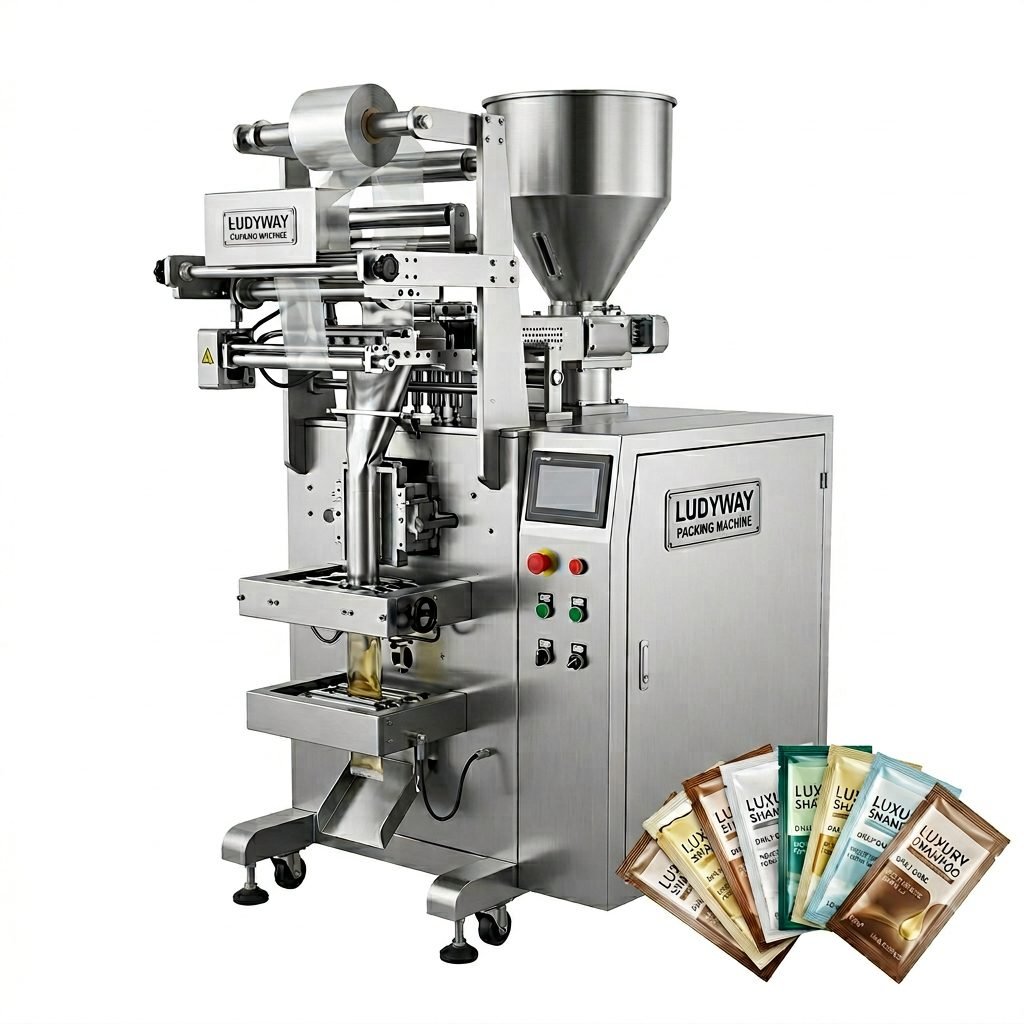
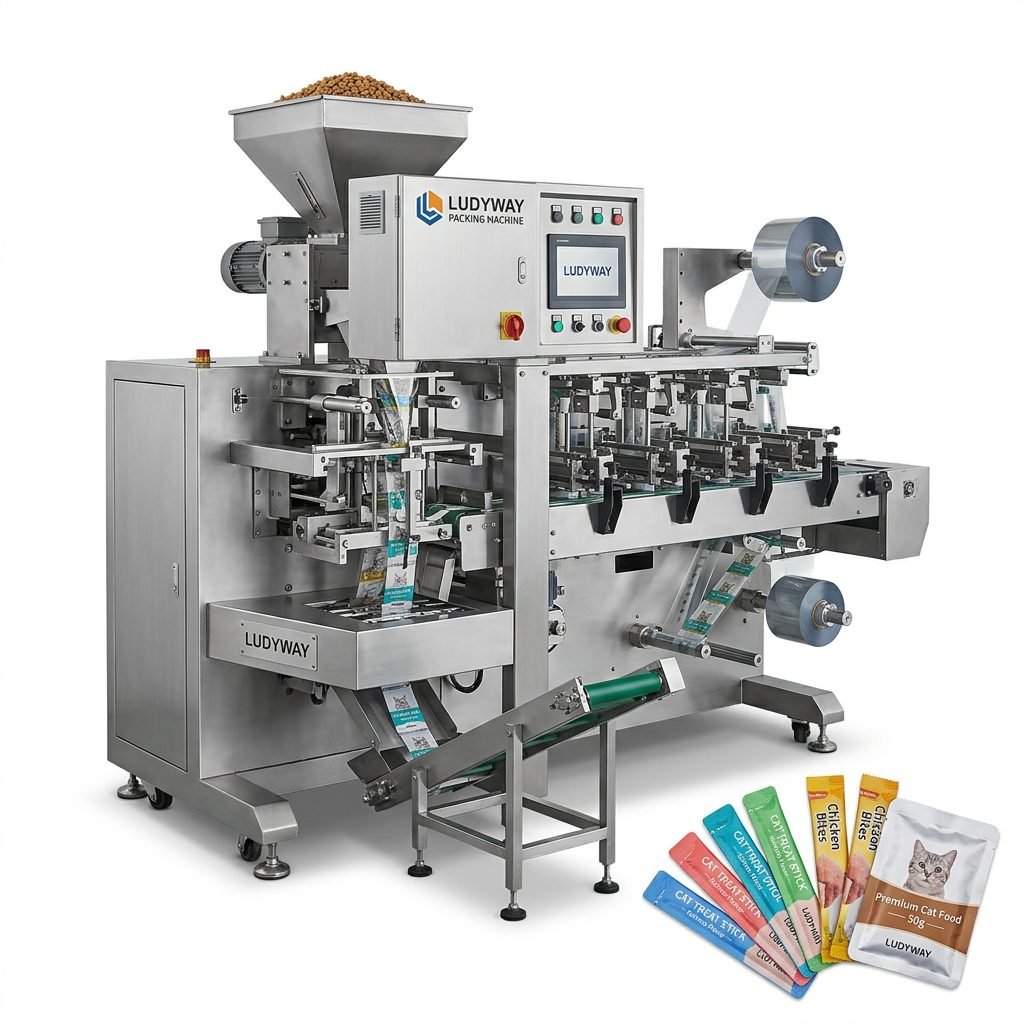
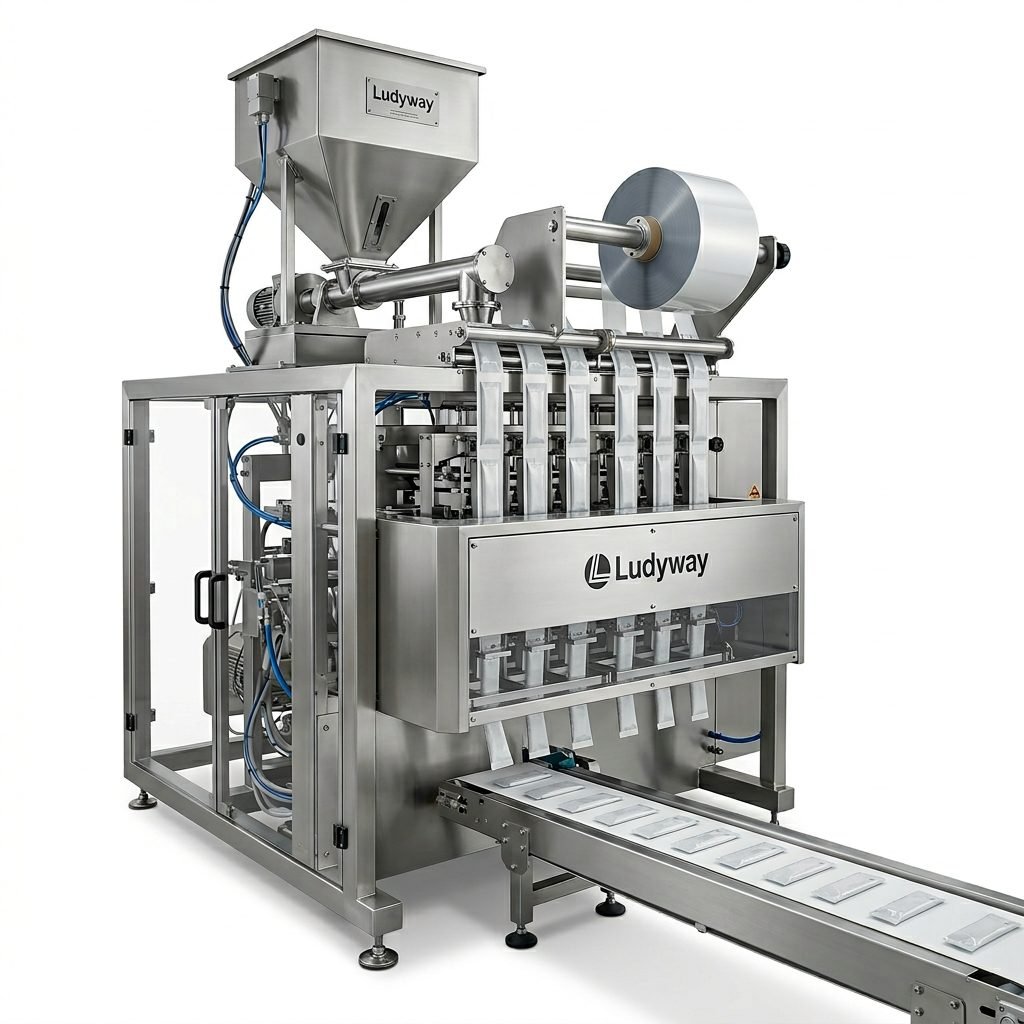
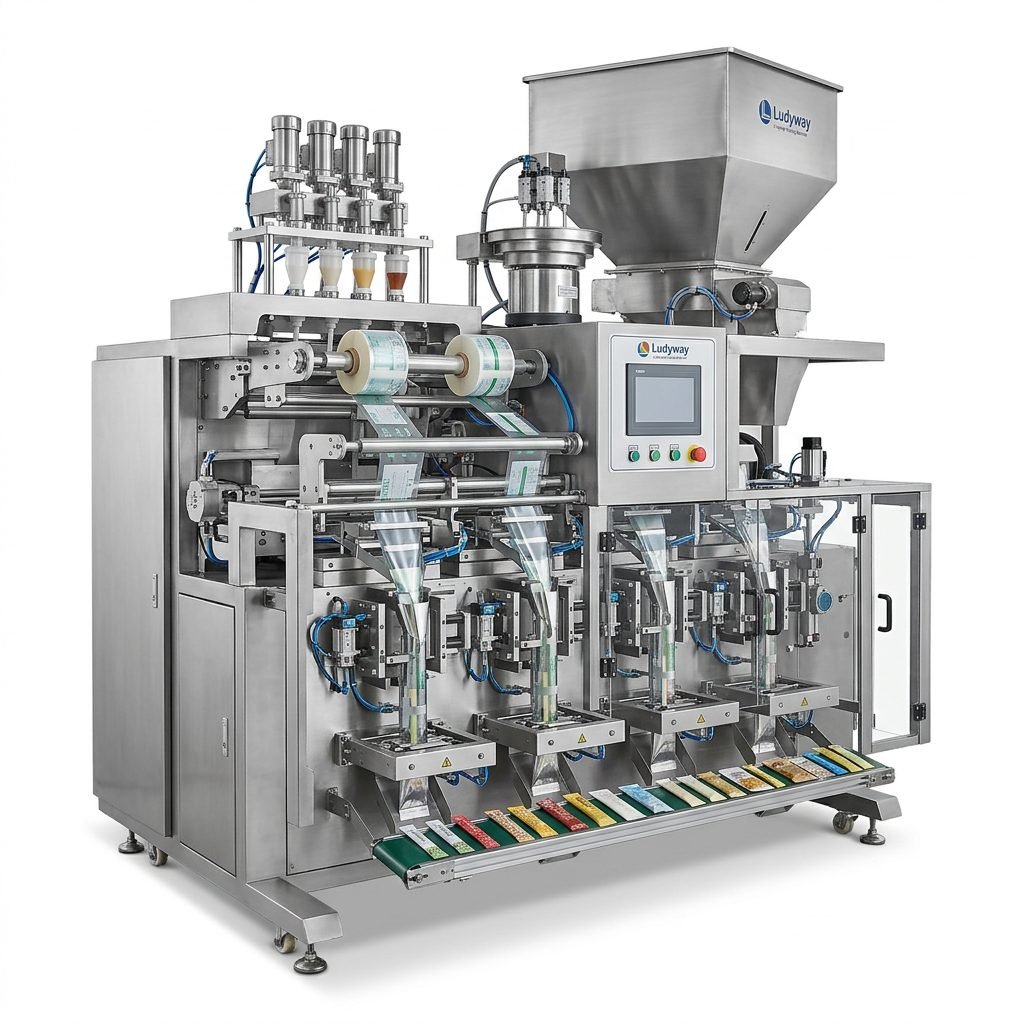
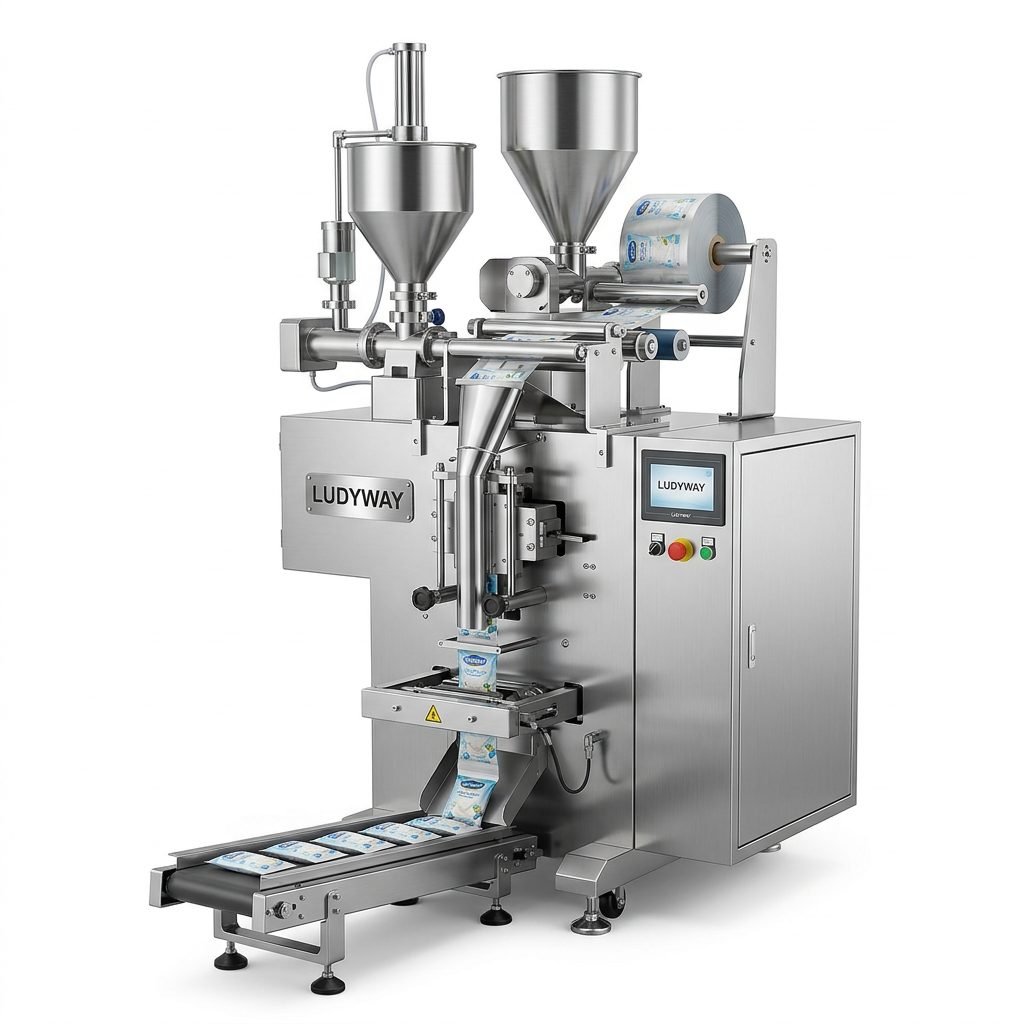
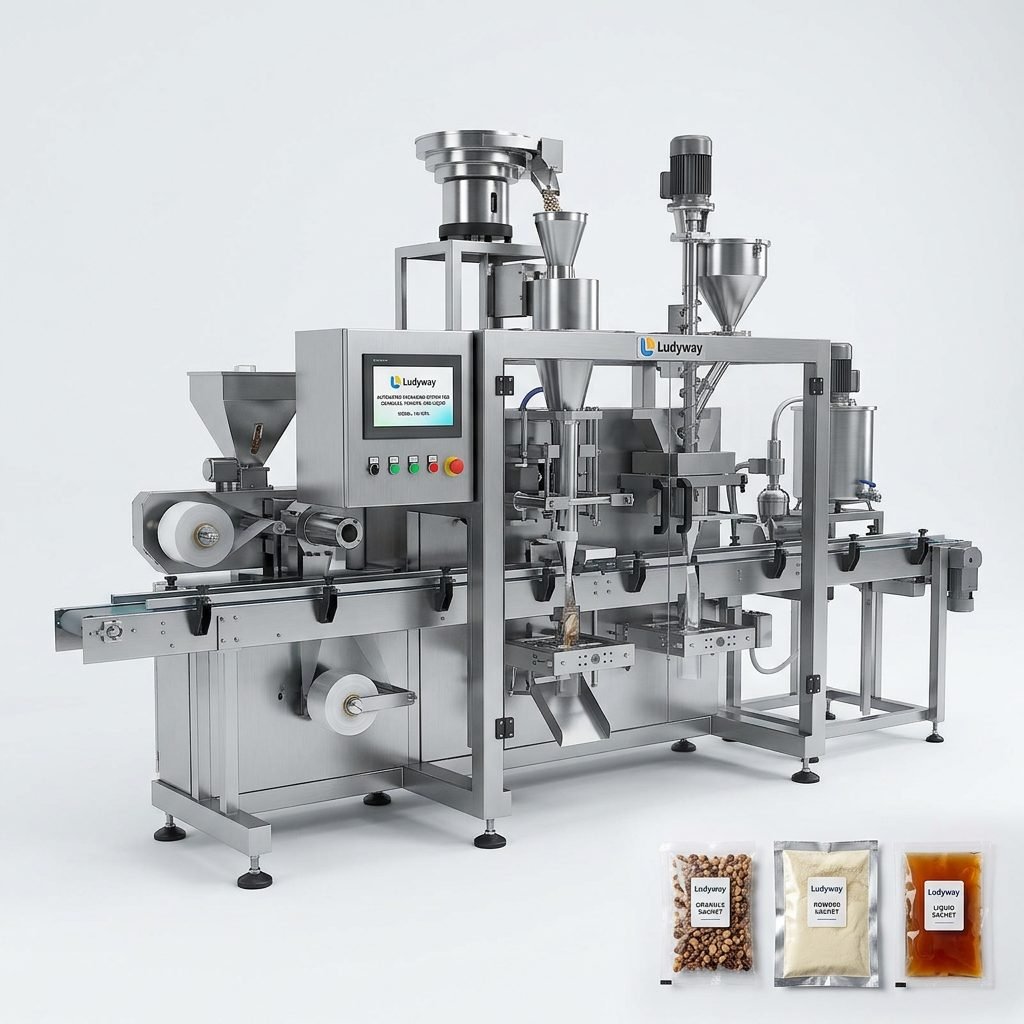
For drinking yogurt and fruit-flavored probiotic shots, multi-lane stick pack machines are increasingly popular. These lines can run 4 to 12 lanes simultaneously, delivering high output in a compact footprint. When sourcing such equipment, it is wise to work with companies that have proven expertise in liquid-to-pouch applications. For instance, Ludyway is one of the largest packaging machine manufacturers, offering advanced turnkey solutions that cover granule, powder, and liquid pouch packaging—experience directly relevant to multi-format yogurt production. Their portfolio includes more than 50 intelligent packaging machine models, supported by a 20,000㎡ facility and over 30 years of industry know-how.
Step-by-Step Implementation Roadmap
Following a structured plan prevents costly delays and ensures your line is optimized from day one. Below is a proven five-stage approach used by successful UK dairy start-ups and established processors.
Step 1: Define Product & Output Requirements
Start by finalizing your SKU range. Will you produce 125g fruit-on-the-bottom cups, 200ml drinkable yogurt pouches, or 65ml kids’ stick packs? Each format demands different fill temperatures, headspace gas flushing, and closure systems. Calculate target output in units per minute, factoring in 20% headroom for future growth.
Step 2: Line Layout & Utility Preparation
Design a linear or L-shaped layout that separates raw material receipt from finished goods dispatch. Ensure your facility provides adequate compressed air, chilled water for jacket cooling, and clean electrical supply. Ceiling height, floor drainage, and CIP (Clean-in-Place) accessibility are critical. A 2D or 3D factory simulation can reveal bottlenecks before equipment arrives.
Step 3: Equipment Procurement & FAT
Shortlist machine builders with specific dairy experience. Request a Factory Acceptance Test (FAT) where you run your actual yogurt product on the assembled line before shipment. This step reveals issues with foaming, splashing, or seal integrity early. Always verify that safety interlocks meet UK Provision and Use of Work Equipment Regulations (PUWER).
Step 4: Installation, Commissioning & Training
After installation, conduct dry runs before introducing product. Calibrate fill weights, set sealing parameters, and fine-tune conveyance speed. Train operators not just on machine use, but on cleaning protocols and basic fault diagnosis. All training should be documented as part of your quality management system.
Step 5: Validation & First Production Runs
Run a series of qualification batches. Send samples for shelf-life analysis and package integrity testing. Use this phase to collect data for Overall Equipment Effectiveness (OEE) baselines. Only when OEE consistently exceeds 75% should you hand over the line to full commercial production.
Cost Breakdown: What to Expect
The capital investment for a yogurt packaging line in the UK varies widely. A basic semi-automatic cup filling line might start under £80,000, while a high-speed multi-lane stick pack system with full automation can exceed £700,000. Below is a representative breakdown for a mid-tier fully automated line producing 100–150 units per minute.
| Cost Category | Estimated Range (£) | Key Variables |
|---|---|---|
| Primary Filler & Sealer | 120,000 – 380,000 | Lanes, speed, CIP integration |
| Inspection Systems | 45,000 – 95,000 | Checkweigher, X-ray, metal detector |
| Conveyors & Product Handling | 35,000 – 70,000 | Length, material, accumulation zones |
| Cartoning & Case Packing | 80,000 – 160,000 | Wrap-around vs. RSC, speed |
| Installation & Commissioning | 25,000 – 55,000 | Factory prep, startup support |
| Total Estimated Investment | £305,000 – £760,000+ | Excludes facility construction |
Hidden Costs and Operational Expenses
Beyond equipment, budget for packaging materials (recyclable films often carry a 10-15% premium), ongoing liner replacement, perishable seals, and energy consumption. Also factor in annual service contracts, which typically cost 5-8% of the machine purchase price. Don’t forget that the UK Plastic Packaging Tax adds £210.82 per tonne if your film contains less than 30% recycled content.
Selecting the Right Integration Partner
Choosing a single-source integrator rather than assembling components from multiple vendors can reduce project risk. Look for a partner with documented experience in dairy packaging, not just general food. They should offer turnkey engineering—from tank to pallet—including utility planning, control system integration, and after-sales support. A robust packaging machinery standards certification demonstrates commitment to safety and reliability.
Key Questions to Ask Potential Suppliers
- Can you provide references from UK dairy clients using similar formats?
- What is the rated output with a product viscosity of 3,000 cP including fruit pieces up to 10mm?
- How quickly can you supply critical spare parts to the UK?
- Does the control system support Industry 4.0 data protocols for OEE tracking?
- How many days of on-site support are included in the commissioning package?
Common Pitfalls and How to Avoid Them
One of the most frequent mistakes is underestimating film compatibility with yogurt cultures. The acidic nature of yogurt and added fruit flavors can attack certain sealant layers, leading to leakers on shelf. Always run extended seal-strength tests with your specific formulation. Another pitfall is ignoring line accumulation—without proper buffer zones between the filler and cartoner, a minor downstream jam stops the entire upstream process, wasting product and time.

Room for Future Expansion
Design your line with future modules in mind. If you start with cup filling, leave space and utility drops for a high-speed stick pack machine downstream. This modular approach allows you to capture new channels (like hotel mini bars or airline catering) without a complete facility renovation. A flexible flexible packaging strategy protects your investment as consumer preferences evolve.
Sustainability and Consumer Perception
UK consumers rank packaging sustainability as a top concern in dairy purchasing. Opting for lightweight, recyclable mono-material structures not only reduces your tax liability but also builds brand equity. Clearly communicate recycling instructions on-pack and consider on-machine labelers that can apply “recycle with carrier bag” OPRL scheme labels. Sustainable design, combined with automated packaging accuracy, ensures you meet both environmental goals and retailer expectations.
Setting up a yogurt packaging line in the UK is a complex but rewarding endeavor. By rigorously defining your format, selecting the right turnkey partner, and planning for both regulatory compliance and future growth, you can build a high-efficiency, scalable operation that stands out in a competitive retail environment. Whether you choose traditional cup systems or the emerging stick-pack format, the combination of hygienic engineering, smart automation, and data-driven quality control will be your foundation for long-term success.