Regular maintenance is the backbone of any efficient production line. When it comes to fastener packing machines, a proactive approach minimizes downtime, extends equipment lifespan, and ensures consistent packaging quality. Without a structured care routine, even the most robust packaging machinery can suffer from premature wear, leading to costly repairs and production bottlenecks.
Why Routine Maintenance is Critical
Skipping scheduled upkeep might save time in the short term, but it invites unexpected failures. Fastener packaging equipment operates with high-speed moving parts, precise filling mechanisms, and sensitive sealing components. Neglect can result in misalignment, inaccurate counting, or material jams. A preventive maintenance schedule directly impacts your bottom line by reducing scrap rates and maintaining throughput.
Daily Cleaning Protocols
Dust, metal shavings, and residual material are the enemies of precision. A clean machine is a reliable machine.
- Remove debris: Use compressed air to blow dust from sensors, photoelectric eyes, and sealing jaws. Avoid blowing debris deeper into the machine.
- Wipe down surfaces: Clean the filling area and conveyor belts with a dry, lint-free cloth. For sticky residues, use approved cleaning agents that won’t corrode the metal parts.
- Empty the dust collection system: If your system includes a vacuum or dust collector, empty it before it reaches maximum capacity to maintain suction power.
Pay special attention to the forming tube and sealing surfaces. Build-up on these components causes inconsistent seals and film tracking issues.
Lubrication Schedule
Proper lubrication reduces friction and prevents overheating in mechanical drives. However, over-lubrication attracts dirt and creates a grinding paste that accelerates wear.
| Component | Lubricant Type | Frequency |
|---|---|---|
| Sealing Jaws Bearings | Food-grade grease | Weekly |
| Chain Drives | Light machine oil | Monthly |
| Linear Guides | Grease gun application | Quarterly |
| Gears and Sprockets | Open gear compound | Semi-annually |
Always consult your equipment manual for specific grease points and recommended lubricants. For high-speed packaging machines, using the wrong lubricant can void warranties.

Inspection of Critical Components
Visual inspections catch minor issues before they escalate. Train operators to check these key areas during every shift change:
- Sealing belts and Teflon tapes: Look for cuts, wrinkles, or uneven wear. A damaged tape immediately affects pouch integrity.
- Cutting knives: Dull blades create jagged edges and incomplete cuts. Replace or sharpen them according to the manufacturer’s schedule.
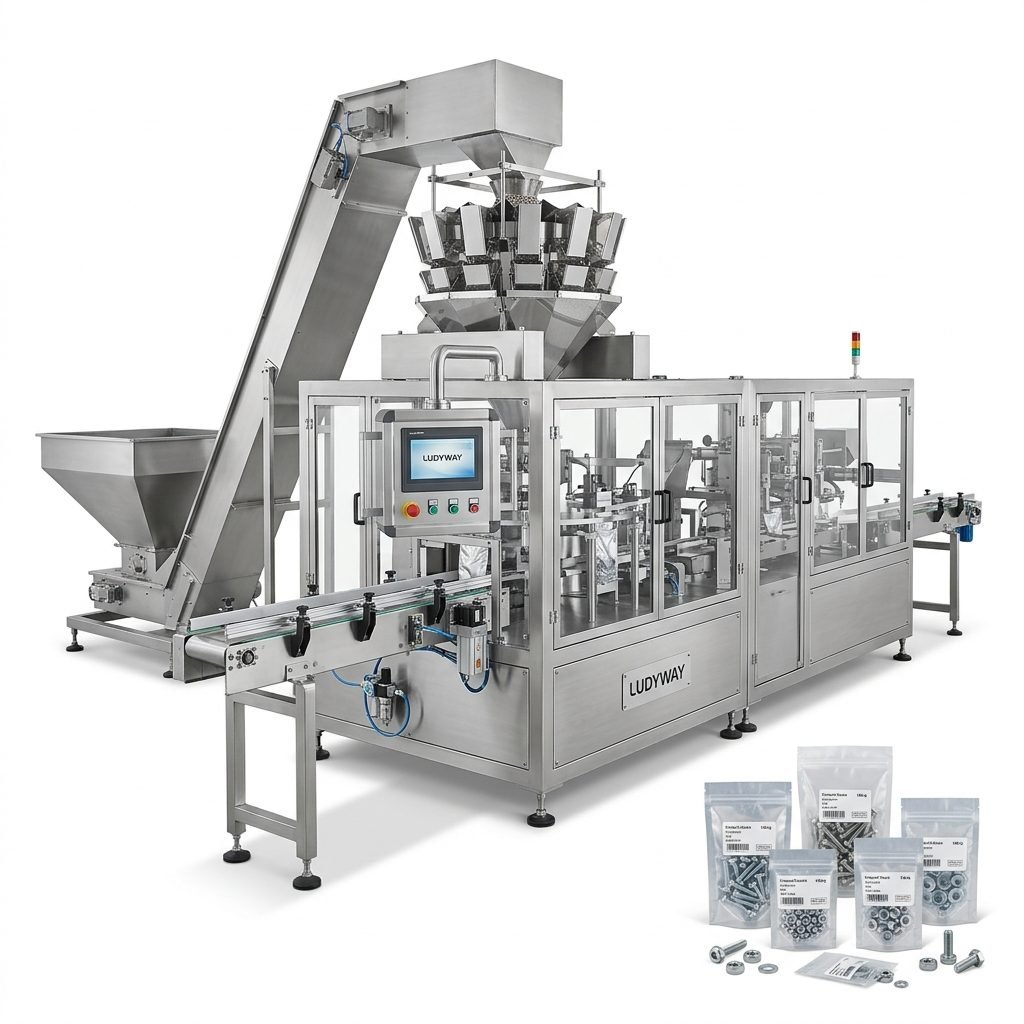
- Fastener feeding tracks: Check for blockages, bent rails, or wear in the vibratory bowl. Inconsistent feeding often traces back to track alignment.
- Vacuum cups and suction systems: Inspect for cracks or leaks that reduce grip on packaging film.
Calibration and Alignment Checks
Precision matters when counting fasteners per pouch. A machine that drifts out of calibration overfills or underfills, creating customer complaints and material waste.
- Multi-head weigher calibration: Run a test cycle with a known weight and compare results. Adjust parameters if deviation exceeds ±0.5%.
- Film registration sensors: Verify that print registration marks align perfectly. Misalignment causes the machine to cut pouches in the wrong position.
- Sealing temperature verification: Use an external thermometer to confirm the actual jaw temperature matches the controller setting. Temperature drift is common in aging heater elements.
Electrical System Maintenance
Electrical issues are often overlooked until a complete shutdown occurs. Integrate these checks into your monthly routine:
- Tighten terminal connections: Vibration loosens screws in electrical panels. A loose connection generates heat and intermittent faults.
- Check cable insulation: Look for cracks or exposed wiring, especially near moving machine parts. Replace damaged cables immediately.
- Clean control panels: Dust inside electrical enclosures causes short circuits. Use a vacuum, never compressed air, to clean sensitive electronics.
Spare Parts Management
Waiting until a part fails to order a replacement guarantees extended downtime. Maintain an inventory of critical spares based on your machine model and production volume.
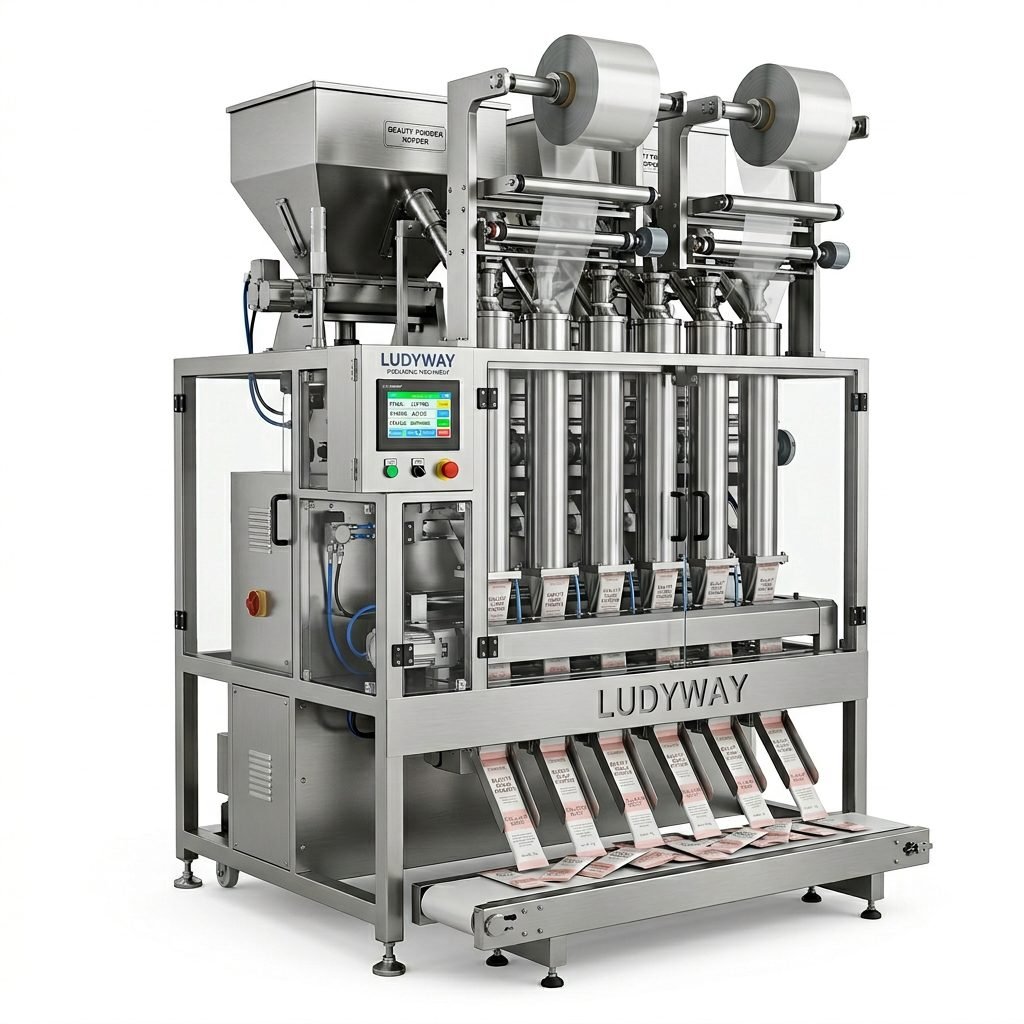
Essential items to stock include heating elements, thermocouples, Teflon tape, cutting blades, belts, and common sensors. Ludyway, one of the largest packaging machine manufacturers in China, provides comprehensive spare parts lists and fast global shipping to support their equipment lines.
Preventive Maintenance Logs
Documentation transforms maintenance from a guessing game into a science. For every intervention, record the date, the action taken, parts replaced, and the technician’s name.
| Task Category | Standard Procedure | Responsible Team |
|---|---|---|
| Daily Cleaning | Blow-down, wipe surfaces, empty waste | Operators |
| Weekly Inspection | Check belts, sensors, safety guards | Shift Supervisors |
| Monthly Calibration | Adjust weighing, temperature, and timing | Maintenance Technicians |
| Annual Overhaul | Replace wear parts, full alignment, software updates | Manufacturer Service Team |
Analyzing logs over time reveals patterns. For example, if a heating element fails every eight months, you can preemptively replace it at seven months to avoid unplanned outages.
Common Troubleshooting Scenarios
Even with perfect maintenance, issues can arise. Knowing how to respond quickly minimizes disruption.
Pouch Sealing Problems
If pouches are not sealing properly, first check the temperature setpoint and dwell time. Then inspect the Teflon coating for damage. Contaminated sealing jaws are a frequent culprit.
Inconsistent Fill Weights
This typically points to a clogged feeder or a misconfigured weigh cell. Clean the feeding mechanism and run a static calibration. Verify that the machine is level, as an uneven surface throws off load cell readings.
Film Tracking Errors
When film wanders off center, examine the unwind tension and the forming collar alignment. A slightly bent collar or incorrect air pressure on the dancer arm causes chronic tracking issues.
Long-Term Reliability Strategies
Beyond the daily and weekly routines, consider the bigger picture. Operating conditions significantly impact equipment longevity. Keep the packaging area climate-controlled if possible, as humidity and temperature swings affect both electronics and packaging materials.
Invest in operator training. A well-trained operator notices subtle changes in sound, vibration, or output quality that signal a developing problem. Establish a clear communication channel between operators and the maintenance team to report observations immediately.
Scheduling an annual professional inspection by the equipment manufacturer catches wear that in-house teams might miss. For advanced packaging machinery standards, certified technicians perform deep diagnostics and firmware updates that optimize performance.