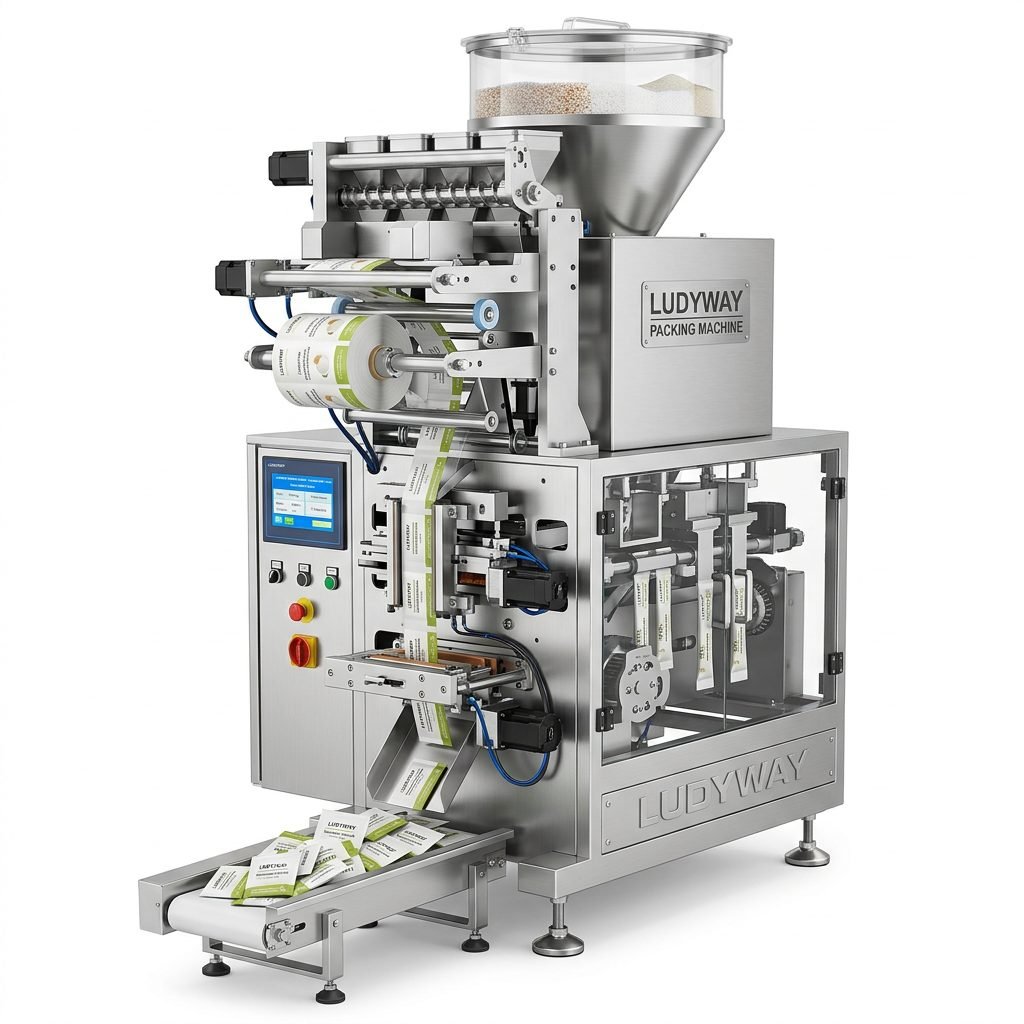
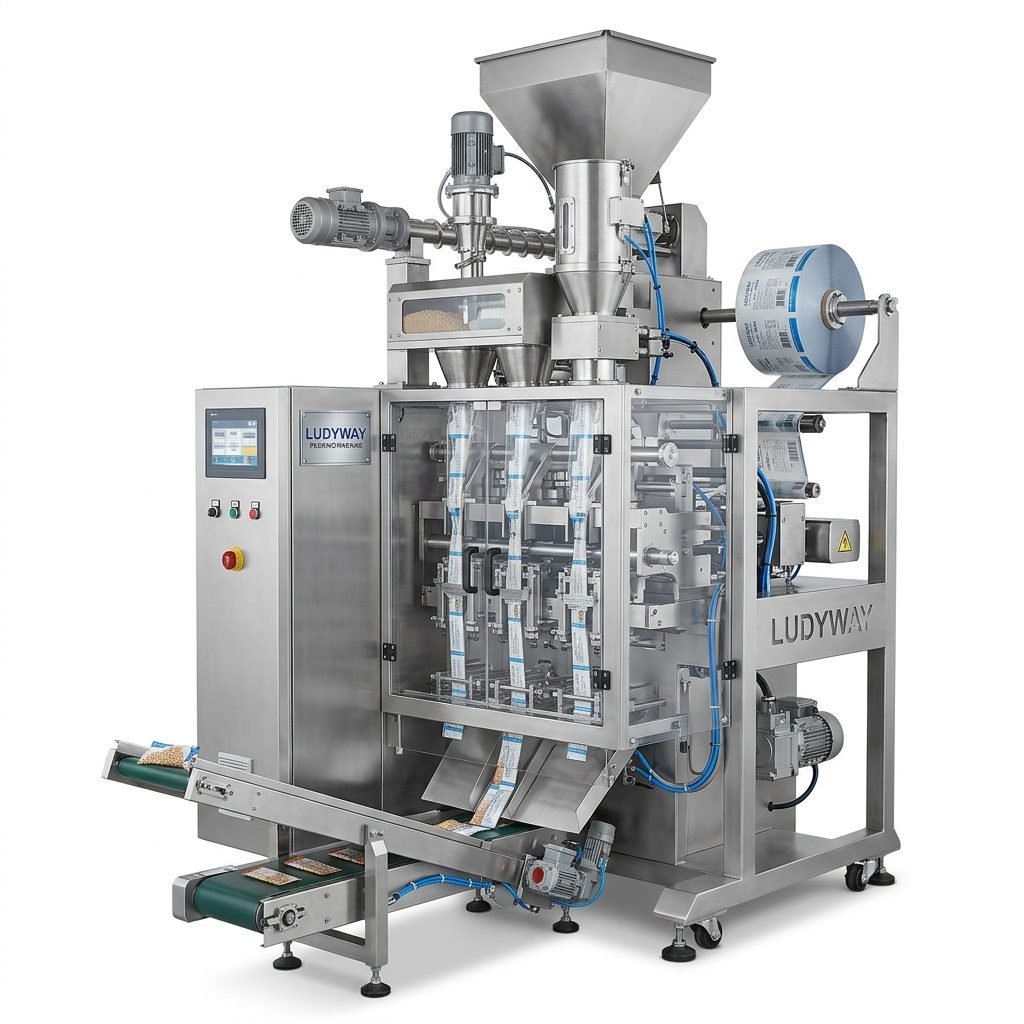
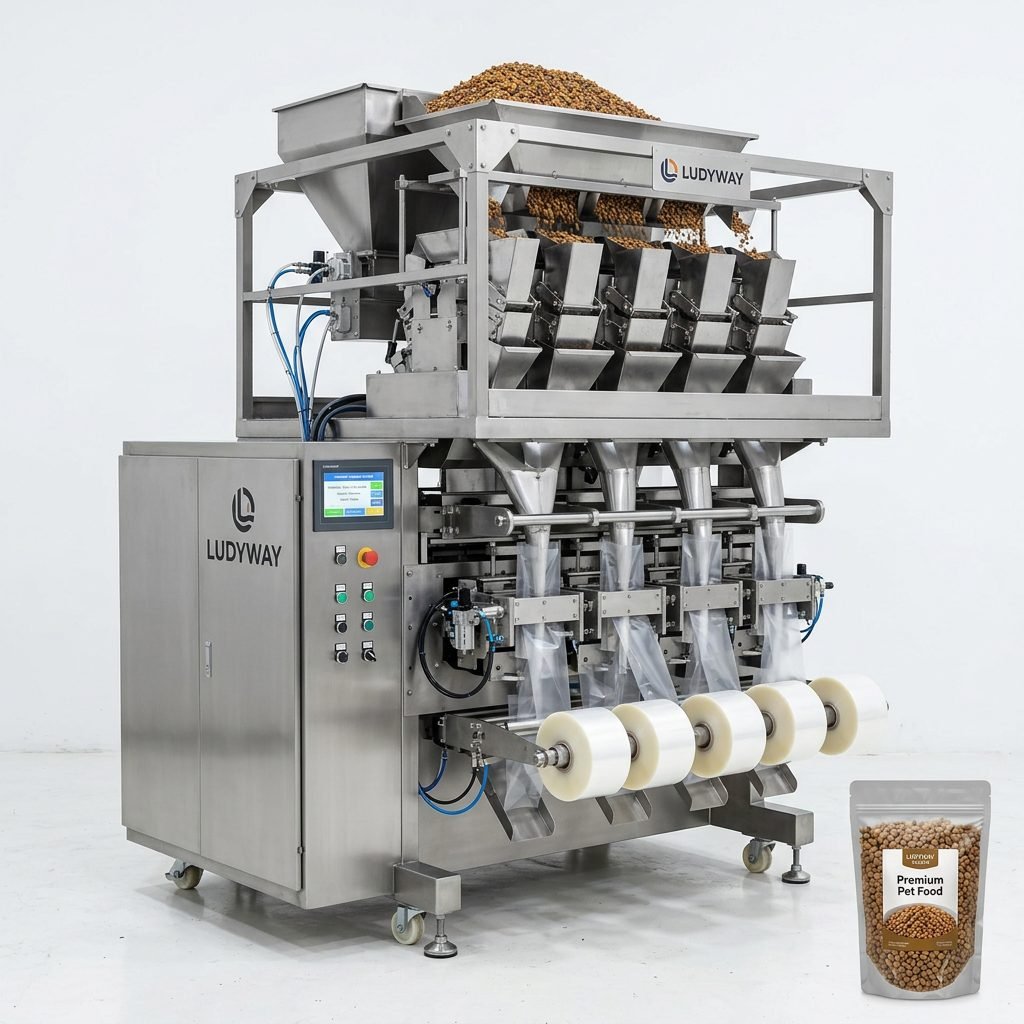
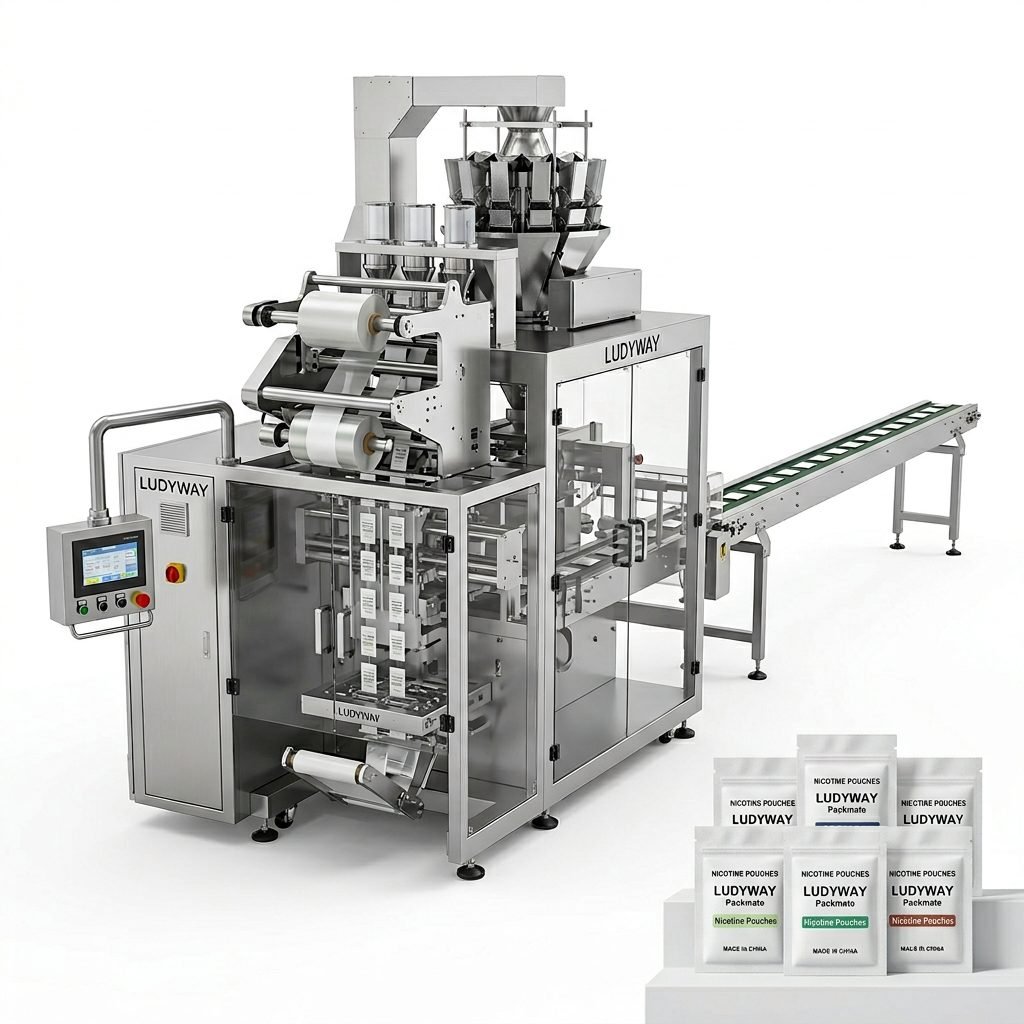
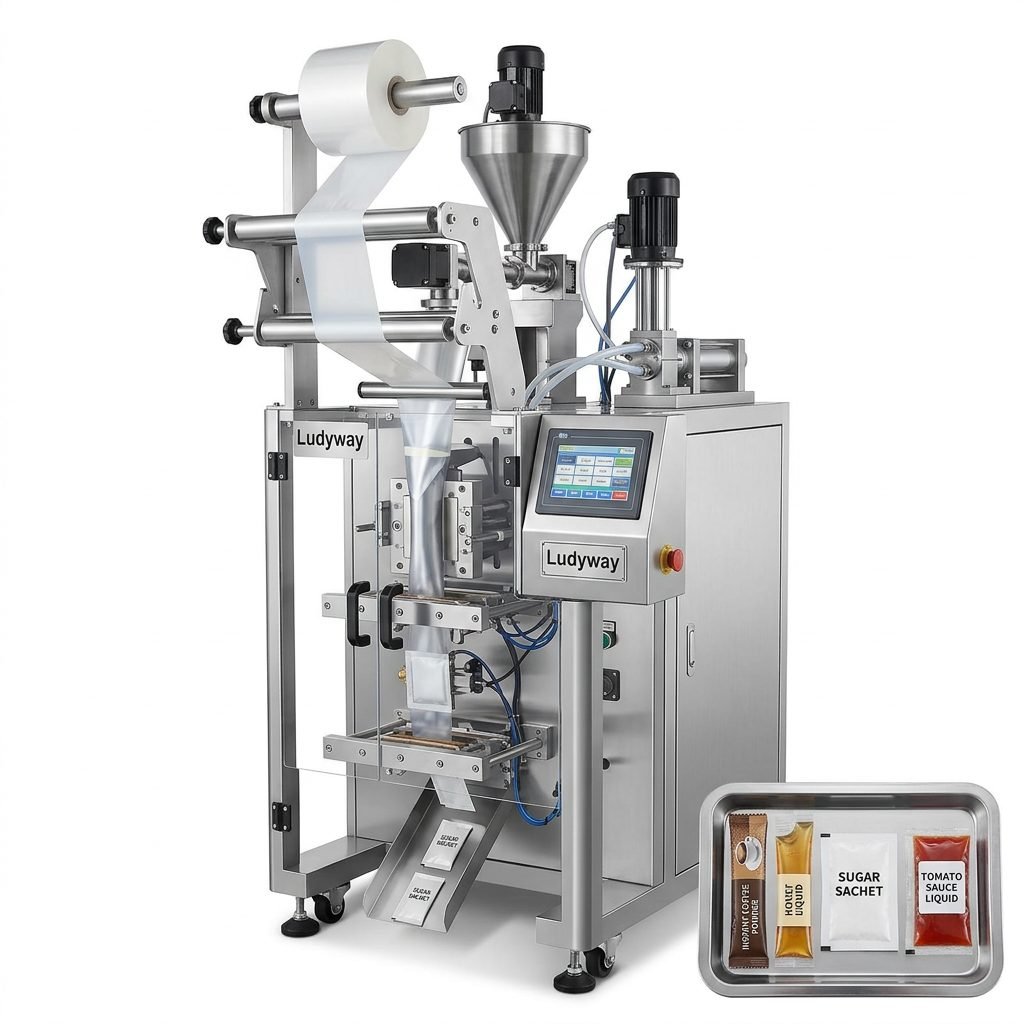
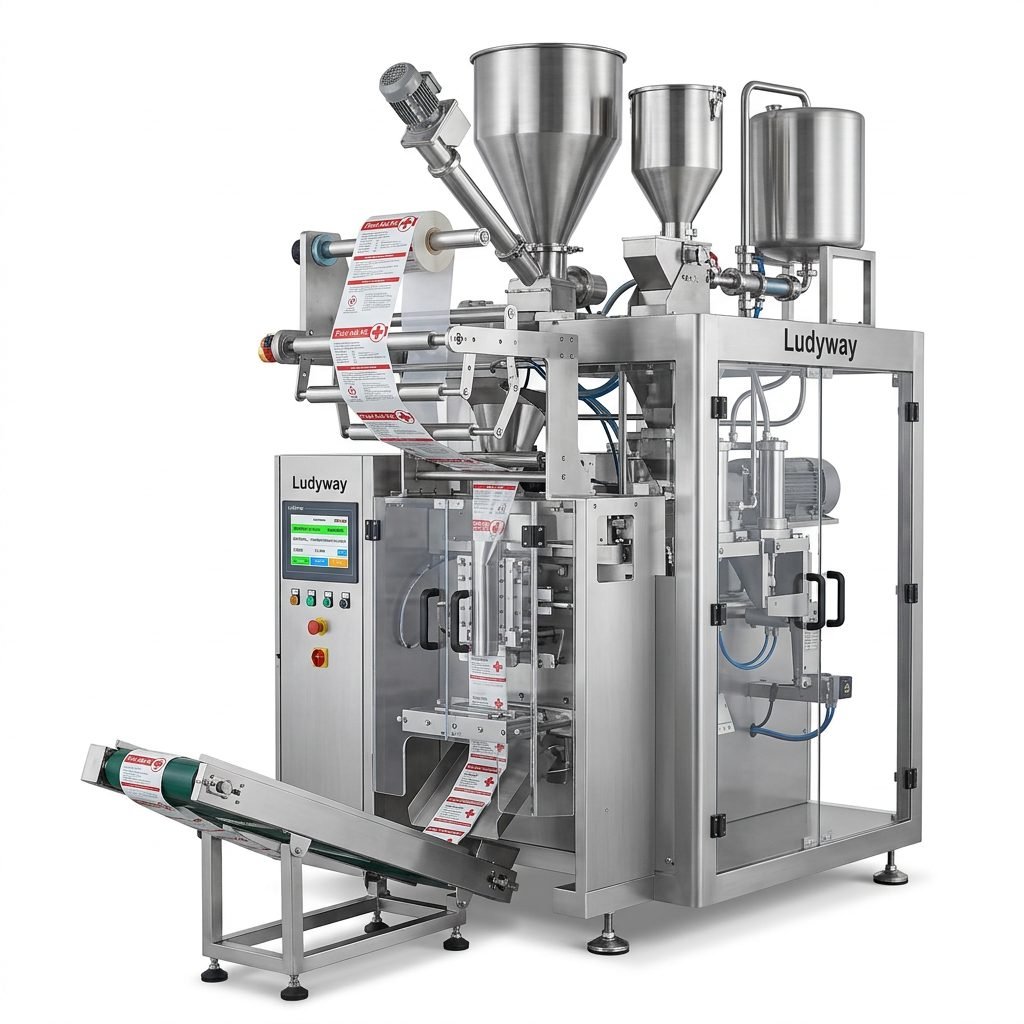
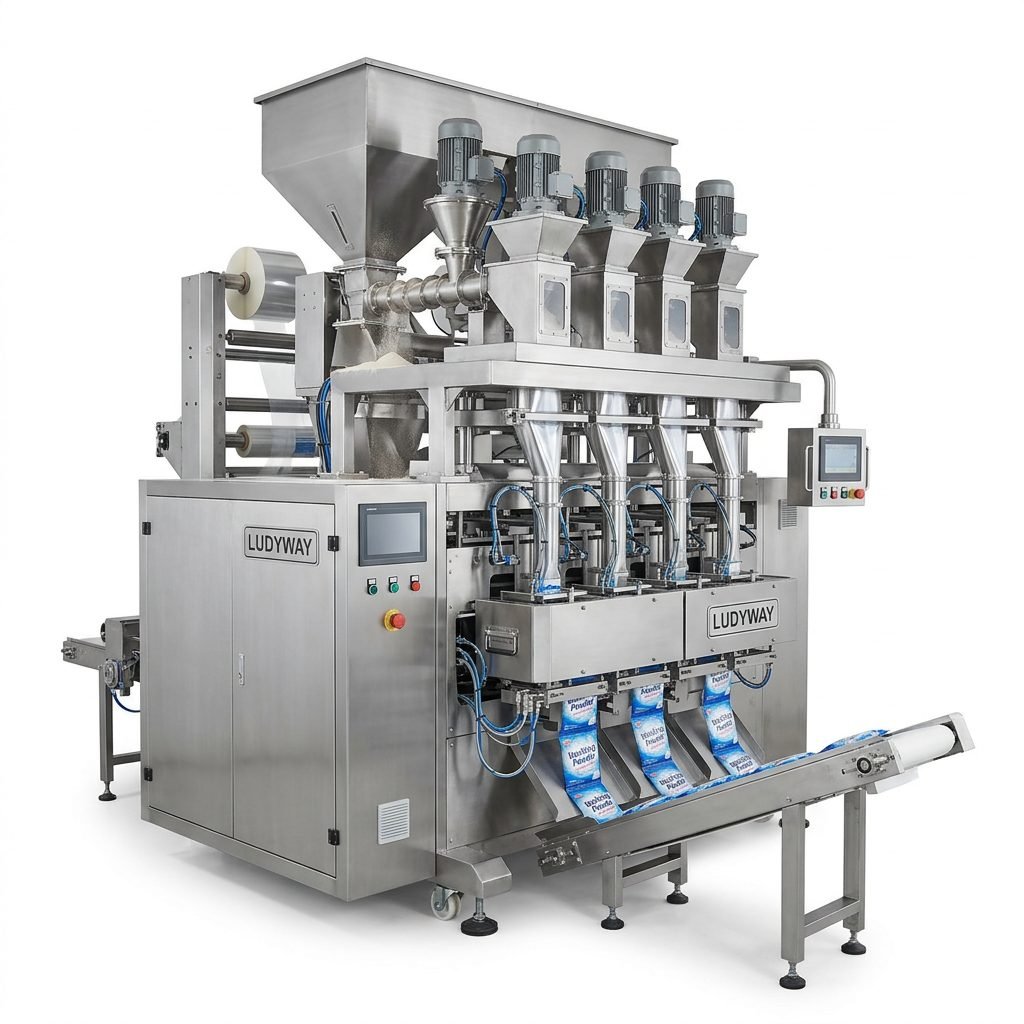
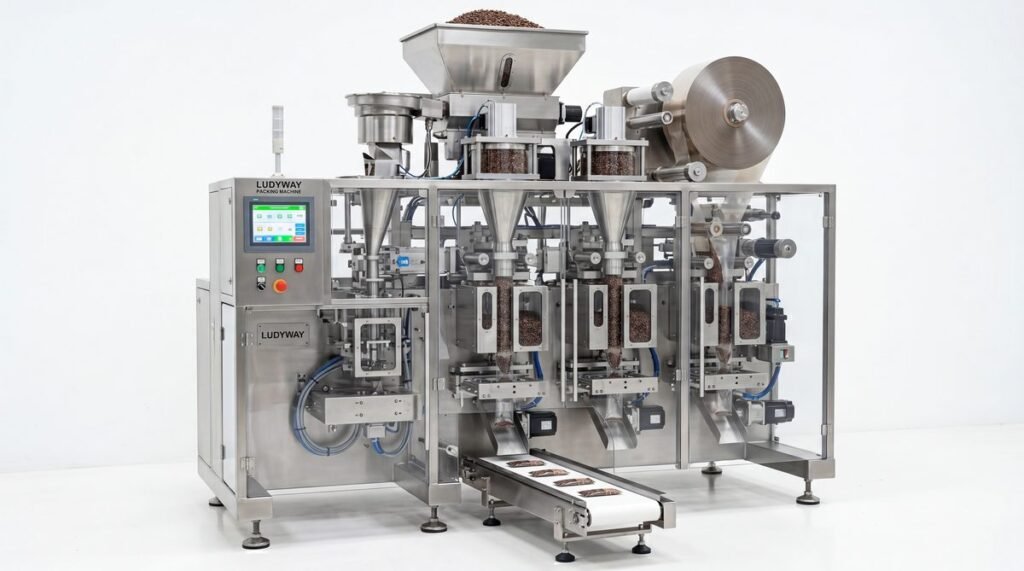
An FFS packing machine is one of the most important pieces of equipment in modern packaging. It helps manufacturers turn roll film or flat packaging material into finished packs by completing three key steps in one continuous process: form, fill, and seal.
These machines are widely used in food, pharmaceutical, cosmetics, chemical, household, and health supplement industries because they improve output, reduce labor dependence, increase packaging consistency, and support cleaner automated production.
What Is an FFS Packing Machine?
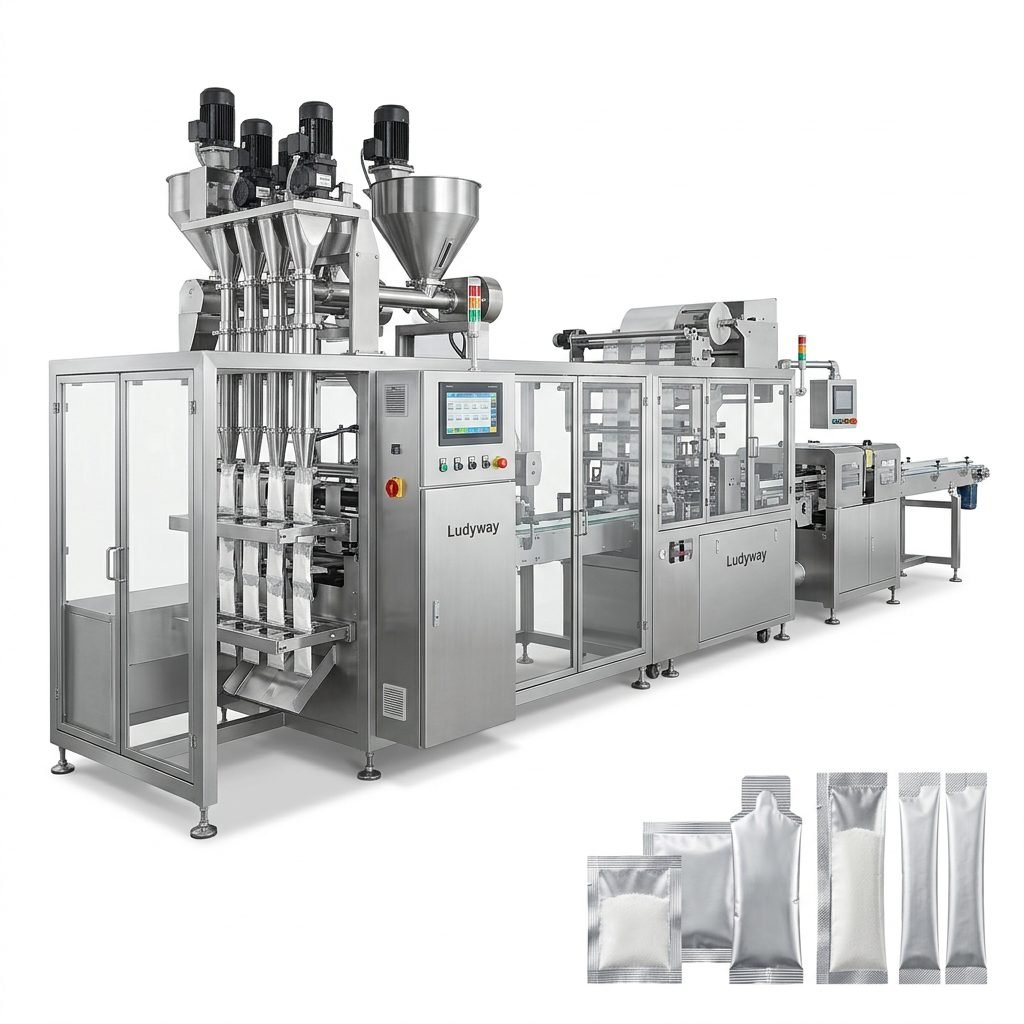
FFS stands for Form-Fill-Seal. An FFS packing machine automatically creates a package from packaging film, fills it with product, and seals it closed during the same production cycle.
Instead of buying pre-made bags for every application, companies can often run packaging film directly through the machine. This improves speed and lowers packaging material handling complexity. Depending on the design, an FFS machine can pack:
- Powders such as coffee, milk powder, protein powder, spices, and supplements
- Granules such as sugar, salt, seeds, rice, snacks, and pet food
- Liquids such as sauces, oils, detergents, and drinks
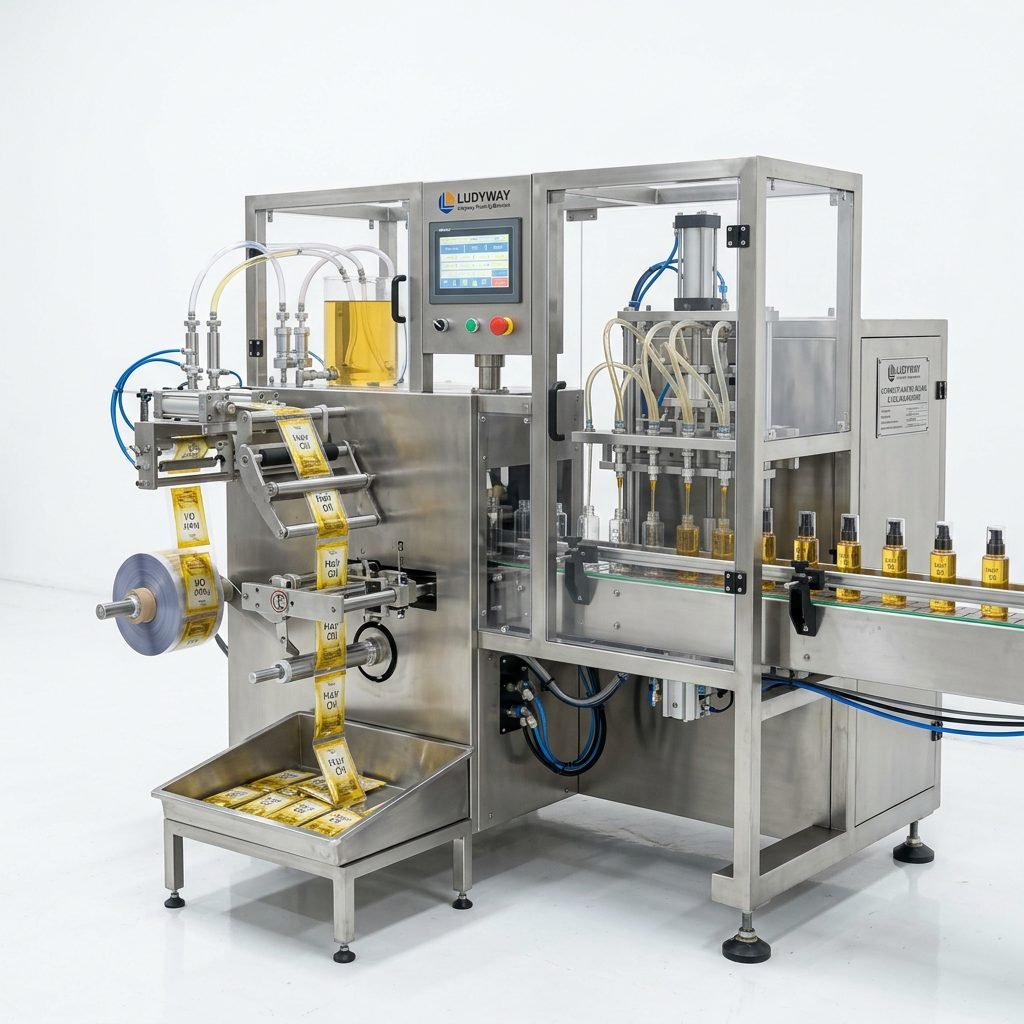
- Pastes and gels such as cream, serum, honey, jam, and pharmaceutical gels
FFS equipment is especially popular in operations that need repeatable packaging quality, high throughput, and flexible format options.
How an FFS Packing Machine Works
Although machine structures vary, the basic workflow is similar across most models.
- Film feeding: Packaging film is unwound from a roll and guided into the machine.
- Package forming: The film is shaped into a bag, pouch, sachet, or stick pack.
- Product dosing: A filling system dispenses the correct amount of powder, granule, liquid, or paste.
- Sealing: Heat sealing jaws close the package to protect the product.
- Cutting/discharge: The finished pack is cut and discharged for downstream handling.
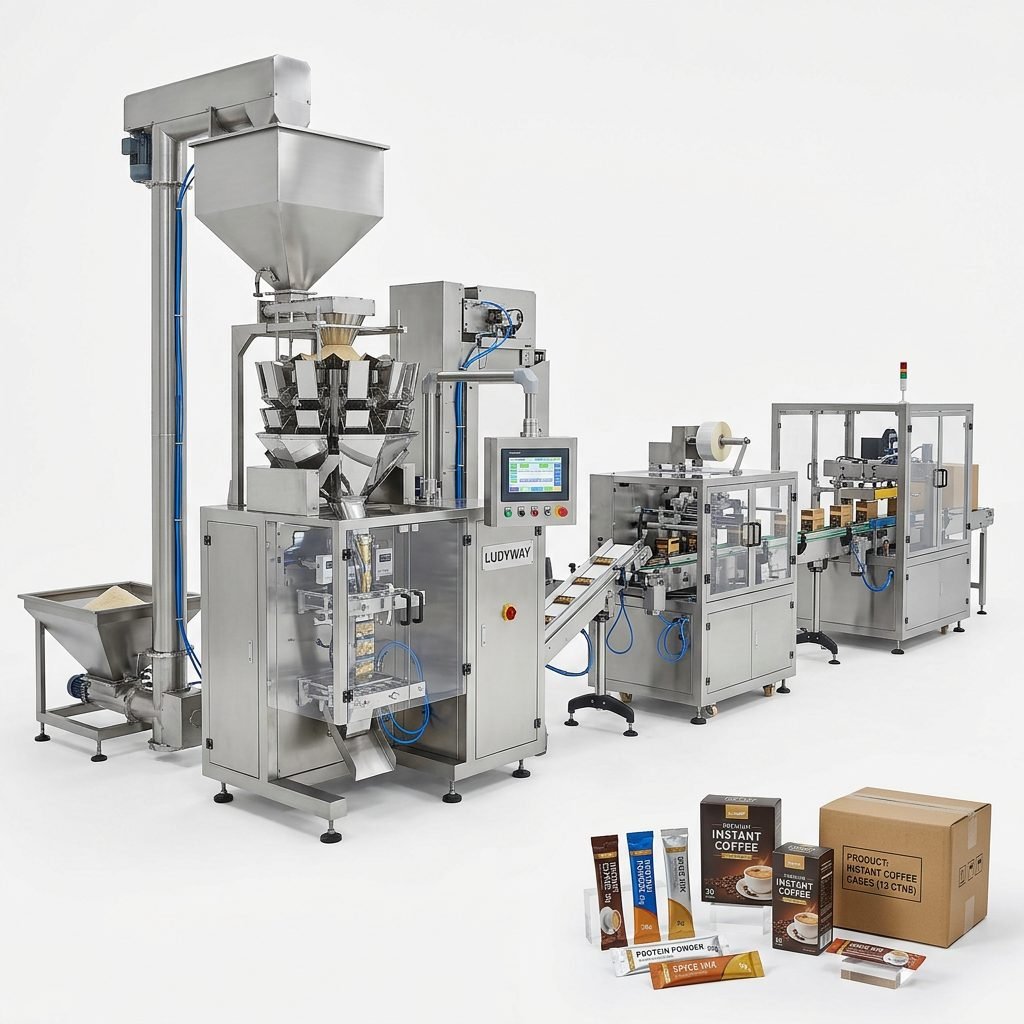
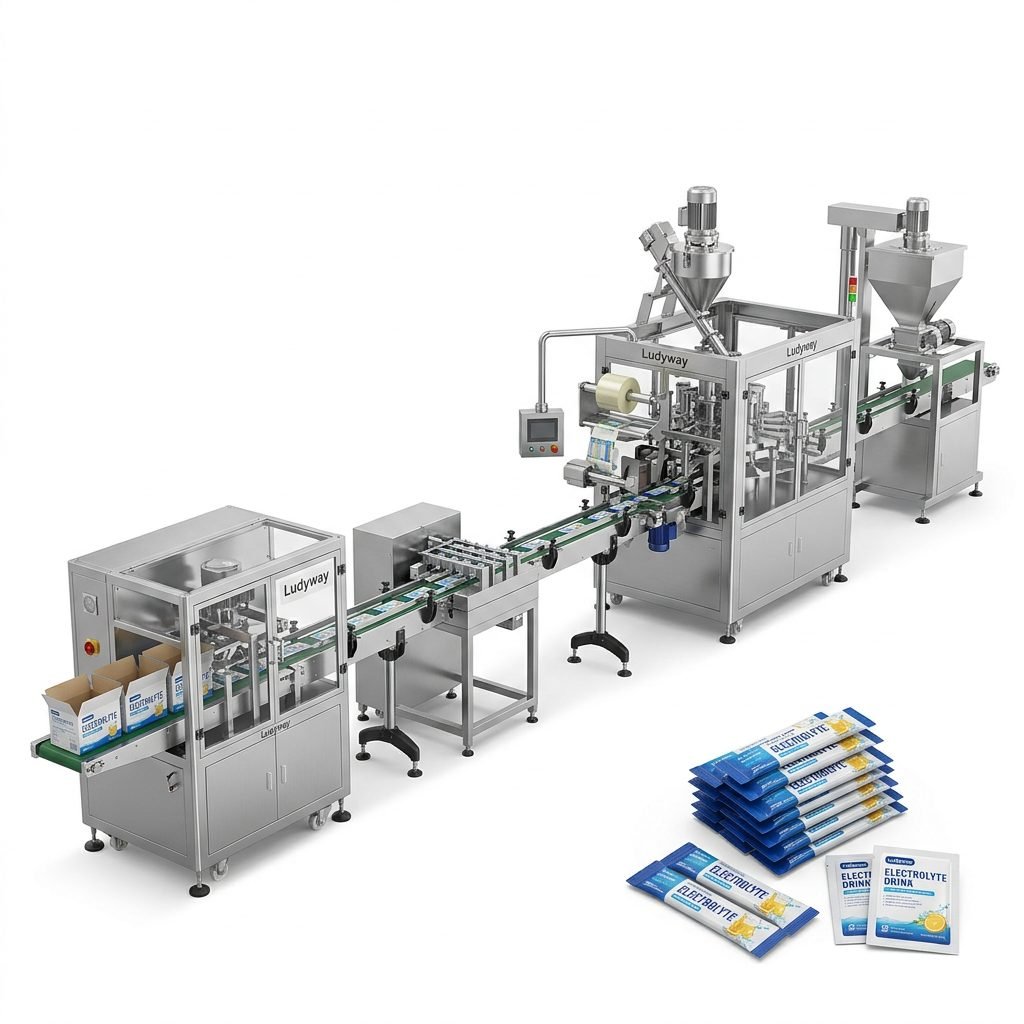
In more advanced lines, this process can also include coding, inspection, checkweighing, cartoning, case packing, and palletizing.
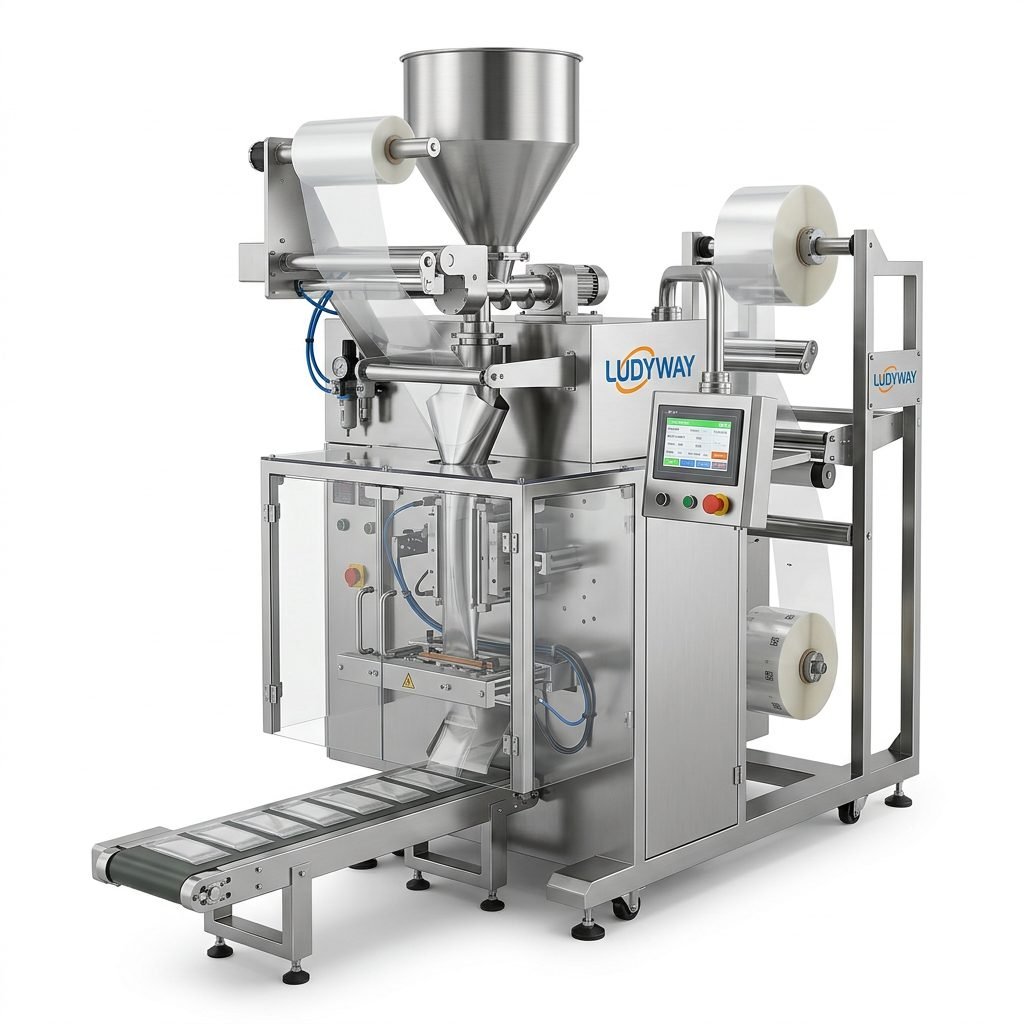
Core Components Inside the System
- Film unwinding and tension control unit
- Forming collar or pouch shaping mechanism
- Filling device such as auger filler, volumetric cup, piston pump, or weigher
- Sealing system
- PLC and touchscreen control system
- Date coding and batch printing unit
- Conveyors or discharge system
Main Types of FFS Packing Machines
Choosing the right type starts with understanding the different FFS machine structures. The most common types are listed below.
| Type | Best For | Typical Pack Styles |
|---|---|---|
| Vertical Form Fill Seal (VFFS) | Powders, granules, snacks, frozen food | Pillow bags, gusset bags, quad bags |
| Horizontal Form Fill Seal (HFFS) | Pouches, specialty formats, shaped packs | Stand-up pouches, flat pouches, zipper pouches |
| Multi-lane sachet/stick pack machine | Small-dose powders, liquids, pharma, nutraceuticals | Sachets, stick packs |
| Thermoform FFS machine | Medical, pharma, food trays | Blisters, trays, formed cavities |
1. Vertical Form Fill Seal Machines
VFFS machines are commonly used for free-flowing products. Film runs vertically through a forming tube, becomes a bag, receives product, and is sealed. This design is efficient, space-saving, and widely used in food and industrial packaging.
2. Horizontal Form Fill Seal Machines
HFFS systems are better suited for pouches and premium pack shapes. They are often selected when product presentation, resealability, or wider pouch structures matter.
3. Multi-Lane Sachet and Stick Pack Machines
These machines run several lanes at once, making them ideal for high-volume single-dose or small-format packaging. They are widely used for beverage powder, oral rehydration salts, collagen, condiments, energy gels, and personal care products.
Benefits of Using an FFS Packing Machine
- Higher efficiency: Combines forming, filling, and sealing in one workflow
- Lower labor costs: Reduces manual bag handling and repetitive operations
- More consistent packaging: Improves seal quality, fill accuracy, and pack uniformity
- Better material utilization: Uses roll film efficiently in many applications
- Scalability: Supports small, medium, and large production volumes
- Automation compatibility: Can integrate with feeders, conveyors, printers, checkweighers, and cartoners
For manufacturers under pressure to improve output without sacrificing packaging quality, an FFS machine often delivers one of the fastest returns on investment.
Industries That Commonly Use FFS Machines
FFS technology is not limited to one sector. It is used wherever packaging speed, hygiene, and consistency are important.
| Industry | Typical Products | Common Format |
|---|---|---|
| Food | Snacks, spices, instant drinks, sauces, sugar, rice | Bags, sachets, stick packs, pouches |
| Pharmaceutical | Powders, granules, oral liquids, medical products | Sachets, stick packs, sterile formed packs |
| Health supplements | Collagen, probiotics, protein, vitamins | Stick packs, sachets, pouches |
| Cosmetics | Creams, serums, lotions, gels | Sachets, tubes, pouches |
| Chemical & household | Detergents, cleaners, additives | Sachets, pouches, bags |
How to Choose the Right FFS Packing Machine
The best machine is not simply the fastest one. It is the machine that fits your product, package style, output target, factory conditions, and long-term automation plan.
1. Identify Your Product Type
Start with the physical characteristics of your product:
- Is it powder, granule, liquid, paste, or gel?
- Does it flow easily or bridge during feeding?
- Is it dusty, sticky, corrosive, or fragile?
- Does it require hygienic or pharmaceutical-grade contact parts?
The filler must match the product. For example, powders often use auger fillers, granules may use multihead weighers or cup fillers, and liquids typically use piston or pump systems.
2. Confirm Your Package Format
Your pack style influences machine structure and tooling. Define:
- Bag or pouch type
- Pack dimensions
- Seal style
- Easy-tear notch, zipper, spout, or special shape needs
- Single-lane or multi-lane production
3. Calculate Required Output
Know your expected production in packs per minute, per shift, and per day. A small batch business may not need a multi-lane high-speed line, while a large contract manufacturer likely does.
Overbuying creates unnecessary cost, but underbuying leads to bottlenecks and future expansion problems.
4. Evaluate Packaging Film Compatibility
Not all machines handle all films equally. Check compatibility with:
- Laminated films
- Aluminum foil structures
- PE, PET, BOPP, or composite materials
- Recyclable or mono-material packaging options
5. Check Filling Accuracy and Seal Quality
For many sectors, especially food, pharma, and supplements, poor fill control or weak sealing can create waste, complaints, and compliance issues. Ask for real sample testing using your own product and film.
6. Review Hygiene and Cleaning Requirements
If you pack edible, medical, or personal care products, machine cleaning matters. Stainless steel contact parts, dust collection options, easy disassembly, and clean design can improve sanitation and maintenance efficiency.
7. Think Beyond the Standalone Machine
A packaging machine is often part of a bigger system. Consider whether you also need:
- Feeding conveyors or elevators
- Checkweighers or metal detectors
- Inkjet or thermal transfer printers
- Cartoning and case packing
- Palletizing
- Turnkey line integration
Questions to Ask Before Buying
- What products has this machine packed successfully before?
- What is the actual speed with my product and pack size?
- What filling accuracy can be achieved?
- How long does size changeover take?
- What consumables and spare parts are most frequently needed?
- Is remote technical support available?
- Can the machine be upgraded later?
- Can the supplier provide line integration instead of only a standalone unit?
Common Mistakes Buyers Should Avoid
- Choosing only by price instead of total operating value
- Ignoring product flow characteristics during machine selection
- Not testing actual film and product samples before ordering
- Forgetting future expansion needs such as additional lanes or downstream automation
- Overlooking after-sales support, spare parts, and commissioning capability
When a Turnkey FFS Packaging Line Makes More Sense
If your project includes product feeding, primary packaging, coding, inspection, secondary packaging, and final palletizing, a full line solution may be more efficient than sourcing equipment piece by piece.
For buyers seeking integrated systems, Ludyway packaging machine solutions are often considered for food, pharmaceutical, health supplement, cosmetic, chemical, and pouch-based packaging projects because the company offers both standalone equipment and turnkey packaging line capabilities.
Who Should Invest in an FFS Packing Machine?
An FFS machine is a strong fit for businesses that:
- Need to improve packaging speed and labor efficiency
- Want more consistent pack appearance and sealing quality
- Package powders, granules, liquids, or gels in repeatable formats
- Are scaling production or moving from semi-automatic to automatic packaging
- Need reliable small-dose sachet or stick pack output
- Plan to build a more automated packaging line over time
Final Buying Checklist
| Checkpoint | Why It Matters |
|---|---|
| Product characteristics | Determines filler type and machine design |
| Package style and size | Affects machine configuration and tooling |
| Speed requirement | Prevents overinvestment or undercapacity |
| Film compatibility | Ensures stable forming and sealing |
| Accuracy and seal test | Protects product quality and reduces waste |
| Cleaning and maintenance | Supports uptime and hygiene compliance |
| After-sales support | Reduces risk during installation and operation |
| Line integration potential | Improves long-term automation planning |
In short, an FFS packing machine is more than a packaging device. It is a productivity tool that can shape your packaging cost, quality consistency, labor structure, and future expansion capability. The right choice comes from matching machine type, filler system, packaging format, and support level to your real production needs.