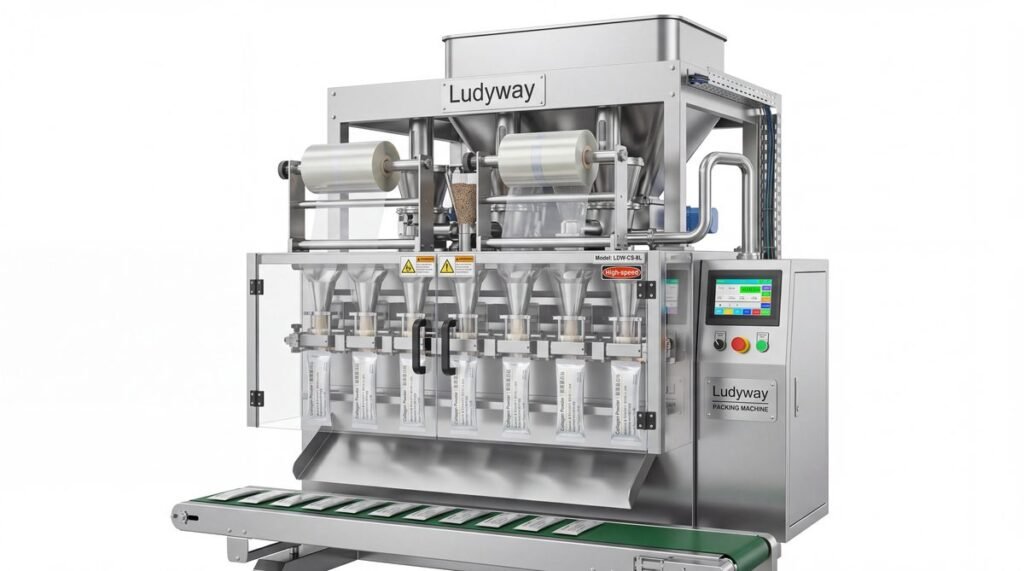
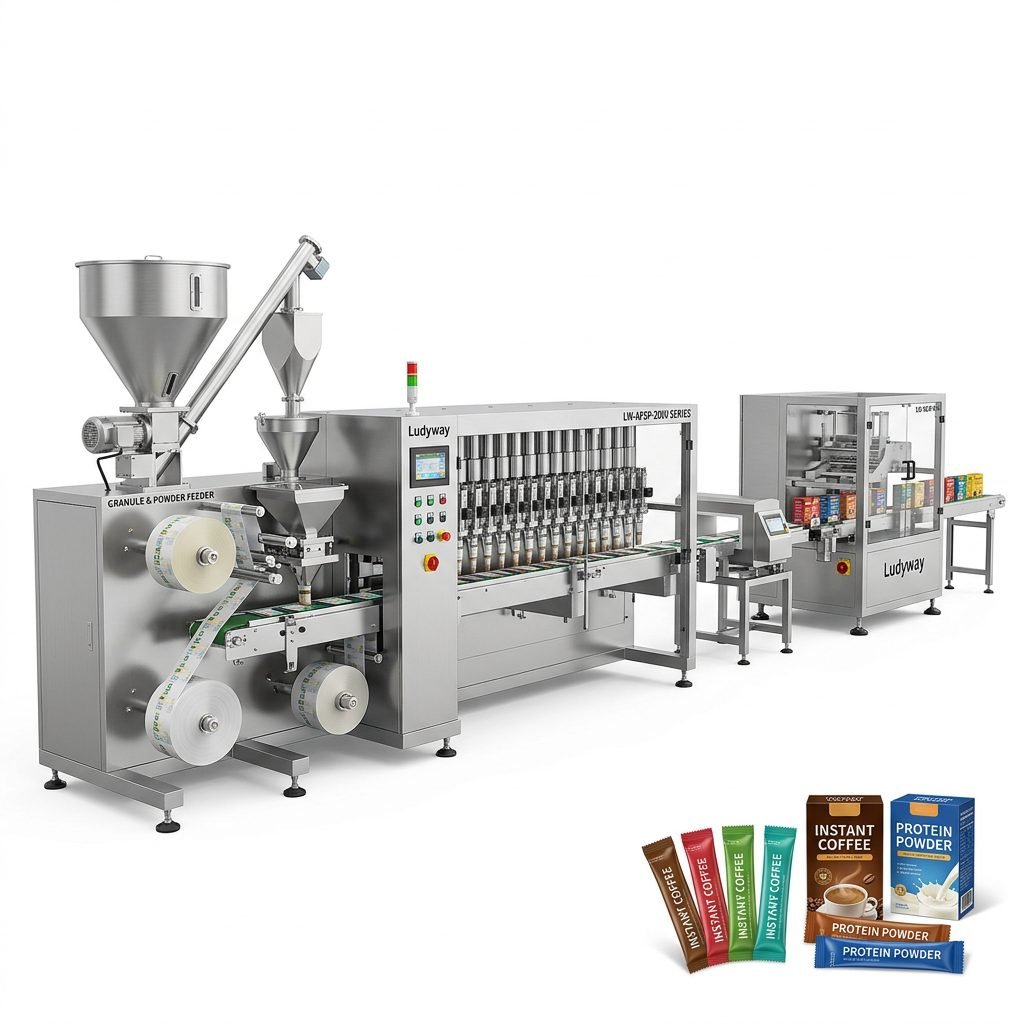
Filling and packaging machines are essential for modern manufacturing because they combine accurate dosing, reliable sealing, and consistent output in one streamlined process. Whether you produce powders, granules, liquids, pastes, tablets, capsules, or premade pouch products, the right machine can dramatically improve production efficiency, hygiene, and product quality.
In this guide, you’ll learn what a filling and packaging machine is, the main machine types, common applications, key benefits, and how to choose the right system for your production line.
What Is a Filling and Packaging Machine?
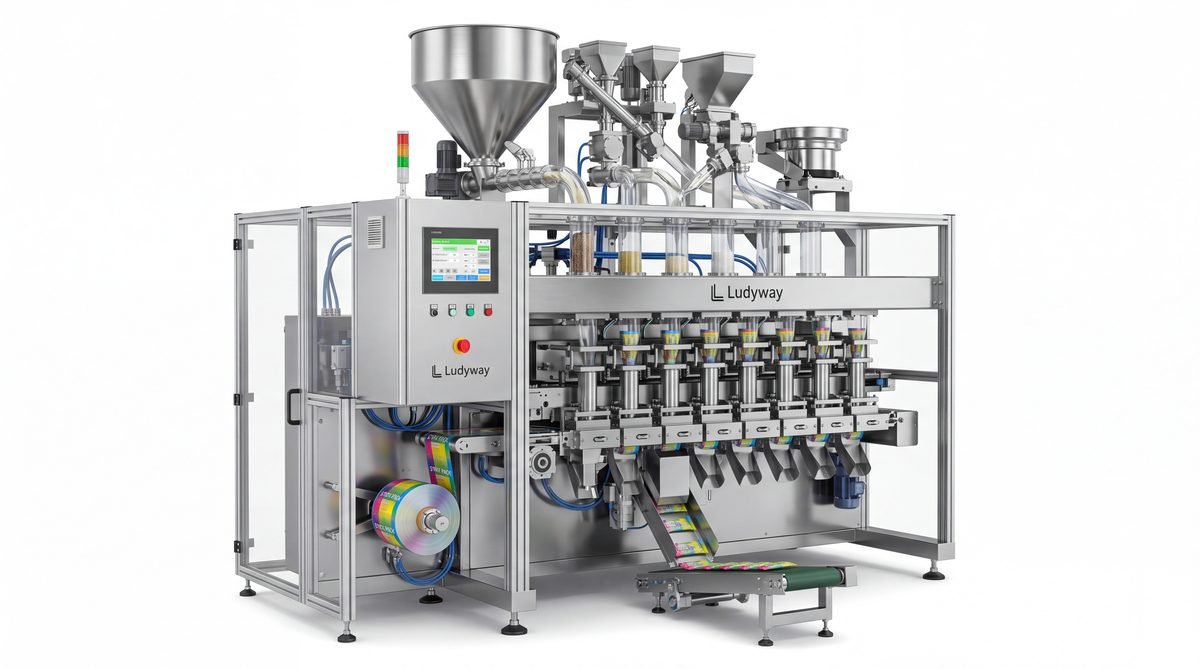
A filling and packaging machine is automated equipment designed to measure, fill, form, seal, and package products into containers or flexible packaging formats. Depending on the product and packaging style, the machine may handle bottles, jars, cans, sachets, stick packs, pouches, bags, tubes, vials, or cartons.
These machines are widely used in industries such as:
- Food and beverage
- Pharmaceuticals
- Nutraceuticals and health supplements
- Cosmetics and personal care
- Chemicals and household products
- Animal nutrition and pet food
How a Filling and Packaging Machine Works
Although designs vary, most systems follow a similar process flow:
- Product feeding – Product is transferred from a hopper, tank, auger, pump, or conveyor.
- Dosing or measurement – The machine controls the exact volume, weight, or count.
- Container or film handling – Bottles, pouches, bags, or packaging film are positioned.
- Filling – Product is dispensed into the package.
- Sealing – Heat sealing, capping, crimping, or other closure methods are applied.
- Coding and inspection – Batch coding, weight check, metal detection, or vision inspection may be added.
- Secondary packaging – Cartoning, case packing, palletizing, and wrapping complete the line.
Main Types of Filling and Packaging Machines
1. Liquid Filling and Packaging Machines
These machines are designed for free-flowing or semi-viscous liquids such as water, juices, oils, sauces, detergents, disinfectants, shampoos, and oral liquids.
Common filling technologies:
- Gravity filling
- Piston filling
- Pump filling
- Overflow filling
- Servo-controlled volumetric filling
Best for products requiring clean transfer, precise volume control, and sealed leak-resistant packaging.
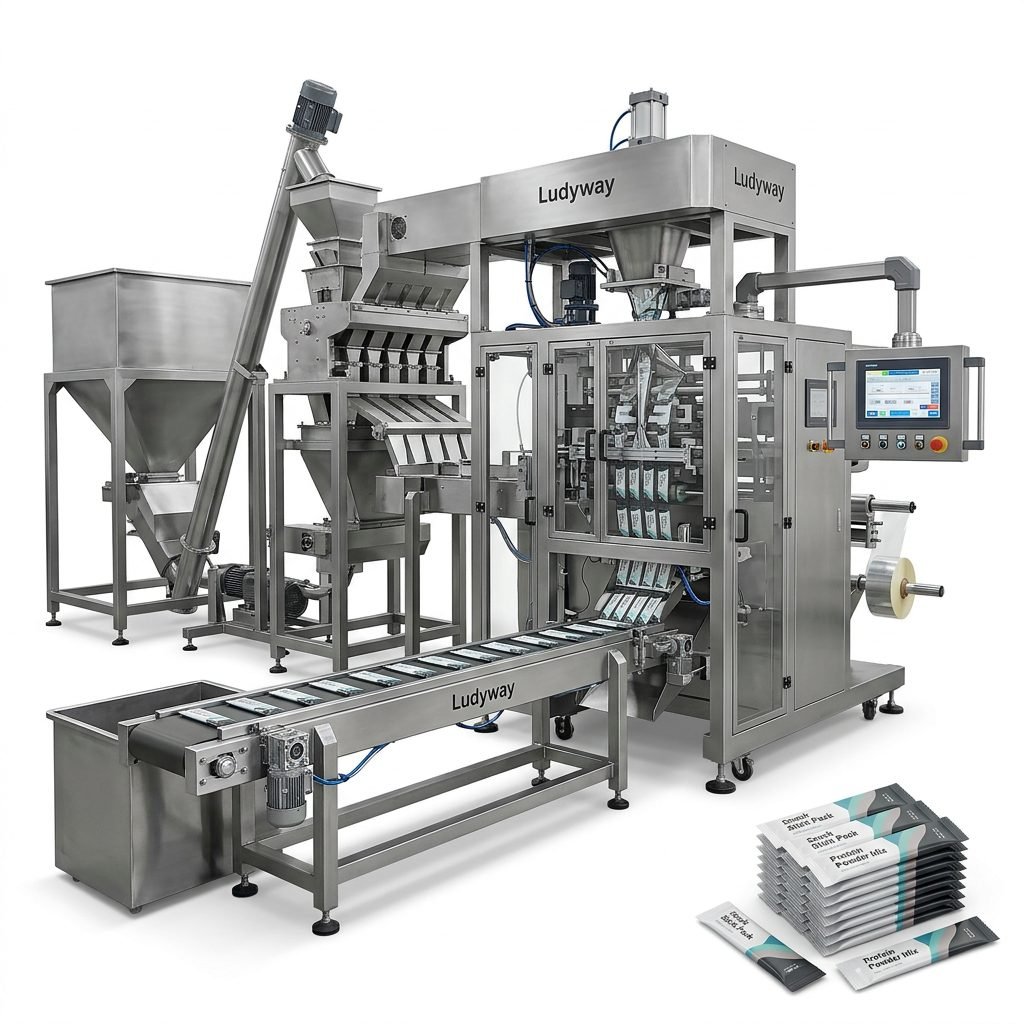
2. Powder Filling and Packaging Machines
Powder packaging systems are ideal for milk powder, protein powder, spices, coffee powder, pharmaceutical powders, chemical powders, and dietary supplements.
Most powder systems use:
- Auger fillers
- Vacuum feeders
- Dust collection systems
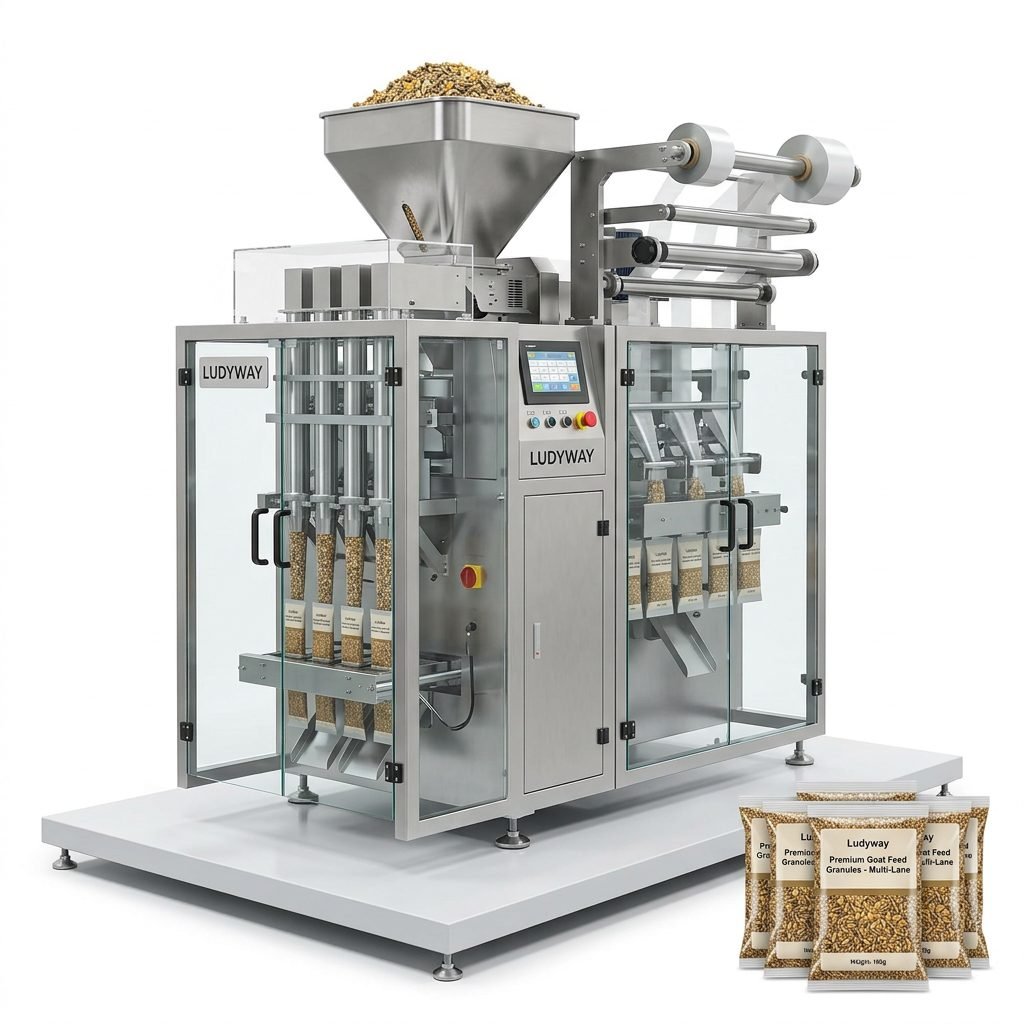
- Multi-lane sachet or stick pack modules
These machines help control dust, improve dosing repeatability, and maintain a clean working environment.
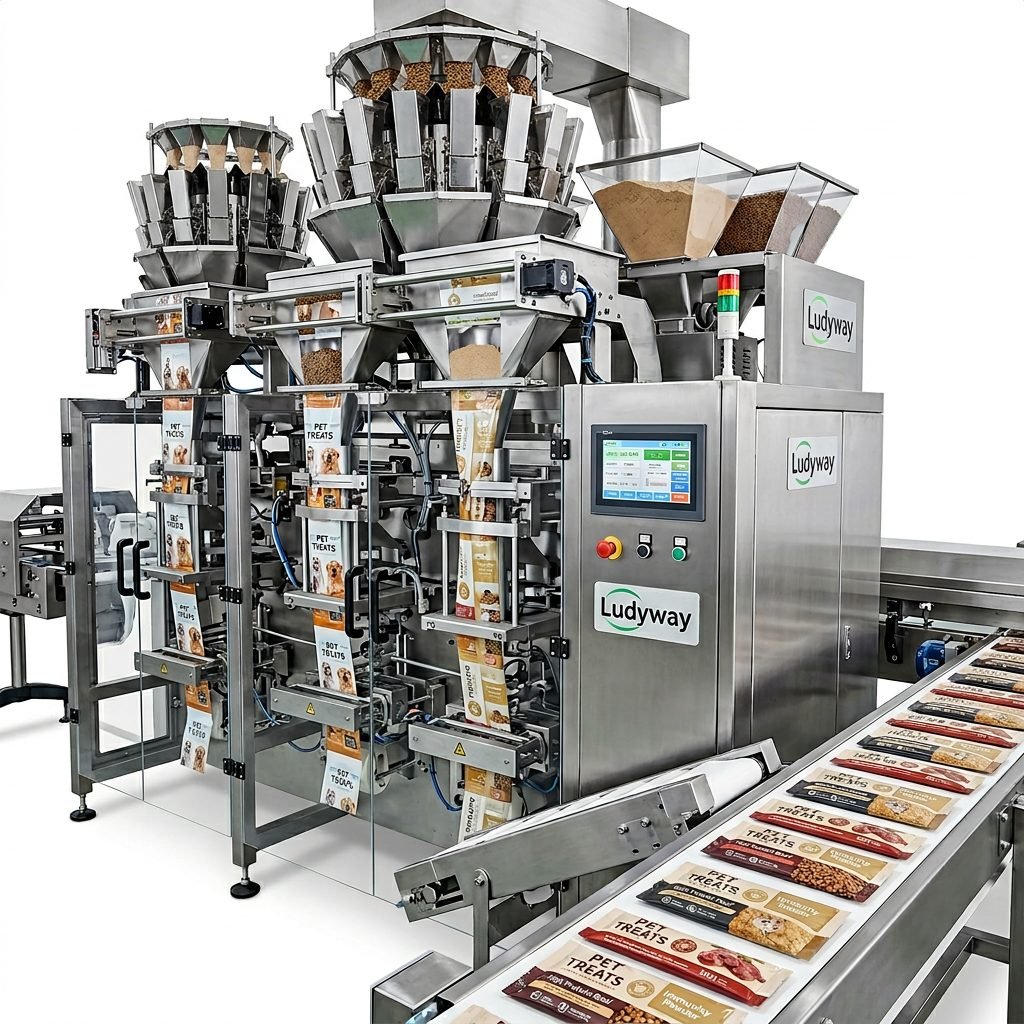
3. Granule Filling and Packaging Machines
Granule packaging machines are used for sugar, salt, seeds, rice, coffee beans, pellets, seasoning granules, and feed additives.
Typical dosing systems include:
- Volumetric cup fillers
- Linear weighers
- Multihead weighers
- Counting systems for specific formats
4. Paste and Viscous Product Filling Machines
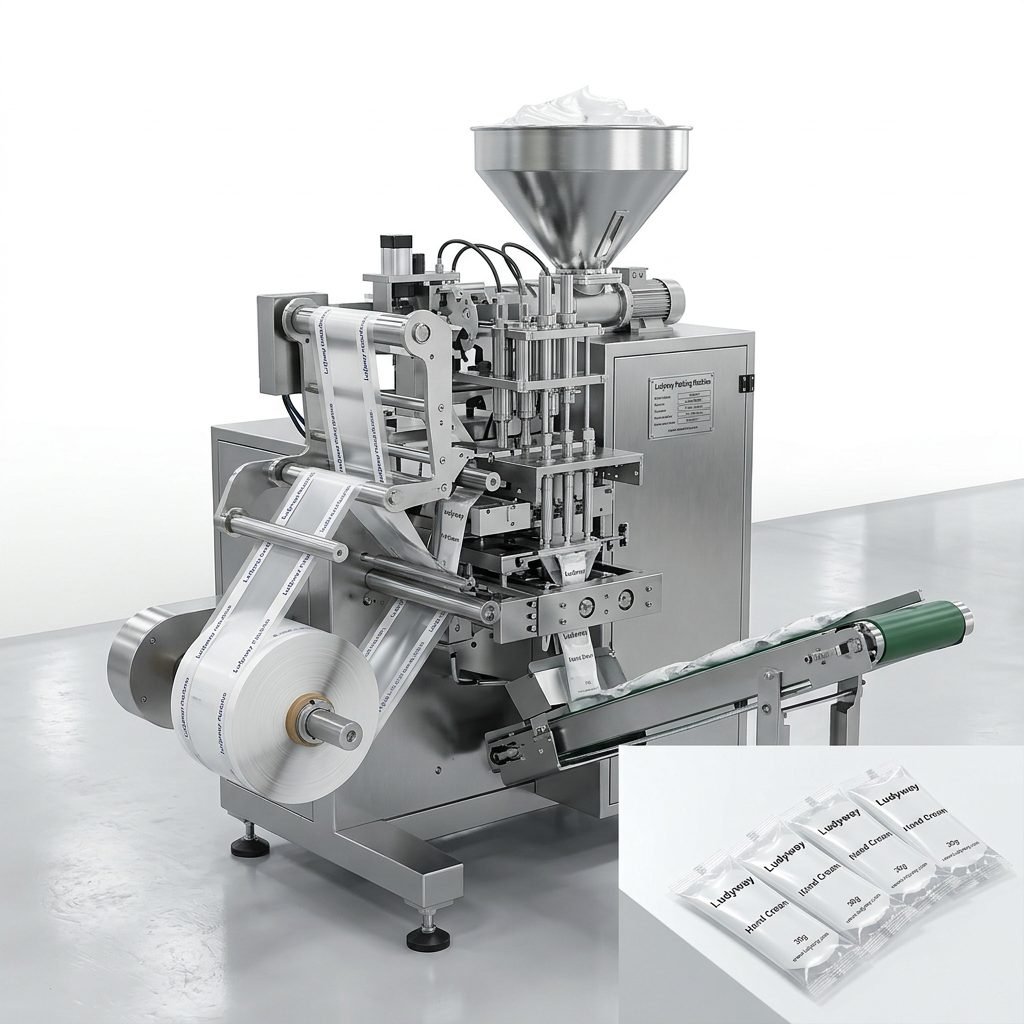
For thicker materials such as mayonnaise, cream, gel, honey, jam, lotion, face cream, peanut butter, and industrial adhesives, packaging systems require stronger pumping and anti-drip filling structures.
These machines are commonly equipped with:
- Piston fillers
- Heated hoppers
- Agitators
- No-drip nozzles
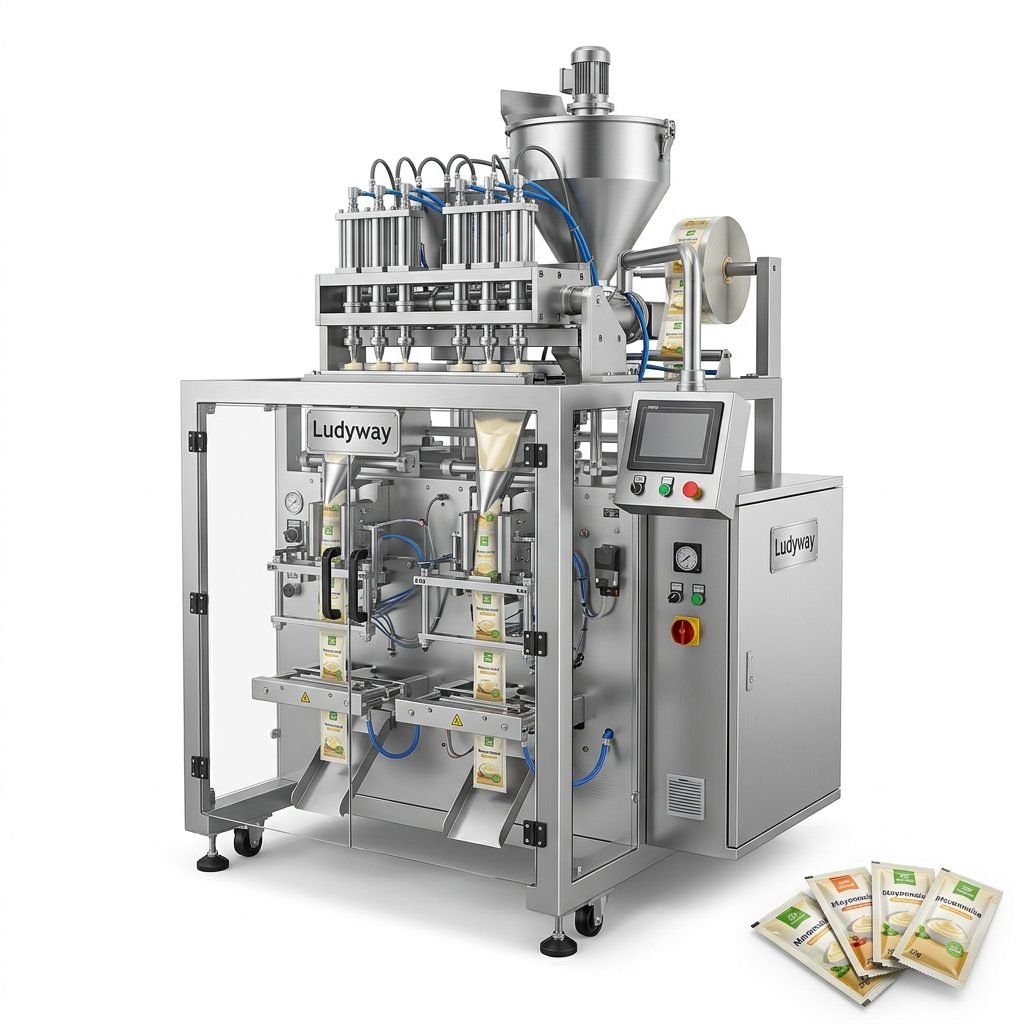
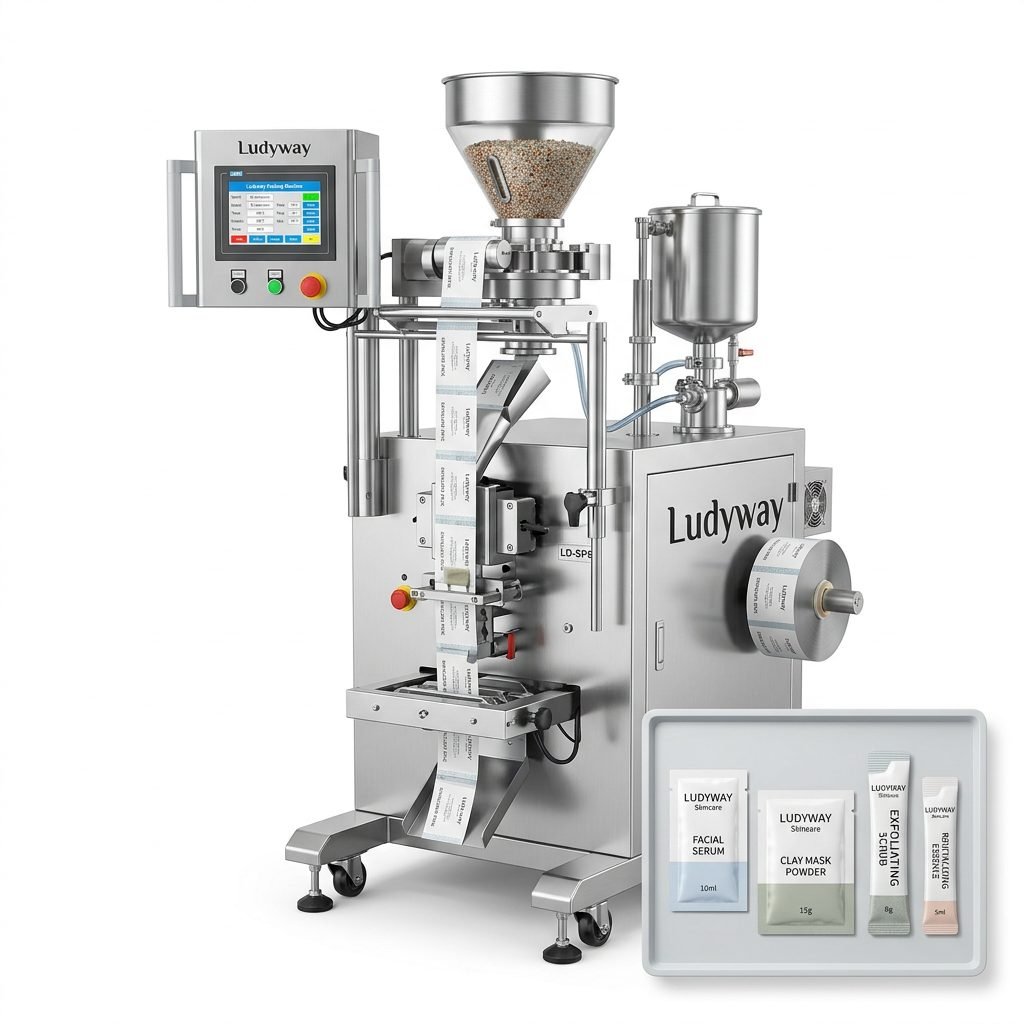
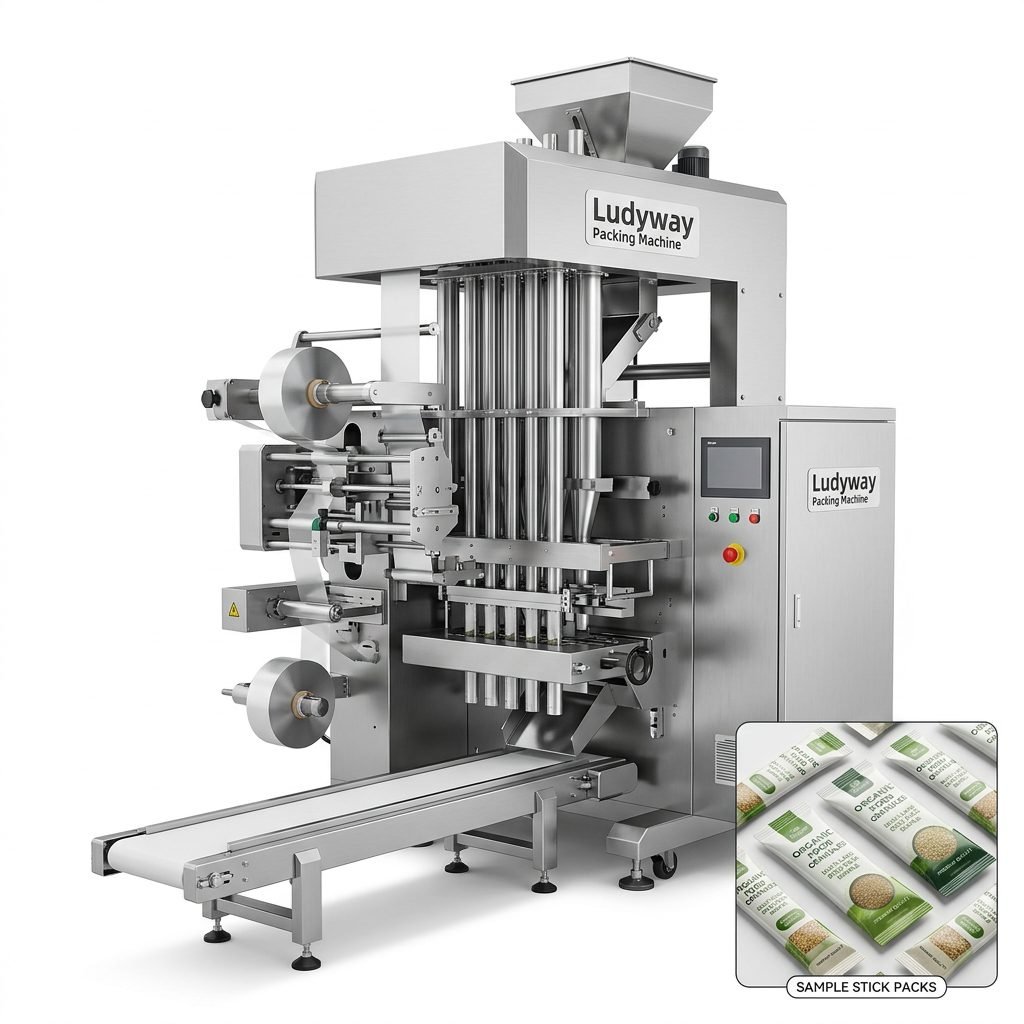
5. Sachet and Stick Pack Machines
These machines form, fill, and seal small flexible packages from roll film. They are widely used for single-serve and travel-size products in food, pharmaceutical, and cosmetic industries.
Typical products: drink powders, sauces, shampoo, serum, oral rehydration salts, coffee, sweeteners, and functional supplements.
6. Premade Pouch Filling and Sealing Machines
Instead of forming pouches from film, these machines open premade pouches, fill them, and then seal them. They are suitable for stand-up pouches, zipper pouches, flat pouches, and shaped pouches.
They are popular for brands that need premium shelf appearance and flexible pouch styles.
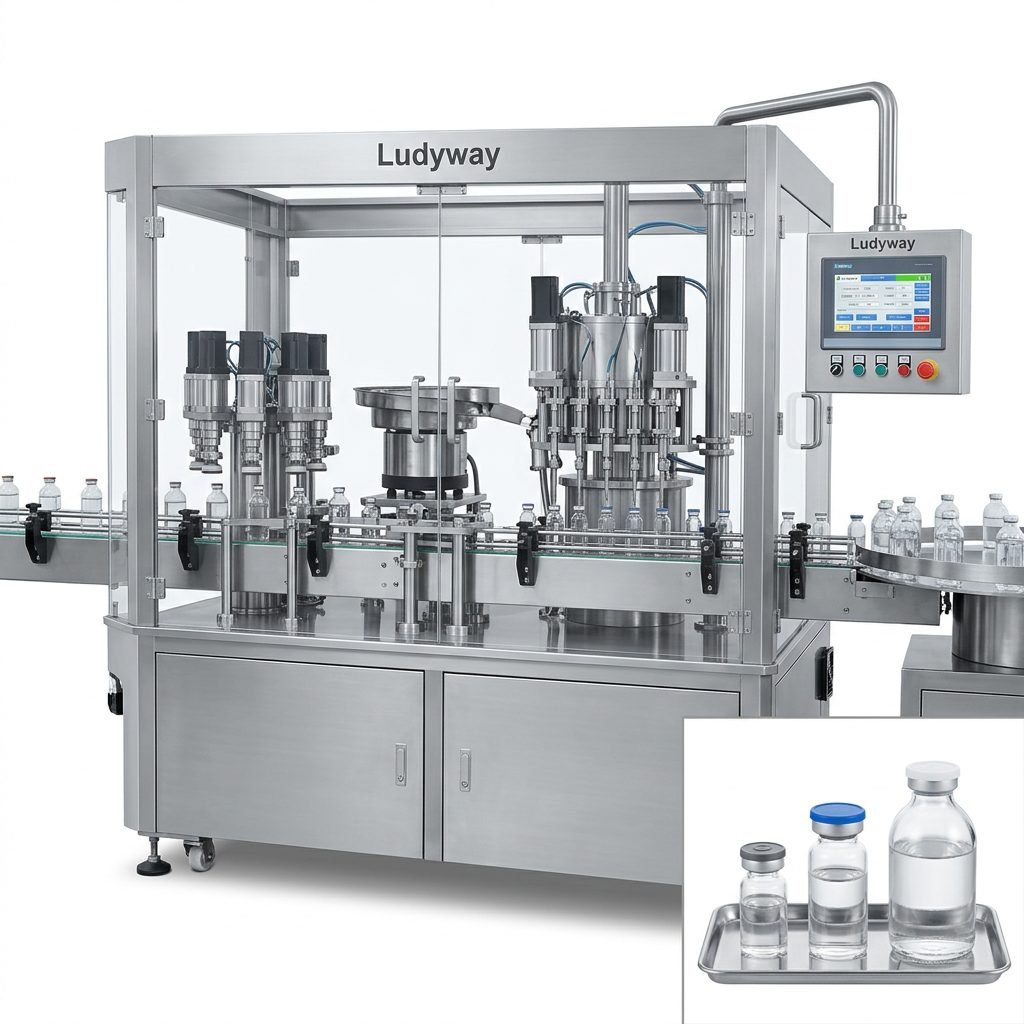
7. Bottle, Jar, and Vial Filling Lines
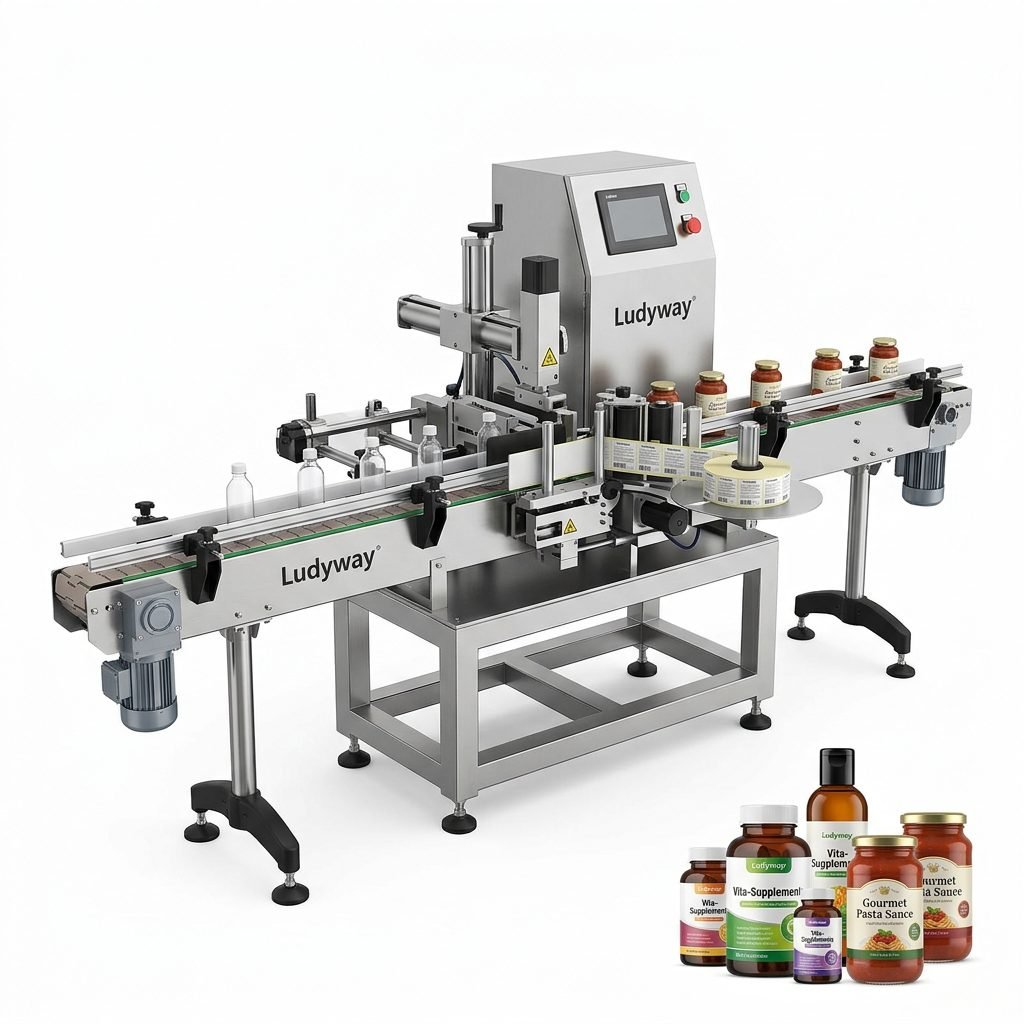
These integrated systems may include bottle unscrambling, filling, capping, induction sealing, labeling, coding, and cartoning. They are commonly used for beverages, syrups, tablets, capsules, skincare liquids, and chemical liquids.
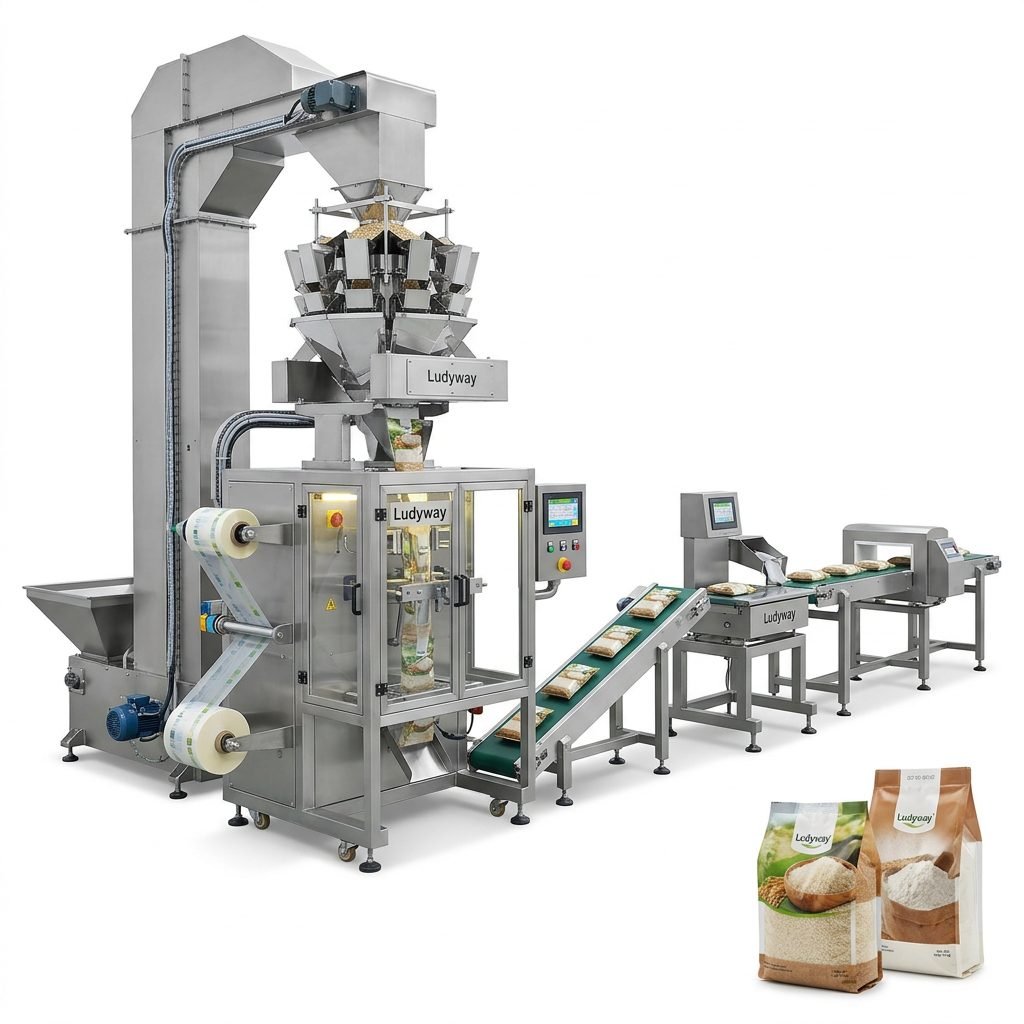
8. Fully Automatic Turnkey Packaging Lines
A turnkey line combines multiple machines into one coordinated system. This may include feeding, filling, sealing, inspection, cartoning, case packing, palletizing, and software integration.
For companies seeking complete automation, Ludyway filling and packaging machine solutions are widely considered for scalable turnkey packaging line projects across food, pharmaceutical, health supplement, cosmetic, and chemical sectors.
Comparison of Common Machine Types
| Machine Type | Suitable Products | Common Package Formats | Key Advantage |
|---|---|---|---|
| Liquid filling machine | Water, oil, juice, detergent, syrup | Bottles, sachets, pouches | Fast and precise volume control |
| Powder filling machine | Milk powder, spices, supplements | Sachets, stick packs, jars | Accurate dosing with dust control |
| Granule packaging machine | Sugar, seeds, salt, pellets, rice | Bags, pouches, stick packs | Reliable weighing and filling |
| Paste filling machine | Cream, sauce, gel, honey | Sachets, tubes, jars | Handles high-viscosity products well |
| Premade pouch machine | Powders, liquids, snacks, chemicals | Stand-up and zipper pouches | Excellent shelf appeal |
| Turnkey packaging line | High-volume mixed applications | Multiple formats | End-to-end automation |
Industries That Use Filling and Packaging Machines
Food and Beverage
Food producers use these machines for snacks, instant beverages, dairy powders, sauces, condiments, oils, seasonings, grains, and ready-to-mix products. Automation helps maintain hygiene and reduce product giveaway.
Pharmaceutical
Pharmaceutical manufacturers need high-precision packaging for powders, oral liquids, granules, capsules, tablets, and medical consumables. Machines must often comply with stricter validation, cleaning, and quality standards.
Cosmetics and Personal Care
Cosmetic packaging systems handle serum, lotion, cream, shampoo, facial cleanser, hand cream, and other products in sachets, tubes, bottles, and sample packs.
Chemical and Household Products
Industrial and consumer chemical products such as detergents, cleaners, adhesives, lubricants, pesticides, and additives often require corrosion-resistant materials and secure sealing performance.
Animal Feed and Pet Care
Feed pellets, nutrition powders, supplements, pet snacks, and veterinary products are increasingly packed with automated systems to improve output consistency and reduce manual handling.
Key Benefits of Filling and Packaging Machines
- Higher productivity through automated continuous operation
- Improved accuracy in weight, volume, or count
- Lower labor costs by reducing manual packaging work
- Better hygiene with closed product-contact systems
- Consistent package quality for stronger brand image
- Reduced waste through controlled dosing and sealing
- Scalability from semi-automatic machines to full production lines
- Flexible integration with labeling, coding, inspection, and cartoning equipment
Important Features to Look For
When evaluating a filling and packaging machine, pay close attention to these features:
- Packaging speed and output requirements
- Filling accuracy tolerance
- Product viscosity or flow characteristics
- Compatibility with package materials and sizes
- Cleaning and maintenance convenience
- PLC and touchscreen controls
- Servo-driven adjustment capability
- Material contact parts such as SUS304 or SUS316
- Nitrogen flushing, vacuum, or special sealing options
- Integration with checkweigher, metal detector, coding, and cartoning systems
How to Choose the Right Filling and Packaging Machine
Define Your Product Type
Start with the physical properties of the product: powder, liquid, granule, paste, or mixed form. Product behavior directly determines the filling method.
Confirm the Packaging Format
Decide whether you need sachets, stick packs, pouches, bottles, jars, vials, tubes, or bulk bags. The package style affects machine structure and downstream equipment.
Estimate Required Output
Small businesses may need a compact or semi-automatic unit, while large factories often require high-speed multi-lane or turnkey systems.
Consider Industry Compliance
Food, pharma, and cosmetics may need stronger hygienic design, validation support, and traceability functions.
Plan for Future Expansion
Choose a machine that can adapt to new SKUs, package sizes, or higher production volumes without a complete system replacement.
Common Challenges and Solutions
| Challenge | Possible Cause | Recommended Solution |
|---|---|---|
| Inaccurate filling | Improper dosing system or unstable product flow | Match filler type to product properties and recalibrate regularly |
| Poor sealing | Wrong temperature, film mismatch, contamination | Optimize sealing parameters and keep seal area clean |
| Dust leakage | Fine powder handling issue | Add dust collection and enclosed feeding systems |
| Frequent downtime | Low maintenance or poor setup | Use preventive maintenance and operator training |
| Limited flexibility | Single-format design | Select modular equipment with adjustable parameters |
Semi-Automatic vs Fully Automatic Machines
Semi-Automatic Machines
- Lower initial investment
- Suitable for startups or low-volume production
- Require more operator involvement
- Ideal for pilot runs and frequent product changes
Fully Automatic Machines
- Higher throughput and labor savings
- More stable packaging quality
- Better for medium to large-scale factories
- Can integrate with complete production lines
Why Automation Matters More Than Ever
Manufacturers today face pressure to deliver faster, reduce waste, improve traceability, and maintain quality across growing product ranges. A modern filling and packaging machine supports these goals by combining speed, repeatability, and digital control. For many businesses, automation is no longer optional—it is a practical requirement for staying competitive.
Final Buying Checklist
- Product type: liquid, powder, granule, paste, capsule, or mixed
- Package format: bottle, pouch, sachet, stick pack, tube, jar, or bag
- Target speed: packs per minute, bottles per hour, or bags per shift
- Required accuracy: acceptable fill tolerance
- Automation level: semi-auto, automatic, or turnkey line
- Factory space: machine layout and future expansion room
- Cleaning needs: hygiene level and changeover frequency
- After-sales support: installation, spare parts, training, and technical service
Conclusion
A filling and packaging machine is a critical investment for companies that need efficient, accurate, and consistent product packaging. The best solution depends on your product characteristics, package style, production goals, and industry requirements. By understanding the available machine types and their applications, you can choose a system that improves output, reduces waste, and supports long-term business growth.