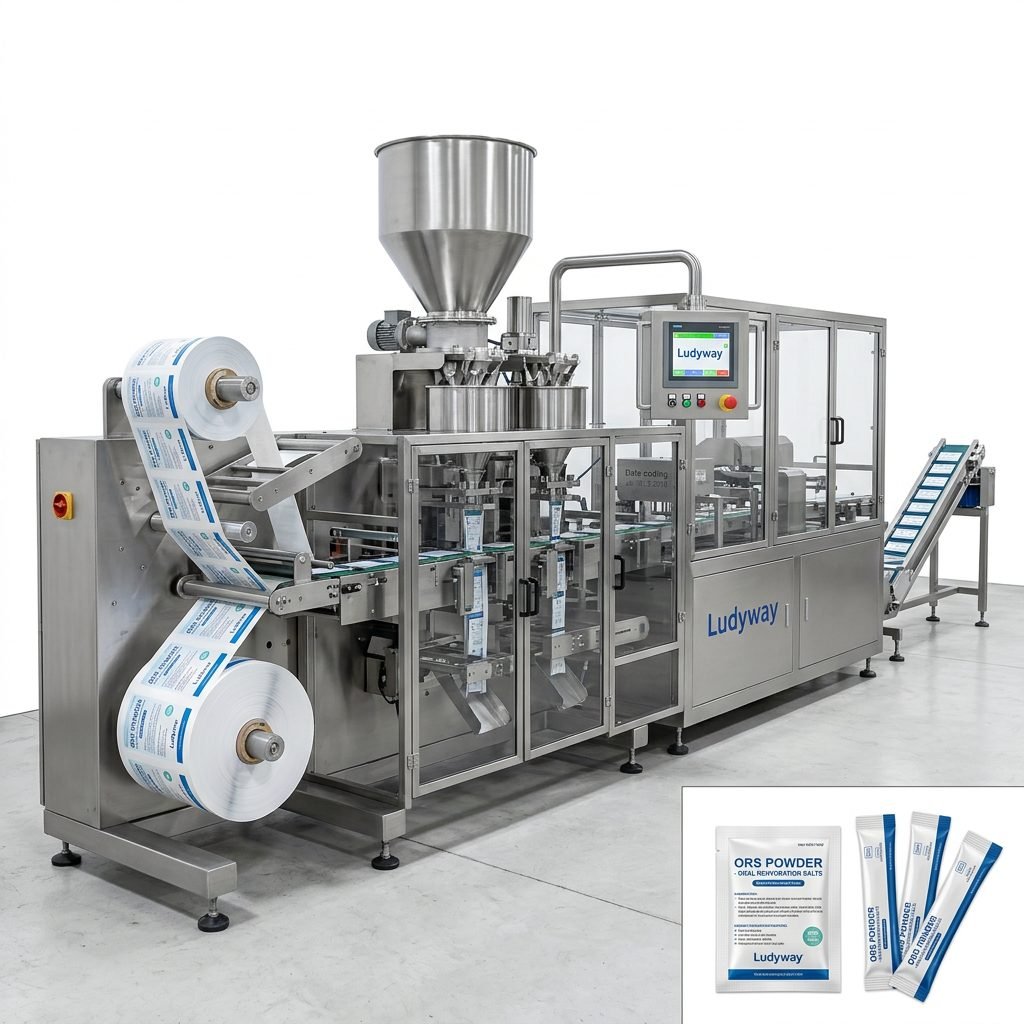
Selecting a ketchup sachet packing machine is not simply about finding a piece of equipment that fills and seals; it is about identifying a precision system that can handle high-viscosity, acidic tomato-based products without compromising speed, hygiene, or seal integrity. A wrong decision often leads to leakers, inconsistent fill weights, and costly downtime. This guide walks you through the essential technical, operational, and strategic factors to evaluate.
Understanding Your Product: Viscosity and Particle Content
Ketchup is not a simple liquid. Its non-Newtonian fluid characteristics mean it behaves differently under pressure than water or oil. Before choosing a machine, you must analyze whether your recipe is a smooth homogenous paste or if it contains particles like spices, onion bits, or chili flakes. Machines rely on different sachet filling technologies, and selecting the wrong one can result in nozzle clogging or inaccurate dosing.
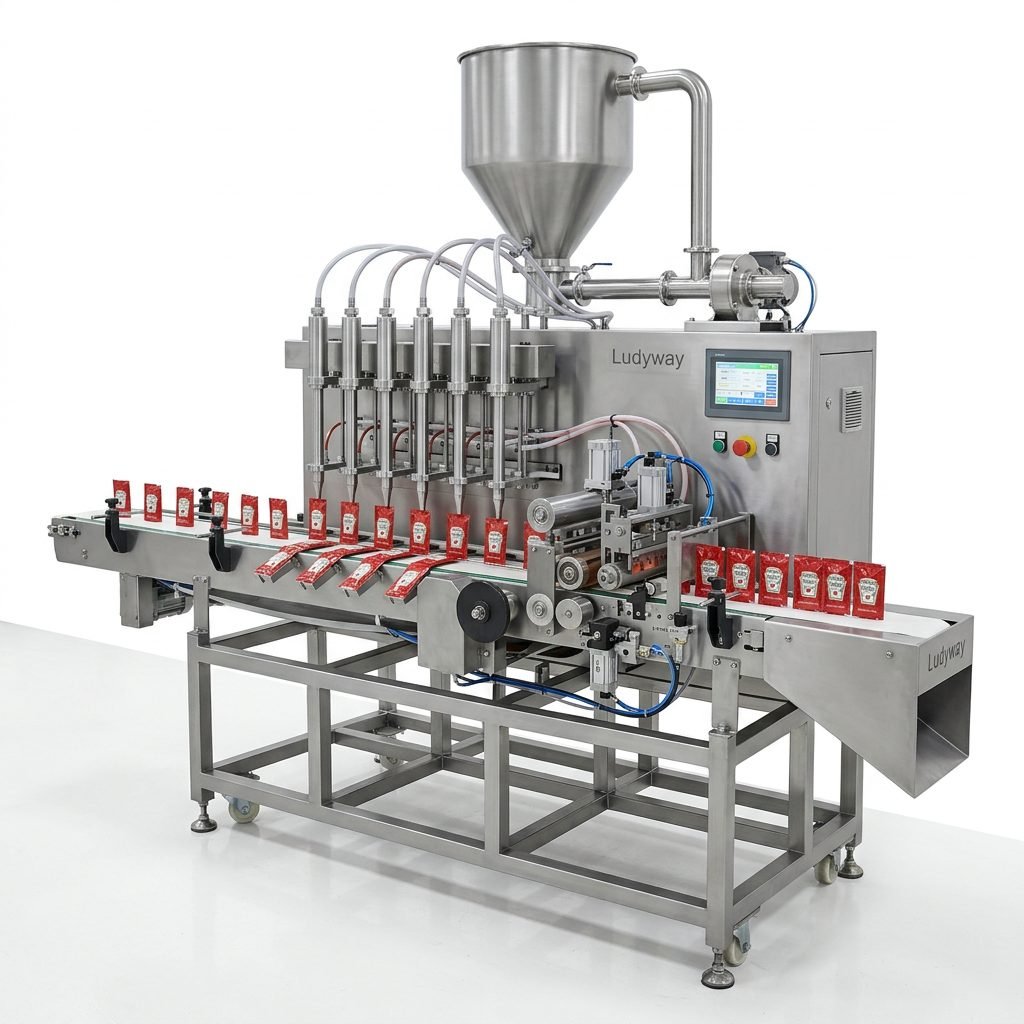
- Piston Fillers: Highly accurate for thick pastes and chunky sauces. They use a positive displacement mechanism that handles high viscosity reliably.
- Gear Pumps: Excellent for smooth, homogenous ketchup without particles. They provide a continuous flow but can be damaged by hard particulates.
- Overflow or Gravity Fillers: Generally not recommended for thick ketchup unless significantly diluted, as the slow flow rate bottlenecks production.
Defining Sachet Dimensions and Packaging Formats
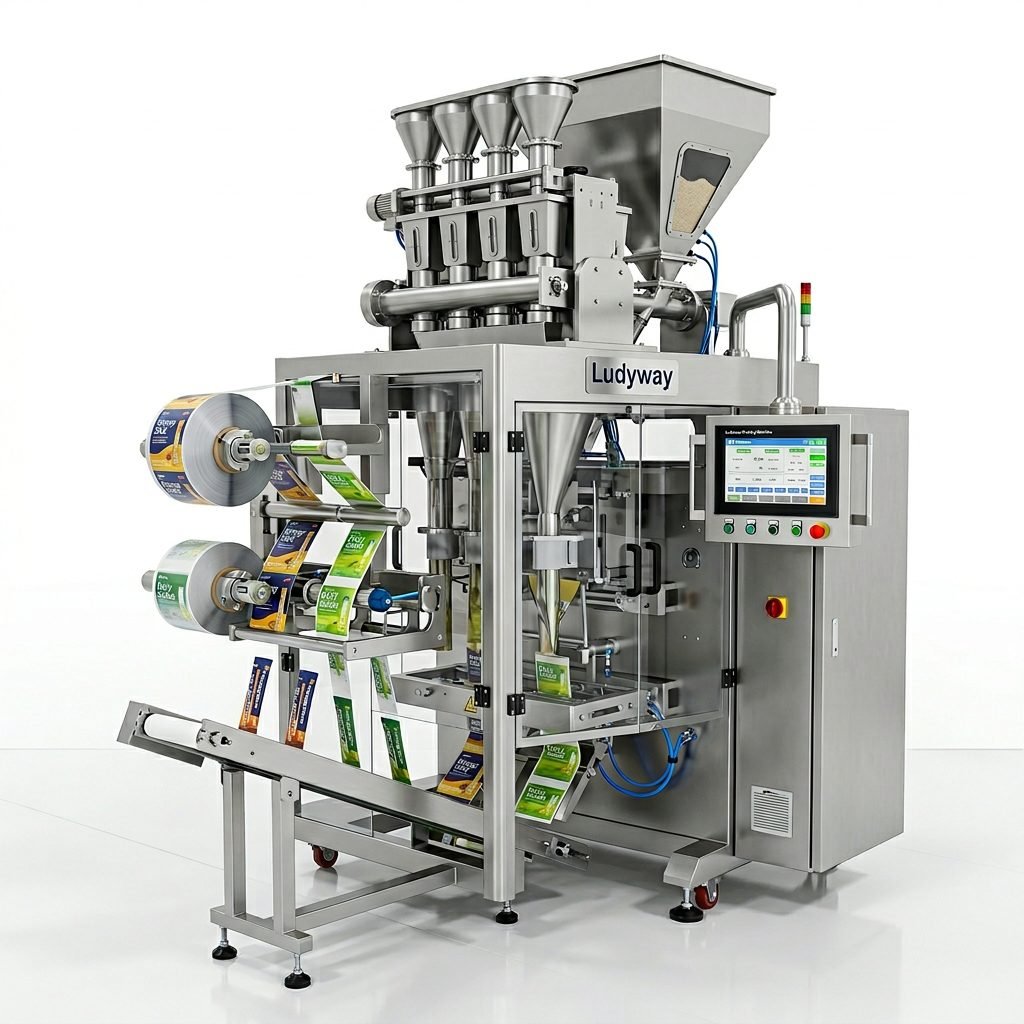
The physical geometry of your ketchup sachet dictates the forming and sealing configuration of the machine. Whether you are packaging a 5g single-serve portion for airlines or a 50g family take-away pack, the machine’s capability must align. Pay close attention to the bag-making style, as this defines the visual appeal and structural integrity of the final product.
| Sachet Pillow Type | Description | Best For |
|---|---|---|
| 3-Side Seal | Sealed on three edges with a single fin on the back or side. | Standard high-volume retail food service packs. |
| 4-Side Seal | Sealed on all four edges, offering a flat, pillow-free look. | Premium aesthetic; stick packs for combo meals. |
| Stick Pack | Narrow, elongated format sealed longitudinally. | Single-serve, high-portability applications. |
Production Speed and Multi-Lane Configurations
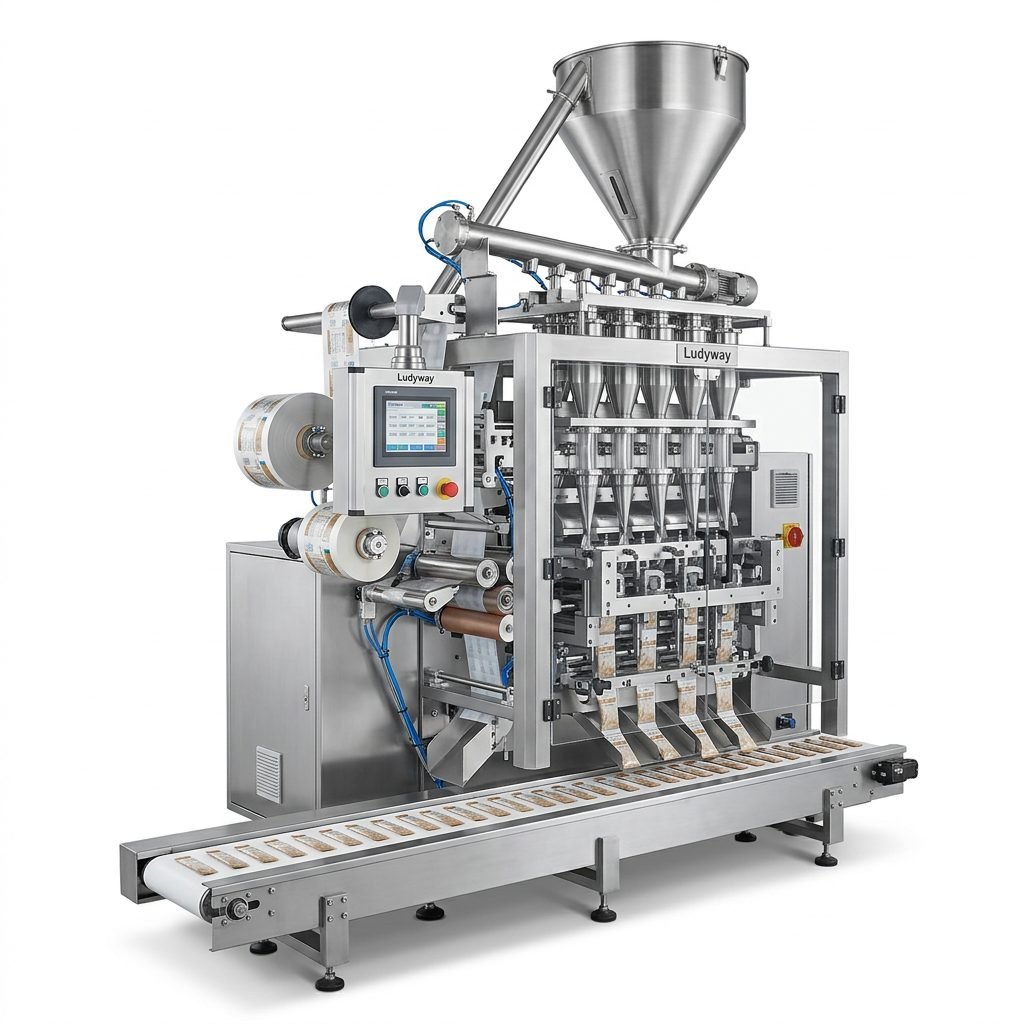
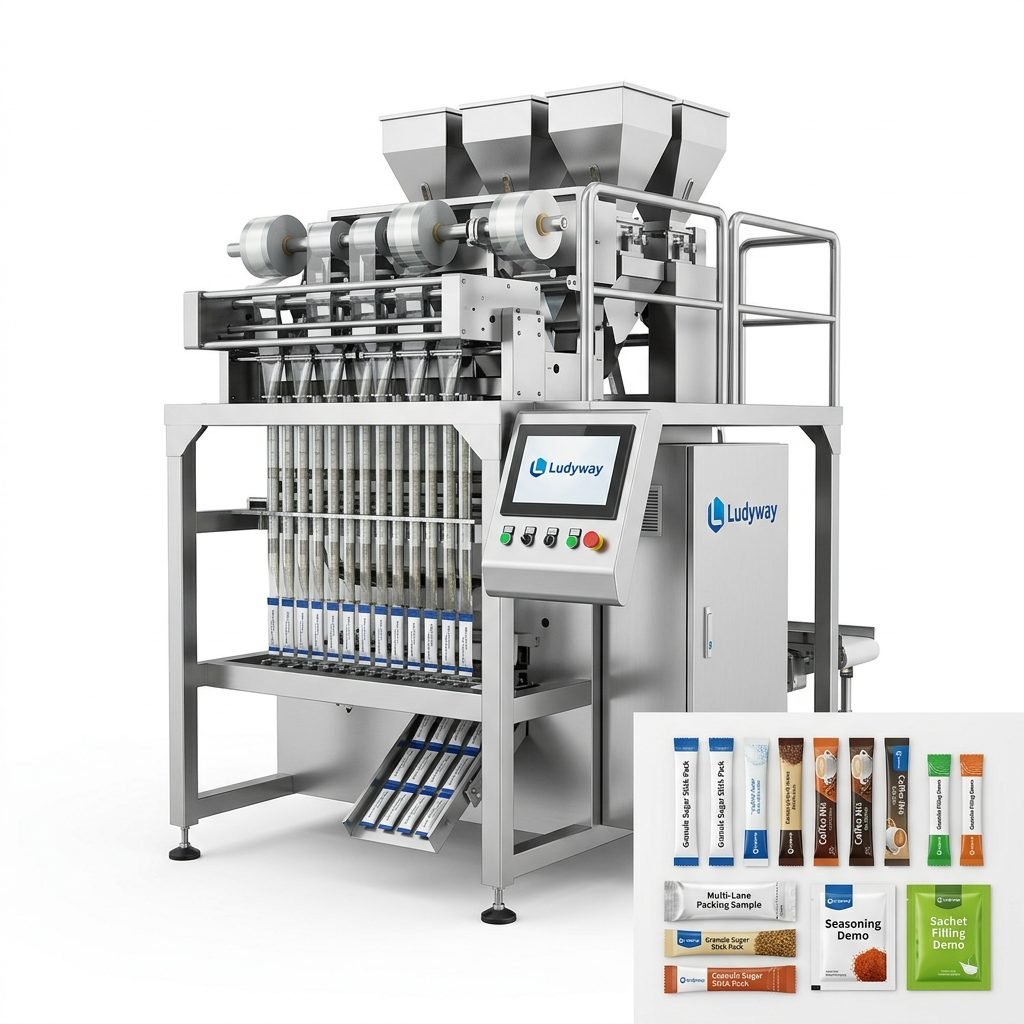
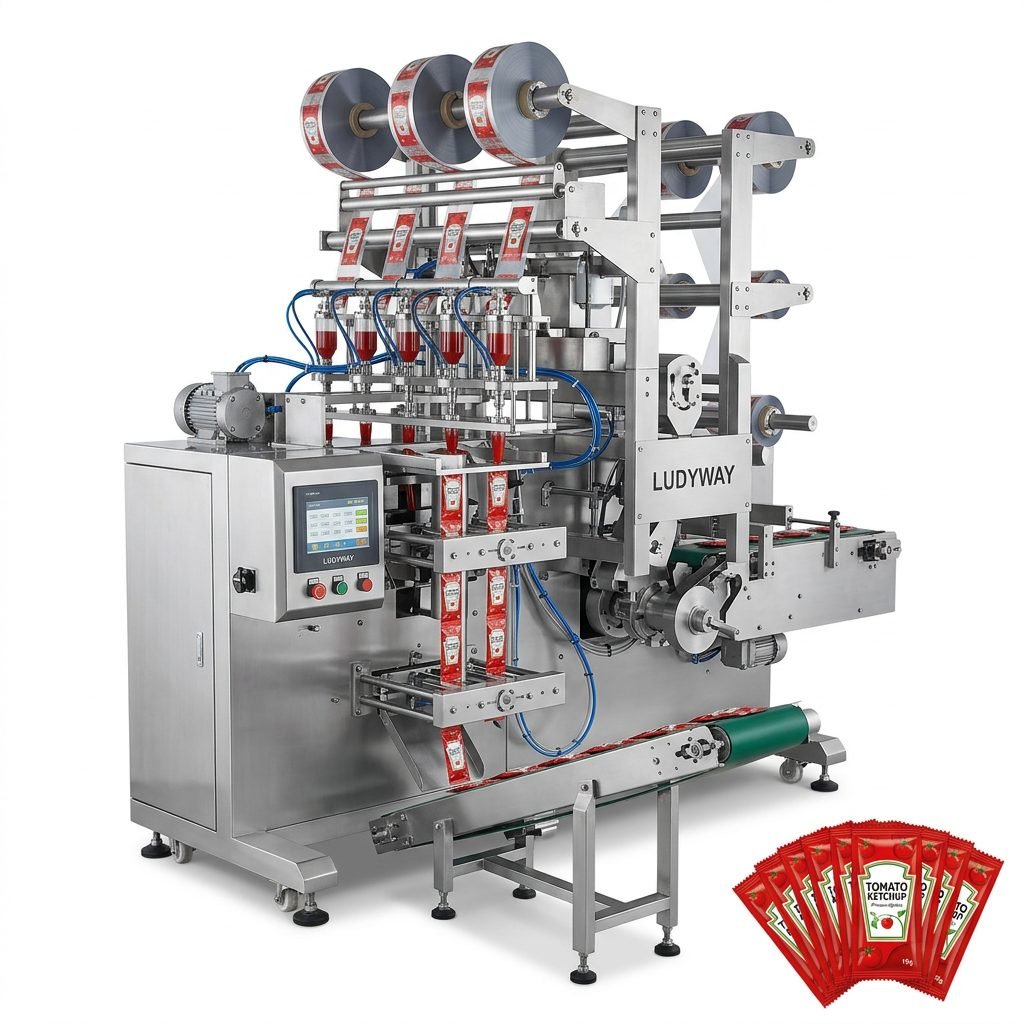
Speed requirements are the primary driver of cost and complexity. A single-lane machine might be sufficient for small artisan producers, but larger food manufacturers supplying to global Quick Service Restaurant chains often require multi-lane systems. If your target output exceeds 200 sachets per minute, you will likely need an 8-lane, 10-lane, or even 12-lane machine. Multi-lane configurations multiply throughput without occupying the same multiplying factor in floor space, but they demand sophisticated film tracking to ensure every lane seals perfectly.
Material Compatibility and Seal Integrity
Ketchup is an acidic product with a low pH, often packed hot to ensure sterility. This chemical reality demands specific packaging films, usually a multi-layer laminate with an aluminum foil barrier or a high-barrier metallized PET structure. The machine’s heat-sealing jaws must distribute temperature uniformly to create a leak-proof seal across contaminated areas. Look for machines with independent temperature control zones and knurled or cross-hatched sealing patterns that provide redundant mechanical locking even if tiny product splashes occur during filling.
Filling Accuracy and Dosing Technology
Precision is non-negotiable. Giving away even 1 gram extra per sachet over a million units translates to a ton of lost profit. Advanced machines equipped with servo-driven dosing systems offer pinpoint accuracy. When evaluating equipment, verify the deviation over a sustained run, not just a short burst. Also, check the anti-drip system; a trailing tail of ketchup from the nozzle will be sealed into the fin seal, potentially causing leaker packs and bacterial contamination.
| Dosing Feature | Function | Business Impact |
|---|---|---|
| Servo-Driven Pump | Electronic gearing controls the piston motion precisely. | High accuracy, reduced product giveaway. |
| Blow-Off Nozzle | A burst of air retracts the tail string after filling. | Clean seals, fewer leaks, less waste. |
| Hopper Agitation | Stirs the product tank to prevent separation. | Uniform consistency in every sachet. |
Hygiene, Cleanability, and Compliance
Tomato paste can be a breeding ground for microorganisms if equipment is not designed for rigorous sanitation. Seek tool-less disassembly for the product contact parts. Machines built to FDA food packaging standards typically feature stainless steel SUS304 or SUS316 contact surfaces, sloped electric cabinets to prevent liquid pooling, and IP65 or higher washdown ratings. If you are packing for sensitive markets like school lunch programs, hygienic design is as critical as speed.
Turnkey Solutions and Line Integration
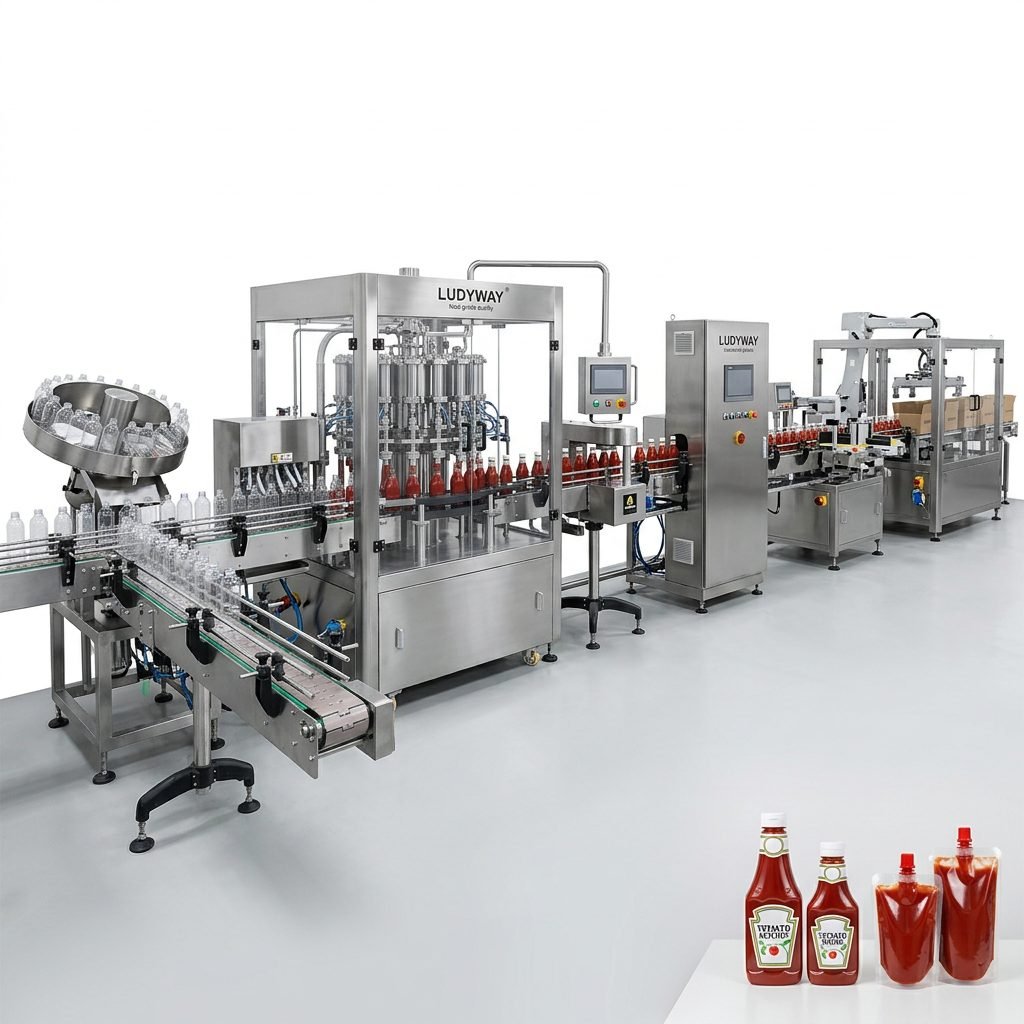
An isolated packing machine offers limited value if upstream and downstream processes remain manual. Modern production lines integrate the sachet machine with automated sauce preparation tanks, inline homogenizers, and end-of-line cartoning systems. If you plan to grow, choose a machine that supports real-time communication protocols for seamless connection with flexible packaging peripheral equipment like checkweighers, metal detectors, and case packers. Data integration is key for traceability and overall equipment effectiveness monitoring.
Evaluating Suppliers and After-Sales Support
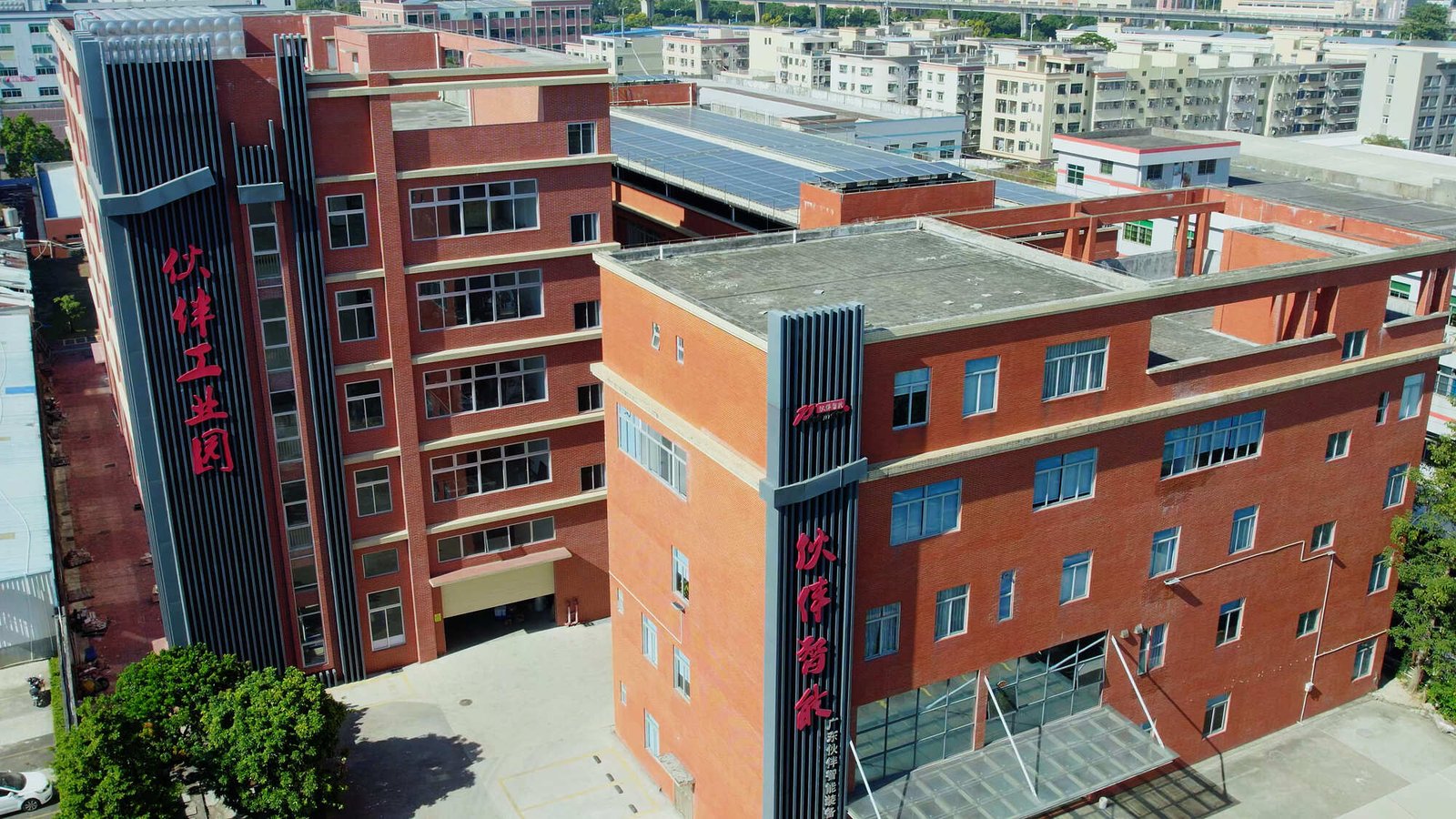
Food production cycles are seasonal, and when you are in the peak ketchup packing season, any unplanned downtime can disrupt supply chains. Evaluate the supplier’s lead time not just for the machine, but for critical spare parts. Remote troubleshooting capabilities via secure access are becoming an industry standard. A manufacturer with deep application knowledge can help you with material validation and factory layout before you even commit to a purchase. Ludyway Machinery, with more than 30 years of experience and a 20,000-square-meter manufacturing facility, engineers integrated packaging solutions that cover everything from liquid dosing to automated cartoning, ensuring your line remains scalable and reliable for years to come.
Key Supplier Evaluation Factors
| Criterion | What to Look For |
|---|---|
| Factory Acceptance Testing | Video calls or in-person visits to see your product running before shipment. |
| Technical Documentation | Clear manuals, electrical diagrams, and BOM for future maintenance. |
| Global References | Proven installations in your specific food sector and climate region. |
For a deeper dive into market trends, consult the latest PMMI State of the Industry report and regulatory guidance from the Flexible Packaging Association.
Frequently Asked Questions When Buying a Ketchup Sachet Machine
What is the ideal film structure for ketchup sachets?
Typically, a PET/AL/PE or PET/MET-CPP laminate is used to provide stiffness, an oxygen barrier, and an easy-to-seal inner layer. The structure must withstand hot filling without delamination.
Can the same machine pack mayonnaise and mustard?
Yes. With quick-change format parts, a well-designed liquid sachet machine can switch between different condiment viscosities. However, thorough purging and cleaning between products is essential to prevent cross-contamination of allergens or flavors.
How do I prevent cap-lifting in my ketchup sachets?
Cap-lifting, where product gets trapped in the upper seal area, is solved by vertical sealing and an effective anti-drip cut-off system. Rotary manifold designs help minimize splashing during the filling cycle.
Investing in the right ketchup sachet packing machine is a decision that impacts product quality, operational efficiency, and brand reputation. By mapping your specific product characteristics to the correct dosing, sealing, and automation technologies, you secure a reliable foundation for your competitive condiment packaging strategy.