Investing in a sandwich packaging machine is a significant decision for any food manufacturing business. Whether you are producing pre-packaged sandwiches for retail, food service, or vending channels, the right packaging equipment directly impacts product freshness, shelf life, production efficiency, and ultimately your bottom line. With so many machine types, configurations, and suppliers available, making the right choice can feel overwhelming. This guide walks you through every critical factor to consider before purchasing a sandwich packaging machine.
Understanding Your Sandwich Packaging Requirements
Before comparing machine specifications, you need to clearly define your production requirements. The following questions will help you establish the baseline criteria for selecting the right equipment:
- Product characteristics: What types of sandwiches are you packaging? Consider dimensions, shape, thickness, and whether the product is triangular, rectangular, or has irregular edges. Soft bread sandwiches require gentler handling than those made with firmer bread varieties.
- Packaging format: Are you using flow wrap, pillow packs, modified atmosphere packaging (MAP), vacuum packaging, or rigid tray sealing? Each format requires a different machine type and directly impacts flexible packaging material selection.
- Production volume: How many units per minute or per day do you need to produce? Small-scale operations may only need 20-40 packs per minute, while high-volume manufacturers may require 80-150 packs per minute or more.
- Shelf life requirements: If you need extended shelf life, MAP or vacuum packaging capabilities become essential. This significantly influences the machine type and complexity.
- Automation level: Do you need a fully automatic inline system, or is a semi-automatic machine sufficient for your current production scale?
Types of Sandwich Packaging Machines
Understanding the different machine categories is essential for narrowing down your options. Each type serves specific packaging formats and production environments:
Horizontal Flow Wrappers
Horizontal flow wrappers are the most common choice for sandwich packaging. They wrap the product in a continuous film, creating a sealed pillow pack. These machines are highly versatile and can handle various sandwich sizes and shapes. Flow wrappers work particularly well for triangular sandwiches, subs, and wraps. They can be configured with gas flushing for modified atmosphere packaging to extend shelf life.
Tray Sealing Machines
For sandwiches packaged in rigid trays with a film lid, tray sealing machines provide an excellent solution. This format offers superior product protection and is commonly used for premium sandwich lines. Tray sealers can incorporate MAP functionality and create a high-quality retail-ready presentation. The sealed tray format significantly reduces product damage during distribution compared to flexible packaging alone.
Vertical Form Fill Seal (VFFS) Machines
While less common for traditional sandwiches, VFFS machines can be suitable for certain snack-sized sandwich products or pillow-pack style packaging. These machines form bags vertically, fill them with product, and seal them in a continuous operation.
Thermoforming Packaging Machines
For high-volume production with rigid packaging requirements, thermoforming machines create the package from roll stock film, form a cavity, fill it with the sandwich, and apply a top seal. This technology provides excellent seal integrity and is widely used in packaging machinery applications requiring extended shelf life.
Key Factors to Evaluate When Choosing a Machine
With your requirements defined, focus on these critical evaluation criteria:
| Evaluation Factor | What to Look For | Why It Matters |
|---|---|---|
| Speed and Throughput | Packs per minute matched to current and projected demand | Undersized machines create bottlenecks; oversized machines waste capital |
| Film Compatibility | Support for your chosen film materials and thicknesses | Film incompatibility leads to poor seals, waste, and downtime |
| Changeover Flexibility | Quick size changeover features and easy recipe management | Reduces downtime between product runs and improves OEE |
| MAP Capability | Gas flushing system with accurate O₂/CO₂/N₂ control | Critical for extended shelf life and product freshness |
| Seal Quality Systems | Precise temperature control and seal integrity monitoring | Prevents leakers and ensures consistent package quality |
| Hygiene and Cleanability | Sanitary design, tool-free disassembly, IP65+ rated components | Essential for food safety compliance and efficient sanitation |
| Integration Capability | Compatibility with upstream and downstream equipment | Enables seamless production line integration and automation |
Modified Atmosphere Packaging (MAP) Considerations
If your sandwiches require extended shelf life, MAP capability is non-negotiable. The right MAP system replaces oxygen inside the package with a controlled gas mixture, typically nitrogen and carbon dioxide. This dramatically slows microbial growth and preserves product freshness. When evaluating MAP-compatible machines, consider:
- Gas flushing accuracy: Residual oxygen levels should consistently remain below 1%, with some premium systems achieving below 0.5%.
- Gas consumption efficiency: Look for machines with optimized gas injection systems that minimize waste while maintaining atmosphere integrity.
- Seal integrity after gas flush: The sealing system must perform reliably after gas injection, as any leaks compromise the protective atmosphere.
- Compliance with food packaging regulations: Ensure the machine and packaging materials meet applicable food contact and safety standards.
Automation and Labor Considerations
The level of automation you choose directly affects your operational costs and production consistency. Modern sandwich packaging machines offer various automation features:
Manual vs. Automatic Feeding
Semi-automatic machines require operators to manually place sandwiches into the infeed, while fully automatic systems use conveyors and alignment mechanisms. Automatic feeding systems reduce labor costs and improve consistency but require higher initial investment. For operations producing over 50 packs per minute, automatic feeding typically delivers a faster return on investment.
Integrated Quality Control
Advanced machines can incorporate vision inspection systems, checkweighers, metal detectors, and seal integrity testers. These integrated packaging industry quality control features help ensure every package meets specifications before leaving the production line.
Budget and Total Cost of Ownership
When budgeting for a sandwich packaging machine, look beyond the initial purchase price. The total cost of ownership includes:
- Initial equipment cost: The machine purchase price including any customization and installation.
- Packaging material costs: Film consumption rates and material compatibility affect ongoing expenses significantly.
- Energy consumption: Consider power requirements, compressed air usage, and gas consumption for MAP systems.
- Maintenance and spare parts: Factor in preventive maintenance schedules, common wear parts, and supplier support availability.
- Operator training: Include the time and resources needed to train staff on proper machine operation and maintenance.
- Downtime costs: Reliable machines with good support networks minimize costly production interruptions.
Evaluating Machine Suppliers
Selecting the right supplier is as important as selecting the right machine. Consider these factors when evaluating potential partners:
- Industry experience: Suppliers with specific experience in sandwich and food packaging understand the unique challenges of handling delicate baked goods.
- Technical support: Evaluate the availability of installation support, operator training, remote troubleshooting, and on-site service.
- Spare parts availability: Confirm that critical spare parts are readily available and can be shipped quickly to minimize downtime.
- Customer references: Request references from companies with similar applications and production volumes.
- Customization capability: Can the supplier modify equipment to meet your specific product and packaging requirements rather than forcing you to adapt to a standard machine?
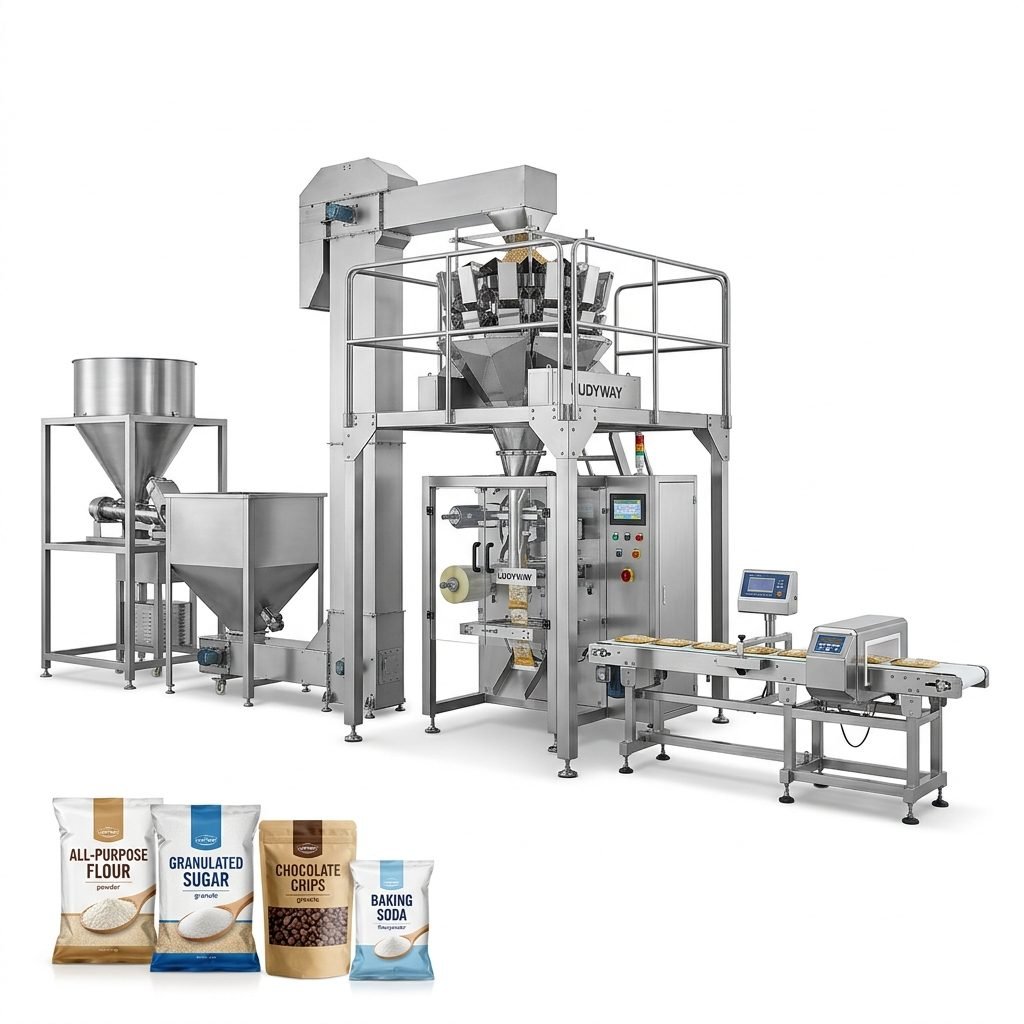
For manufacturers seeking experienced packaging machinery partners, companies like Ludyway Machinery offer comprehensive packaging solutions with extensive customization capabilities, supporting manufacturers across food, pharmaceutical, and other industries with integrated production line systems.
Questions to Ask Before Buying
Before finalizing your purchase decision, confirm these essential points with your supplier:
- What is the demonstrated speed range with our specific sandwich type and packaging material? Request video evidence or a factory acceptance test with your actual product.
- How quickly can changeovers be performed between different sandwich formats? Ask for a live demonstration and documented changeover procedures.
- What warranty coverage is included, and what are the extended warranty options? Understand exactly what is covered and for how long.
- What training programs are available for operators and maintenance personnel? Comprehensive training significantly reduces startup issues and ongoing operational problems.
- How does the machine handle film splices and roll changes? Automatic splicing and quick-change film handling features can dramatically reduce downtime.
- What remote diagnostics and support capabilities are included? Modern machines with remote connectivity allow suppliers to troubleshoot issues quickly without on-site visits.
Future-Proofing Your Investment
A sandwich packaging machine is a long-term investment. Consider these factors to ensure your equipment remains viable as your business evolves:
- Scalability: Can the machine’s speed be increased or additional lanes added to accommodate higher production volumes?
- Format adaptability: If you plan to introduce new sandwich formats or packaging styles, ensure the machine has the flexibility to handle these changes.
- Industry 4.0 readiness: Machines with data collection, OEE monitoring, and integration capabilities with manufacturing execution systems provide long-term operational visibility.
- Sustainability requirements: As packaging sustainability regulations evolve, ensure your machine can handle recyclable, compostable, or mono-material films that may become required in your markets.
Making the Final Decision
Selecting the right sandwich packaging machine requires balancing multiple factors: technical specifications, production requirements, budget constraints, and supplier capabilities. Start with a thorough analysis of your current and projected needs, then evaluate machines and suppliers against those specific criteria. Request demonstrations, speak with reference customers, and carefully assess total cost of ownership rather than focusing solely on the purchase price.
A well-chosen sandwich packaging machine will deliver consistent product quality, efficient production, and reliable operation for many years. Taking the time to evaluate your options thoroughly ensures you make an investment that supports your business growth and meets the expectations of your retail and food service customers.