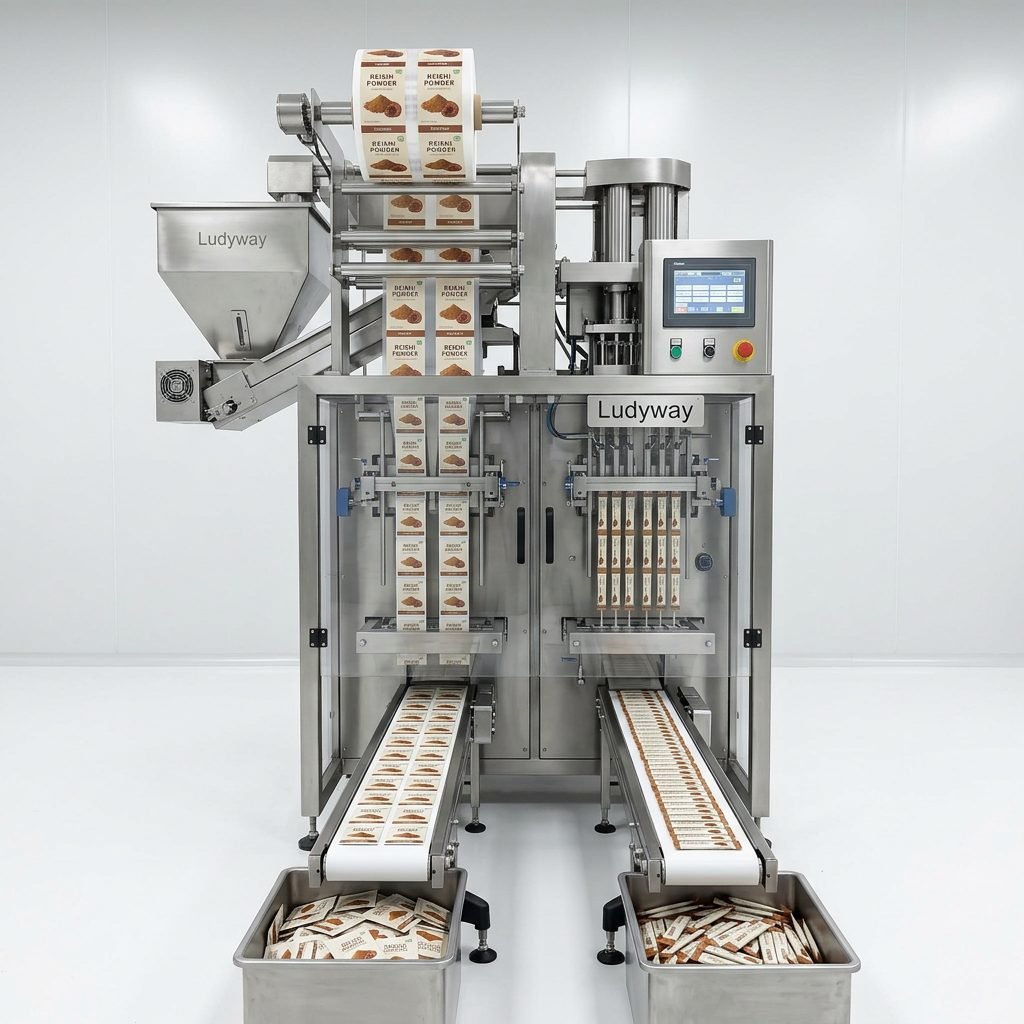
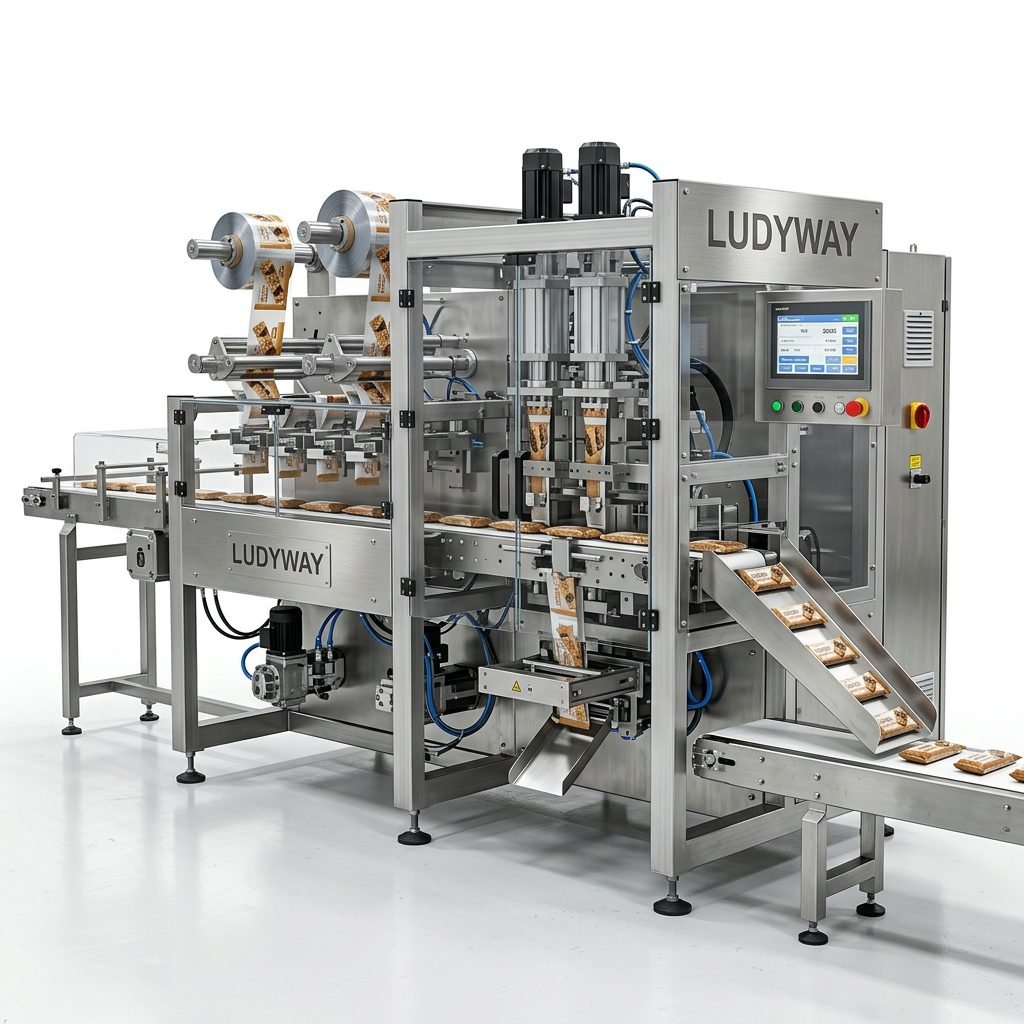
The U.S. coffee pod market continues its remarkable expansion, driven by consumer demand for convenience, single-serve brewing systems, and premium at-home coffee experiences. Establishing a dedicated coffee pod packaging production line requires careful planning around machinery selection, regulatory compliance, material sourcing, and facility design. This guide walks you through every critical step.
1. Understanding the U.S. Coffee Pod Market Landscape
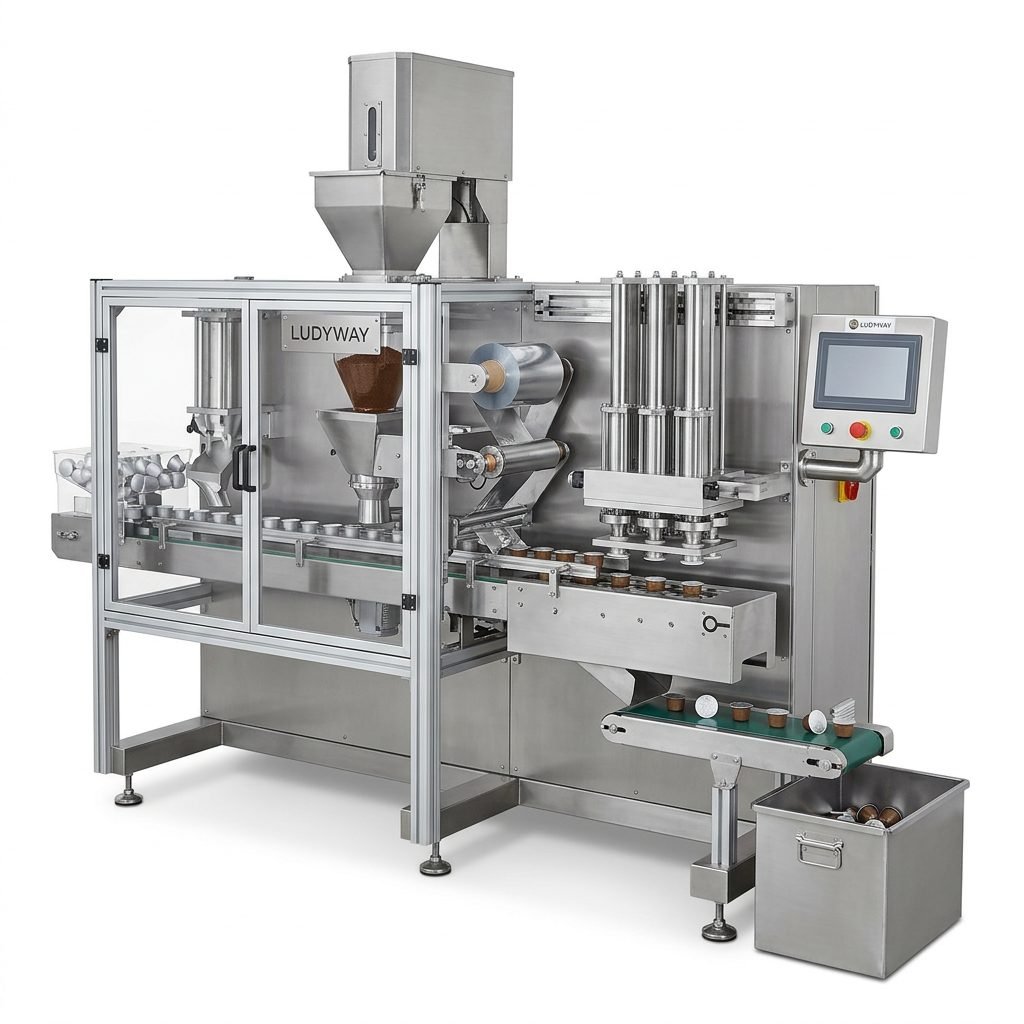
Before investing in equipment, it’s essential to understand the market dynamics. The U.S. single-serve coffee category accounts for a significant share of the overall coffee market, according to data from the PMMI Business Intelligence Library. Growth is fueled by innovations in compostable and recyclable pods, specialty coffee varieties, and the continued popularity of single-cup brewers in both households and offices. Key product formats include hard plastic cups with foil lids, soft filter paper pods, and multi-lane stick packs containing ground coffee. Your production line must align with the specific pod type you intend to manufacture.
2. Core Machinery for a Coffee Pod Packaging Line
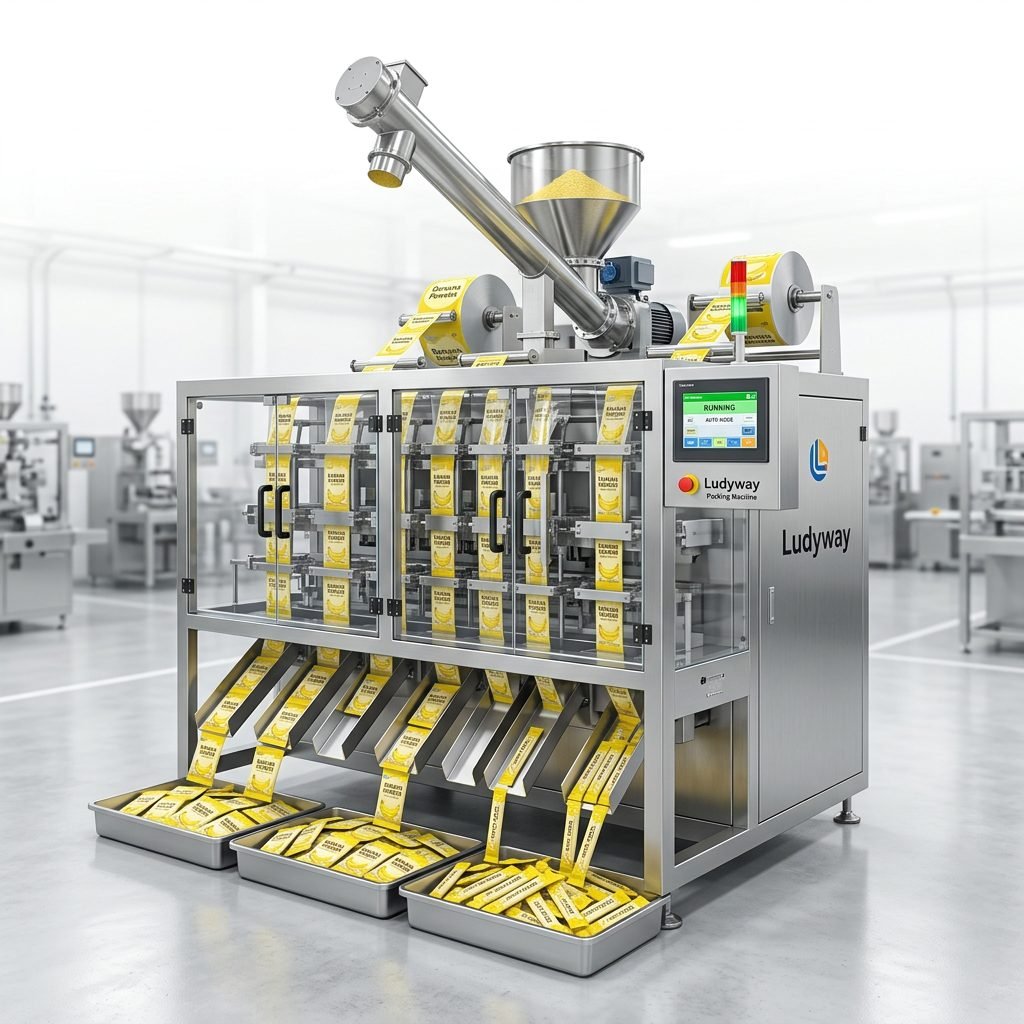
A complete coffee pod packaging production line typically integrates several machine types. The primary machine handles filling and sealing, while auxiliary equipment manages material handling, inspection, and secondary packaging. Below is an overview of the essential components:
| Machine Type | Function | Key Consideration |
|---|---|---|
| Rotary Cup Filling & Sealing Machine | Fills pre-formed cups with ground coffee and applies foil lids with nitrogen flushing for freshness. | Output speed, cup compatibility, gas flush efficiency. |
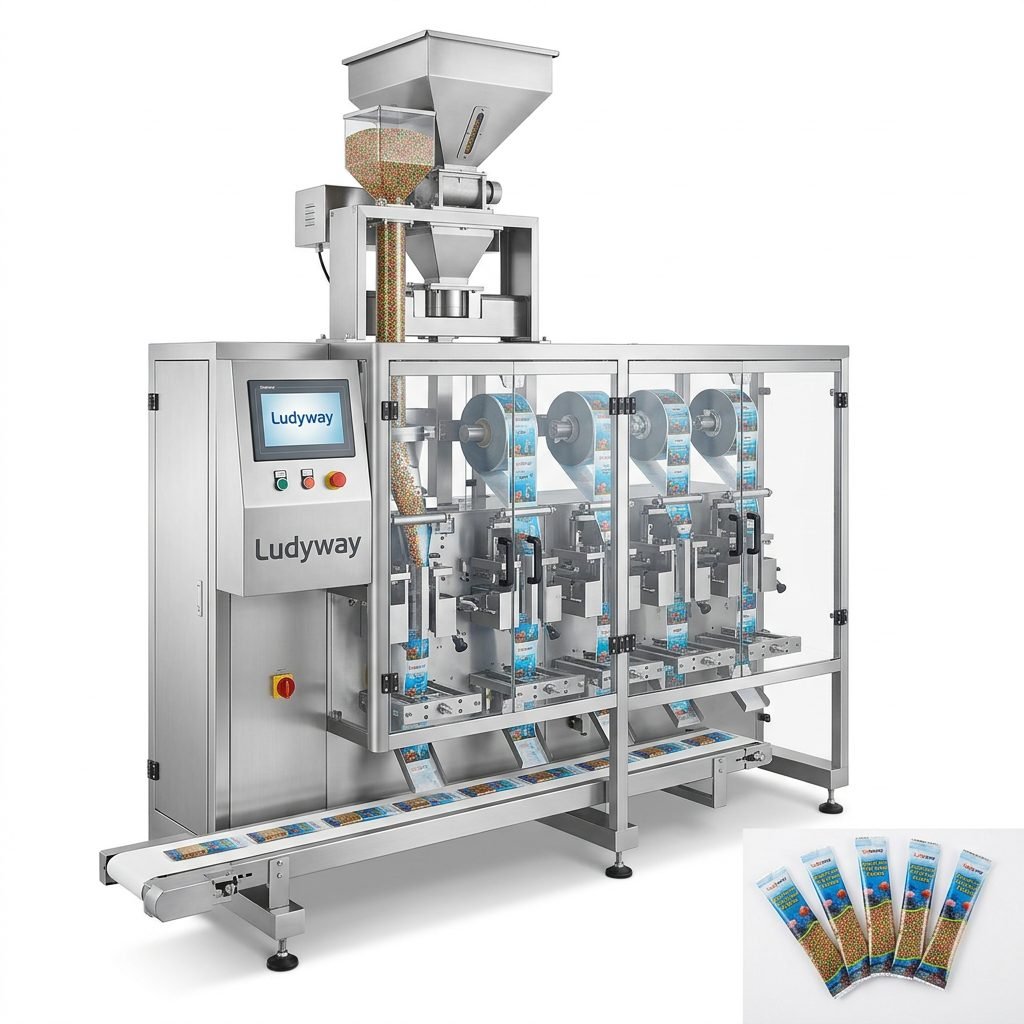
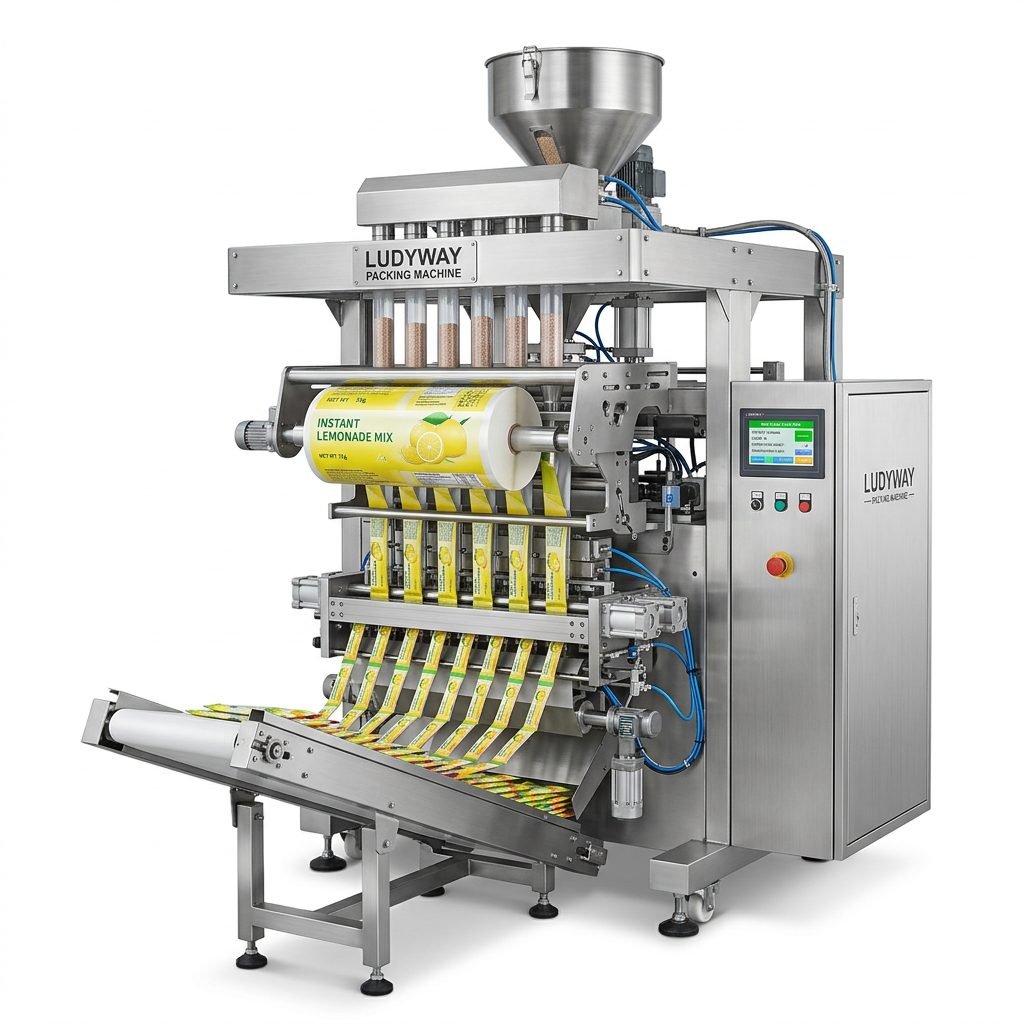
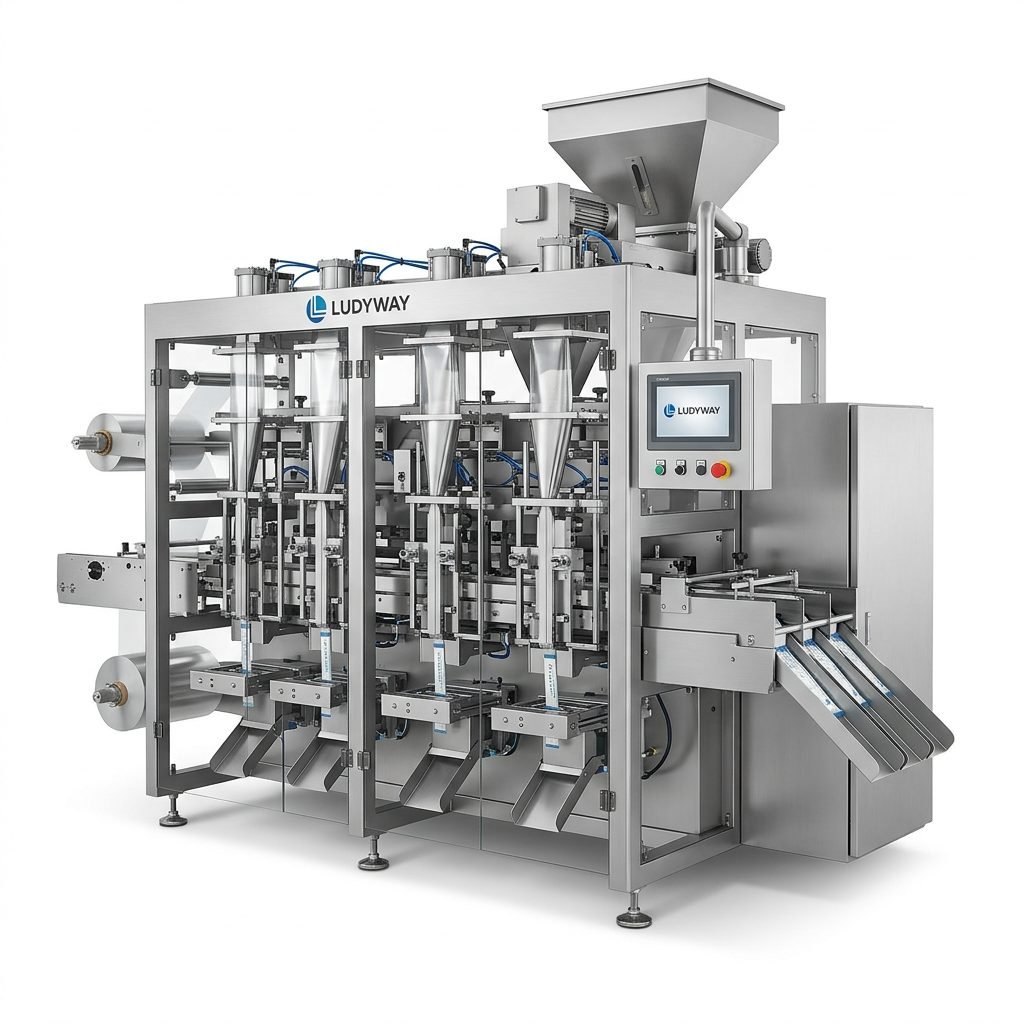
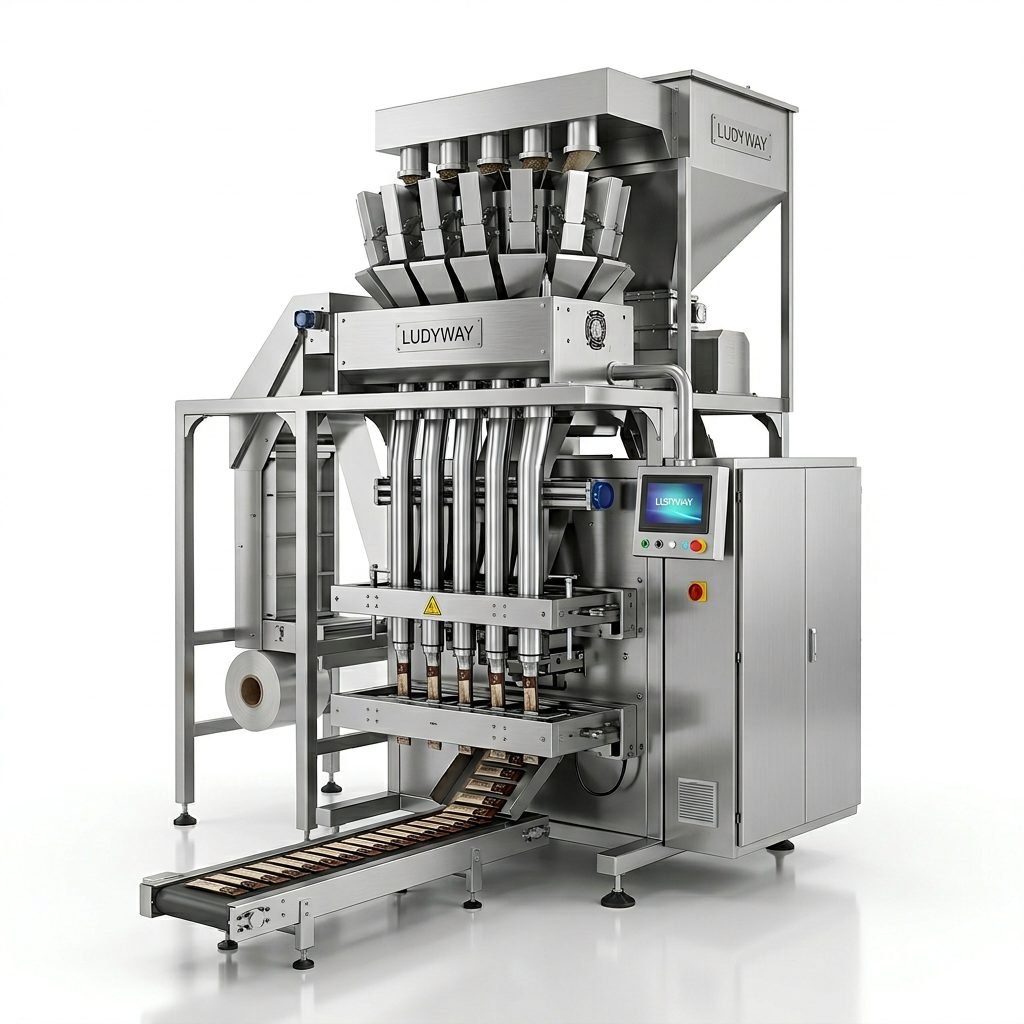
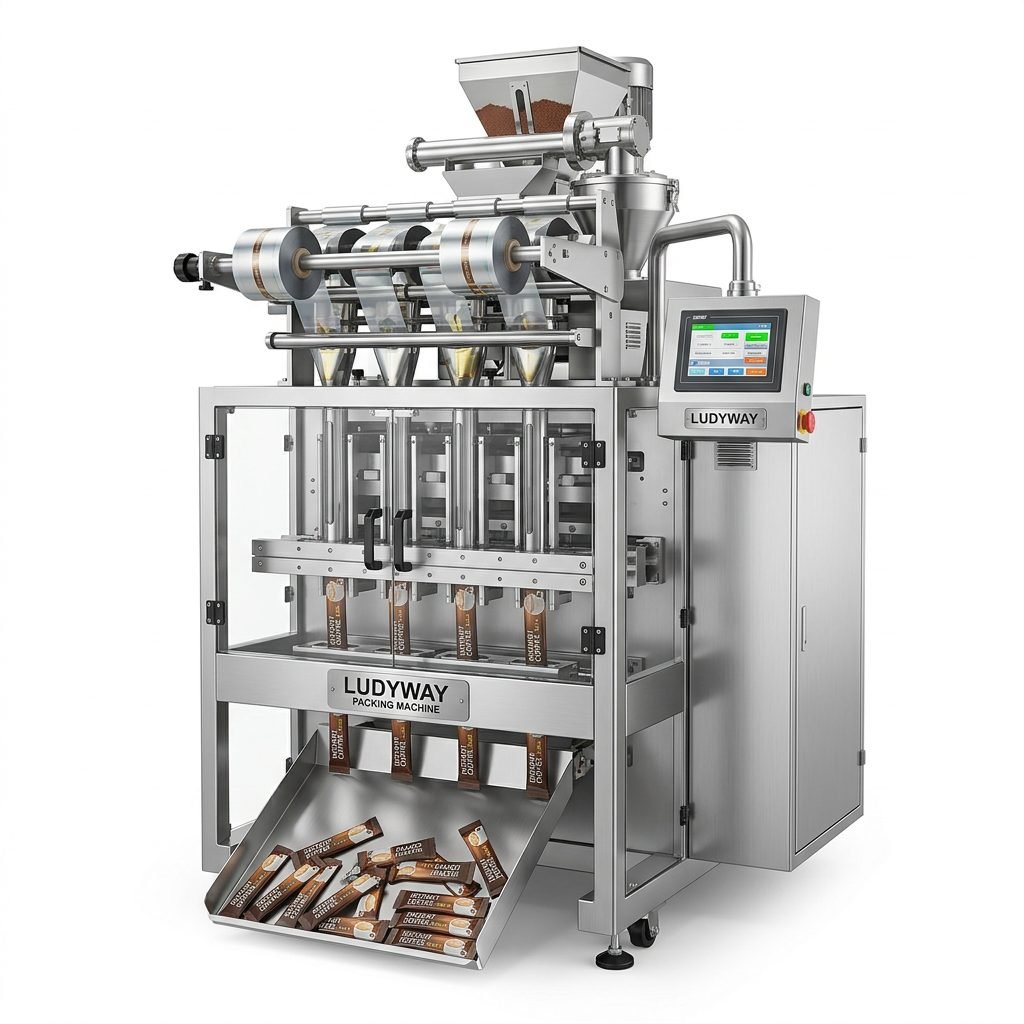
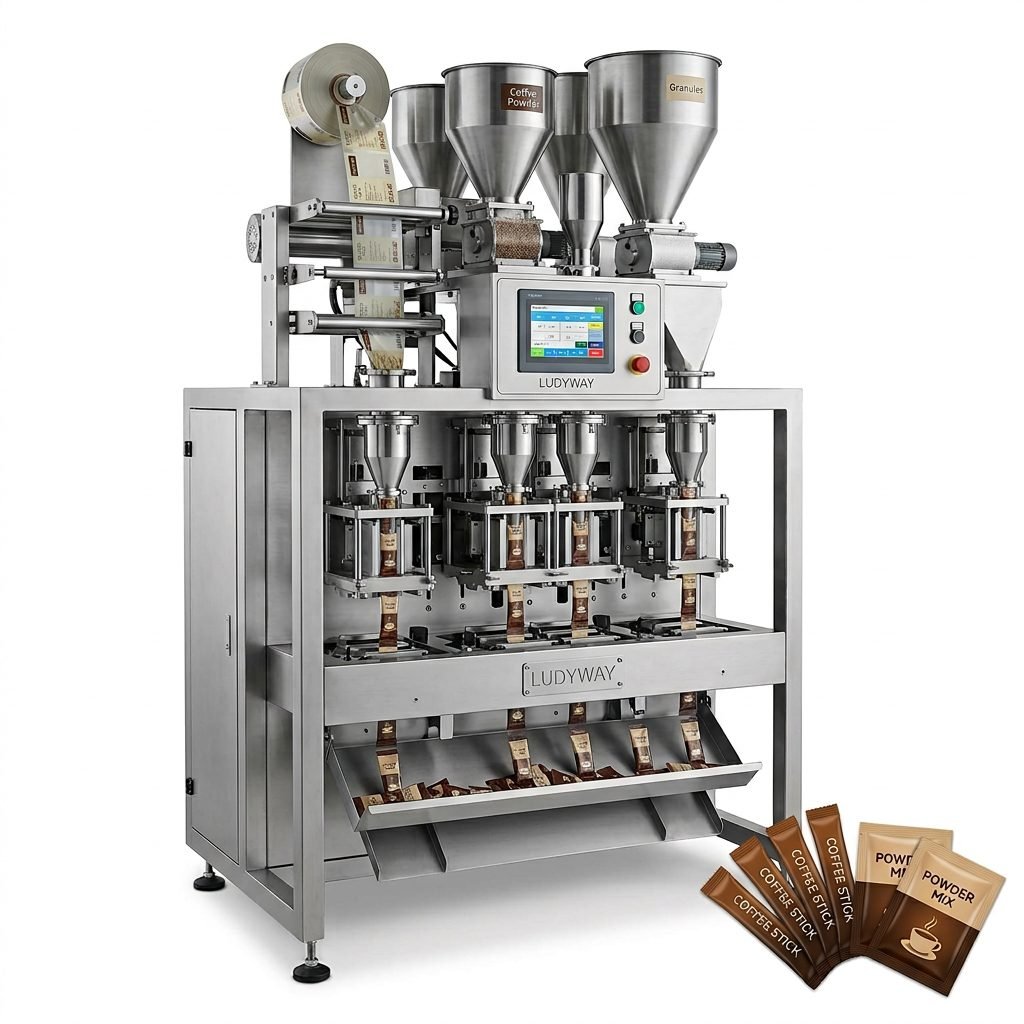
| Multi-Lane Stick Pack Machine | Produces narrow single-serve stick packs filled with coffee powder or granules. | Number of lanes, film compatibility, dosing accuracy. |
| Coffee Grinder / Dosing System | Grinds whole beans to precise particle size and delivers consistent doses to the filler. | Grind consistency, retention, integration with filler. |
| Checkweigher & Metal Detector | Verifies fill weight and detects metal contaminants to ensure product quality and safety. | Sensitivity, rejection mechanism, data logging. |
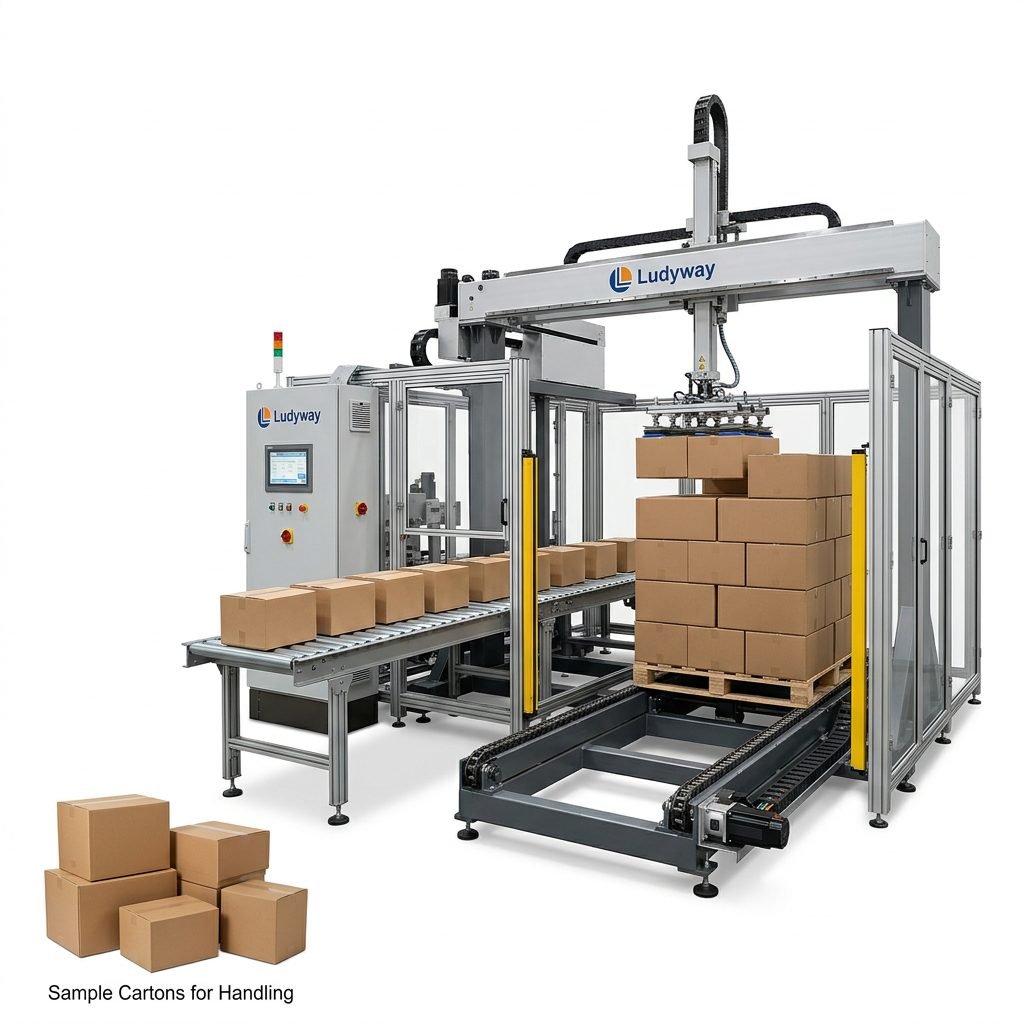
| Cartoning & Case Packing System | Automatically loads finished pods or stick packs into cartons and corrugated cases. | Format flexibility, changeover time, footprint. |
3. Regulatory Compliance: FDA and Food Contact Standards
Operating a coffee packaging line in the United States requires strict adherence to FDA regulations for food contact substances. All packaging materials — including plastic cups, foil lids, and film for stick packs — must comply with FDA Food Packaging and Food Contact Substances guidelines. This includes ensuring that no harmful chemicals migrate from the packaging into the coffee. Additionally, your facility must follow Current Good Manufacturing Practices (cGMPs) as outlined in 21 CFR Part 117. Documentation and traceability are critical components of FDA compliance, so your line should incorporate batch coding and record-keeping systems from day one.
4. Facility and Utilities Planning
Your production facility must meet specific environmental and utility requirements. Coffee is hygroscopic and sensitive to oxygen and moisture, so climate control is essential. Here are the primary facility considerations:
- Climate Control: Maintain relative humidity below 50% and consistent ambient temperatures to prevent clumping and flavor degradation.
- Compressed Air and Nitrogen: High-quality, oil-free compressed air is needed for pneumatic components. Nitrogen gas is used for modified atmosphere packaging (MAP) to extend shelf life.
- Power Supply: Ensure adequate three-phase power for high-speed rotary machines and auxiliary equipment.
- Floor Space: Map out a logical flow from raw material receiving to finished goods storage, allowing room for future expansion.
- Cleanliness: Design the layout to separate “clean” and “dirty” zones, minimizing cross-contamination risks.
5. Material Sourcing: Pods, Lids, and Film
The choice of packaging materials directly impacts machine performance, product shelf life, and sustainability credentials. For coffee pod production, you’ll need to source compatible materials including pre-formed plastic or compostable cups, lidding foil or film, and flexible rollstock for stick packs. Work closely with material suppliers who can provide certificates of compliance and technical data sheets. The Flexible Packaging Association’s Industry Resources offers valuable guidance on material selection and sustainability trends. Testing material runnability on your specific machinery before committing to large orders is strongly advised.
6. Automation and Integration Strategy
Modern coffee pod lines benefit dramatically from integrated automation. Rather than operating isolated machines, a fully connected line with central HMI control, automatic reject stations, and real-time OEE tracking maximizes throughput and minimizes labor. Consider these integration points:
- Automated coffee bean feeding and grinding systems directly linked to the filler hopper
- Inline checkweighing with feedback to the dosing mechanism for automatic adjustment
- Vision inspection systems to verify lid seal integrity, print quality, and pod orientation
- Robotic pick-and-place for cartoning and palletizing
For insights into packaging machinery standards and automation best practices, the PMMI Packaging Industry Resources portal provides extensive technical documentation.
7. Budgeting and ROI Considerations
Investing in a coffee pod packaging production line involves significant capital expenditure. Costs vary widely based on speed, automation level, and format flexibility. A fully automated line with nitrogen flushing, integrated grinding, and robotic end-of-line packaging can represent a multi-million dollar investment. However, lower-cost entry options exist, including semi-automatic cup fillers and manual cartoning stations. When calculating ROI, factor in not only the machine cost but also installation, training, spare parts inventory, and ongoing maintenance. Energy efficiency and film waste reduction are additional financial levers that impact long-term profitability.
8. Installation, Commissioning, and Training
Once machinery is selected, a structured installation and commissioning plan is essential. This includes site preparation, utility connections, machine setup, and rigorous testing with actual coffee and packaging materials. Comprehensive operator and maintenance training ensures your team can run the line efficiently from day one. Plan for a ramp-up period where output gradually increases as operators gain experience and processes are fine-tuned.
9. Common Challenges and Solutions
| Challenge | Description | Solution |
|---|---|---|
| Inconsistent Fill Weight | Variations in coffee density and grind size cause weight fluctuations. | Use servo-driven auger fillers with inline feedback from checkweigher; standardize grind particle size. |
| Lid Seal Failures | Leaking or improperly sealed lids lead to shelf-life issues. | Optimize heat seal temperature, pressure, and dwell time; implement vision inspection for seal quality. |
| Material Jams and Wrinkles | Flexible films and cup materials can jam or deform during high-speed operation. | Select materials with appropriate slip and stiffness; regularly clean and align guide rails and rollers. |
| FDA Compliance Gaps | Inadequate documentation or material certifications risk regulatory action. | Establish a robust supplier approval program and maintain complete batch records with traceability. |
10. Partnering with the Right Equipment Supplier
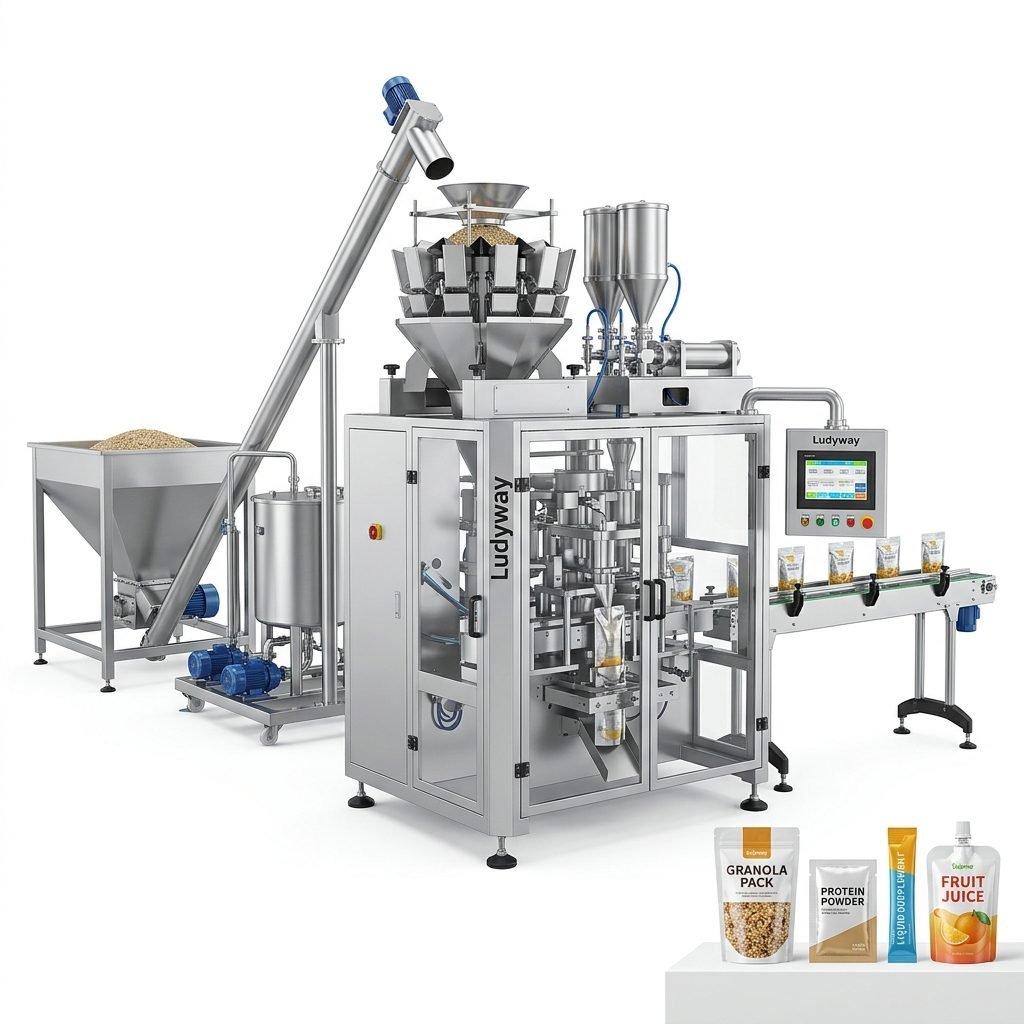
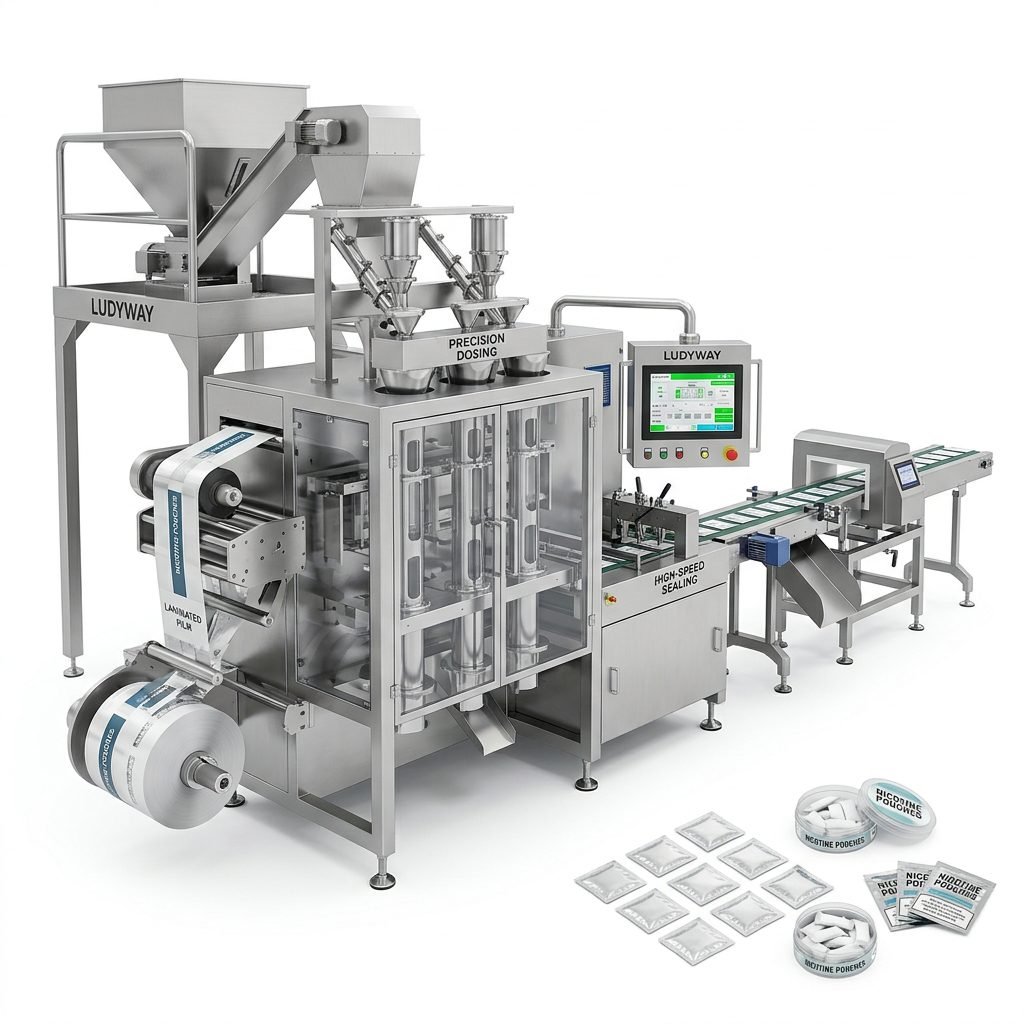
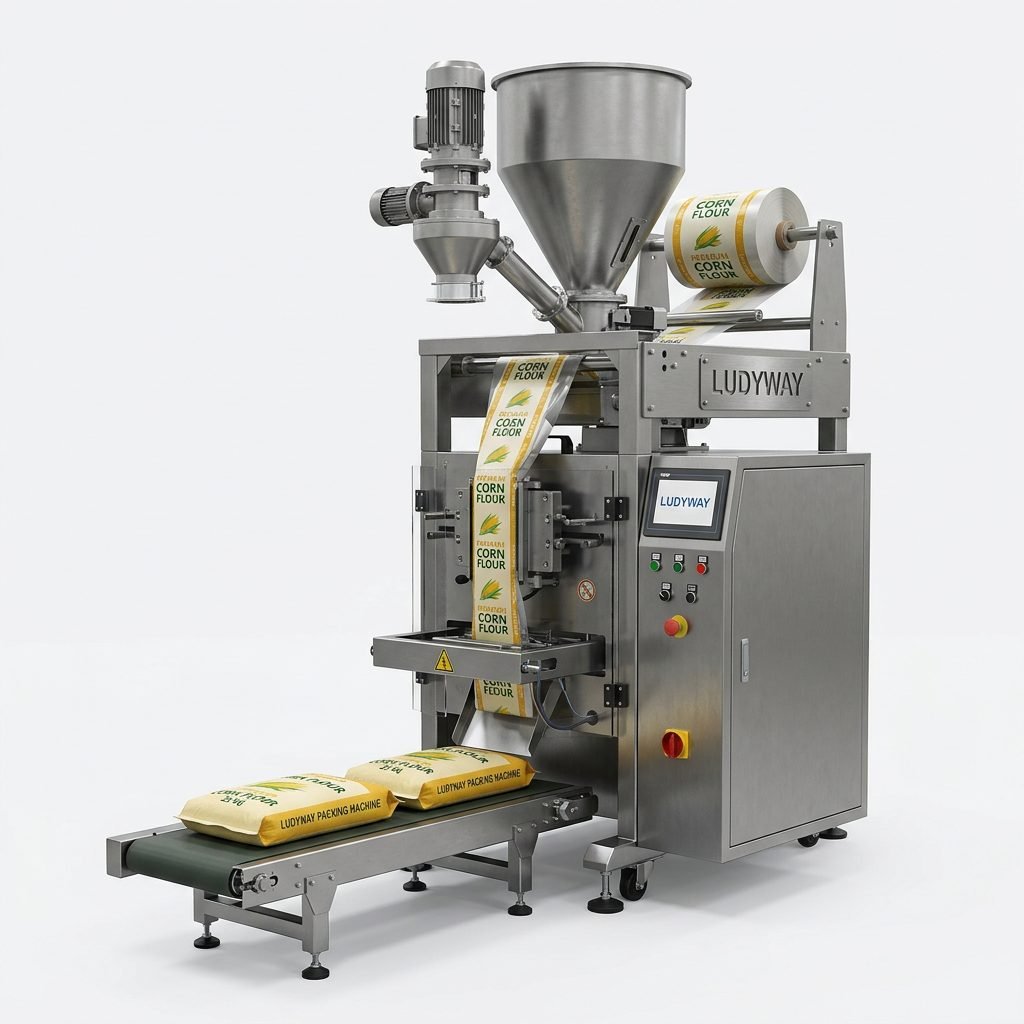
Selecting the right machinery partner is as important as choosing the equipment itself. A supplier with deep expertise in coffee packaging systems can help you navigate format decisions, material compatibility, and line integration. One notable manufacturer in this space is Ludyway, which offers a broad portfolio of multi-lane sachet and stick pack machines suitable for coffee powder and granule packaging applications. Their equipment is designed for high-speed, precise filling and sealing, and they provide turnkey solutions that encompass the entire production process from raw material handling to final cartoning. With a modern manufacturing facility and engineering teams experienced in global project deployment, they represent a viable sourcing option for companies establishing new coffee pod lines in the U.S. market.
11. Future Trends in Coffee Pod Packaging
Staying ahead of market trends ensures long-term competitiveness. Key developments include compostable and biodegradable pod materials, smart packaging with QR codes for traceability and consumer engagement, and compact multi-lane formats that maximize production efficiency. The 2026 State of the Industry Report from PMMI provides forward-looking data on packaging trends and capital expenditure forecasts that can inform strategic decisions. Additionally, the ISO Packaging Standards framework offers guidelines for ensuring quality and interoperability across global supply chains.
12. Final Checklist Before Launch
- Conduct a thorough material-machine compatibility trial with your chosen coffee blend and packaging materials.
- Verify FDA food contact compliance for all packaging components and obtain necessary certifications.
- Complete operator training and SOP documentation for all production and sanitation procedures.
- Establish preventive maintenance schedules and spare parts inventory for critical components.
- Test the entire integrated line under production conditions to identify bottlenecks before commercial launch.
- Secure third-party quality certifications if required by your target retail customers.
Setting up a coffee pod packaging production line in the United States is a complex but rewarding venture. By thoroughly evaluating machinery options, ensuring regulatory compliance, and building a scalable, automated line, you can position your business to capture a share of this dynamic and growing market. For further technical guidance, resources from PMMI – The Association for Packaging and Processing Technologies and the Flexible Packaging Association are excellent references to bookmark.