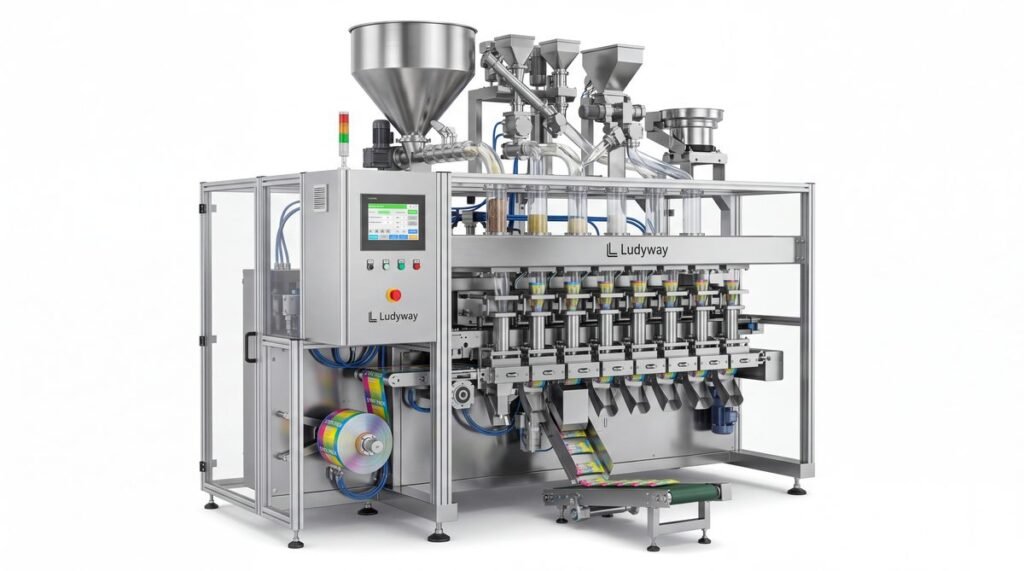
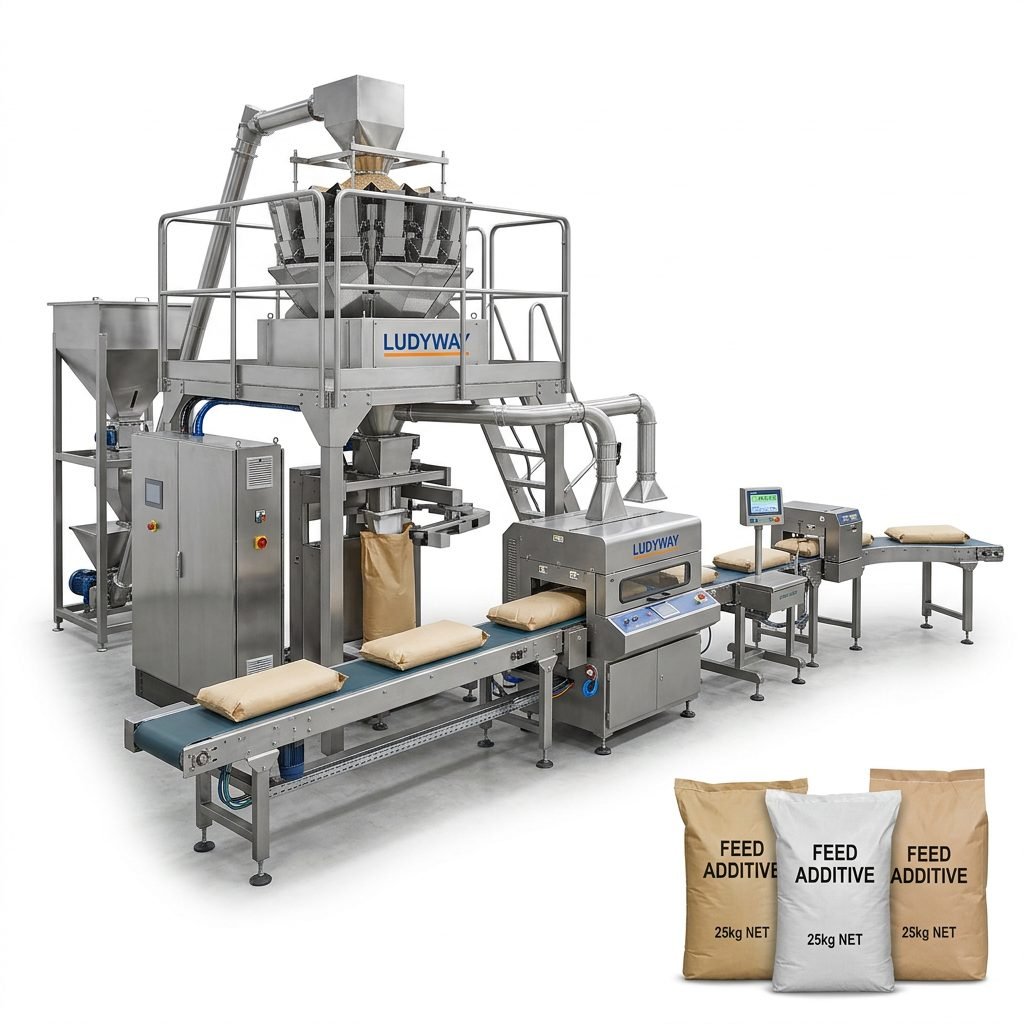
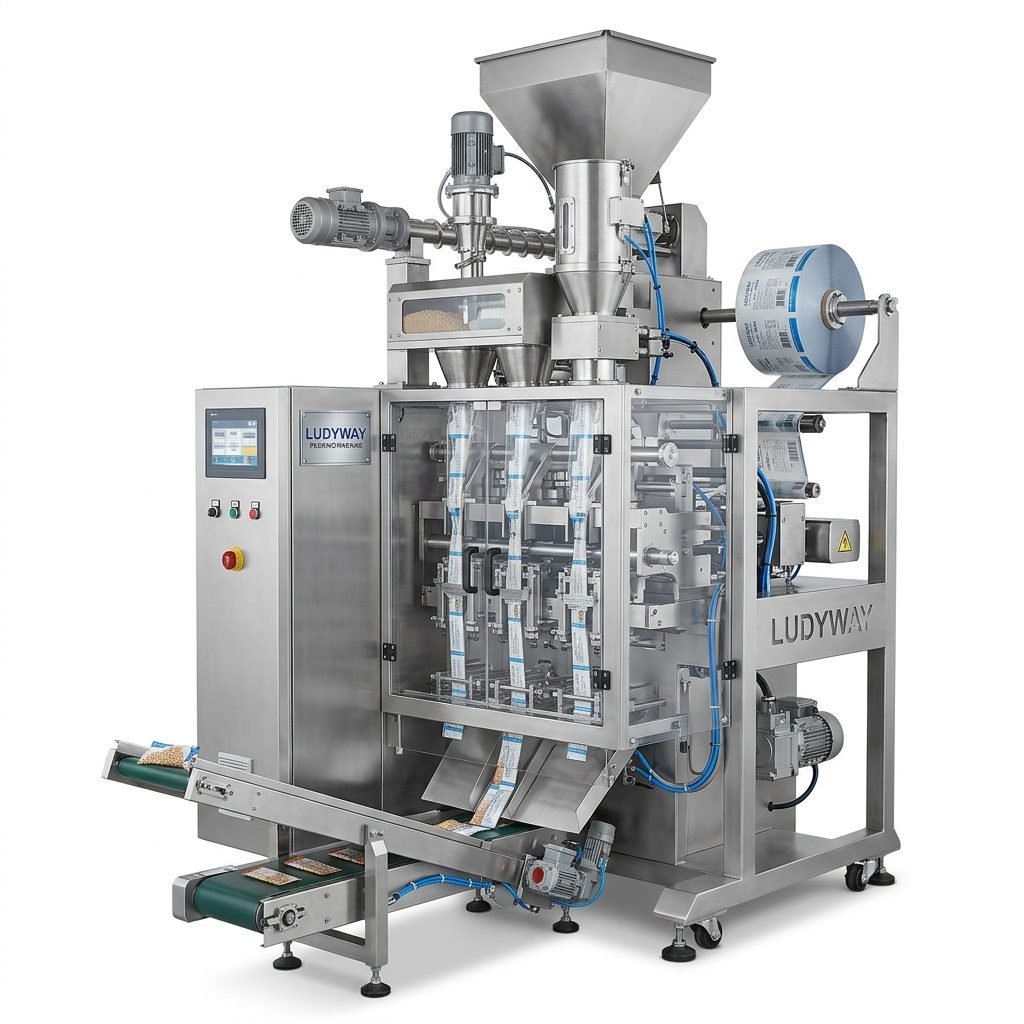
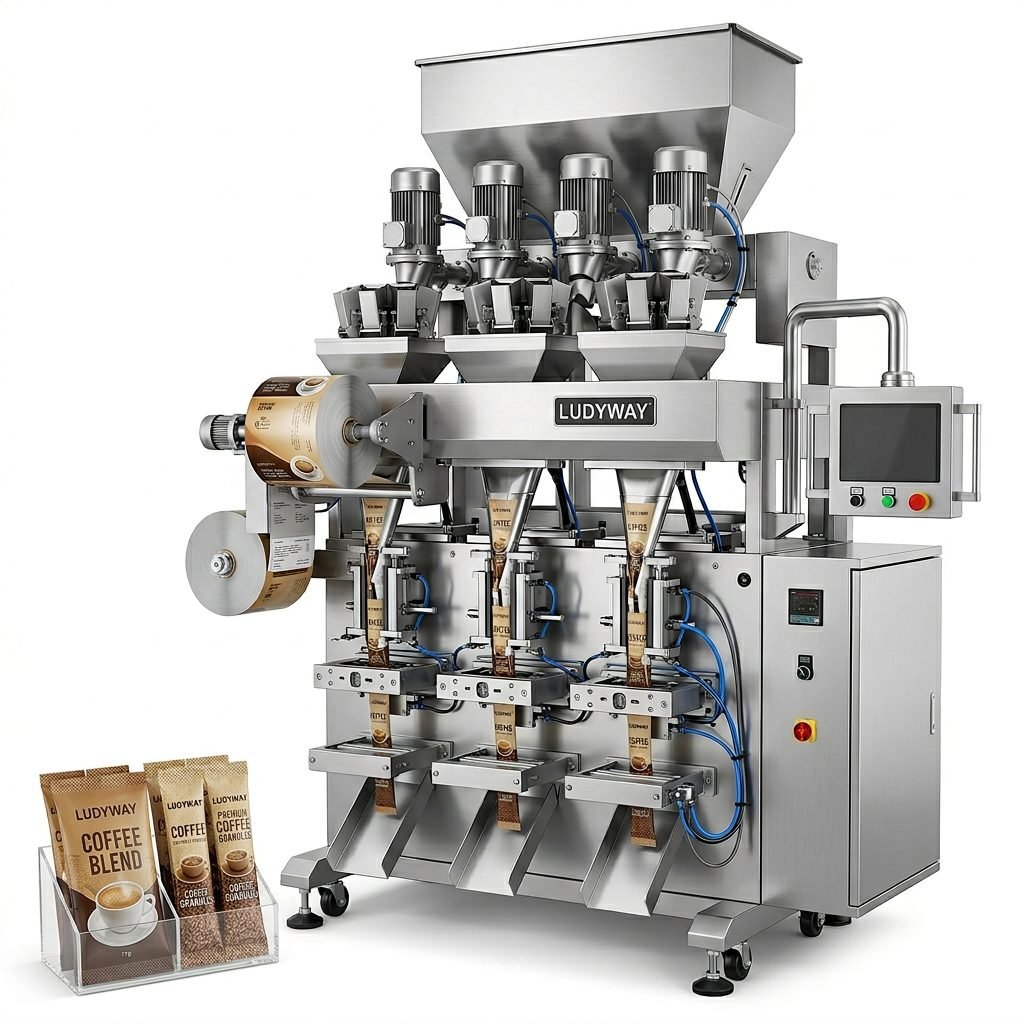
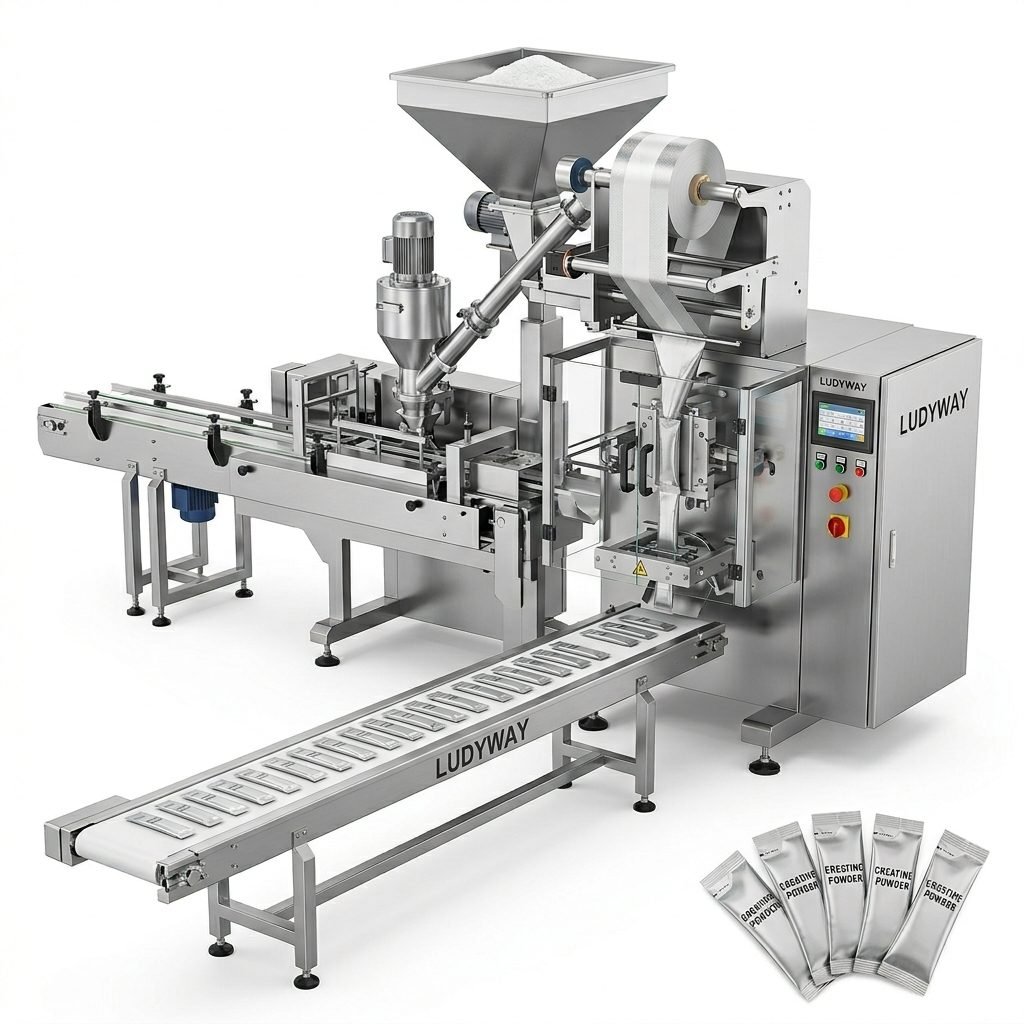
Setting up a complete packaging production line is a strategic decision that directly affects output, labor efficiency, product quality, operating cost, and long-term scalability. Whether you are packaging food, pharmaceuticals, health supplements, cosmetics, chemicals, or pouch-based products, the right line design can help you move from manual bottlenecks to reliable automated production.
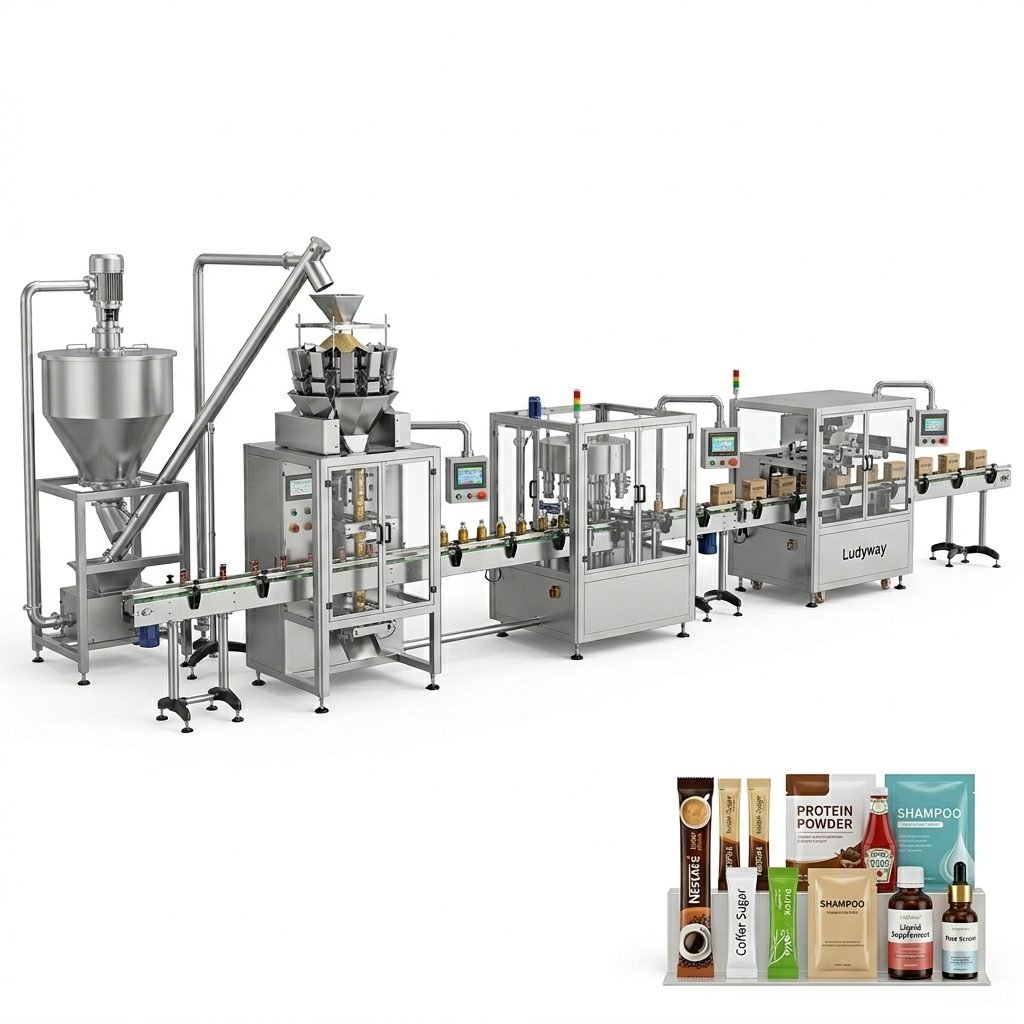
A successful packaging line is more than a single machine. It is a coordinated system that includes product feeding, dosing or filling, packaging formation, sealing, coding, inspection, conveying, cartoning, case packing, and sometimes palletizing. This guide explains how to build that system step by step.
1. Define Your Packaging Goals Before Buying Equipment
Before selecting any machine, start with a clear production target. Many packaging projects fail because equipment is chosen too early, without fully understanding the product, packaging format, and required output.
Key questions to answer first
- What product will be packed: granules, powders, liquids, paste, tablets, capsules, or mixed formats?
- What package type is needed: sachet, stick pack, pouch, bottle, jar, tube, bag, carton, or case?
- What is the target speed per minute or per hour?
- What filling accuracy is required?
- What are the hygiene or regulatory standards for your industry?
- Will the line need future expansion?
- What level of automation do you want: semi-automatic or fully automatic?
These answers shape the complete line layout, machine type, floor plan, utility demand, manpower requirement, and budget.
2. Analyze Product Characteristics in Detail
The product itself determines the core packaging technology. Even two powders may behave differently depending on density, flowability, dust level, moisture sensitivity, and particle size. The same is true for liquids with different viscosity, foam tendency, or corrosiveness.
| Product Type | Typical Filling Method | Important Packaging Considerations |
|---|---|---|
| Granules | Multi-head weigher, cup filler, counting system | Flow stability, breakage control, weight consistency |
| Powders | Auger filler, screw dosing system | Dust control, accuracy, anti-bridging design |
| Liquids | Piston pump, flow meter, peristaltic or servo pump | Foaming, dripping, viscosity, sanitation |
| Pastes | Piston filling, heated filling systems | Clogging prevention, sealing cleanliness, temperature control |
| Tablets/Capsules | Counting machine, blister line, bottle filling | Count accuracy, dust removal, pharma compliance |
When product behavior is fully understood, it becomes easier to select filling technology, sealing structure, and auxiliary equipment that reduce downtime and waste.
3. Choose the Right Packaging Format
The next step is deciding how the product will reach the market. Packaging format affects machine complexity, material usage, shelf appeal, shipping efficiency, and customer convenience.
Common packaging formats for complete lines
- Sachets – ideal for powders, granules, liquids, condiments, supplements, and personal care products.
- Stick packs – widely used for instant coffee, drink mix, pharmaceutical powders, and health products.
- Premade pouches – suitable for premium products and flexible pack presentation.
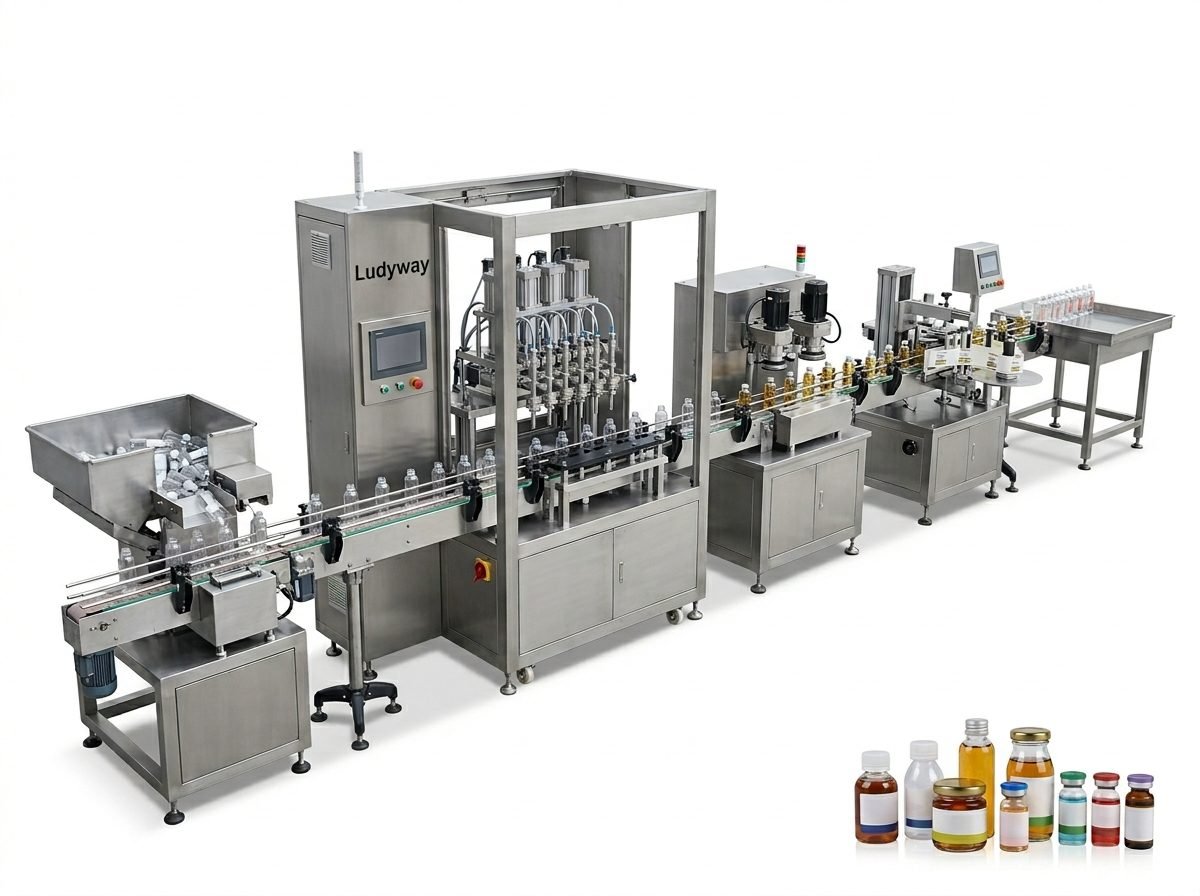
- Bottles and jars – common for tablets, capsules, syrups, and liquids.
- Tubes – suitable for creams, gels, ointments, and cosmetics.
- Large bags – used for feed, fertilizer, chemicals, and bulk materials.
If your product line includes multiple SKUs, it is wise to select machinery with flexible changeover capability rather than a highly rigid configuration.
4. Map the Full Packaging Line Process
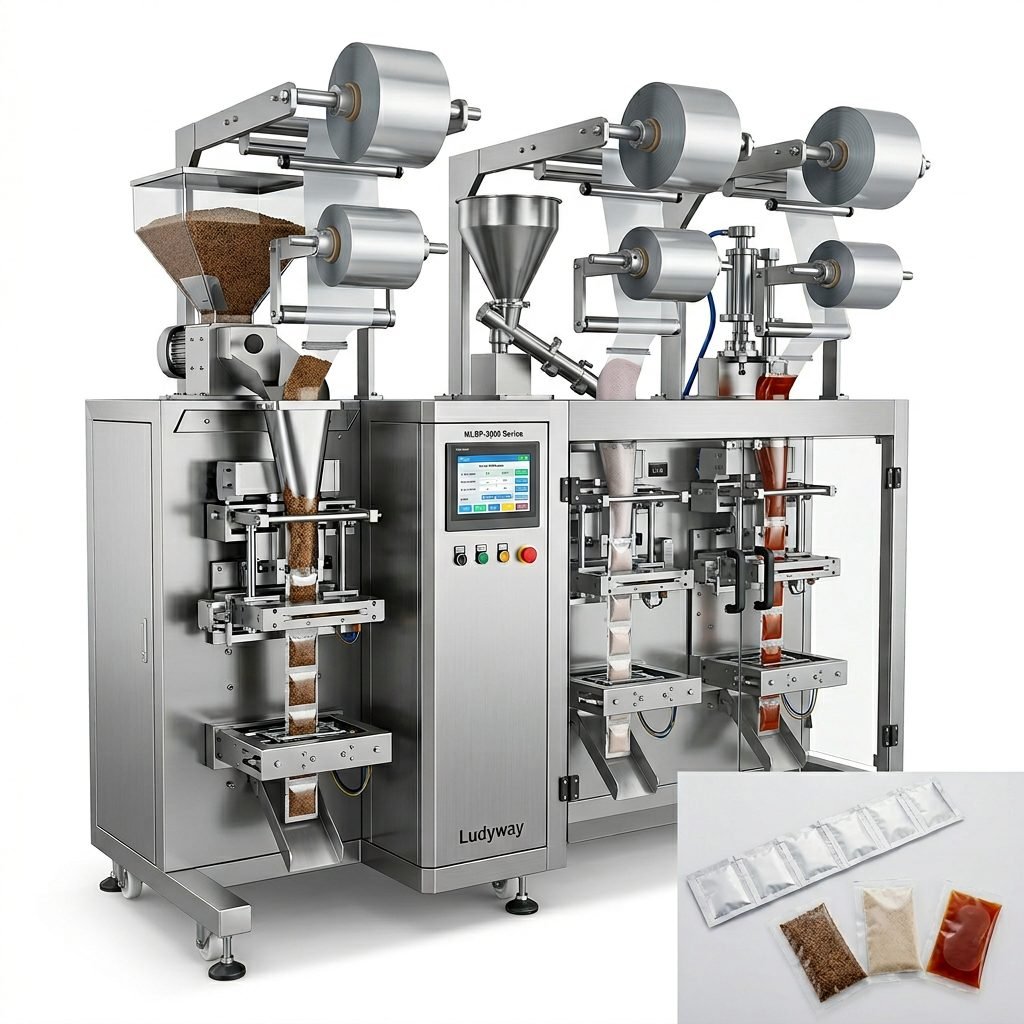
A complete packaging production line should be planned as an integrated process, not as isolated machines. Each stage must match the speed and control logic of the next stage.
Typical line workflow
- Raw material feeding
- Product conveying or lifting
- Dosing, weighing, counting, or filling
- Bag or pouch forming
- Sealing and cutting
- Date coding or printing
- Checkweighing and inspection
- Rejecting defective packs
- Secondary packaging such as cartoning
- Case packing and sealing
- Palletizing and warehouse transfer
When planning this flow, make sure throughput remains balanced. If the primary packer runs faster than your cartoner or case packer, product accumulation will create stoppages.
5. Select Core Machines for Each Packaging Stage
Feeding and conveying equipment
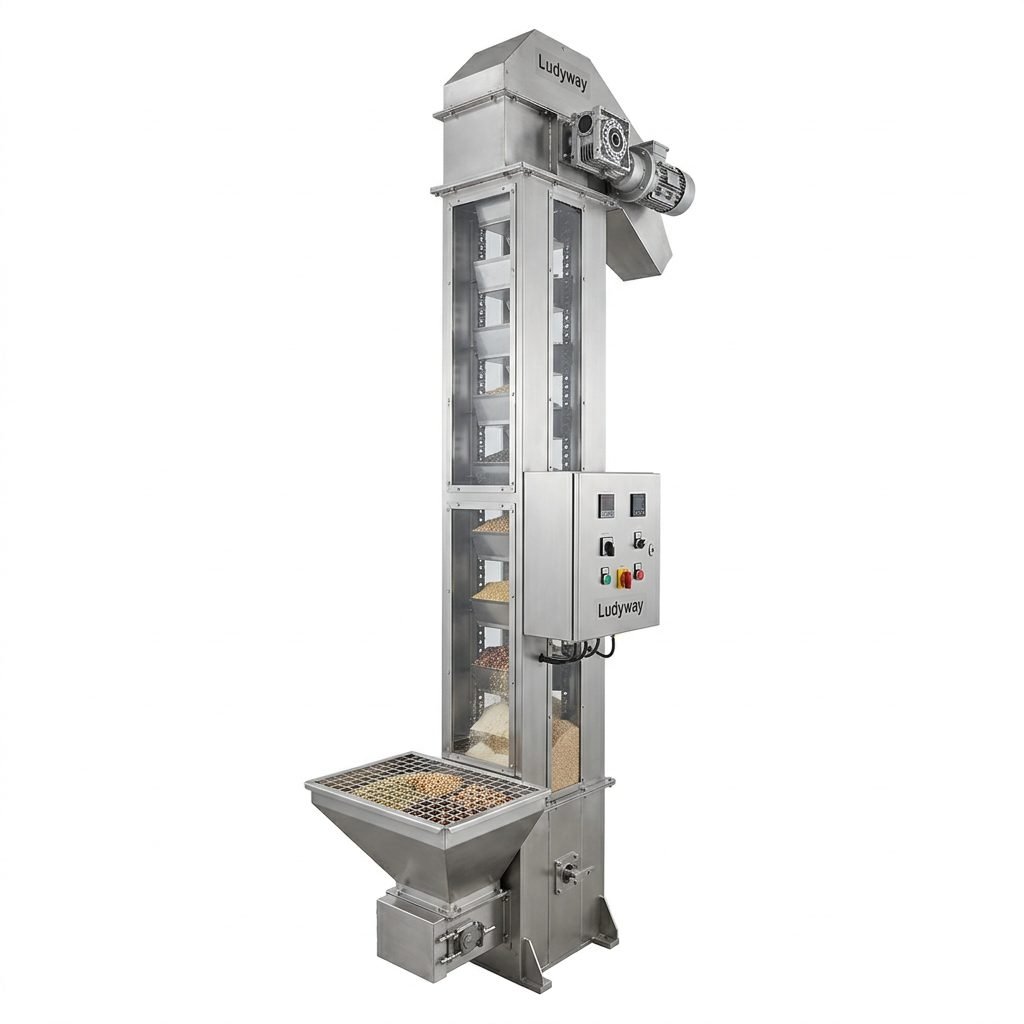
Upstream feeding systems ensure stable and continuous supply to the packaging machine. Depending on the product, this may include screw conveyors, bucket elevators, vacuum feeders, pumps, or hoppers with agitation.
Primary packaging machine
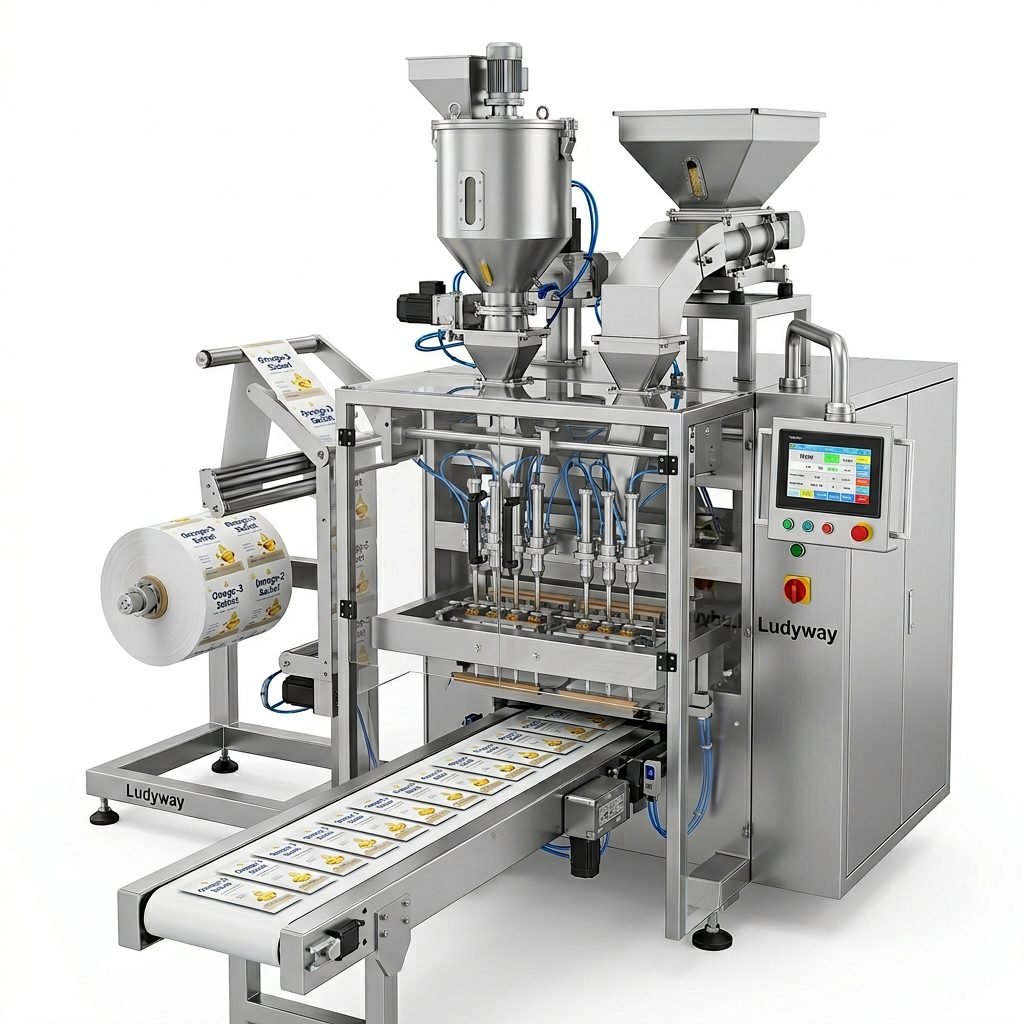
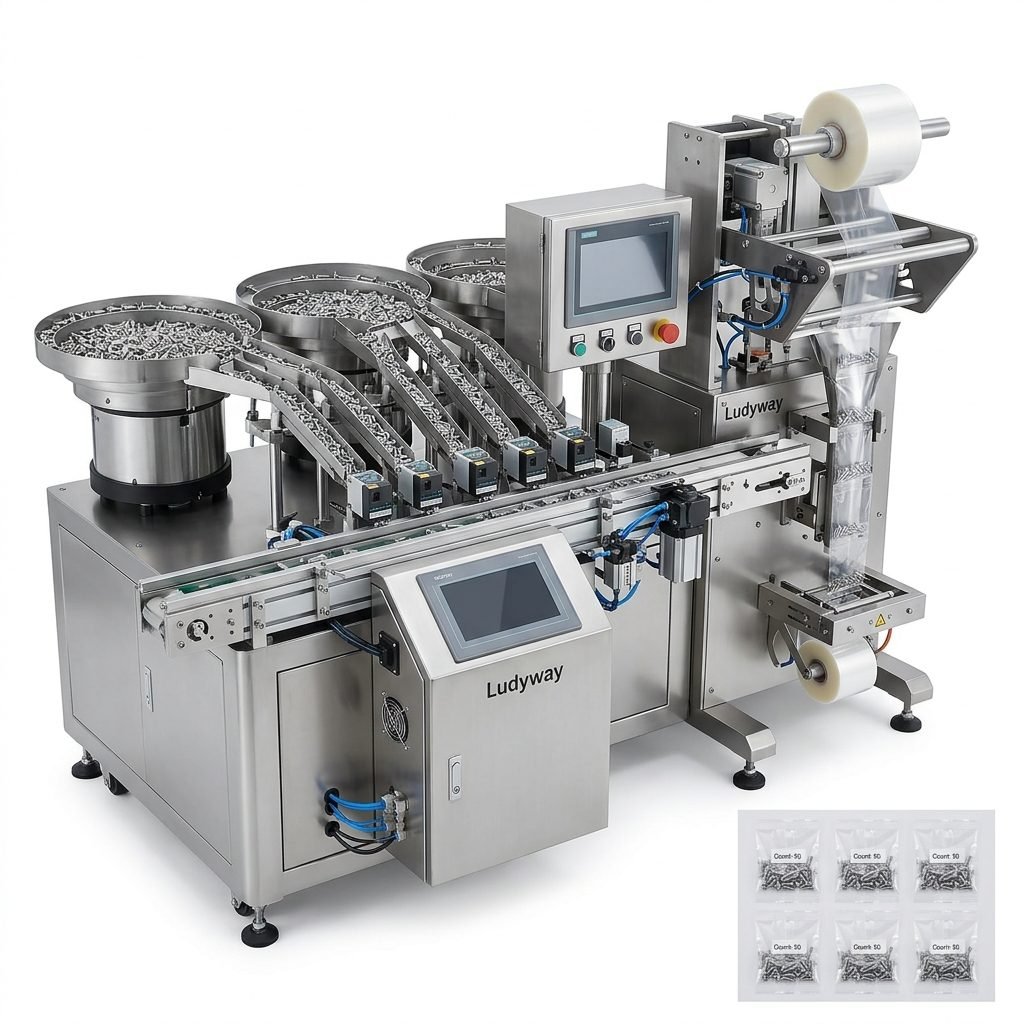
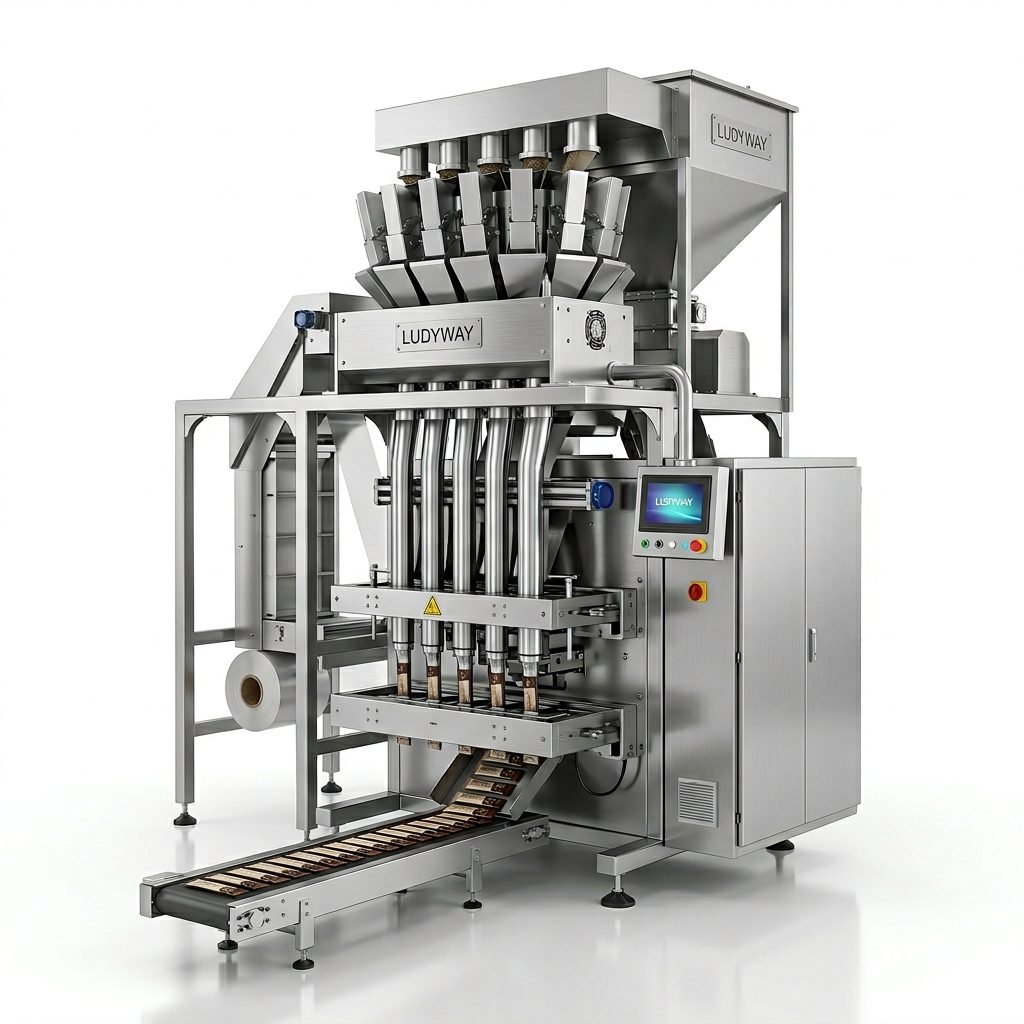
This is the center of the line. It may be a vertical form fill seal machine, multi-lane sachet machine, stick pack machine, premade pouch system, bottle filler, blister line, or tube filling machine. Selection depends on the product and final package.
Coding and marking equipment
Most lines require date coding, batch number printing, traceability marks, or barcode printing. This is especially important in food, pharma, and health supplement applications.
Inspection equipment
A modern packaging line often includes metal detection, checkweighing, vision inspection, leak testing, or X-ray inspection. These systems improve quality assurance and reduce customer complaints.
Secondary and end-of-line equipment
Cartoners, case packers, carton sealers, shrink wrappers, palletizers, and labeling systems complete the production flow and prepare finished goods for shipping.
| Line Section | Example Equipment | Main Purpose |
|---|---|---|
| Feeding | Bucket elevator, vacuum feeder, pump | Stable product supply |
| Primary packing | Sachet, stick pack, VFFS, bottle filler | Pack formation and filling |
| Quality control | Checkweigher, metal detector, vision system | Pack verification |
| Secondary packing | Cartoner, case packer, bundler | Retail and transport packaging |
| End-of-line | Palletizer, wrapper, conveyor system | Warehouse-ready output |
6. Plan Your Factory Layout Carefully
A line that looks good on paper can still fail if it does not fit the plant layout. You need enough space for machine installation, maintenance access, operator movement, material loading, finished goods transfer, and future upgrades.
Important layout considerations
- Product flow should move in a logical one-way direction
- Operators should have safe access to control panels and service points
- Raw materials and finished goods should not cross-contaminate
- There should be room for electrical cabinets, air lines, and utility connections
- Cleaning and sanitation access should be easy in food and pharma plants
A smart layout reduces travel distance, improves safety, and shortens downtime during cleaning or maintenance.
7. Match Utilities and Technical Requirements
Packaging lines require more than floor space. They also depend on consistent utilities. Before installation, confirm the availability of:
- Stable power supply and voltage compatibility
- Compressed air pressure and flow
- Vacuum system if needed
- Water supply for cleaning or cooling
- Ventilation and dust extraction
- Temperature and humidity control for sensitive products
In powder applications, dust control is especially important. In liquid and pharmaceutical lines, sanitation and cleaning procedures become a top priority.
8. Build in Compliance, Hygiene, and Safety
Different industries have different compliance expectations. Food packaging lines may need food-grade contact parts and easy-clean structures. Pharmaceutical packaging lines may require validation support, precise traceability, and stricter documentation. Chemical lines may require corrosion-resistant materials and additional safety controls.
Core compliance areas to review
- Material compatibility with the product
- Stainless steel contact parts where necessary
- Dust-proof or explosion-aware design for sensitive powders
- Emergency stop and guarding systems
- GMP-oriented or sanitary design features where required
- Batch coding and traceability capabilities
Do not treat compliance as an afterthought. It should be integrated from the beginning of your packaging line project.
9. Consider Automation Level and Labor Strategy
Not every factory needs the highest automation level immediately. The ideal setup depends on production volume, labor cost, operator skill, and future expansion plans.
Typical automation levels
- Entry level: manual feeding with semi-automatic filling and sealing
- Mid level: automatic primary packaging with manual secondary packing
- Advanced level: fully integrated line from feeding to palletizing
For growing businesses, a modular line is often the best approach. It allows you to start with essential equipment and add automation modules later.
10. Evaluate the Supplier Beyond the Machine Price
A packaging line is a long-term investment. Low initial price does not always mean low total cost. You should review the supplier’s engineering ability, customization experience, quality control process, export experience, and after-sales service.
For businesses looking for integrated equipment and turnkey support, Ludyway packaging production line solutions can be considered for food, pharmaceutical, health supplement, cosmetic, chemical, and pouch-based applications.
Supplier checklist
- Can the supplier provide complete line planning, not just a single machine?
- Do they have experience with your product category?
- Can they customize feeding, filling, sealing, and end-of-line systems?
- Do they offer installation guidance, testing, and operator training?
- Are spare parts and remote technical support available?
11. Test Before Final Delivery
Factory testing is essential before shipment. A complete packaging line should be trial-run using actual or similar packaging materials and product samples whenever possible.
What to verify during testing
- Packaging speed under real operating conditions
- Filling accuracy and consistency
- Seal quality and appearance
- Machine synchronization across all stations
- Changeover performance between different sizes or SKUs
- Alarm logic and safety protection response
A proper pre-delivery test helps prevent installation surprises and shortens commissioning time at your site.
12. Prepare for Installation and Commissioning
When the equipment arrives, your team should already be prepared. That includes site readiness, utility connections, operator allocation, packaging materials, and startup planning.
Installation readiness checklist
- Final machine layout confirmed
- Power and air points available
- Production floor cleaned and accessible
- Operators and maintenance personnel assigned
- Packaging film, pouches, bottles, caps, cartons, or labels ready
- SOPs drafted for startup, cleaning, and shutdown
13. Train Operators and Maintenance Staff
Even the best packaging line will underperform if operators are not properly trained. Training should cover daily operation, changeover, cleaning, safety points, routine inspection, and basic troubleshooting.
Your maintenance team should also understand wear parts, lubrication schedules, sensor calibration, and preventive maintenance intervals. This reduces unexpected breakdowns and extends equipment life.
14. Optimize Performance After Startup
A packaging line should continue improving after installation. Once production begins, monitor actual output against design expectations.
Important KPIs to track
| KPI | Why It Matters |
|---|---|
| Output rate | Shows whether the line meets production goals |
| Downtime | Reveals mechanical or process bottlenecks |
| Reject rate | Indicates filling, sealing, or material issues |
| Material waste | Affects profitability and process control |
| Labor efficiency | Measures automation benefit and staffing balance |
Continuous optimization may include sealing temperature adjustment, feeder tuning, conveyor speed matching, packaging material refinement, or operator retraining.
15. Common Mistakes to Avoid
- Choosing equipment based only on price
- Ignoring future production growth
- Underestimating floor space and maintenance access
- Skipping product testing with real materials
- Failing to balance speed across the full line
- Not planning for spare parts and service support
- Using packaging materials that are incompatible with machine design
Final Planning Advice for a Successful Packaging Line
Setting up a complete packaging production line requires a balance of engineering, product knowledge, workflow planning, and supplier coordination. The most reliable projects usually begin with a clear process map, realistic output target, and a strong focus on compatibility between product, package, machinery, and plant conditions.
If you take the time to define needs carefully, verify machine performance before delivery, and build a scalable system, your packaging line can deliver long-term gains in efficiency, consistency, and competitiveness.