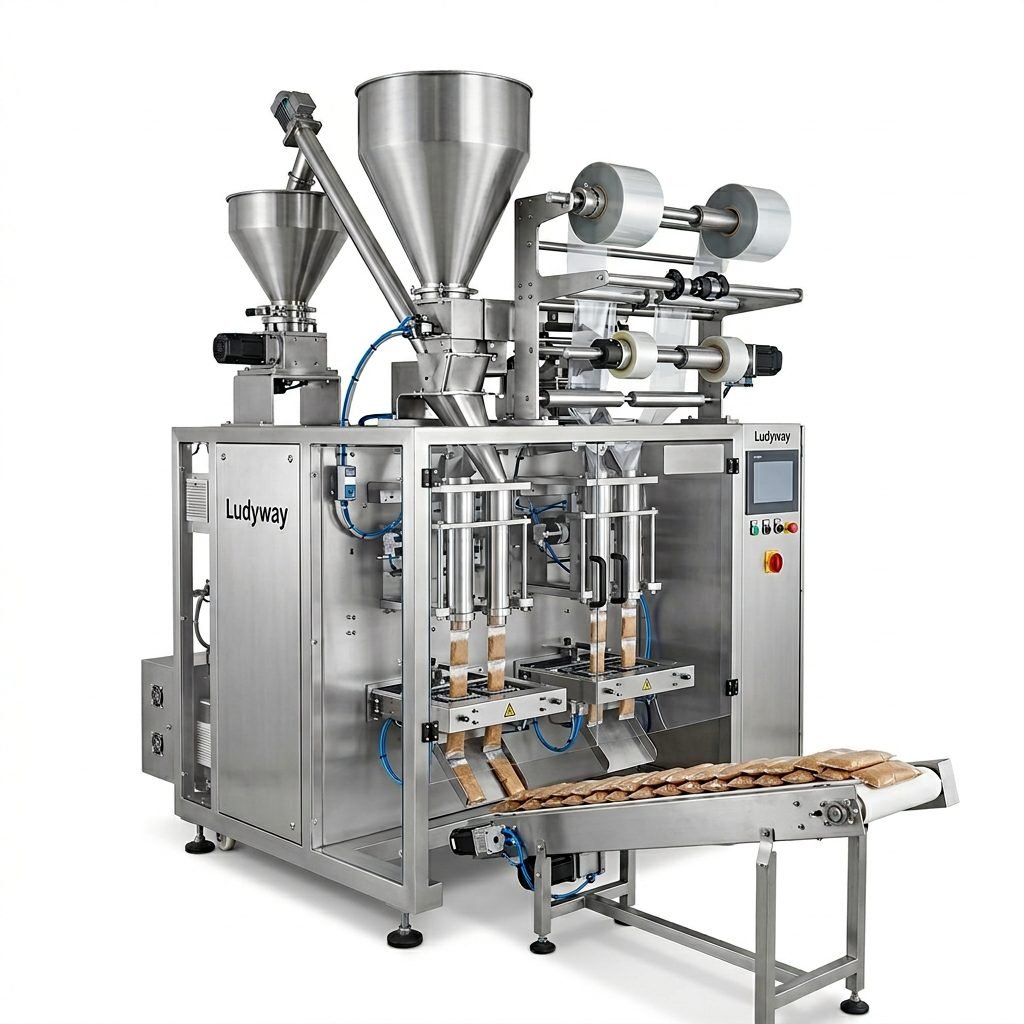
Setting up a small sauce packaging machine production line in Asia presents a strategic opportunity for food manufacturers aiming to capture the booming sachet and portion-pack market. Across Southeast Asia, South Asia, and East Asia, demand for convenient, single-serve sauce formats — ketchup, chili paste, soy sauce, and mayonnaise — is surging. This guide outlines a practical, step-by-step approach to building an efficient, compliant, and scalable packaging line tailored to regional conditions.
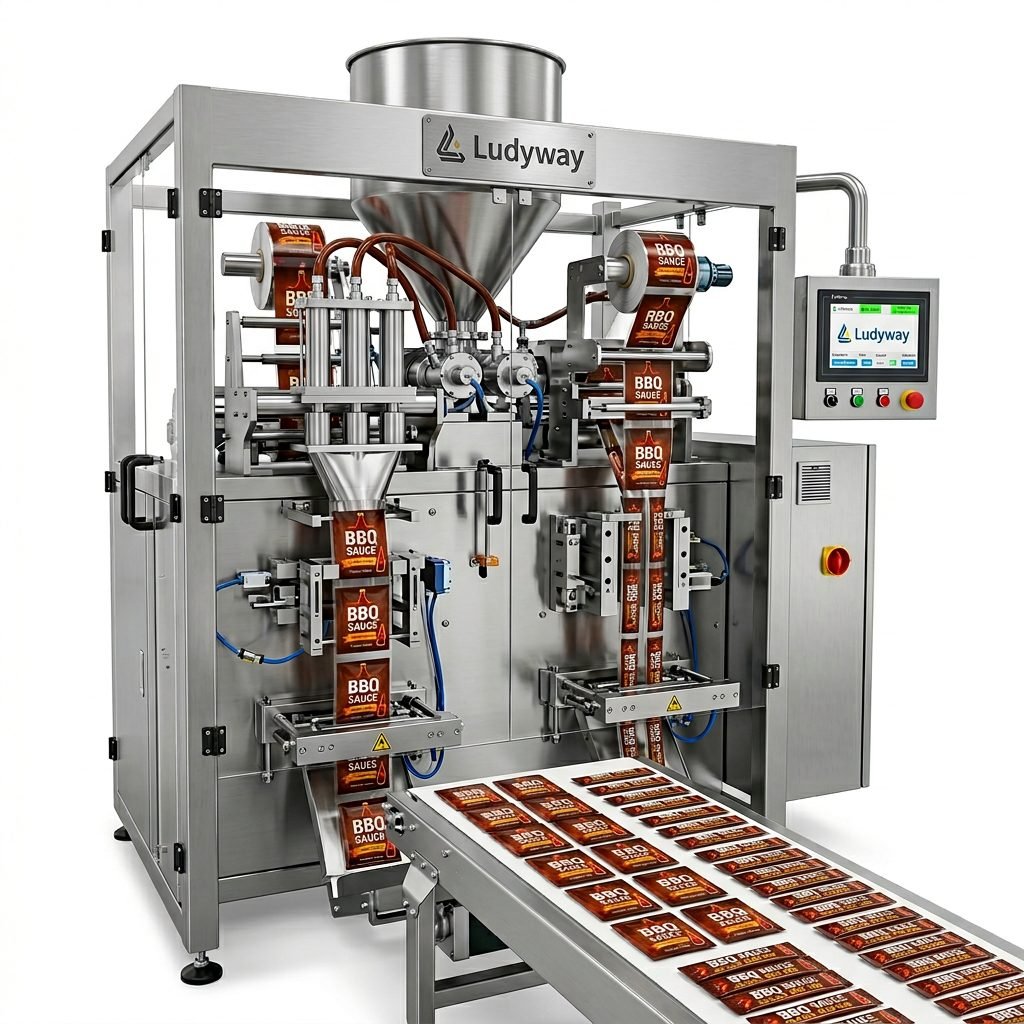
Understanding the Asian Sauce Packaging Boom
The Asian foodservice and retail landscape is shifting rapidly. E-commerce platforms, street food culture, and quick-service restaurants are driving strong demand for portion-controlled sauce packets. Countries like India, Indonesia, Vietnam, and the Philippines represent high-growth markets where a small, automated line can deliver immediate ROI. The key is selecting equipment that balances speed, flexibility, and local compliance standards.
Key Market Drivers
- Rising disposable incomes fueling packaged food consumption
- Expansion of food delivery and takeaway services
- Preference for hygienic, single-use packaging
- Government support for food processing modernization
Common Sauce Types for Small Production Lines
| Sauce Category | Typical Viscosity | Recommended Filling Type |
|---|---|---|
| Tomato Ketchup | Medium-High | Piston Filler |
| Chili Sauce / Hot Sauce | Low-Medium (with particles) | Piston or Pump Filler |
| Soy Sauce / Fish Sauce | Low (water-like) | Flow Meter / Gravity |
| Mayonnaise / Creamy Sauces | High | Piston Filler with Agitator |
Step 1: Define Your Production Capacity and Goals
Before purchasing equipment, calculate your target output. A small production line typically ranges from 30 to 80 sachets per minute per lane. Multi-lane machines can multiply output without requiring a larger footprint. Ask yourself:
- What is my daily or monthly target volume?
- Will I package multiple sauce types on the same line?
- Do I need stick packs, flat sachets, or both?
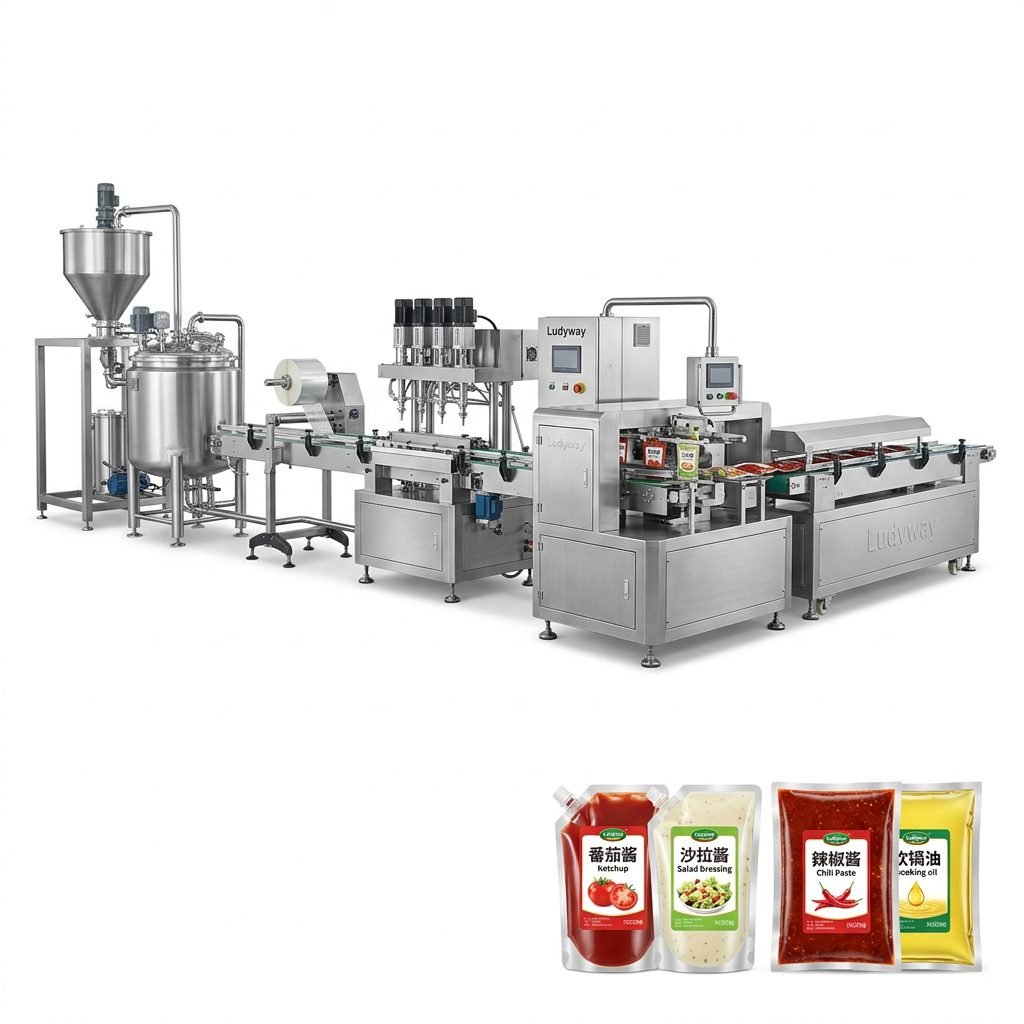
Step 2: Essential Equipment for a Small Sauce Line
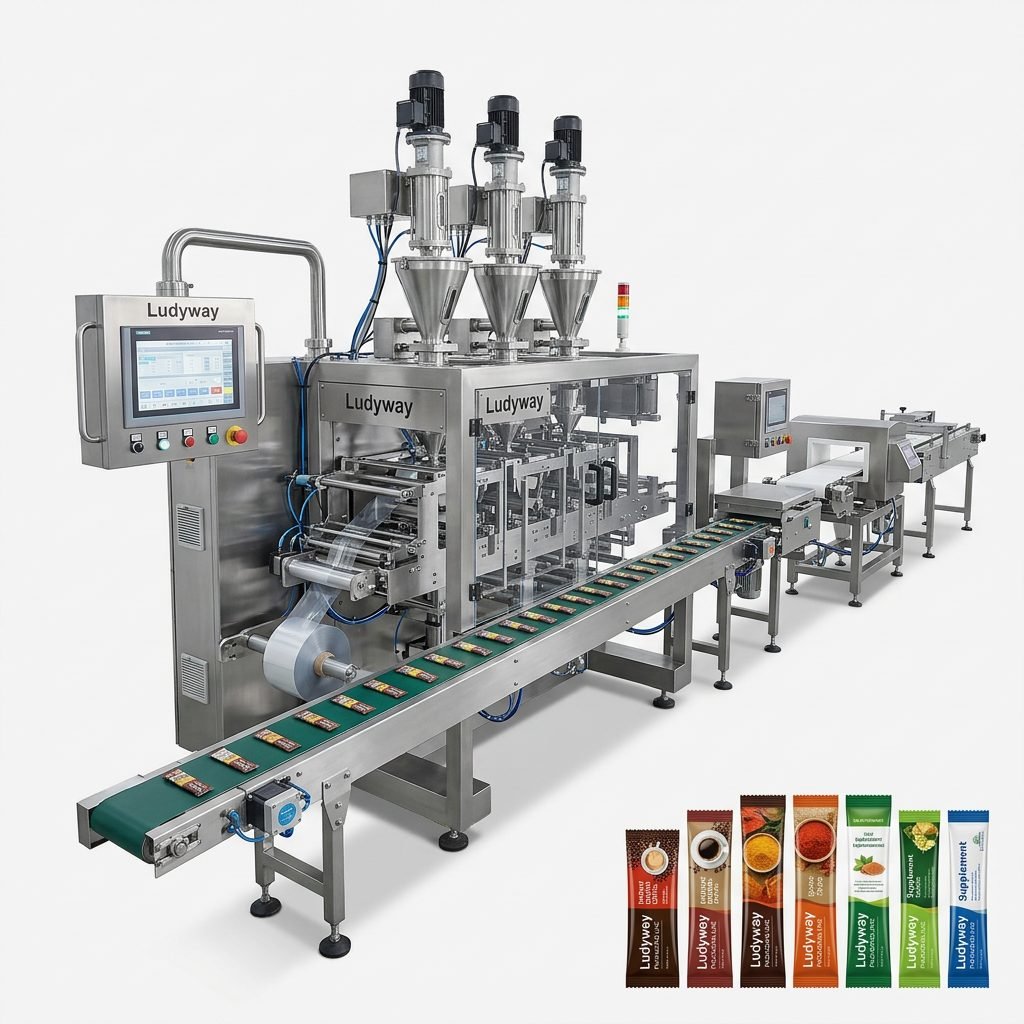
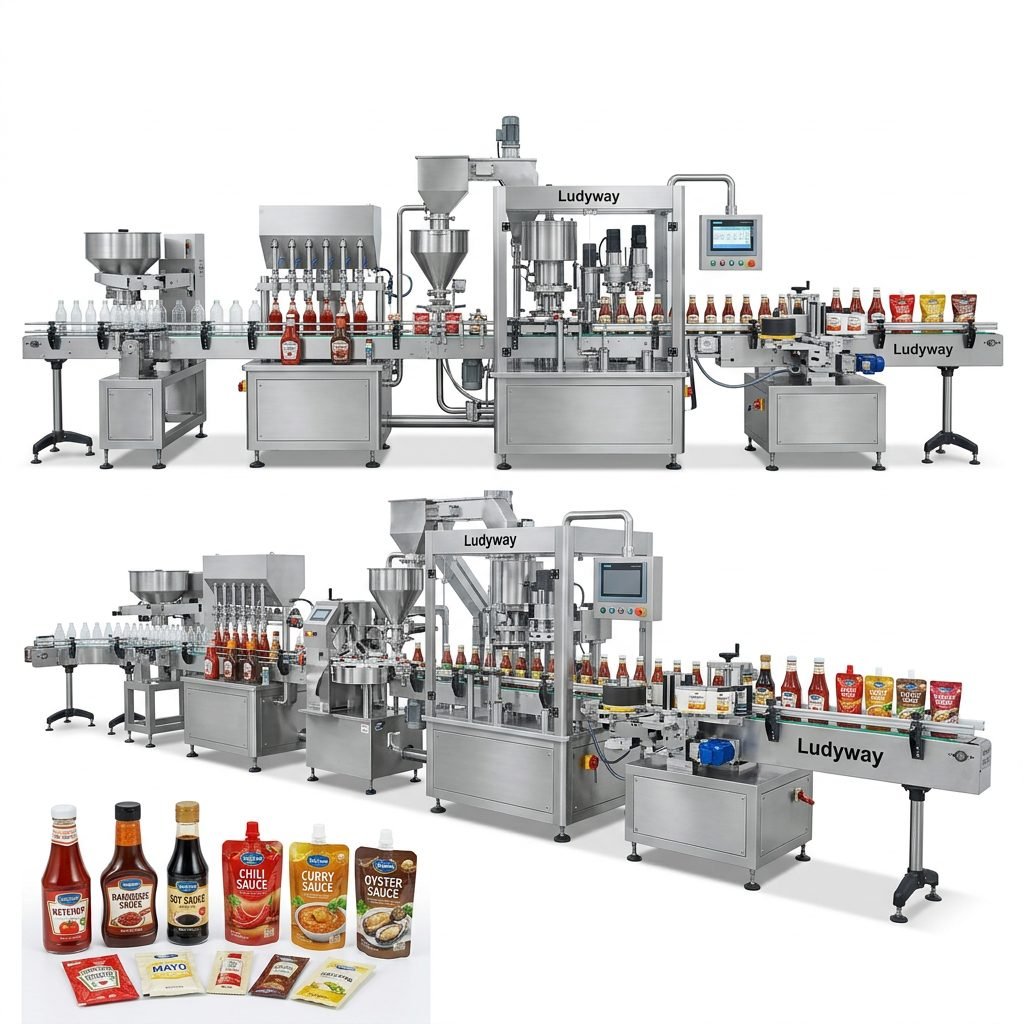
A complete small sauce packaging line includes several integrated components. Choosing the right configuration ensures consistent fill accuracy and seal integrity, which are critical for shelf life and leak prevention.
Core Machinery List
- Liquid Filling Machine: Piston or pump-based for accurate dosing
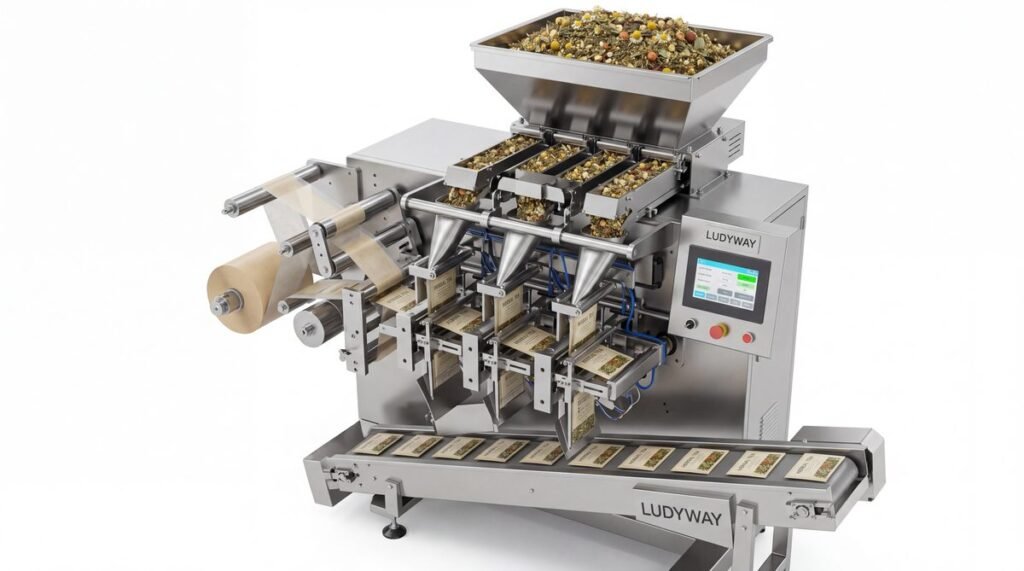
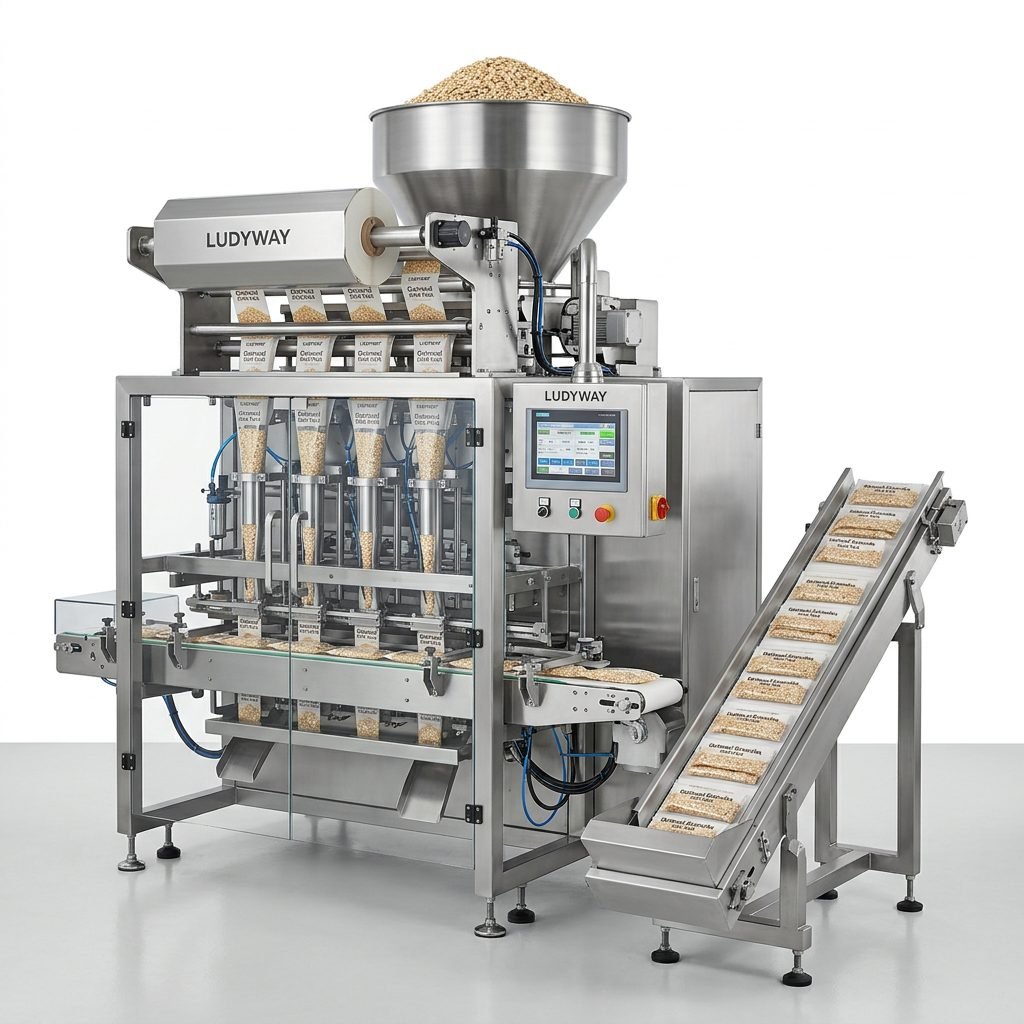
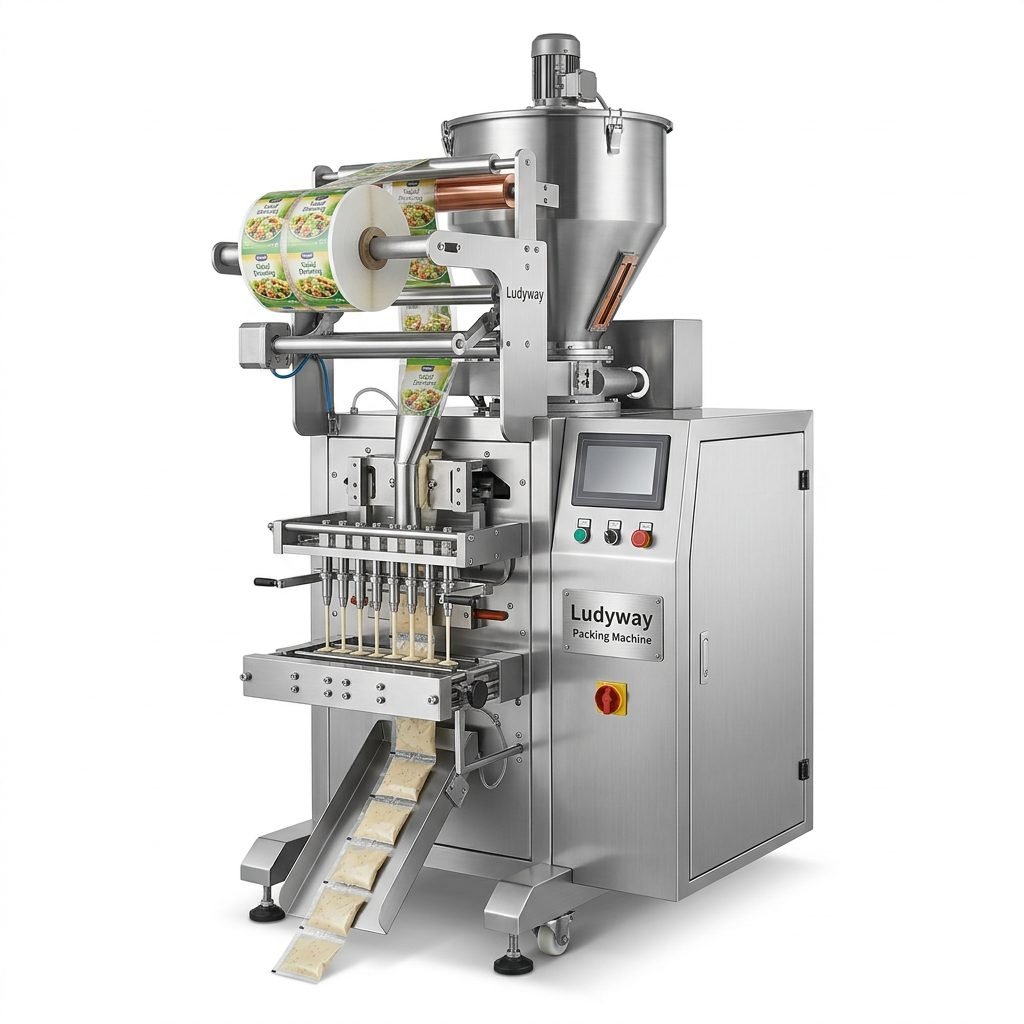
- Vertical Form Fill Seal (VFFS) or Multi-Lane Sachet Machine: Forms, fills, and seals pouches in one continuous motion
- Inkjet or Thermal Coder: Prints batch codes, dates, and QR codes
- Checkweigher: Ensures every sachet meets weight specifications
- Metal Detector: Critical for food safety compliance
- Inclined Conveyor and Collection Table: Transfers finished pouches for packing
Optional Add-Ons for Efficiency
- Automatic cartoning machine
- Robotic palletizer for larger volumes
- Nitrogen flushing system for extended shelf life
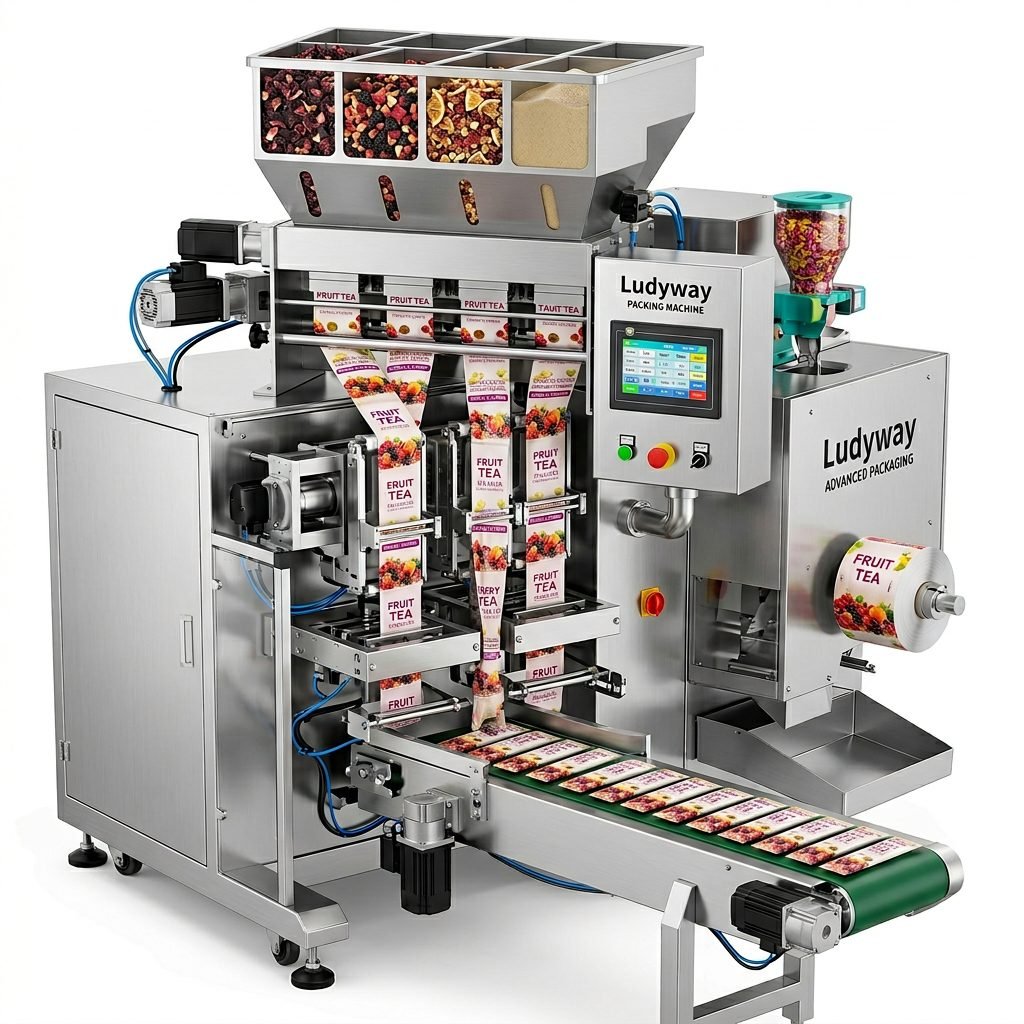
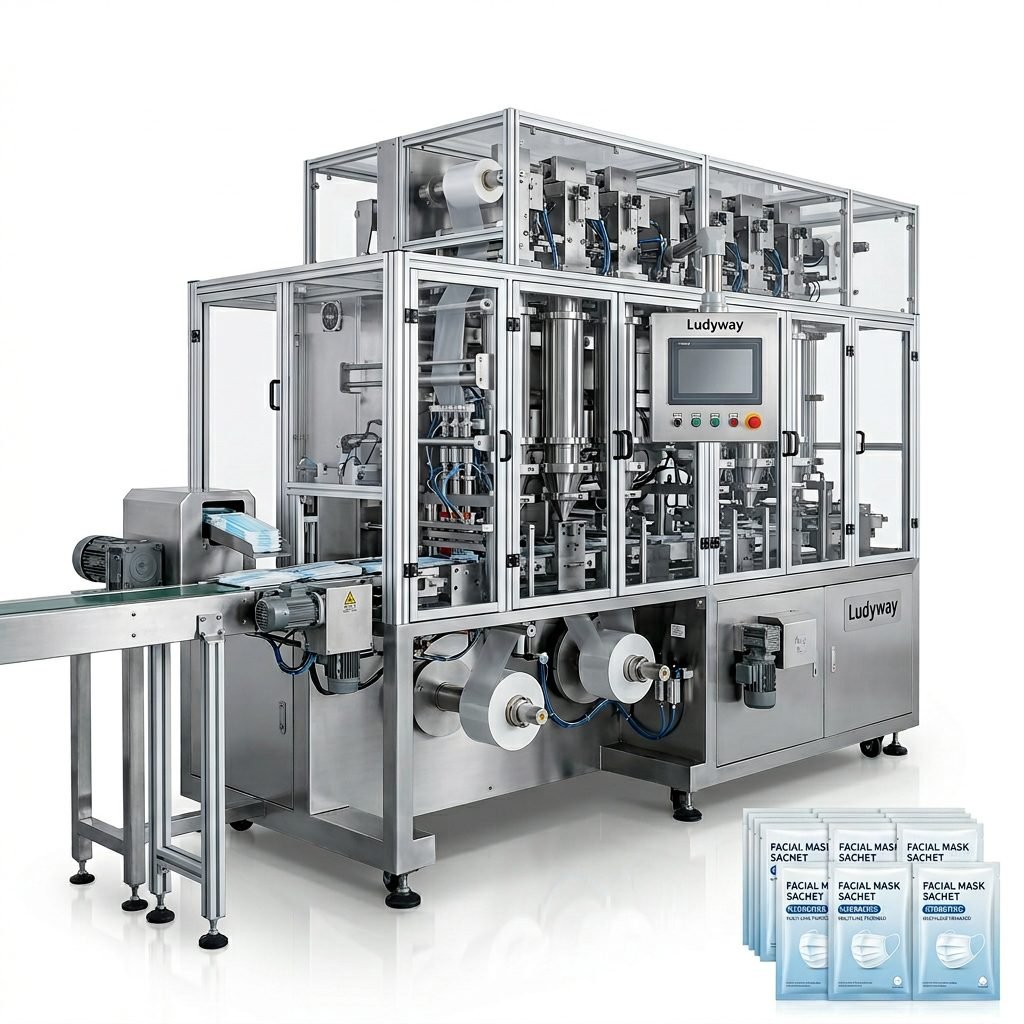
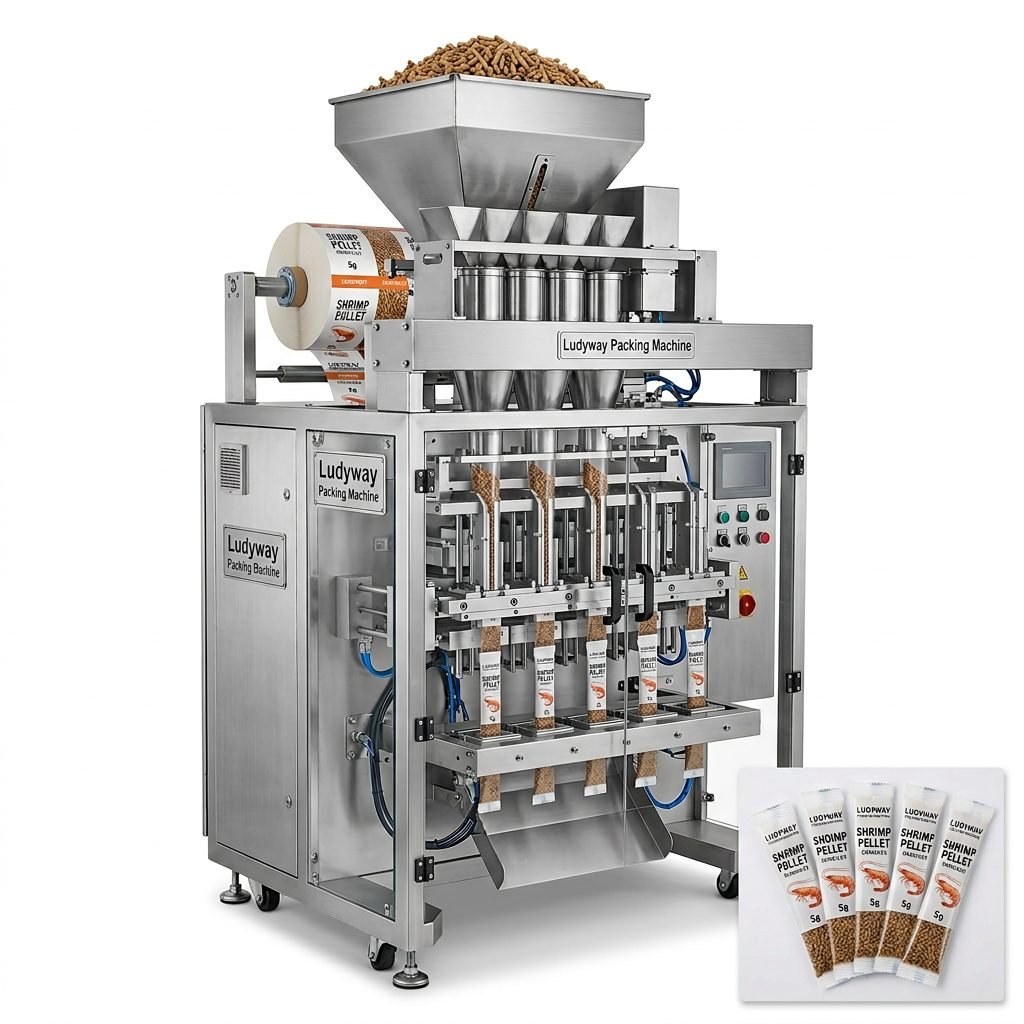
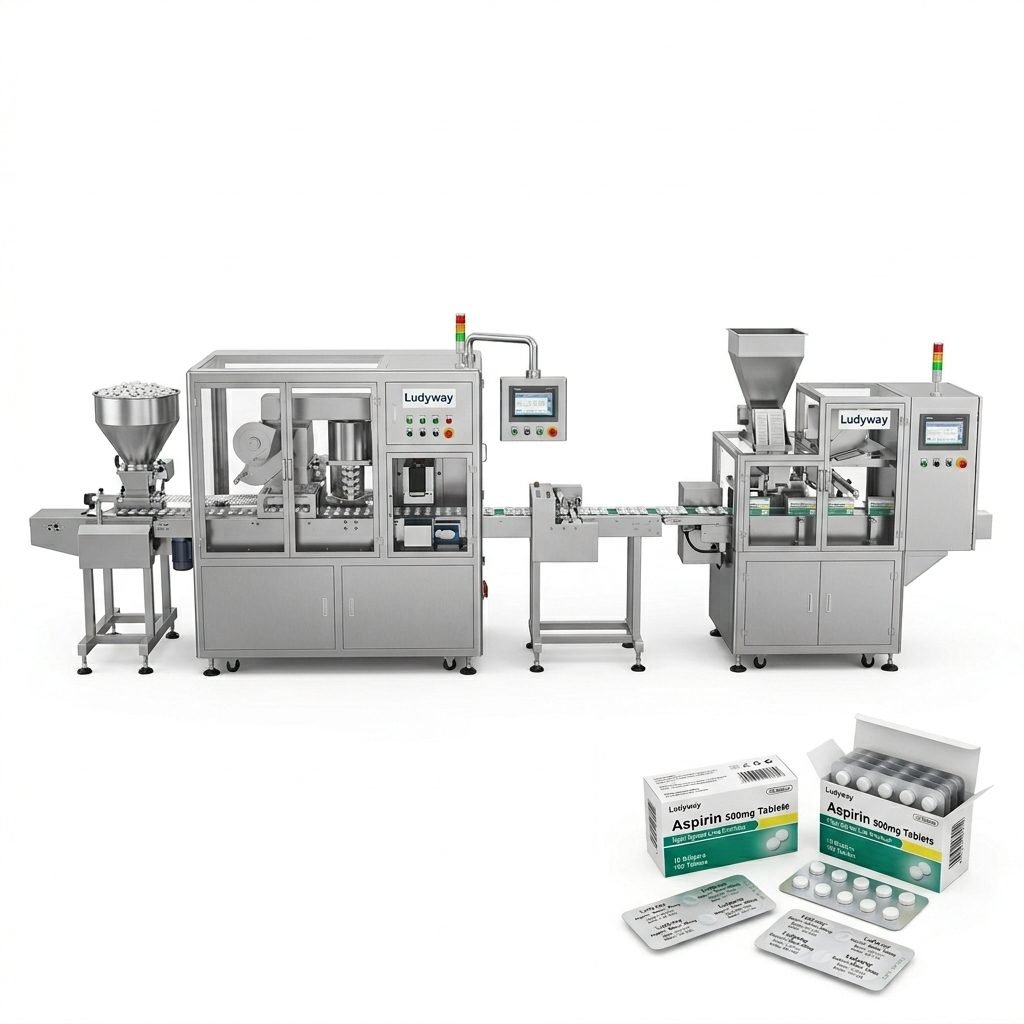
For manufacturers seeking reliable, turnkey solutions, Ludyway offers integrated sauce packaging machines designed for Asian production environments, with models covering everything from single-lane sachet machines to high-speed multi-lane systems.
Step 3: Layout and Space Planning in Asian Factories
Factory space in many Asian industrial zones can be compact. A small sauce line typically requires a footprint of approximately 20 to 40 square meters for the core machinery, plus additional area for raw material staging and finished product storage. Linear layout works best for smaller spaces. Ensure the floor can support the equipment weight and that cleanroom-grade separation is maintained between wet and dry zones.
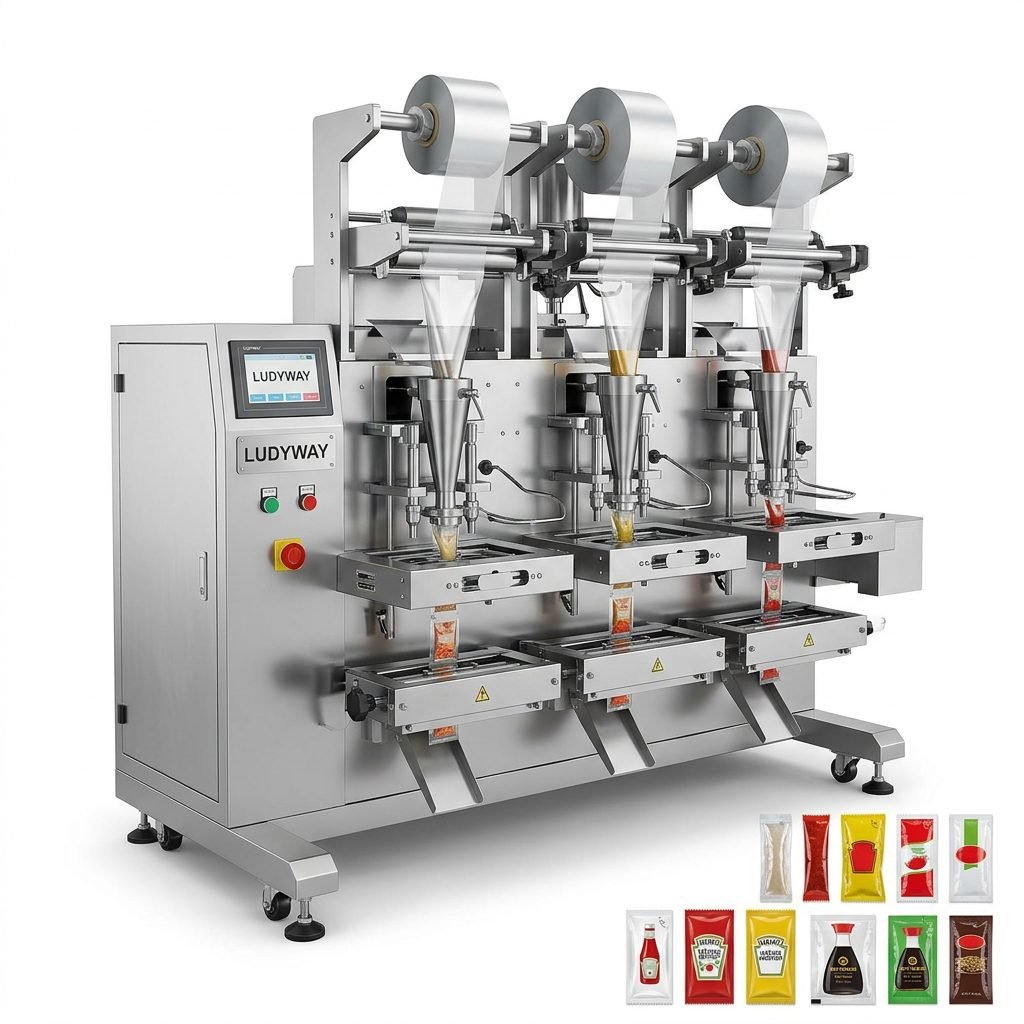
Step 4: Selecting the Right Supplier in Asia
Partnering with an experienced packaging machine manufacturer is crucial. Evaluate potential suppliers based on:
Supplier Evaluation Criteria
| Criteria | Why It Matters |
|---|---|
| Local Service Support | Reduces downtime in remote locations |
| Compliance with ISO / FDA Standards | Ensures export-ready production |
| Spare Parts Availability | Minimizes long-term maintenance costs |
| Turnkey Project Experience | Simplifies installation and training |
Step 5: Installation, Training, and Validation
Once the equipment arrives, a structured commissioning process is essential. Factory Acceptance Testing (FAT) before shipment and Site Acceptance Testing (SAT) at your facility confirm that all specifications are met. Operator training should cover daily cleaning, changeover procedures, and basic troubleshooting. In Asia’s humid climate, pay extra attention to electrical enclosure protection and stainless steel grade suitability.
Regulatory References for Packaging Lines
To ensure your small sauce line meets international standards, consult resources from relevant authorities:
- FDA – Food Packaging and Food Contact Substances
- ISO – Packaging Standards
- PMMI – Packaging Machinery Market Research
- Flexible Packaging Association – Industry Resources
Cost Optimization Strategies for Small Lines
Budget is often a primary constraint for smaller manufacturers. However, several strategies can optimize costs without sacrificing quality:
- Start with a semi-automatic filling station and upgrade later
- Choose multi-lane technology for linear output scaling
- Purchase from manufacturers with Asian-based spare part warehouses
- Opt for modular designs that allow future expansion
The total investment for a basic small packaging machine production line in Asia can start from $15,000 USD for a compact single-lane setup, scaling up based on automation level and output capacity.
Quality Control and Hygiene Standards
Sauce products are sensitive to contamination and require strict quality protocols. Your small line must incorporate the following:
- CIP (Clean-in-Place) compatibility for all contact parts
- 316L stainless steel for acidic or high-salt sauces
- Regular seal integrity testing on sachet seams
- Metal detection and checkweigher integration
- Environmental monitoring for humidity and temperature
Adhering to FDA food contact substance regulations and ISO 11607 packaging standards helps position your products for export markets across Asia and beyond.
Future-Proofing Your Sauce Line
Even a small line should be built with scalability in mind. Consider these forward-looking features:
- IoT-enabled monitoring for real-time OEE tracking
- Quick-change forming tubes for different sachet widths
- Compatibility with eco-friendly film materials
- Integration capability with upstream mixing tanks and downstream cartoners
Common Challenges and Solutions
| Challenge | Practical Solution |
|---|---|
| Inconsistent fill volume | Regular pump calibration, proper hopper leveling |
| Seal failure in humid conditions | Optimize dwell time and temperature for local film types |
| Particle clogging in nozzles | Use piston fillers with larger diameter nozzles |
| Limited technical support | Partner with manufacturers offering remote diagnostics |
Final Thoughts on Your Asian Sauce Packaging Setup
Deploying a small sauce packaging machine production line in Asia is a calculated investment that can yield significant returns with the right planning. Focus on flexible equipment, local supplier support, and robust quality systems. Whether you are entering the market with a single-lane machine or scaling up with a multi-lane stick pack system, the principles of efficient layout, rigorous testing, and continuous improvement remain the same. Refer to industry bodies like PMMI packaging standards and European Commission packaging regulations to stay ahead of evolving compliance requirements.