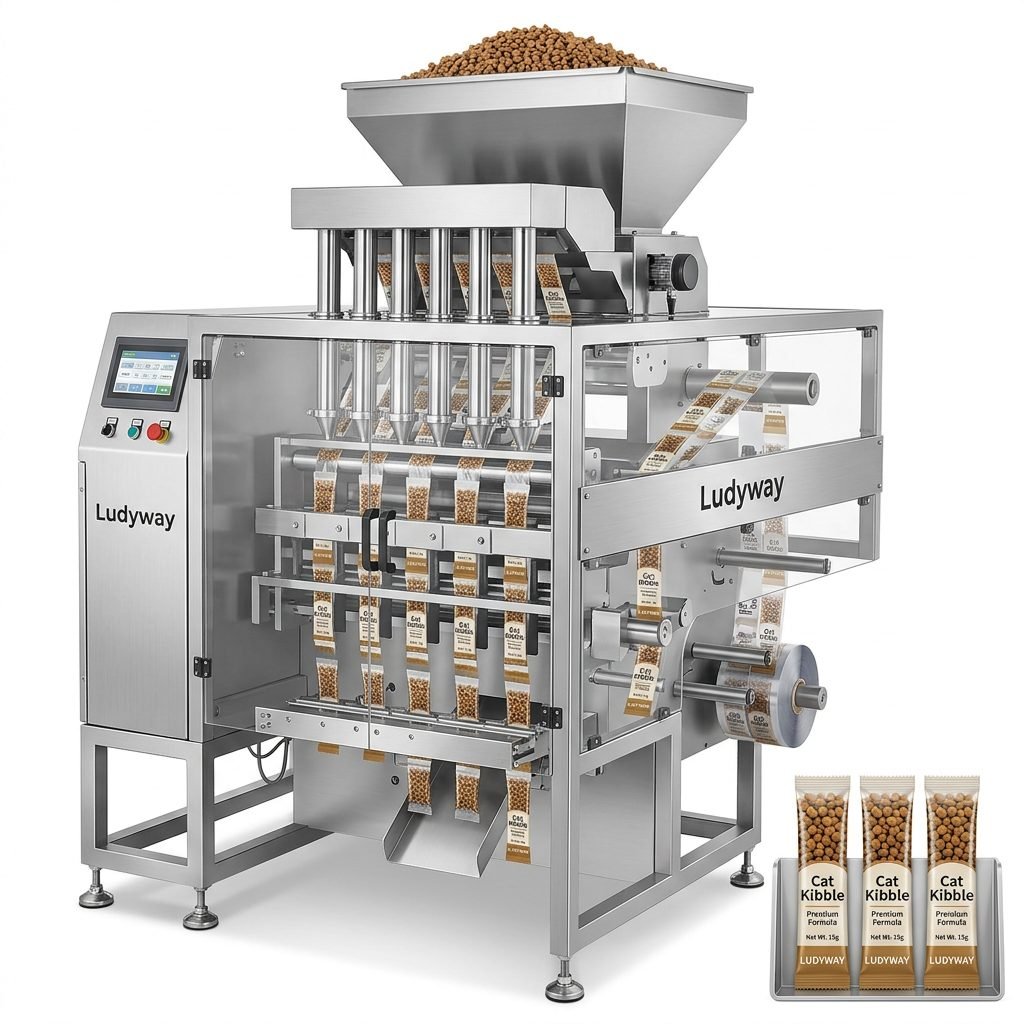
Spice and seasoning packaging machines for powder and granular products have to solve a problem most other food packaging lines never face: the product itself fights the machine. Fine turmeric and paprika bridge in hoppers and coat sealing jaws with dust, oily chili or garlic powder sticks to augers, coarse sea salt and dehydrated onion flakes bounce off volumetric cups, and nearly every seasoning blend absorbs moisture and loses aroma the moment it meets air. A machine that runs sugar perfectly can jam, underfill or leak within an hour on a five-spice blend.
This guide is written for spice processors, seasoning blenders, contract packers and the engineers and purchasing teams who specify their equipment. It walks through the main machine types, the dosing technologies that actually determine fill accuracy, the hygiene and compliance features that matter for export, and a practical selection process you can use before requesting quotations. Whether you need 1 g single-serve pepper sachets for foodservice, 20 g stick packs of instant noodle seasoning, or 1 kg pillow bags of curry powder for retail, the same engineering logic applies.
Why Spices and Seasonings Are Difficult to Package
Before comparing machines, it helps to understand the product behaviour that drives machine design. Spice powders and granules vary enormously in bulk density, particle size distribution, oil content and flowability, and a single factory often runs dozens of SKUs across that whole range. The table below summarises the main product categories and what each one demands from the dosing and sealing system.
| Product Group | Typical Examples | Handling Challenge | Recommended Dosing |
|---|---|---|---|
| Fine, dusty powders | Turmeric, paprika, ground cumin, white pepper | Airborne dust contaminates seals; bridging in hopper | Servo auger with agitator and dust extraction |
| Oily or sticky powders | Chili powder, garlic powder, nutmeg, seasoning with fat | Build-up on auger flights and funnel; inconsistent weight | Auger with anti-stick coating, larger pitch, frequent CIP access |
| Free-flowing granules | Salt, MSG, sugar, chicken essence granules, bouillon | Hygroscopic; caking in humid plants | Volumetric cup filler or linear weigher |
| Coarse or mixed particles | Dried onion flakes, crushed chili, whole-seed blends, herb mixes | Segregation of fine and coarse fractions; particles trapped in seal | Multihead or linear combination weigher with vibratory feed |
| Compound seasoning kits | Instant noodle sachets, hot pot base, meal kits | Multiple components in one pack or multiple packs per kit | Multi-lane system with separate dosers per lane or multi-doser head |
Key takeaway: the dosing unit, not the bag former, determines whether a spice packaging machine succeeds. Always ask a supplier which doser they propose for each of your product groups, and request a fill-accuracy test with your own product samples before placing an order.
Main Types of Spice and Seasoning Packaging Machines
Spice packaging equipment is usually categorised by the pack format it produces. The right choice depends on the target pack weight, output requirement and the sales channel the product is destined for, from foodservice portion packs to retail shelf bags and bulk industrial sacks.
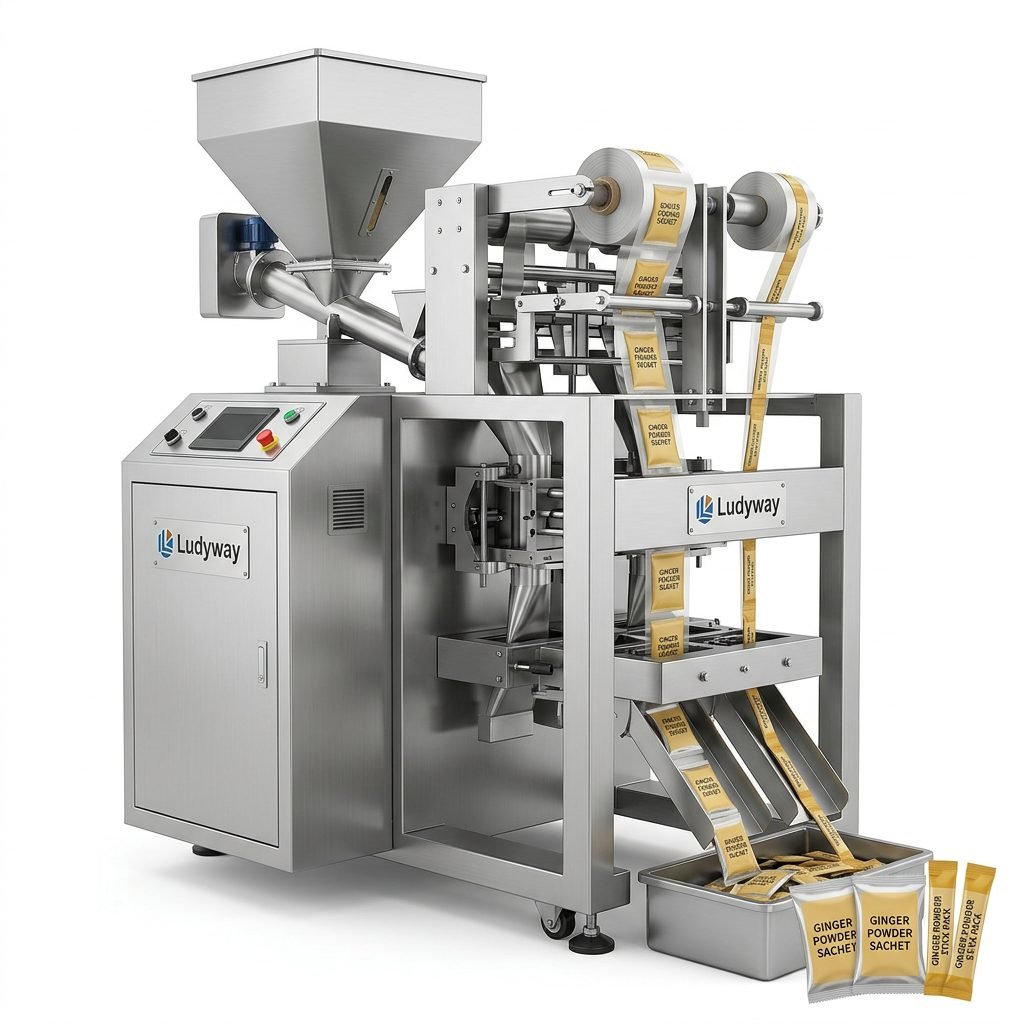
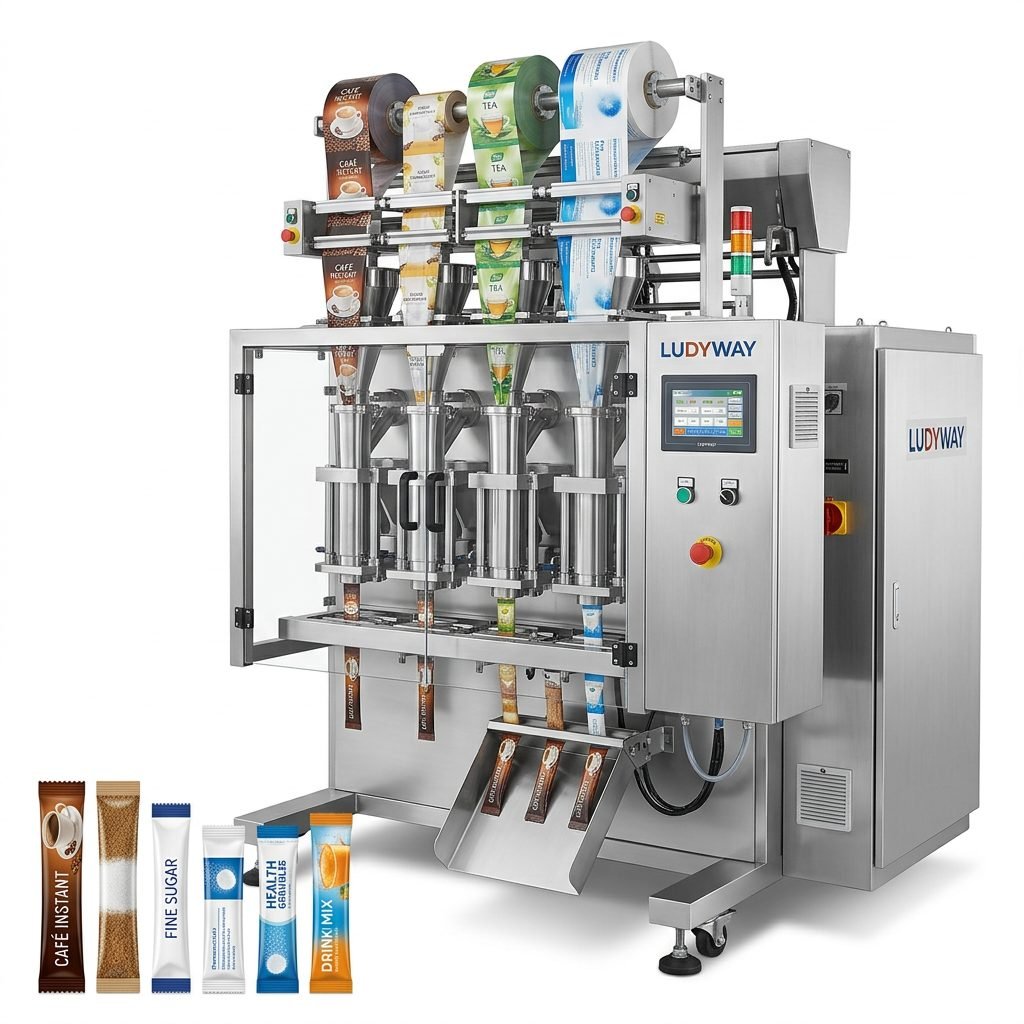
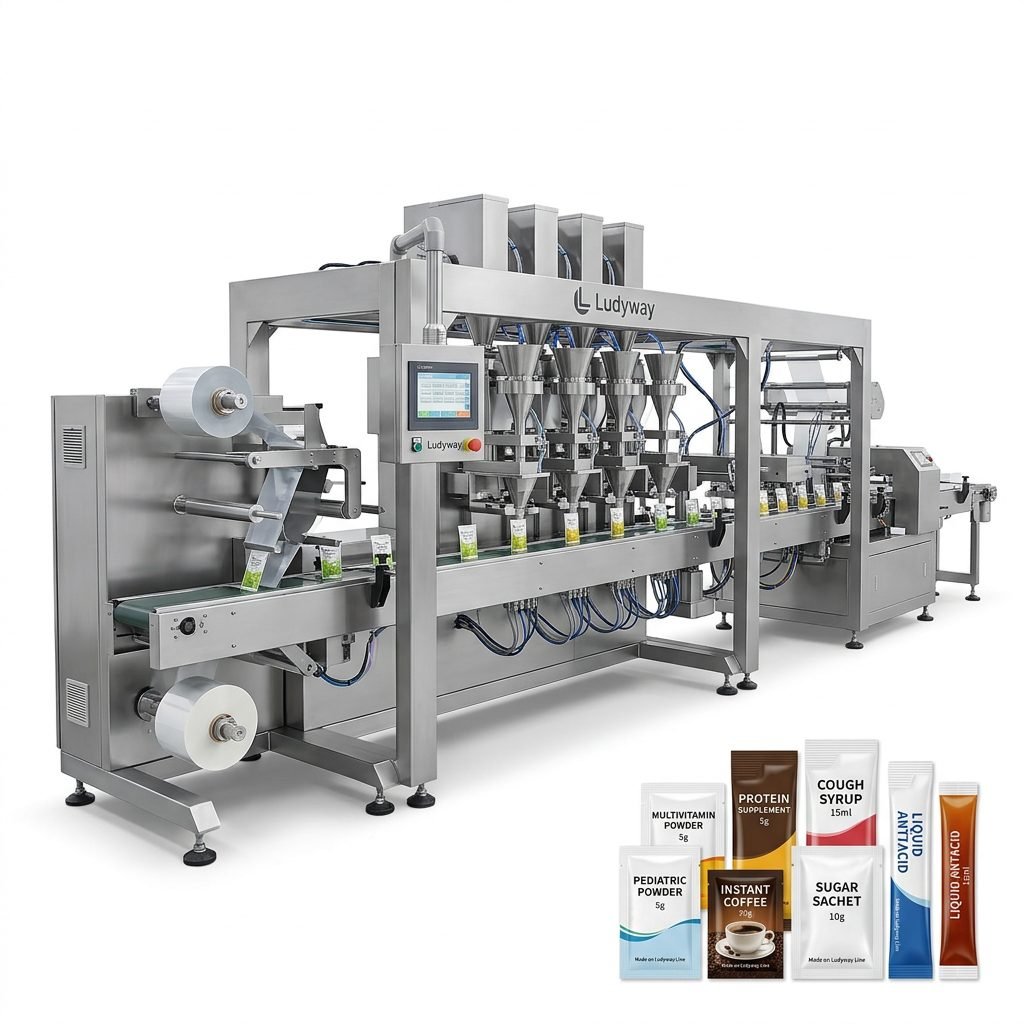
Multi-lane sachet machine configured for fine spice powders such as ginger and turmeric
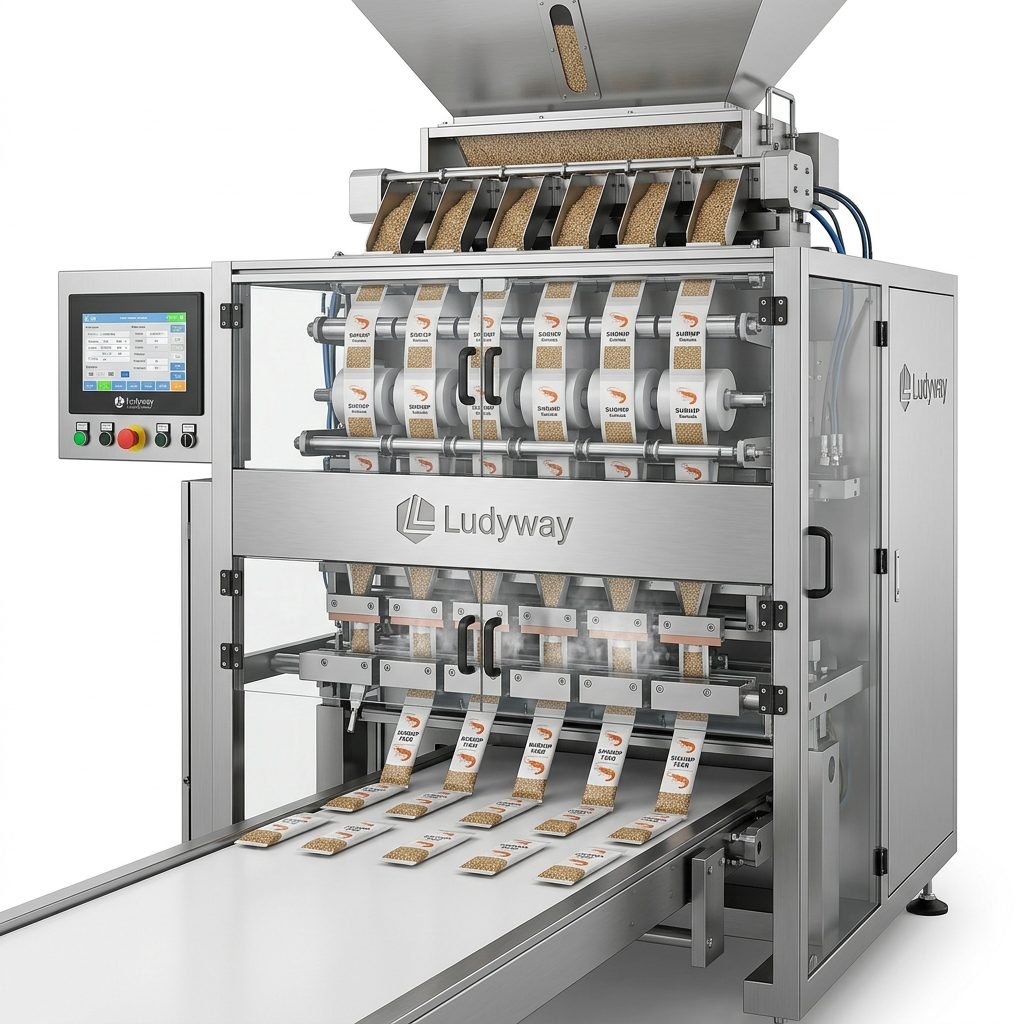
Multi-Lane Stick Pack Machines
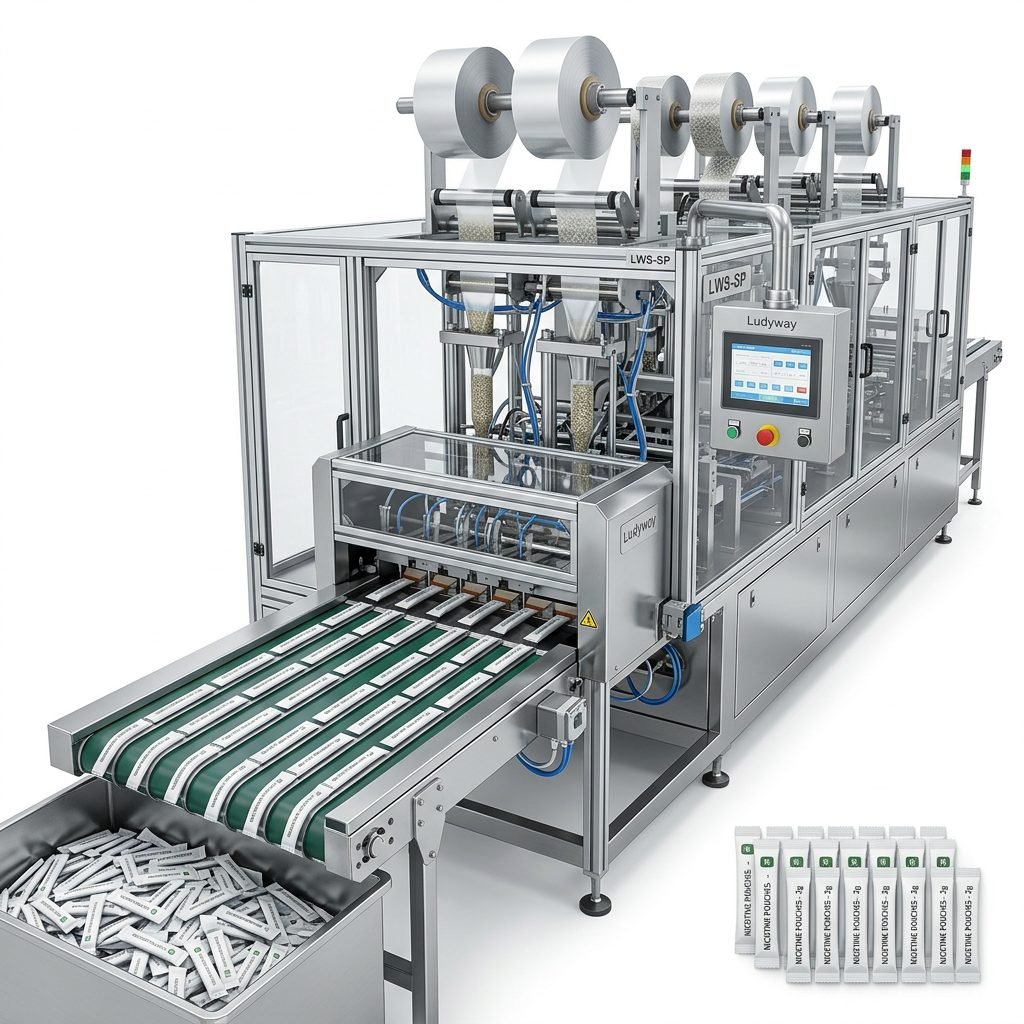
Stick pack machines form narrow tubular packs, typically 17–35 mm wide and 60–180 mm long, from a single wide film reel split into 4 to 16 lanes. Each lane has its own auger or cup doser, so a 10-lane machine running 40 cycles per minute delivers around 400 sticks per minute in a footprint of only a few square metres. Stick packs dominate single-serve pepper, salt, sugar substitute, drink seasonings and travel-size spice portions because film consumption per gram of product is the lowest of any format.
Multi-Lane Sachet Machines (3-Side and 4-Side Seal)
Four-side-seal sachet machines produce the familiar flat rectangular seasoning packet used in instant noodles, ramen, soup mixes and foodservice condiments. The wider pack accepts coarser granules and higher fill weights (commonly 1–50 g) than a stick pack, and the flat shape prints and cartons neatly. A dedicated instant noodle seasoning packaging machine is essentially a multi-lane 4-side-seal unit tuned for dusty, salty powder and high line speeds.
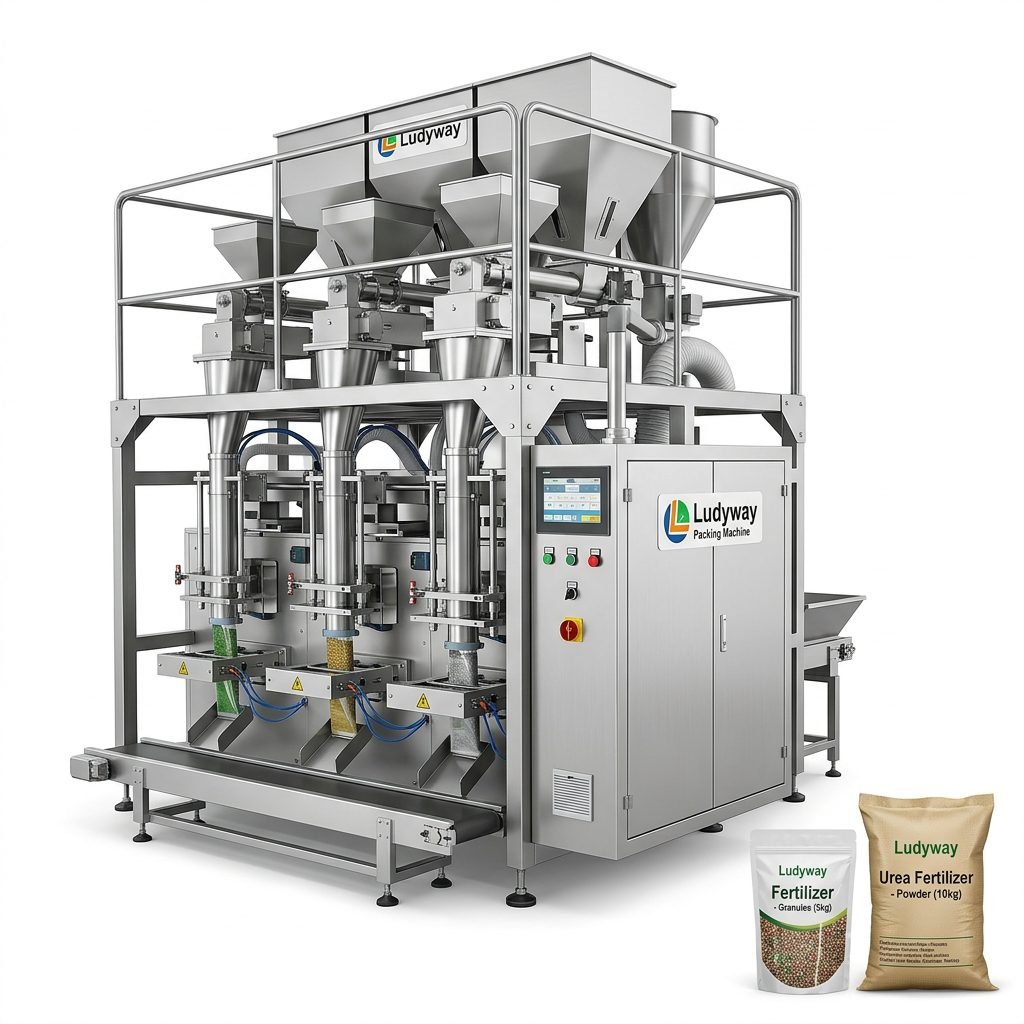
Vertical Form-Fill-Seal (VFFS) Bagging Machines
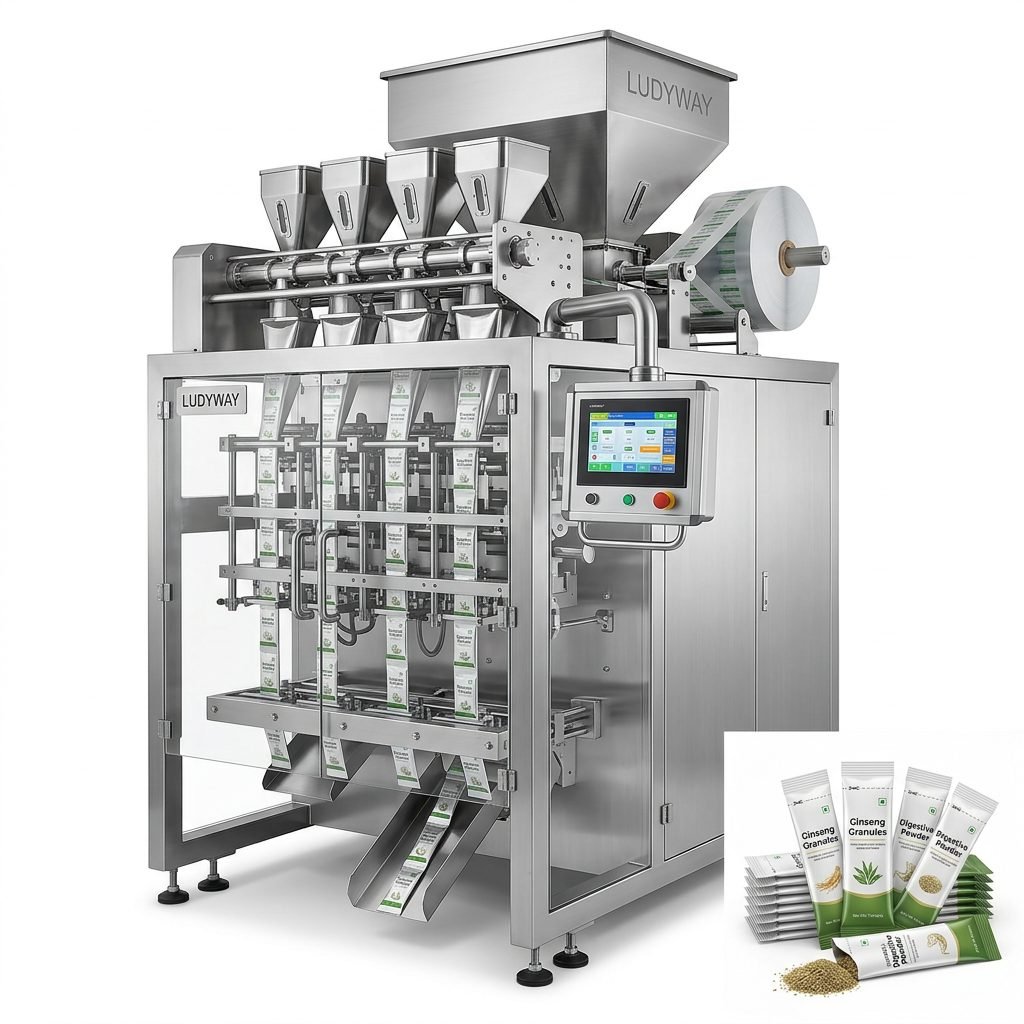
For retail pillow bags, gusseted bags and quad-seal packs from 50 g up to 5 kg, a single-lane VFFS machine paired with an auger filler or multihead weigher is the standard solution. VFFS equipment is the workhorse for curry powder, chili flakes, whole spices and seasoning blends sold through supermarkets, and it is the easiest format to fit with zipper, degassing valve or euro-slot options.
Premade Pouch and Doypack Fillers
Rotary premade pouch machines pick up pre-formed stand-up pouches, open them, fill and seal. They cost more per pack than VFFS but deliver premium shelf presentation for branded spice blends, grinders refills and gift ranges, and they handle laminated barrier pouches with resealable zippers extremely well.
Semi-Automatic Auger Fillers and Bulk Bagging Lines
Jar and tin filling for retail spice racks is typically done with a standalone auger filler on a conveyor, while 10–25 kg industrial seasoning bags for food manufacturers use open-mouth bagging lines with gross or net weighers. Many spice companies run all three tiers: sachets for foodservice, VFFS for retail and bulk bagging for B2B ingredient sales.
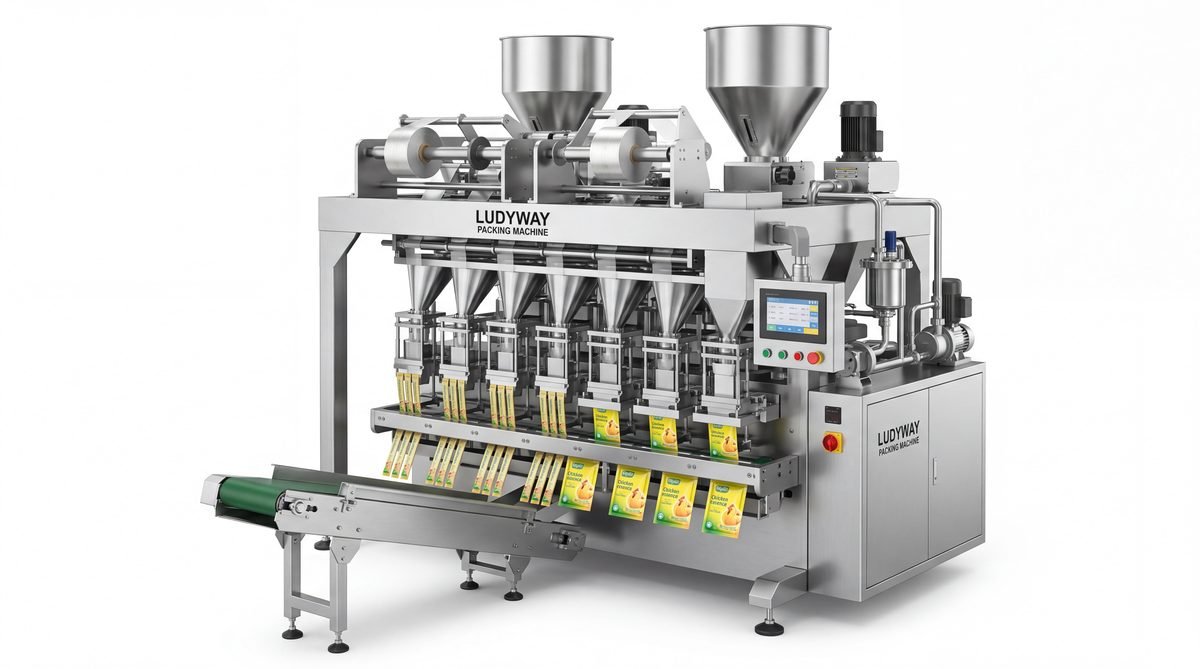
Multi-lane stick pack and sachet system for chicken essence, bouillon and seasoning granules
Dosing Technology: Where Accuracy Is Won or Lost
Fill accuracy on spice lines directly affects profit, because many seasonings are high-value ingredients and a consistent 2% overfill across millions of sachets is a large hidden cost. Equally, underfilled packs expose you to weights-and-measures complaints. Understanding the four main dosing systems lets you have a far more productive conversation with any equipment supplier.
Servo Auger Filler
The default for powders. A rotating screw meters product by volume per revolution; a servo motor makes partial turns possible for fine adjustment. Accuracy of ±1–2% is realistic on stable powders. Look for interchangeable augers and funnels so one head can handle both fine turmeric and coarser garlic granules.
Volumetric Cup Filler
Adjustable telescopic cups fill by volume and are fast, simple and low-maintenance for free-flowing granules such as salt, MSG and sugar. Not suitable for dusty or cohesive powders, and accuracy drifts if bulk density changes between batches.
Linear and Multihead Weighers
Weigh each dose on load cells, giving the best accuracy for irregular products: chili flakes, herb blends, dehydrated vegetables and mixed seasonings that segregate. Multihead weighers are the standard for retail VFFS lines above roughly 50 g; linear weighers suit multi-lane sachet machines where each lane needs its own weigh head.
Auger With Inline Checkweigher Feedback
A dynamic checkweigher after the packaging machine measures every pack and feeds corrections back to the auger servo, compensating for bulk density drift during a shift. For export spice packers who must document pack weights, an inline checkweigher with data logging is close to mandatory.
Features That Separate a Spice-Ready Machine From a Generic Powder Packer
Most packaging machines on the market are advertised as suitable for “powder and granules”. The features below are what actually make a machine reliable in a spice plant, and they are worth writing into your technical specification rather than assuming they are included.
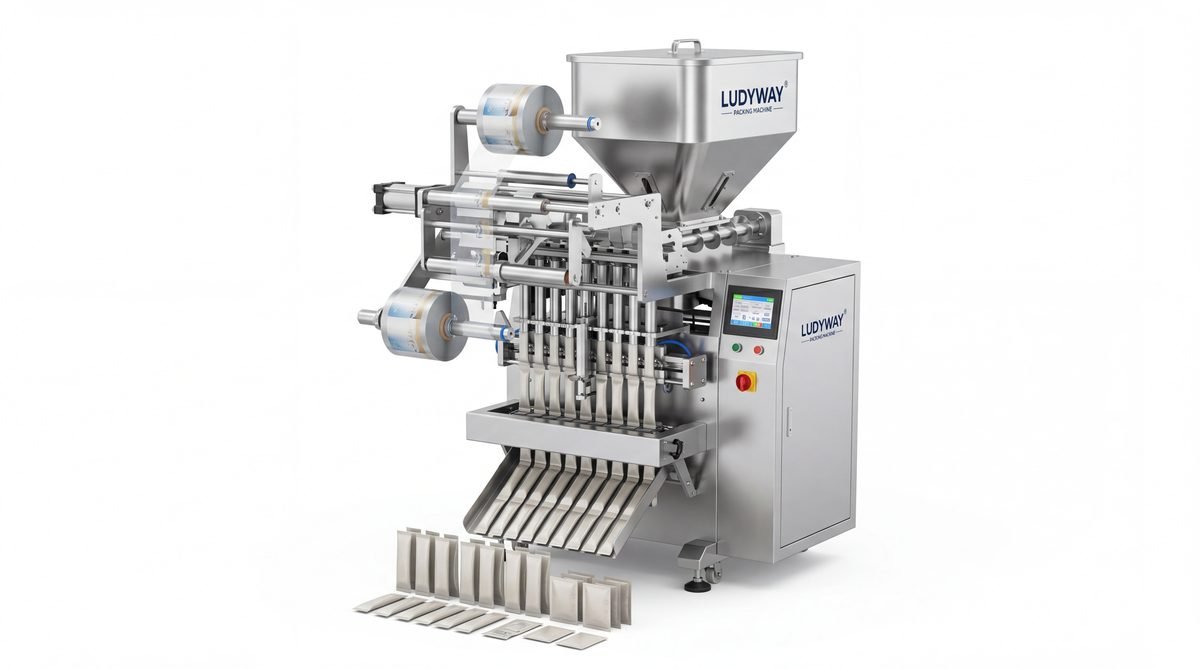
Servo-driven auger dosing heads with quick-release hoppers for fast product changeover
- Dust extraction at the fill point. Vacuum suction around the forming tube and sealing jaws keeps powder out of the seal zone. Seal contamination is the number-one cause of leaking spice sachets; an industrial dust collection system also protects operators from capsaicin and allergen exposure.
- Hopper agitators and vibration. Fine spice powders bridge over the auger inlet. A slow stirrer or vibrator in the hopper maintains consistent feed density, which is the foundation of fill accuracy.
- Nitrogen flushing. Volatile oils in pepper, cardamom and herb blends oxidise rapidly. A nitrogen flushing system reduces residual oxygen in the pack and extends aroma shelf life, especially in high-barrier laminates.
- Stainless steel 304/316 contact parts and tool-free disassembly. Allergen changeover between, for example, a mustard-containing blend and a plain pepper line must be fast and verifiable. Specify how many minutes a full wash-down changeover takes.
- Servo film pull and PID-controlled sealing jaws. Spice sachets often use thin PET/AL/PE or paper-based films; precise temperature and pressure control prevents burn-through and wrinkled seals at high speed.
- Date coding, registration and rejection integrated. Thermal transfer or inkjet coders, photocell print registration and automatic reject of underweight packs should be configured on the machine, not added later.
±1–2%
Typical auger fill accuracy on stable spice powders
4–16 lanes
Common lane counts for sachet and stick pack systems
1–50 g
Fill range covered by most multi-lane seasoning machines
<2% O₂
Residual oxygen target achievable with nitrogen flushing
Compliance, Film Compatibility and Export Requirements
Spice packaging lines frequently serve export markets, so the machine must support both the food-contact rules of the destination market and the packaging materials those markets are moving toward. Food-contact surfaces, lubricants and seal materials should meet the requirements described in the FDA guidance on packaging and food contact substances for US-bound goods, while machines shipped to Europe require CE marking and documentation for EU machinery and food-contact regulations.
Sustainability rules are now a machine-selection issue rather than a marketing one. The EU Packaging and Packaging Waste Regulation is pushing spice brands toward mono-material PE or PP laminates and paper-based sachets, which seal very differently from traditional PET/AL/PE structures. Confirm in writing that your machine’s sealing system has been proven on recyclable mono-films and that jaw profiles and temperature ranges can be adapted later. The PMMI State of the Industry report highlights flexible packaging automation and sustainable film compatibility as leading drivers of new machinery investment in food.
| Requirement | What to Ask the Supplier | Why It Matters for Spices |
|---|---|---|
| Hygienic design | SS304/316 contact parts, food-grade seals, IP rating of electrics, wash-down drawings | Allergen and colour cross-contamination between blends; salt corrosion |
| Certification | CE declaration, electrical schematics, material certificates, optional UL-listed components | Required for customs clearance and factory audits by retail customers |
| Film compatibility | Proven structures list, seal test on your film, mono-material readiness | Barrier for aroma and moisture; recyclability mandates in EU and other markets |
| Weight compliance | Checkweigher integration, data export, reject station | Average-weight legislation and giveaway cost on premium spices |
| Operator safety | Interlocked guards, dust containment, emergency stops, noise level | Chili and pepper dust are respiratory irritants; dust is also an explosion hazard in bulk |
How to Choose the Right Spice Packaging Machine: A Six-Step Process
Buying teams get the best outcome when they define the application before they compare brands. The sequence below mirrors how experienced packaging engineers scope a seasoning line and will shorten the quotation cycle with any manufacturer.
Step 1 — Map your SKUs
List every product with bulk density, particle size, oil content, fill weight and pack format. Group them into dosing families; a machine serving 80% of volume on one doser type is usually better than a compromise unit.
Step 2 — Fix output and shift pattern
Calculate required packs per minute from annual volume, working days and target OEE of around 75–85%, not from rated machine speed. Decide whether one high-lane machine or two smaller machines gives better redundancy.
Step 3 — Choose format and film
Stick pack for lowest film cost per portion, 4-side seal for coarse granules and kit sachets, VFFS or doypack for retail. Select the film structure now, because it determines sealing jaw design and nitrogen flushing needs.
Step 4 — Specify hygiene and changeover
Define maximum changeover time, cleaning method and allergen protocol. Request tool-free doser removal, quick-release hoppers and a documented clean-down procedure from the supplier.
Step 5 — Plan upstream and downstream
Vacuum or screw conveyors feeding the hopper, dust collection, checkweigher, metal detector, cartoner or case packer. Integrated turnkey lines avoid interface problems that single-machine purchases often create.
Step 6 — Test with real product
Send 10–20 kg of each key product and your film to the factory for a filling and sealing trial. Review fill-weight data, seal integrity and dust behaviour on video or in person before signing the contract.
Single Machine or Complete Seasoning Packaging Line?
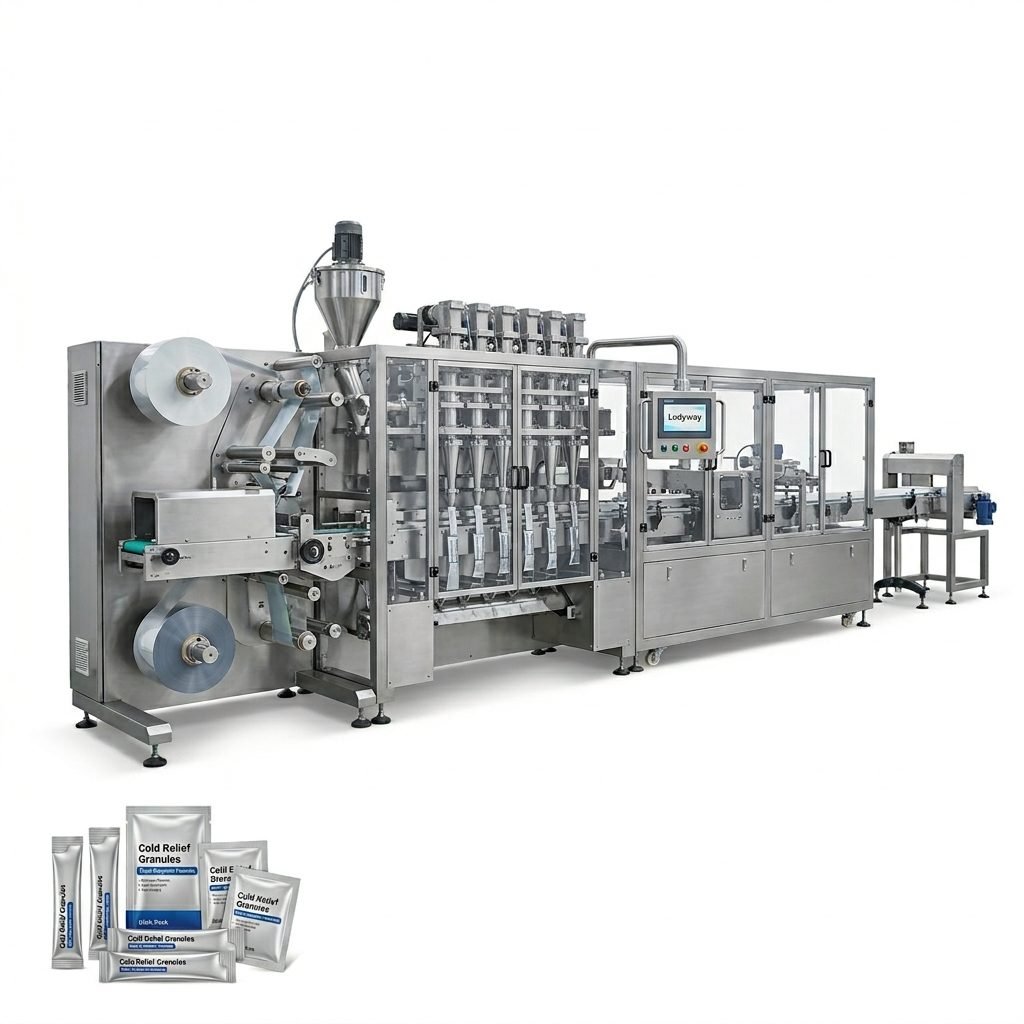
A standalone multi-lane machine is the right entry point for a spice business moving from manual or semi-automatic filling to automation, and it can later be fed by a vacuum conveyor and followed by a cartoner. Larger seasoning producers and contract packers increasingly specify a complete automated spice seasoning packaging line in which mixing discharge, conveying, multi-lane packaging, inspection, counting and case packing are engineered together by one supplier.
The turnkey approach costs more upfront but removes the responsibility gaps that appear when a bagging machine from one vendor, a weigher from another and a cartoner from a third fail to synchronise. It also simplifies spare parts, operator training and remote support, all of which matter when the line is thousands of kilometres from the manufacturer.
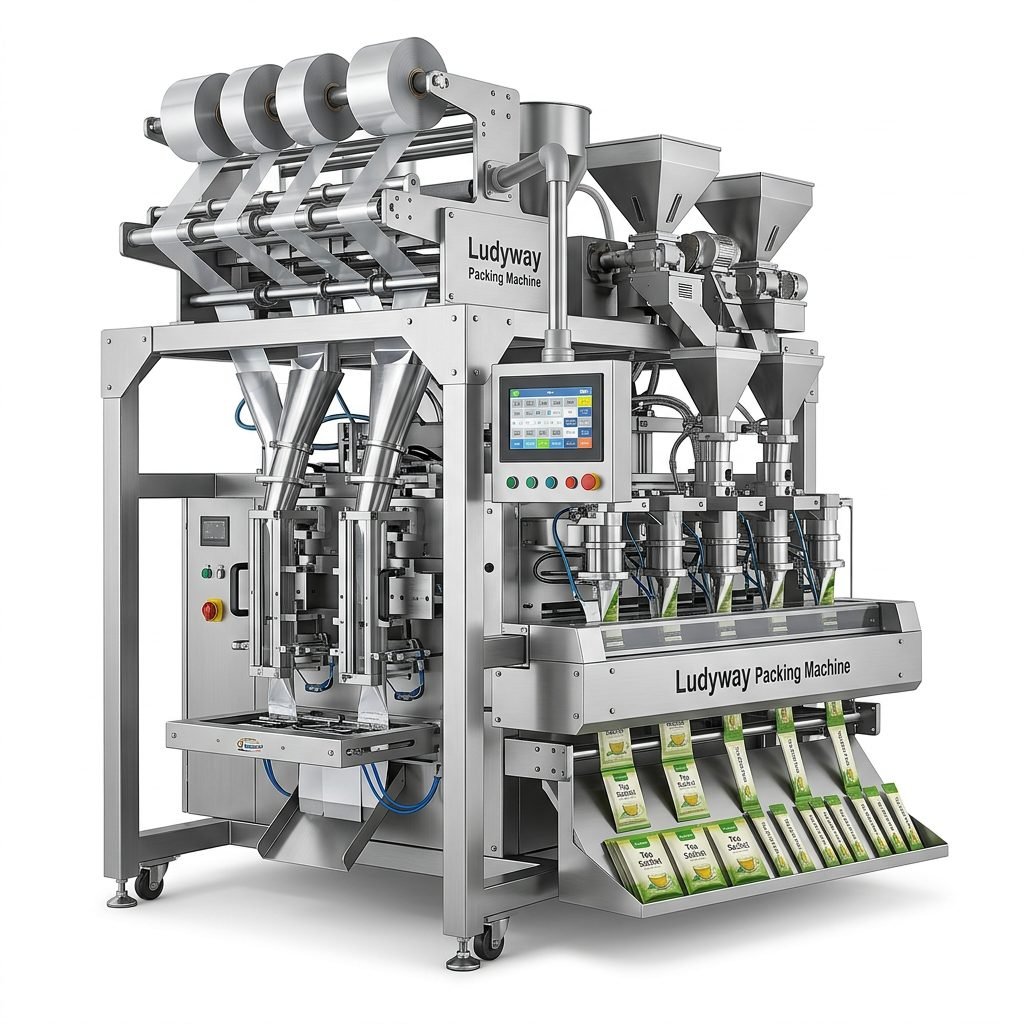
Multi-lane stick pack equipment integrated with feeding and downstream handling in a turnkey powder line
What to Include in a Request for Quotation
Quotations for spice and seasoning packaging machines vary widely because the same base model can be configured with very different dosers, lane counts and options. Sending a complete brief up front produces comparable offers and a realistic delivery date. A typical project lead time for a configured multi-lane sachet or stick pack machine is 45–90 days from deposit, longer for integrated lines, with factory acceptance testing before shipment.
Product and pack data
- Product names, bulk density range and particle size
- Fill weight per pack and tolerance required
- Pack format, dimensions and target speed
- Film structure, thickness and reel specifications
- Samples available for trial filling
Plant and commercial data
- Voltage, frequency, compressed air and floor space
- Required certifications for your destination market
- Upstream feeding and downstream packing scope
- Spare parts, installation and training expectations
- Payment terms, Incoterms and target delivery window
About Ludyway: Spice and Seasoning Packaging Equipment From a 30-Year Manufacturer
Ludyway is one of the largest packaging machine manufacturers in China, founded in 1993 and based in Zhongshan, Guangdong, with a 20,000 m² production facility, more than 200 manufacturing equipment units and a team of over 130 packaging specialists. The company offers more than 50 intelligent packaging machine models, including multi-lane stick pack and sachet systems, VFFS baggers and fully automated turnkey lines for granule, powder and liquid products, and serves customers in over 100 countries and regions. Its export growth and expansion plans have been covered in industry media, including this report on Ludyway’s global growth trend.
For spice and seasoning producers specifically, Ludyway supplies dedicated configurations such as the spice packaging machine for granules and powder with multi-lane sachet output and the seasoning packaging machine with granule and powder sachet filling systems, both built with stainless steel contact parts, servo auger or cup dosing, dust extraction and optional nitrogen flushing. Product trials with customer samples, factory acceptance testing and remote commissioning support are part of the standard project process.
Popular Spice and Seasoning Packaging Machine Models
Ginger Powder Packaging Machine
Multi-Lane Sachet, Fine Powder
Quote on Request
Chicken Essence Stick Pack Machine
Multi-Lane Stick Pack, Granule
Quote on Request
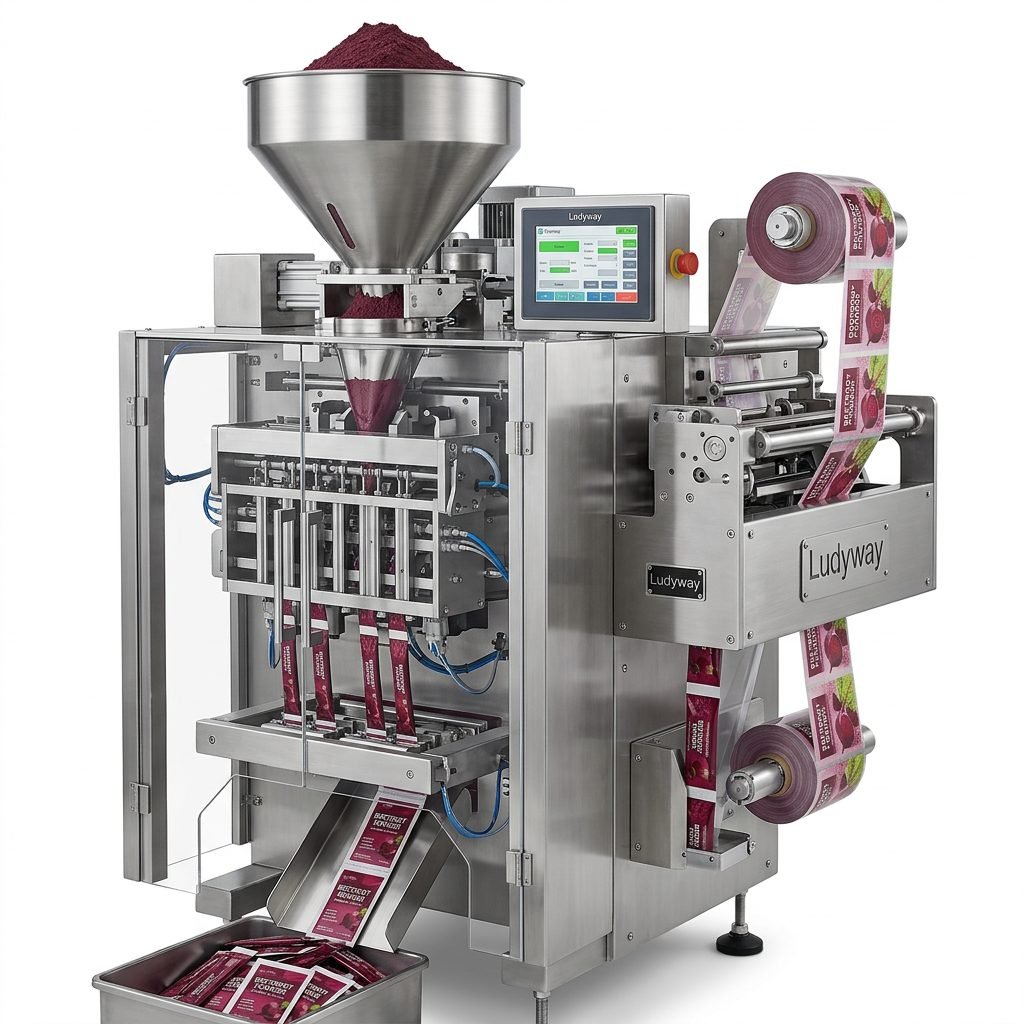
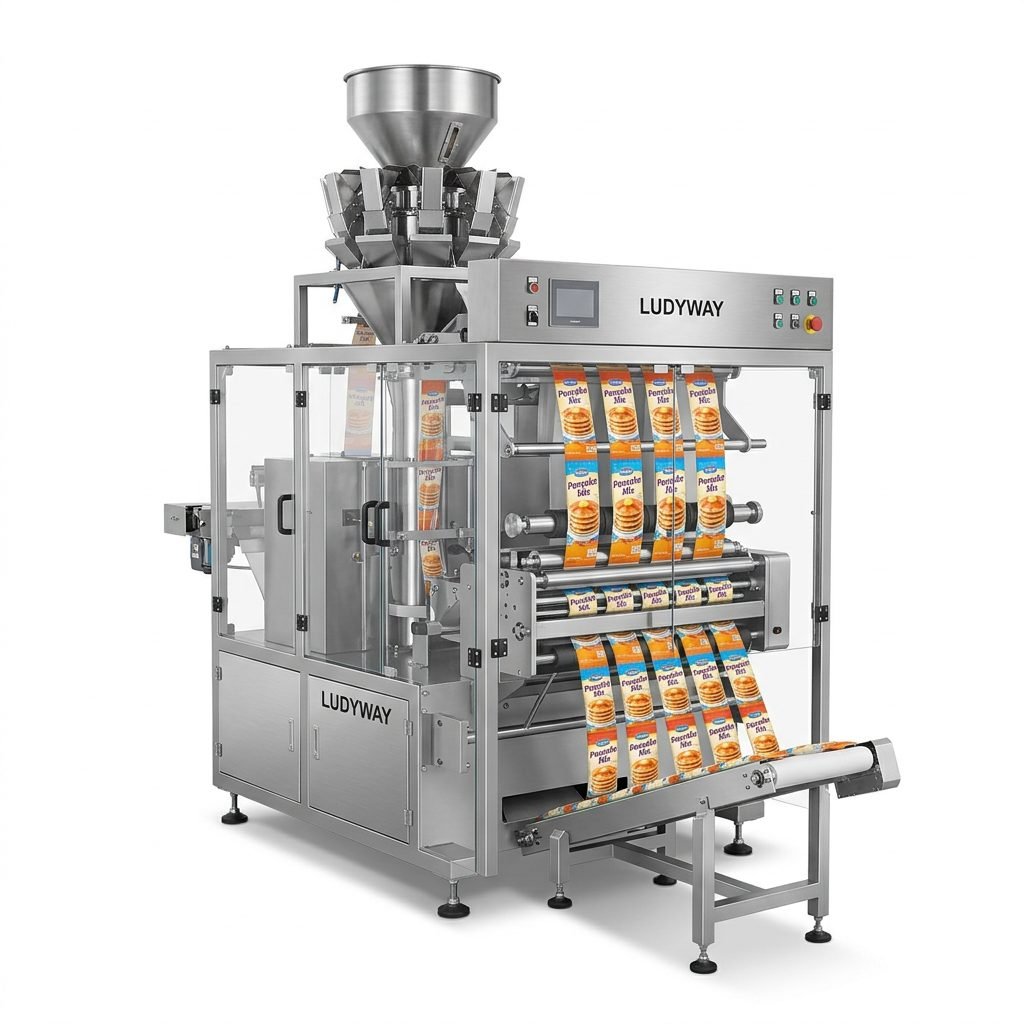
Vegetable Powder Sachet System
Sachet & Stick Pack, Dusty Powder
Quote on Request
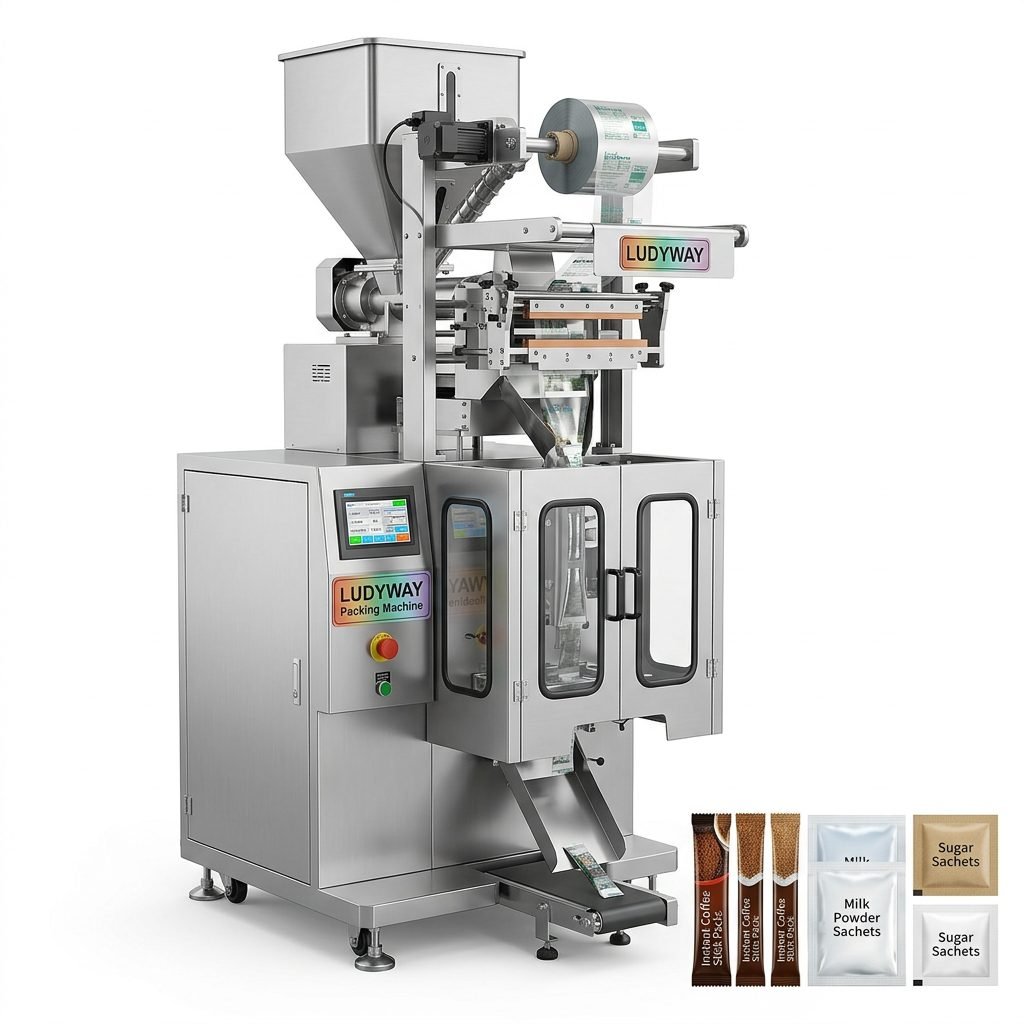
Granule Powder Sachet Machine
Multi-Lane, Free-Flowing Granule
Quote on Request
Frequently Asked Questions
Which machine is best for very fine, dusty spice powders like turmeric or paprika?
A servo auger filler with a hopper agitator, combined with vacuum dust extraction at the forming tube and sealing jaws, is the most reliable option. On multi-lane sachet or stick pack machines, each lane should have its own auger. Request a trial with your actual powder, because flow behaviour differs between suppliers and even between harvests.
Can one machine package both powder blends and coarse granules such as chili flakes?
Yes, if it is specified for it. Machines with interchangeable dosing heads can switch between auger filling for powders and cup or weigher dosing for granules, but changeover takes time and some accuracy compromise is normal. Plants with high volume in both groups usually run two dedicated machines.
What output can a multi-lane seasoning sachet machine achieve?
Output depends on lane count, pack length and product. A 6-lane 4-side-seal machine typically delivers 150–300 sachets per minute; a 10–12-lane stick pack machine can exceed 400–600 sticks per minute on free-flowing granules. Plan with 75–85% overall equipment effectiveness rather than rated speed.
Is nitrogen flushing necessary for spice sachets?
It is strongly recommended for products rich in volatile oils, such as pepper, cardamom, herb blends and mixed seasonings with fats, and for any product with a shelf-life claim above 12 months. For salt, sugar or MSG granules in high-barrier film it is usually unnecessary.
What is the typical lead time and acceptance process when buying from an overseas manufacturer?
Configured multi-lane machines are generally delivered within 45–90 days after deposit; integrated lines take longer. A professional process includes a product trial, approval drawings, factory acceptance testing with your film and product, documented training, and remote or on-site commissioning support after installation.
Next Step: Get a Configured Quotation for Your Spice or Seasoning Line
Send your product list, target pack weights, film type and required output to Ludyway’s engineering team, and request a free filling and sealing trial with your own spice samples. You will receive a machine proposal with doser selection, lane count, options and a detailed technical specification, plus the full catalogue of multi-lane sachet, stick pack and turnkey seasoning packaging lines.
Email: info@ludyway.com | WhatsApp: +86 131 2959 2456 | Factory: Nanlang Town, Zhongshan, Guangdong, China — factory visits and exhibition meetings can be arranged on request.