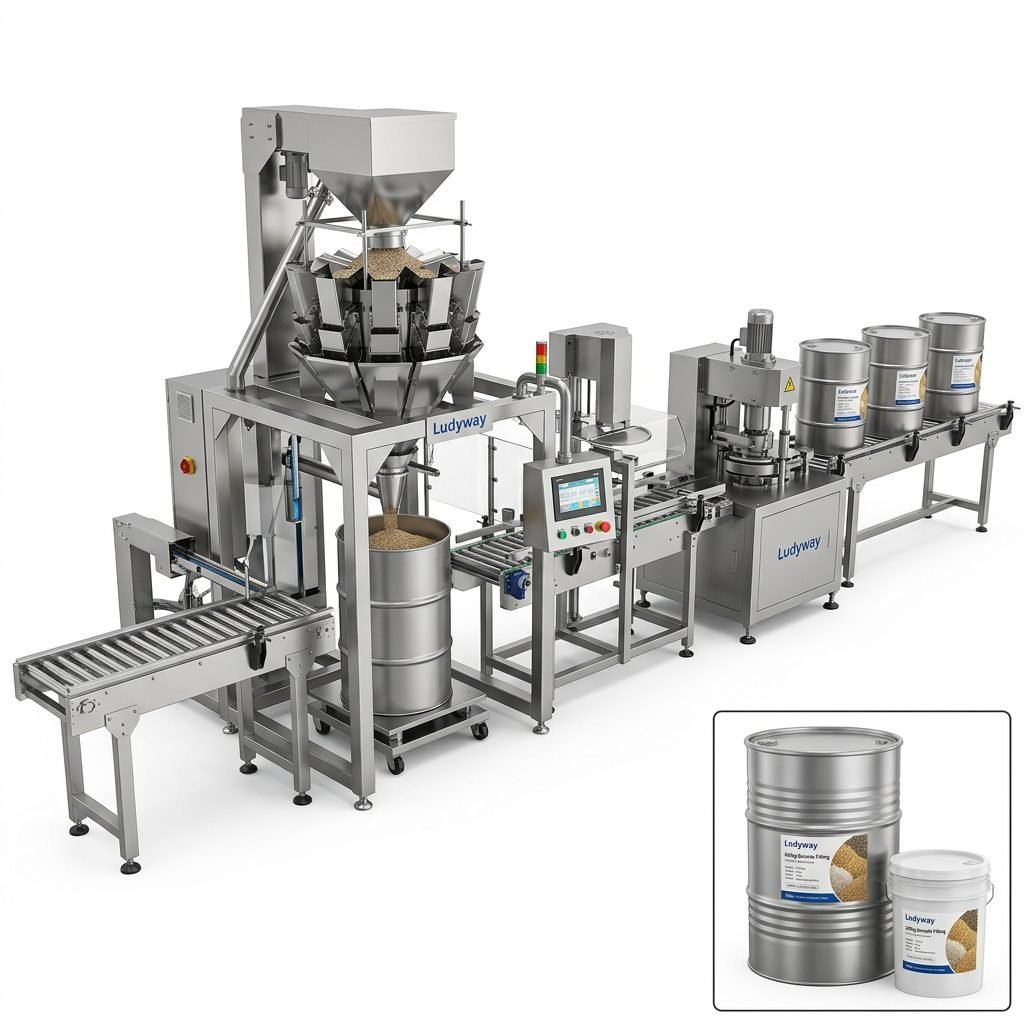
Meat and poultry packaging machines for commercial food processing are the single biggest lever a processor has over shelf life, yield loss and labor cost once product leaves the cutting room. Fresh beef packed in air lasts roughly three to five days under refrigeration; the same primal vacuum-packed in a high-barrier film routinely holds for several weeks. For a plant running a few tonnes per shift, that difference decides whether you can sell into distant retail accounts or stay local.
This guide is written for plant managers, procurement teams, packaging engineers and equipment dealers who need to compare machine types, understand the specifications and certifications that matter, and move toward a quotation. It covers primary packaging (vacuum, MAP, thermoforming, VFFS, premade pouch), the secondary and portion-pack equipment that meat processors frequently overlook, and the inspection systems that food safety auditors now expect to see on every line.
3–5 days
Typical chilled shelf life of fresh red meat packed in air
3–6 weeks
Chilled shelf life achievable with vacuum packing in high-barrier film
<0.5%
Residual oxygen target for well-executed vacuum or gas-flushed poultry packs
30% CO₂ / 70% N₂
Common modified-atmosphere blend for fresh poultry trays
How Commercial Meat and Poultry Packaging Equipment Is Categorised
Processors tend to buy by product format rather than by machine name, so it helps to map the two. Whole birds, primals and sub-primals go to vacuum or shrink systems; retail cuts and portions go to tray sealers or thermoformers with modified atmosphere; frozen diced chicken, IQF wings and meatballs go to vertical form-fill-seal baggers; cooked deli and marinated products often go to premade pouches; and value-added snacks such as jerky, meat sticks and freeze-dried pet treats go to multi-lane stick pack or sachet machines.
| Machine Type | Best Suited For | Typical Output | Spec to Check First |
|---|---|---|---|
| Chamber / belt vacuum packer | Primals, sub-primals, whole birds, cooked meats | 2–6 cycles/min, multiple bags per cycle | Final vacuum level (mbar) and pump capacity (m³/h) |
| Thermoformer (vacuum or MAP) | Sliced deli, bacon, sausages, retail poultry portions | 8–15 cycles/min, multi-cavity dies | Forming depth, film web width, gas-flush accuracy |
| Tray sealer with MAP | Case-ready beef, pork and chicken trays | 20–120 trays/min depending on lanes | Tool change time, residual O₂ repeatability |
| VFFS bagger with multihead weigher | IQF chicken, diced meat, meatballs, frozen portions | 40–120 bags/min | Weigher accuracy at target weight, seal integrity on frosty film |
| Premade pouch / doypack filler | Marinated chicken, retort pouches, cooked ready meals, wet pet food | 30–80 pouches/min | Pouch size range, zipper and spout handling, retort compatibility |
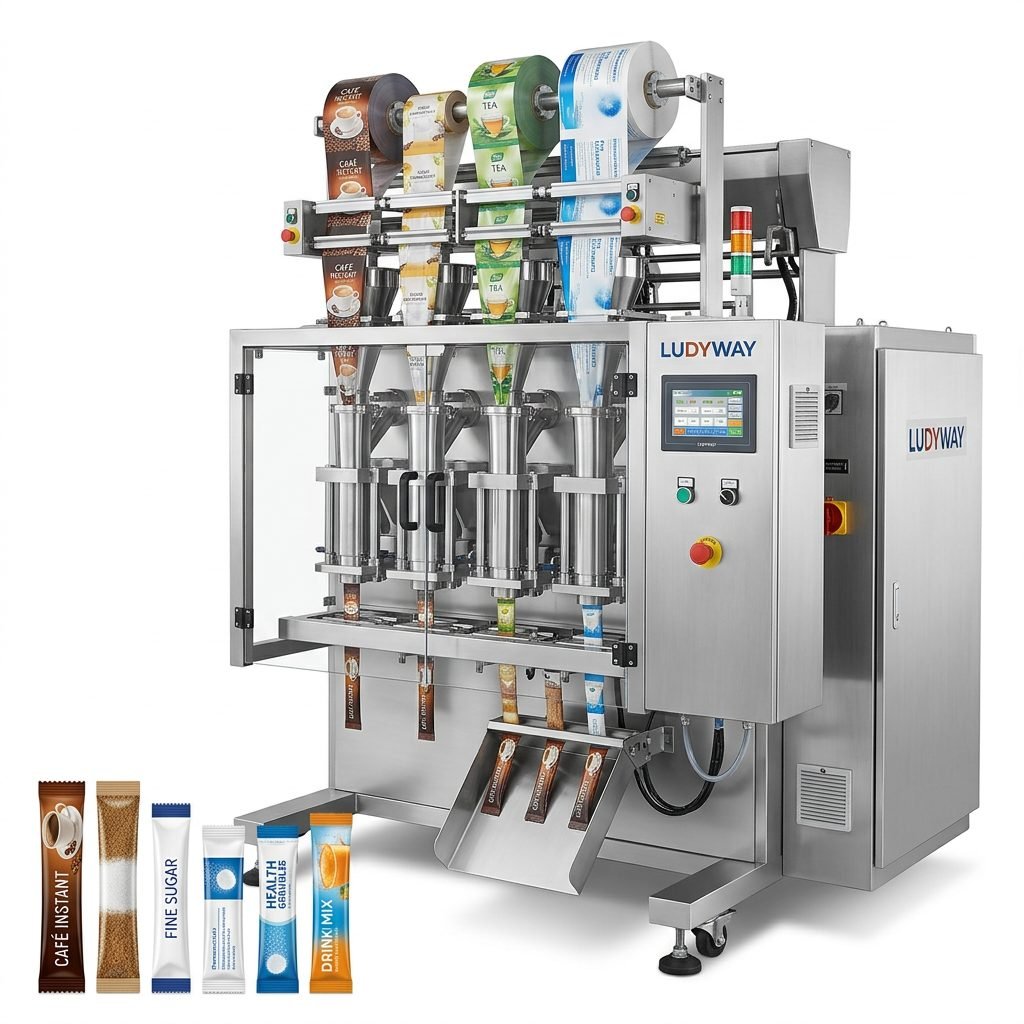
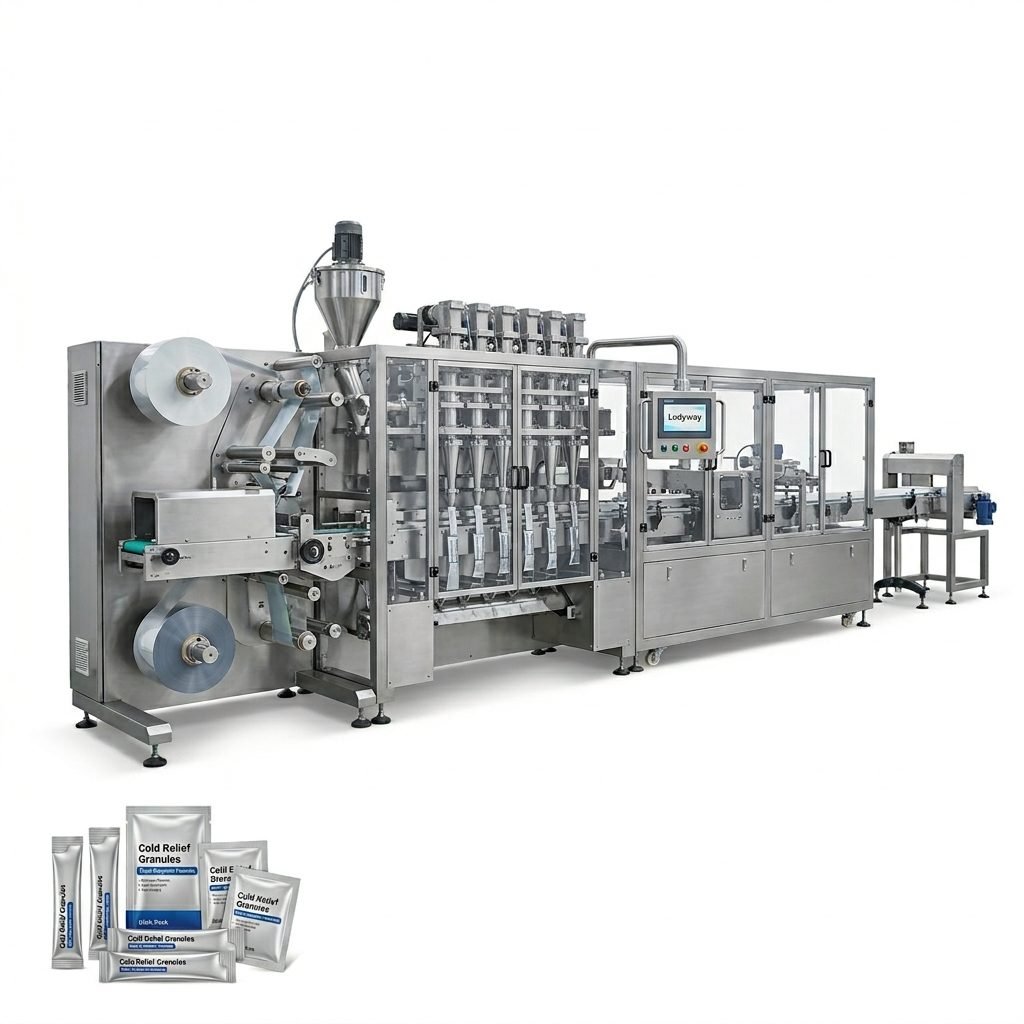
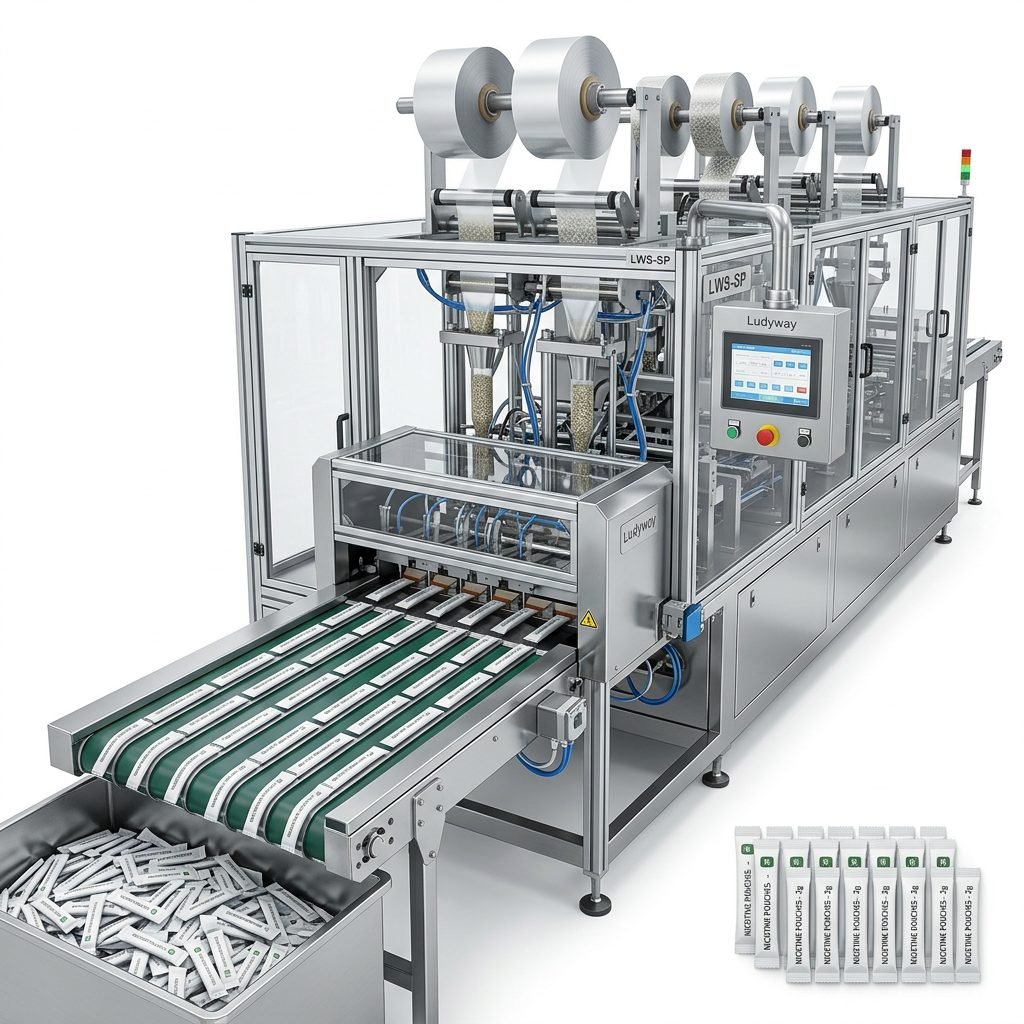
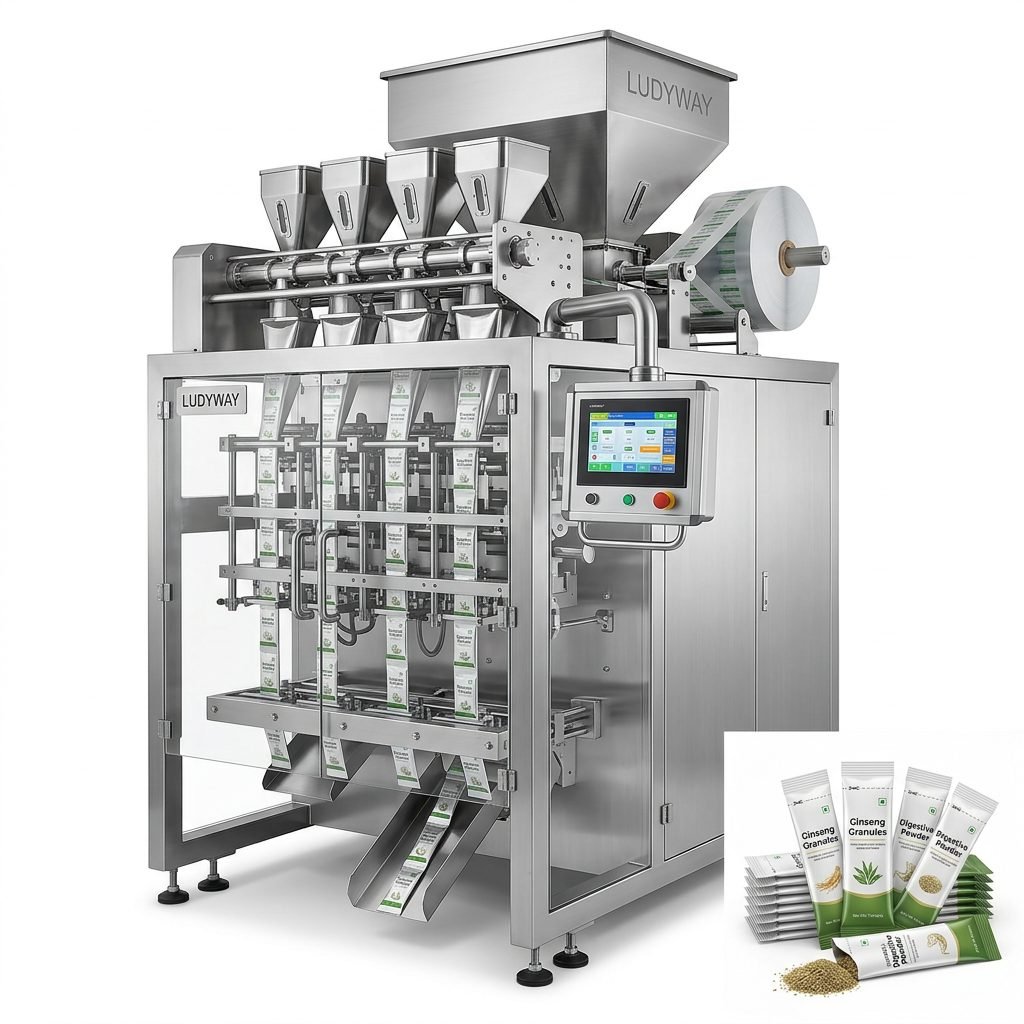
| Multi-lane stick pack / sachet machine | Jerky, meat sticks, freeze-dried meat, cure and seasoning sachets | 200–1,200 packs/min across 4–16 lanes | Lane count, dosing method, nitrogen flush option |
Specifications That Separate a Food-Grade Machine From a General-Purpose One
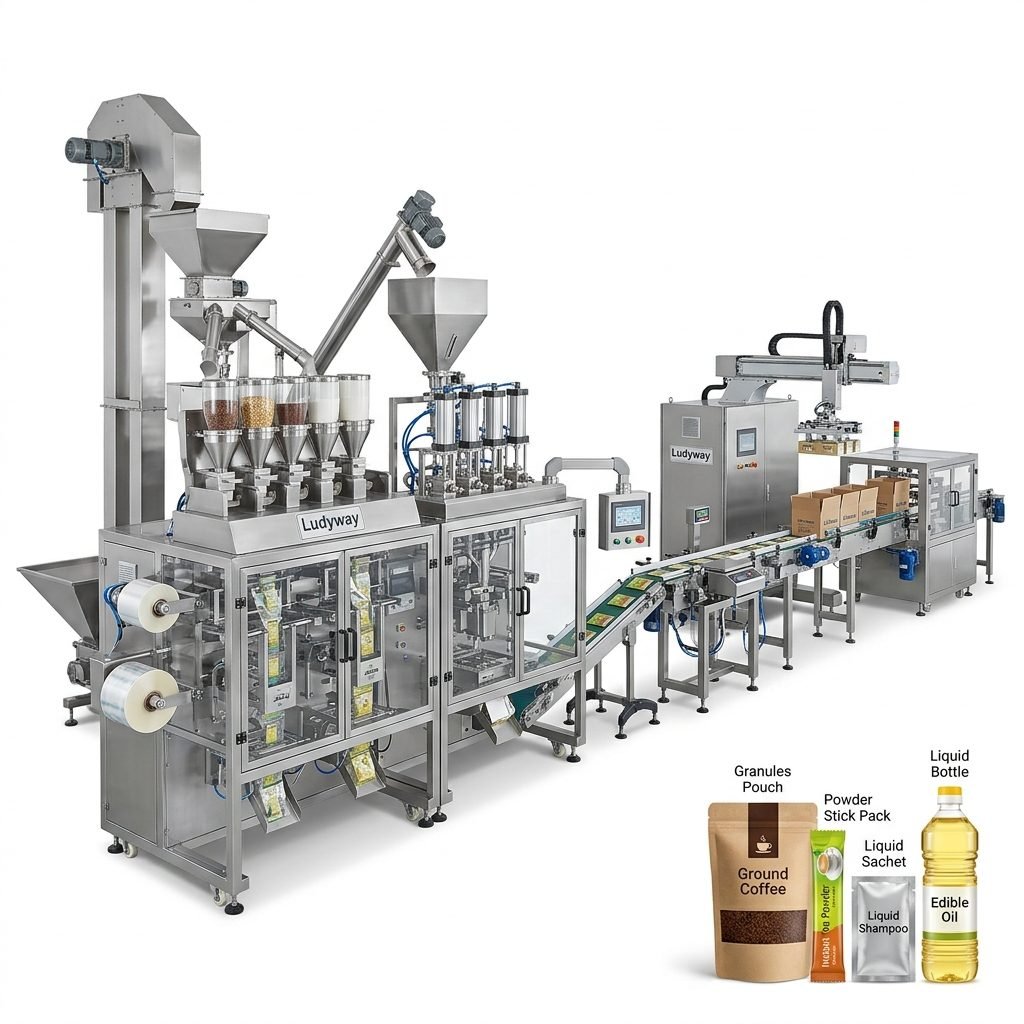
Hygienic-design packaging line with open frame construction for washdown access
Hygienic design and washdown rating
Raw meat and poultry areas are high-care or high-risk zones, so every contact surface should be AISI 304 stainless steel as a minimum, with 316 recommended where brines or acidic marinades are present. Look for sloped surfaces, no horizontal ledges, tool-free removal of belts and guards, and an IP65 or IP66 rating on electrical enclosures so the machine survives daily foaming and high-pressure rinsing.
Vacuum and gas performance
A chamber machine should reach at least 2–5 mbar absolute within its rated cycle time; pump capacity is what keeps that cycle short when packing warm, moist product. For MAP, ask for documented residual-oxygen test data, not just a gas mixer brochure. Seal bars should offer independent temperature control for PA/PE, EVOH-barrier and shrink films.
Dosing and weighing accuracy
For portion packs the cost driver is give-away. A well-tuned multihead weigher or volumetric doser should hold ±1–2% at target weight on diced product and tighter on dry snacks; integrate a checkweigher downstream to close the loop and reject out-of-spec packs automatically.
Compliance: What Auditors and Importers Expect to See
Packaging equipment itself is rarely the subject of a food regulation, but the materials it touches and the way it is designed are. In the United States, films, trays and any machine part in direct contact with food must comply with the FDA framework for packaging and food contact substances, and plants operating under USDA FSIS inspection are expected to demonstrate sanitary equipment design in their HACCP and SSOP documentation. In the EU, Regulation 1935/2004 governs food-contact materials and the newer Packaging and Packaging Waste Regulation increasingly shapes film choice toward mono-material recyclable structures.
Documentation checklist to request with any quotation
- CE declaration of conformity (Machinery Directive and EMC), or UL/CSA evaluation for North American sites
- Material certificates for all food-contact parts: stainless grade, FDA/EU-compliant plastics and belts
- Electrical schematics, PLC program backup and a spare-parts list with part numbers
- Factory acceptance test (FAT) protocol run with your actual product and film
- Installation qualification and operational qualification (IQ/OQ) templates if you supply retail chains or export markets
Inspection and Line Integration for Meat Processors
Bone fragments, broken blades and stray wire are the classic foreign-body risks in meat and poultry. A primary packaging machine should therefore be quoted as part of a line that includes an industrial metal detector for ferrous and stainless contaminants and, for bone and glass detection or sealed metallised packs, an X-ray inspection system. Retailers in the US, UK and EU increasingly specify X-ray on poultry portion lines as a condition of supply.
Downstream, a dynamic checkweigher enforces declared weight, a date coder applies lot and use-by data, and case packers and palletizers take labor out of the back end of the plant. Specifying these together means one PLC architecture, one HMI language and one service contact rather than five.
Conveying between stations should match the hygiene zone: modular plastic belt or stainless wire mesh in raw areas, with vacuum or screw conveyors reserved for dry seasonings and cure blends in the ingredient room.
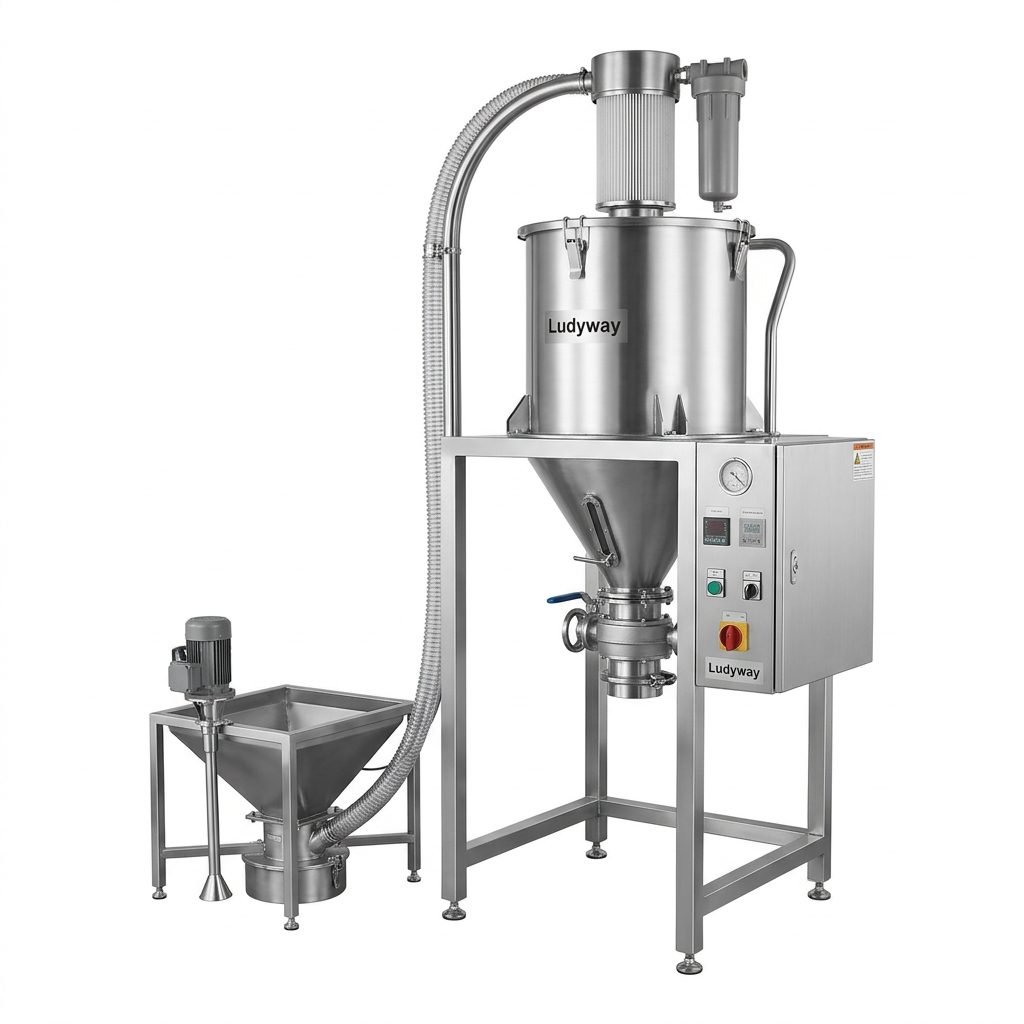
Closed vacuum conveying keeps dry cure and seasoning blends dust-free before packaging
The Secondary Packaging Most Meat Plants Underestimate
Walk through a modern poultry or beef processing facility and you will find a surprising number of small packs that have nothing to do with primals: single-serve marinade sachets for retail chicken kits, cure and rub portions for co-packers, bouillon and broth sticks made from rendering by-products, jerky and snack sticks for convenience channels, and freeze-dried meat treats for the pet aisle. These are high-margin lines, and they run on multi-lane stick pack and sachet technology rather than vacuum chambers.
Jerky, Meat Sticks and Freeze-Dried Protein
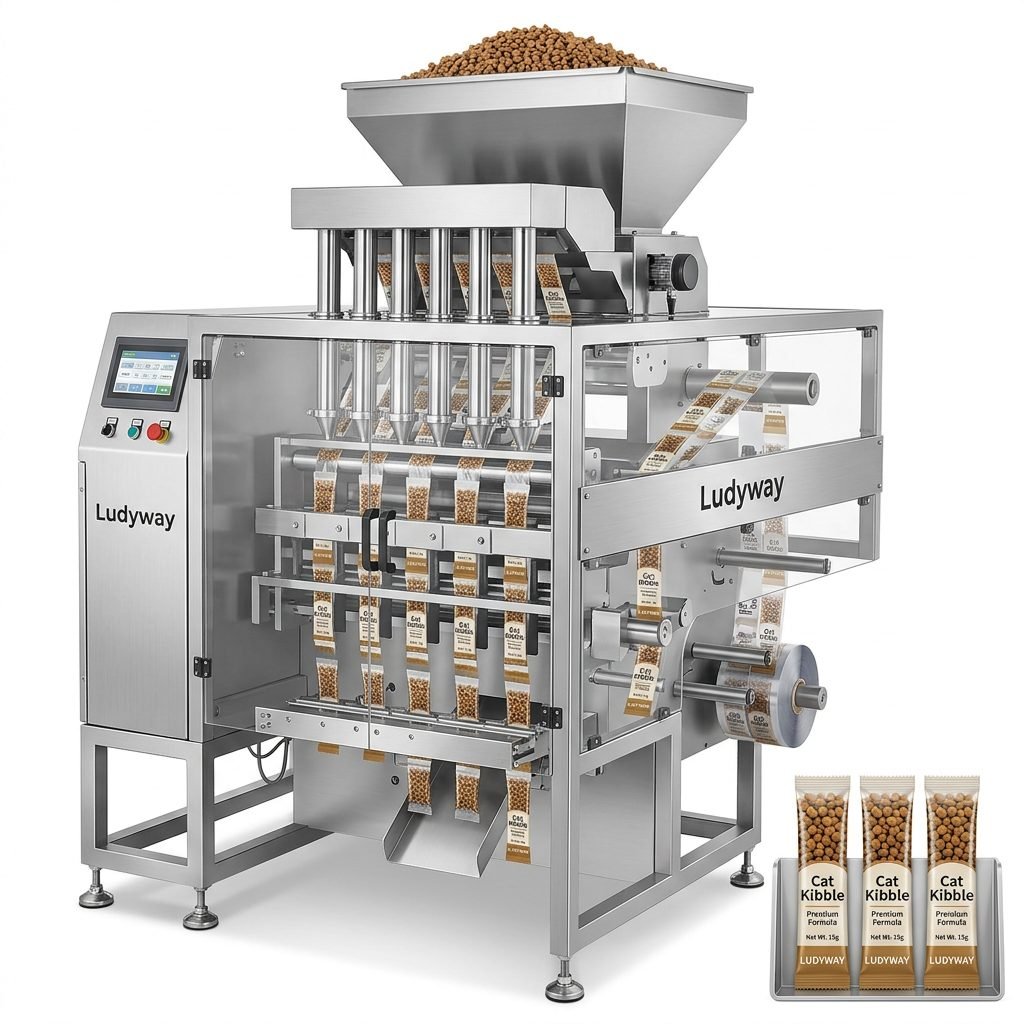
A beef jerky multi-lane stick pack machine dosing by weight or count into nitrogen-flushed packs replaces manual bagging at several hundred packs per minute. For freeze-dried beef, chicken and seafood, Ludyway supplies dedicated vacuum packaging systems that protect the fragile, hygroscopic product from oxygen and moisture pickup.
Marinades, Sauces, Cures and Seasonings
Liquid marinades and BBQ sauces run on a multi-lane sauce sachet packing machine with piston or pump fillers rated for viscous, particulate-laden product. Dry rubs, brine mixes and curing salts use auger dosing on a seasoning sachet packaging machine, with dust extraction and optional nitrogen flushing to preserve volatile flavors.
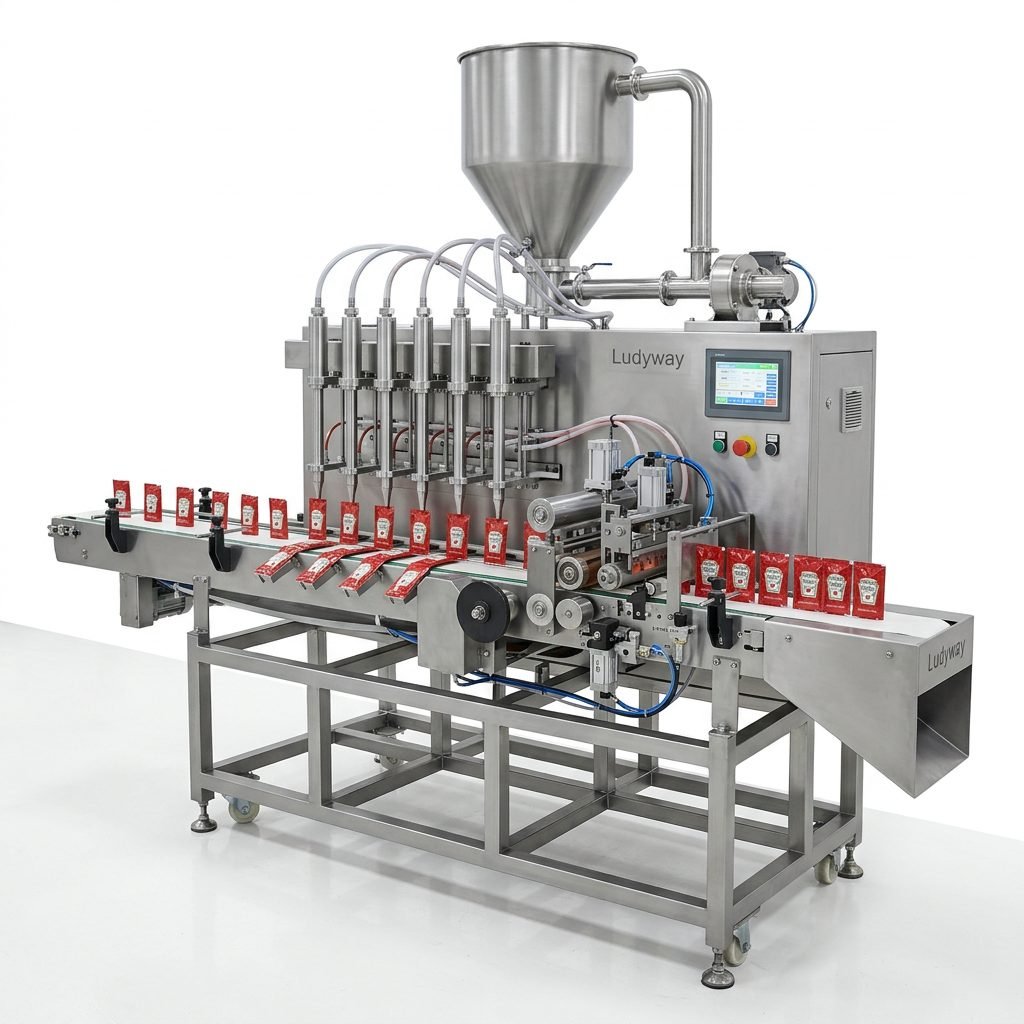
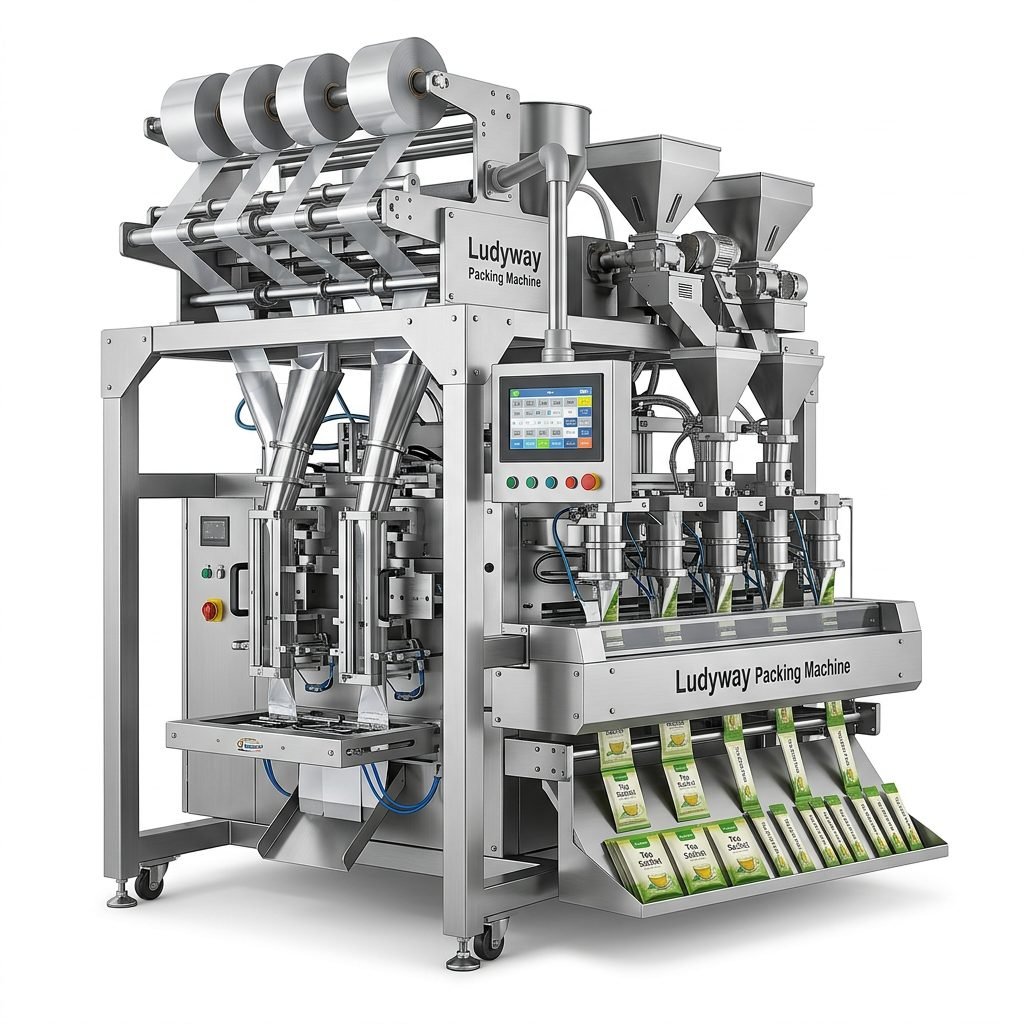
Multi-lane liquid sachet system used for marinade, sauce and brine portion packs
From Specification to Commissioning: A Five-Step Procurement Path
01
Define the pack
Product, weight range, film structure, target shelf life, packs per minute, and whether the line sits in a raw or cooked zone.
02
Send samples
Ship product and film to the manufacturer for dosing, seal and vacuum trials; request video and test packs back.
03
Review layout
Confirm footprint, utilities (air, power, nitrogen, drains), operator positions and integration with inspection and case packing.
04
Attend the FAT
Witness a factory acceptance test on your product, in person or via live video, before balance payment and shipment.
05
Install and train
On-site or remote commissioning, operator and maintenance training, and a documented spare-parts kit for the first year.
Why Food Processors Source Packaging Systems from Ludyway
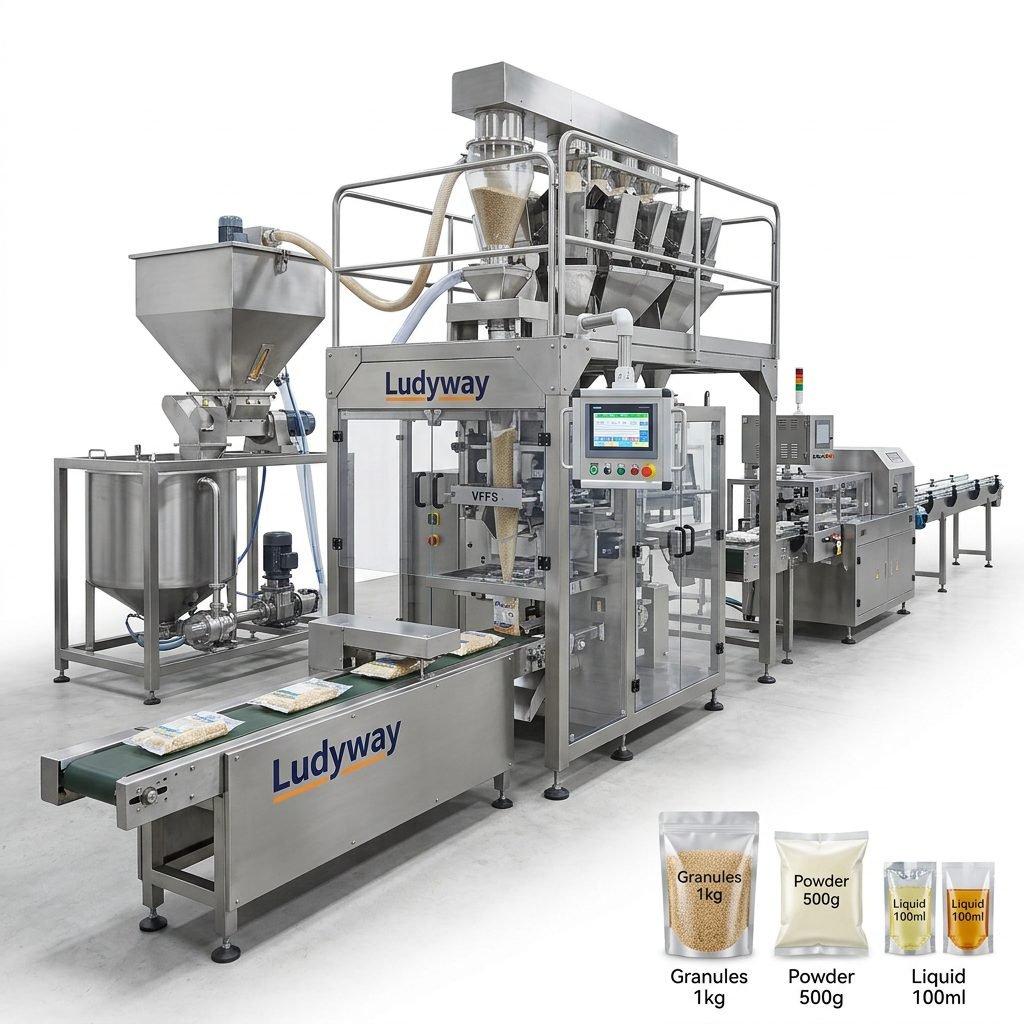
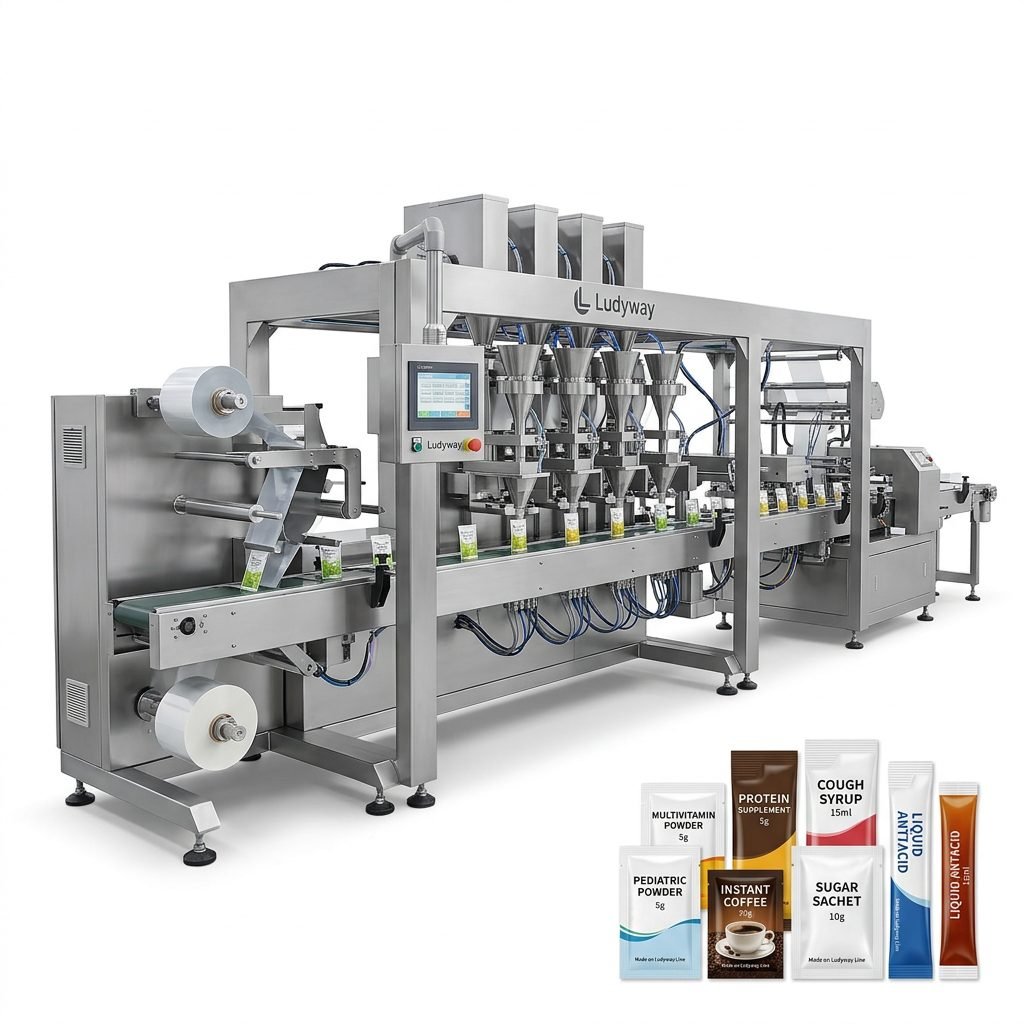
Ludyway automated filling and packaging line ready for factory acceptance testing
Founded in 1993 and based in Nanlang Town, Zhongshan, Guangdong, Ludyway is one of China’s largest packaging machine manufacturers, building equipment and turnkey production lines for the food, pharmaceutical and health industries. Its 20,000㎡ facility, 200+ manufacturing equipment units and a 130-strong engineering team produce more than 50 intelligent machine models, from industrial vacuum packaging machines and frozen food packaging lines to multi-lane stick pack, sachet and premade pouch systems with integrated nitrogen flushing.
For meat and poultry processors the practical advantages are hygienic stainless construction as standard, in-house line integration (weighing, inspection, coding, case packing and palletizing from one supplier) and cost-effective pricing relative to European builders, backed by service in over 100 countries. Independent coverage of the company’s export growth is available via EIN Presswire.
30+
Years
50+
Machine models
100+
Countries served
Meat, Poultry and Frozen Food Packaging Systems
Industrial Vacuum Packaging Machine
Primary Packaging, Vacuum & Shrink
Request a Quotation
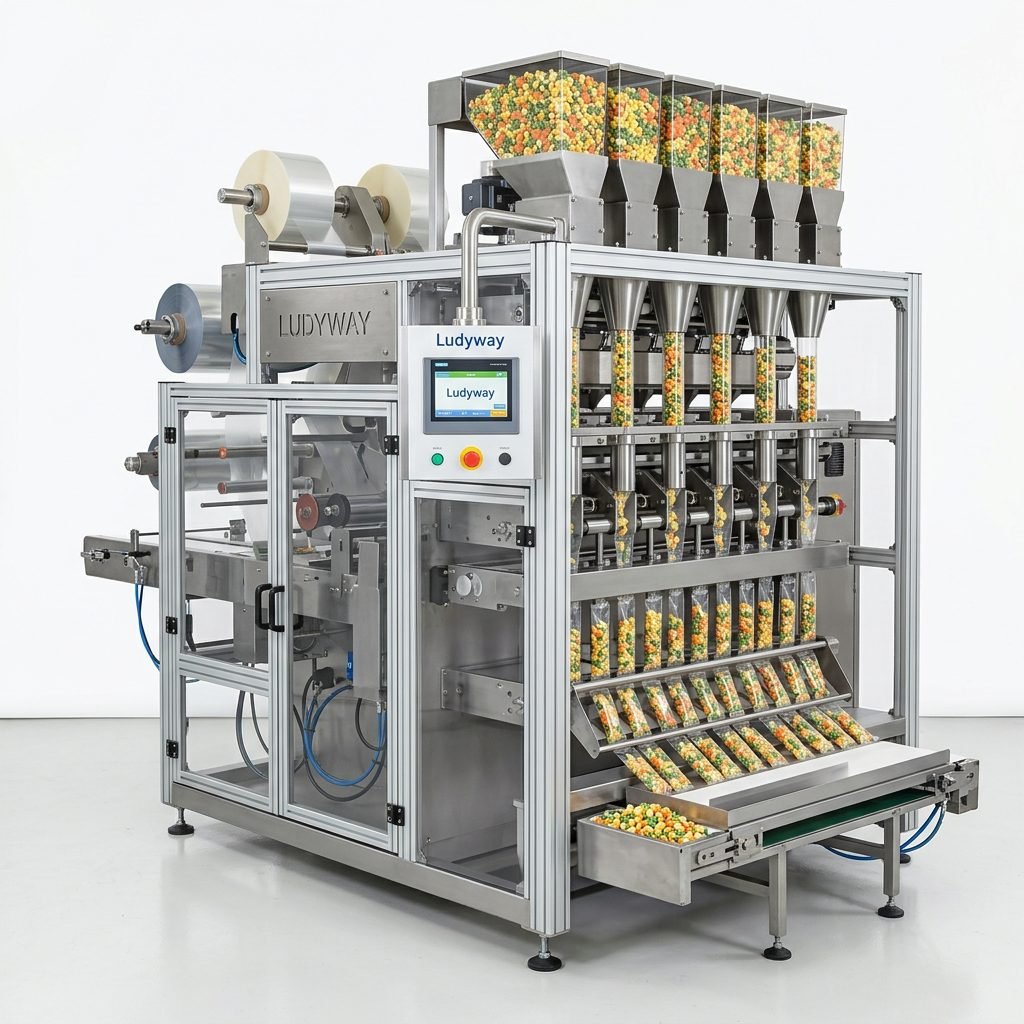
Freeze-Dried Beef Vacuum System
Freeze-Dried Meat, Vacuum Sealed
Request a Quotation
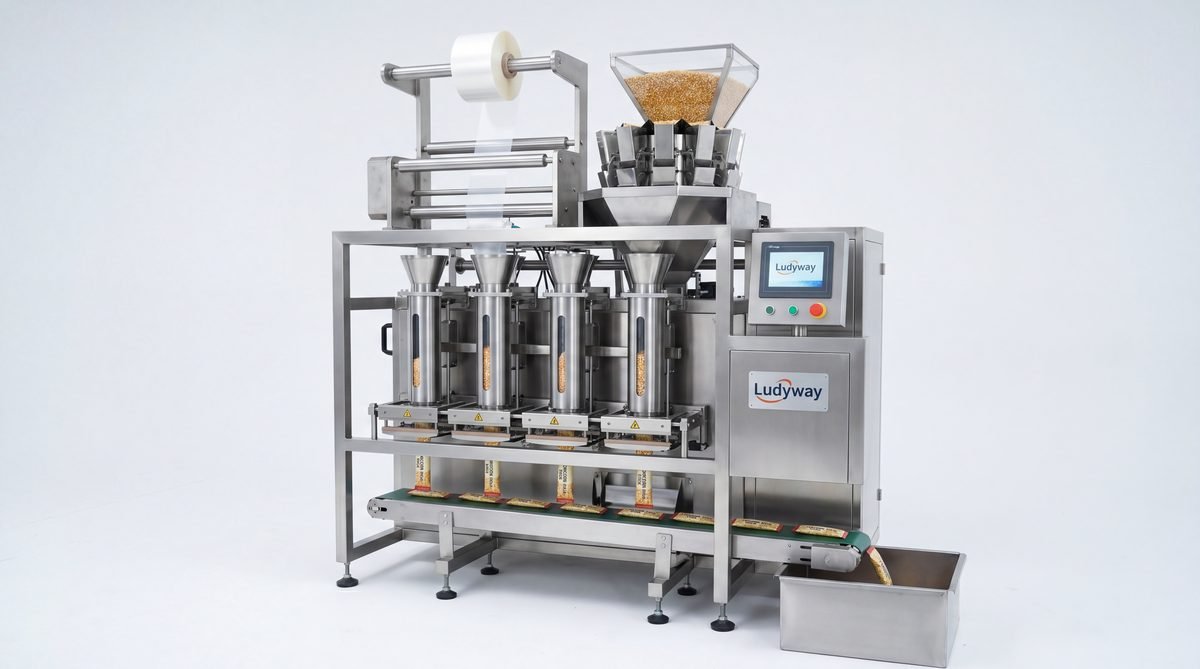
Beef Jerky Stick Pack Machine
Meat Snacks, Multi-Lane Stick Pack
Request a Quotation
Frozen Food Packaging Machine
IQF Poultry & Meat, Portion Control
Request a Quotation
Commercial Terms: MOQ, Lead Time and How Quotations Are Structured
Packaging machinery is sold as capital equipment, so the minimum order is normally one machine; multi-unit and full-line orders attract project pricing. Standard models typically ship in 30–45 days after deposit, while customised lines with inspection, cartoning and palletizing integration run 60–120 days including FAT. Quotations are issued per configuration on EXW, FOB Shenzhen or Guangzhou, or CIF terms, with payment usually structured as a deposit on order and balance after acceptance testing.
What a complete RFQ should include
- Product description with photos, piece size and temperature at packing
- Target weights, pack dimensions and film or tray specification
- Required speed, shifts per day and planned growth
- Plant voltage and frequency, compressed air availability, nitrogen supply
- Destination country for certification and documentation
What Ludyway includes in a project proposal
- Machine configuration sheet with model, lane count and change parts
- Line layout drawing and utility consumption table
- FAT protocol, warranty terms and first-year spare parts list
- Installation, commissioning and training scope
- Optional service agreement and remote diagnostics
Industry benchmarks for automation payback and line performance are published annually by PMMI in its State of the Industry reports, and the Flexible Packaging Association maintains useful film and sustainability resources that help when choosing between barrier structures for chilled and frozen protein.
Frequently Asked Questions
Which packaging machine extends fresh poultry shelf life the most?
For whole birds and bone-in cuts, vacuum or vacuum-shrink packing delivers the longest chilled life. For retail portions, a tray sealer or thermoformer with a CO₂/N₂ modified atmosphere gives 7–14 days with better presentation. Either way, residual oxygen control and cold-chain discipline matter more than the brand of machine.
Can one machine handle both fresh meat and frozen IQF product?
Rarely in an efficient way. Fresh product favours vacuum, tray or pouch systems, while frozen diced chicken and meatballs run best on a VFFS bagger with a multihead weigher. Ludyway frequently quotes a two-cell layout sharing one inspection and case-packing back end.
Do I need X-ray if I already have a metal detector?
Metal detectors cannot see bone, glass or dense plastic and struggle with metallised or foil packs. If you process poultry portions or supply retailers with foreign-body specifications, X-ray is usually a contractual requirement rather than an option.
What films are compatible with Ludyway vacuum and pouch machines?
Standard PA/PE vacuum bags, EVOH high-barrier laminates, shrink bags and retortable pouch structures are supported, with seal temperature, pressure and dwell set independently per film. Send film samples with your product so the FAT can confirm seal strength on your actual material.
How is after-sales service handled for overseas plants?
Machines ship with English manuals, electrical drawings and a recommended spare-parts kit. Commissioning is performed on site or through guided remote start-up, and PLC remote access allows Ludyway engineers to diagnose faults without a site visit in most cases.
Ready to specify your meat or poultry packaging line?
Send your product details, target pack format and required output to info@ludyway.com or message the engineering team on WhatsApp at +86 131 2959 2456. You will receive a configuration proposal, a line layout and an invitation to run sample trials, or to visit the Zhongshan factory and see comparable systems in production. Full catalogues for vacuum, frozen food, pouch and multi-lane portion-pack machinery are available on request.