Packaging machine cost is rarely a single number. A compact semi-automatic sachet filler can be sourced for a few thousand dollars, while a fully integrated multi-lane stick pack line with checkweighing, cartoning and palletizing can run well past a million. The gap is driven by automation level, number of lanes, dosing technology, output speed, material grade, control components and the compliance standards your product must meet. For procurement managers, plant engineers and distributors, understanding how each of these variables moves the quotation is the fastest way to compare offers on a like-for-like basis.
This guide breaks down realistic packaging equipment prices by machine type and automation tier, explains the investment factors that quietly inflate (or reduce) total cost of ownership, and shows how to calculate payback before signing a purchase order. The figures below are indicative international market ranges in USD; final pricing always depends on your product characteristics, pack format, speed target and site requirements, which is why serious buyers move quickly from benchmark ranges to a specification-based quotation.
Key takeaway: the purchase price of a packaging machine usually represents only 55–70% of its five-year total cost. Film waste, changeover downtime, energy, spare parts, operator headcount and after-sales response time make up the rest, and they vary far more between suppliers than the sticker price does.
What Determines the Cost of a Packaging Machine
Before comparing price lists, it helps to understand which engineering decisions carry the most weight in a quotation. The six factors below typically explain more than 80% of the price difference between two machines that appear to do the same job.
1. Automation Level
Manual bag placement, semi-automatic filling with manual sealing, fully automatic form-fill-seal, or an integrated line with upstream feeding and downstream cartoning. Each step roughly doubles the capital cost but cuts labour per unit by a similar factor.
2. Number of Lanes and Speed
A single-lane sachet machine produces 30–80 packs per minute. A 10-lane stick pack machine running 40 cycles per minute delivers 400 packs per minute from one footprint. Lane count is the single largest driver of multi-lane machine pricing.
3. Dosing Technology
Volumetric cups are cheapest; auger fillers for powders cost more; piston or peristaltic pumps for viscous liquids and multihead weighers for irregular granules sit at the top. Dosing accuracy (±0.5% vs ±2%) also directly affects product giveaway cost.
4. Materials and Hygiene Design
SUS304 stainless frames are standard for food; SUS316L contact parts, tool-less disassembly, washdown IP65 ratings and GMP cleanroom finishes for pharmaceutical or nutraceutical plants can add 10–25% to the base price.
5. Control and Drive Components
Servo-driven film pull and sealing jaws versus mechanical cam drives, plus the PLC and HMI brand (Siemens, Allen-Bradley, Omron, Mitsubishi or domestic), influence both price and local maintenance availability.
6. Inspection and Integration
Date coders, checkweighers, metal detectors, vision systems, reject stations and conveyors are frequently quoted as options. Budget 15–40% on top of the base machine for a line that is genuinely production-ready.
Packaging Machine Price Ranges by Equipment Type
The table below gives indicative international price bands for the most commonly specified packaging equipment categories. Lower ends generally reflect Asian-manufactured machines with standard components; upper ends reflect higher lane counts, servo drives, hygienic design and premium brand controls. European and North American OEMs typically price 2–3.5 times above these ranges for comparable output.
| Machine Type | Typical Output | Indicative Price Range (USD) | Best Suited For |
|---|---|---|---|
| Semi-automatic sachet / pouch filler | 10–30 packs/min | $3,000 – $15,000 | Start-ups, pilot batches, test marketing |
| Single-lane VFFS sachet machine | 30–80 packs/min | $15,000 – $60,000 | Snacks, seasonings, sugar, small-batch powders |
| Multi-lane stick pack machine (4–12 lanes) | 200–600 sticks/min | $45,000 – $180,000 | Instant coffee, protein, electrolytes, pharma granules |
| Multi-lane 4-side-seal sachet machine | 150–500 sachets/min | $50,000 – $200,000 | Liquids, creams, sauces, cosmetics samples |
| Rotary premade pouch (doypack) machine | 30–120 pouches/min | $40,000 – $150,000 | Pet food, nuts, frozen food, premium retail packs |
| VFFS with multihead weigher | 40–150 bags/min | $35,000 – $120,000 | Granules and irregular pieces: chips, dried fruit, kibble |
| Pharmaceutical blister machine | 100–400 blisters/min | $60,000 – $300,000 | Tablets, capsules, GMP-regulated production |
| Turnkey line with cartoning, case packing, palletizing | Project specific | $250,000 – $2,000,000+ | High-volume food, pharma, nutraceutical and chemical plants |
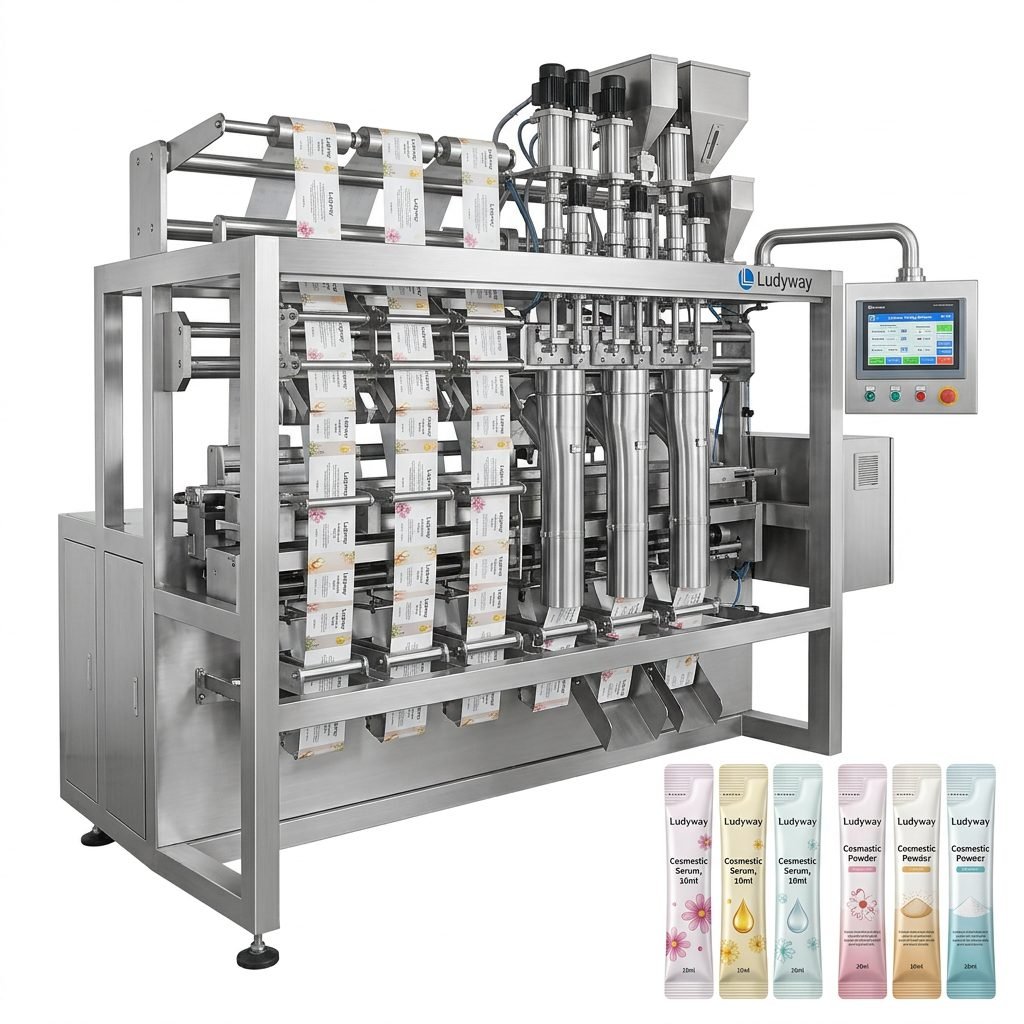
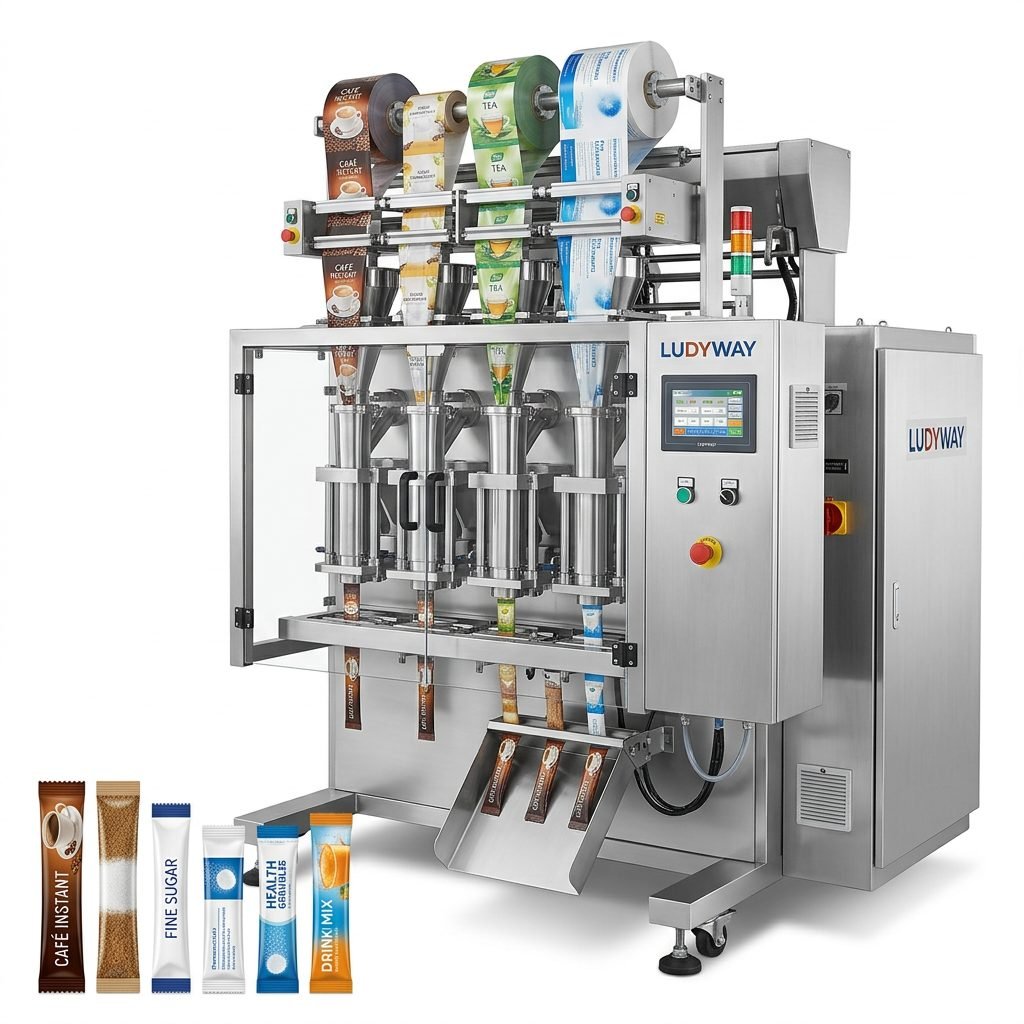
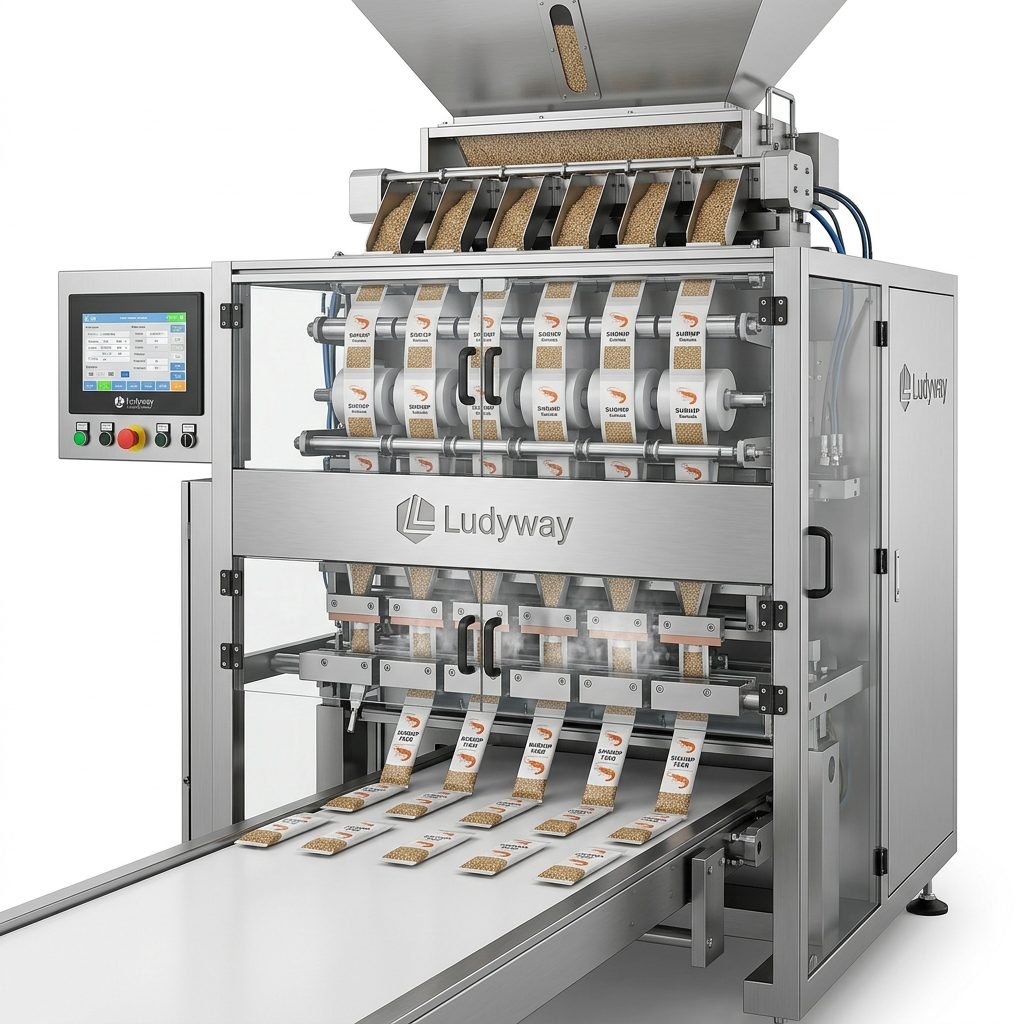
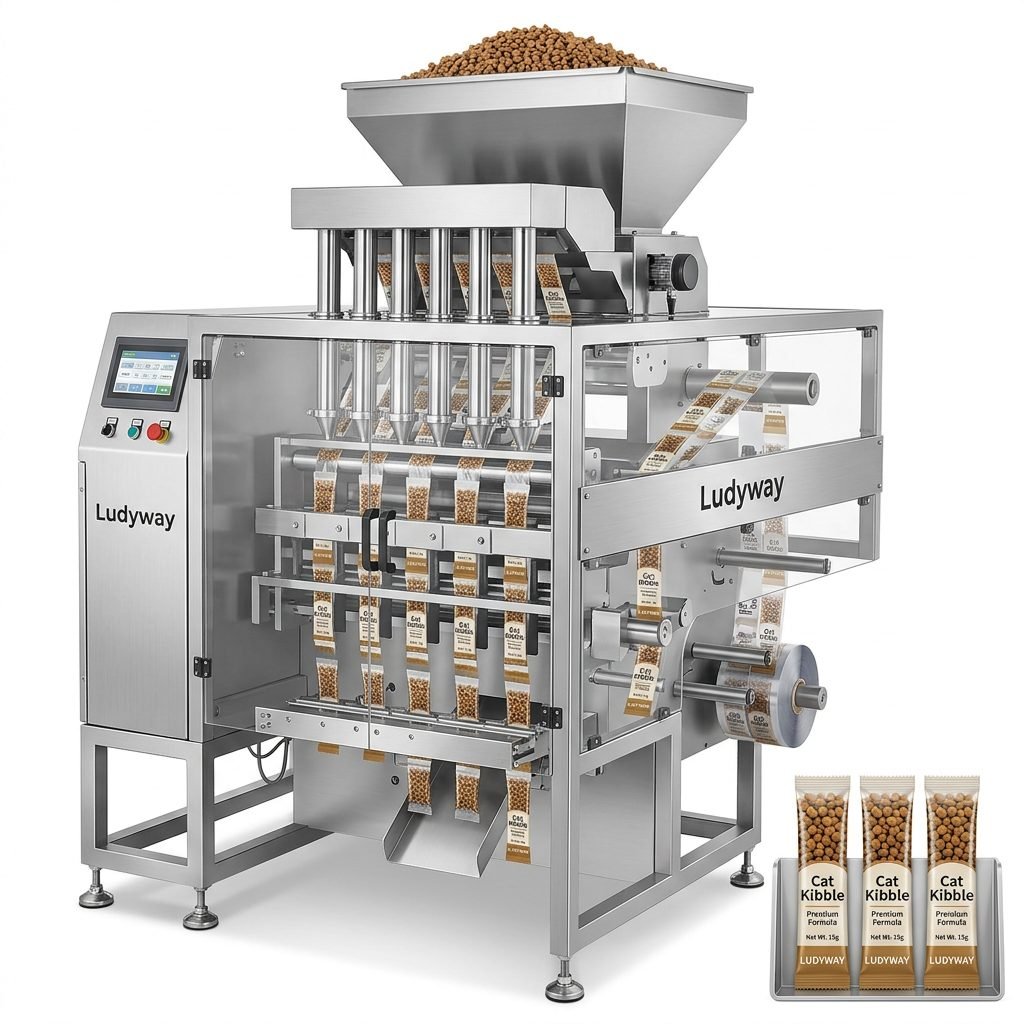
Multi-lane stick pack machines spread capital cost across hundreds of packs per minute.
Why Multi-Lane Machines Change the Cost-Per-Pack Equation
A single-lane machine at $25,000 producing 60 packs per minute costs roughly $417 of capital per pack-per-minute of capacity. An 8-lane stick pack machine at $90,000 producing 320 packs per minute costs about $281 per pack-per-minute, and it needs the same single operator. On high-volume SKUs such as instant coffee, sugar sticks or electrolyte powder, the multi-lane format usually wins on total cost within the first year.
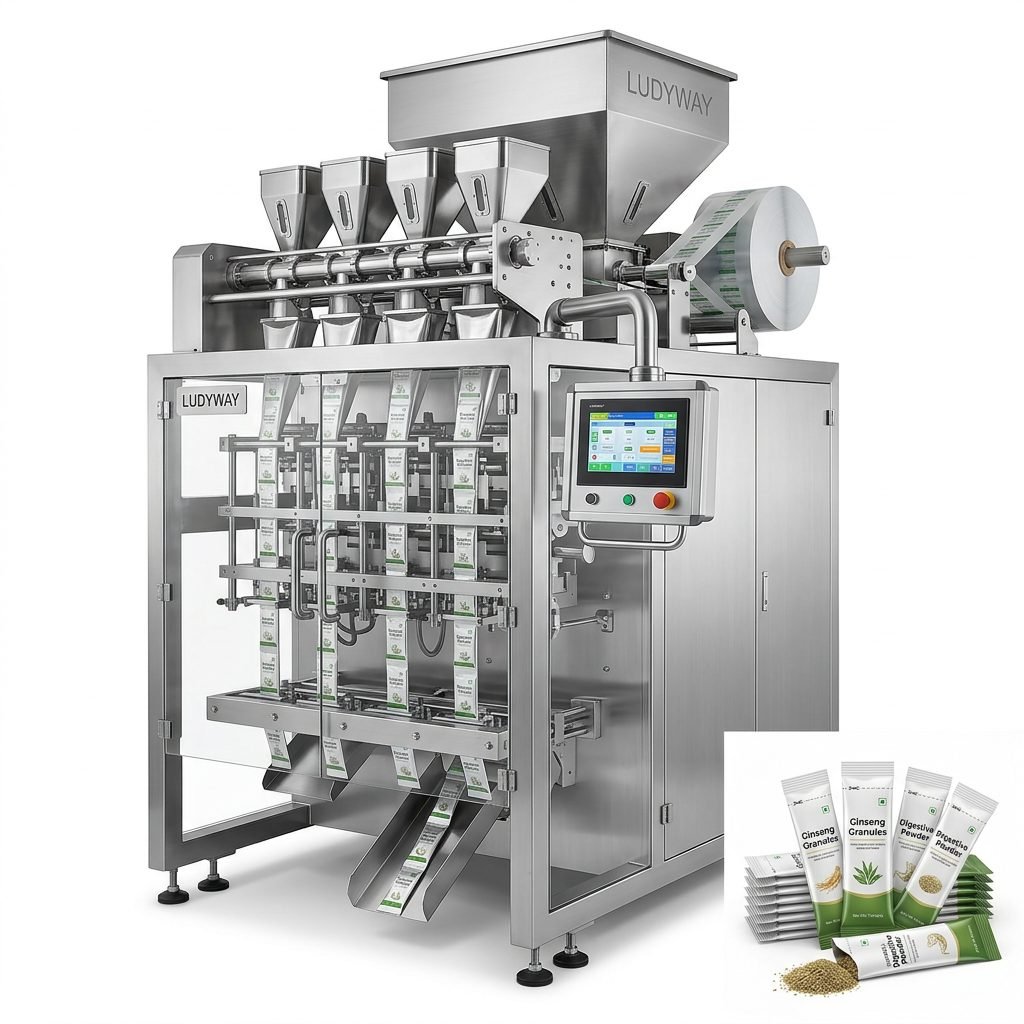
Lane count should match realistic demand, however. Running a 12-lane machine at 40% utilisation wastes capital and complicates film procurement. Most mid-size brands find 4 to 8 lanes the sweet spot, with the option to specify a frame that accepts additional lanes later. See the multi-lane powder packaging machine configurations for examples of how lane count, film width and dosing are combined.
Packaging Equipment Cost by Automation Tier
Buyers often describe their need as “an automatic machine” when the real decision is which functions must be automated today and which can be added later. The tiers below show how scope and price scale together.
Tier 1
Semi-Automatic
Operator loads bags or pouches; machine doses and seals. Typically 1–2 operators per station.
Budget: under $20,000. Payback usually measured against pure manual packing.
Tier 2
Stand-Alone Automatic
Form-fill-seal from roll film, with integrated dosing and date coding. One operator monitors film and hopper levels.
Budget: $20,000–$80,000 depending on lanes and dosing type.
Tier 3
Automatic with Inspection
Adds vacuum or screw feeding, checkweigher, metal detector and reject system. Required for most retail and pharma contracts.
Budget: $80,000–$250,000 for multi-lane configurations.
Tier 4
Turnkey Line
Primary packaging plus counting, cartoning, case packing, palletizing and line-level data integration.
Budget: $250,000 to several million, quoted per project after layout study.
Hidden Costs That Change the Real Price
Two quotations $20,000 apart can reverse positions once operating costs are modelled. Film waste is the most underestimated factor: a machine with poor registration control may waste 3–5% of laminate versus under 1% on a servo-driven machine, which on a line consuming $300,000 of film per year equals $9,000–$12,000 annually.
Changeover time matters for multi-SKU producers. Tool-less format changes of 20–30 minutes versus 2 hours with mechanical adjustments translate directly into available production hours. Spare parts pricing and lead time, remote diagnostics capability, and whether installation, commissioning and operator training are included in the quotation should all be itemised before comparing suppliers.
Energy consumption, compressed air demand, floor space and the cost of upstream feeding equipment such as vacuum feeders for granules and powders complete the picture. A well-structured RFQ asks for all of these as separate line items.
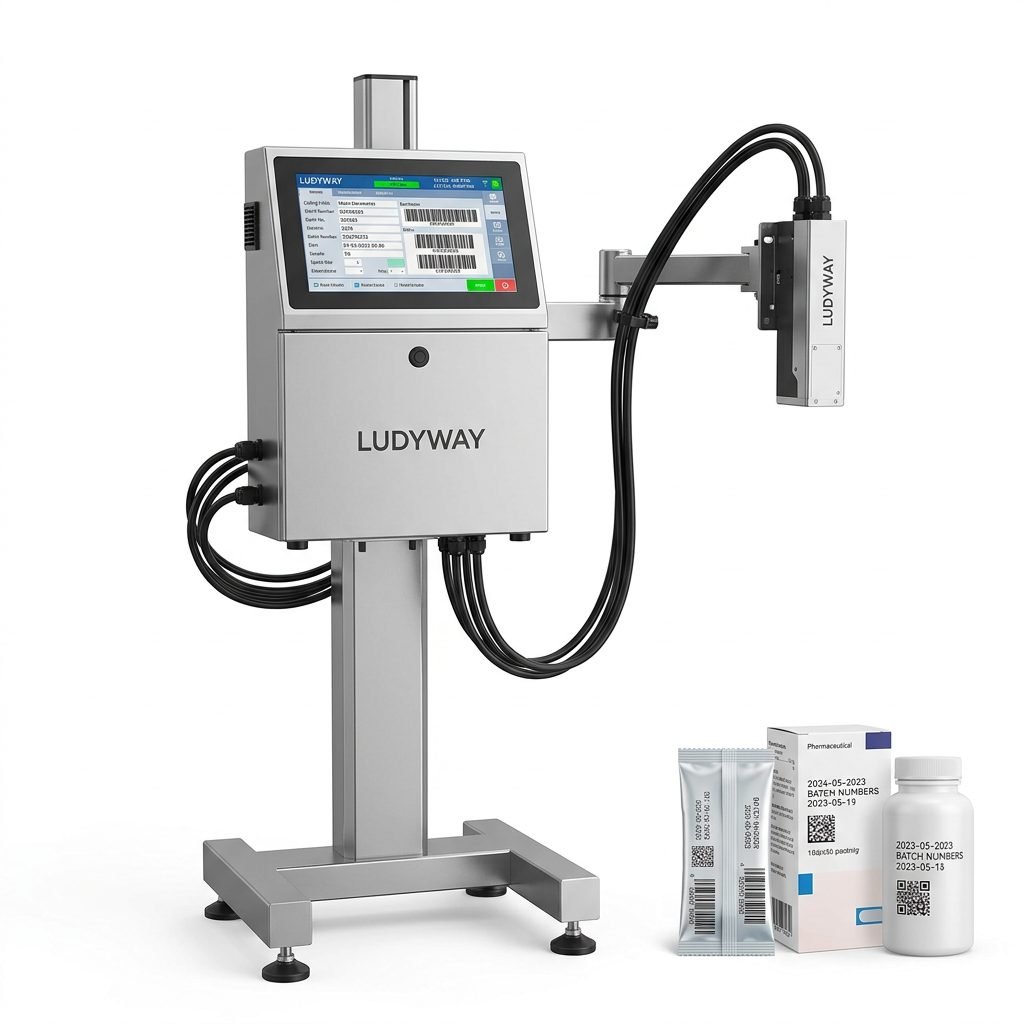
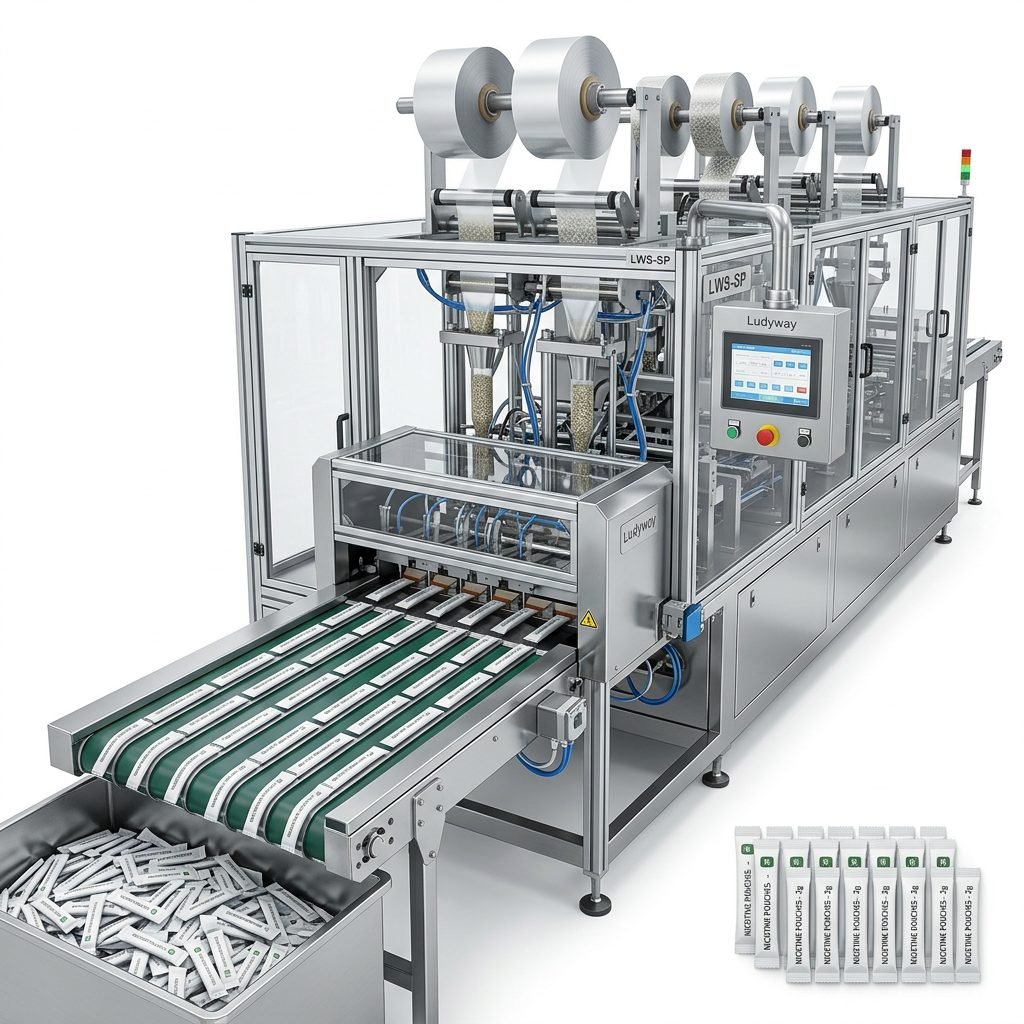
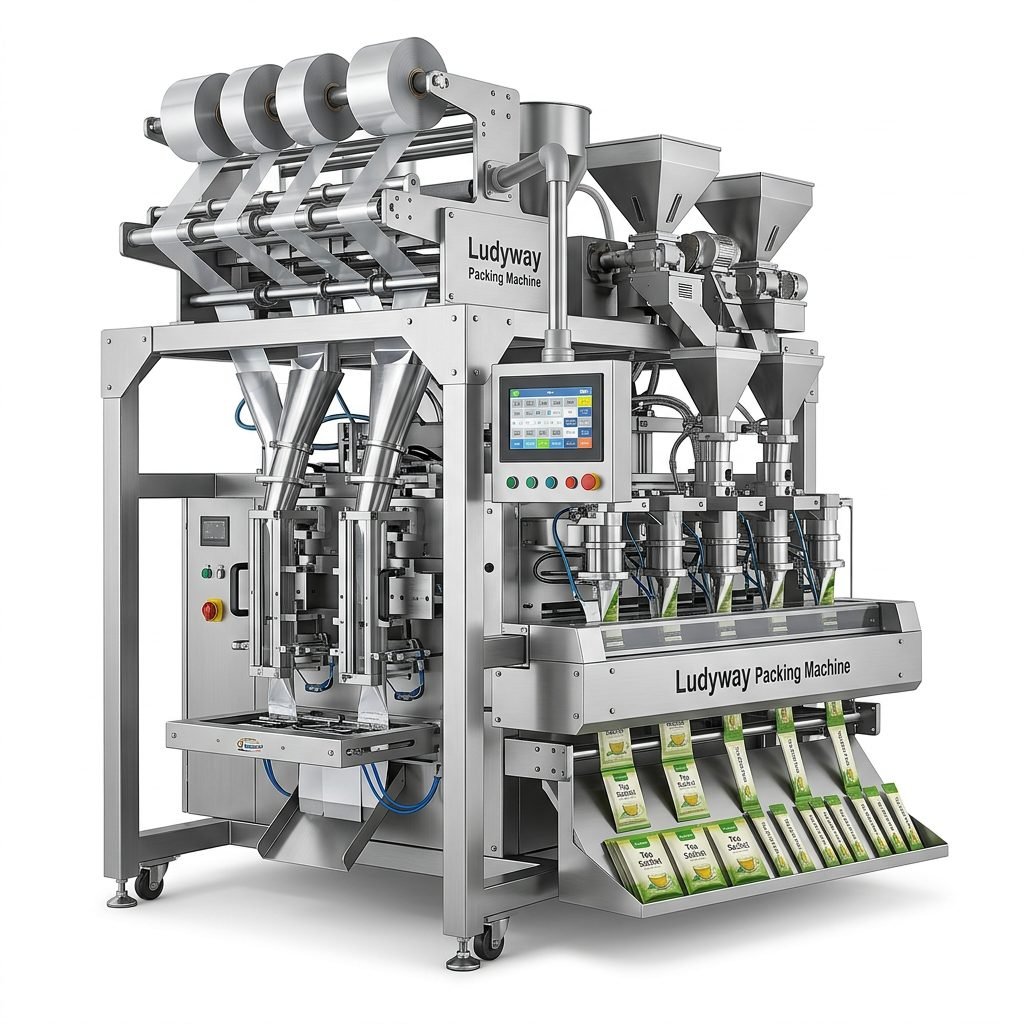
Coding, inspection and conveying options are often quoted separately from the base machine.
Compliance Requirements That Affect Equipment Pricing
Regulatory scope is a price multiplier that buyers should define before requesting quotations. The same stick pack machine may be quoted at three different levels depending on whether it packs seasoning for a regional food brand, a dietary supplement for export, or a sterile pharmaceutical granule.
- Food contact materials: product-contact parts in SUS304 or SUS316L, food-grade seals and lubricants, with documentation aligned to FDA food contact substance guidance or EU 1935/2004 for export markets.
- CE marking: machinery directive conformity, guarding, emergency stops and electrical safety documentation are standard for European shipments and increasingly requested by buyers in the Middle East, Africa and Latin America.
- GMP and pharmaceutical validation: IQ/OQ/PQ documentation, cleanroom-compatible finishes, 21 CFR Part 11 audit trails on the HMI, and in medical device applications, sealing processes validated to ISO 11607 for sterile barrier systems.
- Explosion and dust protection: ATEX-rated motors and dust collection for fine powders such as flour, starch or certain chemicals add meaningful cost but are not optional in those environments.
- Electrical standards: UL/CSA-listed components for North America, or specific voltage and frequency requirements (208V/60Hz, 380V/50Hz, 415V/50Hz) that must be confirmed before manufacturing begins.
Industry data from PMMI’s 2026 State of the Industry report highlights continued demand for flexible, multi-format machinery and for automation that reduces dependence on scarce skilled labour. Both trends favour servo-driven multi-lane systems with quick changeover, and both are reasons why buyers increasingly evaluate machines on throughput per operator rather than on purchase price alone.
How to Calculate Packaging Machine ROI Before You Buy
A disciplined payback calculation is more useful than any benchmark table because it uses your own labour rates, volumes and film costs. The five-step method below is what experienced procurement teams run before shortlisting suppliers.
Step 1
Define annual volume per SKU and realistic peak demand for the next 3–5 years.
Step 2
Calculate current cost per pack: labour, film waste, giveaway, rework and outsourcing fees.
Step 3
Model the same costs with the proposed machine at a realistic 70–80% OEE.
Step 4
Add the full landed cost: machine, options, freight, duties, installation, training and first-year spares.
Step 5
Divide landed cost by monthly savings to get payback; compare against your capital hurdle rate.
Worked Example: 8-Lane Stick Pack Machine for Instant Beverage Powder
A beverage brand packing 25 million sticks per year with twelve manual operators across two shifts evaluates an 8-lane servo stick pack machine with auger dosing, checkweigher and landed cost of $118,000. The new line requires two operators. Labour saving is approximately $7,500 per month; film waste reduction from 4% to 1% saves about $900 per month; tighter dosing accuracy reduces product giveaway by roughly $1,100 per month.
Total monthly savings of about $9,500 produce a simple payback of 12–13 months, before counting the capacity to take on contract packing work. Scenarios like this are why automated instant beverage packaging machines are among the most frequently financed equipment categories in the food sector.
Chinese vs European Packaging Machine Manufacturers: Cost and Value Comparison
The most common strategic question in packaging equipment procurement is whether to source from established European or Japanese OEMs or from leading Chinese manufacturers. The honest answer is that the gap in build quality has narrowed considerably over the past decade, while the price gap remains wide. The comparison below reflects typical market conditions rather than any single supplier.
| Evaluation Factor | Leading Chinese Manufacturers | European / Japanese OEMs |
|---|---|---|
| Purchase price (comparable output) | Baseline | Typically 2–3.5× baseline |
| Standard lead time | 45–90 days for standard models; 90–150 days for lines | 6–12 months common |
| Control components | Siemens, Omron, Schneider or Mitsubishi available on request; domestic brands as standard | Siemens, B&R, Rockwell as standard |
| Customisation flexibility | High; product-specific dosing and format changes at modest cost | High but engineering hours priced at premium rates |
| After-sales model | Remote support, video commissioning, engineer dispatch, regional agents in major markets | Local service networks in home regions; costly elsewhere |
| Spare parts cost | Low; many wear parts are generic | High; proprietary parts common |
The practical implication: for standard sachet, stick pack, pouch and powder applications, a well-established Chinese manufacturer with CE documentation, branded controls and a proven export track record delivers the lowest total cost of ownership for most buyers. Premium European equipment retains an advantage in ultra-high-speed pharmaceutical lines and in markets where a local service contract is mandated by the end customer.
Ludyway: Cost-Effective Packaging Machinery Backed by 30 Years of Engineering
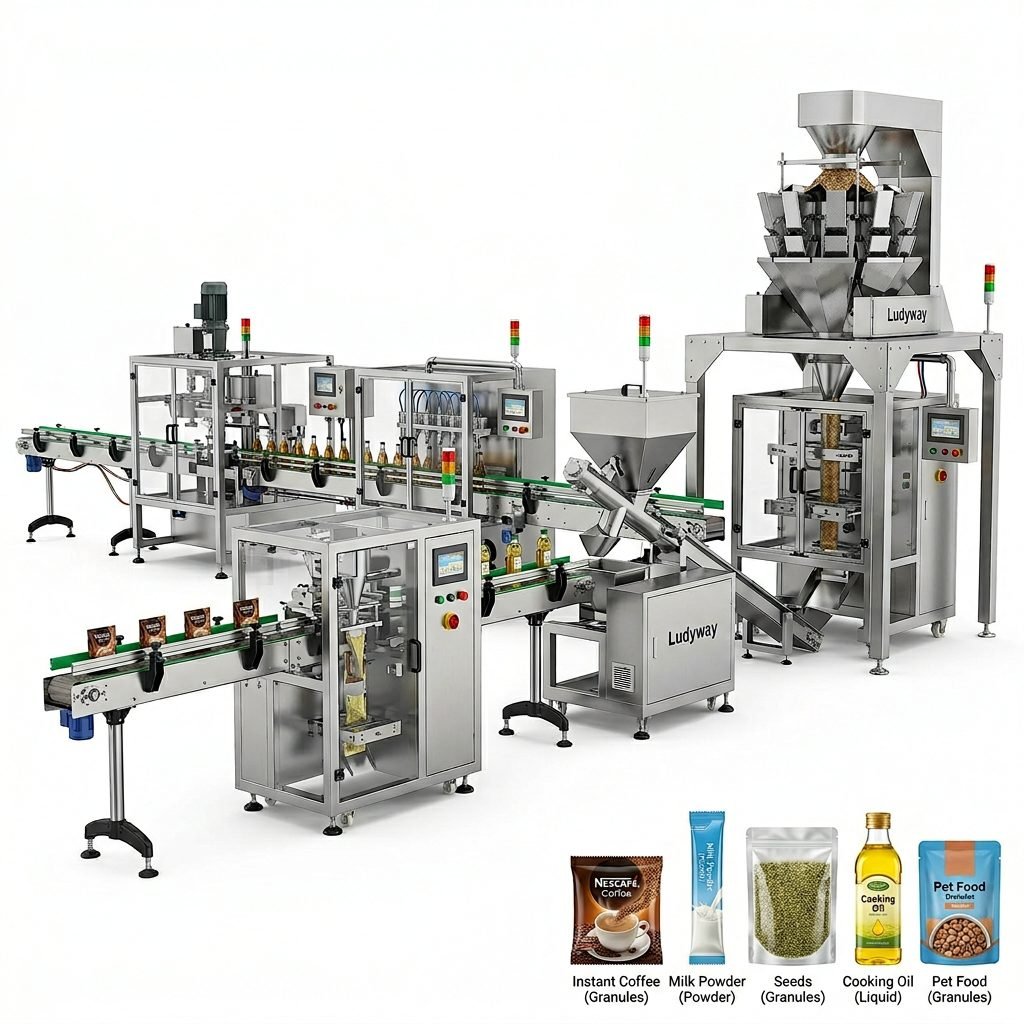
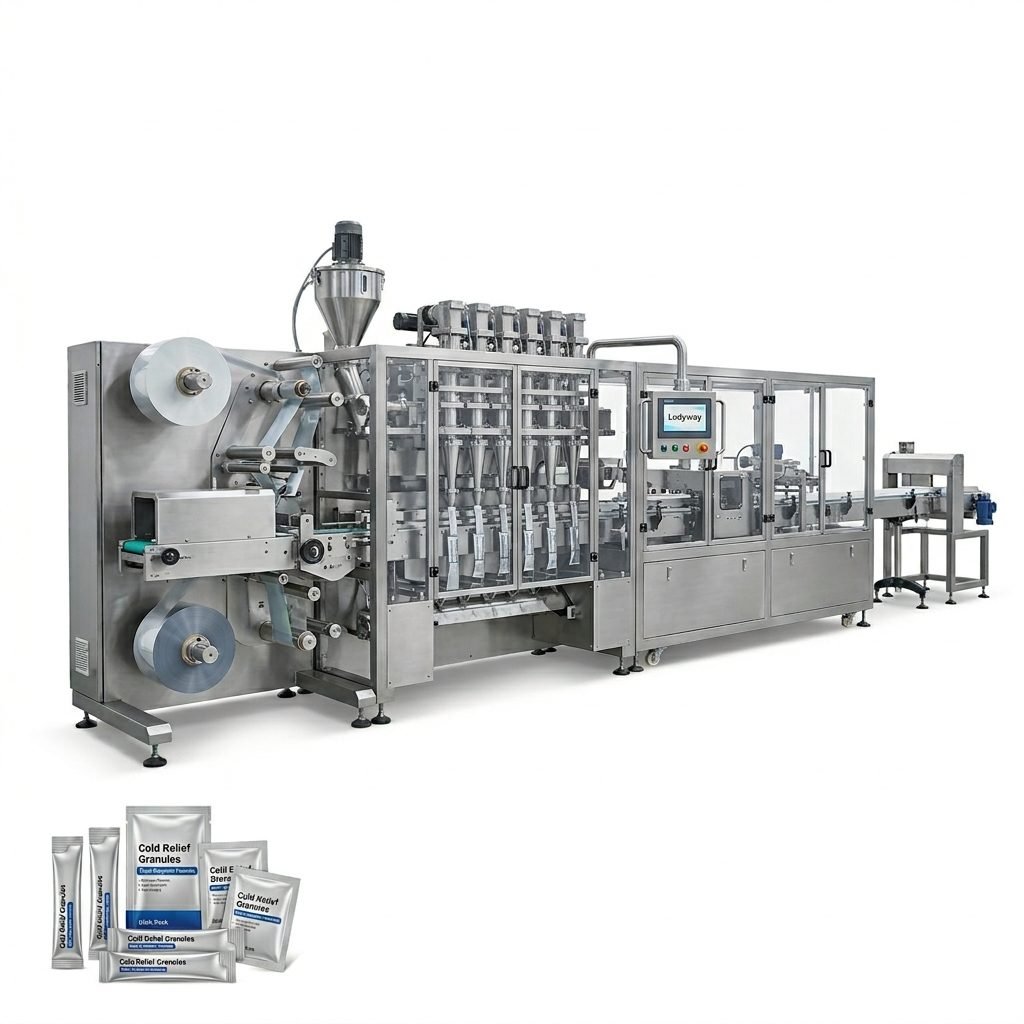
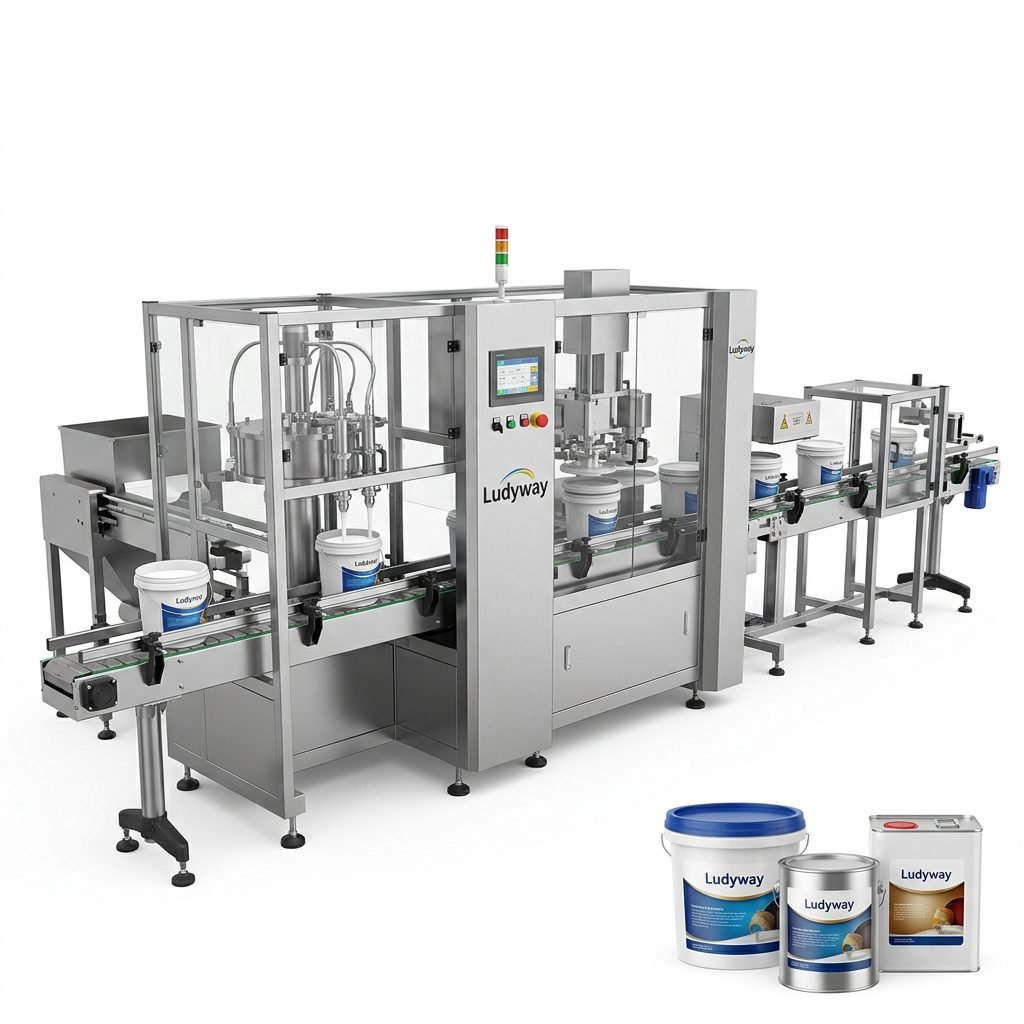
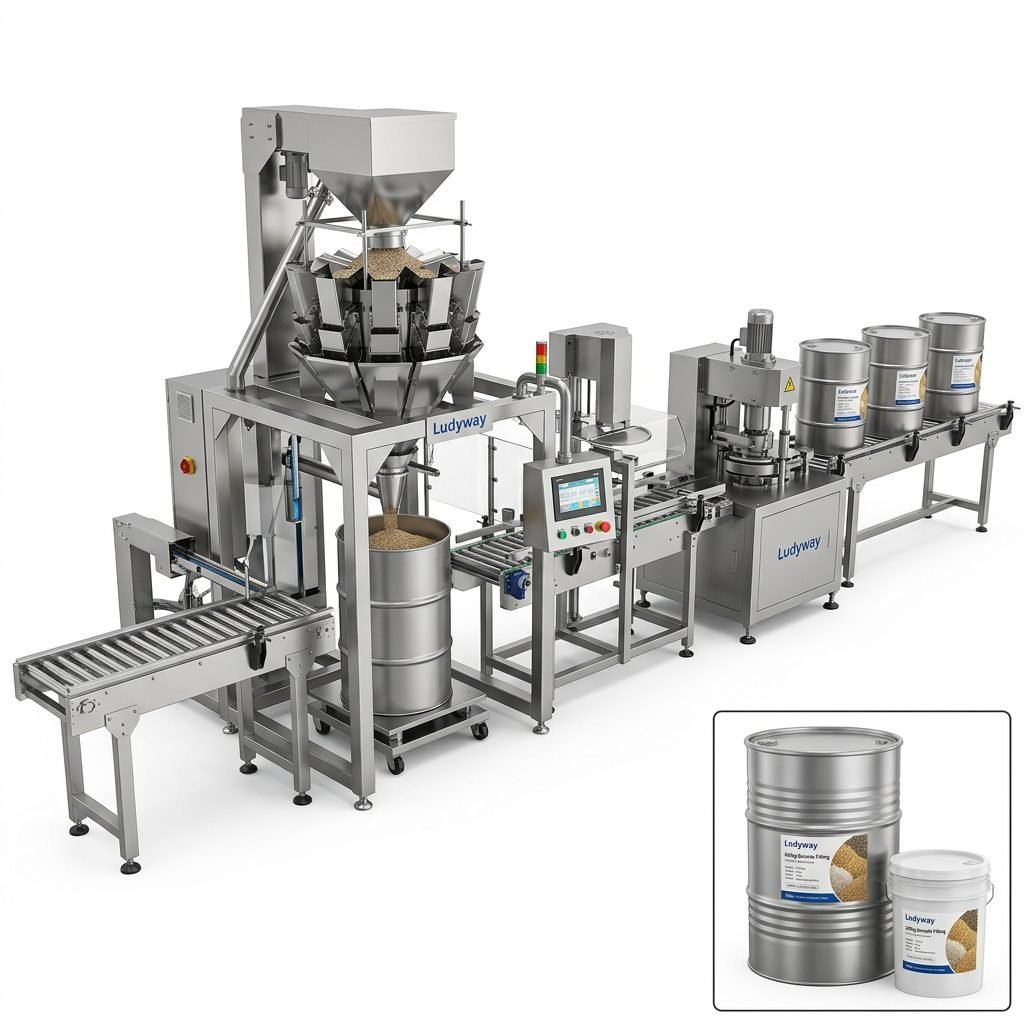
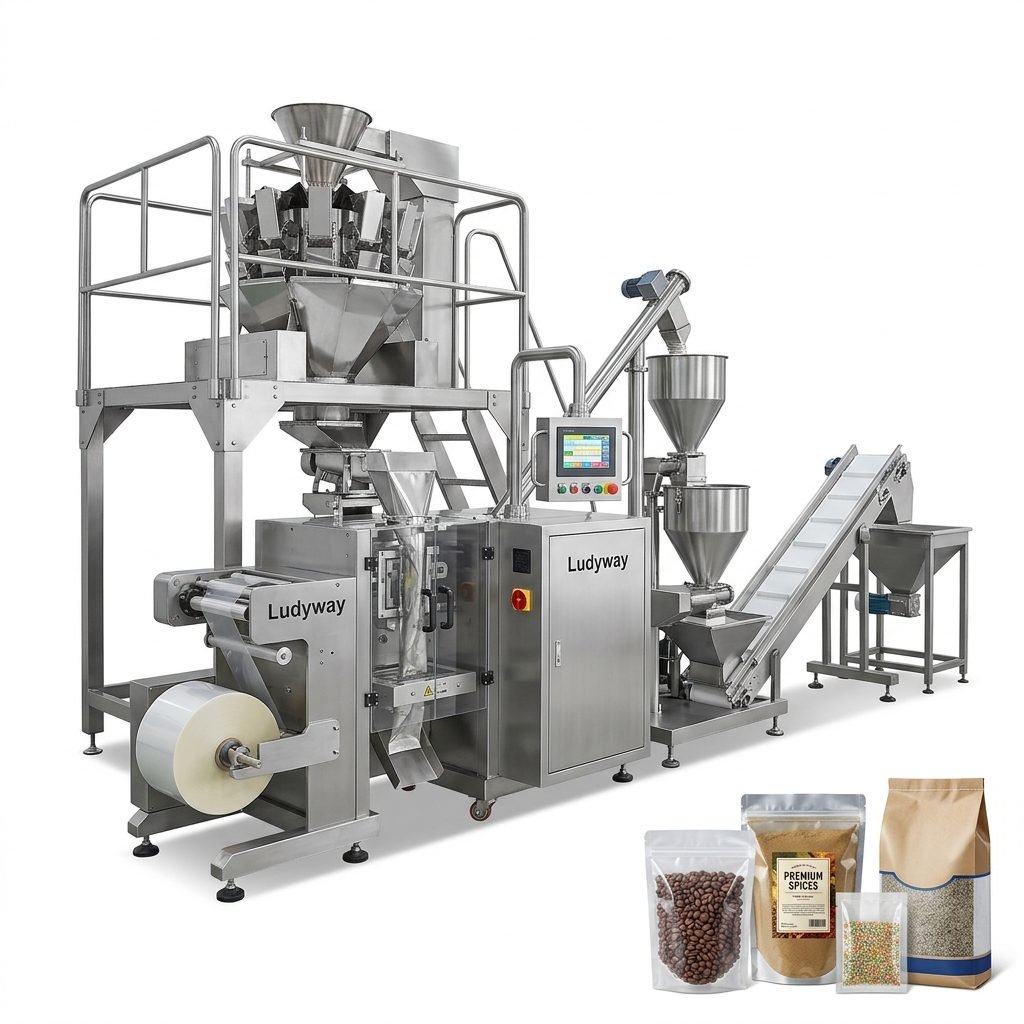
Turnkey lines are quoted per project after a layout and throughput study.
Founded in 1993 and headquartered in Zhongshan, Guangdong, Ludyway is one of the largest packaging machine manufacturers in China, specialising in granule, powder, liquid and pouch packaging for the food, pharmaceutical, health and chemical industries. With a 20,000㎡ production facility, more than 200 manufacturing equipment units and a 130-strong team of packaging engineers, the company offers over 50 intelligent machine models, including multi-lane stick pack, sachet and fully automated turnkey systems.
Ludyway serves customers in more than 100 countries and regions, and its export growth trajectory, covered in this industry report on Ludyway’s global expansion, reflects a consistent focus on delivering high-performance machinery at a cost structure that supports fast payback for brand owners and contract packers alike.
30+
Years of Industry Experience
20,000㎡
Modern Production Facility
50+
Intelligent Machine Models
130+
Professional Packaging Experts
100+
Countries and Regions Served
Multi-Lane Packaging Machines Buyers Compare Most Often
The four configurations below cover the majority of quotation requests we receive from food, nutraceutical, pharmaceutical and personal care manufacturers. Each is available in multiple lane counts and dosing options, so pricing is confirmed against your product sample and pack specification.
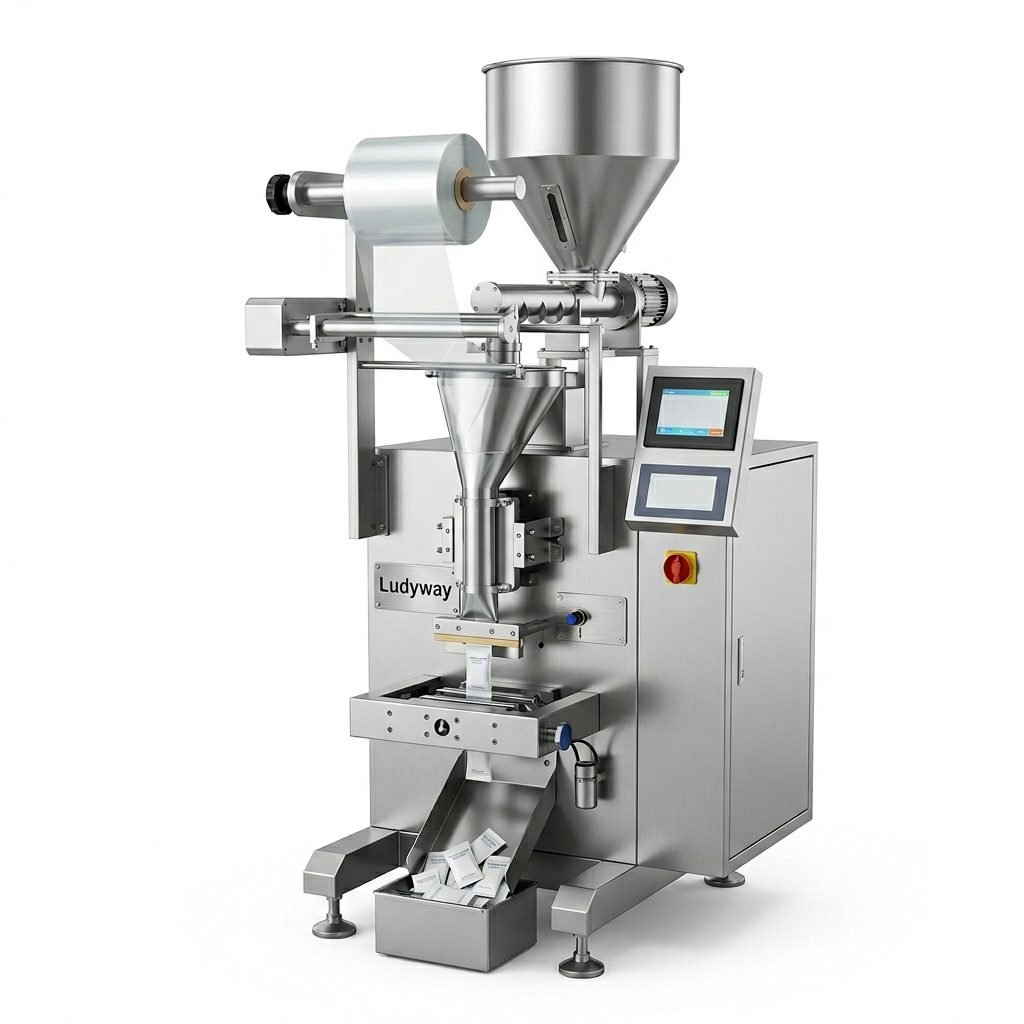
Multi-Lane Stick Pack Machine
Stick Pack, Granule / Powder / Liquid
List price by lane count Quote on Request
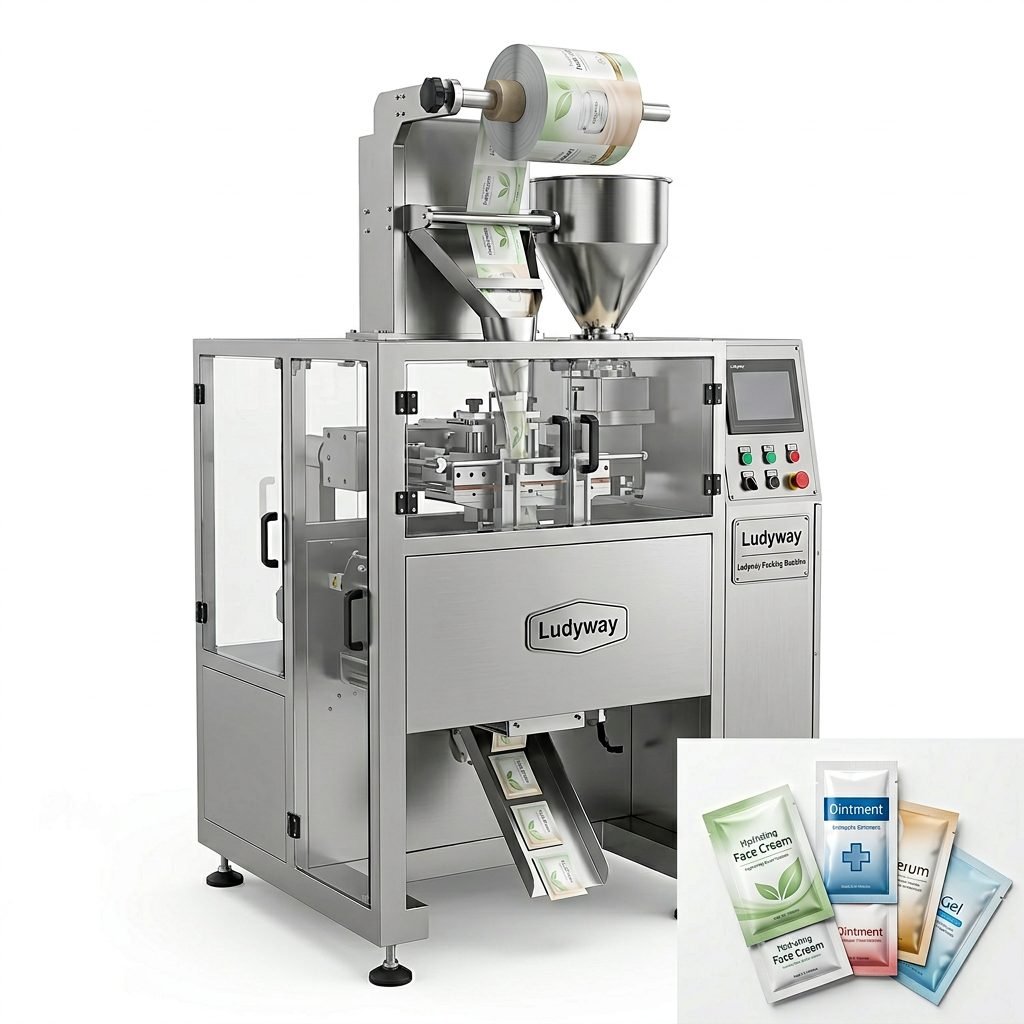
Multi-Lane Powder Sachet Machine
4-Side-Seal Sachet, Auger Dosing
List price by lane count Quote on Request
Liquid Sachet Packaging Machine
Sachet / Stick Pack, Liquid & Cream
List price by lane count Quote on Request
Custom Turnkey Packaging Line
Integrated Line, Granule / Powder / Liquid
Project-based pricing Quote on Request
Procurement Checklist: What to Send for an Accurate Packaging Machine Quotation
Quotation accuracy depends on specification quality. Suppliers who receive the information below can usually return a firm technical and commercial offer within a few working days, with far fewer revisions during the order stage.
Product and Pack Specification
- Product type, bulk density, flowability, particle size, viscosity or hygroscopic behaviour
- Target fill weight or volume and acceptable tolerance
- Pack format (stick, 3- or 4-side-seal sachet, pillow bag, doypack), dimensions and seal style
- Film structure and supplier if already selected; samples if available
Production and Site Requirements
- Required output per minute or per shift, and number of SKUs to be run
- Electrical supply, compressed air availability and floor space constraints
- Compliance scope: CE, UL, GMP, food-contact documentation, ATEX
- Downstream needs: coding, checkweighing, metal detection, cartoning, case packing
Commercial terms to confirm: Incoterms (EXW, FOB, CIF or DAP), payment schedule (commonly 30–50% deposit with balance before shipment), warranty period and coverage, included spare parts kit, factory acceptance test (FAT) with your product, installation and training scope, and remote support arrangements. Minimum order quantity for standard machines is typically one unit; lead time for standard multi-lane models is usually 45–90 days after design confirmation, longer for turnkey lines.
Frequently Asked Questions About Packaging Machine Cost
How much does an automatic packaging machine cost?
Stand-alone automatic sachet or pouch machines generally range from $15,000 to $80,000 depending on lanes, dosing type and speed. Multi-lane stick pack and sachet machines with inspection typically fall between $45,000 and $250,000. Fully integrated turnkey lines start around $250,000 and scale with throughput and downstream automation.
Why do quotations for similar machines vary so much?
The main variables are lane count, servo versus mechanical drives, dosing accuracy, stainless grade, PLC and HMI brand, hygiene design and the inclusion or exclusion of coding, inspection, conveyors, installation and training. Always request an itemised quotation so that options can be compared individually.
What is the typical payback period for a multi-lane packaging machine?
For brands replacing manual or semi-automatic packing on medium to high volumes, payback of 10 to 18 months is common once labour, film waste and product giveaway savings are included. Low-volume or highly seasonal products may see longer payback, which is why volume forecasting is the first step in any ROI calculation.
Are Chinese packaging machines reliable enough for pharmaceutical or export food production?
Leading Chinese manufacturers now supply CE-documented machines with Siemens, Omron or Schneider controls, SUS316L contact parts and GMP-compliant designs, and they are widely used in export-oriented food, nutraceutical and pharmaceutical plants. The key is to verify export track record, request a factory acceptance test with your product and confirm after-sales response commitments in writing.
Should I buy a single-lane machine first and upgrade later?
If annual volume is below roughly 3–5 million packs per SKU, a single-lane machine is often the most capital-efficient start. Above that range, a 4- to 8-lane machine usually delivers lower cost per pack immediately. Some buyers specify a multi-lane frame with fewer active lanes to allow expansion without replacing the base machine.
Get a Specification-Based Quotation for Your Packaging Project
Benchmark ranges are useful for budgeting, but a decision-grade number requires your product sample, pack format and output target. Ludyway’s engineering team reviews each enquiry, recommends the lane count and dosing configuration that fits your volume, and returns a detailed technical proposal covering machine specification, options, lead time, FAT arrangements and after-sales support. Factory visits in Zhongshan and meetings at international packaging exhibitions are welcome for buyers evaluating turnkey lines.
Send your product details and target output, and request the full machine catalogue or a free sample packing test to see sealing quality and dosing accuracy on your own material before committing capital.