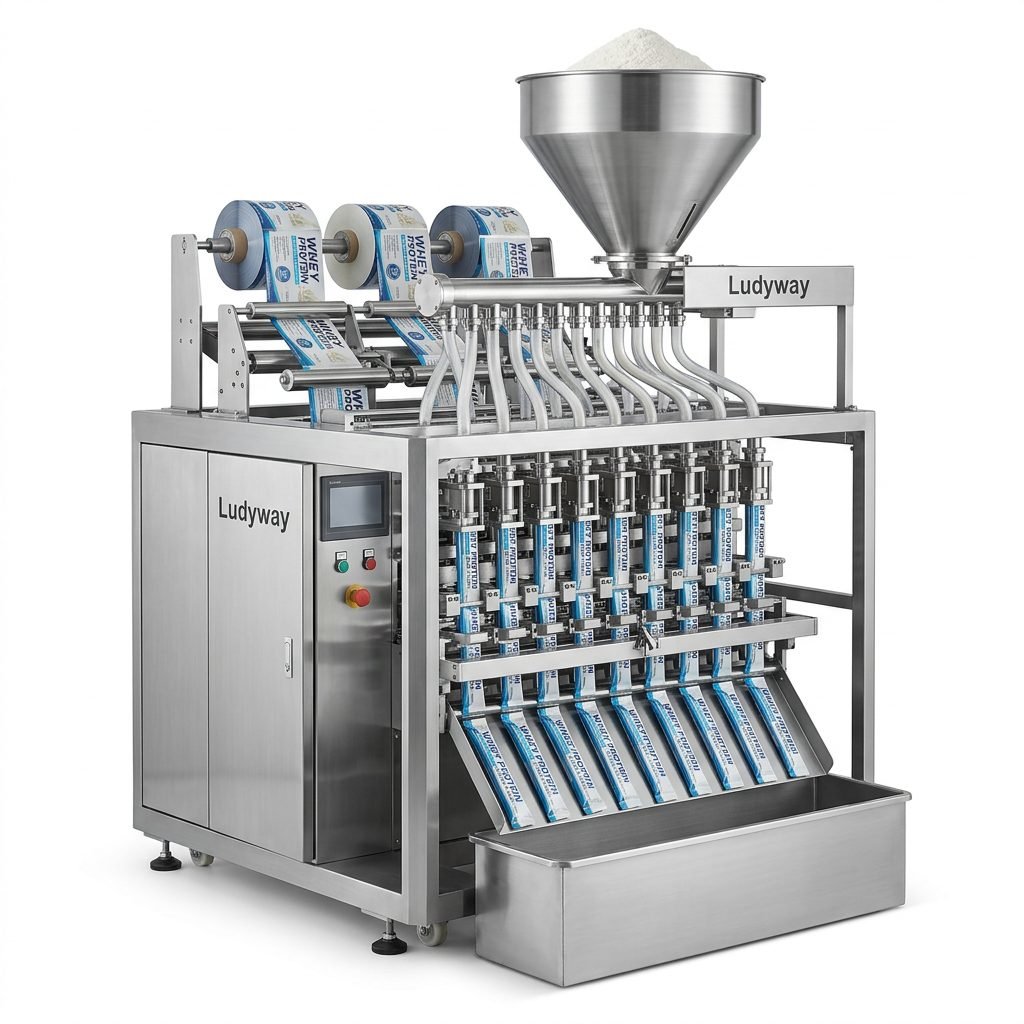
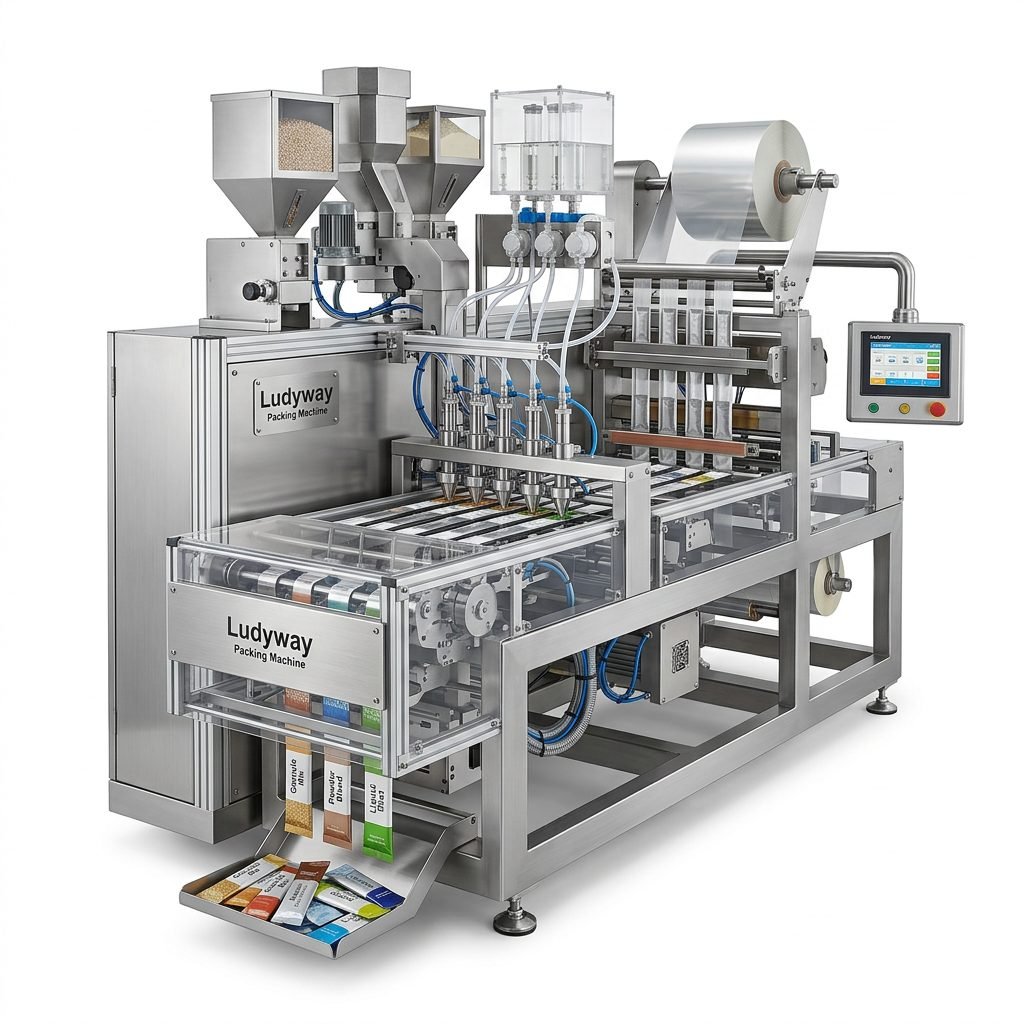
Fresh vegetables are highly sensitive products. From leafy greens and cut vegetables to frozen mixes and dehydrated ingredients, packaging directly affects freshness, shelf life, food safety, transport stability, and retail appeal. A modern vegetable packaging machine helps producers move beyond manual packing by delivering faster throughput, cleaner processing, and more consistent package quality.
As labor costs rise and supply chains become more demanding, growers, food processors, and brand owners are increasingly investing in smart automation. The right packaging solution can reduce waste, protect delicate produce, and support multiple package formats for supermarkets, foodservice channels, and e-commerce distribution.
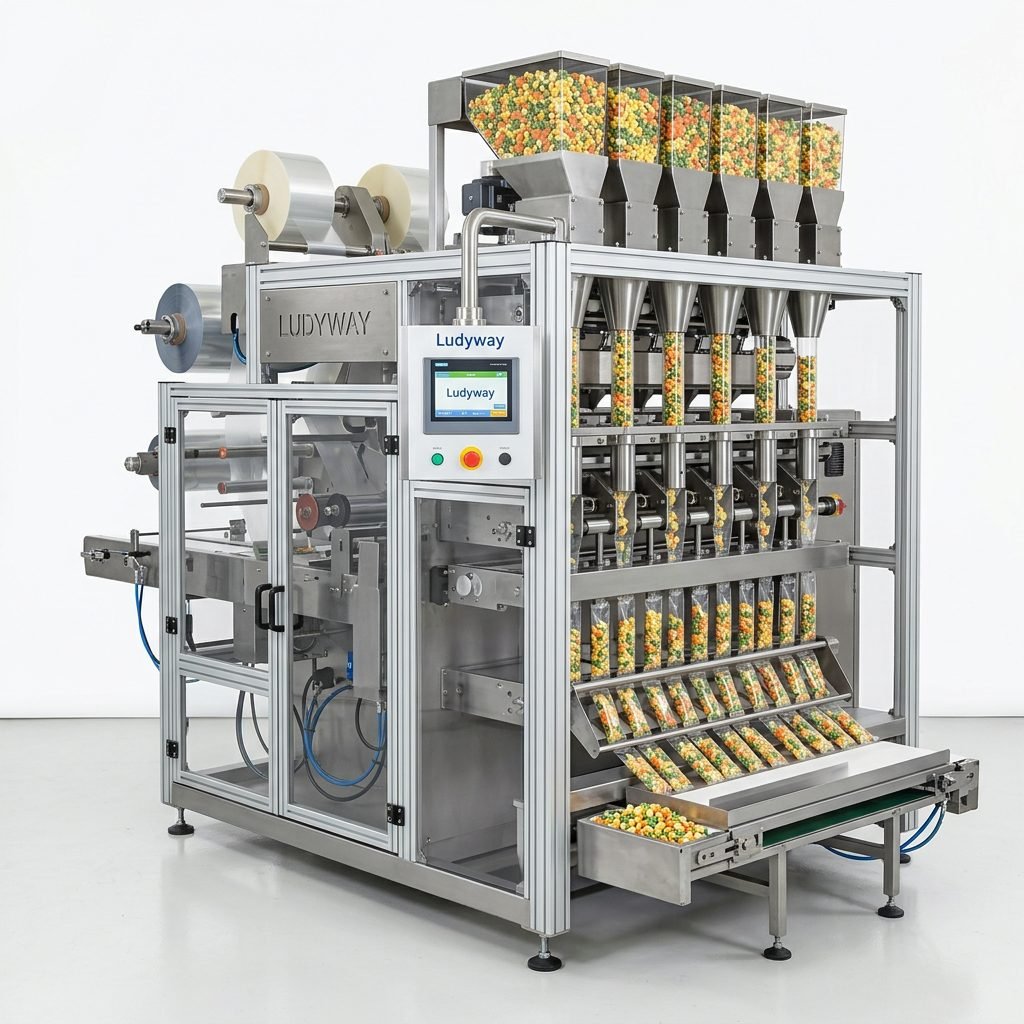
Why Vegetable Packaging Matters More Than Ever
Vegetables face several risks after harvesting: moisture loss, contamination, bruising, oxidation, seal failure, and poor presentation. Efficient packaging equipment helps solve these issues by creating a controlled and repeatable packing process. Whether the product is washed spinach, diced carrots, dried mushroom powder, vegetable seasoning blends, or freeze-dried vegetable granules, machine performance has a direct impact on final product value.
- Improves product hygiene during filling and sealing
- Supports accurate weighing for cost control
- Reduces manual handling and product damage
- Maintains packaging consistency across batches
- Enhances production speed for high-demand operations
- Supports traceability and coding requirements
What Is a Vegetable Packaging Machine?
A vegetable packaging machine is automated equipment designed to fill, form, seal, count, weigh, or bag vegetable products in different packaging formats. Depending on the product type, the machine may handle fresh-cut vegetables, frozen vegetables, dehydrated vegetables, vegetable powders, or freeze-dried mixes.
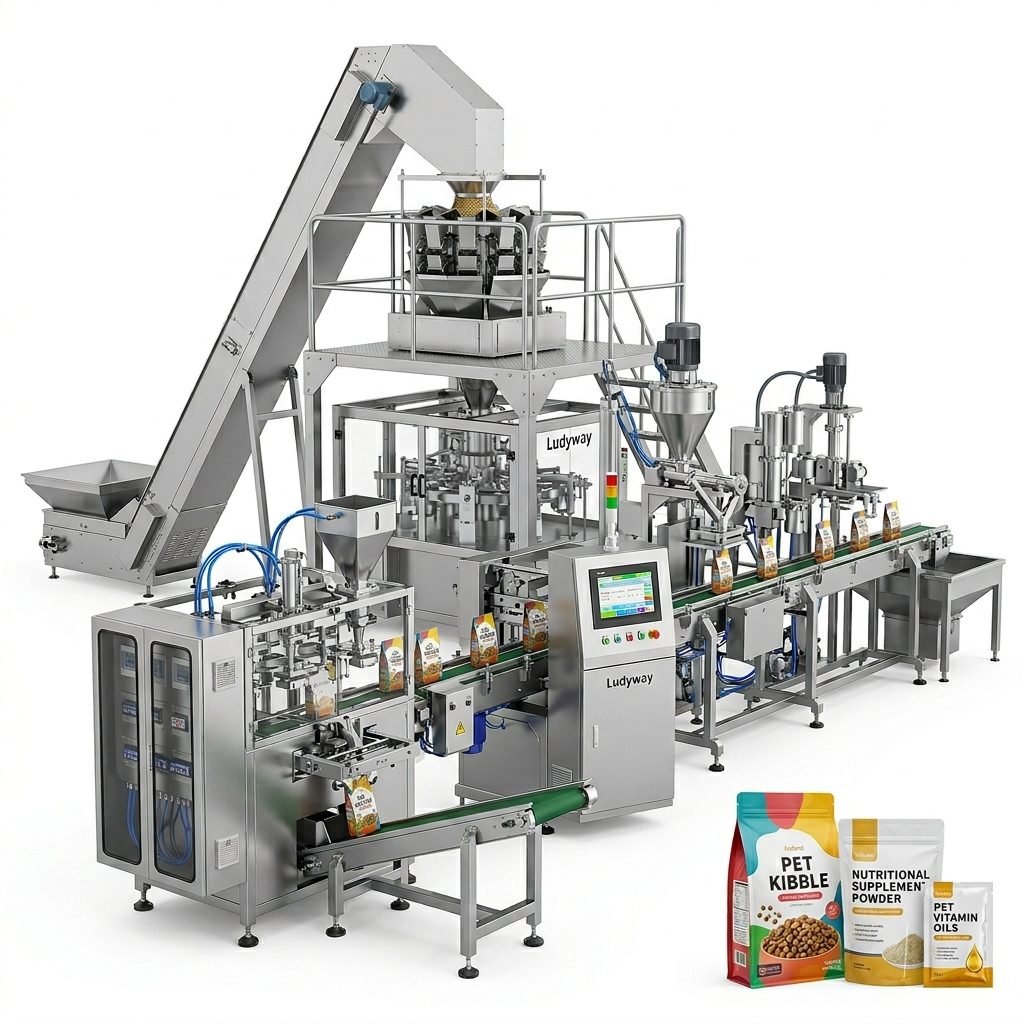
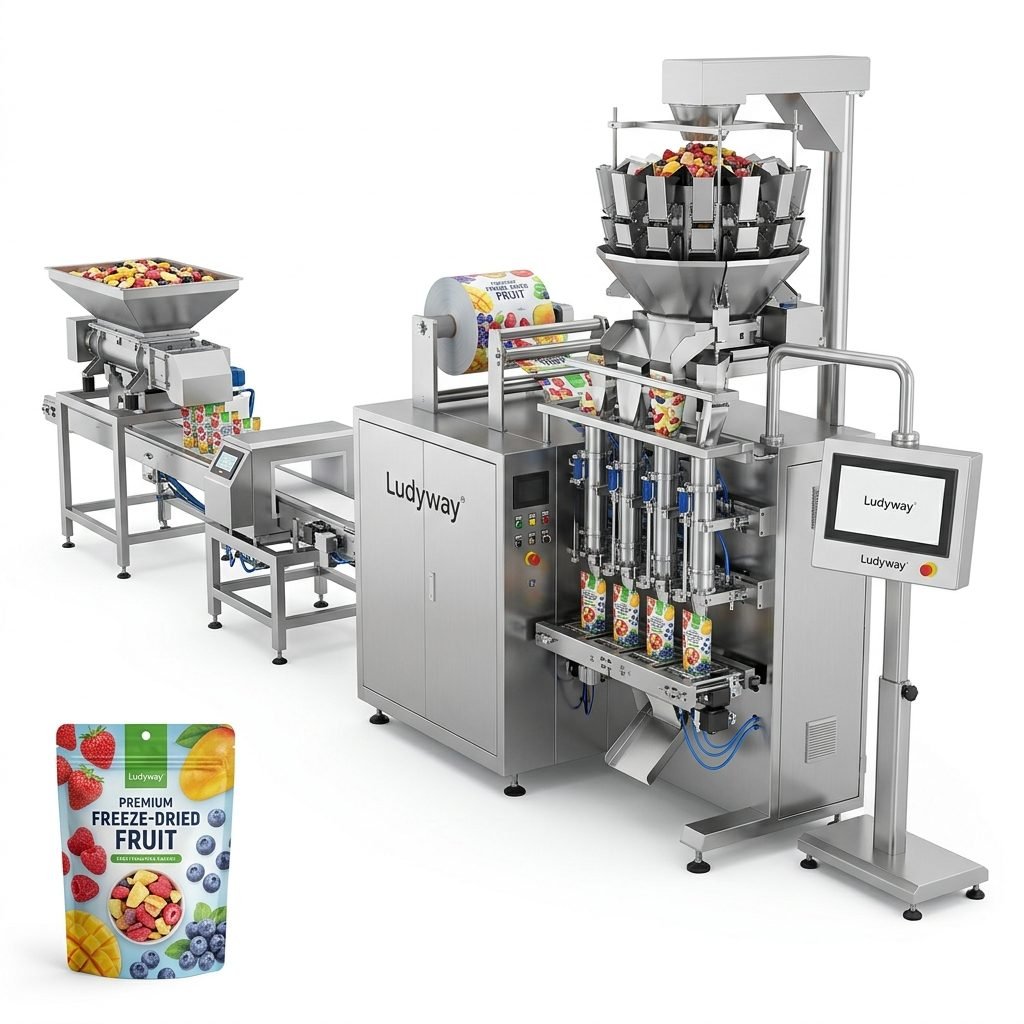
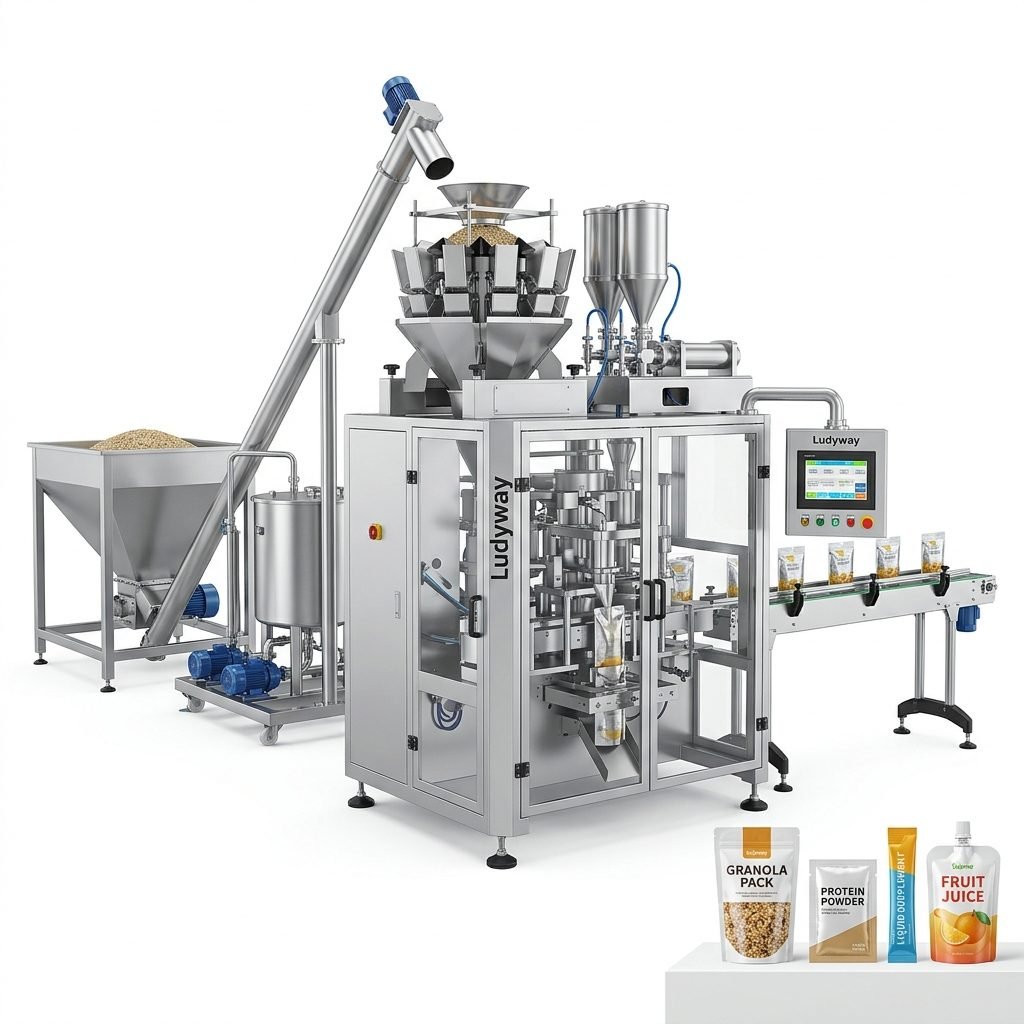
These machines can be standalone units or part of a complete packaging line that includes feeding, conveying, weighing, metal detection, sealing, coding, checkweighing, cartoning, and palletizing.
Common vegetable products packed by automation
- Fresh salad vegetables
- Cut and washed vegetable mixes
- Frozen diced vegetables
- Freeze-dried vegetable granules
- Vegetable powders for food processing
- Soup and seasoning vegetable blends
- Vegetable seed and agricultural pack formats
Key Packaging Formats for Vegetable Products
Different vegetable products require different pack styles. The best machine is not simply the fastest one, but the one that matches product characteristics, market needs, and filling accuracy targets.
| Vegetable Product Type | Common Packaging Format | Recommended Machine Type |
|---|---|---|
| Fresh leafy vegetables | Pillow bags, trays, flow packs | VFFS or flow wrapping systems |
| Frozen mixed vegetables | Pouches, pillow bags | Automatic weighing and bagging lines |
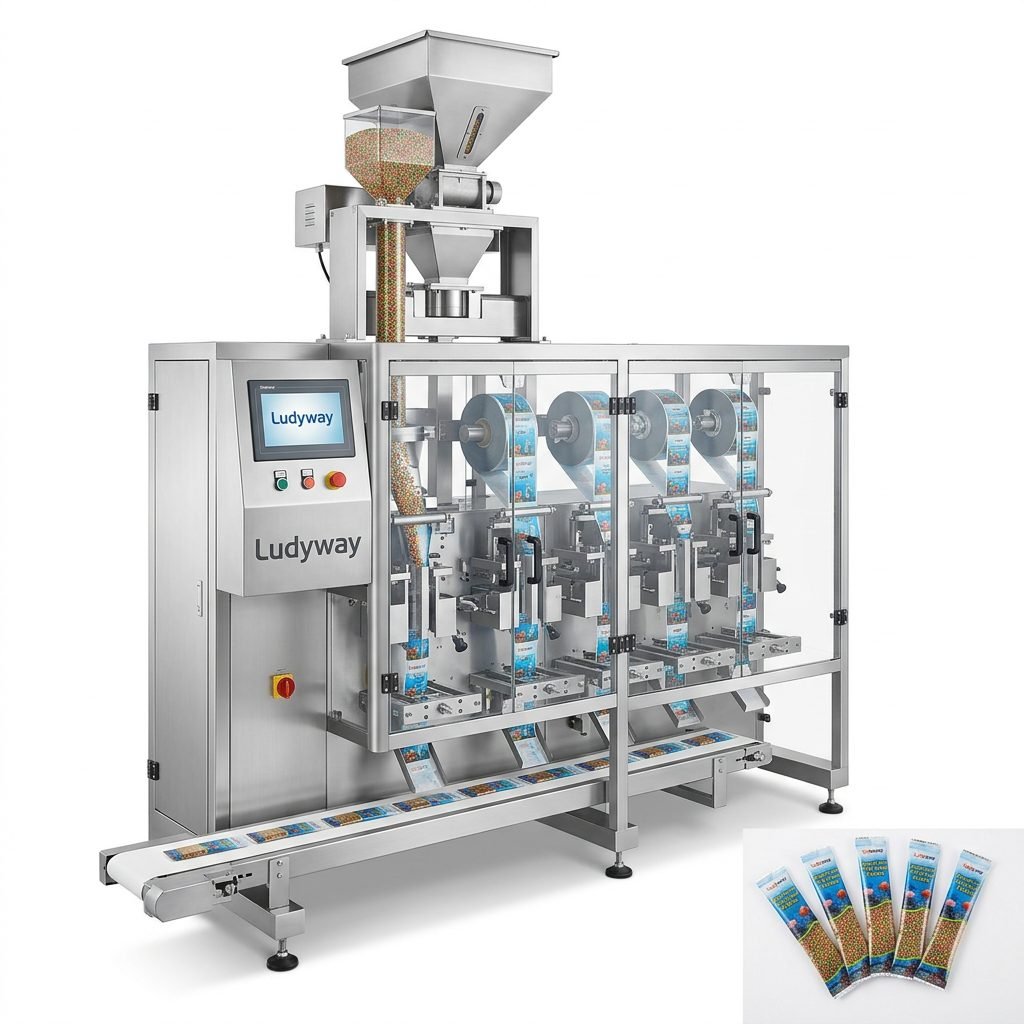
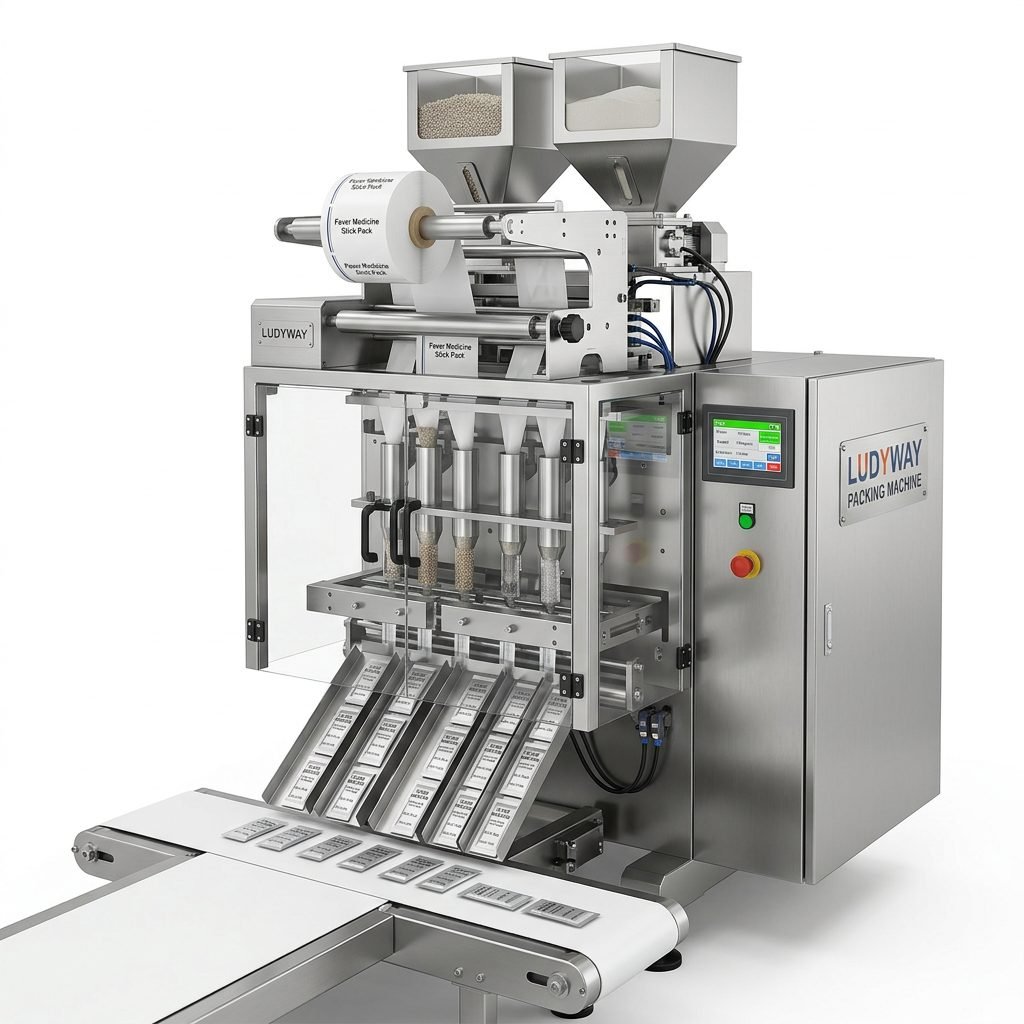
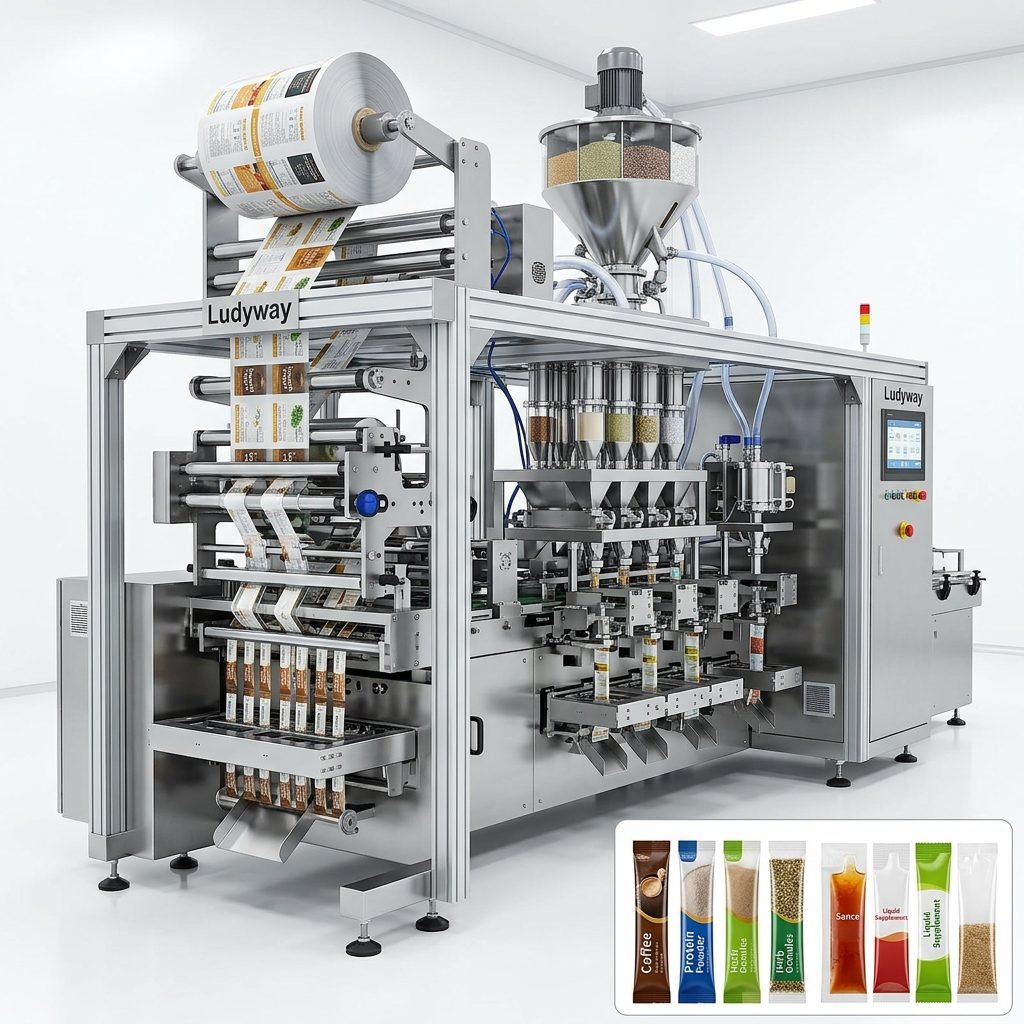
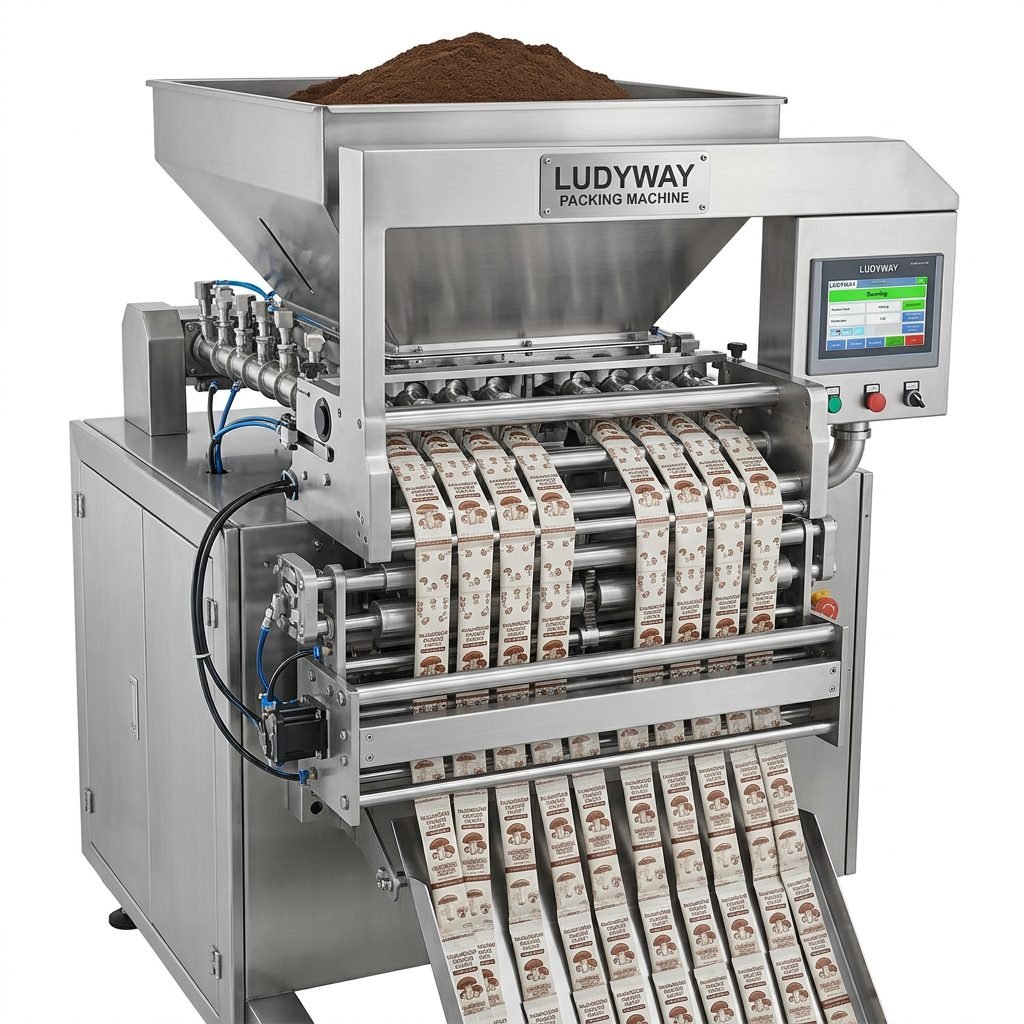
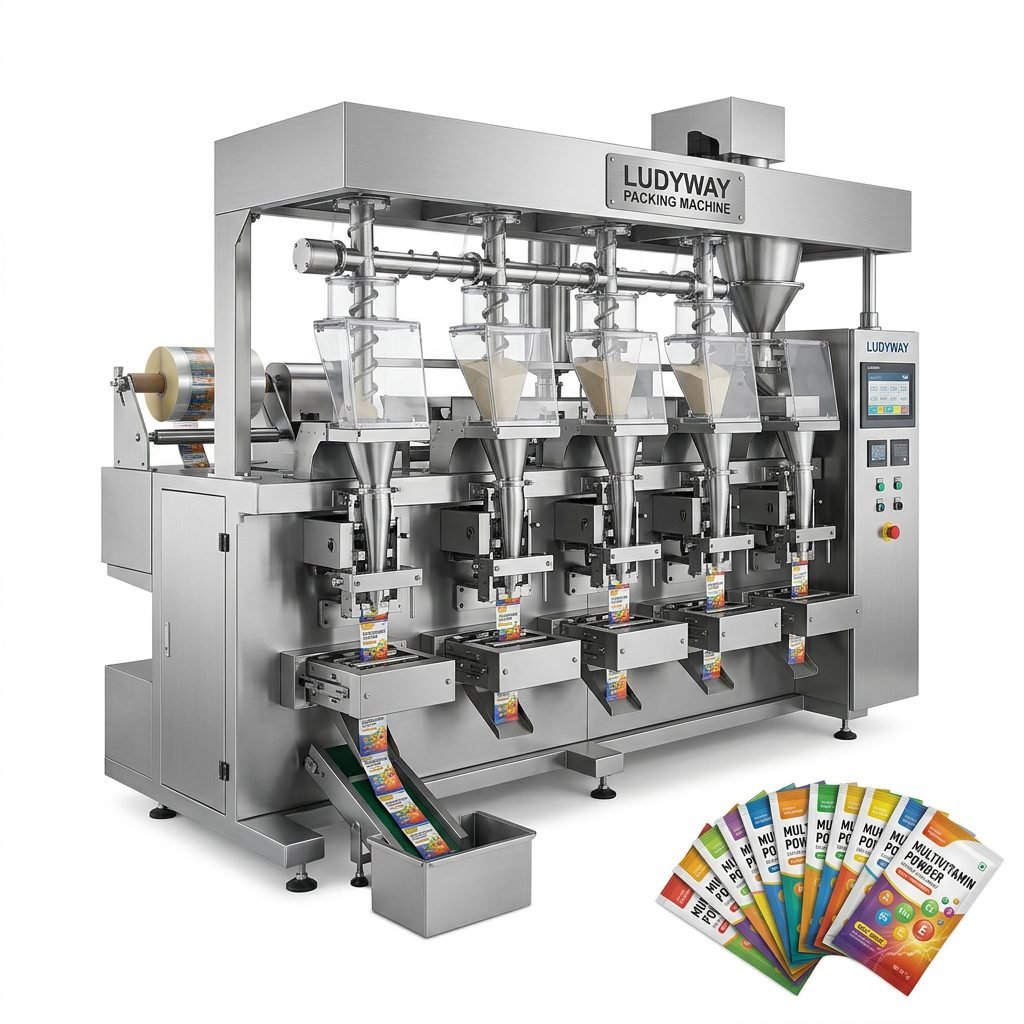
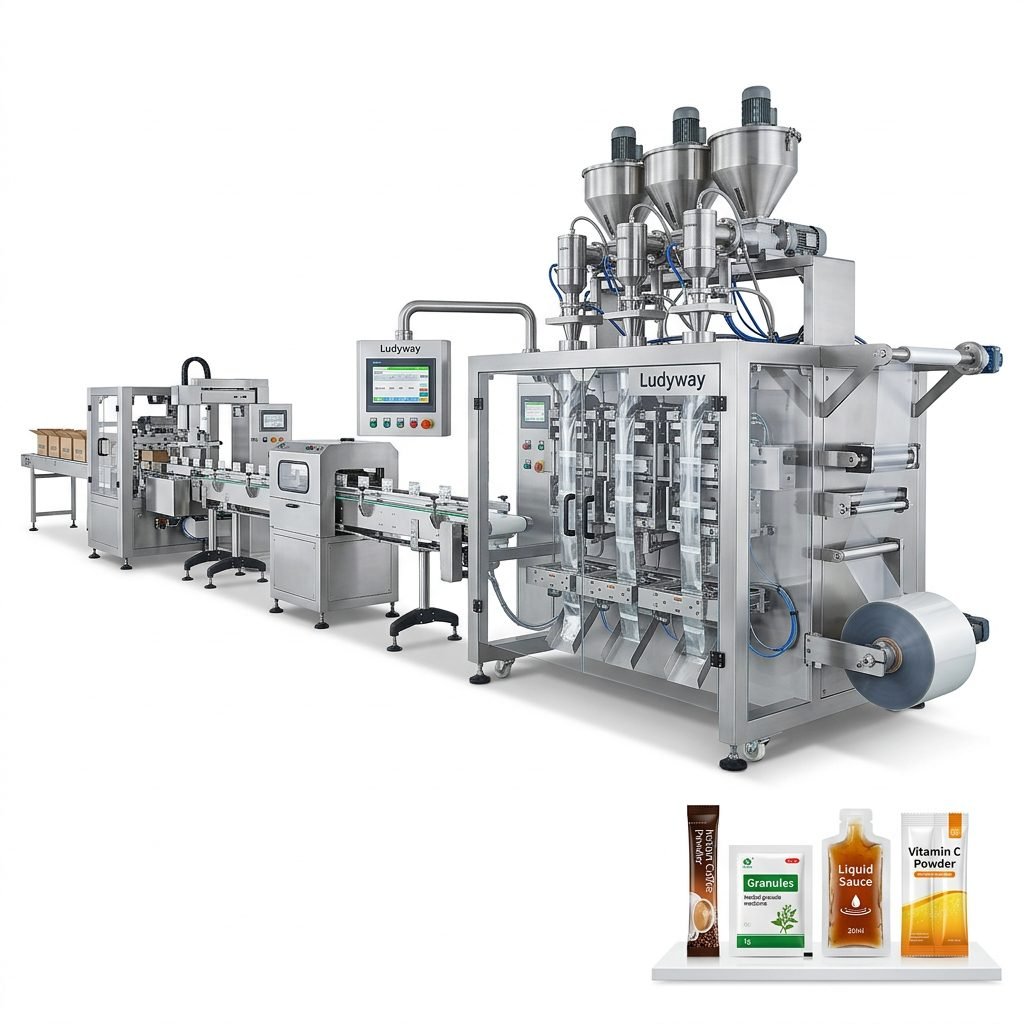
| Freeze-dried vegetables | Sachets, stick packs, pouches | Multi-lane sachet or stick pack machines |
| Vegetable powder | Sachets, stick packs, premade pouches | Powder filling and sealing machines |
| Bulk vegetables for foodservice | Large bags, cartons | Bulk weighing and bag packaging lines |
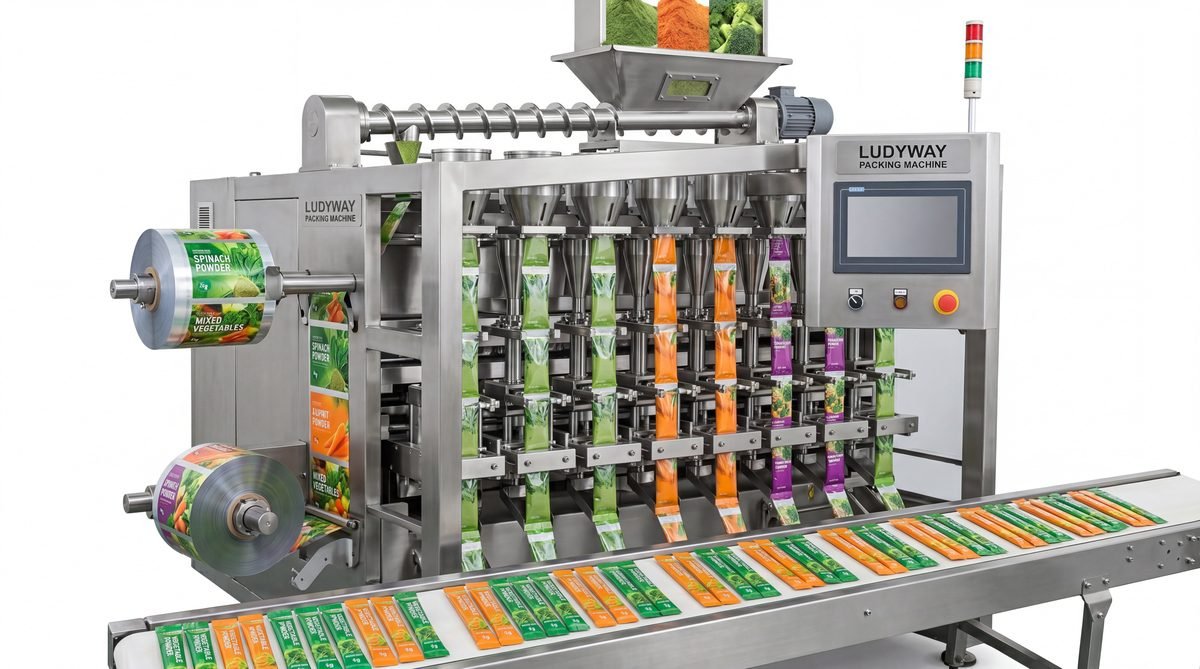
Smart Features That Improve Vegetable Packaging Efficiency
Today’s smart packaging machines are designed for more than simple filling and sealing. They integrate automation, precision controls, and product-friendly handling to improve total line performance.
1. Accurate dosing and weighing
Vegetable powders, flakes, granules, and mixed ingredients often require highly consistent fill weights. Smart weighing systems reduce giveaway while ensuring compliance with pack specifications.
2. Gentle material handling
Delicate vegetable products can break, crush, or separate during feeding. Gentle conveyors, vibration control, and stable discharge design help preserve product integrity.
3. Flexible format changeover
Producers serving multiple sales channels need quick shifts between pack sizes and formats. Machines with user-friendly adjustment systems reduce downtime and improve line utilization.
4. Hygienic construction
Stainless steel contact parts, cleanable structures, and enclosed dosing systems are especially important for food-grade vegetable products.
5. Integrated quality control
Smart lines can include metal detection, date coding, checkweighing, and reject units to strengthen food safety and retail compliance.
6. Data-driven operation
Modern controls allow operators to store recipes, monitor output, and manage performance with greater precision. This supports repeatability and easier operator training.
Benefits of Automated Vegetable Packaging
| Benefit | How It Helps Your Business |
|---|---|
| Higher output | Supports larger order volumes and seasonal demand spikes |
| Lower labor dependency | Reduces manual filling, sealing, and repetitive packing tasks |
| Better consistency | Creates uniform pack appearance and reliable seals |
| Reduced waste | Minimizes overfill, spillage, and package rejection |
| Improved food safety | Supports hygienic production and inspection control |
| Scalable production | Allows gradual expansion from single machines to full lines |
How to Choose the Right Vegetable Packaging Machine
Choosing the right machine starts with understanding your product and your target market. A machine suitable for freeze-dried vegetable sachets may not be ideal for fresh vegetable pouches or large bulk packs.
Focus on these selection factors
- Product form: fresh, frozen, powdered, granulated, sliced, or mixed
- Packaging material: film roll, premade pouch, tray, carton, or bulk bag
- Target capacity: expected packs per minute or bags per hour
- Fill accuracy requirements: especially important for powder and value-added products
- Available factory space: machine layout should match workflow and utilities
- Cleaning needs: critical for vegetable-based food applications
- Automation level: standalone equipment or fully integrated turnkey line
It is also smart to think long term. If you expect product expansion, private label growth, or export market development, choose a system with room for future upgrades.
Applications Across the Fresh and Processed Vegetable Industry
Vegetable packaging technology is used across many production environments. This includes primary agriculture, food processing plants, frozen food manufacturers, soup and seasoning brands, and health food businesses.
Typical application areas
- Fresh produce packing houses
- Ready-to-cook vegetable brands
- Frozen food processors
- Soup base and seasoning manufacturers
- Vegetable powder and health ingredient producers
- Private label food packaging operations
- Export-focused agricultural processing facilities
Why Turnkey Packaging Lines Are Growing in Demand
Many buyers now prefer complete packaging line solutions instead of purchasing individual machines separately. A turnkey system improves compatibility between feeding, filling, sealing, inspection, and final packing stages. This reduces integration risk and simplifies commissioning.
For vegetable products, turnkey lines are especially useful when the production process includes multiple steps such as conveying, weighing, moisture-sensitive filling, coding, cartoning, and final case handling. Integrated systems can improve line balance and reduce bottlenecks.
Working With an Experienced Packaging Machine Manufacturer
Experience matters when selecting a vegetable packaging machine supplier. Buyers should evaluate not only machine specifications, but also engineering capability, customization support, export experience, after-sales responsiveness, and the ability to provide complete packaging solutions.
Ludyway vegetable packaging machine solutions are backed by more than 30 years of packaging machinery experience, a manufacturing base of over 20,000 square meters, and a broad portfolio covering food, pharmaceutical, health supplement, and related packaging applications. For businesses seeking scalable equipment or complete turnkey lines, this kind of manufacturing depth can support both current production and future expansion.
Questions to Ask Before Investing
- What vegetable products will be packed now and in the future?
- Do you need single-format equipment or multi-format flexibility?
- What output level is required during peak season?
- How important are hygiene and fast cleaning procedures?
- Will the line require coding, inspection, cartoning, or palletizing?
- Does the supplier offer customization and installation support?
- Can the equipment be integrated into a larger automated packaging line later?
Final Thoughts on Smart Vegetable Packaging Solutions
A high-performance vegetable packaging machine is more than a production asset. It is a strategic tool for improving freshness protection, reducing waste, increasing efficiency, and strengthening product presentation in competitive food markets. Whether you pack fresh vegetables, frozen mixes, or vegetable powder products, smart automation can help you achieve cleaner operation and more reliable output.
For processors and brand owners aiming to scale with confidence, the best solution is often a packaging system that combines precision, flexibility, hygiene, and long-term upgrade potential. Investing in the right machine today can create measurable gains in productivity and product quality for years to come.