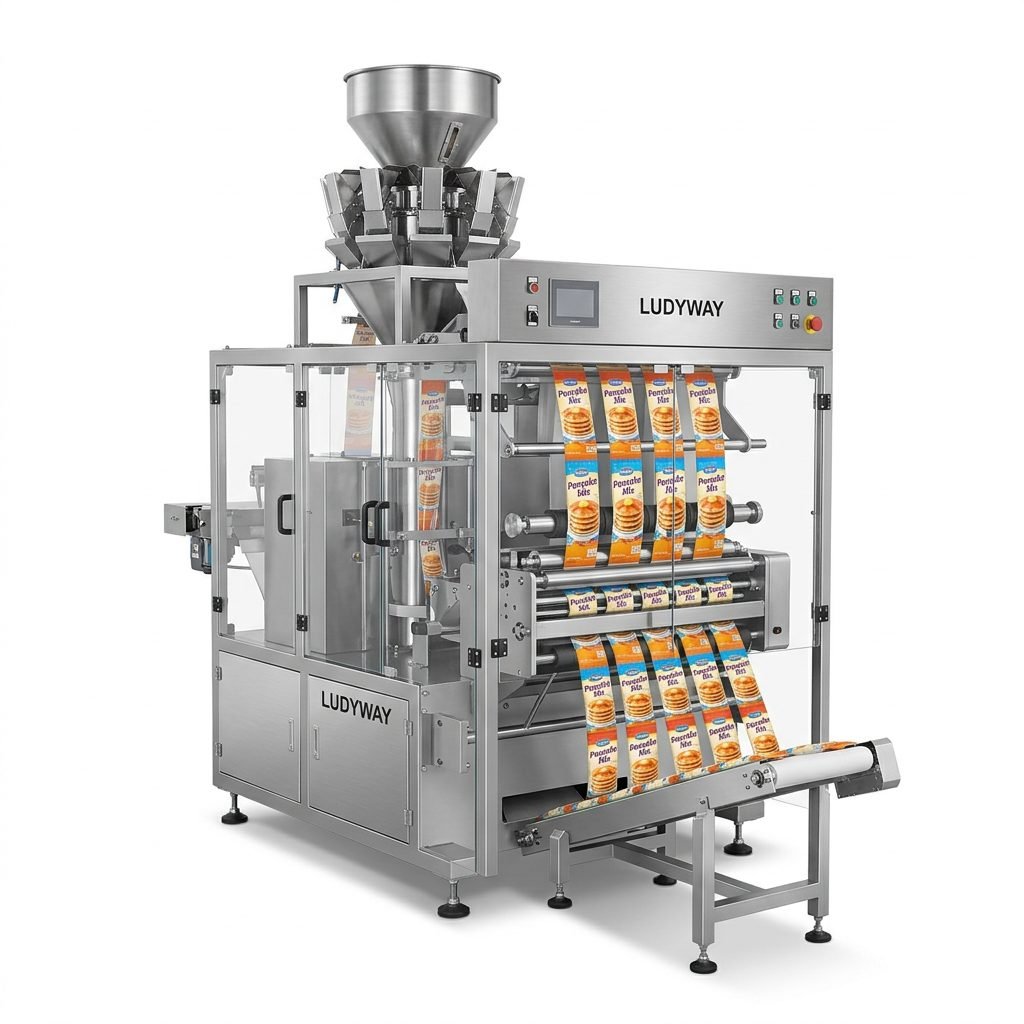
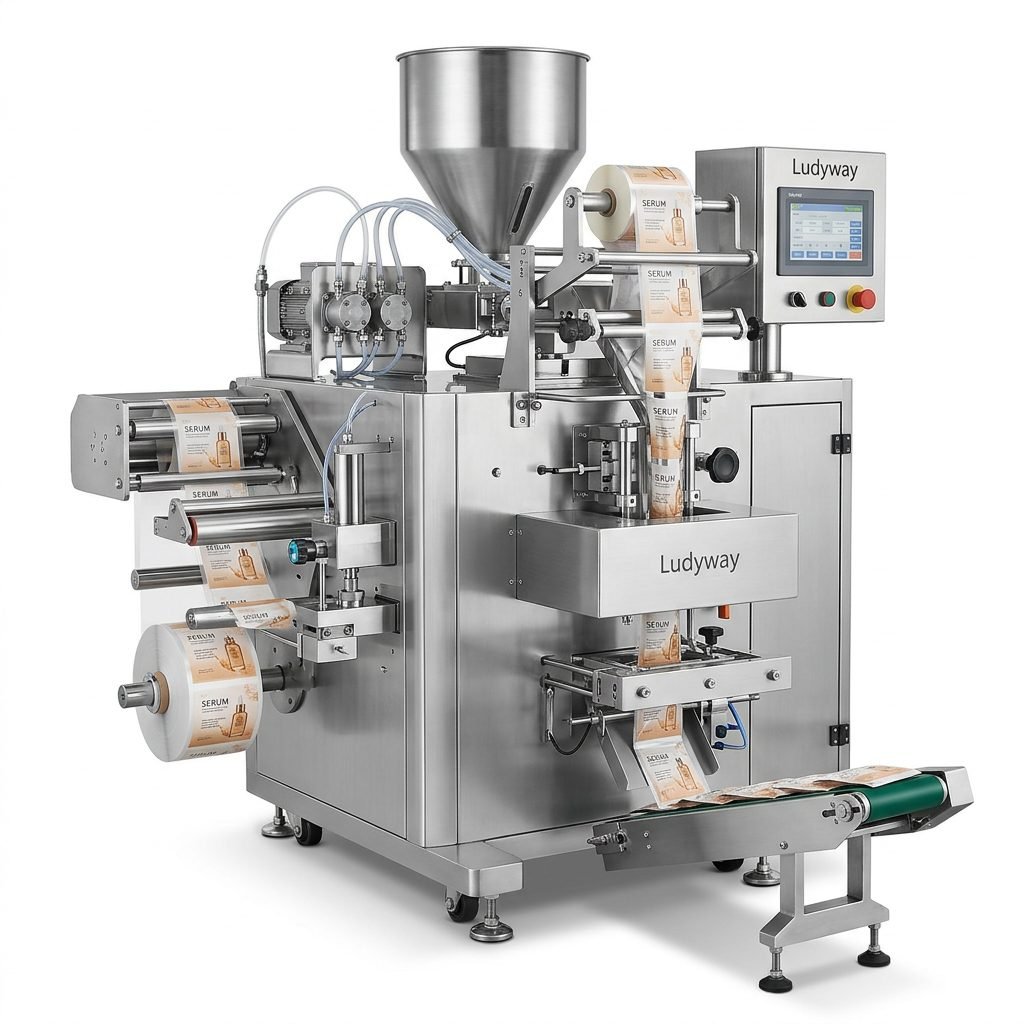
Buying a packaging machine is a major investment that affects production speed, product quality, labor cost, compliance, and long-term profitability. The right equipment can streamline your workflow for years, while the wrong choice may create downtime, waste, and expensive upgrades. Before making a decision, it is important to evaluate your product, packaging format, output targets, plant conditions, and supplier support.
Whether you work in food, pharmaceutical, cosmetic, chemical, or health supplement manufacturing, the best purchase decision starts with matching the machine to your real production needs—not just choosing the fastest or lowest-priced model.
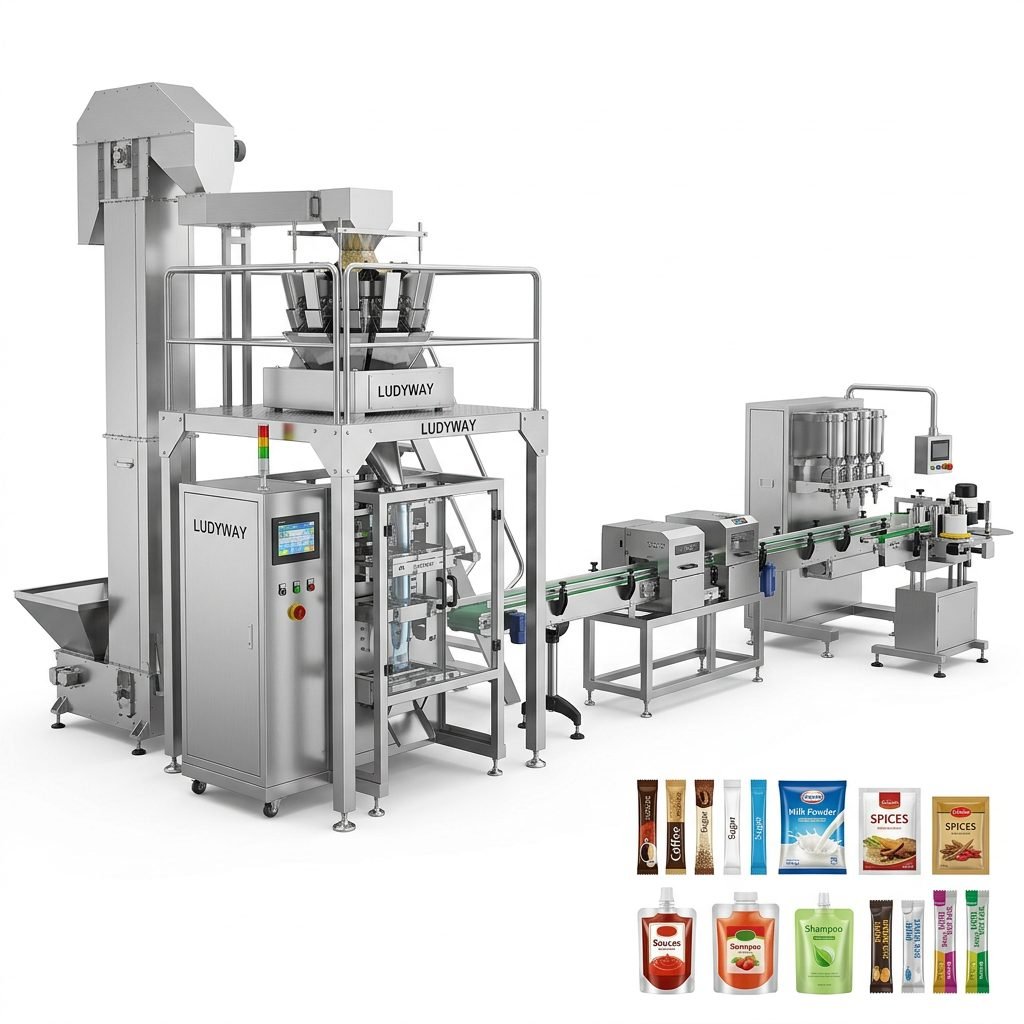
1. Start with Your Product Type
The first factor to consider is the material you want to pack. Different products require different filling principles, sealing methods, and machine structures. A machine that handles free-flowing granules well may not be suitable for sticky pastes or fine powders.
- Powders: milk powder, protein powder, spices, pharmaceutical powders, detergent powder
- Granules: sugar, seeds, salt, coffee, snacks, pellets
- Liquids: oils, sauces, syrups, shampoos, disinfectants
- Pastes: cream, ketchup, lotion, honey, gel products
- Solid units: tablets, capsules, hardware, medical accessories
You should clearly define the following:
- Product flowability
- Particle size or viscosity
- Moisture sensitivity
- Dust generation
- Need for hygienic or sterile handling
If these details are unclear, machine selection becomes inaccurate from the start.
2. Confirm the Packaging Format You Need
Packaging machines are designed around specific package styles. Choosing the correct format is just as important as matching the product type.
| Packaging Format | Common Applications | Typical Machine Type |
|---|---|---|
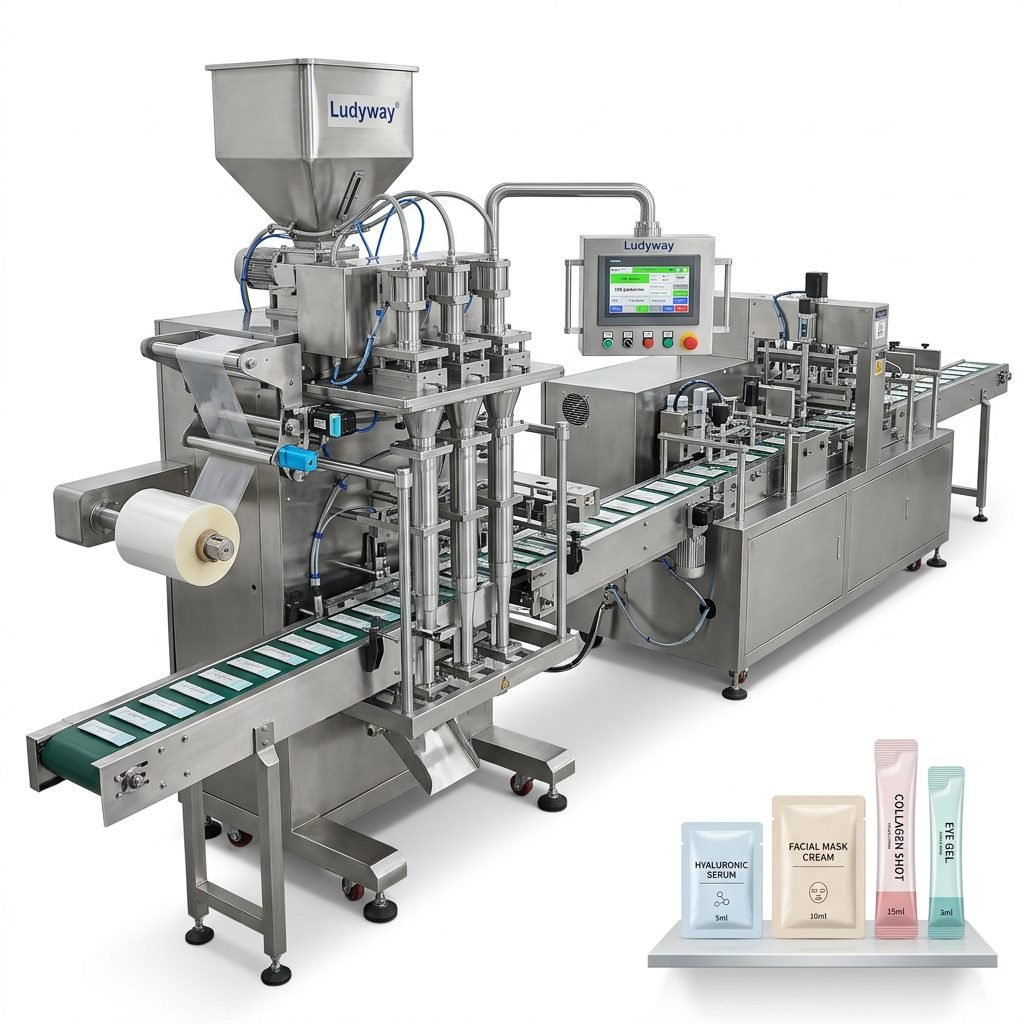
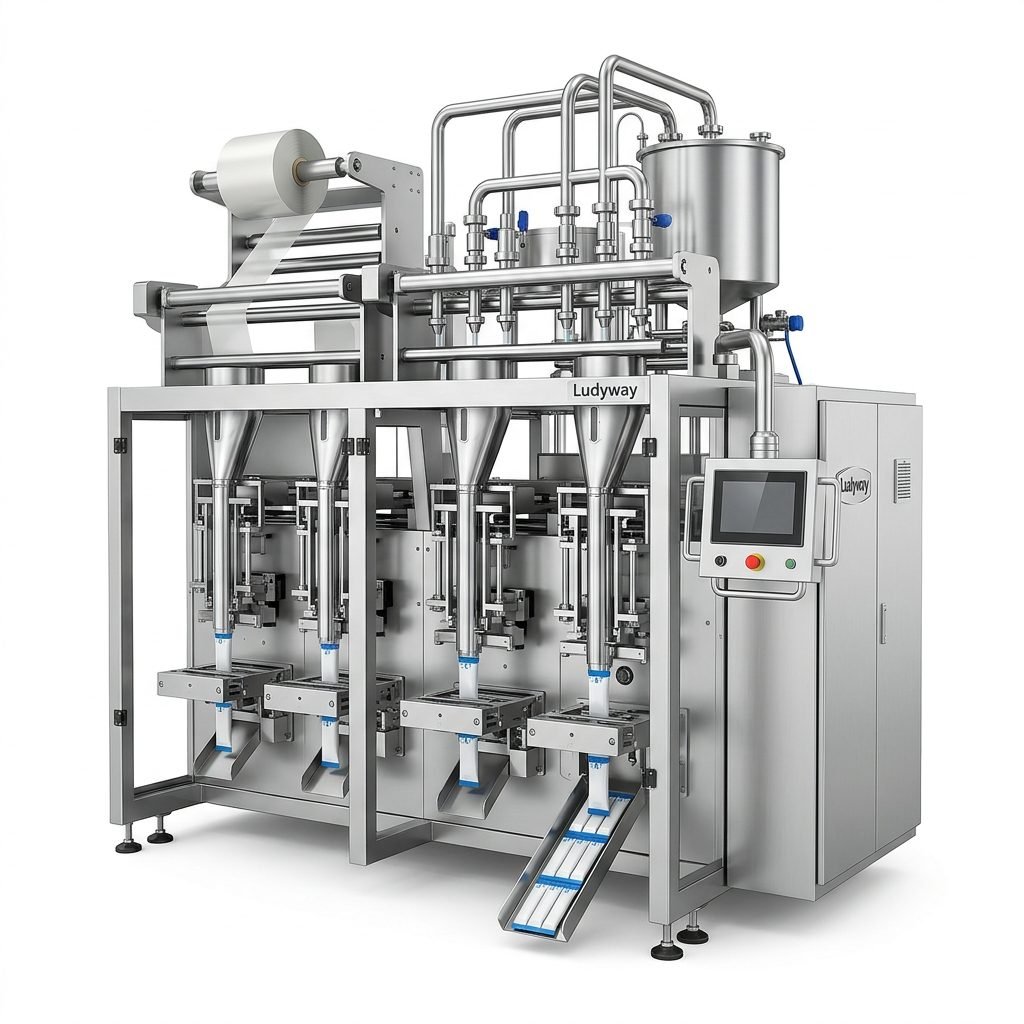
| Sachets | Powders, liquids, gels, condiments | Sachet packing machine |
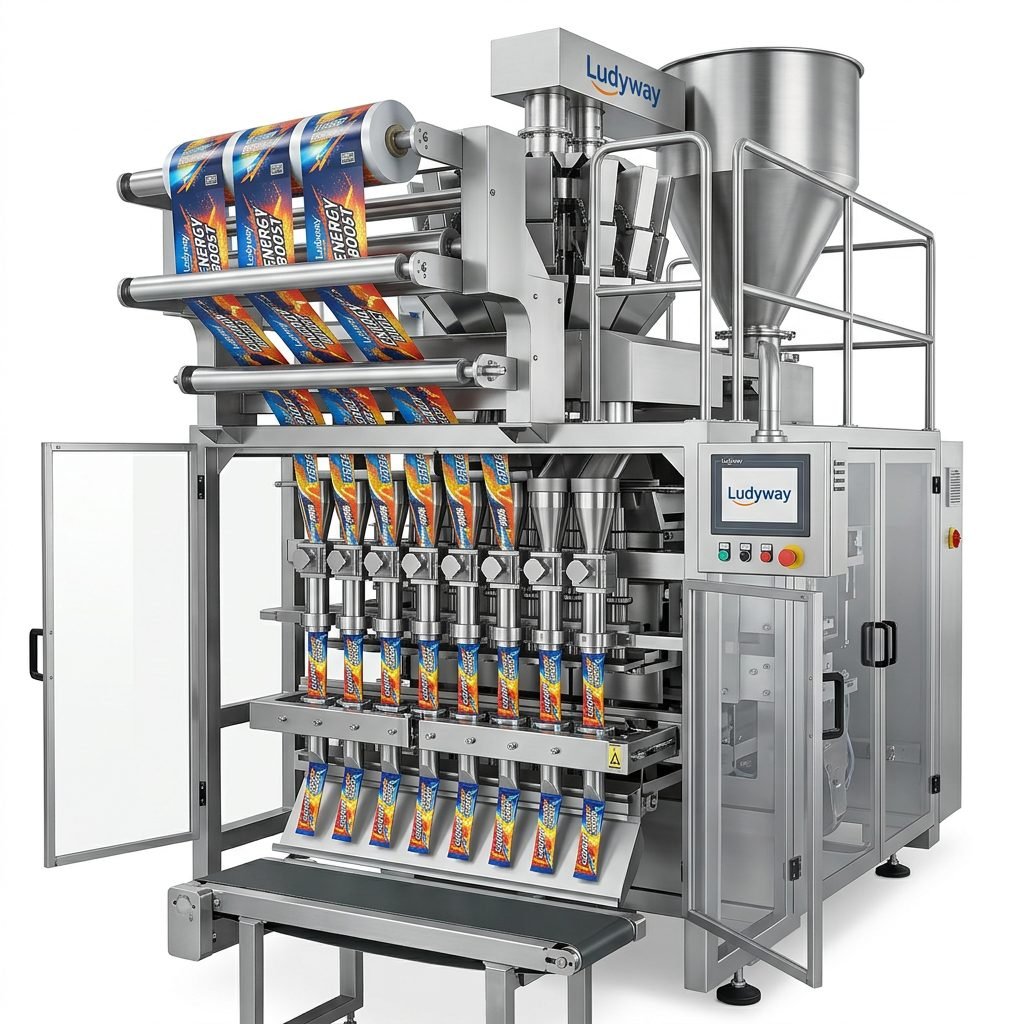
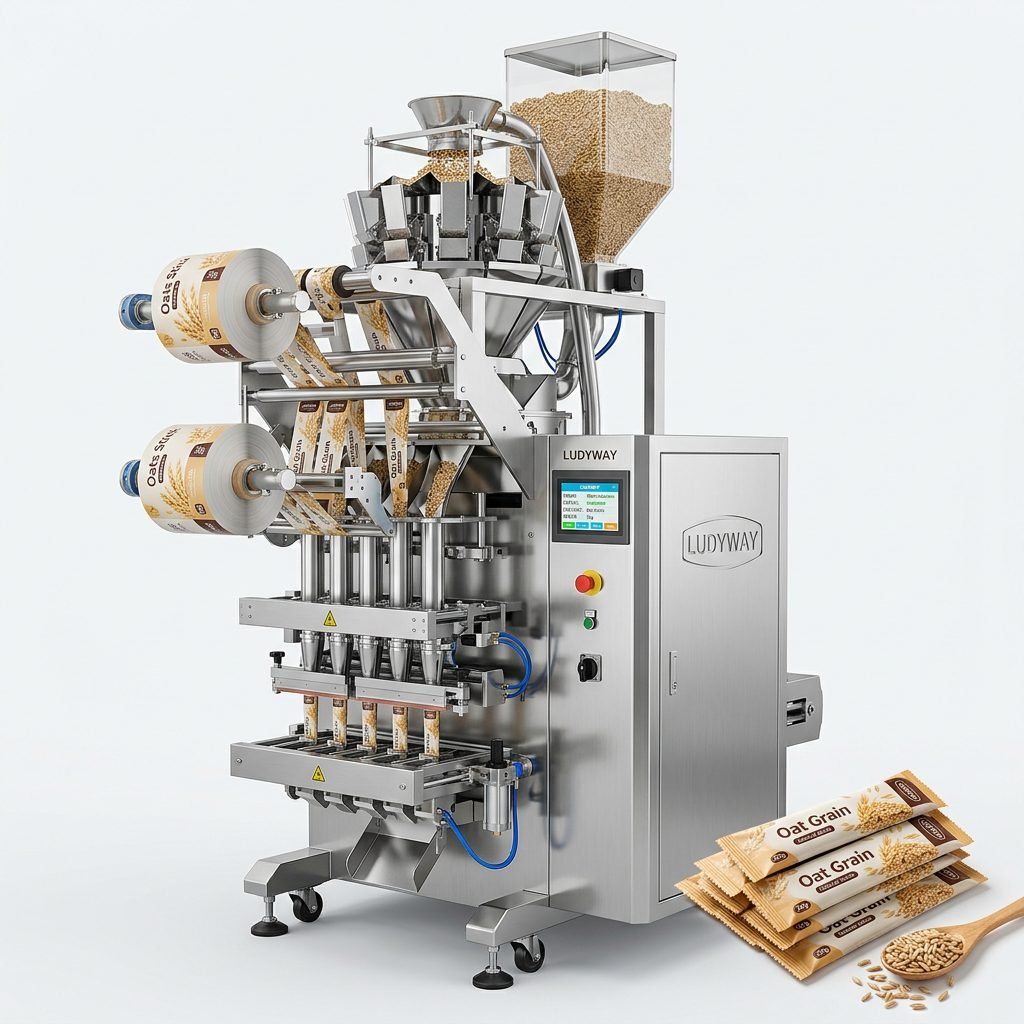
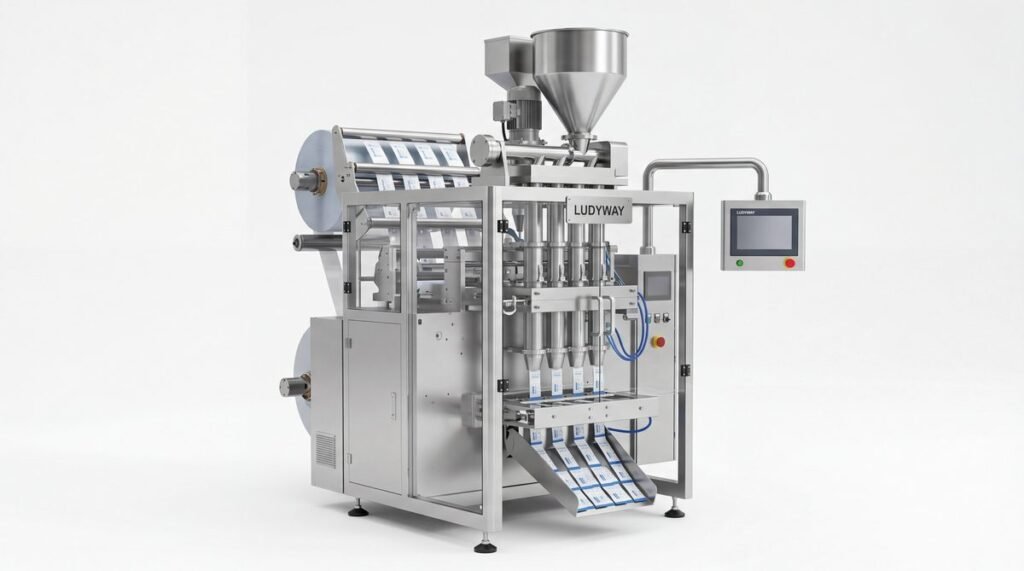
| Stick packs | Drink mixes, supplements, sugar, coffee | Multi-lane stick pack machine |
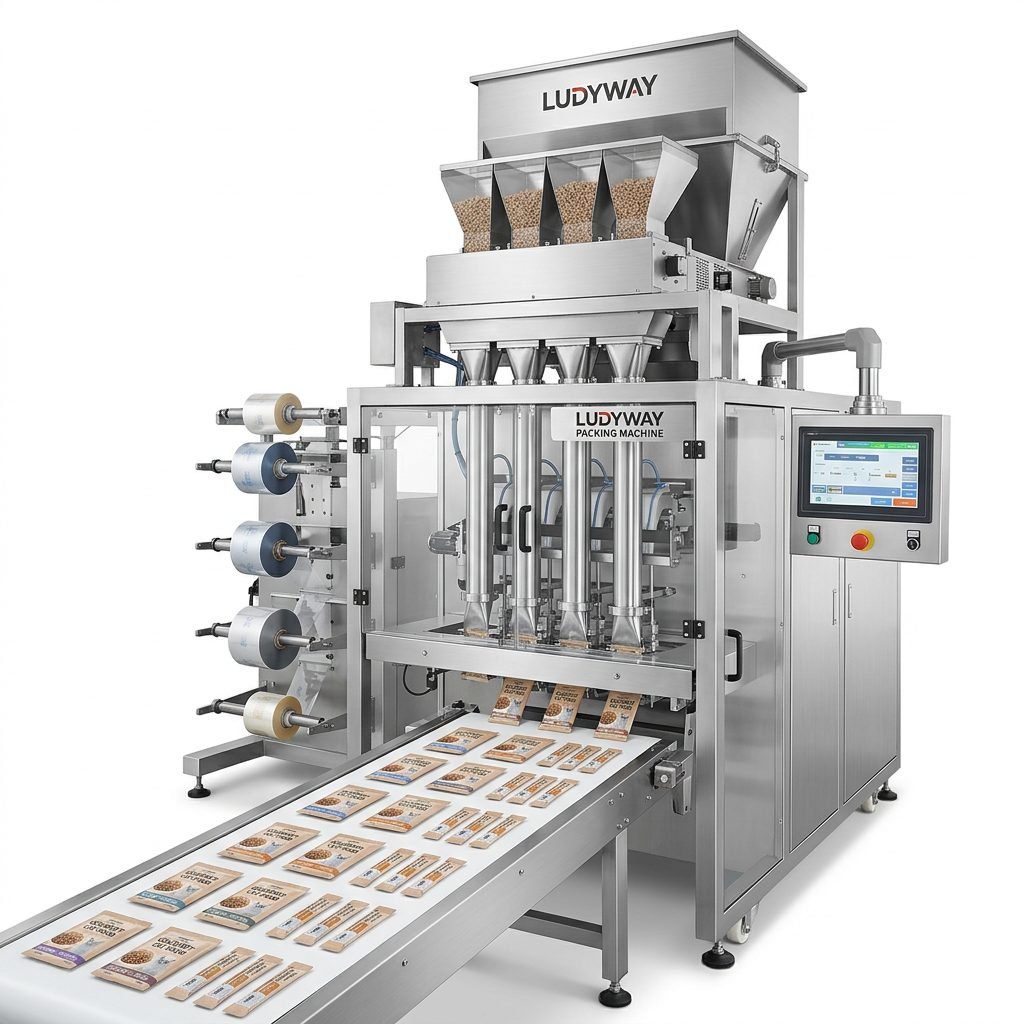
| Pouches | Food, pet products, chemicals, personal care | Pouch filling and sealing machine |
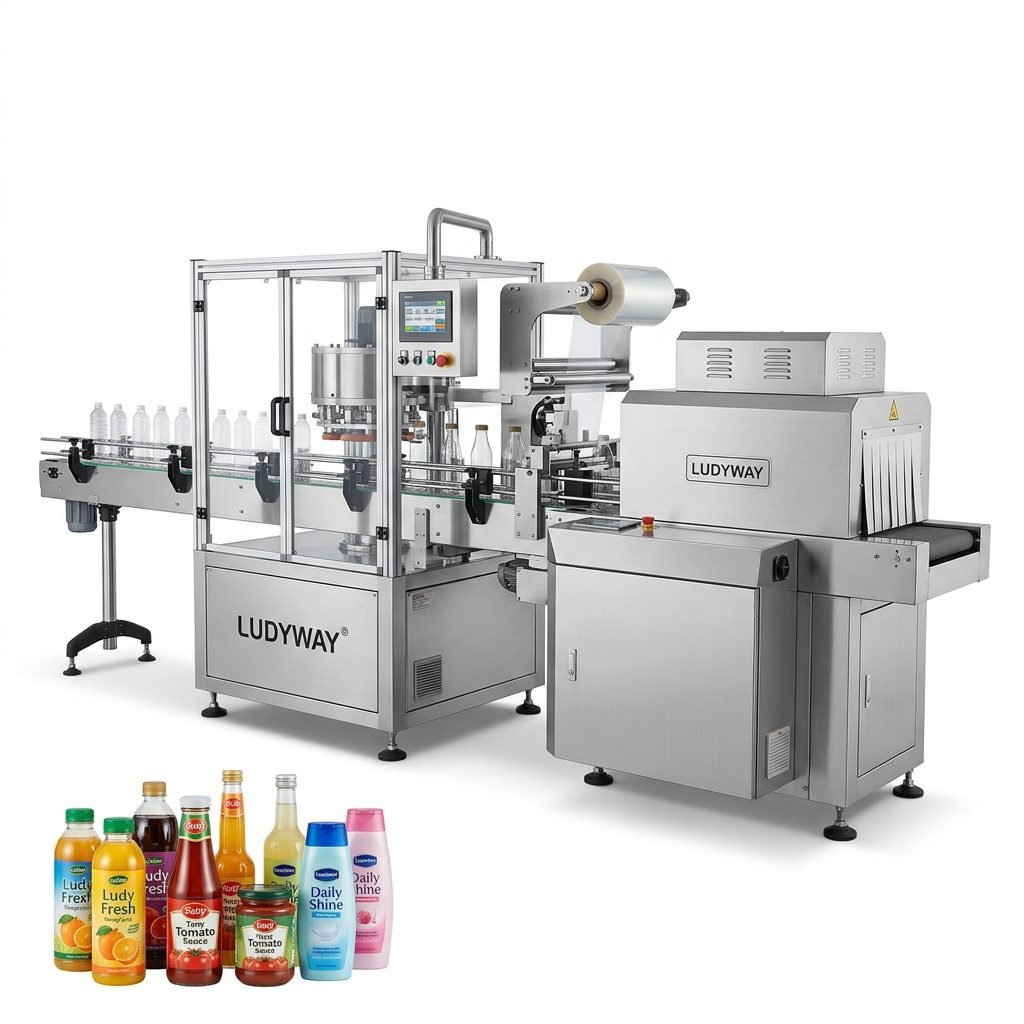
| Bottles / jars | Liquids, capsules, tablets, powders | Filling, capping, labeling line |
| Bulk bags | Feed, fertilizer, industrial powder | Weighing and bagging system |
Think about the pack size, shape, seal type, and whether you need easy-tear, zipper, spout, or retail-ready presentation.
3. Define Your Required Output and Production Capacity
One of the most common mistakes is buying a machine that is either too small for future demand or too large for current operations. Your target production capacity should be realistic and based on actual sales forecasts.
Ask yourself:
- How many packs per minute or per hour do you need?
- Will production run in one shift or multiple shifts?
- Will output increase in the next 2–5 years?
- Do you need a single machine or a complete packaging line?
Scalability matters. A machine that supports future expansion often delivers better long-term value than a basic model that quickly becomes insufficient.
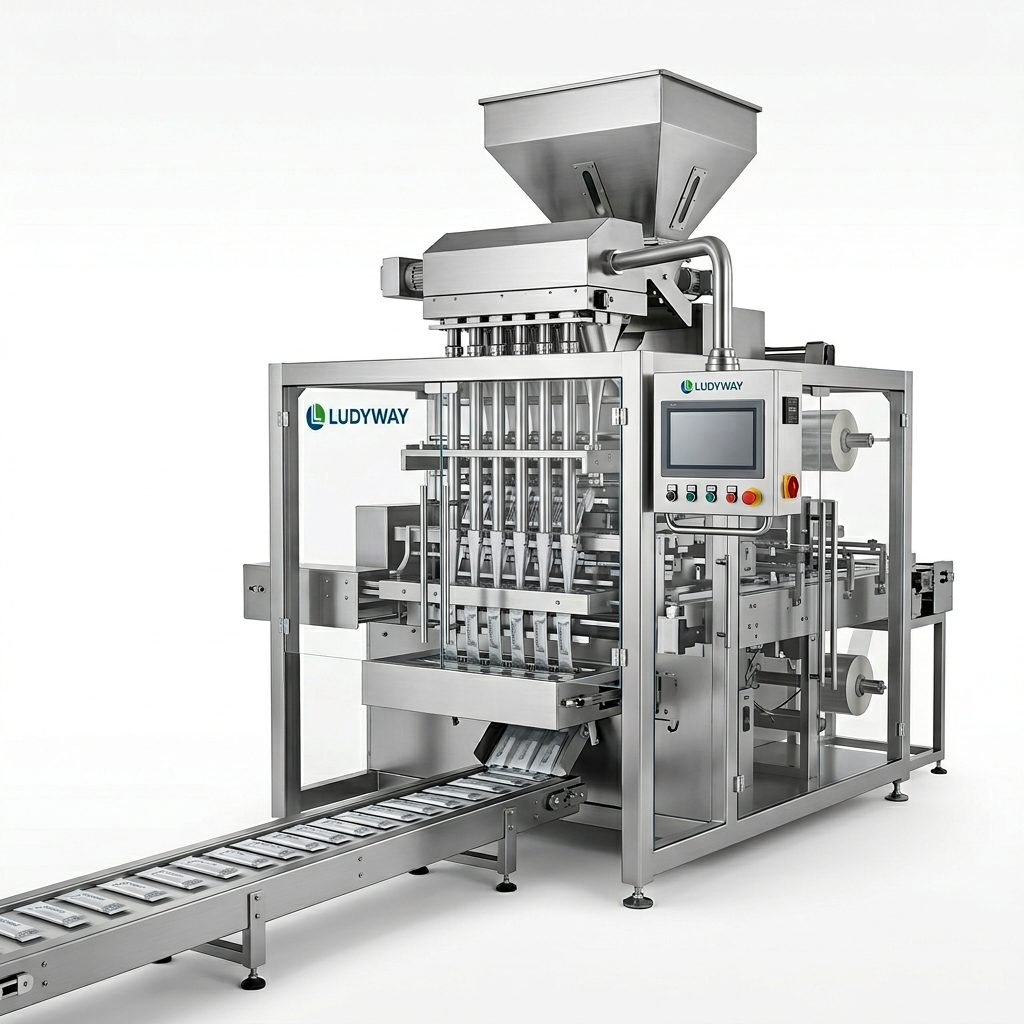
4. Evaluate Accuracy and Product Waste
Packaging accuracy directly impacts product cost, compliance, and customer satisfaction. Overfilling increases material loss, while underfilling may cause legal and quality issues.
For this reason, you should compare machines based on:
- Filling tolerance
- Dosing consistency
- Seal quality
- Reject rate
- Changeover stability
For pharmaceutical, nutraceutical, and premium food applications, high precision is usually more important than extreme speed.
5. Consider the Packaging Material Compatibility
Not every machine can handle every film or container type. Before buying, check whether the equipment is compatible with your packaging materials, including:
- Laminated films
- Aluminum foil structures
- PE, PET, or recyclable films
- Paper-based materials
- Preformed pouches
- Bottles, jars, tubes, or trays
This is especially important if your brand plans to move toward sustainable packaging. Eco-friendly materials may require different sealing temperatures, dwell times, or handling mechanisms.
6. Check Automation Level and Labor Requirements
Some businesses only need a semi-automatic machine, while others require fully automatic integrated lines with feeding, filling, sealing, coding, inspection, cartoning, and palletizing.
A higher automation level can help reduce:
- Manual labor dependency
- Human error
- Contamination risk
- Inconsistent output
However, higher automation also means a bigger initial investment. The right choice depends on your labor cost, available operators, production volume, and technical management capability.
7. Review Cleaning, Hygiene, and Compliance Needs
Industries such as food, pharmaceuticals, cosmetics, and health supplements often require specific hygienic design standards. If sanitation is critical, your machine should be easy to clean and made from suitable contact materials such as stainless steel.
Look for features such as:
- SUS304 or SUS316 contact parts
- Dust-proof or enclosed design
- Quick disassembly for cleaning
- Tool-free changeover areas
- GMP-oriented structure where required
If your products enter regulated markets, also confirm the machine can support necessary documentation, testing, and validation requirements.
8. Understand Changeover Time and Product Flexibility
If you package multiple SKUs, different sachet sizes, or several product formulas, flexibility is essential. A machine with long changeover time can reduce your effective capacity and increase labor cost.
Ideal machines for multi-product factories should offer:
- Fast size adjustment
- Recipe memory
- Easy tool replacement
- Stable operation across different product types
This is particularly valuable for contract manufacturers and growing brands launching new package formats.
9. Match the Machine to Your Factory Space and Utilities
Before ordering equipment, review your plant layout carefully. Machine dimensions alone are not enough. You should also account for:
- Operator access space
- Maintenance clearance
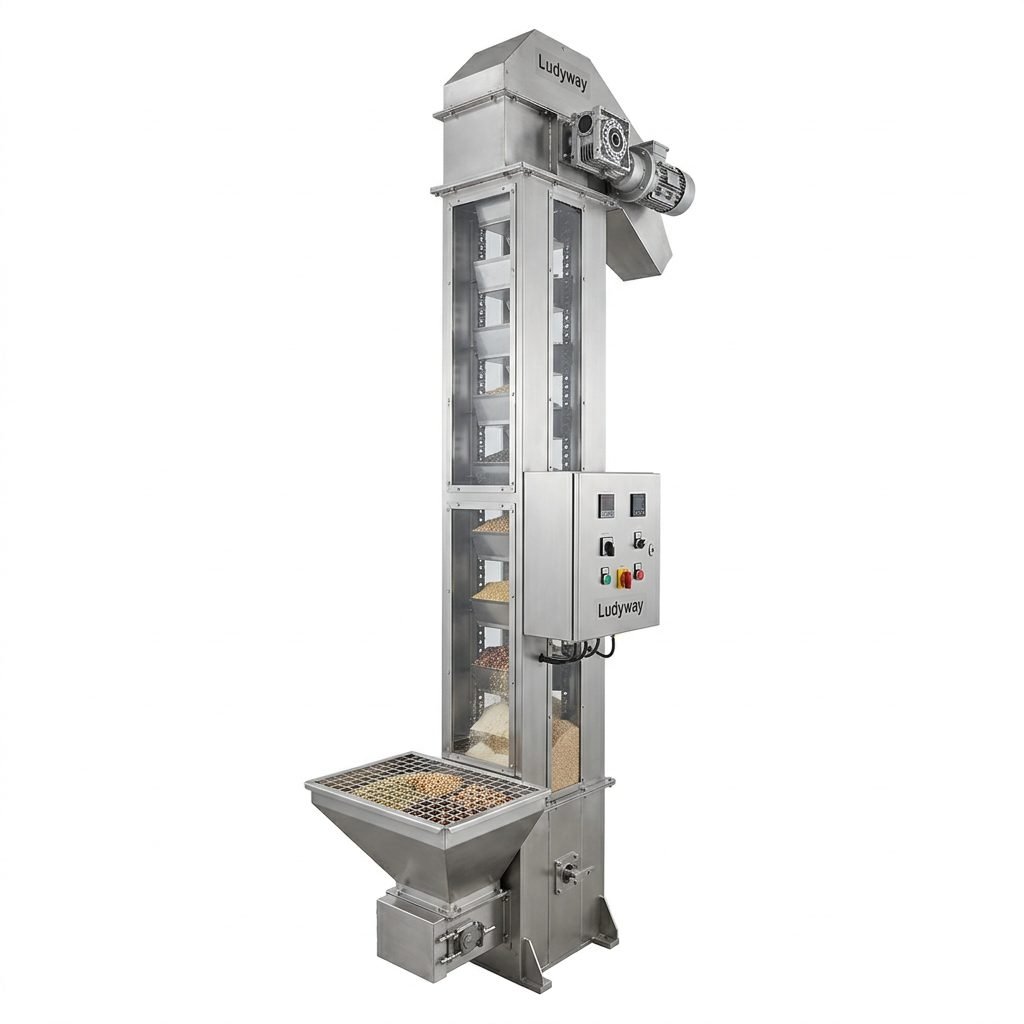
- Conveyor and feeding system layout
- Electrical requirements
- Compressed air demand
- Ventilation and dust collection needs
A machine that looks suitable on paper may become difficult to install if the workshop layout is limited.
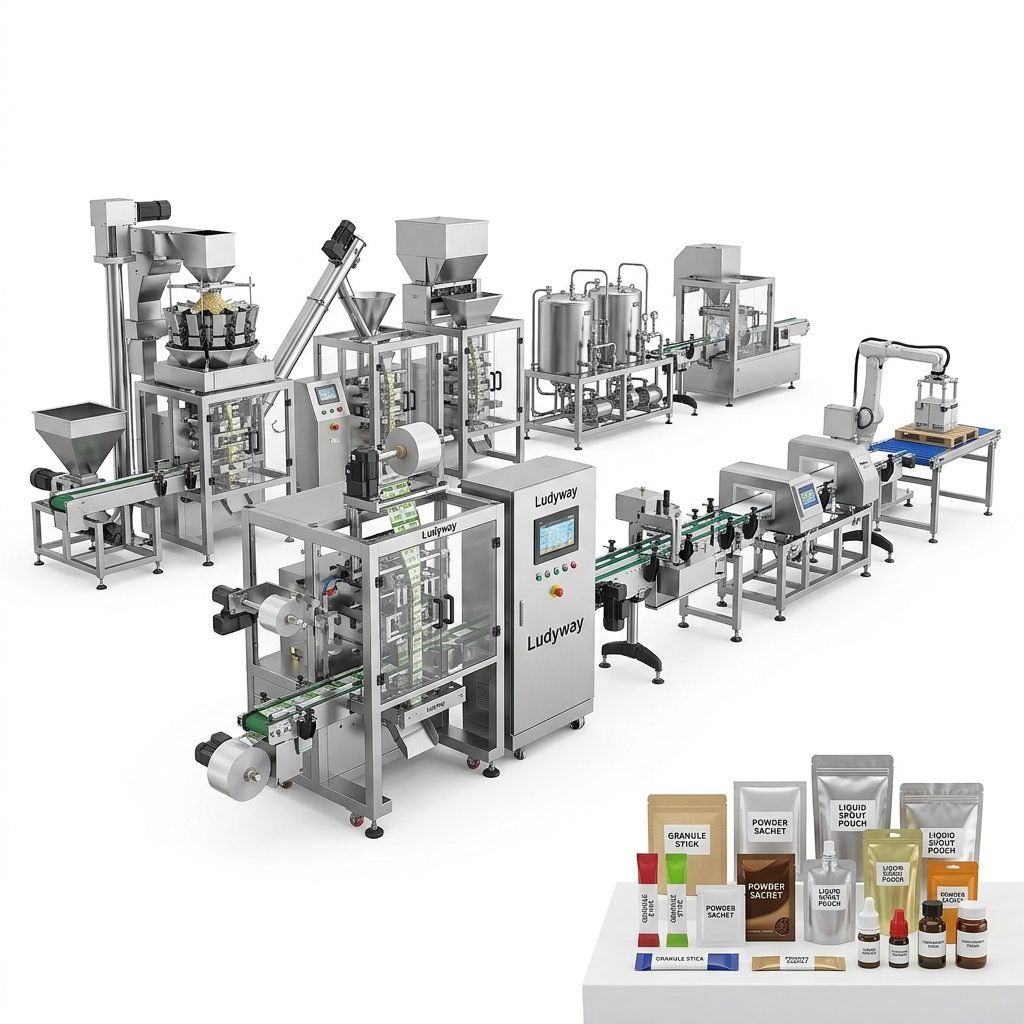
10. Look Beyond the Initial Purchase Price
The lowest machine price is not always the lowest total cost. A good buying decision should consider the full lifecycle cost of ownership.
| Cost Factor | Why It Matters |
|---|---|
| Initial equipment cost | Affects budget, but should not be the only decision point |
| Maintenance cost | Frequent repairs raise long-term expense |
| Spare parts availability | Reduces downtime and service delays |
| Energy consumption | Impacts operating cost over time |
| Product waste | Poor accuracy can become very expensive |
| Downtime risk | Lost production often costs more than the machine itself |
A reliable packaging machine often delivers better ROI than a cheaper machine with unstable performance.
11. Assess Supplier Experience and Technical Strength
The machine is only part of the purchase. The supplier behind it matters just as much. An experienced manufacturer can help you select the right model, customize the line, run product tests, and support installation and after-sales service.
When comparing suppliers, consider:
- Years of industry experience
- Factory scale and manufacturing capacity
- Export experience
- Customization ability
- Case studies and real application examples
- After-sales responsiveness
For businesses looking for scalable automation, Ludyway packaging machine solutions are often considered for food, pharmaceutical, health supplement, cosmetic, and turnkey packaging line projects thanks to broad application coverage and long-term manufacturing experience.
12. Ask About Testing, Training, and After-Sales Support
Before purchasing, confirm what kind of service is included. Good technical support reduces project risk significantly.
You should ask whether the supplier provides:
- Sample testing with your product and film
- Factory acceptance testing
- Installation guidance or on-site commissioning
- Operator training
- Electrical and mechanical manuals
- Remote troubleshooting
- Spare parts recommendations
Strong after-sales service can save weeks of downtime after installation.
13. Think About Future Integration
Your business may eventually need more than a single filling machine. Future upgrades could include coding, checkweighing, metal detection, X-ray inspection, cartoning, case packing, palletizing, or data collection systems.
If expansion is likely, choose equipment that supports integration with upstream and downstream systems. A modular design gives your production line more room to grow.
Common Upgrades to Plan For
- Automatic feeding systems
- Date coding and labeling
- Inspection systems
- Cartoning equipment
- Case packing and palletizing
- MES or factory data connection
14. Key Questions to Ask Before You Buy
Before you sign a contract, use this simple checklist:
- Is the machine proven for my exact product type?
- Can it achieve my required speed without losing accuracy?
- Is it compatible with my packaging material?
- How easy is it to clean and maintain?
- How long does format changeover take?
- What spare parts should I stock?
- What warranty and service support are included?
- Can the machine be upgraded into a larger packaging line later?
15. Final Buying Advice
The best packaging machine is the one that fits your product, package format, output goals, compliance requirements, factory conditions, and future growth plan. Speed and price matter, but reliability, precision, support, and adaptability matter even more over the long run.
If possible, always request sample testing, technical drawings, configuration details, and a clear explanation of what is included in the quote. A careful evaluation before purchase will help you avoid costly mistakes and choose a machine that supports efficient, profitable production for years to come.