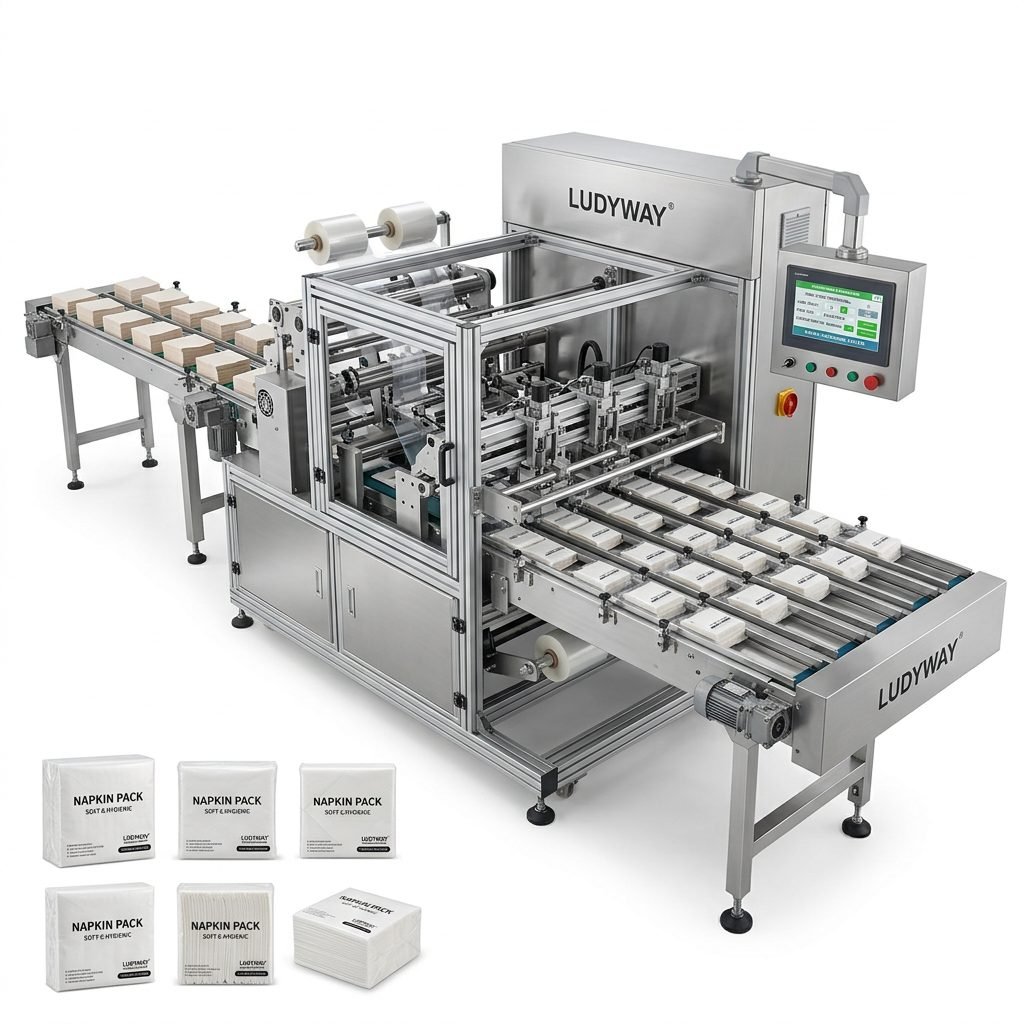
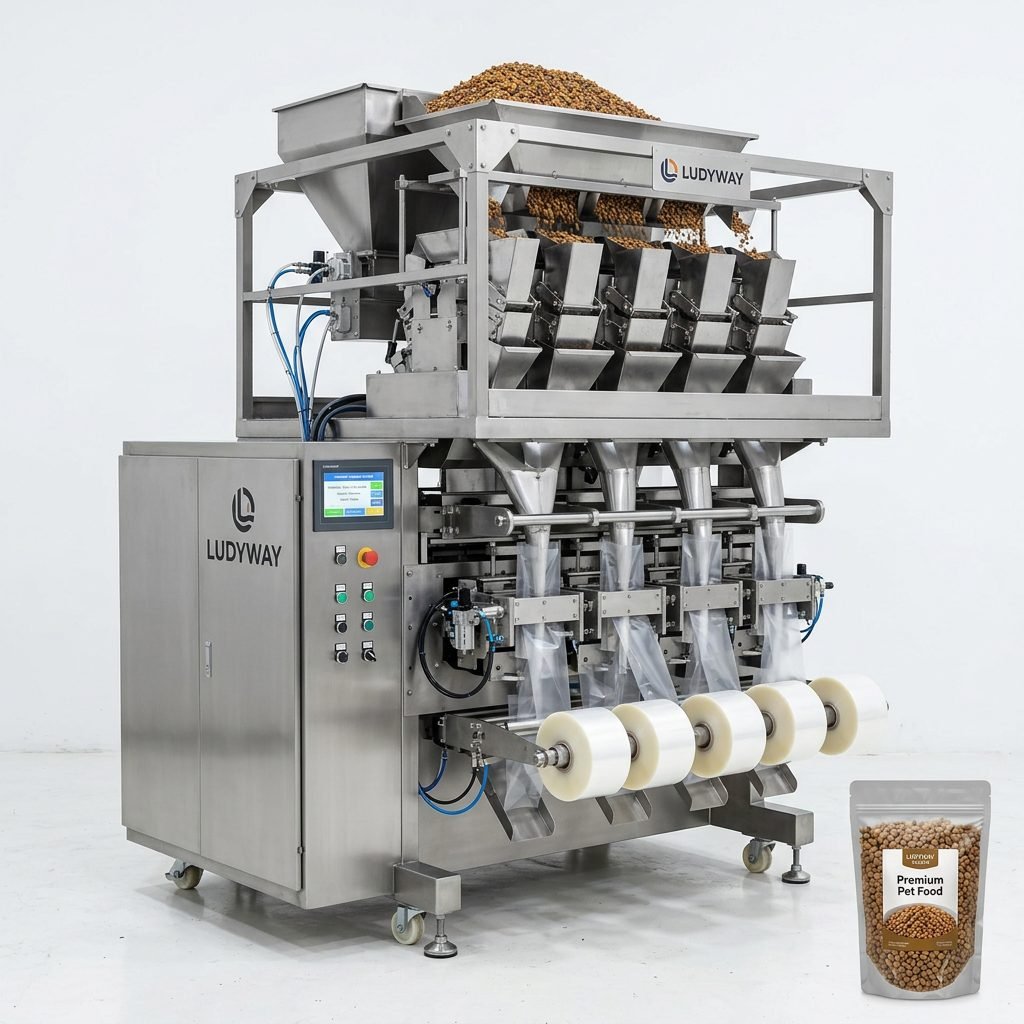
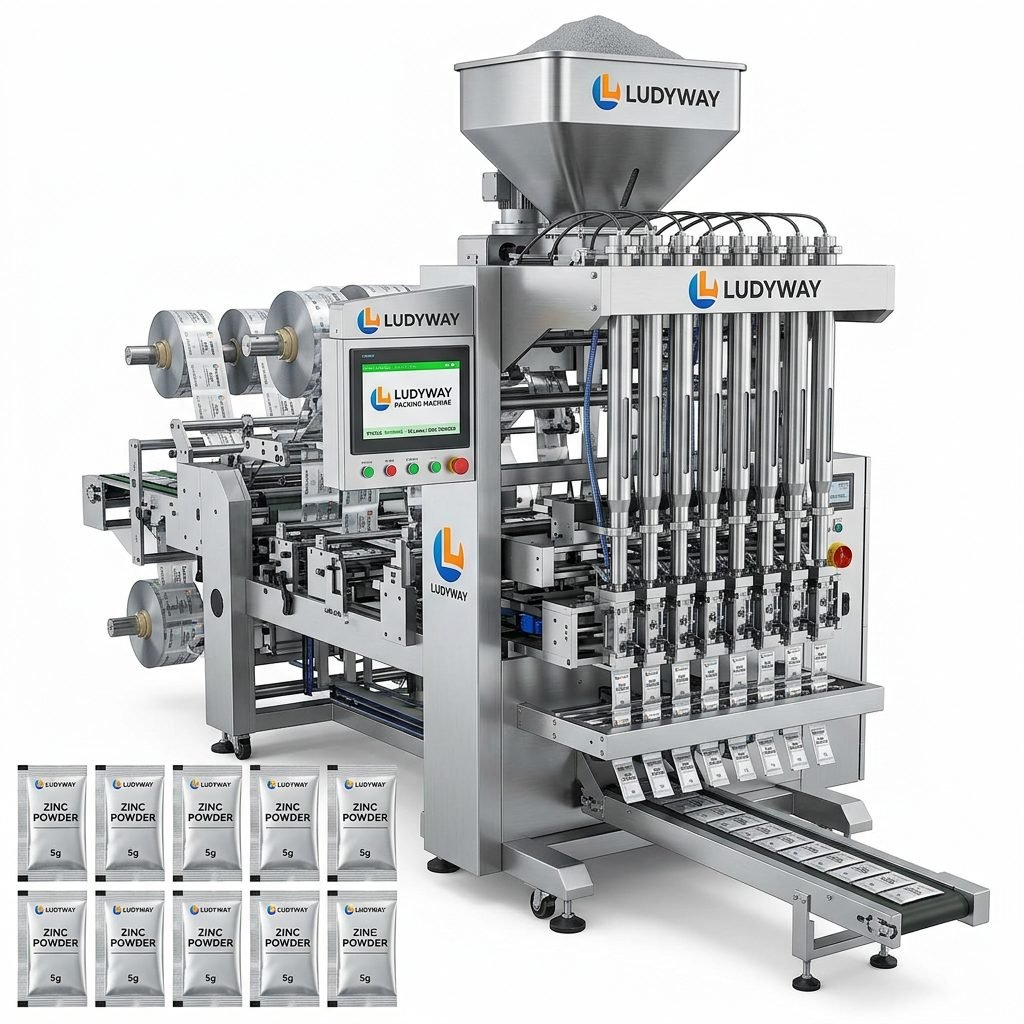
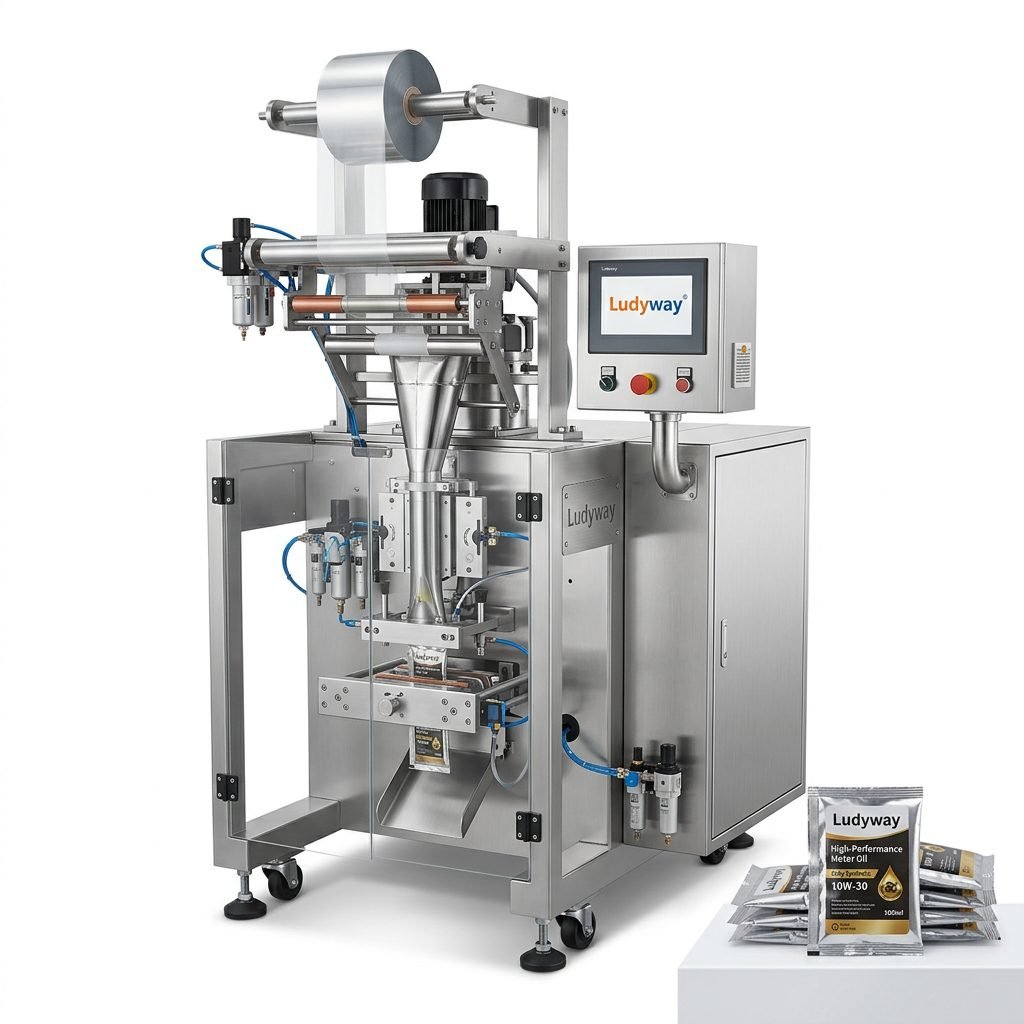
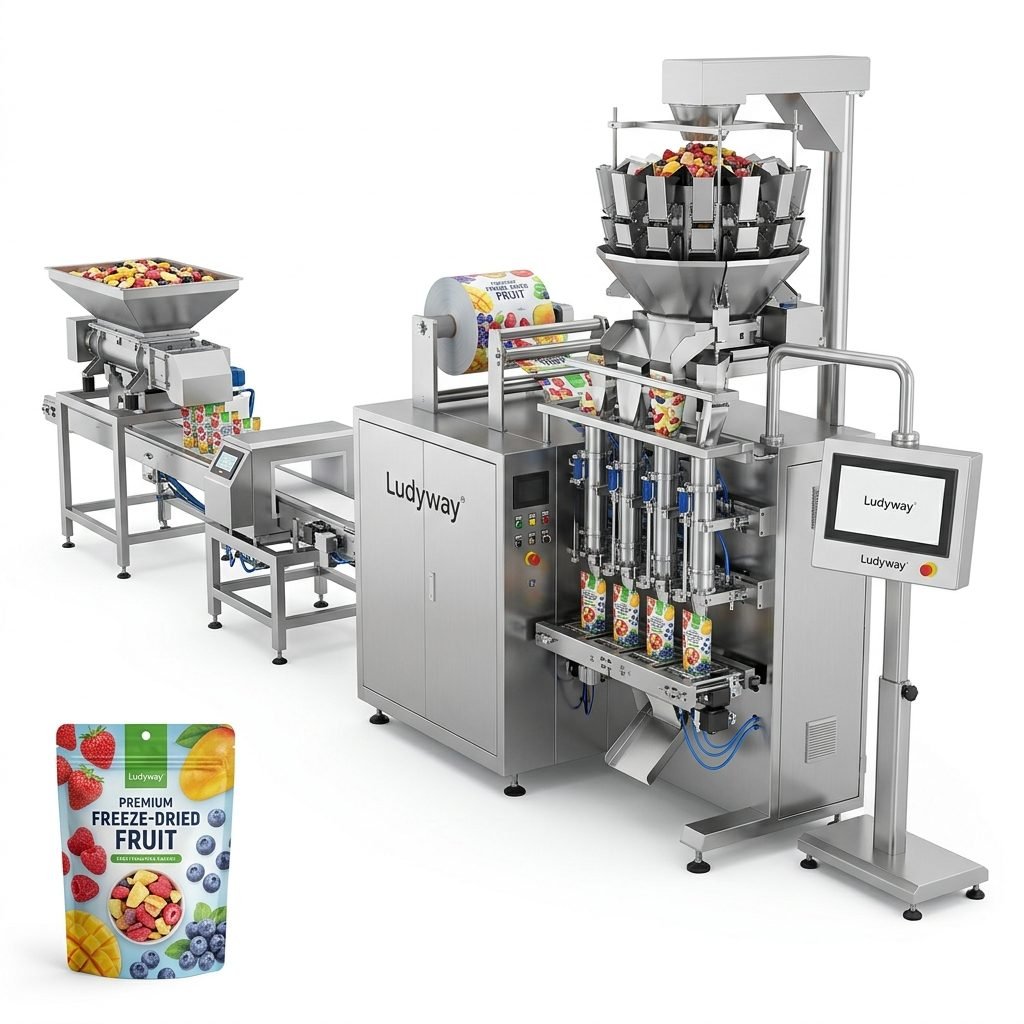
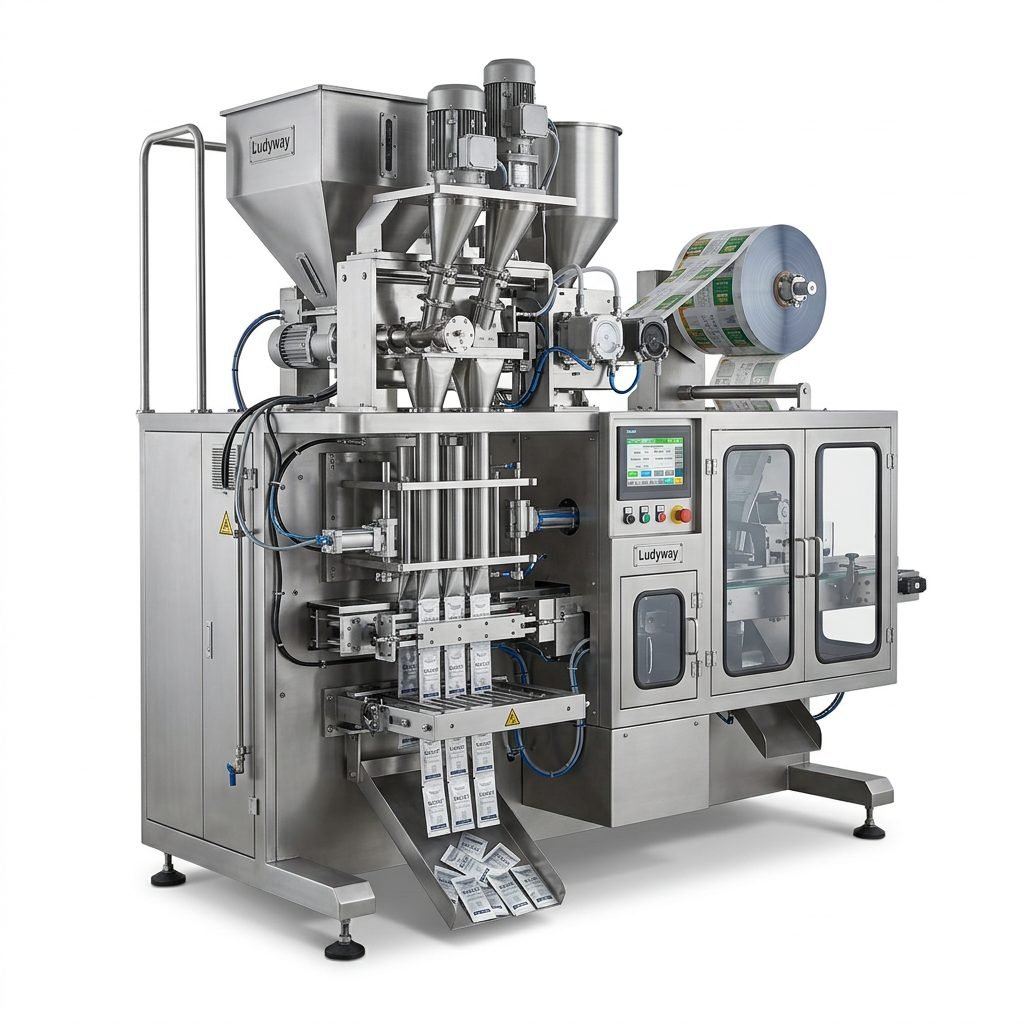
Modern manufacturers often ask a simple but important question: what packaging machine can package different materials? The short answer is that no single machine fits every product by default, but a multi-material packaging solution can be configured to handle powders, granules, liquids, pastes, gels, tablets, and even mixed product formats with high efficiency.
The right solution depends on product characteristics, package type, dosing method, hygiene requirements, automation level, and future production goals. In practical terms, businesses usually choose a modular machine or turnkey line that can be adapted for multiple materials instead of buying separate systems for every SKU.
What does “different materials” mean in packaging?
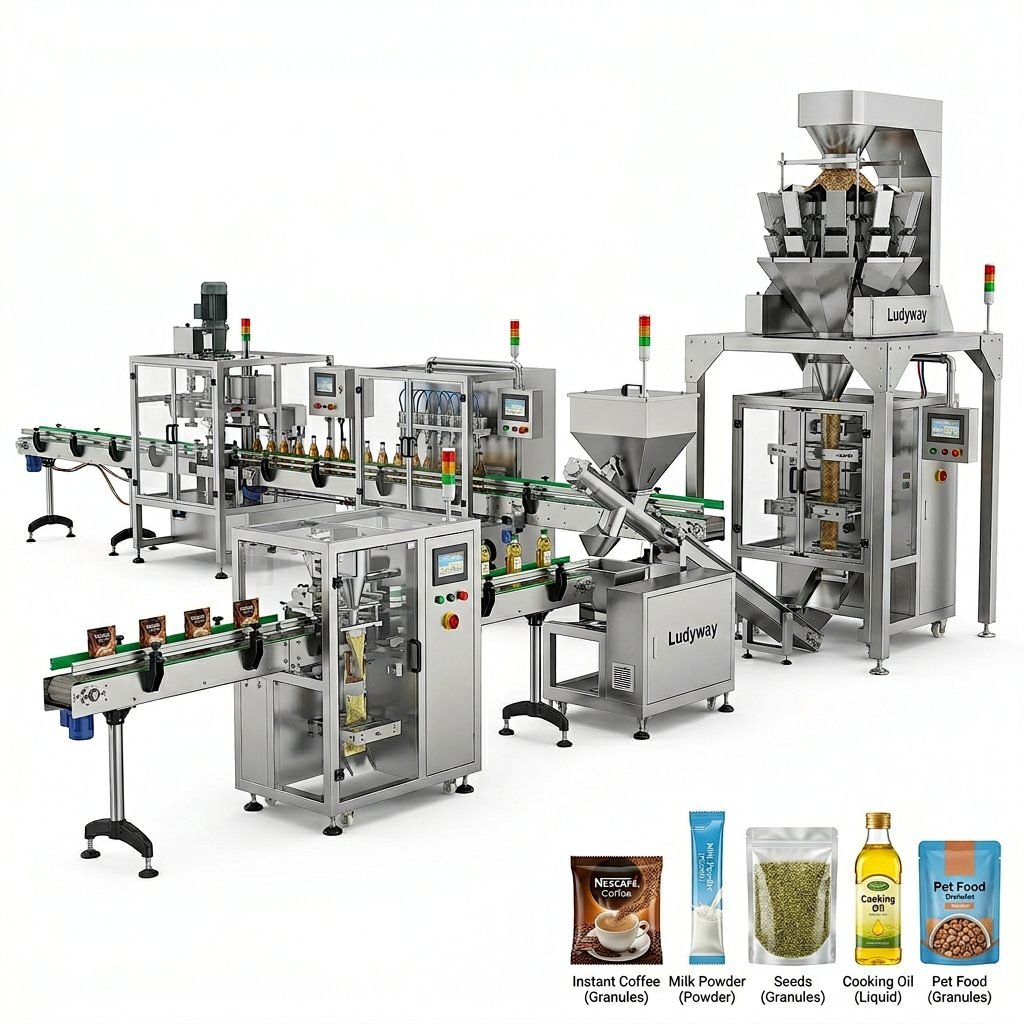
In the packaging industry, “different materials” usually refers to products with different physical forms and flow behaviors. These include:
- Powders: milk powder, protein powder, spices, pharmaceuticals, chemical powders
- Granules: sugar, coffee, seeds, snacks, pellets, supplements
- Liquids: sauces, oils, detergents, oral liquids, beverages
- Pastes and gels: ketchup, cream, honey, lotion, ointment
- Solid units: tablets, capsules, hardware parts, wipes, pouches
Each material behaves differently during feeding, dosing, sealing, and discharge. That is why the best multi-material packaging machine is usually built around interchangeable filling systems and a packaging platform that supports flexible changeover.
What packaging machines can handle multiple material types?
Several machine categories are widely used for multi-material packaging. The most versatile choices are listed below.
| Machine Type | Suitable Materials | Common Pack Formats | Best For |
|---|---|---|---|
| Vertical Form Fill Seal (VFFS) | Powders, granules, some liquids with compatible fillers | Pillow bags, gusset bags, sachets | Flexible, high-volume packaging |
| Sachet Packing Machine | Powders, granules, liquids, pastes | 3-side or 4-side seal sachets | Single-dose and retail packs |
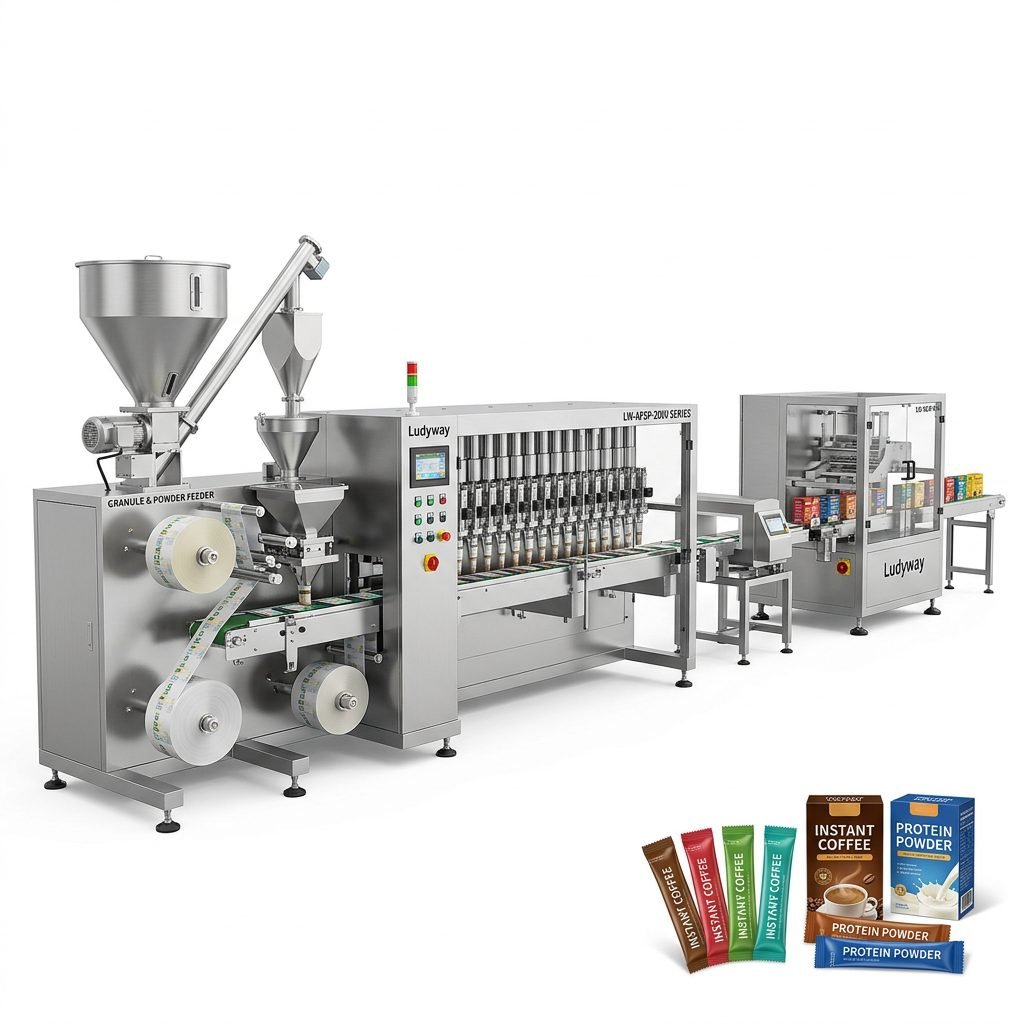
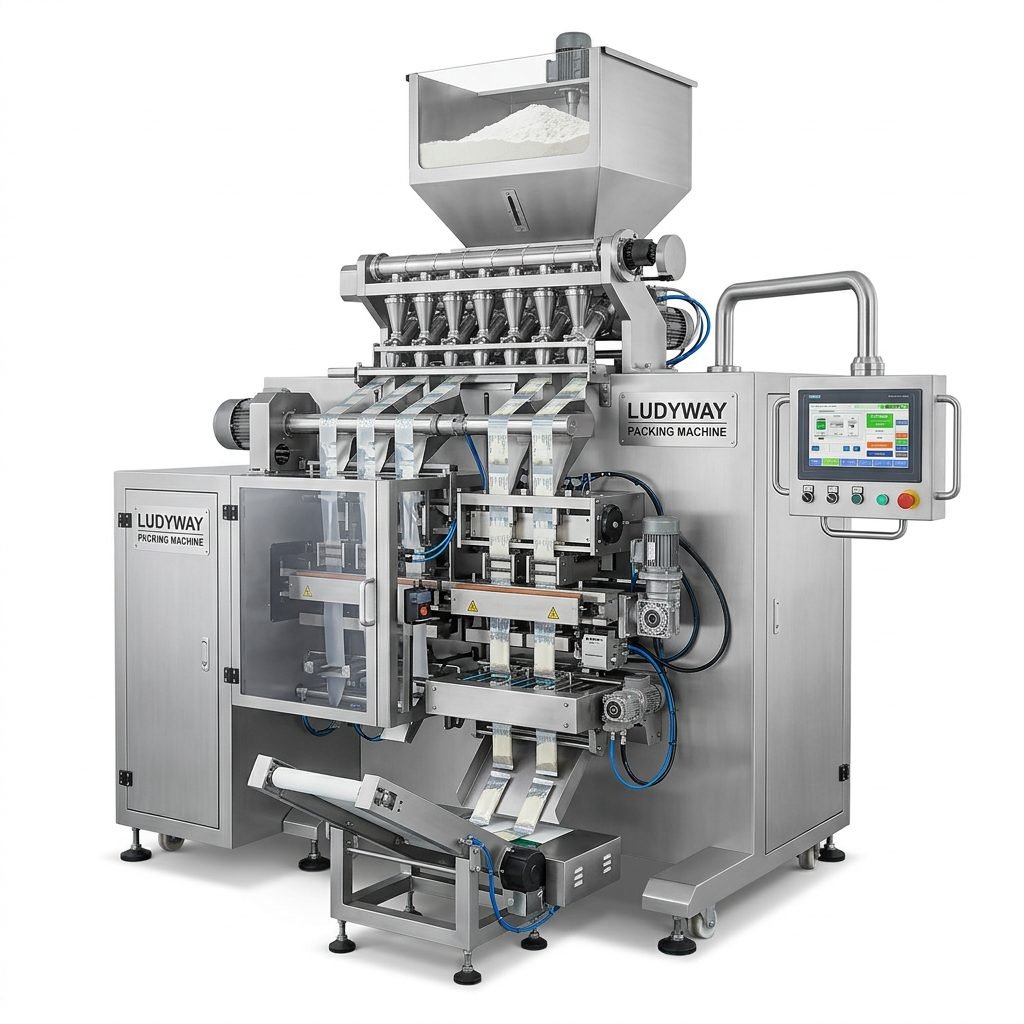
| Stick Pack Machine | Powders, granules, liquids, gels | Stick packs | High-speed, compact serving packs |
| Premade Pouch Machine | Granules, powders, liquids, solids | Stand-up pouches, zipper pouches | Premium packaging and versatility |
| Blister/Counting Systems | Tablets, capsules, solid units | Blisters, bottles, cartons | Pharma and nutraceutical solids |
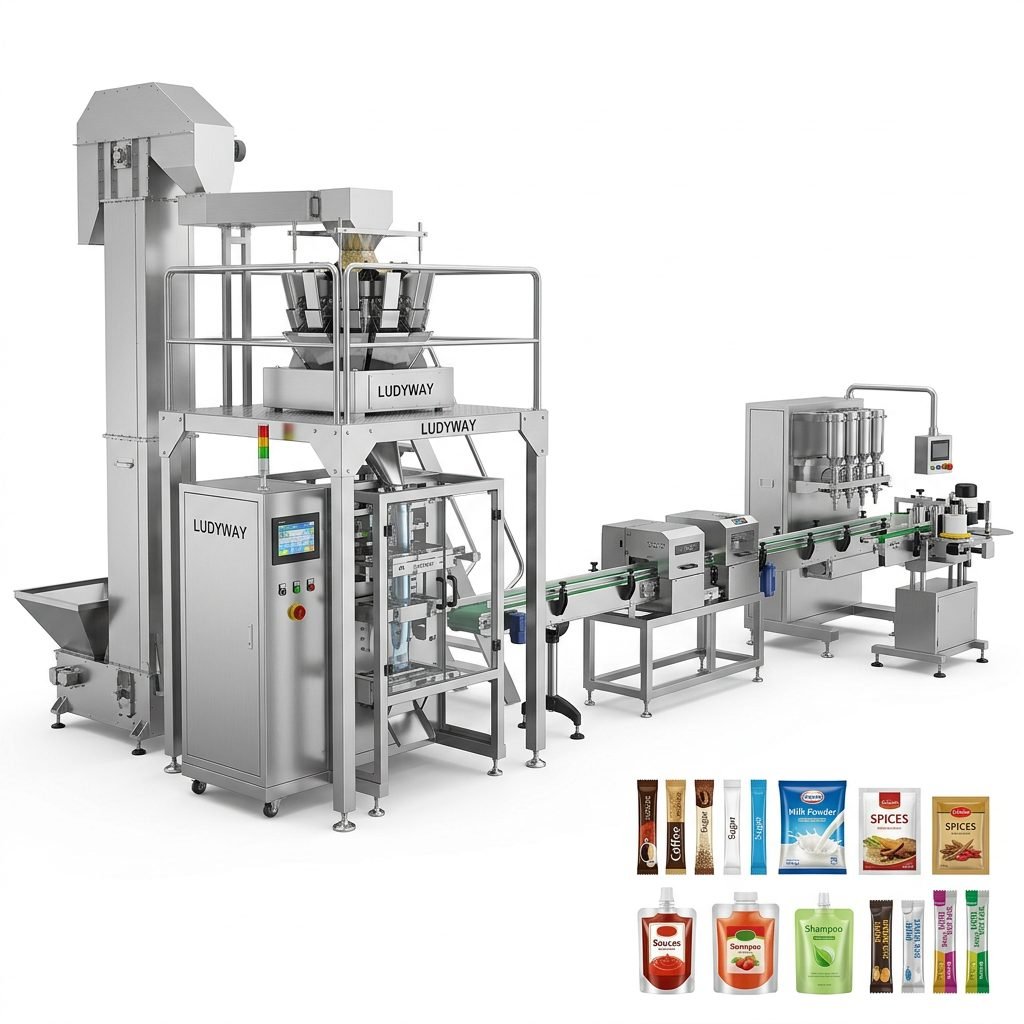
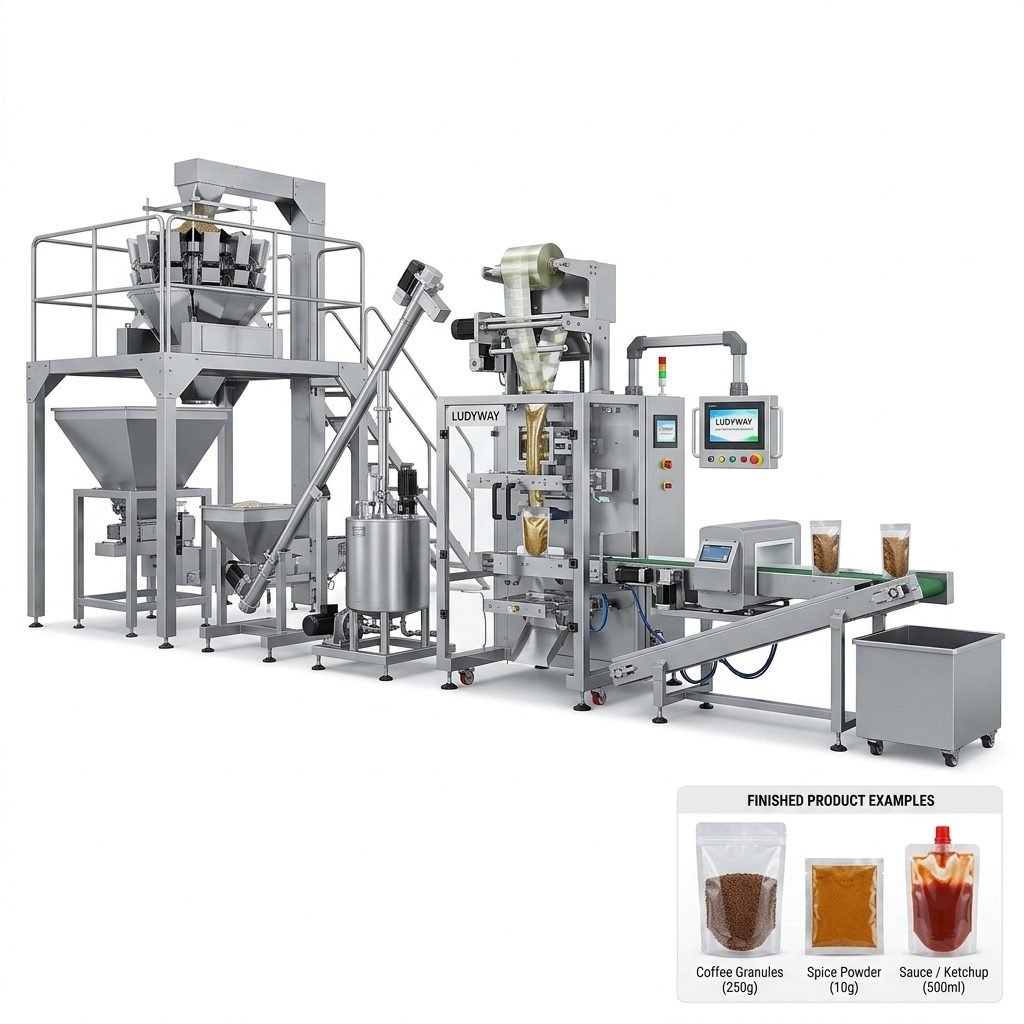
| Turnkey Integrated Packaging Line | Multiple materials across different SKUs | Sachets, sticks, pouches, bottles, cartons | Factories with multi-product production plans |
The most practical answer: modular packaging machines
If your goal is to package different materials on one platform, modular packaging machines are the most practical option. These systems use the same core machine frame but allow different filling devices and auxiliary systems to be installed according to the product.
For example, one machine may run:
- Auger fillers for powder products
- Volumetric cup fillers for free-flowing granules
- Piston pumps for pastes and viscous liquids
- Liquid pumps for sauces, oils, and syrups
- Counting systems for tablets or capsules
This approach reduces equipment redundancy, saves floor space, and makes it easier to launch new products.
How different fillers match different materials
1. Auger fillers for powders
Auger filling systems are ideal for fine or non-free-flowing powders such as protein powder, flour, pharmaceutical powder, collagen, and chemical blends. They provide precise dosing through a screw mechanism and are commonly integrated with sachet, stick pack, and VFFS machines.
2. Multi-head weighers or cup fillers for granules
Granular materials like sugar, rice, coffee beans, snack particles, seeds, and pet treats are often handled by multi-head weighers or volumetric cup systems. These methods are fast and suitable for products with good flowability.
3. Piston pumps for pastes and viscous products
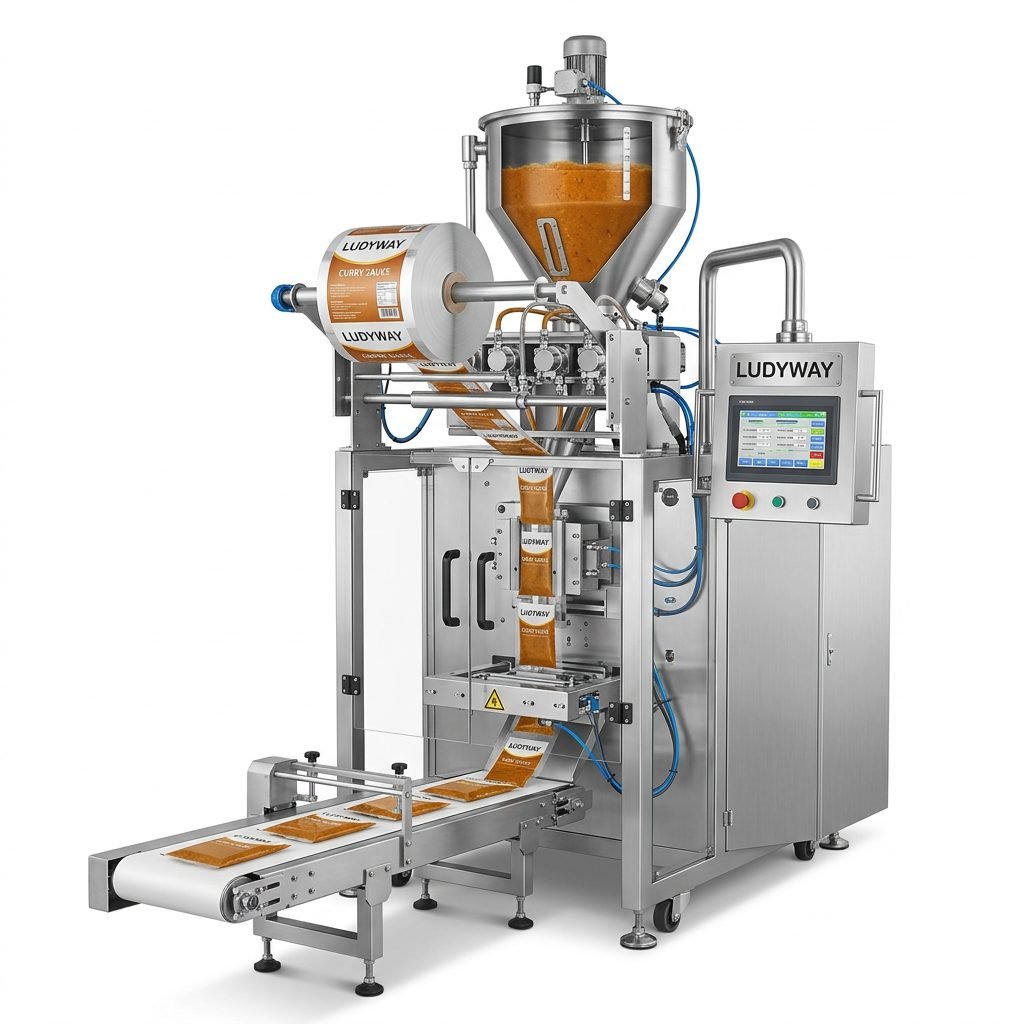
Products such as peanut butter, tomato paste, lotion, mayonnaise, cream, and gel need piston or servo pump filling. These fillers are designed for thick materials and help maintain dose accuracy while reducing dripping.
4. Liquid pumps for low-viscosity liquids
Water-like or thin liquid products such as soy sauce, oral liquids, sanitizer, oils, and detergent can be filled with flow meter systems, peristaltic pumps, or magnetic pumps depending on product sensitivity and foaming behavior.
5. Counting or dedicated handling systems for solid units
Tablets, capsules, wipes, medical products, and hardware components usually need dedicated counting, sorting, or placement modules. These can still be part of a broader multi-material packaging line.
Best packaging solutions by material category
| Material Type | Recommended Machine | Recommended Filling System | Typical Industries |
|---|---|---|---|
| Fine powder | Stick pack, sachet, VFFS | Auger filler | Food, pharma, nutraceuticals |
| Granules | Sachet, stick pack, pouch | Cup filler, weigher | Food, feed, agriculture |
| Thin liquid | Sachet, stick pack, pouch, bottle line | Liquid pump | Food, chemical, personal care |
| Paste/gel | Sachet, stick pack, tube, pouch | Piston pump | Cosmetics, pharma, condiments |
| Tablets/capsules | Blister, bottle line, sachet | Counting system | Pharmaceutical, supplement |
Can one machine really package powder, granules, and liquid?
Yes, but usually not at the same time without configuration changes. A machine platform can be designed to package powder today, granules tomorrow, and liquid after a cleaning and tooling changeover. The key is whether the machine supports:
- Quick-change filling systems
- Recipe memory on PLC/HMI
- Easy cleaning and sanitation design
- Flexible sealing parameters
- Adaptable feeding and conveyor options
For manufacturers with broad product portfolios, this kind of flexibility is more valuable than buying several separate low-utilization machines.
Important factors when choosing a multi-material packaging machine
Product flowability
A free-flowing powder behaves very differently from a sticky paste or foaming liquid. Always test product samples before final machine selection.
Packaging format
Do you need sachets, stick packs, pouches, bottles, or cartons? The packaging form affects machine type as much as the material itself.
Accuracy requirements
Pharmaceutical and high-value nutrition products usually require tighter dosing tolerances than lower-cost industrial or commodity products.
Speed targets
Single-lane systems may suit startups, while multi-lane equipment is better for brands with high-volume demand.
Cleaning and contamination control
If you package multiple product categories, cleaning access and cross-contamination prevention become critical.
Future expansion
Choose equipment that can support new SKUs, upgraded output, and downstream automation such as cartoning, checkweighing, coding, and palletizing.
Industries that benefit most from multi-material packaging solutions
- Food industry: spices, sauces, snacks, beverage powders, instant mixes, sugar, coffee
- Pharmaceutical industry: granules, powders, oral liquids, tablets, capsules
- Health supplement industry: collagen, electrolytes, probiotics, protein powder, vitamins
- Cosmetic industry: creams, serums, lotions, shampoos, masks
- Chemical industry: detergents, cleaners, solvents, additives, industrial powders
- Feed and agriculture: pellets, premixes, seeds, nutrient powders
Advantages of a turnkey multi-material packaging line
A standalone machine can solve one packaging step, but a turnkey line connects all core stages from feeding to final packing. This often includes product feeding, dosing, filling, sealing, date coding, inspection, cartoning, case packing, and palletizing.
Main benefits include:
- Higher automation and lower labor dependence
- Better consistency across product types
- Centralized control and easier production planning
- Improved hygiene and quality control
- Scalable investment for long-term growth
When should you choose a dedicated machine instead?
A dedicated machine may be better if:
- You run only one product type all year
- You need extremely high output for a single SKU
- Your product has special filling challenges
- Validation requirements demand a fixed system
In other cases, especially for contract packers and brands with frequent product launches, a flexible packaging system usually offers better ROI.
How to evaluate a supplier for multi-material packaging equipment
Before purchasing, check whether the supplier can provide:
- Sample testing with your real products
- Custom filler integration
- Experience across multiple industries
- Export project support and technical documentation
- Installation, training, and after-sales service
- Line integration instead of just single-machine supply
If you are searching for a reliable partner, Ludyway packaging machine manufacturer offers packaging machinery and turnkey packaging line solutions for powders, granules, liquids, pastes, pouch products, and more across food, pharmaceutical, health supplement, cosmetic, chemical, and related sectors.
Frequently asked questions
Can a sachet machine package both powder and liquid?
Yes. A sachet machine can package both, provided it uses the correct filler and sealing settings. Powder usually needs an auger filler, while liquid needs a pump-based filling system.
What is the most versatile packaging machine?
A modular sachet or stick pack machine, or a flexible premade pouch system, is often considered the most versatile because it can be adapted for different materials and pack styles.
Are multi-material machines suitable for food and pharma?
Yes, if the machine is designed with proper hygiene standards, material compatibility, cleaning access, and accurate dosing controls.
How long does product changeover take?
It depends on the machine design and product difference. With quick-change tooling and recipe settings, changeover can be much faster than on traditional fixed systems.
Final buying advice
The best packaging machine for different materials is not simply the one with the most features. It is the one that matches your product range, pack style, output demand, sanitation standard, and growth strategy. For most modern manufacturers, the strongest choice is a modular or turnkey multi-material packaging solution that combines flexible filling technology with reliable automation.
If your factory handles powders, granules, liquids, or pastes across multiple SKUs, investing in a configurable packaging platform can improve efficiency, reduce changeover losses, and prepare your business for future expansion.