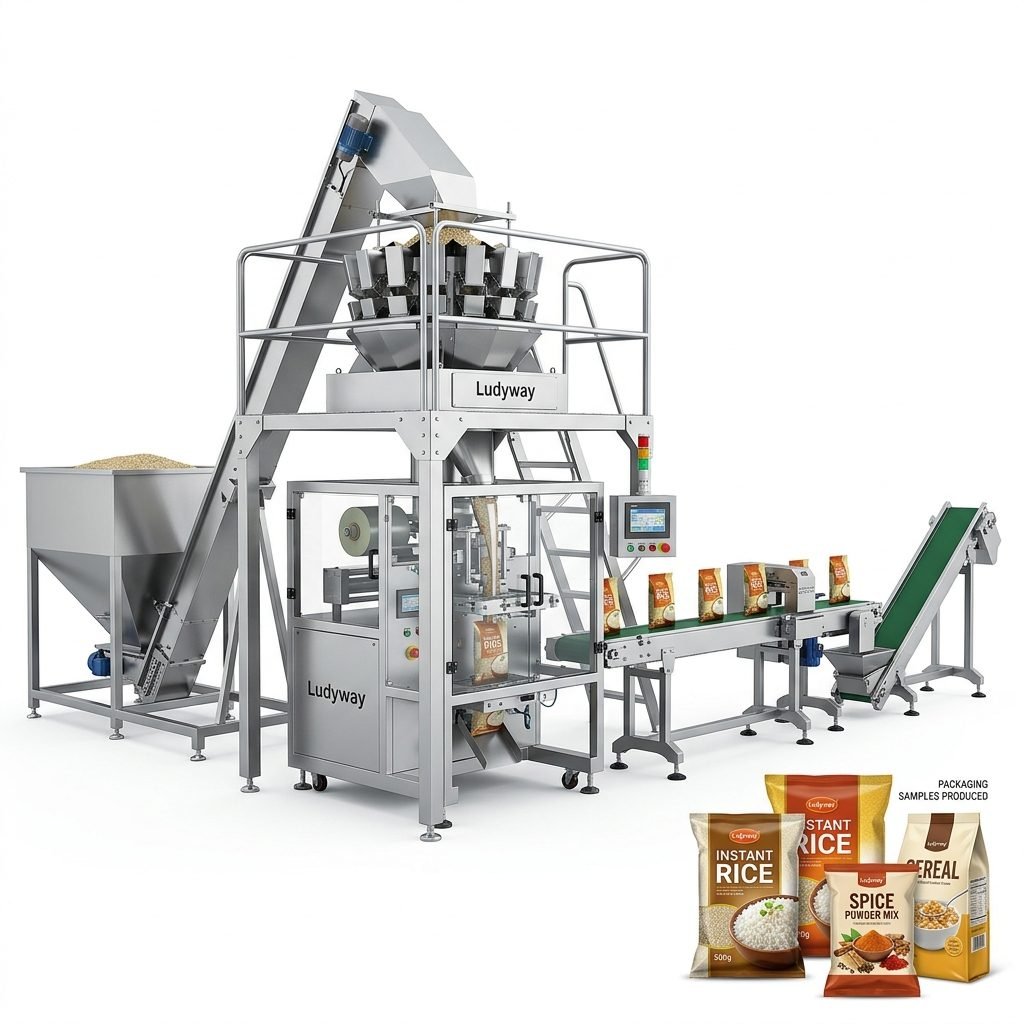
Ready-to-eat food brands compete on three essentials: freshness, food safety, and speed to market. A reliable ready to eat food packaging machine helps manufacturers protect product quality while improving output, reducing waste, and creating packaging that is convenient for modern consumers.
From cooked meals and snacks to sauces, seasonings, powders, and single-serve food components, automated packaging systems make it easier to standardize filling, sealing, coding, and final product handling. For factories aiming to scale efficiently, the right machine is no longer just production equipment—it is a core part of product quality assurance.
Why Packaging Matters for Ready-to-Eat Food
Ready-to-eat products are highly sensitive to packaging performance. Poor sealing, inconsistent filling, contamination risks, and weak material compatibility can quickly affect shelf life and brand reputation. That is why manufacturers increasingly invest in automated packaging technology that supports both hygiene and efficiency.
- Product protection: preserves taste, texture, aroma, and appearance.
- Food safety: reduces human contact and supports sanitary production.
- Portion consistency: improves weight accuracy and consumer trust.
- Retail appeal: creates clean, attractive, shelf-ready packaging.
- Operational efficiency: lowers labor intensity and increases throughput.
What Is a Ready to Eat Food Packaging Machine?
A ready to eat food packaging machine is an automated or semi-automated system designed to fill, form, seal, and package food products that are sold in a convenient, directly consumable format. Depending on the application, the system may handle powders, granules, sauces, liquids, cooked ingredients, condiments, or snack portions.
Common packaging formats include sachets, stick packs, premade pouches, pillow bags, vacuum packs, tray-sealed packs, and cartoned retail packs. Machine configuration depends on product characteristics, filling volume, required hygiene standards, and expected production speed.
Typical ready-to-eat food applications
- Instant meal components
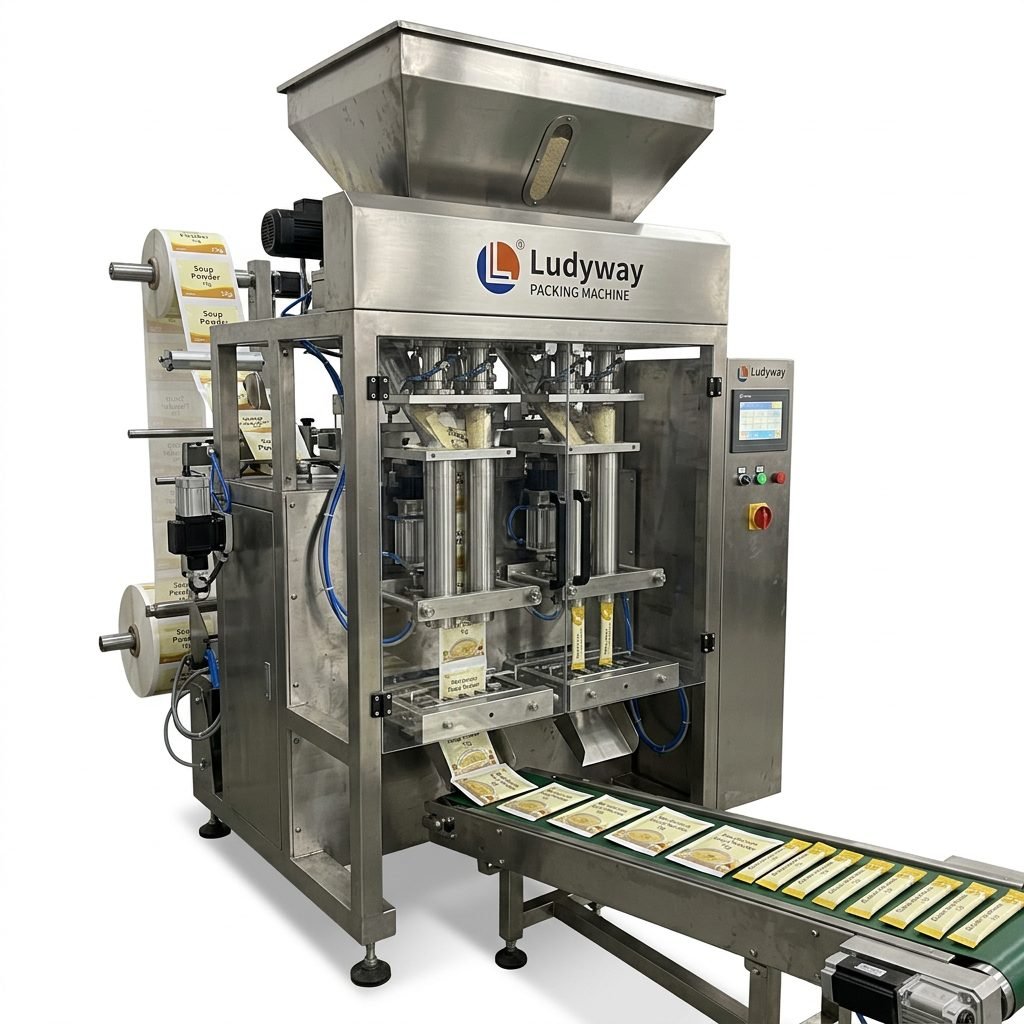
- Soup powders and seasoning sachets
- Sauces, dressings, and condiments
- Snack portions and mixed nuts
- Nutrition powders and meal replacement packs
- Frozen or shelf-stable food accessories
Main Types of Packaging Machines Used for Ready-to-Eat Food
| Machine Type | Suitable Products | Key Benefit |
|---|---|---|
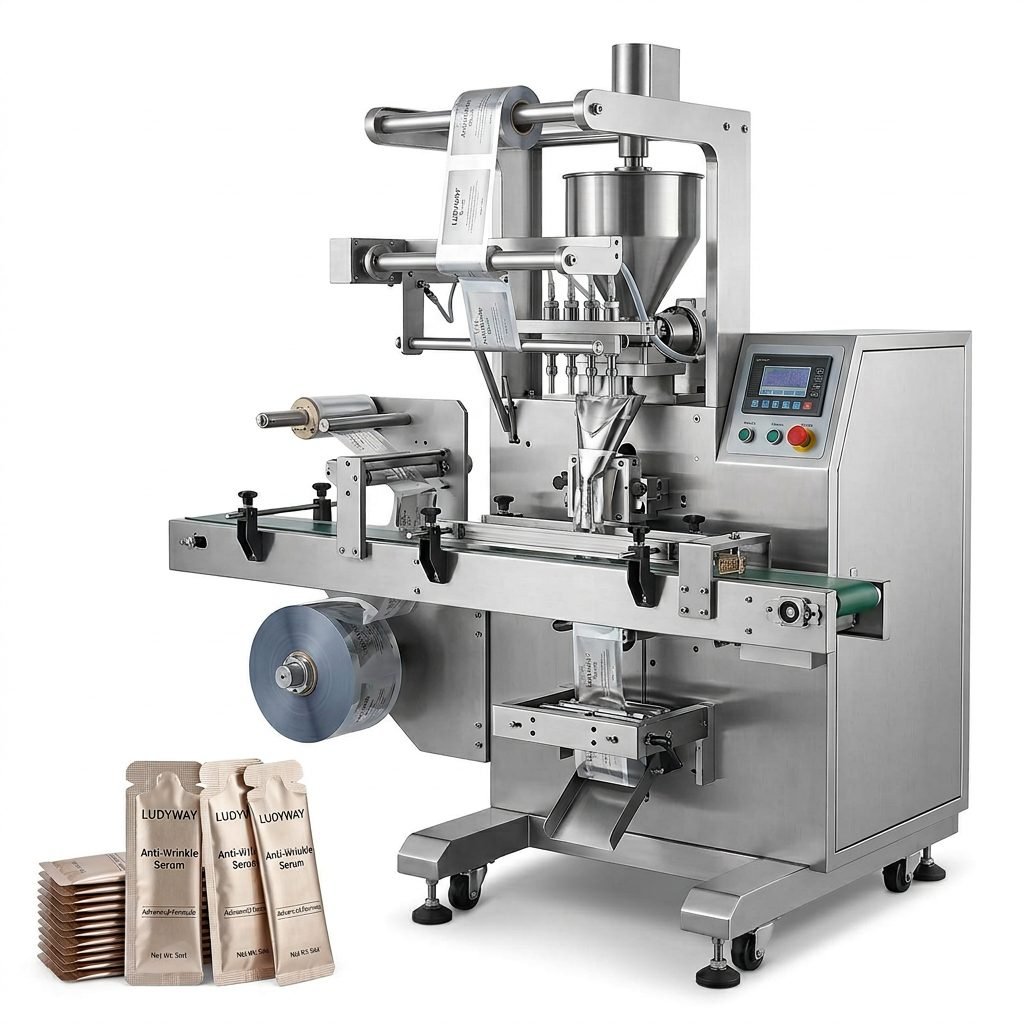
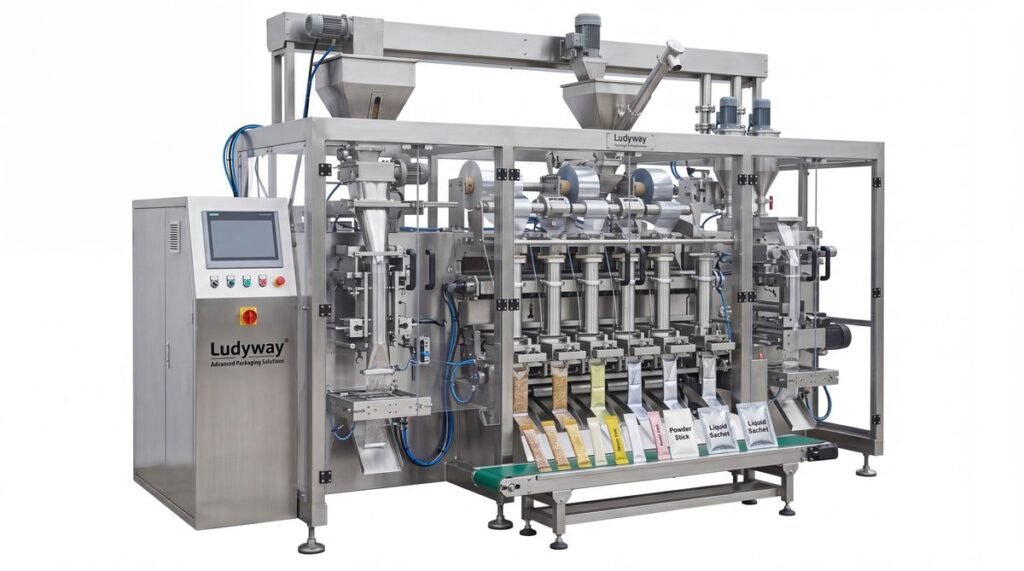
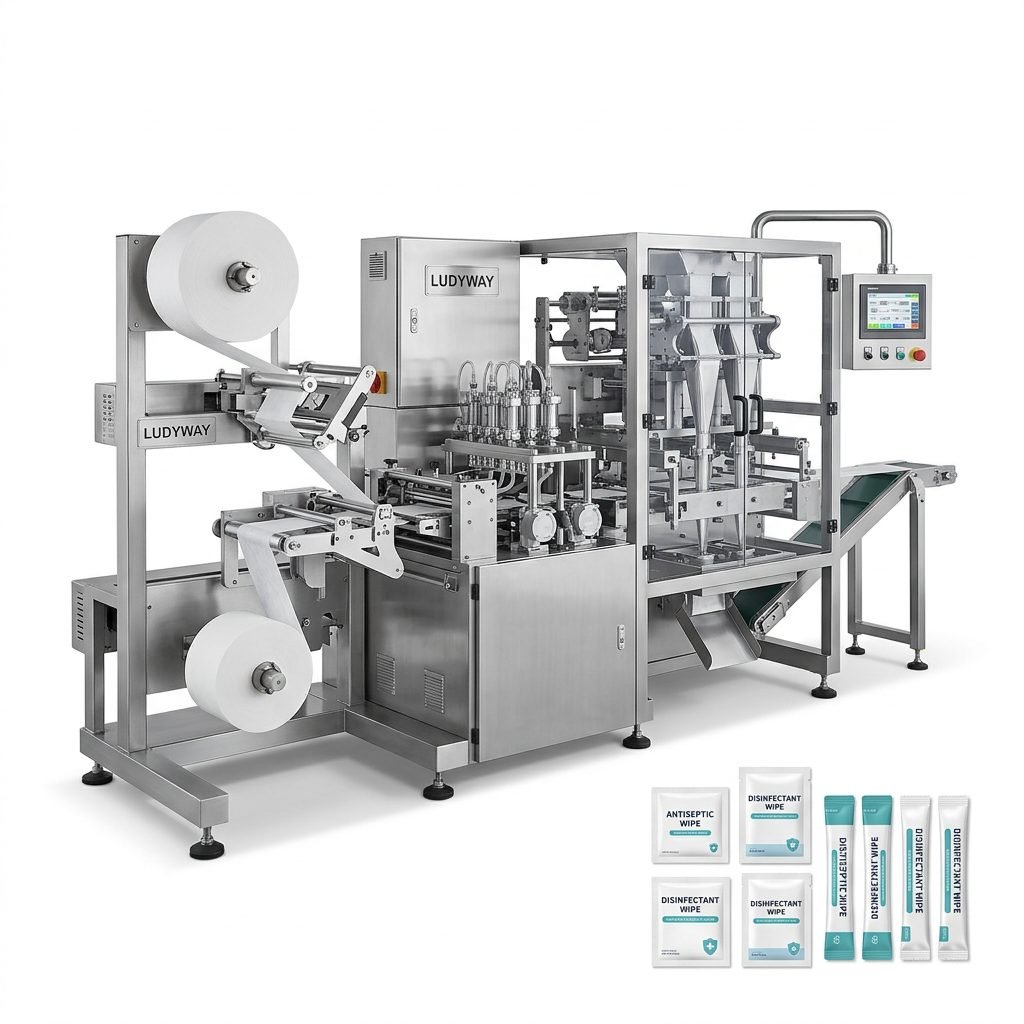
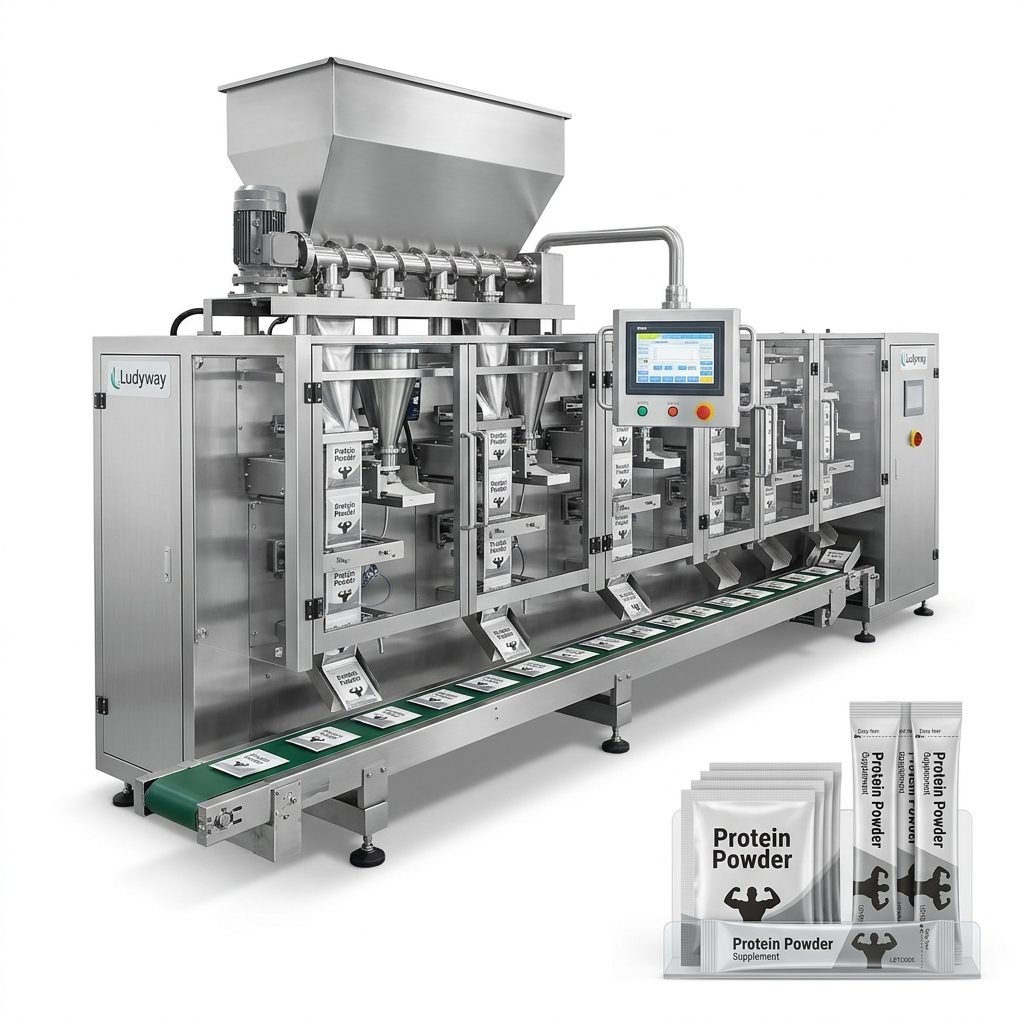
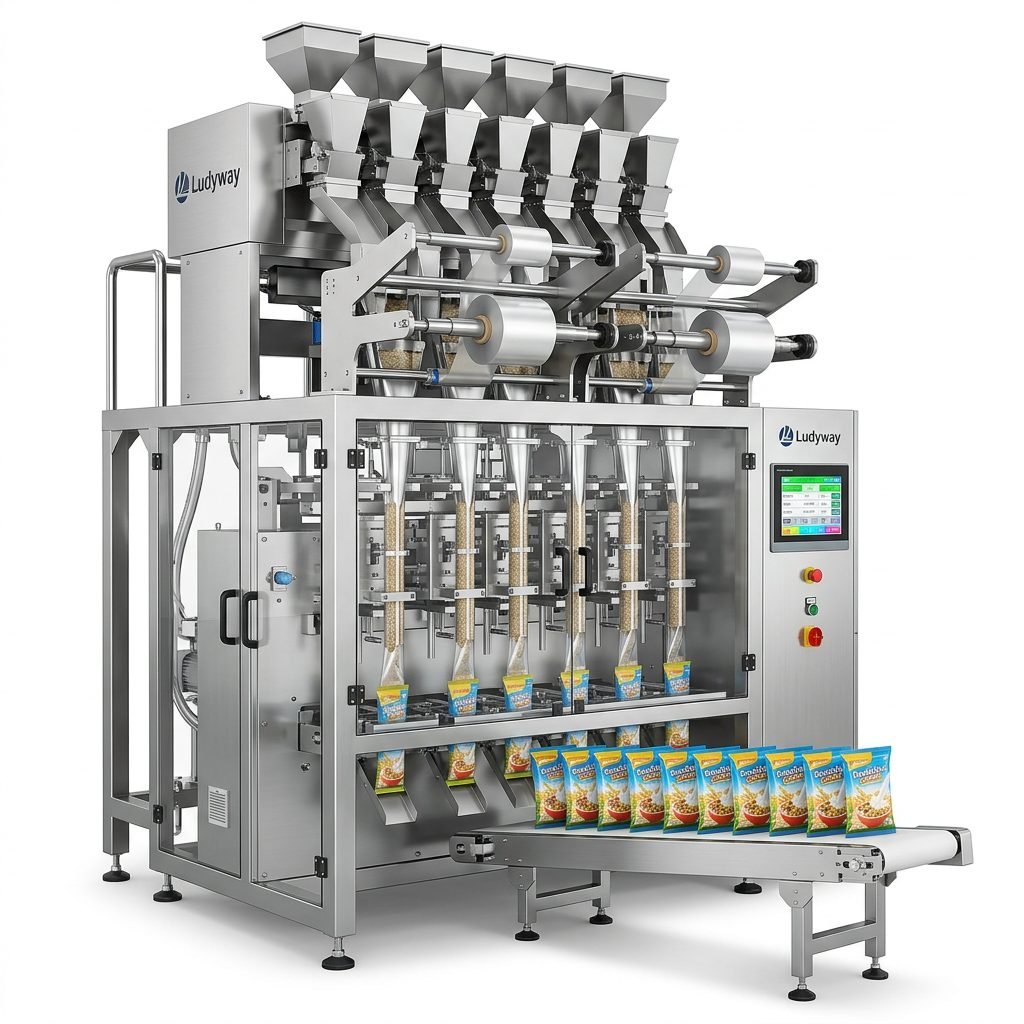
| Multi-lane stick pack machine | Seasonings, drink powders, sauces, single-serve food portions | High-speed output for small-format packs |
| Sachet packing machine | Powders, granules, pastes, liquids | Flexible format for retail and foodservice |
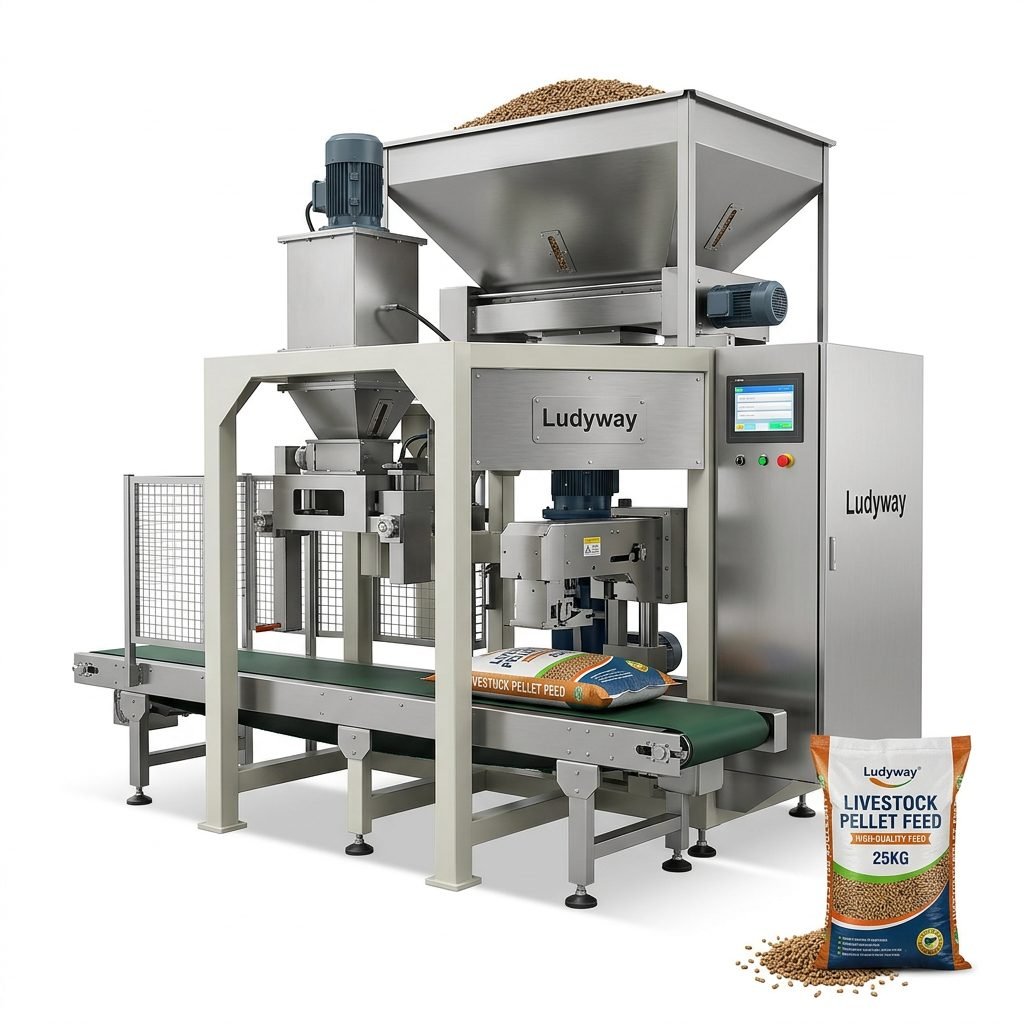
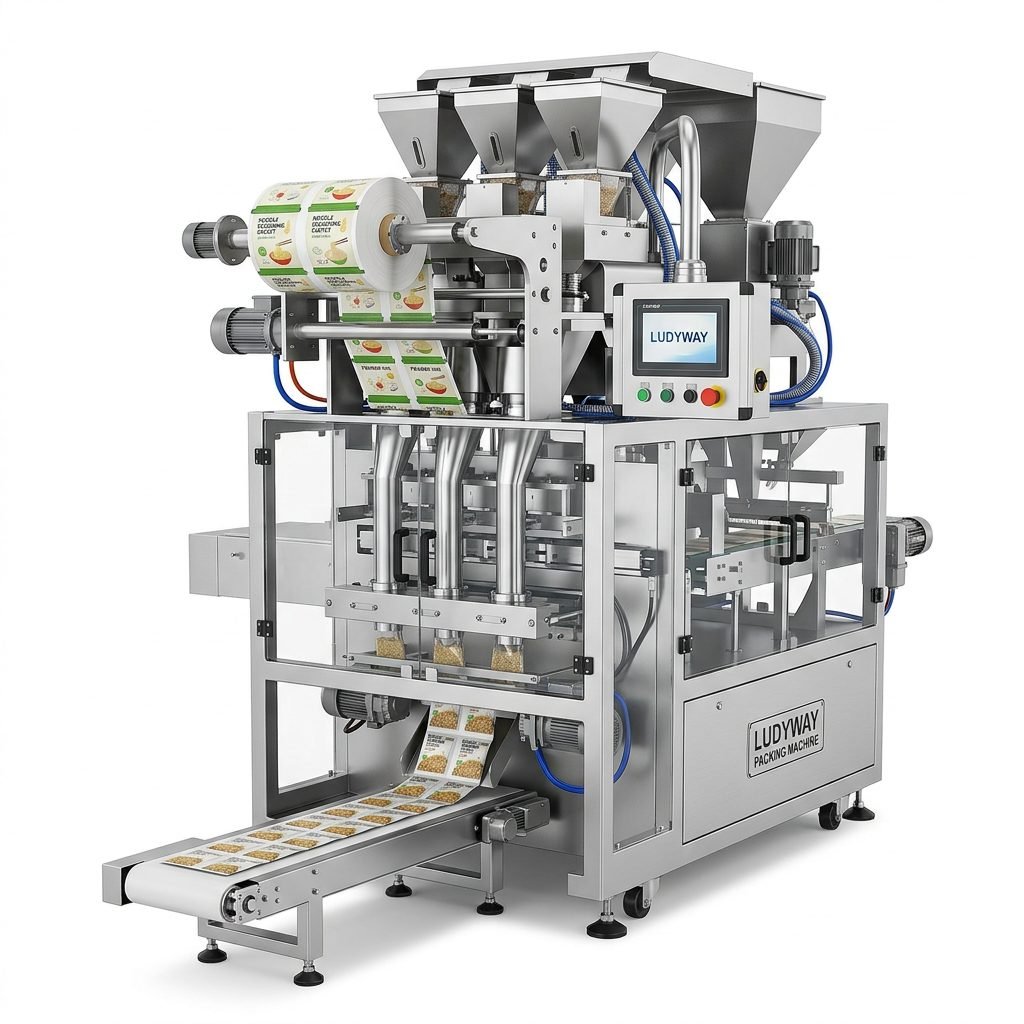
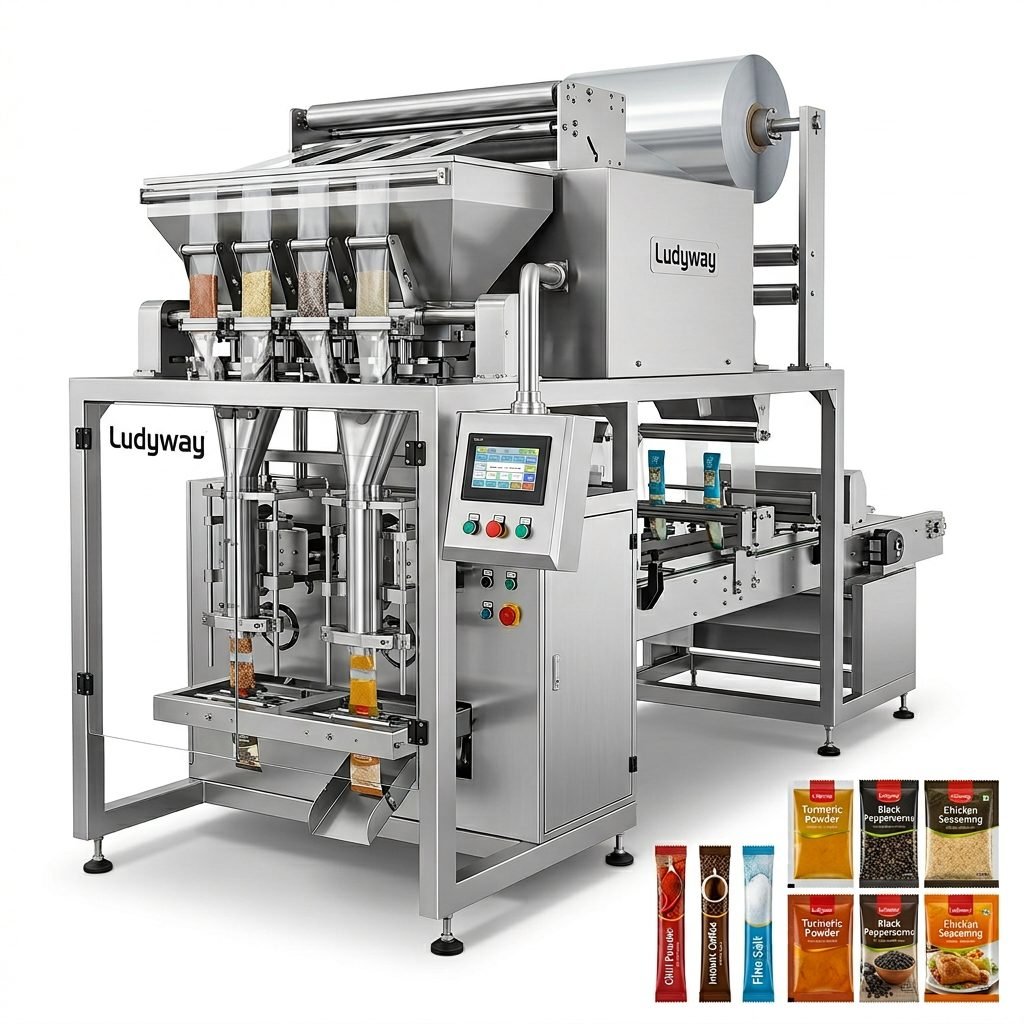
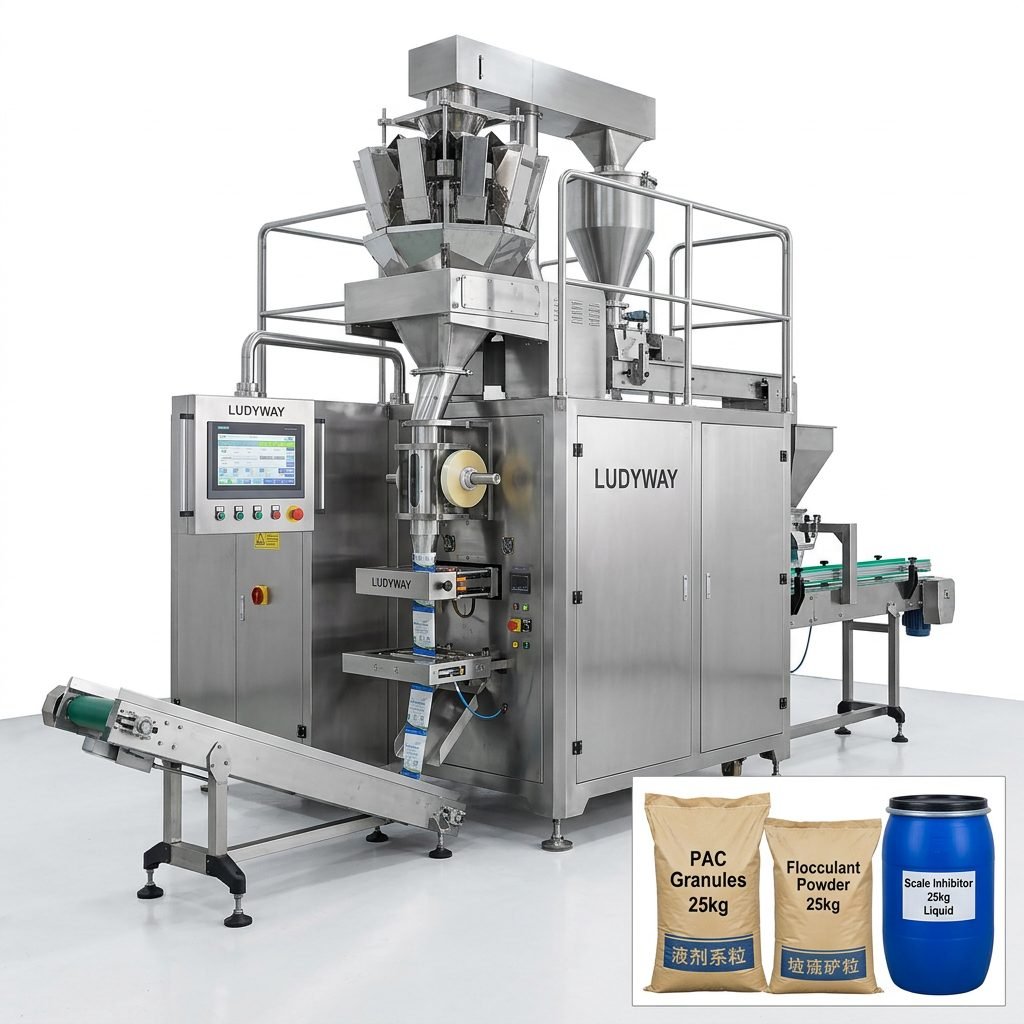
| Vertical form fill seal machine | Snacks, grains, dry mixes, frozen food components | Efficient bag forming and sealing |
| Premade pouch packing machine | Prepared foods, sauces, premium food products | Strong shelf appearance and packaging flexibility |
| Turnkey packaging line | Integrated ready-to-eat food production | Automation from feeding to final packing |
Key Features to Look For
Not all food packaging equipment is equally suited to ready-to-eat applications. The best system should match the product’s physical characteristics while meeting hygiene, speed, and packaging quality targets.
1. Hygienic machine design
Food-contact parts should be easy to clean and built from durable, food-grade materials. Smooth surfaces, accessible structures, and contamination-conscious layouts are especially important for prepared food production.
2. Accurate dosing and filling
In ready-to-eat food packaging, underfilling can damage brand trust, while overfilling increases product giveaway. Accurate filling systems improve cost control and batch consistency.
3. Reliable sealing performance
Seal quality has a direct impact on leakage prevention, shelf life, and transport stability. This matters even more for liquid, paste, or oil-containing food products.
4. Format flexibility
Food manufacturers often run multiple SKUs, weights, and packaging styles. A machine with quick changeover capability supports product diversification without excessive downtime.
5. Integration with inspection and coding
Modern food packaging lines often include date coding, checkweighing, metal detection, x-ray inspection, carton packing, and palletizing for a more complete production workflow.
Benefits of Automation in Ready-to-Eat Food Packaging
Automated packaging offers measurable advantages for food processors, private-label manufacturers, central kitchens, and contract packers.
| Benefit | Business Impact |
|---|---|
| Higher packaging speed | Supports larger orders and faster delivery cycles |
| Lower labor dependence | Reduces manual handling and labor cost pressure |
| Improved packaging consistency | Enhances brand quality and retail presentation |
| Better food safety control | Minimizes contamination risk in production |
| Scalable production | Makes future expansion easier with modular systems |
How to Choose the Right Machine for Your Food Product
Selecting a ready to eat food packaging machine begins with understanding your product and market requirements. A machine that works well for dry seasoning may not be ideal for sauces, and a system for single-serve sachets will differ from one for larger pouches or retail bags.
Consider these factors before buying
- Product type: powder, granule, liquid, paste, or mixed texture
- Packaging format: sachet, stick pack, pouch, bag, tray, or carton
- Production capacity: current output and future expansion goals
- Seal and barrier needs: moisture, oxygen, grease, or leak resistance
- Plant layout: available floor space and line integration requirements
- Compliance needs: food safety standards, traceability, and labeling rules
For many manufacturers, a customized solution delivers better results than a one-size-fits-all machine. This is especially true when the product range includes multiple pack sizes, ingredients, or materials.
Turnkey Packaging Lines for Greater Efficiency
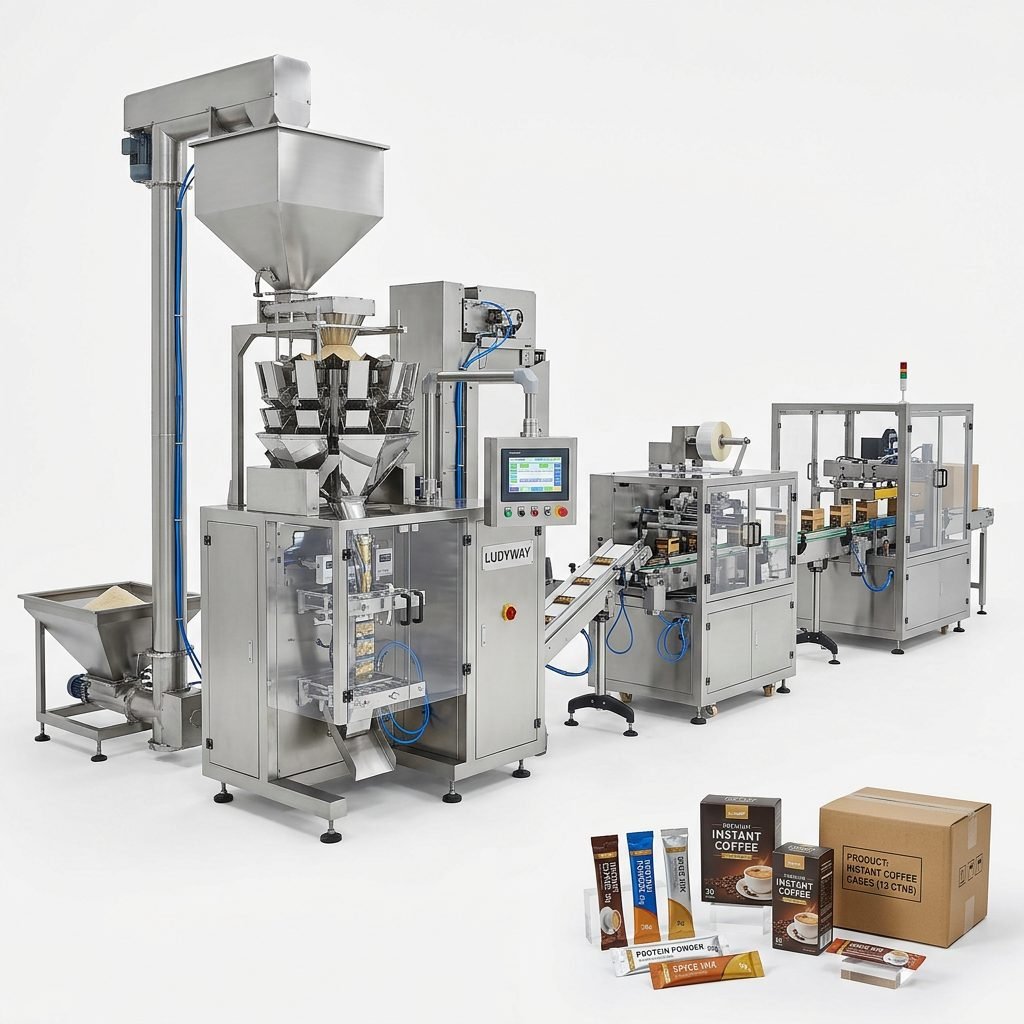
As production grows, many businesses move from standalone packaging machines to complete automated lines. A turnkey packaging line can include feeding, dosing, filling, sealing, coding, inspection, counting, cartoning, case packing, and palletizing.
This integrated approach reduces bottlenecks between process steps and helps maintain smoother product flow across the entire factory. It is ideal for brands that want end-to-end packaging automation rather than isolated equipment.
Manufacturers looking for scalable food automation solutions often work with experienced suppliers such as Ludyway ready to eat food packaging machine solutions, especially when they need customized equipment or complete turnkey lines for powder, granule, liquid, and pouch-based food products.
Industries and Products Commonly Using These Machines
Ready-to-eat food packaging machinery supports a wide range of food businesses, from startups to multinational producers.
Common product categories
- Instant soups and broth mixes
- Seasoning powders and spice blends
- Breakfast cereal portions
- Meal replacement sachets
- Mixed nuts and healthy snack packs
- Sauces, ketchup, mayonnaise, and dressing sachets
- Functional beverage powders and nutrition foods
Maintenance and Performance Tips
Even the best packaging machine needs proper operation and maintenance to deliver stable long-term performance. Consistent care improves uptime and reduces the risk of unplanned stoppages.
- Clean product-contact parts regularly and according to food safety protocols.
- Monitor sealing temperature, pressure, and dwell time.
- Check dosing systems for calibration accuracy.
- Inspect wearable parts on time to prevent sudden failure.
- Train operators on format changeover and fault diagnosis.
- Use suitable packaging film or pouch materials matched to the product.
Future Trends in Ready-to-Eat Food Packaging
The ready-to-eat food sector continues to evolve with consumer demand for convenience, portability, portion control, and product safety. Packaging machinery is evolving in the same direction.
Emerging trends include
- Smarter automation with touchscreen controls and production data monitoring
- Flexible packaging formats for new retail and e-commerce channels
- Higher-speed multi-lane systems for small single-serve food packs
- Integrated inspection technology for stronger quality control
- More customized turnkey lines designed around product-specific needs
Conclusion
A high-quality ready to eat food packaging machine helps food businesses package products more efficiently while protecting freshness, safety, and consistency. Whether you are producing seasoning sachets, instant meal components, snack packs, or liquid condiments, the right packaging solution can improve output, reduce waste, and strengthen your market competitiveness.
For growing food manufacturers, investing in the right machine is not just about packaging faster—it is about building a more reliable, scalable, and professional food production system.