Asia has rapidly become the world’s fastest-growing coffee market, with consumption expanding at nearly twice the global average. Countries like Vietnam, Indonesia, China, and India are not only major coffee producers but also increasingly sophisticated consumers of instant and specialty coffee products. This surge has created unprecedented demand for efficient, high-speed coffee powder packaging machine production lines across the region.
Setting up a complete packaging line involves much more than selecting a single machine. It requires careful planning around production capacity, local regulations, facility layout, and automation levels. This guide walks you through every critical step.
Understanding the Asian Coffee Powder Market
Asia’s coffee powder segment is dominated by instant coffee, 3-in-1 mixes, and single-serve stick packs. The convenience culture in Southeast Asia and East Asia has propelled stick pack and sachet formats to the forefront. When planning your production line, you must consider which formats your target market demands. For instance, the Philippines and Thailand have massive 3-in-1 coffee markets, while Japan and South Korea lean toward premium single-origin instant varieties in flexible packaging formats.
Step 1: Define Your Production Capacity and Scope
Before contacting any equipment supplier, establish clear parameters for your line. Key questions include:
- Target output: How many sachets or stick packs per minute? (Common ranges: 60-400 packs/min per lane)
- Pack format: Stick pack, sachet, or both? What dimensions?
- Fill weight range: Are you packing single-serve 2g sticks or larger 50g sachets?
- Automation level: Semi-automatic or fully turnkey packaging line with cartoning and palletizing?
Step 2: Facility and Layout Planning
A coffee powder packaging line requires a clean, climate-controlled environment. Humidity is the enemy of coffee powder—exposure can cause clumping, spoilage, and machine blockages. Your facility should maintain relative humidity below 60% and ideally install dehumidification systems. The layout should follow a logical flow: raw material receiving → storage → feeding → filling and sealing → inspection → cartoning → palletizing. For facilities in tropical climates like Indonesia or southern India, additional HVAC investment is non-negotiable.
Step 3: Core Equipment Selection
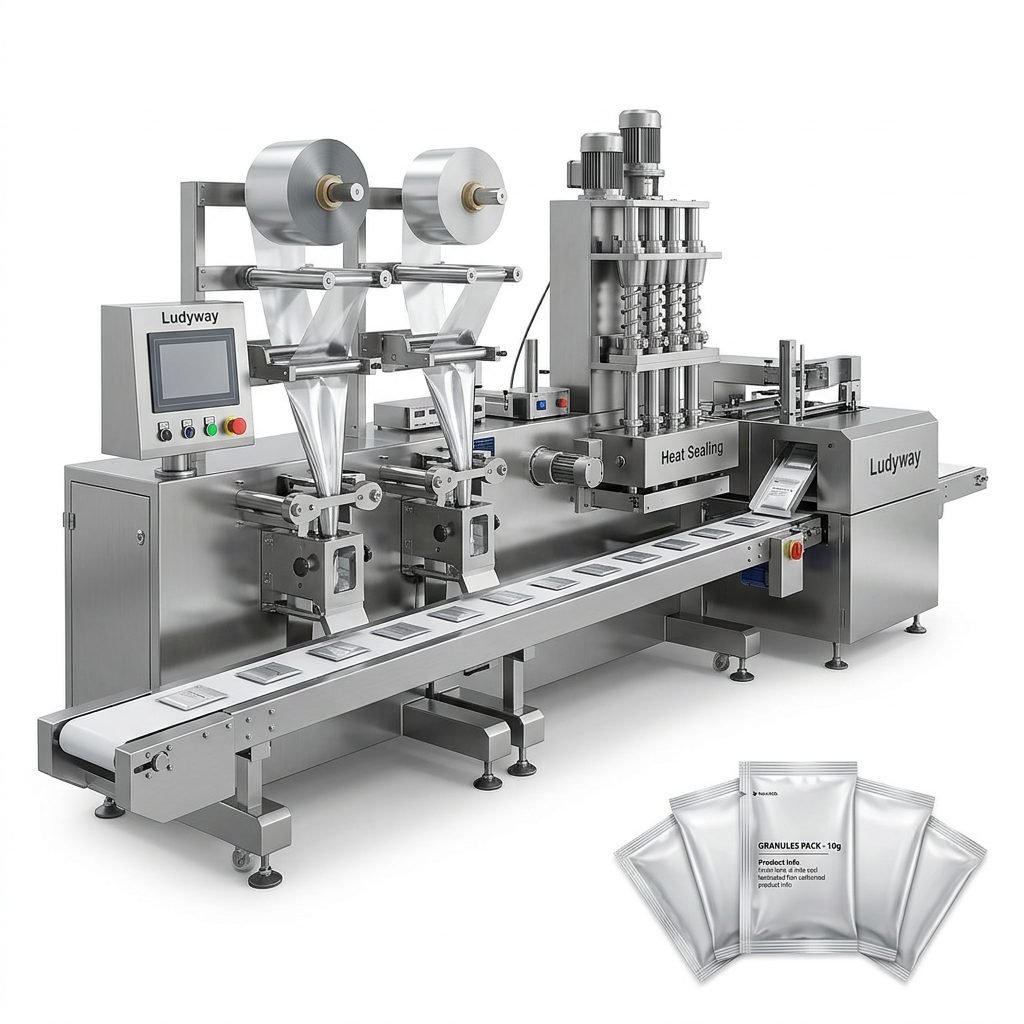
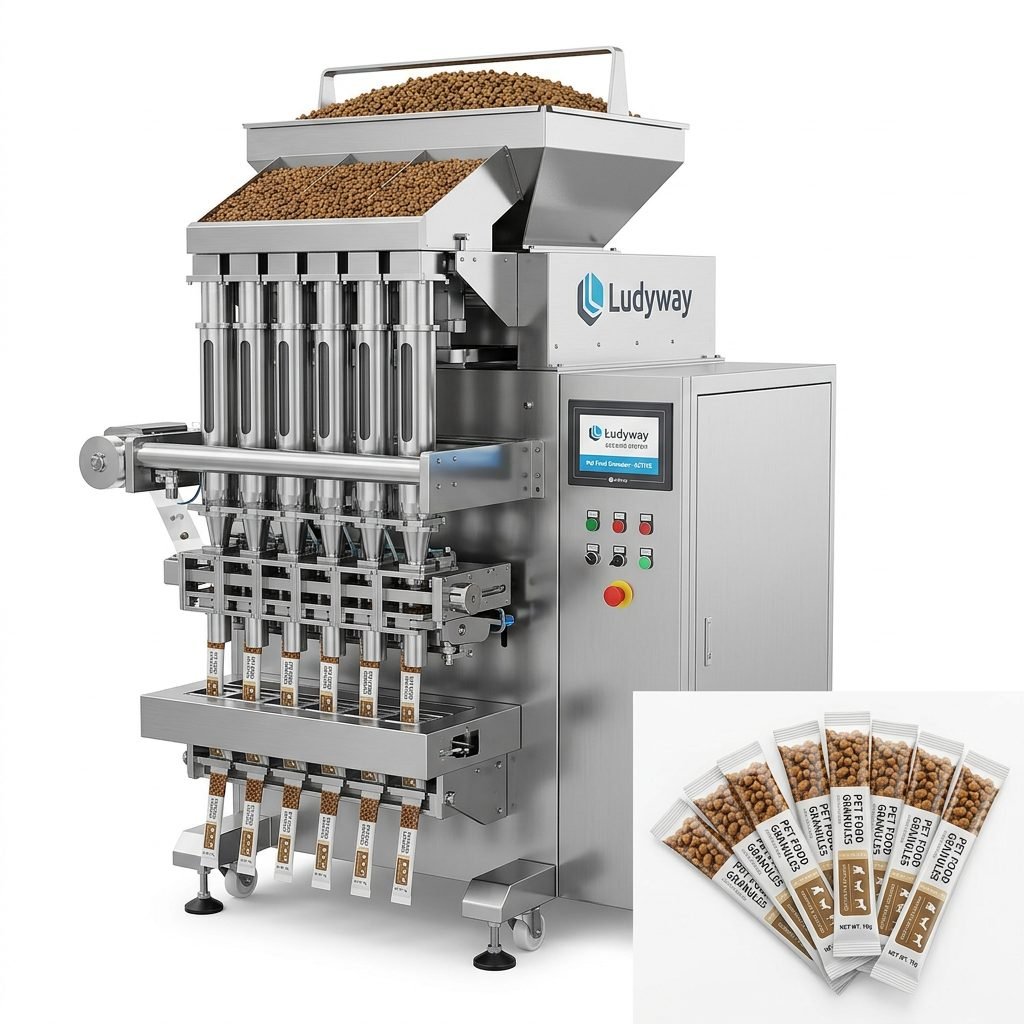
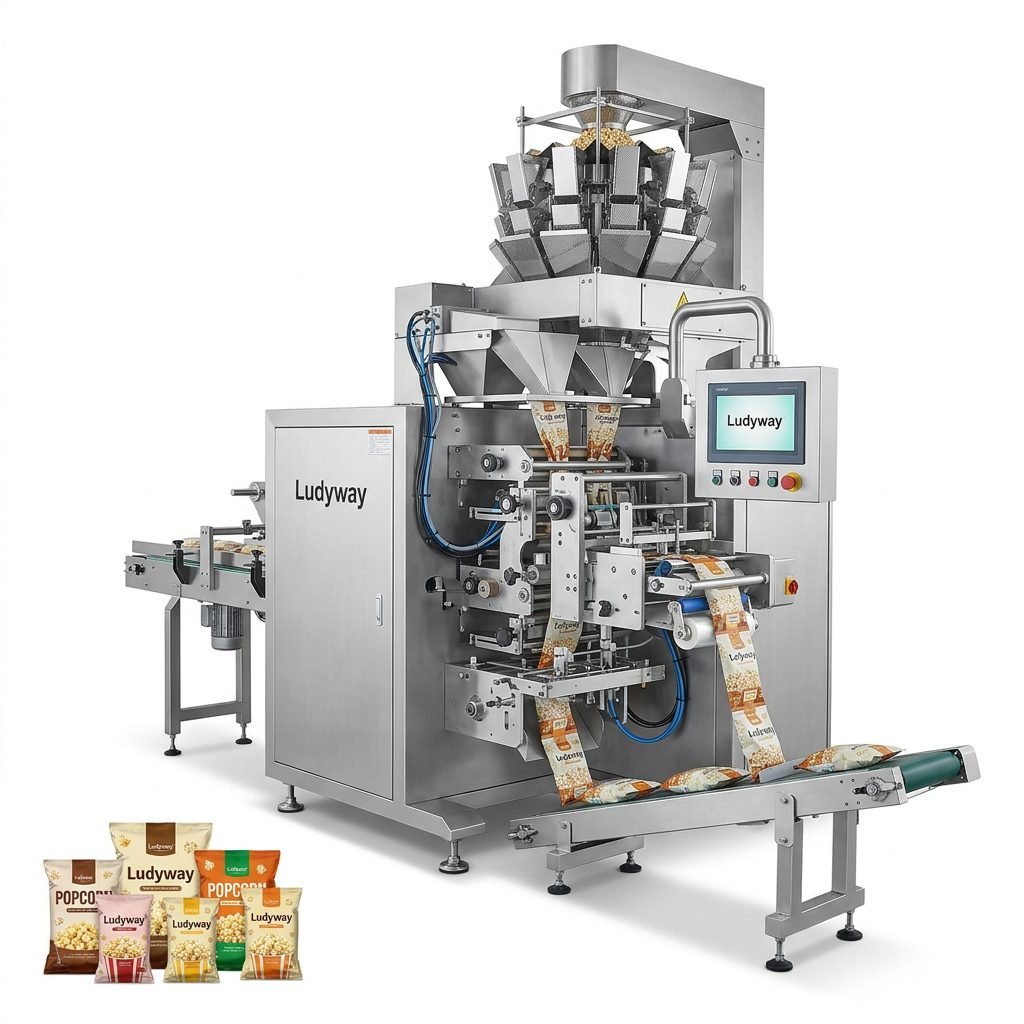
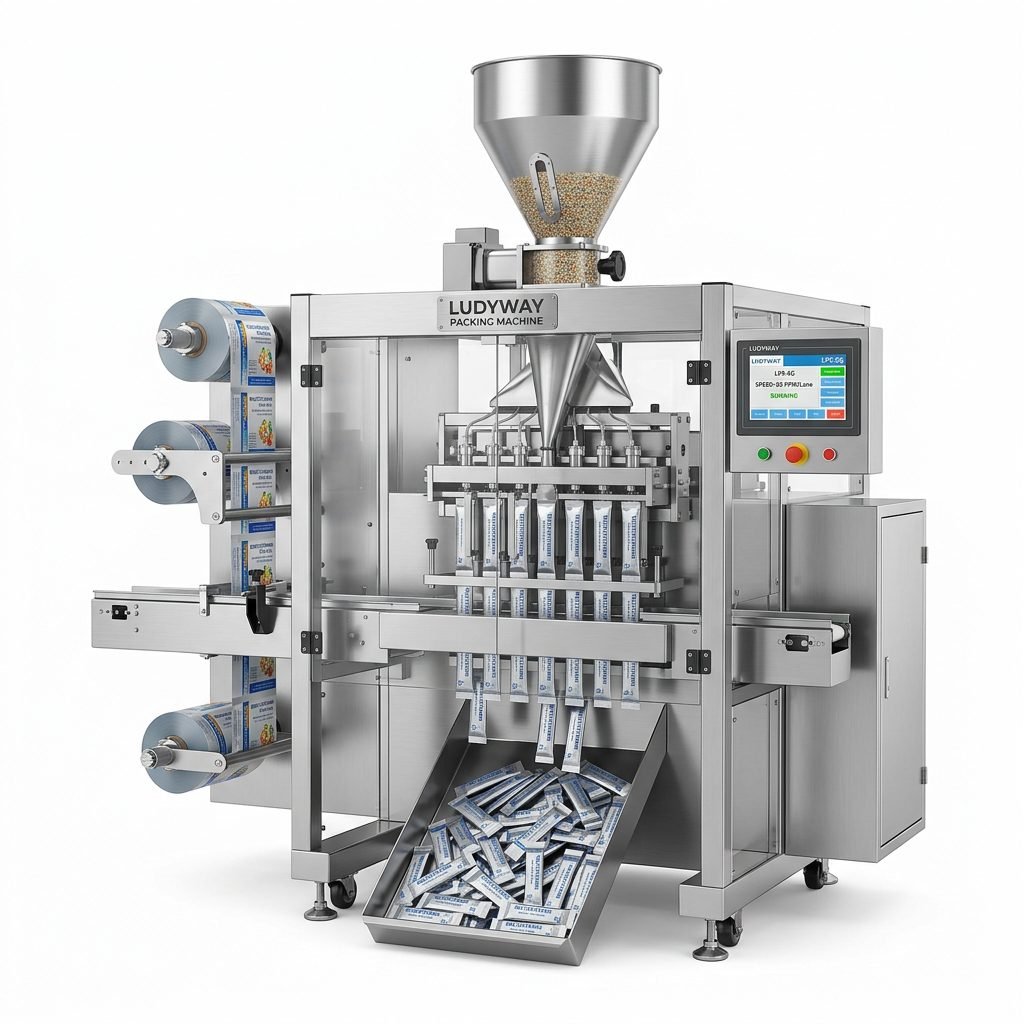
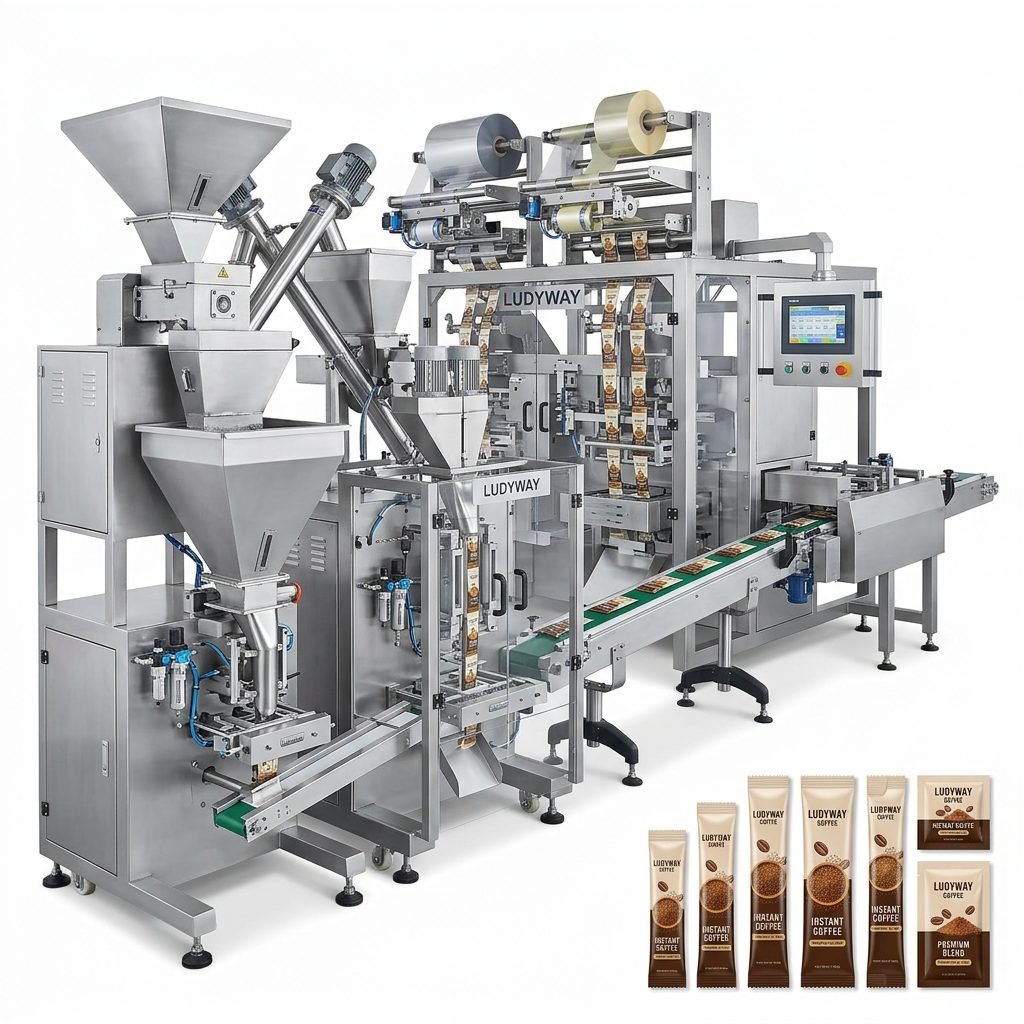
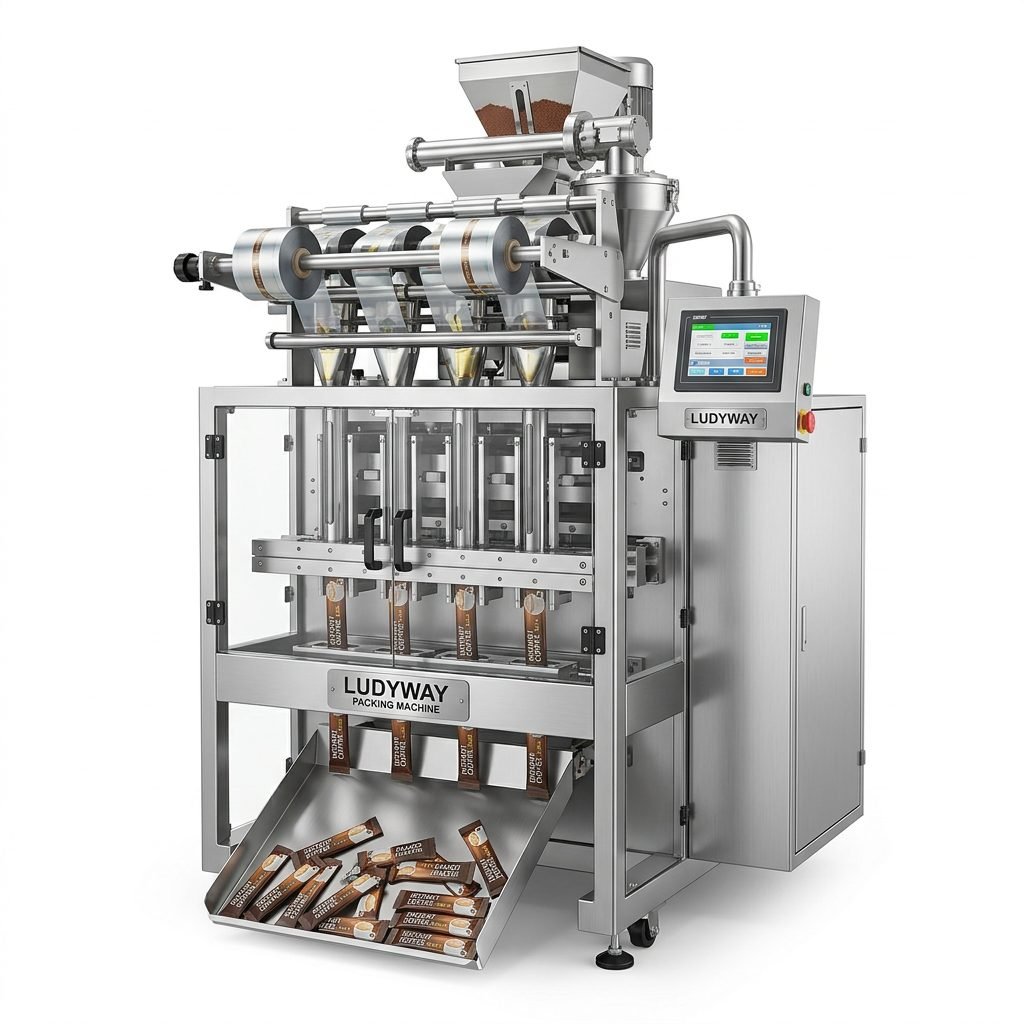
The heart of your line is the packaging machine itself. For coffee powder, multi-lane stick pack or sachet machines are the industry standard. Below is a breakdown of essential components to consider:
| Equipment | Key Function | Selection Tips |
|---|---|---|
| Multi-Head Weigher | Precision dosing of coffee powder | Opt for 10-head or 14-head for speed and accuracy |
| Vertical Form Fill Seal (VFFS) Machine | Forms pouches, fills product, seals | Multi-lane models (4-16 lanes) for high output |
| Auger Filler / Volumetric Cup Filler | Handles fine powder without dust | Auger type preferred for consistent density powders |
| Checkweigher | Rejects under/overweight packs | Essential for regulatory compliance |
| Cartoning Machine | Groups sachets into cartons | Match speed to upstream filler output |
| Case Packer / Palletizer | End-of-line automation | Robotic palletizers offer flexibility for varied SKUs |
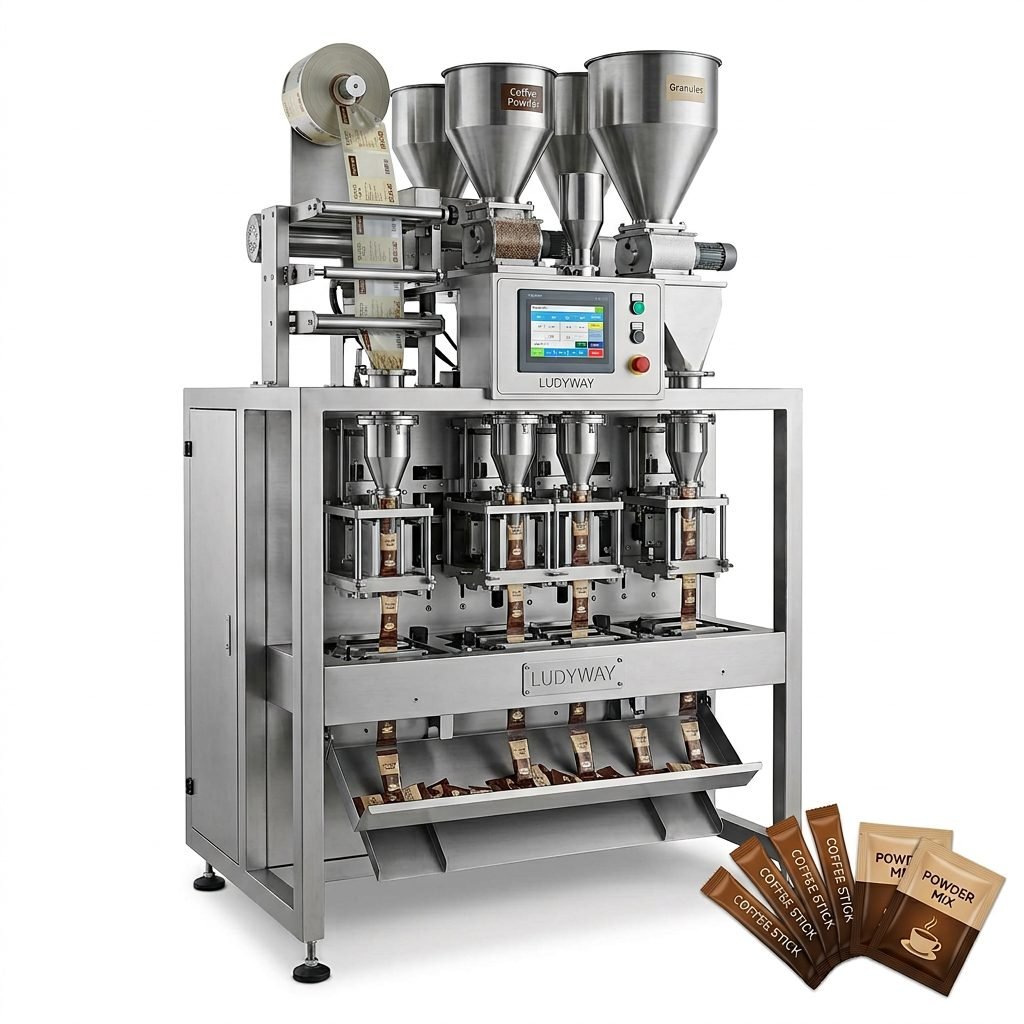
Step 4: Dust Control and Powder Handling
Coffee powder is hygroscopic, dusty, and can be abrasive. Your packaging line must incorporate proper dust extraction systems to prevent cross-contamination and protect moving parts. A well-designed vacuum dust collection system positioned near the filling station is critical. Additionally, all product-contact surfaces should be stainless steel (304 or 316 grade) to meet food safety requirements under ISO packaging standards and regional Asian food safety laws.
Step 5: Installation and Commissioning
Once equipment arrives at your facility, proper installation determines long-term reliability. Factory-trained technicians should oversee the process, especially for multi-lane systems where alignment tolerances are tight. A typical commissioning timeline for a full coffee powder line is 2-4 weeks, including:
- Mechanical assembly and alignment
- Electrical integration and PLC programming
- Dry runs and fine-tuning fill weights
- Operator training (minimum 3-5 days)
- Production trial runs with actual product
For context, Ludyway, one of the largest packaging machine manufacturers in China with a 20,000㎡ facility and 30+ years of experience, provides on-site installation support and turnkey project management across over 100 countries, including extensive coverage throughout Asia.
Step 6: Navigating Asian Regulatory Requirements
Each Asian country has its own regulatory framework for food packaging. Some key standards to be aware of:
- China: GB standards for food contact materials; SC certification for production facilities
- Vietnam: Vietnam Food Administration (VFA) regulations; TCVN standards
- Indonesia: BPOM registration for packaged food products; SNI certification
- India: FSSAI packaging regulations with specific migration limits
- Thailand: Thai FDA notification requirements for food packaging
Your packaging line should be designed to accommodate batch coding, traceability marking, and tamper-evident sealing as standard features to meet these varied requirements.
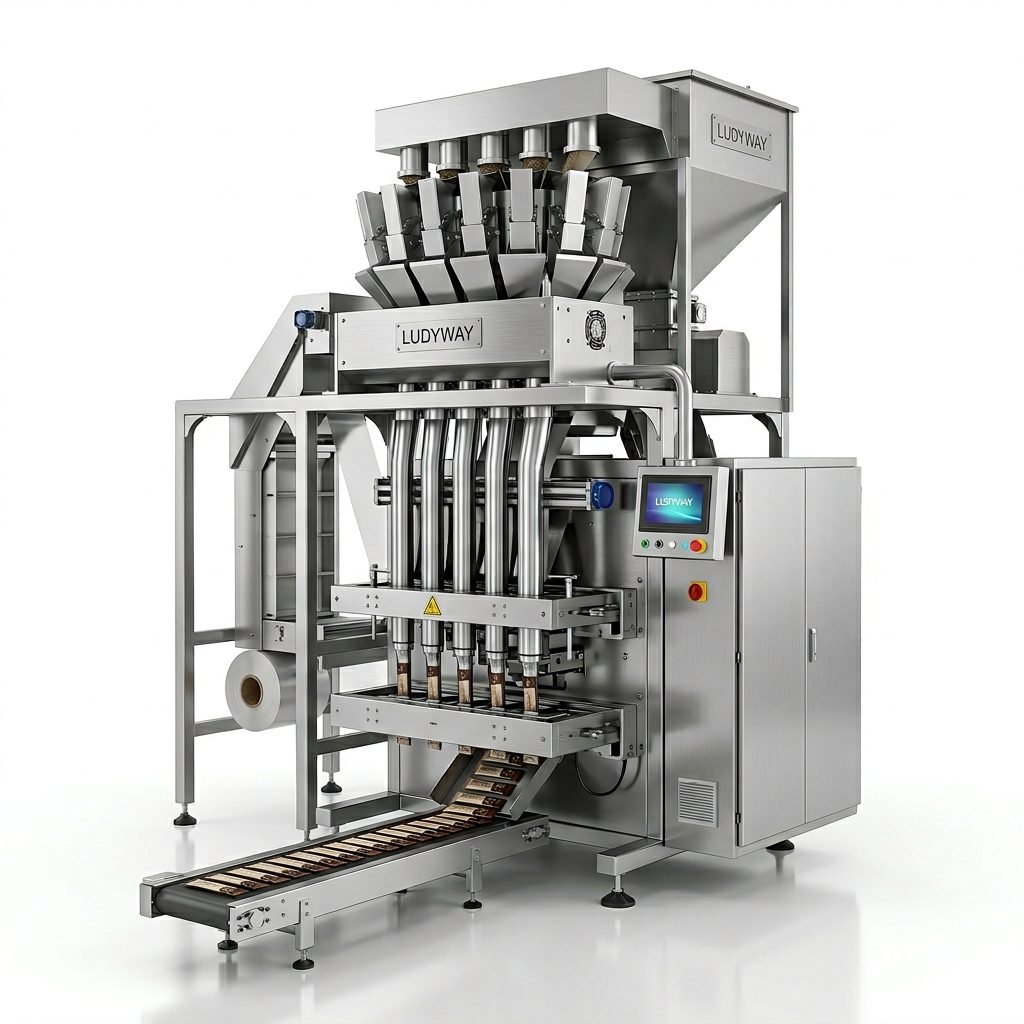
Step 7: Maintenance and Spare Parts Strategy
Downtime in a coffee packaging line can cost thousands of dollars per hour. Develop a preventive maintenance schedule from day one. Critical wear parts include sealing jaws, cutting blades, forming tubes, and auger screws. Maintain an inventory of essential spares locally, particularly if your facility is in a region with longer shipping lead times. The PMMI packaging industry resources provide excellent maintenance benchmarking data.
Step 8: Training Your Workforce
Even the most advanced fully automatic coffee packaging line is only as good as the team operating it. Invest in comprehensive training covering:
- Machine startup and shutdown procedures
- Film splicing and roll changes
- Adjusting fill weights for different coffee powder densities
- Troubleshooting common faults (mis-seals, powder bridging, film tracking)
- Cleaning and sanitation protocols between product changeovers
Key Technology Trends in Coffee Powder Packaging
The Asian packaging landscape is evolving rapidly. Smart factory integration is becoming the norm, with IoT-enabled machines providing real-time OEE (Overall Equipment Effectiveness) data. Other trends include nitrogen flushing for extended shelf life (critical for premium single-origin instant coffee), eco-friendly film materials including recyclable mono-material structures, and quick-changeover designs that allow switching between different pack formats in under 30 minutes.
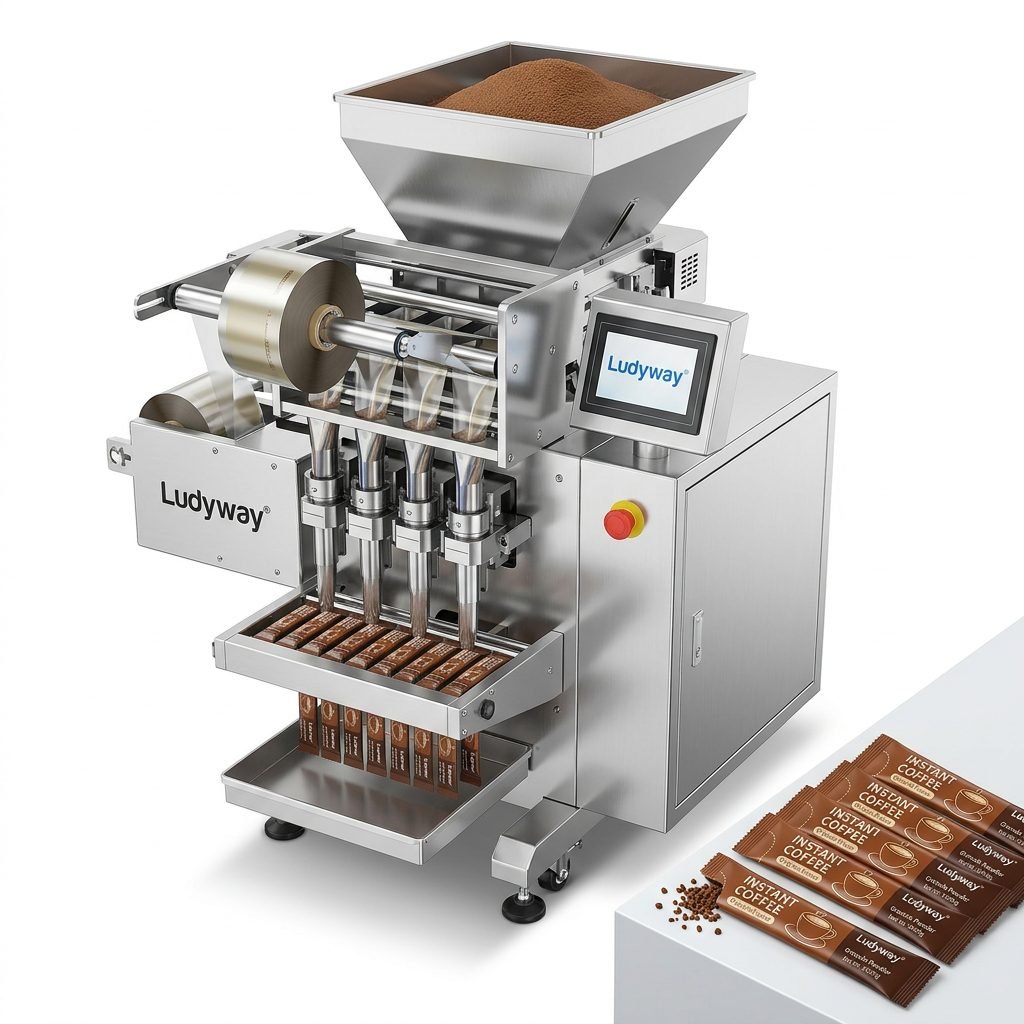
Budgeting and ROI Considerations
A complete coffee powder packaging line represents a significant capital investment. Entry-level semi-automatic lines may start around $30,000-$50,000, while fully automated multi-lane systems with cartoning and palletizing can range from $150,000 to over $500,000 depending on speed and complexity. However, the ROI can be rapid in high-volume markets. For operations running 3 shifts, labor savings alone often justify the investment within 12-18 months.
| Line Type | Speed Range | Estimated Investment | Best For |
|---|---|---|---|
| Semi-Automatic | 30-60 packs/min | $30,000 – $80,000 | Startups, niche specialty coffee |
| Multi-Lane Stick Pack | 200-800 packs/min | $150,000 – $350,000 | High-volume 3-in-1 coffee, instant coffee |
| Full Turnkey Line | 200-800 packs/min + cartoning | $350,000 – $600,000+ | Large-scale export-oriented producers |
Choosing the Right Equipment Partner
When evaluating packaging machine manufacturers for your Asian production line, consider their regional service presence, spare parts availability, and track record with coffee powder applications. Coffee powder behaves differently from other powders—it tends to bridge, aerate, and is sensitive to compression. A supplier with proven coffee-specific experience will save you months of troubleshooting. Look for partners who offer Factory Acceptance Testing (FAT) before shipment and comprehensive on-site support during startup. Access to industry business intelligence can also help benchmark potential suppliers.
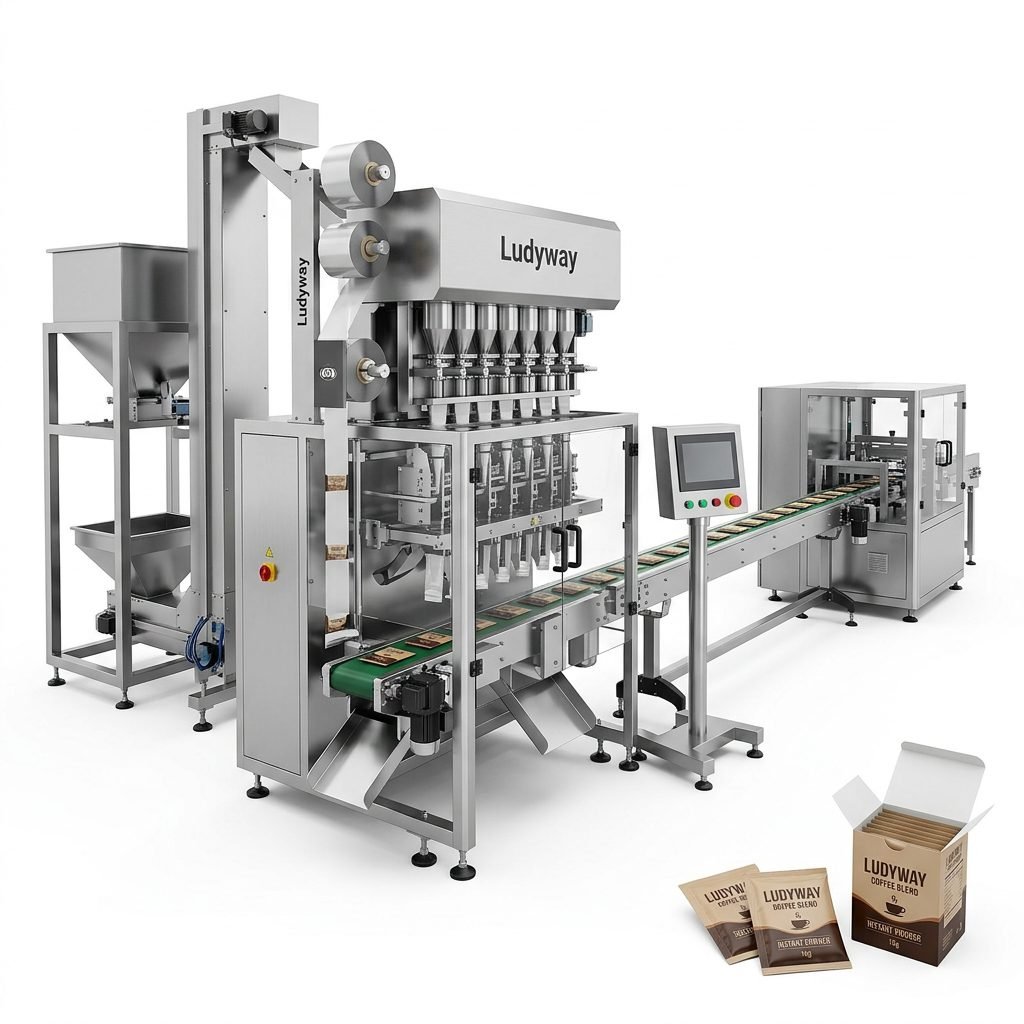
Final Checklist Before Launch
- ✓ Facility environmental controls verified (humidity, temperature, dust)
- ✓ Equipment installed and aligned by certified technicians
- ✓ All relevant ISO and local standards reviewed and met
- ✓ Operator training completed and documented
- ✓ Spare parts inventory established
- ✓ Production trial runs validated with actual coffee powder
- ✓ Quality inspection checkpoints operational
- ✓ Traceability and coding systems functioning
Setting up a coffee powder packaging machine production line in Asia is a strategic investment that, when executed properly, positions your business to capture a share of the region’s booming coffee market. Focus on planning, choose equipment matched to your specific product characteristics, and partner with experienced suppliers who understand both the technology and the unique demands of Asian manufacturing environments.