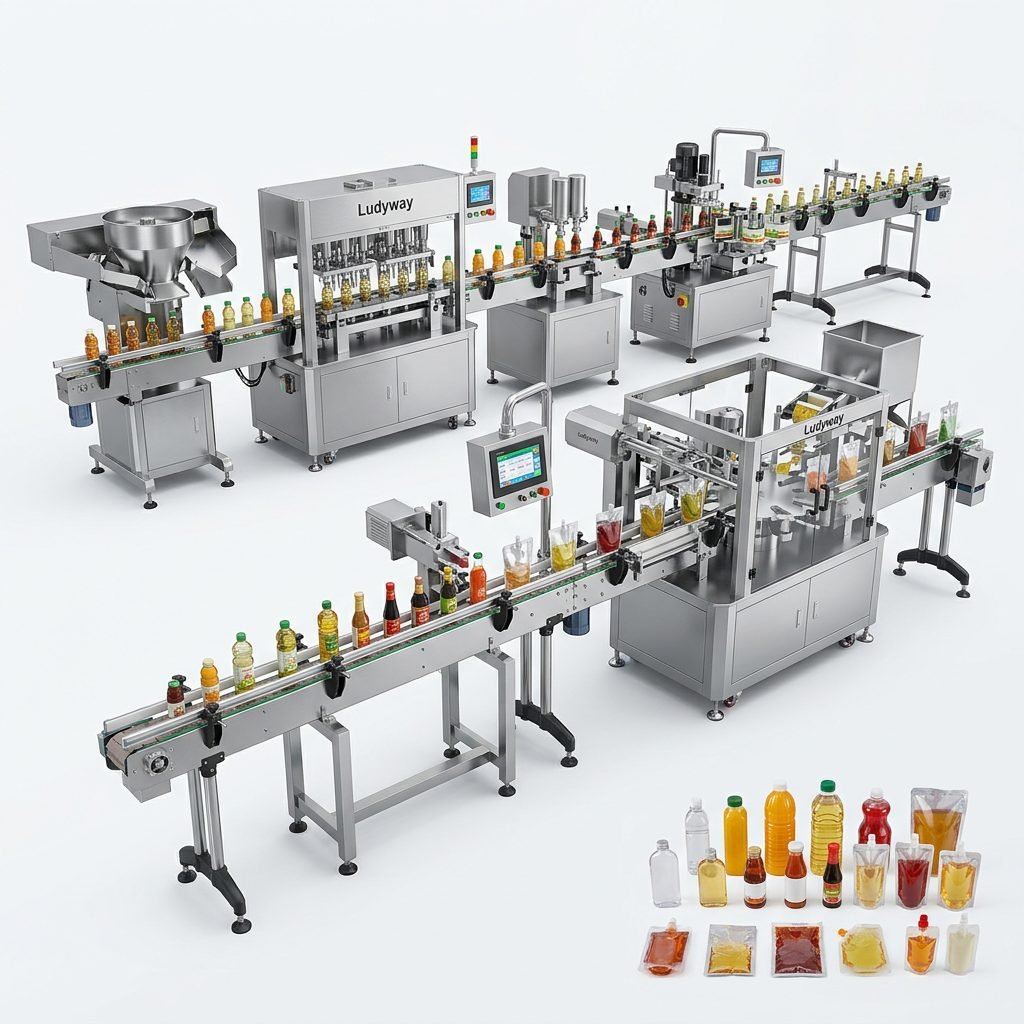
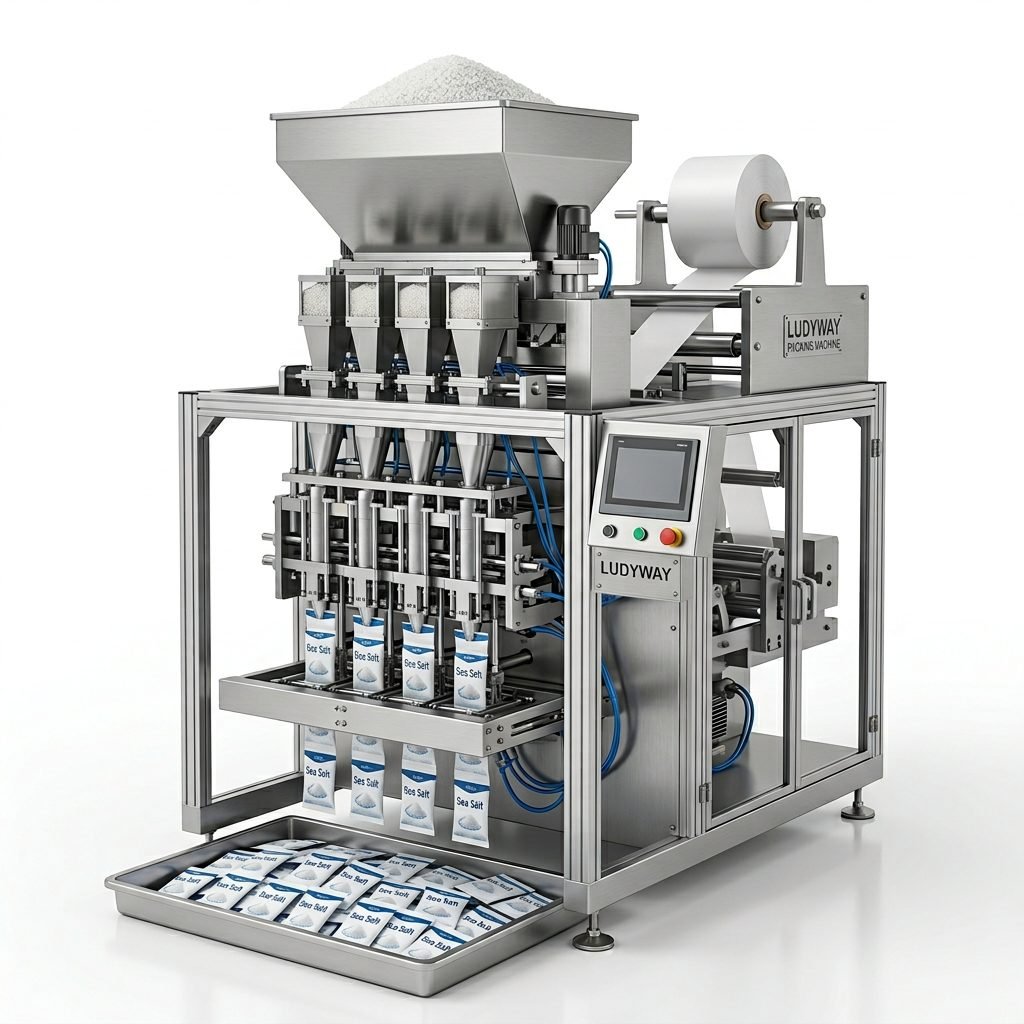
Choosing between an automatic and a semi-automatic packaging machine is rarely a question of which one is “better”. It is a question of output targets, labour availability, product characteristics and how quickly the investment needs to pay back. A contract packer filling 300,000 stick packs a day and a start-up launching its first protein powder SKU will arrive at very different answers, even when they package the same material in the same pouch format.
This guide lays out the practical differences between the two machine classes, where each one wins and loses on the factory floor, and the specifications a procurement or engineering team should confirm before requesting a quotation. It is written for manufacturers, co-packers and plant engineers in food, pharmaceutical, nutraceutical, cosmetic and chemical production rather than for home or hobby users.
What Actually Changes Between Semi-Automatic and Automatic Packaging Equipment
Both machine types perform the same core functions: dose the product, fill it into a pouch, sachet, stick, bottle or bag, and seal it. The difference is how many of the surrounding steps still depend on a human hand, and how the machine is controlled when it runs.
Semi-Automatic Packaging Machine
The operator places the container or pre-made pouch, triggers the fill cycle (foot pedal, button or sensor) and removes the finished pack. The machine handles dosing and sealing, but film feeding, indexing and discharge are manual or partially manual. Typical output is 10–40 packs per minute per station, limited by operator rhythm rather than machine speed.
Common examples: single-head auger fillers, tabletop liquid fillers, impulse heat sealers, manual-load pre-made pouch fillers.
Fully Automatic Packaging Machine
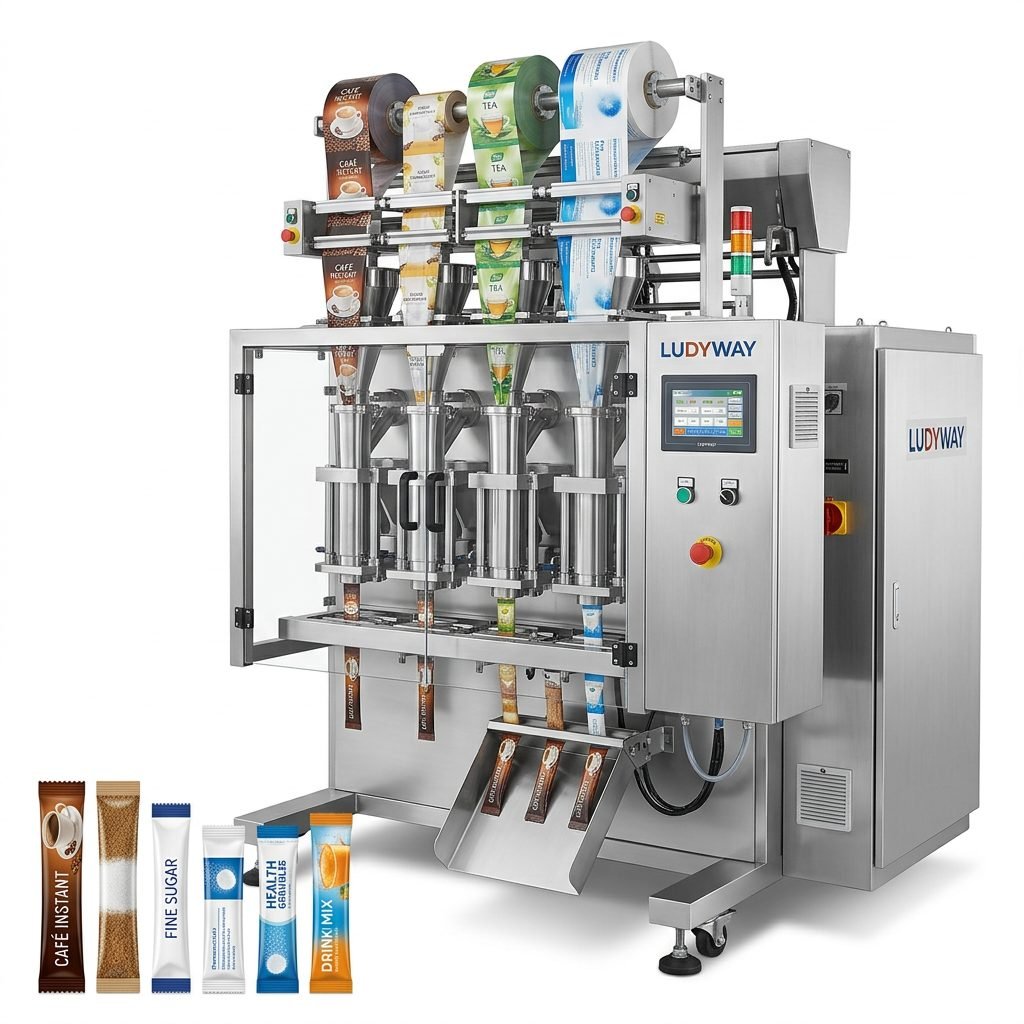
Film is fed from a roll, the machine forms the pouch, doses, fills, seals, codes, cuts and discharges without intervention. A PLC with a touch-screen HMI stores recipes, and servo drives synchronise every motion. A multi-lane stick pack or sachet machine can run 4 to 12+ lanes simultaneously, reaching several hundred to over a thousand units per minute from one frame.
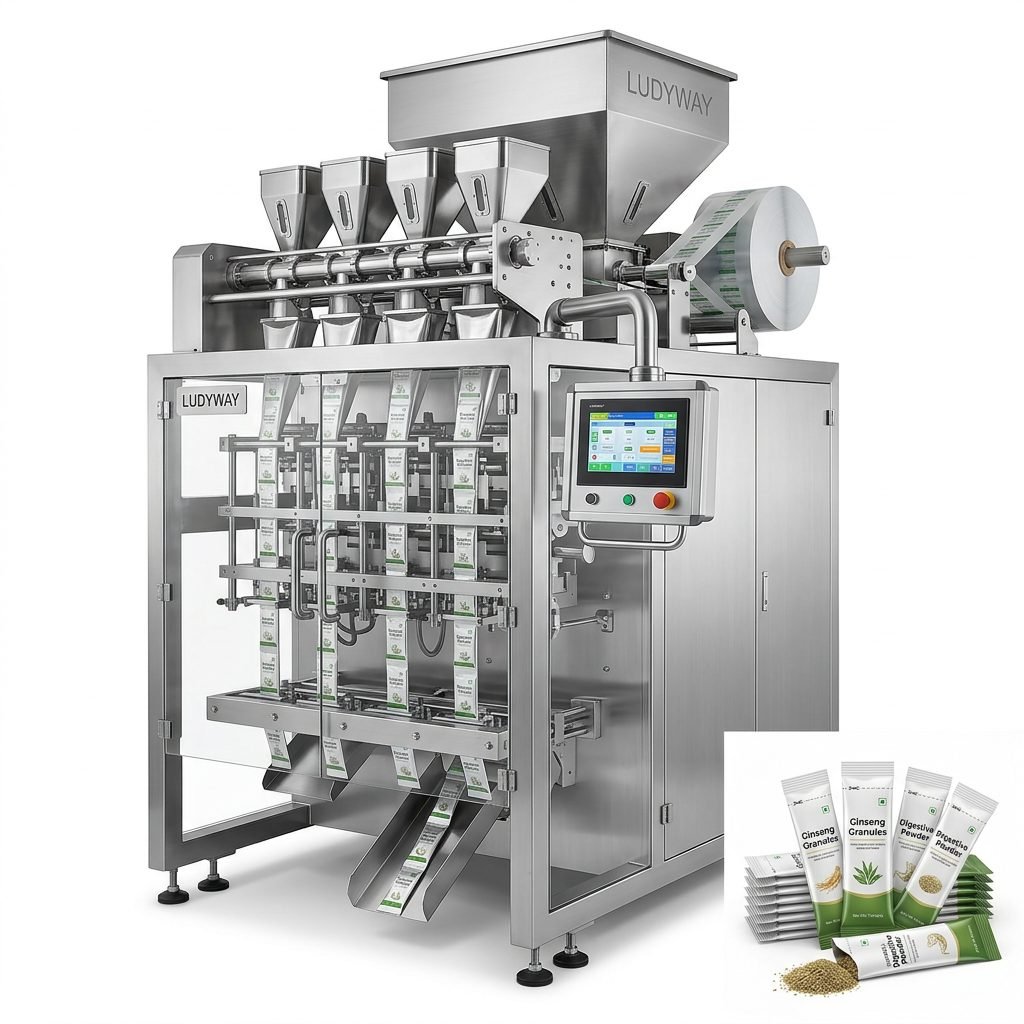
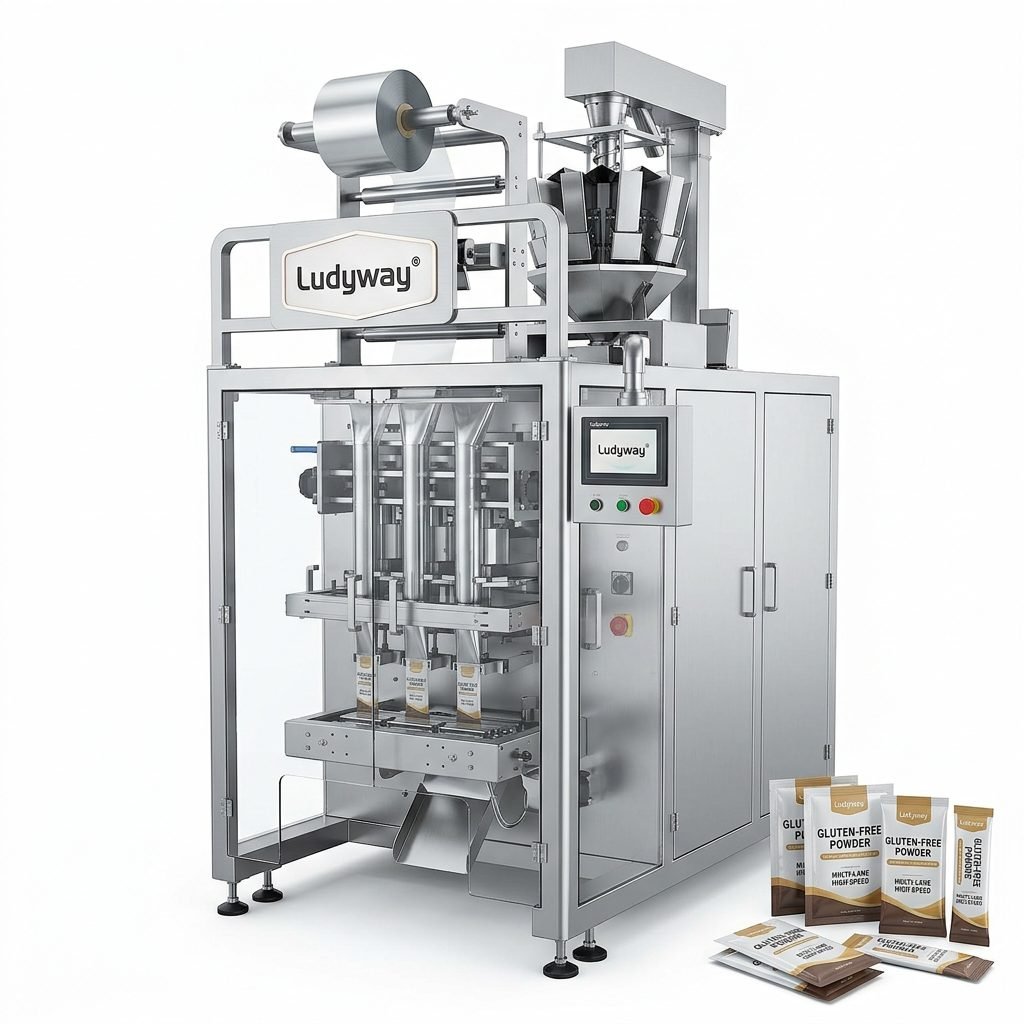
Common examples: vertical form-fill-seal (VFFS) machines, multi-lane stick pack and four-side-seal sachet machines, rotary pre-made pouch machines, integrated filling-to-palletizing lines.
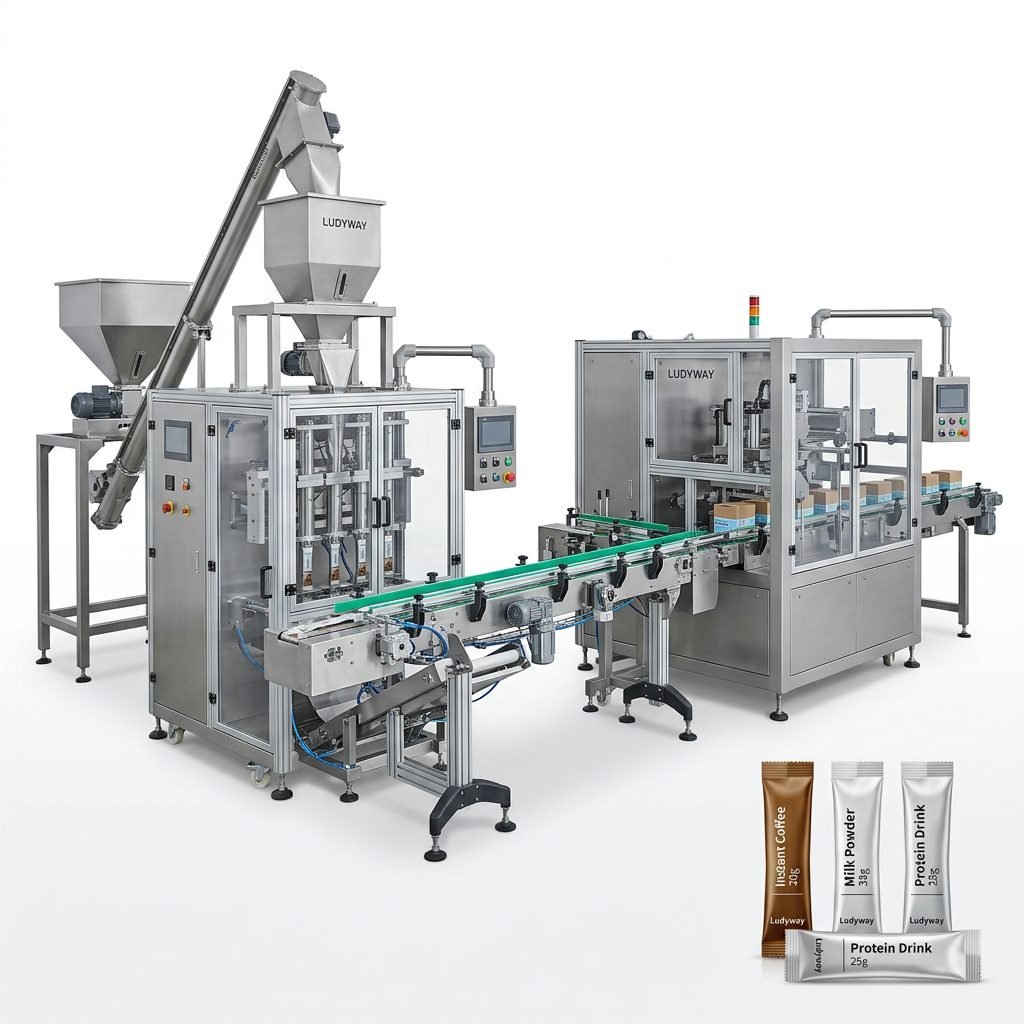
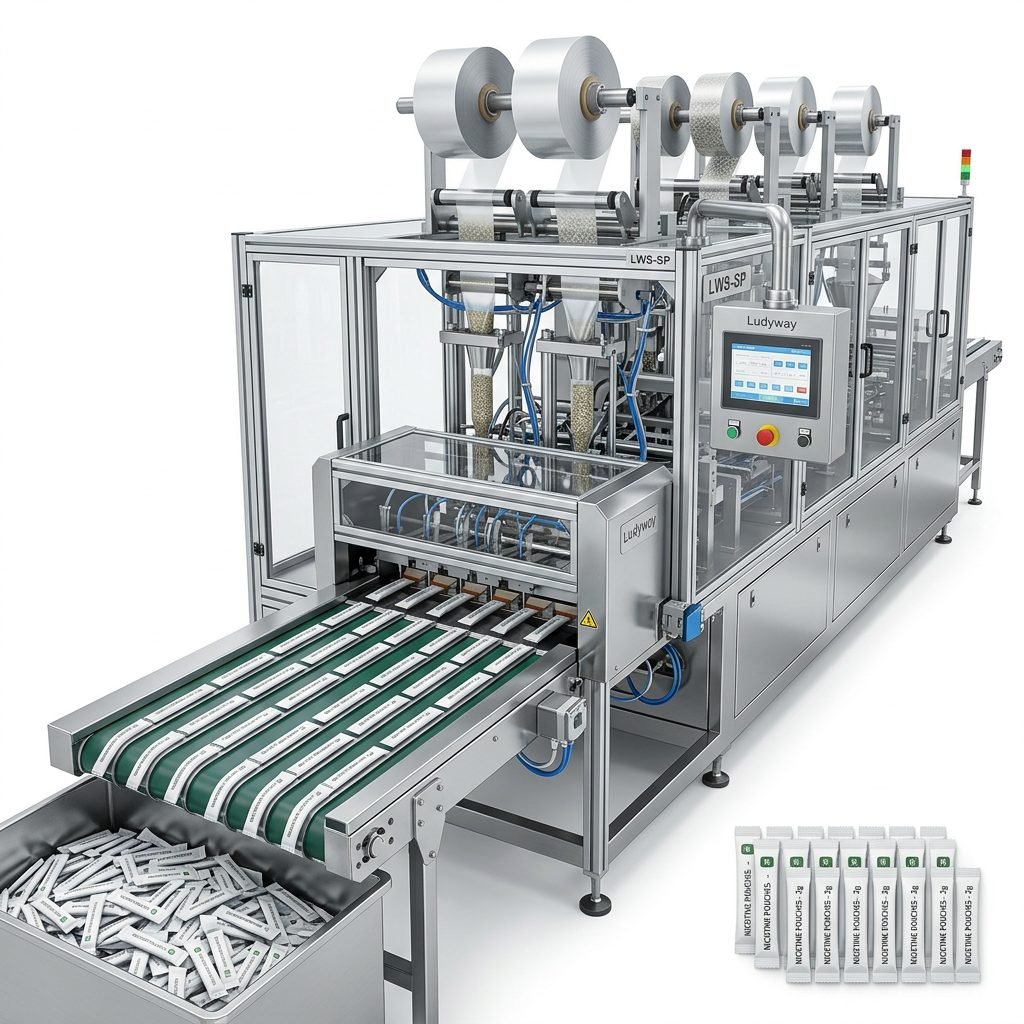
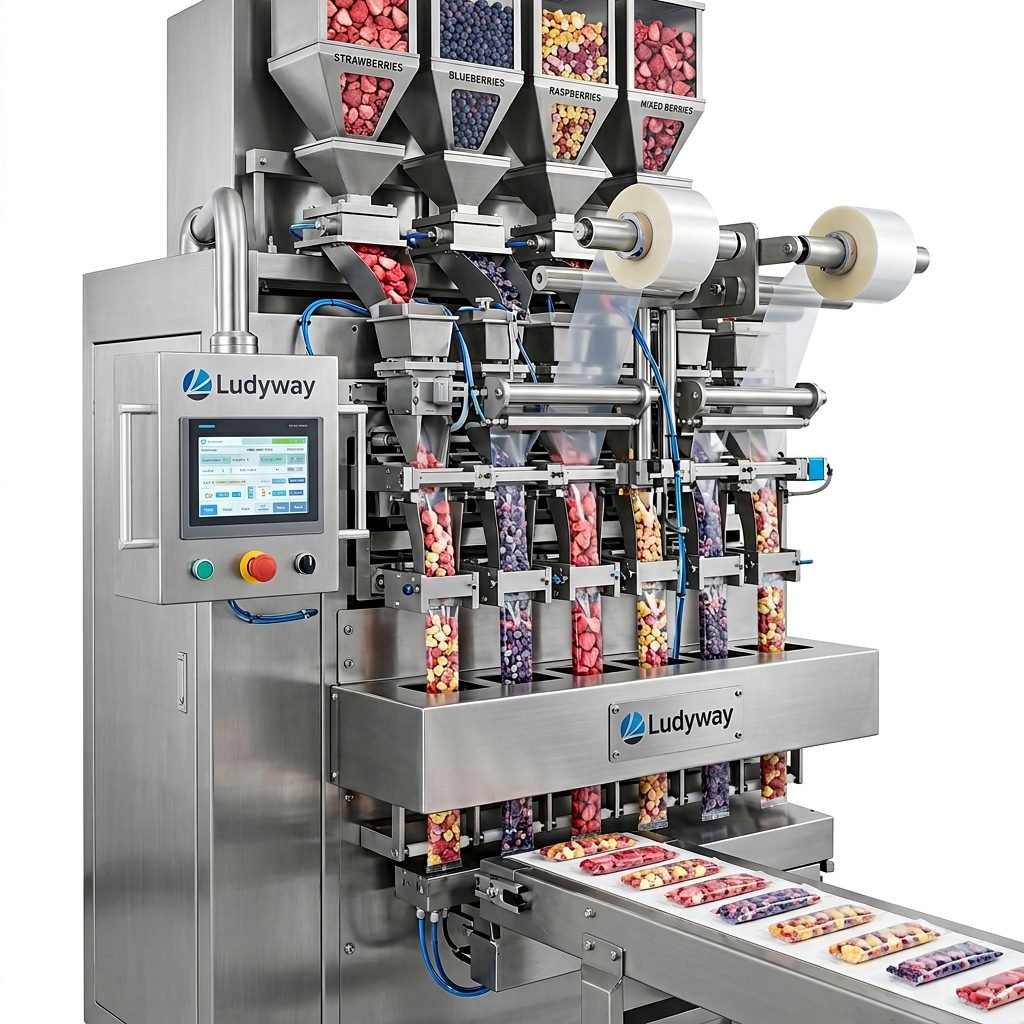
A multi-lane automatic line forms, fills and seals beverage powder sticks with no manual handling between dosing and discharge.
Where the Line Between the Two Is Blurring
Many modern machines sit somewhere in the middle. A pre-made pouch filler with automatic bag pick-up but manual carton loading, or a VFFS machine fed by a manual hopper, is technically automatic at the filling head and semi-automatic at the boundaries. When comparing quotations, ask the supplier to list every step that still requires an operator during a normal shift, not just during changeover.
For the broader automation trend, the PMMI State of the Industry report tracks how consumer packaged goods manufacturers are shifting spending from stand-alone machines toward integrated, data-connected lines.
Key Differences at a Glance
The table below summarises the decision factors engineering and purchasing teams raise most often. Figures are typical industry ranges for granule, powder and liquid sachet or stick pack applications and will vary with product, pouch size and film.
| Factor | Semi-Automatic | Fully Automatic | What to Verify in the Quote |
|---|---|---|---|
| Throughput | 10–40 packs/min per operator station | 40–120 packs/min single lane; 300–1,200+ on multi-lane | Rated speed at your fill weight and film, not the brochure maximum |
| Labour per shift | 1 operator per machine, continuously engaged | 1 operator can supervise 2–4 machines or a full line | Hopper capacity and film roll length (unattended run time) |
| Dosing accuracy | ±1–3% depending on operator consistency | ±0.5–1% with servo auger, piston or volumetric cup | Accuracy stated at your target weight; checkweigher feedback option |
| Changeover | Fast and simple; few parts to swap | Recipe recall on HMI; forming tubes and seal jaws may need tool change | Time and tooling cost per pouch size you plan to run |
| Capital cost | Low; often tabletop or single-frame | Higher; scales with lane count and downstream integration | Scope of supply: feeders, conveyors, coders, spare parts, installation |
| Footprint & utilities | Compact; single-phase power common | Larger; three-phase power, compressed air, sometimes nitrogen | Layout drawing, air consumption (L/min), total kW |
| Integration | Stand-alone; manual hand-off to cartoning | Links to checkweigher, metal detector, cartoner, case packer, palletizer | Communication protocol and who owns line-level integration |
Pros and Cons of Semi-Automatic Packaging Machines
Semi-automatic equipment remains the right answer for a large share of manufacturers, particularly those with low volumes, frequent SKU changes or products that are difficult to feed automatically. The limitations only become expensive when volume grows past what one operator can sustain.
Advantages
- Lowest entry cost and fastest delivery; many models ship from stock.
- Simple mechanics mean minimal training and easy in-house maintenance.
- Handles irregular containers, odd pouch shapes and small test batches with little or no tooling.
- Ideal for pilot runs, sample sachets and R&D before committing to automation.
- Small footprint fits contract kitchens, labs and shared facilities.
Limitations
- Output is capped by operator fatigue; a second shift means a second operator.
- Fill weight and seal quality drift with the person running the machine.
- Higher product-contact risk, which matters for probiotics, APIs and allergen-controlled lines.
- No digital batch record or recipe traceability without add-on systems.
- Cost per pack rises steeply once volume passes roughly 10,000–15,000 units per shift.
Pros and Cons of Fully Automatic Packaging Machines
Automation pays for itself through consistency and labour efficiency, but only when the product is stable, the volume is predictable and the plant has the utilities and technical staff to support it.
Advantages
- Lowest cost per unit at scale; one operator can oversee multiple frames.
- Servo dosing and PID-controlled sealing deliver repeatable weight and seal integrity.
- Closed product path supports GMP, HACCP and nitrogen-flushed shelf-life extension.
- Recipe storage, alarm logs and OEE data support audits and continuous improvement.
- Direct hand-off to automatic cartoning and case packing removes the next manual bottleneck.
Limitations
- Higher capital outlay and longer lead time (typically 45–90 days for configured multi-lane machines).
- Requires stable film specifications; low-grade laminate causes tracking and seal faults.
- Needs trained technicians for servo, PLC and pneumatic troubleshooting.
- Format changes may require forming tube and jaw sets for each pouch width.
- Unplanned downtime on one line stops all lanes at once, so preventive maintenance is essential.
How to Decide: Five Questions for Plant and Procurement Teams
01 · Volume today and in 24 months
Multiply your target annual units by expected growth. If the two-year figure exceeds what one operator can produce in two shifts, specify automatic equipment now rather than buying twice.
02 · Product flow behaviour
Free-flowing granules suit volumetric cups; cohesive powders need augers with agitation; viscous liquids need heated piston pumps. Send 2–3 kg of product for a fill test before accepting any accuracy claim.
03 · Number of SKUs and formats
Fewer than five formats with long runs favours a dedicated automatic machine. Dozens of short runs may justify a semi-automatic cell or an automatic machine with quick-change tooling.
04 · Regulatory exposure
Pharmaceutical, infant nutrition and sterile medical products need closed, validated processes. Automatic machines with batch logging make IQ/OQ/PQ documentation far simpler.
05 · Downstream capacity
An automatic filler producing 600 sachets per minute is wasted if cartoning is still manual. Plan the line end to end, including checkweighing, coding and case packing.
Shortcut rule
Under roughly 5,000 units per shift with many formats: semi-automatic. Above 15,000 units per shift with stable formats: automatic. In between, a single-lane automatic or compact multi-lane machine is usually the most flexible choice.
The Middle Ground: Compact and Multi-Lane Automatic Machines
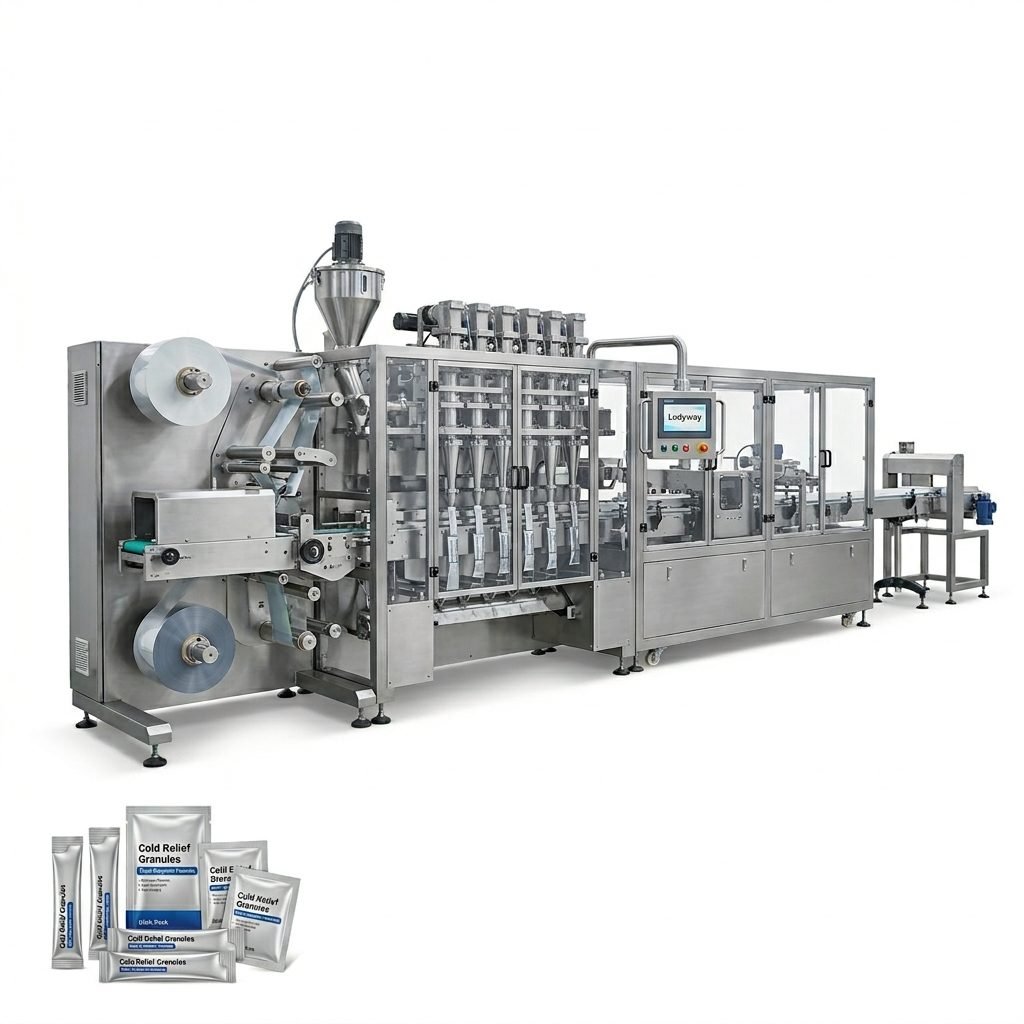
Manufacturers who have outgrown semi-automatic equipment but are not ready for a full turnkey line increasingly specify a compact sachet and stick pack machine with two to four lanes. These units deliver automatic forming, filling and sealing at a fraction of the footprint, and can later be fed by automatic conveyors and linked to cartoners as volume grows.
For probiotics, collagen and sports nutrition, the closed film path also removes the moisture and contamination exposure that comes with open-hopper semi-automatic filling, which directly protects shelf life and label claims.
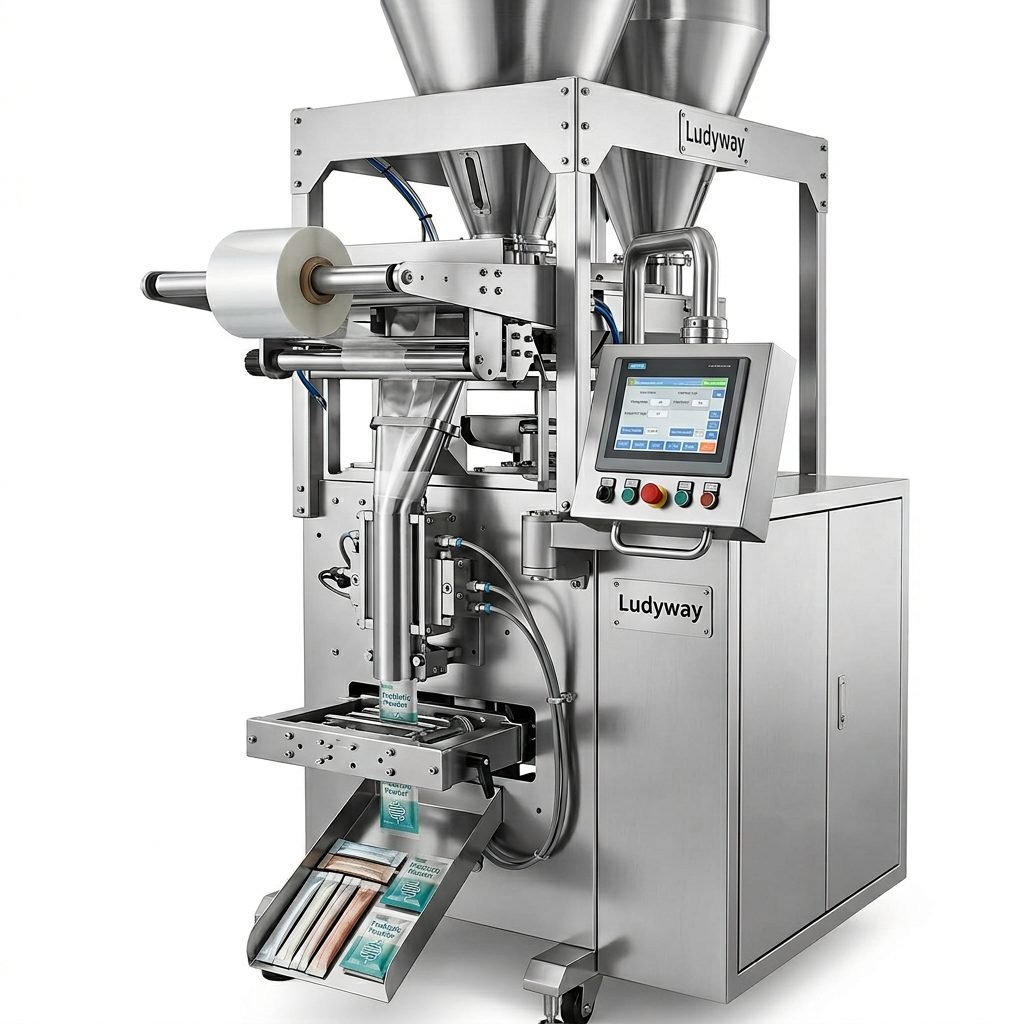
Multi-lane stick pack machines bridge the gap between manual filling and full line automation for sensitive powders.
Total Cost of Ownership, Not Purchase Price
The purchase order is only the visible part of the cost. Over a five- to seven-year service life, labour, film waste, give-away on overfilled packs and downtime typically outweigh the original machine price several times over. A realistic comparison should model all four.
60–70%
of lifetime cost is operating cost, not capital
2–3 operators
per shift typically released by one multi-lane machine
1–2% give-away
recovered when moving from manual to servo dosing
18–36 months
typical payback window for automatic machines at mid-volume
Worked example: a nutraceutical brand filling 12,000 collagen stick packs per shift with two semi-automatic stations needs two operators per shift plus a packer. A four-lane automatic stick pack machine at 240 sticks per minute covers the same output in under an hour of net run time, leaving capacity for new SKUs and freeing two people for value-adding work.
When requesting quotations, ask each supplier to state rated speed at your exact fill weight, the dosing tolerance they will guarantee on your product, and the scope of supply so that TCO comparisons are like for like.
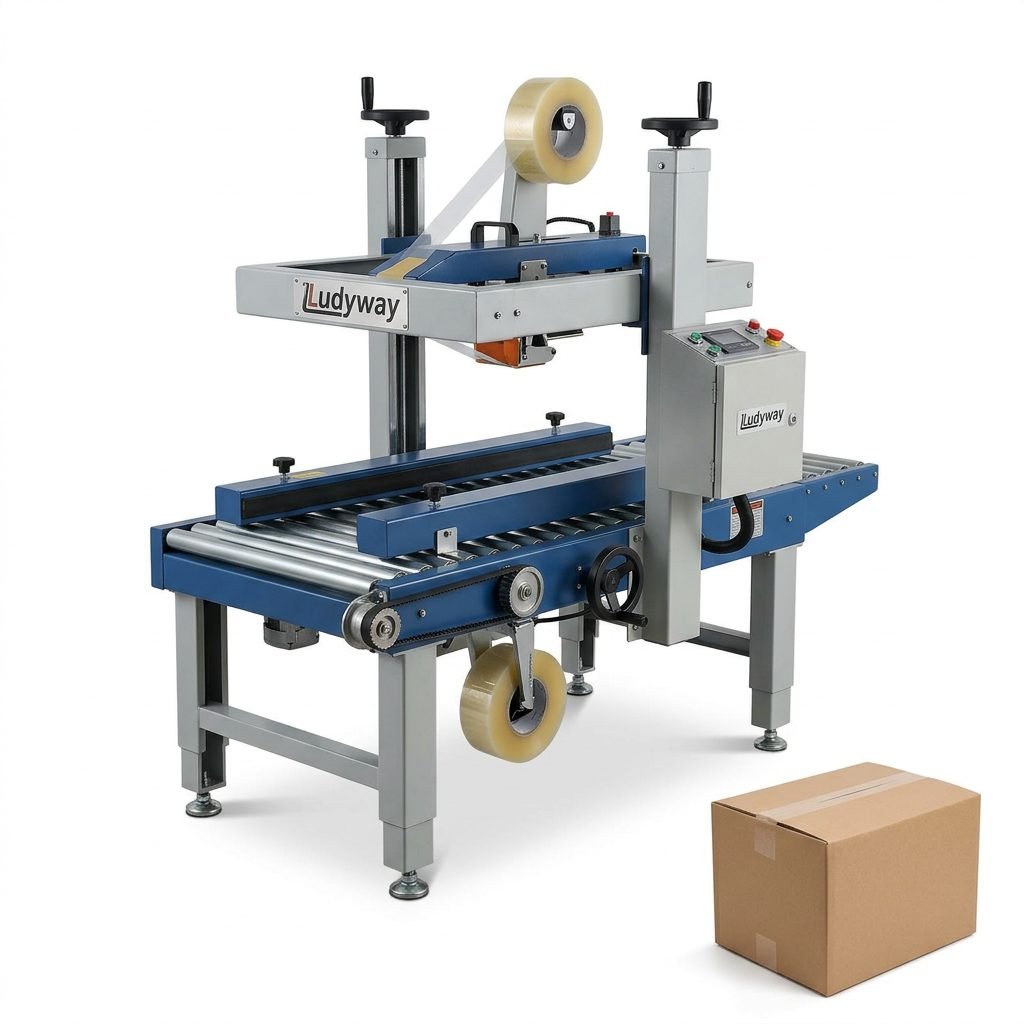
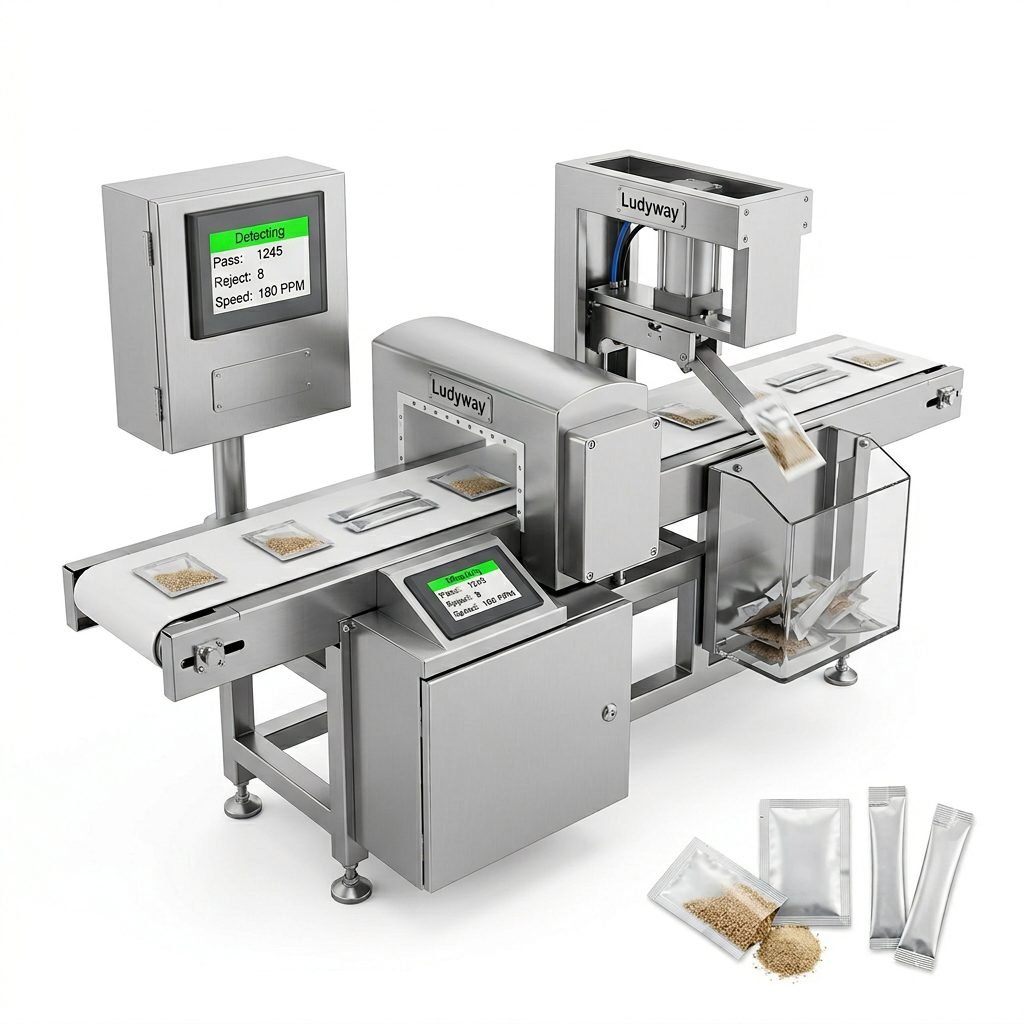
Automation gains are only realised when case sealing and palletizing keep pace with the primary packaging machine.
Compliance, Hygiene and Documentation Requirements
Regulatory requirements apply equally to both machine classes, but automatic systems make demonstrating compliance much easier. For food applications, all product-contact surfaces should be 304 or 316L stainless steel and food-grade polymers consistent with FDA food-contact substance guidance; exporters to the EU should also confirm material declarations under EU 1935/2004.
Pharmaceutical and Medical
Sterile pouch and sachet applications fall under ISO 11607, which requires validated sealing processes with documented temperature, pressure and dwell. Automatic machines with recorded seal parameters and batch logs are strongly preferred by auditors; semi-automatic sealers can be validated but demand tighter operator controls.
Machine Safety and CE Marking
Confirm CE marking for European installations and ANSI/PMMI B155.1 risk assessment for North America. Interlocked guards, emergency stops on every frame and lockout points for pneumatics should be standard on automatic equipment, and are worth specifying even for semi-automatic heat sealers and fillers.
Founded in 1993 and based in Zhongshan, Guangdong, Ludyway is one of China’s largest packaging machine manufacturers, operating a 20,000㎡ facility with more than 130 packaging specialists and 200+ manufacturing equipment units. The company offers over 50 intelligent machine models spanning multi-lane stick pack, sachet, VFFS and fully automated turnkey lines for granule, powder, liquid and pouch applications, and serves customers in more than 100 countries. With export revenue reported to have exceeded RMB 500 million and a target of RMB 1 billion, as covered in this industry growth report, Ludyway supports manufacturers moving from semi-automatic cells to integrated automatic lines with layout design, FAT video testing, installation and remote diagnostics.
Recommended Ludyway Automatic Packaging Systems
The following configurations are the most frequently specified by manufacturers upgrading from semi-automatic filling. Each is built to order around your product, fill weight and pouch dimensions.
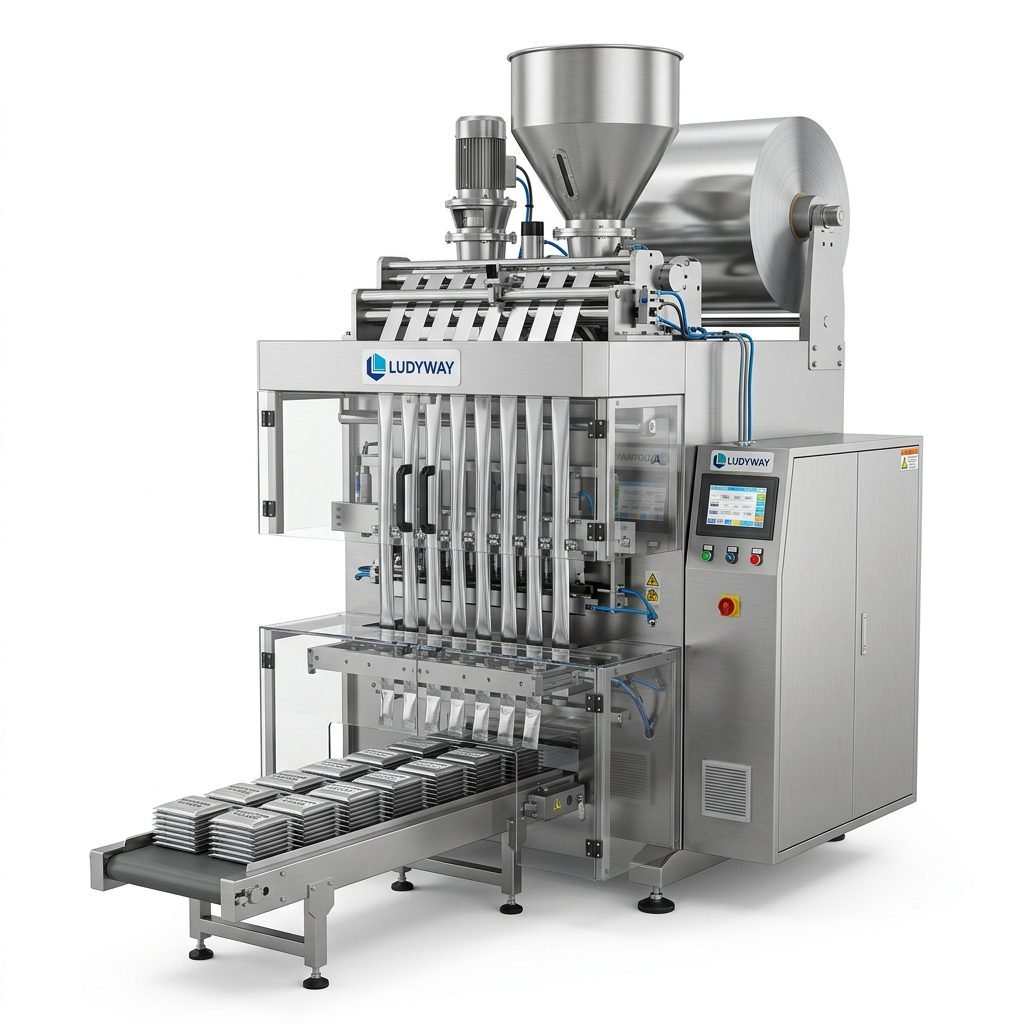
Multi-Lane Stick Pack Machine
Granule, Powder, Liquid, 4–12 Lanes
Quote on Request
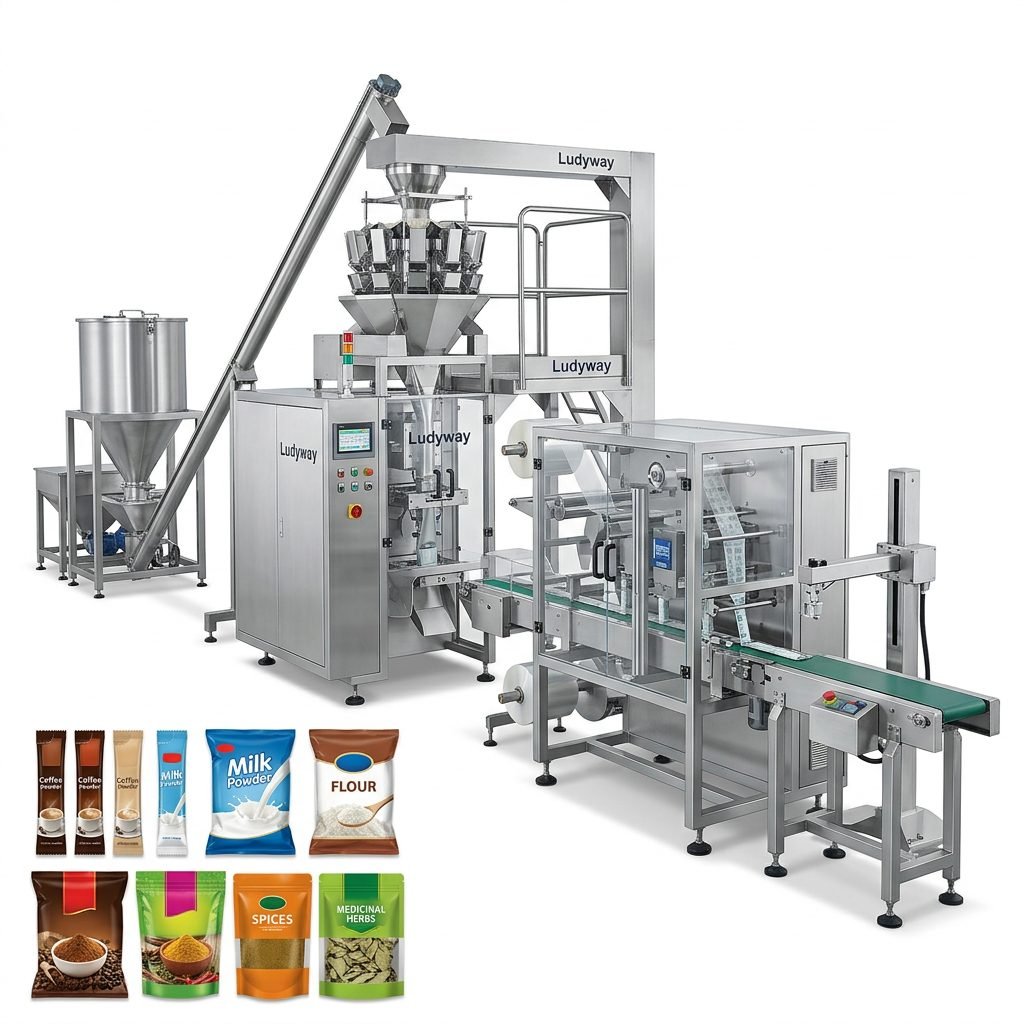
Automatic Powder Packaging Line
Food & Pharma, Turnkey Line
Quote on Request
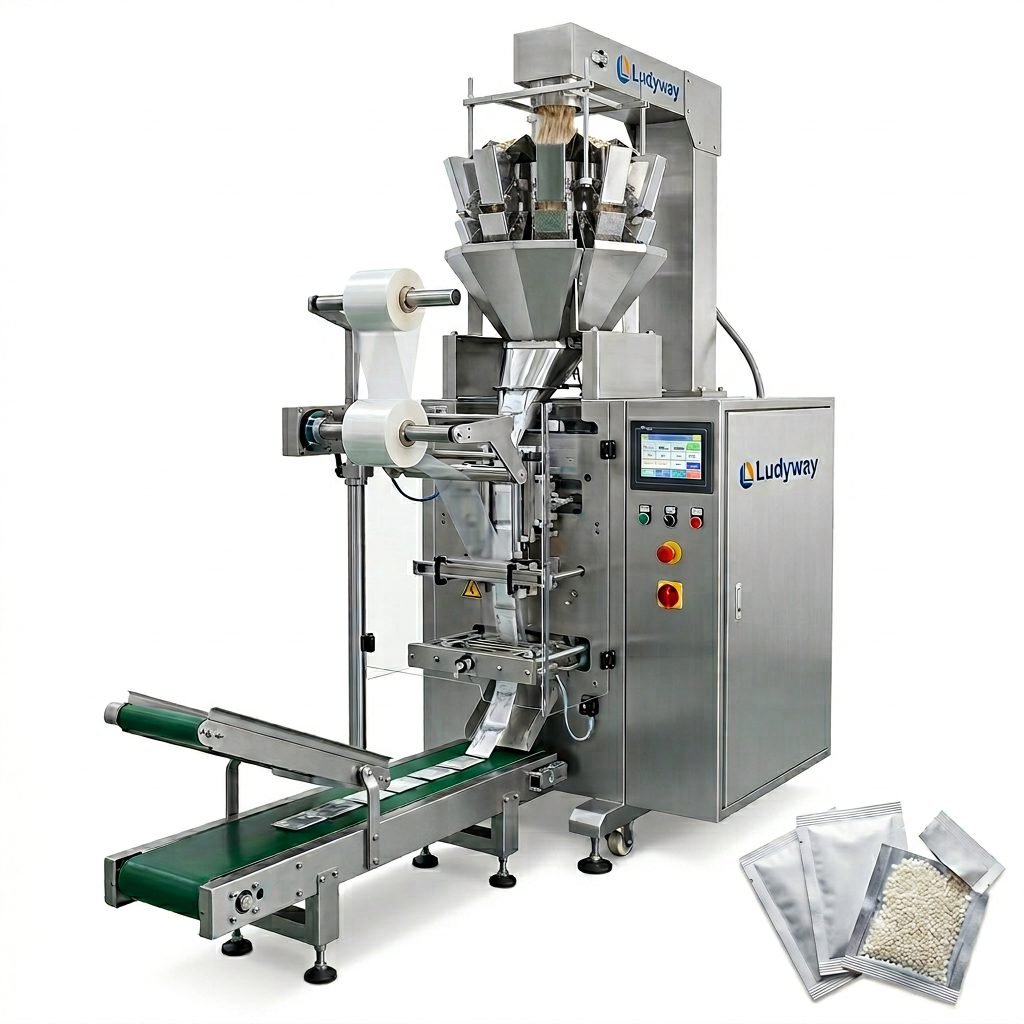
Pharma Granule Sachet Machine
Pharmaceutical, GMP Design
Quote on Request
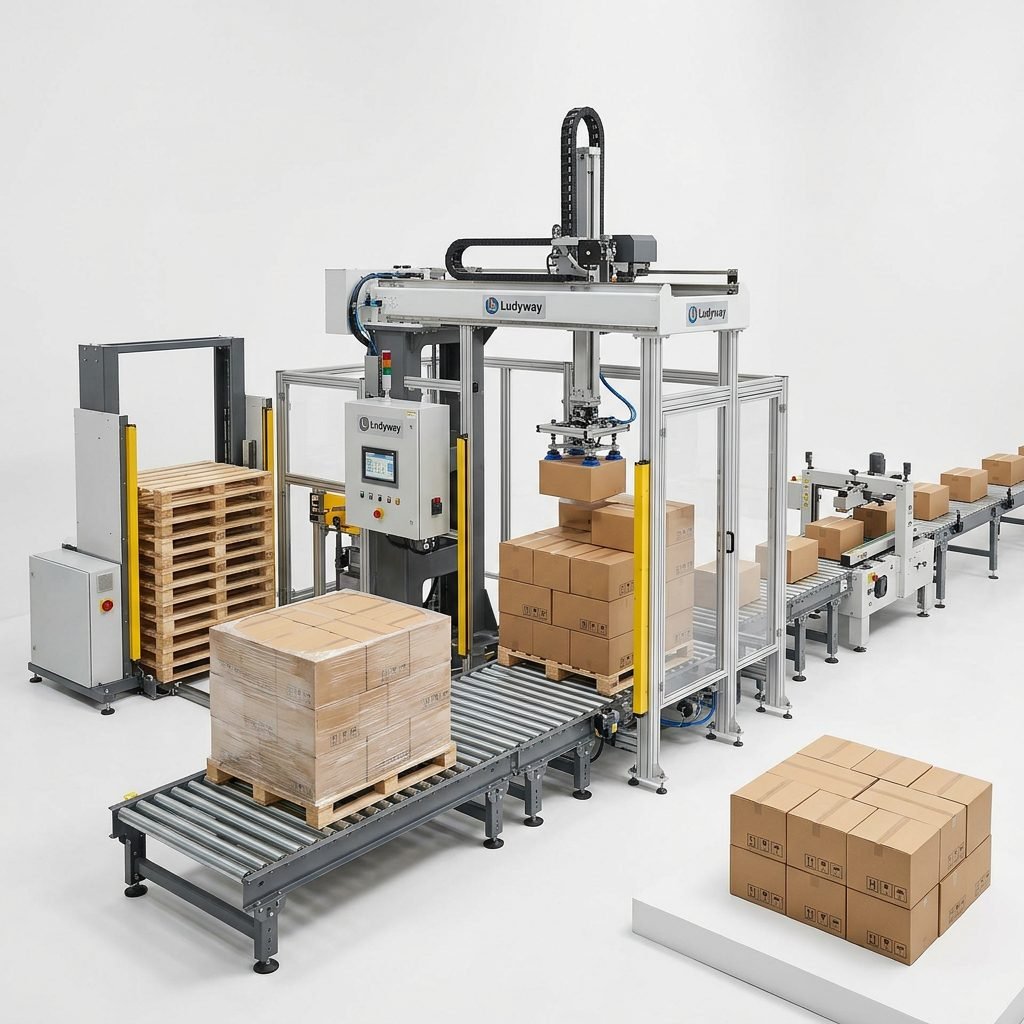
Automated Palletizing System
End-of-Line, High-Speed
Quote on Request
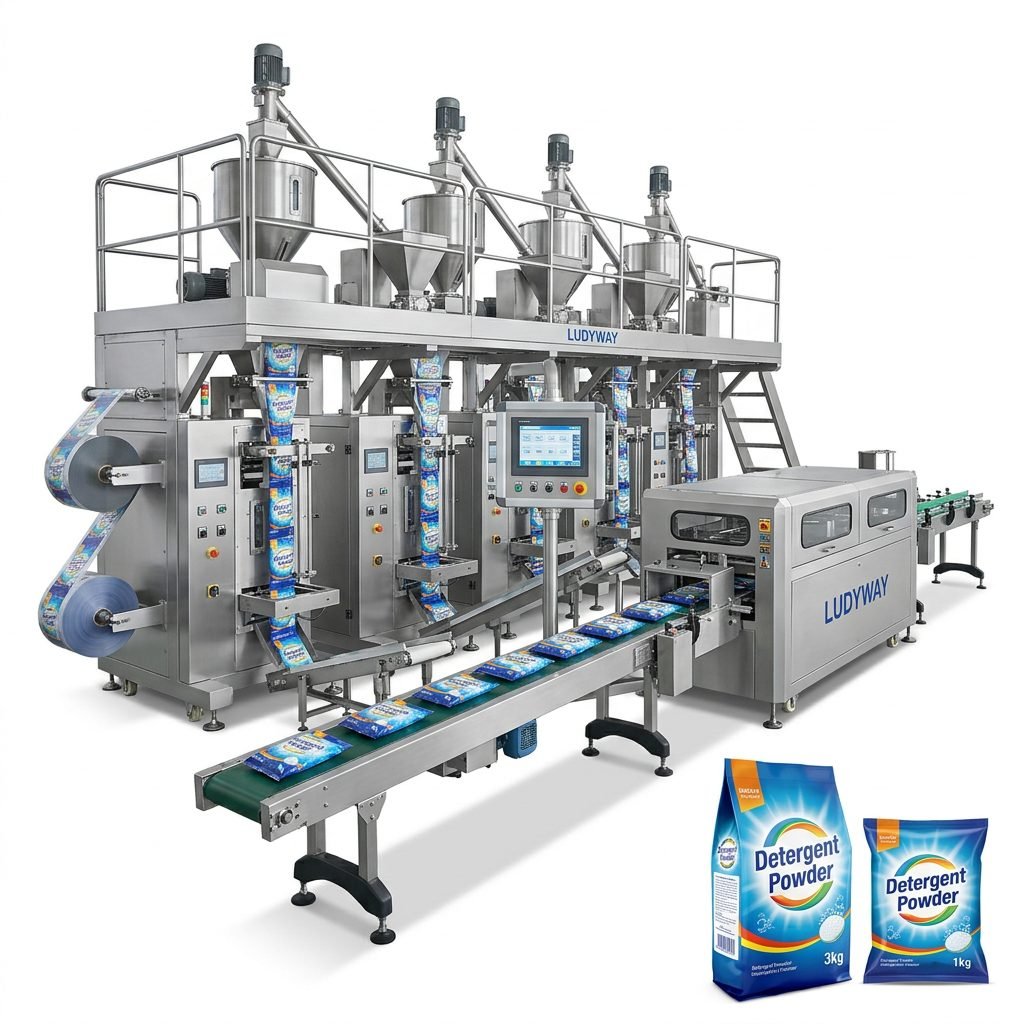
Need the whole line rather than a single machine? Ludyway’s packaging line integration service covers feeding, primary packaging, inspection, cartoning and palletizing under one project team, and the multi-lane sachet machine range can be configured for three-side, four-side and stick formats on one frame.
Frequently Asked Questions
Can a semi-automatic machine be upgraded to fully automatic later?
Usually not on the same frame. Semi-automatic fillers lack the film transport, servo drives and PLC architecture that automation requires. What can be reused are auxiliary items such as hoppers, conveyors and coders. If growth is likely, it is more economical to buy a single-lane automatic machine and add lanes or downstream equipment later.
What is the minimum order quantity and lead time for an automatic packaging machine?
Capital equipment is ordered per unit, so the minimum is one machine. Standard single-lane models typically ship in 30–45 days; configured multi-lane machines and turnkey lines take 60–120 days depending on format tooling and integration scope. Lead time is confirmed at order after product testing.
How accurate is automatic dosing for powders compared with manual filling?
Servo-driven auger fillers on automatic machines typically hold ±0.5–1% at fill weights above 2 g, and many lines add inline checkweighing with automatic feedback. Manual or semi-automatic filling commonly varies by ±1–3%, which translates into either costly give-away or underweight rejects.
Which films work on automatic stick pack and sachet machines?
Heat-sealable laminates such as PET/AL/PE, PET/PE, paper/PE and kraft/AL/PE in 50–120 micron thickness are standard. Film tolerance, treated side and reel core size must match the machine specification; most suppliers will test your film during the factory acceptance test.
What information should I send to get an accurate quotation?
Product type and bulk density, target fill weight, pouch dimensions and style, required output per hour, number of SKUs, available utilities (voltage, air), and any downstream equipment you want integrated. Sending a product sample lets the supplier confirm the dosing system and guarantee accuracy.
Request a Specification Review or Quotation
Send your product details and target output to Ludyway’s engineering team for a machine recommendation, a layout proposal and a formal quotation. Product fill tests and FAT videos are available before you commit, and a full catalogue of multi-lane, VFFS and turnkey line models can be provided on request.
Email: info@ludyway.com · WhatsApp: +86 131 2959 2456 · Factory visits welcome in Nanlang Town, Zhongshan, Guangdong, China.