Setting up a nuts packaging machine production line in Germany requires careful planning, compliance with strict EU regulations, and selecting the right equipment for your specific nut products. Germany is one of Europe’s largest markets for packaged nuts and snack products, making it an ideal location for manufacturers looking to establish or upgrade their packaging operations. This comprehensive guide walks you through every step of the process.
Whether you are packaging almonds, cashews, pistachios, hazelnuts, or mixed nuts, the right production line can dramatically improve your output, reduce labor costs, and ensure consistent product quality. German consumers demand high-quality packaging, and meeting those expectations starts with a well-designed production line.
Understanding the German Nuts Packaging Market
Germany’s nut processing and packaging industry has experienced steady growth over the past decade. According to industry data, the German snack nuts market was valued at over €2.5 billion in recent years, with packaged nuts accounting for a significant share. The demand for convenience packaging, single-serve sachets, stick packs, and resealable pouches continues to rise as consumer preferences shift toward on-the-go snacking options.
Key market drivers include increasing health consciousness, demand for protein-rich snacks, and the growing popularity of organic and sustainably packaged nuts. German retailers and consumers also place a high premium on packaging quality, freshness preservation, and eco-friendly materials.
Key Regulations and Standards in Germany
Before setting up your production line, you must understand the regulatory landscape. Germany follows EU packaging regulations with additional national requirements:
- EU Packaging and Packaging Waste Regulation (PPWR) – Governs all packaging placed on the EU market
- German Packaging Act (VerpackG) – Requires registration with the Central Packaging Register (ZSVR)
- LFGB (Lebensmittel- und Futtermittelgesetzbuch) – German Food and Feed Code for food contact materials
- Dual System Participation – Mandatory licensing for packaging recycling
- ISO 22000 and HACCP – Food safety management standards widely adopted in Germany
Step 1: Planning Your Nuts Packaging Production Line
A successful production line starts with thorough planning. Consider the following factors before investing in equipment:
Product Characteristics Assessment
Different nuts require different handling approaches. Whole nuts, granulated nuts, nut powders, and coated nuts each have unique packaging requirements. Factors to evaluate include:
- Product density and flowability – Affects feeding and filling mechanisms
- Fragility – Determines whether gentle handling systems are needed
- Oil content – Impacts packaging material selection for freshness preservation
- Particle size distribution – Influences multi-head weigher configuration
- Moisture sensitivity – May require nitrogen flushing or vacuum sealing
Target Packaging Formats
The German market demands various packaging formats. Choose based on your target customers:
- Sachets and stick packs – Popular for single-serve portions in retail and food service
- Pillow pouches – Standard for medium-sized retail packages
- Stand-up pouches with zipper – Growing in popularity for resealable convenience
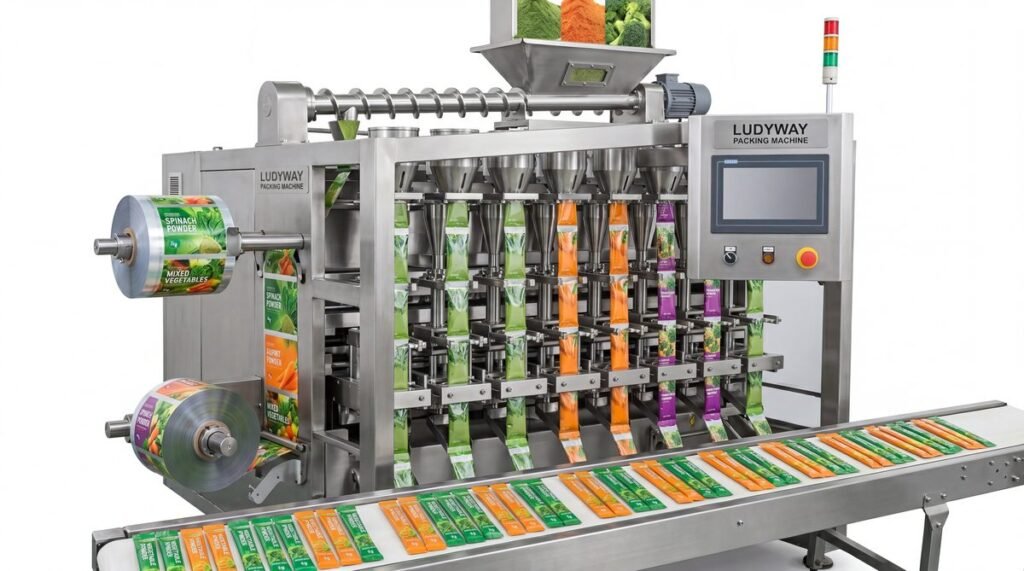
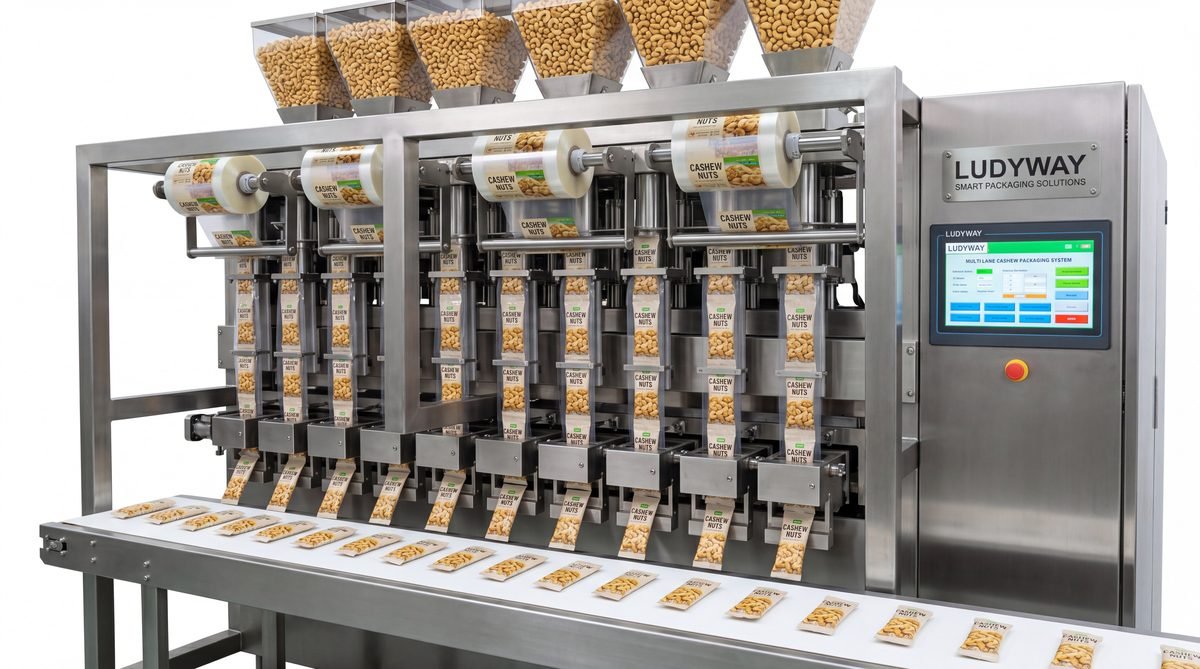
- Multi-lane stick packs – High-speed option for small portion sizes
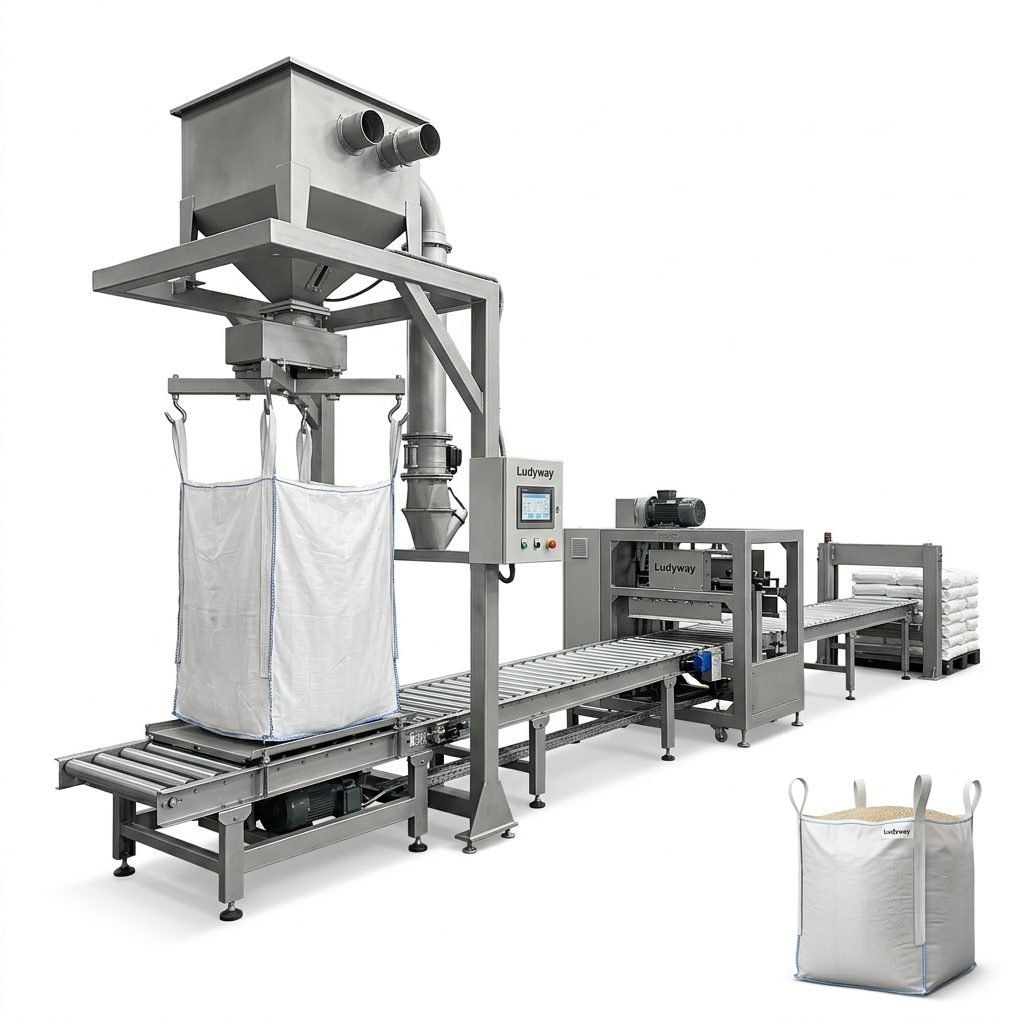
- Bag-in-box and bulk bags – For B2B and industrial applications
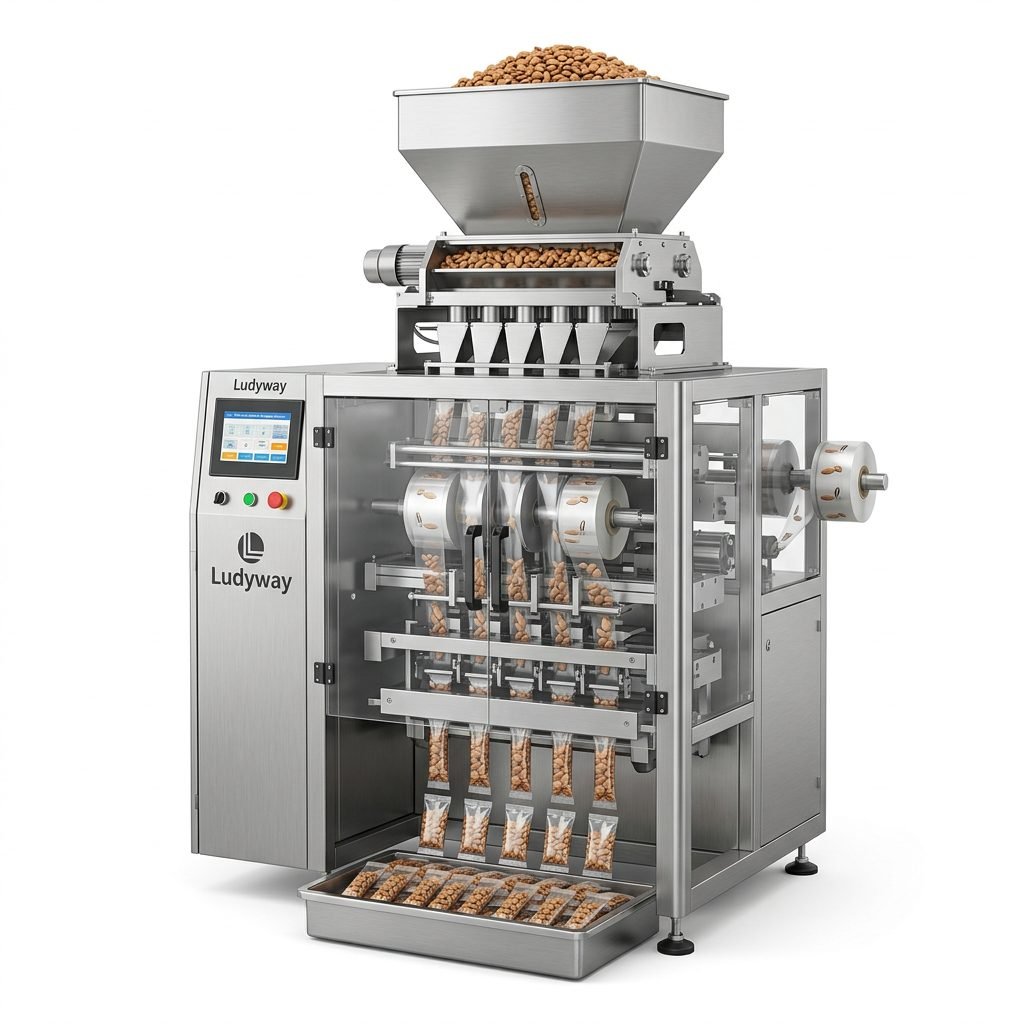
Step 2: Selecting the Right Packaging Machinery
Choosing the appropriate packaging machine is the most critical decision in your production line setup. For nuts packaging in Germany, you typically need a combination of the following equipment:
Core Equipment for Nuts Packaging Lines
| Equipment Type | Primary Function | Key Specifications |
|---|---|---|
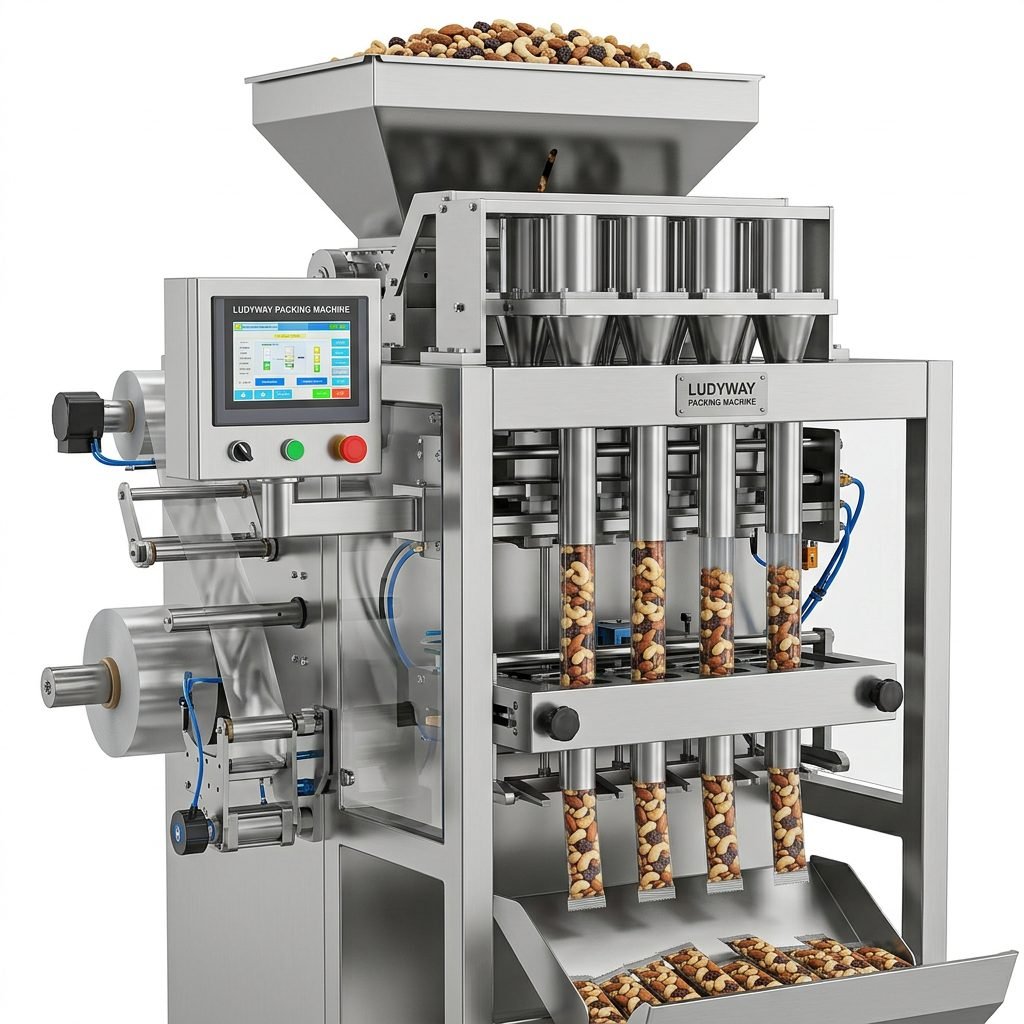
| Multi-Head Weigher | Precise weight measurement for nuts | 10-24 heads, accuracy ±0.5-1g |
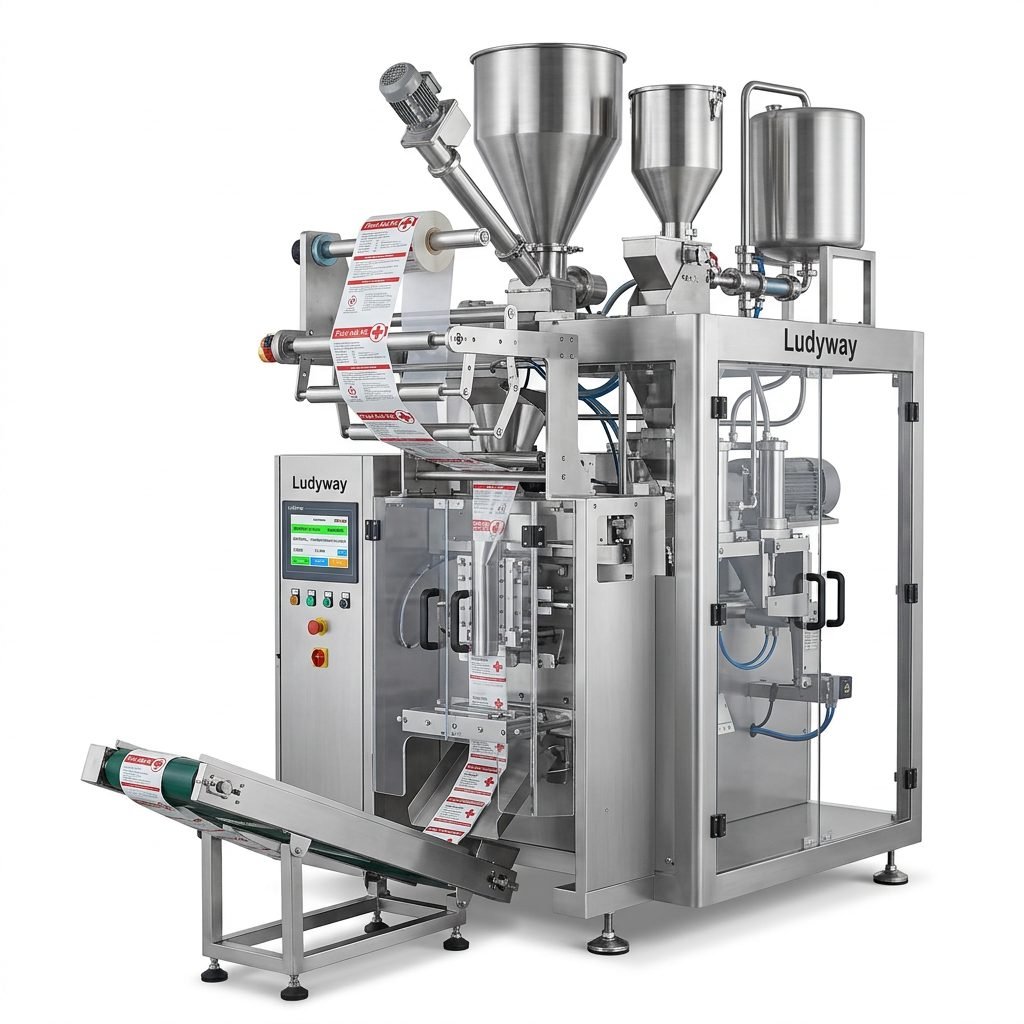
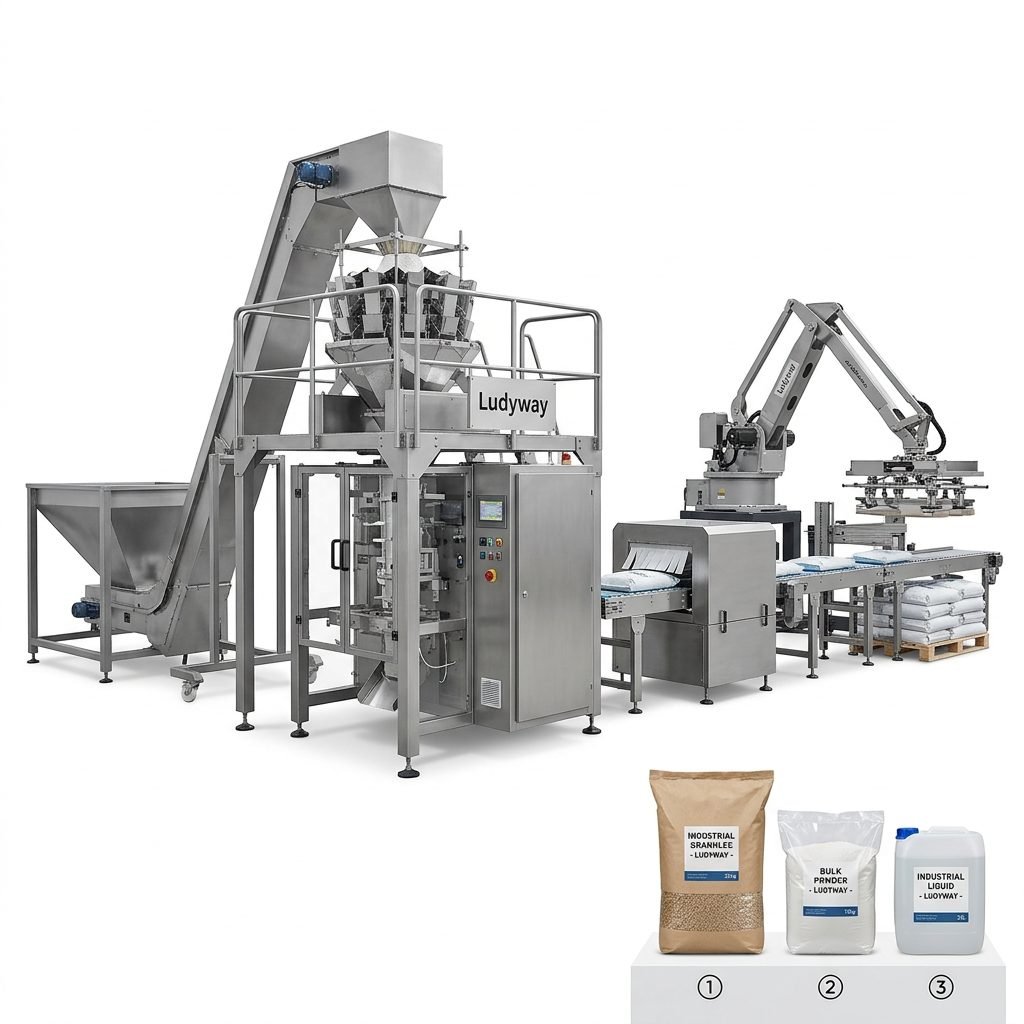
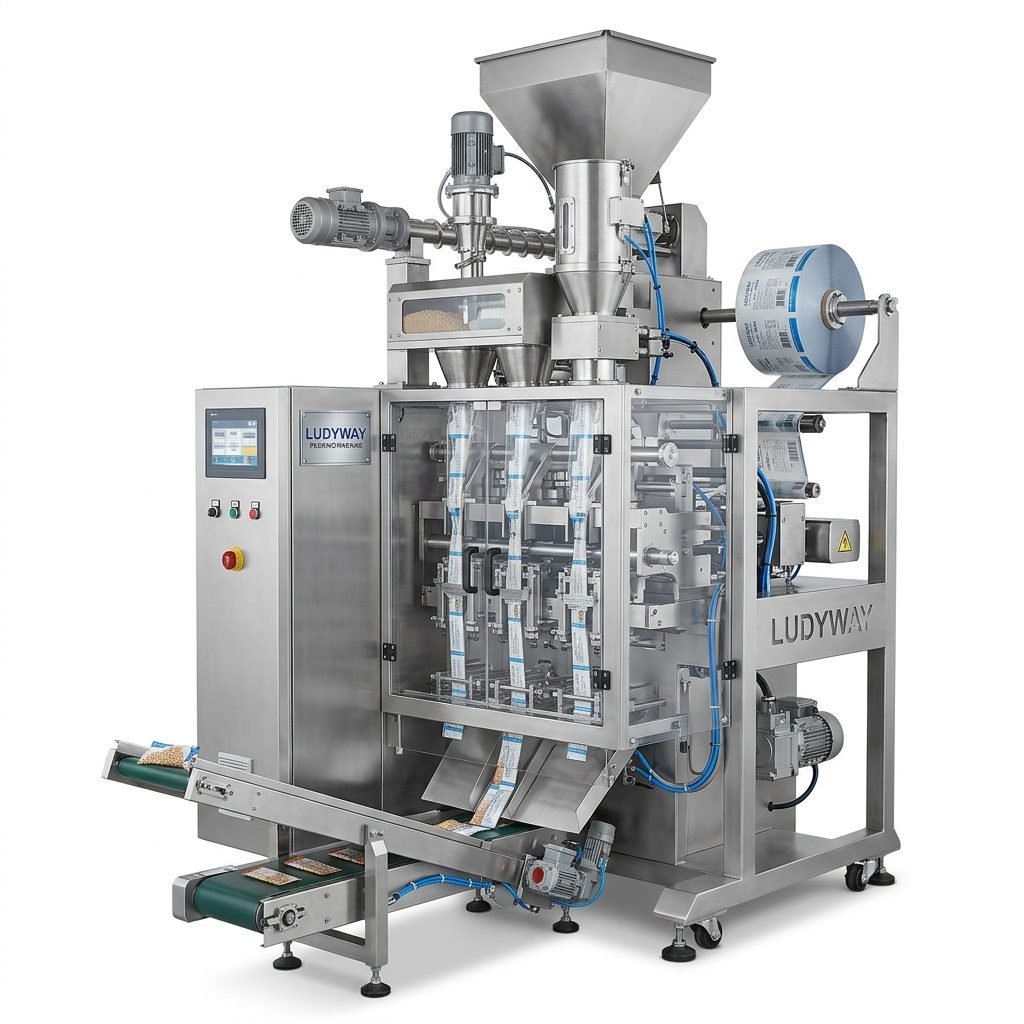
| Vertical Form Fill Seal (VFFS) | Forms pouches, fills, and seals in one operation | Speeds up to 120 packs/min |
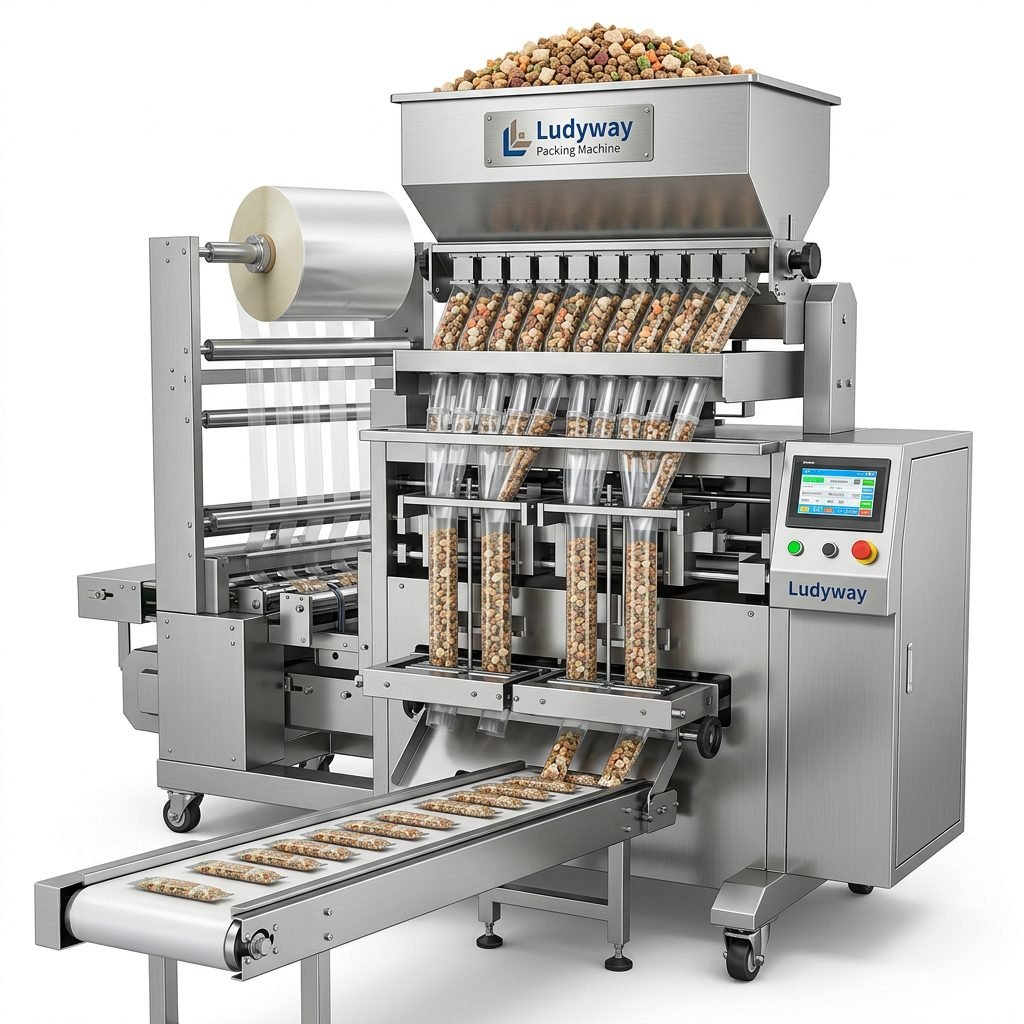
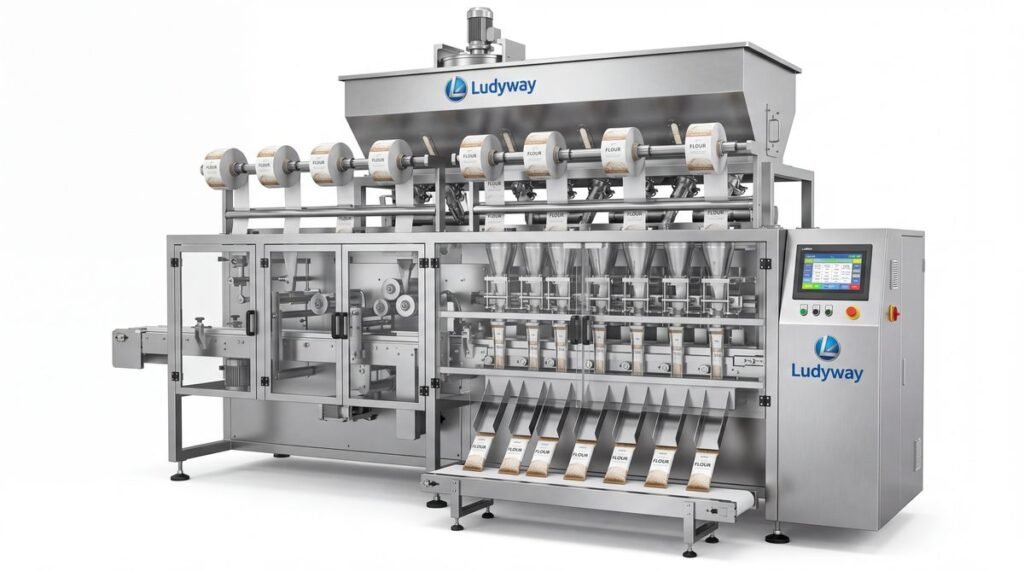
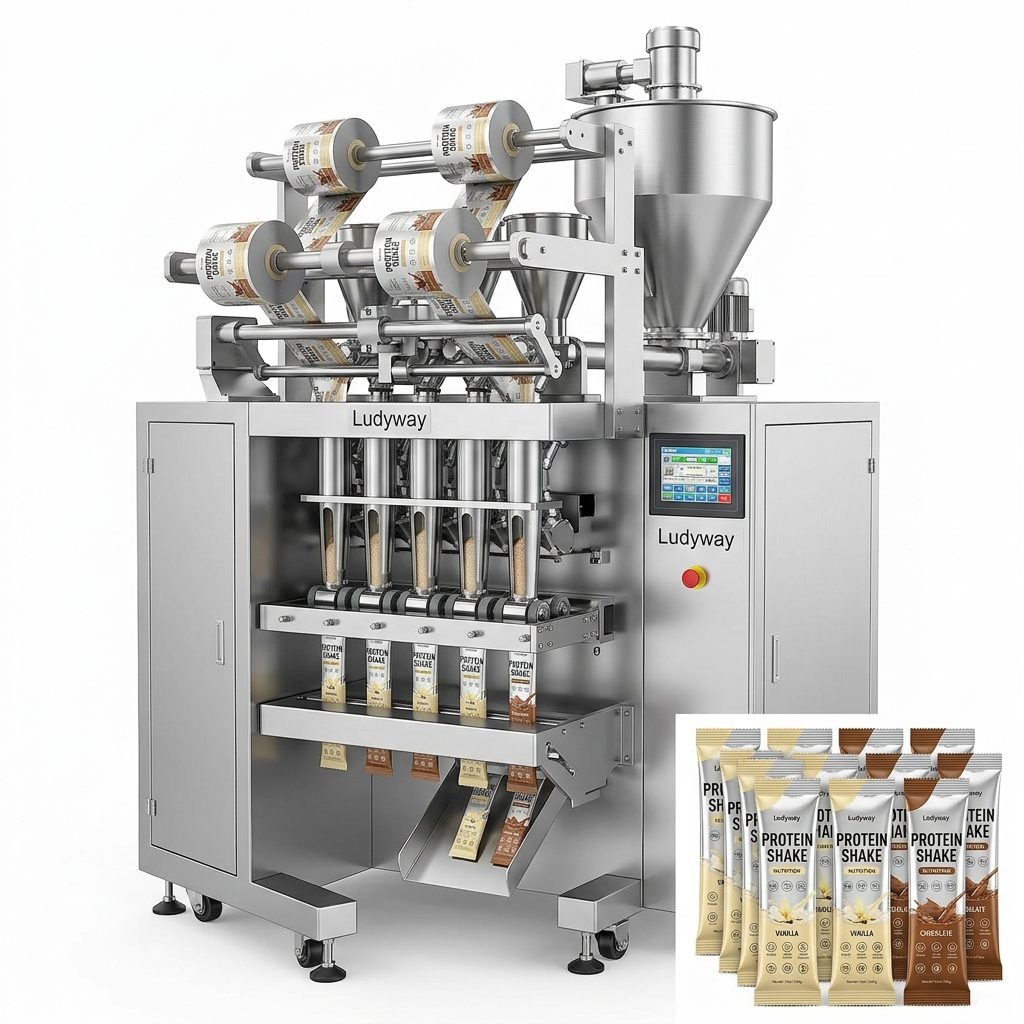
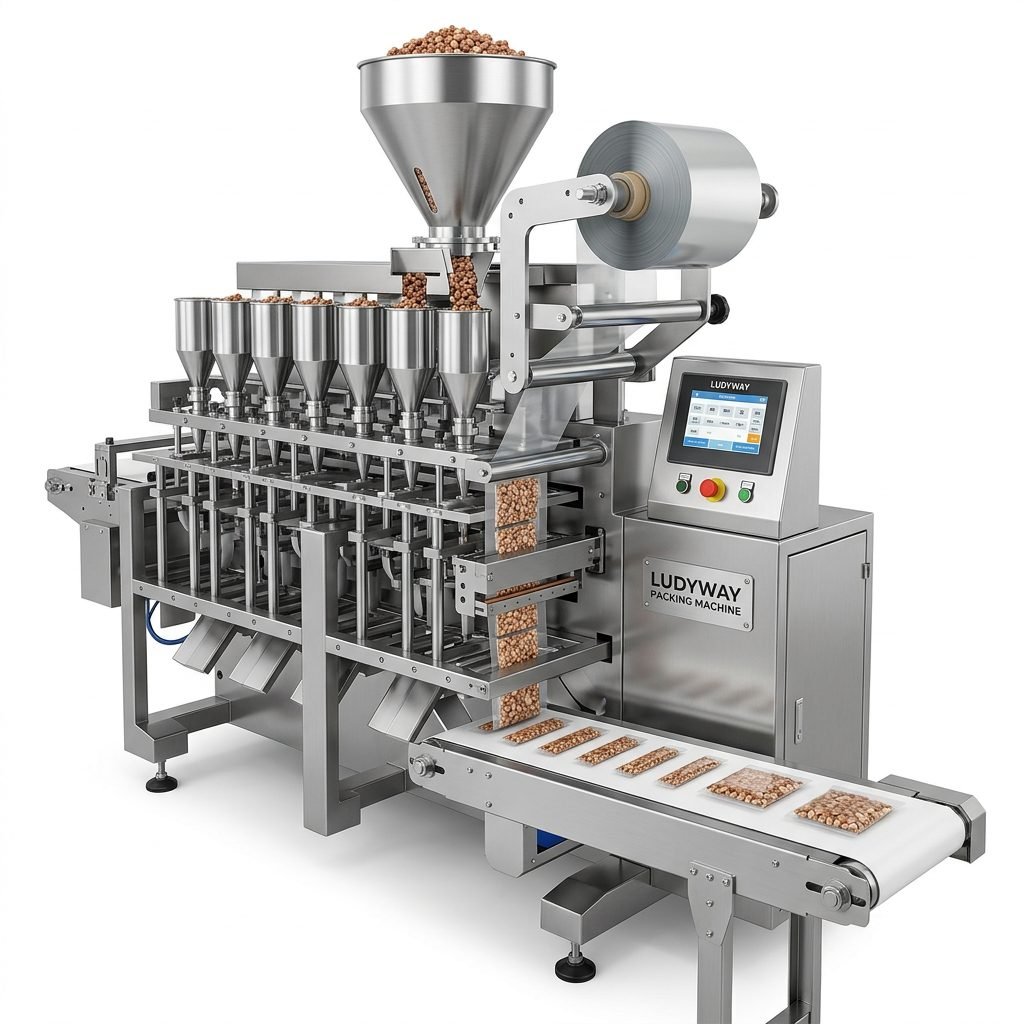
| Multi-Lane Stick Pack Machine | High-speed small portion packaging | 4-20 lanes, up to 600 packs/min |
| Premade Pouch Filling Machine | Fills and seals pre-made pouches | Suitable for stand-up and zipper pouches |
| Checkweigher | Quality control and weight verification | Accuracy ±0.1g at high speeds |
| Metal Detector | Contaminant detection for food safety | Ferrous, non-ferrous, and stainless steel detection |
| Cartoning Machine | Secondary packaging into cartons | Automated carton erecting and sealing |
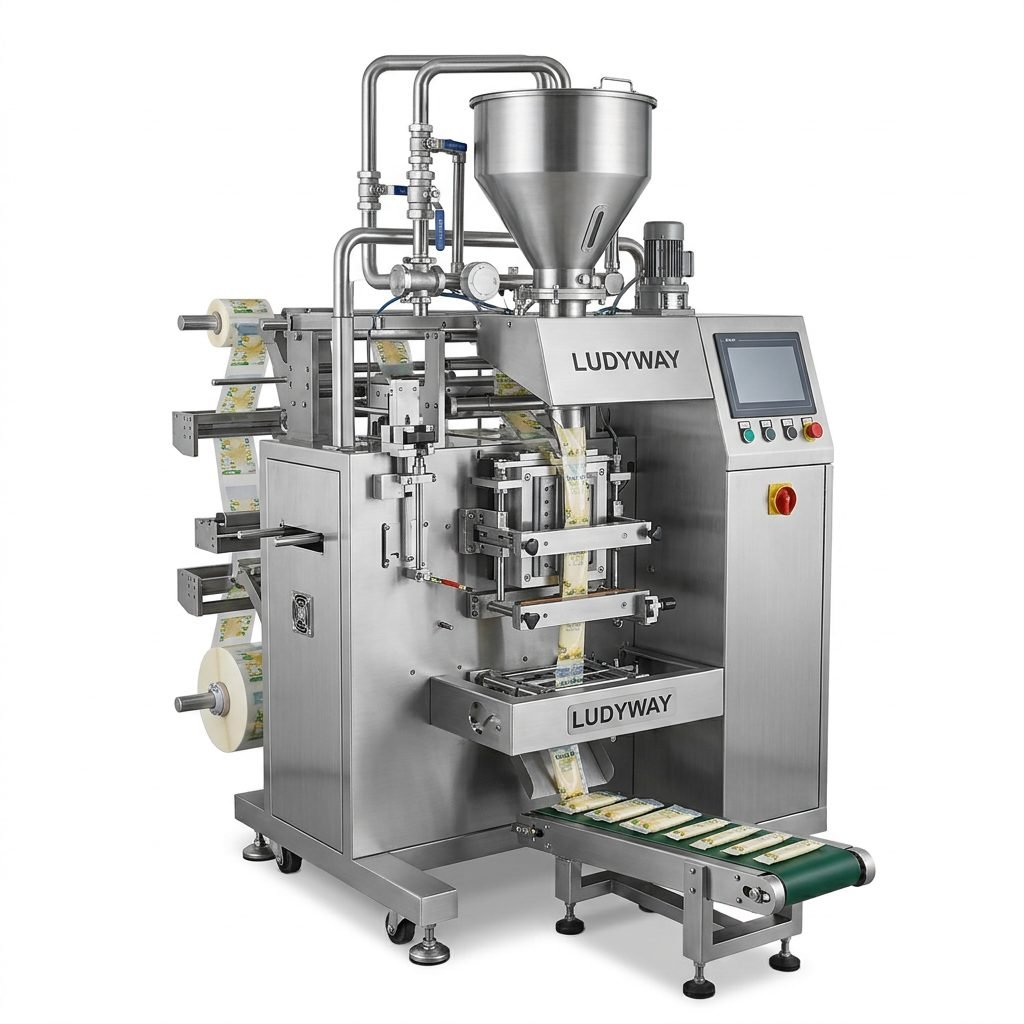
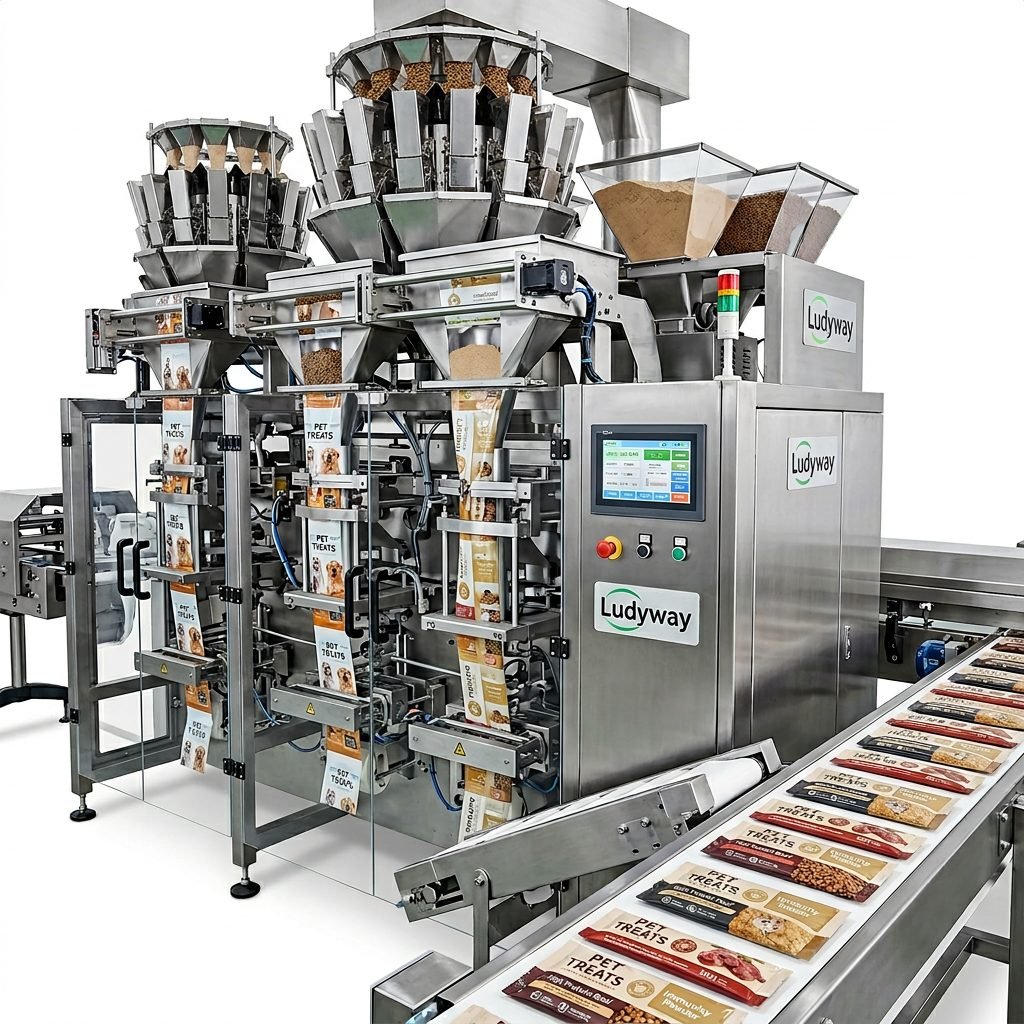
For businesses sourcing equipment internationally, Ludyway is one of the largest packaging machine manufacturers in China, offering over 50 intelligent packaging machine models including multi-lane stick pack, sachet, and fully automated packaging systems suitable for nut products. Their equipment serves customers in over 100 countries and regions, including the European market.
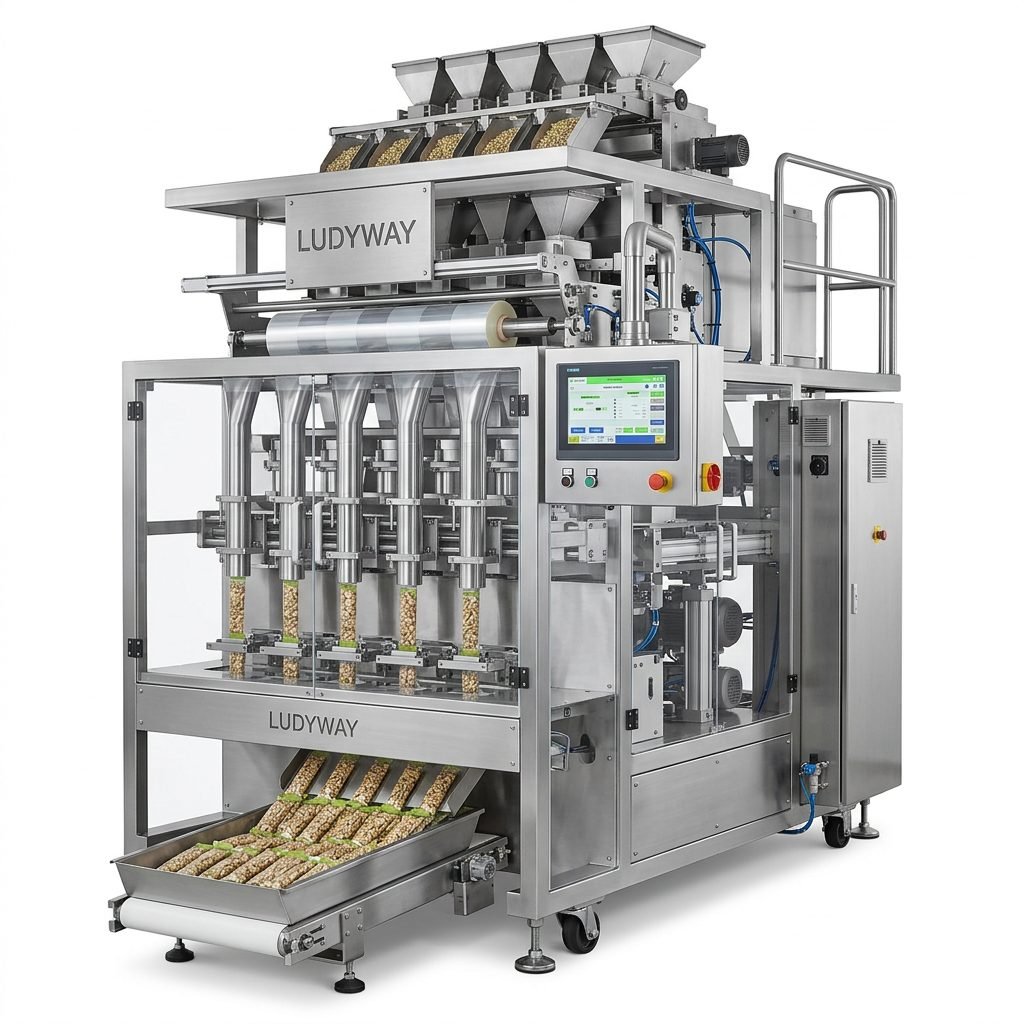
Step 3: Production Line Layout and Facility Requirements
The physical layout of your nuts packaging line in Germany must comply with EU hygiene and safety standards. Proper facility planning ensures efficient workflow and regulatory compliance.
Facility Design Considerations
- Cleanroom classification – Depending on product type, ISO 8 or higher may be required
- Temperature and humidity control – Critical for nut freshness and preventing rancidity
- Floor drainage and sanitation – Essential for GMP compliance
- Electrical standards – Must meet German VDE and EU CE requirements
- Compressed air quality – Oil-free systems for food-grade applications
- Waste management – Comply with German recycling and waste separation regulations
Optimal Line Configuration
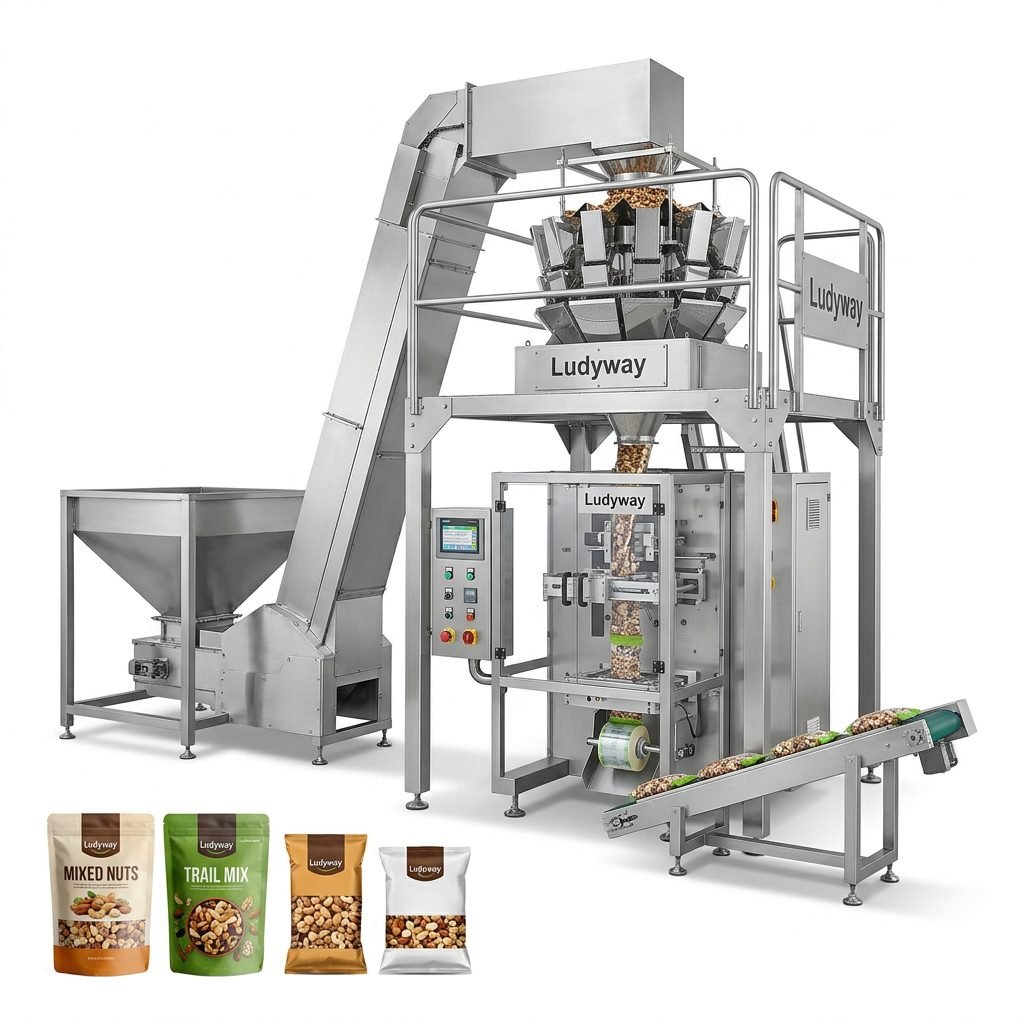
A typical high-efficiency nuts packaging line flows in this sequence:
- Raw material receiving and inspection – Quality check and sorting area
- Feeding system – Bucket elevator or inclined conveyor to transport nuts to the weigher
- Multi-head weighing – Precision weighing with feedback loop control
- Primary packaging – VFFS or multi-lane machine for pouch/sachet formation
- Quality inspection – Checkweigher and metal detector in series
- Secondary packaging – Cartoning, case packing, and palletizing
- Coding and labeling – Batch coding, date marking, and GS1 barcode application
Step 4: Compliance and Certification for the German Market
Operating a nuts packaging line in Germany requires multiple certifications and ongoing compliance with EU and German regulations. Below is a summary of the most important certifications:
| Certification/Standard | Scope | Relevance to Nuts Packaging |
|---|---|---|
| CE Marking | All machinery sold in EU/EEA | Mandatory for all packaging equipment |
| EC 1935/2004 | Food contact materials | Packaging film and materials must comply |
| IFS Food or BRCGS | Food safety management | Required by German retailers |
| ISO 22000 | Food safety management systems | Internationally recognized standard |
| Bio-Siegel (Organic) | German organic certification | Required if packaging organic nuts |
| VerpackG Registration | German Packaging Act | Mandatory registration with ZSVR |
Step 5: Cost Considerations and ROI Analysis
Investing in a nuts packaging production line in Germany involves several cost components. Understanding these helps in accurate budgeting and ROI calculation:
Initial Investment Breakdown
- Packaging machinery – Primary equipment investment varies by capacity and automation level
- Installation and commissioning – Typically 10-15% of equipment cost
- Facility modifications – Cleanroom construction, utilities, and infrastructure
- Training and documentation – Operator training and GMP documentation
- Initial certification costs – CE marking, food safety audits, and organic certification
Ongoing Operational Costs
- Packaging materials – Film, pouches, cartons, and labels
- Labor – Skilled operators and quality control personnel
- Maintenance and spare parts – Preventive maintenance schedule
- Energy consumption – Electricity, compressed air, and climate control
- Compliance fees – VerpackG licensing, audits, and certification renewals
A well-planned automated nuts packaging line typically achieves ROI within 18-36 months through reduced labor costs, higher throughput, and consistent product quality that meets German market standards.
Step 6: Installation, Commissioning, and Training
Proper installation and commissioning are essential for a smooth start-up. In Germany, this process must be documented thoroughly for GMP compliance and audit readiness.
Installation Checklist
- Pre-installation site inspection and utility verification
- Equipment positioning according to approved layout drawings
- Electrical connections compliant with German VDE standards
- Compressed air and nitrogen supply line installation
- Integration of conveyor systems and connecting equipment
- Software configuration and network integration for MES/ERP systems
Commissioning and Validation
The commissioning process should follow IQ/OQ/PQ (Installation Qualification, Operational Qualification, Performance Qualification) protocols, which are standard requirements for food packaging operations in Germany. This ensures that the equipment performs consistently within specified parameters and produces packaging that meets all quality standards.
Industry Resources and Further Reading
Setting up a packaging line in Germany requires staying informed about industry standards and regulations. Below are authoritative resources to help you navigate the process:
- PMMI – The Association for Packaging and Processing Technologies – Comprehensive packaging industry resources and research
- Flexible Packaging Association – Industry data and regulatory affairs for flexible packaging
- European Commission – Packaging and Packaging Waste – Official EU regulatory information
- ISO – Packaging Standards – International packaging standards reference
- PMMI – Business Intelligence Library – Packaging machinery market research and reports
Key Takeaways for Success in Germany
To successfully set up and operate a nuts packaging machine production line in Germany, keep these critical factors in mind:
- Start with regulatory compliance – Understanding German and EU regulations before purchasing equipment saves costly retrofits
- Choose equipment that meets CE standards – All machinery must carry proper CE marking and documentation
- Plan for automation – German labor costs are among the highest in Europe, making automation a strategic priority
- Invest in quality control systems – German consumers and retailers expect consistently high product quality
- Consider sustainability – Eco-friendly packaging is increasingly important in the German market
- Build relationships with local service providers – Having reliable technical support in Germany minimizes downtime
With proper planning, the right equipment selection, and adherence to German standards, your nuts packaging operation can thrive in one of Europe’s most profitable and stable markets. The investment in a high-quality, fully automated packaging production line pays dividends through increased efficiency, reduced waste, and the ability to meet the demanding expectations of German consumers and retailers alike.