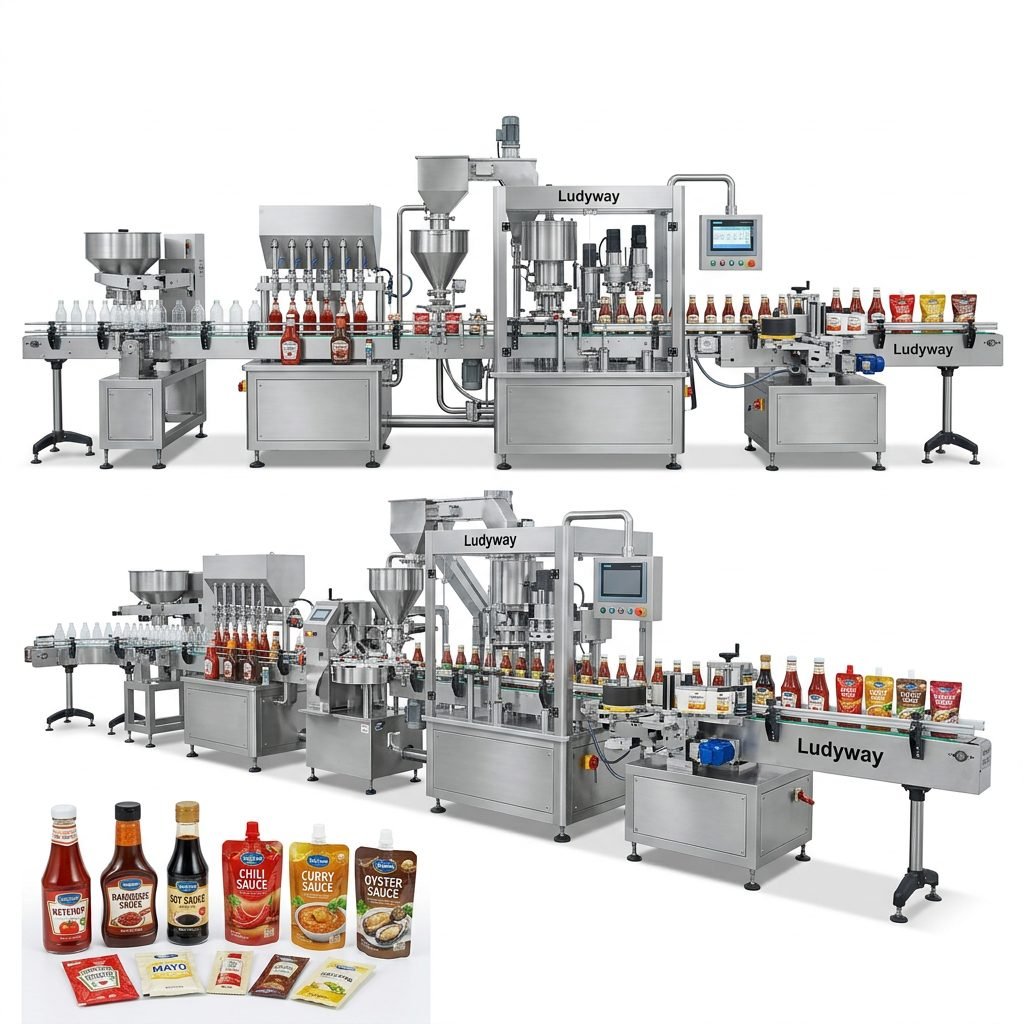
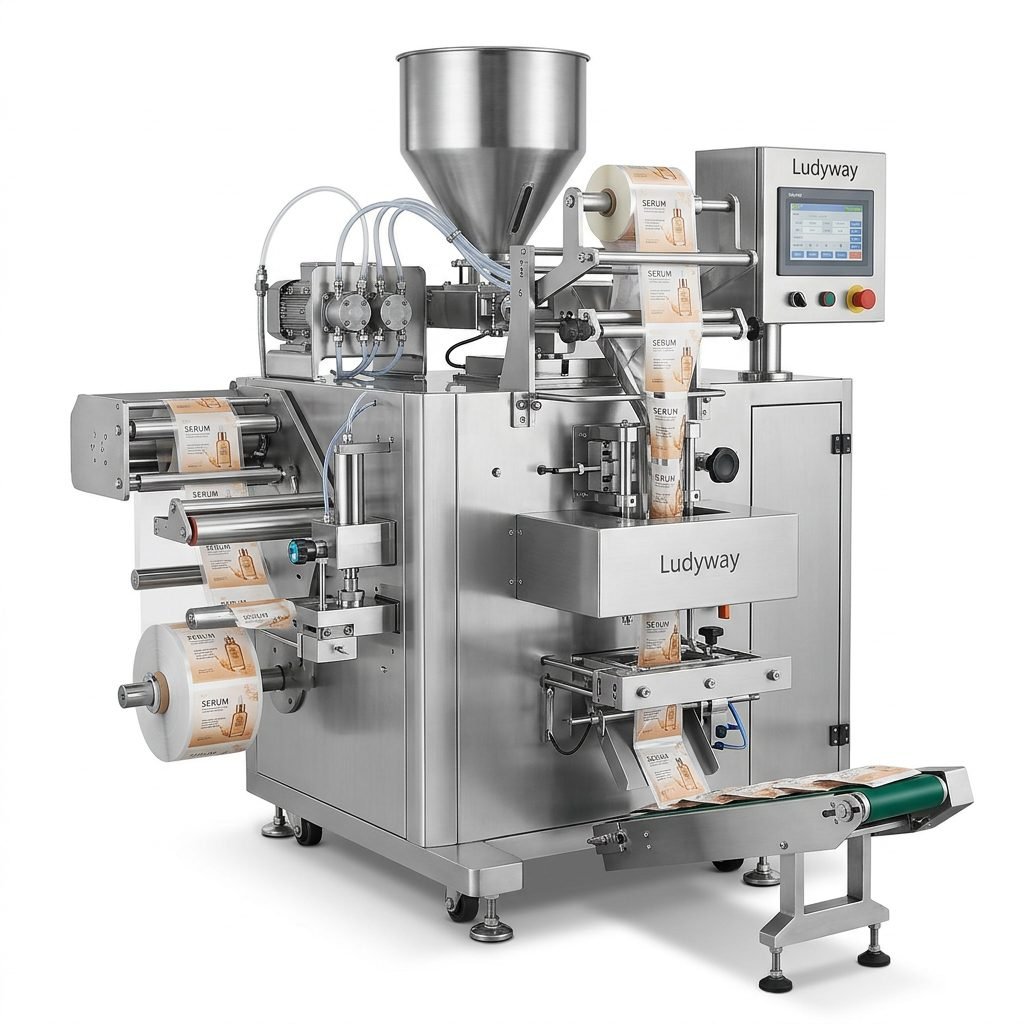
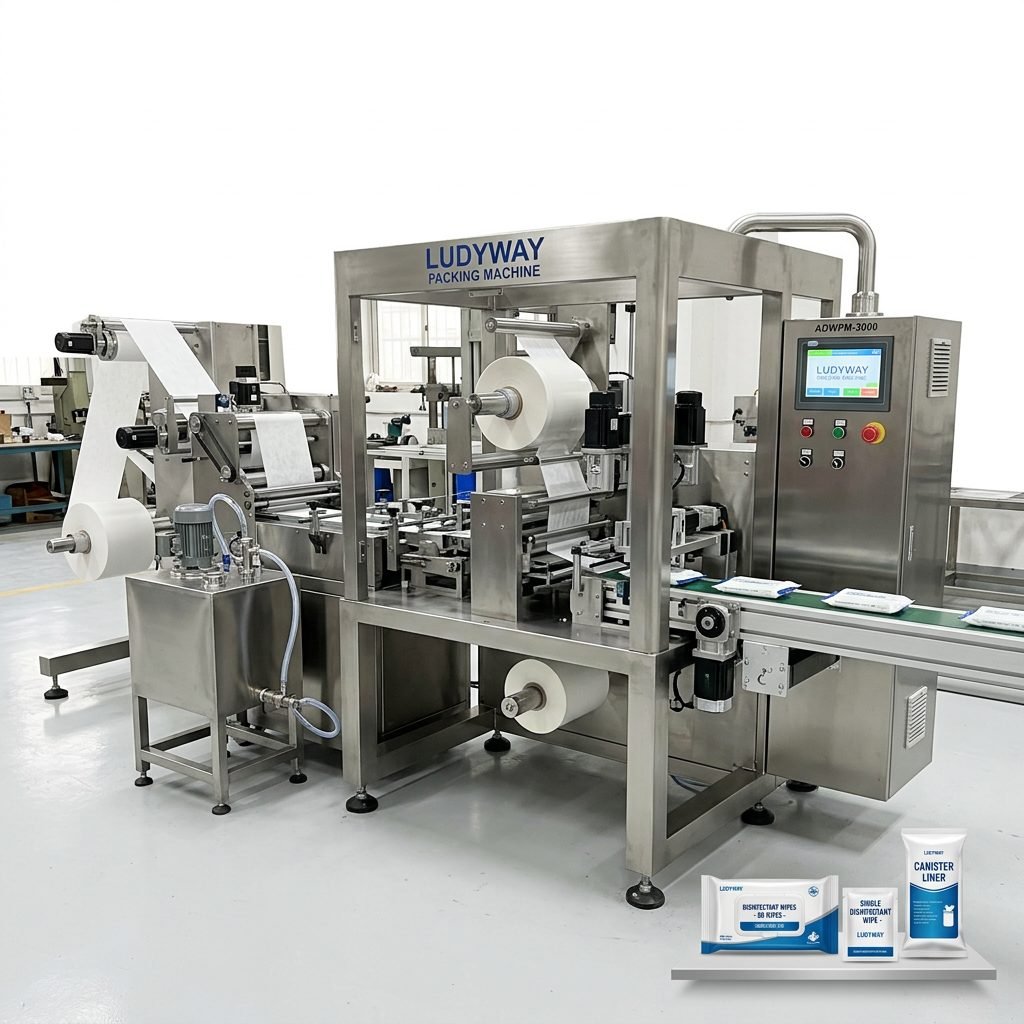
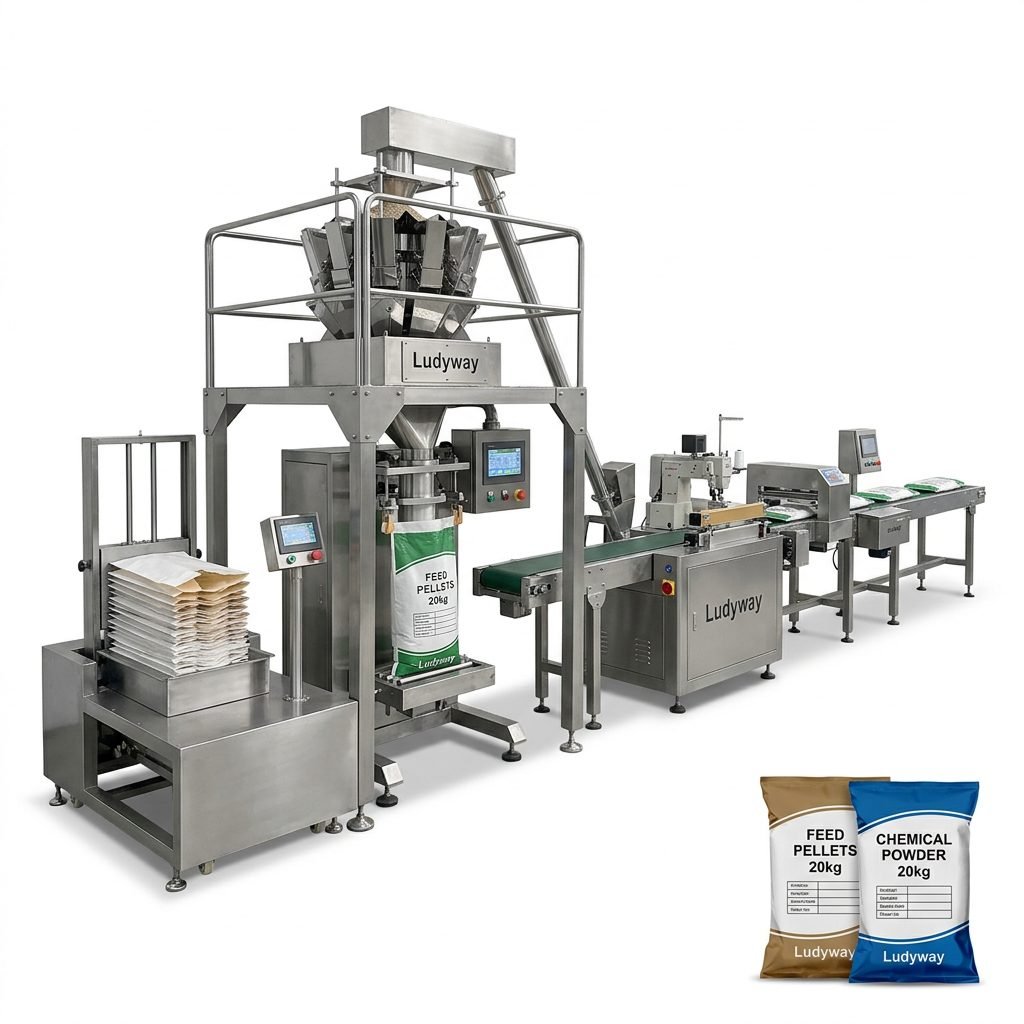
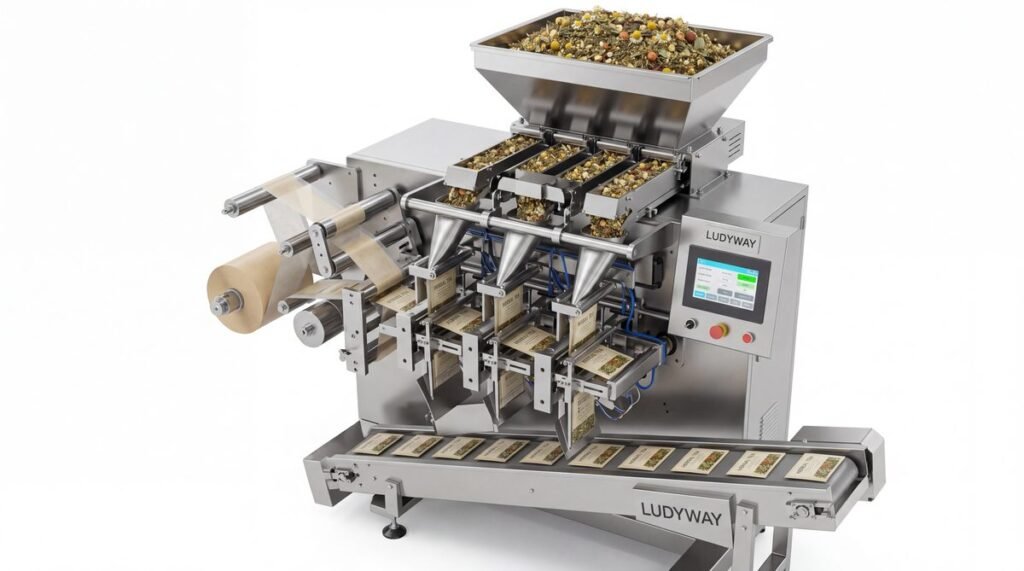
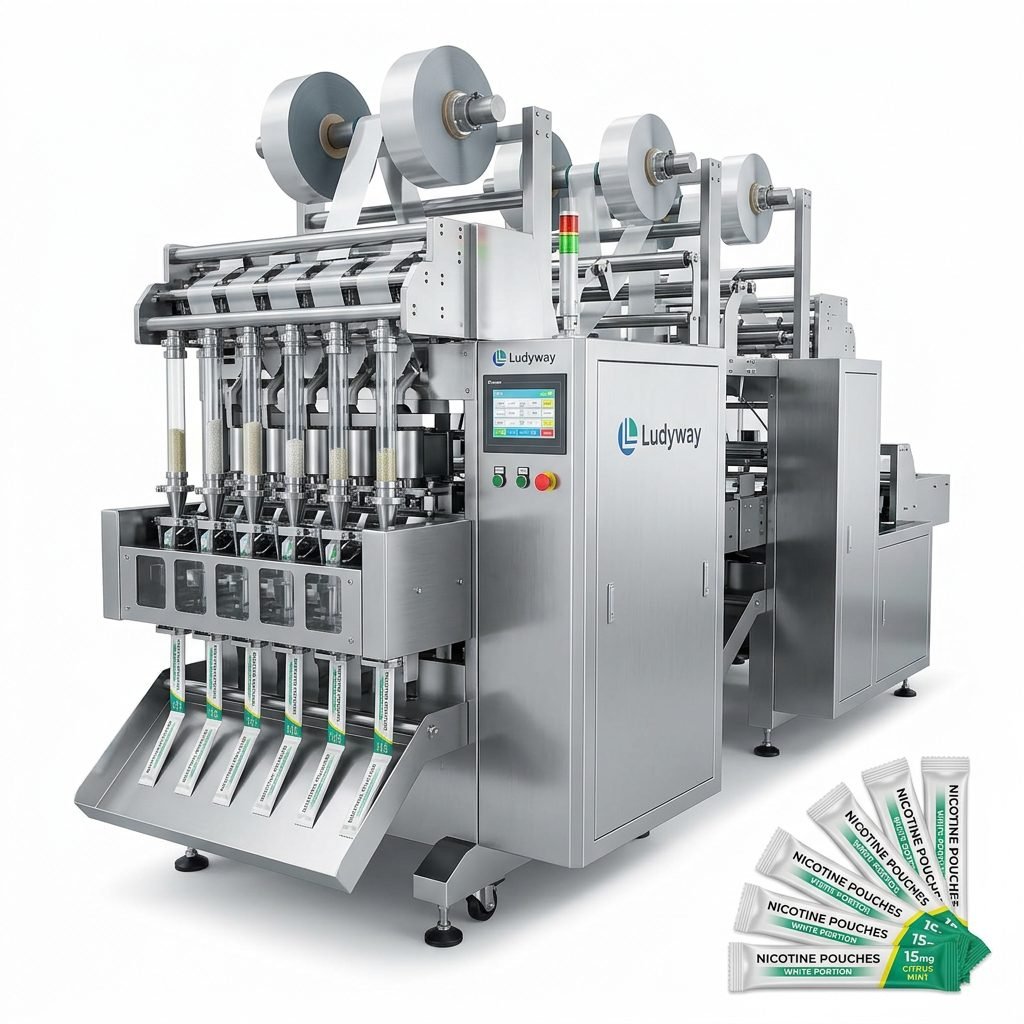
Setting up a small sauce packaging machine production line in China can be a strategic move for food manufacturers looking to scale operations efficiently. China’s packaging machinery industry has matured significantly, offering advanced automation, competitive pricing, and comprehensive after-sales support. Whether you are packaging ketchup, soy sauce, chili sauce, mayonnaise, or other condiments, understanding the complete setup process is essential for a smooth launch and long-term operational success.
Why Choose China for Sauce Packaging Machine Manufacturing
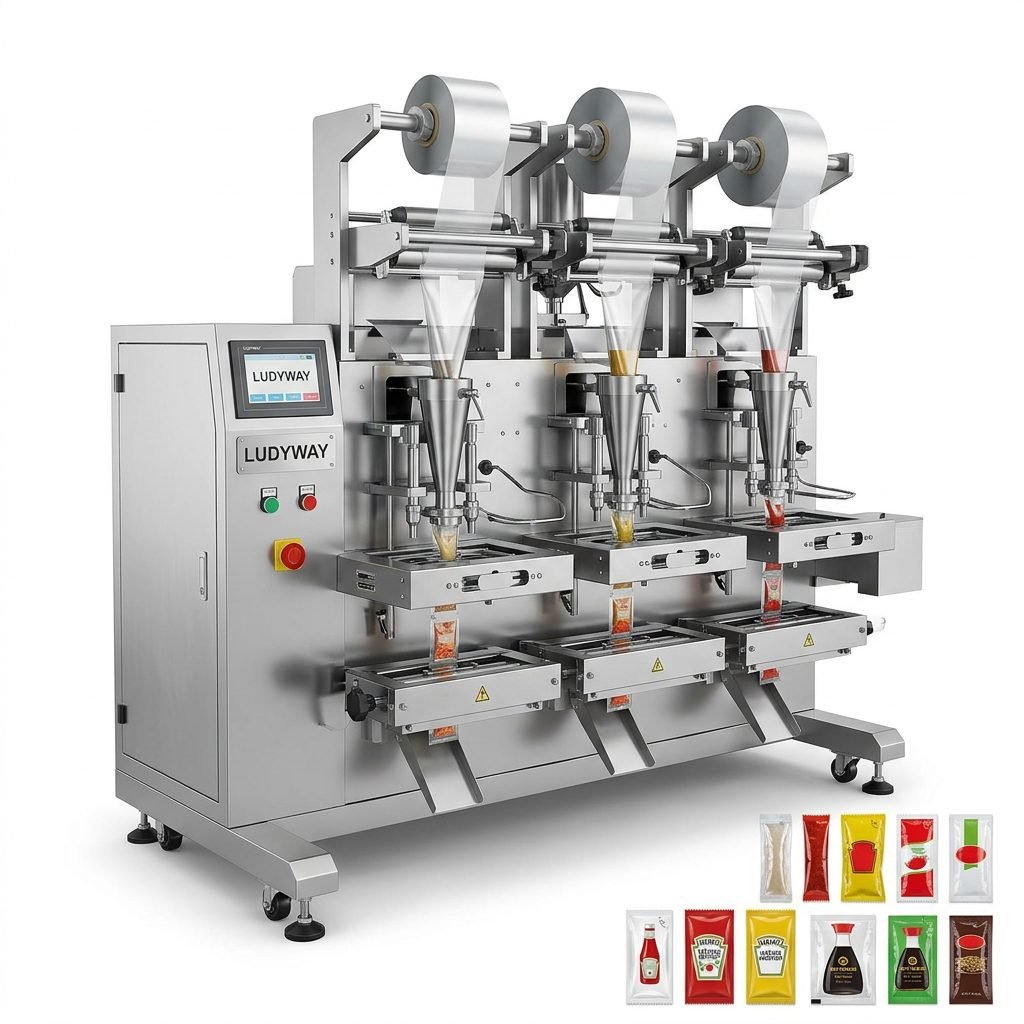
China has become a global hub for packaging machinery production, particularly for food-grade liquid packaging systems. The country’s advantages include cost-effective manufacturing, mature supply chains, and a growing number of manufacturers with international certifications. Many Chinese manufacturers now offer turnkey solutions that include filling, sealing, coding, and cartoning modules integrated into a single sauce packaging production line.
When sourcing from China, you benefit from access to advanced technologies such as multi-lane sachet systems, high-speed servo-driven fillers, and precision weighing modules. These systems can handle various sauce viscosities—from thin soy sauce to thick chili paste—with minimal product waste and consistent fill accuracy. For more detailed industry insights, you can explore resources from the Association for Packaging and Processing Technologies (PMMI), which offers extensive data on packaging machinery trends and standards.
Step 1: Define Your Production Requirements
Before contacting suppliers, you need to clearly define your production goals. Key parameters include:
- Target output: How many sachets or pouches per hour do you need? Small lines may produce 3,000–8,000 packs per hour, while high-speed multi-lane systems can exceed 30,000 packs per hour.
- Packaging format: Are you using stick packs, flat sachets, or stand-up pouches? Each format requires different machine configurations.
- Product viscosity: Thin sauces (like soy sauce) require different filling mechanisms compared to thick pastes (like chili sauce or mayonnaise).
- Sachet size range: Define your minimum and maximum sachet dimensions and fill volumes.
- Packaging material: Most sauce sachets use laminated films such as PET/AL/PE. Ensure your machine is compatible with your chosen material.
Step 2: Understand the Core Machine Components
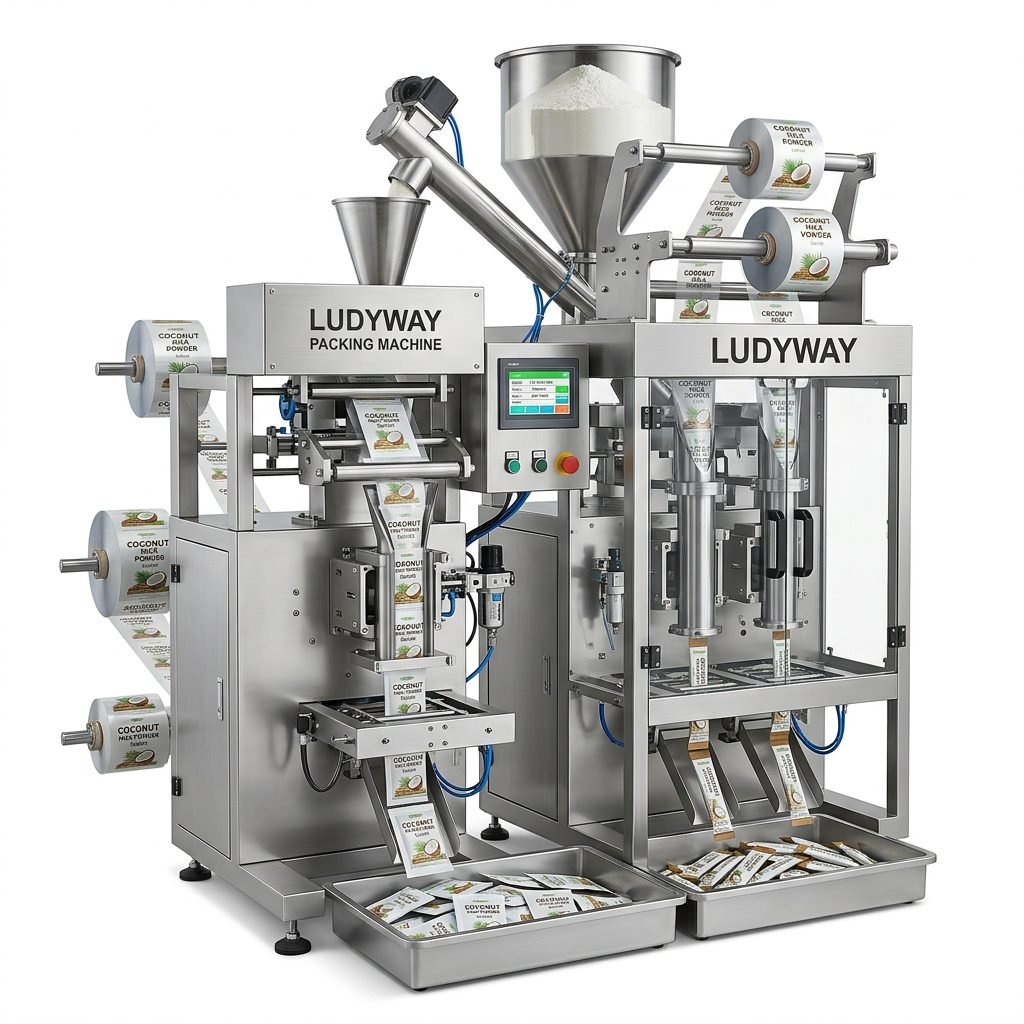
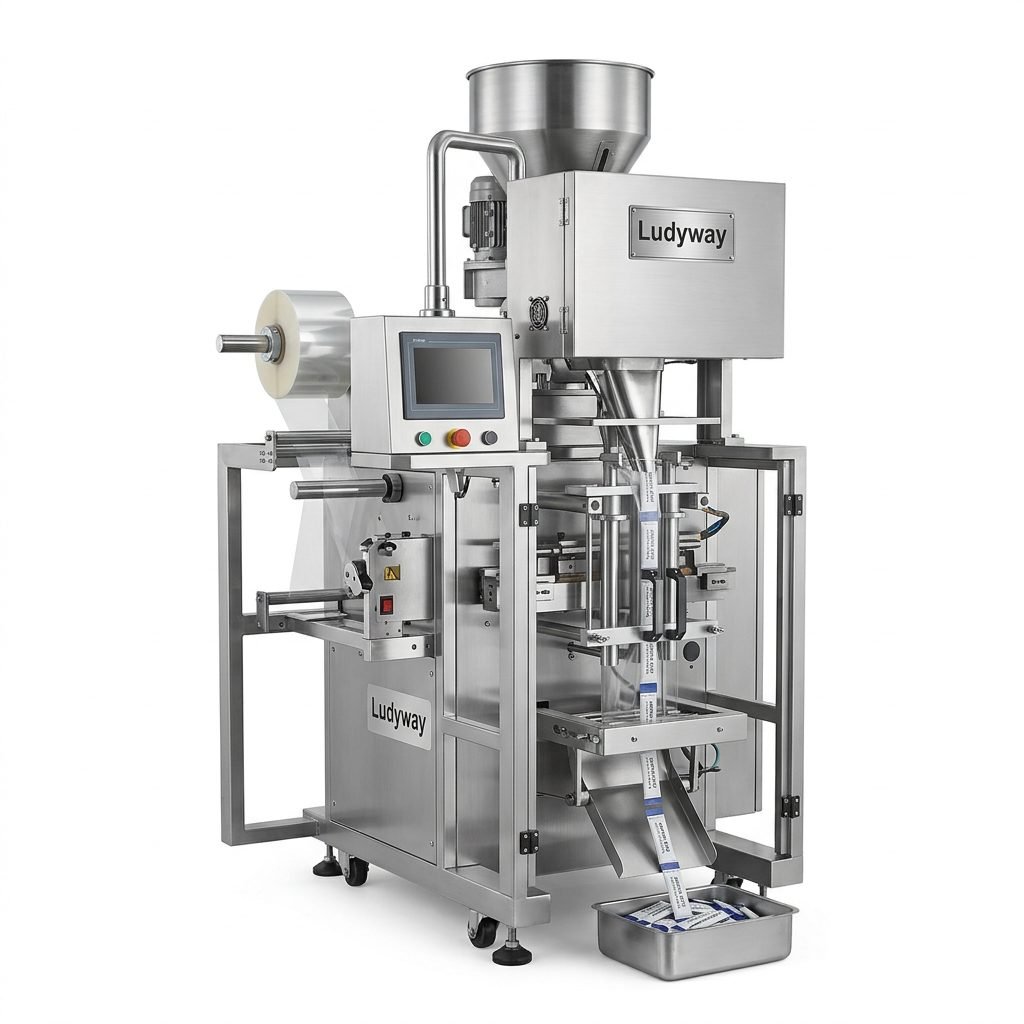
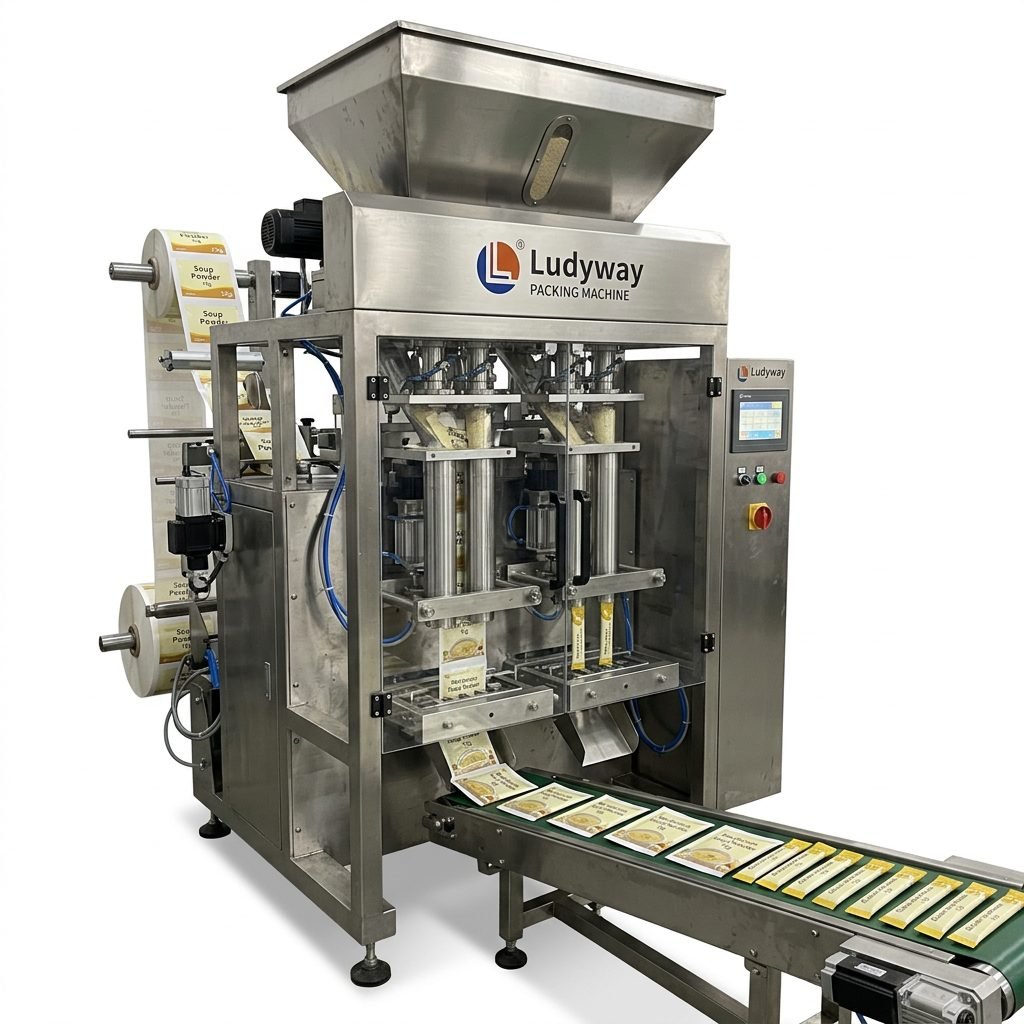
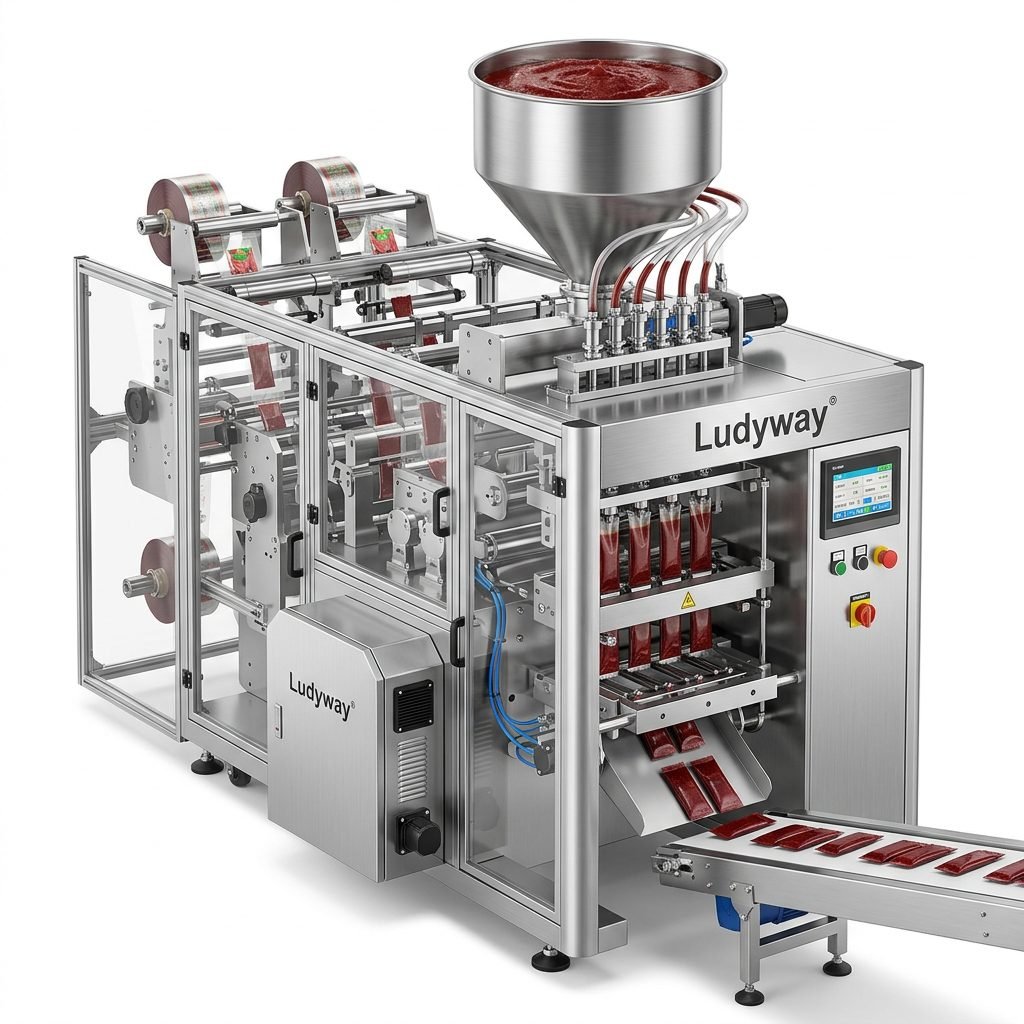
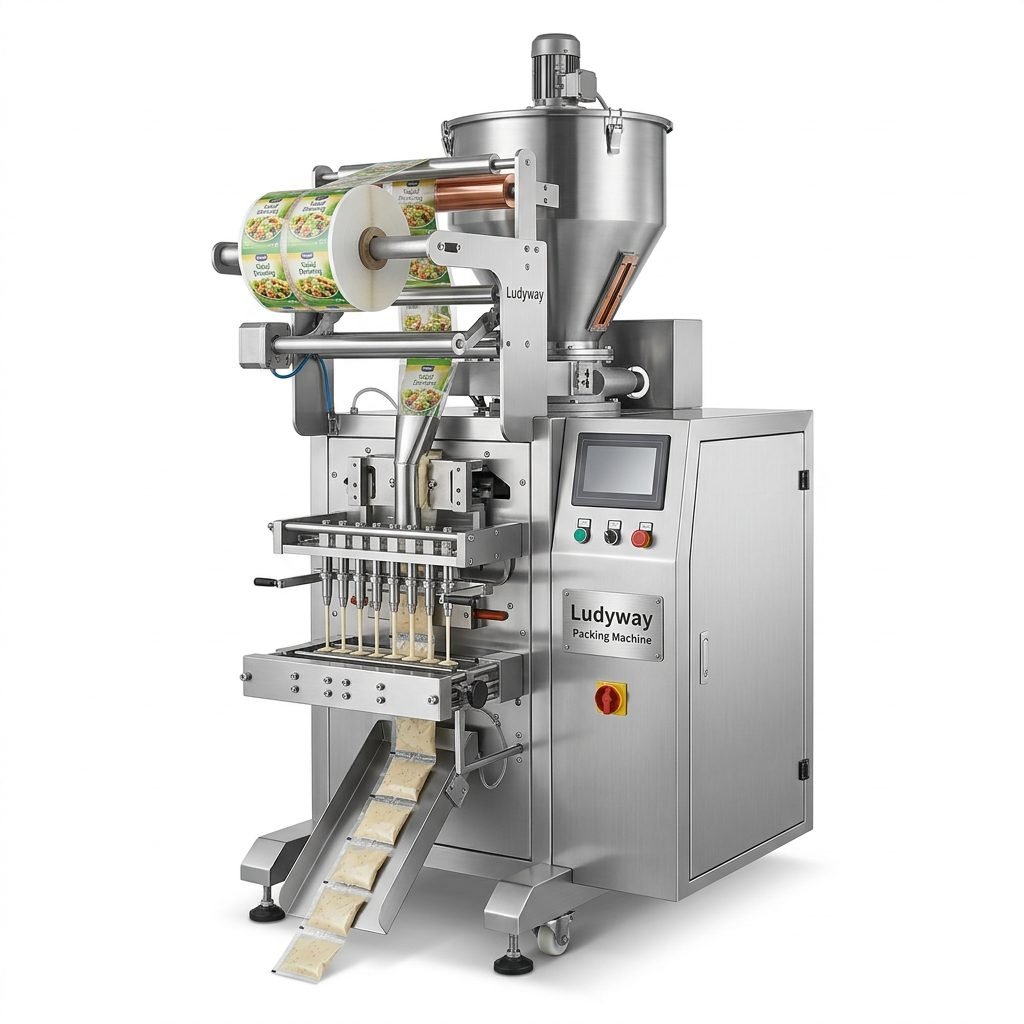
A typical sauce packaging machine production line consists of several integrated modules. Understanding these components helps you evaluate supplier proposals more effectively:
- Liquid Filling System: Piston fillers, servo pumps, or gravity-based systems depending on sauce viscosity and fill volume.
- Film Unwinding and Forming Unit: Handles the roll film, forms it into the desired sachet shape, and controls tension.
- Vertical or Horizontal Sealing Mechanism: Creates the longitudinal and transverse seals that enclose the product.
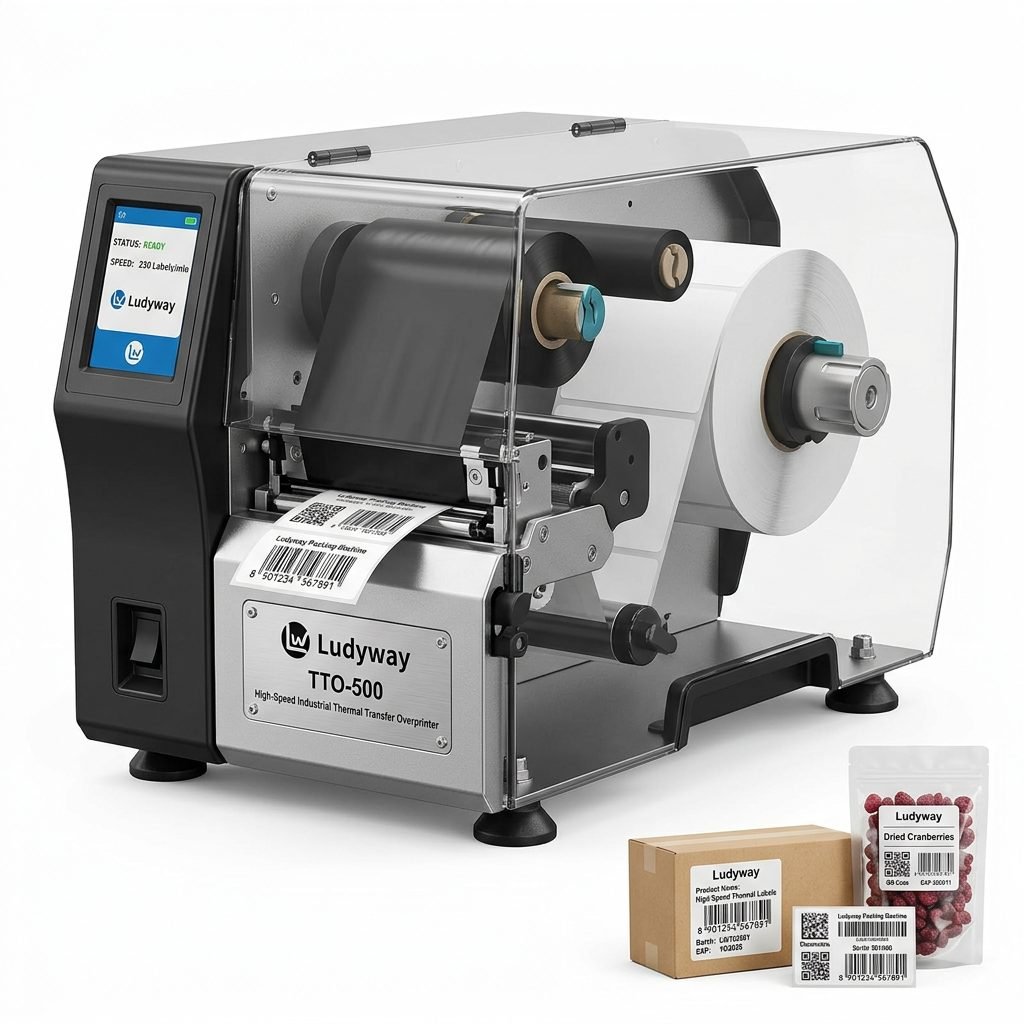
- Date Coding and Printing Module: Applies batch numbers, expiry dates, and other traceability information.
- Cutting and Discharge System: Separates individual sachets and delivers them to the collection area.
- Optional Cartoning and Case Packing: For fully automated end-of-line packaging.
Step 3: Choose Between Standard and Multi-Lane Machines
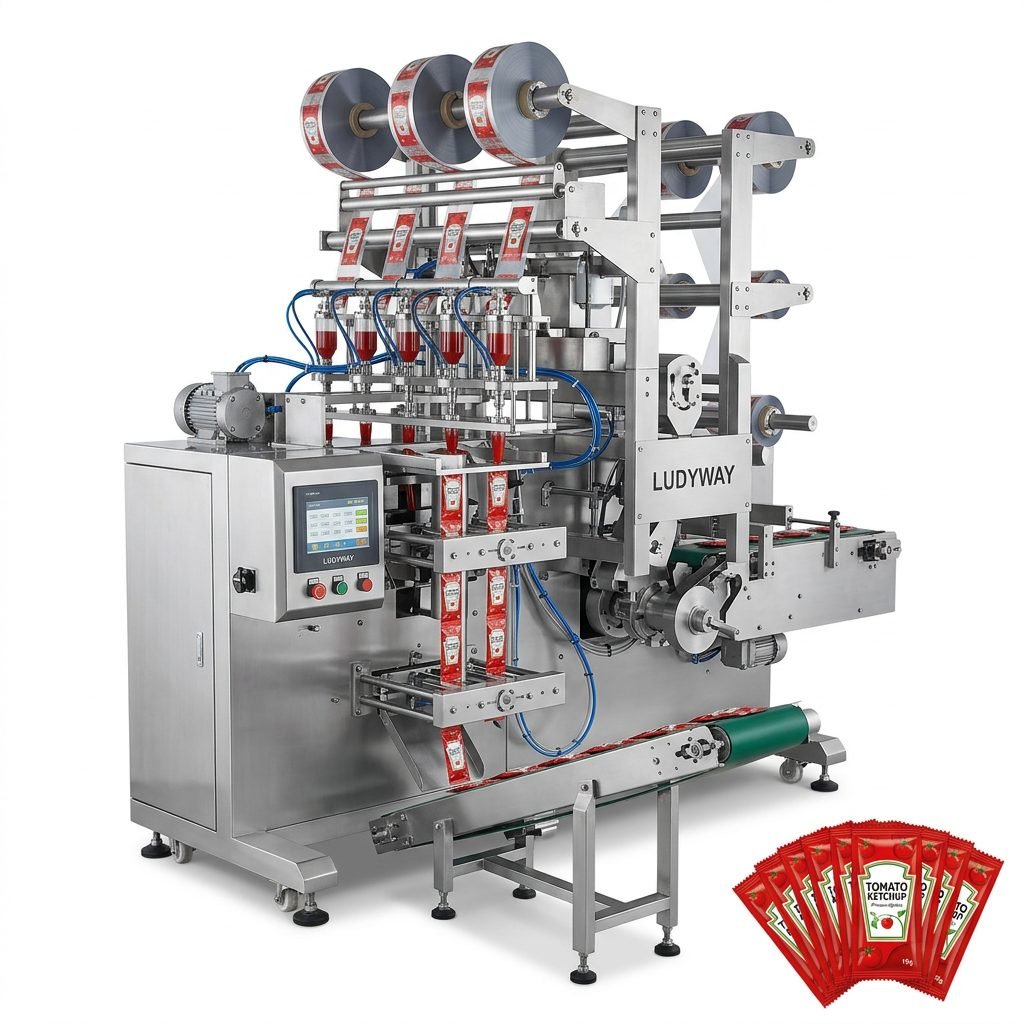
For small to medium-scale production, a single-lane or dual-lane machine may suffice. However, if you anticipate rapid growth, investing in a multi-lane sauce sachet packaging machine can dramatically improve output. Multi-lane machines run 4 to 12 lanes simultaneously, multiplying throughput without requiring proportionally more floor space or operators. The PMMI Business Intelligence Library provides valuable data on packaging machinery ROI and throughput analysis.
Step 4: Evaluate Machine Build Quality and Materials
For sauce packaging, hygiene and corrosion resistance are critical. Look for machines constructed with:
- Stainless Steel 304 or 316L for all product-contact parts
- Food-grade seals and gaskets rated for acidic or oily products
- IP65 or higher protection for electrical components in washdown environments
- Easy-to-clean design with minimal crevices and quick-release mechanisms
Refer to FDA Food Packaging and Food Contact Substances guidelines to ensure your equipment meets international food safety standards.
Step 5: Select a Reliable Supplier in China
Choosing the right manufacturer is the most critical decision in setting up your production line. China has hundreds of packaging machine suppliers, but quality and service levels vary widely. Key evaluation criteria include:
- Years in business: Established manufacturers with 15–30+ years of experience tend to have more refined engineering and better support.
- Production facility size: Larger facilities (15,000㎡+) often indicate stronger manufacturing capabilities.
- International certifications: ISO 9001, CE, and other certifications demonstrate commitment to quality.
- After-sales support network: Ensure the supplier offers remote diagnostics, spare parts availability, and on-site technical support in your region.
- Client references and case studies: Request examples of similar sauce packaging installations.
Step 6: Plan Your Factory Layout and Utility Connections
A sauce packaging production line requires appropriate utilities and floor space. Plan for:
- Compressed air supply: Most automated packaging machines require 0.6–0.8 MPa clean, dry compressed air.
- Electrical power: Confirm voltage, phase, and frequency requirements (commonly 380V/3-phase/50Hz in China-manufactured machines; customizable for your local grid).
- Floor load capacity: Some machines can weigh several tons; ensure your floor can support them.
- Material flow: Design an efficient layout from raw sauce tank to finished sachet collection and cartoning.
Step 7: Installation, Commissioning, and Training
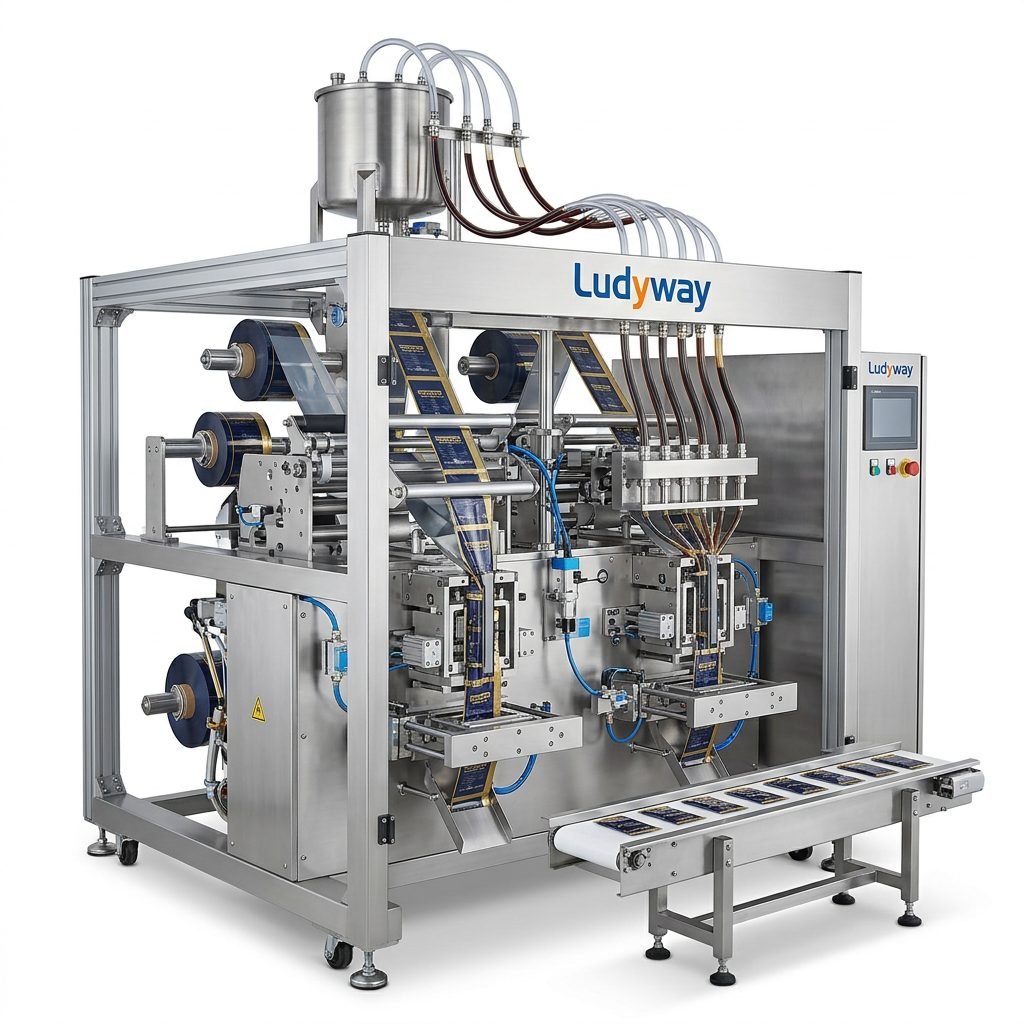
Once your equipment arrives, proper installation is crucial. Many Chinese manufacturers send engineers to your facility for installation and training. The process typically includes:
- Unloading, positioning, and leveling the machine on your production floor
- Connecting utilities (power, air, product supply)
- Dry-run testing to verify mechanical movements and sealing integrity
- Product testing with your actual sauce to fine-tune filling parameters and seal quality
- Operator training on daily operation, cleaning, and basic troubleshooting
- Documentation handover including manuals, electrical schematics, and maintenance schedules
Cost Considerations for Budget Planning
Understanding the cost structure helps you budget accurately. Below is a general reference for small to medium sauce packaging line investments sourced from China:
| Cost Component | Estimated Range (USD) | Notes |
|---|---|---|
| Single-Lane Sachet Machine | $12,000 – $25,000 | 3,000–5,000 packs/hour |
| 4-Lane Sachet Machine | $35,000 – $65,000 | 12,000–20,000 packs/hour |
| 8-Lane High-Speed System | $75,000 – $130,000 | 25,000–35,000 packs/hour |
| Inline Cartoning Module | $18,000 – $40,000 | Optional automation add-on |
| Installation & Training | $3,000 – $8,000 | Plus travel expenses |
| Shipping & Insurance | $4,000 – $12,000 | Varies by destination and volume |
These figures are approximate and vary based on machine specifications, automation level, and negotiation. Always request detailed quotations from multiple suppliers for accurate comparison. For the latest packaging machinery market data and pricing trends, the PMMI State of the Industry Reports offer comprehensive economic analysis.
Regulatory Compliance and Certifications
Before starting production, ensure your packaging line meets relevant regulatory standards. Key certifications and standards to consider include:
- CE Marking: Required for equipment sold in the European Economic Area
- FDA Compliance: Essential for sauces exported to the United States—refer to FDA Packaging and Food Contact Substances
- ISO 22000: Food safety management systems standard
- GFSI-benchmarked schemes: Such as SQF, BRCGS, or FSSC 22000 for retail acceptance
- HACCP compliance: Critical control points throughout the packaging process
Maintenance and Spare Parts Management
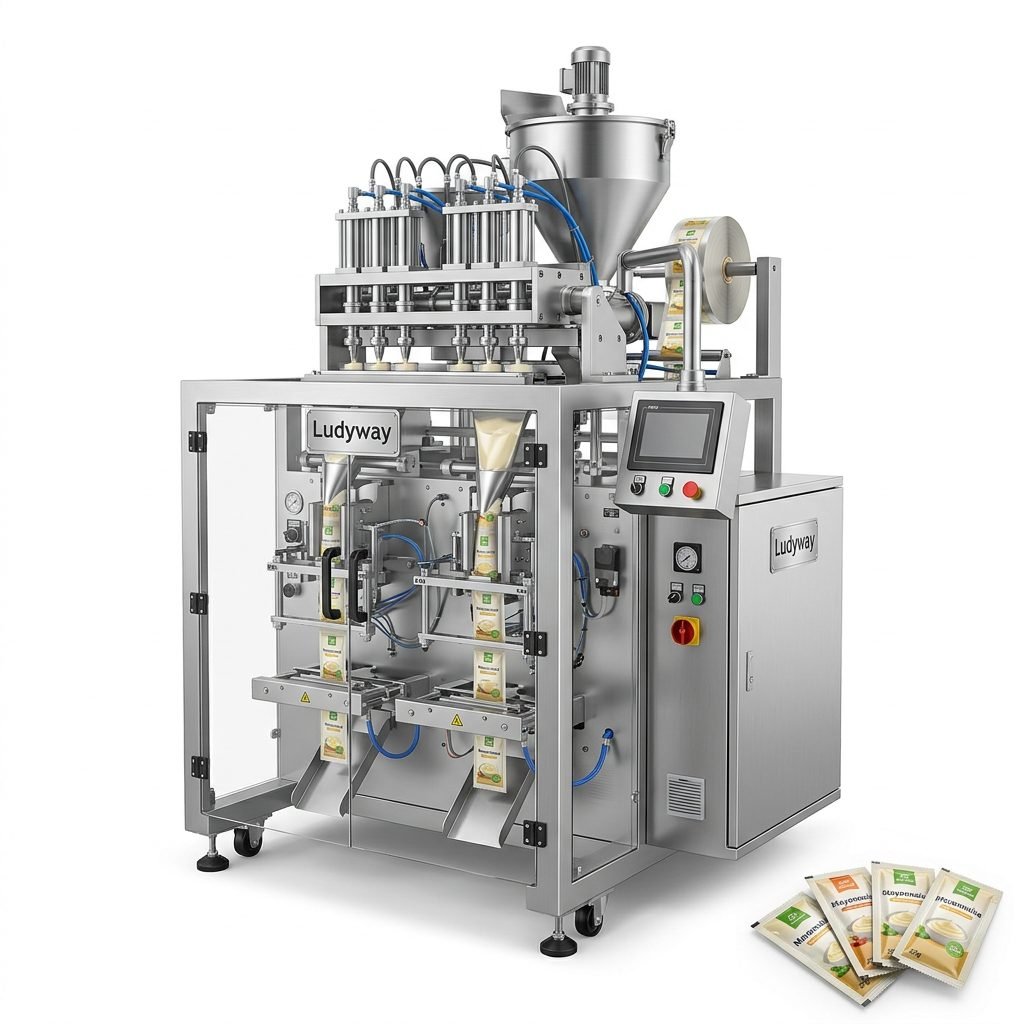
Proactive maintenance is essential to minimize downtime on your sauce packaging production line. Establish a maintenance schedule covering:
- Daily: Clean product contact surfaces, inspect seals and gaskets, check fill accuracy
- Weekly: Lubricate moving parts, inspect belts and chains, verify temperature controllers
- Monthly: Check electrical connections, calibrate weighing and filling systems, inspect pneumatic components
- Quarterly: Comprehensive inspection of all modules, replace worn consumables, update software if applicable
Stock critical spare parts such as heating elements, thermocouples, sealing jaws, belts, and common wear items. For machines sourced from China, confirm that your supplier maintains adequate spare parts inventory and can ship internationally within 24–72 hours for urgent requirements.
Integration with Upstream and Downstream Equipment
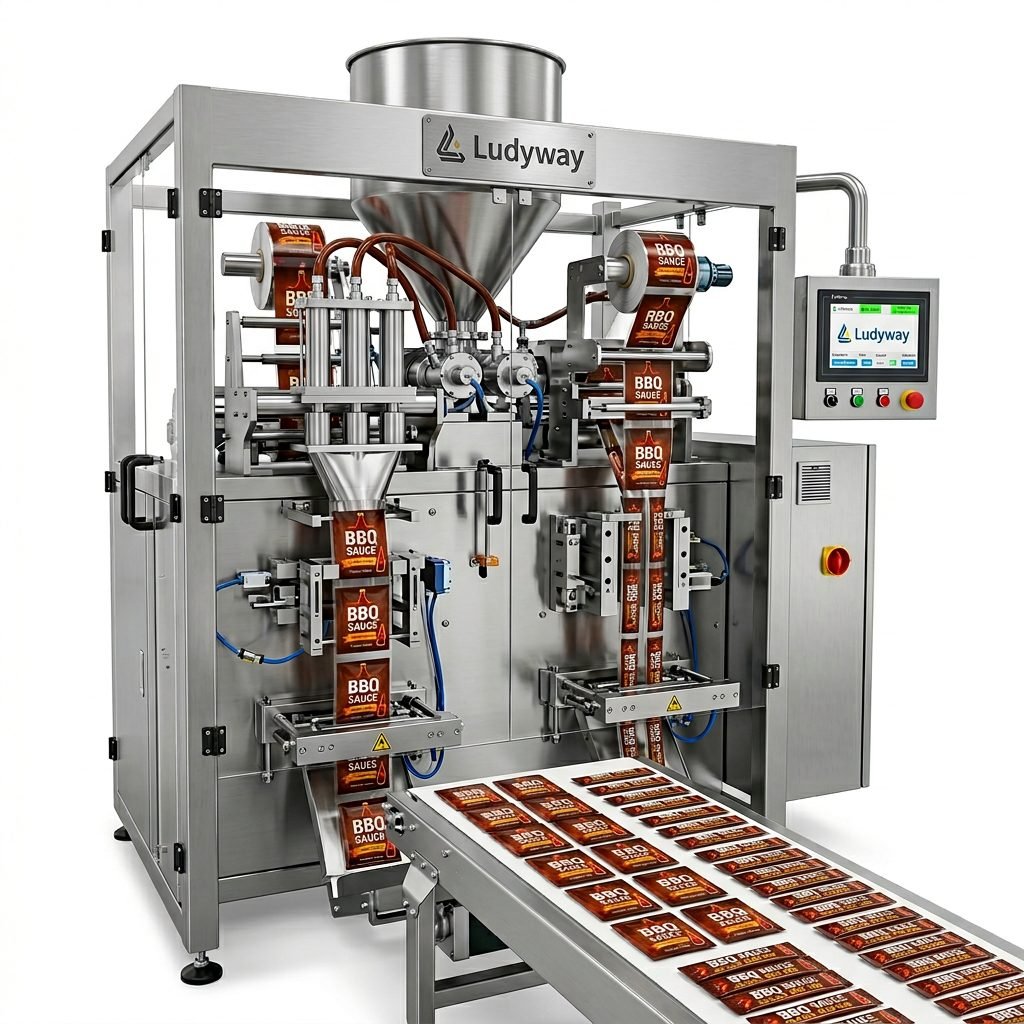
A complete sauce packaging line often extends beyond the filling machine itself. Consider integration with:
- Upstream: Sauce holding tanks, transfer pumps, in-line filtration, and product heating/cooling systems
- Downstream: Checkweighers, metal detectors, X-ray inspection systems, inkjet or laser coders, cartoners, case packers, and palletizers
Many Chinese manufacturers, including Ludyway—one of the largest packaging machine manufacturers in China with over 30 years of industry expertise and a 20,000㎡ modern production facility—offer complete turnkey solutions that seamlessly integrate these upstream and downstream modules. You can explore flexible packaging industry resources at the Flexible Packaging Association for additional guidance on material and machinery compatibility.
Common Challenges and How to Address Them
Setting up a production line comes with predictable challenges. Being prepared can save significant time and cost:
- Inconsistent fill volumes: Often caused by air in the product line or worn piston seals. Install proper deaeration equipment and establish regular seal replacement schedules.
- Poor seal integrity: Check temperature, pressure, and dwell time settings. Verify film compatibility and ensure sealing jaws are clean and undamaged.
- Film wrinkling or misalignment: Adjust film tension, verify roll alignment, and check that guide rollers are clean and rotate freely.
- Product foaming during filling: Use bottom-up or submerged filling nozzles; consider anti-foaming additives if food-grade options are available.
Future-Proofing Your Investment
When investing in a sauce packaging machine production line, think beyond current needs. Select equipment that offers:
- Modular design: Allows adding lanes or upgrading modules without replacing the entire line
- Servo-driven motion control: Enables quick changeovers and precise parameter adjustments via HMI
- IoT connectivity: Permits remote monitoring, data collection, and predictive maintenance
- Compatibility with sustainable packaging materials: As the industry shifts toward recyclable and biodegradable films
For authoritative guidance on packaging sustainability trends, visit the European Commission Packaging and Packaging Waste resource page or the U.S. EPA Sustainable Materials Management portal.
Key Takeaways for a Successful Sauce Packaging Line Setup
- Plan thoroughly: Define your requirements in detail before approaching suppliers to ensure accurate quotations.
- Choose experienced manufacturers: Look for proven expertise in liquid and sauce packaging specifically, not just general packaging machinery.
- Prioritize build quality: Stainless steel construction, food-grade materials, and robust engineering ensure longevity and compliance.
- Budget realistically: Include not only the machine cost but also shipping, installation, training, and spare parts.
- Invest in training: Well-trained operators maximize productivity and minimize downtime.
- Plan for growth: Select scalable, modular equipment that can expand with your business.
Final Checklist Before Placing Your Order
| Checklist Item | Status |
|---|---|
| Product viscosity and fill volume range confirmed | ☐ |
| Target throughput (packs/hour) defined | ☐ |
| Packaging material and sachet dimensions specified | ☐ |
| Supplier factory audit completed (in-person or virtual) | ☐ |
| CE / FDA certification requirements verified | ☐ |
| Utility requirements (power, air, water) confirmed onsite | ☐ |
| Spare parts list and maintenance schedule established | ☐ |
| Operator training plan agreed with supplier | ☐ |
| Shipping terms (Incoterms) and insurance coverage finalized | ☐ |
Setting up a small sauce packaging machine production line in China requires careful planning, thorough supplier vetting, and attention to detail throughout the procurement and installation process. By following this guide, you can minimize risks, control costs, and build a production line that delivers consistent quality and efficiency. For additional technical references, consult ISO Packaging Standards and the PMMI Packaging Industry Resources library for the latest best practices and regulatory updates.