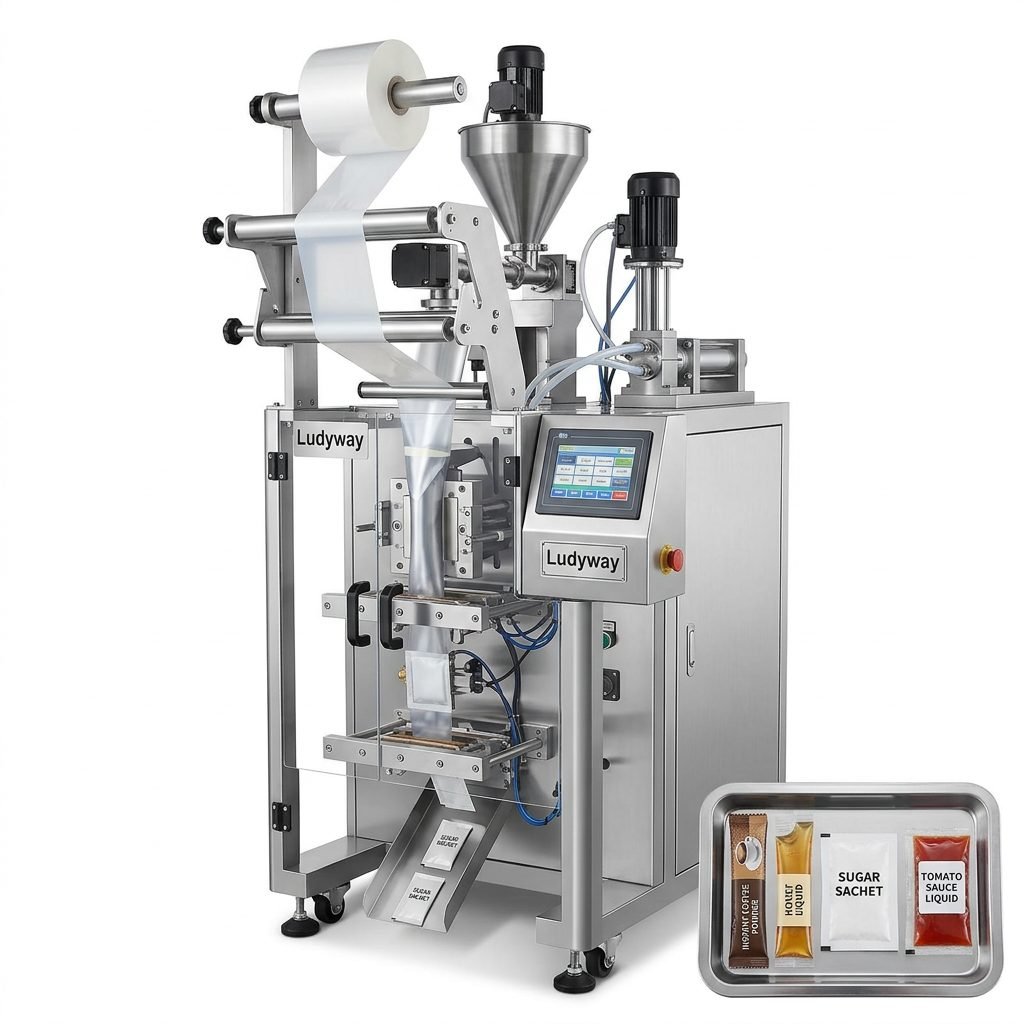
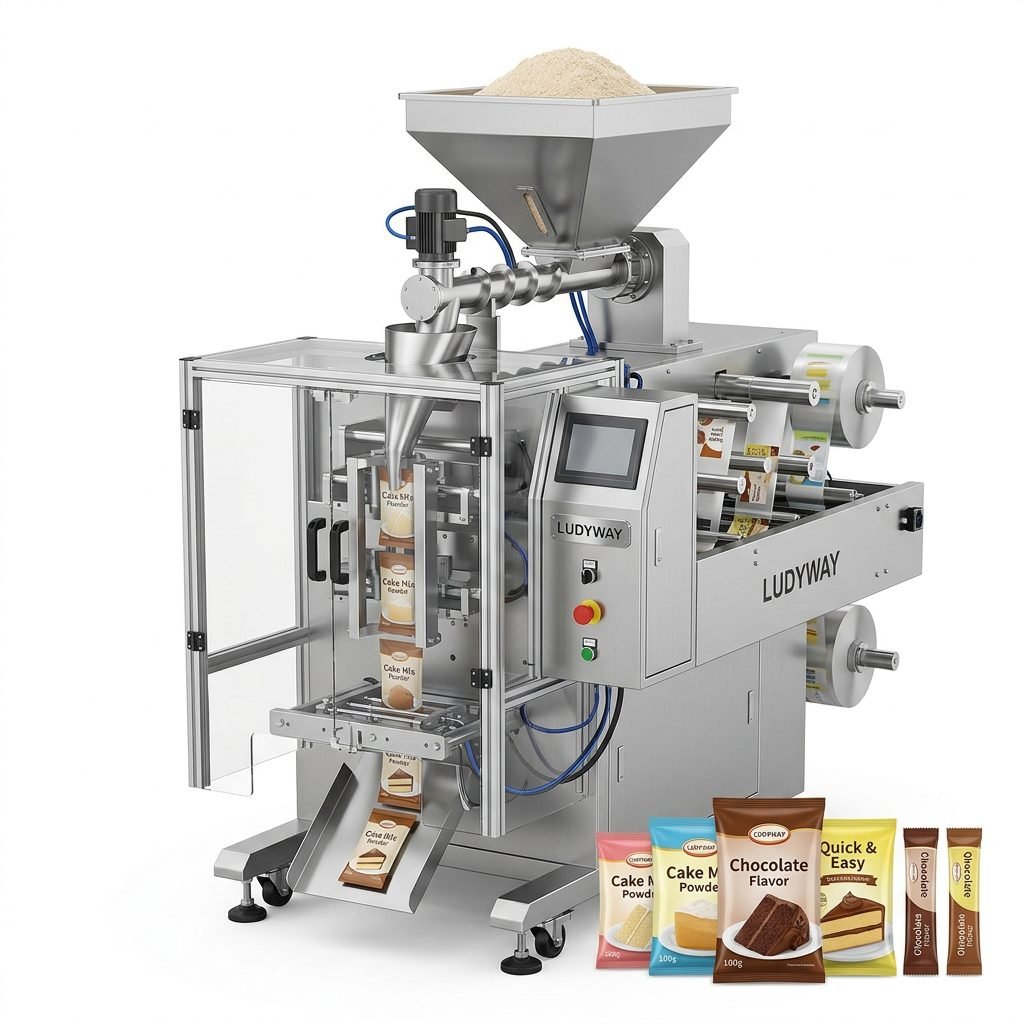
Poly bag packing machines are widely used in modern production because they help businesses pack products faster, more consistently, and with less manual labor. Whether you manufacture food, pharmaceuticals, cosmetics, chemicals, hardware, or daily-use goods, the right system can significantly improve output quality and operating efficiency.
This guide explains the main benefits, essential features, common applications, and the most important points to consider before investing in a machine for poly bag packaging.
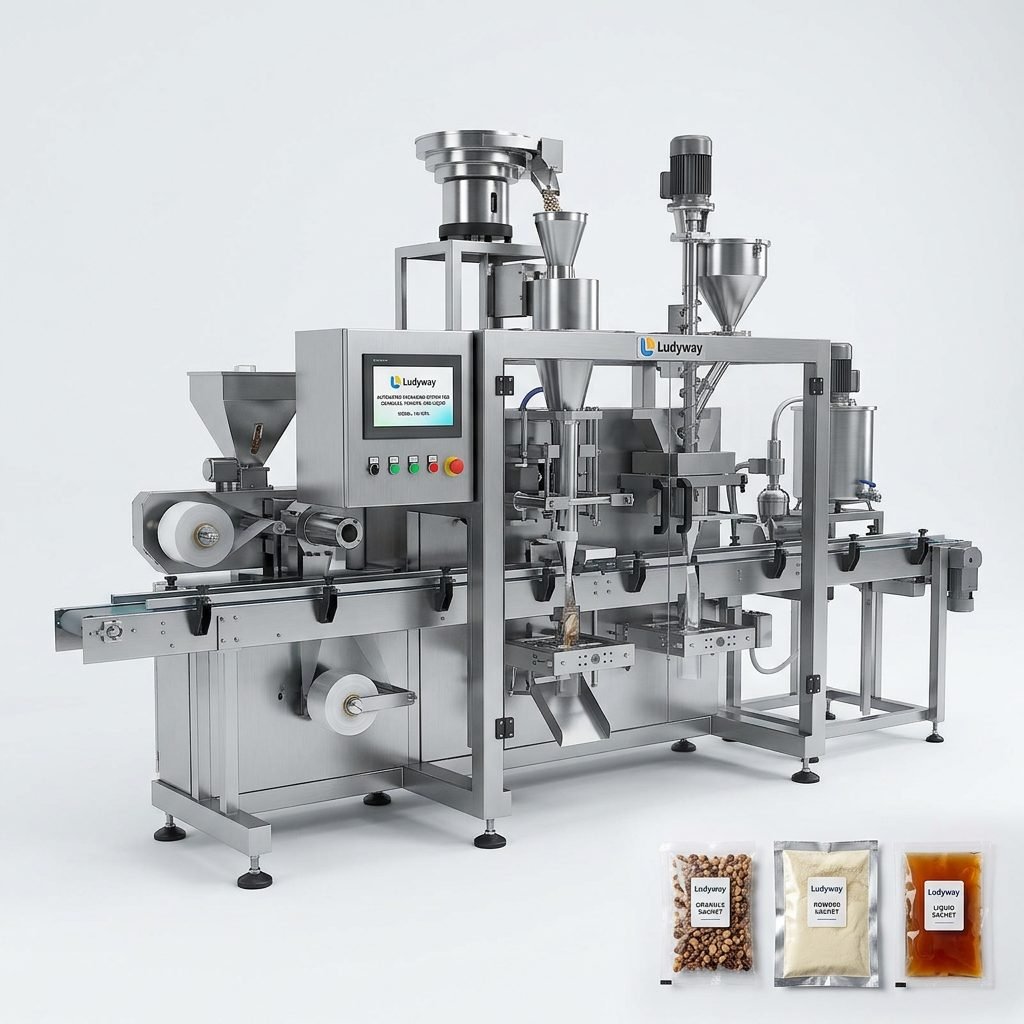
What Is a Poly Bag Packing Machine?
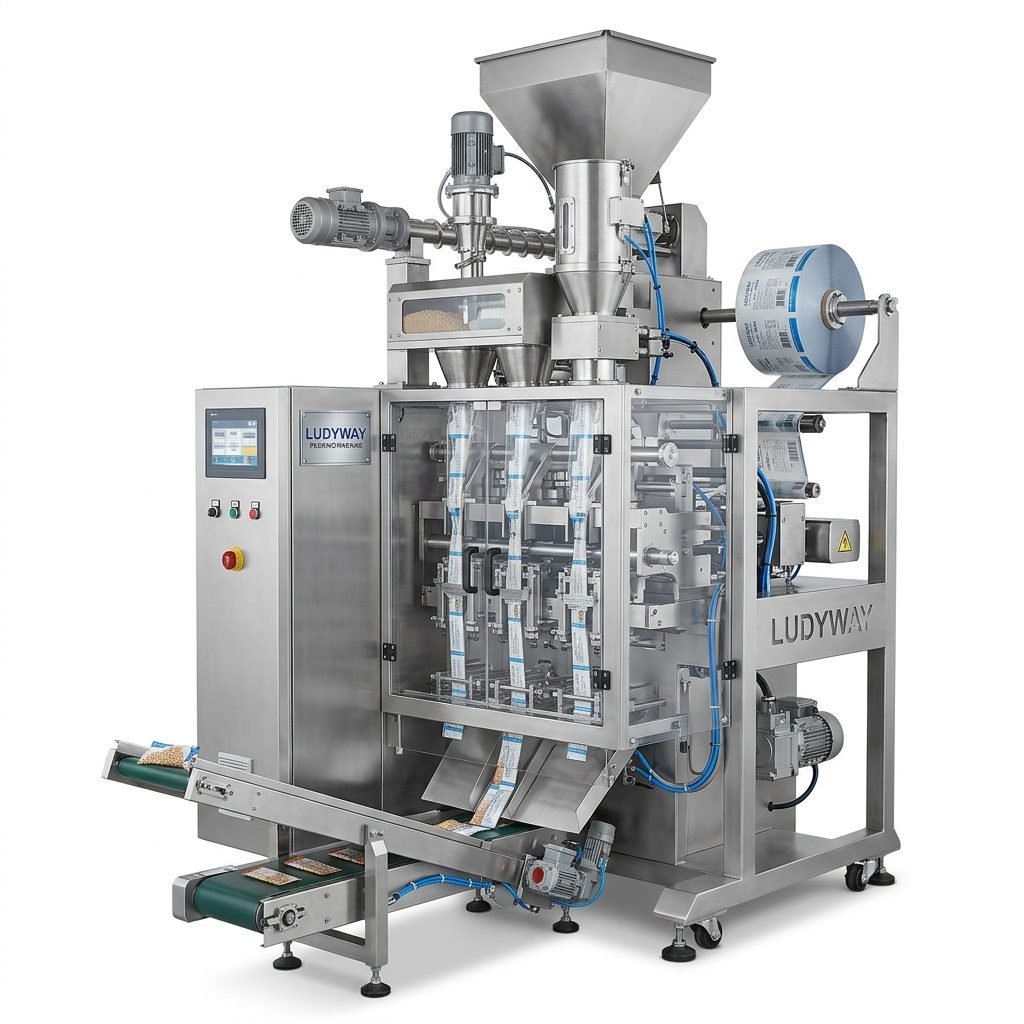
A poly bag packing machine is automated equipment designed to fill and seal products into plastic or polyethylene bags. Depending on the production requirement, the machine may handle pre-made bags or form bags from roll film. It can be configured for a wide range of materials, including powders, granules, liquids, pastes, tablets, hardware parts, and consumer products.
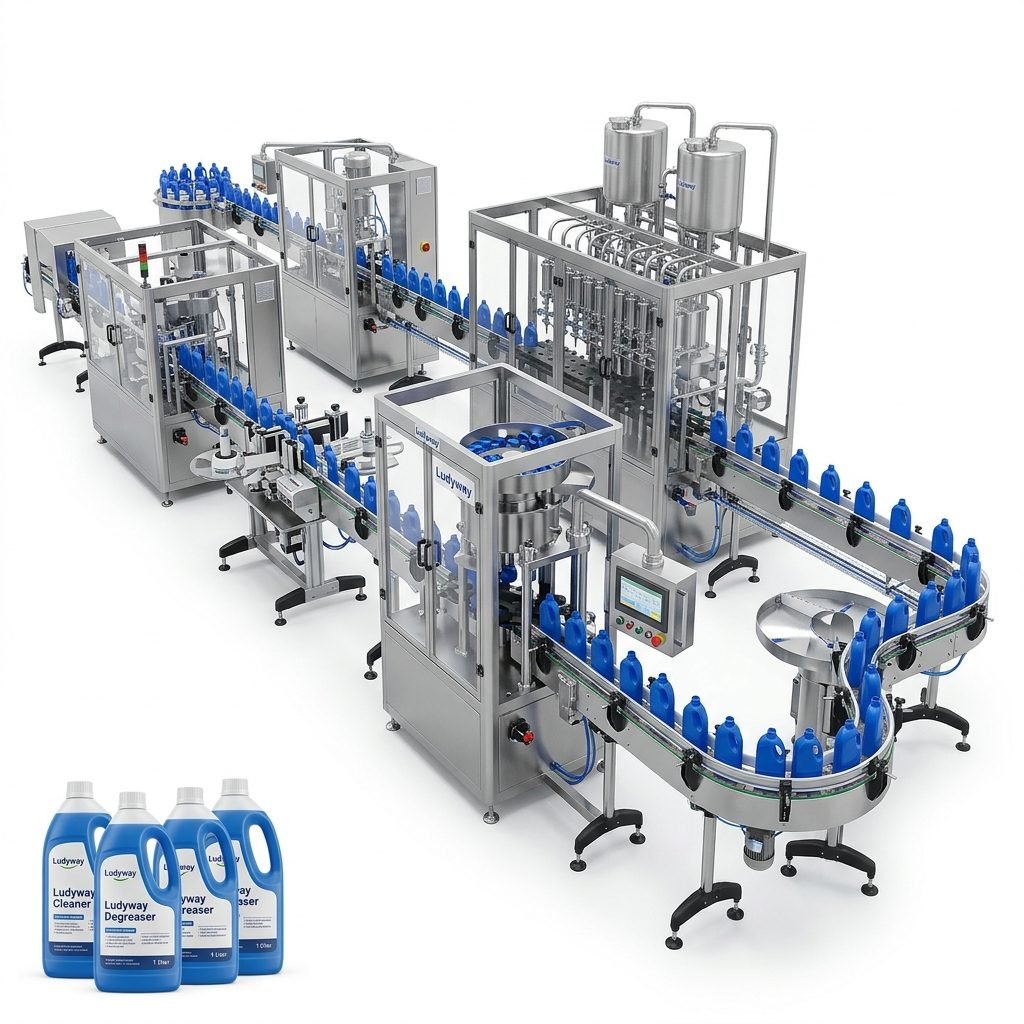
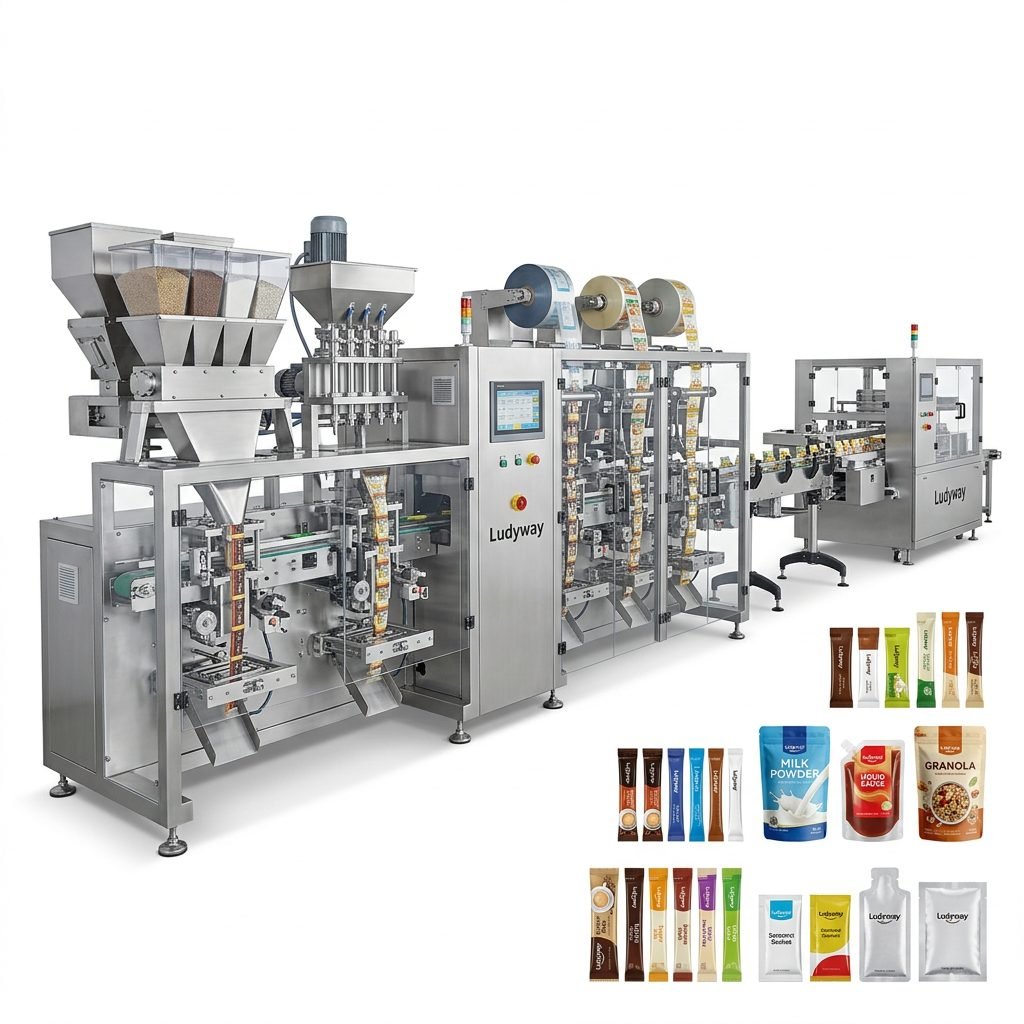
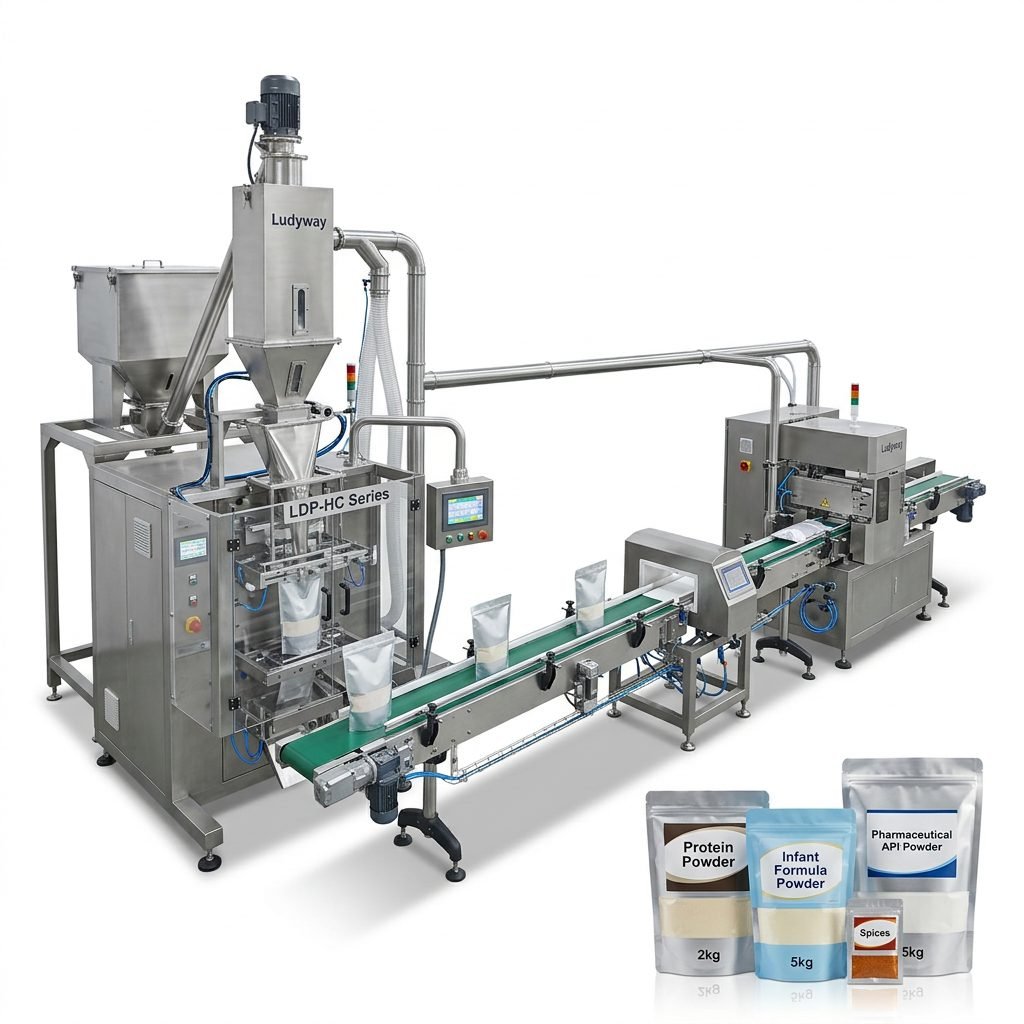
These machines are used in both standalone packaging stations and fully integrated production lines. In many factories, they are connected with feeders, weighing systems, coding devices, checkweighers, cartoners, conveyors, and palletizing solutions.
Key Benefits of Using a Poly Bag Packing Machine
- Higher packing speed: Automates repetitive manual tasks and increases daily output.
- Better seal consistency: Reduces packaging defects and helps protect product quality.
- Lower labor costs: Fewer operators are needed for filling, sealing, and bag handling.
- Improved dosing accuracy: Supports more precise filling for powders, granules, or liquids.
- Cleaner production process: Especially important for food, medical, and pharmaceutical applications.
- Scalability: Easy to upgrade from semi-automatic to fully automatic lines.
- Reduced material waste: Stable film handling and sealing help minimize rejects.
Industries That Commonly Use Poly Bag Packing Machines
Poly bag packaging equipment is highly versatile. Different machine structures and filling systems can be adapted to product characteristics and bag styles.
| Industry | Typical Products | Common Filling Type |
|---|---|---|
| Food | Snacks, sugar, coffee, spices, grains, sauces | Auger, cup filler, multihead weigher, liquid pump |
| Pharmaceutical | Powders, granules, medical sachets, supplements | Precision auger, dosing unit |
| Cosmetics | Creams, lotions, serums, face masks | Piston pump, liquid filling system |
| Chemical | Detergents, additives, powders, cleaning agents | Auger, volumetric cup, pump filler |
| Hardware & Parts | Screws, fasteners, connectors, components | Counting and feeding systems |
Main Types of Poly Bag Packing Machines
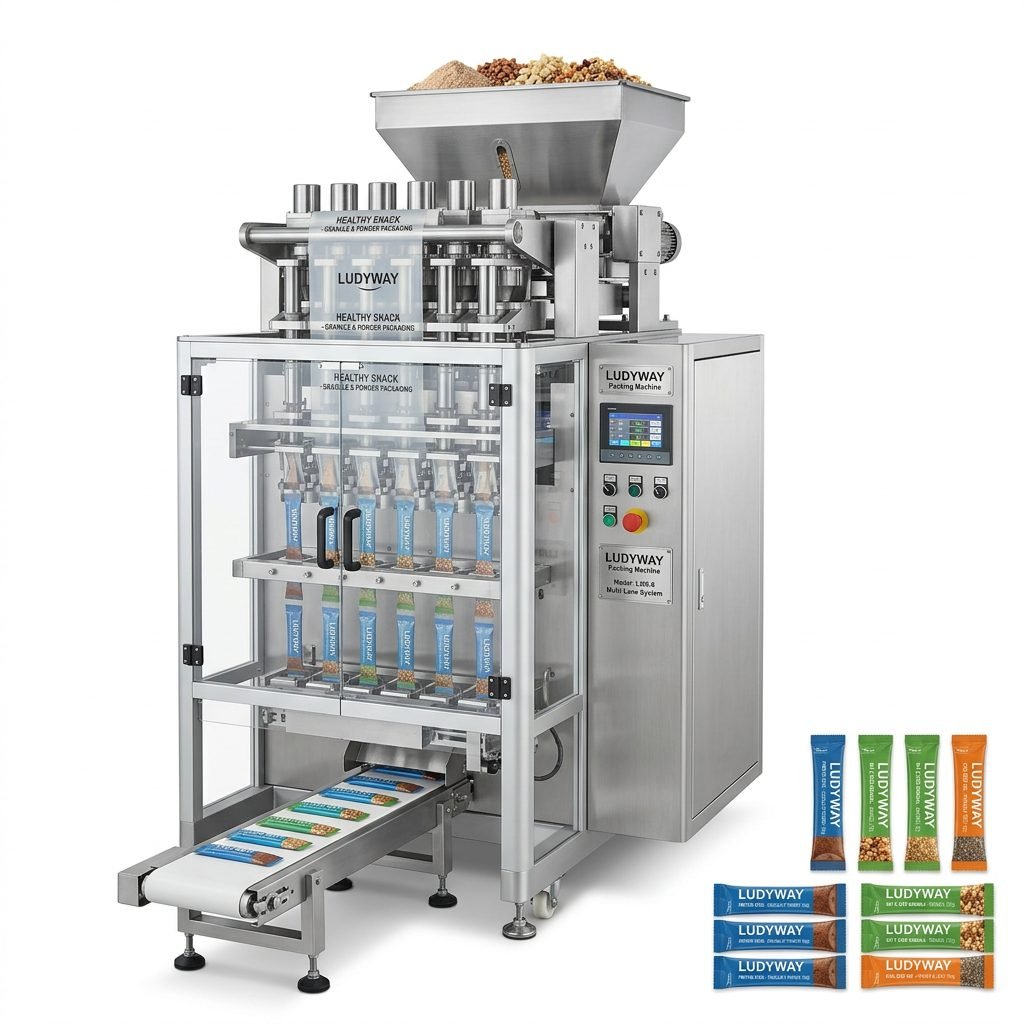
1. Vertical Form Fill Seal Machines
These systems create the bag from film, fill the product, and seal it in one continuous process. They are ideal for high efficiency and are commonly used for powders, granules, and liquids.
2. Premade Pouch or Bag Packing Machines
These machines work with preformed bags. They are suitable when packaging appearance is important or when special pouch formats are needed.
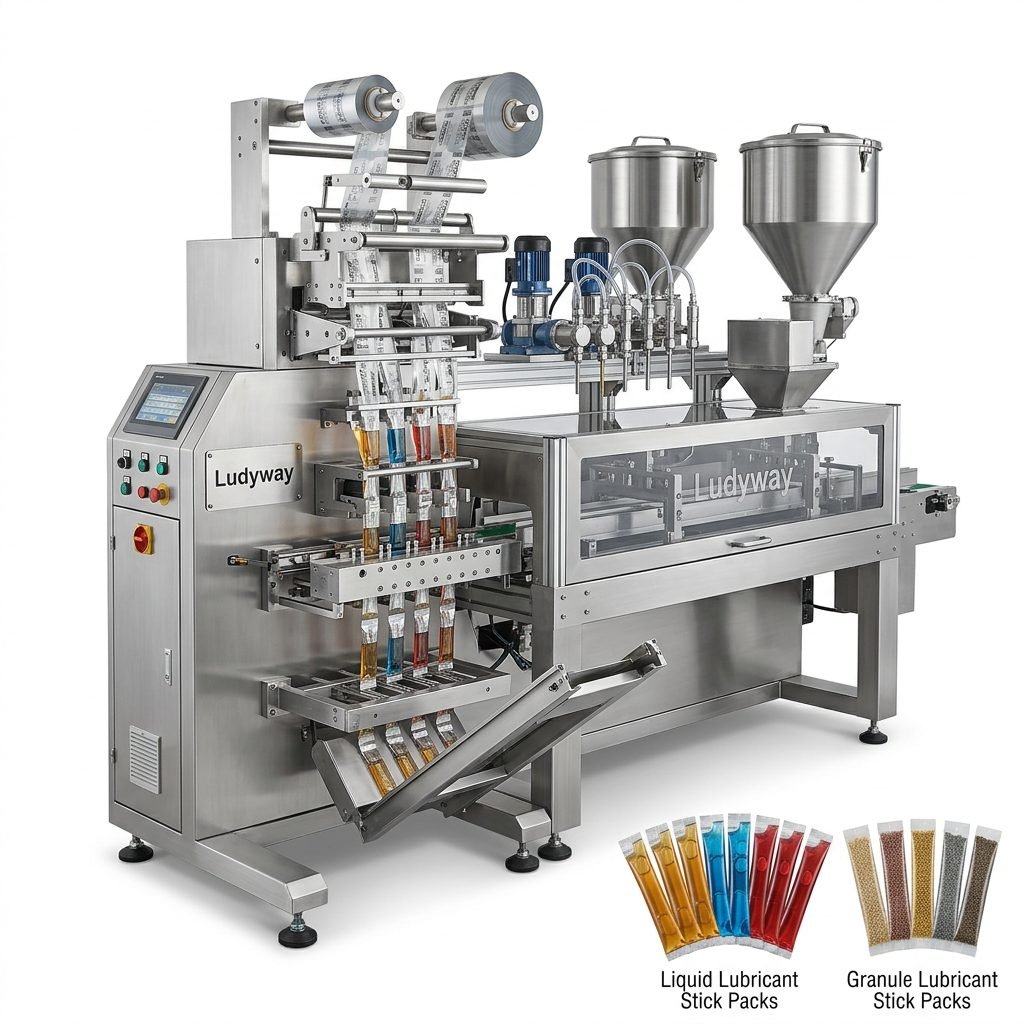
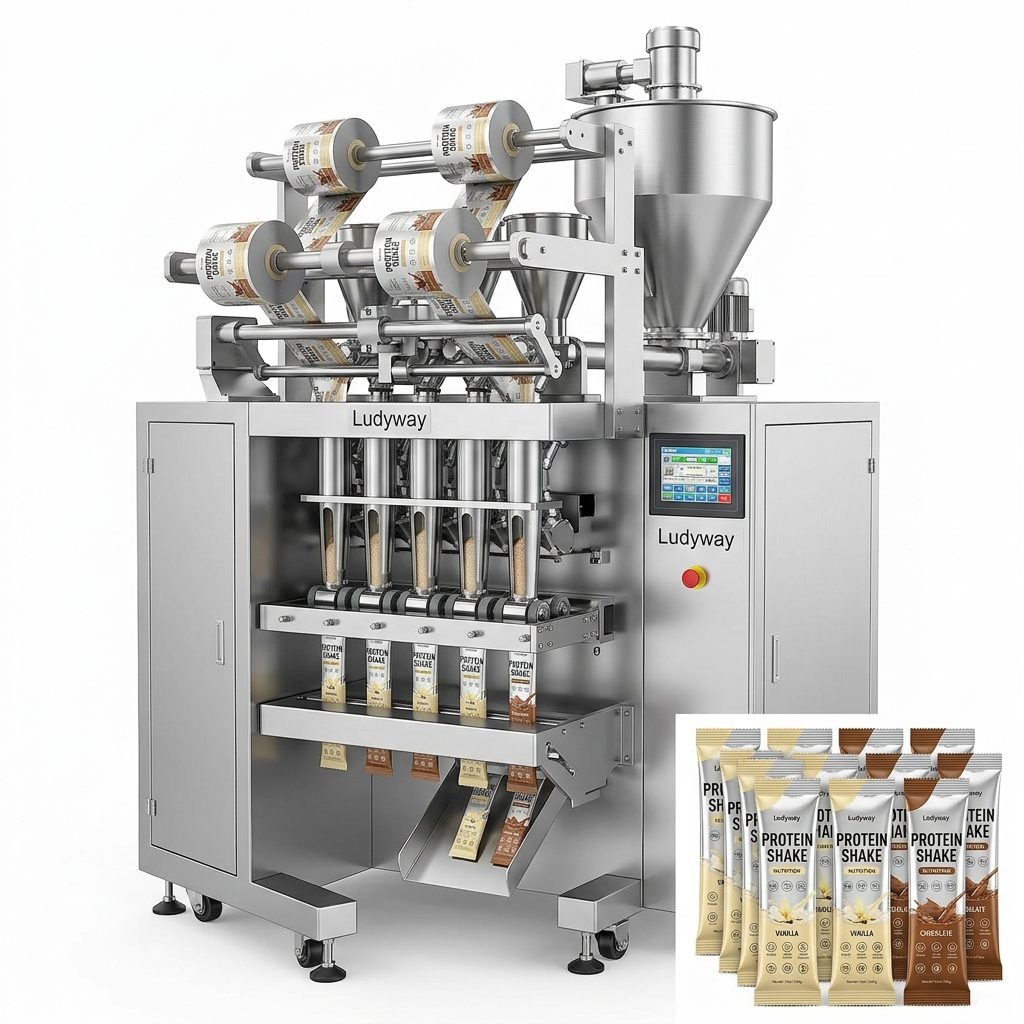
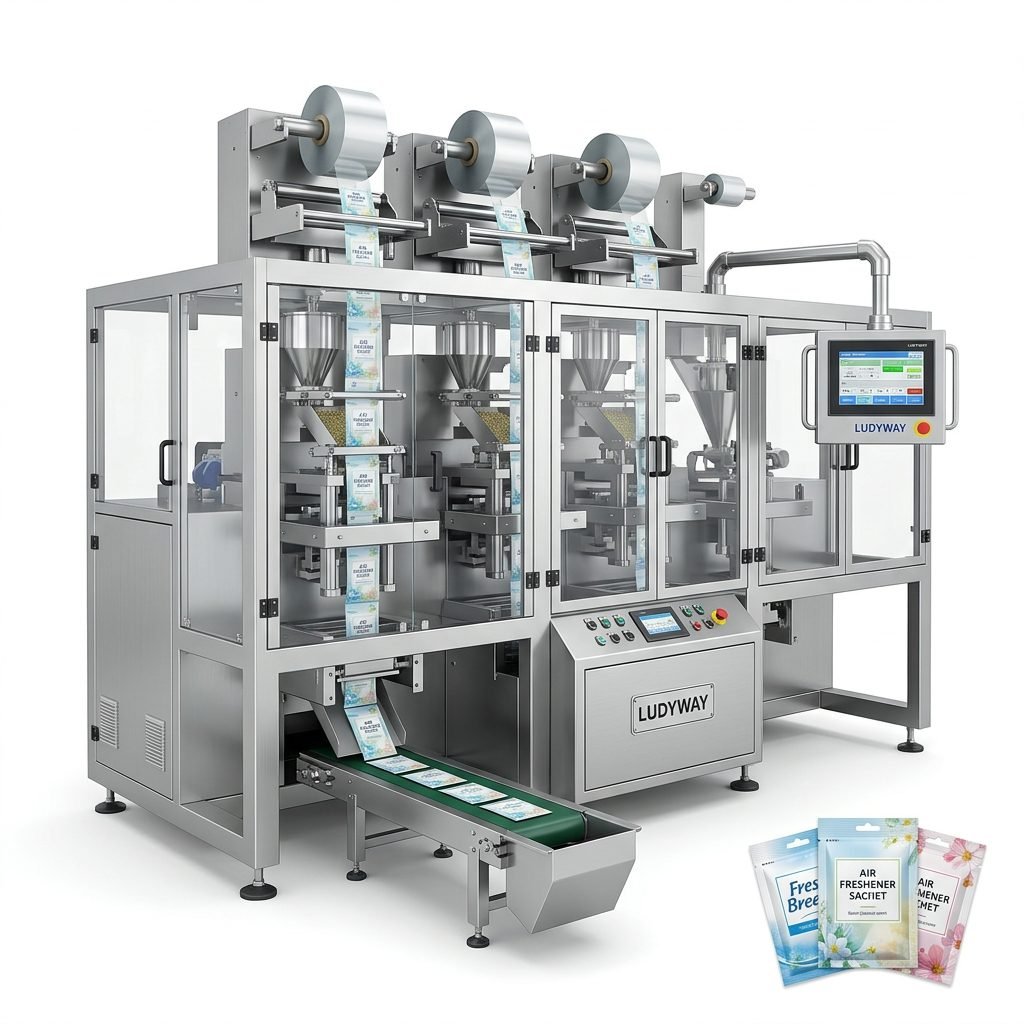
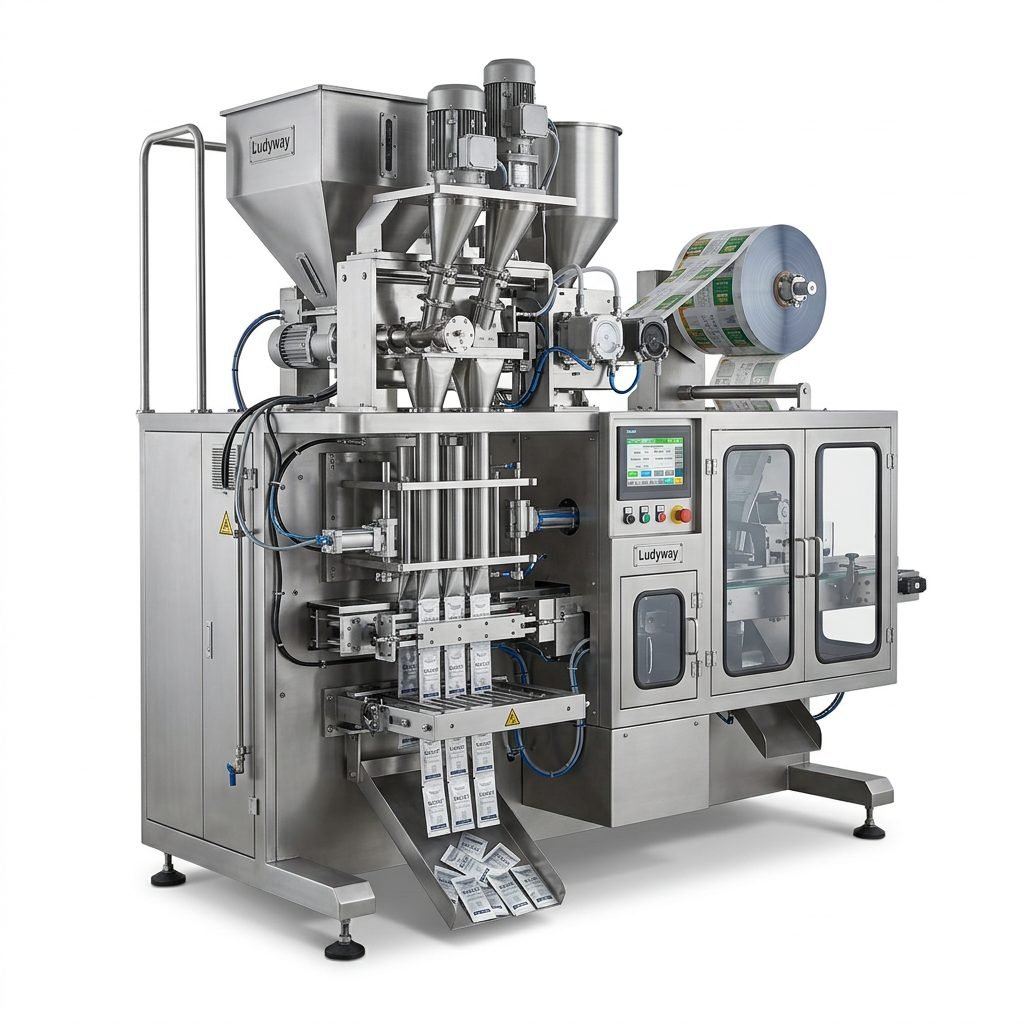
3. Multi-Lane Sachet and Stick Pack Machines
For small-dose packaging, multi-lane equipment can deliver very high speed while maintaining consistent sachet or stick pack output.
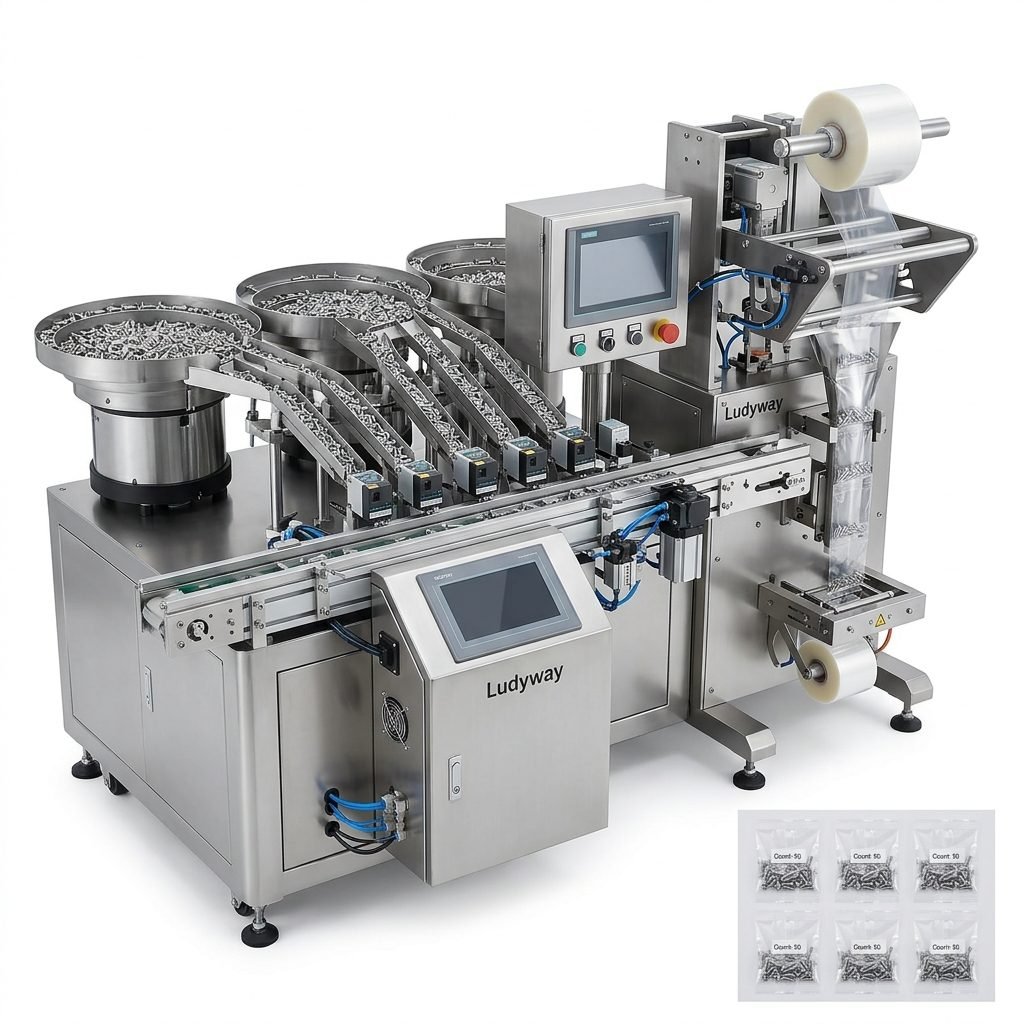
4. Counting and Bagging Machines
Often used for hardware, electronic accessories, and small consumer parts, these machines count items and automatically load them into poly bags.
Important Features to Look For
Not all machines are built the same. The best poly bag packing machine should match your product, production target, packaging material, and future expansion plan.
- Filling accuracy for stable product weight or volume
- Compatible bag sizes for your current and future SKUs
- Reliable sealing system for leak-proof and secure packaging
- PLC and touch screen control for easy operation and parameter setting
- Servo-driven motion for smoother running and improved precision
- Automatic film tracking to reduce waste and improve alignment
- Date coding and printing integration for traceability
- Safety protection such as guards, alarms, and emergency stop systems
- Easy cleaning and maintenance especially for food and pharma production
How a Poly Bag Packing Machine Improves Productivity
Manual packing often creates bottlenecks, especially when product demand increases. An automated machine improves productivity by synchronizing the flow of product feeding, bag making, filling, sealing, and discharge. This means fewer interruptions and more predictable output.
For manufacturers with multiple product formats, a flexible machine can also shorten changeover time. This is especially valuable when producing small batches, promotional packs, or different bag sizes on the same line.
How to Choose the Right Poly Bag Packing Machine
Understand Your Product Characteristics
Start with the product itself. Is it free-flowing, dusty, sticky, fragile, or liquid? Different materials require different feeding and dosing technologies. For example, powders usually need auger filling, while granules may require cup fillers or weighers.
Define Your Packaging Format
Determine whether you need pillow bags, gusset bags, sachets, stick packs, or pre-made pouches. Bag dimensions, film type, and sealing shape all affect machine selection.
Check Required Output Speed
A business with low-volume production may only need a compact entry-level solution, while high-volume factories usually need servo-driven automatic systems or multi-lane machines.
Evaluate Automation Level
Think beyond the packing machine itself. You may also need feeding, weighing, metal detection, checkweighing, cartoning, case packing, and palletizing to build a complete line.
Consider Compliance and Hygiene Requirements
Food and pharmaceutical manufacturers should pay close attention to machine material, cleanability, sealing integrity, and validation support.
| Selection Factor | Why It Matters |
|---|---|
| Product type | Determines filler, feeder, and sealing design |
| Bag style | Impacts machine structure and film handling |
| Speed requirement | Affects lane configuration, automation level, and budget |
| Accuracy target | Critical for cost control and compliance |
| Available space | Important for layout planning and line integration |
| After-sales support | Helps reduce downtime and long-term operating risk |
Questions to Ask Before Buying
- What product types and bag sizes can the machine handle?
- What is the real production speed under working conditions?
- How accurate is the filling system?
- Can the machine support future product expansion?
- How easy is it to clean, maintain, and change formats?
- Are spare parts and technical support readily available?
- Can the supplier provide turnkey packaging line integration if needed?
Common Mistakes to Avoid
- Choosing only by price instead of total lifetime value
- Ignoring the effect of product flowability on filling performance
- Underestimating future speed and capacity needs
- Not checking compatibility with packaging film or bag material
- Overlooking installation, training, and after-sales support
Why Supplier Experience Matters
A machine is only part of the investment. The supplier’s engineering capability, export experience, customization strength, and service response all affect long-term success. For buyers looking for flexible automation solutions, poly bag packing machine manufacturer Ludyway is known as one of China’s leading packaging machine and turnkey packaging line manufacturers, with more than 30 years of industry experience and broad application coverage across food, pharmaceutical, health supplement, cosmetic, chemical, and related sectors.
Is a Poly Bag Packing Machine Worth the Investment?
For most growing manufacturers, the answer is yes. A well-matched machine can improve output, reduce labor dependency, enhance packaging quality, and support long-term automation goals. The return on investment often becomes clear when production volume rises, packaging quality standards become stricter, or labor costs continue to increase.
Final Buying Insight
The right poly bag packing machine should not simply “pack products.” It should fit your product characteristics, support your output goals, protect package quality, and remain reliable as your business grows. When evaluating options, focus on application fit, technical stability, expandability, and service support rather than price alone.
If you choose carefully, a poly bag packing machine can become a core asset in building a more efficient, scalable, and competitive packaging operation.