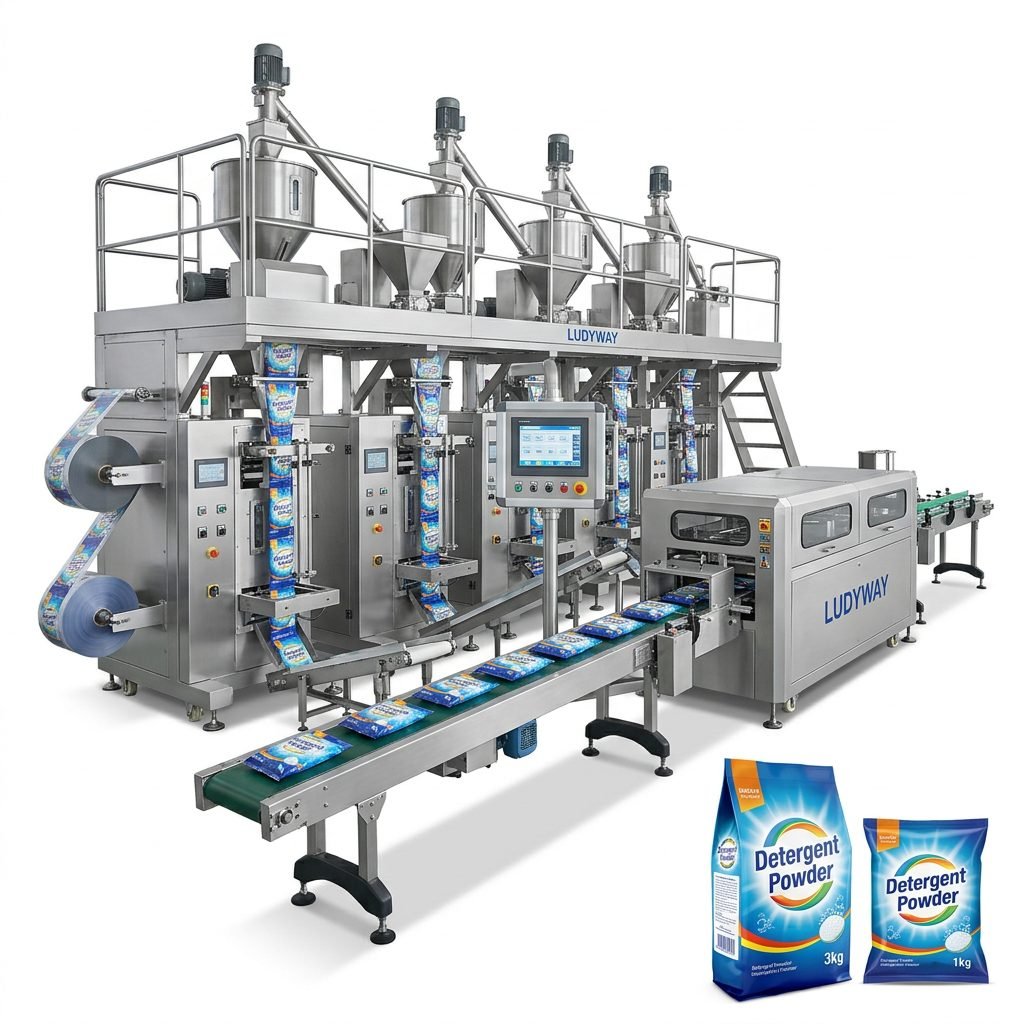
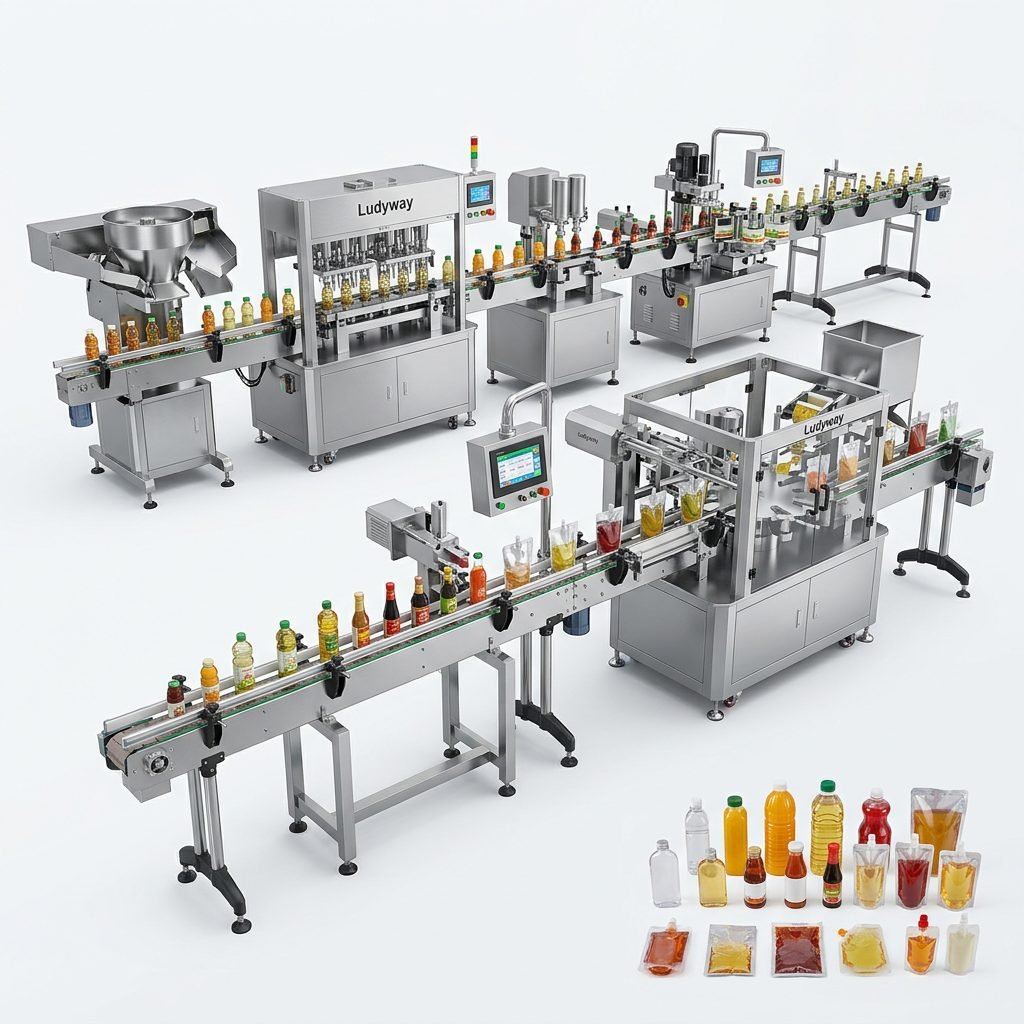
Rice, sugar, seeds, pulses, nuts and other dry granular foods look simple to package, but they behave very differently on a filling line. Granulated sugar flows freely yet abrades sealing jaws and pulls moisture from the air; rice changes bulk density from variety to variety; seeds are fragile and must keep their germination rate; lentils and grains carry fines that settle in the seal zone and cause leakers. A granule packaging machine that handles all of them reliably is selected around dosing accuracy, seal integrity and sustained output, not just purchase price.
This guide explains the main types of granule packaging machines for rice, sugar, seeds and dry food products, the dosing and sealing technologies behind them, the features that matter in a food plant, and a practical procurement checklist for production managers, project engineers and equipment distributors. The content follows international practice; where regulations are referenced we point to FDA and EU food-contact rules so you can map them to your own market.
Why Dry Granular Foods Need Purpose-Built Packaging Equipment
Powder machines and granule machines are often listed together, but the engineering is different. Powders bridge and need auger fillers; free-flowing granules meter accurately by volume or weight and need gentle, dust-controlled handling instead. Choosing a machine designed for granules avoids two common failures: inconsistent fill weights caused by the wrong dosing principle, and weak seals caused by particles trapped in the jaw area.
Each product family adds its own constraint. Refined sugar is hygroscopic, so film barrier and plant humidity control affect shelf life. Rice is heavy and dense, so volumetric cups must be calibrated per variety and bag seals need enough strength to survive drop tests. Seed packaging must avoid mechanical damage and often requires nitrogen flushing or low-oxygen storage to protect viability. Nuts and granola contain oils and fines that demand regular cleaning and easy access to product-contact parts.
A good rule for buyers: specify the machine around the most difficult product you will run, not the easiest. A line sized for sugar sticks will not necessarily handle 1 kg rice bags, but a modular granule system with interchangeable dosing heads can serve both.
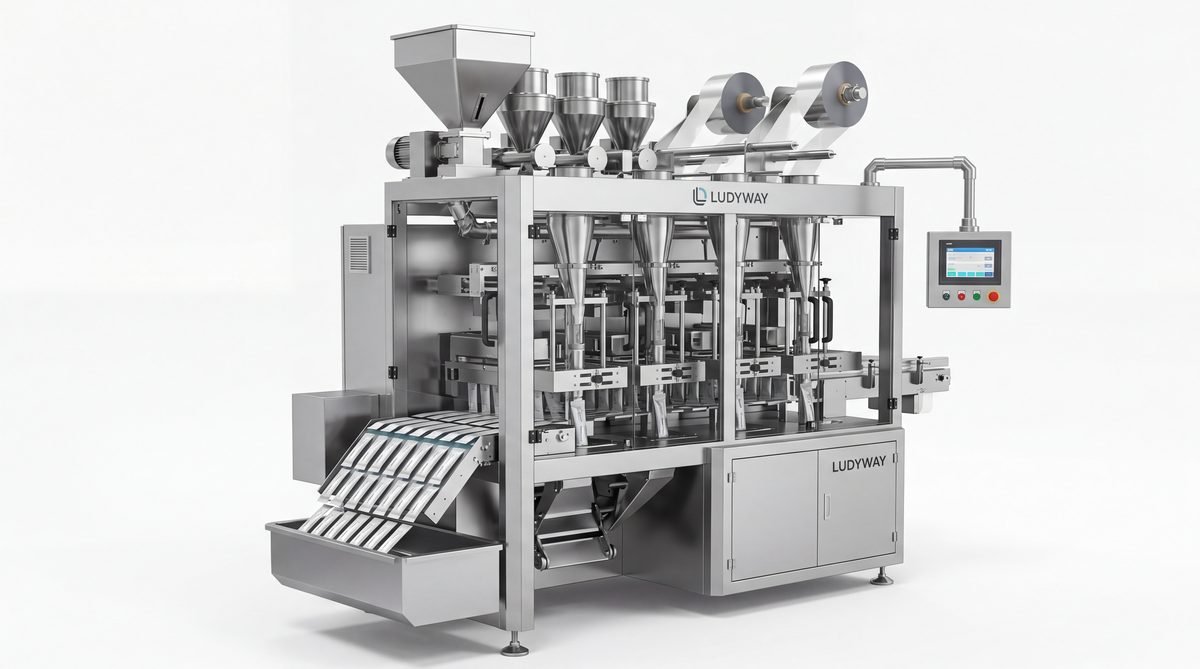
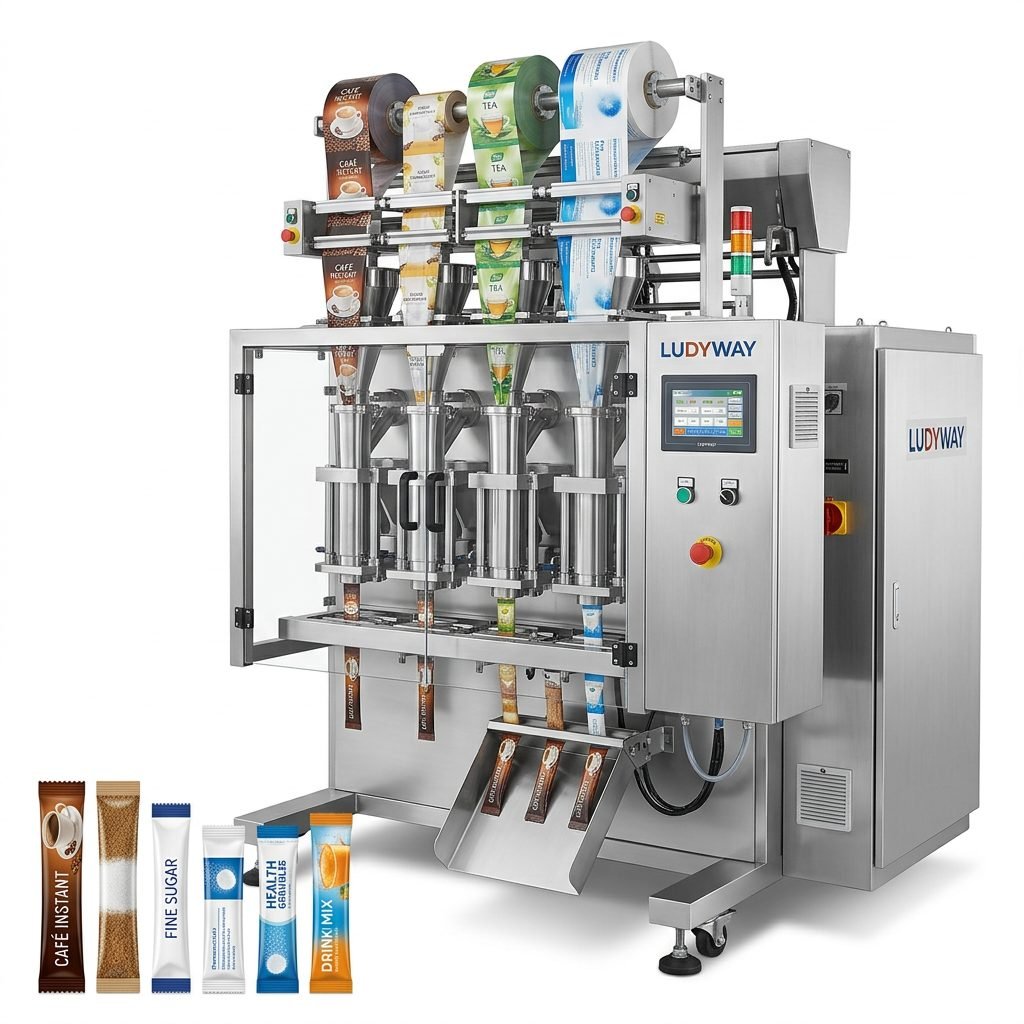
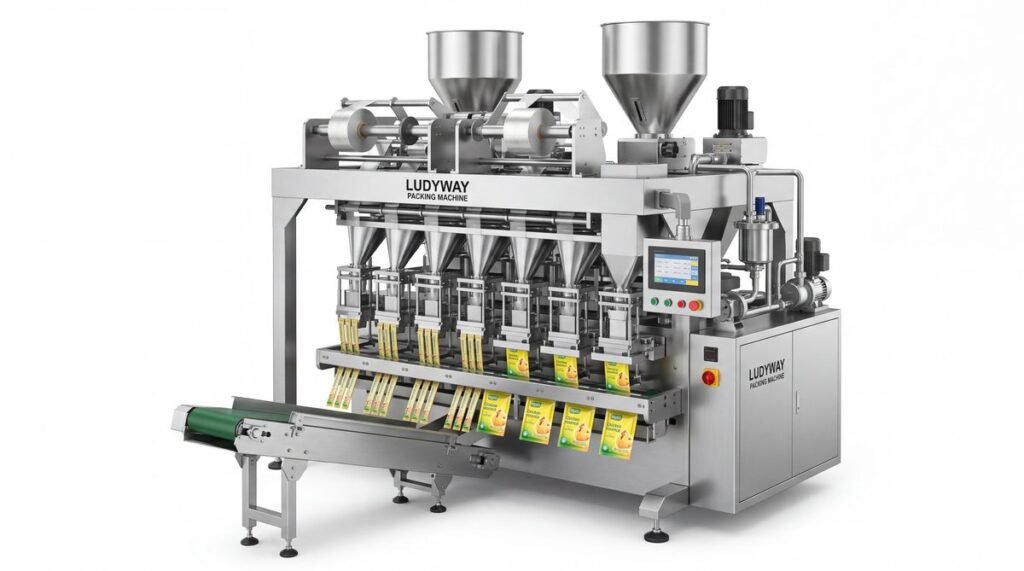
Multi-lane granule packaging machine designed for free-flowing dry food products
Main Types of Granule Packaging Machines for Rice, Sugar, Seeds and Dry Food
Four machine families cover almost every dry food application from single-serve portions to industrial bags. The right choice depends mainly on pack weight, target output and the sales channel the pack is going into.
| Machine Type | Pack Range | Typical Output | Dosing Principle | Best For |
|---|---|---|---|---|
| Multi-lane stick pack / sachet | 1–50 g | 300–1,200 packs/min (4–12 lanes) | Volumetric cup or disc | Sugar sticks, sweetener, seed sample sachets, instant rice portions, seasoning |
| Vertical form fill seal (VFFS) | 50 g – 5 kg | 30–120 bags/min | Multihead or linear weigher | Retail rice, beans, nuts, seeds, granola, breakfast cereal |
| Premade pouch (doypack / zipper) | 100 g – 2 kg | 20–60 pouches/min | Multihead weigher | Premium rice, quinoa, chia and flax seed, trail mix, specialty sugar |
| Open-mouth / bulk bagging line | 5–50 kg | 300–1,200 bags/hour | Net-weight scale | Rice mills, sugar refineries, seed processors, food service supply |
Multi-Lane Stick Pack and Sachet Machines
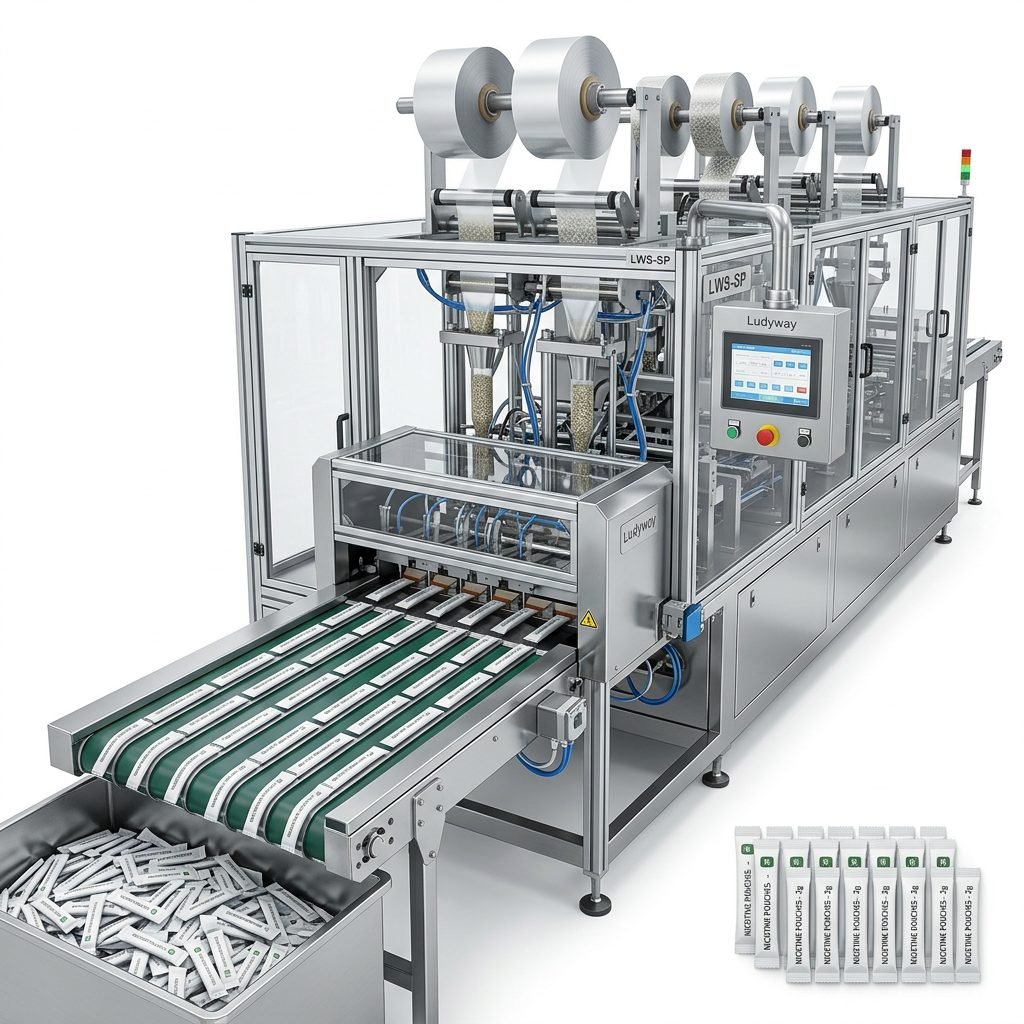
Multi-lane machines form, fill and seal several packs side by side from one or two film reels, which is why they dominate sugar stick, sweetener and seed-sample production. Each lane carries its own volumetric cup, so the fill of a 5 g sugar stick stays consistent across all lanes. Lane counts of 4 to 12 are common, with 3-side seal, 4-side seal and stick formats available on the same frame. A multi-lane stick pack and sachet packaging machine for granules can usually be converted between formats with a tooling change rather than a new machine.
Vertical Form Fill Seal Baggers
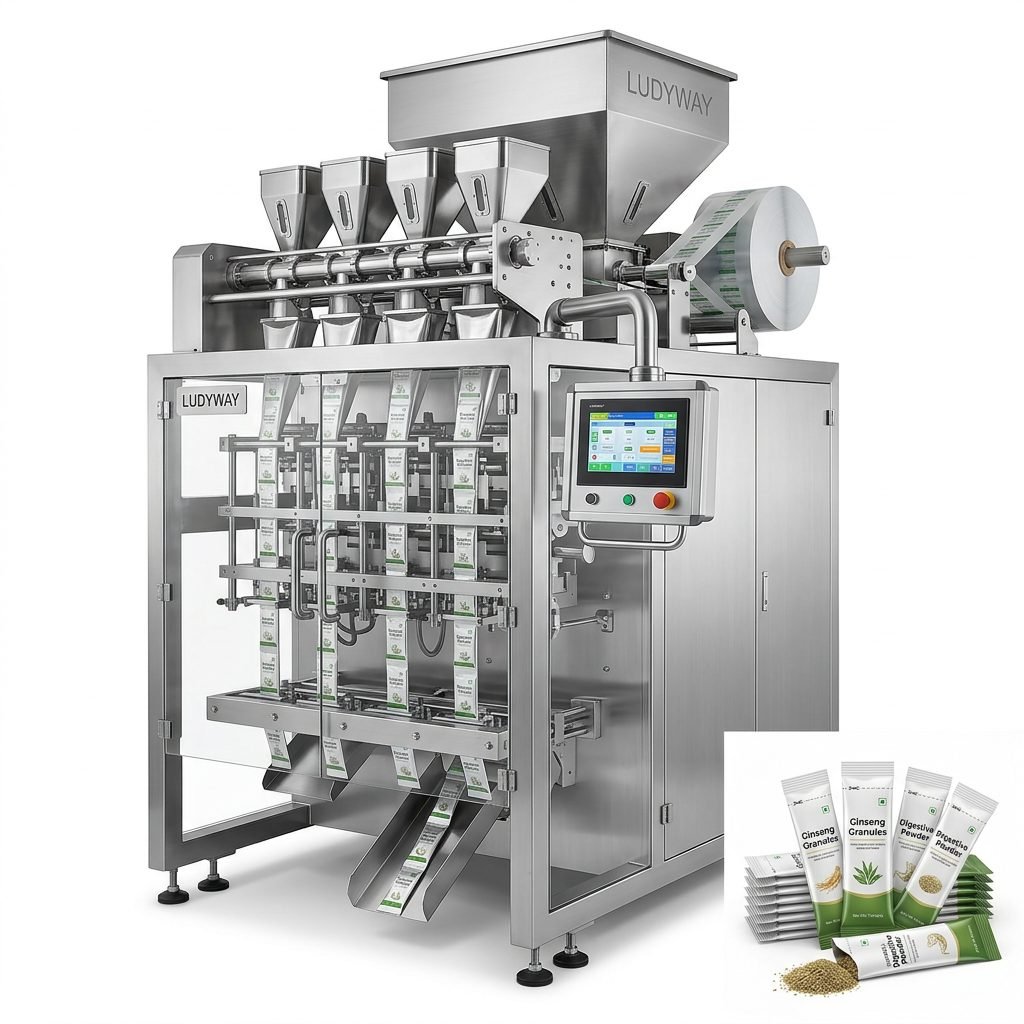
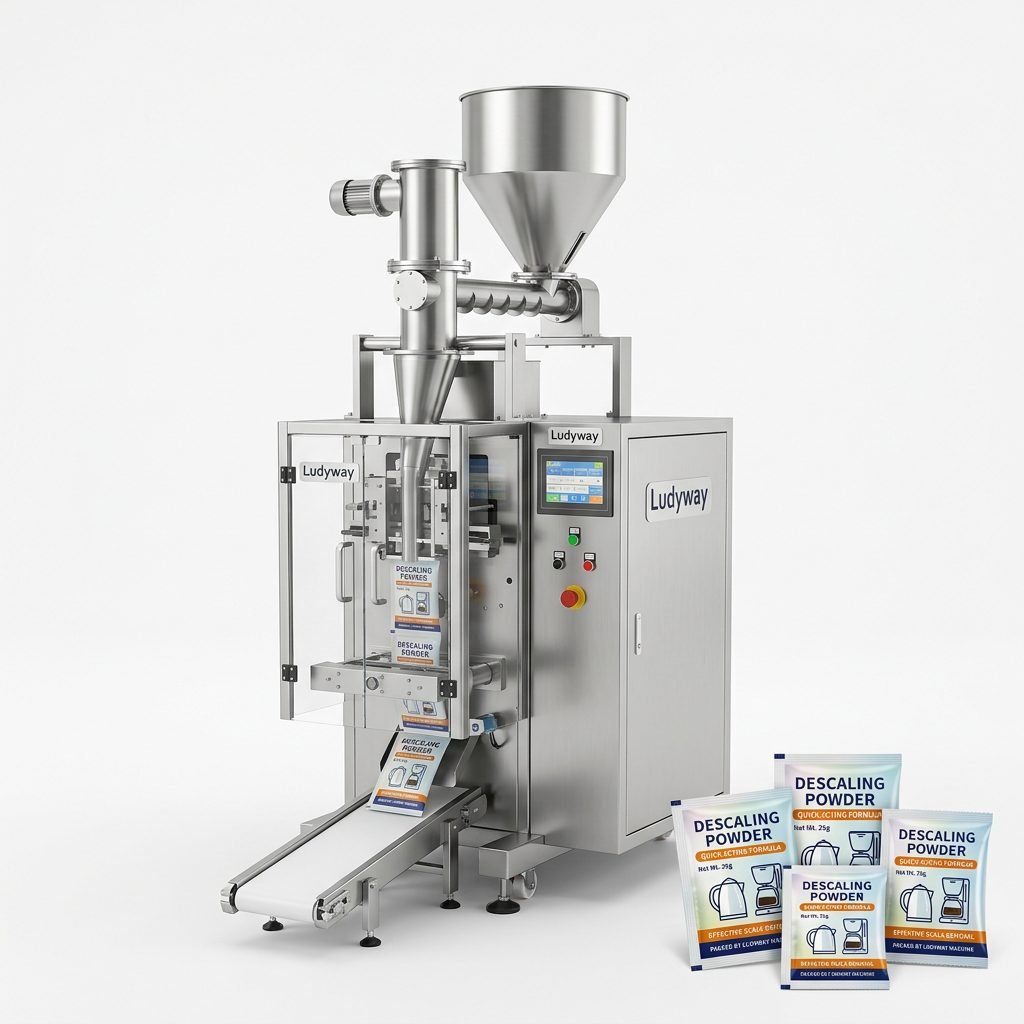
VFFS machines are the workhorse for retail rice, beans, nuts and seed bags between 250 g and 5 kg. Paired with a 10- or 14-head combination weigher, they weigh fast and accurately even when particle size varies, and they produce pillow, gusseted or quad-seal bags. For heavy products like rice, specify servo-driven film pull, a strong jaw with product-clearing stripper plates, and an impulse or heat-seal system matched to your film structure.
Premade Pouch Machines
Rotary premade pouch fillers suit brands selling premium rice, ancient grains or seed mixes in resealable stand-up pouches. The machine opens, fills, optionally nitrogen flushes and seals pouches supplied by a converter, giving the best shelf presentation at moderate speeds. The trade-off is higher pouch cost per unit, so these systems make sense where margin per pack justifies it.
Open-Mouth and Bulk Bag Lines
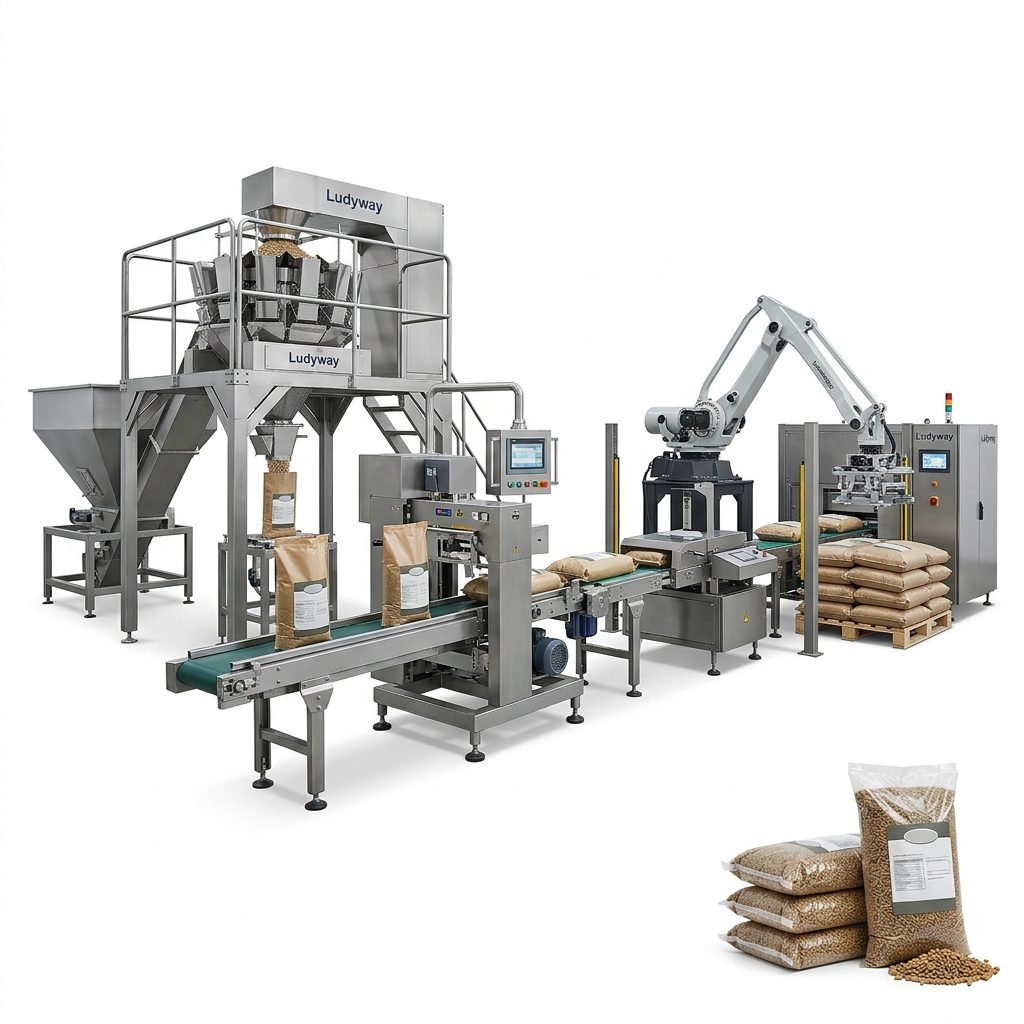
Rice mills and sugar refineries move volume in 10 kg, 25 kg and 50 kg bags. Here the packaging machine is really a line: net-weight scale, bag placer or manual bag clamp, sewing or heat-sealing head, check weigher and palletizer. Dedicated 25 kg bag packaging lines for granules are typically rated by bags per hour and by weighing accuracy under legal-for-trade rules in the destination market.
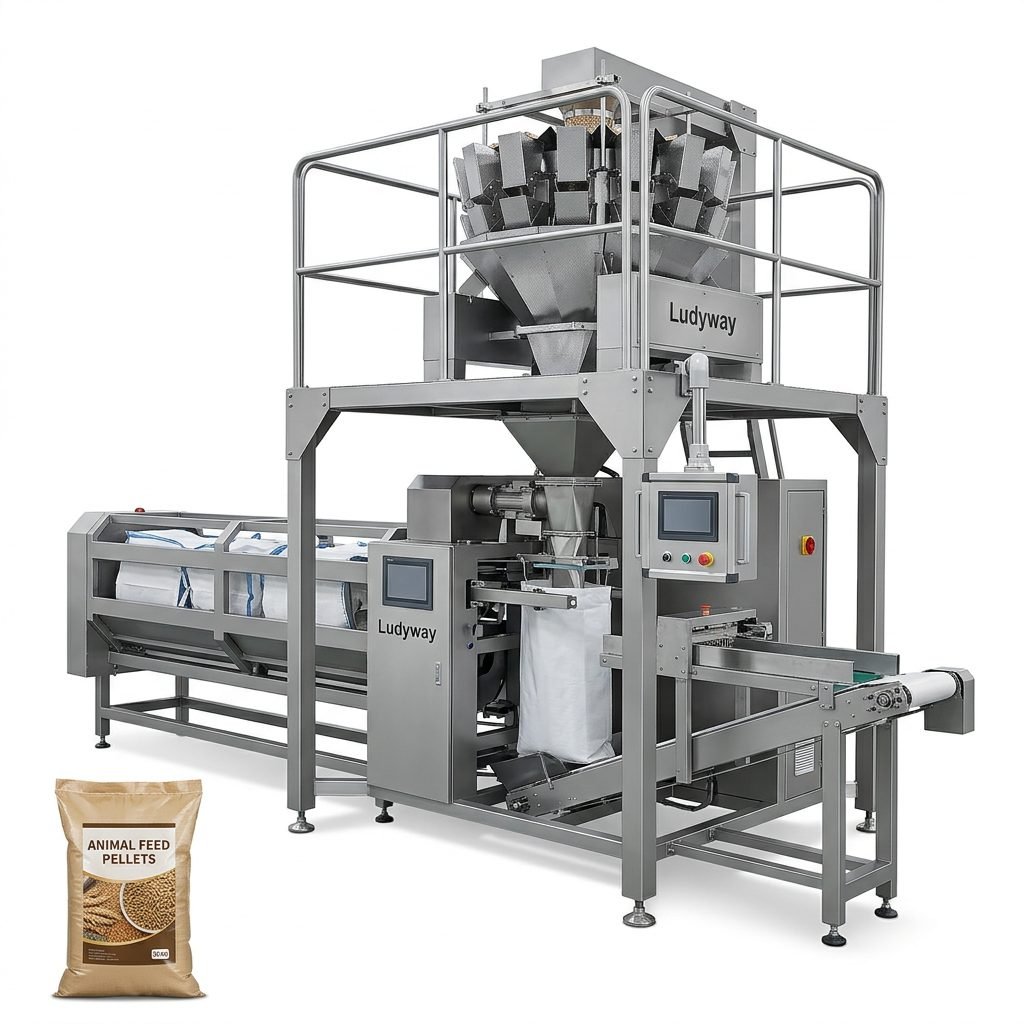
Net-weight bagging system for large-format rice, grain and granule bags
Dosing Systems: The Component That Decides Accuracy
Dosing is where most granule machines succeed or fail. Volumetric cup fillers are inexpensive, fast and accurate to roughly 0.5–1% for uniform products such as sugar and polished rice, but they drift when bulk density changes between lots. Multihead combination weighers weigh each portion, so they hold accuracy on mixed or irregular products like nuts, seed blends and granola at the cost of higher capital and more cleaning.
Linear weighers sit between the two in price and speed and suit medium outputs of beans or pulses. Net-weight scales for bulk bags typically hold ±20–50 g on 25 kg, with gross-weight versions available for lower-cost lines. For seeds that must not be damaged, ask for vibratory feeding with low drop heights and soft-landing chutes rather than fast gravity drops.
Whatever dosing you choose, a downstream high-precision checkweigher closes the loop by rejecting out-of-tolerance packs and feeding back a correction to the filler.
Features That Matter on a Dry Food Packaging Line
Beyond type and dosing, a short list of design features separates a machine that runs three shifts from one that spends its life in maintenance. Use the cards below as a checklist when comparing quotations.
Seal Integrity and Film Compatibility
Granules in the seal area are the number one cause of leakers. Look for product-clearing jaws or stripper plates, PID-controlled sealing temperature per jaw, and confirmed compatibility with the films you use: PET/PE, BOPP/CPP, paper/PE for sugar sticks, or recyclable mono-material PE where retailers require it.
Dust Control and Hygienic Design
Sugar and rice generate fine dust that fouls sensors and seals. Specify dust extraction ports at the filling head, tool-free removal of hoppers and cups, SUS304 or 316L contact parts and rounded, crevice-free welds that can be cleaned on a defined schedule.
Shelf-Life Protection
For seeds, nuts and brown rice, oxygen is the enemy. A nitrogen flushing system integrated at the fill tube can bring residual oxygen below 2–3%, extending shelf life and protecting seed germination in storage.
Controls, Changeover and Data
A PLC with touch-screen HMI, recipe storage for each SKU, servo film drive and quick-change forming tubes keep changeovers under 20–30 minutes. Remote diagnostics and OEE counters are increasingly standard and worth requesting for multi-site operations.
How to Choose the Right Granule Packaging Machine: A Five-Step Method
Characterize the Product
Record particle size, bulk density range, dust level, fragility and moisture sensitivity for every SKU. Send physical samples; a supplier should run a fill test before confirming the dosing method.
Fix the Pack Format
Decide stick, sachet, pillow bag, stand-up pouch or bulk bag, with target weights and dimensions. Format drives the machine family more than any other variable.
Size the Output Honestly
Calculate packs per hour from annual volume, shift pattern and a realistic 80–85% efficiency. Rated speed on a brochure is not sustained speed on your product.
Define Compliance
List required marks and documents: CE, food-contact material declarations, electrical standards for your region, and any customer audit requirements such as BRCGS or GMP.
Plan the Whole Line
Include elevators, feeders, metal detection, checkweighing, cartoning and palletizing from day one so interfaces, footprint and utilities are quoted together.
Compliance, Certification and Food Safety Requirements
Dry food packaging equipment sold internationally is normally expected to carry CE marking for the EU and comparable electrical safety documentation for North America, plus an ISO 9001 quality system at the factory. Product-contact parts should be stainless steel with material certificates, and plastic contact components such as cups, chutes and gaskets should be food grade.
Packaging films and laminates are regulated separately from the machine. In the United States, food-contact substances fall under FDA rules described in the FDA packaging and food contact substances guidance; in Europe the framework is Regulation (EC) 1935/2004, with recyclability expectations tightening under packaging waste rules. International packaging test methods, including seal strength and transport testing, are catalogued under ISO packaging standards.
Finished-product safety usually also means an inline industrial metal detector after the bagger. Many retailers now ask for metal detection or X-ray inspection as a condition of supply, so it is cheaper to include it in the original line quotation than to retrofit later.
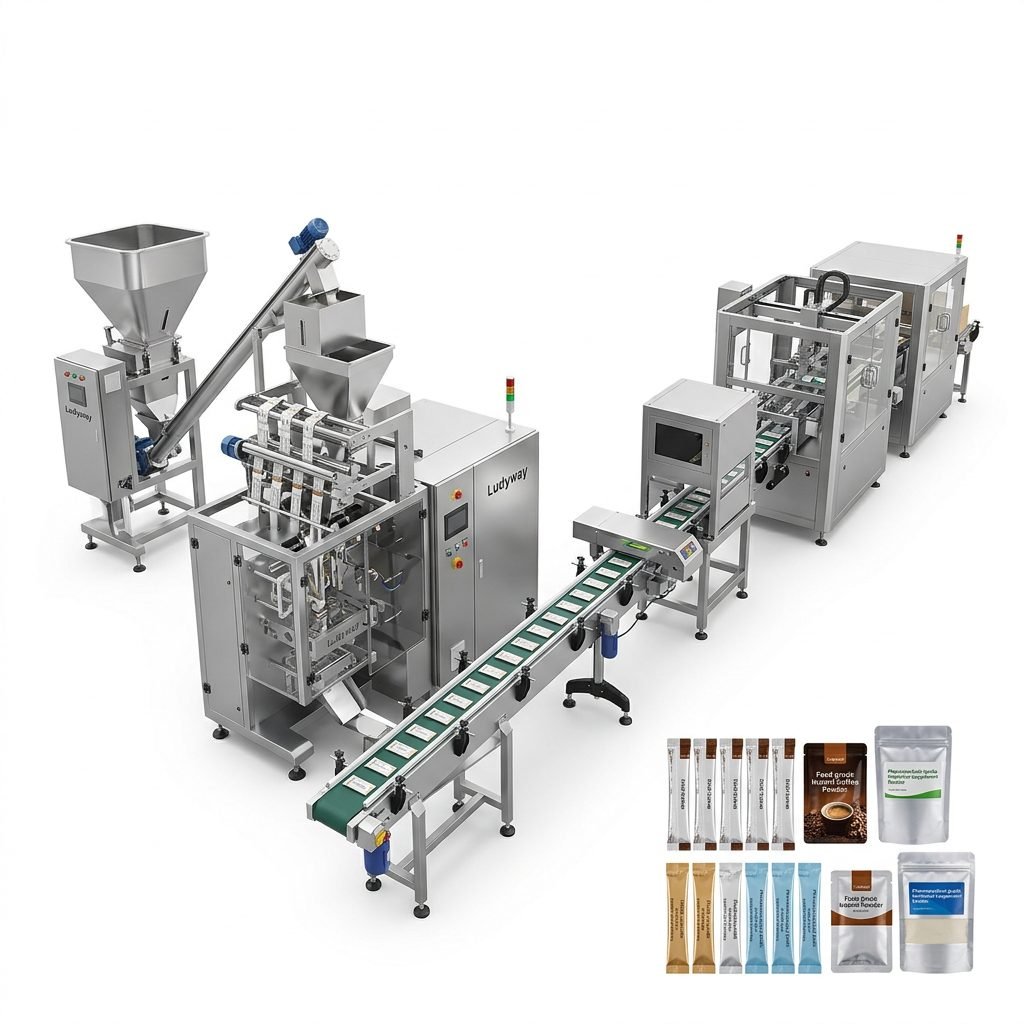
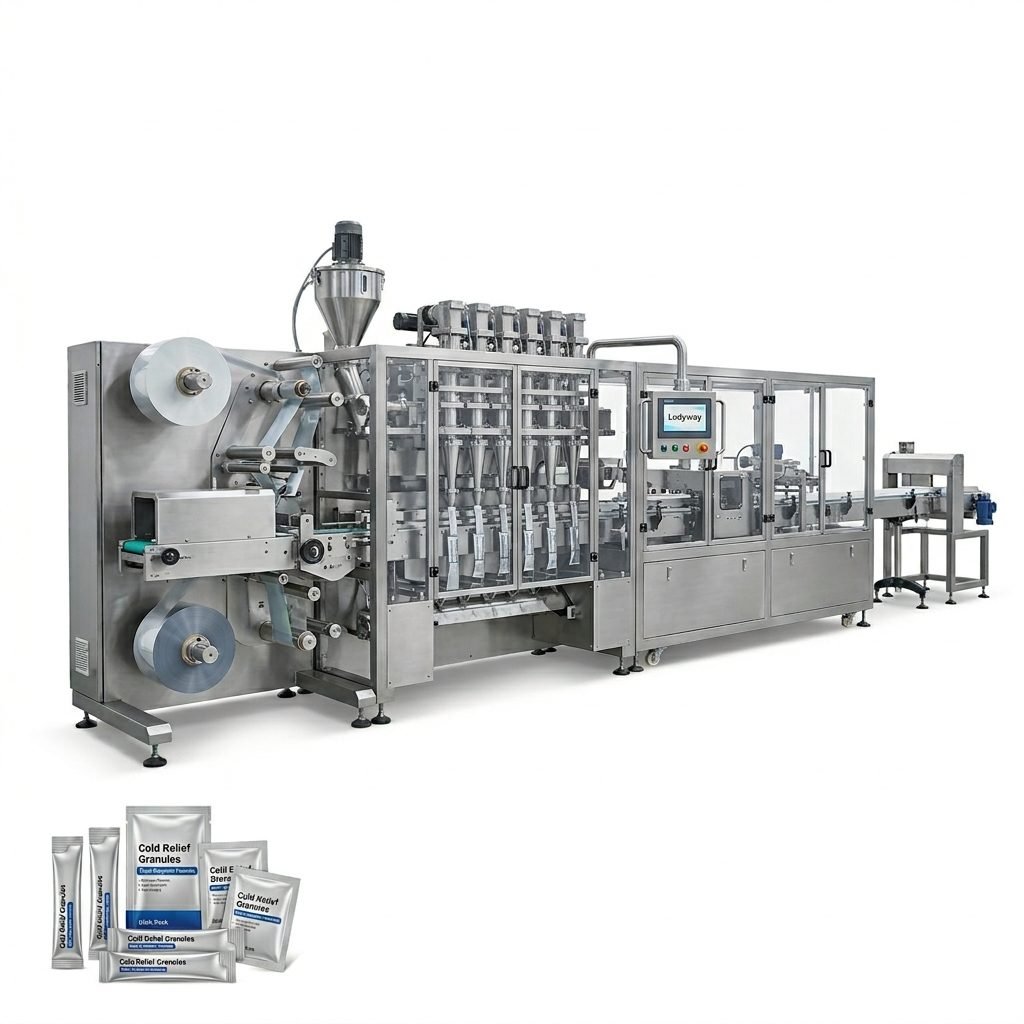
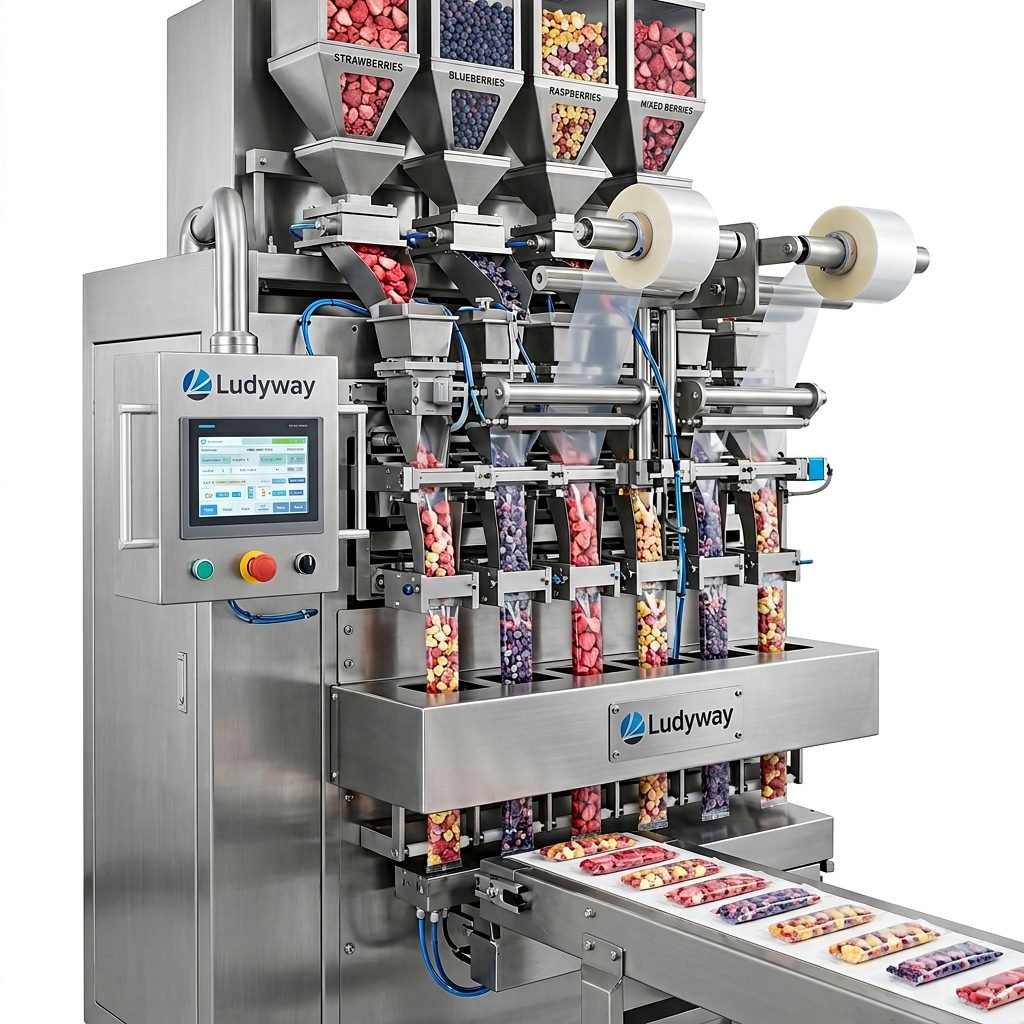
Stainless steel, hygienic-design packaging line built for food and health products
Procurement Guide: Specifications, Lead Time and Quotation Process
Equipment buyers get faster and more accurate quotations when the request contains the right information. The two panels below summarize what to send and what to expect back from an established manufacturer.
What to Include in Your RFQ
- Product list with sample photos, particle size and bulk density
- Pack format, target weight per pack and tolerance
- Required output per hour and planned shifts per day
- Film or bag type you intend to use, with supplier data sheet if available
- Plant voltage, frequency, compressed air availability and floor space
- Destination country, required certificates and preferred Incoterms
- Upstream and downstream equipment that must be integrated
Typical Commercial Terms for Granule Machines
- Minimum order: one machine; lines are quoted as integrated projects
- Lead time: roughly 35–60 working days for standard multi-lane or VFFS models, 60–90 for complete lines
- Acceptance: factory acceptance test on your product with video or on-site witness, then site acceptance after installation
- Payment: deposit by T/T with balance before shipment is the common structure
- Warranty: 12 months is standard, with a recommended spare parts kit for wear items
- Documentation: manual, electrical drawings, material certificates and CE declaration
Industry data from PMMI’s State of the Industry report shows food manufacturers continuing to prioritize flexibility, hygienic design and automation that reduces labor dependence. For granule lines, that translates into modular machines that can switch between rice, sugar and seed SKUs on the same frame with minimal tooling.
Ludyway as a Granule Packaging Machine Manufacturer
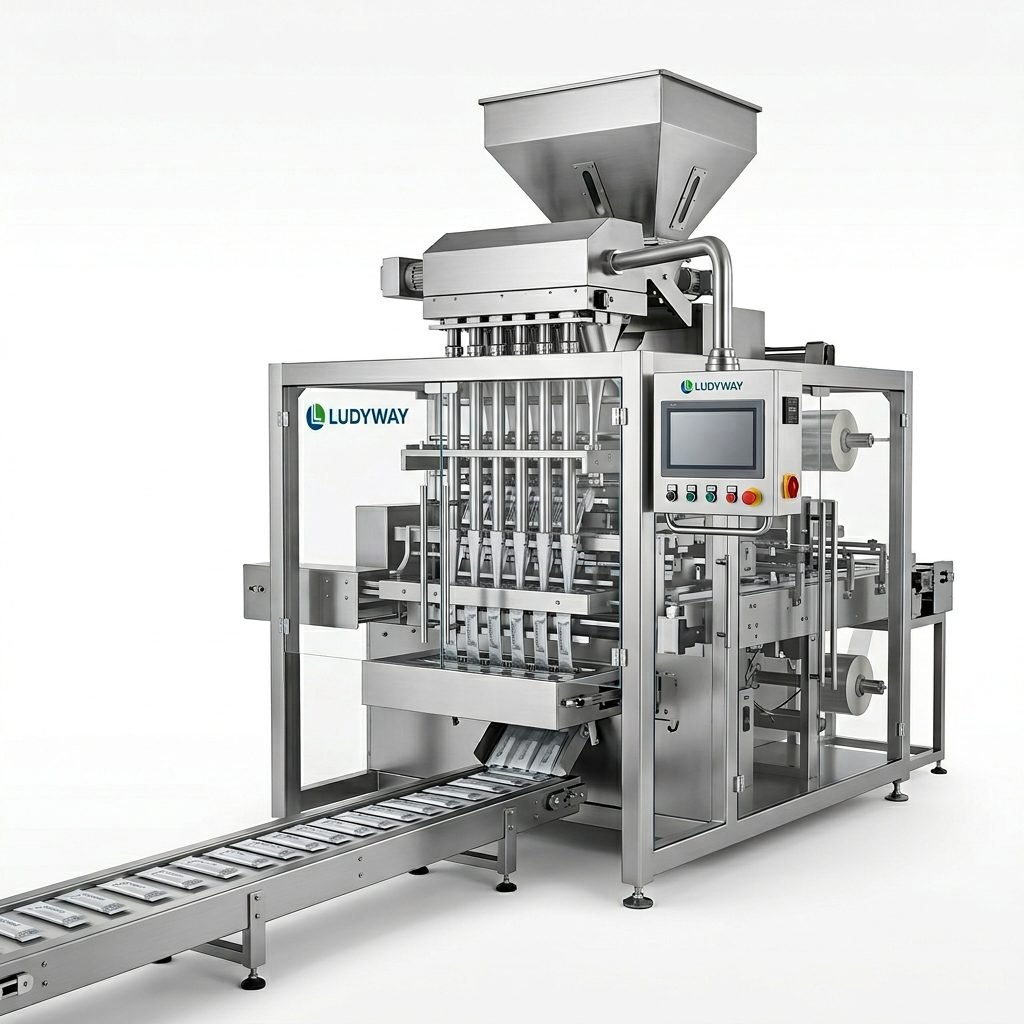
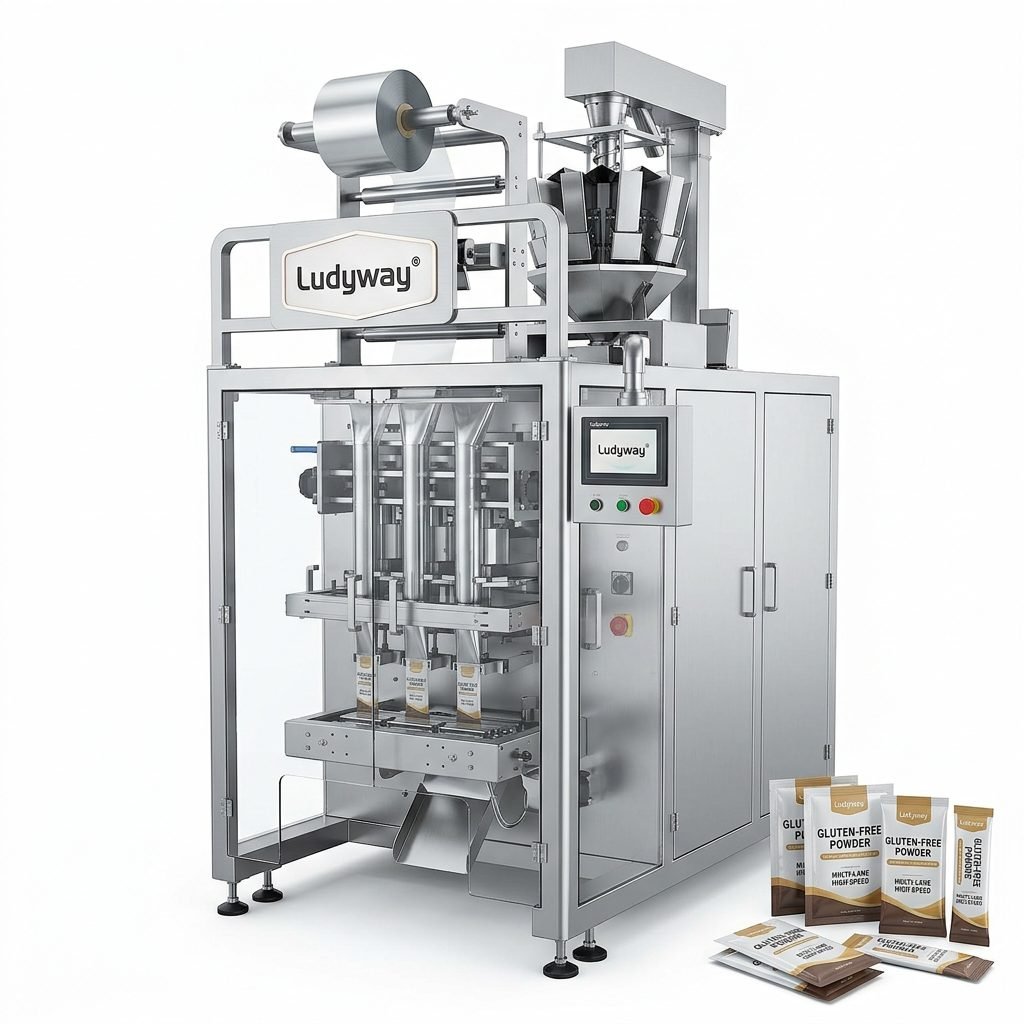
High-speed multi-lane system from the Ludyway granule and powder packaging range
Ludyway Machinery, founded in 1993 in Zhongshan, Guangdong, is one of the largest packaging machine manufacturers in China, with a 20,000 m² production facility, more than 130 packaging specialists and over 200 manufacturing equipment units. The company offers more than 50 intelligent packaging machine models, including multi-lane stick pack and sachet machines, granule and powder fillers, vacuum and nitrogen-flush systems and fully automated turnkey lines, and serves customers in over 100 countries and regions.
For dry food producers, the relevant strength is depth within granule applications: dedicated configurations exist for granule sugar packaging, instant and retail rice, and sunflower seed and other seed sachet packaging, all built on common platforms so spare parts and operator training carry over between machines. Project teams handle line integration from feeding and weighing through cartoning and palletizing.
Ludyway’s export growth, documented in an industry press release on its global expansion, reflects a sustained investment in international service, remote support and exhibition presence at major packaging shows.
Granule Packaging Machines for Rice, Sugar, Seeds and Grains
Frequently Asked Questions
Can one granule packaging machine handle rice, sugar and seeds?
Yes, within a given pack format. A multi-lane machine with interchangeable volumetric cups can run sugar sticks, seed sachets and instant rice portions in the 1–50 g range; a VFFS bagger with a combination weigher can run rice, beans, nuts and seed mixes from 250 g to 5 kg. Covering both ranges normally requires two machines or a modular line.
Volumetric cup or multihead weigher: which is better for rice?
For polished rice of consistent density, a volumetric cup filler is accurate, fast and far less expensive. If you pack several rice varieties, mixed grains or products where density varies between lots, a multihead or linear weigher protects you from giveaway and underweight packs. Many buyers choose volumetric dosing plus a checkweigher as a cost-effective middle path.
What film is used for sugar stick packs?
Paper/PE laminates are the most common choice for sugar sticks because they print well and seal reliably; PET/PE and BOPP/CPP are used where a higher moisture barrier is needed. Confirm the film specification with the machine supplier so sealing temperature, dwell time and jaw design are matched before the factory acceptance test.
How do I protect seed viability during packaging?
Use gentle vibratory feeding with low drop heights, avoid high-speed augers, and add nitrogen flushing or vacuum sealing to reduce residual oxygen. Films with good oxygen and moisture barrier, combined with dry plant conditions, keep germination rates stable in storage and transit.
What is the typical lead time and acceptance process for a granule packaging machine?
Standard multi-lane and VFFS models are generally delivered in about 35–60 working days, with complete lines taking 60–90 days depending on integration scope. A factory acceptance test on your own product samples, followed by installation, commissioning and operator training on site, is the normal sequence before final sign-off.
Request a Quotation or Machine Catalog
Send your product samples, pack format and target output and Ludyway’s engineering team will recommend a granule packaging machine configuration, run a fill test, and return a detailed technical and commercial proposal. Distributors and project engineers can also request the full machine catalog and reference line layouts for rice, sugar, seed and dry food applications.
Email info@ludyway.com or message WhatsApp +86 131 2959 2456 to start your inquiry.