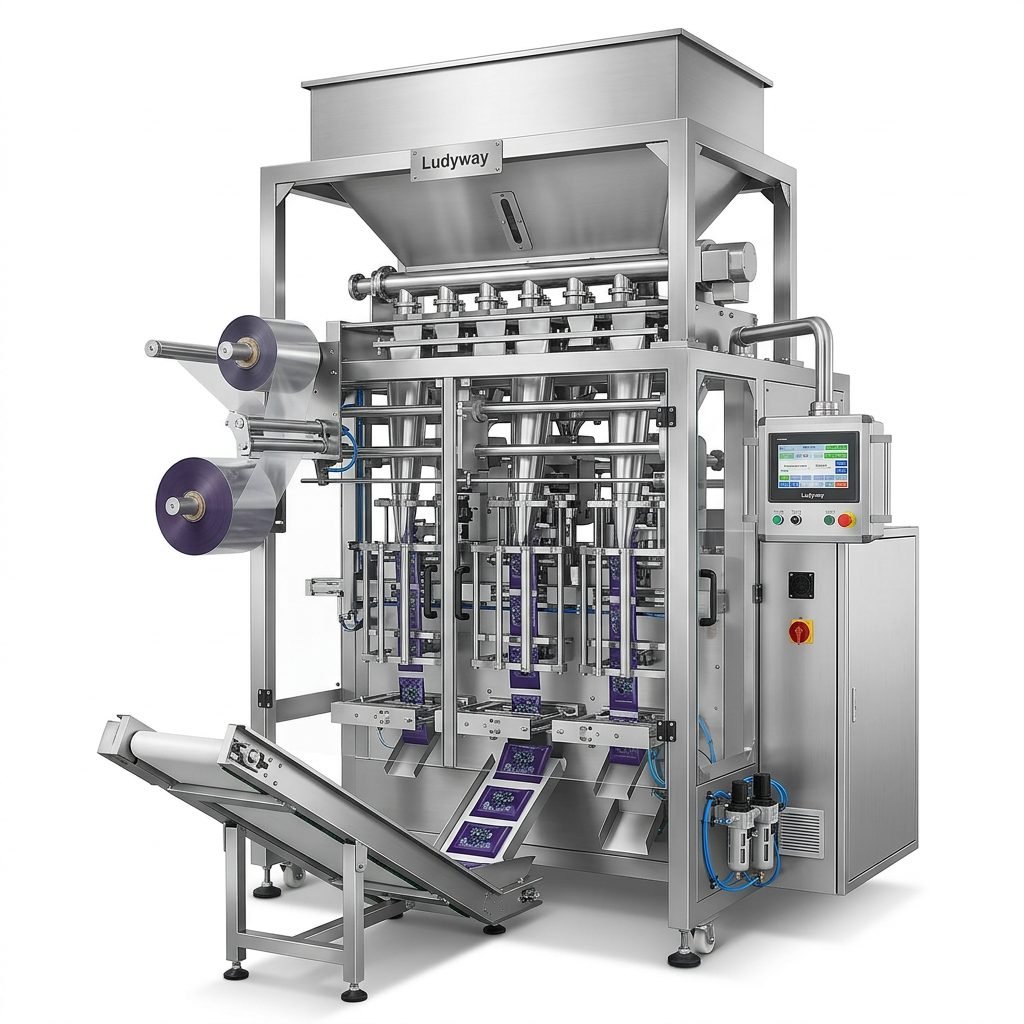
Beef jerky has become a high-demand snack category globally, celebrated for its protein density and long shelf life. Scaling from artisanal batches to industrial output requires a precisely integrated beef jerky packaging machine production line. This guide walks you through the essential stages of setting up an efficient, automated system, from material handling to final case packing, without compromising product integrity or line speed.
Step 1: Define Production Goals and Packaging Format
Begin by clarifying your target output per shift and the desired packaging style. Most commercial operations favor multi-lane stick pack or flat sachet formats for single-serve jerky portions. Establishing the required number of lanes directly influences throughput, while the type of film—often high-barrier laminates with nitrogen flushing capability—determines product freshness. A clear specification at this stage ensures the subsequent equipment selection aligns with your business scale and market positioning.
Step 2: Select the Core Filling and Sealing Machine
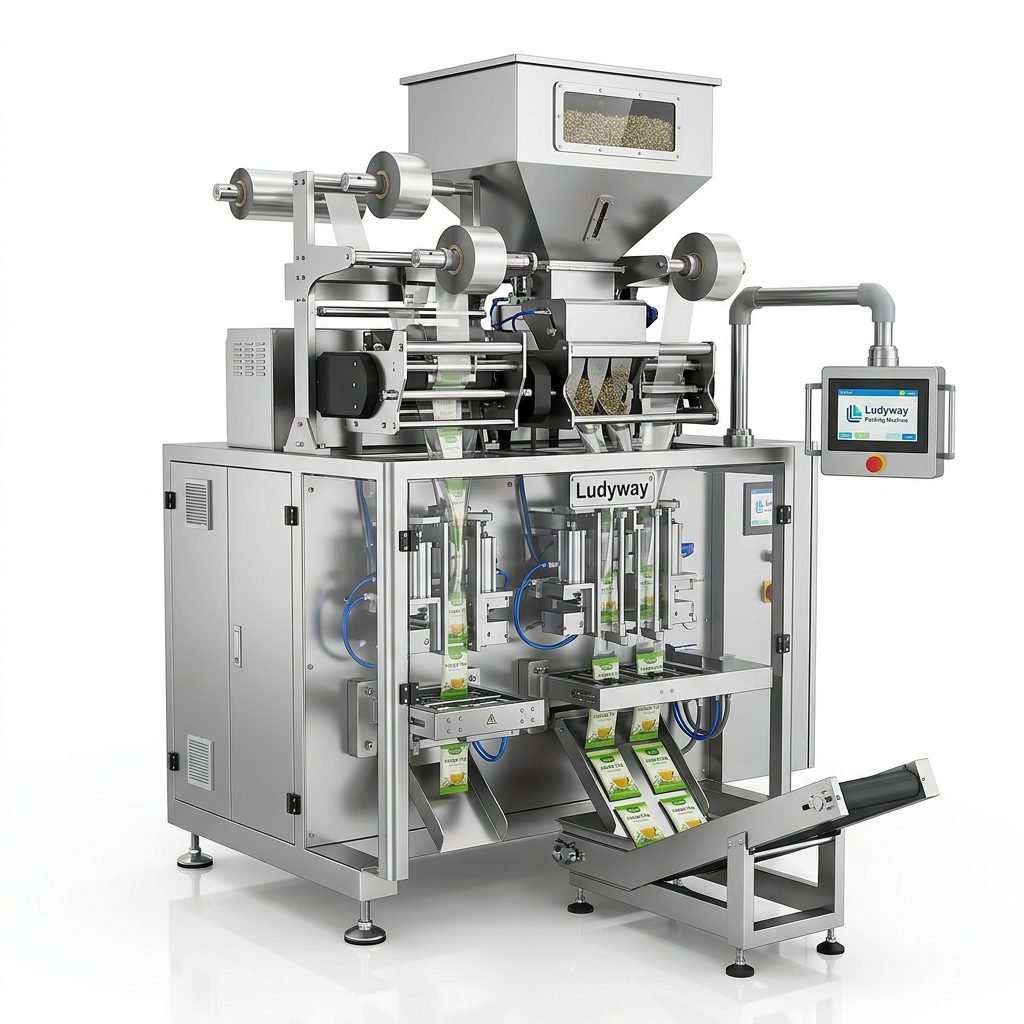
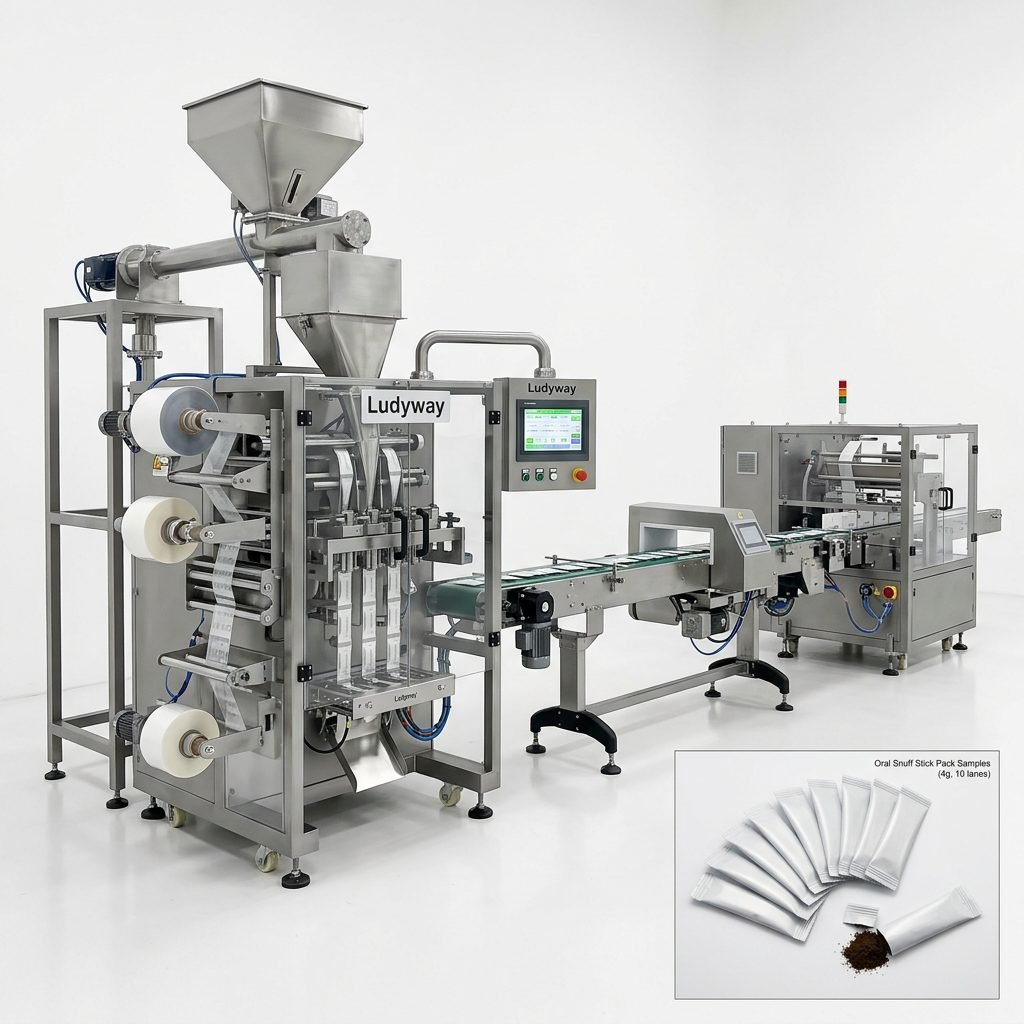
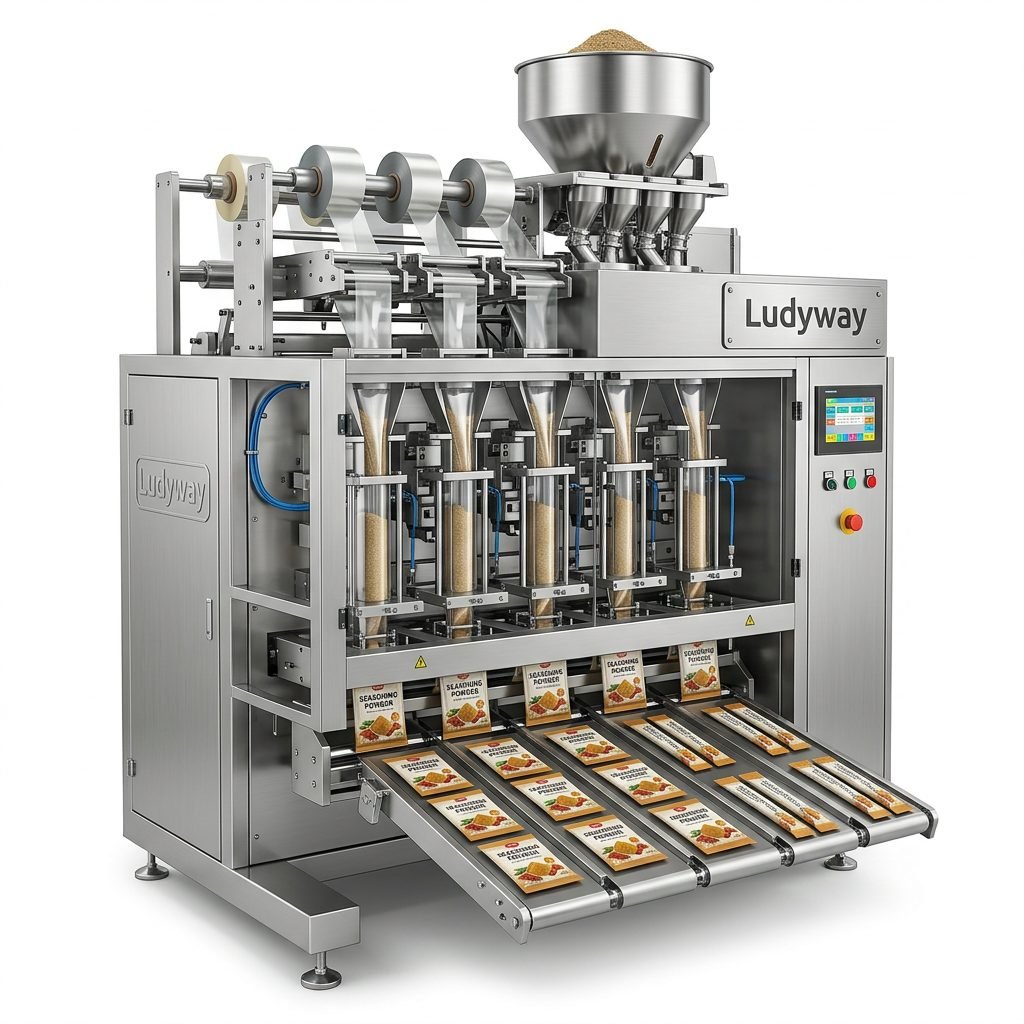
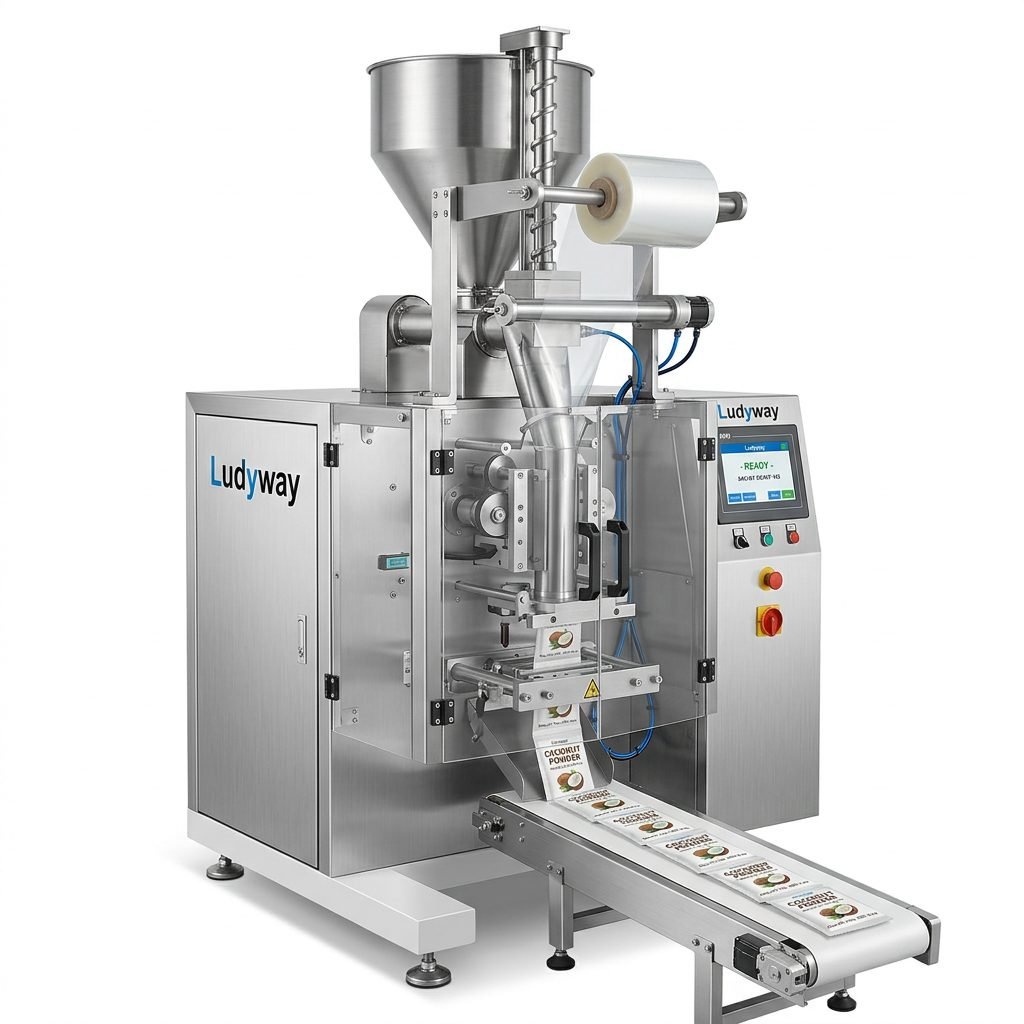
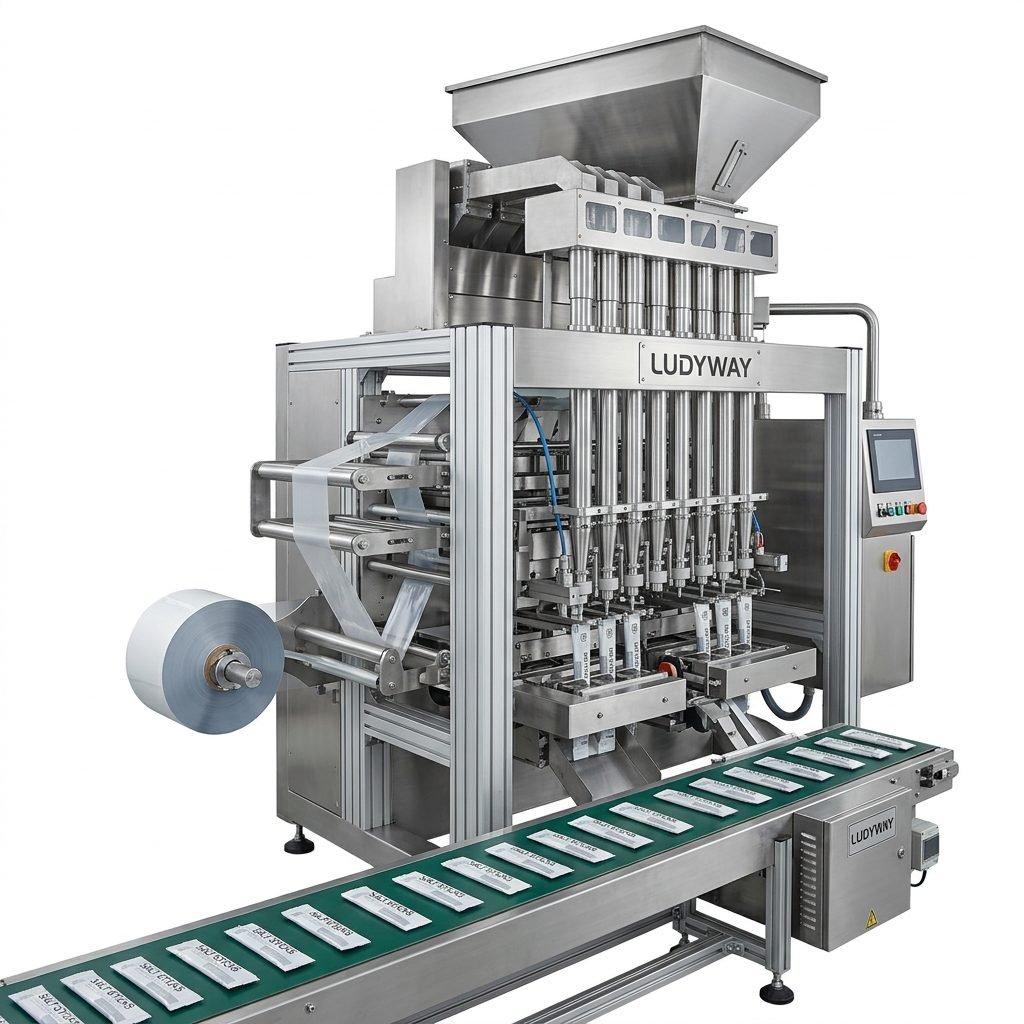
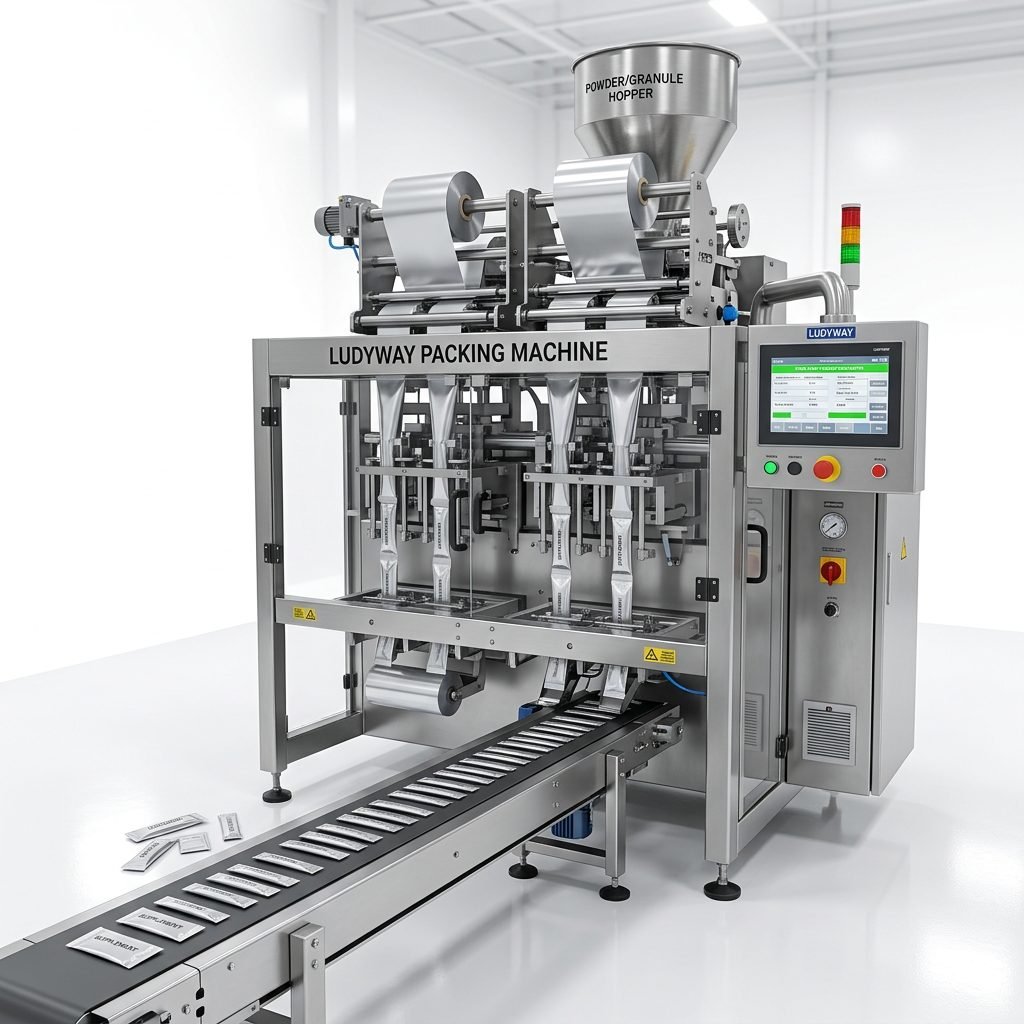
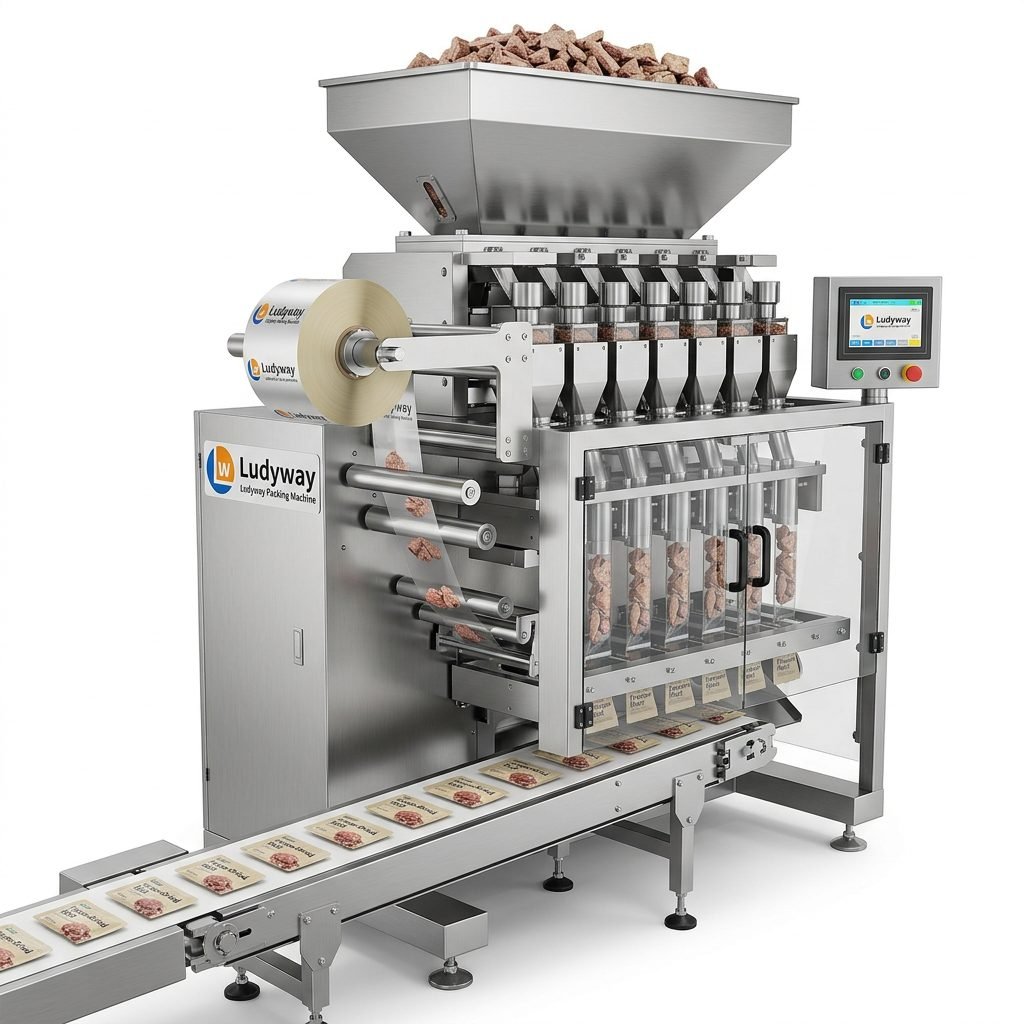
For beef jerky, a multi-lane stick pack machine represents the heart of the line. Unlike powders, irregular solid pieces demand specialized volumetric or combination weighers paired with gentle forming tubes. Look for servo-driven vertical form-fill-seal technology that offers precise film control and programmable sealing temperatures. Interchangeable forming sets allow you to switch between stick widths of 12mm to 80mm, future-proofing your line for product variations such as teriyaki strips or nugget-style cuts.
Step 3: Integrate Multi-Head Weighing and Infeed Systems
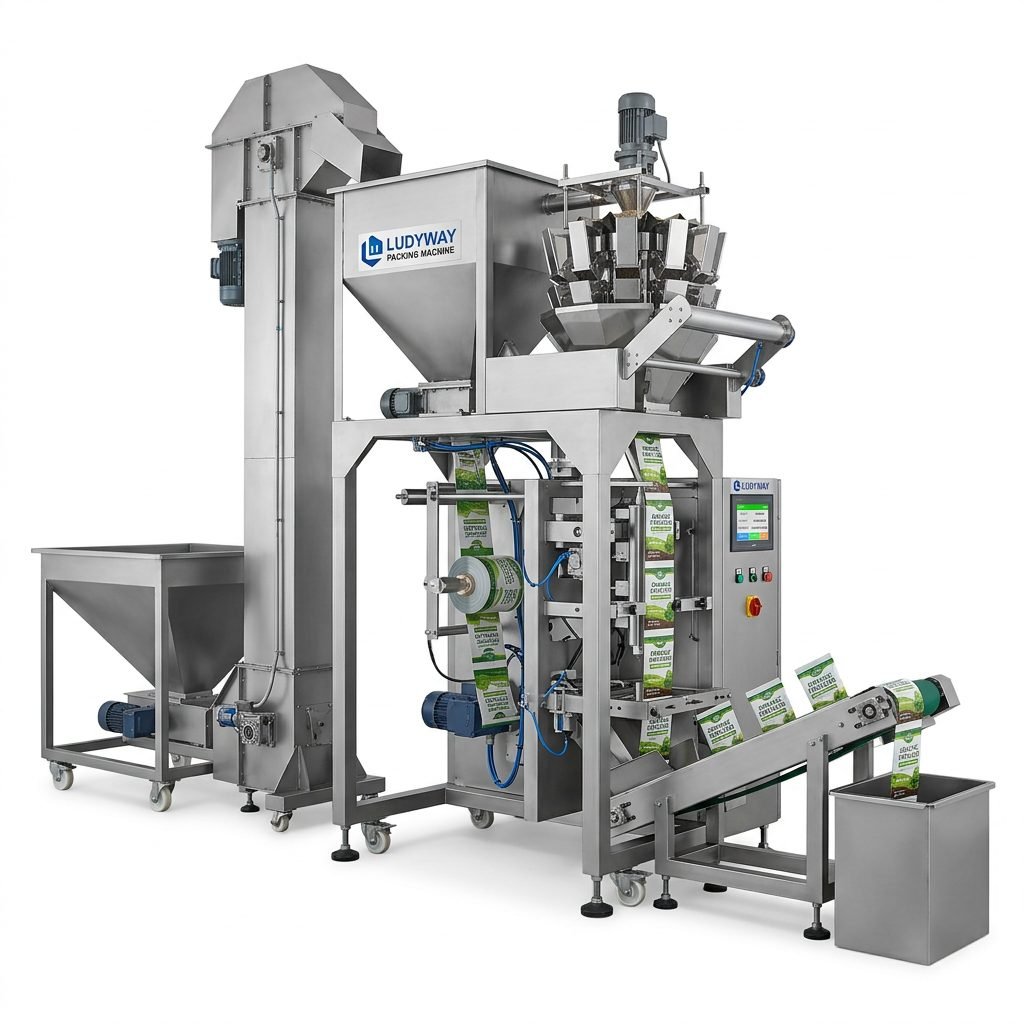
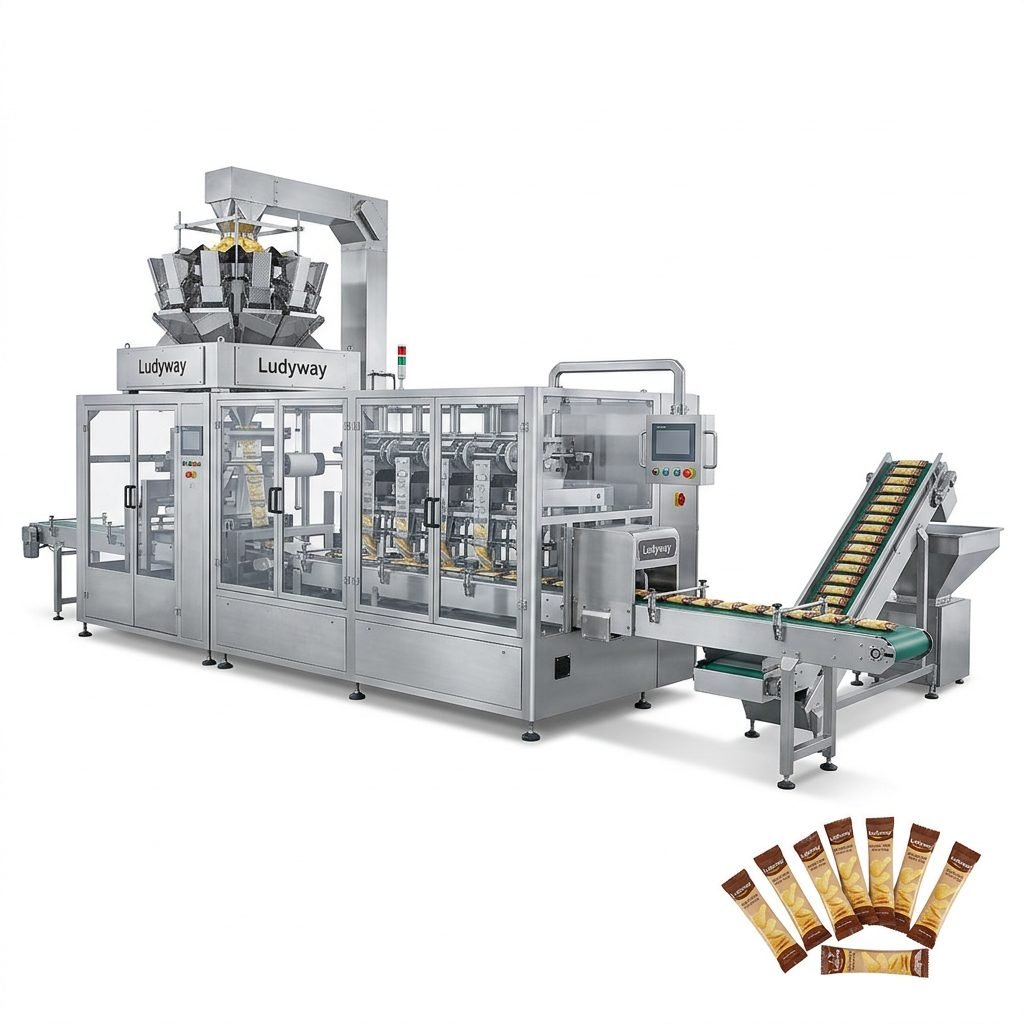
Accurate portioning of whole muscle jerky pieces minimizes giveaway and maximizes profitability. Here, granule packaging equipment adapted for delicate solids features memory hoppers and vibration-free transfer. An inclined conveyor with cleated belts feeds the multi-head weigher, which discharges calibrated drops into the stick pack lanes. Critical step: Configure the reject station to automatically divert off-spec weights before sealing, protecting your brand from consumer complaints.
Step 4: Deploy Inline Quality Control Devices
Maintaining food safety standards on a beef jerky packaging production line is non-negotiable. Three inspection units should be installed directly after the sealing station:
- Online checkweigher: Verifies every single stick falls within ±1% of the target weight.
- Metal detector: Screens for ferrous and non-ferrous contaminants introduced during processing.
- Vision inspection system: Confirms date code legibility and seal integrity.
An integrated automatic checkweigher with feedback loop capability will dynamically adjust the filling signal to maintain consistency across all lanes without operator intervention.
Step 5: Configure Secondary Cartoning and End-of-Line
Sticks leaving the primary packaging machine are typically counted and collated before insertion into shelf-ready cartons. A high-speed cartoner erects, loads, and glues boxes in one continuous motion. From there, case packing, palletizing, and stretch wrapping complete the line. Pro tip: For export-oriented jerky businesses, ensure the carton is compatible with automated palletizing systems that handle mixed SKU stacks to optimize container utilization.
Key Equipment Specifications at a Glance
| Equipment Module | Primary Function | Key Selection Metrics |
|---|---|---|
| Multi-Head Weigher | Portion jerky pieces to target weight | Heads count, speed (drops/min), product contact material |
| Multi-Lane Stick Pack Machine | Form, fill, and seal individual sticks | Number of lanes, film roll width, servo accuracy |
| Nitrogen Flushing Unit | Oxygen displacement for shelf life extension | Residual oxygen level (%), flow rate control |
| Inline Checkweigher | Real-time weight monitoring and rejection | Throughput compatibility, zone classification |
| Horizontal Cartoner | Collate sticks into display boxes | Cartons per minute, size changeover time |
Step 6: Fine-Tune Throughput via Line Balancing
A common bottleneck occurs when the cartoner cannot keep pace with the multi-lane filling machine. Calculate the overall equipment effectiveness (OEE) by mapping sticks-per-minute output against cartoning capacity. Often, installing an accumulation buffer between primary packaging and cartoning smooths out micro-stops and prevents heat-related film deformation during idle periods. A well-balanced line ensures a steady flow from forming tube to finished pallet.
Step 7: Validate with a Factory Acceptance Test (FAT)
Before ship-out, visit the manufacturer’s facility to run your exact product under production conditions. This trial confirms the food packaging solutions handle the specific moisture level and texture of your jerky. During the FAT, measure seal strength, check nitrogen flush residual, and collect 500 consecutive weight samples. Any deviations become the engineering team’s responsibility before installation, eliminating costly on-site modifications.
Maintenance and Operator Training Essentials
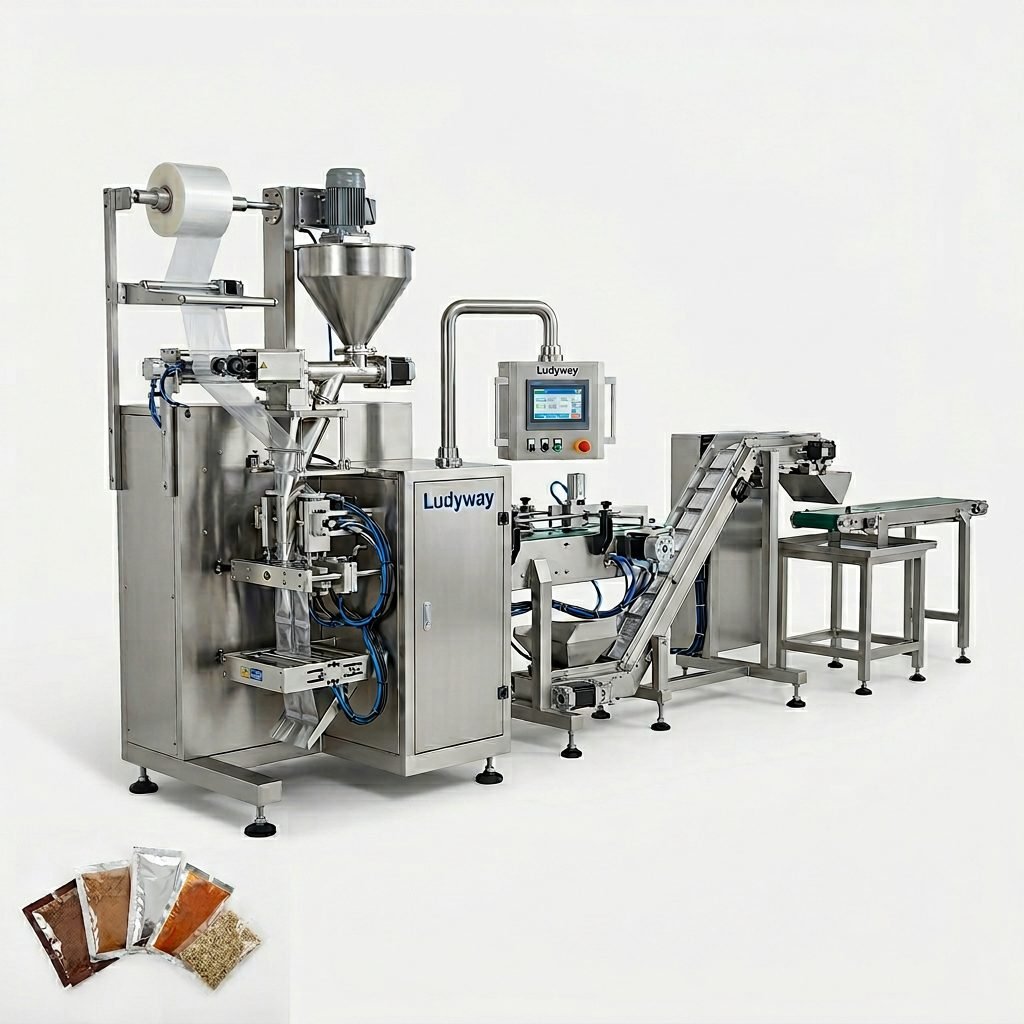
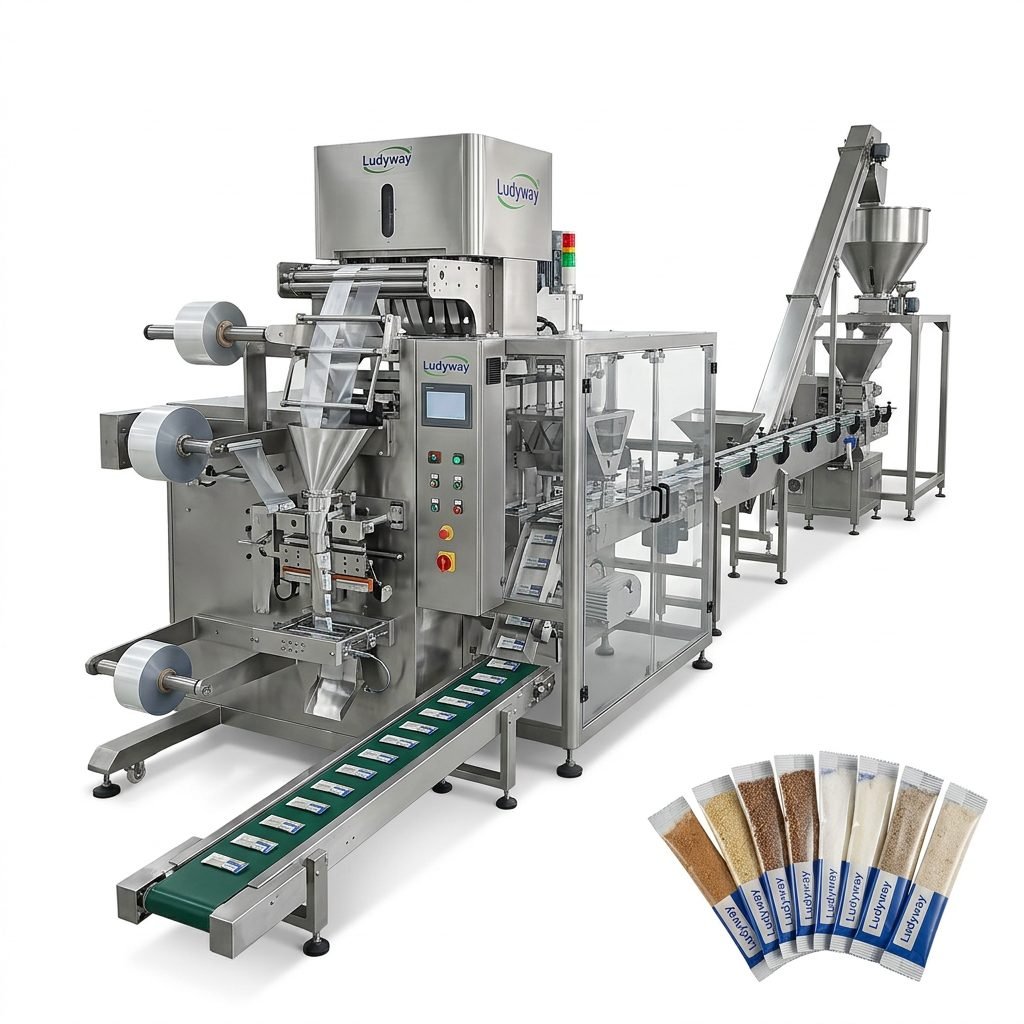
Long-term reliability demands a structured maintenance schedule. Develop a daily checklist covering sealing jaw cleaning, film tracking alignment, and metal detector calibration. Weekly, inspect forming collar surfaces for scratches that could catch jerky pieces. Quarterly, replace critical wear components like Teflon belts and thermocouples. Invest in remote diagnostics capabilities to shorten troubleshooting. For best results, partner with a manufacturer that provides immersive on-site training. For instance, Ludyway, a seasoned packaging machine manufacturer, offers comprehensive setup and operational training as part of every turnkey line delivery, ensuring your team achieves full competency from day one.
Common Pitfalls to Avoid
- Undersizing the nitrogen supply: Insufficient gas flow leads to marginal oxygen levels and reduced jerky shelf life. Size the generator or manifold 20% above peak consumption.
- Neglecting film compatibility: High-barrier metallized films require different temperature profiles than standard laminates. Always request a film trial from your supplier.
- Skipping a dedicated infeed solution: Manual feeding irregular jerky pieces causes starve-feeding and inconsistent weights. A vibratory pan or belt feeder is mandatory.
- Overlooking dust control: Jerky seasonings generate fine dust that can clog sensors. Specify IP65-rated cabinets and regular compressed air cleaning.