Specifying industrial packaging equipment for a large-scale production line is less about buying individual machines than about buying an uninterrupted flow. Material intake, dosing, primary packaging, inspection, secondary packaging and palletizing all have to be matched in throughput, control architecture and hygiene class, because a line rated at 1,200 sachets per minute is only ever as fast as its slowest checkweigher or case packer.
This guide is written for procurement managers, plant engineers and project leads evaluating complete packaging solutions for food, pharmaceutical, nutraceutical, chemical and pet-food plants. It covers what each segment of a turnkey line should deliver, which specifications and certifications to request in an RFQ, how primary packaging formats compare at industrial volumes, and how a project typically moves from quotation through factory acceptance testing to commissioning on your floor.
Packaging machinery engineering since the company was founded
Modern manufacturing facility in Zhongshan, Guangdong
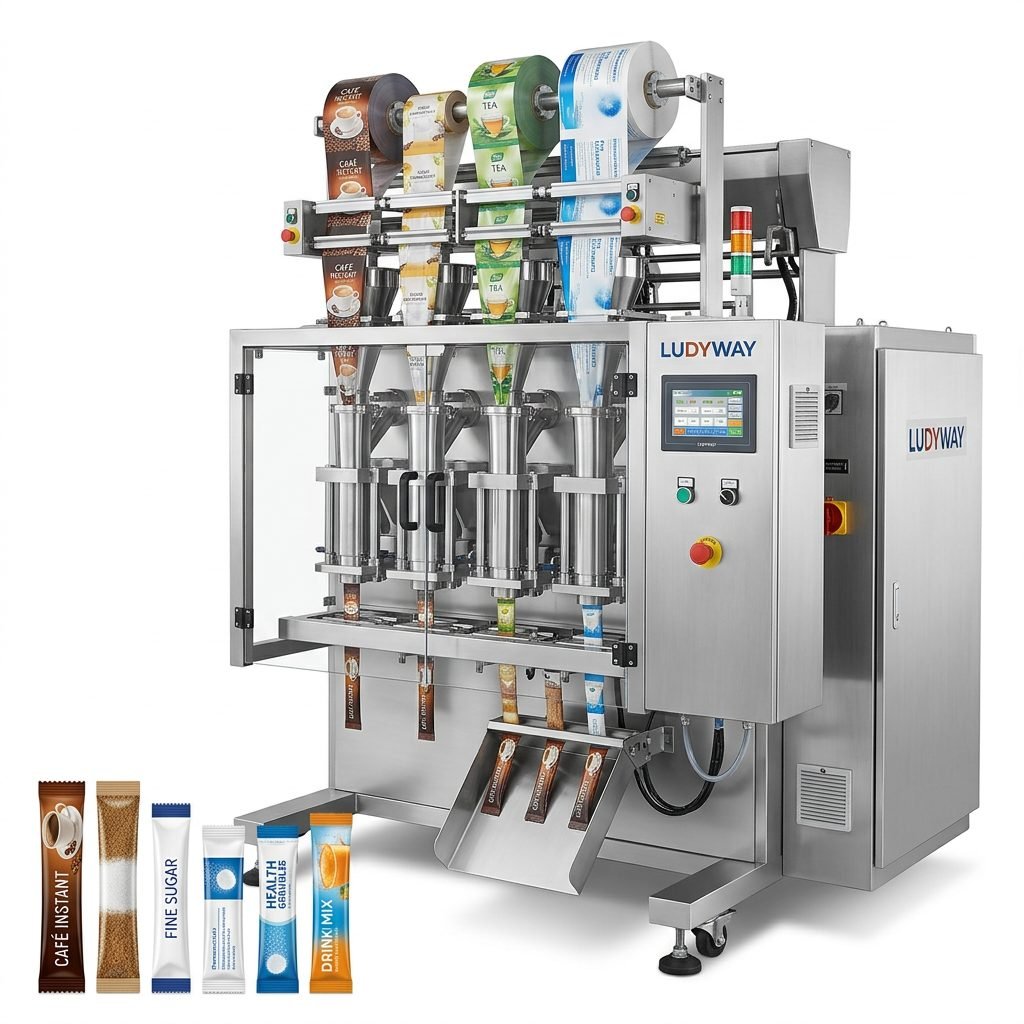
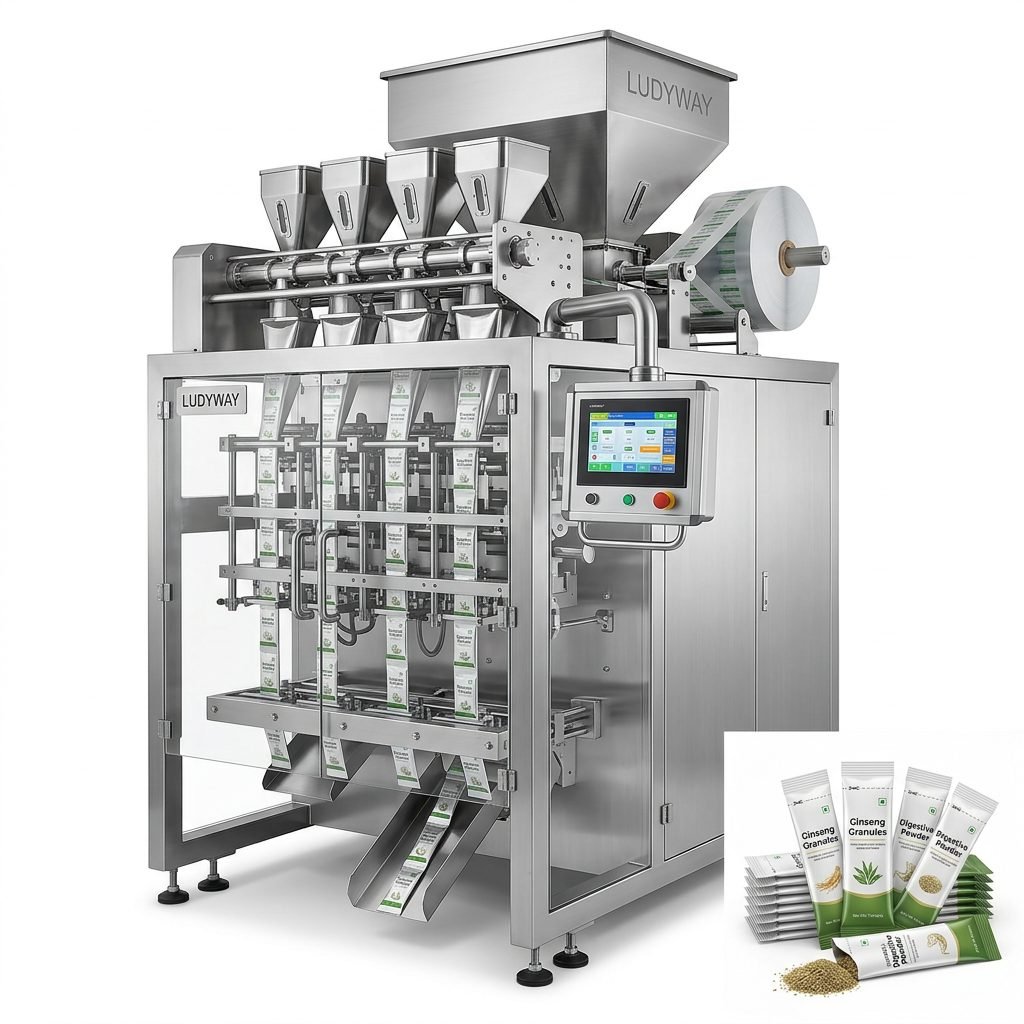
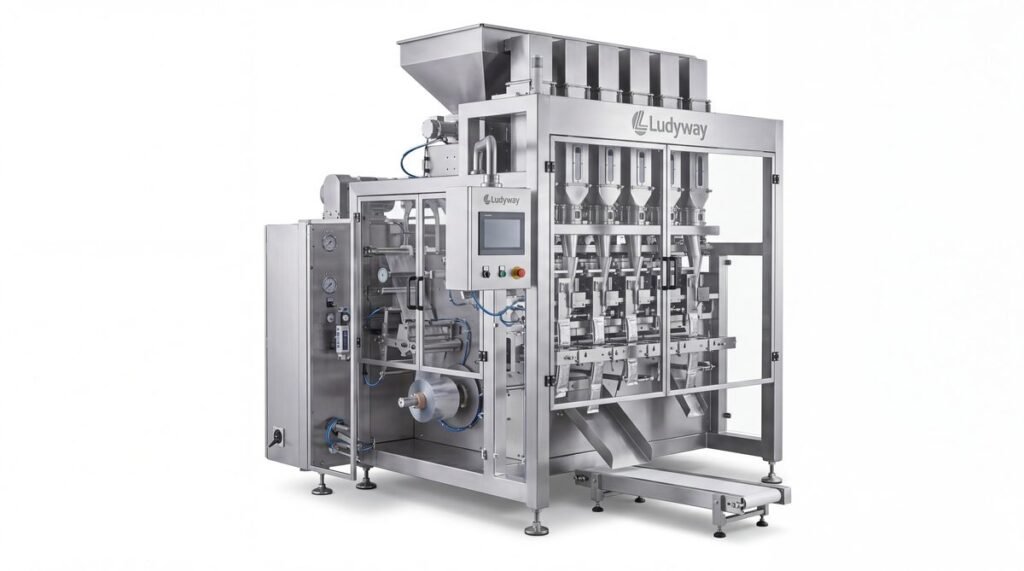
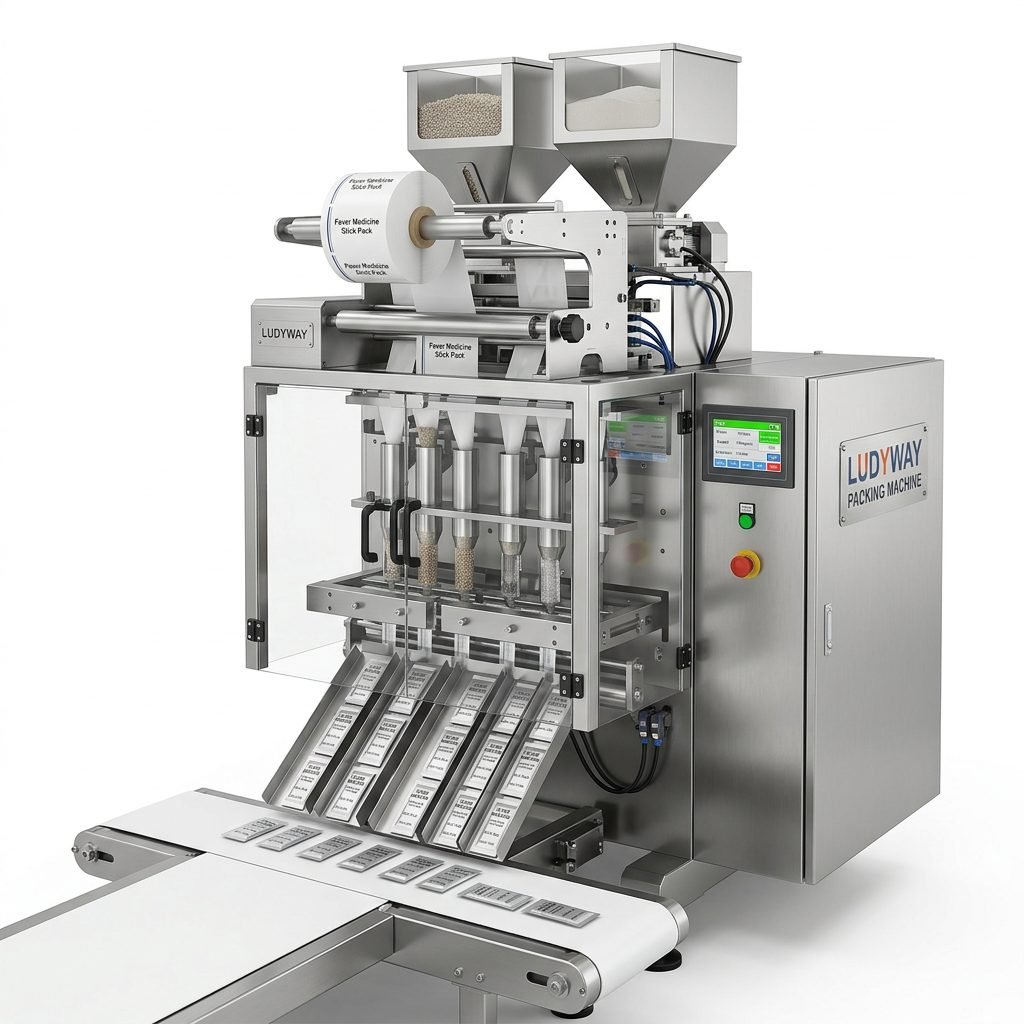
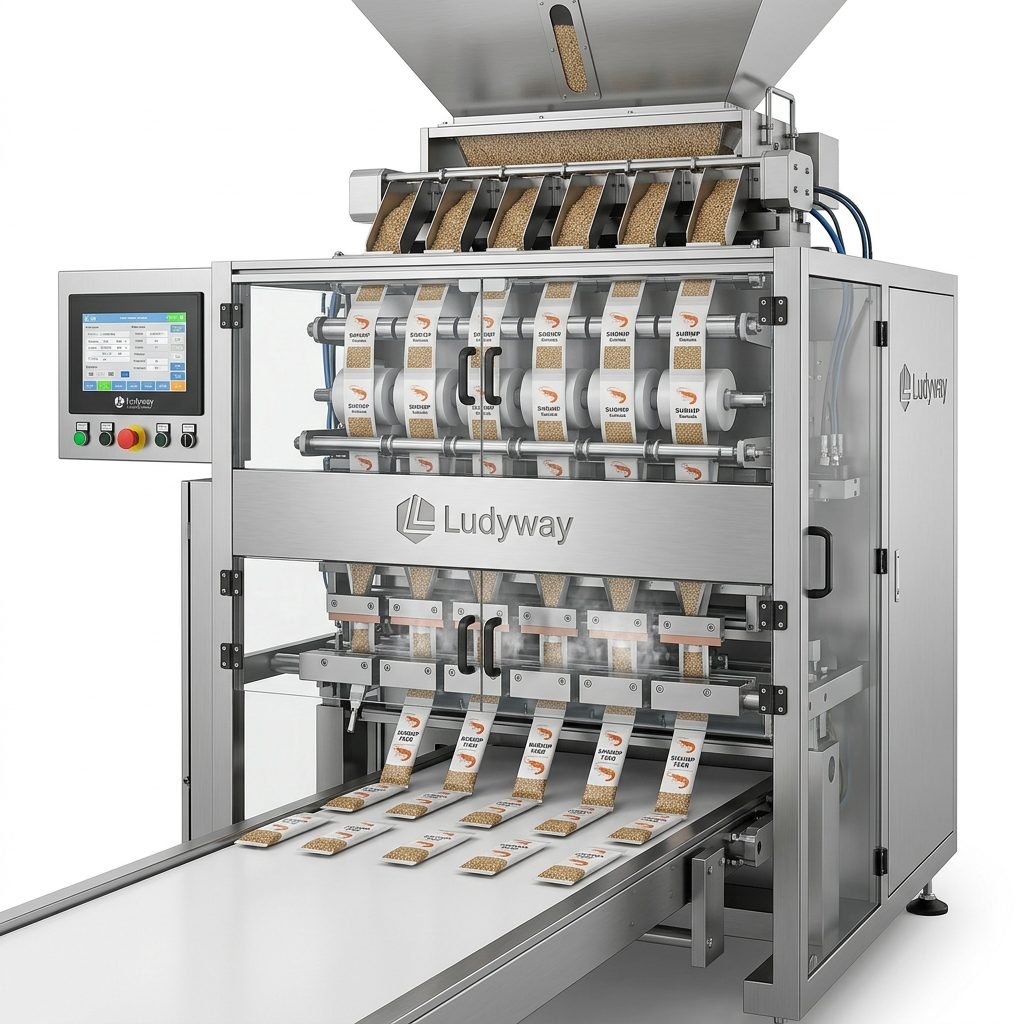
Multi-lane stick pack, sachet, bagging and line-integration equipment
Installed base served with remote and on-site technical support
Anatomy of a Complete Industrial Packaging Line
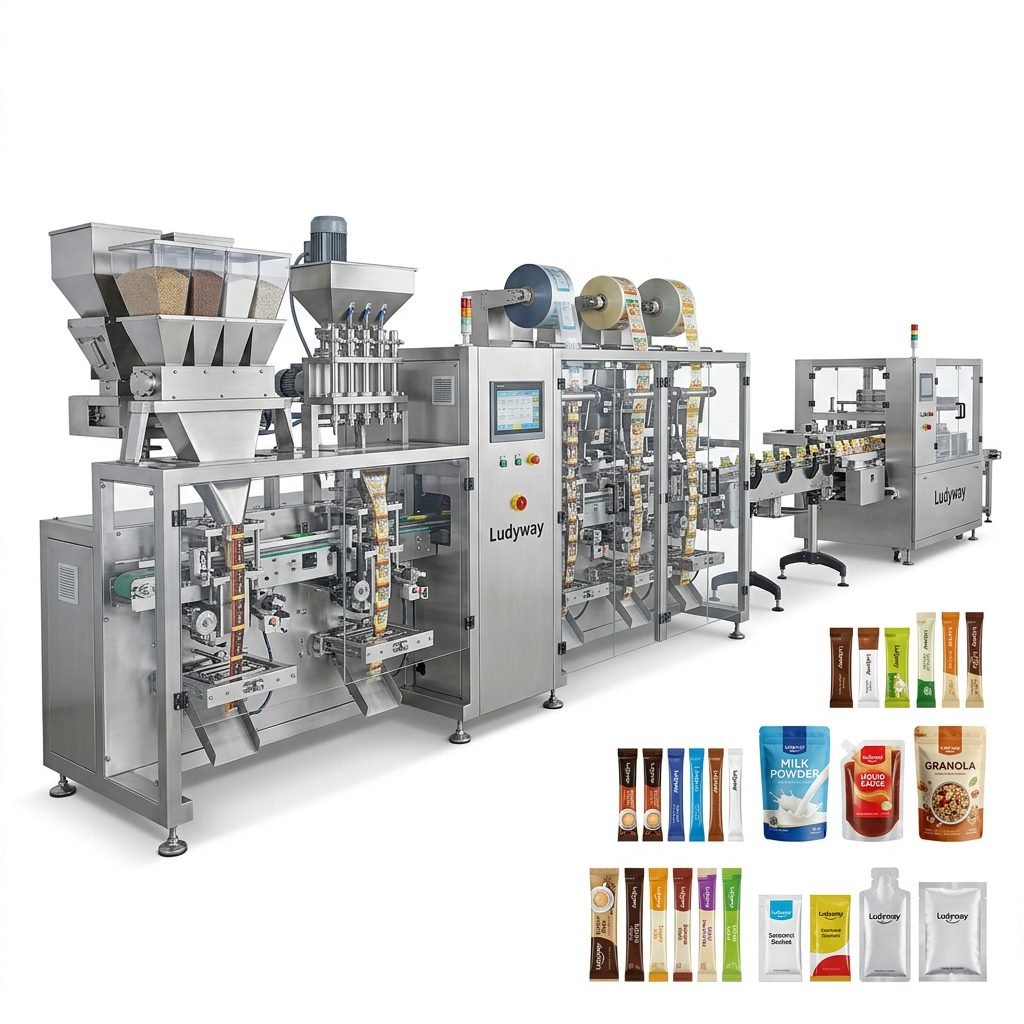
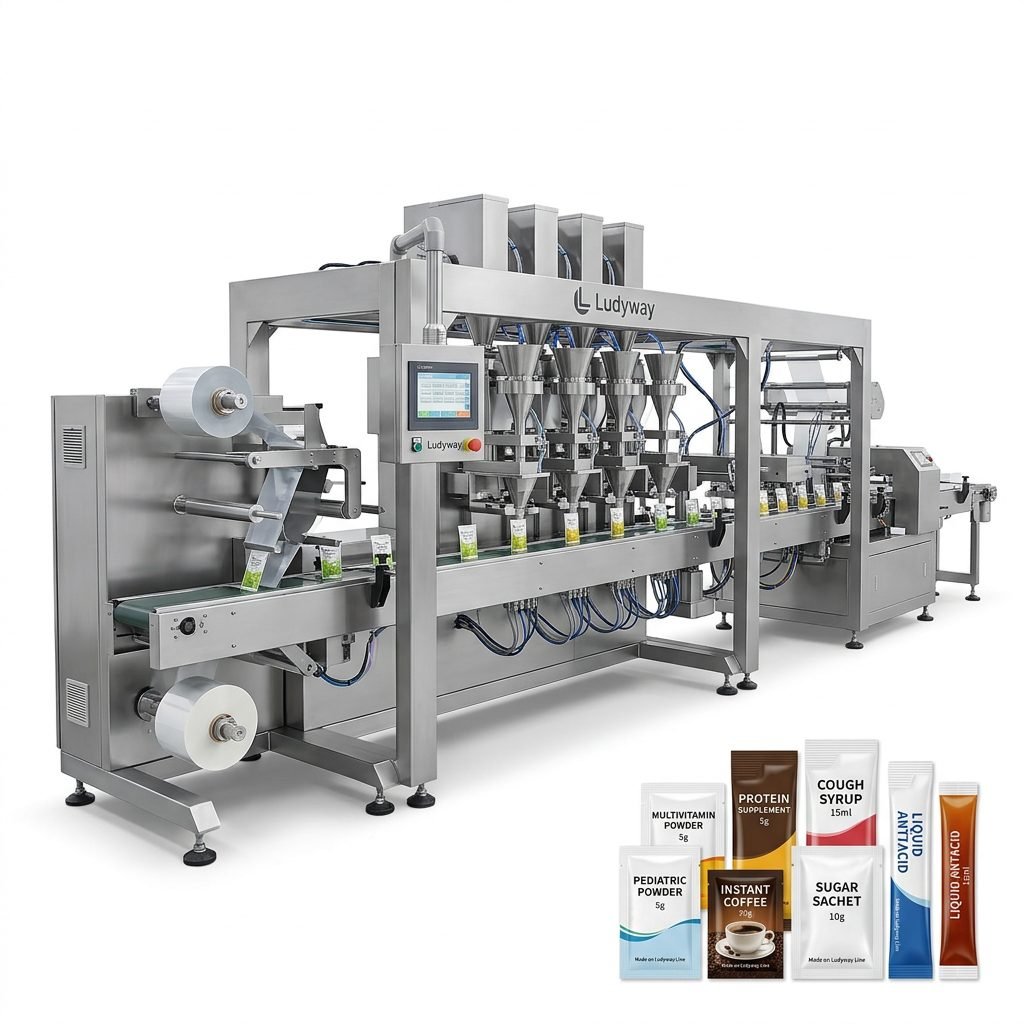
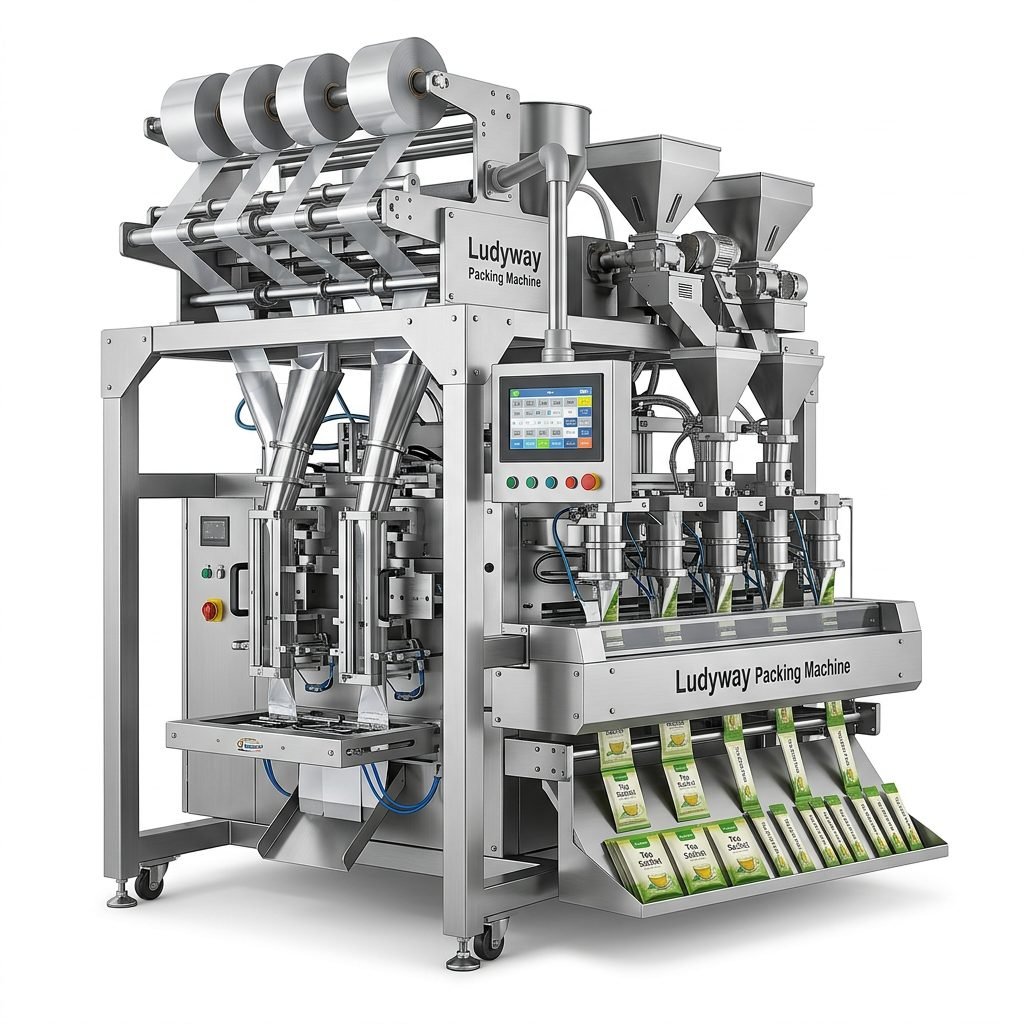
Integrated turnkey packaging line covering feeding, filling, inspection and end-of-line automation
A complete solution for high-volume production is best understood as five functional zones. Each zone has its own equipment class, its own bottleneck risk and its own set of standards, and a credible supplier should be able to quote, integrate and commission all five under one project scope.
- Upstream material handling: screw conveyors, vacuum feeders, Z-type bucket elevators and vibratory feeders that deliver product to the filler without segregation or dust loss.
- Dosing and primary packaging: auger fillers for powders, volumetric cups or multihead weighers for granules, piston or pump fillers for liquids, feeding multi-lane stick pack and sachet machines, premade pouch fillers or bagging systems.
- In-line inspection: dynamic checkweighers, metal detectors, X-ray and vision systems with automatic reject stations.
- Secondary packaging: sachet counting and collating, cartoners, case packers and case sealers.
- End of line: robotic or conventional palletizers, stretch wrapping and pallet labeling tied into warehouse systems.
The integration layer that connects these zones, usually a line PLC with HMI dashboards, recipe management and OEE reporting, is what distinguishes a true turnkey project from a collection of machines connected by conveyors. Ask early whether the supplier owns the line integration scope or subcontracts it, because that decides who is accountable when a handshake signal fails at 2 a.m.
Primary Packaging Formats at Industrial Volumes
Primary packaging sets the pace of the whole line. The table below summarizes the formats most commonly specified for large-scale food, pharmaceutical and chemical production and the throughput bands typically achievable with modern equipment. Actual output depends on fill weight, product flow characteristics and film quality, so always validate figures against your own product during a trial run.
| Format | Typical Products | Throughput Band | Dosing Method | Best Fit |
|---|---|---|---|---|
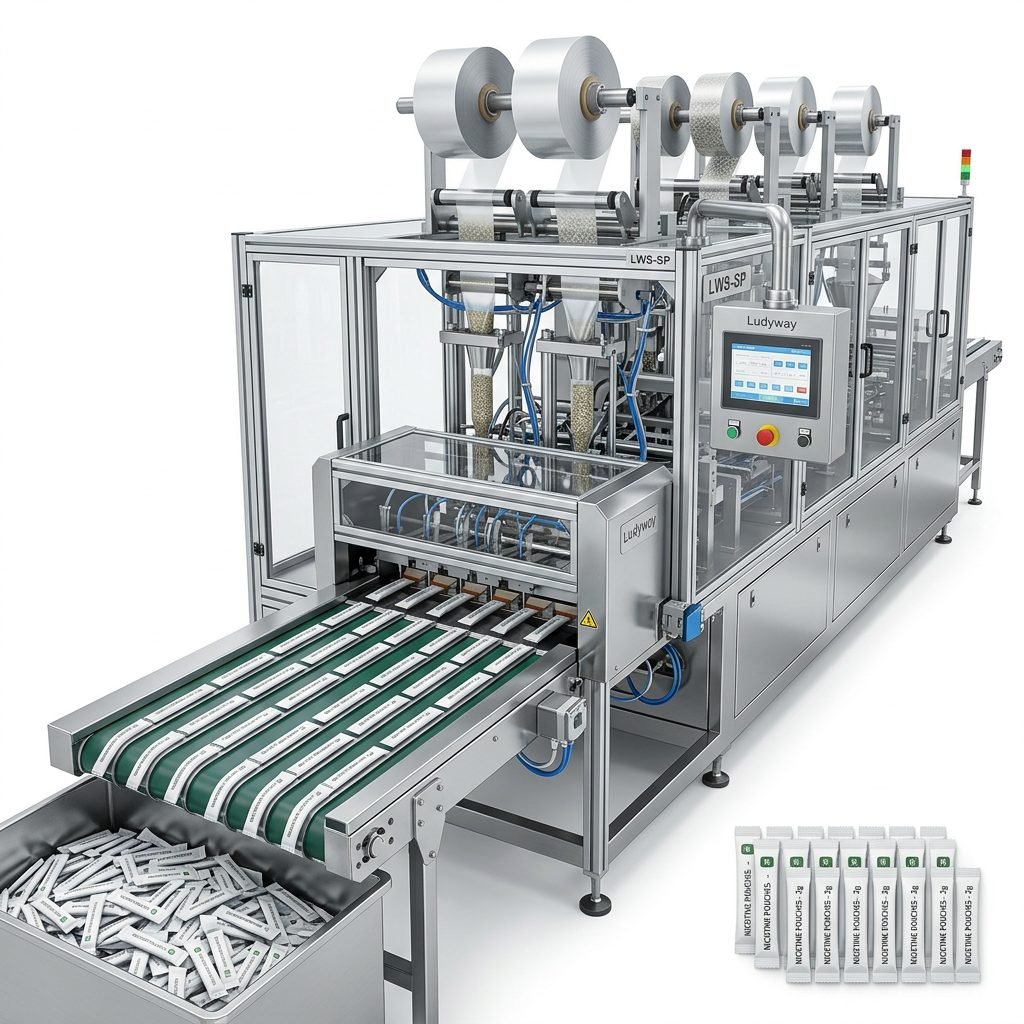
| Multi-lane stick pack | Instant coffee, electrolyte and protein powders, honey, sauces, nicotine pouches | 4–16 lanes, up to 1,000+ packs/min | Auger, volumetric cup, piston pump | Single-serve 0.5–50 g or 1–50 ml at very high output |
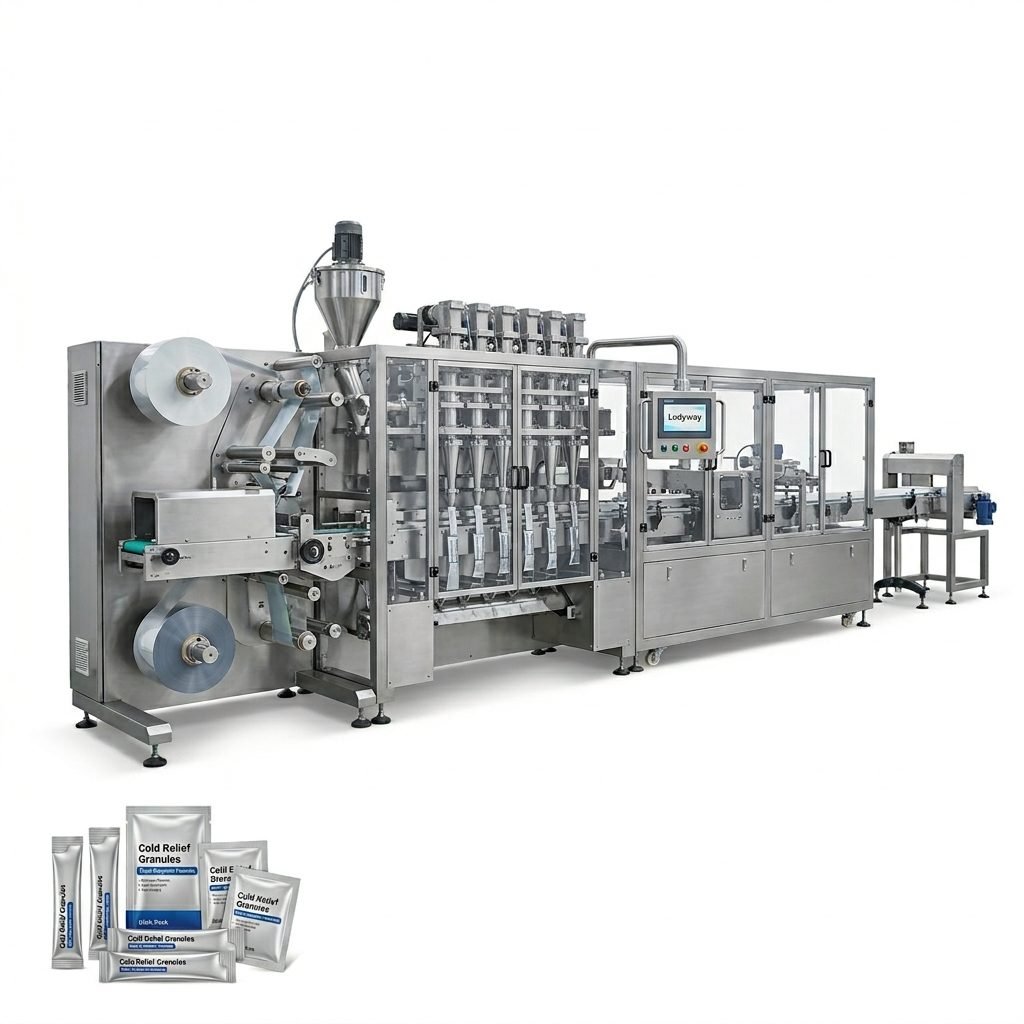
| Multi-lane 4-side-seal sachet | Pharma granules, ORS, seasonings, cosmetics samples, wet wipes | 2–12 lanes, 200–800 sachets/min | Auger, pump, vibratory or sheet feeding | Flat sachets up to ~150 mm with print-registered film |
| Premade pouch / doypack | Pet food, snacks, nuts, frozen food, liquid detergent | Rotary 6–10 station, 30–120 pouches/min | Multihead weigher, auger, liquid filler | Retail pouches 50 g–5 kg with zipper or spout |
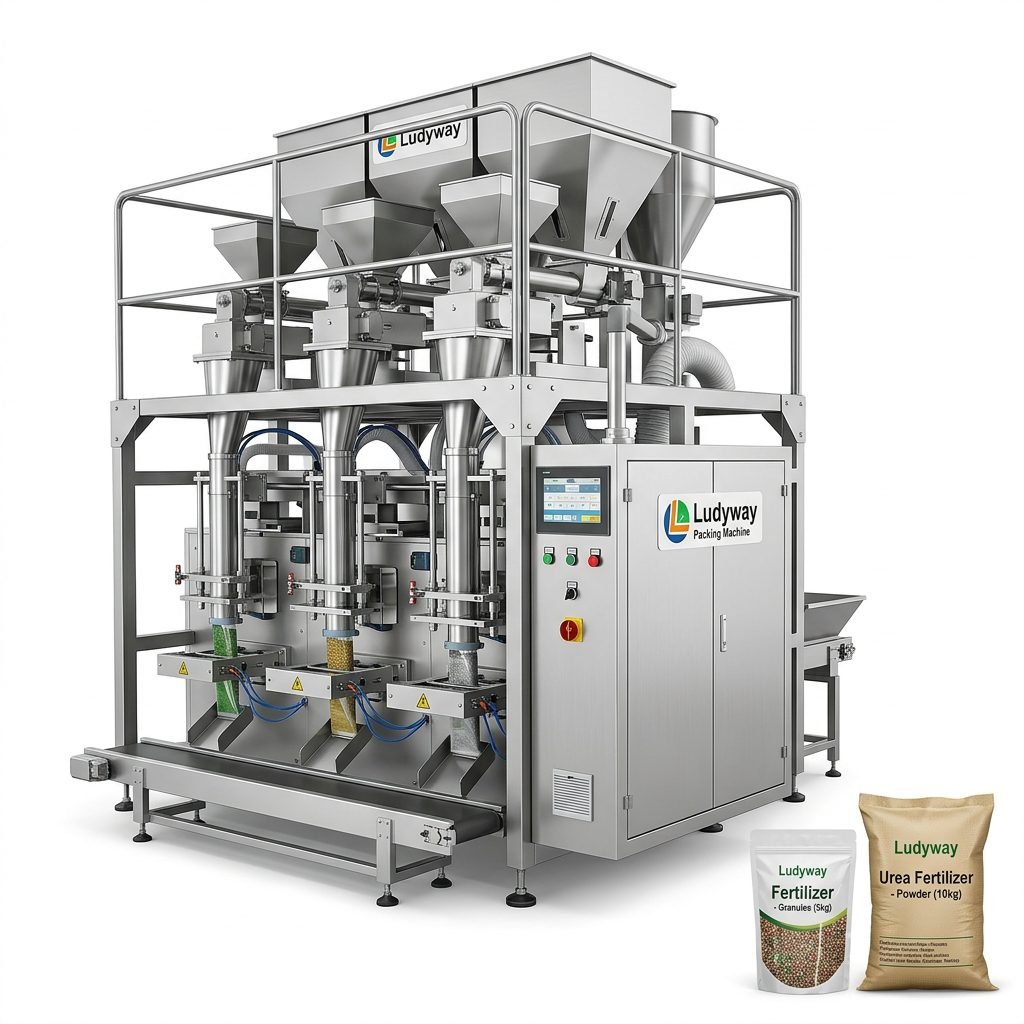
| Open-mouth / valve bag | Feed, fertilizer, flour, resin, construction chemicals | 10–50 kg bags, 400–1,200 bags/h | Net or gross weigher, impeller filler | Bulk solids feeding directly to palletizing |
| Bottle / vial / tube filling | Oral liquids, syrups, serums, body wash, toothpaste | Multi-head rotary, 60–300 containers/min | Piston, peristaltic, flow-meter | Rigid containers requiring capping and labeling |
Specifications Procurement Teams Should Put in the RFQ
Vague RFQs produce vague quotations. A user requirements specification (URS) that fixes the parameters below lets suppliers quote comparable configurations and gives you a contractual basis for factory acceptance testing later.
Throughput and availability
State required output in finished units per hour at a defined fill weight, plus the OEE or availability target you expect, typically 85% or higher for a mature line. Ask for changeover time between formats, since a 4-lane to 8-lane film change can consume an entire shift on poorly designed equipment.
Dosing accuracy and product behavior
Specify tolerance (for example ±1% of target weight or ±0.1 g, whichever is larger) and provide product data: bulk density, particle size, flowability, hygroscopicity, viscosity and temperature. Free-flowing granules, cohesive powders and foaming liquids each demand a different filler.
Controls, data and hygiene design
Require a named PLC platform, servo drives on sealing and film pull, OPC UA or Ethernet/IP connectivity for MES integration, and, for pharmaceutical lines, audit trails aligned with 21 CFR Part 11. Contact parts should be SS304 or SS316L with documented surface finish, and washdown areas need IP65 or better.
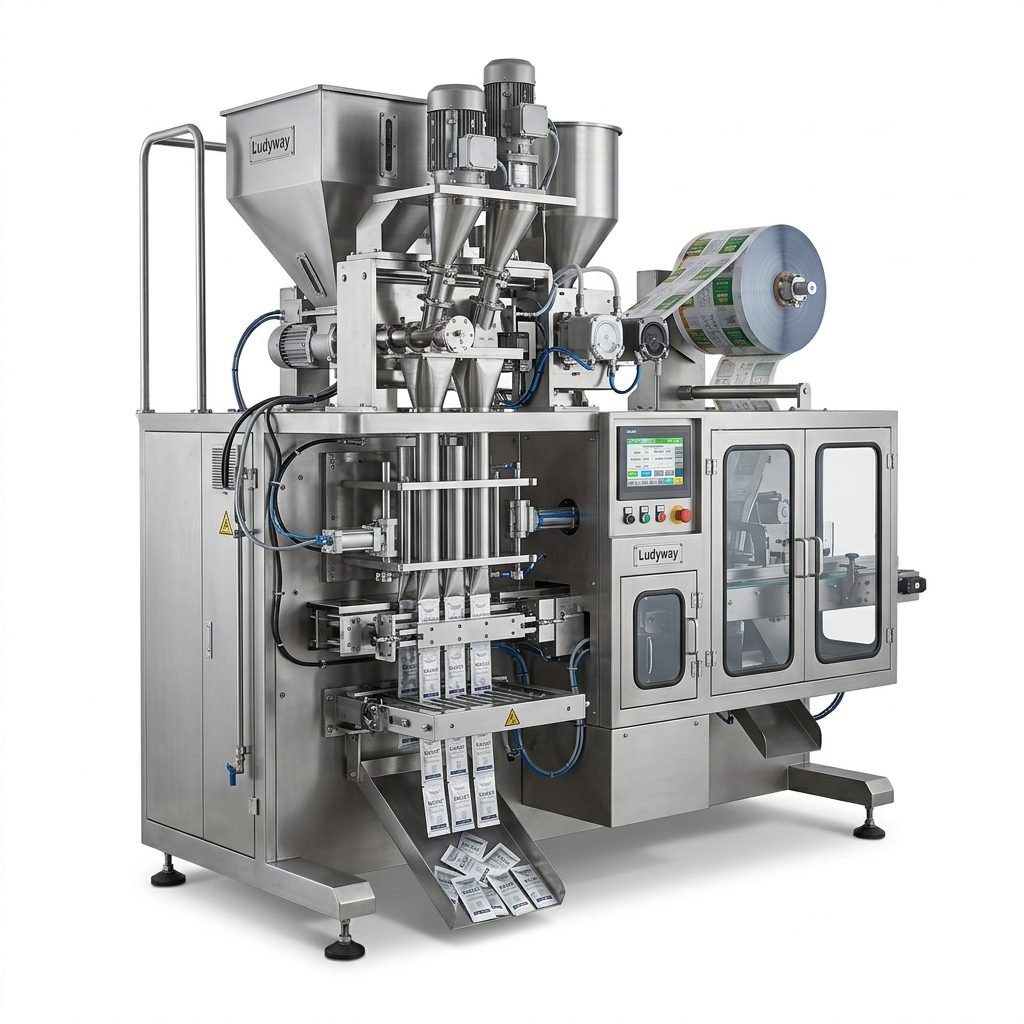
Multi-lane sachet system with servo-driven sealing and independent lane dosing
Practical tip: send 20–30 kg of actual product and a roll of your intended film to shortlisted suppliers before signing. A recorded trial run on the proposed filler is the cheapest insurance against dosing surprises after installation.
Compliance Requirements by Industry
Regulatory scope differs sharply between a seasoning plant and a sterile pharmaceutical facility, and the equipment specification must follow. The cards below summarize what auditors and regulators typically expect of large-scale packaging lines in each sector.
Food and Beverage
Product-contact materials, seals and lubricants must comply with food-contact rules such as the FDA food contact substances framework or EU Regulation 1935/2004. Lines should support HACCP with metal detection or X-ray, allergen changeover procedures and tool-free access for cleaning. CE marking and documented risk assessment are standard for European installations.
Pharmaceutical and Medical
GMP-compliant design, IQ/OQ/PQ documentation packages and electronic batch records are required. Sterile barrier systems for devices, wipes and dressings must be validated against ISO 11607, with seal strength and integrity testing built into the acceptance protocol. Serialization and tamper-evidence features are expected on cartoning lines.
Chemical, Agro and Feed
Combustible dusts call for ATEX or equivalent zone-rated electrics and integrated dust collection. Pesticides, fertilizers and additives require closed dosing, operator containment and robust weighing records for net-content compliance. Heavy bagging lines must meet local machinery safety directives and often need corrosion-resistant construction.
Sustainability rules now influence machine selection as well. Lines destined for the EU should be able to run mono-material PE or paper-based films that meet the recyclability targets of the EU Packaging and Packaging Waste Regulation, which typically means wider sealing windows, precise temperature control and gentler film tension than conventional laminates require.
From RFQ to Commissioning: How a Turnkey Project Runs
Large-scale packaging projects follow a predictable sequence. Knowing the milestones helps buyers plan budget releases, civil works and operator recruitment around realistic dates rather than optimistic ones.
Requirements and product trials
URS review, product samples tested on candidate fillers, film compatibility confirmed, output and tolerance targets frozen.
Layout and technical proposal
2D/3D layout against your floor plan, utility list (power, compressed air, dust extraction), machine list with model numbers and options.
Quotation and contract
Itemized quotation per machine and integration scope, Incoterms, payment milestones, warranty terms, spare-parts kit and training days defined.
Manufacturing and FAT
Build, pre-assembly of the full line at the supplier’s plant, factory acceptance test with your product and film, witnessed on site or by video.
Shipping and installation
Export packing, sea or air freight, rigging, mechanical and electrical installation by supplier engineers alongside your maintenance team.
SAT, training and ramp-up
Site acceptance test against contractual output, operator and maintenance training, documentation handover and remote support during ramp-up.
Inspection and End-of-Line: Where Large Lines Lose Output
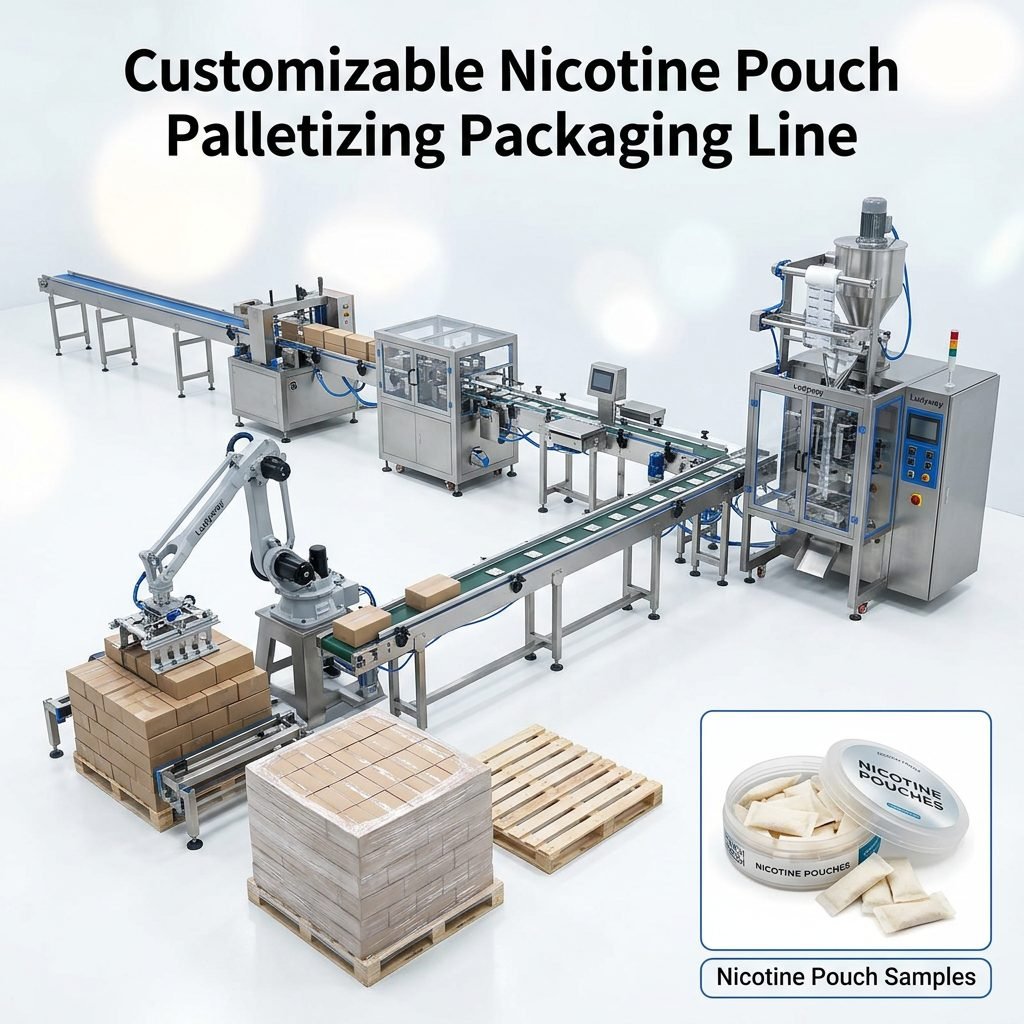
Automated palletizing cell closing a high-speed pouch packaging line
Plants frequently invest heavily in the primary packer and then starve it with undersized downstream equipment. Two areas deserve special attention when sizing a complete solution.
Inspection capacity. A high-precision dynamic checkweigher must be rated above the packer’s peak output, not its average, and reject logic has to be verified at full speed. For multi-lane systems, decide whether inspection happens per lane or after collation, as this changes conveyor layout and floor space considerably.
Palletizing and wrapping. Case output from a 1,000-pack-per-minute stick line can exceed 20 cases per minute, which is beyond manual stacking and marginal for low-end palletizers. A robotic palletizing system with pattern software and integrated stretch wrapping keeps the line balanced and removes the most common ergonomic injury point on the floor.
Lead Times, Minimum Orders and How Quotations Are Structured
Industrial packaging equipment is quoted per project rather than from a price list, because lane count, dosing type, film width, inspection options and automation level change the scope substantially. The reference ranges below reflect typical practice for purpose-built lines shipped from China to international customers.
| Scope | Typical Lead Time | Minimum Order | What the Quote Includes |
|---|---|---|---|
| Standalone multi-lane machine | 35–60 days after deposit and drawing approval | 1 unit | Machine, standard format parts, manuals, one-year warranty, remote commissioning support |
| Packer plus inspection and cartoning | 60–90 days | 1 line | Line layout, conveyors, integrated controls, FAT with customer product, on-site installation option |
| Full turnkey line with palletizing | 90–150 days depending on robotics and custom feeding | 1 project | Everything above plus utilities drawings, spare-parts kit, operator training, SAT and ramp-up support |
What to send for an accurate quotation
- Product name, physical form and a safety or technical data sheet
- Fill weight or volume per pack and target packs per hour
- Pack format, dimensions and intended film or container
- Secondary pack configuration (units per carton, cartons per pallet)
- Plant voltage, frequency, available floor space and ceiling height
- Destination country for certification, Incoterms and documentation
Commercial terms you should expect
- Itemized quotation valid for a defined period, in USD or EUR on request
- FOB, CIF or DAP pricing with export-grade packing
- Milestone payments tied to deposit, FAT approval and shipment
- Written FAT and SAT protocols with measurable acceptance criteria
- Recommended two-year spare-parts list with part numbers
- Named after-sales contact and response-time commitment
Why Large-Scale Producers Specify Ludyway Packaging Lines
Ludyway is one of the largest packaging machine manufacturers in China, focused on multi-lane stick pack, sachet, granule, powder, liquid and pouch packaging systems for the food, pharmaceutical and health industries. From a 20,000 m² production facility in Nanlang Town, Zhongshan, the company builds more than 50 intelligent machine models and delivers complete turnkey packaging solutions that combine feeding, filling, inspection, cartoning and palletizing under a single engineering scope.
With 130+ packaging engineers and technicians, 200+ manufacturing equipment units in-house and over three decades of field experience across food, pharmaceutical, chemical, cosmetic and feed applications, Ludyway handles the full project cycle from product trials and layout design to FAT, installation and SAT. Customers in more than 100 countries and regions rely on its service network, and the company’s export growth trajectory is documented in an independent industry press report.
Buyers who want to verify build quality are welcome to visit the Zhongshan factory or meet the engineering team at international packaging exhibitions such as those organized by PMMI, whose State of the Industry research is also a useful benchmark for automation trends when building a business case.
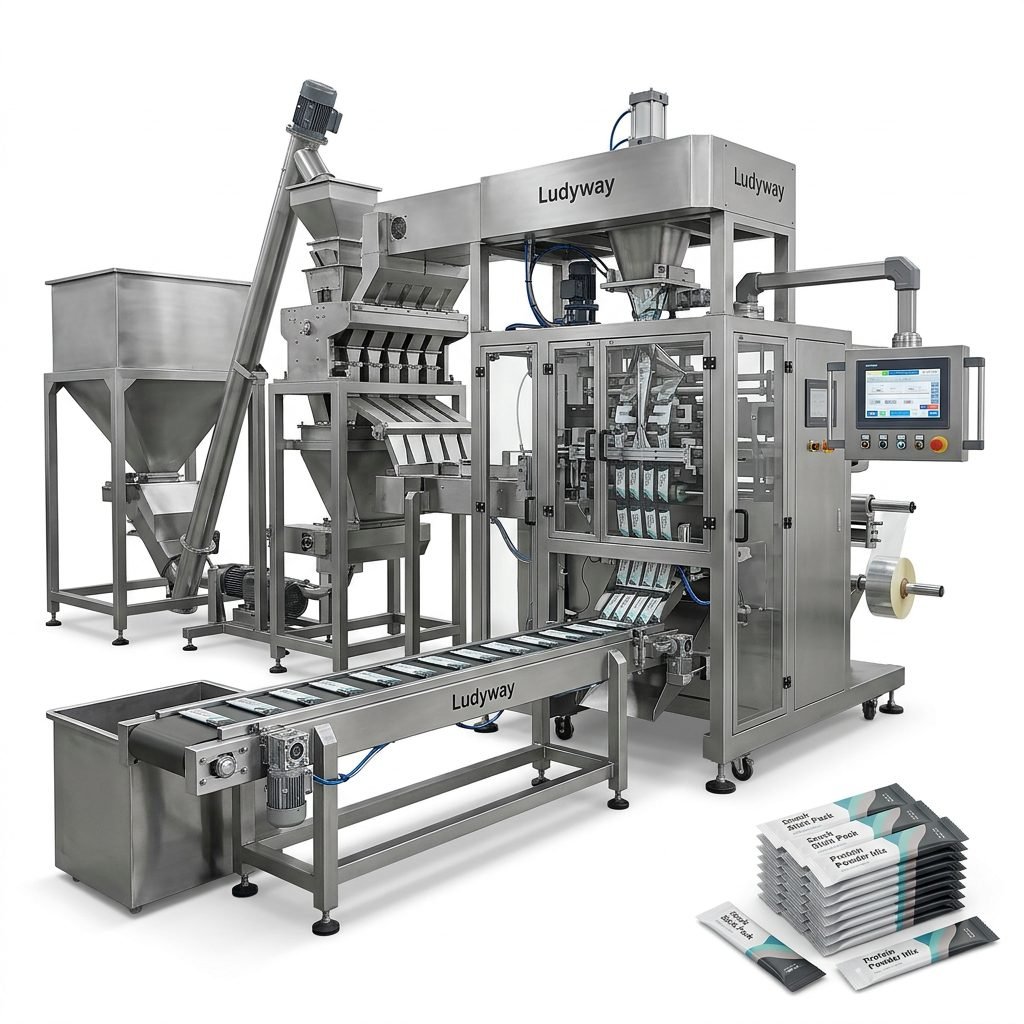
Multi-lane automated snack packaging line engineered and built by Ludyway
Turnkey Packaging Lines by Application
The following line configurations are among the most frequently requested by large-scale producers. Each is engineered to order around your product, output target and plant layout; open a product page to review the standard scope and request a tailored proposal.
Integrated Turnkey Packaging Lines
Granule, Powder, Liquid & Pouch
Quote on Request
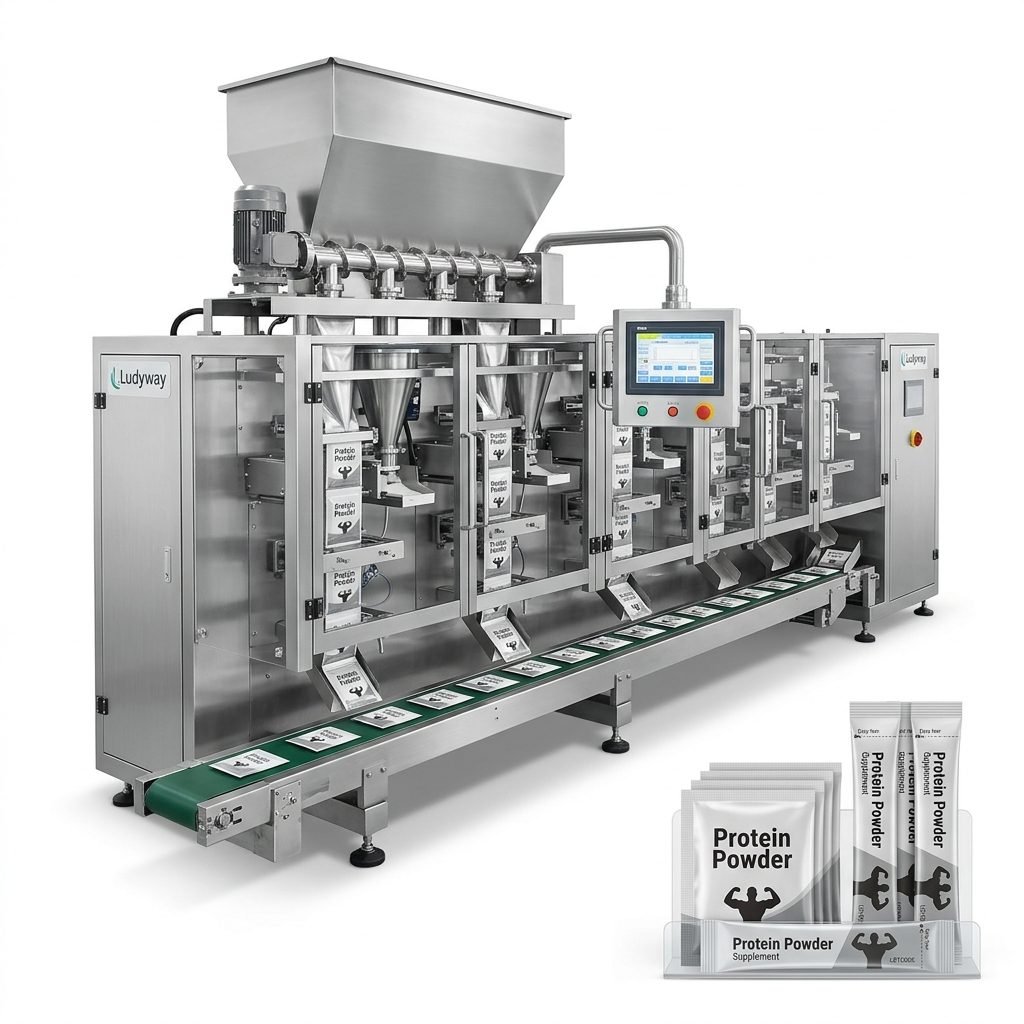
Protein Powder Packaging Lines
Sports Nutrition, Multi-Lane Sachet
Quote on Request
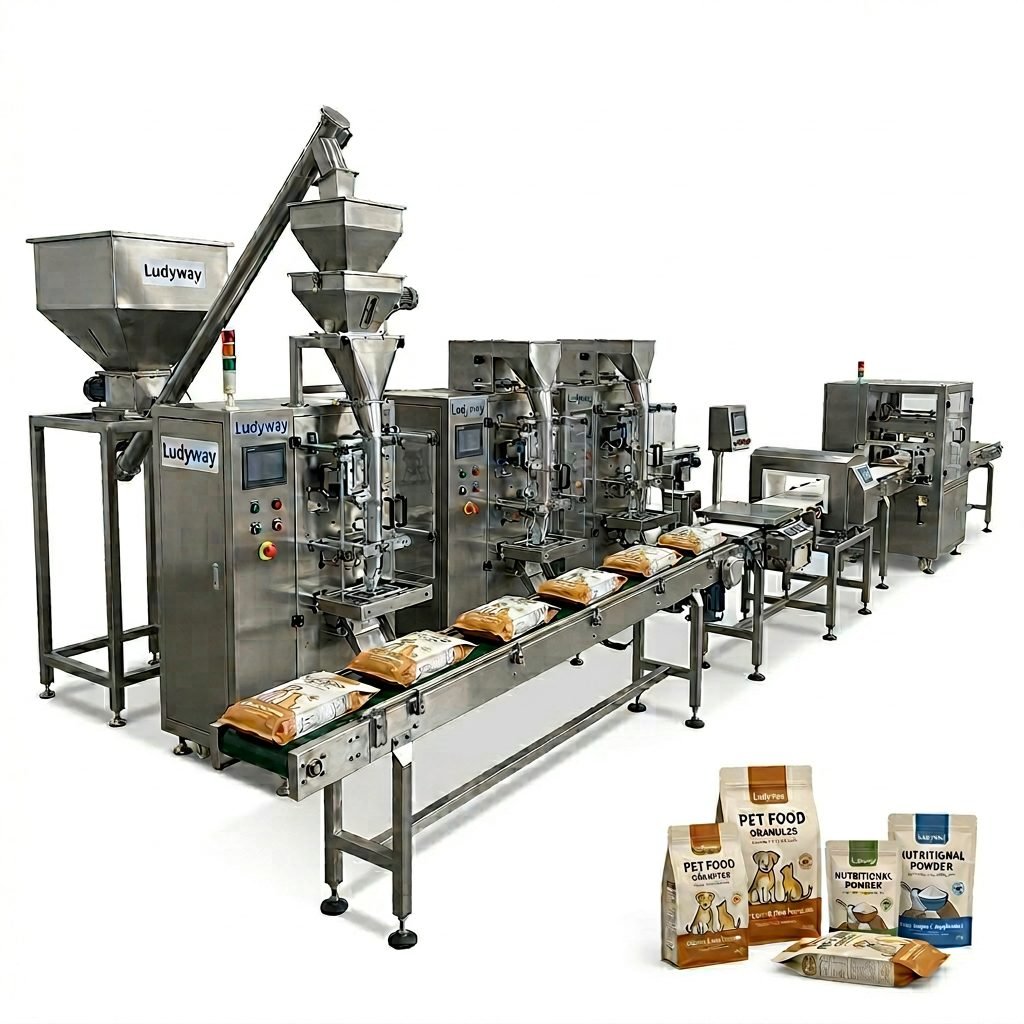
Automated Pet Food Lines
Kibble & Treats, Pouch and Stick Pack
Quote on Request
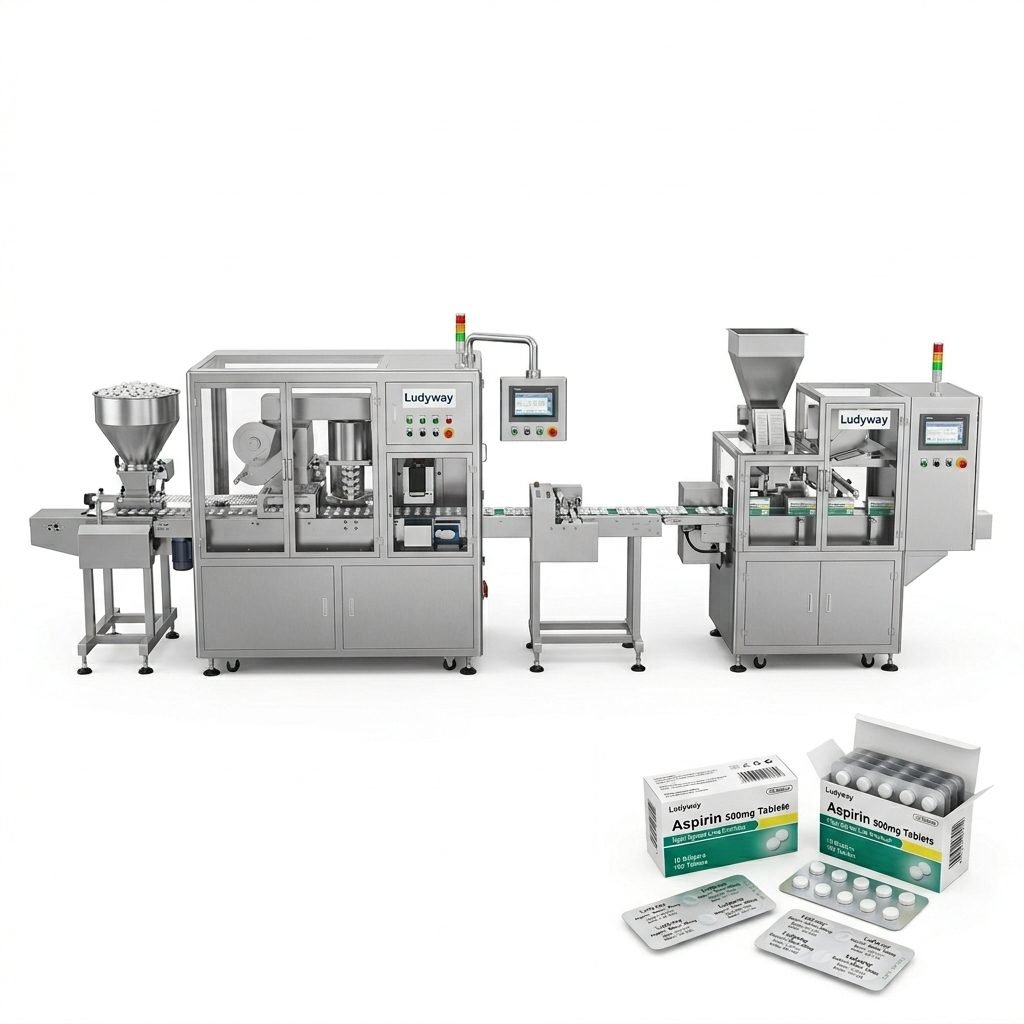
Pharmaceutical Tablet Packaging Lines
Pharma, Blister & Cartoning
Quote on Request
Frequently Asked Questions
How do I size a packaging line for future growth without overspending now?
Specify the primary packer for your three-year volume and buy conveyors, inspection and palletizing rated 20–30% above it. Multi-lane machines can often be ordered with mechanical provision for additional lanes, so you pay for extra dosing heads later rather than replacing the frame.
Can one line handle powders, granules and liquids?
Yes, if the filler is designed as a modular dosing station. Auger, volumetric cup and piston pump units can be swapped on the same multi-lane frame, although changeover time, cleaning validation and seal parameters differ, so plan production campaigns accordingly.
What documentation should come with a pharmaceutical packaging line?
Expect a design qualification file, material certificates for contact parts, electrical schematics, FAT and SAT protocols with results, IQ/OQ templates, calibration certificates for weighing and temperature sensors, and software documentation covering user levels and audit trails.
How is after-sales support handled for equipment installed overseas?
Reputable manufacturers combine remote diagnostics through the line PLC, video-assisted troubleshooting, a recommended spare-parts stock held at your site, and dispatch of field engineers for major interventions. Confirm response times and travel terms in the contract rather than relying on verbal assurances.
Is factory acceptance testing really necessary for a complete line?
For any multi-machine project, a witnessed FAT with your own product and packaging material is the single most effective risk control. Problems found in the supplier’s workshop are fixed in days; the same problems found after shipment can delay start-up by months.
Which flexible materials can modern multi-lane machines run?
Standard laminates such as PET/AL/PE and PET/PE, plus recyclable mono-PE, mono-PP and heat-sealable paper structures, provided the sealing jaws and film tension are configured for them. Industry guidance from the Flexible Packaging Association is helpful when selecting sustainable structures.
Request a Line Proposal, Trial Run or Equipment Catalog
If you are planning or upgrading a large-scale production line, Ludyway’s engineering team can review your product data, prepare a layout and itemized proposal, and arrange a recorded trial on the appropriate multi-lane, pouch or bagging system using your own samples. Catalogs covering all 50+ machine models and reference turnkey projects are available on request.
Email: info@ludyway.com
WhatsApp: +86 131 2959 2456
Factory: Nanlang Town, Zhongshan, Guangdong, China — factory visits and exhibition meetings can be scheduled through the contacts above.