Investing in the right juice packaging machine is one of the most critical decisions for any beverage manufacturer. Whether you are launching a fresh juice brand, scaling up production of fruit concentrates, or expanding into liquid sachet and stick pack formats, the equipment you choose will directly impact your product quality, production efficiency, shelf life, and overall profitability. A poorly matched machine can lead to downtime, inconsistent filling, packaging waste, and compliance issues — all of which undermine your brand and bottom line.
This comprehensive buyer’s guide walks you through every essential factor to consider when selecting a juice packaging machine, helping you make an informed, confident decision that supports both your current needs and future growth plans.
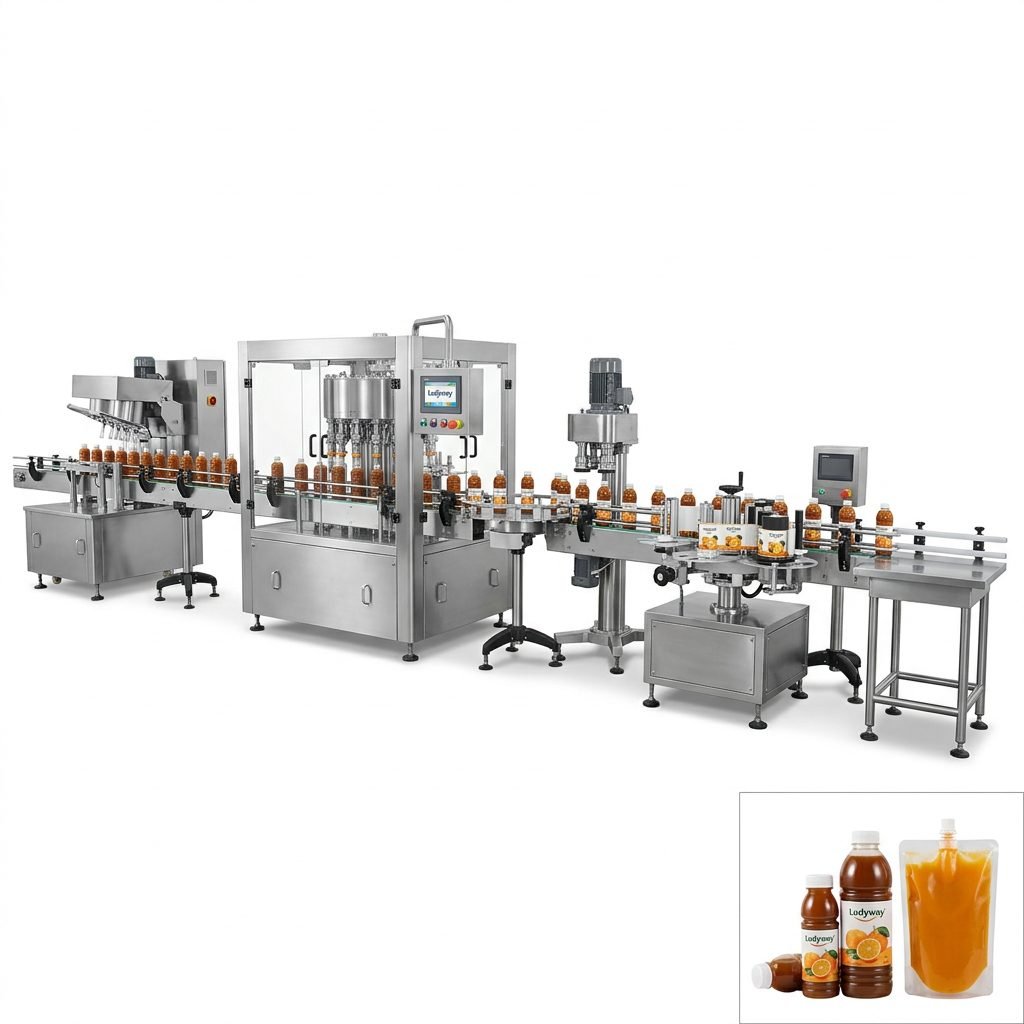
Understand Your Juice Product Characteristics First
Before evaluating specific machinery, you need a thorough understanding of the product you will be packaging. Juice products vary widely in their physical and chemical properties, and these characteristics directly determine the appropriate filling and sealing technology. Consider the following factors carefully:
- Viscosity and consistency — Is your product a thin, water-like juice, a pulpy orange juice with suspended solids, a thick concentrate, or a viscous smoothie? Low-viscosity liquids require different filling nozzles and flow control than high-viscosity or particulate-containing products.
- Particle content — Juices containing fruit pulp, fiber, seeds, or added pieces demand filling systems designed to handle particulates without clogging or inconsistent dosing.
- Foaming tendency — Some juice formulations foam significantly during filling, which can cause inaccurate fill levels and seal contamination. Bottom-up or sub-surface filling mechanisms may be necessary.
- Temperature at filling — Will the juice be filled hot (hot-fill for extended shelf life), cold (cold-pressed or fresh juice requiring refrigeration), or at ambient temperature? This affects material compatibility and machine configuration.
- Preservation method — Whether you use aseptic processing, pasteurization, high-pressure processing (HPP), or preservatives will influence the type of packaging machine and environment required.
Taking time to fully characterize your product upfront prevents costly mistakes later. For further guidance on industry best practices, refer to resources from the Packaging Machinery Manufacturers Institute (PMMI), which provides extensive technical information on packaging technologies.
Define Your Target Packaging Format
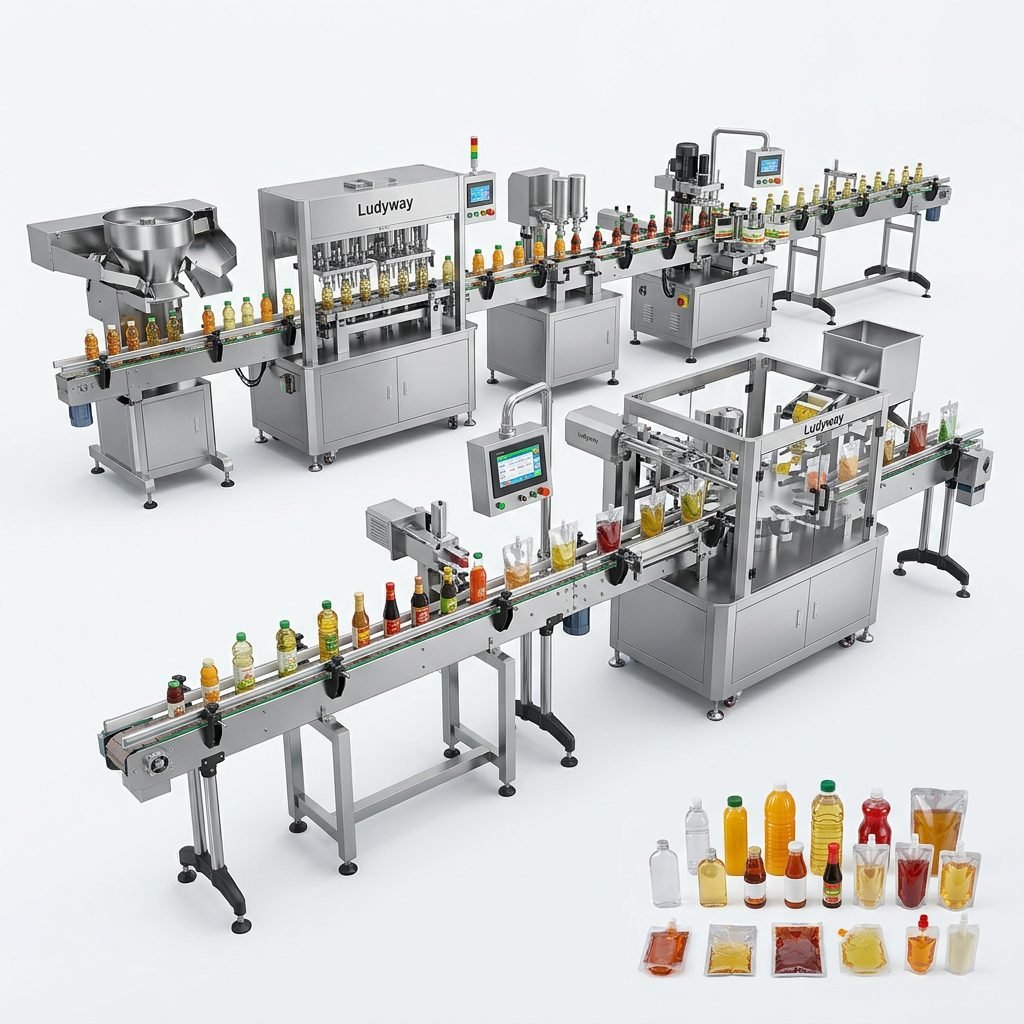
Juice products are packaged in a wide range of formats, and your choice of packaging format will determine the type of machine you need. The most common juice packaging formats include:
| Packaging Format | Typical Applications | Key Machine Type |
|---|---|---|
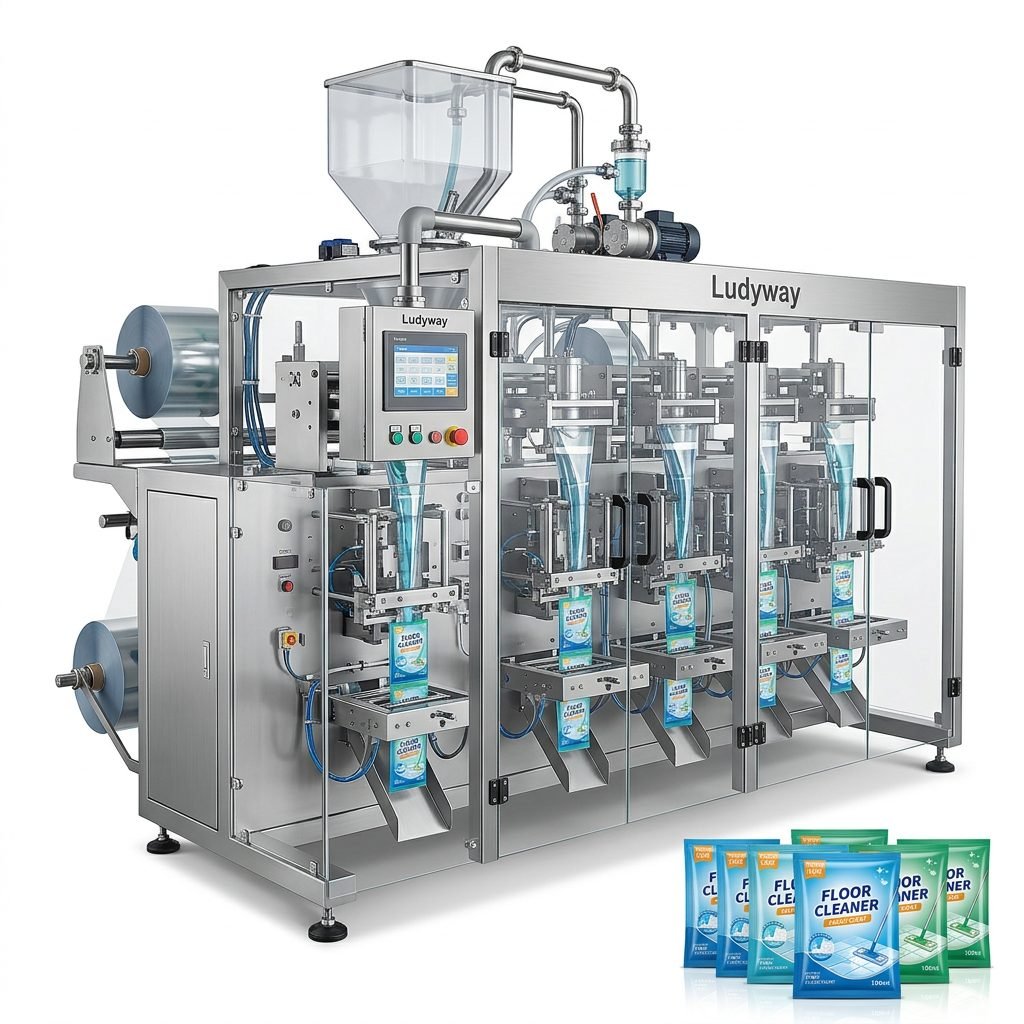
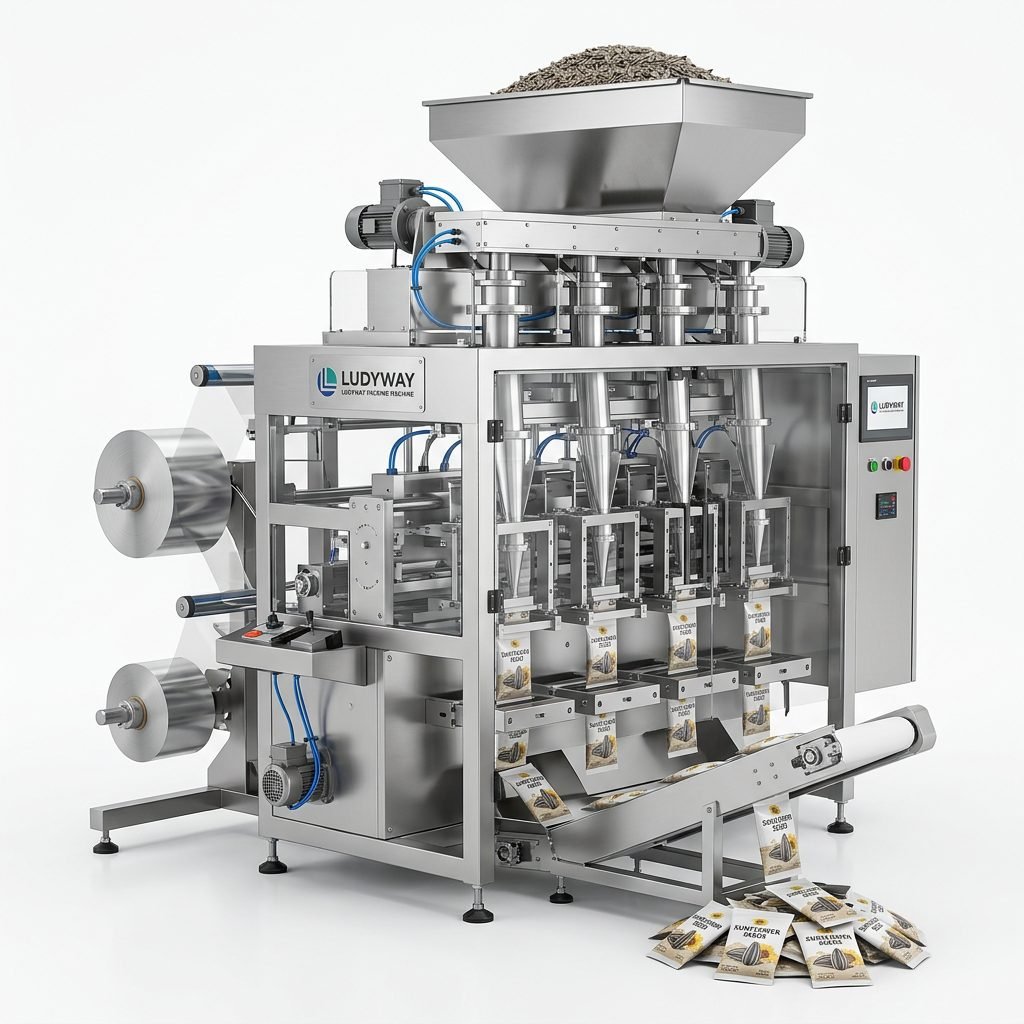
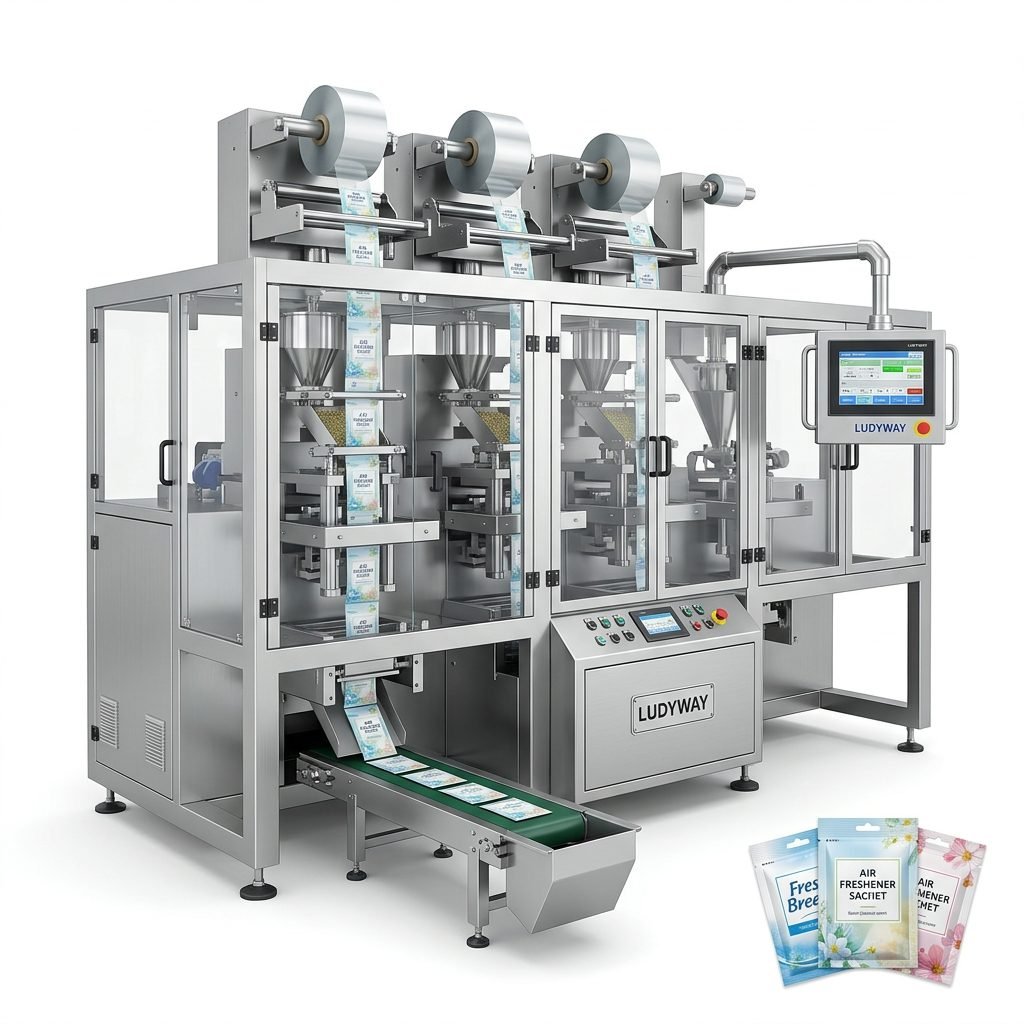
| Sachets & Stick Packs | Single-serve juice powder, liquid concentrates, portable shots | Multi-lane sachet / stick pack machine |
| Pouches & Doypacks | Juice drinks, smoothies, fruit purees, kids’ beverages | Premade pouch filling & sealing machine or VFFS with spout insertion |
| Bottles (PET, Glass, HDPE) | Premium juices, cold-pressed juice, functional beverages | Bottle filling & capping line |
| Cartons & Gable-Top | Milk-based juice drinks, large-format family juices | Carton filling machine |
| Bulk Bags & Bag-in-Box | Juice concentrates for B2B, food service, or re-packaging | Bulk liquid filling system |
Your packaging format decision should align with your target market, distribution channel, product positioning, and shelf-life requirements. Single-serve stick packs and sachets have grown significantly in popularity due to their portability, portion control, and lower packaging costs. For detailed data on packaging format trends, the Flexible Packaging Association offers valuable market insights.
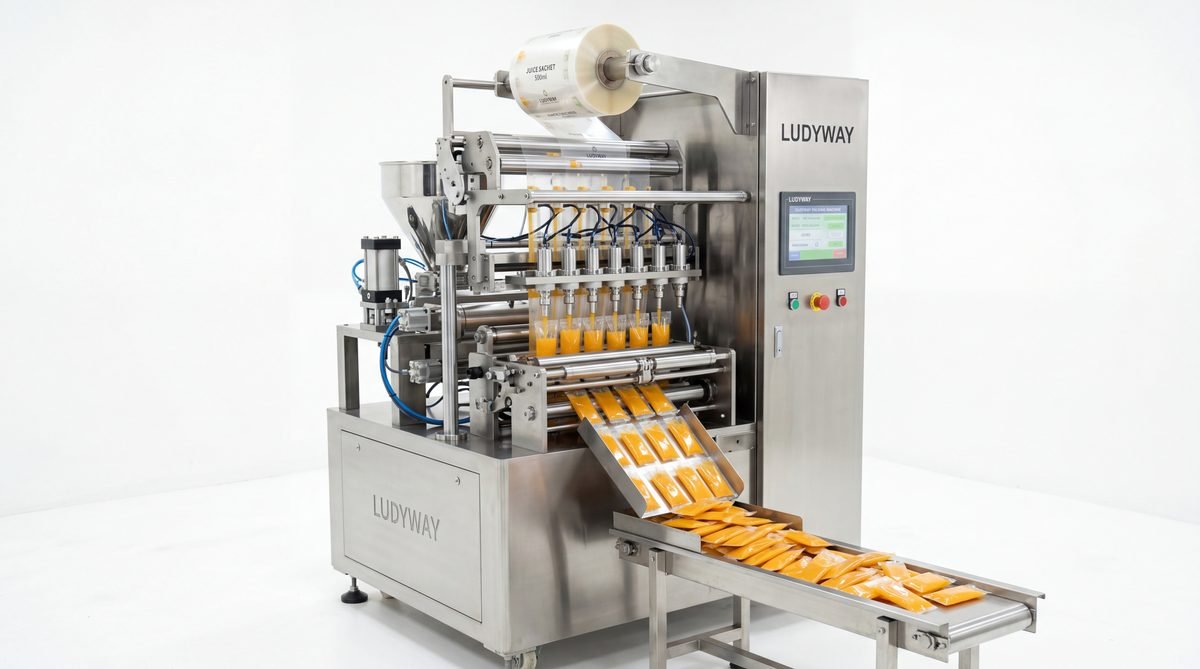
Determine Required Production Capacity and Automation Level
Production capacity is measured in units per minute, pouches per hour, or bottles per shift, depending on your packaging format. When calculating your required output, consider not only your current production volume but also projected growth over the next 3–5 years. A machine that barely meets today’s demand may become a bottleneck tomorrow.
Automation level is equally important. Juice packaging machinery ranges from semi-automatic systems requiring significant manual intervention to fully automated turnkey packaging lines that handle filling, sealing, coding, labeling, and cartoning in one integrated process. Consider these options:
- Semi-automatic machines — Lower initial investment, suitable for startups and small-batch production, but higher labor dependency and lower throughput.
- Fully automatic single machines — Higher output with minimal operator involvement, ideal for growing businesses transitioning from manual packaging.
- Complete turnkey packaging lines — Integrated systems that connect multiple packaging stages, maximizing efficiency, consistency, and throughput for high-volume manufacturers.
Multi-lane packaging technology can dramatically increase output for sachet and stick pack formats, running 4, 6, 8, or even 12 lanes simultaneously. This approach multiplies production capacity without proportionally increasing floor space or labor requirements.
Evaluate Key Technical Specifications
When comparing different juice packaging machines, pay close attention to these critical technical specifications. They directly affect machine performance, product quality, and long-term operational reliability:
- Filling accuracy and precision — Consistent fill volumes reduce product giveaway and ensure regulatory compliance. Look for machines with high-precision dosing systems such as piston fillers, peristaltic pumps, or magnetic flow meters.
- Sealing integrity — A strong, consistent seal is essential for preventing leaks and contamination. Evaluate seal temperature control, pressure uniformity, and dwell time settings.
- Material compatibility — The machine must be compatible with your chosen packaging material, whether it is laminated films, multilayer barrier materials, aluminum foil, or biodegradable films.
- Clean-in-place (CIP) and sanitation features — Juice packaging demands high hygiene standards. Machines with CIP capability, sanitary fittings, and easy disassembly for cleaning save significant downtime.
- Changeover flexibility — If you plan to package multiple products or formats on the same line, quick-change features and minimal tooling adjustments are essential.
- Integration capabilities — The machine should integrate smoothly with upstream and downstream equipment such as conveyors, checkweighers, metal detectors, coders, and cartoners.

Ensure Compliance with Food Safety Standards and Regulations
Food-grade packaging equipment must meet stringent safety and hygiene requirements. Depending on your target market, your juice packaging machine may need to comply with various international standards and regulations. Key considerations include:
- Food contact material compliance — All machine parts that contact the juice must be made of food-grade materials such as 304 or 316 stainless steel, and approved plastics and elastomers. Refer to FDA guidelines on food contact substances for U.S. market requirements.
- Machine design for hygiene — Look for sanitary design principles including sloped surfaces, minimal crevices, accessible clean points, and sealed electrical enclosures.
- Certifications — Depending on your region, relevant certifications may include CE marking for Europe, UL compliance for North America, and ISO standards such as ISO packaging standards for international markets.
- Documentation — Ensure the manufacturer can provide full documentation including material certificates, surface finish reports, and compliance declarations.
Calculate Total Cost of Ownership and ROI
The purchase price of a juice packaging machine is only one part of the total investment. To make a sound financial decision, calculate the total cost of ownership over the expected lifespan of the equipment. Include these cost factors:
- Initial capital expenditure — Machine purchase, shipping, installation, and commissioning costs.
- Operating costs — Energy consumption, compressed air usage, consumable parts, and packaging material waste rates.
- Labor costs — Number of operators required per shift and their skill levels.
- Maintenance and spare parts — Routine maintenance schedules, spare parts availability, and service contract costs.
- Downtime cost — Lost production during maintenance, repairs, or changeovers.
An apparently cheaper machine may cost significantly more over five years if it experiences frequent downtime, high material waste, expensive spare parts, or difficult changeovers. Calculate your expected return on investment based on increased throughput, reduced labor, lower give-away, and improved product consistency.

Partner with a Reliable Packaging Machinery Manufacturer
Selecting the right equipment supplier is as important as selecting the right machine. A strong manufacturing partner provides more than hardware — they deliver engineering expertise, application knowledge, customization capabilities, and long-term technical support. Look for a manufacturer with:
- Proven industry experience — Decades of experience in liquid and juice packaging applications indicate deep application knowledge.
- In-house engineering and manufacturing — Direct control over design, fabrication, and quality assurance ensures consistency and accountability.
- Customization capability — Standard machines may not fit your unique product, format, or production environment requirements.
- Global support network — Installation, commissioning, operator training, and after-sales support should be available in your region.
- References and track record — Ask for case studies, customer references, and examples of similar juice packaging installations.
Ludyway Machinery is a China-based packaging machinery manufacturer with over 30 years of experience, providing automated packaging equipment and turnkey solutions for manufacturers worldwide. With more than 50 packaging machine models, in-house engineering capabilities, and a 20,000-square-meter manufacturing facility, the company helps customers across food and beverage, pharmaceutical, cosmetic, and other industries improve packaging efficiency and production capacity.

Plan for Future Scalability
Your packaging needs will likely evolve as your business grows. When selecting a juice packaging machine, consider whether the equipment can accommodate future requirements without requiring a complete replacement. Factors to evaluate include:
- Modular design — Can lanes, filling stations, or auxiliary modules be added later to increase capacity?
- Format flexibility — Does the machine support multiple packaging formats with reasonable changeover effort?
- Automation upgrade paths — Can manual feeding or collection be automated later with add-on systems?
- Line integration readiness — Is the machine designed to integrate into a full packaging line with conveyors, checkweighers, inspection systems, and end-of-line equipment?
Choosing a scalable platform from the start protects your initial investment and supports long-term growth without the disruption of replacing core packaging equipment.
Testing and Validation Before Purchase
Before committing to a machine, insist on product testing and validation. Reputable manufacturers offer factory acceptance testing (FAT) where you can run your actual juice product on the proposed machine configuration. During testing, evaluate:
- Filling accuracy across a range of operating speeds and product temperatures.
- Seal integrity through visual inspection and destructive testing methods.
- Machine stability during extended continuous operation.
- Changeover time between product variations or packaging formats.
- Material waste rates during startup, operation, and shutdown.
Product trials provide invaluable real-world data and confidence that the machine will perform as expected in your production environment. Never skip this step.
Final Checklist for Choosing the Right Juice Packaging Machine
To summarize, here is a concise checklist to guide your evaluation process:
- Fully characterize your juice product — viscosity, particulates, foaming, temperature, and preservation method.
- Define your primary and secondary packaging formats — sachet, pouch, bottle, carton, or bulk.
- Calculate current and projected production capacity requirements over a 3-5 year horizon.
- Determine the right automation level — semi-automatic, fully automatic, or turnkey line.
- Verify technical specifications — filling accuracy, seal integrity, material compatibility, CIP capability, and changeover flexibility.
- Confirm compliance with all relevant food safety standards and regulations for your target markets.
- Calculate total cost of ownership including operating costs, maintenance, spare parts, and expected downtime.
- Select a manufacturer with proven liquid packaging experience, engineering capability, and global support.
- Conduct product trials and factory acceptance testing before finalizing your purchase.
- Plan for scalability to protect your investment as your business grows.
Selecting the right juice packaging machine is a strategic decision that shapes your production efficiency, product quality, and competitive position for years to come. By systematically evaluating your product requirements, packaging format options, technical specifications, regulatory obligations, and total cost of ownership, you can identify the equipment solution that best fits your manufacturing goals. Partnering with an experienced packaging machinery manufacturer ensures you receive not only reliable equipment but also the technical guidance and ongoing support necessary for long-term packaging success.