Bread, cookies and biscuits leave the oven with very different temperatures, moisture levels and fragility profiles, yet many bakeries still try to push all three through one general-purpose wrapper. The usual outcome is crushed biscuits, fogged bread bags, short mould-free shelf life and changeovers that swallow half a shift. Selecting bakery packaging machines for bread, cookies and biscuits is therefore less about chasing a brand name and more about matching pack format, line speed and barrier requirements to each product family.
This guide is written for bakery plant managers, packaging engineers, procurement teams and equipment distributors who are specifying new lines or replacing ageing wrappers. It explains the main machine types, the features that genuinely move the needle on OEE and shelf life, the certifications a buyer should request, and a practical specification checklist that leads to an accurate quotation rather than a vague budget number.
Why Bakery Products Need Purpose-Built Packaging Equipment
Bakery goods are among the hardest food categories to package well. Bread is still releasing steam when it reaches the bagger, cookies with inclusions break under side pressure, and thin biscuits must be stacked on edge at speeds that no manual crew can sustain. Each product also fails in a different way on the shelf: bread moulds, cookies go rancid or soft, and biscuits lose crispness through moisture ingress.
Needs cooling to roughly 30 °C before bagging to avoid condensation. Priorities are gentle loaf handling, reliable clip or twist-tie closure, slicer synchronisation and bag reclosability for the consumer.
Fragile, often chocolate-coated or filled. Priorities are low-pressure infeed, cold-seal film capability for heat-sensitive coatings, gas flushing to slow fat oxidation and accurate count or weight control.
High-volume, low-margin products where speed decides profitability. Priorities are on-edge slug feeding, tight film usage, moisture-barrier laminates and uptime above 90 percent across three shifts.
Powders and granules such as flour blends, cake mix, baking soda and breadcrumbs. Priorities are dosing accuracy, dust control, multi-lane output and portion formats that retail and food-service customers ask for.
Main Types of Bakery Packaging Machines
Most bakery packaging lines combine two or three machine families rather than relying on a single unit. Understanding what each type does well, and where it struggles, is the first filter in any procurement decision.
Horizontal Flow Wrappers (HFFS) for Biscuits and Cookies
The horizontal form-fill-seal flow wrapper is the workhorse of biscuit and cookie packaging. Product travels on a lugged infeed, is wrapped in a film tube formed around it, then receives a longitudinal fin seal and two end seals from rotary or box-motion jaws. Servo-driven models typically run 150 to 600 packs per minute on single biscuits and even faster on slugs, with box-motion jaws preferred when a longer dwell time is needed for thick barrier films or gas-flushed packs.
For chocolate-enrobed cookies, specify a cold-seal option so that no heat reaches the product. For crackers and plain biscuits, an on-edge feeder that counts and groups a slug before wrapping is the standard configuration, often paired with a tray or sleeve insert for protection.
Bread Bagging and Closing Machines
Sliced loaves, buns and rolls are packed in pre-made wicketed polyethylene bags by a bagger that opens the bag with air, pushes the loaf in, then transfers it to a clipper or twist-tie closer. Industrial units run 40 to 70 loaves per minute and are normally synchronised with the slicer upstream. Key specification points are the loaf size range, bag width adjustment without tools, closure type and whether the machine must handle both whole and sliced product on the same shift.
Vertical Form-Fill-Seal Baggers for Bulk Cookies and Mini Biscuits
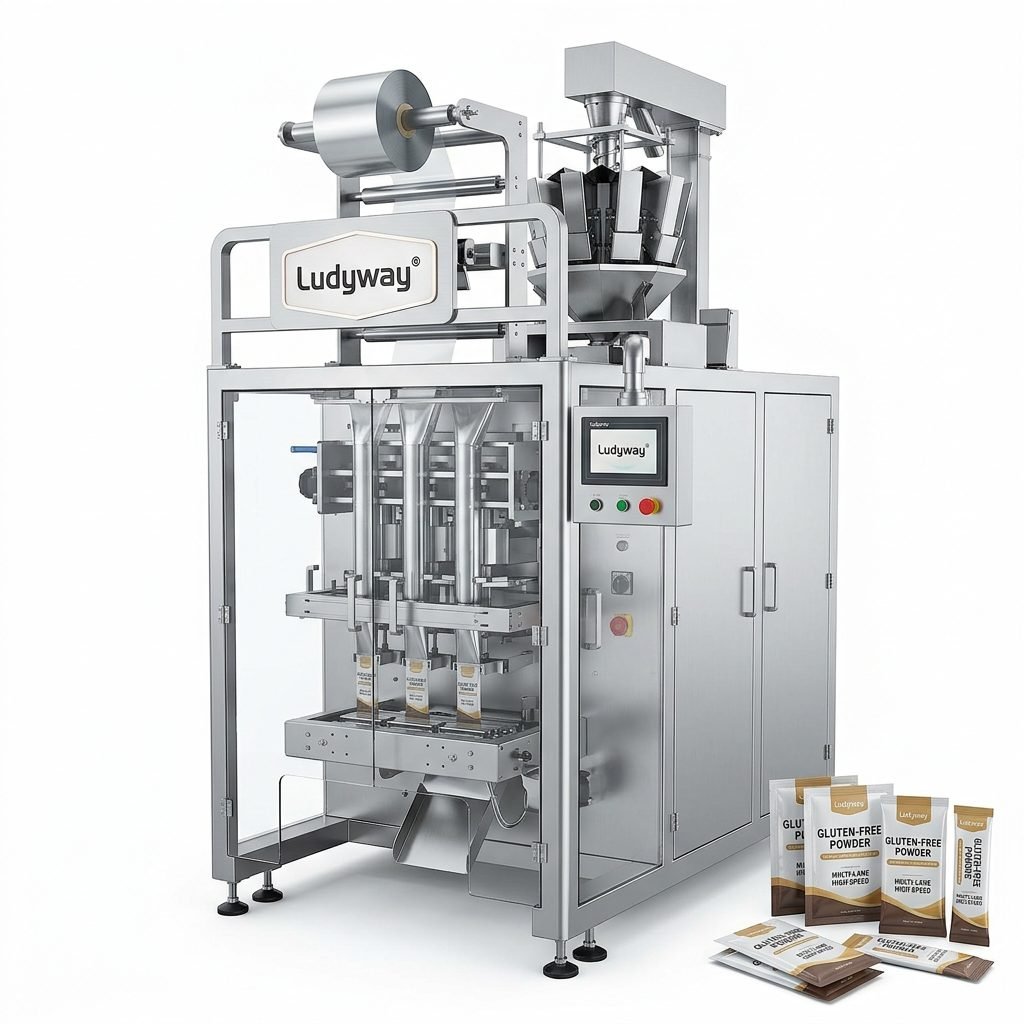
When the product is sold loose in a pillow, gusseted or quad-seal bag, a VFFS bagger fed by a multihead weigher is the efficient choice. Typical output is 40 to 120 bags per minute depending on bag size and the weigher’s combination speed. Gentle drop heights, product-in-seal detection and nitrogen flushing are the three options that most affect reject rates and shelf life for mini cookies, biscotti pieces and croutons.
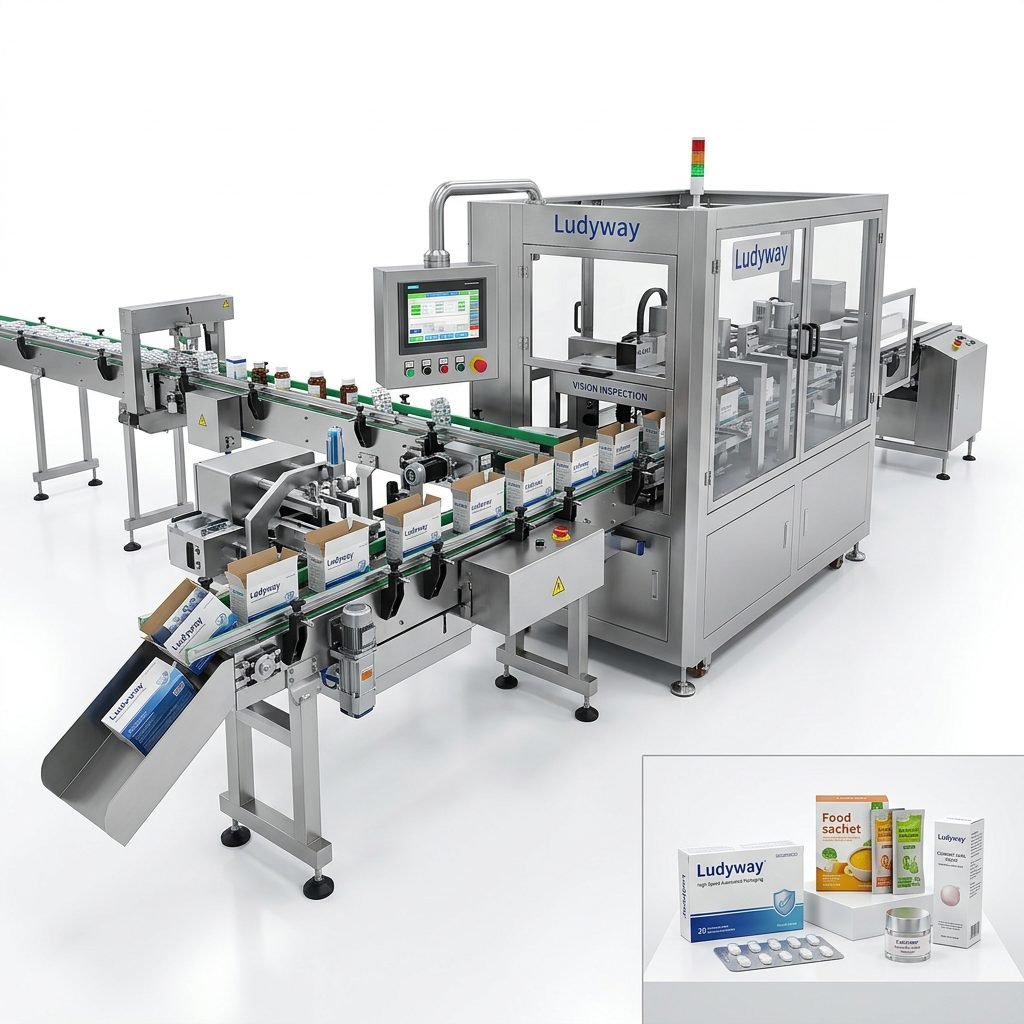
Automated cartoning line used for biscuit multipacks and retail-ready cookie cartons
Tray Loading, Cartoning and Case Packing
Secondary packaging decides how the product survives distribution. Tray loaders place wrapped biscuits into plastic or paperboard trays, cartoners build and close retail cartons for multipacks, and case packers collate finished units into shipping cases. A properly integrated automated cartoning line removes the most labour-intensive step on a biscuit floor.
Specify carton size ranges, glue or tuck closure, and whether a high-speed automatic case packer and palletiser are required now or will be added later, so that conveyor heights and controls are compatible from day one.
Multi-Lane Sachet and Stick Pack Systems for Baking Mixes and Toppings
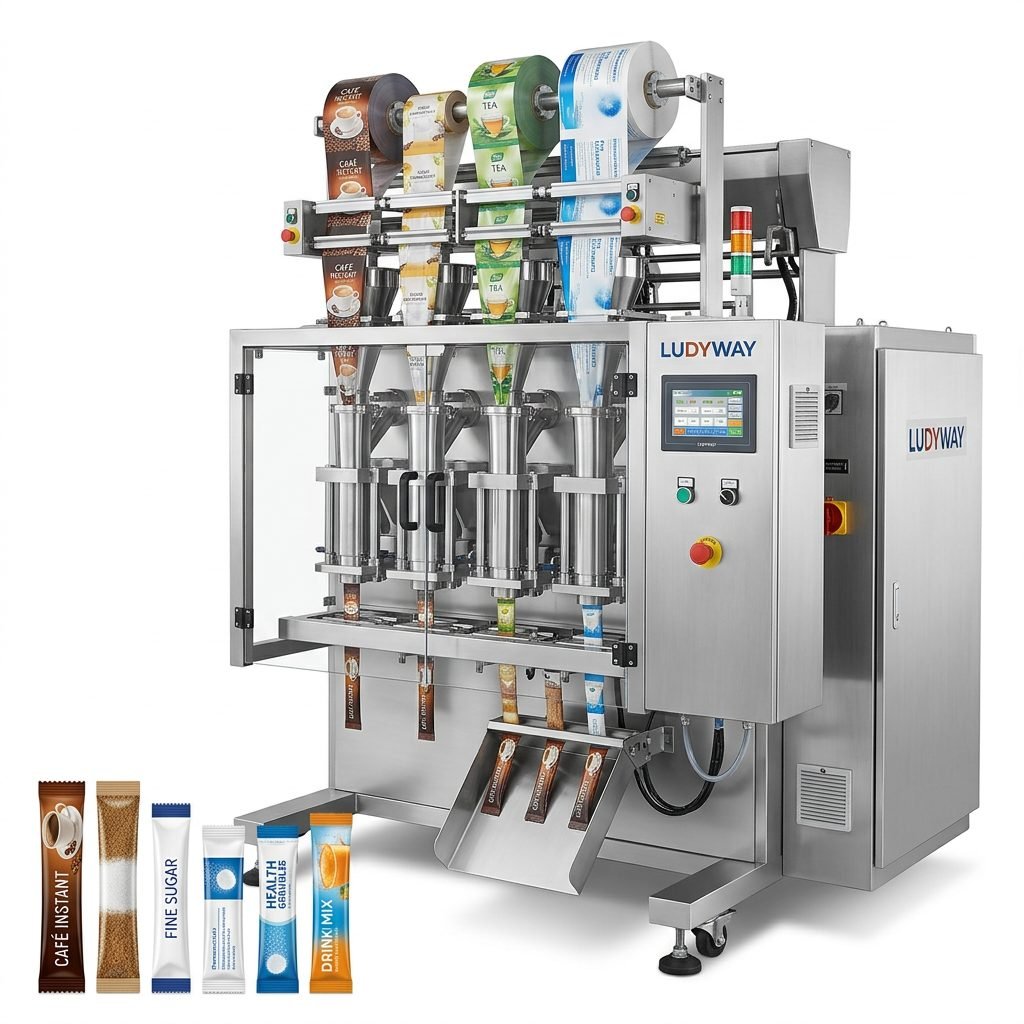
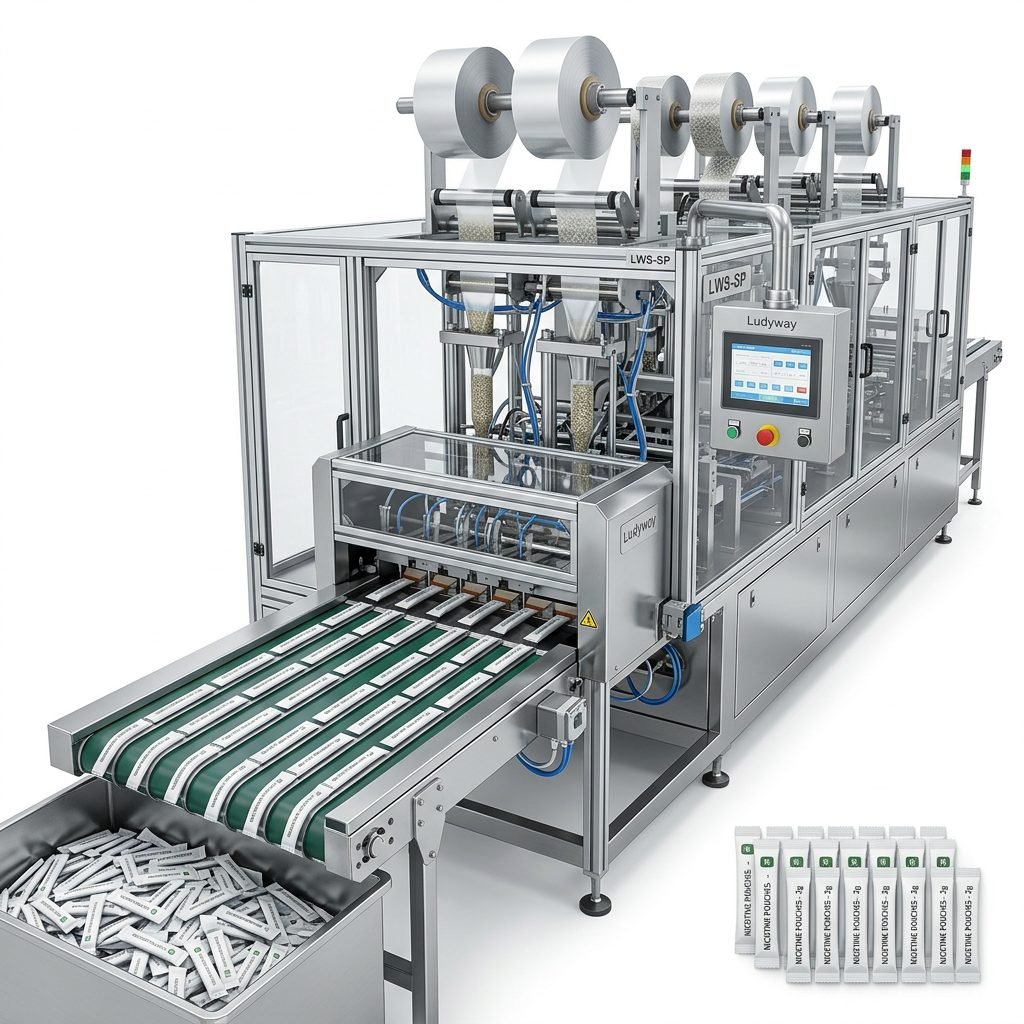
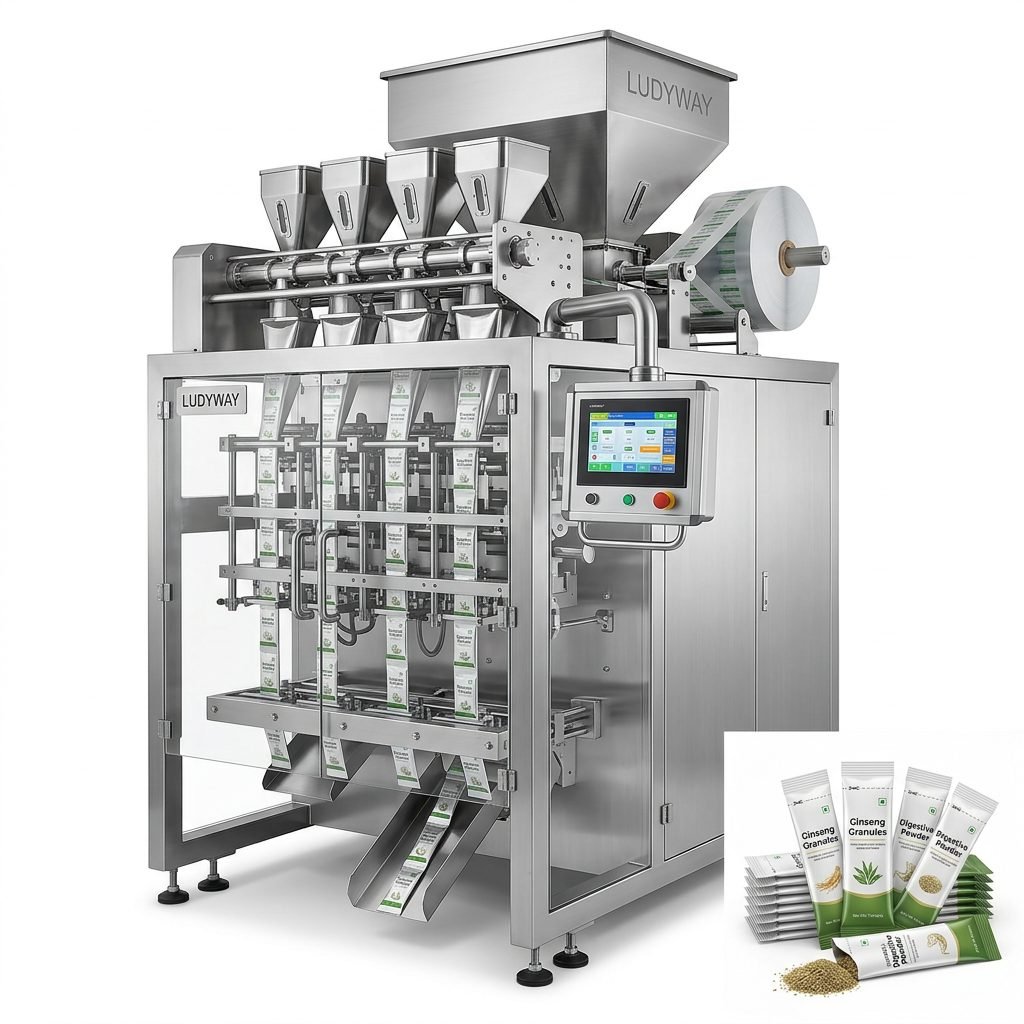
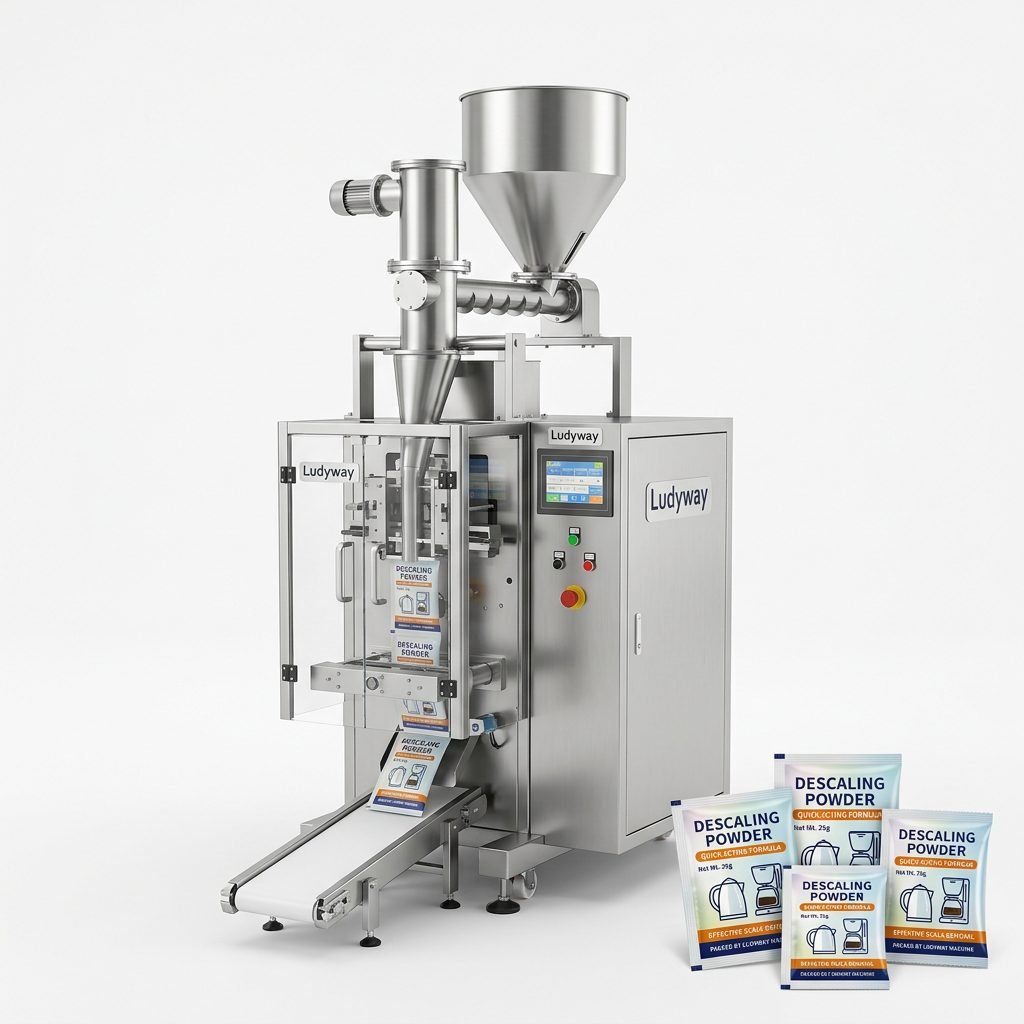
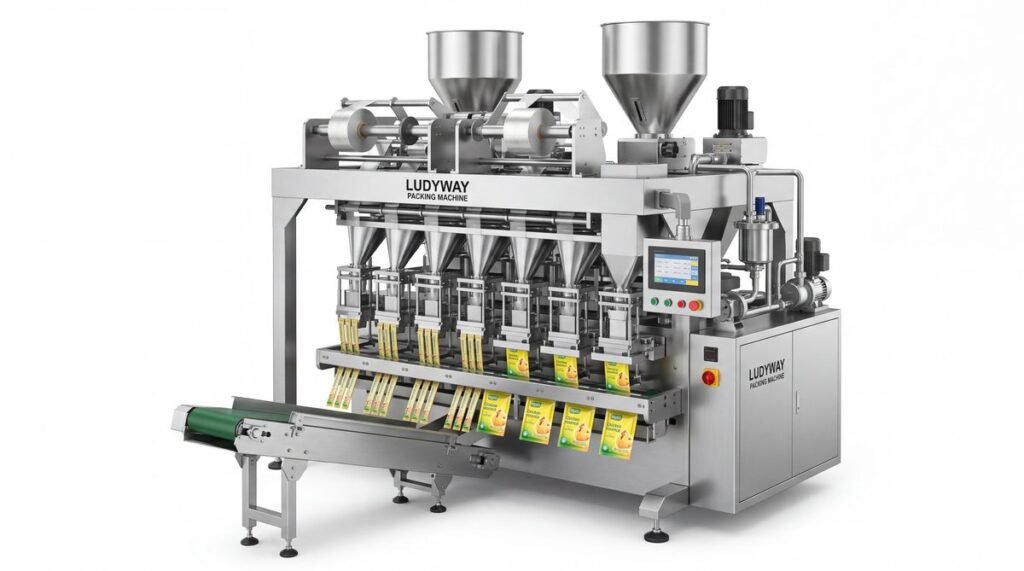
Industrial bakeries and ingredient suppliers increasingly package flour blends, cake mix, pancake mix, baking soda, icing sugar, cinnamon sugar and breadcrumbs in portion-controlled sachets or stick packs. A multi-lane vertical machine with auger fillers can run 4 to 12 lanes simultaneously, producing several hundred sachets per minute from one footprint.
Ludyway’s powder and granule packaging line for baking ingredients and the wheat flour sachet and stick pack machine are typical examples, with dust extraction and servo auger dosing built in for free-flowing and cohesive powders alike.
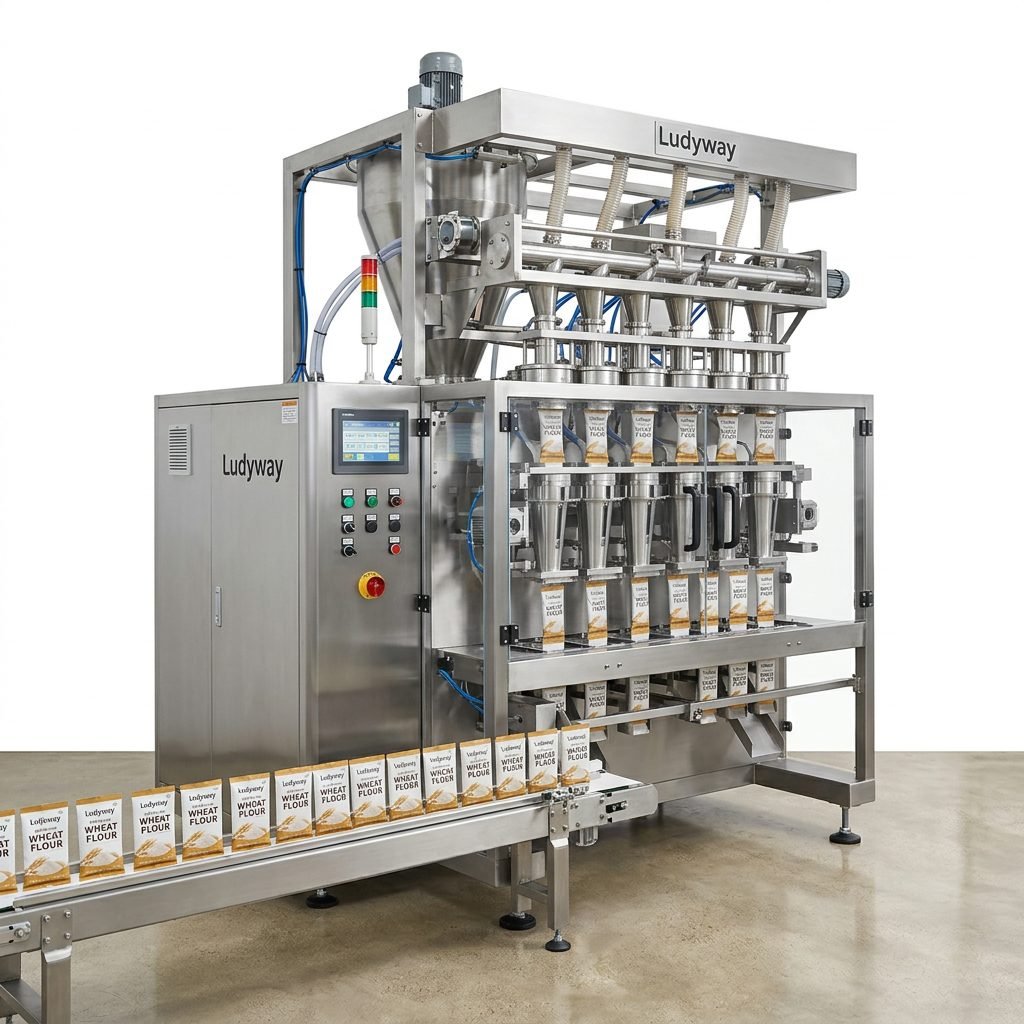
Multi-lane sachet system for flour blends, cake mixes and baking powders
| Machine Type | Best For | Typical Speed | Pack Format | Watch Out For |
|---|---|---|---|---|
| Horizontal flow wrapper | Biscuits, cookies, bars, slugs | 150–600 ppm | Pillow pack, gas-flushed pillow | Infeed design, cold-seal need |
| Bread bagger and closer | Sliced bread, buns, rolls | 40–70 loaves/min | Wicketed PE bag, clip or tie | Cooling time, slicer sync |
| VFFS bagger with weigher | Mini cookies, croutons, pieces | 40–120 bpm | Pillow, gusset, quad-seal bag | Drop breakage, seal contamination |
| Cartoner / case packer | Multipacks, retail cartons | 60–300 cartons/min | Folding carton, RSC case | Carton board quality, size range |
| Multi-lane sachet / stick pack | Baking mixes, crumbs, toppings | 4–12 lanes, 200–800 sachets/min | 3- or 4-side seal sachet, stick | Dosing accuracy, dust control |
Features That Separate a Strong Bakery Packaging Machine From an Average One
Specification sheets from different manufacturers look alike until the machine is running your product at 3 a.m. The features below are the ones that experienced bakery engineers check first because they determine uptime, waste and shelf life rather than headline speed.
Replacing headspace air with nitrogen or a nitrogen/CO₂ blend slows mould growth in bread and fat oxidation in cookies. Targets of residual oxygen below 1–2 percent are realistic with a well-designed gas lance and sealing jaws; a dedicated nitrogen flushing packaging system can also be retrofitted to multi-lane sachet lines for crumbs and mixes.
Independent servo motors on film feed, infeed and sealing jaws allow bag length, cut-off and dwell time to be stored per SKU. Changeover between a 100 g biscuit pack and a 300 g family pack becomes a recipe selection plus former change, typically under 20 minutes instead of an hour.
Stainless steel 304 frames (316 for high-salt or acidic contact points), sloped surfaces, open-frame design and IP65 electrics meet the sanitation expectations of retail audits. Food-contact parts should be documented against FDA food contact substance requirements or EU 1935/2004.
Bakery buyers are moving toward mono-material PP and PE laminates and paper-based wraps for recyclability. Confirm the machine can seal these at target speed, and whether cold-seal, heat-seal and ultrasonic options are available on the same frame.
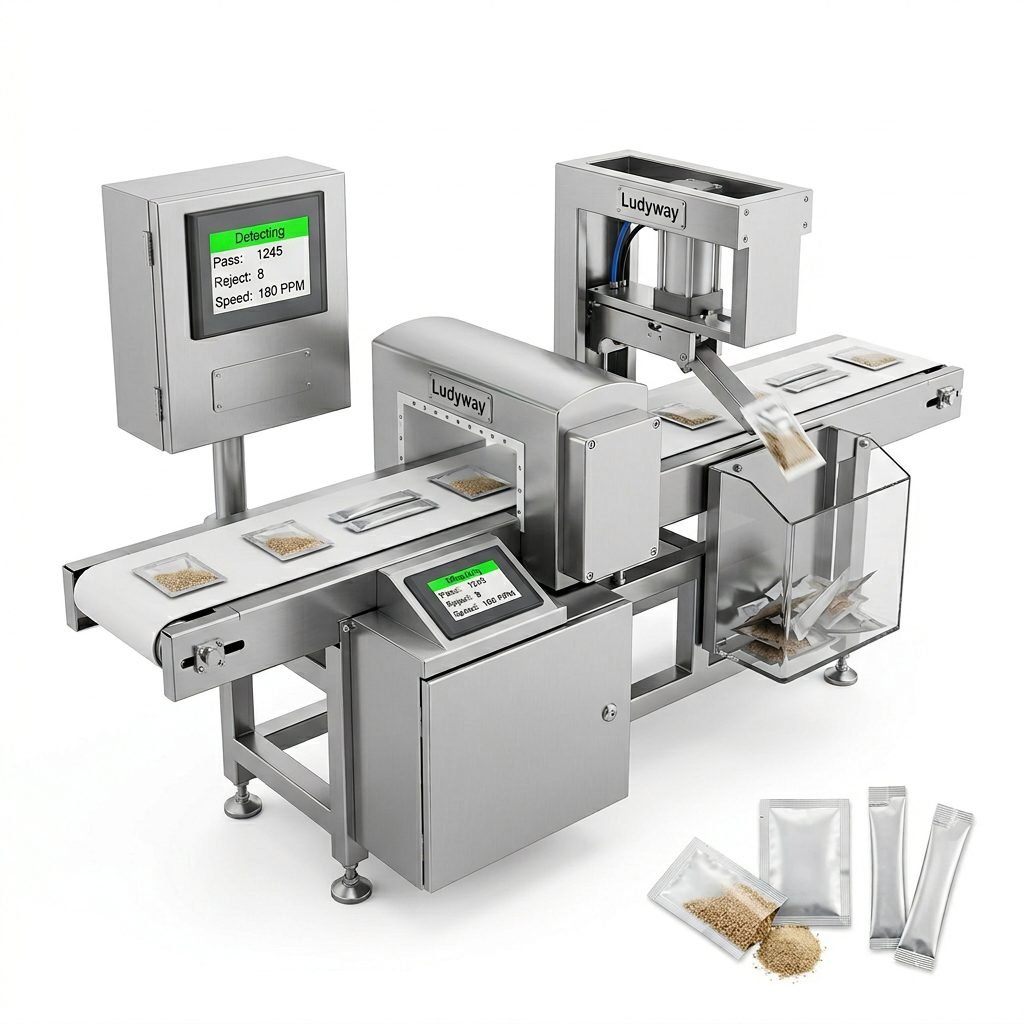
Sensors that skip empty pockets save film and prevent empty packs reaching retail. Pair the wrapper with a high-precision checkweigher and an industrial metal detector to satisfy HACCP critical control points.
Quick-release formers, colour-coded change parts and HMI-guided setup reduce dependence on a single skilled operator. Remote access for the manufacturer’s engineers shortens troubleshooting when the plant is on another continent.
How to Choose the Right Bakery Packaging Machine: A Six-Step Process
A structured selection process avoids the two most common mistakes: buying a machine that is faster than the oven can feed, and buying one that cannot handle next year’s pack format. Work through the steps below before requesting quotations.
Map the product matrix. List every SKU with dimensions, weight, fragility, coating type and target shelf life. Group them into families that can share a machine and change parts.
Calculate true required speed. Divide oven or cooling-tunnel output by the number of packaging lines, then add 15–20 percent headroom. Overspecifying speed inflates price and increases breakage on fragile cookies.
Define pack format and barrier. Decide on pillow, gusseted, tray-in-flow-wrap, bag-and-clip or sachet, and specify the laminate structure and MAP requirement with your film supplier.
Audit the floor and utilities. Confirm footprint, ceiling height for film reels, compressed air quality, voltage and frequency, nitrogen supply and drainage for washdown.
Request a product trial. Ship real biscuits, cookies or mix samples to the manufacturer and ask for video or an on-site factory acceptance test at target speed with your film.
Compare total cost of ownership. Weigh purchase price against film savings, labour reduction, spare parts pricing, warranty terms and the manufacturer’s ability to support installation and training in your region.
Specification Checklist to Send With Your RFQ
| Parameter | What to Specify | Why It Matters |
|---|---|---|
| Product dimensions and weight | Min/max L × W × H, piece weight, count per pack | Determines former size, infeed pitch and weigher choice |
| Target output | Packs per minute per SKU, shifts per day | Selects servo rating, jaw type and duty class |
| Packaging material | Laminate structure, thickness, reel diameter, core size | Seal temperature window and unwind design |
| Atmosphere and shelf life | Gas mix, residual O₂ target, required shelf life in days | Defines gas flushing kit and seal integrity testing |
| Utilities and compliance | Voltage, air pressure, CE/UL, documentation language | Avoids costly rework at installation and audit stage |
Compliance, Certification and Sustainability Requirements
Buyers supplying multinational retailers should request a documented compliance package with every quotation. At minimum this means CE marking (or UL/CSA for North America) for machine safety, an ISO 9001 quality system at the manufacturer, and material certificates for all food-contact surfaces. Industry associations such as PMMI, The Association for Packaging and Processing Technologies, publish machine safety and OEE benchmarks that are useful as reference points when comparing vendors.
Packaging regulation is also tightening. The European Union’s Packaging and Packaging Waste Regulation pushes bakeries toward recyclable mono-material films and minimised packaging volume, while the Flexible Packaging Association tracks the equivalent trends in the United States. A machine purchased now should be able to run thinner, paper-based or mono-PP films without a major rebuild.
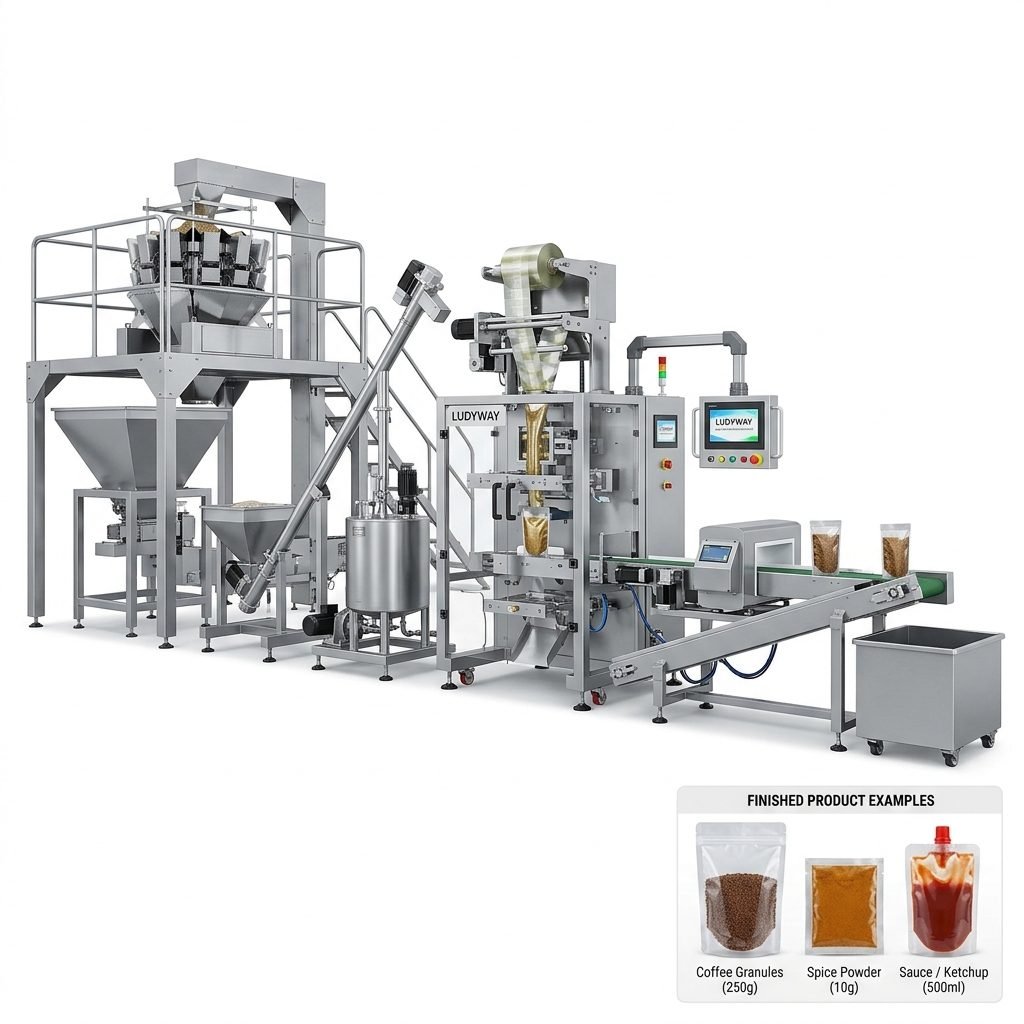
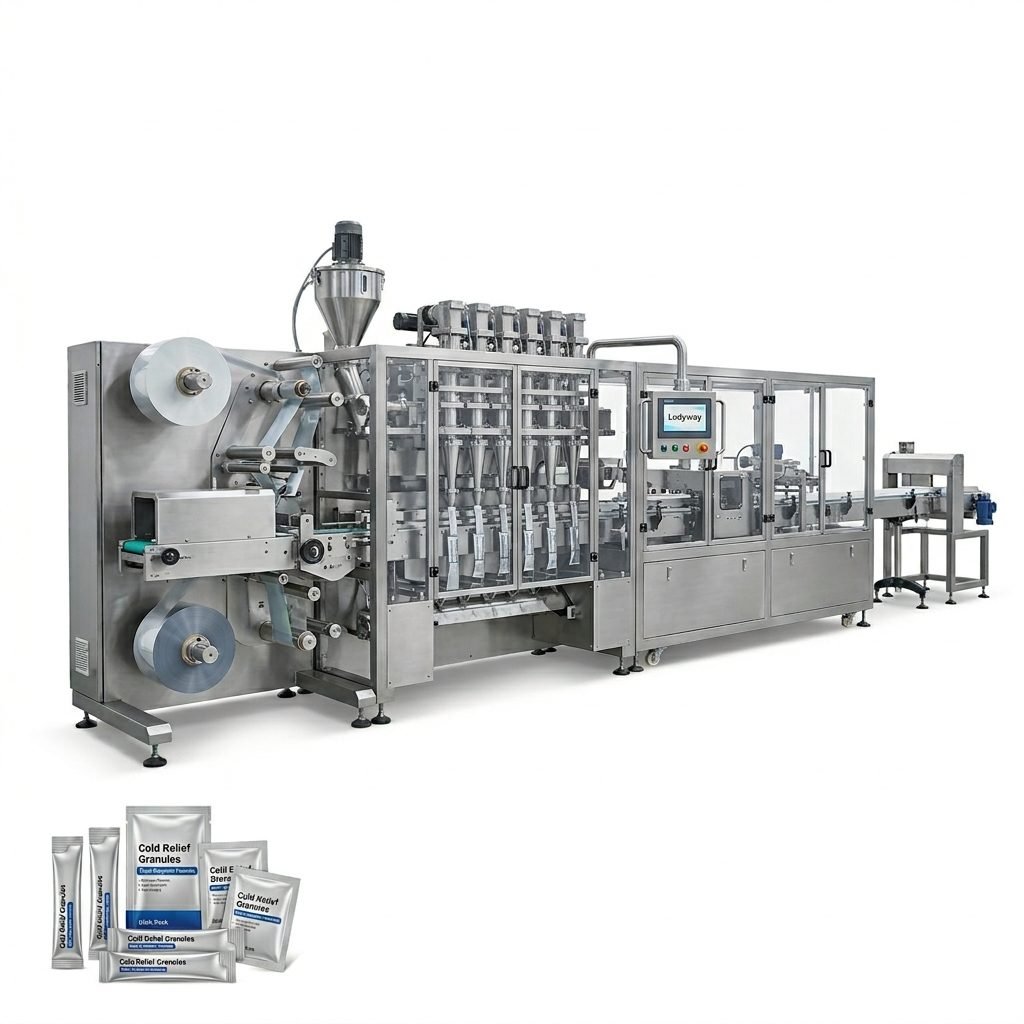
Integrated high-speed packaging system for food products with inline inspection and conveying
From Oven to Pallet: Integrating the Complete Bakery Line
A wrapper is only as productive as the equipment around it. Cooling conveyors must deliver product at a stable temperature and orientation; distribution systems must balance flow across multiple wrappers; downstream, cartoning, case packing and palletising must absorb peak output without back-pressure that crushes product.
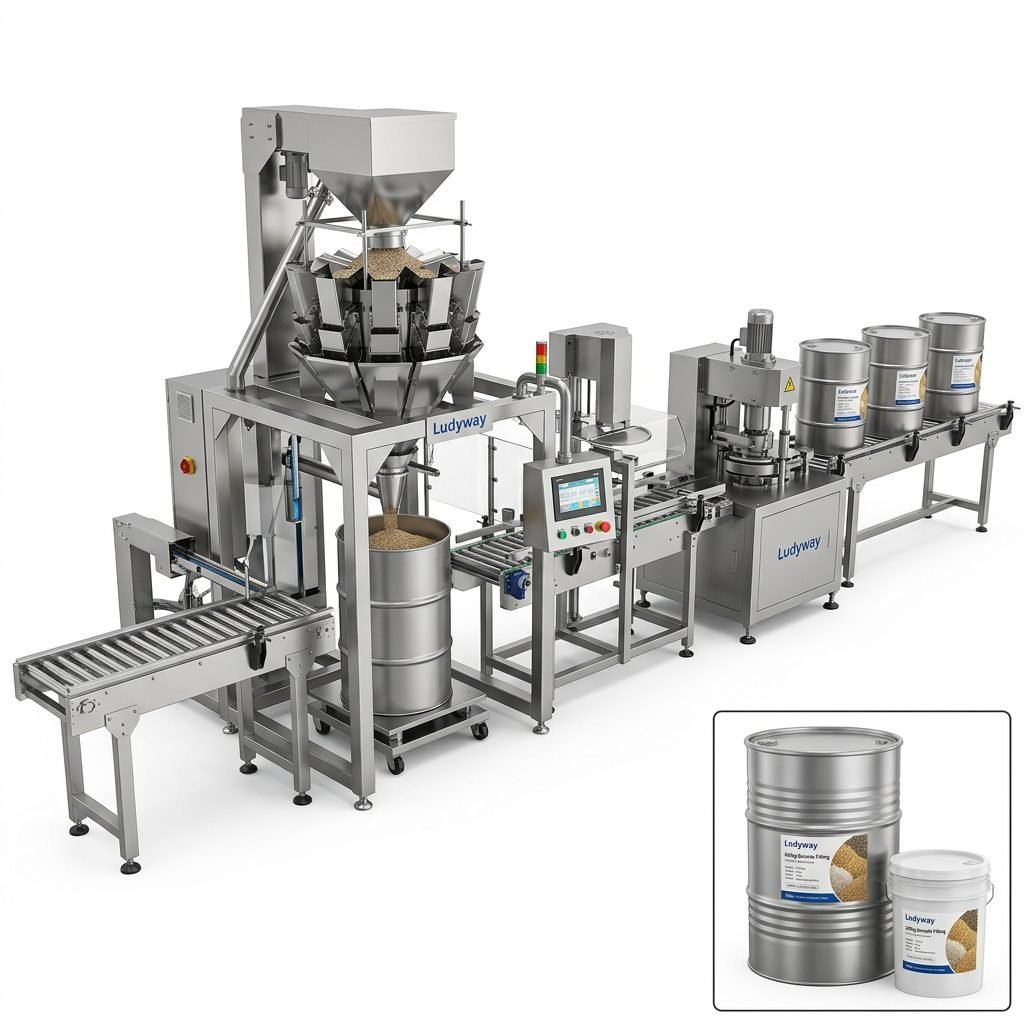
Ingredient preparation deserves the same attention. Bulk flour, sugar and premix are moved by screw conveyors and vacuum feeders into dosing hoppers, and a dust collection system protects both operators and sealing jaws from airborne powder.
Turnkey suppliers who engineer the whole line under one controls architecture typically deliver faster commissioning and a single point of accountability when throughput targets are missed.
Why Bakeries and Ingredient Suppliers Source Packaging Equipment From Ludyway
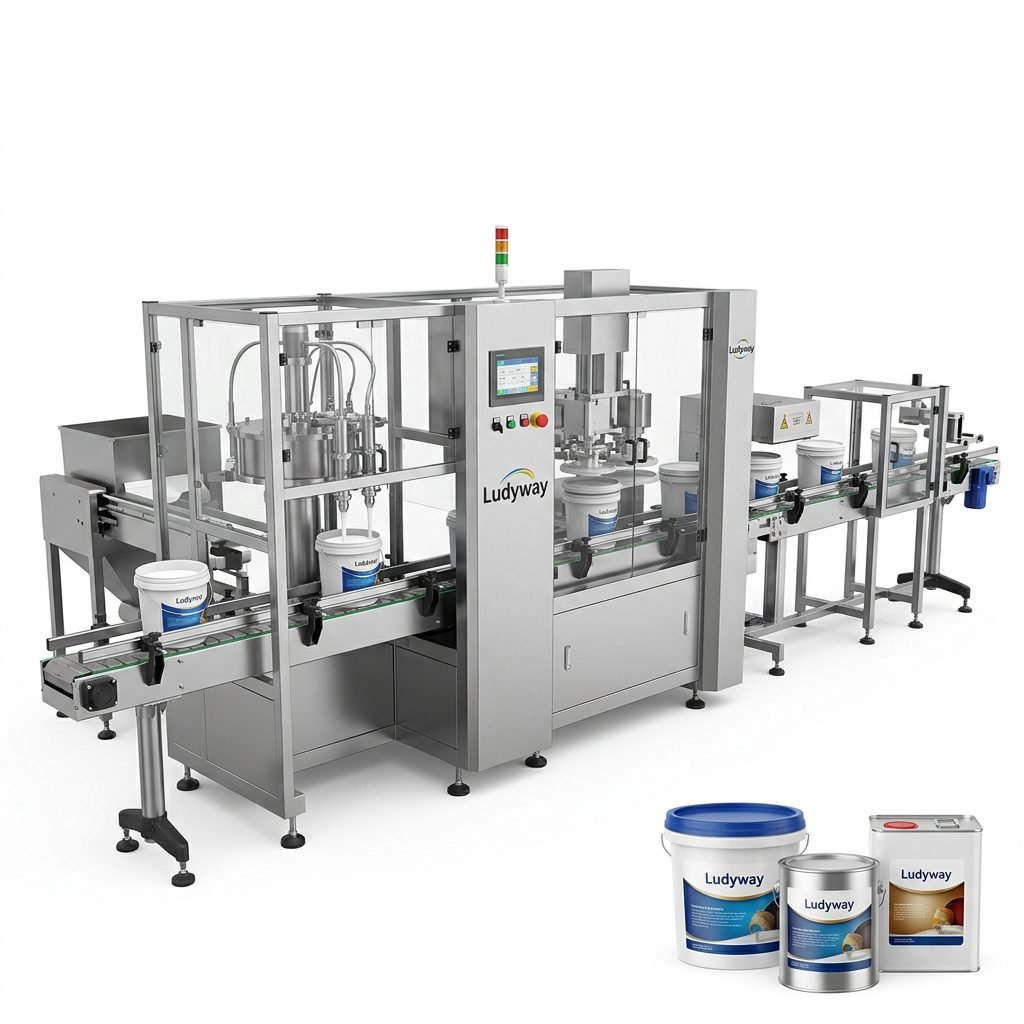
Ludyway is one of the largest packaging machine manufacturers in China, specialising in advanced packaging equipment and turnkey production solutions for the food, pharmaceutical and health industries. Founded in 1993 and based in Nanlang Town, Zhongshan, Guangdong, the company has built more than 50 intelligent packaging machine models covering multi-lane stick pack, sachet, pouch and fully automated line systems, supported by a 20,000 m² manufacturing facility and an experienced engineering team. For bakery customers this translates into proven solutions for biscuit and cookie portion packs, baking mix and flour sachets, baking soda stick packs, and complete cartoning and palletising lines, backed by service in over 100 countries and regions. Ludyway’s export growth, documented in this industry growth report, reflects the scale needed to support multi-site bakery groups.
Years of packaging machinery experience
Modern production facility
Professional packaging experts
Manufacturing equipment units
Bakery and Baking Ingredient Packaging Systems
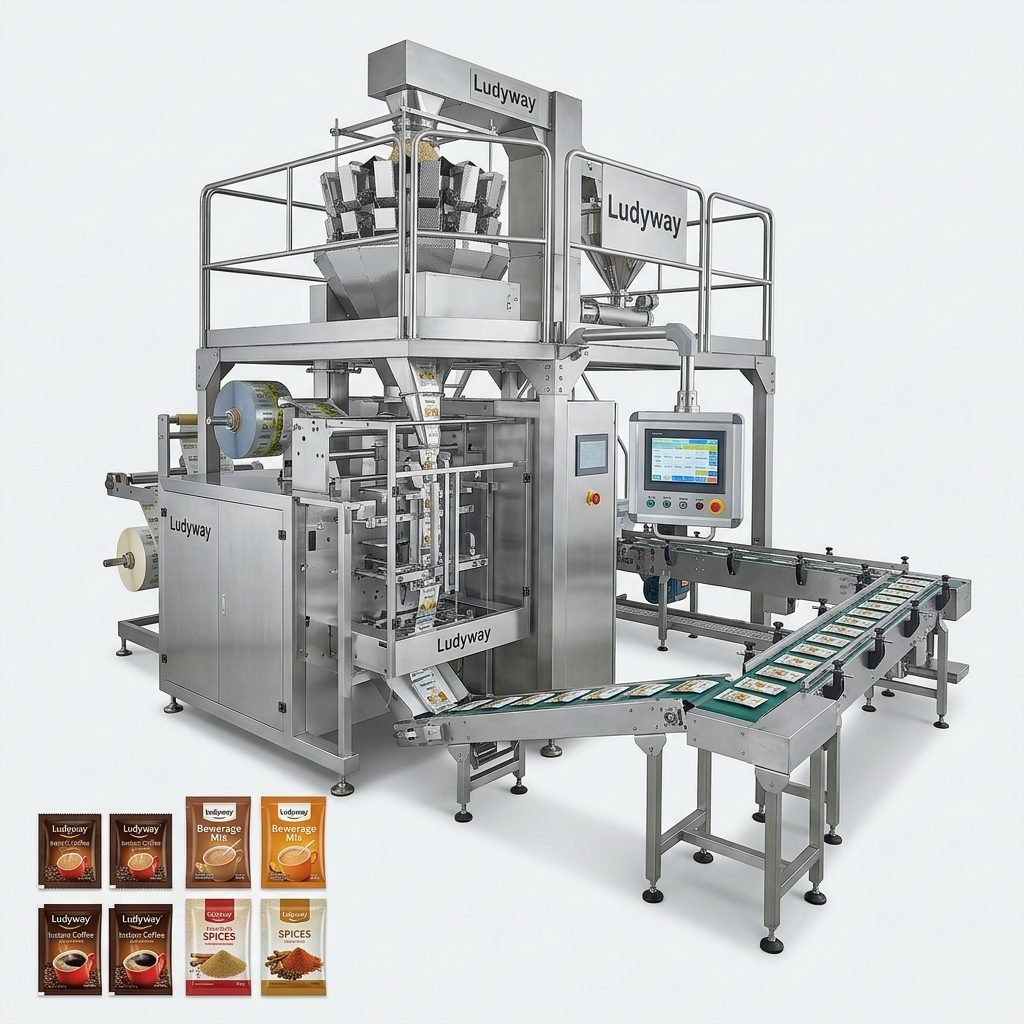
Biscuit Packaging Machine
Bakery Equipment, High-Speed Multi-Lane
Request a Quote
Baking Ingredient Packaging Line
Bakery Equipment, Powder and Granule
Request a Quote
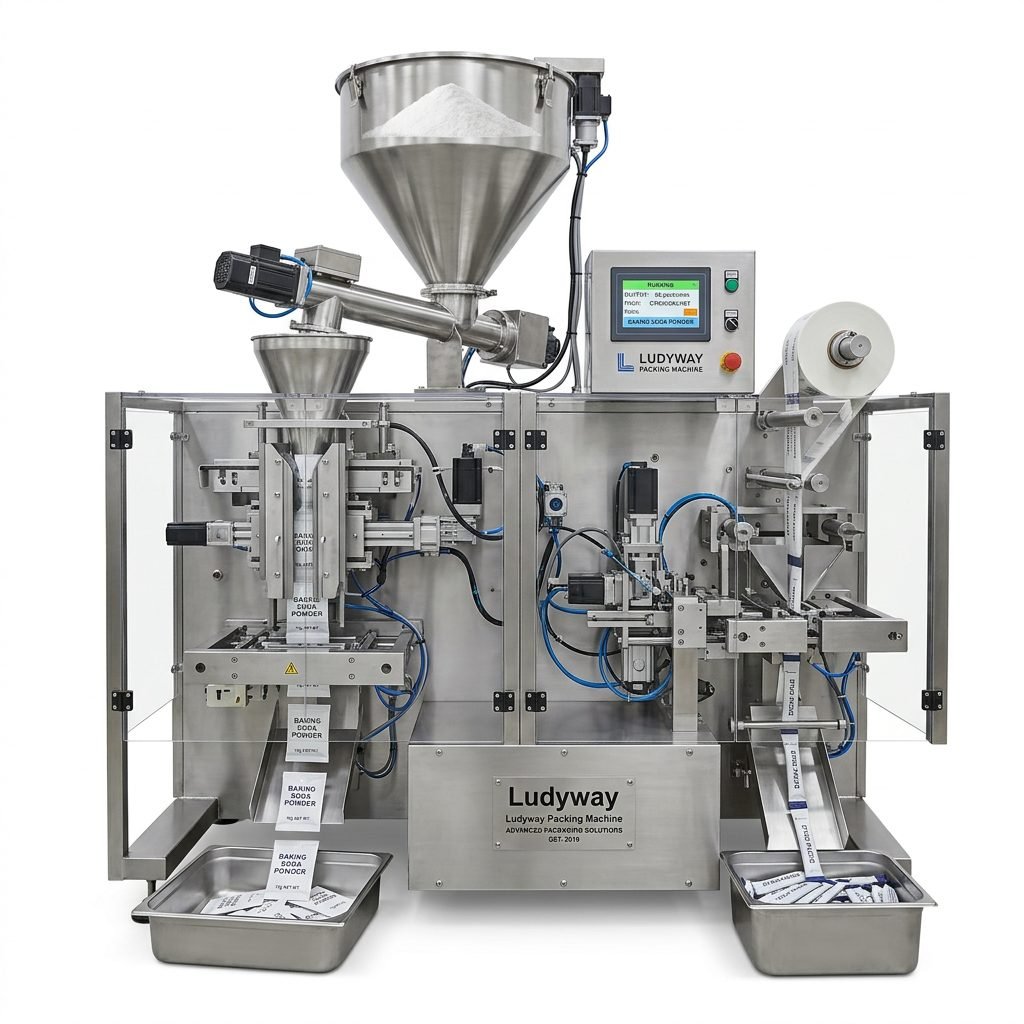
Cake Mix Sachet Machine
Bakery Equipment, Sachet and Stick Pack
Request a Quote
Automated Cartoning Line
Bakery Equipment, Secondary Packaging
Request a Quote
Next Steps for Procurement and Engineering Teams
Once the product matrix and specification checklist are complete, the commercial side of the project moves quickly. For standard bakery packaging machines, the minimum order quantity is normally a single unit, with lead times of roughly 30 to 60 days for catalogue models and 90 to 120 days for engineered turnkey lines that include cartoning and palletising. Quotations are typically issued on FOB or CIF terms with the layout drawing, utility list, spare parts list and warranty terms attached, and factory acceptance testing with the buyer’s own product and film is arranged before shipment.
Send your SKU list, target speeds and film samples to receive a line layout proposal, a detailed technical specification and a formal quotation. Request trial videos of your product running at speed before committing to a factory visit.
Ask for the full product catalogue, territory support terms, training programmes for your service technicians and consolidated spare parts pricing so that you can quote complete bakery projects with confidence.
Frequently Asked Questions
A servo horizontal flow wrapper with interchangeable infeeds is the most versatile choice. Use a lugged infeed for individual cookies and an on-edge slug feeder for biscuits, and store each configuration as a recipe on the HMI. If cookies are chocolate-coated, specify a cold-seal sealing station as well.
Results depend on water activity, fat content and film barrier, but reducing residual oxygen to below 1–2 percent commonly doubles or triples the mould-free or rancidity-free period compared with air-packed product. Validate the figure with a shelf-life study on your own recipe rather than relying on generic claims.
Yes, provided the auger fillers and hoppers are sized for the different bulk densities and flow behaviours. Fine flour needs agitation and dust extraction, while breadcrumbs may require a volumetric cup or vibratory feeder. Ludyway’s multi-lane systems are configured per product family during the engineering review.
CE marking is required for Europe, UL or CSA listing for North America, and many retailers additionally expect the manufacturer to operate an ISO 9001 quality system. Food-contact components should be supplied with material declarations covering FDA or EU 1935/2004 compliance.
A single flow wrapper or sachet machine can usually be commissioned in two to five days. A complete line with distribution conveyors, cartoning and palletising typically requires two to four weeks on site, including operator training and production ramp-up to the agreed acceptance speed.
Ready to specify your bakery packaging line? Share your product list, target output and pack formats with Ludyway’s engineering team to receive a tailored layout, technical specification and formal quotation, or request a sample trial with your own biscuits, cookies or baking mixes.
Email info@ludyway.com, message us on WhatsApp at +86 131 2959 2456, or ask for the full catalogue of custom turnkey packaging lines to compare configurations before your next project meeting.