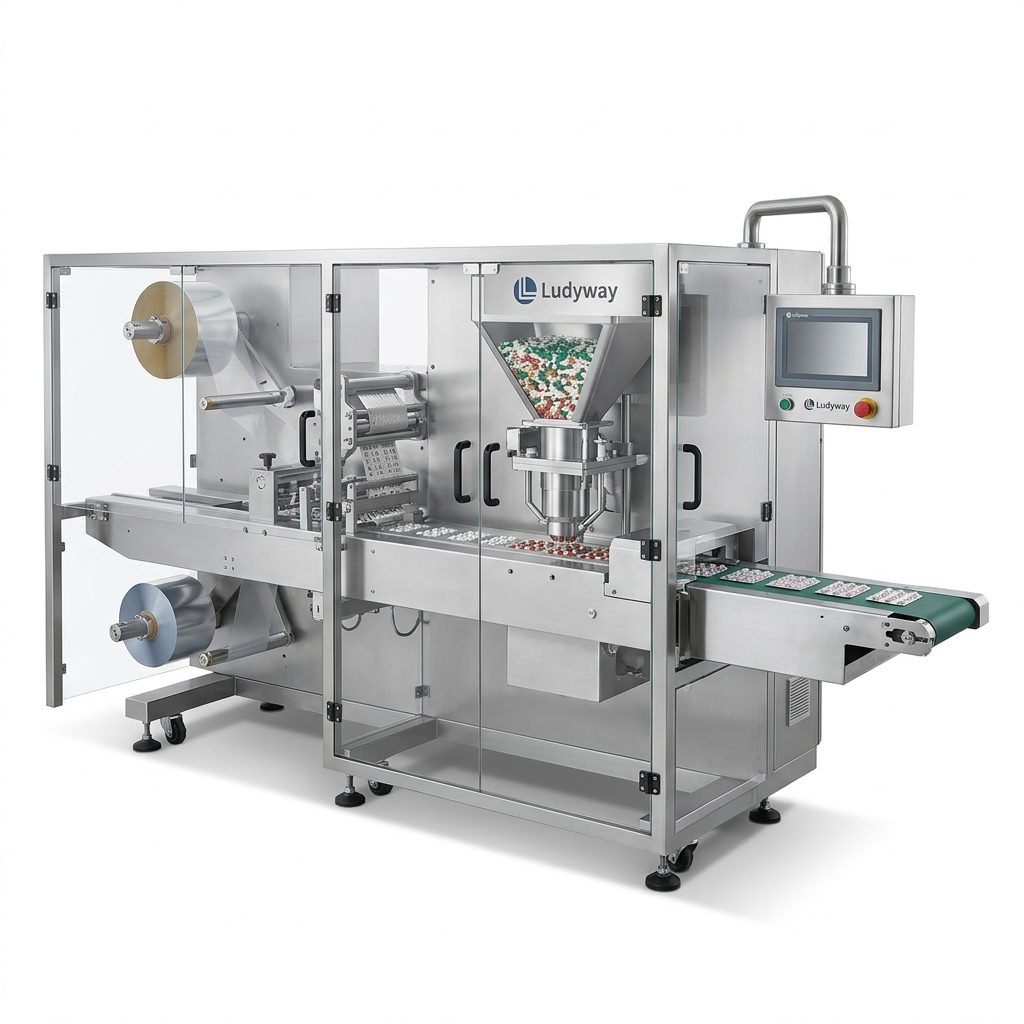
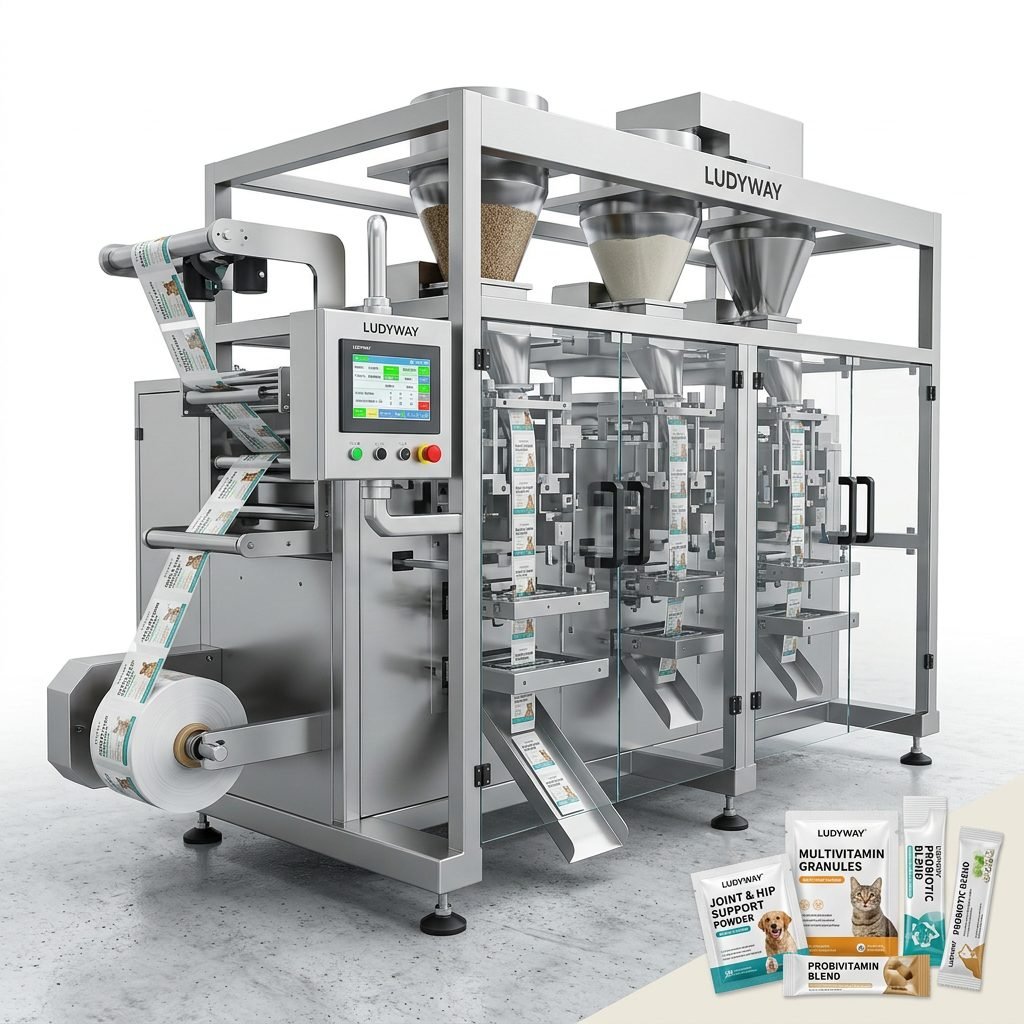
Investing in a primary packaging machine is one of the most critical decisions a manufacturer can make. The right equipment directly impacts production efficiency, product integrity, and long-term operational costs. However, with dozens of machine types, configurations, and suppliers available worldwide, the selection process can feel overwhelming. This guide breaks down the essential factors to evaluate, helping you choose a packaging solution that matches your product characteristics, production goals, and budget requirements.

Understand Your Product and Packaging Requirements First
Before comparing machine specifications, you must define exactly what you are packaging and how it needs to be presented. This foundational step prevents costly mismatches later.
Product Characteristics That Influence Machine Selection
The physical and chemical properties of your product determine the dosing system, filling mechanism, and sealing technology required. Key product variables to assess include:
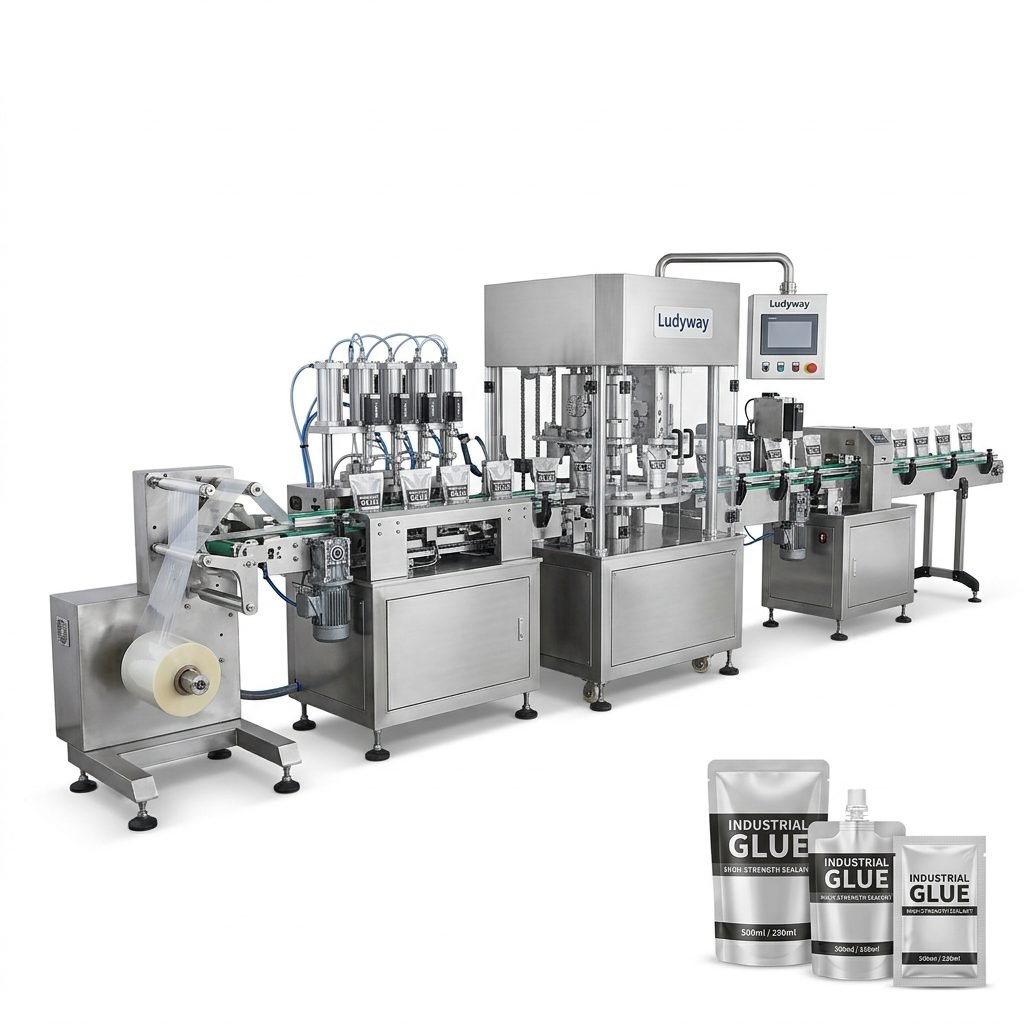
- Physical state: Is your product a free-flowing powder, sticky granule, viscous liquid, paste, or solid item? Each state demands a different filling approach — auger fillers for powders, piston fillers for liquids, volumetric cup fillers for granules, and multi-head weighers for solid pieces.
- Flow characteristics: Powders can be free-flowing or cohesive. Granules may be uniform or irregular. Liquids range from water-thin to highly viscous. Your machine’s hopper design, agitation features, and feeding system must accommodate these behaviors.
- Hygroscopicity and sensitivity: Products that absorb moisture, oxidize, or degrade when exposed to air require modified atmosphere packaging (MAP) or nitrogen flushing capabilities integrated into the packaging process.
- Particle size and dust generation: Fine powders create dust that can interfere with seal integrity and machine sensors. Dust extraction systems and enclosed filling zones may be necessary for consistent operation.
- Temperature sensitivity: Heat-sensitive products may require cold-seal packaging materials or alternative sealing methods that avoid high-temperature dwell times.
Packaging Format and Material Considerations
The packaging format you choose affects machine configuration significantly. Common formats for primary packaging machinery include:
| Packaging Format | Typical Applications | Key Machine Features |
|---|---|---|
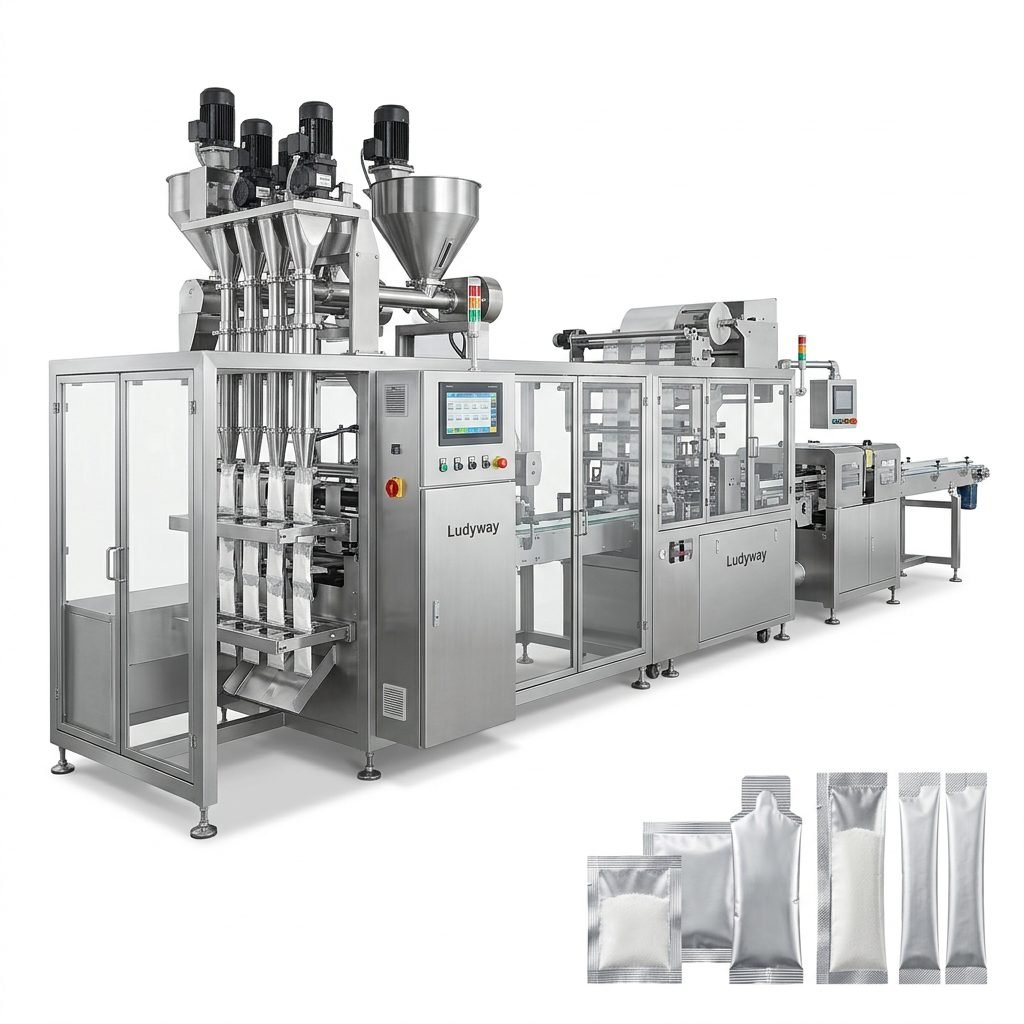
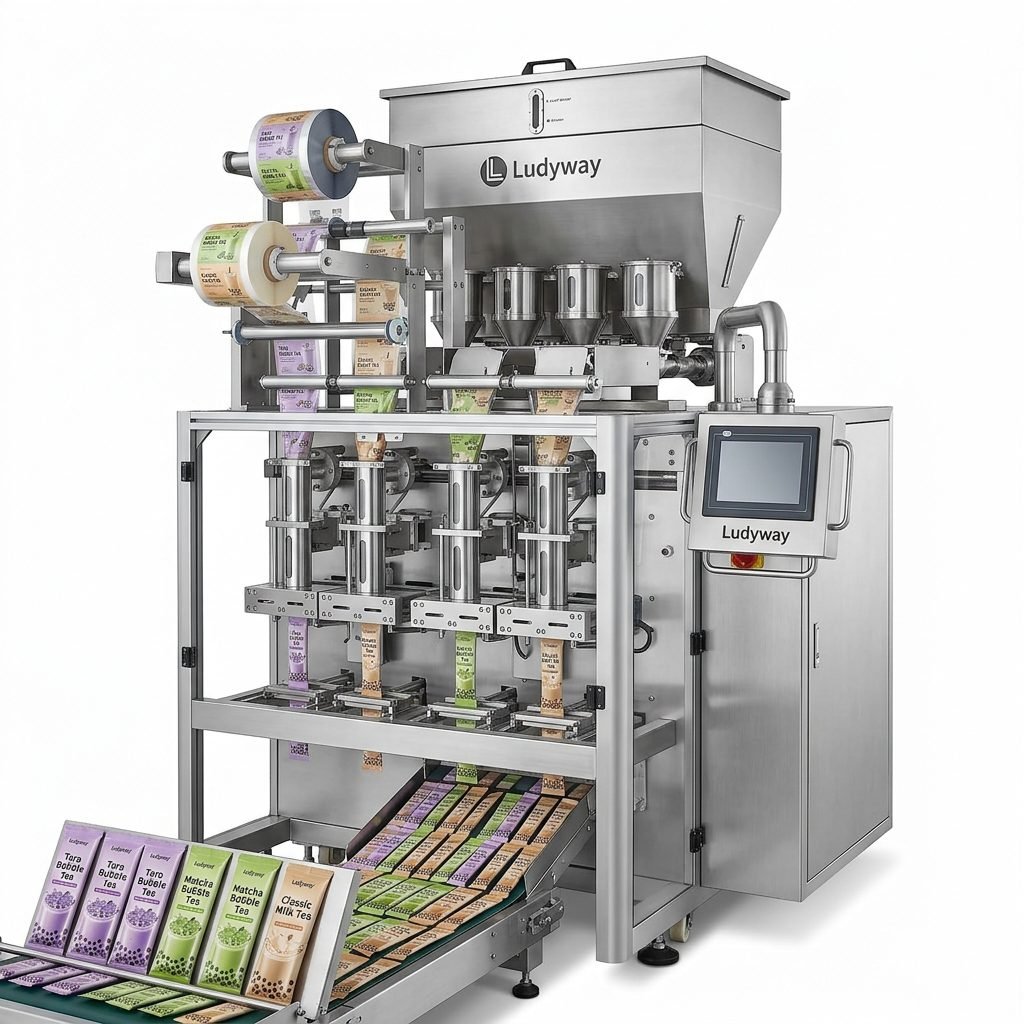
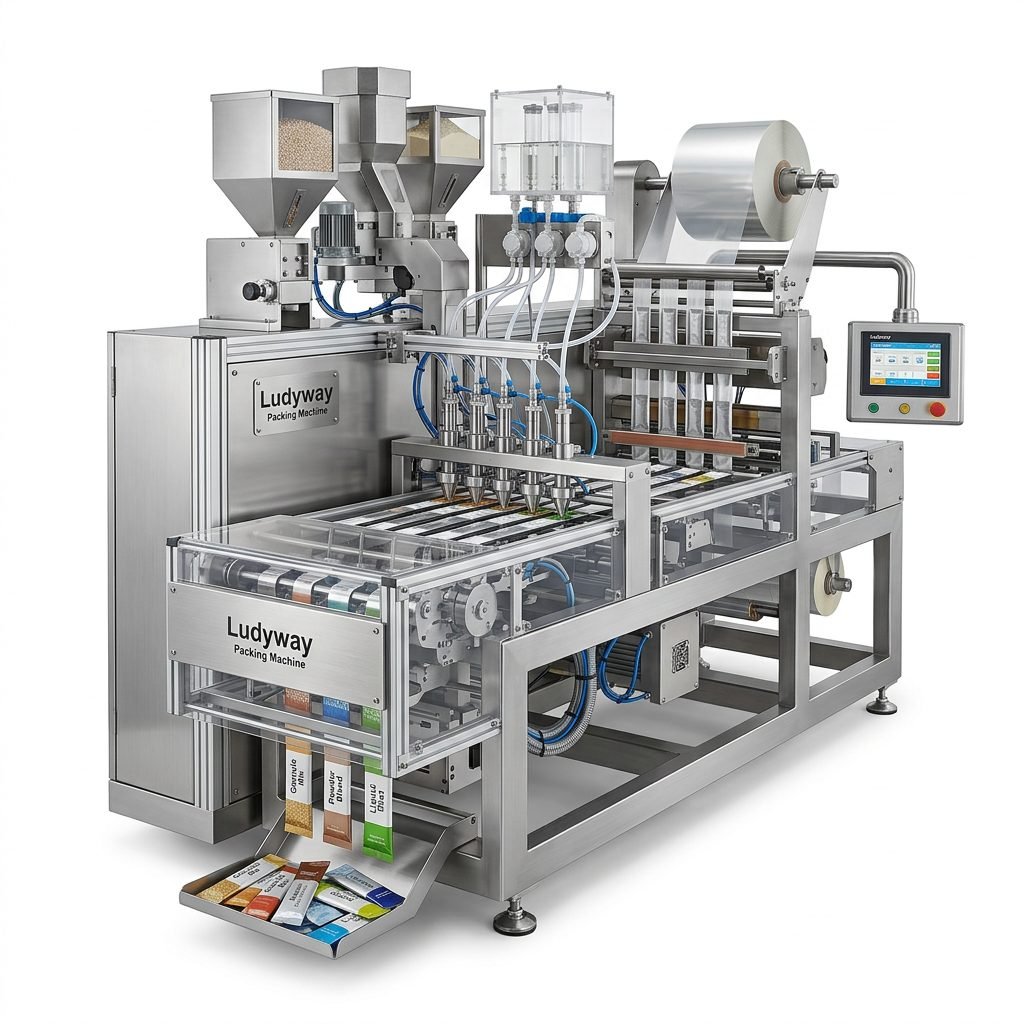
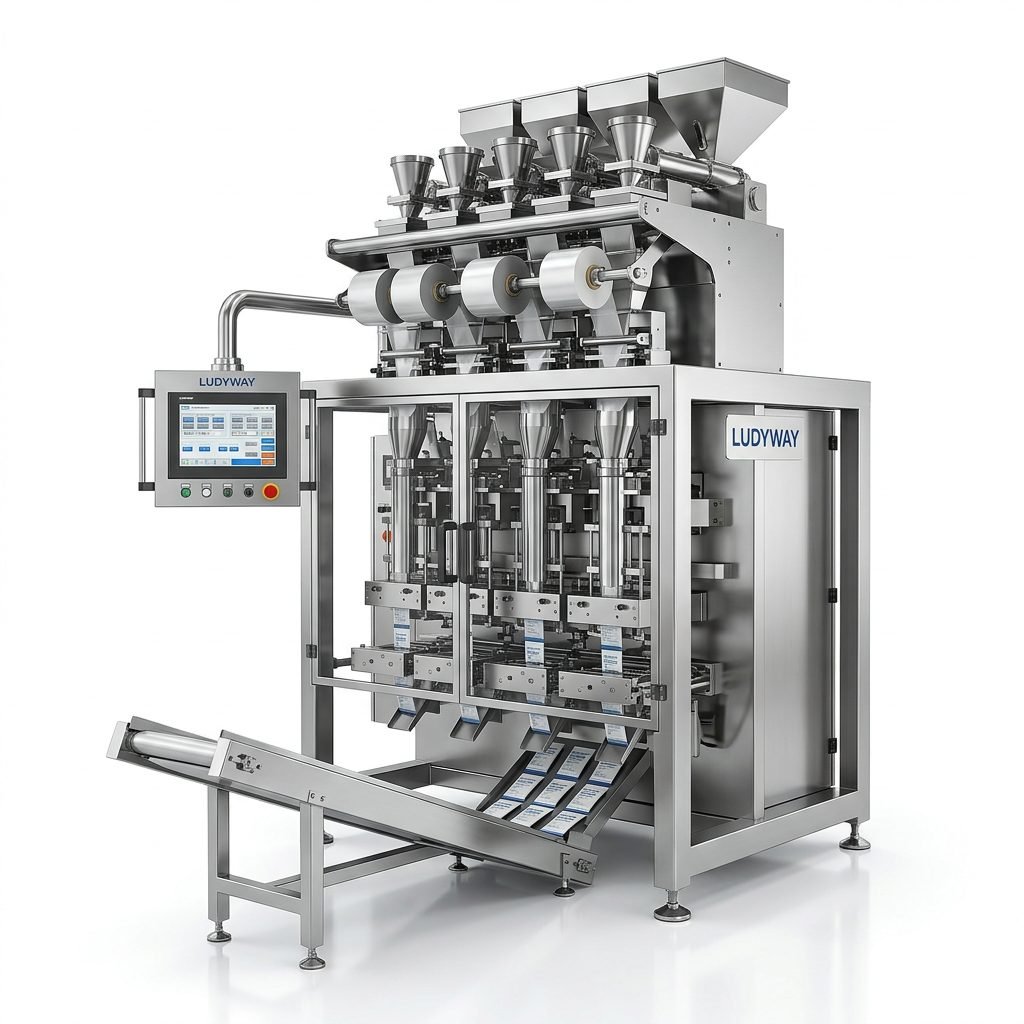
| Stick Packs | Powders, granules, single-serve beverages, supplements | Narrow seal width, multi-lane configuration, high-speed filling |
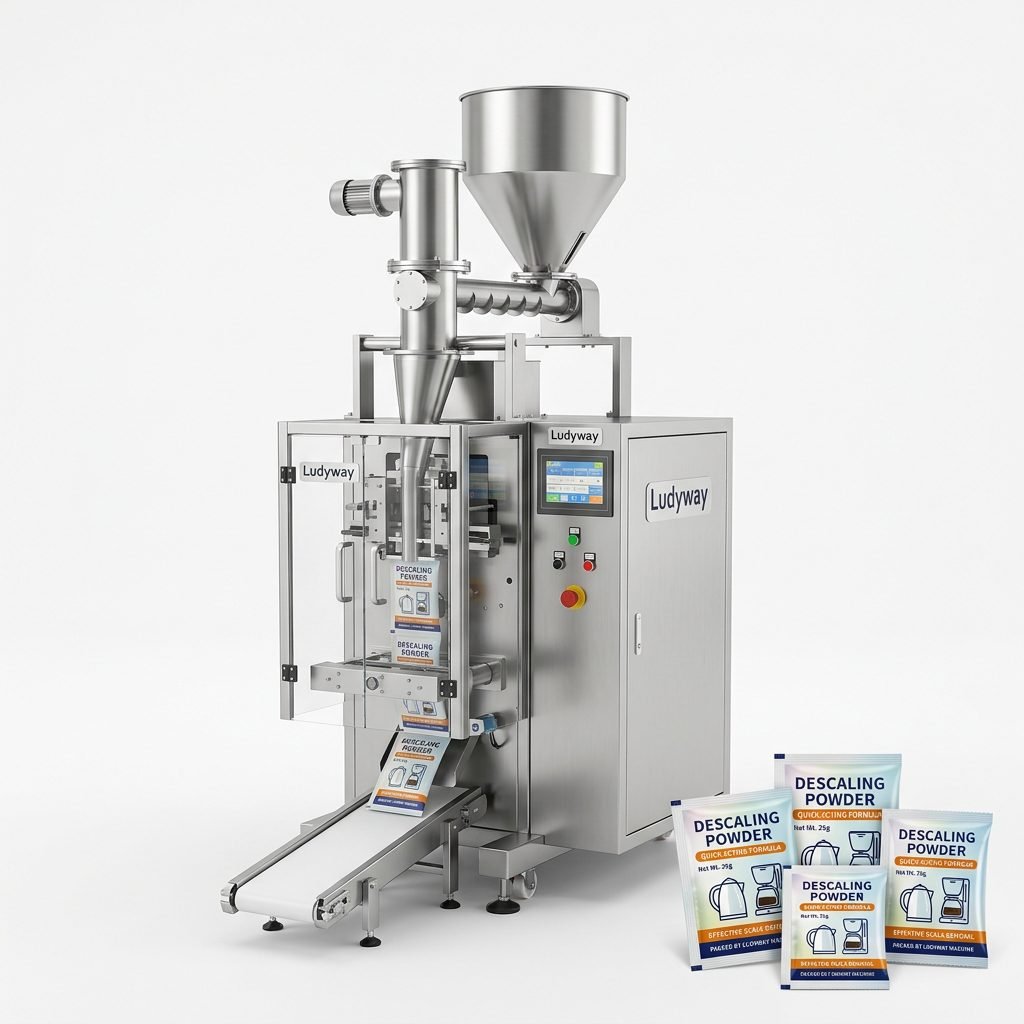
| Sachets | Liquids, creams, powders, sample products | Three- or four-side seal, multi-lane capability, flexible sizing |
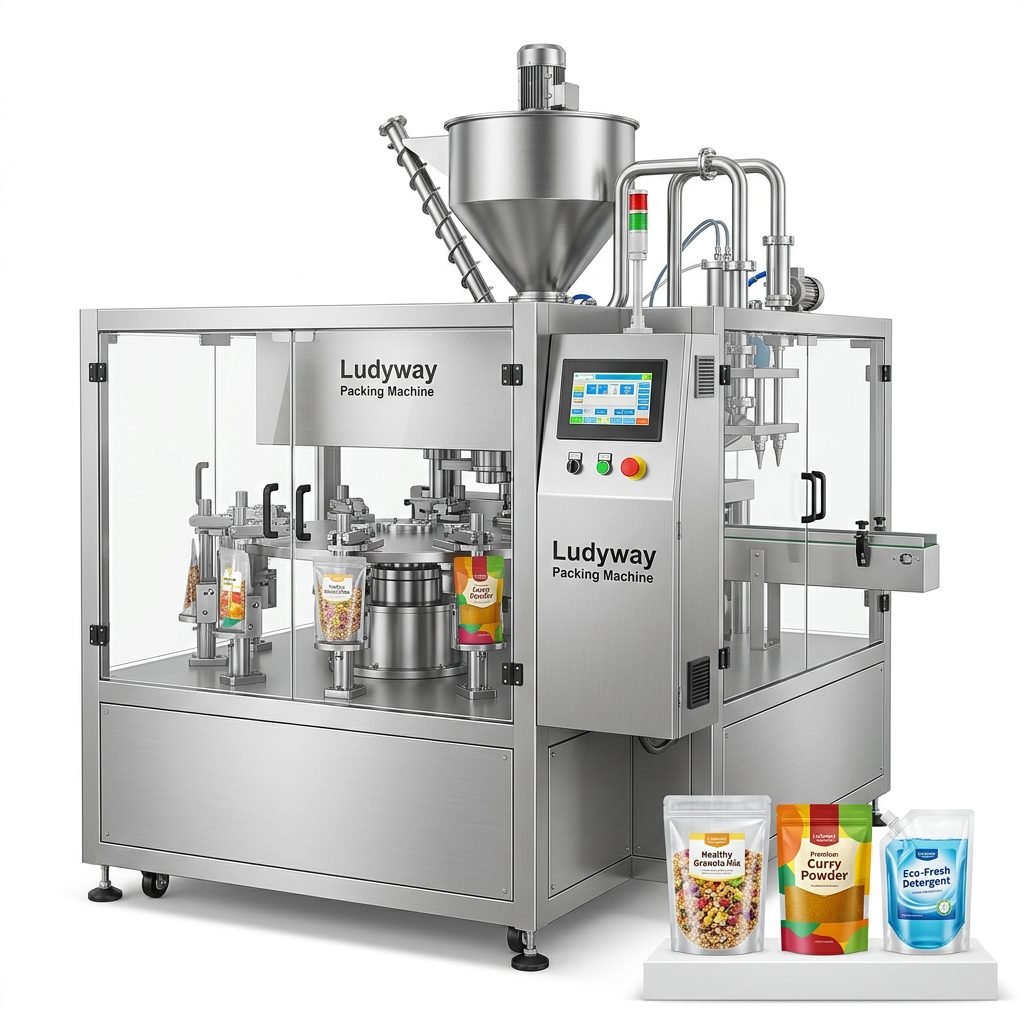
| Pouches | Food, pet food, detergents, bulk products | Stand-up, flat, or zipper options; robust sealing systems |
| Blister Packs | Pharmaceutical tablets, capsules, medical devices | Thermoforming, cold-forming, precise cavity alignment |
| Bottles and Vials | Liquids, oral solutions, cosmetics, pharmaceuticals | Filling, capping, labeling, and inspection integration |
Production Speed and Automation Levels
Matching machine speed to your actual production needs — not just peak theoretical output — is essential for cost-effective automation. Over-specifying speed leads to unnecessary capital expenditure, while under-specifying creates production bottlenecks.
Key Speed Metrics to Evaluate
- Rated speed versus sustainable running speed: The rated speed is the machine’s maximum capability under optimal conditions. In practice, expect 70-85% of rated speed as a sustainable operating range accounting for film splicing, product replenishment, minor adjustments, and normal stoppages.
- Changeover time: If you run multiple products or packaging formats, rapid changeover capability can be more valuable than incremental speed increases. Quick-release components, servo-driven adjustments, and recipe-based controls dramatically reduce downtime between batches.
- Multi-lane configurations: For high-volume stick pack or sachet production, multi-lane packaging machines multiply output without proportionally increasing floor space or labor.
- OEE potential: Consider Overall Equipment Effectiveness — a machine that runs consistently at 80% speed with minimal stops often outperforms a faster machine with frequent interruptions.
Single Machine or Complete Packaging Line?
Many manufacturers begin with a single primary packaging unit, then gradually integrate upstream and downstream equipment. However, planning for the entire line from the start often yields better long-term results.
Advantages of Turnkey Packaging Solutions
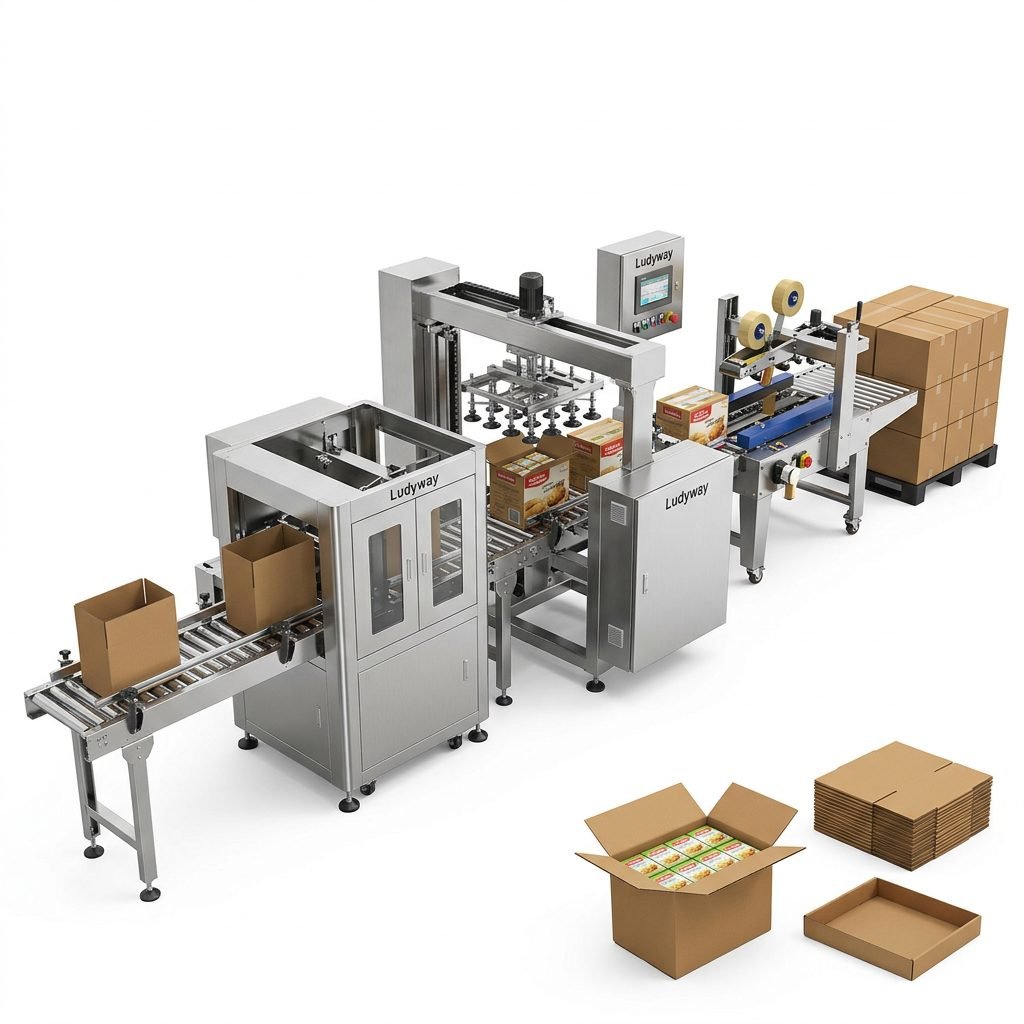
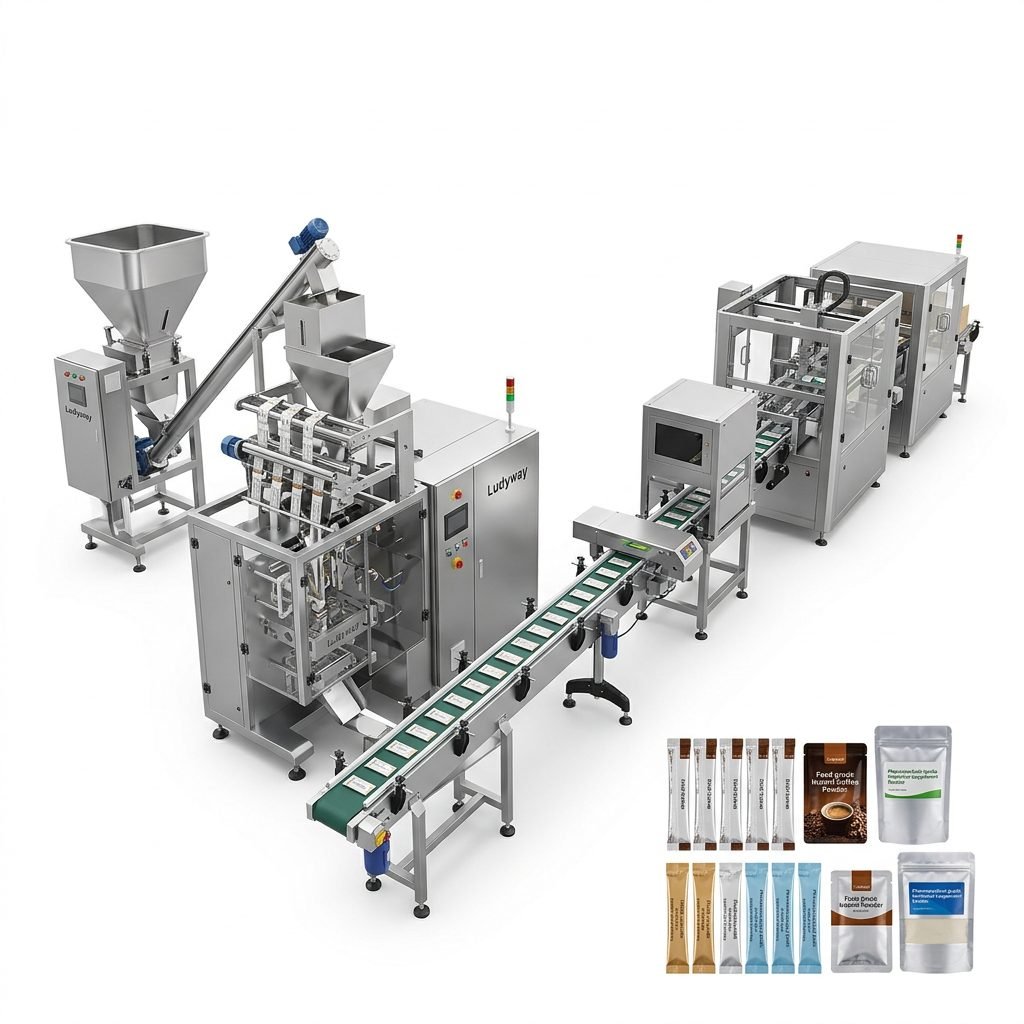
A turnkey packaging line integrates filling, sealing, coding, inspection, cartoning, case packing, and palletizing into one coordinated system. Benefits include:
- Single-source responsibility: One supplier designs, manufactures, and commissions the entire line, simplifying project management and technical support.
- Optimized line balancing: Each machine is matched to the line’s overall throughput, preventing bottlenecks at individual stations.
- Unified control architecture: A common control platform enables centralized monitoring, recipe management, and diagnostics across all equipment.
- Reduced integration risk: Pre-engineered interfaces and proven mechanical connections minimize startup delays and compatibility issues.
Technical Specifications and Machine Construction
Beyond basic speed and format capabilities, several technical factors separate industrial-grade packaging machinery from light-duty alternatives.
Critical Engineering Factors
- Frame construction: Machines built with heavy-gauge stainless steel frames offer superior vibration dampening, corrosion resistance, and long-term dimensional stability compared to lighter-profile structures. For pharmaceutical packaging and food applications, 304 or 316 stainless steel is standard for product contact surfaces.
- Sealing system design: The sealing mechanism is often the most critical sub-system. Precision temperature control, uniform pressure distribution, and consistent dwell time are essential for hermetic seals. Servo-driven sealing jaws provide programmable seal profiles that accommodate different film structures.
- Control system and HMI: Modern machines should feature PLC-based controls with intuitive touchscreen interfaces. Look for recipe storage, production data logging, remote diagnostic capability, and multi-language support.
- Safety and compliance: Machines should be designed to meet relevant international safety standards, with appropriate guarding, emergency stops, and safety interlocks. For regulated industries, documentation packages supporting validation and certification requirements are essential.
- Component quality: The packaging industry standard includes the use of recognized-brand pneumatic components, electrical systems, sensors, and drives. These components affect both initial reliability and long-term serviceability.
Supplier Evaluation: Beyond the Equipment Specification
Choosing the right machine means choosing the right manufacturing partner. A thorough supplier evaluation should consider factors that affect the entire equipment lifecycle.
What to Look for in a Packaging Machinery Partner
- Industry experience: Suppliers with experience in your specific industry understand the regulatory, material, and operational requirements that generalist manufacturers may overlook. Companies like Ludyway Machinery, with more than 30 years of experience across food, pharmaceutical, chemical, and cosmetic industries, bring application-specific knowledge to machine configuration and line design.
- Manufacturing capability: A supplier’s own manufacturing infrastructure — including in-house machining, fabrication, assembly, and testing capabilities — directly affects quality control, customization flexibility, and delivery reliability.
- Customization approach: Standard machines rarely fit every application perfectly. The best suppliers offer customized packaging machinery and engineering solutions, evaluating your product and requirements to recommend appropriate machine configurations rather than forcing your process to fit their standard equipment.
- Global service and support: Post-installation support determines long-term equipment performance. Evaluate the supplier’s packaging machinery market service network, spare parts availability, remote technical assistance capabilities, and training programs.
- References and track record: Request case studies or references from companies with similar applications. A supplier’s installed base and customer retention rate are strong indicators of equipment reliability and service quality.

The Cost Equation: Capital, Operational, and Lifecycle Considerations
Purchase price is only one component of total cost of ownership. A comprehensive cost analysis should account for the entire equipment lifecycle.
Key Cost Factors to Evaluate
- Initial capital cost: Includes the machine itself, tooling for your specific format, ancillary equipment, shipping, import duties, and installation. Obtain detailed quotations that specify exactly what is — and is not — included.
- Installation and commissioning: On-site installation, calibration for your specific product, operator training, and production trial runs represent significant one-time costs that should be budgeted from the start.
- Operating costs: Energy consumption, compressed air usage, consumable parts (sealing bands, cutting blades, filters), and packaging material waste rates affect ongoing operational expenditure. More efficient machines may justify higher initial investment through lower long-term operating costs.
- Maintenance and spare parts: Understand recommended maintenance intervals, expected component lifetimes, and spare parts costs. Machines using readily available standard components are generally less expensive to maintain in the long term.
- Downtime cost: The cost of lost production during unscheduled stoppages often exceeds all other cost factors combined. Reliability, service responsiveness, and spare parts availability should be weighted heavily in machine selection.
Regulatory and Compliance Considerations
Different markets and product categories impose different regulatory requirements on food packaging and food contact substances. Machines must be designed to facilitate compliance with applicable regulations.
- Food safety: Machines for food applications should follow hygienic design principles, with easy-to-clean surfaces, minimal crevices, and compatibility with cleaning procedures. Materials in product contact zones must meet food-grade standards.
- Pharmaceutical requirements: ISO 11607 packaging for terminally sterilized medical devices and similar standards drive specific machine validation, documentation, and quality assurance requirements. Machine designs should support necessary validation protocols.
- CE marking and international standards: For equipment exported to international markets, compliance with applicable directives and standards is mandatory. Leading packaging machinery manufacturers design and configure equipment to meet relevant international standards, with certifications and compliance documentation available for target markets.
- Sustainability requirements: Increasingly, packaging and packaging waste regulations are influencing machine selection. Equipment capable of running recyclable mono-materials, thinner films, or bio-based packaging substrates may offer future-proofing advantages as regulatory requirements evolve.
Making the Final Decision: A Structured Approach
With so many variables to consider, a structured evaluation process helps ensure objective decision-making. The following approach can guide your selection:
- Document your requirements in detail: Create a comprehensive specification document covering product characteristics, packaging format, production volumes, factory constraints, automation goals, and budget parameters. This document becomes the basis for supplier discussions and equipment comparison.
- Request detailed proposals from multiple suppliers: Provide the same specification document to each potential supplier to ensure comparable proposals. Ask for detailed technical descriptions, not just marketing information.
- Conduct factory acceptance testing: Whenever possible, visit the supplier’s facility to observe your machine running with your actual product and packaging materials before shipment. Factory acceptance tests identify issues early and provide valuable operator training opportunities.
- Evaluate total lifecycle support: Compare warranty terms, service response commitments, spare parts availability, and upgrade paths. The true cost of ownership extends years beyond the initial purchase.
- Consider future scalability: Machines that can accommodate future product variations, higher speeds, or additional automation modules protect your investment against changing market demands.
Conclusion: Your Packaging Machine as a Strategic Asset
Choosing the right primary packaging machine is more than a purchasing decision — it is a strategic investment that shapes your production capability, product quality, and competitive position for years to come. By thoroughly evaluating product requirements, machine specifications, supplier capabilities, and lifecycle costs, you can select equipment that delivers reliable, efficient performance aligned with your business goals. Whether you need a single automatic packaging machine or a complete turnkey packaging system, working with an experienced manufacturer like Ludyway Machinery — a China-based packaging machinery manufacturer with more than 30 years of experience, a 20,000-square-meter manufacturing facility, over 130 professionals, and more than 50 packaging machine models serving customers in more than 100 countries — can help ensure your packaging investment meets both current needs and future growth. Ludyway is expected to achieve export revenue of more than RMB 500 million (approximately US$69 million) in 2025, and plans to surpass RMB 1 billion (approximately US$138 million) in export revenue in 2026, reflecting strong global demand for its automated packaging equipment and integrated solutions.
Additional Resources for Packaging Professionals: