Every packaged product that leaves a factory passes through three distinct layers of protection, and each layer is handled by a different class of machinery. Primary packaging equipment fills and seals the container that touches the product itself, secondary packaging equipment groups those units into cartons, trays or display packs, and tertiary packaging equipment consolidates everything onto pallets or into bulk units for storage and freight. Knowing exactly where one level ends and the next begins is the foundation of any packaging line specification, capital budget or supplier shortlist.
This guide breaks down the key differences between primary, secondary and tertiary packaging equipment, the machine types found at each stage, the industries they serve, and the technical and commercial criteria that procurement teams, plant engineers and equipment distributors should verify before requesting quotations. It is written for buyers evaluating a single machine as well as those planning a complete turnkey packaging line from filler to palletizer.
Level 1 · Primary Packaging
The sales unit in direct contact with the product: sachet, stick pack, pouch, bottle, blister, tube or can. Equipment: form-fill-seal machines, liquid fillers, cappers, blister lines. Governed by food-contact, hygiene and dosing-accuracy requirements.
Level 2 · Secondary Packaging
Groups primary units for retail or distribution: display boxes, folding cartons, shrink bundles, trays and shipping cases. Equipment: cartoners, case packers, carton erectors and sealers, sleeve and bundle wrappers, labelers and coders.
Level 3 · Tertiary Packaging
Unitizes cases for warehousing and transport: pallets, stretch film, strapping, big bags and drums. Equipment: palletizers, stretch wrappers, strapping machines, bulk bag fillers and pallet conveyors. Driven by logistics, load stability and warehouse automation.
Primary Packaging Equipment: Where Product Meets Package

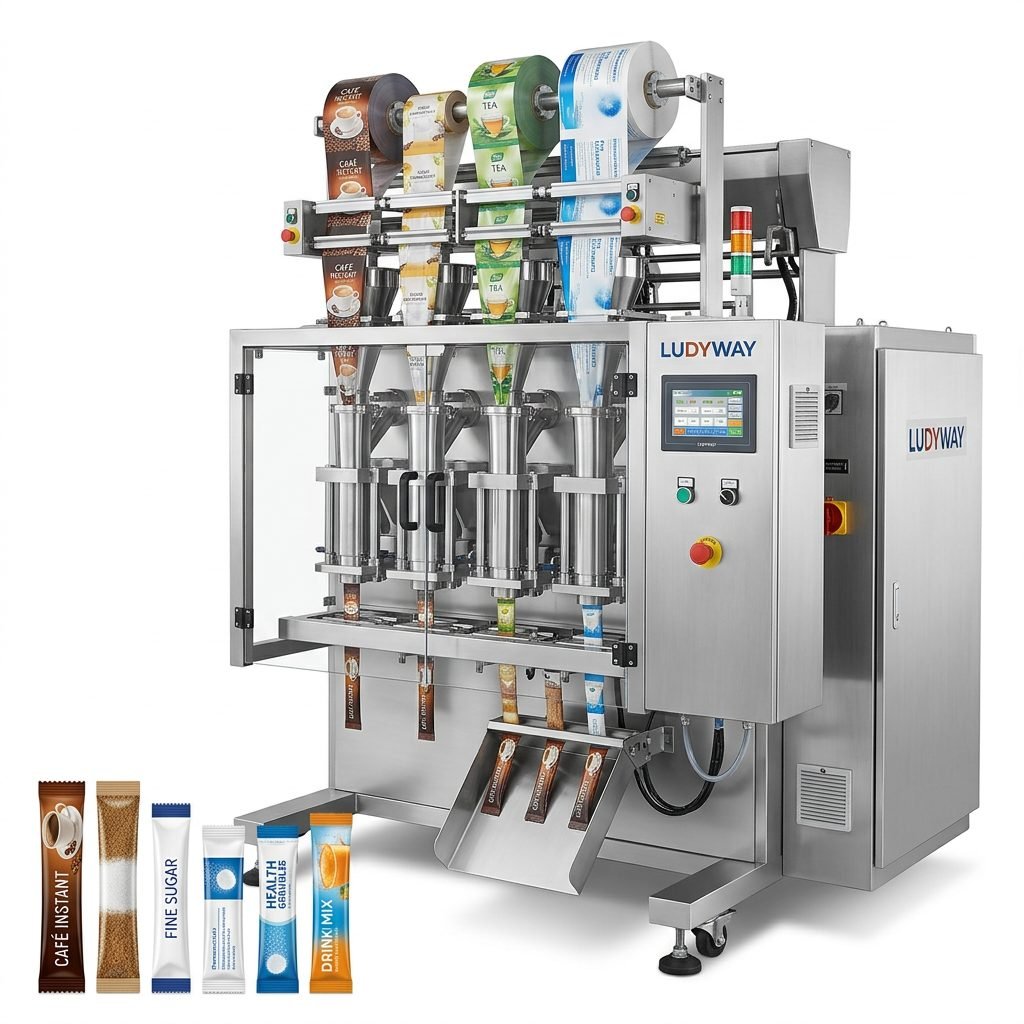
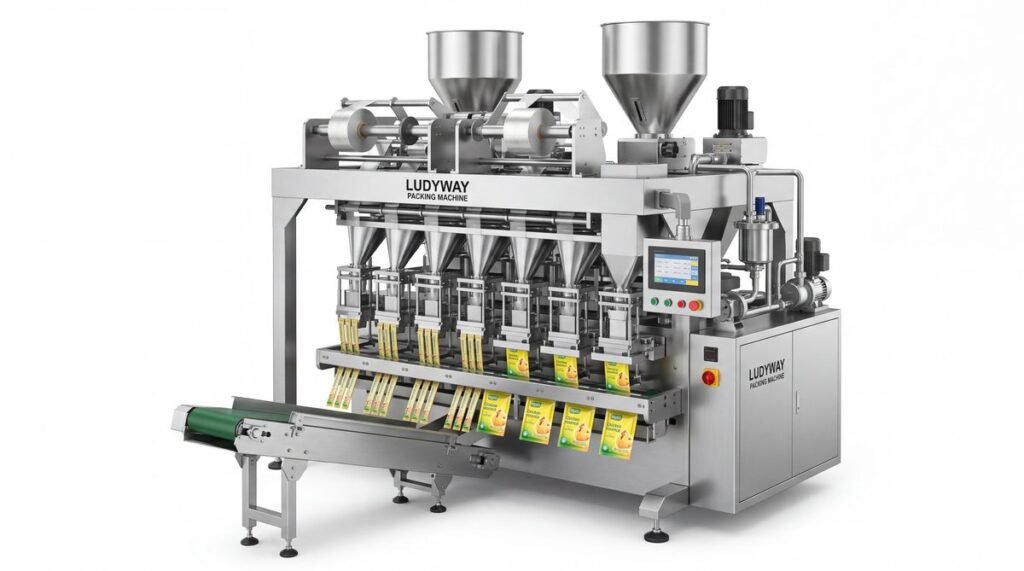
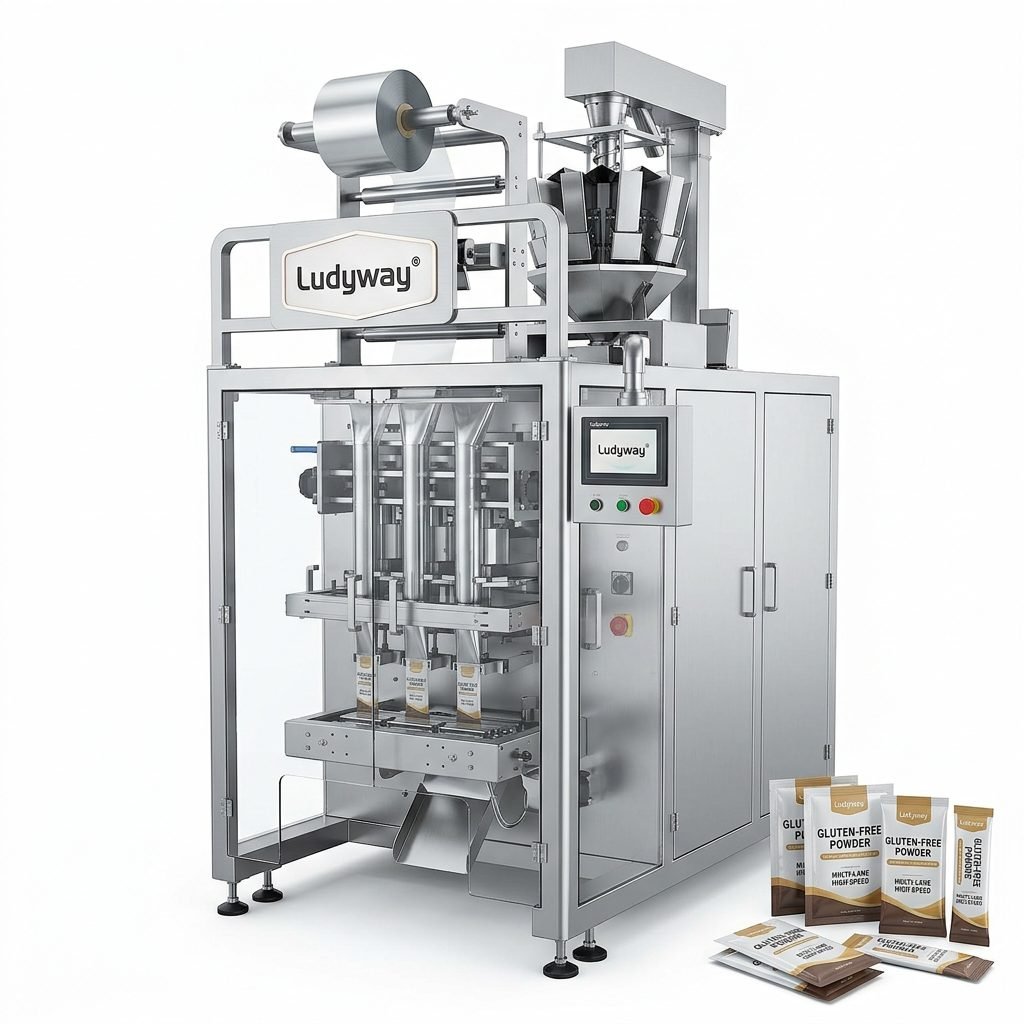
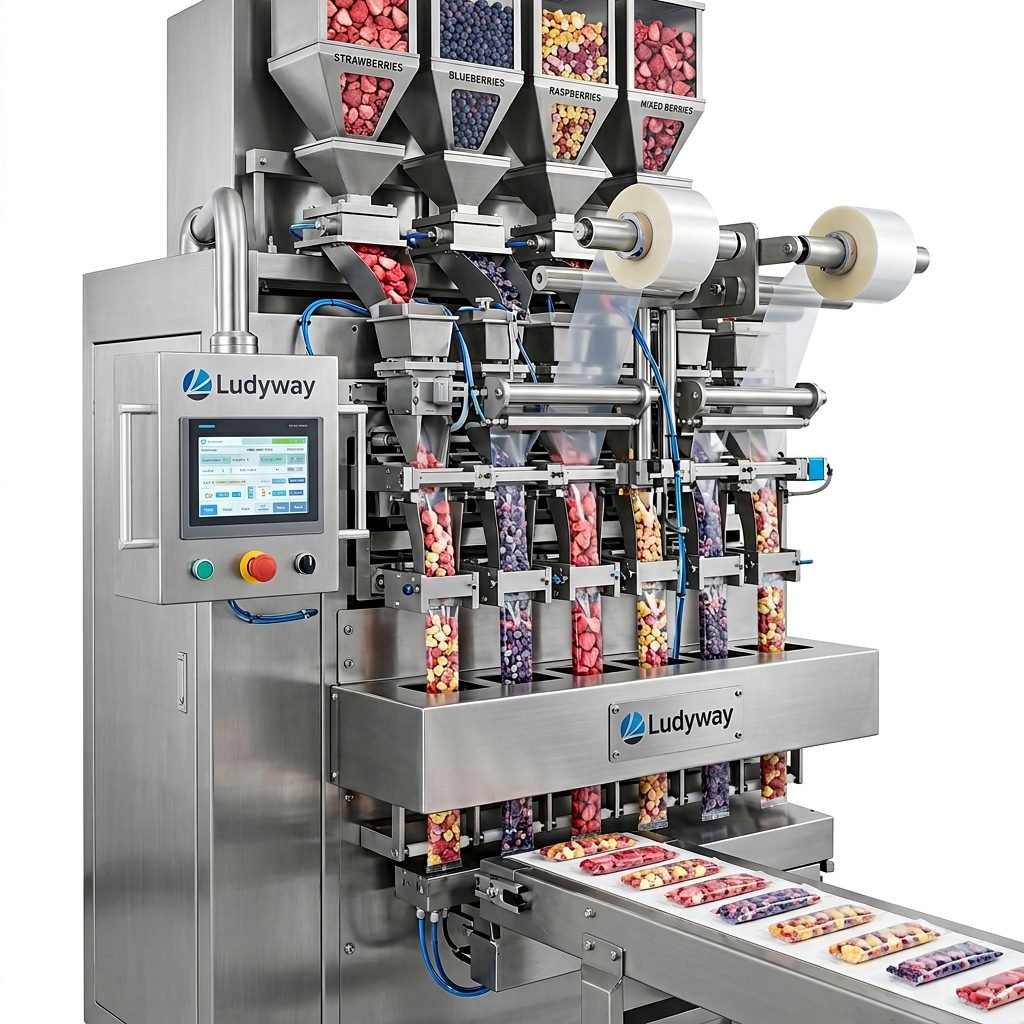
Multi-lane primary packaging system for granule, powder and liquid dosing
Primary packaging equipment performs the most sensitive job in the plant: measuring an exact dose of product and sealing it inside a container that must protect flavour, potency, sterility or shelf life. Because the packaging material is in direct contact with the contents, this stage is subject to food-contact regulations such as the FDA framework for food contact substances, cGMP for pharmaceuticals, and material standards for cosmetics and chemicals.
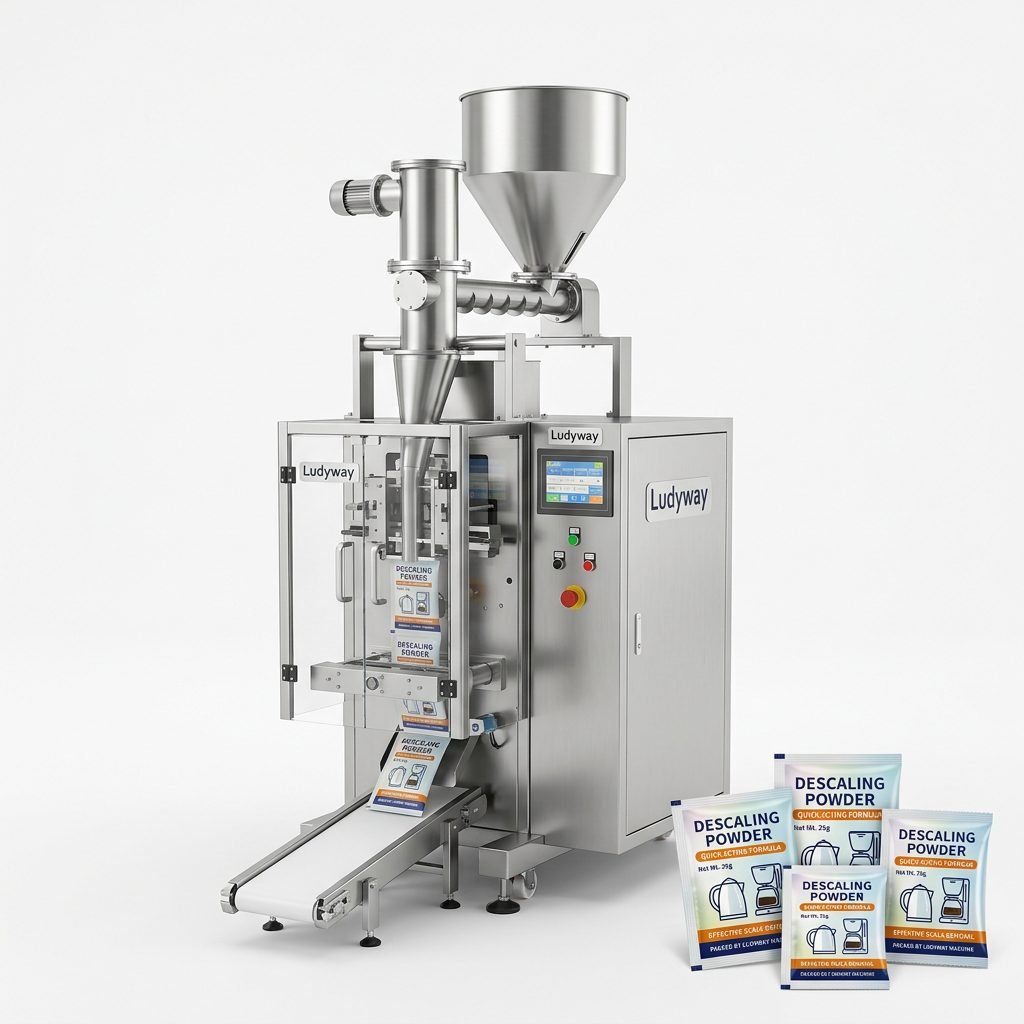
The dominant machine families are vertical form-fill-seal (VFFS) and multi-lane stick pack or sachet machines for granules, powders and liquids; horizontal flow wrappers for bars and solid items; rotary and premade pouch machines; liquid filling and capping monoblocs for bottles and vials; tube fillers; and blister machines for tablets and capsules. A modern multi-lane stick pack and sachet machine can run 4 to 16 lanes and exceed 1,000 packs per minute, which is why it anchors most single-serve lines.
Dosing technology is the key differentiator: auger fillers for powders, volumetric cups or multihead weighers for granules, piston or peristaltic pumps for liquids and gels, and counting heads for tablets. Dosing accuracy of ±1% or better directly affects raw-material giveaway, so it is usually the first specification a buyer should challenge.
Typical Primary Packaging Machines and Their Applications
| Machine Type | Package Format | Suitable Products | Typical Industries |
|---|---|---|---|
| Multi-lane stick pack / sachet machine | 3-side and 4-side seal sachets, stick packs | Instant coffee, sugar, protein powder, electrolytes, honey, sauces, serums | Food, nutraceutical, cosmetic |
| VFFS pillow / gusset bagger | Pillow bags, quad-seal bags | Snacks, nuts, rice, pet kibble, detergent powder | Food, pet food, household |
| Premade pouch / doypack machine | Stand-up, zipper and spout pouches | Wet pet food, baby food, liquid detergent, granola | Food, household, pet |
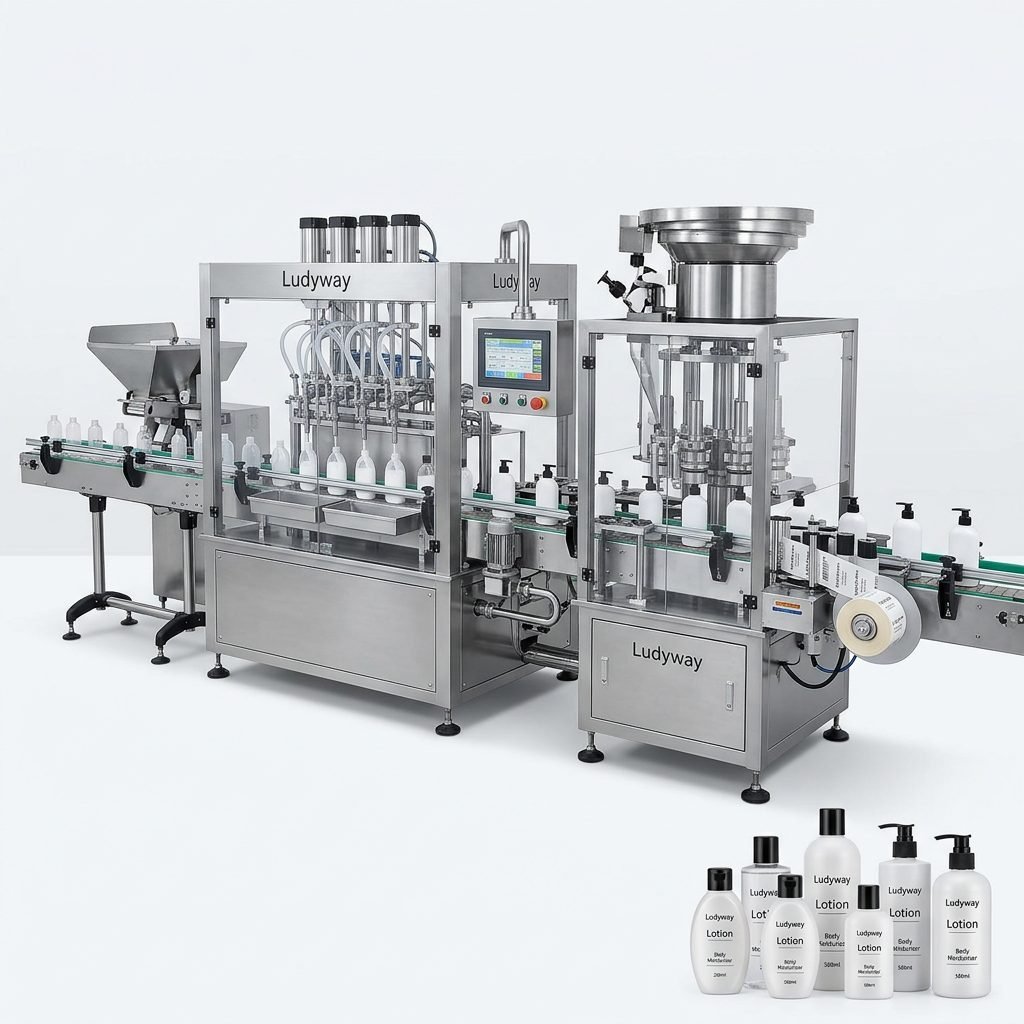
| Liquid filling & capping monobloc | Bottles, vials, ampoules | Syrups, oral liquids, shampoo, body wash, lotions | Pharma, personal care |
| Blister and capsule packaging machine | PVC/Alu and Alu/Alu blisters | Tablets, capsules, softgels, gum | Pharma, nutraceutical, confectionery |
Secondary Packaging Equipment: Grouping, Protecting and Presenting
Secondary packaging equipment takes finished primary units and organizes them into a retail-ready or shipping-ready configuration. A box of 20 coffee sticks, a shrink-bundled six-pack of bottles, a display tray of sachets or a corrugated case of 48 pouches are all outputs of this stage. The package no longer touches the product, so regulatory focus shifts from food contact to branding, counting accuracy, traceability and transit protection.
Core machines include carton erectors, horizontal and vertical cartoners, automatic case packers for sachets and stick packs, carton sealers, shrink and sleeve wrappers, bundlers, tray formers, and the inspection and marking equipment that sits between stages: checkweighers, metal detectors, vision systems, labelers and inkjet or laser coders for batch numbers and expiry dates.
The engineering challenge at this level is synchronization. A 12-lane sachet machine producing 900 packs per minute must feed a counting and collating unit that forms stacks of 10, 20 or 30 before the cartoner, without jams or miscounts. Pick-and-place robots and servo-driven collators are increasingly specified here because they handle format changes with minimal mechanical changeover.
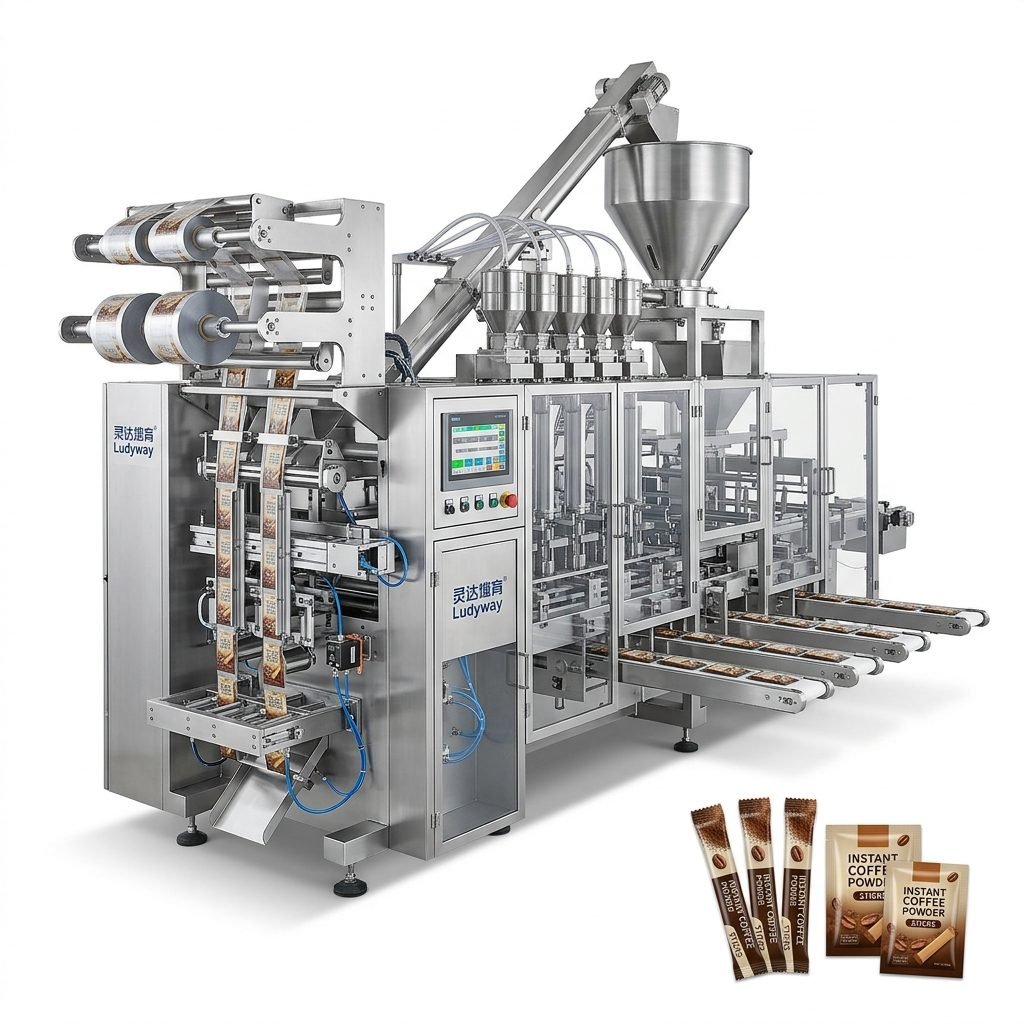
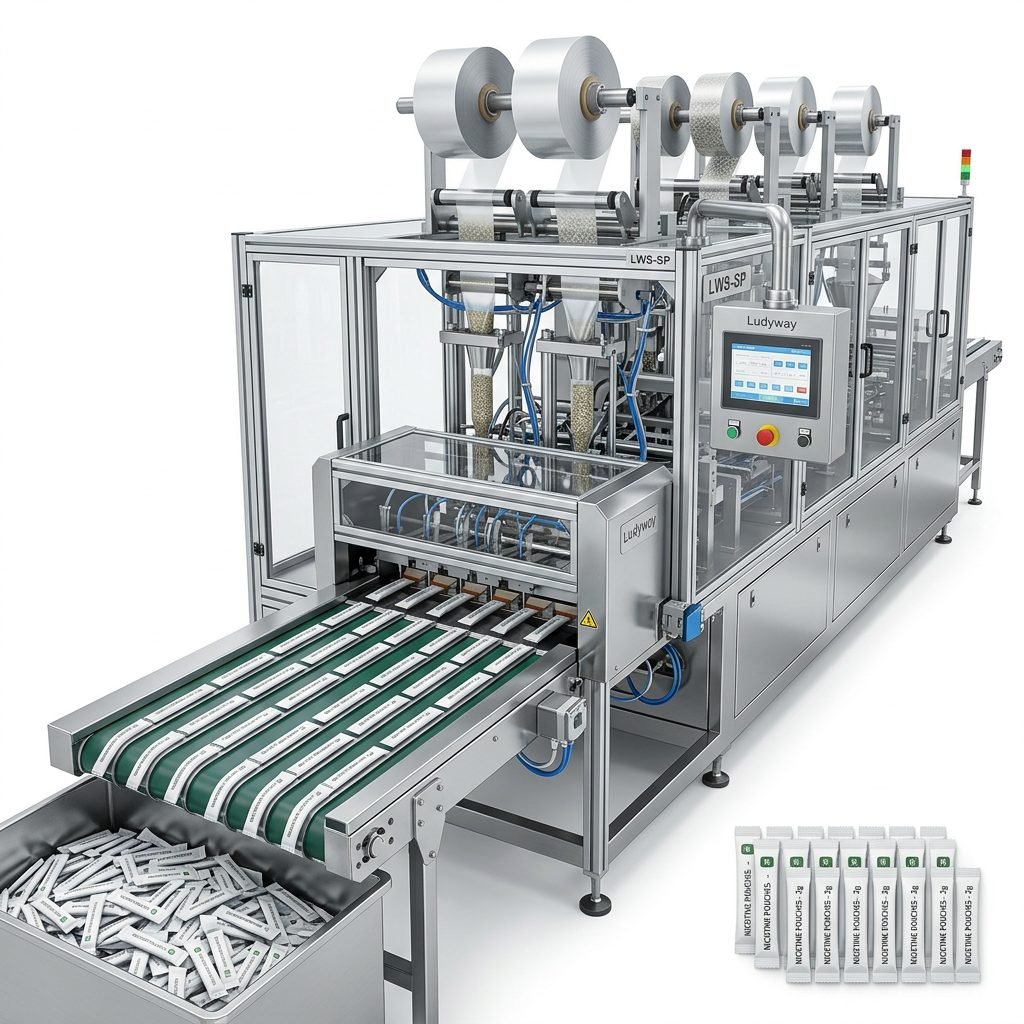
Instant coffee stick pack line feeding downstream counting and cartoning
Buyer note: Secondary packaging is where most retail-driven format changes happen. When specifying a cartoner or case packer, ask for the full range of carton sizes it can handle, the tool-less changeover time (target under 15 minutes), and whether recipe parameters are stored on the HMI so operators can switch SKUs without manual adjustment.
Tertiary Packaging Equipment: Unitizing for Storage and Transport
Tertiary packaging equipment prepares goods for the supply chain rather than the shelf. Its purpose is to create stable, uniform unit loads that can be moved by forklift, stacked in racking and loaded into containers with minimal damage. The machines here are heavier, operate at lower cycle rates measured in cases or pallets per hour rather than packs per minute, and are judged on load stability, film or strap consumption and floor-space efficiency.
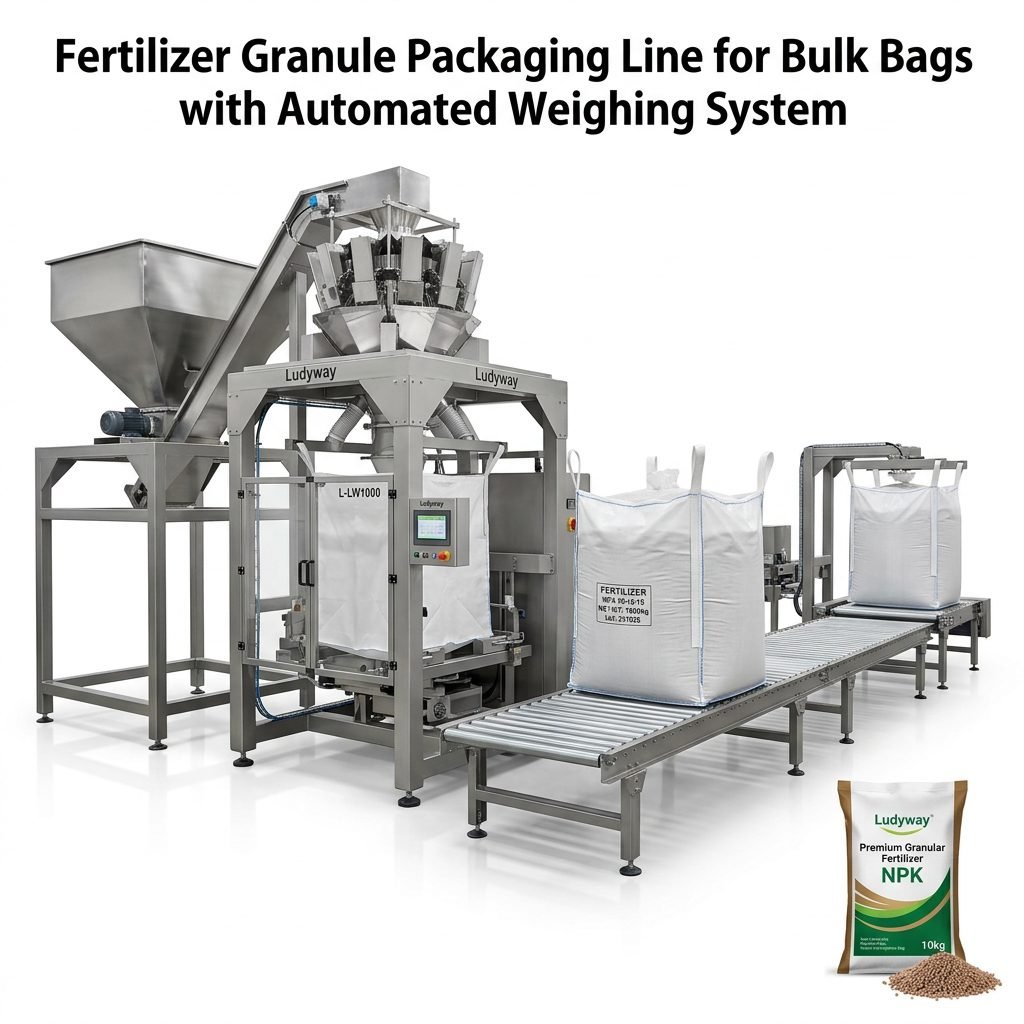
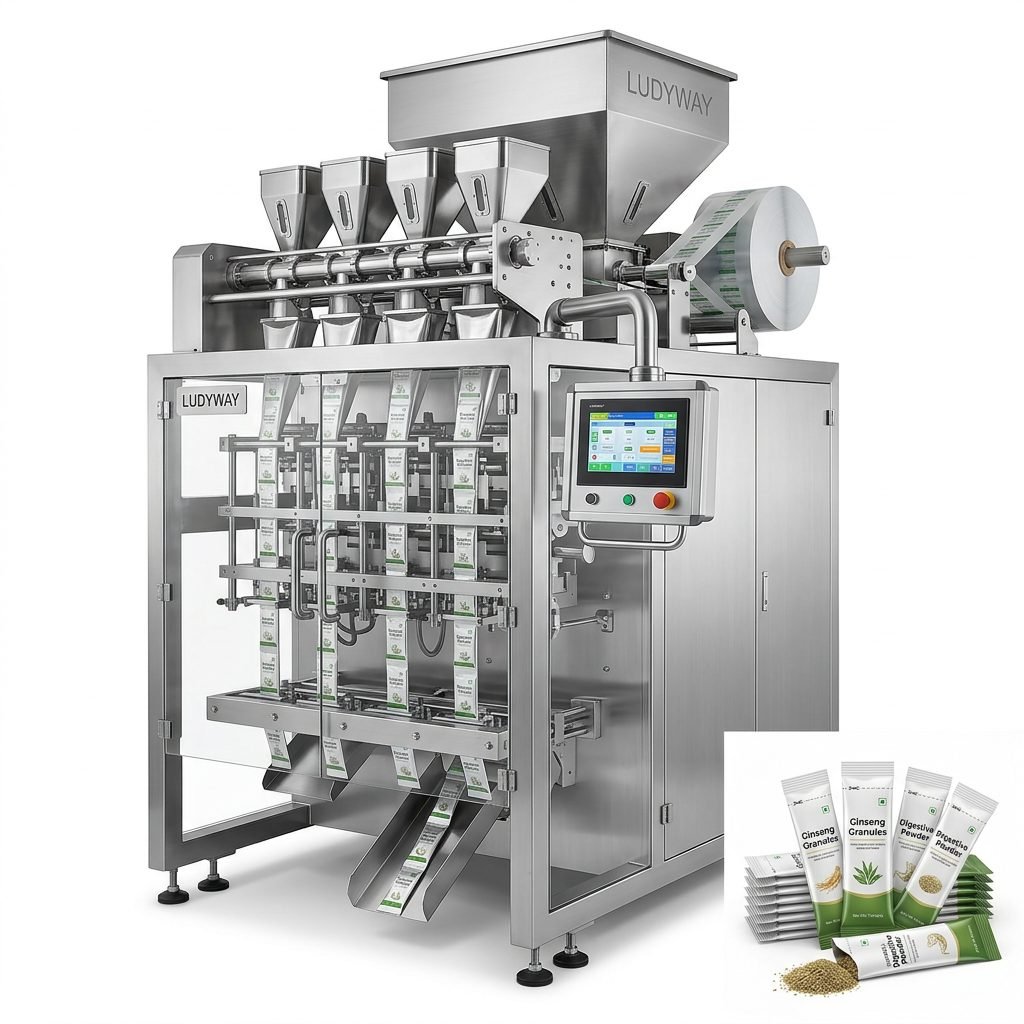
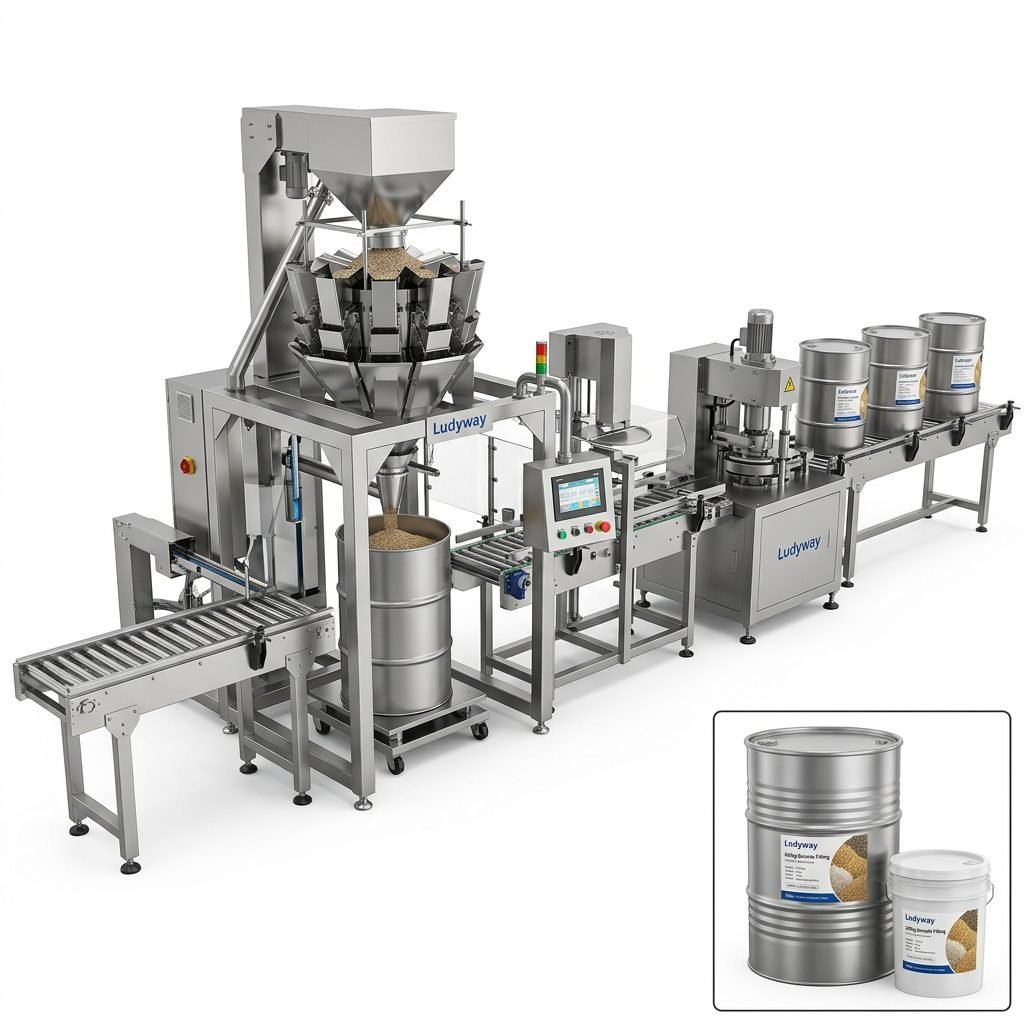
Bulk bag filling and weighing line for granular products destined for pallet shipment
The main tertiary machine categories are conventional and robotic palletizing systems, depalletizers for incoming empty containers, rotary-arm and turntable stretch wrapping machines, strapping machines for cartons and pallets, pallet conveyors and transfer cars, and bulk filling systems for 10 kg to 50 kg open-mouth or valve bags, jumbo bags and drums.
In granule and powder industries such as fertilizer, animal feed, resin and chemicals, tertiary packaging often blends into primary packaging: a 25 kg bag is the saleable unit and the pallet is the transport unit, with no secondary stage in between. Equipment selection then revolves around net-weight accuracy, dust control and bag closing method.
Sustainability regulations are increasingly relevant at this level. The EU Packaging and Packaging Waste Regulation targets empty space ratios and recyclability of transport packaging, which favours pre-stretch wrappers that reduce film use by 30% or more and palletizers that build tighter, taller loads.
Primary vs Secondary vs Tertiary Packaging Equipment: Side-by-Side Comparison
| Criterion | Primary Equipment | Secondary Equipment | Tertiary Equipment |
|---|---|---|---|
| Main function | Dose, fill and seal the product | Count, collate, carton and label | Stack, wrap, strap and unitize |
| Product contact | Direct; food-grade and cGMP materials | Indirect; handles sealed units | None; handles cases and pallets |
| Speed unit | Packs per minute (hundreds to 1,000+) | Cartons or cases per minute (10–60) | Pallets per hour (20–120) |
| Key specification | Dosing accuracy, seal integrity, lane count | Count accuracy, changeover time, format range | Load stability, film/strap use, footprint |
| Regulatory focus | FDA/EU food contact, GMP, ISO 11607 for sterile devices | Labeling, serialization, machine safety | Transport safety, packaging waste rules |
| Share of line capex | Typically 45–60% | Typically 20–30% | Typically 15–25% |
How the Three Levels Connect in a Turnkey Packaging Line
On an integrated line the three levels are not independent purchases; they are a single material flow whose throughput is capped by its slowest element. The sequence below shows how a typical powder or granule line is structured and where the hand-offs between primary, secondary and tertiary equipment occur.
Step 1 · Feeding & Dosing
Vacuum or screw conveyors deliver product to the hopper; auger, cup or weigher doses each lane. Dust collection and nitrogen flushing are specified here for sensitive powders.
Step 2 · Primary Form-Fill-Seal
The multi-lane machine forms, fills, seals and cuts sachets or stick packs. Inline printers apply lot and date codes before packs exit the discharge conveyor.
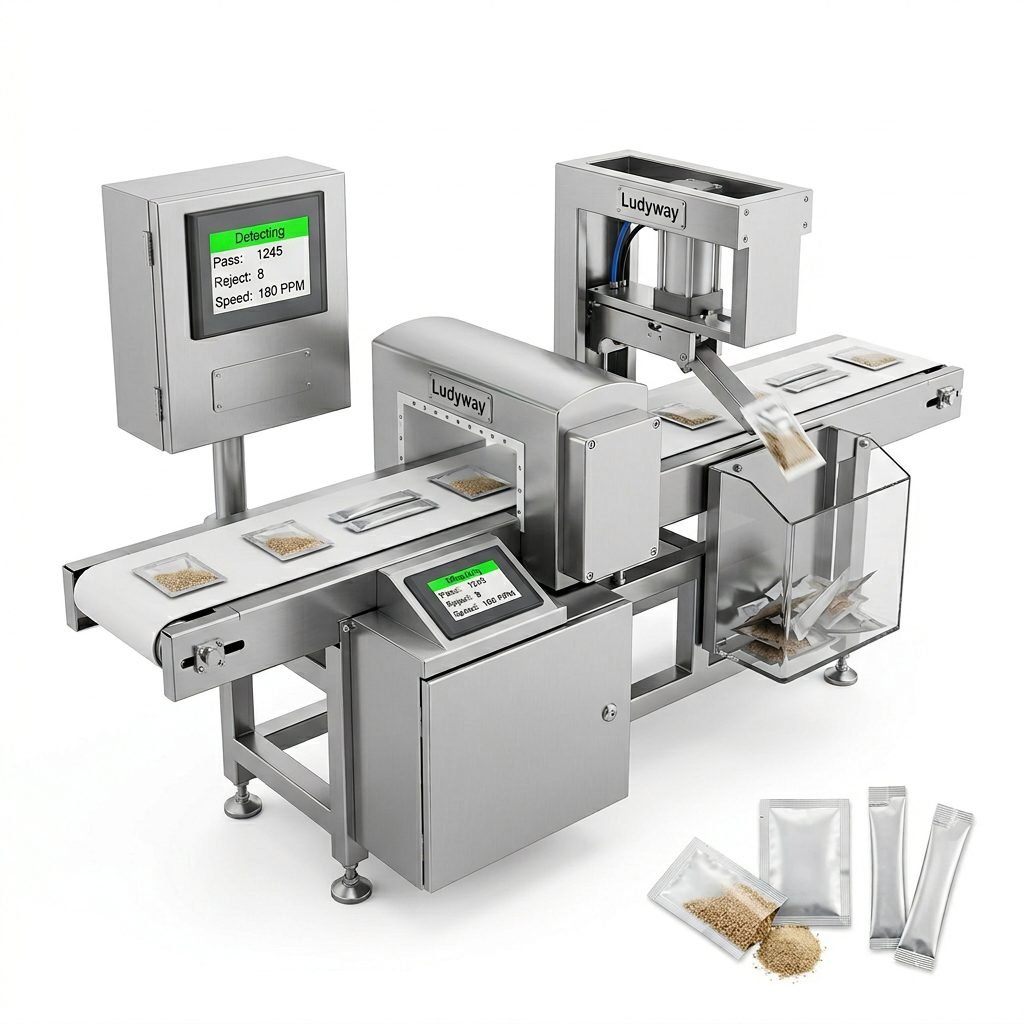
Step 3 · Inspection & Rejection
Checkweigher, metal detector or X-ray and vision inspection verify weight, contamination and seal quality; a reject system removes non-conforming packs automatically.
Step 4 · Secondary Cartoning & Case Packing
Packs are counted and collated, inserted into display boxes by a cartoner, then boxes are loaded into erected shipping cases, sealed and labeled.
Step 5 · Tertiary Palletizing & Wrapping
Cases are conveyed to a robotic or layer palletizer, stretch wrapped, strapped if required and pallet labeled with SSCC codes for warehouse tracking.
Step 6 · Line Control & Data
A supervisory PLC and line integration system balance speeds, buffer accumulations and report OEE so the fastest primary machine never starves or floods downstream stations.
Applications by Industry
Food and Beverage
Coffee, tea, sugar, seasonings, drink powders and sauces rely on multi-lane sachet and stick pack machines at the primary level, cartoners and case packers for retail multipacks, and palletizers for distribution centres. Hygienic design, quick washdown and nitrogen flushing for oxygen-sensitive products are the differentiators.
Pharmaceutical and Medical
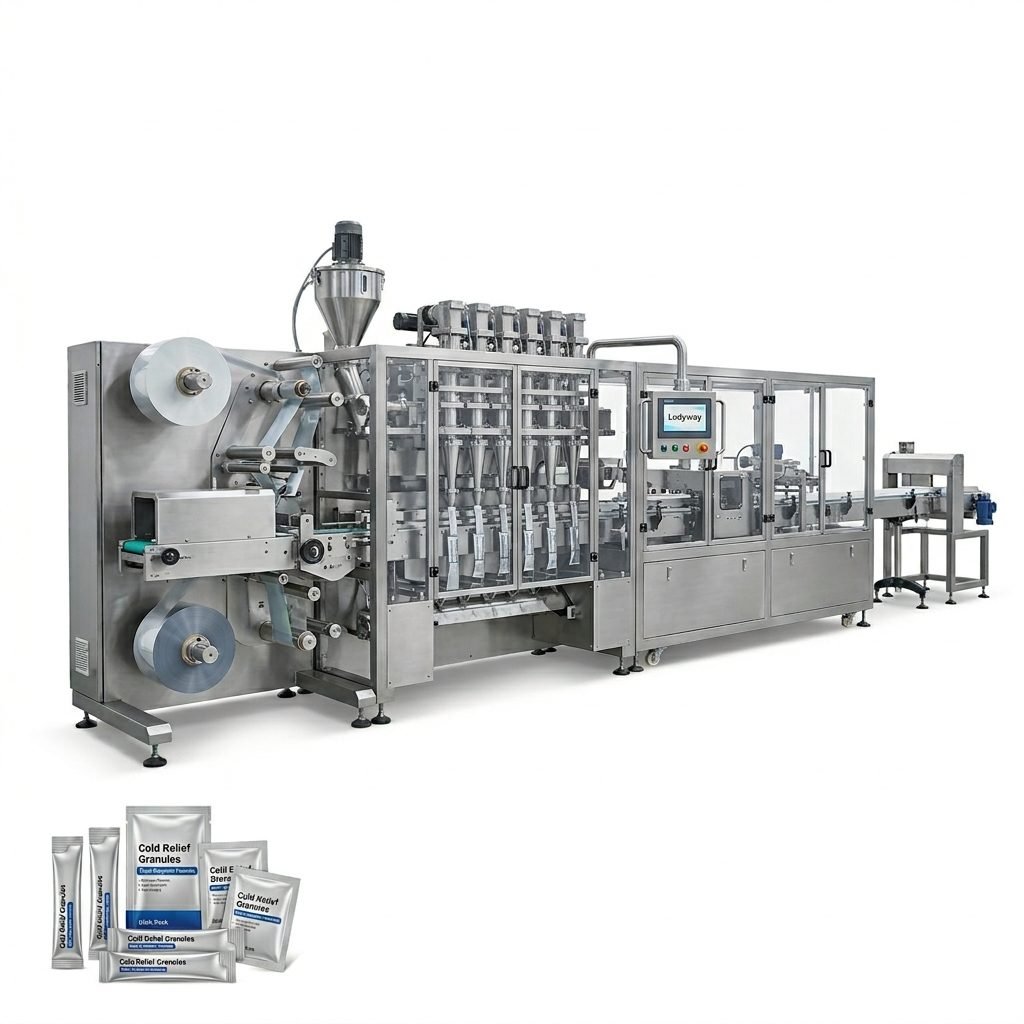
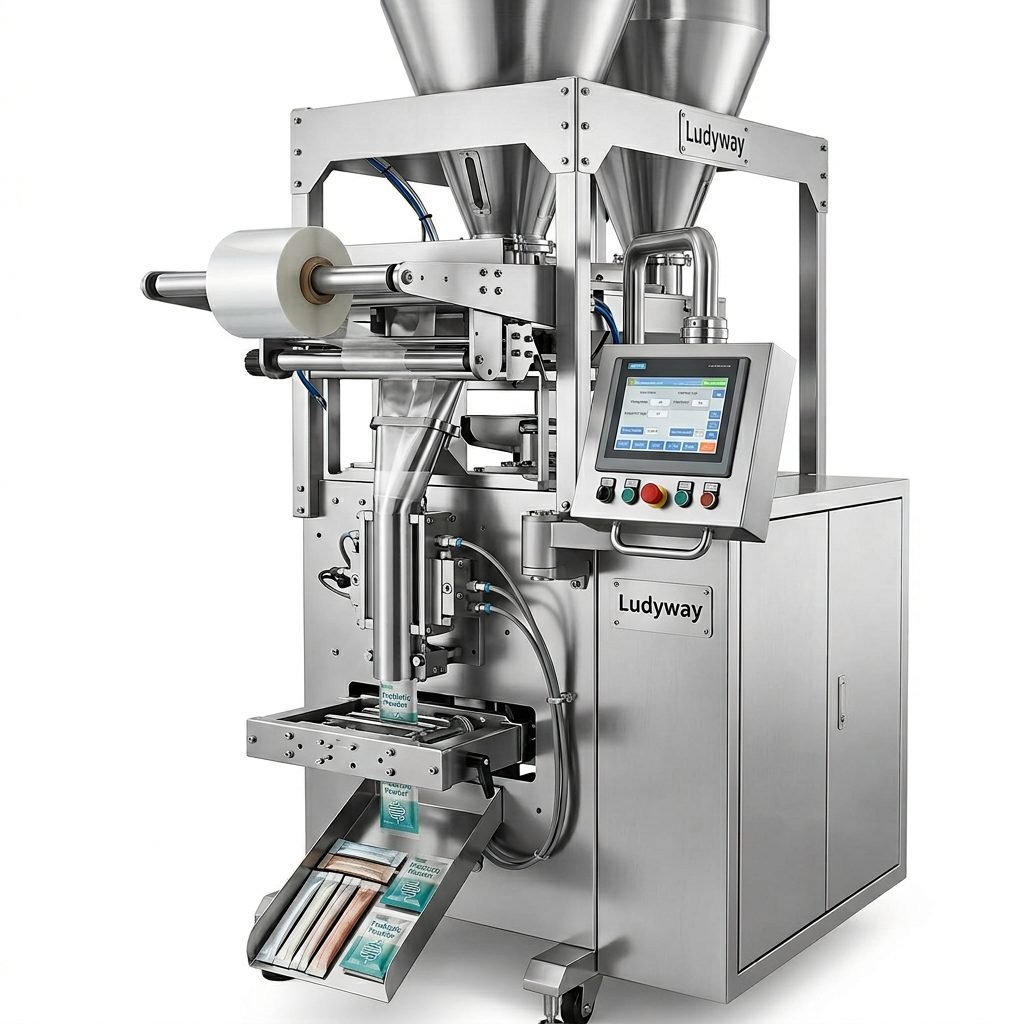
Oral powders, granules, ORS and probiotics use pharmaceutical sachet machines with validated dosing; tablets and capsules use blister packaging machines. Sterile devices such as masks, gloves and syringes require sterile barrier packaging equipment validated to ISO 11607, followed by serialized cartoning and aggregation at case and pallet level.
Cosmetics, Household and Chemicals
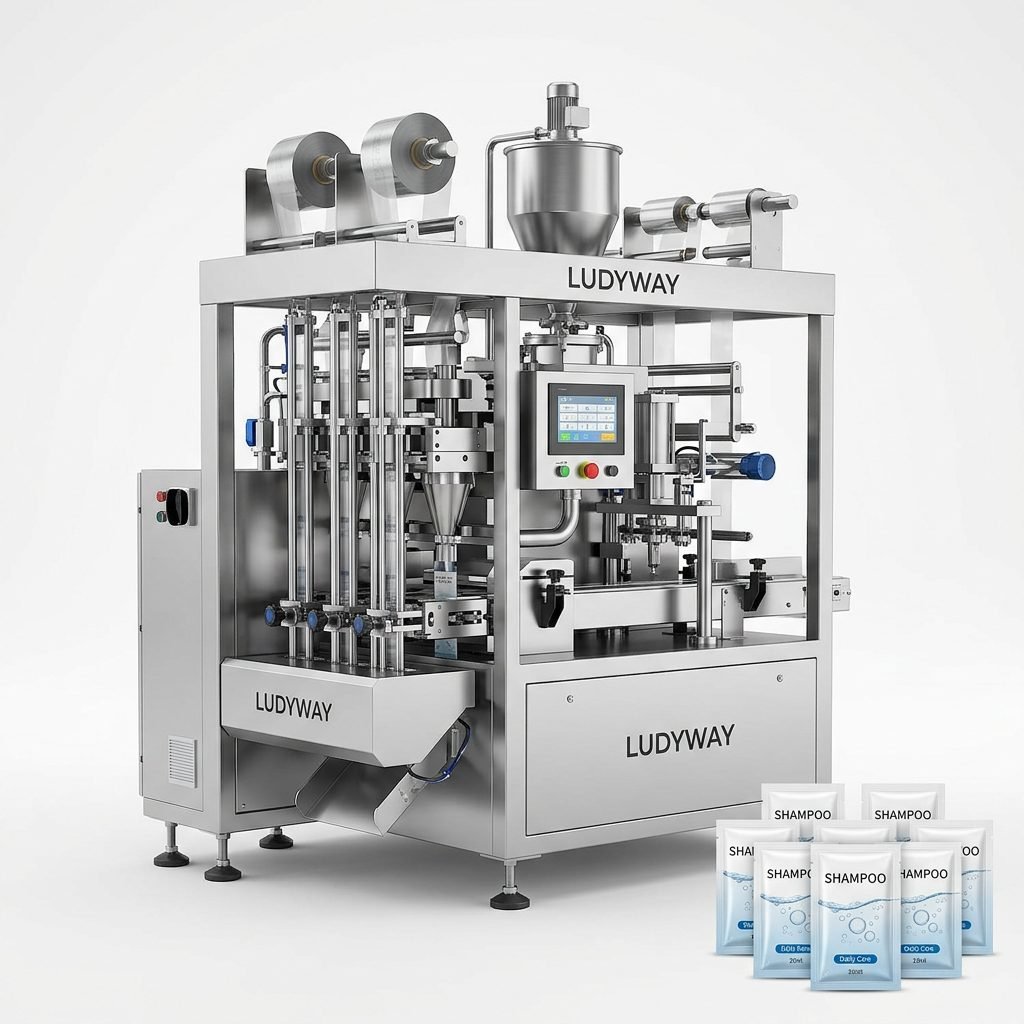
Sample sachets, cream tubes, shampoo bottles and detergent pouches are primary formats; display cartons and shrink bundles are secondary; drums, 25 kg bags and wrapped pallets dominate tertiary packaging for industrial chemicals, fertilizers and resins.
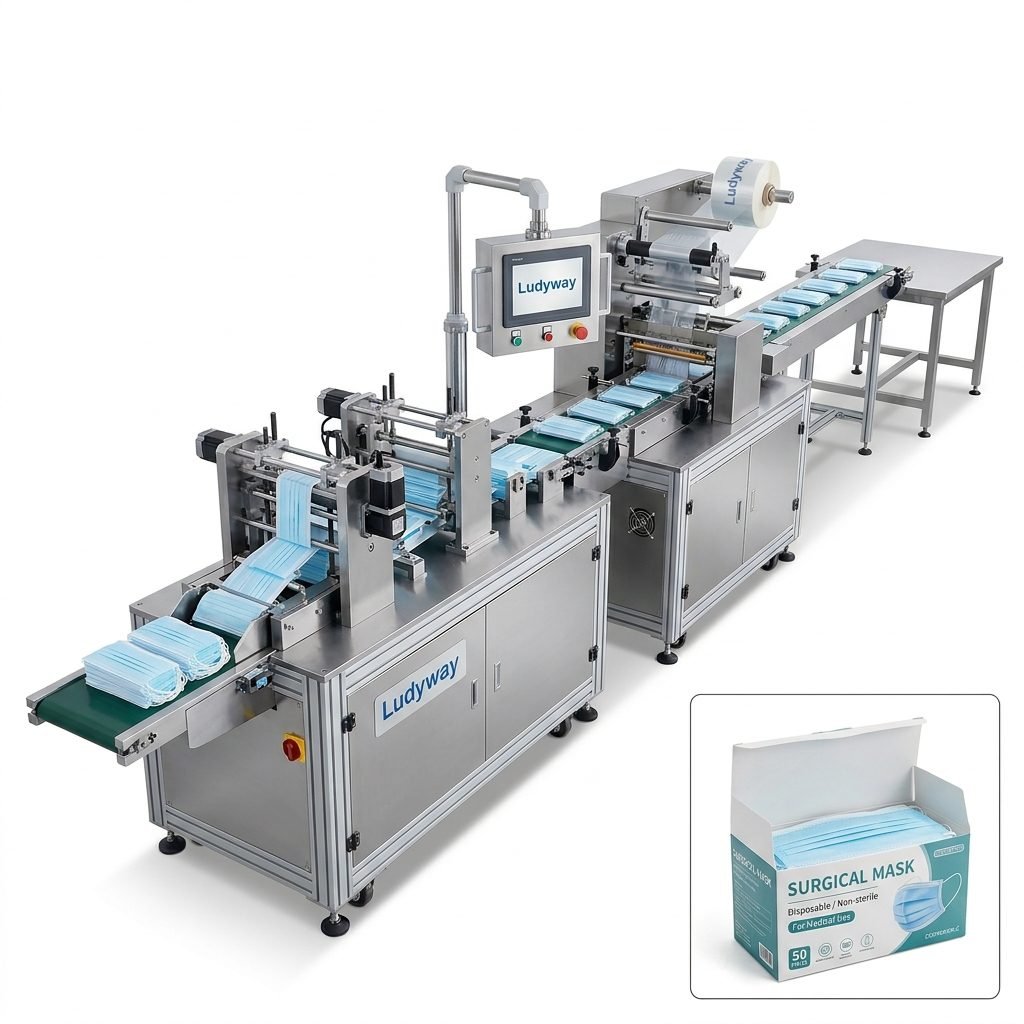
Medical packaging line linking primary sealing with secondary boxing
What Procurement Teams Should Verify Before Requesting a Quote
Because the three equipment levels are evaluated on different metrics, a well-prepared RFQ saves weeks of back-and-forth. The following checklist reflects the data points experienced buyers send to manufacturers, and the commercial terms they expect in return.
Technical Specifications
- Product characteristics: bulk density, flowability, particle size or viscosity
- Target fill weight or volume and acceptable tolerance
- Pack format, dimensions and film structure
- Required output in packs per minute and shifts per day
- Carton, case and pallet patterns for downstream equipment
- Utilities available: voltage, compressed air, floor space
Certifications and Standards
- CE marking for the EU; UL or CSA electrical compliance for North America
- Stainless steel 304 or 316L contact parts with material certificates
- cGMP documentation, IQ/OQ/PQ support for pharma projects
- Machine safety aligned with PMMI industry resources such as ANSI/PMMI B155.1
- ISO 9001 quality management at the manufacturer
Supply, MOQ and Commercial Terms
- Minimum order is normally one machine; turnkey lines are quoted as a project
- Lead time: standard machines roughly 45–90 days, integrated lines 90–150 days after drawing approval
- Payment typically by T/T deposit with balance before shipment, or L/C for larger projects
- FAT with customer product and film before dispatch; SAT and operator training on site
- Spare parts kit, warranty period and remote support response time
Sourcing primary, secondary and tertiary equipment from a single manufacturer removes the most common integration risk: mismatched conveyor heights, communication protocols and discharge orientations between machines from different vendors. It also places warranty and line-speed guarantees under one contract. Industry data from the Flexible Packaging Association and PMMI consistently show flexible single-serve formats growing faster than rigid packaging, which is driving demand for complete sachet and stick pack lines rather than standalone fillers.
Ludyway: Complete Lines From Primary Filler to Palletizer
Founded in 1993 in Zhongshan, Guangdong, Ludyway is one of the largest packaging machine manufacturers in China, specializing in granule, powder, liquid and pouch packaging equipment and turnkey production solutions for the food, pharmaceutical and health industries. The company supplies more than 50 intelligent machine models, from multi-lane stick pack and sachet machines through checkweighers, cartoners and case packers to robotic palletizing systems, allowing a single engineering team to design and commission all three packaging levels as one line.
With customers in over 100 countries and export revenue projected to pass RMB 1 billion, as reported in this industry growth analysis, Ludyway backs every project with factory acceptance testing on customer product, international installation support and long-term spare parts availability.
30+
Years of Industry Experience
20,000㎡
Modern Production Facility
130+
Professional Packaging Experts
200+
Manufacturing Equipment Units
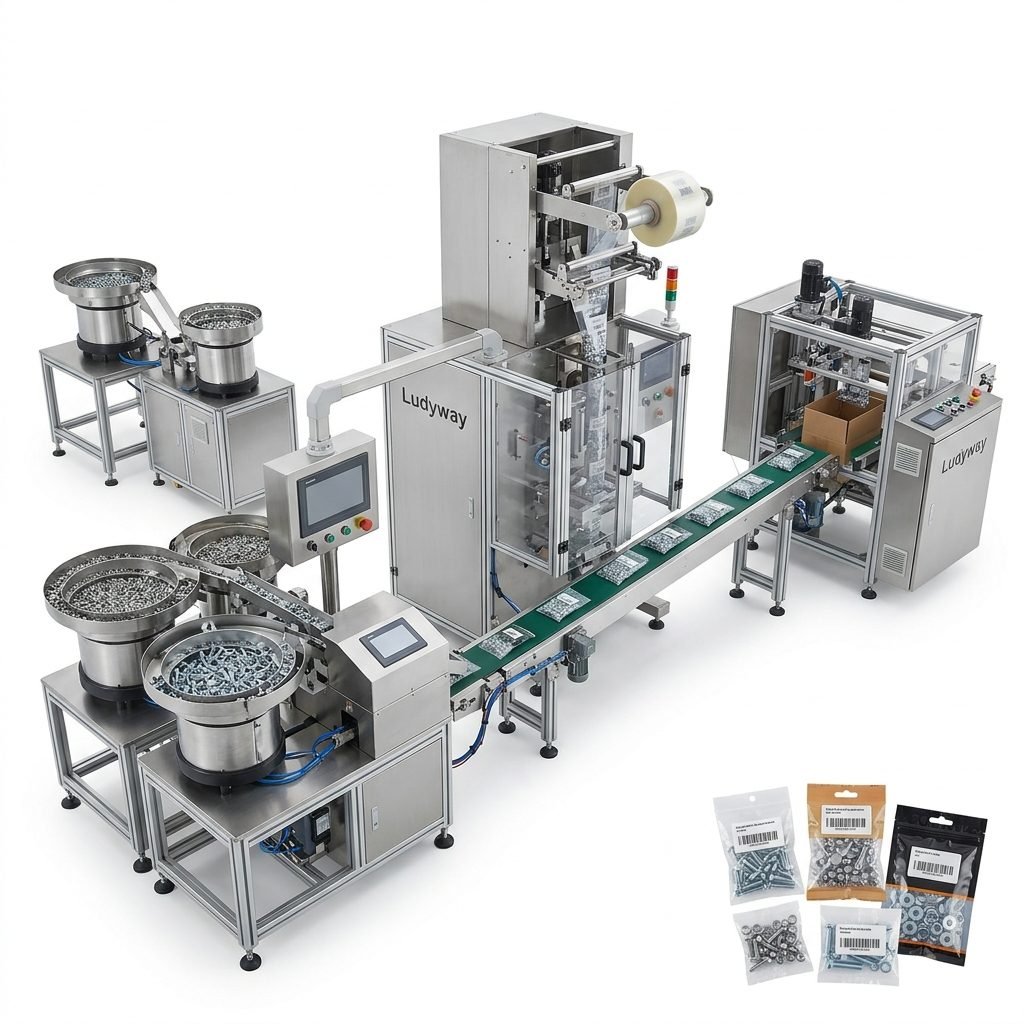
Ludyway Equipment Across All Three Packaging Levels
Frequently Asked Questions
Is a sachet primary or secondary packaging?
A sachet is primary packaging because it is in direct contact with the product. The display box that holds 20 or 30 sachets is secondary packaging, and the corrugated case and pallet are tertiary.
Which level of equipment should a new production line prioritize?
Start with primary equipment, since dosing accuracy and seal quality determine product integrity and material giveaway. Then size secondary and tertiary machines to match its rated output with 10–15% headroom to absorb short stoppages.
Can a bulk 25 kg bag line skip secondary packaging?
Yes. In fertilizer, feed, resin and many chemical applications the filled bag is the sales unit and goes directly to palletizing and stretch wrapping, so the line consists of primary bagging equipment plus tertiary end-of-line machinery.
What certifications matter when importing packaging machinery?
CE marking is required for the EU and widely accepted elsewhere; UL or CSA components are expected in North America. For food and pharma, request stainless steel material certificates, cGMP-compliant design documentation and validation support.
How long does a turnkey line take to deliver and commission?
Standard machines typically ship in 45–90 days. A fully integrated line covering primary, secondary and tertiary equipment usually requires 90–150 days for manufacturing and FAT, followed by one to three weeks of on-site installation and training.
Does Ludyway supply secondary and tertiary machines or only fillers?
Ludyway supplies the full chain: multi-lane primary machines, checkweighers and inspection, cartoners and case packers, palletizers and stretch wrappers, delivered as complete turnkey packaging solutions under one contract.
Plan Your Line With Ludyway Engineers
Send us your product sample, target pack format and required output, and our engineering team will propose a primary, secondary and tertiary equipment configuration with layout drawing, technical specifications and lead time. Request the full machine catalog, arrange a sample run at our 20,000㎡ Zhongshan facility, or book a video factory tour before you commit.
Email info@ludyway.com or message WhatsApp +86 131 2959 2456 to receive a tailored quotation for your packaging project.