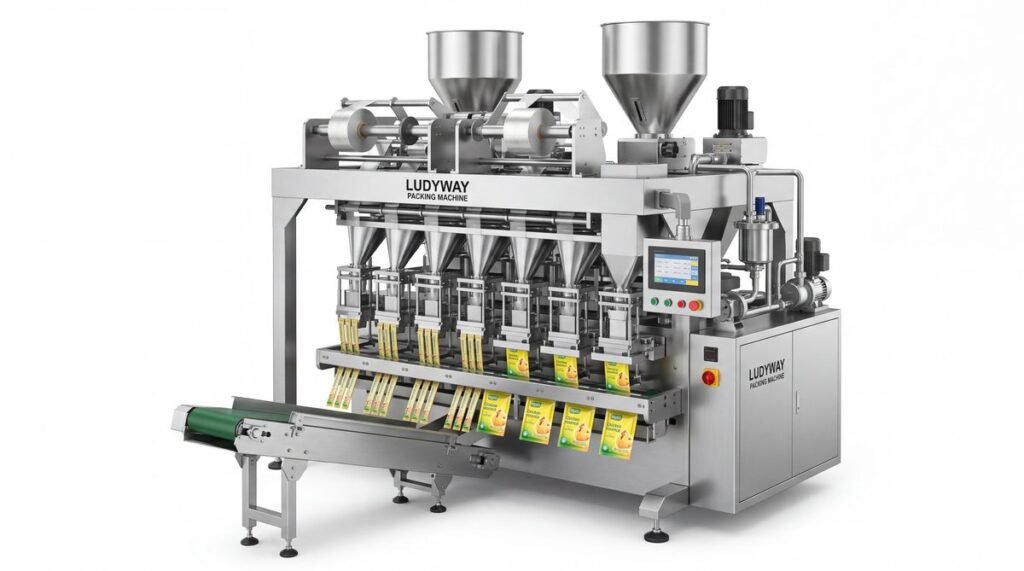
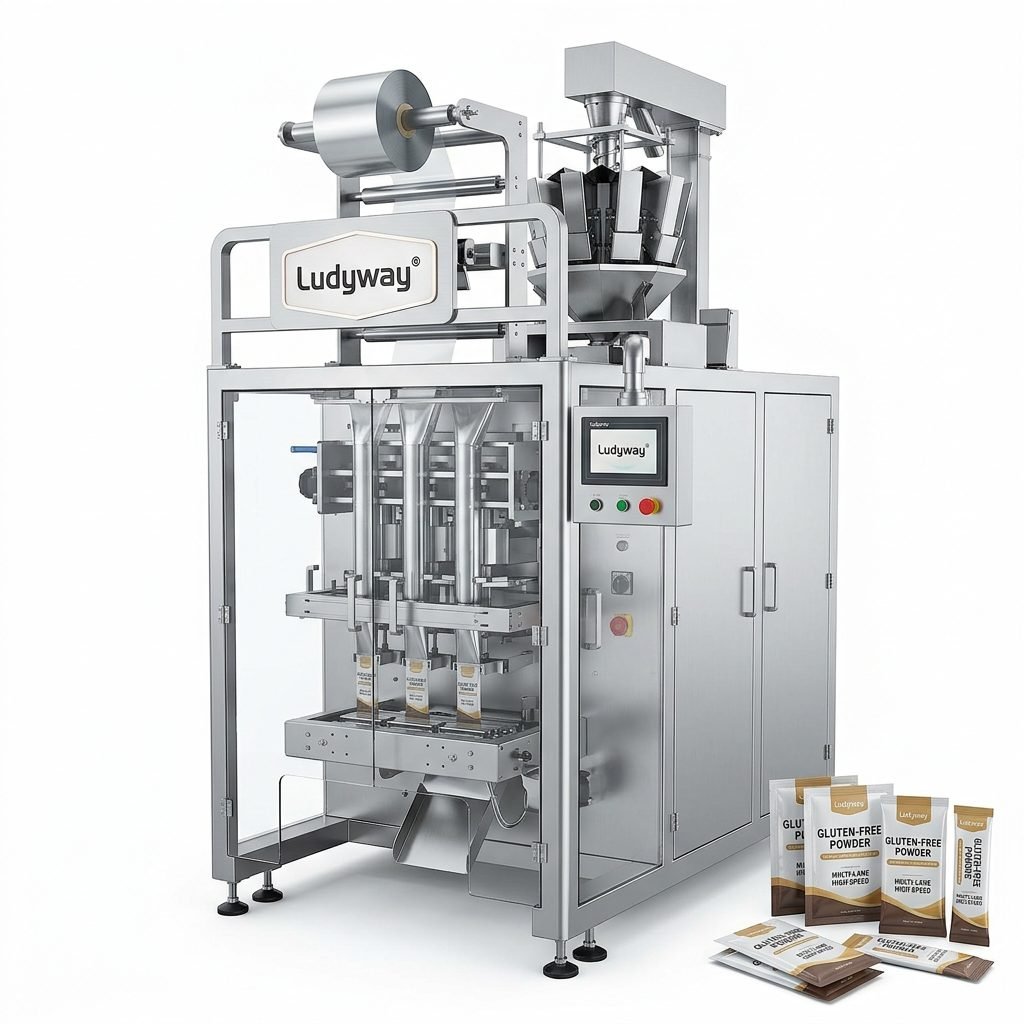
Choosing between a horizontal and a vertical packaging machine is one of the first and most consequential decisions in planning a flexible packaging line. Both systems form, fill and seal pouches from roll-stock film, yet they move the film, handle the product and shape the bag in fundamentally different ways. Those differences dictate throughput, floor space, film cost per pouch, the pouch styles you can offer and, ultimately, how your product presents on the shelf.
This guide explains how vertical form fill seal (VFFS) and horizontal form fill seal (HFFS) machines work, which granule, powder, liquid and solid products each handles best, what they cost to run, and how to build a selection checklist for your own production line. It is written for plant engineers, procurement managers, contract packers and brand owners who need to justify an equipment decision with data rather than habit.
How Vertical and Horizontal Form Fill Seal Machines Actually Work
The names describe the direction of film travel. On a vertical machine the web is pulled downward over a forming collar and tube, while on a horizontal machine the web runs parallel to the floor and pouches are formed side by side. Everything else about each platform follows from that one mechanical choice.
Vertical Form Fill Seal (VFFS)
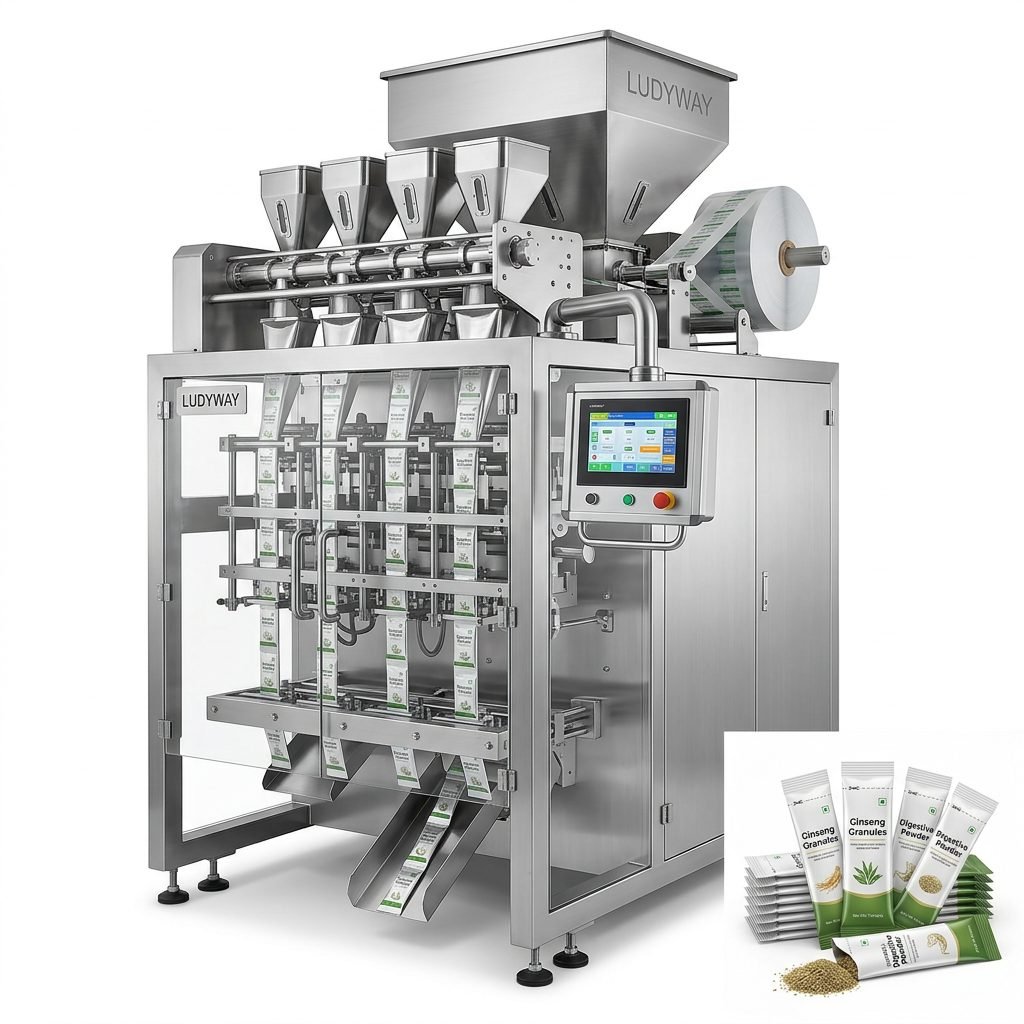
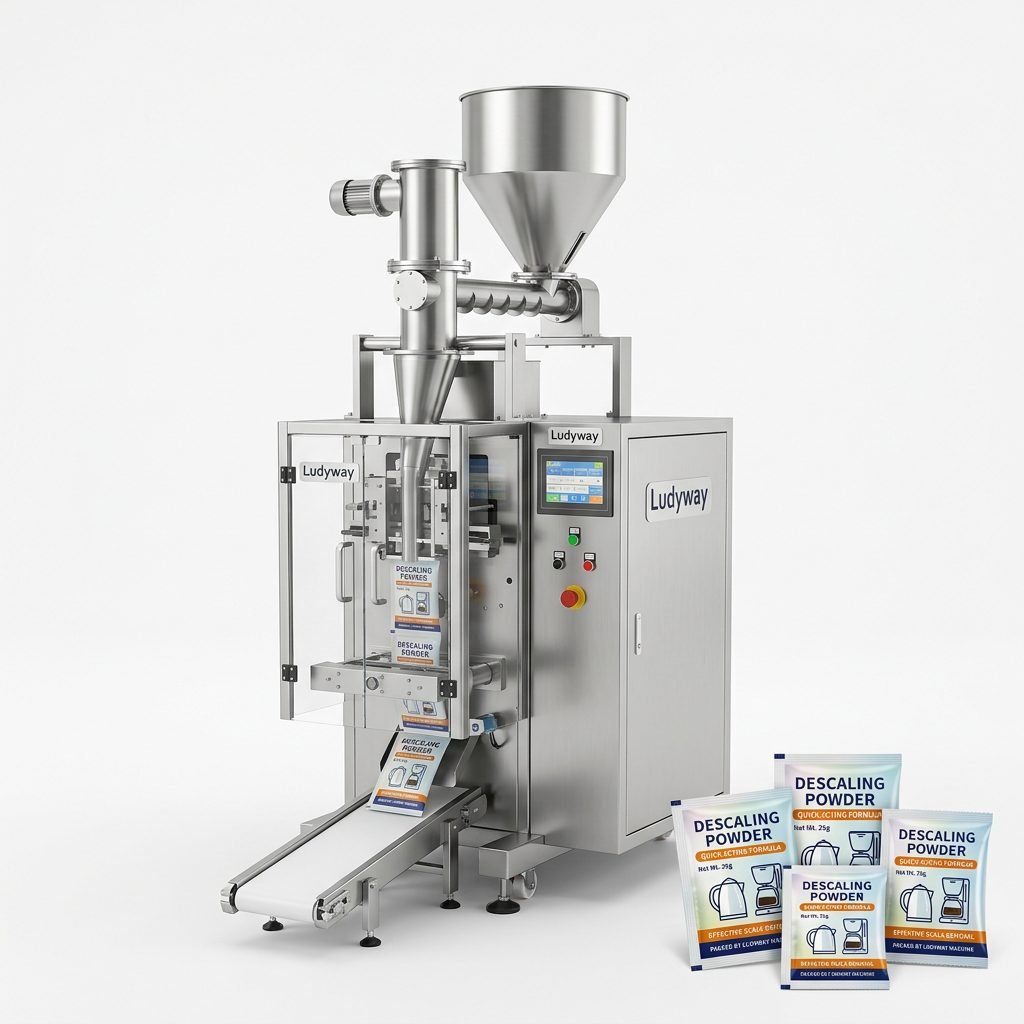
Film is drawn over a forming shoulder into a tube, a vertical seal closes the back, and horizontal jaws create the bottom seal. Product drops by gravity from a multihead weigher, auger filler, volumetric cup or liquid pump mounted above, then the jaws form the top seal and cut the bag free. The cycle repeats continuously or intermittently.
Typical formats: pillow bags, gusseted bags, quad-seal and block-bottom bags, and multi-lane stick packs and three-side or four-side seal sachets when several forming tubes run in parallel.
Horizontal Form Fill Seal (HFFS)
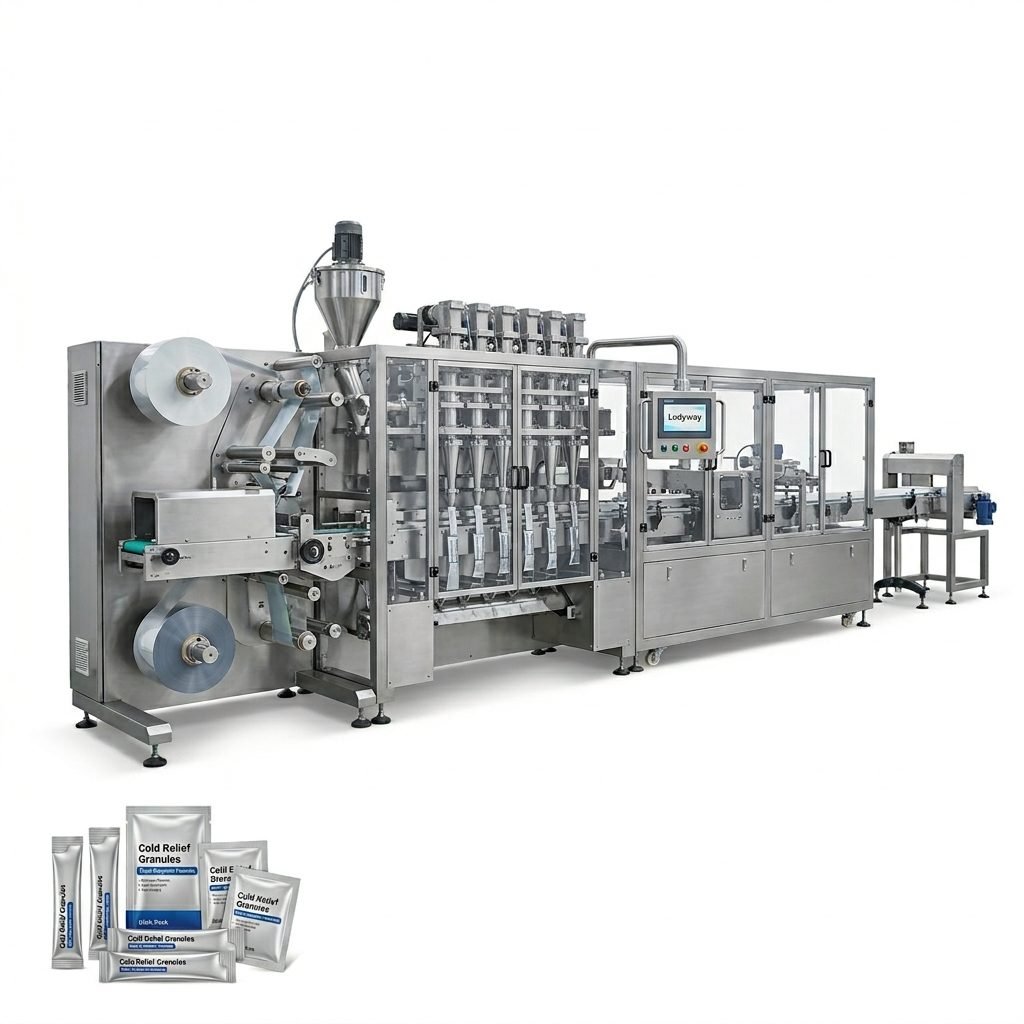
Film is unwound horizontally and either folded in half or paired with a second web. Pouches are formed by side seals and a bottom seal while still attached to the web, carried to a filling station where product enters through the open top, then sealed and cut. Premade pouch machines (doypack, rotary and inline) and flow wrappers are also horizontal platforms, even though they skip the forming step.
Typical formats: stand-up pouches with zippers or spouts, shaped pouches, flat four-side seal sachets, wet-wipe and mask sachets, and flow-wrapped bars, trays and solid items.
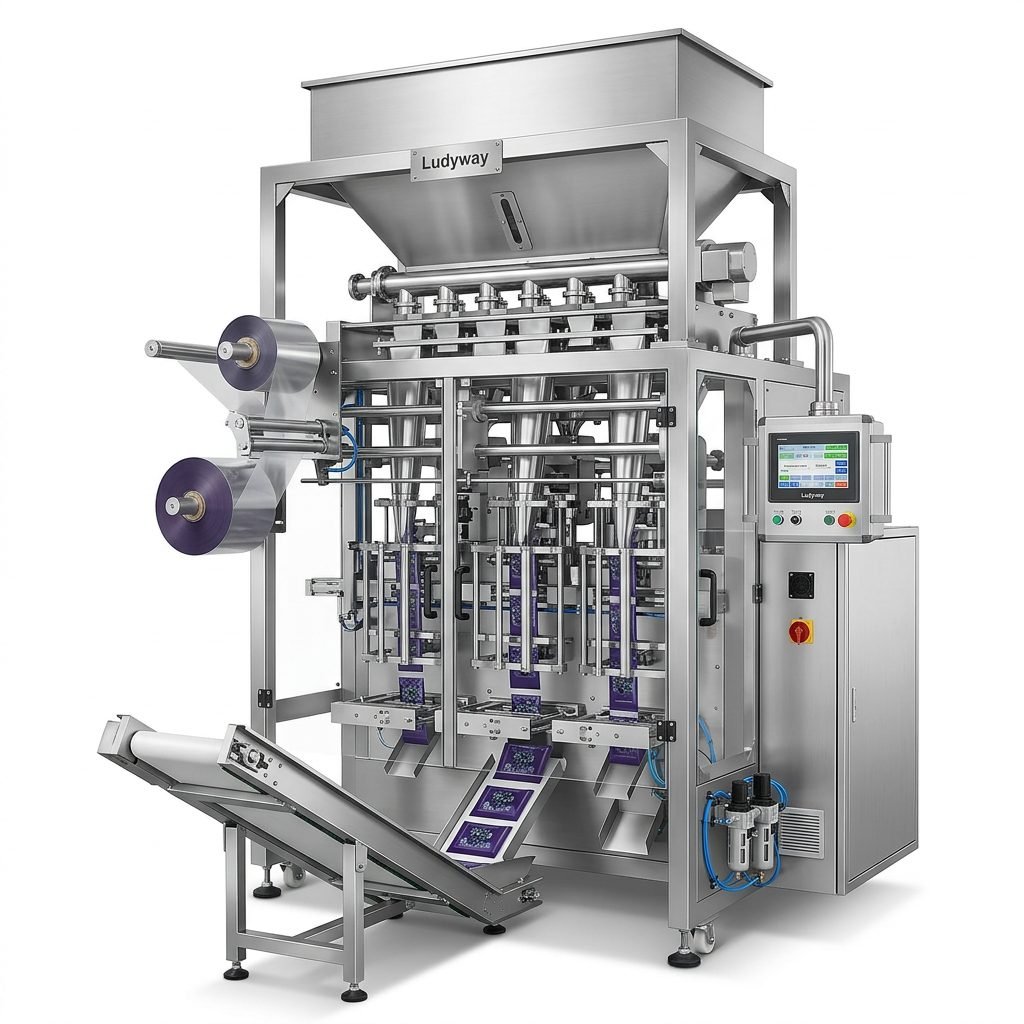
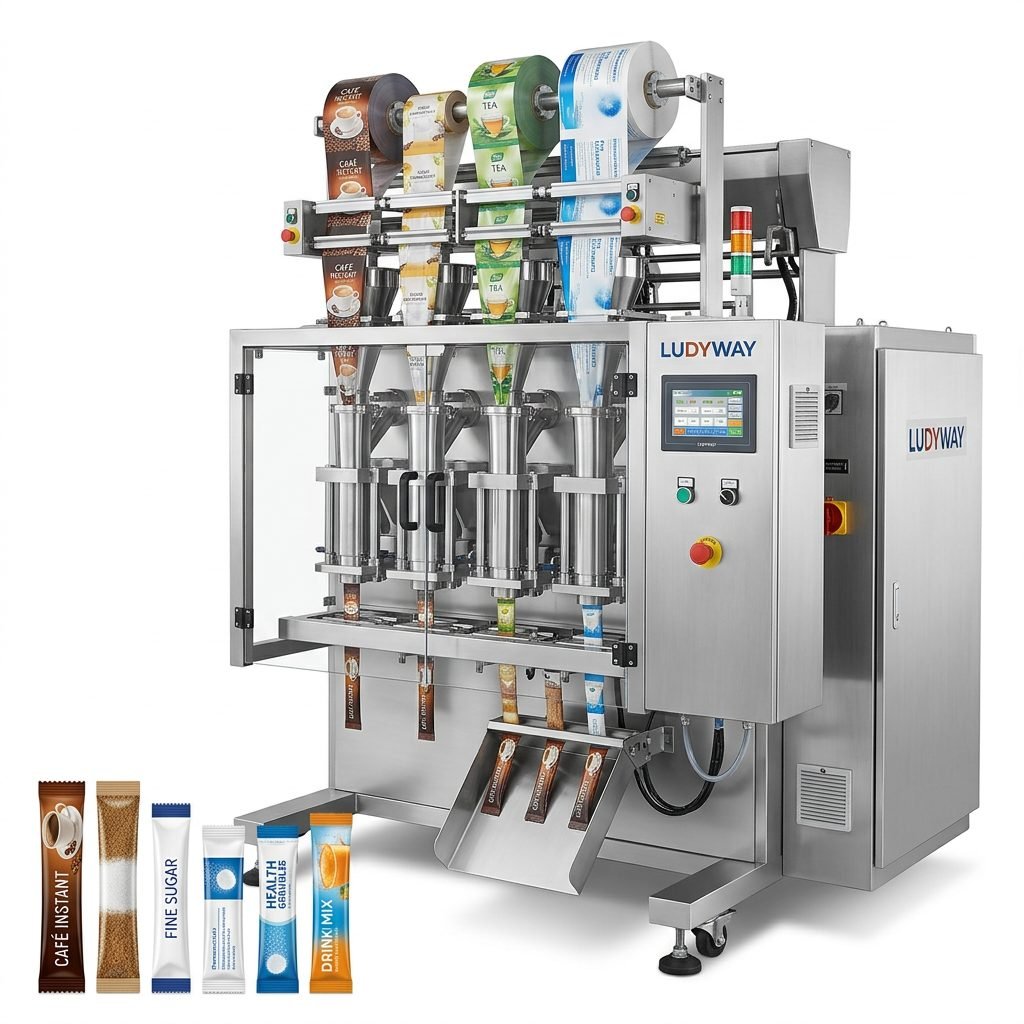
A vertical multi-lane sachet machine fills powder by gravity from dosing units mounted directly above the forming tubes.
Why Film Direction Changes Everything
Because a vertical machine fills through the forming tube, the product must flow freely under gravity. That makes VFFS the natural home for granules, powders, pellets, snacks and pumpable liquids, and it allows the dosing system to sit on a mezzanine above a compact base.
A horizontal machine fills an already formed pouch that is held open from the side or top. The pouch is stable during filling, which allows multiple fill stations, wider openings for chunky or fragile products, and the insertion of zippers, spouts, tear notches and hang holes before the final seal.
The result is a trade-off between the speed, film efficiency and small footprint of a vertical bagger and the pouch versatility and shelf presence of a horizontal system.
Horizontal vs Vertical Packaging Machines: Key Differences at a Glance
The table below compares the two platforms against the criteria procurement teams ask about most. Figures are industry-typical ranges for single-lane equipment unless otherwise stated; actual performance depends on product, film and bag size.
| Criterion | Vertical (VFFS) | Horizontal (HFFS / Premade Pouch) |
|---|---|---|
| Film path | Downward over forming tube | Horizontal web, folded or two-web; or premade pouches from a magazine |
| Filling method | Gravity drop through tube; weigher, auger, cup or pump above | Pouch held open at fill station; multiple fillers possible in sequence |
| Typical output | 30–150 bags/min single lane; multi-lane stick pack 8–16 lanes at 40–80 cycles/min each | Premade pouch 30–120 pouches/min; HFFS sachet 60–200+/min; flow wrap 100–600 packs/min |
| Pouch formats | Pillow, gusseted, quad-seal, stick, flat sachet | Stand-up, zipper, spout, shaped, four-side seal, flow wrap |
| Footprint | Small base (roughly 2–4 m²) but needs 3–4 m ceiling height for dosing | Longer and wider (roughly 6–12 m²) with lower height |
| Film cost per pack | Lowest; pillow bags use the least material per unit volume | Higher; wider seals, gussets and zippers add material and premade pouches cost more than roll-stock |
| Changeover | Forming tube swap; 15–45 minutes typical | Gripper, magazine and sealing bar adjustments; 20–60 minutes typical, faster with recipe memory |
| Best for | Free-flowing products, high volume, cost-driven SKUs, single-serve portions | Premium retail pouches, fragile or irregular items, wipes and sheet products, reclosable packs |
Which Products Belong on Which Machine
Products That Favor Vertical Systems
Anything that falls cleanly through a tube is a VFFS candidate: coffee beans and ground coffee, sugar and salt, rice, nuts, snacks, pet kibble, protein and electrolyte powders, pharmaceutical granules, and low-viscosity liquids such as juices, sauces and oils dosed by piston pump. Single-serve stick packs for instant beverages, supplements and sweeteners are almost always produced on multi-lane vertical stick pack and sachet machines, because many narrow tubes running side by side deliver very high output from a small footprint.
Products That Favor Horizontal Systems
Horizontal machines excel when the product or the pack needs gentle handling or added features. Wet wipes, facial mask sheets, medical dressings and alcohol pads are flat products that must be folded and inserted, which only a horizontal sachet machine can do. Stand-up pouches with zippers for premium pet food, granola or detergent pods, spouted pouches for purees and liquid detergent, and flow-wrapped bars, biscuits or trays all live on horizontal platforms.
The Overlap Zone
Viscous sauces, creams, gels and pastes can run either way. Ketchup, mayonnaise and shampoo are routinely packed in four-side seal sachets on both vertical multi-lane machines and horizontal sachet machines; the decision then comes down to output, film width and whether you need a shaped pouch.

Liquid condiments such as ketchup are packed in four-side seal sachets on multi-lane systems with piston pump dosing.
Seven Factors That Decide the Right System for Your Production Line
Work through these in order. In most projects the first three factors eliminate one platform, and the remaining four fine-tune the configuration, dosing system and automation level.
01 — Product Flow Characteristics
Measure bulk density, particle size, angle of repose, moisture and stickiness. Free-flowing material with an angle of repose under about 40° suits gravity filling on a vertical machine. Cohesive powders need an auger; sticky, fragile or sheet products point toward horizontal.
02 — Pouch Format and Shelf Presentation
If marketing requires a stand-up pouch with a zipper, a spout or a die-cut shape, you are buying a horizontal or premade pouch machine. If the pack is a pillow bag, gusseted bag or stick, vertical is cheaper to buy and to run.
03 — Required Output
Convert annual volume to packs per minute at realistic OEE of 70–85%. Small portions above roughly 300 packs per minute almost always require a multi-lane vertical system; large retail pouches above 100 per minute may need a duplex or twin-lane horizontal machine.
04 — Floor Space and Ceiling Height
Vertical baggers need height for the weigher, platform and product elevator; horizontal machines need length. Check beam heights, mezzanine load ratings and the path for bucket elevators or vacuum conveyors before committing.
05 — Film Consumption and Material Cost
Film is often the largest recurring cost. A pillow bag uses 15–25% less laminate than a stand-up pouch of equal volume, and roll-stock is significantly cheaper per pack than premade pouches. Multiply the difference by annual volume before judging machine price.
06 — SKU Count and Changeover Frequency
High-mix plants should prioritize servo-driven machines with recipe memory, tool-less forming tube changes and quick-adjust pouch grippers. A plant running one SKU on three shifts can accept slower changeover in exchange for higher continuous speed.
07 — Hygiene, Dust and Cleaning
Fine powders generate dust that contaminates seals and sensors. Specify dust extraction, open-frame stainless construction, IP65 electrics and washdown capability where relevant. Pharmaceutical and nutraceutical lines should request GMP-compliant contact parts in 316L.
Decision Shortcut
Free-flowing product + simple bag + high volume = vertical. Premium pouch + added features + gentle handling = horizontal. Single-serve portions at very high output = multi-lane vertical. Everything else deserves a trial run with your actual product and film.
A common mistake is specifying equipment from the machine catalogue first and the film second. Film structure, seal layer, coefficient of friction and gauge all influence sealing temperature, dwell time and achievable speed. Involve your film converter early and request a sealability test on the shortlisted machines before issuing a purchase order. The Flexible Packaging Association publishes material and sustainability resources that are useful when comparing laminate options.
Footprint, Labor and Total Cost of Ownership
Machine price is rarely the deciding factor over a ten-year service life. Film, labor, energy, spare parts and downtime dominate the total cost, and the two platforms distribute those costs differently.
15–25%
Less film per unit volume for a VFFS pillow bag compared with a horizontal stand-up pouch
2–4 m²
Typical base footprint of a single-lane vertical bagger, versus 6–12 m² for a horizontal pouch machine
1 operator
Can typically run a 12-lane stick pack machine with automatic film splice and cartoner infeed
70–85%
Realistic OEE range to use when converting rated speed into achievable daily output
Vertical machines win on film cost, footprint and purchase price for comparable output. Horizontal machines win on labor when the pouch itself requires features that would otherwise be added manually, and on scrap when handling fragile product that would break during a gravity drop. Premade pouch machines carry the highest material cost but the lowest forming risk, which is why many brands launch a premium SKU on premade pouches and migrate to roll-stock HFFS once volume justifies the tooling.
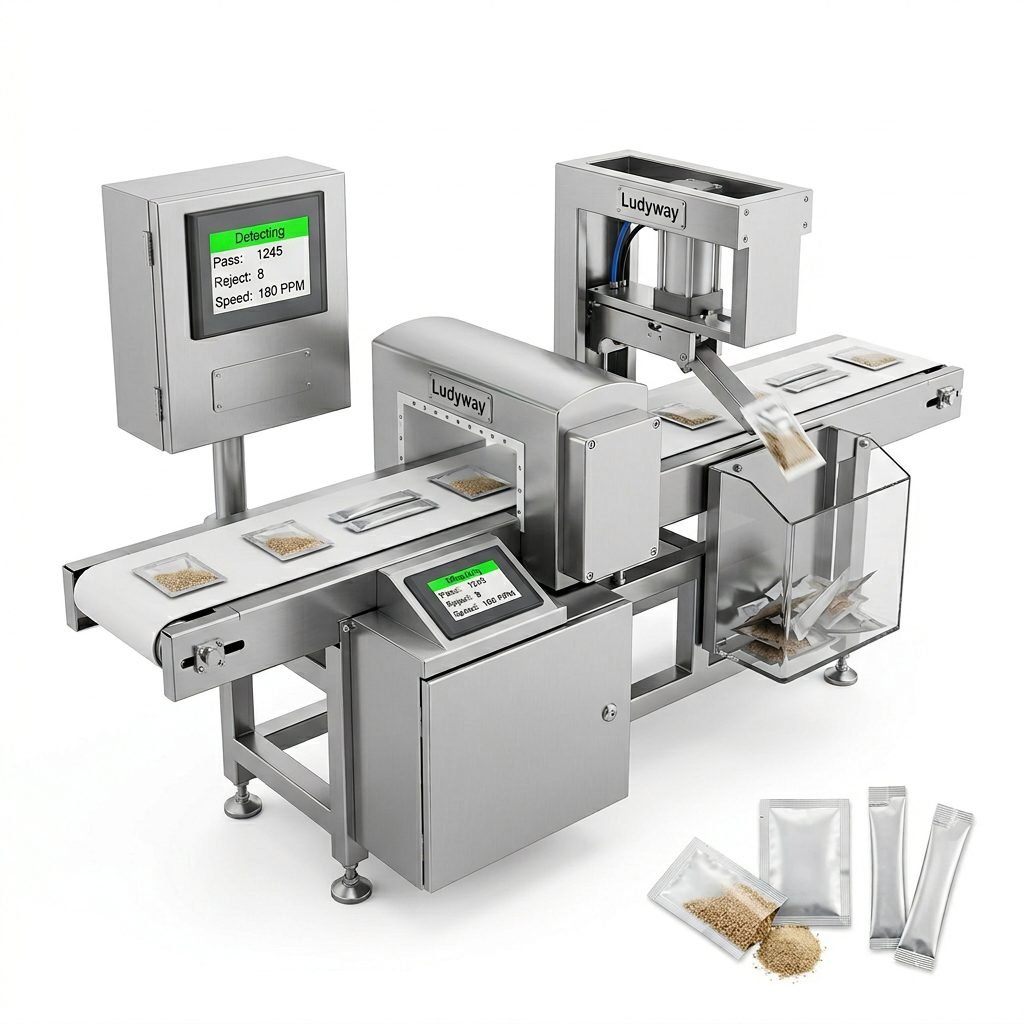
Whichever direction you choose, budget for downstream inspection. A checkweigher and metal detector protect against giveaway and recalls, and both integrate directly with vertical and horizontal fillers through reject feedback loops.
When a Multi-Lane or Hybrid Line Makes More Sense
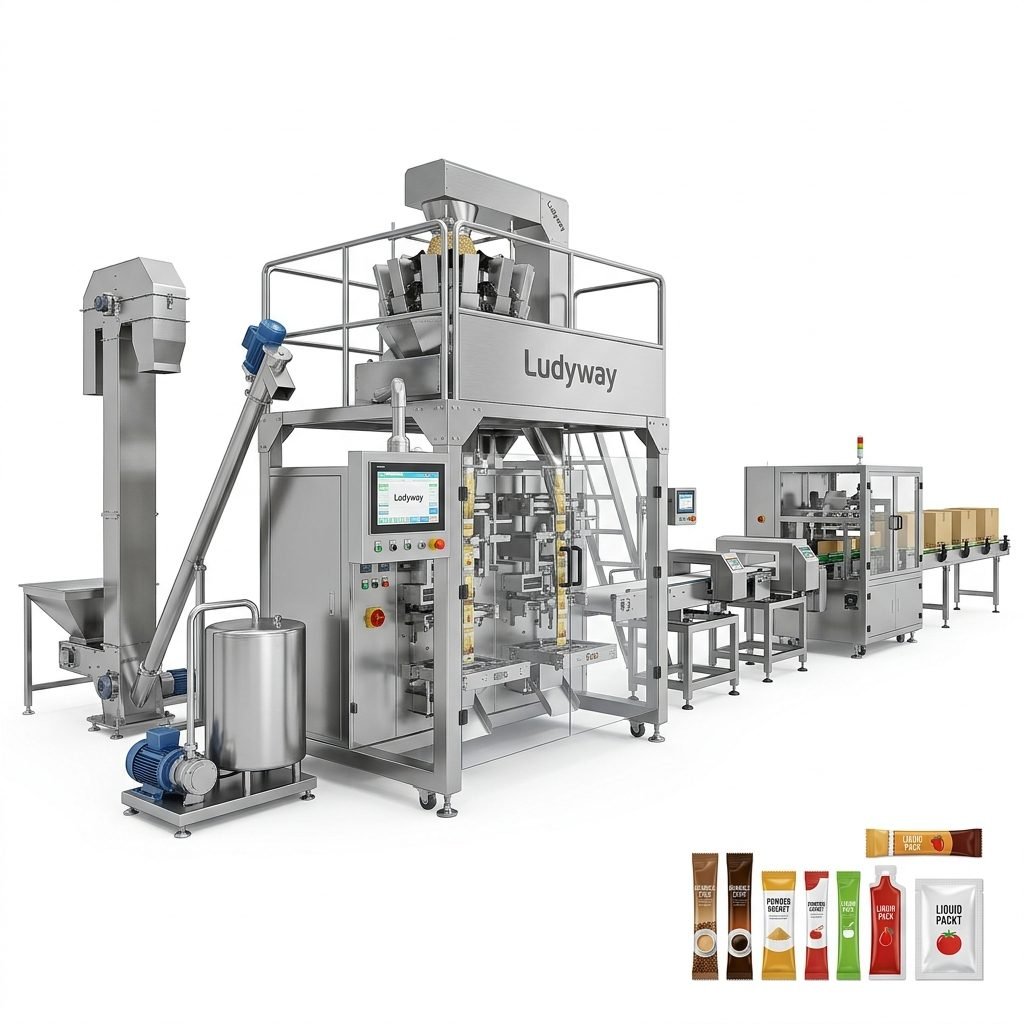
Turnkey lines frequently combine a vertical primary packer with horizontal cartoning, case packing and palletizing.
The horizontal-versus-vertical question is rarely either/or at line level. The most common architecture for single-serve products is a vertical multi-lane primary packer feeding a horizontal cartoner, then a case packer and palletizer. For retail pouches, a horizontal premade pouch machine may sit alongside a vertical bagger that produces the bulk or foodservice size of the same product.
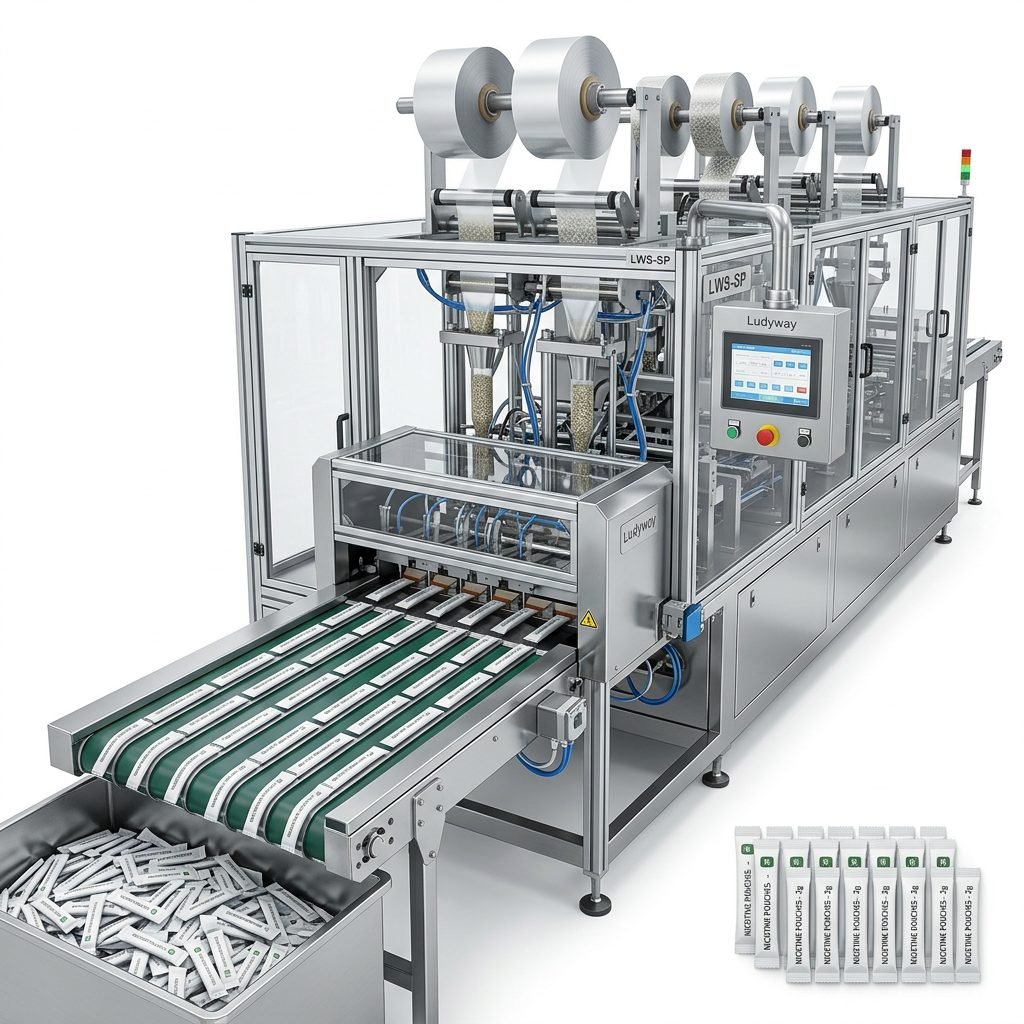
Multi-lane vertical systems deserve special attention. A 10-lane stick pack machine running 60 cycles per minute delivers 600 sticks per minute with one operator, a 3 m² footprint and the lowest film cost of any format. For coffee, supplements, sweeteners, drink mixes, pharmaceuticals and nicotine pouches, this is usually the most profitable configuration available.
If your project spans several pack formats, ask suppliers to quote a packaging line integration system rather than individual machines, so that conveyors, controls and inspection are engineered as one line with a single point of responsibility.
Compliance, Standards and Documentation to Request
Equipment compliance varies by destination market and product category, so specify it in the request for quotation rather than assuming it. The following items should appear on your checklist for both horizontal and vertical packaging machines.
- Food contact materials: product-contact parts in 304 or 316L stainless steel and food-grade polymers compliant with FDA food contact substance regulations or the equivalent EU framework.
- Machinery safety: CE marking for Europe, UL or CSA-listed electrical components for North America, interlocked guarding and documented risk assessment.
- Sterile and medical packaging: validation support aligned with ISO 11607 for sterile barrier systems, including seal strength and integrity protocols.
- Pharmaceutical lines: GMP design, IQ/OQ documentation, 21 CFR Part 11 audit trail options on the HMI and batch record printing.
- Industry benchmarks: PMMI publishes OEE guidance, OpX workforce resources and State of the Industry data that help justify automation investments internally.
About Ludyway: 30 Years of Vertical, Horizontal and Multi-Lane Packaging Engineering
Founded in 1993 and based in Zhongshan, Guangdong, Ludyway is one of China’s largest packaging machine manufacturers, specializing in advanced packaging equipment and turnkey production lines for the food, pharmaceutical, health, chemical and cosmetic industries. The company supplies more than 50 intelligent machine models covering multi-lane stick pack and sachet systems, vertical form fill seal baggers, horizontal sachet and premade pouch machines, liquid filling and complete automated lines, with customers in over 100 countries and regions. Industry coverage of its export growth is available on EIN Presswire.
130+
Professional packaging experts and application engineers
20,000 m²
Modern production facility with in-house machining and assembly
30+ Years
Of industry experience in granule, powder, liquid and pouch packaging
200+
Manufacturing equipment units supporting short lead times
Vertical, Horizontal and Multi-Lane Systems from Ludyway
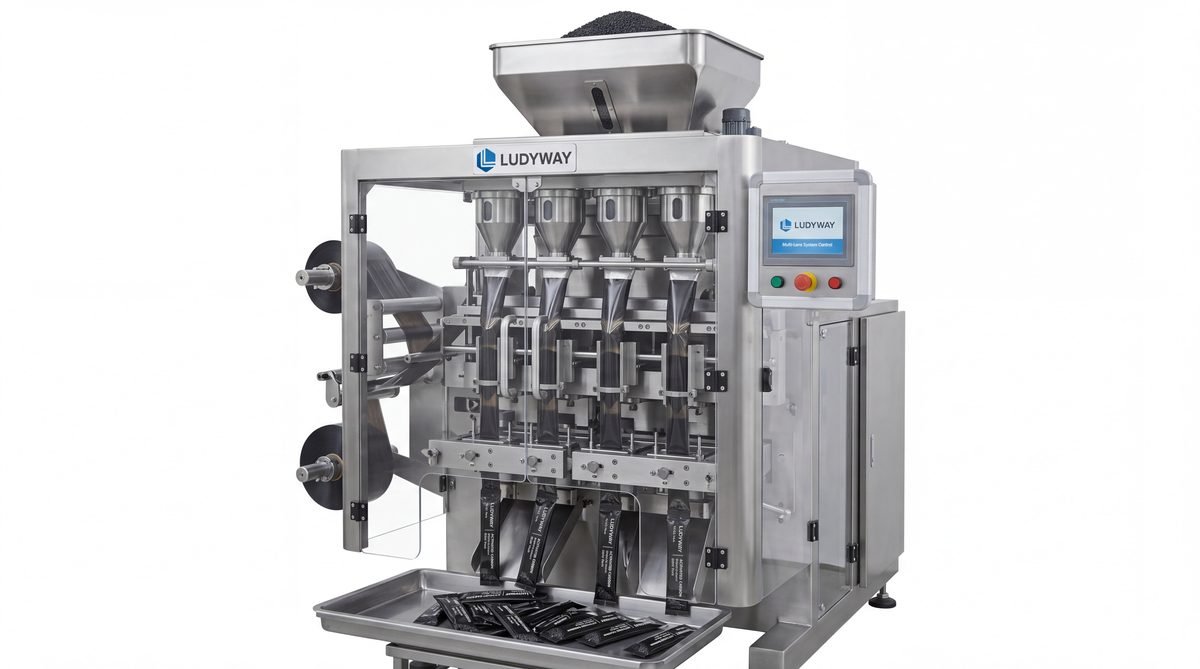
Multi-Lane Stick Pack Machine
Vertical Multi-Lane, Granule Powder Liquid
Pricing: Quote on Request
Vertical Form Fill Seal Machine
VFFS, Powder & Granule Sachets
Pricing: Quote on Request
Liquid Sachet Packer
Four-Side Seal, Sauces & Liquids
Pricing: Quote on Request
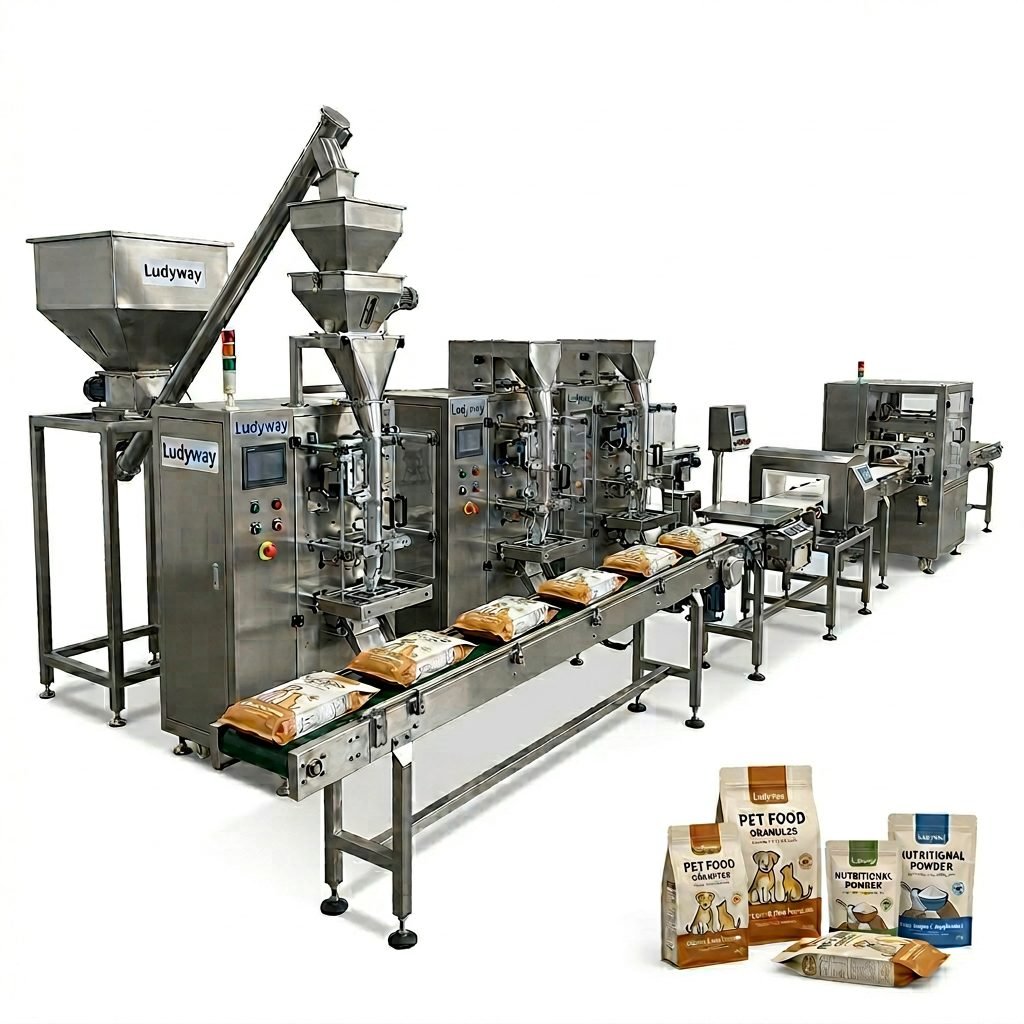
Premade Pouch Packaging Machine
Horizontal Rotary, Stand-Up & Zipper Pouches
Pricing: Quote on Request
Procurement Checklist: Specifications, Lead Time and Quotation
A packaging machine quotation is only as accurate as the information behind it. Sending the data below with your inquiry allows an engineer to recommend vertical, horizontal or multi-lane equipment, select the dosing system and confirm speed before any commercial discussion.
What to Include in Your RFQ
- Product name, physical form and bulk density; a 1–2 kg sample for free-flow and seal testing
- Target fill weight or volume range and accuracy requirement
- Pouch style, dimensions, film structure and whether zippers, notches or spouts are needed
- Required output in packs per minute and number of SKUs
- Available floor space, ceiling height, voltage and compressed air supply
- Destination market for compliance (CE, UL, FDA, GMP) and language for HMI and manuals
Typical Commercial Terms
- Minimum order: one machine; multi-machine and turnkey line projects receive integrated engineering
- Lead time: roughly 35–60 days for standard models, 60–90 days for customized lines, confirmed at order
- Quotation basis: configuration-specific, covering machine, dosing system, options, spare parts kit and FAT
- Acceptance: factory acceptance test with your product and film, video or on-site, before shipment
- After-sales: installation, commissioning, operator training and remote diagnostics support
For hygiene-critical applications, ask the supplier to confirm contact-part materials and surface finish in writing, and request the machine’s electrical and pneumatic drawings as part of the technical submittal. Reputable manufacturers will also share reference installations of similar vertical or horizontal machines running comparable products.
Frequently Asked Questions
Is a vertical packaging machine always cheaper than a horizontal one?
For comparable output and a simple pillow or gusseted bag, yes: the vertical machine is usually less expensive to buy, uses less film and occupies less floor space. The comparison changes when the pouch must be reclosable, shaped or filled with fragile items, where a horizontal machine avoids manual work and product damage that would cost more over time.
Can a vertical form fill seal machine make stand-up pouches?
Some VFFS machines produce gusseted or quad-seal bags that stand upright when filled, and certain models can add a bottom gusset. However, true doypack-style stand-up pouches with zippers, spouts or die-cut shapes are produced on horizontal form fill seal or premade pouch machines.
Which system is better for liquids such as sauces, oils or shampoo?
Both work. Low-viscosity liquids are commonly filled by piston pump on vertical multi-lane sachet machines for high-volume single-serve portions. Thick pastes, spouted pouches or pouches that must be filled with multiple components tend to run on horizontal machines where the pouch is held stable during filling.
How many lanes should a stick pack machine have?
Divide your required output by a realistic 40–80 cycles per minute per lane, then round up and allow headroom for changeover and OEE. Four to six lanes suit pilot and regional production; ten to sixteen lanes are typical for national or export-scale supplement, coffee and nicotine pouch lines.
Can horizontal and vertical machines be integrated into the same line?
Yes. A frequent layout uses a vertical multi-lane primary packer feeding a horizontal cartoner, followed by checkweighing, case packing and palletizing. Line integration specialists engineer conveyors, controls and inspection so the mixed platforms operate as one synchronized system with a single warranty and support contact.
Get an Engineering Recommendation for Your Line
If you are weighing horizontal vs vertical packaging machines for a specific product, send Ludyway your product details, target pouch format and required output. Our engineers will recommend the right platform, propose a dosing and automation configuration, and prepare a technical quotation, sample test report and equipment catalog for your evaluation.
Email: info@ludyway.com | WhatsApp: +86 131 2959 2456 | Factory: Nanlang Town, Zhongshan, Guangdong, China — factory visits and exhibition meetings welcome.